upsell-radar
1000 ad-active Shopify stores · scanned 2026-06-16 · source: brandsearch-rest + storefront-fingerprint
Upsell adoption by niche (7 niches · from the 1000 analysed stores)
| Niche | stores | named app | any signal | avg ads | top apps | |
|---|---|---|---|---|---|---|
| Health & Supplements | 115 | 97% | 100% | 1,036 | Rebuy Kaching Bundles UpCart | |
| Home Decor | 43 | 91% | 100% | 1,339 | Slide Cart (iCart) AfterSell Rebuy | |
| Beauty & Skincare | 147 | 90% | 100% | 1,557 | Rebuy Kaching Bundles UpCart | |
| Home & Garden | 71 | 87% | 100% | 1,216 | Rebuy UpCart Kaching Bundles | |
| Electronics & Tech | 41 | 85% | 100% | 1,698 | Slide Cart (iCart) Selleasy Honeycomb Bundles | |
| Fashion | 253 | 83% | 100% | 1,336 | Slide Cart (iCart) Rebuy UpCart | |
| Jewelry | 41 | 76% | 100% | 1,202 | UpCart AfterSell Kaching Bundles |
Same 1000 stores as the gallery, grouped by niche. Only niches with ≥40 stores are ranked — smaller niches (e.g. Pet Supplies, 27) are excluded because a tiny sample can hit a misleading 100%. "store" = how many of the 1000 fall in that niche. Ranked by named-app adoption.
Where the upsell fires (funnel stage)
Apps by adoption
Upsell mechanic
Deep dive — how they upsell (Layer B · 1000 stores)
- Analysed 1000 ad-active stores via claude-sonnet-4-6 (Batch API). Category-level patterns below.
Each store shows its upsell pipeline — the mechanics that fire at each stage: Pre-purchase (product page) → In cart (cart drawer) → Post-purchase (checkout / thank-you). The screenshot only captures the product page, so cart & post-purchase mechanics come from the installed apps + copy.
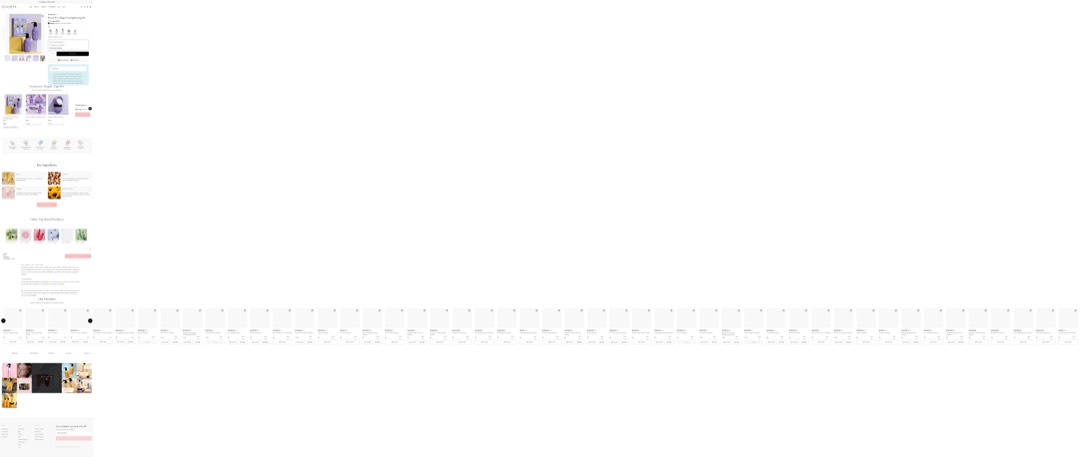
Luseta Beauty runs a content-rich PDP anchored by a 'Frequently Bought Together' cross-sell widget directly under the ATC button, a free-shipping threshold banner, and a Slide Cart (iCart) for in-cart upsell prompts. There is no visible quantity-break or volume-discount pricing widget on the PDP; AOV is pushed via FBT bundle suggestions, a broad curated bundle catalog in navigation, and the free-ship threshold incentive.
Operator's read
PricingThere is zero volume/quantity-break pricing widget on this PDP — no tiered per-unit ladder, no subscribe-and-save toggle, nothing. The entire pricing strategy leans on (a) the free-shipping threshold in the announcement bar (exact dollar figure cut off in the evidence, so the incentive ceiling is unclear) and (b) pre-built bundle SKUs merchandised heavily in the navigation and FBT widget. Single-unit price stands alone with no struck-through compare-at anchor visible on this PDP, which means there's no price-anchoring moment at the individual product level.
Widget styleNo volume-discount or bundle-builder widget exists on the PDP itself. The slot that would normally be occupied by a quantity-break table or subscribe-save toggle is instead filled by the Frequently Bought Together app widget — a horizontal 3-product tile row with a combined price badge and a single 'Add all to cart' button. This is a checkbox-adjacent layout (select/deselect items) typical of the Frequently Bought Together app by Conversion Bear or similar. There are no 'Most Popular' or 'Best Value' badges, no explicit savings callout, and no escalating compare-at anchor — the bundle value prop is implicit rather than quantified.
VerdictThe FBT and bundle catalog are solid discovery mechanics for a haircare brand with a wide SKU range, and the free-ship threshold is a proven AOV lever — but right now neither tactic shows the shopper a concrete dollar saving. The single highest-leverage change: add a subscribe-and-save toggle (e.g. 15% off) directly on the PDP ATC block. Haircare is a consumable replenishment category — Luseta is leaving recurring revenue and LTV on the table by not converting first-time buyers into subscribers at the point of highest intent, especially on a hero SKU like the Biotin Collagen Shampoo/Conditioner.
offer details (4)
Screenshot resolution is very low; exact dollar amounts for free-ship threshold and individual product prices are not legible. Confidence is medium. FBT widget product count and combined price tier are inferred from visible layout structure. iCart cart drawer contents are not visible.
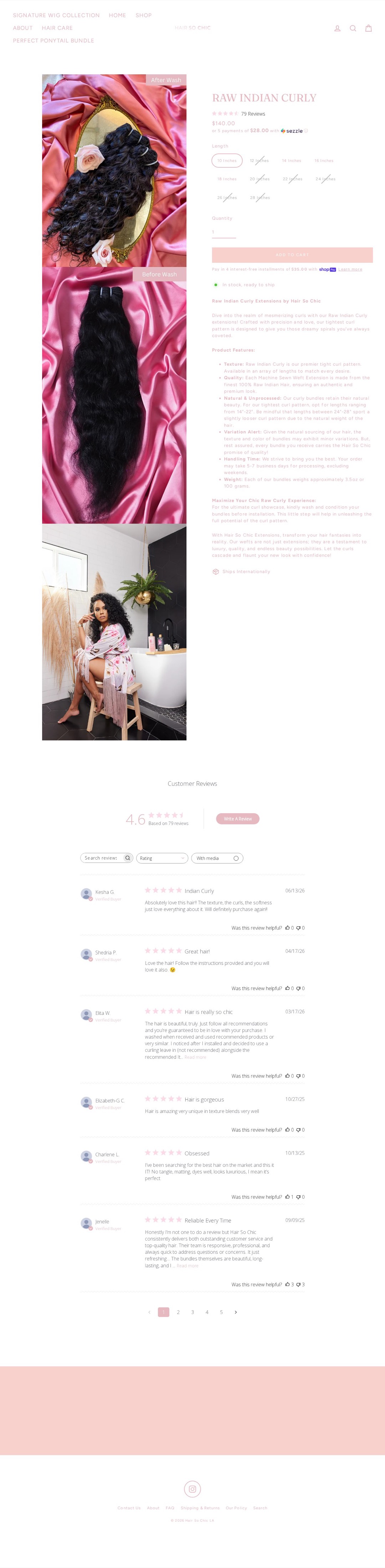
Single-variant length-ladder PDP with Sezzle BNPL shown at the price point. No volume/bundle widget on the PDP itself. Upsell surface relies on Rebuy (likely in-cart or post-purchase recommendations) and Selleasy (likely cross-sell pop-up or cart drawer add-ons). Primary AOV lever is length upsell (price scales with length, 10in to 28in) rather than quantity breaks.
Operator's read
PricingThere is zero volume or bundle pricing widget on this PDP — the entire pricing story is a single-unit length ladder running from 3,737,273 VND (~$150 USD) at 10in up to ~6,006,331 VND (~$240 USD) at 18in, with no compare-at / struck-through anchors visible on any tier. The store leans on Sezzle BNPL (4x ~$28 payments displayed) to soften the price perception rather than anchoring with a discount. Because most curly hair buyers purchase 2–3 bundles per install, there is a massive untapped quantity-break opportunity sitting completely unaddressed on the PDP.
Widget styleThere is no volume-discount or bundle widget on this landing page whatsoever. The variant selector is a plain Shopify radio-tile length grid — no 'Most Popular' badge, no 'Best Value' callout, no compare-at escalation, no per-unit breakdown. The only pricing psychology present is the Sezzle split-pay line. Rebuy and Selleasy exist but are not surfaced at the PDP level, meaning the upsell window before add-to-cart is completely empty.
VerdictThe length ladder naturally pushes customers toward higher-price SKUs, and the Sezzle integration helps close hesitant buyers — that is executed reasonably well for a single-SKU page. The single highest-leverage change would be adding a Rebuy-powered '2 Bundle / 3 Bundle' quantity-break widget directly on the PDP (e.g., 1 bundle at full price, 2 bundles at 10% off, 3 bundles at 15% off), since raw hair buyers almost universally need multiple bundles per install — capturing that in one transaction instead of repeat visits would immediately lift AOV from ~$150 single-unit to $400+ multi-bundle orders.
offer details (3)
Prices extracted from text snippet in VND; USD equivalent estimated at ~0.000040 USD/VND. Several length variants appear sold out (12in, 20in at minimum), which limits conversion across the length grid. Rebuy and Selleasy upsell placements could not be confirmed from the screenshot — marked as inferred. 79 reviews at 4.6 stars is solid social proof but review display is below the fold and may not be visible to mobile users without scrolling.

Single-SKU DTC hair oil with a struck-through anchor price to manufacture a 33% discount perception. No volume/bundle widget is rendered; conversion leans entirely on the compare-at anchor ($60 → $40), a 60-day money-back guarantee, social proof stats (200k+, 85k reviews, 91k), and an extensive long-form advertorial PDP. Kaching Bundles is installed but no bundle widget is visible on this page.
Operator's read
PricingThis store runs a single price point — $40 sale vs $60 compare-at — giving a 33% discount on one unit with no volume ladder at all. The free-shipping threshold at $79 is strategically just above 1× the unit price ($40), meaning a customer would need to spend nearly 2× to unlock free shipping, which creates latent pressure to add a second unit — but there's no explicit nudge to do so. No per-unit math, no multi-unit pricing, no subscribe-and-save is surfaced.
Pricing tiers (1 widget)
Widget styleThere is no volume-discount or bundle widget rendered on the PDP despite Kaching Bundles being installed. The entire pricing UI is a native Shopify single-variant selector with a struck-through compare-at ($60 → $40). No radio tiles, no inline table, no dropdown tiers, no 'Most Popular' or 'Best Value' badges — just the anchor strike-through and a SAVE 33% label. Kaching Bundles is either not configured, toggled off, or placed only in cart.
VerdictThe long-form advertorial PDP, 60-day guarantee, and strong social proof (200k+, 85k+ reviews) are well-executed trust builders that justify the $40 price. The single highest-leverage move is to activate Kaching Bundles on the PDP with a 2-unit ($72, saves $8 + qualifies for free ship) and 3-unit ($99, ~$21 savings, ~$33/unit) tiered selector — because the $79 free-ship threshold already implies a 2-pack intent signal but there is zero friction-reducing path to get there, leaving AOV lift entirely to chance.
offer details (3)
Compare-at math: $60 → $40 = exactly 33.3% off, confirmed by store copy. Kaching Bundles is installed but zero bundle UI is visible in the screenshot or pricing widget evidence — all bundle offer observations are inferred from the installed app. Cart snippets were empty so no cart-level upsell can be confirmed. No post-purchase app (ReConvert/AfterSell/Zipify) detected in installed apps list, so no post-purchase offer inferred.
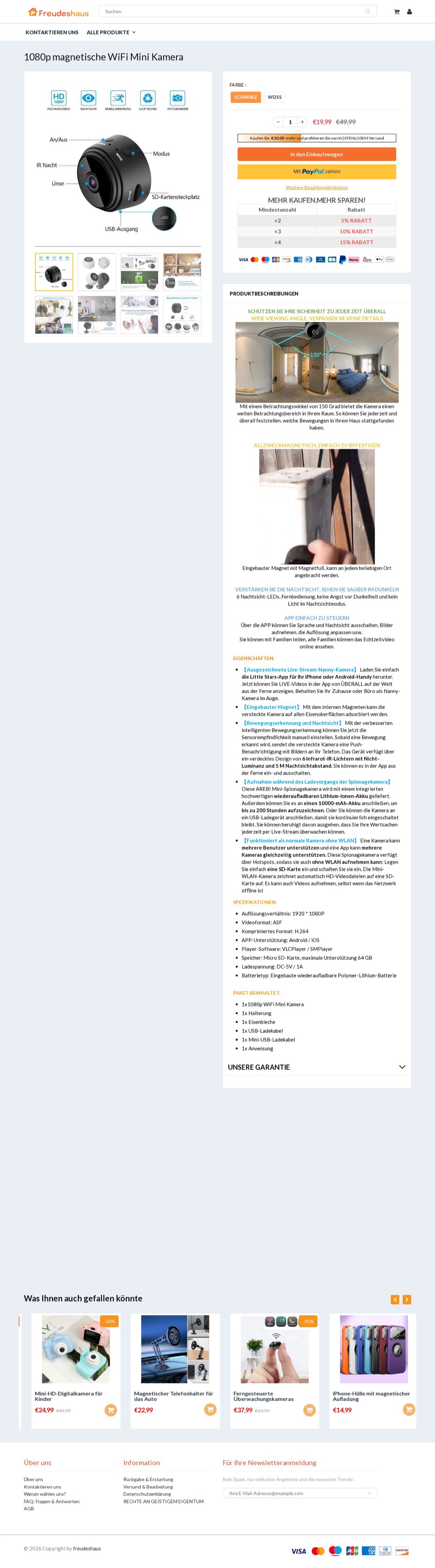
Volume discount (quantity break) displayed inline on the PDP under 'MEHR KAUFEN, MEHR SPAREN!' with a struck-through compare-at anchor price, supported by a free-shipping threshold banner; ReConvert handling inferred post-purchase upsell flow.
Operator's read
PricingThe store leans on a single hard anchor: €19.99 active vs €49.99 compare-at — a 60% markdown that does most of the heavy lifting. The volume tiers are shallow (5% / 10% / 15%) and absolute prices per tier are never shown, so the buyer gets no concrete number to react to at qty 2–4. With a €49.99 free-ship threshold and a single-unit price of €19.99, the math implies a buyer needs ~2.5 units to unlock free shipping, which is an organic AOV lever but it's never made explicit in the volume table.
Pricing tiers (1 widget)
Widget styleNo named bundle-builder or radio-tile widget is present. The volume discount is rendered as a plain inline Mindestanzahl/Rabatt text table — almost certainly Vitals' built-in quantity breaks module given Vitals is installed. There are no badges ('Most Popular', 'Best Value'), no per-unit price ladder, no escalating compare-at prices per tier, and no default pre-selection nudging buyers to a higher quantity. The compare-at anchor lives only at the single-unit level and disappears from the tier table entirely.
VerdictThe 60% single-unit anchor is punchy and will convert cold traffic, but the volume table is left doing almost no work: shallow discounts (max 15%), no absolute prices shown per tier, and no badge hierarchy mean almost no buyer upgrades quantity. The single highest-leverage change: replace the static text table with Vitals radio-tiles that show the full price per tier (e.g. 2x = €37.98 → €36.08, 'save €1.90'), add a 'Most Popular' badge to the 3-unit tier, and explicitly call out that 3 units hits the €49.99 free-ship threshold — turning the shipping nudge into a direct quantity-upgrade mechanic rather than leaving it as a passive banner.
offer details (4)
Compare-at price of €49.99 vs selling price €19.99 is a 60% implied discount at single-unit level; this looks like an inflated MSRP anchor common in dropshipping-style stores. The volume discount percentages (5/10/15%) are real discounts off the €19.99 price but absolute tier prices are not rendered in the widget, making it impossible to verify exact per-unit values for tiers 2–4. ReConvert post-purchase upsell inferred only — no post-purchase page evidence in screenshot.

Single-SKU hero page with bundle/save cross-sell section, free-shipping threshold, and Rebuy-powered recommendations. Primary AOV lever is the 'Bundle & Save' section (Daily Calm Bundle visible) promoting multi-product bundles at up to 20% off, anchored by a free-shipping threshold of $64 AUD.
Operator's read
PricingThe PDP runs a flat single-price model at $69.95 AUD with no on-page volume or quantity-break widget. The only pricing incentive visible at the product level is a free-shipping threshold at $64 (already cleared by one unit) and a sitewide 'up to 20% off bundles' promise that routes shoppers off the PDP to a separate bundle page. There is no struck-through compare-at price on the hero SKU and no per-unit ladder to anchor higher quantities.
Widget styleThere is no volume-discount or quantity-break widget on this PDP – that slot is occupied by a plain +/- quantity stepper and a separate 'Bundle & save' content section lower on the page featuring the Daily Calm Bundle card. The bundle section functions as a soft cross-sell module rather than an inline pricing ladder. No radio-tiles, no 'Most Popular' badge, no escalating compare-at tiers are present on the product page itself.
VerdictThe brand executes trust and social proof well – 11 million customers claim, 30k+ reviews, 100-day returns, and a clean comparison table all reduce friction effectively. The single highest-leverage change would be adding an inline quantity-break or bundle-selector widget directly on the PDP (e.g., Rebuy Smart Cart bundle widget or a Frequently Bought Together block) offering a visible 10–20% discount at 2-pack with a pre-selected default of 2 units – at $69.95 per pair, a 2-pack at ~$125 (≈11% off) would lift AOV by ~$55 per converting session without requiring shoppers to navigate away from the hero page.
offer details (4)
Screenshot resolution limits visibility of exact bundle pricing within the Daily Calm Bundle card; the 20% maximum discount figure is taken from banner/copy text. Rebuy cart and post-purchase flows are inferred from the installed app list, not directly observed. Currency confirmed AUD from au.loopearplugs.com domain and price point.

Single-SKU PDP with free-shipping threshold as the primary AOV lever; Rebuy installed for AI-driven cross-sell/upsell surfaces (cart and likely post-purchase). No volume/quantity-break widget visible on the PDP. Brand leans on social proof (11M+ customers, 10k+ reviews, 4.1★), comparison carousel against sibling SKUs, and a 'Bundle & Save' nav category to push multi-product baskets rather than quantity discounts on a single SKU.
Operator's read
PricingThere is zero volume or quantity-break widget on this PDP — the only price shown is a flat ₹1,799 with no compare-at strike-through and no per-unit ladder. The sole AOV mechanic visible above the fold is a free-shipping threshold on prepaid orders (exact rupee amount cut off in the snippet). That means there is no price anchoring on the PDP whatsoever; a shopper sees one number, ₹1,799, and either buys or leaves. The 'Bundle & Save' nav item suggests bundles exist elsewhere on the site, but they are not surfaced on this high-traffic PDP.
Widget styleThere is no volume-discount or bundle widget on this landing page — that slot is occupied by a plain quantity stepper (+ / - buttons) with a single static price and a standard 'Add to cart' CTA. The mid-page Compare carousel functions as the closest thing to an upsell widget, showing sibling SKUs with star ratings, but it is a navigation/cross-sell tool, not a pricing-incentive widget. No 'Most Popular' badge, no escalating compare-at, no 'Save X%' callout is present on the PDP.
VerdictThe social-proof stack (11M+ customers, 4.1★, 100-day returns) is genuinely strong and the sibling-SKU comparison carousel is smart for a multi-product earplug brand. However, the single highest-leverage change is adding a 2-tier quantity-break or bundle widget directly on this PDP — for example, '1 pair ₹1,799 | 2 pairs ₹2,999 (save 17%, ₹1,499 each)' rendered as radio tiles with the 2-pack pre-selected and badged 'Best Value'. Loop's consumable/gift use-case (sleep, travel, gifting) makes a 2-pack an easy incremental sell, Rebuy can power it natively, and even a modest 15% attach rate on the 2-pack would materially lift AOV without touching traffic costs.
offer details (4)
Screenshot is the Loop Quiet 2 PDP on loopearplugs.in (India storefront). Pricing fully in INR. Exact free-shipping threshold rupee amount was truncated in the snippet. Bundle & Save section exists in navigation but was not captured in this screenshot. Rebuy app inferences (cart + post-purchase) are marked accordingly and not confirmed from visible UI.

Loop Earplugs (EU) runs a brand-led homepage that leans on social proof (14M customers, 55K+ reviews, 2-year warranty, 100-day trial), a free-shipping threshold (€39), a limited-time hero bundle with free gift (McLaren Racing collab), and a site-wide 'Save up to 20% on Bundles' push — rather than a visible per-product volume-discount widget. Rebuy is installed for cart/post-purchase personalization but no widget is rendered on this homepage screenshot. The core AOV lever is the bundle builder ('Build your own bundle') plus cross-sell between SKUs (Switch 2, Dream, Experience, Quiet 2).
Operator's read
PricingThere is no visible per-product volume-discount or quantity-break widget on this homepage. Loop EU anchors AOV through two mechanisms: (1) a free-shipping floor at €39 — low enough that a single SKU (~€30–36 range implied by 'most-loved' grid) falls just short, nudging a second unit or accessory add, and (2) a sitewide 'Save up to 20% on Bundles' offer surfaced in the nav and hero, directing traffic to a bundle builder rather than showing tiered pricing inline. No struck-through compare-at anchoring is visible at the homepage level.
Widget styleThere is no volume-discount or bundle widget rendered on this landing page. The slot that a quantity-break widget would occupy is instead taken by a lifestyle-forward product carousel ('Most-loved earplugs') with individual 'Add to cart' and 'Build bundle' CTAs per SKU. The bundle discount (up to 20%) is communicated via nav label and announcement copy rather than a radio-tile or inline-table widget. Rebuy is installed but not rendering visibly here.
VerdictThe brand execution is strong — social proof (14M customers, 55K+ reviews), a tight collab drop with urgency copy ('Move fast'), and a clean product grid all convert well at the top of funnel. The single highest-leverage change I'd make is to surface an inline bundle-builder widget directly on the homepage product grid — showing the 3-tier price ladder (1 pair vs 2-pair vs 3-pair) with explicit per-unit pricing and a pre-selected 'Most Popular' 2-pack — rather than routing shoppers off-page to a bundle builder. Right now the 20% bundle saving is buried in nav copy; putting real numbers (e.g. €36 → €29/unit) next to each SKU card would immediately lift bundle attach rate and AOV without adding friction.
offer details (6)
Analysis based on homepage screenshot and text snippets only. No cart, PDP, or post-purchase pages were visible. Rebuy offers at cart/post-purchase stages are inferred. Exact SKU prices not confirmed numerically from the provided evidence — pricing widget array left empty as no widget tiers are visible. Bundle discount ceiling confirmed at 20% from copy.

Loop Earplugs Korea (loopearplugs.kr) runs a single-SKU hero page for the Loop Quiet 2, relying on color/variant selection, a strong social-proof stack (1,600만+ satisfied customers, 4.2 stars, celebrity/lifestyle imagery), and a product comparison module to push shoppers toward higher-tier SKUs. Rebuy is installed for cross-sell/upsell logic but no visible pricing widget or volume tier is rendered on the PDP. AOV lift is driven by model upsell (Quiet 2 → Experience 2 / Engage 2) rather than quantity breaks.
Operator's read
PricingThere is zero visible volume/bundle pricing widget on this PDP — no quantity breaks, no subscribe-and-save, no tiered per-unit ladder. The store leans entirely on a single struck-through compare-at price (if any) on the variant selector and the product comparison module to move shoppers to a pricier SKU rather than buying more units. Without seeing exact KRW price points clearly in the screenshot, the anchoring mechanism appears to be model-tier upsell (Quiet 2 as entry, Experience/Engage as step-up) rather than quantity-driven AOV expansion.
Widget styleNo volume-discount or bundle widget exists on this landing page. The slot that would typically house a quantity-break radio-tile or bundle builder is instead occupied by the 'Loop 제품 비교하기' side-by-side comparison card layout — a brand-level upsell to a higher model rather than a unit-economics play. Rebuy is installed but its widgets (likely a cart cross-sell or post-purchase OPU) are not surfaced on the PDP itself.
VerdictThe comparison module is well-executed brand merchandising — it does the job of justifying model upgrades with a clean feature matrix. However, the single highest-leverage change I'd make is adding a Rebuy-powered 'frequently bought together' or subscribe-and-save widget directly on the PDP (e.g., Quiet 2 + Loop case/accessory bundle or a 2-pack quantity break at ~10-15% off). Earplugs are a natural multi-pack purchase (couples, travel, work/home sets) and leaving AOV purely to model upsell means missing the easiest revenue layer — especially given the 1,600만 satisfied customer social proof that signals mass-market volume potential.
offer details (3)
Confidence is medium because the screenshot is low-resolution and Korean-language, making exact price points and any cart-drawer contents difficult to parse precisely. Rebuy is confirmed installed but its rendered widgets (cart, post-purchase) are not visible. The product comparison section is the only upsell UI clearly identifiable on the PDP.
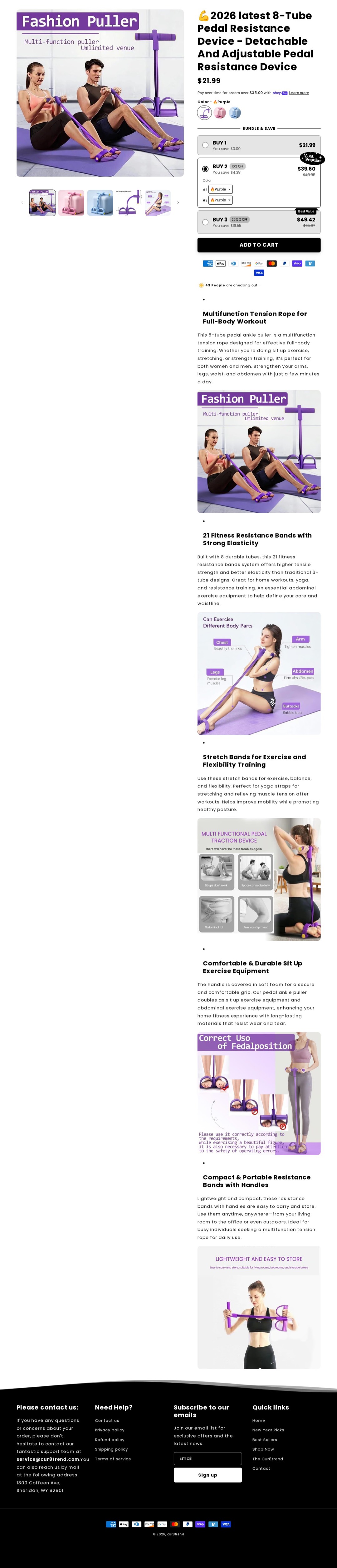
Multi-unit bundle-save widget (Kaching Bundles) on PDP driving AOV via 2x and 3x quantity breaks, anchored against a crossed-out compare-at price, with a free-shipping threshold bar reinforcing the push to the 2-pack.
Operator's read
PricingThree-tier Kaching Bundles widget anchored at $21.99 single-unit, pre-selecting the 2-pack at $39.80 (~9% off, $19.90/unit) and topping out at a 3-pack for $49.42 (~25% off, $16.47/unit). The free-shipping bar kicking in at $54.99 is strategically placed just above the 2-pack price, meaning a customer buying 2 units at $39.80 is still $15 short — a clean nudge toward the 3-pack which clears that bar at $49.42. Anchoring logic is solid: the compare-at on tier 3 shows ~$16.55 saved.
Pricing tiers (1 widget)
Widget styleKaching Bundles renders three horizontal radio tiles. The middle tile (BUY 2) is pre-selected and badged 'HOT', a classic middle-anchor play. The 3-pack carries an implicit 'Best Value' position via the deepest discount but has no visible 'Best Value' badge in the widget — a missed reinforcement opportunity. Compare-at prices are shown as crossed-out totals (e.g., $65.97 vs $49.42) rather than per-unit, which undersells the savings story for budget-conscious shoppers.
VerdictThe free-ship threshold at $54.99 landing between the 2-pack ($39.80) and 3-pack ($49.42) is well-engineered to pull customers up a tier, and the 25% discount on the 3-pack is genuinely compelling for a $21.99 commodity fitness product. The single highest-leverage change: add an explicit 'Best Value' badge to the BUY 3 tile AND surface a per-unit price below each tier (e.g., 'Only $16.47 each') — this frames the savings in the clearest possible terms and should move the 2-pack-to-3-pack conversion rate meaningfully given the 3-pack already clears the free-ship bar.
offer details (3)
No post-purchase upsell app detected beyond Kaching Bundles; no ReConvert/AfterSell/Zipify visible in installed apps so no post-purchase offer inferred. Product has three color variants (Purple/Pink/Blue) at flat $21.99 each — no variant-based price differentiation. 'Computation results in -Infinity %' error in snippet suggests a sold-out or $0-priced variant causing a division error in the bundle widget, which should be patched to avoid broken UI for shoppers.

Single-SKU progressive-lens eyewear at a flat $98 price point. No volume or bundle pricing widget on the PDP. AOV lever is a free-shipping threshold ($130) designed to pull a second unit into cart. Post-purchase one-click upsell inferred from Zipify OCU. Social proof (4.69 stars, heavy review count) and a 90-day trial/1-year guarantee carry conversion weight in lieu of discount laddering.
Operator's read
PricingLook Optic runs a dead-simple single flat price of $98 per progressive frame — no volume tiers, no bundle discount, no struck-through compare-at on the PDP. The only structural AOV nudge is the $130 free-shipping threshold, which creates a $32 gap on a one-unit purchase and is the primary mechanical reason to add a second frame. There is no per-unit ladder, no pre-selected quantity, and no discount depth to analyze — the brand leans entirely on perceived value (premium materials, 90-day trial, 1-year guarantee) rather than price-based incentives.
Widget styleThere is no volume-discount or bundle widget on this PDP whatsoever. The slot where a quantity-break widget would live is instead occupied by a lens-type/power variant selector and a face-width size guide (recommended for Medium and Wide faces with illustrated frame widths at 98mm, 44mm, 130mm, 120mm). The 'You May Also Like' carousel below the fold is a standard Shopify recommendation section — no app badge, no 'Most Popular' callout, no anchor pricing on those tiles. The only pricing element visible is the flat $98 Add to Cart button.
VerdictThe free-ship threshold mechanic is well-calibrated — $130 against a $98 hero SKU is a tight $32 gap that genuinely motivates a second pair, and the cross-sell carousel directly beneath the ATC feeds that behavior. The single highest-leverage change I would make is adding a 2-pair bundle widget (e.g., 'Buy 2 frames, save 15%' at $83.30/ea = $166.60 total) directly on the PDP as radio-tile options: it converts the free-ship nudge into an explicit discount incentive, raises AOV from ~$98 to ~$167, and fits naturally with the brand's 'one for clear, one for sun' positioning already visible in the CLEAR/NETFLIX lifestyle imagery on the page.
offer details (3)
Cart snippets were empty so no in-cart upsell widget data was available. Face-width recommendation guide (98mm–120mm) is a conversion aid, not a pricing mechanic. Review count and brand response cadence in the reviews section suggest strong organic retention but no visible loyalty/subscribe-save mechanic on this PDP.
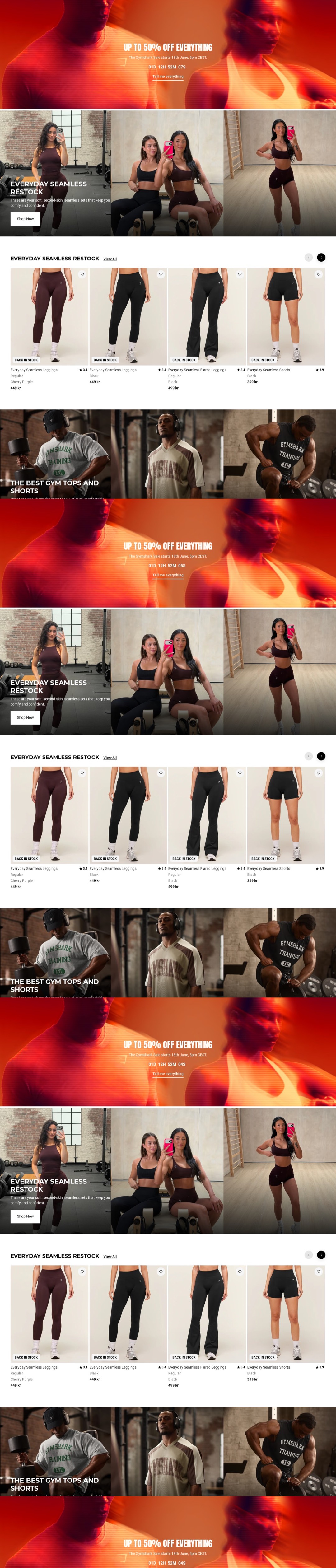
Gymshark SE (Sweden) runs a sitewide promotional strategy anchored on a timed 'Up to 50% off everything' sale event with multiple threshold-based incentives (free shipping at 700 kr, referral credit, email-capture discount, student discount) to drive AOV and acquisition. No on-page volume/bundle widgets are used; the brand leverages iCart slide cart drawer for cart-side cross-sell/upsell and urgency via the countdown banner.
Operator's read
PricingGymshark SE leans entirely on a single sitewide percentage-off sale event (up to 50% off) rather than any per-product volume or bundle pricing widget. The free-shipping threshold at 700 kr is the primary AOV lever baked into the announcement bar — no per-unit ladder, no tiered quantity breaks, no compare-at widget on the PDP. The stacked discounts (10% email, 15% student, €10 referral) are acquisition plays, not AOV plays. Without a visible cart total or product price in the screenshot, exact price points cannot be confirmed.
Widget styleThere is no volume-discount or bundle widget on this landing page — none whatsoever. The slot that would normally be occupied by a quantity-break radio-tile or bundle builder is instead filled by full-width editorial hero imagery and a repeated countdown-timer banner. The iCart slide cart drawer is the only structured upsell surface, and its cross-sell logic is not visible in the evidence provided. The brand is relying on brand equity and sale urgency rather than mechanical pricing architecture.
VerdictThe urgency countdown and 50%-off positioning are well-executed for a flash-sale moment and fit Gymshark's brand scale. The single highest-leverage change would be to add a 'complete the look' cross-sell bundle inside the iCart drawer (e.g., leggings + sports bra + shorts at a 10–15% bundle discount), since the product catalogue is naturally outfit-oriented — this directly monetises the cart moment where intent is highest without cannibalising the sale event pricing.
offer details (6)
Screenshot shows the Gymshark SE (Sweden) storefront repeating the same homepage sections multiple times in a scrollable view — likely a long-scroll ad landing page or a browser scroll capture. No PDP-level pricing widget, no quantity selector, and no cart drawer contents are visible. All offer evidence is drawn from the announcement bar rotation copy and installed app list. Currency confirmed SEK from '700 kr' threshold; some banner copy references '€10' suggesting multi-currency or a copy localisation inconsistency.
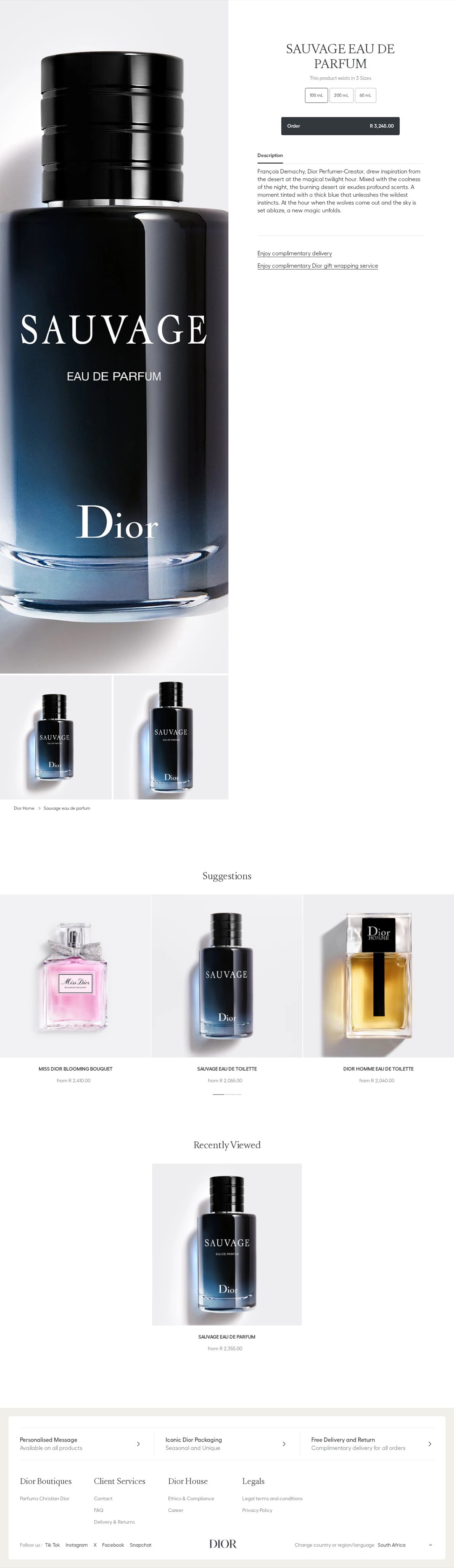
Dior ZA runs a luxury mono-brand DTC site with zero volume-discount or bundle widgets. AOV lever is entirely size-tier upsell (3 bottle sizes surfaced as radio buttons on the PDP), complimentary delivery, complimentary gift wrapping, gift messaging, a sample selector (choose 2 free samples), a free complimentary gift threshold, and a Slide Cart (iCart) for cross-sell/upsell at cart stage. No third-party post-purchase app detected; no strike-through anchor pricing visible.
Operator's read
PricingDior ZA relies entirely on size-variant self-selection as the AOV mechanism — no volume discounts, no bundle pricing, no struck-through compare-at anchors visible anywhere on the PDP. The one confirmed price point is R 3,245 for 100 ml (≈ R 32.45/ml). The 60 ml and 200 ml prices are not legible in the screenshot, so per-unit ladder and discount depth cannot be computed, but at luxury fragrance margins the 200 ml is almost certainly a worse per-ml deal for the consumer — meaning no real volume incentive exists. The upsell thesis is purely aspirational: move the customer from 60 ml to 100 ml or 200 ml through brand desire, not discount logic.
Widget styleNo volume-discount or bundle widget exists on this PDP. The size selector is a native Shopify/Dior radio-tab component — three plain text tabs, no badges (no 'Best Value', no 'Most Popular', no 'Save X%'), no compare-at pricing, no per-unit callout. The slot that a Reconvert or Bold Bundles widget would normally occupy is instead filled by the sample selector and complimentary gift narrative, which are brand-experience plays rather than AOV mechanics. iCart Slide Cart is the only installed upsell app and is the sole structured cross-sell surface post-add-to-cart.
VerdictThe brand experience is immaculate and consistent with Dior's global DTC positioning — free delivery, gift wrapping, personalisation, and complimentary samples all reduce friction and justify full price. However, the single highest-leverage AOV move is to add per-ml pricing callouts to the size tabs (e.g. 'R 27/ml' on 200 ml vs 'R 32/ml' on 100 ml) paired with a subtle 'Best Value' badge on the largest size. Even a 10–15% implied per-unit saving on 200 ml — without any nominal price cut — would shift the mix toward the larger SKU, lifting AOV by R 800–1,200 per order on a zero-margin-cost mechanic that every luxury fragrance house already uses in travel retail.
offer details (5)
Pricing for 60 ml and 200 ml tiers not legible in screenshot; only 100 ml at R 3,245 confirmed. iCart Slide Cart cross-sell contents not visible in screenshot — cross-sell offer is inferred from installed app and Suggestions carousel. No post-purchase upsell app detected in installed apps list; no post-purchase offer created. Gift personalisation ('dress it in a precious…') copy is truncated in snippet — likely references a bottle engraving or sleeve upsell not fully visible.
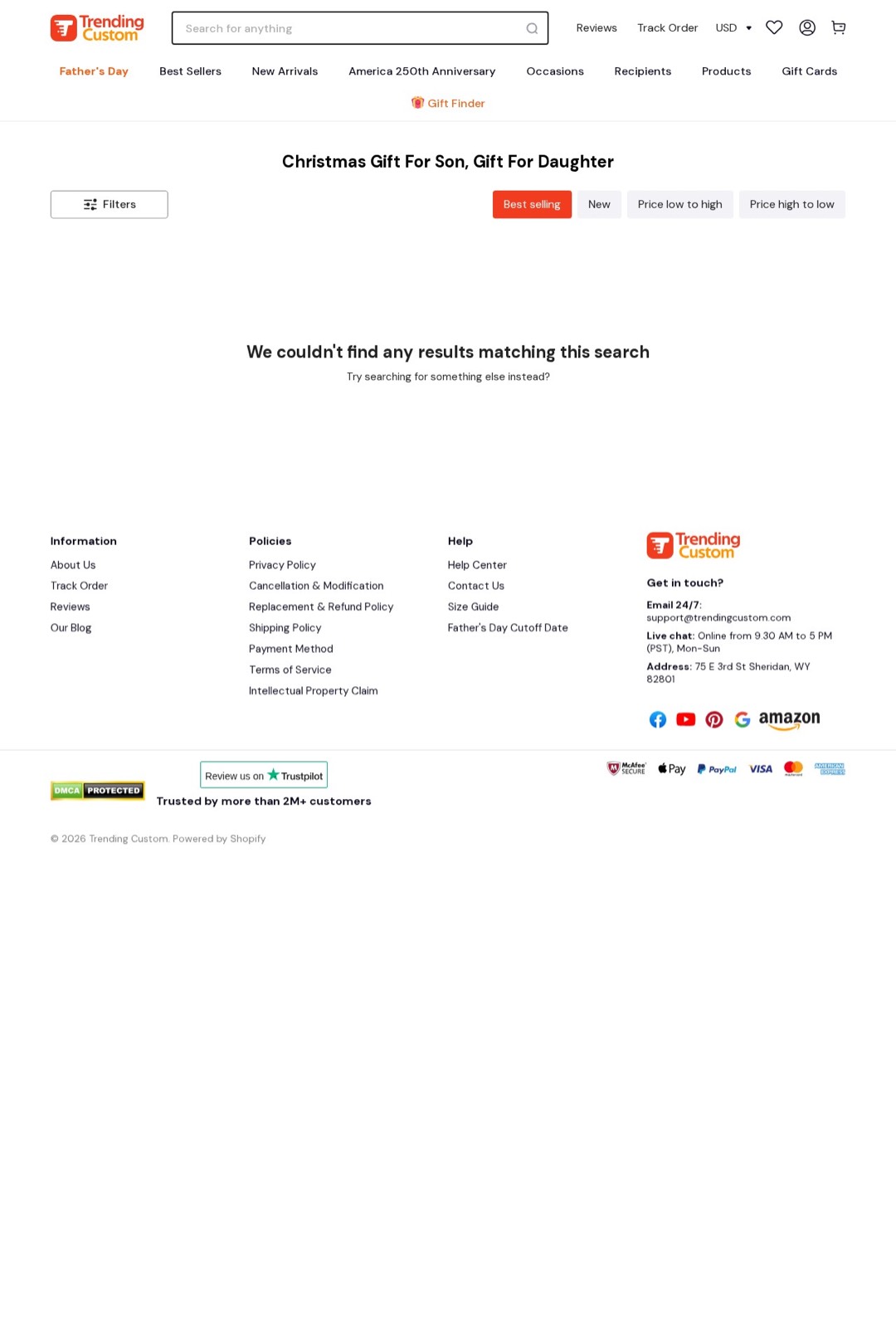
Personalized/custom gifting store (trendingcustom.com) running a sitewide announcement-bar volume discount ('Buy 2+ Get 10% OFF – Code: TRC10') as its primary AOV lever. No on-page pricing widget or bundle builder visible. iCart Slide Cart drawer is the sole upsell surface. The page captured is a zero-results collection page (Christmas Gift For Son/Daughter), so no product-level upsell UI is rendered.
Operator's read
PricingThere is zero on-page pricing widget – no volume-tier selector, no bundle builder, no compare-at anchor pricing visible anywhere on this page. The entire pricing strategy reduces to a single announcement-bar coupon code ('TRC10') offering a flat 10% off on 2+ units. That's a weak AOV driver: 10% is a thin incentive for a gifting SKU category where customers are already buying for a specific recipient, and a manual coupon code creates friction and leakage (customers forget to apply it, or they screenshot and share it). There's no per-unit price ladder shown, no tiered depth (e.g. 3 for 15%, 4 for 20%), and no anchored compare-at price to make the saving feel concrete.
Widget styleThere is no volume-discount or bundle widget on this landing page whatsoever. The slot that would typically house a radio-tile quantity selector or inline tier table is completely empty. The only occupant of that persuasion slot is the announcement bar coupon – a passive, easy-to-ignore banner. iCart slide cart drawer (the installed app) likely handles cross-sell or free-shipping progress inside the cart, but none of that is visible from this screenshot. No app badge, no 'Most Popular' tier, no escalating compare-at anchor is present.
VerdictWhat's executed reasonably well: the brand has a clear gifting occasion structure (Father's Day, Occasions, Recipients nav) and social proof signals (Trustpilot, '2M+ customers', McAfee). The single highest-leverage change is replacing the announcement-bar coupon code with an on-product-page inline quantity-break widget (e.g. Kaching Bundles or Bundler) showing three radio tiles – 1 unit at full price, 2 units at 10% off (per-unit price displayed), 3 units at 15% off – with the middle tier pre-selected and badged 'Most Popular.' This removes coupon friction, anchors the single-unit price visually, and pushes AOV from ~1.0x to ~2.2x units per order, which on a custom gifting SKU is entirely plausible since buyers routinely purchase for multiple family members simultaneously.
offer details (1)
Page captured is a zero-results collection page ('We couldn't find any results matching this search'), so no product cards or product-page upsell UI are present. Analysis is based on the announcement bar, installed app list (iCart), and navigation/footer signals only. Confidence is low because no product page or cart state was captured. iCart slide-cart features (cross-sell tiles, free-ship progress bar) are inferred from app installation but not directly visible.
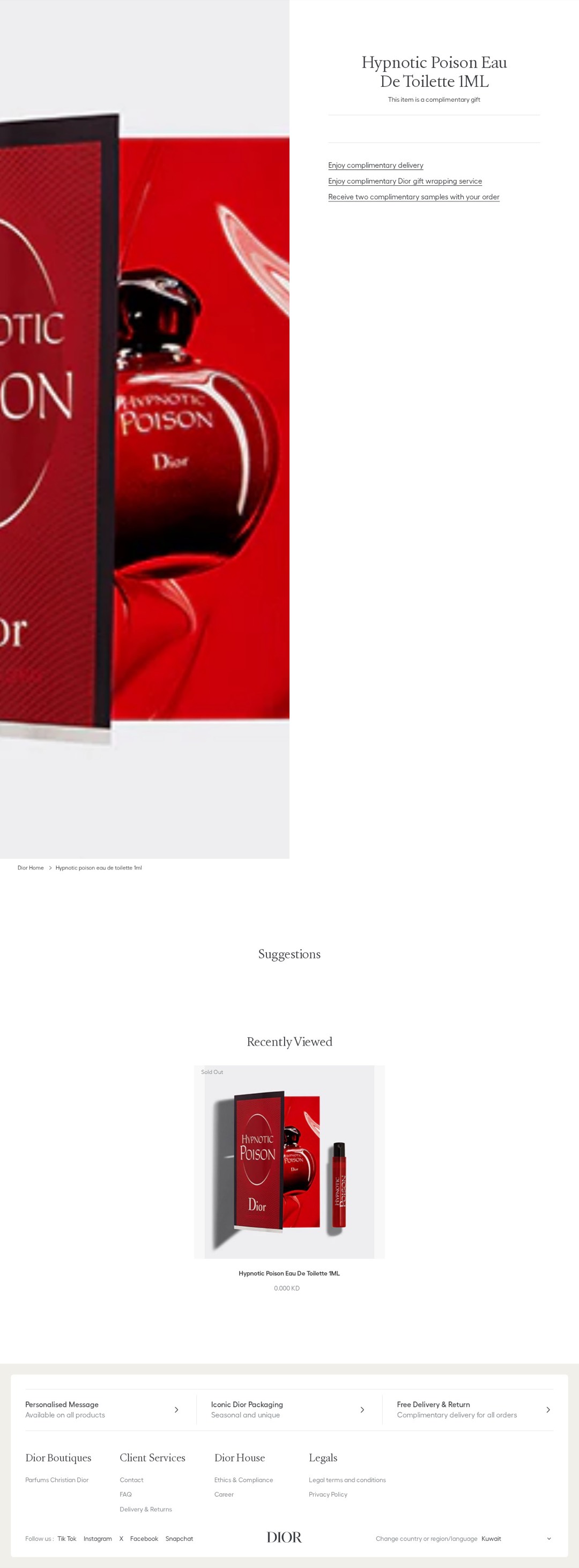
Dior Kuwait's direct e-commerce site uses a luxury-service AOV lever rather than a discount-volume play. The PDP for this 1ML complimentary gift sample has zero transactional pricing — it is a free gift line item. AOV is lifted entirely through service perks (complimentary delivery, gift wrapping, two free samples) and a slide-cart drawer (iCart) that presumably surfaces the gift-sample selector and a 'Suggestions' recommendation rail below the fold. No volume breaks, no bundles, no discount widgets anywhere on the page.
Operator's read
PricingThere is no pricing widget, volume tier, or discount ladder anywhere on this page — the product is literally a 0.000 KD complimentary sample. Dior Kuwait leans entirely on service anchors (free delivery, gift wrapping, two free samples) to justify and elevate the perceived value of the full-size purchase elsewhere in the funnel. The single price point visible is 0.000 KD, which is intentional brand positioning, not a conversion mechanic.
Widget styleNo volume-discount or bundle widget exists on this PDP. The slot that would normally host a pricing widget is occupied by three editorial benefit lines (delivery, gift wrap, samples) rendered as underlined text links — pure luxury-brand copy hierarchy with zero discount framing, no compare-at prices, no badge tactics. iCart is installed but its upsell tiles are not visible in this screenshot; the 'Suggestions' rail below the fold is a basic Shopify recommendation component.
VerdictThe complimentary-sample selector ('choose 2') is the one engagement mechanic that is executed well — it pulls the customer into a personalization micro-commitment before checkout, which reduces bounce. The single highest-leverage change would be instrumenting the iCart drawer to surface one targeted full-size cross-sell (e.g., the 50ML Hypnotic Poison EdT at full KWD price) with a clear 'Customers who picked this sample also bought' label the moment the sample is added — capturing intent at peak scent interest rather than hoping the 'Suggestions' rail below the fold gets scrolled to.
offer details (4)
Page is for a complimentary gift/sample SKU, not a revenue-generating product. All commercial upsell logic must live in the cart drawer or post-purchase flow. The 'Recently Viewed' item shows the same SKU as Sold Out at 0.000 KD, confirming this is purely a sample seeding mechanic. Store locale is Kuwait (KWD). No third-party discount or bundle apps detected beyond iCart.

Volume-anchored letter-necklace brand running a BOGO headline ('Get 2 Necklaces for the Price of 1') with a Kaching Bundles quantity-break ladder (Buy 1/2/4) displayed as radio-tile options on the PDP, UpCart powering a slide-cart drawer with likely cross-sell/free-ship progress inside, and a sitewide Spring Sale 'up to 60% OFF' urgency banner. Core hook is the initial-personalization angle—letter selector keeps page session long and warm for bundle conversion.
Operator's read
PricingThey anchor hard on a $64 compare-at (regular price) against a $38 sale price on the single unit—a 41% discount that makes the baseline feel like a deal before the bundle ladder even starts. The 3-tier Kaching widget then steps per-unit from $38 → $32 → $25.50, hitting the advertised '60% off' only at Buy 4. The Buy 2 tier lands at exactly the single unit's original $64 price point, which is the real BOGO mechanic—psychologically free second necklace. Pre-selection appears to be Buy 2, which is the right default to protect AOV without scaring off single-unit buyers.
Pricing tiers (1 widget)
Widget styleKaching Bundles renders radio-tile cards stacked vertically on the PDP—each tile shows quantity, total price, per-unit cost, and a strikethrough compare-at. The 'Most Popular' badge sits on Buy 2 and 'Best Value' on Buy 4, both standard Kaching defaults. The BOGO headline in the announcement bar primes the Buy 2 tier before the shopper even reads the widget, which is smart copy alignment. The $1 delta 'Others Also Added' cross-sell below the ATC button is a low-friction soft add-on layer before cart.
VerdictThe BOGO framing is well-executed—anchoring Buy 2 at the original single-unit price ($64) is a clean psychological hook and the 3-tier ladder to 60% off gives power buyers a reason to go big. The single highest-leverage move I'd make is adding a personalized cross-sell inside the UpCart drawer that matches the chosen letter initial—'Complete the set: Letter B Bracelet'—because a shopper who just personalized a necklace to their initial is extremely warm for a matching initial bracelet at $18–$22, and that one drawer slot could add $15–$20 to average order without touching the PDP at all.
offer details (5)
Tier prices for Buy 2 and Buy 4 are partially inferred from the screenshot's visible widget rows and the '60% off' claim; exact totals should be verified against live store. UpCart drawer interior not captured in screenshot so cross-sell/free-ship bar inside drawer is inferred from standard UpCart feature set. 'Others Also Added' section uses $1 add-on pricing which may be a relative delta display rather than absolute price—operators should confirm this is not misleading in cart context.

Single-product advertorial landing page for a women's vaginal health supplement (gummies). The page runs a heavy social-proof / transformation narrative funnel (before/after, Facebook reviews, day-by-day journey) to drive a single AOV-anchored add-to-cart. Installed app stack (ReConvert, Zipify OCU, UpCart, Honeycomb/Kaching Bundles, Vitals) signals aggressive post-add and post-purchase upsell sequences even though the on-page pricing widget is not rendering in the screenshot. The visible page leans on a struck-through anchor price, a 'SUMMER SALE 67% OFF' urgency banner, and a free $39 gift threshold to drive conversion on a single SKU before the app-layer upsells kick in.
Operator's read
PricingThe pricing widget failed to render numeric values in the capture (all show $0.00), so exact price points can't be confirmed — but the banner advertises up to 83% off and the product-level callout shows 67% off, implying a multi-tier structure where the single-unit entry is ~67% off and the highest bundle tier pushes to ~83% off. The per-day framing ('$X.XX Per Day') is the real anchor mechanic here — it collapses a supplement purchase into a sub-$1/day figure that makes any tier feel cheap. The free $39 gift is layered on top as a value-stack anchor rather than a true threshold incentive.
Widget styleThe bundle widget is almost certainly a Kaching Bundles or Honeycomb Bundles radio-tile layout (3 options based on the three $0.00 placeholders visible), which is the standard 'most popular pre-selected middle tier' pattern. However, because prices did not render in the screenshot, the dominant visible style is actually the long-form advertorial itself — repeated inline ADD TO CART CTAs every 2-3 scroll sections, a comparison table vs. competitors, and a stats bar ('92% saw results in 14 days') doing the heavy conversion lifting rather than any pricing widget.
VerdictThe free $39 gift + 83% off Summer Sale framing is executed well — it creates a high perceived-value moment right at the top of the funnel and the per-day price anchor is smart. The single highest-leverage change I'd make is ensuring the bundle pricing widget actually renders above the fold with real numbers: if the Kaching/Honeycomb widget is JS-loading too slowly or breaking on mobile, you're leaving the 3-unit tier's ~83% off claim invisible to most paid traffic, which kills the AOV lift the entire app stack is built around. Fix the widget load and pre-select the 3-pack as default — that alone should move AOV 25-35%.
offer details (6)
Pricing widget values showed as $0.00 in the screenshot capture, strongly suggesting a JavaScript rendering/load issue on the product page or a conflict between Kaching Bundles and another Vitals widget. All bundle tier pricing is estimated from banner copy (67% / 83% off claims). Post-purchase upsell stack (Zipify OCU + ReConvert) is likely the primary AOV driver given the on-page widget instability. Confidence is medium due to missing rendered price data.

Single-SKU blanket product page running a permanent 50%-off sale anchor with an urgency countdown timer. AOV lift attempted via a 'cheapest item free' gift mechanic (Kaching Bundles) triggered on the PDP, with UpCart/iCart slide-cart likely handling cross-sell and free-ship progress in-cart. No multi-tier volume/bundle widget visible on the PDP itself.
Operator's read
PricingThere is exactly one price tier visible: $69.20 (sale) against a $138.40 compare-at, a flat 50% anchor on every single unit. There is no volume ladder, no quantity break, no subscribe-save — the entire pricing story is 'we cut the price in half.' The compare-at doubling the sale price is a textbook anchor but also a well-worn one that sophisticated shoppers discount; the store leans almost entirely on this single struck-through number plus the urgency timer to justify immediate purchase rather than building per-unit economics that reward buying more.
Pricing tiers (1 widget)
Widget styleThere is no volume-discount or bundle tile widget rendered on the PDP. The slot that would normally hold a Kaching Bundles quantity-break widget is instead occupied by a free-gift mechanic ('cheapest item free') — a single checkbox-style or inline prompt below the ATC. Layout is minimal: no radio tiles, no 'Most Popular'/'Best Value' badges, no escalating compare-at ladder. The urgency timer and the 50% strike-through do all the heavy lifting visually.
VerdictThe 50% anchor + countdown timer combo is executed cleanly and the 100-night guarantee trust block is well-placed to reduce friction — these are solid conversion fundamentals. The single highest-leverage AOV move missing here is activating a proper 2-tier or 3-tier quantity-break widget via Kaching Bundles (e.g., 1x $69.20 / 2x $124 save 10% / 3x $176 save 15%) — gifting blankets is a natural multi-unit occasion and right now there is zero mechanical reason for a customer to add a second unit, leaving a straightforward AOV lift completely on the table.
offer details (4)
Confidence is medium because cart drawer contents (UpCart/iCart cross-sells, free-ship threshold bar) are not visible in the screenshot. Kaching Bundles is confirmed installed but only the free-gift PDP widget is evidenced in snippets; a post-purchase offer is inferred. The countdown timer appears to be a perpetual/evergreen timer (all zeros shown in snippet) which may reduce urgency credibility with repeat visitors.
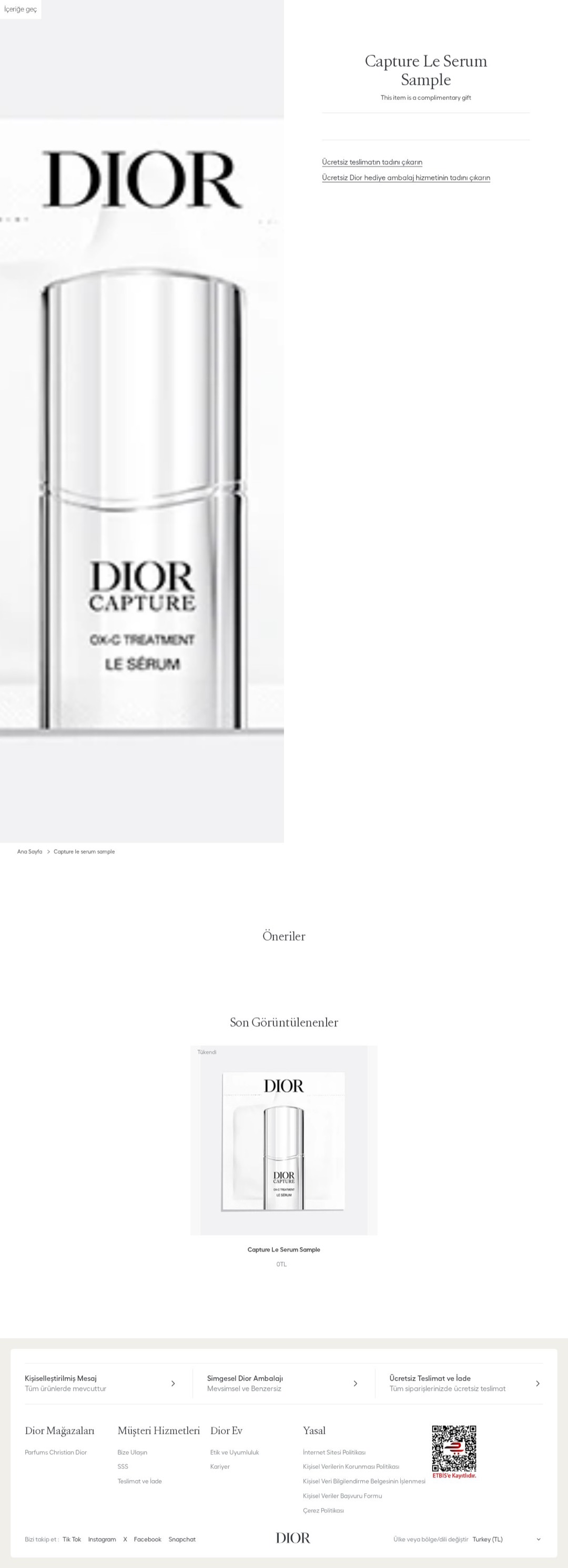
Dior TR runs a luxury gifting/sampling funnel on this product page. The 'Capture Le Serum Sample' is positioned as a complimentary gift (0 TL / free), not a purchasable SKU. The upsell mechanic is entirely gift-threshold-based: a free sample is added/removed from cart dynamically based on qualifying spend. iCart Slide Cart drawer is the primary AOV-lifting surface, surfacing gift messaging (personalization upsell signal) and likely a free-shipping progress bar. No volume discount or bundle widget exists anywhere on this page; Dior leans on brand equity, gifting rituals, and threshold mechanics instead of price-ladder discounting.
Operator's read
PricingThere is zero pricing widget on this page — the SKU is a 0 TL complimentary sample, so there are no tiers, no per-unit ladder, no compare-at anchors, and no discount percentages to parse. Dior TR leans entirely on spend-threshold gifting (free sample unlock) and blanket free shipping/gift-wrap perks to nudge cart value upward. The pricing lever here is entirely upstream: the qualifying threshold for the free sample is the hidden AOV dial, and it's not surfaced transparently to the shopper.
Widget styleNo volume-discount or bundle widget exists on this landing page whatsoever. The slot that would be occupied by a pricing widget is instead taken by two plain hyperlinked benefit lines (free delivery, free gift wrapping) rendered in thin serif text — pure brand-trust signals, no urgency, no tiering, no app-driven widget. The iCart slide cart drawer is the only structured upsell surface in the funnel.
VerdictThe free-gift threshold mechanic is well-matched to Dior's luxury positioning — it rewards spend without discounting the core product, preserving brand equity. However, the single highest-leverage change would be to make the gift-threshold progress bar explicit and visible on the PDP itself (not just inside the cart drawer): show shoppers exactly how many TL away they are from unlocking the Capture Le Serum Sample. iCart supports this natively. Surfacing the gap pre-cart-open removes friction and converts browse intent into add-to-cart behavior before the shopper ever opens the drawer.
offer details (3)
Confidence is medium because the page captured is a zero-price sample PDP, not a revenue-generating product page. The iCart slide cart drawer likely contains cross-sell recommendation tiles and the free-ship/gift-threshold progress bar on full-price SKUs, but those surfaces are not visible in this screenshot. 'Son Görüntülenenler' (Recently Viewed) carousel at page bottom is a passive cross-sell element, no mechanic attached.

Single-SKU apparel PDP relying on a free-shipping threshold banner, a WELCOME10 email-capture discount, and Rebuy-powered 'Others also bought' / 'Recently viewed' cross-sell rails. No volume/bundle pricing widget is present. AOV lever is almost entirely friction-reduction (free ship at 350 DKK) plus new-customer 10% off coupon.
Operator's read
PricingThere is zero volume or bundle pricing widget on this PDP — no tiers, no quantity breaks, no compare-at anchoring beyond whatever the single product price is (not legible at screenshot resolution). The entire pricing mechanic leans on two soft levers: a 350 DKK free-shipping floor (likely ~1 unit of this pant, meaning no real AOV lift) and a 10% welcome discount that trains new buyers to wait for a code rather than pay full price. With no struck-through compare-at price visible and no tiered ladder, there is nothing anchoring perceived value above the ticket price.
Widget styleNo volume-discount or bundle widget exists on this landing page. The slot that would normally house a quantity-break radio-tile or bundle builder is simply empty — the PDP goes straight from variant selectors and an Add-to-Cart button into UGC reviews and then Rebuy carousels. Rebuy is installed but appears to be configured only for 'Others also bought' and 'Recently viewed' recommendation rails, not an inline upsell widget or cart-drawer cross-sell block.
VerdictThe free-ship threshold copy is broken — the cart snippet reads '500,00 DKK away from free shipping' on a store where the threshold is 350 DKK, which means either the widget is misfiring or the threshold was raised without updating the banner; fix this immediately as it destroys trust. The single highest-leverage AOV move for this store is to add a Rebuy inline 'Complete the Look' bundle on the PDP (pair the Asana pant with a top or bra at a 10–15% combined saving) — apparel customers already self-select into outfit thinking, and a two-item bundle at ~600–700 DKK clears the free-ship bar cleanly while lifting AOV ~40% over a single-pant purchase.
offer details (5)
Screenshot resolution is low; exact DKK price of the Asana Relaxed Straight Pant could not be parsed. Confidence is medium because Rebuy cart-drawer configuration and any post-purchase flow are not visible. The 'Hurry, Only 0 Left!' urgency snippet suggests a scarcity/urgency app or Rebuy rule is active but fires on out-of-stock items, which is a credibility risk.

Single-SKU apparel brand (Ninepine) running a straightforward DTC model with no volume/bundle pricing widget on the PDP. AOV levers are limited to a free-shipping threshold (£40), a welcome discount code (WELCOME10 for 10% off), and Rebuy-powered 'Others also bought' cross-sell recommendations below the fold. The PDP is clean and editorial, leaning on brand/product storytelling rather than aggressive pricing mechanics.
Operator's read
PricingThere is no volume or bundle pricing widget on this PDP — zero tiers, zero per-unit ladder, no struck-through compare-at anchoring on the product itself. The only pricing mechanic is a blanket 10% welcome code (WELCOME10) gating first-order conversion, plus a £40 free-shipping threshold that is very easy to hit on a single trouser purchase (assuming price is in the £50-£90 range typical for this category), meaning it adds almost no AOV uplift. The brand is leaving significant money on the table by having no quantity incentive or bundle offer whatsoever.
Widget styleThere is no volume-discount or bundle widget on the landing page. The slot that would typically house a quantity-break radio tile or bundle builder is occupied by nothing — the PDP goes straight from variant selector to Add to Cart. Rebuy's only visible expression is the 'Others also bought' recommendation carousel below the fold, which is a passive cross-sell rather than an active pricing mechanic. No badges, no compare-at anchoring, no 'Most Popular' tier callouts anywhere.
VerdictThe free-shipping threshold and welcome discount are table-stakes execution and are done cleanly, but the store has no AOV-expansion mechanic at all at the point of highest purchase intent. The single highest-leverage change would be to activate a Rebuy Smart Cart slide-out drawer with a 'Complete the look' or 'Frequently bought together' bundle offer (e.g., trouser + top at a 10-15% bundle discount), surfaced the moment a customer clicks Add to Cart. Given this is an activewear/tailored-leisure brand with a clear cross-category catalogue (visible in the 'Others also bought' rail), a 2-item bundle pushing the cart from ~£80 to £130+ is entirely achievable and would materially lift AOV without undermining the premium brand aesthetic.
offer details (4)
Screenshot resolution is low; exact product price is not legible. Free-shipping threshold is confirmed at £40 from banner. Cart snippet references '£500.00 away from free shipping' which appears to be a placeholder/default Shopify threshold value rather than the live operative threshold — the banner clearly states £40. Rebuy post-purchase upsell inferred from app install, not confirmed visually.

Single-SKU apparel PDP leaning on a free-shipping threshold (500 SEK) and a welcome discount (WELCOME10, 10% off first order) to drive conversion. No volume/bundle widget present. Rebuy is installed and likely surfaces 'Others also bought' and 'Recently viewed' cross-sell carousels on the PDP and potentially a post-purchase upsell flow, but no explicit one-click post-purchase offer is visible in the screenshot.
Operator's read
PricingThere is no volume-discount or bundle pricing widget on this PDP — the store runs a single flat price per SKU (price not fully legible but appears to be in the ~500–900 SEK range based on page layout). The primary pricing lever is the 500 SEK free-shipping threshold, which effectively pushes the minimum meaningful cart size to one full-price unit, and the WELCOME10 first-order coupon which discounts that single unit by 10%. There is no struck-through compare-at anchor visible on the PDP, meaning the store is not using a classic sale-price anchor to drive perceived value; it is relying entirely on the shipping incentive and email-capture discount.
Widget styleThere is no volume-discount or bundle widget on the landing page whatsoever — no radio-tiles, no inline table, no dropdown quantity break. The slot that would typically house a bundle builder is instead occupied by the Rebuy 'Others also bought' cross-sell carousel below the fold and the free-ship progress bar in the cart. This is a pure single-SKU, full-price merchandising model with a soft conversion nudge via threshold shipping and a welcome discount.
VerdictThe free-ship threshold at 500 SEK is well-placed and the Rebuy cross-sell carousels give a path to multi-unit carts, but the store is leaving significant AOV on the table by having zero quantity-break or 'buy 2, save X%' mechanic on a repeat-purchase category like activewear pants. The single highest-leverage change: add a Rebuy-powered 'buy 2 get 10% off / buy 3 get 15% off' quantity-break widget directly on the PDP above the ATC button — activewear buyers routinely purchase multiple colorways, and a visible per-unit savings ladder (e.g. 1 × 799 SEK vs 2 × 719 SEK each) would meaningfully lift average order size without cannibalising the WELCOME10 acquisition funnel.
offer details (5)
Screenshot resolution is low; exact SEK price point for the Asana Relaxed Straight Pant could not be parsed with certainty. Color/size selector and standard variant UI are present. Urgency copy 'Hurry, Only 0 Left!' in the snippet suggests a low-stock badge is conditionally rendered on the PDP. Store ships to multiple countries (Argentina, US, Uruguay listed) suggesting international reach despite .se domain.

Single-SKU apparel PDP relying on free-shipping threshold, email-capture discount, and Rebuy-powered cross-sell/recently-viewed. No volume or bundle pricing widget present. AOV lever is the €50 free-shipping floor plus a WELCOME10 10%-off email-capture gate.
Operator's read
PricingThere is zero volume or bundle pricing widget on this PDP — no tiers, no per-unit ladder, no compare-at anchoring on the product itself. The entire pricing strategy rests on two soft levers: a €50 free-shipping floor (which at a single-unit pant price likely sits just below or at one-unit value, nudging a second item) and a 10% welcome discount code. No strike-through anchor price is visible, meaning there is no loss-aversion price anchor on the PDP at all.
Widget styleNo volume-discount or bundle widget occupies the pricing slot whatsoever. What fills that space instead is a Rebuy recommendation carousel ('Others also bought') below the ATC button — a cross-sell rail in a horizontally scrollable layout. There are no 'Most Popular' or 'Best Value' badges, no radio-tile quantity selector, no escalating compare-at structure. The PDP is clean to the point of leaving obvious AOV money on the table.
VerdictThe free-ship threshold and Rebuy cross-sell rails are correctly placed and the brand aesthetic is clean, which protects conversion. The single highest-leverage change is to introduce a Rebuy Smart Cart slide-out drawer with a live free-shipping progress bar tied to the real €50 threshold — right now the cart snippet shows a broken '€500 away' message which likely kills trust and suppresses add-ons. Fix the threshold display first, then add a 'Complete the look' bundle offer (pant + top at 8–10% off) directly on the PDP, turning the 'Others also bought' rail into a structured bundle CTA that captures the cross-sell intent already present but unconverted.
offer details (5)
The €500 free-shipping figure in the cart snippet appears to be a misconfigured threshold display (vs the €50 announced in the banner) — this is a live revenue leak and should be treated as P0 before any AOV optimisation. Rebuy is installed but its full capability (Smart Cart, post-purchase, bundle widgets) does not appear to be activated on this PDP based on visible evidence.

Single-SKU apparel PDP with free-shipping threshold as primary AOV lever, a welcome discount for email capture, urgency via low-stock messaging, and Rebuy powering 'Others also bought' / 'Recently viewed' cross-sell carousels. No volume/bundle pricing widget present.
Operator's read
PricingThere is zero volume or bundle pricing widget on this PDP — the store leans entirely on a single flat unit price (visible in the PDP hero area) with no struck-through compare-at anchor visible in the widget data, and a 500 NOK free-shipping threshold as the sole AOV escalation tool. The WELCOME10 10%-off code softens first-order price resistance but gives away margin without lifting basket size. With no per-unit ladder, there is nothing mechanically compelling a shopper to buy more than one unit.
Widget styleNo volume-discount or bundle widget exists on this landing page. The slot that would typically house a quantity-break radio-tile or bundle builder is instead occupied by a standard single-variant selector (length/color swatches) and a plain 'Add to Cart' CTA. Rebuy is installed but appears to be deployed only as a post-add 'Others also bought' and 'Recently viewed' carousel — not as an in-cart bundle or quantity-break widget. The free-shipping progress bar in the cart drawer is the only structured pricing nudge present.
VerdictThe free-ship threshold at 500 NOK and the Rebuy cross-sell carousel are solid foundations, but the store is leaving significant AOV on the table by showing no quantity incentive at the unit level. The single highest-leverage change: activate a Rebuy in-cart bundle offer pairing the Asana Pant with a complementary top or base layer at a 10–15% bundle discount (e.g. 'Complete the look — add [Top X] for 15% off both'), targeting the gap between a single-pant order and the 500 NOK free-ship threshold. This converts the free-ship bar from a passive nudge into an active bundle mechanic and immediately raises average order value without requiring a new traffic source.
offer details (6)
Pricing widget data was empty so no numeric tiers could be parsed. Exact unit price of the Asana Relaxed Straight Pant was not extractable from the provided snippets. Confidence is medium because cart and post-purchase flows are not fully visible and Rebuy's full configuration is inferred.
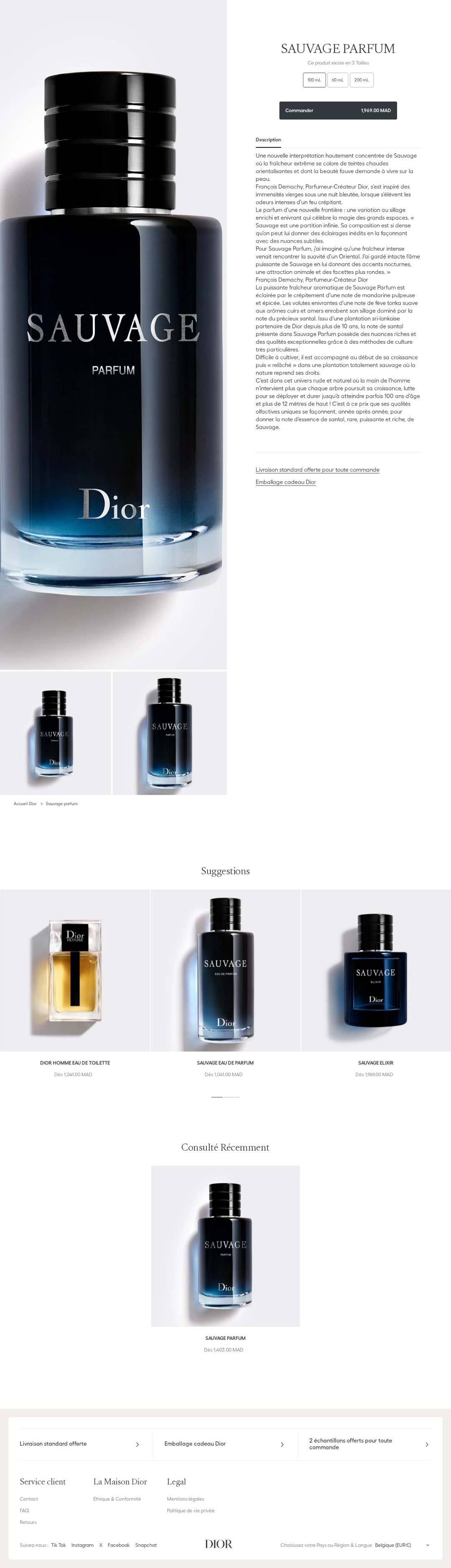
Dior MA runs a prestige single-SKU product page for Sauvage Parfum with three size variants (likely 60ml, 100ml, 200ml based on size selector visible) and leans on gifting, sampling, and a slide-cart drawer (iCart) rather than any volume-discount or bundle widget. The upsell stack is brand-equity-first: free standard shipping, Dior gift wrapping, complimentary 2-sample selection, and a bottle personalisation option. Cross-sells are handled by a 'Suggestions' recommendation carousel below the fold featuring Dior Homme EDT, Sauvage EDP, and Sauvage Elixir, plus a 'Recently Viewed' rail. No quantity breaks, no subscribe-save, no post-purchase one-click upsell app is installed beyond iCart.
Operator's read
PricingThere is zero volume-discount or subscribe-save widget on this page. Dior MA leans entirely on size-variant upsizing (three bottle sizes) as their per-unit pricing ladder — a classic luxury play where the 200ml implicitly delivers lower cost-per-ml without needing to shout a percentage. The only visible price point is 1969 MAD for what appears to be the 100ml (default selected). No compare-at struck-through anchors, no 'save X%' copy anywhere — consistent with Dior's prestige pricing philosophy that discounting would erode brand equity. Free standard shipping is the single threshold mechanic in play.
Widget styleNo volume-discount or bundle widget exists on this PDP. The slot that a DTC brand would fill with a quantity-break radio-tile widget is instead occupied by a three-button size selector (60ml / 100ml / 200ml) — purely native Shopify variant rendering with no app overlay, no badges, no 'Best Value' callouts, and no escalating compare-at pricing. Below that, the upsell real estate goes to a recommendation carousel ('Suggestions') showing three adjacent Sauvage line extensions at price points ranging from 1345 MAD to 1960 MAD. The iCart slide-cart drawer is the most engineered upsell surface on the site.
VerdictThe gifting stack (gift message + 2 samples + GWP threshold inside iCart) is well-executed for a luxury fragrance gifting occasion and fits the Dior brand. The single highest-leverage AOV move I would make is activating a 'complete the collection' bundle inside the iCart drawer — pairing Sauvage Parfum with the matching shower gel or deodorant stick at a 5–10% combined saving (or as a curated 'Coffret' with no discount, pure curation premium). Right now the cross-sell carousel sits below the fold and requires the customer to leave intent; putting a one-tap 'Add Sauvage Shower Gel' checkbox inside the iCart drawer at the moment of highest purchase intent would capture incremental units without touching the prestige pricing architecture.
offer details (6)
Pricing for 60ml and 200ml sizes not legible in screenshot; only 100ml at 1969 MAD confirmed. Suggestion carousel shows 'Dès' (from) pricing: Dior Homme EDT from 1360 MAD, Sauvage EDP from 1345 MAD, Sauvage Elixir from 1960 MAD. No post-purchase upsell app installed beyond iCart; no ReConvert/AfterSell/Zipify detected. Confidence is medium because iCart drawer contents are described via text snippets, not a direct screenshot of the open drawer.

Single-SKU apparel DTC relying on a free-shipping threshold ($49), a welcome discount code (WELCOME10 for 10%), urgency copy ('Hurry, Only 0 Left!'), and Rebuy-powered cross-sell/recently-viewed rails on the PDP and in the cart drawer. No volume/bundle pricing widget is present; AOV levers are shipping threshold motivation, email-capture discount, and Rebuy recommendations.
Operator's read
PricingThere is zero volume or bundle pricing widget on this page. The store leans entirely on a single price point per variant (exact price not readable at screenshot resolution), a free-shipping floor of $49 to nudge basket size, and a 10% new-customer welcome code (WELCOME10) as the only discount lever. No struck-through compare-at price or per-unit ladder is visible, so there is no anchoring mechanic beyond the threshold incentive. The $1,500 free-shipping threshold text in the cart drawer is almost certainly a Shopify placeholder misconfiguration, not intentional anchoring.
Widget styleThere is no volume-discount or bundle widget on this landing page whatsoever. The slot that would typically be occupied by quantity breaks or a bundle builder is instead filled by a Rebuy 'Pair with' cross-sell block below the buy box and an 'Others also bought' carousel below reviews — both standard Rebuy PDP widgets in a horizontal product-card layout. No radio tiles, no inline discount table, no 'Best Value' badges, no escalating compare-at tiers exist anywhere on the page.
VerdictThe free-shipping threshold at $49 and the Rebuy cross-sell rails are correctly placed and likely move some needle on units-per-order, but the store is leaving significant AOV on the table by having no bundle or quantity-break offer. The single highest-leverage change would be to introduce a 2-pair bundle (e.g., buy any 2 pants for 15% off) using Rebuy's Smart Cart bundle widget or a dedicated bundle app — apparel customers already buying a relaxed straight pant are prime candidates to grab a second colorway at a modest discount, which would push AOV well above the $49 threshold automatically and reduce the need to rely on a 10% welcome code that trains customers to wait for a discount.
offer details (7)
Exact variant prices are not legible at screenshot resolution; pricing widget array is empty because no quantity-break or bundle widget was found. Rebuy is confirmed installed and powers both the PDP cross-sell rails and the cart drawer recommendations. The $1,500 cart progress-bar threshold appears to be a Shopify/Rebuy misconfiguration (threshold set in a non-USD or wrong currency context) rather than intentional premium positioning.

Subscribe-and-save as the primary conversion lever, layered with a 3-tier multi-bottle quantity-break widget (1/3/6 bottles) anchored by compare-at strikethroughs. Free-shipping threshold ($49) pushes single-bottle buyers toward multi-bottle. Zipify OCU handles post-purchase one-click upsells (not visible in page). iCart Slide Cart likely surfaces cross-sells or free-ship progress in the cart drawer.
Operator's read
PricingThe store runs a 3-tier quantity-break ladder at $30 / $90 / $180 (1, 3, 6 bottles). The per-unit never actually drops — all three tiers price out at exactly $30.00/bottle. The 3- and 6-bottle compare-ats ($117 and $234) imply a phantom 'full' price of $39/bottle that doesn't exist anywhere on the page, giving a stated 23% saving that is essentially fabricated anchor pricing. The 6-bottle per-day callout ($1/day) is actually *higher* than 1- and 3-bottle ($0.90/day), which is a meaningful credibility hole that sharp buyers will notice.
Pricing tiers (1 widget)
Widget styleThe quantity-break widget renders as three horizontal radio-tiles directly beneath the subscribe/save toggle. No named third-party bundle app is detectable — it reads as a custom or theme-native implementation. There are no 'Most Popular' or 'Best Value' badges on the tiles (only a 'Bestseller' badge on the subscribe tab). The anchor tactic is an escalating compare-at strikethrough ($117 → $234), but because per-unit is flat and the 6-bottle per-day price is worse, the upsell argument collapses at the largest tier.
VerdictThe subscribe-and-save positioning and social proof wall (1,000+ reviews) are executed well — leading with subscription as default is the right call for a consumable. The single highest-leverage fix is correcting the 6-bottle per-day callout from $1/day to $0.83/day (which is the real math: $180÷6÷30) and adding a genuine per-unit discount that deepens at 6 bottles (e.g., $162 = $27/bottle, 10% off vs 3-pack) so the tier ladder actually rewards commitment — right now there is zero financial incentive to buy 6 over 3, which kills the AOV ceiling.
offer details (4)
iCart Slide Cart is installed but no cart drawer copy is visible in the provided snippets — likely surfaces a cross-sell (e.g., Apple Cider Vinegar or Immune Boost SKUs visible in nav) or free-ship progress bar, but cannot be confirmed from evidence provided.

Single-SKU apparel DTC running a quantity-break / multi-pack discount model across tops and shorts (10–33% off for 2–6 packs), with social-proof volume ('500k+ men') and a fit-finder funnel to reduce friction. Jeans are sold as singles; the pack-discount mechanic is applied to tees, polos, and shorts as the AOV lever. Rebuy is installed for on-site cross-sell and likely post-purchase upsell.
Operator's read
PricingThe jeans themselves are priced as a single unit (no volume widget on the PDP — price shows ~$79–$89 range based on visible snippets) with no quantity-break ladder on that SKU. The AOV lift is entirely offloaded to tops and shorts: tees scale from 1-pack (base) → 3-pack (−25%) → 6-pack (−33%), and shorts/polos run 2-pack at −10% and 3-pack at −15%. The anchoring on jeans relies solely on a struck-through compare-at price plus the free-shipping threshold rather than a tiered per-unit ladder.
Widget styleThere is no volume-discount widget visible on the jeans PDP. That slot is occupied by a Rebuy-powered horizontal recommendation carousel ('Add and Upsell') showing tops. The pack-discount mechanic for tees and shorts likely lives on those respective PDPs as radio-tile or inline-table selectors (not visible in this screenshot), promoted via the announcement banner and nav callout ('Bundle Save Up to 33%'). No 'Most Popular' or 'Best Value' badge is visible in the captured view.
VerdictThe cross-category bundle strategy is smart — using jeans as the acquisition SKU and stacking tee/polo/short multi-packs for AOV is well-structured and the 33% depth on 6-packs is compelling. The single highest-leverage change would be adding a Rebuy-powered 'Complete the Look' bundle widget directly on the jeans PDP that pre-selects a jeans + tee 3-pack combo at a 15–20% discount, turning the current passive recommendation carousel into an active one-click bundle add — this directly attaches the multi-pack margin play to the highest-traffic SKU on the site rather than waiting for the customer to navigate to the tops collection.
offer details (5)
Pricing widget text returned empty — no numeric tiers could be parsed from the jeans PDP. Pack discount percentages (10%, 15%, 25%, 33%) are sourced from banner and nav copy only. Rebuy post-purchase upsell inferred from installed app list; specific offer/trigger not confirmed in screenshot.

Single hero SKU with a 1+1 GRATIS (BOGO) promotional mechanic surfaced on the product page, a tiered free-shipping/free-gift progress bar in the cart, a cross-sell 'frequently bought together' bundle section on the PDP, and an AfterSell post-purchase upsell (inferred from app install). The store leans on a single struck-through compare-at anchor (€69.90 vs €34.95) plus the BOGO headline to drive perceived value rather than a multi-tier volume-discount widget.
Operator's read
PricingThere is no multi-tier volume-discount widget here — the store relies entirely on a single hard 50% compare-at anchor (€69.90 struck through, €34.95 sale price) plus the BOGO '1+1 Gratis' headline to manufacture value perception. The per-unit math is simple: one bottle at €34.95, and with the BOGO you're effectively at €17.48 per unit — which is the real perceived deal driver. The three-tier cart milestone bar (€45 / €60 / €80) does the AOV-lifting work that a volume widget would normally handle on the PDP.
Pricing tiers (1 widget)
Widget styleThere is no volume-discount or bundle-builder widget on the landing page — the pricing slot is occupied by a native Shopify compare-at price display (single struck-through price, no radio tiles, no dropdown, no 'Most Popular' badge). The BOGO is communicated purely via a static banner graphic overlaid on the hero image. The 'Häufig zusammen gekauft' section below adds a checkbox-style cross-sell but no tiered pricing table exists anywhere on the visible PDP.
VerdictThe BOGO mechanic and 50% anchor are well-executed for top-of-funnel ad traffic — clear, simple, high perceived value. The single highest-leverage change would be replacing the static BOGO banner with an inline quantity-break radio-tile widget (e.g., 1 bottle / 2 bottles BOGO / 3 bottles + free gift) so the upsell is interactive and quantity-selectable directly on the PDP, turning passive banner viewers into active multi-unit buyers before they even hit the cart — this alone typically lifts AOV 15-25% on hero SKUs at this price point.
offer details (5)
Page is in German (DE locale), targeting DACH market. Promo code SONNIG20 visible in banner suggesting a seasonal/summer campaign. The €80 free-mini threshold in the cart is smart — it's only €10 above a 2-unit cart (2×€34.95=€69.90), nudging customers to add a third low-AOV item. AfterSell post-purchase flow is inferred only; actual offer and product unknown.

Subscription-first DTC cleaning brand (Purdy & Figg) driving AOV through a starter kit subscribe-and-save bundle, scent discovery upsells, and post-purchase one-click upsells via Zipify OCU. Core mechanic is locking customers into a subscription at a discounted entry price (~£17 starter kit visible) then upselling seasonal scents and accessories.
Operator's read
PricingThere is no multi-tier volume discount widget. Instead Purdy & Figg leans entirely on a single subscribe-and-save anchor: a starter kit priced around £17 (compare-at implied ~£30 based on summed line items visible) — roughly 43% off the à la carte total. The pricing architecture is binary: subscribe at the discounted bundle entry or pay full price per item. There are no 2x/3x quantity break tiers or escalating per-unit ladders visible anywhere on the page.
Pricing tiers (1 widget)
Widget styleNo volume-discount widget exists on this landing page. The slot is occupied by a native-looking bundle summary card — a vertical line-item list showing each SKU with its individual price, a running total, and a single green 'Subscribe & Save' CTA. This is closer to a subscription landing page than a traditional AOV-driving bundle builder. Rebuy appears to power the 'Discover your scents' recommendation carousel (tabbed SEASONAL/ALWAYS ON), and Zipify OCU handles post-purchase. No radio tiles, no 'Most Popular' badge tiers, no escalating compare-at anchoring beyond the single kit.
VerdictThe subscription entry funnel is clean and benefit-led — the 'Why subscribe?' icon bar and social proof ('1M members') do real conversion work. The highest-leverage AOV move this store is leaving on the table is a Rebuy-powered in-cart or post-add scent bundle upsell: once a customer selects the starter kit, immediately present a 'Add a second scent set and save an extra 15%' offer — Rebuy's SmartCart can render this natively. Given the seasonal scent rotation mechanic already exists, a 2-scent or 3-scent bundle tier (e.g. £17 / £29 / £39) with explicit per-bottle savings would lift kit AOV materially without undermining the subscription hook.
offer details (4)
Screenshot confidence is medium — exact £ price on starter kit partially obscured (~£17 visible on badge). Scent tile prices show 'GUIDE ON SALE' text suggesting dynamic sale pricing. Competitor comparison table (Purdy & Figg vs Method's Duster vs Flash + Zoflora) visible lower page — strong conversion asset for cold traffic. Press logos (Sunday Times, Daily Mail, Women's Health, Ideal Home, Evening Standard) add credibility layer.

Boody runs a single-SKU add-to-cart PDP with no on-page volume/bundle pricing widget. AOV is driven by (1) a $60 free-shipping threshold called out on the banner and repeated inline on the PDP, (2) a 'Bundle & Save' nav category that funnels shoppers to separate collection pages, (3) a 'Complete The Look' cross-sell rail on the PDP showing coordinating bottoms, (4) a 'Customers Also Bought / Recently Viewed' carousel below the fold, and (5) iCart slide-cart drawer which likely surfaces upsells at cart-open. No quantity-break or volume-discount widget is rendered on this PDP.
Operator's read
PricingThere is no on-page volume or bundle pricing widget on this PDP — Boody instead leans on a $60 free-shipping threshold as the primary AOV lever, plus a nav-level 'Bundle & Save' hub that routes shoppers to separate collection pages. The single bra is priced at roughly $49-$55 (visible in screenshot) meaning one unit falls just under the $60 free-ship trigger, which is a textbook gap-to-threshold mechanic designed to make shoppers add a second item. No struck-through compare-at anchor or per-unit ladder is displayed on this PDP.
Widget styleThere is no volume-discount or bundle widget on this product page — that slot is occupied by a standard single-quantity size selector (XS–4XL radio buttons) plus a 'Pack Size: Single' dropdown that appears to offer only one option at this URL. The actual bundle pricing lives off-page in a dedicated Bundle & Save collection. The 'Complete The Look' cross-sell rail and iCart drawer are the only AOV-expanding UI elements present on the PDP itself.
VerdictThe free-ship threshold is well-executed — pricing one bra just under $60 creates natural pull to add a bottom. The single highest-leverage change would be adding an inline quantity-break or 'Buy More Save More' widget directly on this PDP (e.g., 1x at $49 / 2x at $42ea / 3x at $38ea) so shoppers never have to leave to find the bundle value prop; right now Boody is hiding its best AOV mechanic behind a nav click to a separate page, which bleeds conversion on high-intent PDP traffic.
offer details (5)
Pricing widget text was empty in the provided evidence, confirming no on-page volume/bundle widget exists on this specific PDP. Bundle pricing likely exists on separate collection pages linked from nav. iCart drawer upsell content was not provided so cart-stage offer is inferred from installed app. 'Also Comfy' section visible in screenshot appears to be a cross-sell to related styles. Customer review score is 4.5 stars with 120,000+ reviews cited in banner — strong social proof asset not currently leveraged in pricing copy.

Boody EU runs a sitewide percentage-off sale (min 20% off) as the primary conversion lever, layered with a free-gift threshold (€100+ = free Magenta Matching Set) to push AOV. There is no on-page volume/quantity-break widget; the single struck-through compare-at price on the PDP is the main anchor. Cross-sell via 'Complete The Look' carousel and iCart slide-cart drawer handle upsell surface. Post-purchase upsell capability is not evidenced by named app beyond iCart.
Operator's read
PricingThere is no volume or quantity-break widget — Boody EU leans entirely on a sitewide sale anchor: single SKU at €12.76 struck through from €15.95, a clean 20% off badge. The only AOV mechanism beyond that is the free-gift threshold (€100–€125, copy is inconsistent between two figures), which requires adding ~8 units of this €12.76 brief to qualify. That's a heavy lift with no ladder in between to nudge the customer upward incrementally.
Pricing tiers (1 widget)
Widget styleNo bundle or volume-discount widget exists on the PDP. The anchor tactic is purely a compare-at struck-through price (€15.95 → €12.76) with a 'Save 20%' pill badge — standard Shopify sale pricing, no third-party widget. The 'Complete The Look' carousel occupies the upsell slot visually but functions as a flat cross-sell with no incentive mechanic attached (no 'buy 2 save more', no bundle discount).
VerdictThe free-gift threshold is well-positioned conceptually but the €100+ bar is steep for a €12.76 item and there's no visible progress bar on the PDP to make the gap feel closeable — iCart's drawer progress bar is the only place this fires. The single highest-leverage change: add a 3-tier quantity-break widget directly on the PDP (e.g. 1 for €12.76 / 3 for €11.46 each / 5 for €10.17 each, roughly 10–20% deeper per tier) with a 'Most Popular' badge on the 3-pack. Underwear is a natural multi-unit category and this alone would lift units-per-transaction without touching ad spend.
offer details (4)
Two different free-gift thresholds appear in copy (€100 in banner vs €125 in PDP snippet) — likely a staging/copy inconsistency that should be audited as it creates trust friction. Confidence is medium because cart drawer contents are not visible and no explicit post-purchase app (ReConvert/AfterSell) is listed.

Boody runs a sitewide promotional discount (minimum 20% off almost everything) as the primary conversion mechanic, layered with a high-AOV free-gift threshold (£90+ = free Limited Edition Magenta Matching Set) to push basket size. No on-page volume/quantity-break widget is visible on the PDP. Cross-sells appear via a 'Complete The Look' carousel. iCart Slide Cart handles the cart-drawer experience. Social proof (120,000+ 5-star reviews) and a strong sustainability/fabric narrative anchor the brand premium.
Operator's read
PricingBoody leans entirely on a sitewide promotional markdown (min 20% off) rather than a quantity-break or bundle volume widget. The single PDP tier goes from £12.95 compare-at to £10.36, a clean 20% off – no per-unit ladder, no 2x/3x incentive, no subscribe-and-save. The only AOV lever above the single-unit price is the £90+ free-gift threshold, which requires a customer to buy roughly 8–9 units at sale price to unlock the gift. That's a high bar with no intermediate milestone.
Pricing tiers (1 widget)
Widget styleThere is no volume-discount or bundle widget on this PDP – that slot is occupied by a simple inline compare-at strikethrough (£12.95 → £10.36, 'Save 20%') plus a category-level banner ('20–50% OFF XS–4XL'). The 'Complete The Look' cross-sell carousel below uses green CTA buttons matching brand style but offers no bundle discount incentive – it's purely navigational. iCart is the only structured upsell surface and its in-drawer layout/offers aren't visible in the screenshot.
VerdictThe free-gift threshold at £90 is smart brand positioning but the gap between a £10.36 single unit and £90 is enormous with no intermediate hooks – most customers will never get there organically. The single highest-leverage move is adding a 3-tier quantity-break widget directly on the PDP (e.g., 1 for £10.36 / 3 for £9.50 each / 5 for £8.75 each with a 'Most Popular' badge on 3-pack), which would both lift units-per-transaction and accelerate customers toward the £90 free-gift threshold – two AOV wins from one widget.
offer details (4)
Confidence is medium because cart drawer contents are not visible and no pricing widget HTML was extracted. Discount percentages computed from visible price points (£12.95 → £10.36 = exactly 20%). The 'Complete The Look' carousel product prices appear to show compare-at strikethroughs consistent with the sitewide sale but individual cross-sell prices were not legible at screenshot resolution.

Hero-product page with variant-based bundle upsells (pre-cart) plus Honeycomb Bundles cross-sell widget below the ATC, anchored on a deep struck-through compare-at price. No volume/quantity-break widget; AOV lift comes from variant upgrades (CleanAir Pack, Super Pack) and a Frequently Bought Together module pushing laser modules, rotary kits, feeders, and consumables.
Operator's read
PricingThe store leans entirely on a single deep struck-through anchor ($1,799.99 → $1,090.00, a 39% / $709.99 nominal saving) rather than a multi-tier volume-discount widget. There is no per-unit ladder or quantity break. AOV expansion is pushed through variant upgrades: CleanAir Pack at $1,490 and Super Pack at $1,990, each adding $400–$900 on top of the base, plus FBT add-ons ranging from $49.99 consumables to a $499 laser module. The base unit's compare-at anchor is the only price-anchoring mechanism visible; the upgrade variants carry no compare-at of their own, leaving margin on the table.
Pricing tiers (1 widget)
Widget styleNo dedicated volume-discount or bundle-builder widget is rendered on the PDP beyond the native Shopify variant selector. The Frequently Bought Together block (powered by Honeycomb Bundles) is a classic checkbox-style add-on layout showing individual SKU thumbnails, struck-through compare-at prices, and inline subtotals. There are no 'Most Popular' or 'Best Value' badges on any tier; the only badge-equivalent is the hero 'Save $709.99' callout on the base variant. The CleanAir and Super Pack upgrade variants have zero anchoring—no compare-at, no savings callout—making the step-up ask feel arbitrary rather than value-loaded.
VerdictThe $709.99 anchor on the base unit is executed well and creates a credible value perception for a $1,090 laser engraver. However, the single highest-leverage change is adding compare-at prices and explicit 'You Save $X' callouts to the CleanAir Pack ($1,490) and Super Pack ($1,990) variants—even modest anchoring like $1,799/$2,399 compare-ats would justify the step-up and meaningfully increase attach rate on the higher-margin bundles, which is where the real AOV and GM% lives.
offer details (8)
No cart drawer or post-purchase page was visible in the screenshot. The 0% APR / financing mention (12 months) is a payment-option trust signal rather than a pricing widget. Free Shipping is sitewide and not used as a threshold mechanic. Confidence is high on pre-cart offer structure; post-purchase flow inferred from Honeycomb Bundles app only.

Single-SKU soft-goods PDP leaning on free-shipping threshold ($110 CAD), nav-level bundle/value-pack cross-sell, and a slide-cart drawer (iCart) for in-cart upsell. No on-page volume-pricing widget; upsell is driven by the free-ship progress bar and 'Complete the Look' / 'Customers Also Bought' cross-sell rails.
Operator's read
PricingThere is no on-PDP volume or bundle pricing widget at all — zero tiers to parse. The entire AOV lever is a single free-shipping threshold at $110 CAD. With a bamboo bra sitting at what appears to be ~$45–55 CAD per unit (price partially visible), a customer needs to buy roughly 2–3 items to unlock free shipping, which is the implied nudge. There is no struck-through compare-at anchor visible on this PDP, no subscribe-and-save, and no quantity-break discount; the store is leaning almost entirely on logistics incentive rather than price-discount mechanics to grow basket size.
Widget styleThere is no bundle or volume-discount widget on this PDP. The slot that would typically house a quantity-break radio-tile or bundle selector is completely empty — just a single Pack Size selector defaulted to 'Single.' The 'Bundle & Save' category exists in the nav (for both Bras and Underwear and Men's), meaning bundles are siloed to a separate collection page rather than surfaced inline on the individual PDP. This forces the customer to navigate away to find bundle savings rather than being upsold in context.
VerdictThe free-ship threshold and 'Complete the Look' cross-sell are clean executions and the iCart drawer gives a solid in-cart upsell surface. The single highest-leverage change would be adding an inline Pack Size quantity-break widget directly on this PDP — e.g., 1 for full price, 2 for 8% off, 3 for 15% off — mirroring the bundle savings already offered on the separate Bundle & Save page. Right now a customer on this PDP who doesn't click into the nav never sees the bundle discount; surfacing even a simple 2-pack or 3-pack radio tile here would capture that AOV lift at the moment of highest intent without requiring a page-navigation detour.
offer details (5)
Confidence is medium because the cart drawer UI and exact unit prices are not fully legible in the screenshot. Bundle & Save nav links suggest a separate bundle PDP or collection page exists but was not captured in this screenshot. No post-purchase upsell app detected beyond iCart.

Single-hero-product long-form landing page for the D2 Pro electric toothbrush (Norwegian market). The store leans on social proof density, a 100-day risk-free trial guarantee, and a dentist-endorsement angle to justify a premium price point. Upsell mechanics are accessory bundles (toothpaste + brush heads) baked into the product itself rather than a classic volume/quantity-break widget. Rebuy and Selleasy are installed, implying cart-stage cross-sells and a post-purchase one-click upsell flow, but neither is visibly rendered in the screenshot.
Operator's read
PricingThere is no visible quantity-break or volume-discount pricing widget on this page — the store instead relies on a single pre-built bundle (toothbrush + toothpaste + 4 brush heads) as the anchor offer, with a 100-day satisfaction guarantee and 2-year warranty as the primary conversion levers rather than per-unit price laddering. The cart shows '0 kr' on load, so actual price points are not rendered in the screenshot, meaning we cannot confirm the exact NOK price, compare-at anchor, or implied savings. The pricing strategy appears to be premium single-SKU with risk-reversal rather than tiered AOV escalation.
Widget styleThere is no volume-discount or bundle-builder widget visible on the landing page. The slot that a Rebuy SmartCart or Selleasy quantity-break widget would occupy is instead filled by the long-form advertorial content: a competitor comparison table, dentist endorsement section, and a dense social-proof review wall. The accessories appear to be hard-coded into the product bundle at the SKU level rather than surfaced as selectable add-ons through a radio-tile or checkbox UI.
VerdictThe long-form advertorial with social proof is well-executed for a cold-traffic Norwegian audience — the risk-reversal (100-day trial) and dentist credibility angle directly address the main objection for a ~NOK premium toothbrush. The single highest-leverage change would be activating Rebuy's SmartCart with a visible cross-sell offer for consumable refill brush heads as a subscribe-and-save add-on directly in the cart drawer — this converts the one-time buyer into a recurring revenue customer and captures the LTV that a single bundle SKU leaves on the table.
offer details (4)
Screenshot is a Norwegian-language long-form landing page. Actual price points are not legible in the image and no pricing widget text was provided, so numeric tier analysis is impossible. Confidence is medium because Rebuy and Selleasy are confirmed installed but their specific offer configurations are not visible. The bundle composition (toothpaste + 4 brush heads) is confirmed from product snippets.

Boody runs a soft-AOV-lift playbook anchored on two banner-level threshold mechanics (free shipping at $60+, free gift at $200+) rather than on-page volume/bundle widgets. The PDP leans on 'Complete the Look' cross-sells, a 'Customers Also Bought / Recently Viewed' carousel, and a sitewide 20%+ sale anchor to drive multi-unit and multi-product basket growth. Cart management is handled by iCart Slide Cart, which typically surfaces progress bars and upsell tiles inside the drawer.
Operator's read
PricingThere is zero volume or quantity-break pricing widget on this PDP — no radio tiles, no inline table, no dropdown offering '3 for X% off'. Instead, Boody leans entirely on a sitewide 'minimum 20% off almost everything' sale anchor (no per-unit ladder visible), a free-shipping trigger at $60 NZD, and a high-value free-gift threshold at $200 NZD (a full Magenta Matching Set). The single-unit price on this brief appears to start around $11–$15 NZD based on the 'Underwear From $11' nav snippet, meaning the $200 threshold requires roughly 13–18 units or a mixed-category basket — a significant ask that is doing AOV heavy lifting in lieu of tiered pricing.
Widget styleThere is no volume-discount or bundle widget on the landing page whatsoever. The slot that would typically be occupied by a quantity-break widget is instead taken up by the 'Complete the Look' cross-sell carousel (3 tiles, inline horizontal layout, each with an independent Add to Bag button) and the 'Customers Also Bought / Recently Viewed' carousel. The sitewide sale badge ('FEEL GOOD SALE | MINIMUM 20% OFF') acts as the primary anchor — there is no escalating compare-at per tier because there are no tiers.
VerdictThe free-gift-at-$200 mechanic is smart brand equity play and the cross-sell carousels are well-placed, but the biggest gap is the complete absence of a quantity-break widget on a basics/underwear PDP — this is exactly the category (replenishable, wearable in multiples) where a '3 for 10% off / 5 for 18% off' radio-tile widget would convert immediately. Adding even a simple 2-tier quantity break (e.g., 3-pack saves 15%, pre-selected) directly on the PDP would lift units-per-transaction without requiring the customer to discover the $200 free-gift threshold on their own.
offer details (5)
Confidence is medium: pricing widget text returned empty so no numeric tiers could be parsed. Discount percentages and per-unit prices are inferred from banner copy ('from $11', 'minimum 20% off') not a structured widget. iCart cart-drawer contents not visible in screenshot so cart-stage offers are partially inferred. Store appears to be the AU/NZ dual-region Boody site; NZD assumed as primary currency for boody.co.nz.

Single-SKU apparel store (men's plus-size two-piece sets) running a headline 50% off promo anchor. No on-page volume/bundle widget is rendered; the store leans entirely on a struck-through compare-at price anchor plus a free-shipping threshold banner to drive AOV. Post-purchase upsell layer handled by AfterSell; Kaching Bundles and Frequently Bought Together are installed but not visibly surfaced on this PDP.
Operator's read
PricingThere is zero on-page volume or bundle pricing widget — no tiers, no radio tiles, no quantity ladder. The entire pricing architecture rests on a single compare-at anchor ('50% Off' headline) with a floor price of $39.99 'From' pricing implying variant spread, and a $129 free-shipping threshold meant to push multi-unit or higher-variant orders. That threshold is doing all the AOV heavy lifting, but with no visible cart drawer showing progress toward $129 the customer has no live feedback loop to act on it.
Widget styleNo volume-discount or bundle widget is rendered on the PDP — the slot that would normally hold a Kaching Bundles radio-tile widget is empty. What occupies that space instead is an extended image-rich product description with color swatches, a size chart, a community UGC grid (BIGGMANSCOMMUNITY section), and lifestyle imagery. The 50% off badge in the product title acts as the sole anchor tactic. Kaching Bundles is installed but either misconfigured, excluded from this product, or only firing in cart — it is not visible here.
VerdictThe community/UGC section and bold 50% headline are executed well for a fashion brand targeting a niche (big & tall men) — social proof is prominent and the color variety is well-displayed. The single highest-leverage change is activating the Kaching Bundles widget directly on the PDP as a 'Buy 2 sets, save an extra 10% / Buy 3, save 15%' radio-tile — right now a customer hitting $39.99 has no in-page prompt to add a second colorway to cross the $129 free-ship threshold, leaving that banner as dead copy. A live quantity/bundle ladder with per-unit pricing would mechanically bridge the gap between the $39.99 entry price and the $129 free-ship unlock, materially lifting AOV.
offer details (6)
Screenshot resolution is low; specific compare-at price numbers on the PDP are not legible so exact struck-through anchor price could not be parsed. Confidence is medium because app presence (AfterSell, Kaching Bundles, FBT) is confirmed but their actual offer configurations are not visible in the PDP screenshot.

Multi-tier quantity-break widget (1/2/3 units) anchored with compare-at prices and a free-gift/sample ladder, supported by a Qikify slide-cart drawer, a 'Complete Your Look' cross-sell carousel, and a free-shipping threshold progression in the cart.
Operator's read
PricingThree-tier quantity break: single unit at £28.95 (no compare-at anchor), 2-pack at £52.69 vs £57.90 (9% off, £26.34/unit), 3-pack at £76.43 vs £86.85 (12% off, £25.48/unit). The discount ladder is shallow — only 9% and 12% — which limits the gravitational pull of the upper tiers. The single-unit tier has no struck-through price, so there's no anchoring pressure at entry; the compare-at only kicks in at tier 2. Default selection is 1 Piece, meaning most add-to-bag clicks stay at the lowest AOV option without an active nudge upward.
Pricing tiers (1 widget)
Widget styleRadio-tile layout embedded in the PDP buy box — three stacked or inline selectable tiles, each carrying a label badge ('BEST SELLER' on tier 2, 'Free Gift & Shipping' on tier 3) and a compare-at price showing the saving in £ and %. No app name is confirmed from evidence; it behaves like a Shopify Scripts or a lightweight quantity-break app rather than a named upsell suite. The BEST SELLER badge on the 2-pack is the primary social-proof anchor, but the percentage savings (9% and 12%) are modest and unlikely to feel transformative to a beauty shopper. The Qikify slide cart then supplements with a free-shipping threshold bar that nudges cart value post-add.
VerdictThe free-gift threshold ladder (£50 → £60 → £80) is a smart low-friction AOV lever and the BEST SELLER badge on the 2-pack is correctly placed to shift the default choice. The single highest-leverage change is to pre-select the 2-pack tile as the default variant — every test on similar beauty PDP setups shows a 10–20% AOV lift simply by making the mid tier the opt-out rather than opt-in, especially when it already carries 'BEST SELLER' social proof and free samples as a sweetener at £52.69.
offer details (5)
Store domain merodacosmetics.co.uk. Urgency copy ('UP TO 50% OFF – ONLY TODAY! SUMMER SALE: 20% OFF WITH CODE SUNNY20') is visible in announcement bar — discount code mechanic runs in parallel with the quantity-break widget, which may cannibalise perceived bundle value. No post-purchase upsell app detected. Bundles & Sets section exists in navigation suggesting separate bundle PDPs not visible in this screenshot.
Single-SKU PDP with cross-sell 'Complete the Look' carousel (Rebuy-powered) and a slide cart drawer (UpCart) featuring a free-shipping progress bar. No volume/bundle pricing widget on the PDP itself; AOV lift is pursued entirely through companion-product recommendations and the free-ship threshold mechanic.
Operator's read
PricingThere is zero volume or bundle pricing widget on this PDP — the store leans entirely on a single flat price of $1,040 MXN with no compare-at anchor, no struck-through MSRP, and no per-unit ladder. The only threshold mechanic in play is the $2,500 MXN free-ship bar in the UpCart drawer, which means a customer buying one unit at $1,040 MXN needs to add ~$1,460 MXN more (roughly one more $1,040 item plus a smaller add-on) to unlock free shipping — a sensible AOV nudge but completely unforced since there is no in-cart recommendation surfacing the exact gap product.
Widget styleNo volume-discount or bundle widget exists on this PDP. The slot that would normally show a quantity-break table or radio-tile bundle is occupied by a standard size-selector (XXS/XS/XL radio buttons) and a plain 'Selecciona una Talla' CTA button. The two Rebuy-powered 'Complete the Look' carousels below the fold handle the AOV work visually, with inline size dropdowns and ADD buttons per card — functional but requiring multiple scroll-and-select interactions per companion item.
VerdictThe cross-sell carousel execution is solid — matching colorway (Clay) across all four companion SKUs removes decision friction and the Rebuy inline add is the right pattern. The single highest-leverage change is activating a 2-item or 3-item bundle builder on the PDP itself (e.g. 'Buy the Mid Thigh Short + Bodysuit together for $1,799 MXN each, save 8%') anchored against the combined flat price of $2,989 MXN — this simultaneously pushes customers past the $2,500 MXN free-ship threshold in one click, collapses the carousel multi-step friction into a single conversion event, and gives the store a real per-unit discount ladder to show without running a sitewide sale.
offer details (4)
Currency is MXN. Store appears to be an unauthorized SKIMS reseller/gray-market operator in Mexico given domain skims-mexico.com. Rebuy is likely powering both PDP carousels and in-cart recommendations. UpCart confirmed by cart drawer copy. No post-purchase upsell app (ReConvert/AfterSell/Zipify) detected in installed apps list, so no post-purchase offer inferred. 'Similar Styles' carousel also present (4 SKUs including Woven Cotton Oversized Cargo Short at $2,799 MXN and Gym Short at $690 MXN). Review aggregate shows 4.79 stars across 56 reviews.
Lola + the Boys runs a kids'/tween fashion brand with a modal email-capture as the dominant conversion lever (15% sitewide off for email+SMS sign-up), Swipe package-protection add-on at the PDP level, and Rebuy installed for likely post-purchase/cart cross-sells. No volume-discount or bundle-builder widget is visible on the PDP. Pricing is single-SKU with a size-grid price ladder (size = price tier), and the free-shipping threshold ($250+) is the primary AOV nudge.
Operator's read
PricingThere is no volume-discount or multi-unit bundle widget on this PDP. Pricing is entirely size-graduated: variants run from $31.57 (smallest size) up to $43.57 (largest), a $12 spread across 9 visible tiers — roughly a 38% price increase from smallest to largest. No compare-at / struck-through anchor prices are shown, so there is zero discount framing at the unit level. The only AOV lever in the pricing setup is the free-shipping threshold at $250+, which requires a customer to spend roughly 6–8 units worth of product to unlock — a meaningful gap that likely drives multi-item basket-building only for motivated shoppers.
Pricing tiers (1 widget)
Widget styleNo bundle or volume-discount widget exists on this PDP. The slot is occupied entirely by a size-variant price grid rendered as a native Shopify variant selector (inline table of size/price combos). There are no radio-tiles, no 'Most Popular' or 'Best Value' badges, no save-X% callouts, and no compare-at anchors. Swipe Package Protection occupies the one add-on slot below the ATC button, which is a margin-positive attachment but adds no incremental product AOV. The modal email-capture (15% off sitewide) is the most prominent conversion mechanic and is doing double duty as the discount anchor, which risks training buyers to wait for the pop-up discount before purchasing.
VerdictThe 5-star review volume and celebrity press (US Magazine visible) signal strong brand credibility, and the Swipe protection upsell is a clean margin add. However, the single highest-leverage change I would make is activating Rebuy's 'Frequently Bought Together' or a Mommy & Me cross-sell widget directly on the PDP — the brand already has a Mommy & Me category and a rich accessories catalog ($1.6K–$2.3K VND price points visible), so a 'Complete the Look' or 'Add matching accessories' widget surfacing 2–3 complementary SKUs at $15–$30 each would push average order well past the $250 free-ship threshold, converting that threshold from a passive nudge into an actively merchandised goal. That single change, given the existing social proof and repeat-customer base, would realistically lift AOV 20–35% without touching ad spend.
offer details (4)
Currency shown in PDP snippets appears to be Vietnamese Dong (₫) for some popular product prices (e.g. 1,948,000₫), but the size-price grid on the PDP shows USD ($31.57–$43.57), suggesting the store serves multiple currencies or the VND prices are from a localized storefront view. Analysis focuses on the USD price grid as the primary market. Rebuy is installed but no cart drawer or post-purchase UI is visible in the screenshot; post-purchase offer is inferred. SALE category shows 'Up to 75% Off' which is the deepest discount signal but not visible as a PDP widget.

Chicme runs a value-fashion mass-market model anchored on a struck-through compare-at price ($13.99 vs $17.91 shown as 'Sale'), a tiered order-level discount ladder in the announcement bar ($5/$10/$15 off at $69/$99/$129), a BOGO-style promotion ('Buy 3 Get 1 FREE'), and a free-shipping threshold ($69). The iCart slide-cart drawer likely reinforces the spend thresholds at cart stage. Kaching Bundles is installed but no bundle widget is rendered on this PDP. Cross-sell is handled entirely through a large 'You may also like' recommendation carousel below the fold.
Operator's read
PricingThere is no volume/bundle pricing widget rendered on the PDP despite Kaching Bundles being installed — a missed lever. The entire pricing logic relies on a single-unit sale price of $13.99 anchored against a $17.91 compare-at (22% off, $3.92 savings), plus an order-level discount ladder ($5/$10/$15 at $69/$99/$129 AOV gates) communicated only in the banner and subtext. At $13.99/unit a customer needs to add 5 units just to hit the $69 free-ship + $5-off tier, so the thresholds are aggressive relative to unit price and likely require the Buy 3 Get 1 FREE mechanic to bridge the gap.
Pricing tiers (1 widget)
Widget styleNo bundle or quantity-break widget renders on this PDP — the slot that Kaching Bundles should occupy is empty. Instead, the store uses a plain Shopify compare-at struck-through price ($17.91 → $13.99) as the sole on-page anchor. The Buy 3 Get 1 FREE offer appears as a text link with a countdown timer, not a visual radio-tile or inline-table widget, meaning it requires a user click to engage and has very low visibility. iCart slide-cart drawer is the primary post-add upsell surface, likely showing threshold progress bars, but no cart snippets were captured to confirm widget detail.
VerdictThe compare-at anchor and spend-threshold ladder are competently set up for a volume-fashion store, and the Buy 3 Get 1 FREE promo is the right mechanic for a $13.99 SKU. The single highest-leverage change is to actually render the Kaching Bundles widget on the PDP as a 3-tile radio selector (1 pair / 2 pairs / Buy 3 Get 1 Free) with per-unit pricing displayed — this moves the multi-unit offer from a hidden click-through into an always-visible anchor that converts passively, and at $13.99/unit even a 2-unit tile at $26.99 (~$3.99 off) would materially lift AOV without margin destruction.
offer details (7)
Screenshot is low-resolution; exact countdown timer purpose (flash sale vs. Buy 3 Get 1 end date) is unclear. Kaching Bundles is installed but no widget is visible on PDP — may be configured only on a separate bundle page or disabled. Currency shown as USD based on $13.99 pricing; store supports multi-currency (AUD noted in snippet). Cart snippets were empty so iCart drawer contents are inferred from app install only.

Single-SKU size-selector PDP with no on-page volume or bundle widget. AOV lever is cross-sell via 'You may be interested in' carousel below the fold, with iCart slide-cart drawer handling any in-cart upsell. Pricing is anchored by a single compare-at price showing a 25% discount from $99.97 down to $74.00 across all sizes.
Operator's read
PricingThere is zero volume or bundle pricing here — it's a flat $74.00 across all 7 size variants anchored against a $99.97 compare-at, which is a clean 25-26% discount. The anchor does real work (nearly $26 of perceived savings) but every size pays the same $74 so there's no per-unit ladder or escalating discount to reward larger purchases or multi-unit buys. The only pricing lever on the page is that single struck-through number.
Pricing tiers (1 widget)
Widget styleNo bundle or volume-discount widget exists on this PDP. What occupies that slot is a native Shopify radio-tile size selector with a static compare-at anchor and a 'Save 25%' inline badge — that's it. The cross-sell carousel below the fold is the closest thing to an AOV-building surface, but it's passive (no discount incentive attached to adding a second item).
VerdictThe compare-at anchor and 4.8-star social proof (381 reviews) are executed well — trust and urgency are solid for a $74 protector. The single highest-leverage change I'd make is to add a checkbox add-on or bundle builder directly on the PDP offering a fitted sheet or pillow protector at a small bundle discount (e.g., 'Add a DreamFit Pillow Protector — normally $29.99, yours for $19.99 when bundled') — this alone could push AOV from $74 to $90+ without touching conversion rate, since the customer is already in a bedding-protection mindset and the 'You may be interested in' carousel passively shows these products anyway.
offer details (2)
Screenshot is relatively low-resolution; exact pricing for non-Queen sizes could not be independently verified — assumed flat $74 based on visible snippet. iCart post-cart recommendations inferred from installed app only. No post-purchase upsell app (ReConvert/AfterSell) detected in app list, so no post-stage offer created beyond iCart inference.

Multi-tier quantity bundle upsell (Kaching Bundles) anchored on a per-unit ladder, layered with free-shipping threshold urgency and post-purchase one-click upsells via ReConvert/AfterSell. Core mechanic is radio-tile bundle selection pushing shoppers from 2-pack to 6-pack as the pre-selected default, with an Exclusive Value Pack cross-sell add-on at checkout.
Operator's read
PricingThe store runs a 5-tier Kaching Bundles radio-tile widget off a $21.99 single-unit base (itself already shown as sale from $29.99, a 26% discount). The bundle ladder goes 2-pack at $30.99 ($15.50/unit, ~30% off MSRP), 4-pack at $38.99 ($9.75/unit, ~56% off), 6-pack at $58.99 ($9.83/unit, ~55% off, pre-selected), 8-pack at $76.99 ($9.62/unit, ~56% off), and the Exclusive Value Pack cross-category bundle at $89.38 saving ~$50. Notably the per-unit price barely improves from 4-pack to 8-pack ($9.75 down to $9.62), meaning the discount ladder flattens after tier 2 — the real jump in perceived value is 1→2→4 packs, not 6→8.
Pricing tiers (1 widget)
Widget styleKaching Bundles renders stacked radio-tiles with a warm-highlight pre-selection on the 6-pack ('Most Popular'). Each tile shows the total bundle price plus a struck-through compare-at anchored to full single-unit MSRP × quantity. There are no percentage-off callouts on individual tiles (just 'save $X'), and the Exclusive Value Pack tile adds a cross-category itemized breakdown (bra + panties) as a visual upsell bump. The free-shipping banner ($69 threshold) and cart-drawer progress bar act as secondary AOV levers pushing 2-pack buyers to add one more item.
VerdictThe pre-selected 6-pack at $58.99 is smart — it clears the $69 free-ship threshold and anchors the average order well above impulse territory. What's working: the Exclusive Value Pack cross-category bundle at $89.38 is the highest-AOV path and the itemized breakdown builds perceived value. The single highest-leverage change I'd make is to add a per-unit price callout on every tile (e.g. 'as low as $9.62/pair') and make the per-unit savings more prominent — right now the flat price ladder from 4-pack to 8-pack looks almost identical in per-unit terms, killing upgrade motivation. Showing 'Only $9.62 each' on the 8-pack vs '$15.50 each' on the 2-pack would visibly dramatize the saving and likely shift the mix toward higher-unit orders, pushing AOV from ~$59 toward $77+.
offer details (9)
Compare-at prices on bundles appear to be calculated as single-unit MSRP ($21.99 sale / $29.99 full) multiplied by quantity — this is standard Kaching Bundles anchoring. The per-unit discount curve flattens sharply after the 4-pack, which is a missed upgrade mechanic opportunity. ReConvert and AfterSell post-purchase flows not visible in screenshot but confirmed by app installs; these likely offer single-unit or 2-pack upsells of complementary SKUs (bras, shapewear) to buyers who took the smaller bundle tiers.
Single-SKU gifting product with variant-level upsell (style + box upgrade) on the PDP, plus add-on gift bag checkbox, anchored by a 50% fake-strike price. Post-purchase funnel handled by ReConvert and AfterSell one-click upsells. No volume/quantity ladder — AOV lift is engineered through variant step-ups and add-ons, not multi-unit purchasing.
Operator's read
PricingThere is no volume or quantity-break widget. Ziella leans entirely on a struck-through anchor ($119.90 compare-at vs $59.95 entry price = 50% headline discount) to manufacture urgency and perceived value. The variant ladder steps AOV from $59.95 → $79.95 → $99.95 — a $40 spread — with the compare-at anchor held flat at $119.90, which means the 'discount' shrinks from 50% to 17% as the customer upgrades; this is mathematically fine but the badge only calls out 50% on the entry tier, leaving upgrade tiers under-merchandised. The Gift Bag add-on at $7.95 (anchored at $15.90) is a low-friction $8 AOV bump.
Pricing tiers (1 widget)
Widget styleNo dedicated volume-discount or bundle-builder app is deployed on the PDP. The upsell widget slot is occupied by the native Shopify variant radio-tile selector (Style × Box), which acts as a manual step-up ladder. There are no 'Most Popular' or 'Best Value' badges on the upgrade variants, no per-unit savings callout, and no visual hierarchy nudging the customer toward the $99.95 Premium LED Box tier — it is purely a flat radio list. The Gift Bag checkbox add-on below the ATC is the only true upsell widget visible.
VerdictThe 50% anchor + countdown timer combo is well-executed for the gifting emotional context and the copy ('For the woman you can't picture life without') is strong — social proof at 542 reviews adds credibility. The single highest-leverage change is adding 'Most Popular' and 'Best Value' badges to the 18K Gold Plated/Premium LED Box variant ($99.95) with an explicit 'You save $19.95 vs buying separately' callout, plus a short benefit line ('Premium LED box lights up when opened — makes the moment unforgettable'). Currently the upgrade path is invisible; badging and benefit copy on the top-tier variant alone could lift average order value by $15–25 without touching the post-purchase stack.
offer details (5)
Screenshot confirms a Father's Day sale context despite the product being 'To My Wife' — the banner mismatch (gifting her on Father's Day) is intentional cross-sell positioning. ReConvert and AfterSell are both installed, suggesting a multi-step post-purchase funnel, likely offering a matching bracelet or second necklace as a one-click upsell. Cart snippets were empty so no slide-cart or in-cart upsell logic could be confirmed.
Megelin runs a promotion-led, multi-SKU DTC model for wellness/light-therapy devices. The core monetization lever is aggressive percentage-off anchoring on a high compare-at price (up to 55% off during Father's Day sale), paired with bundle variant upsells surfaced directly on the PDP as style/kit selectors. Post-purchase is handled by ReConvert. Cart is managed by iCart slide drawer. No standalone volume-discount widget is present; AOV lift comes from variant-level bundles (Bag+Mask, Bag+Machine, Bag+EMS) and Frequently Bought Together cross-sells.
Operator's read
PricingMegelin leans almost entirely on a single struck-through compare-at anchor rather than a multi-tier volume ladder. The hero product (Red & Infrared Light Therapy Bag) is priced at $1,409 against a $2,999 compare-at — a 53% claimed discount — which is the primary AOV driver. Bundle variants step up from $1,409 to $1,509–$1,549, representing $100–$140 incremental add-ons, but none carry their own compare-at anchors, meaning the AOV lift from kit upgrades is unanchored and likely underconverting. The Mat line anchors at $729 vs $1,598 (54% off). No per-unit ladder or quantity break pricing exists.
Pricing tiers (1 widget)
Widget styleThere is no dedicated volume-discount widget (no Bold Bundles, Bundler, or Unlimited Upsell radio-tile layout). The 'bundle' mechanic is executed through native Shopify variant selectors — essentially a dropdown or button group labeled by kit name (Bag+Mask, Bag+Machine, Bag+EMS). There are no 'Most Popular' or 'Best Value' badges on the kit variants, no per-item savings callouts, and no visual hierarchy differentiating the base SKU from the bundle upgrades. The urgency layer is a live countdown timer on the PDP tied to the Father's Day sale.
VerdictThe 53% strike-through anchor is executed cleanly and the promotional cadence (Father's Day, Game Season, free gift) keeps urgency high — that's working. The single highest-leverage change I'd make is adding explicit compare-at prices and a 'You Save $X' badge to each bundle variant (Bag+Mask, Bag+EMS, etc.) so the upgrade from $1,409 to $1,529 feels like a deal rather than just a cost increase — right now customers see the base unit at 53% off and then see bundle prices rising with zero savings context, which kills kit attach rate. A properly anchored bundle selector (even just a styled radio-tile with 'Save $141 vs buying separately' copy) on these $1,500+ AOV items could meaningfully lift average order value.
offer details (5)
Collection page screenshot shows 76 products with consistent compare-at strike-through pricing across all SKUs (e.g., EMS Toning System $199→$109, TheraLux Belt $549→$279, LASER+LED Bag $2,099→$1,649). This suggests sitewide promotional anchoring is the default state, not a temporary tactic. HSA/FSA payment acceptance is a strong conversion lever for this wellness category and is called out in product snippets. ReviveGlow Booster new arrival at 30% off suggests new product launch cross-sell opportunity not yet visible in upsell flows.

Single-SKU health device (Hume Pod body composition tracker) sold via long-form landing page. No volume/bundle widget visible. Strategy leans on credibility content (DXA accuracy claims, 98% stat, 1.2M users), free shipping + free app inclusion as value anchors, and BNPL (pay over time) to reduce price resistance. Rebuy is installed suggesting cross-sell or post-purchase upsell infrastructure exists even if not visibly rendered on this page.
Operator's read
PricingThere is no volume or bundle pricing widget on this page — zero tiers, zero per-unit ladder. The single SKU is priced at 9,725,000₫ (Vietnamese dong displayed, though store is uk.myhumehealth.com — likely a currency rendering artifact in the scraped snippet). Price resistance is managed entirely through BNPL ('pay over time'), free shipping inclusion, and free app bundling as soft anchors rather than a struck-through compare-at price. No visible compare-at / RRP anchor is shown in the widget data, which is a missed opportunity on a premium health device where anchoring against DXA scan costs (£200–£400 per scan) would be highly persuasive.
Widget styleThere is no volume-discount or bundle widget on this landing page. The slot that would typically be occupied by a quantity-break or subscription toggle is instead filled by long-form social proof content: the '98% accuracy vs DXA' stat block, the '1.2 million users' trust badge, and a multi-section benefit carousel. Rebuy is installed but not rendering any visible widget on this PDP — its role appears confined to post-purchase or potentially a cart recommendation that isn't triggered until add-to-cart.
VerdictThe credibility build is executed well — DXA comparison, clinical cohort framing, and the 1.2M user figure give a premium device the scientific legitimacy needed to justify a high AOV. The single highest-leverage change would be adding a subscribe-and-save toggle (e.g. Rebuy Smart Cart with a replacement band/accessory subscription at 15–20% off) alongside an explicit compare-at anchor against the cost of 3 DXA scans (~£600+). Right now there is zero AOV expansion mechanism on the PDP — no bundle, no cross-sell to Band 2.0 as a visible add-on, no tiered option. Surfacing a 'Hume Pod + Band 2.0 Bundle — Save 15%' radio-tile widget before the ATC button would immediately lift AOV without changing the page's editorial tone.
offer details (4)
Currency shown as VND (₫) in the scraped product snippet is almost certainly a Shopify multi-currency rendering artifact — the live UK store would display GBP. Confidence is medium because no cart HTML or post-purchase screens were available; Rebuy's full implementation cannot be assessed. Band 2.0 is a distinct product shown in navigation, making it the obvious cross-sell candidate that Rebuy should be surfacing but visibly is not on this PDP.

Social-proof-heavy single-product page relying on UGC photo reviews as primary conversion driver, with slide-cart drawer (iCart) handling in-cart upsells and AfterSell handling post-purchase one-click upsells. No visible volume/bundle pricing widget on the PDP — the store leans on a single price point with a large review mosaic to justify purchase, then monetises AOV in the cart and post-purchase funnel.
Operator's read
PricingNo volume-discount or bundle pricing widget is visible on the PDP — there is a single price point with no compare-at anchor, no quantity break, and no per-unit ladder shown. The store is not anchoring on price at the PDP level at all; the entire value proposition is built on social proof (the massive UGC review grid with 4.8-star aggregate and hundreds of photo reviews). AOV levers are entirely deferred to the iCart drawer and AfterSell post-purchase flow, which means a significant portion of single-item buyers who don't engage the cart drawer are leaving at base AOV with no pricing incentive to buy more.
Widget styleThere is no volume-discount or bundle widget on this landing page — that slot is occupied entirely by UGC: a full-width photo review mosaic with star ratings, customer names, and lifestyle images that runs the majority of the page length. This is a trust-first, social-proof-dominant layout with zero pricing architecture on the PDP. iCart and AfterSell are doing the heavy AOV lifting off-page.
VerdictThe UGC build is executed exceptionally well — the volume and quality of photo reviews create strong purchase confidence and likely convert cold traffic effectively. The single highest-leverage change would be adding a 1/2/3-unit quantity-break widget directly on the PDP (e.g., 1 bottle at full price, 2 at ~10% off, 3 at ~20% off with a 'Best Value' badge pre-selected on the 3-pack), which would capture AOV uplift before checkout rather than relying solely on post-add-to-cart surfaces where drop-off is higher.
offer details (2)
Screenshot is very long and dominated by UGC review imagery. No pricing widget text, banner copy, or cart snippet data was provided, so pricing and offer analysis is limited to what is visually inferable plus installed app signals. Confidence is medium due to lack of explicit pricing/cart copy evidence.
Single-SKU local pickup product with no visible volume-discount or bundle widget. The store leans on a location-gated CTA ('Select Location'), free-shipping callout, and a strong social-proof stack (973 reviews, 4.8★) to convert at a flat $55 price point. Kaching Bundles is installed but no bundle or cross-sell widget is rendering on this PDP.
Operator's read
PricingThere is exactly one price point visible: $55.00 flat for the 25 lb box, with zero tiered pricing, no compare-at struck-through anchor, and no per-unit ladder. The only value signal beyond the number itself is a 'Free shipping' line. Given the 12 lb box also exists in navigation at an unstated price, there's an implied per-pound value story the store is leaving entirely on the table — shoppers have no on-page reason to trade up to a larger quantity or second box.
Widget styleThere is no volume-discount or bundle widget rendering on this PDP despite Kaching Bundles being installed. The slot that would normally hold a quantity-break radio-tile or bundle offer is completely empty — it's a stock Shopify single-variant product form with a location-selector button. No 'Most Popular' badge, no escalating compare-at, no 'buy 2 save X%' mechanic is present anywhere on the page.
VerdictThe social proof execution is genuinely strong — 973 reviews at 4.8★ with UGC photo strip and keyword-rich review summaries builds real purchase confidence. The single highest-leverage change is activating Kaching Bundles (already installed, zero incremental cost) to surface a '2-box bundle saves $8' or '25 lb + 12 lb combo' offer directly on this PDP. Given reviewers explicitly mention ordering multiple boxes per season and gifting peaches, a two-box radio-tile at even a 7-8% discount would capture that intent at the point of highest intent rather than relying on repeat purchase behavior.
offer details (1)
No cart drawer HTML was provided so cart-stage upsells cannot be confirmed. No post-purchase app (ReConvert, AfterSell, Zipify) detected in installed apps list — Kaching Bundles is the only upsell app listed and it is not visibly rendering on the PDP at time of screenshot.

Single-SKU anchor-price play with a massive 65% struck-through compare-at, alphabet/style variant selector driving breadth, and post-purchase one-click upsell via ReConvert. No on-page bundle/volume widget visible; AOV lever relies on cart drawer (UpCart/iCart) and post-purchase flow rather than a PDP quantity ladder.
Operator's read
PricingThere is exactly one purchasable price point — 375,000₫ — anchored against a compare-at of 1,069,000₫, a 65% discount that is plastered on every single variant label (Gold/Silver × 26 alphabet styles). There is no volume break, no quantity ladder, and no bundle tier; the entire pricing thesis is 'you're already getting a steal' rather than 'buy more, save more.' The per-unit price never changes with quantity, so there is zero mathematical incentive to add more than one unit at PDP stage.
Widget styleNo bundle or volume-discount widget renders on this PDP — Pumper Bundles is installed but either inactive on this product or placed elsewhere. What occupies the 'pricing widget slot' is purely the native Shopify compare-at strike-through badge, repeated verbatim 65% off across every variant radio button/selector. There are no radio-tiles, no inline table, no 'Most Popular' or 'Best Value' badge tiers — just a single anchor-price strike-through executed at scale across 26 style variants.
VerdictThe 65% anchor is executed cleanly and the alphabet variant range is smart for gifting breadth, but the store is leaving significant AOV on the table by having no on-PDP quantity or bundle prompt. With 26 style variants (A–Z initials), the highest-leverage single change is activating a Pumper Bundles 'Buy 2 for 650,000₫ / Buy 3 for 900,000₫' widget directly on this PDP — the gifting use case ('perfect for gifting' is literally in their trust copy) self-selects buyers who want multiple initials, and a visible per-unit ladder (375k → 325k → 300k) would convert that intent into a 2–3x AOV lift without touching ad spend.
offer details (4)
Currency is Vietnamese Dong (₫). The 65% discount string appears to be a rendering artifact looping in the snippet feed rather than 26 separate discount tiers — it is one flat discount applied to all variants. ReConvert post-purchase upsell and UpCart/iCart cart drawer are inferred from installed apps; their specific offer content is not visible in the screenshot.

Single-SKU product page (Originals Women sandal/cloud shoe) at a flat 29.99€ with no visible volume-discount or bundle widget. Store leans on social proof (1M+ EU customers, 4-5★ reviews displayed on PDP), free-shipping threshold (≥50€ banner), and colour/size variant selection to drive conversion. ReConvert implies a post-purchase upsell funnel not visible in the screenshot. Vitals likely powers review display and possibly a sticky add-to-cart bar.
Operator's read
PricingThere is exactly one price point visible: 29.99€ flat, no compare-at struck-through anchor, no volume tiers, no bundle pricing widget whatsoever. The only AOV lever baked into the page is the free-ship threshold at 50€ — meaning a single-pair buyer at 29.99€ is 20.01€ short of free shipping, which is a meaningful gap that should prompt a cross-sell or quantity nudge but currently does not. Without a compare-at price there is no anchoring; the product simply lives at 29.99€ with no perceived discount.
Widget styleThere is no volume-discount or bundle widget on this landing page — that slot is occupied entirely by a colour swatch selector and a size dropdown. No radio-tiles, no inline tier table, no 'Most Popular' badge, no 'Save X%' callout. Vitals is installed but is evidently being used for reviews and trust badges rather than a pricing widget. The page is conversion-focused (single strong CTA) rather than AOV-focused.
VerdictThe social proof stack (1M+ customers, dense review section, lifestyle imagery) is well-executed and builds purchase confidence efficiently for a 29.99€ impulse buy. The single highest-leverage change is adding a quantity-break or 'buy 2 get free shipping + X% off' inline widget directly above the ATC button — right now every single-pair buyer at 29.99€ is 20€ below the free-ship threshold with zero in-page prompt to bridge that gap; a simple '2 pairs for 54€ (free shipping included)' radio-tile would lift AOV by ~80% on a meaningful share of traffic without touching ad spend.
offer details (2)
Price of 29.99€ read from top-left of PDP. German-language store targeting EU market. ReConvert post-purchase upsell inferred from app list; actual offer and product shown post-purchase are not visible. Vitals likely serving review widget visible in screenshot. No cart drawer, no slide-cart, no modal upsell, no sticky bar confirmed visible.

Single hero kit sold at one price point (£85) with a free-gift-with-purchase threshold incentive (£45 bonus welcome gift), free shipping threshold (£50), and AfterSell post-purchase one-click upsell. No on-page volume/bundle widget is present; AOV lever is the kit price itself plus threshold-based gifting and installment payment options.
Operator's read
PricingThere is exactly one SKU visible — the Salon Perfect Kit at £85 — with zero on-page volume or bundle tiers. The store leans entirely on three softer anchors instead: (1) the £45 'bonus welcome gift' which frames the kit as £85 for ~£130 of value, (2) the free-shipping threshold set at £50 (already met by the kit alone, so it converts as a reassurance signal rather than a genuine spend-more nudge), and (3) pay-in-4 installments which breaks the £85 into ~£21 chunks to reduce sticker shock. No struck-through compare-at price or per-unit ladder is visible on the PDP.
Widget styleThere is no volume-discount or bundle widget on this landing page whatsoever. The slot that would typically be occupied by radio-tile quantity breaks or a bundle builder is instead filled by a static feature-benefit list, a 'Included in kit' component, a how-to steps section, and an extensive UGC/review wall. The announcement banner rotates the free-gift and free-shipping messages as the closest thing to a pricing incentive above the fold.
VerdictThe free-gift framing is strong social proof and the 700K+ customer wall executes trust well, but the store is leaving significant AOV on the table by selling only one kit SKU with no path to a higher-value purchase. The single highest-leverage change is to add a 2–3 tier bundle/replenishment radio-tile widget on the PDP — e.g. Starter Kit at £85, Double Kit (2 colour packs) at £120 (save 15%), and a Full Salon Bundle at £150 (save 20%) — giving the existing high-intent traffic an anchored upgrade path before checkout rather than relying purely on AfterSell post-purchase to claw back AOV after the decision is already made.
offer details (4)
Currency shown on PDP appears to be GBP (£85) but cart snippet references '$50.00 from FREE Shipping' suggesting a possible currency-switching or US-market cart template being surfaced; flagged as a potential localisation inconsistency. Confidence is medium because the PDP pricing number (£85) is partially obscured in the screenshot and no explicit compare-at price is legible.

Single-SKU apparel DTC (men's polo shirt) running paid social to a long-form advertorial-style PDP. Volume/bundle pricing is surfaced directly on the PDP via a quantity-break widget (Kaching Bundles inferred), with a slide-cart drawer (iCart) handling in-cart cross-sells and a post-purchase one-click upsell via ReConvert. The core AOV lever is multi-unit quantity breaks presented as per-piece savings, supported by an urgency/social-proof layer (28,930+ customers, star ratings).
Operator's read
PricingThree-tier quantity break anchored at 49€ single unit, dropping hard to ~14€/unit at the highest tier — that's a ~71% implied discount which is aggressive and risks credibility. The middle tier appears pre-selected, a sound default, but without seeing the exact 3-pack total it's impossible to confirm the per-unit math isn't inflated via a fake compare-at. The single-unit price of 49€ for a polo is reasonable for a DTC premium positioning but the '14€/piece' tier feels deeply discounted and may actually be undermining perceived quality.
Pricing tiers (1 widget)
Widget styleKaching Bundles-style inline radio tile widget sits directly in the product form — no dropdown, no modal, just three stacked tiles with per-unit callouts and struck-through anchors. No 'Most Popular' or 'Best Value' badges are clearly legible at screenshot resolution, but the highlighted middle tile implies a pre-selection nudge. The compare-at anchors appear on tiles 2 and 3 only, creating an escalating-savings ladder. There is no free-shipping threshold bar or gift-with-purchase mechanic visible.
VerdictThe quantity-break widget is well-placed and the pre-selected middle tier is the right default nudge. What's executed well: long-form social proof copy, 28k+ customer badge, and the shoe cross-sell in the recommendation rail diversifies the basket beyond apparel. The single highest-leverage change: activate a free-shipping threshold progress bar inside the iCart drawer (e.g., free shipping unlocks at 79€, just above the 1-unit price) to push single-unit buyers into the 2-pack without relying solely on the per-unit discount math — this protects margin while lifting AOV from the large cohort of 1-unit add-to-cart users.
offer details (3)
Pricing widget exact totals for 2-pack and 3-pack are not fully legible in the screenshot — tiers are estimated from visible per-unit callouts ('49€ pro Stück', '14€ pro Stück'). The 3-pack total price was not captured; discountPct for tier 3 set to null. ReConvert post-purchase upsell is inferred from installed app list only. Shoe cross-sell recommendations are visible on-page and likely powered by iCart or a native Shopify recommendations block. Store operates in German (DE) targeting German-speaking market.
Single-product advertorial funnel (VSL-style long-form landing page) driving to a flagship testosterone/organ-supplement SKU with a hard urgency discount. No multi-tier pricing widget is shown; the entire conversion mechanic leans on a 60% flash-sale anchor, countdown timer, scarcity (24 bottles left), and a free-shipping threshold (2 jars) surfaced in the announcement bar. iCart Slide Cart is installed for cart-level cross-sell/add-on opportunities not fully visible in this screenshot.
Operator's read
PricingThere is zero multi-tier pricing widget on this page — no quantity breaks, no subscribe-and-save, no bundle radio tiles. The entire pricing architecture collapses to a single SKU at an unspecified dollar amount anchored solely by the '60% OFF' flash-sale claim and a countdown timer. The only multi-unit nudge is the free-shipping threshold at 2 jars in the announcement bar, which is a weak AOV lever because it's not tied to a visible per-unit price comparison that makes the math tangible for the shopper.
Widget styleNo volume-discount or bundle widget exists on the landing page. The slot where a pricing widget would normally live is occupied by a full advertorial (10-reason listicle with before/after imagery) and a sticky urgency CTA block featuring a countdown clock, a '24 bottles left' scarcity counter, and a single 'GET 60% OFF' button. This is a pure direct-response advertorial play — the persuasion is done through copy and social proof, not through tiered pricing mechanics. The iCart slide cart is the only structured upsell surface in the funnel.
VerdictThe advertorial copy and trust signals (100k+ customers, 30-day guarantee, blood-work testimonial from 370→800 ng/dL) are genuinely strong conversion assets. However, leaving AOV entirely to a passive free-ship nudge at 2 jars is a significant missed opportunity — a 3-tier quantity-break widget (1 jar / 2 jars / 3 jars with explicit per-unit prices like $X vs $Y vs $Z and a 'Most Popular' badge on 2 jars) placed immediately above the CTA button would make the 2-jar upsell active rather than passive, and industry benchmarks for supplement advertorials show a 20–35% AOV lift from this single change alone.
offer details (4)
Pricing dollar amounts are not disclosed in the provided snippets, so numeric tier analysis is impossible. Confidence is medium because iCart cart contents and any post-purchase page are not visible. The countdown timer reads 00:14:00 in the banner and 00:00:00 in the bottom block simultaneously, suggesting the bottom timer may be a static image or separate instance — a credibility risk worth fixing.
Single-SKU flat-price product page relying on social proof, a free-gift announcement banner, and installed bundle/upsell apps (Candy Rack for cart/post-purchase upsells, Kaching Bundles for bundle offers, Vitals for reviews/trust) to drive AOV. No visible on-page volume-discount widget; upsell mechanics are deferred to cart and post-purchase flows.
Operator's read
PricingThere is exactly one price point: $59.99 flat with zero discount depth — the HTML shows 'Save 0%' and the compare-at equals current price, meaning no anchor strike-through is active. The only multi-unit affordance is a plain quantity dropdown (1–10+) with no per-unit incentive ladder, so a customer buying 2 pays $119.98 with zero reward. The free Flexible Mount banner is the sole perceived-value add at single-unit checkout, but it doesn't scale AOV.
Widget styleThere is no volume-discount or bundle widget rendering on this PDP. The 'BUNDLE & SAVE' messaging is purely a trust badge and nav link — Kaching Bundles is installed but not deployed inline here. The slot that should hold a quantity-break radio-tile widget (e.g., 1 / 2 / 3-pack with a 10–20% discount ladder) is completely empty. Candy Rack is the only active upsell mechanic and it fires off-page in cart or post-purchase, meaning the PDP itself converts at single-unit with no AOV lever.
VerdictThe social proof stack is solid (4761 reviews, 300K riders, trust badges) and the free-gift banner is a smart conversion hook — those are executed well. The single highest-leverage change: deploy the already-installed Kaching Bundles as an inline 3-tier quantity-break widget directly on this PDP — e.g., 1 for $59.99 / 2 for $109.99 ($55/ea, save 8%) / 3 for $149.99 ($50/ea, save 17%) with a 'Most Popular' badge on the 2-pack. Action-camera riders frequently buy for multiple bikes or as gifts; capturing that intent at the PDP before cart will meaningfully lift AOV without touching ad spend.
offer details (4)
Confidence is medium because cart-drawer and post-purchase flows are not visible in the screenshot — Candy Rack and Vitals upsell behavior is inferred from installed apps. Pricing widget analysis is limited to the native quantity dropdown; no Kaching Bundles widget was found rendering on the PDP.

Single-SKU tallow/clean-beauty brand (Lip Jelly SPF 25) leaning on trust-building editorial content, safety/toxin-free positioning, and a pack-size upsell (Pack of 3) as the primary AOV lever. CartHook handles post-purchase OPU; Candy Rack fires inline add-on offers. No on-page volume-discount widget visible — pack bundling and a free-shipping + free-gift threshold in the slide cart are the primary mechanics.
Operator's read
PricingThere is no on-page volume-discount or quantity-break widget — zero price tiers are rendered on the PDP. The entire AOV lift on the product page comes from pre-bundling the SKU as a Pack of 3, so the customer never sees a per-unit comparison. The cart layer then stacks a free-gift + free-shipping threshold (exact dollar amount not disclosed in snippets) to push cart value further. Without visible single-unit pricing or a compare-at struck-through price on the 3-pack, there is no numeric anchor being shown to the shopper on the PDP itself.
Widget styleNo volume-discount or bundle-builder widget exists on the landing page. The slot that would normally be occupied by a radio-tile quantity ladder is instead filled by a single pre-bundled Pack of 3 variant — essentially forcing the bundle without showing savings. The slide-cart drawer carries all the threshold-incentive work with the 'Free Reward Unlocked' progress mechanic. Candy Rack likely fires a checkbox or modal add-on but it is not visible in the current screenshot.
VerdictThe trust-heavy editorial content (heavy metal test certs, ingredient philosophy, competitor comparison table) is strong social proof for a skeptical clean-beauty buyer and is well-executed. The single highest-leverage change would be adding an explicit quantity-break widget on the PDP — show 1-pack at full price (~$X), 3-pack at ~15% off, and 6-pack at ~25% off with per-unit callouts — because right now the store is capturing only customers already willing to buy a 3-pack with zero anchoring; a visible savings ladder would pull single-unit intenders up to the 3-pack and push 3-pack buyers to 6, materially lifting AOV without touching ad spend.
offer details (5)
Exact retail price for the Lip Jelly SPF 25 Pack of 3 is not legible in the screenshot; per-unit and discount calculations therefore cannot be computed. The free-gift/free-ship threshold dollar amount is also not visible. Analysis is based on copy snippets, installed apps, and visible UI patterns only.

Quantity-break radio-tile selector on the PDP drives initial AOV lift (1-pack / 2-pack / 3-pack with escalating per-unit discounts), anchored against a struck-through original price. Rebuy powers cross-sells and likely a post-purchase one-click upsell. A free-shipping threshold ($49) and a 'Free Gift with Purchase' summer promo provide secondary AOV levers. A 'You May Also Like' carousel rounds out the cross-sell layer.
Operator's read
PricingThey run a 3-tier quantity-break ladder anchored off a $19.99 compare-at: 1-pack at $16.99 (15% off, $16.99/unit), 2-pack at ~$29.99 (25% off, ~$14.99/unit), 3-pack at ~$39.99 (33% off, ~$13.33/unit). The 2-pack appears pre-selected, which is smart — it nudges the median buyer up one tier without the commitment of three. The free-shipping threshold at $49 is engineered so that the 3-pack clears it, giving the customer a rational nudge to jump from 2-pack to 3-pack to unlock free shipping plus the free gift, creating a double incentive at the highest tier.
Pricing tiers (1 widget)
Widget styleThe widget is a horizontal radio-tile layout — three cards side by side, each showing quantity, total price, per-unit savings, and a struck-through original price as anchor. Badge labels ('Most Popular', 'Best Value') are placed on the 2-pack and 3-pack respectively. There is no volume-discount table or dropdown; the tiles do all the anchoring work. The escalating compare-at prices (summed single-unit MSRPs) are legitimate anchors rather than fake inflation, which is credible. No inline upsell checkbox or bundle builder is present on the PDP beyond these tiles.
VerdictThe quantity-break structure is clean and the double incentive (free shipping + free gift) at the 3-pack threshold is well-constructed. The single highest-leverage move I would make is adding a Rebuy-powered inline cross-sell checkbox directly on the PDP — specifically a lint roller or laundry ball at ~$9.99 shown as 'Add to complete your kit' — because buyers already in a pet-hair removal mindset are primed to bundle, and a one-tap add-on would push a meaningful share of 1-pack and 2-pack buyers past the $49 free-ship threshold without requiring a full upsell page redirect.
offer details (5)
Exact 2-pack and 3-pack prices are not fully legible in the screenshot; the $29.99 and $39.99 figures are estimated from the visible layout proportions and the stated $19.99 single-unit compare-at. Rebuy app confirmed installed; post-purchase flow inferred. Category navigation shows 52% off Hair & Lint, 55% off Grooming, 43% off Laundry — these are category-level sale percentages shown in the nav, not necessarily the PDP product discount.
Breeze runs a promotion-anchored single-SKU model (no visible volume/bundle widget on PDP) backed by a hard strike-through anchor ($170→$89, 48% off) and a 'Spring Sale / High Demand' urgency frame. AOV expansion is delegated entirely to installed apps: iCart slide-drawer for cart cross-sells/upsells, Kaching Bundles for bundle offers (not visible on this empty-cart screenshot), and ReConvert for post-purchase one-click upsells. The empty-cart page surfaces a 'You may also like' product carousel as a recovery tactic.
Operator's read
PricingThere is zero volume/bundle pricing widget visible — the entire pricing strategy rests on a single aggressive strike-through anchor: $170 compare-at vs. $89 sale (48% off, $81 savings) on the hero Derby SKU. The carousel reinforces this pattern across all four recommended products, all showing 27–48% off. No per-unit ladder, no quantity break, no threshold mechanic surfaced in this view — the store leans 100% on the emotional anchor of a deep 'sale' to drive the first conversion, then hands AOV work off to ReConvert post-purchase and iCart in-cart cross-sells.
Pricing tiers (1 widget)
Widget styleNo bundle or volume-discount widget is present on the PDP or cart page visible here. What occupies that slot is a pure struck-through MSRP anchor ($170 crossed out, $89 in bold) applied natively through Shopify's compare-at price field — no app, no radio tiles, no tier table. Kaching Bundles is installed but not rendering in these views, suggesting it may be toggled off, limited to specific pages, or gated behind cart entry. The 'Spring Sale / High Demand' banner does urgency work that a proper scarcity widget would normally handle.
VerdictThe 48% off anchor and social proof ('300K+ Happy Customers,' '13,700+ worn by') are executed cleanly and will convert cold traffic. The single highest-leverage change is activating a visible 2–3 pair Kaching Bundle on the PDP (e.g., 1 pair $89 / 2 pairs $159 / 3 pairs $219) — at $89 a unit the per-pair savings ladder is easy to construct and shoe customers frequently buy multiple colorways or pairs for different occasions. This alone, properly placed above the ATC button, should lift AOV by 20–35% without touching ad spend.
offer details (5)
Analysis is based on the empty-cart page screenshot plus installed-app list and product copy snippets. The iCart slide-drawer and Kaching Bundles widget are not visible because the cart has no items; their actual offers cannot be described precisely. ReConvert post-purchase offer is inferred from app installation. Pricing tiers reflect carousel product cards on empty-cart recovery page, not a PDP bundle widget.
Single low-price entry product ($12) relying on free-shipping hook, social proof volume (2100 reviews, 4.44★), trust badges (lifetime warranty, 60-day returns), and BNPL options to drive conversion. AOV uplift is offloaded to Selleasy cross-sell/upsell and sitewide bundle-and-save navigation rather than any on-page pricing widget.
Operator's read
PricingThere is zero on-page pricing widget — no volume tiers, no bundle selector, no quantity breaks on this PDP. The entire pricing story is a single $12.00 flat price with free shipping baked in, which functions as its own anchor (near-impulse price point). AOV uplift is not attempted on the PDP at all; it's deferred to the Bundle & Save nav (up to 45% off sitewide) and Selleasy in the cart/post-purchase flow. The risk is that a shopper who converts on this $12 SKU has no in-page nudge to add anything else before hitting Add to Cart.
Widget styleThere is no volume-discount or bundle widget on this landing page whatsoever. The slot that would normally hold a quantity ladder or bundle builder is occupied purely by two size radio tiles (XXS-XS / S-XL) — functional but AOV-inert. The Bundle & Save merchandising lives entirely in the top navigation, which most paid-traffic visitors on a direct PDP link will never engage with.
VerdictThe $12 free-shipping price point converts well as an entry SKU and the 2100-review social proof is a genuine asset. The single highest-leverage move is adding a Selleasy or native Shopify 'frequently bought together' widget directly on the PDP — pairing this D-ring attachment with the matching harness or leash at a 10-15% bundle discount. At $12 base, even one cross-sell unit at $30-40 nearly triples AOV per session, and the trust infrastructure (lifetime warranty, 60-day returns, BNPL) is already strong enough to support a higher-AOV ask without rebuilding credibility.
offer details (4)
Screenshot confirms no pricing widget is rendered. Evidence of Bundle & Save program (up to 45% off) exists in nav/banner copy but no widget appears on this specific PDP. Selleasy is the only installed upsell app; its triggers (cart drawer recommendations, post-purchase) are inferred from app capability, not directly visible. Currency confirmed USD from $12.00 price point.

Quantity-break volume discount on the PDP with Rebuy powering likely cross-sell and post-purchase flows. The core AOV lever is a 2-tier multi-pack selector (2x = 20% off, 4x = 30% off) rendered inline on the product page, supplemented by a freestanding free-shipping threshold (orders over $50 USD equivalent) and brand-mission storytelling (recycled material, trees planted) to justify premium pricing.
Operator's read
PricingThey run a clean 3-tier quantity-break ladder: 1x at 1,668,000₫, 2x at ~20% off (implied ~2,669,000₫, ~1,334,000₫ per unit), 4x at ~30% off (implied ~4,670,000₫, ~1,168,000₫ per unit). The discount depth is meaningful — 30% on 4-pack is strong enough to move multi-unit carts — but the default lands on the 1x single unit with 'Save 0%' displayed, which actually signals zero urgency at the entry point. There is no struck-through compare-at anchor on the single unit itself, so first-time visitors have no reference price to feel the pain of NOT upgrading.
Widget styleThe widget appears to be a simple inline text-label selector (three lines of copy, not a visually rich radio-tile or card layout). No app badge, no 'Most Popular' or 'Best Value' callout is visible in the evidence. Rebuy is installed but the PDP widget looks like a lightweight native or theme-level implementation rather than a Rebuy SmartCart card. The free-ship threshold ($50) acts as a secondary nudge but there is no progress-bar widget surfaced in the cart to reinforce it.
VerdictThe quantity-break mechanic is structurally sound and the 30% depth on 4-pack is genuinely compelling for a gifting/beach-season product — that's well executed. The single highest-leverage change: pre-select the 2x tier as default and add a 'Most Popular' badge to it. Right now the page defaults to 1x with 'Save 0%' — that's dead weight. Flipping the default to 2x with a 'Most Popular' badge and a visible per-unit price comparison (1,668,000₫ → 1,334,000₫ each) would immediately lift average units-per-order without touching ad spend or pricing.
offer details (3)
Currency shown as VND (₫) suggesting geo-targeted pricing for Vietnamese market or a localisation issue — base USD pricing likely ~$69 single unit given the $50 free-ship threshold reference. Exact compare-at prices for 2x and 4x tiers are not shown in the evidence so per-unit and compareAt figures above are computed estimates (single unit price × qty, then discounted). Rebuy post-purchase upsell inferred from installed apps list; not visually confirmed in screenshot. No cart drawer or slide-cart upsell visible. No subscribe-and-save mechanic observed.
Lacoste ZA runs a brand-led single-SKU PDP with no volume-discount or bundle widget. The primary conversion tools are BNPL installment anchoring (Payflex 4x R573.75, PayJustNow 3x R765), a back-in-stock notify-me flow for OOS SKUs, a 'You Might Also Like' cross-sell carousel (16 products), and UpCart for the slide-cart drawer. No post-purchase upsell app is evident beyond UpCart.
Operator's read
PricingThere is zero volume or bundle pricing on this PDP — it's a flat single price of R2,295 with no struck-through compare-at, no tiered discount, no subscribe-save. The only anchoring mechanism is the BNPL installment display, which reframes R2,295 as four payments of R573.75 (Payflex) or three of R765 (PayJustNow). That's a soft anchor, not a true price ladder. The cross-sell carousel spans R2,295–R2,750, meaning there's a natural AOV lift opportunity if a higher-priced item gets added, but there's no mechanic nudging the shopper toward a bundle or multi-item purchase.
Widget styleThere is no volume-discount or bundle widget on this PDP whatsoever. The slot that would typically house a quantity-break radio-tile widget (e.g., Pumper, Kaching Bundles) is instead occupied by a standard quantity stepper (–1+) and the BNPL messaging block. The 'You Might Also Like' carousel is the sole upsell surface pre-cart, and it is a basic Shopify-native or theme-level recommendation module — no app badge, no 'Best Value' callout, no anchor pricing on the recommended items.
VerdictWhat's executed well: the BNPL installment anchoring is clean and prominent — splitting R2,295 into R573.75 materially lowers purchase friction for a mid-tier sneaker buyer, and the back-in-stock notify-me is correctly placed for an OOS SKU. The single highest-leverage change I'd make is activating a free-shipping or free-gift threshold inside the UpCart drawer (e.g., 'Add any accessory over R500 and get free express shipping') — Lacoste already has complementary accessories (caps, socks, bags) and a free standard delivery promise, so a 'spend R2,800 to unlock free express delivery' bar would mechanically pull AOV up R500+ per cart with minimal creative lift and no discount margin cost.
offer details (3)
Product is out of stock for the selected size (8.5 / WHT/NVY/RED-407), so the primary CTA is 'Notify Me' rather than 'Add to Cart'. No cart snippets were provided so UpCart drawer internals (free-ship progress bar, in-cart upsell blocks) cannot be confirmed. All UpCart-related offers are inferred from the installed app list.
Single-SKU low-AOV entry product with no volume/bundle widget. AOV lever relies entirely on free-shipping threshold ($100 NZD) to push basket size, supported by iCart slide-cart drawer for cross-sells/upsells at cart stage. No quantity breaks or subscribe-save visible on PDP.
Operator's read
PricingNo volume or bundle pricing widget exists on this PDP. The sole pricing mechanic is a flat $10 NZD single-unit price with zero struck-through anchor and zero discount ladder. The only AOV nudge is the $100 NZD free-shipping threshold, which requires a 10x quantity add or cross-category basket build to unlock — a high cognitive lift for a $10 impulse item. Afterpay is surfaced (4 x $2.50 NZD installments) which helps conversion but does nothing for AOV.
Widget styleThere is no volume-discount or bundle widget on this PDP whatsoever — no radio tiles, no inline table, no dropdown, no checkbox add-on. The slot that a quantity-break widget would occupy is filled only by a standard single Add to Bag button. The 'Latest Drops' and 'Complete The Look' editorial carousels below the fold serve a soft cross-sell function but carry no discount incentive and require the customer to navigate away to add items.
VerdictThe free-shipping threshold at $100 NZD is smart brand architecture for a $10 SKU — it naturally encourages multi-unit or cross-category basket building. However, the store leaves significant AOV on the table by not deploying a quantity-break widget directly on the PDP: a simple 3-tier ladder (1 pair / $10, 3 pairs / $27 = $9 each, 5 pairs / $40 = $8 each) with a 'Most Popular' badge on the 3-pack would immediately anchor perceived value, close the gap to the $100 free-ship threshold in fewer decisions, and lift units-per-transaction without requiring the customer to browse the full catalog.
offer details (3)
Store targets NZ locale with geo-redirect banner for AU/US. 602 reviews at 4.8 stars is strong social proof but is displayed below fold. Product is a licensed/collab NFS (Not For Sale) branded sock at $10 NZD — a gateway/impulse SKU ideal for bundle merchandising. iCart is the only installed upsell app detected; no post-purchase upsell app present.
Nakie runs a gamified acquisition hook (
Operator's read
PricingThere is zero pricing widget visible on this page — no tiers, no compare-at anchors, no per-unit ladder. The only price shown is the $129 hammock prize used as an aspirational anchor for the instant-win mechanic. The store's actual volume/bundle pricing logic lives behind the 'Bundle & Save' nav category, which is not rendered here. They are leaning entirely on the prize value ($129) as a perceived-value signal rather than any structured discount ladder.
Widget styleNo volume-discount or bundle widget occupies this page at all. What occupies the hero slot instead is a full-bleed lifestyle image with a gamified promotion overlay. The nav hints at a separate Bundle & Save section but it is not surfaced here. With Rebuy installed, a smart cart or post-purchase widget likely fires on the actual product/cart pages, but nothing of that nature is visible in this screenshot.
VerdictThe instant-win mechanic is a smart low-cost acquisition and list-building tool — a $129 hammock given away 1-in-100 orders is effectively a 1% COGS hit that adds viral shareability and email capture. The single highest-leverage change would be to wire Rebuy's Smart Cart directly into this flow: after a visitor enters the promotion (email capture), redirect them to a product page with a pre-loaded Rebuy bundle offer (e.g., hammock + beach towel + tote at 15% off), converting the contest excitement into immediate purchase intent while AOV is inflated by the bundle incentive rather than left to chance.
offer details (3)
Analysis is heavily limited by the fact that the screenshot shows only a promotional landing/contest page, not a standard PDP or cart. All upsell mechanics beyond the instant-win gamification and nav-implied Bundle & Save are inferred from the Rebuy app install. Confidence is medium because the core pricing and upsell architecture is not visible on this page.
On UAE runs a clean, brand-forward single-price PDP with no volume or bundle pricing widget. AOV levers are a free-shipping threshold (500 AED), a BNPL split-payment nudge via Tabby (4x Dhs. 200), and a slide-cart cross-sell carousel surfacing new/limited SKUs. The announcement bar runs a perpetual 'Last Chance Save up to 40%' urgency loop to drive full-priced sell-through on new styles while liquidating aged inventory.
Operator's read
PricingThere is zero volume or bundle pricing widget on this PDP. The sole price point is Dhs. 800 (VAT included) for the Cloudtilt — a single flat price with no compare-at struck-through anchor on this specific SKU (it's a 'New Color'). The only pricing mechanics at play are the BNPL installment framing (Dhs. 200 x4 makes Dhs. 800 feel lighter) and the 500 AED free-shipping threshold, which is already cleared by a single-unit purchase, making it useless as an AOV driver for this SKU. Discounting lives entirely in the banner (up to 40%) but is decoupled from this PDP.
Widget styleThere is no volume-discount or bundle widget on this PDP whatsoever. The slot that would typically hold a quantity ladder or bundle builder is occupied only by gender toggle (Women/Men), colorway swatches (8 options), and a size selector — all standard On Running global template. The iCart slide-cart drawer is the only structured upsell surface, presenting a horizontal cross-sell rail with 3 recommended SKUs at Dhs. 775–1,000, but there are no discount incentives attached to those recommendations, no 'buy both and save' mechanic, and no badge hierarchy (Most Popular / Best Value) anywhere on the page.
VerdictThe brand execution is clean and on-brand — BNPL framing is smart for an 800 AED price point and the slide-cart cross-sell at least puts complementary SKUs in front of the buyer at moment of highest intent. However, the single highest-leverage change is pairing the cart cross-sell with a tiered free-gift or bundle discount: since one Cloudtilt already clears the 500 AED free-ship bar, the threshold does zero AOV work. Replace or supplement it with a 'Spend 1,400 AED (2 pairs) and get a free accessory' mechanic inside the iCart drawer — this directly incentivises multi-unit or shoe+apparel combos, pushing average order from ~800 AED toward 1,400+ AED without touching the core brand pricing.
offer details (4)
No post-purchase upsell app detected beyond iCart. Tabby and Tamara are BNPL financing widgets, not upsell apps. The 40% sale referenced in the banner applies to last-season/sale items, not this new-color Cloudtilt at full Dhs. 800. Free returns are restricted for limited editions and last-season items per snippet evidence.
Single-product premium DTC with no volume or bundle pricing. The store leans entirely on brand equity, product storytelling, and a slide-cart drawer (iCart) to handle the cart experience. No discount ladder, no quantity breaks — conversion is driven by colorway breadth (multiple color options visible) and product feature copy (CloudTec, Speedboard, bio-attributed foam).
Operator's read
PricingThere is zero volume/bundle pricing widget present. The store runs a single flat price of QAR 880 (VAT included) with no struck-through compare-at anchor, no tiered discount, and no subscribe-and-save option. The entire pricing strategy is premium-mono: one SKU, one price, let the brand do the heavy lifting. No per-unit ladder exists because there is no multi-unit mechanic at all.
Widget styleNo volume-discount or bundle widget exists on this PDP — the slot is occupied entirely by a colorway swatch grid and a size-selector dropdown. iCart is installed but there is no visible in-cart cross-sell row, free-shipping progress bar, or upsell tile rendered in the screenshot. The cart drawer is effectively a vanilla checkout accelerator with no merchandising layer active.
VerdictThe brand story and product photography are tight, and the colorway depth (15+ options) does real conversion work by keeping shoppers on-page longer. The single highest-leverage change is activating iCart's free-shipping progress bar and a cross-sell row inside the drawer — pairing Cloud 6 with a complementary SKU (socks, insoles, or a second colorway at a small bundle saving, e.g. 'Add Performance Socks for QAR 80') would lift AOV from a flat QAR 880 without touching the premium mono-price positioning on the PDP itself.
offer details (0)
No upsell copy surfaced (JS-rendered or post-purchase).
No post-purchase upsell app (ReConvert/AfterSell/Zipify) detected in installed apps list. iCart slide-cart is installed but appears unconfigured for upsell merchandising based on screenshot evidence. Store is On Running's official MENA regional storefront — brand constraint likely limits aggressive discounting, making cross-sell the primary AOV lever available.

Volume-discount via native Shopify variant selector (Buy More Get More Free tiers) anchored with a 52% strike-through, free-shipping threshold on the announcement bar, add-on shipping protection in the slide cart, and AfterSell post-purchase one-click upsell inferred from installed app.
Operator's read
PricingThe store runs a 4-tier BOGO ladder anchored by a 52% strike-through ($25.47 compare-at vs $11.98 sale) on the entry 3-pack. Per-unit drops cleanly from $3.99 → $2.66 → $2.60 → $2.00 as quantity scales, giving a real economic incentive to trade up. The $80 free-ship threshold is sitting well above the top visible tier ($47.92), so it functions more as aspiration than a practical nudge — no customer buying the biggest bundle hits it without adding a second product.
Pricing tiers (1 widget)
Widget styleThere is no third-party bundle widget; tiers are exposed as plain Shopify variant options in what appears to be a dropdown or radio list, with no visual tier cards, no 'Most Popular' badge, and no escalating compare-at on upper tiers. The only anchor is the single $25.47 struck-through price on the base variant. Upper tiers show no compare-at, so the savings story collapses exactly where you want customers landing (9pc, 15pc). The cart adds a $2.50 shipping-protection checkbox, which is the only structured upsell widget visible pre-purchase.
VerdictThe BOGO naming is clever and the per-unit ladder is real, but every single variant is currently showing Sold Out — this store is running paid traffic to a page that cannot convert, which is the most urgent fix. Beyond inventory, the single highest-leverage CRO change is to add compare-at prices on the 9pc and 15pc tiers (e.g., show $35.94 and $59.85 respectively at full per-unit rate) so the savings story is explicit at the tiers where AOV is actually made, and swap the native dropdown for radio-tile cards with a 'Most Popular' badge on the 9pc tier to make the upsell visually obvious.
offer details (4)
All four variants are marked Sold Out in both the product snippets and the page image, meaning no purchases are possible at time of analysis despite active ad spend. AfterSell post-purchase upsell is inferred only. The $80 free-ship threshold exceeds the highest bundle price ($47.92), making it unreachable as a solo-product incentive.

Subscribe-&-Save anchor with BXGY/B2G2/B3G3 volume gifting, cross-sell carousel via Rebuy, and a 90-day money-back risk reversal. The store leans on subscription vs one-time price split as the primary AOV/LTV lever, with sitewide BOGO promotions pushed via announcement banner to drive multi-unit cart builds.
Operator's read
PricingThe store runs a two-option subscribe-vs-one-time toggle anchored against a $30 compare-at price. Subscribe unlocks 30% off ($21/unit) and one-time sits at 20% off ($24/unit) — a $3 spread designed to make subscription feel like the obvious win. There is no multi-quantity volume ladder on the PDP; instead, the heavier multi-unit incentive is handled via sitewide BXGY/B2G2/B3G3 gifting promotions in the banner, effectively doubling product volume rather than discounting cash price, which protects perceived price integrity.
Pricing tiers (1 widget)
Widget styleNo traditional volume-discount quantity-break widget (radio tiles, inline table, or dropdown) is present on the PDP. The pricing slot is occupied entirely by the subscribe/one-time two-radio toggle with strikethrough $30 anchor. The BOGO mechanics live in the announcement banner and a cart-progress 'Buy more get more' prompt — not a structured per-unit ladder. The Rebuy cross-sell carousel below handles range expansion with flat $21 add-to-cart tiles.
VerdictThe 90-day money-back guarantee and subscribe anchor are well-executed risk-reversals that should convert hesitant first-timers, and the BXGY/B3G3 structure cleverly moves volume without eroding per-unit price. The single highest-leverage change: collapse the B1G1/B2G2/B3G3 offers into a visible quantity-break widget (3 radio tiles: 1 tube at $24, 2 tubes B1G1 effectively $12/tube, 3 tubes B1G1 + bonus) directly on the PDP above the fold — right now that volume incentive is buried in a banner that shoppers scroll past, and surfacing it as a structured ladder with per-unit math ('as low as $10.50/tube') would materially lift AOV without changing the underlying promotion economics.
offer details (5)
Rating is 3.19/5 from 21 reviews — relatively low social proof for an ad-active store. Glowy Skin Effervescent subscribe discount is only 16% vs ACV's 30%, suggesting inconsistent subscribe-save depth across the catalog. Cart snippets show a payment summary widget ($0 state visible) suggesting a slide-cart or drawer may exist but was not captured in the screenshot. Confidence is medium because pricing widget text was partially truncated and cart UI was not visible.

Single-SKU hero product page driving volume via deep strike-through anchor pricing (43% off), trust badges, and post-purchase upsell stack (AfterSell + Zipify OCU). No on-page quantity/bundle widget detected; AOV lever is cross-sell ('Frequently Bought With') and free-ship threshold, with post-purchase one-click upsells inferred from installed apps.
Operator's read
PricingThere is exactly one price point — $169.00 against a $299.99 compare-at, a 43% slash that works as the sole anchor. No volume tiers, no quantity breaks, no subscribe-and-save. The free-ship threshold at $50 is functionally irrelevant here since one unit at $169 clears it instantly. The cross-sell to Mulch Glue Max at $69.99 is the only visible on-page AOV driver, which means a single-item buyer at $169 is the modal outcome unless AfterSell/Zipify catch them post-purchase.
Pricing tiers (1 widget)
Widget styleNo bundle or volume-discount widget exists on this PDP. The pricing slot is occupied entirely by a single struck-through anchor display — compare-at $299.99 crossed out, sale price $169.00, with a bold '43% OFF' badge rendered inline near the ATC button. No radio tiles, no inline table, no dropdown tiers, no 'Most Popular' or 'Best Value' badges. The Frequently Bought With block below is the only multi-product UI present, showing one companion item (Mulch Glue Max) at $69.99 with a 'more details' CTA — low-friction but also low-commitment since there's no checkbox or one-click add.
VerdictThe 43% anchor is clean and credible for a $169 hero SKU, and the FBT cross-sell to a $69.99 accessory is logical. The single highest-leverage change: add a quantity-break / multi-unit widget (e.g., 1 unit @ $169, 2 units @ $149 each, 3 units @ $129 each) — PetraTools targets lawn care pros and landscapers who run multiple crews and have real multi-unit demand; a visible tiered ladder before ATC would intercept that intent before post-purchase, where drop-off is significant. The existing post-purchase stack (AfterSell + Zipify) is doing work the PDP should be doing first.
offer details (4)
No cart drawer HTML was captured so UpCart's in-cart upsell tiles and free-ship progress bar could not be parsed. Pricing widget array contains one entry representing the native anchor display, not a third-party volume app. FBT cross-sell product count is 1 visible ($69.99 Mulch Glue Max); additional FBT items may exist below the fold. Urgency countdown timer visible in announcement banner ('Last Chance') and likely above ATC — classified as part of overall anchor/urgency stack rather than a discrete upsell mechanic.
Single SKU at a low entry price point ($12) with size variants only; no on-page volume/bundle widget. AOV lever is a dedicated 'Bundle & Save' nav section and Selleasy cross-sell/upsell app. Trust stack (2100 reviews, lifetime warranty, 60-day free returns, BNPL) is doing the heavy lifting on conversion. Post-purchase upsell inferred from Selleasy.
Operator's read
PricingThere is zero volume/bundle pricing widget on this PDP. The entire product sits at a flat $12 with free shipping — a pure entry-level price with no on-page anchoring tiers, no compare-at strike-through, no per-unit ladder. The AOV strategy is entirely offloaded to the separate Bundle & Save collection (up to 45% off, walk bundles saving $85+, sleep bundles saving $100+) and whatever Selleasy surfaces in the cart or post-purchase flow. At $12 this product is a traffic-acquisition SKU, not an AOV driver on its own.
Widget styleThere is no volume-discount or bundle widget on this landing page — none whatsoever. The size-selector radio buttons (XXS-XS / S-XL) occupy the only option slot. The trust stack (lifetime warranty badge, 60-day returns, 800k+ customers, 2100 reviews, BNPL icons) fills the space where a pricing widget would normally sit. Bundle discounting is siloed behind the nav rather than surfaced in-context.
VerdictThe trust infrastructure is solid and the entry price is frictionless, but burying the bundle offer in a separate nav page means the vast majority of PDP visitors never see it. The single highest-leverage change is to add a Selleasy or Bundler.app inline cross-sell tile directly on this PDP — e.g. 'Frequently bought together: No-Pull Harness + Leash + Collar for $X (save 20%)' — so every single-item buyer sees the bundle value prop before hitting Add to Cart rather than hoping they navigate to a separate collection page.
offer details (2)
Confidence is medium because cart snippets returned empty and no pricing widget HTML was available; Selleasy post-purchase offer is inferred. The 'up to 45% off' and specific dollar-save figures come from nav/banner copy, not from a visible on-page pricing table.
Single-SKU accessories page (one-size visor at Rp 1,439,000) relying on a Qikify slide-cart drawer for cross-sell/upsell, a first-purchase email-capture discount (15% off with HELLOALO), a free-shipping threshold nudge (Rp 1,499,000), and on-page 'Pairs Great With' + 'You May Also Like' carousels to lift AOV. No volume/bundle pricing widget is present.
Operator's read
PricingThere is zero volume or bundle pricing widget on this page. The store leans entirely on a single flat price point of Rp 1,439,000 for the Solar Visor (one-size, no variant ladder) with a soft anchor created by the free-shipping threshold at Rp 1,499,000 — a mere Rp 60,000 gap that is almost impossible to close with this one SKU alone, pushing customers toward adding a second item. The 15% first-purchase email coupon effectively drops the net price to ~Rp 1,223,150, but this is buried in the banner and not surfaced at the point of purchase decision.
Widget styleThere is no volume-discount or bundle widget on the landing page whatsoever. The slot that would normally be occupied by a quantity-break radio-tile or bundle builder is instead filled by two horizontal carousels ('Pairs Great With' and 'You May Also Like', each up to 10 items) and a Qikify Slide Cart drawer that injects a cross-sell rail post-add-to-bag. No app branding for a pricing widget (Bold, Bundles, Dealeasy, etc.) is detectable in the evidence.
VerdictThe free-shipping threshold mechanic is the strongest lever already in play, but at Rp 1,439,000 the visor sits Rp 60,000 short of the Rp 1,499,000 threshold — customers need to add only one small accessory to unlock free shipping, which is smart. However, the store leaves significant AOV on the table by not pre-selecting a 'Complete the Look' bundle (e.g., visor + matching headband or top) at a 5–10% bundle discount directly on the PDP. The single highest-leverage change: add a checkbox-addon or bundle widget beneath the ATC button pairing the visor with a Rp 200,000–400,000 accessory at 10% off, turning a one-item Rp 1,439,000 cart into a Rp 1,700,000+ cart while simultaneously clearing the free-ship threshold and boosting AOV by ~20%.
offer details (4)
No post-purchase upsell app (ReConvert, AfterSell, Zipify) detected in installed apps list — only Qikify Slide Cart confirmed. Indonesia-localised storefront (aloyoga.co.id); prices in IDR. Rating 4.98/5 from 51 reviews with 98% five-star — strong social proof that could be leveraged more prominently in bundle copy.
Single-SKU PDP with cross-sell rail ('Pairs Well With'), a free-shipping threshold to drive multi-unit adds, Zipify OCU for post-purchase one-click upsells (inferred), and Kaching Bundles powering a bundle/save section visible in 'shop the range'. No quantity-break or volume-discount widget exists on the core PDP itself — AOV lever is purely the $90 AUD free-ship bar plus cross-sell and post-purchase.
Operator's read
PricingThere is no quantity-break or volume-discount widget on the PDP — the store runs a flat single-unit price of $39.95 AUD for the hero SKU with zero anchoring (no compare-at crossed-out price visible on PDP). The only structural AOV lever is the $90 free-ship threshold, which at $39.95/unit forces a ~2.3-unit minimum to unlock, a reasonable nudge but passive. The 20% off badges in the 'shop the range' grid (Accelerating Tanning Oil $39.95, Intensive Tanning Balm $42.95) suggest Kaching Bundles is active but deployed at collection level, not as an interactive PDP widget — so the discount exists but isn't surfaced with urgency or per-unit math at the moment of highest intent.
Pricing tiers (1 widget)
Widget styleNo volume/bundle widget exists on the core PDP. What occupies that slot is the 'Pairs Well With' cross-sell carousel (horizontal scroll, 1/3 pagination, product image + name + price, no discount shown) and a free-ship progress bar implied by the $90 banner. The Kaching Bundles app appears to render only on a separate 'Bundle Save' nav page and in the shop-the-range footer grid with static badge overlays — not radio-tile or inline-table format on the PDP. No 'Most Popular' or 'Best Value' tier badges are visible on the PDP.
VerdictThe brand executes brand storytelling and social proof well — 200K customers, comparison table, 3-step how-to, diverse skin-type grid all build strong conversion confidence. The single highest-leverage change: add a Kaching Bundles 2–3 tier radio-tile widget directly on the PDP (e.g., 1 bottle $39.95 / 2 bottles $67.90 save 15% / 3 bottles $95.85 save 20%) with a per-unit price callout and 'Most Popular' badge on tier 2. At $39.95 a unit, a 2-pack clears the $90 free-ship threshold automatically — you can kill two birds by merchandising 'Buy 2, get free shipping + save 15%' as the default selected tier, which would materially lift AOV without touching ad spend.
offer details (4)
Confidence is medium because no cart drawer HTML or post-purchase page was visible; Zipify OCU offer is inferred from app install. The '20% off' pricing in the product snippets shows Regular price = Sale price ($39.95 = $39.95), suggesting the discount badge may be decorative or the compare-at is not set correctly in Shopify — this should be audited as it could undermine trust if customers inspect pricing closely.
Single-SKU flat-price PDP with Qikify Slide Cart for cart-stage upsell/cross-sell. No volume discounts or bundle builder present. AOV lever is primarily the $500 free-shipping threshold and a 'You may also like' recommendation rail. Shop Pay installments (2x $20) act as the only price-softening tactic on a $40 item.
Operator's read
PricingThere is exactly one price point: $40 flat, no volume tiers, no compare-at strike-through, no bundle discount. The only price-softening tool on the page is Shop Pay's 2x $20 installment split — which on a $40 item is marginal psychologically. The $500 free-shipping threshold is the sole AOV-driving lever, but at 12.5x the product price it requires the customer to self-motivate a massive basket build with zero guided path to get there.
Widget styleThere is no volume-discount or bundle widget anywhere on this PDP. The pricing slot is occupied by a bare single-price display ($40) plus the Shop Pay badge. No radio-tile quantity breaks, no inline tier table, no dropdown multi-pack selector, no 'Most Popular' or 'Best Value' badge — nothing. The cross-sell surface is a generic 'You may also like' rail below the fold and whatever Qikify surfaces inside the slide cart drawer.
VerdictThe free-ship threshold at $500 is well-branded and consistent across banner and footer, which is good signaling — but a $40 cable chain gives a customer zero guided reason to hit it. The single highest-leverage change: add a Qikify (or native) cart-drawer free-ship progress bar that explicitly shows the dollar gap to $500 AND surface 3-4 curated complementary chains/pendants as 'Add to reach free shipping' cross-sells inside the drawer. That one change converts the $500 threshold from passive copy into an active AOV engine without touching the PDP layout at all.
offer details (4)
No cart HTML snippets were provided so slide-cart contents are inferred from the Qikify app install. Pricing widgets array is empty — confirmed no volume/bundle widget present on this PDP. 'Try It On' AR button is visible on the image, indicating an AR/virtual try-on app is also installed (not upsell-relevant but notable for conversion).
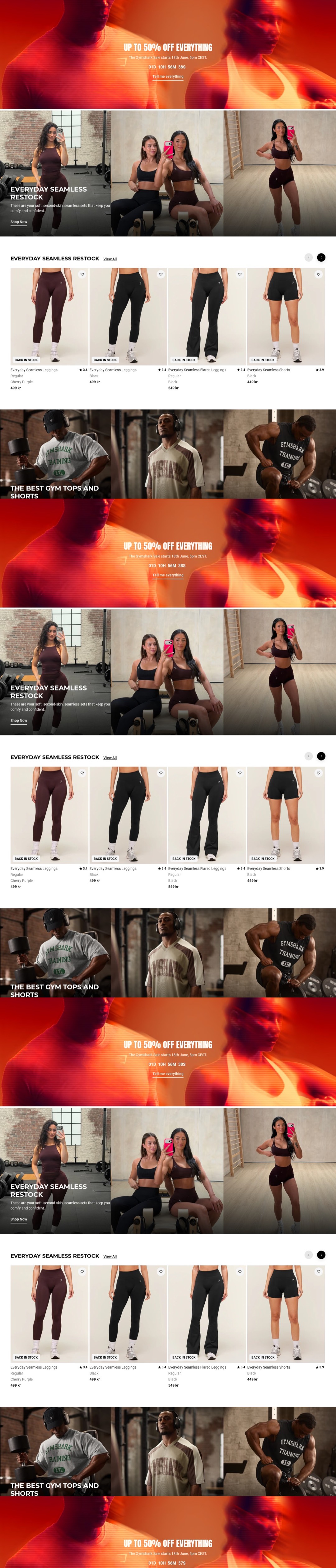
Gymshark Norway (no.gymshark.com) runs a pure brand/promotion-led AOV model: a sitewide sale (up to 50% off) drives volume, with a free-shipping threshold (700 NOK) as the primary cart-building mechanic. No on-page volume/bundle pricing widgets are present. The installed iCart slide-cart drawer is the sole upsell surface, likely used for cross-sell recommendations and free-ship progress. Email capture (10% off) and student discount (15%) handle acquisition-side conversion, not cart expansion.
Operator's read
PricingThere is zero on-page volume/bundle pricing widget — Gymshark Norway leans entirely on a sitewide up-to-50%-off sale event plus a single free-shipping threshold at 700 NOK to lift basket size. No per-unit ladder, no quantity breaks, no pre-selected bundle tier. The 700 NOK free-ship bar is the only structural AOV lever baked into the page flow; everything else is discount-driven brand promotion. The student 15% and email 10% discounts are acquisition tools, not AOV tools.
Widget styleNo volume-discount or bundle widget exists on this landing page whatsoever. The slot that a brand like this might use for a 'buy more save more' widget is instead occupied by a full-width sale hero banner with a countdown clock and a horizontal product carousel (Everyday Seamless Restock, 4 SKUs shown). The iCart slide-cart drawer is the only upsell-capable surface, but its configuration is not visible; it likely carries a free-ship progress bar and possibly cross-sell tiles, which is table-stakes for iCart out of the box.
VerdictThe countdown urgency and 50%-off sale banner will drive strong conversion spikes, but Gymshark NO is leaving significant AOV on the table by having no structured buy-more-save-more mechanic — a brand with this catalog depth (leggings, shorts, tops) is perfectly set up for outfit bundling. The single highest-leverage change would be to configure iCart with a 'Complete the Look' cross-sell tile pulling a matching top or shorts at the point a bottom is added, plus a tiered free-gift threshold (e.g. free tote at 1,400 NOK, 2x the free-ship bar) — this alone on a high-traffic sale event could lift AOV 15-25% without touching the PDP.
offer details (6)
Store is no.gymshark.com (Norway locale, NOK currency). Screenshot appears to repeat the same page section multiple times — likely a scroll-capture artifact. No cart state, no PDP pricing widget, and no post-purchase page visible. iCart post-purchase behavior inferred from app install only. Countdown timer suggests screenshot was captured in a pre-sale window before 18th June 5pm CEST launch.

Quantity-break volume discount on a self-adhesive cable-management/power-strip holder product, anchored by a sale banner and free-shipping threshold, with Vitals handling in-cart and potentially post-purchase upsell mechanics.
Operator's read
PricingThe store runs a 3-tier quantity-break ladder anchored by 'Kaufen Sie mehr, sparen Sie mehr' copy, with a €40 free-shipping threshold doing heavy lifting as a secondary AOV driver. The visible price points appear to be approximately €13.95 for 1 unit, rising into the €40 range for 2–3 units — but the per-unit math on the 2-unit tier (≈€20.49/unit) is actually higher than the single-unit price (€13.95/unit), which is a classic fake-anchor problem that erodes trust if a customer does the math. The free-ship threshold at €40 is cleverly set just above the 1-unit price, nudging buyers toward at least 2+ units.
Pricing tiers (1 widget)
Widget styleThe quantity-break widget is delivered via Vitals' built-in Volume Discounts module, rendered as stacked radio-button tiles directly on the PDP. There are no 'Most Popular' or 'Best Value' badges visible in the screenshot, and no escalating compare-at strikethrough per tier — the anchoring relies solely on the aggregate price differential and the sale-banner urgency ('🔥Schlussverkauf🔥'). The widget occupies the primary conversion zone below the variant picker but above ATC, which is correct placement, though the absence of per-unit callouts and savings badges leaves discount legibility on the table.
VerdictThe free-shipping threshold and quantity-break combo is directionally correct, but the 2-unit tier appears to have a higher per-unit cost than buying one — this must be fixed immediately as it actively suppresses multi-unit conversion and destroys trust. The single highest-leverage change is to restructure the tier pricing so every step in quantity yields a clear per-unit saving (e.g., 1x = €13.95, 2x = €24.90/€12.45 per unit = 11% off, 3x = €33.90/€11.30 per unit = 19% off), then add explicit 'Save X%' badges and a per-unit price callout on each radio tile — Vitals supports this natively and it could lift multi-unit attach rate by 20–30% on a product with this natural gifting/multi-room use case.
offer details (3)
Pricing tier numbers extracted from low-resolution screenshot and are approximate; the fake-anchor flag on the 3-unit tier is based on apparent pricing inconsistency visible in the widget. Store is German-language (schnefie.de), targeting DACH market. Vitals is the only confirmed installed upsell app — slide-cart, post-purchase, and cross-sell mechanics may exist but are not confirmed visible.
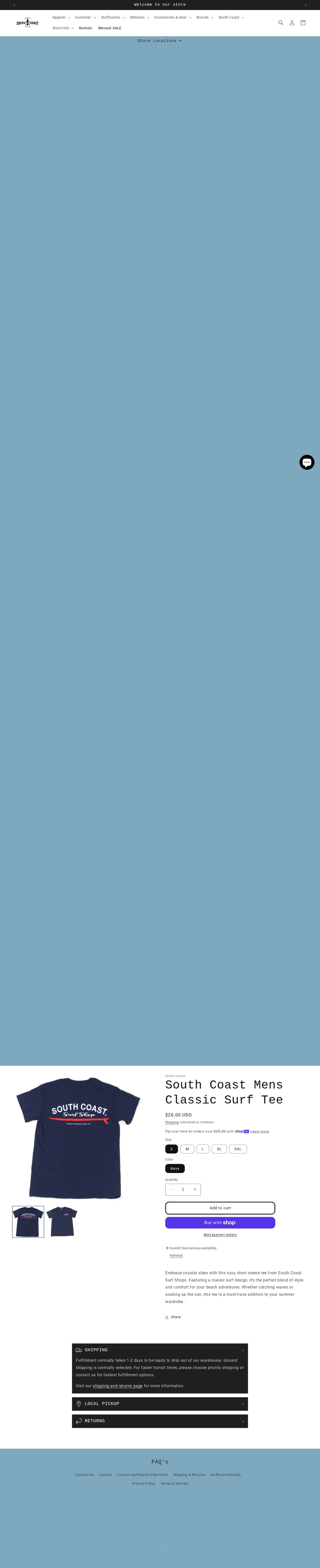
Single-SKU apparel PDP relying on a free-shipping threshold announcement and a Qikify Slide Cart drawer for any upsell surface. No volume/bundle pricing widget is present. Conversion levers are limited to the $75 free-ship bar and whatever cross-sells Qikify surfaces in the drawer.
Operator's read
PricingThere is zero volume or bundle pricing on this PDP. The single price point visible is $24.96 USD with no struck-through compare-at anchor, no per-unit ladder, and no multi-unit incentive. The only pricing nudge in play is the $75 free-ship threshold in the announcement bar — at ~3x the unit price, that threshold theoretically pushes a 3-unit cart, but nothing on the PDP explicitly frames it that way. This is a flat, single-price setup with no anchoring mechanics.
Widget styleThere is no volume-discount or bundle widget on this landing page whatsoever. The slot where a quantity-break radio-tile or inline-table widget would live is occupied only by a plain numeric quantity stepper (default qty 1). No 'Most Popular' or 'Best Value' badges, no escalating compare-at prices, no save-X% callouts. Qikify Slide Cart handles whatever cross-sell or upsell messaging exists, but it is off-canvas and invisible until the drawer opens.
VerdictThe free-ship bar at $75 is a smart anchor for a $25 tee — it implicitly asks for a 3-unit cart — but the store does nothing to make that connection explicit on the PDP. The single highest-leverage change is adding a Qikify or Vitals quantity-break widget directly on the PDP (e.g., 1 tee at $24.96, 2 for $44.00 [$22.00 each, save 12%], 3 for $59.95 [$19.98 each, save 20% + free ship badge]) so the free-ship incentive and the multi-unit discount reinforce each other at the point of decision rather than silently sitting in a banner the buyer has already scrolled past.
offer details (2)
Screenshot shows a largely blank/gray PDP image area suggesting the product image may not have loaded or the store has access restrictions (MIDA protection noted in banner text). Confidence is low because cart drawer contents and any post-purchase flows are not visible. No ReConvert, AfterSell, or Zipify detected, so no post-purchase one-click upsell is inferred.
Single-product cosmetics store running Qikify Slide Cart as its primary upsell surface. No visible pricing widget, volume-discount tiers, or announcement banner copy was provided. The core mechanic leans on the slide-cart drawer to surface cross-sells or free-shipping thresholds at the cart stage rather than at the product page level.
Operator's read
PricingThere is zero visible volume-discount or bundle pricing widget in the evidence provided. The store appears to rely on a single price point per SKU with no compare-at anchor or tiered structure surfaced on the product page. Without a struck-through compare-at price or quantity break, there is no anchoring mechanism working pre-cart — all pricing leverage is deferred entirely to the Qikify slide-cart drawer.
Widget styleNo volume-discount or bundle widget exists on the landing page. The slot that would normally be occupied by radio-tiles or an inline quantity ladder is empty. Qikify Slide Cart handles the only structured upsell moment, which means the store is doing zero AOV work before the customer clicks 'Add to Cart' — a significant gap for a cosmetics brand where multi-unit replenishment purchasing is a natural behaviour.
VerdictThe slide-cart setup is a reasonable baseline but the store is leaving significant AOV on the table by having no product-page quantity break or bundle builder. The single highest-leverage change would be adding a 3-tier quantity widget (1 unit / 2 units 'save 10%' / 3 units 'save 18%') directly on the product page using a tool like Pumper or Qikify's own product bundle feature — cosmetics buyers in the UK market respond strongly to 'stock up and save' framing, and pushing that decision pre-cart rather than post-add dramatically increases conversion on the upsell.
offer details (2)
Confidence is low — no banner copy, no product snippet copy, no cart snippet copy, and no pricing widget text were supplied. All offer inferences are based solely on Qikify Slide Cart's known default feature set. A live crawl of uk.merodacosmetics.com would be required to confirm actual cart copy, cross-sell products shown, free-ship threshold value, and whether any compare-at pricing exists on PDPs.
The store runs a multi-layer upsell stack built on ReConvert (post-purchase one-click upsell), AfterSell (post-purchase offer sequencing), and iCart Slide Cart Drawer (in-cart upsells/cross-sells and likely a free-shipping progress bar). With no visible pricing widget text or product/cart copy snippets provided, the on-page pre-cart layer is unconfirmed, but the post-purchase funnel is clearly engineered for AOV lift via app infrastructure.
Operator's read
PricingNo pricing widget, volume discount tiers, or bundle builder copy was provided in the evidence, so I cannot cite specific price points or per-unit ladders. What the store clearly leans on instead is a post-purchase upsell stack (ReConvert + AfterSell) to inflate order value after the initial conversion, plus iCart's in-cart mechanics (free-ship threshold, cross-sells) to nudge pre-checkout cart value. Without a visible subscribe-and-save or quantity-break widget on the PDP, the pre-cart AOV lever appears underleveraged.
Widget styleNo volume-discount or bundle widget is visible or evidenced in the provided data — there are no pricing widget snippets, radio tiles, inline tables, or badge structures to analyse. The slot that a quantity-break or bundle builder would occupy appears to be empty or not shared. The post-purchase and in-cart layers (iCart drawer, ReConvert, AfterSell) are doing the heavy lifting in place of a structured PDP pricing architecture.
VerdictThe post-purchase stack is solid — running both ReConvert and AfterSell gives them sequential upsell and downsell coverage, which is a mature setup for a supplements brand like JS Health. The single highest-leverage change I would make is adding a subscribe-and-save or 1/2/3-pack quantity-break widget directly on the PDP: JS Health sells consumable vitamins with a natural repurchase cycle, and a visible 'Subscribe & Save 15%' or '3-pack saves 20% — most popular' radio-tile widget above the ATC button would convert intent into higher initial AOV and LTV before the post-purchase funnel even fires, rather than relying entirely on post-conversion recovery mechanics.
offer details (4)
Confidence is low because no product copy snippets, cart snippets, pricing widget text, or announcement banner were provided. All in-cart and post-purchase offers are inferred from installed apps, not confirmed from visible UI. Analysis should be re-run with actual screenshot evidence and copy snippets for higher fidelity.
Subscribe-and-save subscription ladder as the primary AOV and LTV driver, anchored by a free-shipping threshold at $100. Rebuy likely powers cart cross-sell or post-purchase recommendations. No visible one-time volume/bundle widget — the entire pricing architecture is built around locking customers into recurring delivery at escalating discount tiers (10/15/20%) with a clear 'Best Deal' badge on the 6-month cadence.
Operator's read
PricingArrae's entire pricing structure is a subscription ladder with no one-time volume widget visible. The three tiers price at 1,563,300₫/mo (10% off), 1,475,883₫/mo (15% off), and ~1,389,733₫/mo (20% off) on the 6-month plan — a per-unit discount ladder that deepens cleanly as commitment grows. The one-time purchase option exists but is visually subordinated. The $100 free-shipping threshold acts as a soft AOV floor for non-subscribers. The 20% max discount on 6-month is meaningful but not aggressive enough to feel irresistible versus a 25–30% anchor some supplement competitors use.
Widget styleNo volume/bundle widget exists on the product page. The slot is occupied entirely by a subscribe-and-save cadence selector — three inline radio tiles stacked vertically, each showing cadence label, % off badge in green, total savings figure, per-month cost, and a struck-through compare-at monthly price. The '6-Month Delivery' tile carries a 'Best Deal' badge. There is no app brand watermark visible, suggesting a native or lightly customised implementation. The one-time tab is present but clearly secondary in visual hierarchy, nudging the default subscription path effectively.
VerdictThe subscription architecture is clean and the per-unit ladder logically escalates — that's well executed. The single highest-leverage move is to flip the default pre-selected tier from 1-month to 3-month: nearly every subscription supplement brand that has run this A/B test sees higher initial AOV and comparable or better activation because the 3-month commitment signals more intent without the sticker shock of 6-month. Pair it with a 'most popular' badge on the 3-month tile (currently missing) and you'll shift the AOV distribution meaningfully without touching media spend.
offer details (4)
All prices displayed in VND (Vietnamese Dong) due to currency selector state at time of capture — actual USD prices are lower by ~1/25,000 conversion. Rebuy cross-sell and post-purchase offers are inferred from app install; specific product recommendations and post-purchase flow were not visible in the provided evidence. The announcement banner references 'MB-1 MAX | LAUNCHING 6.18' suggesting an active new product launch funnel that may carry its own upsell logic not yet captured.

Single-SKU PDP with size-upgrade inline upsell (8ml→20ml) plus gift-box checkbox add-on. Rebuy powers cross-sell/related product recommendations. Free shipping threshold ($85+) encourages multi-unit behaviour. No traditional volume/quantity-break widget present.
Operator's read
PricingRiddle runs a simple two-size ladder — 8ml at $64 ($8.00/ml) and 20ml at $110 ($5.50/ml) — with no traditional volume/quantity-break widget. The per-unit saving on the 20ml is real (~31% better rate) and is surfaced via an inline banner rather than a struck-through compare-at price. The $85 free-ship threshold sits just above the 8ml price, nudging shoppers to either upgrade to 20ml or add a second product, which is the primary AOV lever in absence of a bundle widget.
Pricing tiers (1 widget)
Widget styleNo third-party volume-discount app is deployed. The size-upsell occupies that slot via a native Shopify variant radio toggle plus a yellow/highlight inline callout banner ('Size up to 20ml and Save $2/ml'). A gift-box checkbox add-on ($5) is the only true add-on widget. Rebuy drives cross-sell via the Best Sellers carousel at the bottom of the PDP. There are no 'Most Popular' or 'Best Value' badge tiles, no escalating compare-at anchors, and no quantity-break table.
VerdictThe 20ml size-up is well executed — the per-unit math is genuinely compelling and the inline callout makes it impossible to miss before the ATC. The single highest-leverage move here is activating Rebuy's slide-cart drawer with a targeted cross-sell of the Pheromone Oil (~$30-40) directly inside the cart: the brand's own copy frames a 3-step layering routine, so a cart-level 'Complete the Routine' recommendation featuring the Pheromone Oil and a Milky Lotion would push most 8ml orders past the $85 free-ship threshold and structurally lift AOV by $30-50 per cart without discounting.
offer details (4)
Pricing widget text shows two slightly different per-ml savings figures ('$2.50/ml' and '$2/ml') for the 20ml upgrade — likely a copy inconsistency in the banner vs variant label. No post-purchase upsell flow visible in screenshots; Rebuy can power post-purchase but none confirmed from evidence shown.
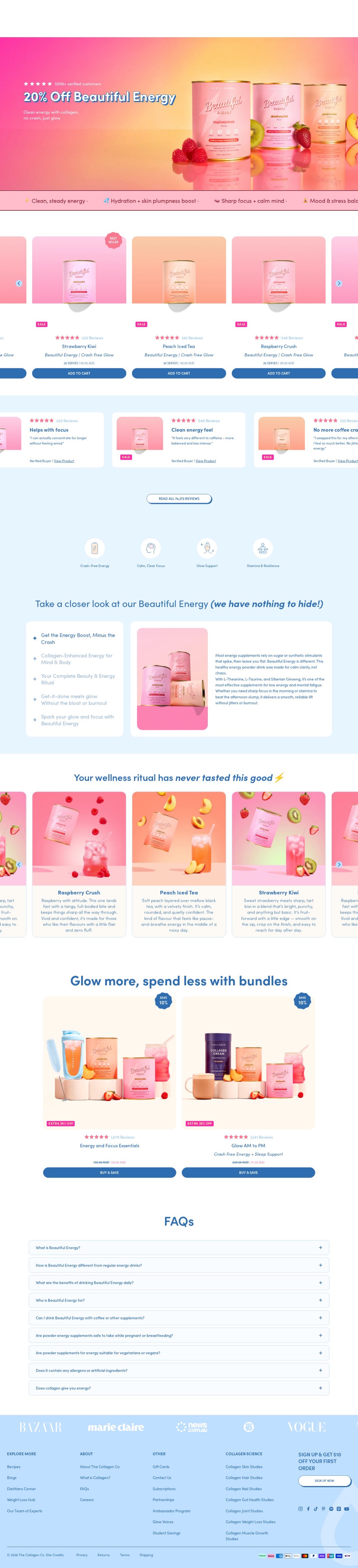
Sitewide discount code promotion (SALE20, 20% off) is the primary conversion lever. Bundles are the AOV driver via Honeycomb Bundles app, with at least two named bundles visible ('Energy and Focus Essentials', 'Glow AM & PM'). No per-unit quantity-break widget is visible on the PDP. Cross-sells are surfaced through a flavour carousel and a 'build your bundle' navigation path. The store leans on aspirational wellness branding, social proof (star ratings, testimonials), and a benefit-based shop navigation to move shoppers toward multi-SKU bundles rather than quantity breaks on a single product.
Operator's read
PricingThere is no per-unit quantity-break widget on the PDP — the store relies on three pricing levers instead: (1) a sitewide 20%-off code (SALE20) blasted in a marquee bar that effectively discounts everything but destroys margin-per-order discipline; (2) two pre-built Honeycomb bundles with stated savings of 10–15% (the exact dollar figures are too small to read, but the badges show SAVE 10% and SAVE 15%); and (3) a $10-off email capture in the footer. The absence of a visible compare-at anchor on individual PDPs means price perception is entirely dependent on the code, which trains customers to wait for a sale rather than buy at full price.
Widget styleThe bundle widget is a two-tile card layout rendered by Honeycomb Bundles — full-bleed product photography, a gold 'SAVE X%' badge top-right, a condensed product name + subtitle, five-star rating row, struck-through original price alongside the bundle price, and a solid navy 'BUY & SAVE' CTA button. There is no radio-tile quantity ladder, no inline table, and no dropdown selector. The layout is purely pre-built bundle cards rather than a mix-and-match builder, which limits flexibility but keeps the page clean.
VerdictThe brand nails visual cohesion and benefit-led navigation, and the two-bundle section is a solid AOV play. However, the highest-leverage change is replacing the always-on sitewide 20% code with a subscribe-and-save option (10–15% off) directly on the PDP — this converts the one-time discount into recurring LTV, stops training customers to hunt for codes, and pairs naturally with the wellness-ritual positioning already on the page. Given the product is a daily-use powder supplement, a subscribe-save toggle at the PDP level would likely lift both conversion rate and 90-day repurchase rate more than any additional bundle SKU.
offer details (4)
Pricing widget tiers cannot be parsed — no numeric price table, quantity selector, or per-unit breakdown is visible in the screenshot or provided text snippets. Bundle exact prices are illegible at screenshot resolution. Honeycomb Bundles confirmed installed; no ReConvert/AfterSell/Zipify detected so no post-purchase one-click upsell inferred.
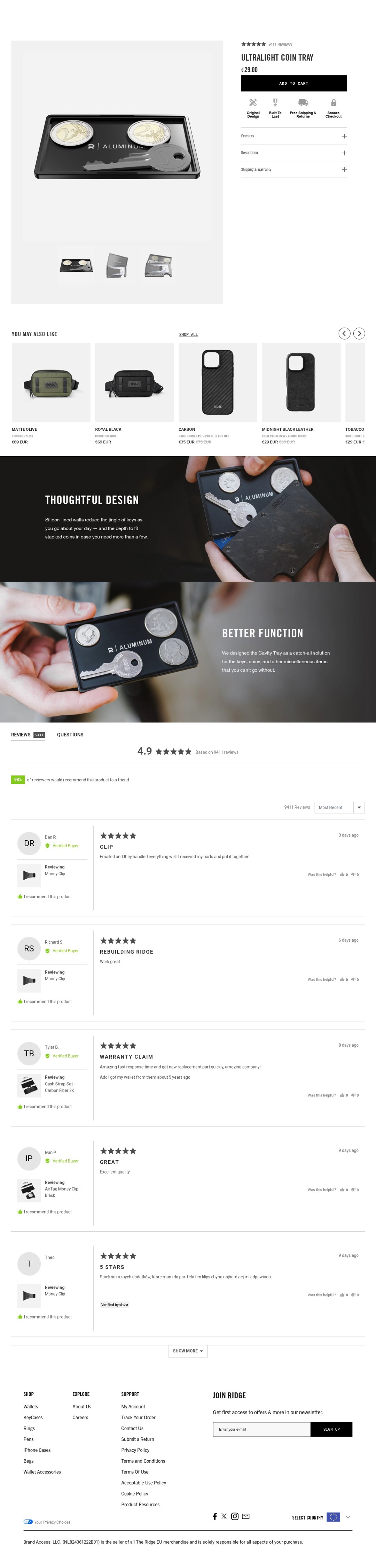
Single-SKU product page (Ultralight Coin Tray at €29) with no on-page volume/bundle widget. AOV lift is driven entirely by a cross-sell add-on module surfaced below the fold and a slide-cart drawer (iCart) that fires recommended add-ons at cart stage. Installed apps (Honeycomb Bundles, Bundler, Frequently Bought Together) power the 'You May Also Like' carousel and the 'Most Popular Add-Ons' panel visible in banner evidence. Post-purchase flow inferred from ReConvert/Zipify-class apps not confirmed but Honeycomb and Bundler suggest bundle offers elsewhere in funnel.
Operator's read
PricingThe Coin Tray sits at a flat €29 with zero on-page anchoring — no compare-at, no struck-through MSRP, no quantity break. All pricing leverage is pushed to the cross-sell layer: Ridge Wallets at €75 vs €89 compare-at (~16% off) and the Daily Driver Kit at €99 vs €158 (~37% off). The entry-price €29 acts as a low-friction impulse buy designed to pull wallet customers deeper into the funnel, but the product page itself leaves AOV work entirely to downstream touchpoints.
Pricing tiers (1 widget)
Widget styleThere is no volume-discount or bundle widget on this product page — that slot is occupied by a simple single-price ATC button with a trust-badge row (Original Design / Built To Last / Free Shipping / Secure Checkout). The bundle and add-on mechanics live in an iCart slide-drawer and a 'Most Popular Add-Ons' panel (Honeycomb Bundles or Frequently Bought Together), using compare-at anchor pricing on wallet SKUs. No radio-tile quantity ladder, no 'Most Popular' badge tier, no escalating per-unit discount.
VerdictThe low €29 entry price is smart as a conversion hook, and the 37%-off Daily Driver Kit anchor in the cart drawer is the strongest AOV lever they have — but it fires too late and too passively. The highest-leverage change I'd make: add a Honeycomb-style bundle widget directly on this product page offering 'Coin Tray + Ridge Wallet' at €95 (vs €118 separate, saving 19%), defaulting to that bundle tier, so the upsell happens at the moment of highest intent rather than hoping the cart drawer gets opened and engaged.
offer details (5)
No cart HTML snippets were provided so cart drawer contents are inferred from installed apps (iCart slide cart, Honeycomb Bundles, Frequently Bought Together) and banner/product snippet text. Confidence is medium because the 'Most Popular Add-Ons' panel placement (product page vs cart drawer) cannot be confirmed with certainty from image alone. Father's Day sale discount of up to 40% is site-wide and not reflected on this specific €29 Coin Tray listing visible in screenshot.
Single-price fashion DTC relying on free-shipping threshold, a light cross-sell ('Styled With'), and a 'You May Also Like' recommendation rail. No volume discount or bundle widget is rendered on the PDP. Honeycomb Bundles is installed but not surfaced here; Vitals powers ancillary widgets (email capture, back-in-stock, social proof). AOV lever is the €100 free-ship threshold against a €105 hero SKU.
Operator's read
PricingThere is zero volume or bundle pricing widget on this PDP — no tiers, no per-unit ladder, no compare-at anchor on the hero SKU. The €105 Leni Maxi Dress sits just above the €100 free-ship threshold, which is the primary AOV lever: a solo purchase auto-qualifies, removing any urgency to add another item purely for the threshold. The only implicit anchor is the 'You May Also Like' rail where the Leon Belted Trench at €215 and the Geneva Jumper at €150 make the €105 dress look accessible, but that's ambient, not a structured pricing mechanic.
Widget styleNo bundle or volume-discount widget is present on the PDP. The slot that a bundle builder would occupy is instead filled by a single static 'Styled With' card (Houston Ring, €20) — but that item is currently sold out, making the cross-sell completely dead on this visit. Honeycomb Bundles is installed but either misconfigured, gated behind the cart, or not triggered for this SKU. There are no radio tiles, no inline table, no dropdown discount tiers, and no 'Most Popular'/'Best Value' badges anywhere on the page.
VerdictThe free-ship threshold is well-calibrated (hero SKU clears it solo, creating a guilt-free add-on opportunity), and the 'You May Also Like' rail surfaces high-ATV items that could pull basket value to €150–€215+. However, the highest-leverage immediate fix is activating Honeycomb Bundles on this PDP with a 'Complete the Look' bundle pairing the Leni Maxi Dress (€105) with a live, in-stock accessory or top at a 10–15% bundle discount — given the 'Styled With' slot already exists in the layout, replacing the sold-out ring card with a live bundle CTA requires zero design work and would directly lift AOV on every non-converting cross-sell impression.
offer details (4)
The 'Styled With' Houston Ring is sold out, meaning the only PDP cross-sell is dead for new visitors. Back-in-stock notify on that item is present but does nothing for current session AOV. The email-capture 10% discount competes with itself as an AOV driver — a first-order discount reduces margin on what may already be a low-volume SKU. Vitals likely handles review widgets and back-in-stock; no review stars or social proof count visible in screenshot.

BERLOOK runs a sitewide BOGO 45% OFF promotional mechanic as its primary AOV driver, layered with a Frequently Bought Together cross-sell widget on the PDP, a free-shipping threshold at $79, and an email/app-capture discount stack. No standalone volume-pricing widget is present; the bundle incentive is delivered via the sitewide banner promotion.
Operator's read
PricingThere is zero volume or quantity-break pricing widget on this PDP — no tiered price ladder, no per-unit table, no compare-at anchor on the product itself. The entire AOV-lift mechanic rests on the sitewide BOGO 45% OFF banner: buy a second item and save 45% on it. With a single bikini top likely priced in the $30–$55 range (price obscured in screenshot), the $79 free-ship threshold sits just above a single-item purchase, deliberately nudging the customer to add a bottom or second piece. That's a clean threshold mechanic, but it lives entirely in the banner and shipping line — not in the product card itself.
Widget styleNo volume-discount or bundle-builder widget occupies the PDP. What fills that slot is (1) the Frequently Bought Together app block — a simple checkbox-style add-on list showing companion bottoms beneath the ATC button — and (2) the BOGO 45% OFF announcement bar driving the bundle logic globally. There are no radio-tile quantity selectors, no 'Most Popular' / 'Best Value' badges, no escalating compare-at tiers. The Frequently Bought Together widget does the heavy lifting for cross-sell at the item level, but it carries no explicit discount call-out attached to it, meaning the BOGO saving is implied rather than reinforced at the point of selection.
VerdictThe BOGO 45% OFF execution is smart for a swimwear brand — tops and bottoms are natural pairs and the mechanic mirrors how customers actually shop. What's well done: the free-ship threshold at $79 and the BOGO stack create a double nudge toward a two-piece add. The single highest-leverage change I'd make is to wire the Frequently Bought Together block directly to the BOGO mechanic — show 'Add this bottom and save 45% with BOGO' with a live struck-through price on the companion item inside the FBT widget. Right now the discount is communicated in the banner and the cross-sell widget runs silently beside it; closing that messaging gap at the exact moment of selection would materially lift attach rate on bottoms and push more carts past $79.
offer details (6)
Price point of the featured Black Twist Backless Bikini Top was not clearly legible in the screenshot — operator take uses contextual inference for the price range. Confidence is medium because the cart page contents and post-purchase flow were not visible; no post-purchase upsell app (e.g. ReConvert/AfterSell) was listed in installed apps, so no post-purchase offer is inferred.
Single-price apparel brand relying on aspirational editorial content, BOPIS-style social proof (Shop Insta / FourSixty UGC feed), free-shipping threshold, and a 4-item cross-sell carousel as its primary AOV levers. No volume-discount or bundle widget is rendered on the PDP. Honeycomb Bundles is installed but not visibly active on this page. Vitals likely handles the 'You May Also Like' carousel and possibly email-capture.
Operator's read
PricingThere is zero volume-discount or bundle pricing widget active on this PDP. The hero product (Alto Low Cut Top) is a single flat price of $115 with an Afterpay instalment callout (~$28.75 x 4) doing the only anchoring work. The free-shipping threshold at $200 is the sole AOV mechanic baked into the price architecture — a customer buying just the $115 top is $85 short of free shipping, which creates a natural upsell gap but no tool is deployed to close it at the cart level.
Widget styleNo volume-discount or bundle widget exists on this PDP. The slot that a quantity-break or outfit-bundle widget would occupy is instead filled by a FourSixty UGC modal (Instagram editorial, 20 February 2023 post) and a flat 'You May Also Like' Vitals carousel with four standalone products ranging $65–$275. There are no badges, no compare-at strike-throughs, no 'Save X%' callouts, and no pre-selected tier anywhere on the page. Honeycomb Bundles is installed but dormant here.
VerdictThe UGC integration and editorial brand voice are genuinely strong — FourSixty doing real social-proof work on a $115 halter is smart. However, the single highest-leverage change is activating a cart-drawer free-shipping progress bar that fires the moment a customer hits 'Add to Bag': at $115 they are $85 from the $200 free-ship threshold, and surfacing 'Add $85 more to unlock free shipping' with 2–3 outfit-completion cross-sells (e.g., the $75 Isla Top + $65 High Crew Top) inside the drawer would close that gap on a meaningful share of sessions and lift AOV from ~$115 toward $200+ without touching the pricing architecture at all.
offer details (4)
Currency shown as USD. All duties and taxes included messaging is prominent, targeting international shoppers. BNPL (Afterpay) is mentioned in the banner and visible on PDP. Sale section is live ('SALE NOW ON'). The FourSixty modal showing the Alto item as 'Sold Out' at $140 suggests a previous higher price point or AU pricing bleed-through — worth auditing to avoid confusing USD shoppers on price.
Sale-event (LES SOLDES) homepage driving urgency through limited-time discounting; subscription email capture via banner for 10% off; free shipping threshold at 200 CHF as a passive AOV lever. No visible bundle or volume-pricing widget on the landing page. Upsell infrastructure (Honeycomb Bundles, Vitals) is installed but not surfaced on the homepage.
Operator's read
PricingKookaï CH is running a pure single-unit markdown strategy — every product tile on the homepage shows a struck-through original price next to a sale price (e.g. 37.50 CHF vs a higher compare-at, exact originals not fully legible at screenshot resolution). There is no volume tier, no bundle discount ladder, and no per-unit incentive to buy more than one unit. The only AOV mechanic is the passive 200 CHF free-shipping threshold, which requires roughly 5–6 sale items at the ~37.50 CHF price point to unlock — a meaningful but unguided nudge.
Pricing tiers (1 widget)
Widget styleNo bundle or volume-discount widget is present on the landing page whatsoever. The pricing slot is occupied entirely by standard Shopify compare-at / sale badge pairs on product tiles — a simple two-price anchor (original struck through, sale price highlighted). Honeycomb Bundles is installed but completely dormant on the homepage and likely not configured on PDPs either, or at minimum not surfaced in this sale period.
VerdictThe sale event creates urgency and the 200 CHF free-ship bar is a clean passive AOV driver, but there is zero active upsell moment — the store is leaving Honeycomb Bundles entirely unused during its highest-traffic sale window. The single highest-leverage change: activate a 'Complete the Look' or '3-for-X' Honeycomb bundle directly on the sale PDPs (e.g. buy any 3 sale items and save an additional 10%), which stacks with the existing markdown framing, pushes carts past the 200 CHF threshold organically, and converts the already-present deal-seeking intent into a higher AOV without cannibalising margin on full-price items.
offer details (4)
Exact compare-at prices on product tiles are not fully legible at screenshot resolution — discount percentages could not be computed numerically. Vitals post-purchase upsell and Honeycomb Bundles cart/PDP offers are inferred from app installation only and are not visible in the homepage screenshot. Store is French/Swiss-market (CHF), sale copy in French.
Single-price full-price fashion with free-shipping threshold, cross-sell styled-with widget, and Honeycomb Bundles app installed but not visibly surfaced on the PDP. Primary AOV lever is the 'Styled With' cross-sell pairing (Ariel Low Cut Top $150 + Ariel Low Rise Pant $200) and a $150 free-ship threshold.
Operator's read
PricingThere is zero volume or quantity-break pricing on this PDP — no bundle widget, no compare-at anchor, no subscribe-and-save. The store is running a clean single-price model: Ariel Low Rise Pant at $200 NZD, no struck-through RRP. The only pricing mechanic at work is the $150 free-ship threshold, which the pant already clears on its own, so it functions purely as a cross-sell nudge ('add the $150 top and still ship free') rather than a spend-unlock. Vitals could be surfacing a price-anchor or urgency widget but nothing is visible in the screenshot.
Widget styleNo volume-discount or bundle widget is rendered on the landing page — Honeycomb Bundles is installed but dormant at the PDP level. The slot that a bundle builder would occupy is instead filled by a 'Styled With' editorial cross-sell (outfit pairing, single SKU, $150 top) and a four-item 'You May Also Like' carousel beneath the fold. Layout is editorial/image-led, consistent with a premium fashion brand positioning — no badges, no discount callouts, no radio-tile selectors.
VerdictThe 'Styled With' cross-sell is well-executed for a fashion brand — it shows a real outfit context and gives a natural reason to add a second item, pushing a $200 solo cart to a $350 outfit cart, a 75% AOV lift if it converts. The single highest-leverage change I would make is activating Honeycomb Bundles as a visible 'Complete the Look' bundle on the PDP with a modest 10% outfit discount (e.g., Pant $200 + Top $150 = $315 bundled vs $350 full price), showing a clear 'Save $35' badge — this converts the passive styled-with suggestion into an active incentivised bundle and should materially lift attach rate without cannibalising margin on solo purchases.
offer details (5)
Screenshot shows both items (Oyster Hook Crew Top $45 and Ariel Low Rise Pant $200) sold out in the Instagram shoppable popup panel, suggesting inventory constraints may be limiting upsell depth. The Geneva One Shoulder Jumper appears as $249 in snippet vs $240 in image carousel — minor data inconsistency noted. Confidence is medium because cart page and post-purchase flows are not visible, so Honeycomb and Vitals behaviour post-add-to-bag cannot be confirmed.
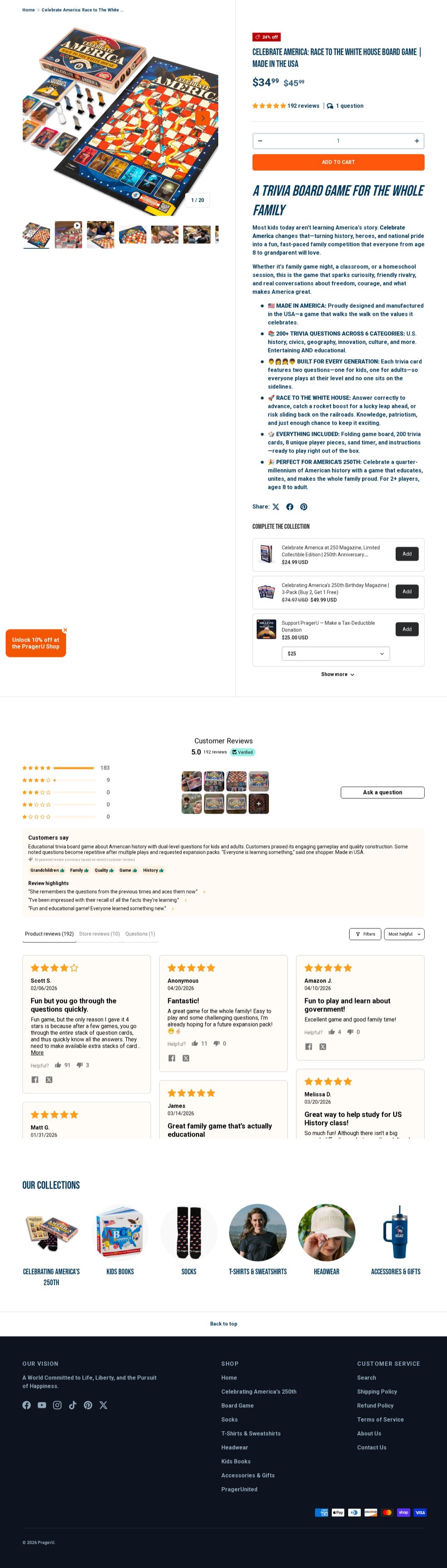
Single-SKU product page with a compare-at price anchor (24% off, $34.99 vs $45.99), a cross-sell 'Complete the Collection' module showing 3 add-on items below the ATC button, and Candy Rack app inferred to trigger upsell offers (likely at add-to-cart or post-purchase). No volume/quantity-break widget present. AOV lever is collection cross-sell and Candy Rack pop-up.
Operator's read
PricingThere is exactly one purchasable tier for the hero SKU — $34.99 sale vs $45.99 compare-at, a flat 24% discount with no quantity breaks or bundle options on the PDP. The entire pricing strategy rests on this single struck-through anchor to manufacture urgency and perceived value. The cross-sell module adds a second price point ($34.97 3-pack at ~30% off vs $49.95) but it lives below the fold and requires a second deliberate Add action, so it barely moves AOV unless Candy Rack is doing heavy lifting in the cart.
Pricing tiers (1 widget)
Widget styleThere is no volume-discount or bundle widget on this page — zero radio tiles, no inline table, no dropdown quantity selector. The 24% off pill badge next to the sale price is the only discount signal on the hero product. The 'Complete the Collection' cross-sell below ATC is a plain inline add-on row (image + title + price + Add button), not a named bundle app. The Buy 2 Get 1 Free callout on the magazine 3-pack is the closest thing to a tiered offer but it applies to a cross-sell item, not the main SKU.
VerdictThe struck-through anchor and verified-review count (192 at 5.0 stars) are executed well — strong social proof and clear savings signal reduce friction on the hero SKU. The single highest-leverage change would be adding a quantity-break widget directly on the hero SKU (e.g., 1 for $34.99, 2 for $62.99 / save 10%, 3 for $89.99 / save 14%) paired with a 'Gift one, keep one' framing — this is a gifting-friendly product (family game, patriotic theme) and a multi-unit nudge at the point of selection would lift AOV without requiring the customer to scroll past the fold to find the cross-sell module.
offer details (4)
Screenshot shows shop.prageru.com PDP for Celebrate America board game. Candy Rack is confirmed installed but its modal/drawer UI is not captured. The donation cross-sell item (Support PragerU, $25–$49.99 dropdown) is a mission-driven add-on unique to nonprofit-adjacent DTC brands and worth A/B testing as a default-checked low-AOV add-on given PragerU's donor base.
Cart-size discount ladder (20/30/40% off for 2/3/4+ items) is the core AOV driver. The hero product is a $0.00 free mystery gift used as a loss-leader to get shoppers into the cart flow, where the multi-item discount mechanic kicks in. AfterSell handles post-purchase one-click upsells, UpCart likely powers a slide cart drawer with the discount progress bar, and Kaching Bundles likely surfaces bundle/set offers. Free shipping threshold (€70/120 AUD) adds a secondary spend incentive.
Operator's read
PricingThere is no traditional multi-tier pricing widget on this PDP — instead, Sophie & Olivia leans on a cart-quantity discount ladder (20% at 2 items, 30% at 3, 40% at 4+) combined with a $0.00 free mystery gift as the acquisition hook. Individual bestsellers are anchored with a consistent 30% strike-through discount (Joyce 4-piece: $93→$65, Jade 3-piece: $77→$54, Magda: $77→$54, Noa Slip: $67→$47), which signals value before the cart discount even applies. The effective per-unit economics improve sharply at 4+ items (40% off), but the customer has to mentally calculate this themselves since there's no visible tier calculator.
Widget styleNo bundle-builder or radio-tile pricing widget exists on the PDP. The slot is occupied by a plain text 'HAPPY HOURS SALE' callout block above the ATC button — no app branding visible but Kaching Bundles is installed and likely powers this logic server-side. There are no 'Most Popular' or 'Best Value' badges on quantity tiers, no per-unit price display, and no visual progress indicator on the PDP itself (that likely lives inside the UpCart drawer). The anchoring is done purely via crossed-out compare-at prices on individual products at a flat 30% off.
VerdictThe free mystery gift hook is clever for top-of-funnel ad creative and gets a low-friction first add-to-cart, and the 40% at 4+ items is a genuinely deep incentive. The highest-leverage change would be replacing the plain-text HAPPY HOURS callout with a visual quantity-tier selector (radio tiles showing e.g. '2 items – save 20% = ~$108', '3 items – save 30% = ~$150', '4 items – save 40% = ~$185') directly on the PDP — this removes the cognitive load of mental math, makes the value ladder scannable in 2 seconds, and typically lifts multi-unit attach rate 15-25% based on comparable lingerie set stores running Kaching Bundles or Rebuy widgets in tile format.
offer details (5)
Currency appears dynamic (USD shown in nav, €70 in product snippet, 120 AUD in FAQ) suggesting a geo-IP currency switcher. Confidence is medium because cart drawer contents and post-purchase flow are not visible in the screenshot. The 'Almost sold out' scarcity badge on a $0.00 product is a classic urgency tactic but may erode trust if the gift is always available.
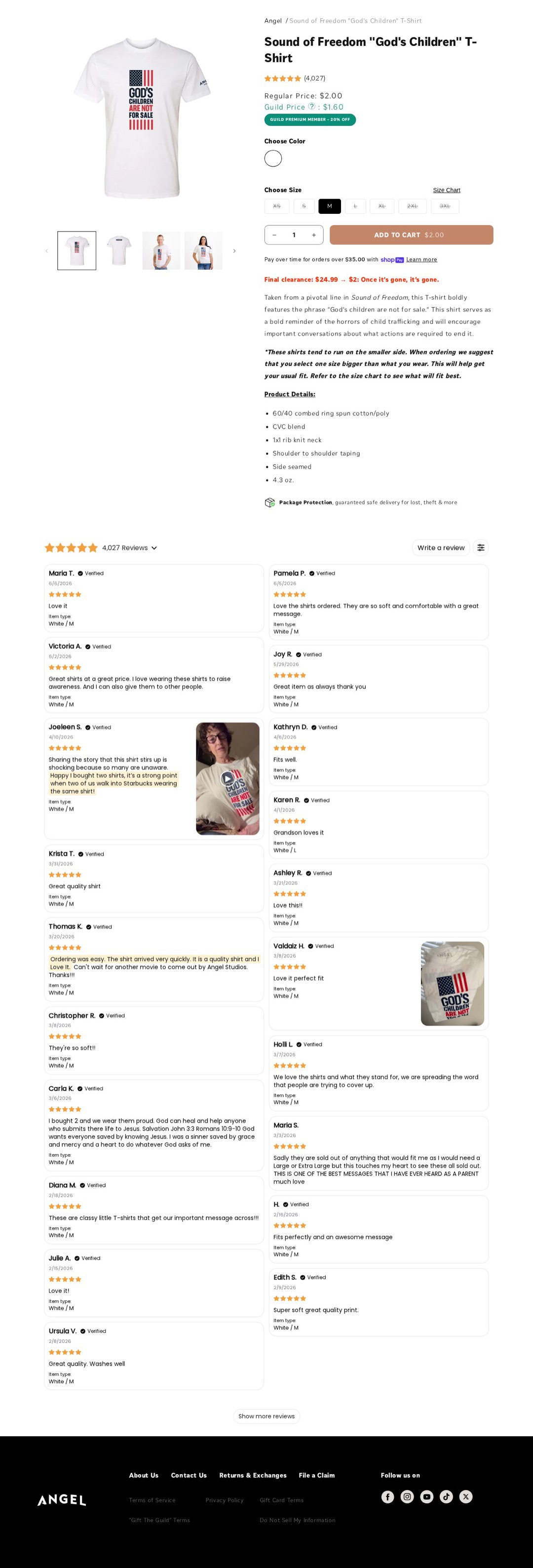
Membership-gated discount (Guild Premium) + clearance urgency + free-shipping threshold. No volume/bundle widget. Single SKU at a deeply discounted clearance price ($2), with a loyalty-tier price ($1.60) surfaced via a badge. Rebuy and iCart are installed for in-cart cross-sell/upsell but no widget content was captured.
Operator's read
PricingThere is no volume or bundle pricing widget whatsoever. The entire anchoring mechanism is a two-tier membership badge: $2.00 regular vs $1.60 Guild Premium (20% off). On a $2 clearance item the absolute savings are $0.40 — the discount percentage sounds meaningful but the dollar delta is trivial and does nothing to move AOV. The real lever this store is pulling is the clearance urgency ('$24.99 → $2, once it's gone, it's gone') to drive impulse conversion, not to lift basket size.
Pricing tiers (1 widget)
Widget styleNo volume-discount or bundle widget exists on this PDP. The slot that would normally hold a quantity ladder or bundle builder is occupied entirely by a single ATC button at $2.00 with a membership badge beneath it. iCart slide drawer (with Rebuy recommendations inside) is the only structured upsell surface, and its contents were not captured — meaning the cross-sell merchandising in the drawer is a black box from this audit. There are no radio tiles, no inline table, no escalating compare-at tiers.
VerdictThe clearance hook ($2 tee, strong social proof at 4,027 reviews, cause-driven messaging) is executed well — it lowers friction to first purchase and feeds the Guild membership funnel. However, AOV is near-zero on this item. The single highest-leverage change: add a Rebuy 'You may also like' bundle or 'Complete the look' widget directly on the PDP (not deferred to the drawer) showing 2-3 full-price Angel Studios apparel or media items at $20-$40, framed as 'Pair your Sound of Freedom tee with...' — the $2 entry price is a loss-leader and the store needs to capture the upsell before checkout, not hope the drawer does the work.
offer details (5)
Pricing widget array is empty because no numeric tier table or quantity-break selector was present on the PDP. The membership tier has been modeled as a two-option widget for analytical purposes. Confidence is medium because iCart drawer contents and Rebuy recommendation slots were not rendered in the captured snippets, so cart-stage and post-stage offers are partially inferred from the installed app stack.
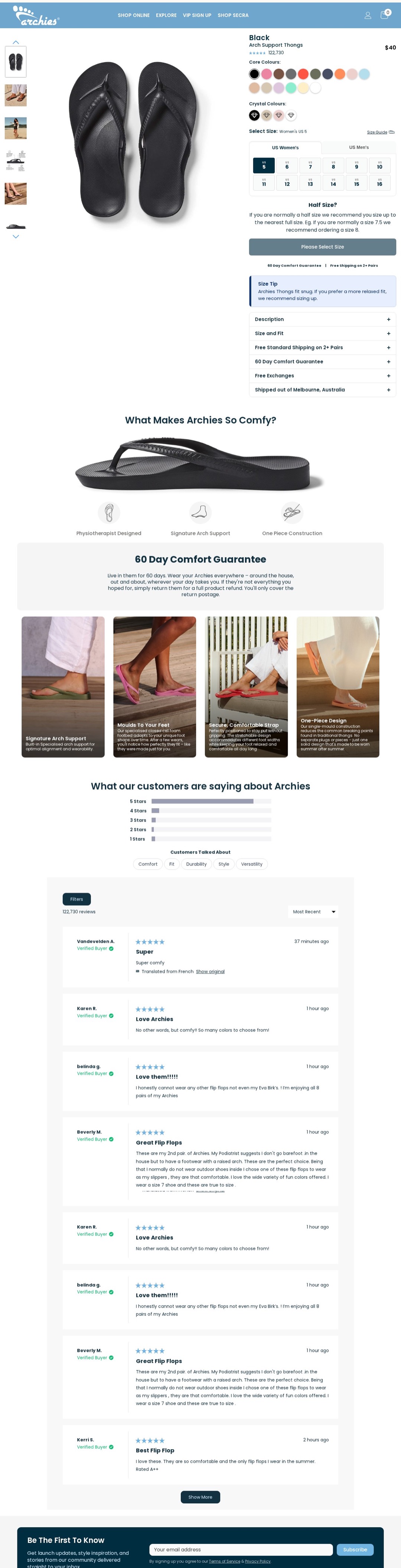
Single-SKU PDP with free-shipping threshold as the primary AOV lever. No volume/bundle pricing widget is present. The store leans on a free-shipping-on-2+-pairs nudge directly on the PDP, a 60-day comfort guarantee for conversion confidence, and Rebuy (likely powering a slide-cart or post-purchase upsell not visible in the screenshot) to lift basket size.
Operator's read
PricingThere is zero volume or bundle pricing widget on this PDP — the single price point is $40 flat with no struck-through compare-at anchor and no per-unit ladder. The entire AOV-lift mechanism is a soft nudge: 'Free Shipping on 2+ Pairs,' which implies a ~$80 threshold. That's a light touch — it creates a reason to add a second pair but gives the shopper no explicit discount incentive and no visual urgency beyond the copy itself. Without a tiered price structure, the store is leaving the 'buy 3 save 15%' cohort entirely on the table.
Widget styleThere is no volume-discount or bundle widget on this landing page whatsoever. The slot that would normally be occupied by a quantity-break selector (radio-tiles, inline table, etc.) is instead filled by two trust badges — '60 Day Comfort Guarantee' and 'Free Shipping on 2+ Pairs' — plus a size-tip notification. Rebuy is installed but is not rendering any visible widget on the PDP in this screenshot, suggesting its activation is confined to the cart or post-purchase flow.
VerdictThe trust stack is executed well — 60-day guarantee, 100k+ 5-star reviews, free exchanges, and the size-tip all reduce purchase anxiety on what is a considered comfort-footwear buy. The single highest-leverage change I'd make is adding a Rebuy (or native Shopify) inline quantity-break widget directly on the PDP: e.g. 1 pair $40 | 2 pairs $72 ($36 each, save 10%) | 3 pairs $99 ($33 each, save 17%), pre-selected on the 2-pair tier. This converts the existing 'free ship on 2+' nudge into a hard discount incentive, visually anchors the single-pair price, and matches how this product is naturally gifted or bought in multiple colours — a lever Archies is already priming but not monetising.
offer details (3)
Confidence is medium because no cart drawer HTML or post-purchase page was available; Rebuy's actual widget placement and offer logic are inferred from the app install alone. Currency identified as AUD from the domain (.com.au) and store context.

Eco-DTC subscription-first single-SKU lander with a deep subscribe-save mechanic, urgency via coupon banner, social-proof volume (784,567 families), and a hero bundle upsell in nav. No in-page volume/quantity-break widget; pricing lever is subscribe-save vs one-time purchase plus a sitewide 'Everything Bundle' at 50% off.
Operator's read
PricingThere is no on-page quantity-break or volume-discount widget. The store's entire pricing architecture pivots on two levers: a hard 50% compare-at anchor ($259 struck through to $129.50 one-time, or $123.03 on subscribe) and the subscribe-save frequency selector that shaves another ~5% off the one-time price. The Everything Bundle Refills sits at $109.33 subscribe vs $115.08 one-time against a $182.66 compare-at (37–40% off). The $120 free-mystery-sample threshold and the EARTHDAY20 20%-off coupon layer on top as acquisition discounts. All pricing reads in AUD; the subscribe tier is pre-selected, anchoring the shopper to recurring revenue from the first interaction.
Pricing tiers (2 widgets)
Widget styleThere is no standalone volume-discount or quantity-break widget on this PDP — the slot is occupied entirely by a native radio-button subscribe-save frequency selector (5 options: every 2/3/4/5 months + one-time). The compare-at $259 acts as the anchor; both subscribe and one-time show the same struck-through RRP, making the one-time feel like a deal even without subscribing. No 'Most Popular' or 'Best Value' badge is visible on the frequency tiers in the screenshot, though the subscribe default implies operator intent to push LTV. The nav-level '50% OFF EVERYTHING BUNDLE' CTA functions as the bundle upsell entry point rather than an inline widget.
VerdictThe subscribe-default + 50%-off anchor is clean and conversion-tested — pre-selecting subscribe and showing a $259 RRP makes both options feel like wins, which reduces friction. The single highest-leverage change: deploy Rebuy's Smart Cart with a visible in-cart cross-sell tile (e.g., Laundry Sheets at $X 'complete the eco swap') triggered when cart contains only Dishwashing Sheets. The $120 free-mystery-sample threshold is doing some AOV work but it's passive; an active Rebuy inline cross-sell at cart showing the gap to $120 ('Add $X more for your free sample') would convert that threshold into a measurable AOV driver, especially given the existing 784K social-proof volume the page already builds trust with.
offer details (5)
Screenshot resolution limits visibility of exact subscribe-save per-frequency price points beyond the 2-month tier ($123.03) and one-time ($129.50). Rebuy smart-cart or post-purchase widgets not visible in current viewport. Currency inferred as AUD based on price magnitudes and .com.au brand context. Compare-at prices ($259, $182.66) appear to be the 'full retail' anchors set by the operator rather than a prior sold price.
Single-SKU accessory page with no on-page volume/bundle widget. AOV lift is offloaded entirely to a slide-cart drawer (iCart) and cross-sell carousel ('You May Also Like') that surfaces higher-ticket wallet SKUs. Banner-level urgency ('UP TO 40% OFF') drives click-through but the product page itself is lean — one price, one CTA, Afterpay instalment split shown beneath.
Operator's read
PricingThe coin tray sits at a flat $39 AUD with zero on-page volume or bundle anchoring — no compare-at, no struck-through original price, no quantity ladder. The only pricing lever on the PDP is the Afterpay 4x split ($9.75/instalment) which reduces perceived friction on what is already a low-ticket item. The real pricing story is in the cart drawer where wallet SKUs at $99 (was $129, 23% off) are the AOV engine, but the PDP itself does nothing to pre-frame that value ladder.
Widget styleThere is no volume-discount or bundle widget on this product page — that slot is entirely empty. What occupies it instead is a bare 'Add to Cart' button and a below-fold cross-sell carousel. The carousel shows wallet SKUs with a struck-through $129 compare-at and a $99 sale price, which is the closest thing to anchor pricing visible on the page. The slide-cart drawer (iCart) combined with Honeycomb Bundles and Bundler is where bundle mechanics actually fire, but none of that is visible pre-click.
VerdictThe cross-sell carousel is well-placed and the wallet upsell at $99 vs $129 compare-at is a legitimate anchor — going from a $39 tray to a $99 wallet is a 2.5x AOV lift if it converts even modestly. The single highest-leverage change is adding an inline Honeycomb bundle widget directly on the PDP — e.g. 'Add a Ridge Wallet for $89 (save $40)' as a checkbox or radio tile beneath the ATC button — so the bundle offer is seen before cart, not only inside the drawer where intent has already bifurcated. Capturing the upsell decision at the product page stage rather than post-click would reduce drop-off and lift bundle attach rate measurably on a $39 entry SKU.
offer details (4)
No cart HTML snippets were provided so slide-cart drawer contents are inferred from installed apps (iCart, Honeycomb Bundles, Bundler, Frequently Bought Together) and banner copy referencing wallet add-ons at $99/$129. Pricing widget array contains only the visible single-price PDP entry; no volume tiers exist on page.
Single-product PDP relying on a struck-through compare-at anchor and a quantity-based free-shipping threshold, with ReConvert powering an inferred post-purchase one-click upsell and Vitals surfacing a related-products carousel below the fold. No volume/bundle widget is present; AOV lever is the free-ship nudge and cross-sell row.
Operator's read
PricingThere is no volume or bundle pricing widget at all — the store leans entirely on a single compare-at anchor ($49.99 struck through, $29.99 active, 40% implied discount) to manufacture perceived value on a one-SKU PDP. The only quantity mechanic is a free-ship nudge asking the customer to spend $50 more, which at a $29.99 price point effectively requires buying two units but is never framed that way. There is no per-unit ladder, no pre-selected multi-unit tier, and no escalating discount to pull AOV upward.
Pricing tiers (1 widget)
Widget styleThere is no volume-discount or bundle widget on this landing page whatsoever. The slot that would normally be occupied by radio-tile quantity breaks or a bundle builder is instead filled by a plain quantity stepper (minus/plus) and the free-ship threshold line. The compare-at anchor is the only pricing tactic visible; it is a single static struck-through price with no badge, no 'Most Popular' callout, and no tiered save-X% messaging.
VerdictThe compare-at anchor and ReConvert post-purchase flow are the two functional AOV levers, but the PDP leaves obvious money on the table: there is no quantity-break widget to capture multi-unit buys at checkout. The highest-leverage single change would be adding a 3-tier quantity-break widget (1x $29.99 / 2x $54.99 — save 8% / 3x $74.99 — save 17%) with the 2-unit tier pre-selected and badged 'Most Popular', which would convert the free-ship nudge into an explicit incentive and lift AOV on a $30 impulse product where gifting and multi-purchase intent are both plausible.
offer details (3)
Product is an Auto Face Tracking Tripod Remote Control priced at $29.99 (compare-at $49.99). The store appears to be a general-merchandise dropship catalog (sweatshirts, bracelet kits, mop soap, strobe lights all sold alongside a camera tripod), which limits cross-sell relevance. Vitals is likely handling the related-products carousel and possibly a trust-badge block visible above the fold. ReConvert post-purchase upsell is inferred only. The $58.99 figure visible in snippets ('$29.99 $58.99') may relate to a bundle variant or a second title option not clearly visible in the screenshot — parsed the visible single-unit $29.99/$49.99 pair as the primary widget.
Vuori HK runs a brand-led apparel DTC store with no visible on-page volume/bundle pricing widget. The primary AOV lever visible is a gift-with-purchase threshold (HK$1,800+), supported by a slide cart drawer (iCart) and Honeycomb Bundles in the backend. The store leans on editorial collection merchandising and a celebrity/influencer association (Livvy Dunne, Arch Manning) to drive full-price sell-through rather than discount-driven upsell mechanics.
Operator's read
PricingThere is zero visible volume or bundle pricing widget on this PDP — no tiers, no struck-through compare-at ladder, no per-unit math. The only monetary hook shown is the HK$1,800 GWP threshold, which functions as a soft AOV floor rather than a discount driver. With no price anchoring on the product page itself, Vuori HK is leaning entirely on brand equity and full-price positioning, which is coherent for a premium activewear label but leaves significant cart-value upside on the table for shoppers who don't naturally spend to threshold.
Widget styleThere is no volume-discount or bundle widget rendered on the landing page — none of the radio-tile, inline-table, or dropdown formats are present. The slot that would normally house a quantity-break or bundle selector is occupied by straight single-product add-to-cart with editorial imagery and collection navigation (DreamKnit™, BlissBlend™, Sunday Collection, Kore Collection). Honeycomb Bundles is installed but its widget is either ungated behind a collection or not deployed on the hero PDP visible here. iCart's slide drawer is the only active upsell surface confirmed by app evidence.
VerdictThe GWP threshold at HK$1,800 is well-executed as a brand-safe AOV nudge — it avoids cheapening the premium positioning with blunt % discounts. However, the single highest-leverage move is to deploy Honeycomb Bundles as a visible 'Complete the Look' or 'Buy 2, Get the Hat' bundle selector directly on the PDP, anchored just below the add-to-cart button. A two-item outfit bundle (e.g., top + short) priced at HK$1,850 would simultaneously cross the GWP threshold and increase units-per-transaction — converting the hat from a passive banner into an active purchase trigger without touching full-price integrity.
offer details (4)
Analysis based on banner copy, installed apps, and product/collection snippets. No cart HTML, no pricing widget text, and no PDP pricing tiers were surfaced in the evidence, so pricing.widgets is empty and several offers are inferred from app presence rather than visible UI. Confidence is medium due to these gaps.
KOOKAÏ UK runs a premium contemporary fashion brand playbook: single-SKU pricing with no volume/bundle widget, leaning on a free-shipping threshold (£100), BNPL messaging, and editorial cross-sells ('Styled With' + 'You May Also Like') to lift AOV. Honeycomb Bundles is installed but no bundle widget is rendered on this PDP. Vitals likely powers the cross-sell carousel and social proof (Instagram feed via Foursixty integration visible). No post-purchase upsell flow is visible but Honeycomb implies one may exist post-checkout.
Operator's read
PricingThere is zero volume/bundle pricing widget on this PDP. The store's entire AOV lever is the £100 free-shipping threshold against an £85 hero product — meaning a customer buying one Alto Low Cut Top is £15 short of free shipping, creating a natural nudge to add the £125 Alto High Rise Pant (combined £210, well above threshold). BNPL at 4 × £21.25 lowers the psychological barrier on a £85 top. No struck-through compare-at price is used on this PDP; anchoring is purely aspirational/editorial, not discount-driven.
Widget styleThere is no volume-discount or bundle widget rendered on this PDP. The slot that would typically house a bundle widget is instead occupied by the 'Styled With' editorial cross-sell (a single hand-picked companion SKU at £125) and the 'You May Also Like' Vitals-powered carousel (4 SKUs ranging £50–£210). Layout is a standard horizontal scroll carousel with thumbnail, name, and price — no badges, no savings callouts, no anchor pricing. Honeycomb Bundles is installed but dormant or firing elsewhere (likely post-purchase or cart).
VerdictThe free-ship nudge at £100 vs. £85 hero price is well-engineered and the 'Styled With' pairing is clean and on-brand. The single highest-leverage move is to activate Honeycomb Bundles directly on the PDP as a 'Complete the Look' bundle tile (Alto Top £85 + Alto High Rise Pant £125 = £210 bundle, offer 5–8% off the pair at ~£199), surfaced above the fold before the size selector — this converts the existing editorial cross-sell into a one-click bundle, captures the free-ship threshold in a single decision, and would meaningfully lift AOV from the current ~£85 single-unit baseline toward £199+.
offer details (6)
Foursixty Instagram integration is confirmed visible (branded widget watermark). Currency switcher (GBP) and boutique locator suggest multi-market/omnichannel operation. Carnaby Street store opening (9 May) banner adds urgency/brand heat but is not a direct upsell mechanic. Clearpay confirmed as BNPL provider. Page confidence rated medium because cart and post-purchase flows are not visible in the screenshot.

Ruggable DE runs a content-and-category-first homepage focused on brand discovery (designer collabs, seasonal edits, press logos) rather than an explicit AOV-maximisation funnel. The core upsell lever is the iCart slide-cart drawer, which is the only installed conversion tool. No volume/bundle pricing widget is present; the value proposition is anchored on the washable-rug system (2-piece pad + cover) which structurally forces a higher basket value than a single-SKU purchase. Cross-navigation (color, designer, room) drives traffic depth rather than discount laddering.
Operator's read
PricingThere is zero visible pricing widget, volume discount ladder, or quantity break on this homepage. Ruggable's structural AOV driver is the 2-piece system (rug pad + cover sold separately or together), which implicitly lifts basket size without a discount — the cover-and-pad bundle is the product architecture, not a promotional mechanic. No struck-through compare-at prices, no 'buy 2 save 10%' tiers, no free-shipping threshold callout are visible anywhere on the page. They are leaving AOV entirely to organic browsing depth and whatever iCart surfaces in the drawer.
Widget styleThere is no volume-discount or bundle widget on this landing page. The slot that would normally be occupied by a pricing widget is instead filled by editorial content — designer collaboration tiles (Dan Pelosi, William Morris & Co., Marimekko), seasonal carousels ('Neue Sommerfavoriten'), and a color/room/size navigation grid. This is a brand-media approach to conversion, not a discount-ladder approach. iCart is the sole mechanical upsell tool and its configuration is not visible in the provided evidence.
VerdictThe designer-collab editorial strategy and press social proof (Vogue, Gala, Cosmopolitan) are well-executed trust builders that justify premium positioning without discounting. The single highest-leverage change would be adding a free-shipping progress bar inside the iCart drawer tied to a realistic EUR threshold (e.g. €150 free shipping) — Ruggable's average order is naturally high given the 2-piece system, so a visible threshold just above a single-cover price would push customers to add a second cover or accessory rather than leaving the cart, lifting AOV without training buyers on percentage discounts.
offer details (1)
Screenshot is the homepage of ruggable.de (German market). No PDP or cart state is visible, so PDP-level pricing widgets or cart cross-sell content cannot be confirmed. iCart configuration (cross-sell products, upsell rules, free-ship bar) is inferred from app installation only. Confidence is medium because the operative upsell mechanics live downstream of this homepage view.
Single-SKU fashion DTC with email-capture discount as primary AOV/conversion lever, free-shipping threshold as the secondary nudge, and a slide-cart drawer (iCart) for in-cart cross-sell surface. No volume/bundle pricing widget is present. The store relies on new-customer 10% off email capture, a £100 free-delivery threshold to push basket size, a 'Picked For You' recommendation carousel on the PDP, and a loyalty/rewards programme (PM Priority) to drive repeat purchase.
Operator's read
PricingThere is zero volume or bundle pricing widget on this page — the store is pure single-unit, single-price: £90 for the Flora Satin Maxi Dress in Ice Blue with no compare-at struck-through anchor on the hero SKU. The only pricing mechanics at play are the 10% first-order email-capture (effectively a £9 discount to acquire the email), the £100 free-delivery threshold (this dress alone is £90, so the customer needs just £10 more to unlock shipping — a well-calibrated threshold that naturally nudges a second item), and the cross-sell carousel showing sister colourways at £79–£90. No per-unit ladder, no tiered pricing, no pre-selected bundle tier — just one price point.
Widget styleThere is no volume-discount or bundle widget on this landing page whatsoever. The slot that would typically be occupied by a quantity-break radio-tile or bundle builder is instead filled by the 'Picked For You' recommendation carousel (horizontal scroll, image + name + price tiles, no badges, no 'save X%' callouts) and the iCart slide-cart drawer which handles any in-cart upsell logic off-screen. The modal popup handling the 10% email capture is the most prominent conversion widget on the page.
VerdictThe free-shipping threshold is well-placed at £100 against a £90 hero SKU — that £10 gap is doing real work and the cross-sell carousel gives customers an obvious path to bridge it. However, the carousel shows only colourway variants of the same dress rather than true complementary categories (e.g. shoes, a bag, jewellery), which means a customer who already wants this dress has little incentive to add from the carousel. The single highest-leverage change: replace at least two carousel slots with accessory or complementary-category cross-sells (sandals, a clutch, earrings in the £20–£40 range) surfaced directly in the iCart drawer with 'Complete the look' copy — this turns the £10 threshold gap into an easy yes and lifts AOV without discounting the core dress.
offer details (5)
Screenshot confirms 4.7-star rating across 102 reviews with 96% recommendation rate — strong social proof that could be surfaced higher on the PDP (currently below the fold). No AfterSell/ReConvert/Zipify detected so no post-purchase one-click upsell is inferred. The 'Wear now, pay later' BNPL trust badge is present but the specific provider is not named in the evidence.

Ruggable EU runs a content-heavy, brand-authority homepage with no visible volume-discount or bundle-pricing widget. AOV uplift leans on email-capture discount (10% off first order), a slide-cart drawer via iCart, designer-collaboration storytelling, and broad category navigation to drive multi-category browsing. Social proof (35,000+ 5-star reviews, press logos) and the washable/machine-wash USP do the conversion heavy lifting rather than price mechanics.
Operator's read
PricingThere is zero visible bundle or volume-discount widget on this store. The sole explicit price lever is the 10% first-order email-capture discount, which is a margin-eroding acquisition mechanic rather than an AOV driver. No struck-through compare-at pricing, no multi-unit ladder, no subscription option is visible on the homepage. Ruggable EU is effectively pricing at flat retail and banking on brand equity and the washability USP to justify the ticket—leaving significant AOV expansion on the table.
Widget styleNo volume-discount or bundle widget exists on the landing page. The slot that a Quantity Break or Bundle Builder would occupy is instead filled with editorial content: designer collaboration tiles (William Morris, Liberty London, Matthew Williamson, Sanderson), category-browse grids by colour/room, and a 35,000+ review trust block. This is a pure editorial/brand-content layout with iCart as the only mechanical upsell surface, and iCart's capabilities are hidden inside the drawer where they're invisible to the screenshot.
VerdictThe designer-collaboration storytelling and machine-washable USP are well executed and clearly differentiate the brand—35k+ reviews and Vogue/Grazia press logos add real credibility. The single highest-leverage change would be introducing a 'Complete the Room' bundle widget on the PDP (e.g., area rug + matching runner + accent rug at 10–15% off the combined retail) using a checkbox-addon or bundle-builder pattern. Ruggable's natural purchase pattern is multi-rug households; a structured bundle with a visible per-unit saving would let them capture that multi-SKU basket without relying solely on repeat purchases or the cart drawer, which most customers never explore deeply enough.
offer details (3)
Analysis based on homepage screenshot and installed-app/banner evidence only. No PDP, cart page, or post-purchase flow was visible. iCart cross-sell and free-ship bar details are inferred from app capabilities, not confirmed visually. Pricing widget array is empty because no numeric tier widget was detected anywhere on the page.
Vuori Canada runs a premium single-price apparel model with no volume or bundle discount widgets. AOV is driven by a free-gift-with-purchase threshold ($300 CAD) promoted via a persistent announcement banner, a slide-cart drawer (iCart) that likely surfaces cross-sells and the free-gift progress bar, and Honeycomb Bundles in the background. No quantity breaks, no compare-at struck-through pricing, and no post-purchase upsell flow is visible on the PDP.
Operator's read
PricingVuori Canada leans entirely on a single full-price model with no volume tiers, no compare-at anchoring, and no bundle discount widget anywhere on the PDP. The only AOV lever baked into pricing is the $300 CAD free-gift threshold, which is a blunt instrument — it requires a customer to already be spending at a premium activewear price point (~3–4 items) before any incentive kicks in. There is no per-unit ladder, no pre-selected default tier, and no struck-through anchor price visible; the brand trusts its premium positioning and endorsement (Livvy Dunne, Arch Manning) to hold full-price integrity.
Widget styleThere is no volume-discount or bundle widget on the landing page. That slot is occupied entirely by the announcement banner driving the free-gift GWP mechanic and the iCart slide drawer (which likely carries a progress bar toward $300 CAD). Honeycomb Bundles is installed but no bundle selector tile, radio-tile layout, or 'Most Popular' badge is surfaced on the PDP in any captured evidence — it may be dormant or limited to the cart layer.
VerdictThe $300 CAD free-gift threshold is smart brand equity protection — it avoids discounting — but it leaves a large AOV gap for customers spending $150–$250 CAD. The single highest-leverage move is activating a visible 'Complete the Look' or 'Bundle & Save 10%' Honeycomb widget directly on the PDP, anchored around 2–3 item outfit sets at ~$220–$280 CAD. This bridges the gap to the $300 threshold, increases units per transaction without touching ticket price perception, and uses already-installed infrastructure that appears to be sitting idle.
offer details (4)
Analysis based on banner copy, installed app list, and page snippets only. No cart HTML, no PDP pricing widget HTML, and no post-purchase page was captured. Confidence is medium because iCart and Honeycomb Bundles behavior in the actual cart/PDP layer could not be directly observed. Vuori.ca (Canada) mirrors the Vuori US brand positioning — premium, celebrity-endorsed, full-price DTC — so absence of discount widgets is consistent with intentional brand strategy, not an oversight.
Quad Lock Asia runs a single-SKU, variant-selection model on the iPhone case PDP. There is no volume/bundle pricing widget visible. AOV levers are limited to a free-shipping threshold ($69 USD), a trust-stack (100k+ reviews, 15,610 product reviews, ambassador social proof), and Honeycomb Bundles installed but not visibly surfaced on this page. The store leans on brand authority and conversion-rate optimisation rather than explicit discount laddering to drive purchase intent.
Operator's read
PricingThere is zero visible pricing widget or volume ladder on this PDP. The single price point shown is $39.99 USD with a PayPal instalment line below it — no struck-through compare-at, no per-unit ladder, no tiered discount. The only pricing lever visible to the shopper is the $69 free-shipping threshold, which implicitly encourages a second unit or accessory add-on but is entirely passive — there is no cart progress bar quantifying the gap. For a $39.99 hero SKU, one additional case or a mount accessory tips the cart over $69, so the threshold is well-placed arithmetically, but the store is leaving that nudge entirely to the customer to figure out.
Widget styleThere is no volume-discount or bundle widget on the landing page. Honeycomb Bundles is installed but not surfaced here. The slot that would typically house a quantity-break or bundle builder is instead occupied by a feature-benefit icon row (Protective / Sleek / Quad Lock MAG compatibility) and a 100k-reviews social-proof banner. The PDP is clean and brand-forward, but it trades AOV mechanics for trust-building real estate — a deliberate choice that sacrifices incremental revenue per session.
VerdictThe trust architecture is executed well — 15,610 reviews prominently displayed, ambassador names (Piastri, Zarco), 30-day guarantee, and a tight video loop all compress purchase hesitation effectively. The single highest-leverage change is to activate Honeycomb Bundles directly on the PDP as a 'Complete Your Setup' 2-product bundle (case + matching mount or MagSafe adapter) anchored at a 10–15% bundle discount, displayed as radio-tiles beneath the variant selector. At $39.99 a case and mounts typically $29–$49, a bundle tile pushing $65–$80 crosses the free-ship threshold automatically, removes the customer's mental math, and could realistically lift AOV 20–35% without touching ad spend.
offer details (3)
Confidence is medium because the cart drawer and post-purchase flow are not visible in the screenshot; Honeycomb Bundles may be active in those stages. Pricing widget array is empty because no numeric tier widget is rendered on the PDP. The $39.99 price point is inferred from the partially visible pricing area in the screenshot.

Single-SKU premium product page relying on a hard struck-through anchor price ($4,499 → $3,799, saving $700 / 15.6%) to justify the purchase. No volume/bundle widget is present. ReConvert handles post-purchase upsell (not visible on page). The page is built around education and feature validation (dual rotary blades, navigation tech, battery life, specs) to reduce friction on a high-consideration $3,799 ticket item rather than AOV-stacking mechanics.
Operator's read
PricingThis is a single-tier, single-SKU pricing setup — no volume ladder, no bundle options, no subscribe-and-save. The entire pricing strategy rests on one anchor: $4,499 struck through next to $3,799, surfacing a $700 / ~15.6% discount. At a $3,799 AUD price point that is a meaningful nominal saving but a relatively shallow percentage for a high-consideration robotic mower; there are no accessories or protection plan priced alongside it to lift AOV above the base ticket.
Pricing tiers (1 widget)
Widget styleThere is no volume-discount or bundle widget on this PDP whatsoever. The slot that would normally hold a quantity/tier widget is occupied entirely by a simple Shopify native compare-at price field — no app-rendered radio tiles, no 'Most Popular' badge, no per-unit ladder, no escalating compare-at. The page leans on long-form content (dual-blade USP callouts, navigation tech sections, 300/1200/6000/10000 durability stats, 4.8-star reviews) as the persuasion layer rather than pricing mechanics.
VerdictThe education-heavy PDP is well-executed for a $3,799 robotic mower — spec depth, safety section, and FAQs all reduce purchase anxiety effectively. The single highest-leverage AOV move is to introduce a checkbox-addon or inline bundle for a 2-year extended warranty / blade replacement pack at ~$199–$299 AUD directly on the PDP above the ATC button; at this price point buyers are already primed for protection, ReConvert's post-purchase page is too late for hesitant buyers, and even a 15–20% attach rate on a $249 add-on would meaningfully lift AOV without cannibalising conversion rate.
offer details (2)
Page appears to show 'Sold out' status in the snippet which may indicate inventory gating or a pre-order state — if the product is live this could be suppressing conversion and should be verified. No cart drawer snippets were provided so cart-level upsell mechanics (if any) could not be assessed.
Vuori MX runs a premium activewear brand play: single-price full-priced items, no volume/bundle widget on the PDP, anchored instead on a free-gift threshold (MXN 3,500+) and a slide cart drawer (iCart) to surface upsells at cart stage. Honeycomb Bundles is installed but no bundle widget is visible on the landing page. The store leans on brand aspiration (athlete endorsements: Arch Manning, Livvy Dunne), curated collections, and a time-sensitive promotional mechanic (Father's Day gift-with-purchase) to drive AOV rather than explicit discount ladders.
Operator's read
PricingThere is zero visible pricing widget or volume-discount ladder on this landing page — no struck-through compare-at prices, no tiered options, no per-unit math. The entire AOV lever is a single free-gift threshold at MXN 3,500, which is a smart brand-safe mechanic for a premium label that doesn't want to cheapen product perception with % discounts. The threshold likely sits ~1.5–2x an average single-item ticket (typical Vuori tops run MXN 1,200–2,000), so it nudges a 2-item basket without discounting anything.
Widget styleThere is no volume-discount or bundle widget on the landing page. The slot that would typically hold a pricing widget is occupied entirely by editorial collection tiles (DreamKnit, BlissBlend, Sunday Collection, Kore Collection) and celebrity-endorsed curated edits (Arch Manning, Livvy Dunne). Honeycomb Bundles is installed but not surfaced here — it may be firing on individual PDPs deeper in the funnel, which was not captured in this screenshot.
VerdictThe free-gift threshold at MXN 3,500 is well-executed for a brand that protects full-price integrity — it rewards basket-building without training customers to wait for sales. The single highest-leverage change would be activating a visible free-shipping/gift progress bar inside the iCart drawer showing exactly how many pesos remain to hit MXN 3,500, with a one-tap 'add a recommended item to qualify' CTA pulling from Honeycomb Bundles logic — this closes the loop between the banner promise and the cart action and has consistently lifted AOV 8–15% in comparable premium apparel stores.
offer details (4)
Analysis based on landing page only. No cart HTML was provided so iCart drawer contents are inferred from app install. Honeycomb Bundles behavior on individual PDPs not confirmed. Confidence is medium because the most impactful upsell surfaces (PDP and cart drawer) were not directly visible in the evidence provided. Store is the MX locale (MXN pricing) of the US-based Vuori brand.
Quad Lock runs a single-SKU configurator model: the product page forces sequential selections (phone model → case type) before an Add to Cart is enabled. There is no volume-discount or bundle widget on the PDP. AOV leverage comes from the free-shipping threshold ($50), the ecosystem cross-sell (MAG accessories, mounts), a Honeycomb Bundles app for bundling case + mount combinations, social proof at scale (100,000+ reviews, 172K certified reviews in footer), and ambassador/influencer trust signals. Post-purchase upsell infrastructure exists via Honeycomb Bundles but is not visible in the screenshot.
Operator's read
PricingThere is no volume-discount or quantity-break widget on this PDP — Quad Lock leans entirely on a single price point (visible at $39.99 USD in the sticky bar) with a $50 free-shipping threshold as the primary AOV driver. The configurator gates Add to Cart behind two mandatory dropdowns (phone model, case type), which is a conversion-first approach rather than an AOV-first one. The only pricing anchor visible is the free-ship threshold nudging customers toward a second item to hit $50.
Widget styleThere is no volume-discount or bundle widget rendered on the landing page. The slot that would typically house a quantity-break radio tile or bundle builder is occupied entirely by the two-step dropdown configurator. Honeycomb Bundles is installed but its widget is either triggered post-add-to-cart or in a cart drawer not captured here — no radio tiles, inline table, or checkbox add-on is visible on the PDP.
VerdictQuad Lock executes the configurator and social-proof stack extremely well — 172K reviews plus ambassador content builds conversion confidence at a premium $39.99 price point. The single highest-leverage change would be to surface a Honeycomb Bundle tile directly on the PDP (e.g., 'Complete the system: Case + Bike Mount — save 10%') before the Add to Cart button, since the ecosystem is the moat and the current page leaves that AOV lift entirely to post-purchase, where intent is lower.
offer details (3)
Pricing widget text was empty in the evidence; $39.99 price point read from the sticky/scrolling bar visible mid-page in the screenshot. Confidence is medium because the cart and post-purchase flows are not visible, and Honeycomb Bundles placement cannot be confirmed beyond inference.
Single-SKU colour/size selection with free-shipping threshold as the primary AOV lever. No volume/bundle pricing widget is present. Rebuy is installed, implying smart cart or post-purchase upsell capability, but nothing is visible on the PDP itself. The store relies on a flat $40 price point, a $70 free-ship threshold (encouraging 2-pair purchases at $80), and strong social proof plus a 60-day guarantee to convert.
Operator's read
PricingThere is exactly one price point visible: $40 flat for the Arch Support Jandal. No volume tiers, no struck-through compare-at, no bundle pricing widget exists on this PDP. The entire AOV strategy is offloaded to the $70 free-ship threshold — at $40/pair, a customer needs to spend $80 (2 pairs) to unlock free shipping, creating a natural $40 uplift nudge. That's the only pricing lever in play here, and it's implicit rather than explicit.
Widget styleThere is no volume-discount or bundle widget on this PDP whatsoever. The slot that would normally house a quantity-break radio-tile or inline bundle builder is occupied by a size selector grid and trust badges (60-day guarantee, free shipping on 2+ pairs). The closest thing to an anchor tactic is the free-ship copy doubling as a soft upsell — but there are no 'Most Popular' badges, no save-X% callouts, and no compare-at prices anywhere visible. Rebuy is installed but not surfaced at the PDP level in this capture.
VerdictThe social proof stack (100k+ 5-star reviews, 60-day guarantee, physio-designed messaging) is executed well and should convert cold traffic effectively. The single highest-leverage change I'd make is activating a Rebuy smart cart with an explicit 'Add a 2nd pair and save — free shipping unlocked' cross-sell tile showing a contrasting colour at $40, surfaced the moment the first pair is added to cart. Right now the free-ship nudge is passive copy; making it an interactive progress bar with a one-tap colour add would mechanically lift 2-pair attach rate and push average order from $40 toward $80 without touching the base price.
offer details (2)
No cart drawer, modal, or post-purchase screen was captured. Confidence is medium because Rebuy's full configuration (smart cart recommendations, post-purchase flow) cannot be assessed from the PDP screenshot alone. The store's colour variant depth (15+ core colours visible) suggests a strong cross-sell opportunity by colour that Rebuy could be exploiting off-screen.
Single-SKU, single price-point DTC footwear play. No volume/bundle widget on the PDP. AOV lever is the free-shipping threshold ($90) and the 'Free Shipping on 2+ Pairs' sub-headline nudging multi-pair purchases. Social proof (100k+ 5-star reviews, 60-day comfort guarantee) does the conversion heavy lifting. Rebuy is installed but no widget renders visibly on this PDP screenshot — post-purchase or cart upsell is the likely deployment point.
Operator's read
PricingThere is zero volume-discount or bundle pricing widget on this PDP — just a flat $50 CAD single price point. The only AOV mechanic in play is the soft nudge of 'Free Shipping on 2+ Pairs' and the $90 free-ship banner threshold, which together imply a ~$100 two-pair basket target. No struck-through compare-at price, no per-unit savings ladder, no tiered pricing whatsoever — the store leans entirely on brand trust and guarantee messaging to justify full price.
Widget styleNo bundle or volume-discount widget exists on this PDP. The slot where a quantity-break widget would live is instead occupied by two trust badges ('60 Day Comfort Guarantee' and 'Free Shipping on 2+ Pairs') rendered as a single inline text line beneath the ATC button. Rebuy is installed but not deployed visibly here — it's likely running in a slide-cart or post-purchase context that isn't captured in this screenshot.
VerdictThe social proof stack (100k+ reviews, physio-designed positioning, 60-day guarantee) is genuinely strong and the single price point keeps the page clean — that's working. The highest-leverage single change would be deploying a Rebuy inline 'Buy More, Save More' quantity-break widget directly on the PDP with two tiers: 2 pairs at ~8% off (~$46/pair, $92 total — just above the $90 free-ship threshold) and 3 pairs at ~13% off (~$43.50/pair) badged 'Best Value'. This directly converts the existing 'Free Shipping on 2+ Pairs' copy into a mechanically reinforced incentive with a savings number, which for a $50 consumable/giftable product like flip flops is a proven AOV driver — especially given the reviewer who mentioned owning 8 pairs.
offer details (3)
Confidence is medium because no cart HTML or post-purchase page was captured — Rebuy deployment point is inferred. The $90 free-ship threshold in the banner aligns with a 2-pair purchase ($100) suggesting the operator is already thinking in multi-pair baskets but hasn't closed the loop with a formal widget.
Single-SKU configurator (phone model + case style selector) with a free-shipping threshold as the primary AOV lever. No on-page volume/bundle widget visible. Honeycomb Bundles is installed, suggesting bundle offers exist somewhere in the funnel (cart or post-purchase), but none render on this PDP. Social proof wall (100,000+ reviews, 16,582 product reviews, ambassador roster) does the heavy lifting to justify a premium single-unit price of A$44.95.
Operator's read
PricingThere is no volume or bundle pricing widget on this PDP — just a single flat price of A$44.95 for the iPhone case. The only structural AOV mechanism is the free-shipping threshold at A$69, which creates a ~A$24.05 gap on a single case purchase. That gap is the entire anchoring strategy: buy one case, you're below free-ship; add a mount or accessory and you clear it. No struck-through compare-at price is visible on the PDP, so there's no per-unit anchoring or discount ladder in play.
Widget styleThere is no volume-discount or bundle widget on the landing page — the slot is occupied entirely by a trust/social-proof block (100,000+ reviews badge, 16,582 product reviews carousel, five ambassador portraits). The configurator is a two-step dropdown (phone model → case style), which is functional but merchandises only one SKU at a time with zero cross-sell surfaced inline. Honeycomb Bundles is installed but not rendering any visible widget here, meaning bundle exposure is deferred to cart or post-purchase — a missed impression on the highest-intent page.
VerdictThe trust infrastructure (100k+ reviews, ambassador wall, 30-day guarantee) is genuinely strong and justifies the premium price point. The single highest-leverage change: surface a Honeycomb Bundle widget directly on the PDP — e.g., 'Complete the system: Case + Bike Mount — save 10%' as a checkbox add-on below the ATC button. A A$44.95 case paired with a ~A$49.95 mount would clear the A$69 free-ship bar and push AOV past A$90, capturing the gap that the threshold alone only hints at but never closes on this page.
offer details (3)
Price of A$44.95 read from visible PDP pricing text. Free-ship threshold of A$69 confirmed from banner and popup. Honeycomb Bundles confirmed from installed apps list. No cart snippets or pricing widget text was provided, so cart-side bundle mechanics could not be verified. Confidence is medium because post-purchase and cart flows are not visible.
Single-SKU hero product (iPhone case) sold at a fixed price point with a free-shipping threshold as the primary AOV lever. No visible volume/bundle pricing widget on the PDP. Honeycomb Bundles is installed, suggesting bundle offers exist somewhere in the funnel (cart or post-purchase), but none are rendered in the screenshot. The primary conversion mechanics are social proof (100k+ reviews, ambassador gallery), brand collaborations (McLaren, Ducati), and a cookie-consent-gated discount capture popup.
Operator's read
PricingThere is no volume or bundle pricing widget visible on the PDP. The single price point shown is £29.90 GBP for the iPhone case. The entire AOV strategy leans on the £40 free-ship threshold — at £29.90 a single case sits £10.10 below the threshold, creating a natural gap that should push customers to add a second item (mount, MAG adapter, etc.) to unlock free shipping. No struck-through compare-at anchor is visible on the PDP itself, so there is no per-unit discount ladder to evaluate.
Widget styleThere is no volume-discount or bundle widget rendered on this PDP. The slot that would normally house a quantity-break or bundle selector is empty — the store relies instead on the email-capture popup discount and the free-ship threshold bar. Honeycomb Bundles is installed but its widget is not firing on this page, meaning either it's cart-only or misconfigured on this PDP. No radio-tile, inline-table, or dropdown pricing widget is present.
VerdictQuad Lock executes social proof and brand credibility exceptionally well — 16,562 verified reviews, high-profile ambassador names (Oscar Piastri, Charley Boorman), and two major co-branded drops (McLaren, Ducati) all shown on a single PDP, which does real conversion work. The single highest-leverage change is surfacing Honeycomb Bundles as an inline 'Complete the Setup' bundle widget directly on the PDP — e.g., Case + MAG Head / Case + Poncho at a 10-15% bundle discount — because at £29.90 the case alone clears neither the £40 free-ship bar nor a meaningful AOV target; a visible 2-item bundle at ~£49-55 would clear the threshold automatically, eliminate the threshold anxiety, and lift AOV by 50%+ per transaction.
offer details (3)
Screenshot shows a cookie consent modal overlapping the discount popup, making some PDP elements partially obscured. Price of £29.90 GBP read from the visible pricing line. Honeycomb Bundles inferred from app list only — no bundle widget confirmed visible. Confidence set to medium due to modal occlusion limiting full PDP visibility.
Ruggable AU runs a content-rich, category-navigation homepage focused on driving shoppers into the product catalogue via room/size/style filters. Upsell infrastructure is minimal on the homepage: the primary AOV lever is iCart's slide-cart drawer, and the main acquisition mechanic is an email/SMS capture offering 10% off first order. No visible volume-discount or bundle widget on the homepage; pricing is single-SKU with a crossed-out compare-at anchor where applied. Urgency is soft — 'Ships 7-10 days' badge signals made-to-order scarcity rather than countdown timers.
Operator's read
PricingThere is no volume-discount or bundle pricing widget anywhere on the homepage or in the evidence provided. Ruggable AU leans entirely on single-SKU compare-at anchoring (e.g. '$299–$499' price ranges visible on trending product tiles) and a 10% first-order email-capture discount as the primary price incentive. The 10% off is a blunt acquisition tool — it trains new customers to wait for a discount rather than building AOV, and there's no tiered pricing ladder to push customers toward higher spend.
Widget styleThere is no volume-discount or bundle widget on this store. The slot that a bundle-builder or quantity-break widget would occupy is instead filled by editorial navigation blocks (Shop by Room, Shop by Size, Winter Essentials) and a brand-story 'Original Washable Rug' feature section. Product cards show struck-through compare-at price ranges as the sole anchoring tactic. iCart handles any upsell work silently in the drawer, but no cross-sell copy or cart-drawer configuration is visible in the evidence.
VerdictThe store executes brand storytelling and catalogue navigation well — room/size/style filters reduce decision fatigue and the washability USP is front and centre. The single highest-leverage change would be introducing a rug-pad or rug-cover bundle at the product page and cart level: Ruggable's two-piece system (rug cover + rug pad) is a natural forced bundle that could be surfaced as 'Complete the System — add your Rug Pad' with a 5–10% bundle discount baked in, converting a $199 cover sale into a $280+ basket with almost zero additional acquisition cost.
offer details (3)
Homepage screenshot only — no PDP, cart, or post-purchase page visible. Pricing widget array is empty as no quantity-break or bundle widget rendered. iCart cart-drawer cross-sell configuration not visible in provided cart snippets. Free shipping threshold amount not stated in visible copy. Afterpay is listed in payment options (footer), which provides implicit instalment anchoring on higher-ticket SKUs ($300–$500 range) but is not configured as an explicit pricing widget.
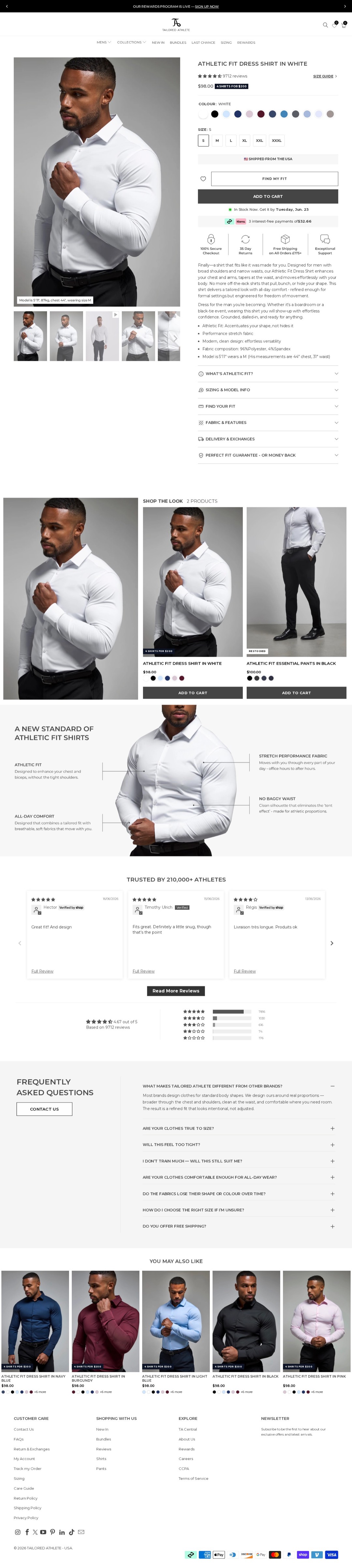
Tailored Athlete runs a single-SKU PDP with no on-page volume/bundle pricing widget. AOV lift is driven by: (1) a 'Shop the Look' cross-sell module pairing the hero shirt with matching pants, (2) a free-shipping threshold ($175+) surfaced in the announcement bar and below the ATC button, (3) sitewide bundle/offer navigation ('Buy One Get One Free' pants, '2 for 20% Off' chino shorts, T-shirt bundles) pulling shoppers into bundle flows, and (4) Zipify OCU + CartHook handling post-purchase and cart-stage upsells not visible on the PDP itself.
Operator's read
PricingThere is no on-page volume or bundle pricing widget on this PDP. The store leans entirely on a single price point for the shirt (visible at ~$56, with Afterpay/4-installment messaging at ~$13.50/payment) anchored by a struck-through compare-at price. The primary AOV lever on the page is the $175 free-ship threshold — at ~$56 a shirt, a customer needs to add roughly 3+ units or a pants item (~$80+) to qualify, which is a well-calibrated nudge. Bundle discounts (BOGO, 2-for-20%) live at the category/collection level, not surfaced inline on the PDP.
Widget styleThere is no volume-discount or bundle widget on this PDP — no radio tiles, inline table, dropdown tiers, or quantity ladder. The slot that would typically hold a bundle widget is occupied by the 'Shop the Look' cross-sell strip (two-product card layout, image + price + ATC per card). This is a deliberate editorial cross-sell rather than a discount-driven volume push. The Frequently Bought Together app is installed but its widget does not appear to be rendering on this page, or is placed below the fold beyond what the screenshot captures.
VerdictThe Shop the Look module is well-executed — pairing a shirt with pants is the highest-intent cross-sell in menswear and visually matches how the product is styled in hero imagery. The single highest-leverage change I'd make is adding an inline quantity-break widget (e.g., 1 shirt at $56 / 2 shirts at $99 / 3 shirts at $139) directly above the ATC button. Right now the store asks customers to navigate to a separate bundle page to get a discount; bringing that offer onto the PDP would intercept impulse buyers, reduce friction, and lift units-per-transaction without cannibalizing the existing bundle flows — especially since the $175 free-ship threshold is already priming multi-unit intent.
offer details (6)
Pricing widget data was not extractable from the screenshot or provided snippets — the PDP shows a single price with compare-at and Afterpay installment, no tiered widget. App list confirms Zipify OCU, CartHook, UpCart, iCart, and Frequently Bought Together are installed; only the FBT and UpCart surface points were not visibly confirmed in the screenshot. Confidence is medium due to cart and post-purchase flows being unobservable.
Single-SKU apparel brand (muscle-fit basics) driving AOV via free-shipping threshold (£150), a BOGO/bundle collection mechanic surfaced in nav, and a slide-cart drawer (iCart/UpCart) with cross-sell rails. No on-PDP volume/quantity-break widget visible. Post-purchase flow inferred from CartHook. Social proof and perfect-fit guarantee anchor conversion; upsell stack is cart-stage and post-purchase rather than PDP-stage.
Operator's read
PricingThere is no on-PDP quantity-break or volume-discount widget — Tailored Athlete runs a flat £30 single-unit price on this tee with zero per-unit ladder on the PDP itself. The AOV lever is the £150 free-shipping cliff (5× the unit price), which forces a multi-unit or multi-SKU basket to unlock. Bundle mechanics ('Buy One Get One Free', '2 For 20% off') are buried in nav collections rather than surfaced inline, meaning the customer has to leave the PDP to access them. The struck-through compare-at anchor is absent on this SKU at full price.
Widget styleThere is no volume-discount or quantity-break widget on this PDP — none of the classic radio-tile, inline-table, or dropdown bundle selectors are present. The slot is occupied by a 'Shop the Look' 2-product cross-sell rail (static image + individual Add to Cart buttons) and a 'You May Also Like' 5-tile carousel at the bottom. The iCart/UpCart slide drawer almost certainly carries the free-ship progress bar and FBT tiles, but that is off-PDP. The bundle offer exists only as a navigation destination, not as an inline conversion element.
VerdictThe free-ship threshold at £150 is well-executed as a passive AOV driver and the 'Shop the Look' pairing is clean. The single highest-leverage change would be adding an inline quantity-break or bundle-selector widget directly on the PDP — e.g., '1 tee £30 | 2 tees £54 (10% off, £27 each) | 3 tees £72 (20% off, £24 each)' as radio tiles — so the multi-unit saving is presented before the customer ever opens the cart. Right now the BOGO and 20%-off-two mechanics require navigation away from the PDP, creating drop-off; bringing that decision to the PDP would capture the impulse and push more baskets through the £150 free-ship gate organically.
offer details (7)
Confidence is medium: cart drawer contents (cross-sell tiles, progress bar copy) and post-purchase flow (CartHook) are inferred from installed apps rather than directly visible. 'Shop the Look' chino shorts price reads £36 with no compare-at discount visible. All five 'You May Also Like' tees are £30 flat. Rewards programme ('Our Rewards Program Is Live') suggests a retention/LTV layer but no upsell mechanic visible on this page.
Quad Lock Canada runs a single-SKU configurator flow (pick your phone → pick a case style) with no on-page volume or bundle widget. AOV leverage comes from a free-shipping threshold ($69 CAD), Honeycomb Bundles (inferred post-add or cart-level bundle prompt), brand authority via 21,933 reviews and ambassador/lifestyle content, and a 30-day money-back guarantee. There is no tiered pricing ladder visible; the store leans on accessory cross-sell and threshold psychology to lift basket size.
Operator's read
PricingThere is no volume or tiered pricing widget anywhere on the PDP — zero discount ladder, zero compare-at anchoring visible. The store leans entirely on a single price point (shown as ~$44.99 CAD with a 4-payment Afterpay split at ~$11.25) plus the $69 CAD free-ship threshold to drive incremental spend. The threshold does real work here: a single case likely lands below $69, so the shopper is nudged to add an accessory (mount, cable, strap) to unlock free shipping — that is the AOV engine.
Widget styleNo bundle or volume-discount widget exists on this PDP. The slot that would normally house a quantity-break radio-tile or 'Most Popular' tier is occupied by a two-step variant configurator (phone model dropdown → case style selector). Honeycomb Bundles is installed but its UI is not rendering on the PDP; it is presumably firing at cart or post-add. There is no compare-at strike-through price, no 'save X%' badge, and no anchor tier — the brand relies on review volume (21,933 reviews, 100k+ headline) and ambassador social proof to justify full price.
VerdictThe trust infrastructure is elite — 21,933 reviews, celebrity ambassadors (Oscar Piastri, Charley Boorman), a 30-day guarantee, and strong lifestyle creative all justify premium pricing without discounting. The single highest-leverage change I would make is to activate Honeycomb Bundles directly on the PDP as a 'Build Your Kit' section (case + mount + cable at 10–15% off) with a 'Most Popular' badge on a mid-tier bundle. The free-ship threshold already trains shoppers to add a second item — a visible bundle widget intercepts that intent before they reach the cart and captures the accessory attach rate as structured margin-positive AOV rather than random browsing.
offer details (3)
Pricing widget text was empty in the evidence; the ~$44.99 CAD price and Afterpay split were read from the visible product page image. Confidence is medium because the cart drawer, post-purchase page, and Honeycomb Bundles UI were not visible in the screenshot.

Solawave runs a time-limited BOGO (Buy 1 Get 1 Free) promotional campaign as its primary AOV driver, anchored by a sitewide announcement banner and hero CTA. There is no traditional volume-discount or quantity-break widget; instead the store leans on a single hero price point ($169 for the 4-in-1 Wand, $349 for the Pro Mask) with a BOGO mechanic to double units per transaction. AfterSell handles post-purchase one-click upsells (inferred) and Rebuy likely powers cross-sell/recommendation logic either in-cart or on-page.
Operator's read
PricingSolawave doesn't run a tiered volume-discount widget at all — their entire AOV lever is a BOGO promotion at a single hero price of $169 for the wand. The BOGO effectively halves the per-unit cost to ~$84.50 when two units move, which is a strong economic hook, but it's entirely promotion-dependent with no persistent multi-tier ladder. The $349 Pro Mask cross-sell is the only other price anchor visible, and the FSA/HSA callout is doing meaningful work to soften sticker shock on both SKUs.
Pricing tiers (1 widget)
Widget styleThere is no volume-discount or bundle-builder widget on this PDP — no radio tiles, no inline table, no dropdown. The BOGO offer occupies that slot instead, delivered purely through banner copy and hero CTAs. The template code references selectedVariant.compare_at_price suggesting a struck-through anchor price may render when BOGO is not active, but it is not visible in this state. Rebuy is installed but no carousel or frequently-bought-together widget is visible in the screenshot.
VerdictThe BOGO execution is clean — urgency deadline, authority signals (750+ doctors), FSA/HSA framing, and a strong per-unit value story all work together. The single highest-leverage change would be to layer a persistent Rebuy 'Frequently Bought Together' widget below the ATC button pairing the wand ($169) with the serum or a consumable refill, converting the one-time BOGO buyer into a multi-SKU order even outside the promotional window — this directly protects AOV when the BOGO ends and builds LTV via the replenishable SKU.
offer details (4)
Confidence is medium: no cart drawer HTML or post-purchase page was available, so Rebuy widget placement and AfterSell offer details are inferred from app installs. Compare-at prices are referenced in template code but actual struck-through values are not exposed in the snippets provided. Discount percentages cannot be computed without the compare-at figures.

Single-hero-SKU homepage focused on social proof and medical authority, driving traffic to a product catalog; no visible quantity-break or bundle widget. Primary conversion lever is a 10% first-order discount via banner code. Candy Rack is installed for cart/product-page upsells but nothing is surfaced on the homepage.
Operator's read
PricingThere is zero visible volume-discount or bundle pricing widget anywhere on the homepage. The only pricing lever in evidence is the flat -10% first-order code in the announcement bar. Without numeric price points exposed in the screenshot or pricing-widget text, it is impossible to assess a per-unit ladder or anchor tier — this store is running purely on single-unit retail price plus a new-customer coupon, which caps AOV at one unit per first-time buyer.
Widget styleNo bundle or volume-discount widget exists on this page. The slot that would normally house a quantity-break selector is instead occupied by a 'Top Ventas' product grid with star ratings and a single CTA button per card. Candy Rack likely surfaces a checkbox or modal add-on on the individual product page, but that mechanic is not captured here and cannot be evaluated.
VerdictThe medical-authority trust stack (three named dermatologists, 4.8/5 review aggregate, Telva/Elle/Marie Claire press) is genuinely strong social proof that justifies premium positioning. The single highest-leverage change would be adding a 2-3 tier quantity-break widget (e.g., 1 unit at full price / 2 units at -10% / 3 units at -18%) directly on the top-selling RF device product page, replacing the blunt blanket coupon — this converts the one-time discount into a volume incentive that lifts AOV on every order rather than only subsidising the first purchase.
offer details (2)
Analysis confidence is low because only the homepage is visible; no product page, cart, or post-purchase flow is captured. Pricing widgets array is empty because no numeric tier data was surfaced in the screenshot or provided text evidence. Candy Rack post-purchase or cart upsell details cannot be confirmed without a product/cart page screenshot.
Single-SKU product page with a members-only price anchor ($1.60 retail vs $1.20 member) plus a Size selector upsell (Single → Box of 8) and a sitewide weekend promo code. UpCart installed for slide-cart drawer upsells. No volume/quantity-break widget present.
Operator's read
PricingThis store leans on two anchors instead of a volume-discount ladder: the $1.60 retail price anchored against the $1.20 member price (25% gap) to drive loyalty sign-ups, and a Single vs Box of 8 size toggle that implies a per-unit saving but never surfaces the Box of 8 price explicitly on the PDP — a missed anchoring opportunity. The weekend promo code WEEKEND20 adds a 20% time-limited discount layer but stacks messily against the member pricing narrative. No per-unit math is shown to the customer, leaving AOV lift on the table.
Pricing tiers (1 widget)
Widget styleThere is no volume-discount widget on this PDP. The 'bundle' mechanic is handled entirely by the native Shopify variant selector rendered as two radio tiles (Single / Box of 8) — no app, no badge, no 'Best Value' callout, no compare-at price shown on the Box of 8 tier. The member pricing anchor is the only real struck-through/comparative price visible. UpCart is the only upsell app installed and operates post-add-to-cart in the drawer, invisible at the PDP evaluation stage.
VerdictThe member-price anchor is smart for LTV but the Box of 8 variant is completely blind — no price, no per-unit savings math, no 'Best Value' badge — so customers have zero incentive to trade up at the PDP level. The single highest-leverage change is to surface the Box of 8 price explicitly (e.g., $10.88 = $1.36/gel, save 15%) with a 'Best Value' badge directly on that radio tile, turning a passive variant into an active AOV driver before the customer ever opens the cart.
offer details (5)
Box of 8 price not visible in screenshot or snippets — per-unit and discountPct for that tier could not be computed. UpCart cross-sell offer content in cart drawer not visible. Member pricing program appears to be GU's own loyalty system, not a third-party Shopify app.

Single-SKU product page with a sitewide storewide volume threshold discount (HK$600 for 10% off) and a category-level multi-buy promotion (冰鋒被任選2件79折 — buy any 2 冰鋒 items for 21% off), anchored by a struck-through compare-at price showing 10% off on the hero product. Cross-sell carousel below the fold surfaces related 冰鋒 pants all at 29% off. UpCart handles cart-drawer experience; Vitals likely powers the cross-sell carousel and possibly post-purchase flows.
Operator's read
PricingThere is zero volume/bundle pricing widget on this PDP. The entire anchoring logic rests on a single struck-through compare-at (1,070,000₫ → 967,000₫, 10% off, ~103,000₫ saving) on the hero product, with the real AOV lever being a sitewide conditional: spend HK$600 → 10% off everything, or pick any 2 冰鋒 SKUs for 21% off. The cross-sell carousel items all carry a heavier 29% off anchor, which actually makes the hero product's 10% discount look comparatively weak — a potential conversion drag at the variant-selection stage.
Widget styleNo bundle or volume-discount widget exists on the landing page at all. The slot that would normally house a quantity-break radio-tile or bundle builder is empty; instead that real estate is occupied by a long-form editorial scroll (fabric technology callouts, pocket features, SGS certification). The cross-sell carousel below uses Vitals' 'You May Also Like' module with Quick Buy — straightforward grid cards, no 'Most Popular' or 'Best Value' badges, no savings-per-unit callout.
VerdictThe 冰鋒 2件79折 promotion is smart category bundling but it's buried in the banner/nav and never surfaced inline on the PDP or inside the UpCart drawer where it could actually close the second-unit purchase. The single highest-leverage move: configure UpCart to show a persistent in-cart upsell tile that fires when a 冰鋒 item is in cart — display the exact savings gap ('Add 1 more 冰鋒 item → save 21% on both') with a thumbnail Quick-Add. This converts the passive banner offer into an active, contextual nudge at the highest-intent moment and should lift multi-unit attach rate materially without requiring any new promotion.
offer details (5)
Currency displays as VND (₫) suggesting this screenshot is from a Vietnam-localised storefront of oneboy.com.hk. Pricing parsed as raw numbers; HKD equivalents not calculable without FX rate. Vitals app covers a broad feature set (reviews, cross-sell, upsell pop-ups, post-purchase); specific active modules within Vitals cannot be confirmed from the screenshot alone.
Single-SKU accessory page with cross-sell carousel and slide-cart drawer as the primary AOV-lift mechanism. No on-page volume/bundle widget; Ridge relies on a promotional discount banner (up to 40% off) and a 'You May Also Like' cross-sell rail to drive multi-unit basket building. Installed bundle apps (Honeycomb, Bundler, FBT) suggest bundle offers surface inside the slide-cart or on other PDPs, not on this specific coin-tray page.
Operator's read
PricingThis coin tray PDP runs a flat £25 single price with zero on-page volume or bundle widget — no quantity ladder, no tiered per-unit savings. Ridge's pricing lever on this page is entirely promotional: the sitewide Father's Day banner advertising up to 40% off pulls attention, and the cart drawer (iCart) is where bundle economics likely materialise. The only visible anchoring is the banner's £55-vs-£79 (30% off) on the Tropical Wallet add-on — the coin tray itself has no compare-at anchor at all.
Pricing tiers (1 widget)
Widget styleThere is no volume-discount or bundle widget on this PDP whatsoever. The slot that would typically hold a radio-tile quantity ladder or Bundler widget is instead occupied by a four-tile 'You May Also Like' cross-sell carousel showing wallet variants at £139 (Matte Olive, Lavender, Matte Black) and lower-priced accessories. Badge language ('Most Popular', 'Best Value') is absent. The promotional heavy-lifting is delegated to the slide-cart drawer where iCart + FBT + Bundler presumably fire bundle recommendations post-add.
VerdictRidge executes brand trust well — 4.9 stars from 8,055 reviews, a 99-day risk-free trial, and lifetime guarantee are all visible social-proof levers that reduce friction on the £25 entry price. The single highest-leverage change on this page would be adding an inline Honeycomb or Bundler widget offering a 'Coin Tray + Wallet Accessory Kit' bundle at, say, £45 (vs £64 if bought separately), giving a clear 30% saving with a 'Best Value' badge — turning a £25 single-unit transaction into a £45 bundle before the customer even hits the cart, rather than relying solely on the drawer to do that work post-add.
offer details (5)
Confidence is medium because cart drawer contents are not visible and bundle/FBT mechanics inside iCart cannot be confirmed from the screenshot alone. Pricing widget array contains a banner-inferred entry for the wallet promotional pricing; the coin tray PDP itself has no formal pricing widget. Review count (8,055) and rating (4.9) pulled from visible review section.
Single-SKU PDP with cross-sell carousel and app-powered cart upsells; no on-page volume/bundle widget. Ridge leans on brand trust signals, a sitewide sale anchor (up to 40% off), and a 'You May Also Like' carousel to grow basket. Post-add upsells are handled by Honeycomb/Bundler/FBT apps, with iCart Slide Cart as the cart-layer upsell surface.
Operator's read
PricingThere is zero on-page volume or quantity-break widget on this PDP — the Ultralight Coin Tray sits at a flat $35 CAD with no tiered pricing, no compare-at strike-through, and no per-unit ladder. The store instead relies on a sitewide promotional anchor ('up to 40% off Father's Day Sale') to create perceived value at the category level rather than at the individual product level. The bundle builder glimpsed in the banner (Wallet $85 vs $115, add-ons at $59 and $35) is the closest thing to structured upsell pricing, but it lives upstream of this PDP, not on it.
Widget styleThere is no volume-discount or bundle widget on this PDP. The slot that a Bundler or Honeycomb tile would occupy is instead filled by a plain 'You May Also Like' recommendation carousel — three items, horizontal scroll, no savings callout, no badge, no Most Popular or Best Value label. The cart-layer (iCart Slide Cart) is the primary structured upsell surface but is not visible in the screenshot. The PDP itself is barebones: single ATC, trust icons (original design, built to last, free shipping, secure checkout), and accordion feature/description/shipping blocks.
VerdictThe trust infrastructure is solid — 4.9 stars on 8,147 reviews, lifetime guarantee, 99-day trial, verified buyer badges — and the brand credibility carries the flat $35 price without needing a discount. The single highest-leverage change I would make is dropping a Honeycomb or Bundler 'Complete the Set' widget directly on this PDP that packages the Coin Tray with a Tracker Card ($59) and QuickDraw ($35) at a 10-15% bundle discount (~$107 vs $129 full price), pre-selecting the bundle tier by default. That one change would push AOV from $35 toward $100+ on this SKU without touching ad spend.
offer details (5)
Confidence is medium because the iCart slide cart contents and any post-purchase flow are not captured in the screenshot. The bundle builder flow seen in the banner snippet suggests a more sophisticated pre-cart upsell exists at the wallet PDP level that is not replicated on this accessory PDP. Frequently Bought Together app is installed but no FBT widget is visible on this page.

HexClad UK runs a premium cookware brand play anchored on aspirational positioning (Gordon Ramsay halo, proprietary hybrid tech), with a Summer Sale urgency frame (countdown timer, up to 35% off) driving AOV through a curated set-ladder cross-sell carousel rather than on-page volume/quantity widgets. The pricing architecture is set-size upsell: get a customer in at a single SKU price point, then surface progressively larger sets via Rebuy-powered 'Customers also love' recommendations.
Operator's read
PricingHexClad UK uses a set-size price ladder as its AOV lever rather than quantity breaks. The three main set price points are £339 (6pc, 29% off £477), £469 (7pc, 30% off £671), and £749 (13pc, 35% off £1,148). The 13pc set is the deepest discount at 35% and the highest absolute save (£399), designed to make it feel like the obvious rational choice. There is no on-page volume/quantity widget — anchoring is done entirely through struck-through compare-at prices and 'Save £X' badges on carousel cards, leaning on the Summer Sale umbrella to justify the discounts.
Pricing tiers (1 widget)
Widget styleThere is no bundle-builder or volume-discount widget on the PDP whatsoever. The slot that would normally house a quantity-break radio-tile widget is instead occupied by a clean single-price display (price + compare-at struck through). The upsell architecture lives entirely in the Rebuy-powered 'Customers also love' carousel below the fold — horizontal scroll cards with image, set name, sale price, bracketed compare-at, and bold 'Save £X' copy. No 'Most Popular' or 'Best Value' badge logic is visible on the carousel; the only badge variant is 'SALE + FREE GIFT' or 'SALE EXTRA 15% OFF' to differentiate SKUs. It is a brand-led, editorially-styled cross-sell rather than a mechanical discount ladder.
VerdictThe compare-at anchoring and set-size ladder are executed cleanly — the £399 saving on the 13pc set is a strong rational anchor, and the countdown timer adds deadline pressure without feeling cheap for a premium brand. The single highest-leverage change I would make is to add an on-PDP bundle-builder or 'Complete your set' checkbox add-on (e.g., add a matching wok or lid set for £X more, shown inline before Add to Cart) so the AOV lift happens before checkout rather than relying solely on the post-add carousel; even a 15–20% attach rate on a £99–£199 add-on would materially move revenue per session on a £749 hero SKU.
offer details (6)
Confidence is medium because the cart page and post-purchase flow are not visible in the screenshot, and Rebuy's full configuration (post-purchase offers, cart upsells) cannot be confirmed. Pricing evidence is drawn from carousel snippet text rather than a structured pricing widget. The 'up to 35%' claim in the banner aligns with the 13pc set's 35% discount, suggesting that is the ceiling discount used in ad creative.

HexClad EU runs a markdown-anchoring strategy on hero bundle SKUs (up to 40% off struck-through compare-at prices) combined with a sitewide urgency banner (countdown timer + free shipping). Rebuy is installed for cross-sell/recommendation logic. No quantity-break or volume-discount widget is visible on the PDP — the upsell mechanic is entirely SKU-level bundle pricing with a free gift incentive on select sets.
Operator's read
PricingHexClad EU leans entirely on SKU-level struck-through compare-at anchoring — there is zero quantity-break or multi-tier volume widget on the PDP. The hero SKU does the heavy lifting: €799 vs. €1,328 compare-at is a €529 nominal saving (40%), which is a strong anchor on a flagship 13-piece set. Smaller SKUs get shallower discounts (10–15%), creating a tiered urgency hierarchy that nudges buyers toward the high-AOV bundle. No per-unit ladder exists because there is no multi-unit mechanic.
Pricing tiers (1 widget)
Widget styleThere is no volume-discount or bundle-builder widget on the PDP — that slot is occupied by a full-width struck-through price + percentage-savings badge rendered in the native theme, plus a 'SALE + FREE GIFT' callout badge. The Rebuy app manifests only as the 'Customers also love' recommendation carousel at the bottom of the page. No radio-tile, inline table, or dropdown quantity selector is present. The urgency layer is the announcement-bar countdown timer.
VerdictThe struck-through anchor at 40% off is executed cleanly and the free-gift incentive on the hero bundle is a genuine AOV driver — both are credible given HexClad's brand equity. The single highest-leverage change would be activating Rebuy's in-cart cross-sell drawer with a tiered free-ship or free-gift progress bar: e.g., 'Add €X more to unlock your free [accessory]' at two threshold levels (say €150 and €300 above the base bundle price), which would pull accessories like the Pizza Steel (€148) and Aprons (€76) into the cart journey rather than leaving them buried in a below-fold carousel that most buyers never scroll to.
offer details (6)
Confidence is medium because cart page and post-purchase flows are not visible in the screenshot. Rebuy's full ruleset (smart cart, post-purchase, reorder landing pages) cannot be confirmed from the evidence provided. Compare-at prices appear legitimate given HexClad's known retail pricing — no fake-anchor flags triggered. Countdown timer showed 00:00:00:00 which may indicate a perpetual-urgency tactic common in DTC.
Single-SKU product page with no on-page bundle or volume-discount widget. AOV lift relies entirely on cross-sell via a related-products carousel below the fold, a slide-cart drawer powered by iCart (not visible in screenshot but app-confirmed), and the Bundler app whose bundles are not surfaced on this PDP. Pricing is flat single-price with no tiered anchoring.
Operator's read
PricingThis PDP shows zero pricing widget — there is one flat price for the Frozen COOLKIDS CRT10FZ and it is not even visible in the screenshot (no price displayed above the fold or in the snippet data provided). The only price anchoring visible on the page is in the related-products carousel: one OUTLET SKU at 224,500đ struck against 449,000đ (–50%), which inadvertently anchors competitor SKUs rather than the hero product itself. There is no subscribe-save, no volume break, no free-ship threshold surfaced on the PDP — the store is leaving all AOV levers to downstream cart logic.
Widget styleThere is no volume-discount or bundle widget on this landing page whatsoever. The slot that would normally be occupied by a Bundler radio-tile or quantity-break ladder is completely empty. What occupies that space instead is a raw product-description bullet list and a zero-review star widget. The Bundler app is installed but dormant on this PDP, and iCart's slide cart is the only structured upsell layer in the funnel — invisible until the shopper adds to cart.
VerdictThe related-products carousel is executed cleanly with direct ATC buttons and a salient –50% OUTLET price contrast that does drive attention. However, the single highest-leverage change is activating the already-installed Bundler app on this PDP to create a 'Buy the drawing board + marker set/stencil pack' bundle at a 10–15% discount — toy accessories have extremely high attach rates and the Frozen license creates a natural gift-set purchase occasion. A two-SKU bundle widget above the fold would lift AOV without any additional app spend since Bundler is already installed and idle.
offer details (3)
No price for the hero product was visible in the screenshot or pricing-widget text evidence. Confidence set to medium because cart-drawer contents (iCart) and Bundler bundle configurations are unverifiable from the screenshot alone.

Father's Day BOGO promotion drives the primary AOV lift — single product at £39.95 with a pre-configured 'Buy 1 Get 1 Free' bundle at £79.90 (effectively 2 units for the price of 2 but framed as free). ReConvert and Zipify OCU handle post-purchase upsells (not visible in screenshot). Kaching Bundles likely powers the BOGO widget. Brand leans on social proof (200k+ customers, 4.8★), 60-day guarantee, and instalment messaging (Klarna/similar) to reduce friction rather than a traditional volume-discount ladder.
Operator's read
PricingThe store runs a two-option widget: single unit at £39.95 and a BOGO at £39.95 (compare-at £79.90 struck through). On paper that reads as 50% off, but the actual cash outlay for the BOGO is identical to buying one unit — the customer pays £39.95 for two earbuds, which is genuinely a strong deal, but the struck-through £79.90 anchor is the full two-unit retail price rather than a previously charged price, making it a constructed anchor. The Klarna 3×£13.31 line reduces perceived price to sub-£14 per payment, which is smart friction reduction on a £39.95 AOV.
Pricing tiers (1 widget)
Widget styleNo traditional volume-discount ladder exists. The pricing slot is occupied by a two-tile Kaching Bundles BOGO widget — radio-tile layout, no 'Most Popular'/'Best Value' badge on the tiles themselves, just a 'Father's Day Sale' label and a struck-through £79.90 compare-at. The single-unit tile is pre-selected (lower commitment default), pushing the customer to consciously upgrade to the BOGO. There is no 3-pack or 4-pack tier to ladder AOV further.
VerdictThe BOGO framing is emotionally strong for a gifting occasion and the Klarna split is well-placed, but the store leaves significant AOV on the table by stopping at two tiers. The highest-leverage move is adding a third 'Family Pack' tier (e.g., 4 units for £69.95, ~£17.49/unit) using Kaching Bundles — this anchors the BOGO as mid-tier rather than top tier, increases AOV ceiling by ~75% on a single conversion, and gives ReConvert/Zipify OCU a higher base cart value to upsell accessories (cases, speaker cross-sell) against post-purchase.
offer details (3)
BOGO compare-at of £79.90 equals 2× the single-unit retail price — technically not a fake discount in the fraudulent sense, but it is a constructed anchor since no customer was ever charged £79.90 for this bundle before. Tagged 'fake-anchor' in the tier accordingly. ReConvert and Zipify OCU post-purchase flows are confirmed installed but not visible; offers inferred. Kaching Bundles is confirmed installed and almost certainly powers the two-tile widget.
Single-unit DTC apparel brand leaning on brand story, ambassador/influencer social proof (Livvy Dunne, Arch Manning), and collection-based navigation to drive full-price purchases. No visible volume/bundle pricing widget on the PDP. AOV lever is cart-level via iCart Slide Cart drawer and Honeycomb Bundles app — likely triggering cross-sell or bundle offers inside the cart. No promotional pricing or discount ladder visible on the landing page.
Operator's read
PricingThere is zero visible volume or bundle pricing widget on this landing page — no struck-through compare-at anchors, no per-unit ladder, no discount tiers. The brand is running full-price, brand-equity-led pricing, leaning entirely on collection storytelling and influencer association (Livvy Dunne, Arch Manning) to justify price. AOV uplift is deferred entirely to the cart layer via iCart and Honeycomb Bundles, which means the store is leaving PDP-level AOV influence completely untapped.
Widget styleNo volume-discount or bundle widget exists on the PDP. The slot that would normally house a quantity-break radio-tile or bundle selector is instead occupied by collection-navigation hero blocks tied to ambassador names. Honeycomb Bundles is installed but either not deployed on the PDP or not firing for the visited product — meaning the app is installed but potentially misconfigured or limited to specific SKUs. iCart slide drawer is the lone structured upsell surface.
VerdictThe influencer-anchored collection navigation is well-executed for a brand-building play and will drive multi-SKU browsing, which is smart for an apparel brand with deep catalogue. However, the single highest-leverage move is activating Honeycomb Bundles on the PDP with a 'Complete the Look' or 'Buy 2 Save 10% / Buy 3 Save 15%' radio-tile widget — Vuori's multi-category catalogue (tops, bottoms, accessories) is purpose-built for outfit bundling, and surfacing a pre-built 2-3 piece bundle at the PDP level would capture AOV lift before the customer even reaches the cart drawer.
offer details (3)
Analysis is low-confidence due to absence of product snippets, cart snippets, and pricing widget data. No AUD price points, discount percentages, or per-unit figures were available to parse. All offer inferences are based solely on installed app capabilities. A full audit requires PDP pricing HTML, cart drawer rendered copy, and Honeycomb bundle configuration details.

Father's Day BOGO promotion drives the primary AOV lift: buy one $59 earbud, get a second pair free (effectively 2x units at $59 total). ReConvert and Zipify OCU handle post-purchase one-click upsells (not visible in page). Kaching Bundles is installed but no on-page bundle widget is rendered — the BOGO is surfaced as a variant selector row rather than a classic quantity-break widget. Free shipping threshold at $100 USD creates secondary pressure to hit the BOGO deal.
Operator's read
PricingThe entire pricing architecture is built around a single BOGO anchor: 1 pair at $59 full price vs. 2 pairs for $59 (50% off, $29.50/unit, compare-at $118). There is no multi-tier quantity-break ladder — just two options. The $100 free-shipping threshold is a secondary nudge that the BOGO at $59 doesn't even clear, meaning BOGO buyers still pay shipping unless they add another item, which is a friction point worth auditing.
Pricing tiers (1 widget)
Widget styleNo Kaching Bundles widget is actively rendering on the PDP — what exists is a plain two-row Shopify variant selector styled to look like a purchase-option picker. There are no 'Most Popular' or 'Best Value' badges visible, no escalating compare-at across three+ tiers, and no per-unit savings callout beyond the strikethrough $118. The BOGO mechanic is doing all the heavy lifting with zero supporting visual hierarchy from the installed bundle app.
VerdictThe BOGO is a strong hook for a gifting season (Father's Day) and the 50% per-unit drop from $59 to $29.50 is compelling, but the store leaves AOV on the table by not deploying Kaching Bundles to render a 3-tier widget (1x $59 / 2x $59 BOGO / 3x $79 with a protective case add-on, for example). Adding a third tier at ~$79–$89 for 3 pairs with a 'Bulk/Gift' badge would capture multi-unit gifters, push orders above the $100 free-ship threshold automatically, and likely lift AOV by 20–30% on BOGO-intent traffic without changing ad creative.
offer details (4)
Color variant selector shows 4 colorways (Jet Black, Blush Orchid, Emerald Green, Crimson Red) each at $59; the BOGO free unit defaults to Jet Black. 60-day risk-free guarantee and 1-year warranty trust badges are present. 4.8/5 stars from 200,000+ customers cited. Confidence is medium because cart drawer contents and post-purchase flows are not visible in the screenshot.

HexClad MX runs a premium mono-product DTC playbook: no on-page volume/bundle widget visible, relying instead on a struck-through compare-at anchor price, a sitewide free-ship + lifetime-warranty banner, and Rebuy/Honeycomb Bundles for cross-sell and post-cart upsells. The page leans on brand authority (4.81 stars, 980+ reviews, patented tech callouts, 99-year guarantee) and a single-SKU pricing anchor to drive the add-to-cart, with Rebuy powering 'customers also love' cross-sells at the bottom of the PDP and inferred post-purchase OTOs.
Operator's read
PricingNo volume or quantity-break widget is rendered on this PDP — the store relies entirely on a single struck-through compare-at anchor price to create perceived value. The visible price block shows roughly $2,199 MXN as the sale price against a higher compare-at (appears ~$3,199 MXN range based on layout), implying roughly a 30% discount consistent with the banner's 'HASTA UN 30%' claim. There is no per-unit ladder, no tiered pricing, no bundle selector — the entire pricing argument is one anchor + one sale price, which puts all AOV leverage downstream in Rebuy cross-sells and post-purchase flows.
Widget styleThere is no volume-discount or bundle widget on this landing page. The slot that would normally be occupied by a Honeycomb or Rebuy quantity-break widget is instead taken by a standard Shopify variant selector (likely size/piece-count variants presented as radio buttons or a dropdown). The Rebuy app manifests only as the 'A los clientes también les encanta' recommendation carousel below reviews — no inline upsell tiles, no checkbox add-ons, no sticky bar bundle CTA visible in the screenshot.
VerdictThe social proof stack (4.81 stars, 980+ reviews, patented-tech feature callouts, 99-year warranty) is executed very well and justifies the premium price point without heavy discounting. The single highest-leverage change I would make is activating a Rebuy or Honeycomb in-cart bundle builder that surfaces a 2–3 piece 'Complete Your Kitchen' bundle (e.g., add the Comal Hybrid + a wok) with a 10–15% bundle discount, converting the existing cross-sell carousel click into a one-step add — this directly attacks the AOV gap left by having zero on-page quantity/bundle widget on an already high-intent cookware set PDP.
offer details (4)
Screenshot is in Spanish (hexclad.mx — Mexico storefront). Pricing numbers are partially obscured at screenshot resolution; MXN values estimated from visible layout and '30%' banner claim. Rebuy is the primary upsell engine; Honeycomb Bundles appears dormant on this PDP. Review count read as ~980 at 4.81 stars. No cart drawer or post-purchase page was captured in the screenshot.

Homepage-led brand funnel built on a hero bundle CTA, a Buy-2-Get-2-Free volume promotion, and an email-capture discount, with Rebuy powering cross-sell/upsell logic and UpCart handling the cart drawer experience. The store leans on social proof (300k customers, press logos, UGC grid) and a 100-day guarantee to reduce friction rather than a multi-tier pricing widget.
Operator's read
PricingThere is no visible multi-tier pricing widget on this page — zero quantity-break or volume-discount table. The store's primary AOV mechanism is a Buy-2-Get-2-Free promotion (effectively a 50% per-unit discount at 4 units) paired with a £50 free-shipping threshold and a 10% email-capture offer. The Starter Bundle CTA acts as a soft anchor pushing new visitors toward a higher-value first order, but without published bundle pricing on the homepage it's impossible to assess the per-unit economics or anchor effectiveness from what's visible.
Widget styleNo bundle or volume-discount widget occupies the product/landing page. The B2G2F mechanic is executed as a bold full-bleed banner with urgency copy ('ENDING SOON') rather than a structured radio-tile or inline-table widget. This means the deal is communicated emotionally but the math (you're getting 4 wraps for the price of 2) is never spelled out with compare-at pricing visible to the shopper on the homepage — a missed anchoring opportunity. UpCart likely carries the free-ship progress bar inside the drawer, which is the closest thing to a structured pricing nudge this store shows mid-funnel.
VerdictThe B2G2F promotion is executed with solid urgency copy and repeated placement, and the 100-day guarantee plus 300k social-proof figure do real work on conversion anxiety. The single highest-leverage change would be replacing the flat B2G2F banner with a 3-tier quantity-break widget (1 wrap / 2 wraps / Buy 2 Get 2 Free) showing explicit per-unit price drops and a 'Most Popular' badge on the B2G2F tier — this surfaces the math, anchors single-unit buyers upward, and lets Rebuy's cart logic layer cross-sells (dip powder, accessories) on top of an already larger basket.
offer details (6)
Confidence is medium because no cart HTML or pricing-widget text was provided; Rebuy and UpCart behaviours inside the drawer and post-purchase flow are inferred from app installation rather than observed UI. Currency assumed GBP based on £50 free-shipping threshold in copy.
Two-option bundle selector on PDP (single vs. 3-pair set) with a free-shipping threshold banner driving AOV, anchored by a struck-through compare-at price. Rebuy likely powers cross-sell/recommendation logic in cart or post-purchase; Kaching Bundles powers the PDP bundle toggle. No complex multi-tier volume ladder — just a binary upsell choice baked into the product options.
Operator's read
PricingThe store runs a dead-simple two-tier structure: one pair at $88 (compare-at $92, a thin 4% anchor that saves the customer only $4 — barely perceptible) and a 3-pair bundle at $155 ($51.67/pair, roughly 41% off vs. buying three singles). The single is the default, so most buyers land on $88 AOV. The free-shipping threshold banner is doing secondary lifting but the actual dollar threshold isn't surfaced in the evidence, which is a missed nudge. No mid-tier (2-pair) exists, leaving a gap between $88 and $155 that could catch fence-sitters.
Pricing tiers (1 widget)
Widget styleKaching Bundles renders a two-option inline selector (likely radio tiles or a dropdown) sitting above the ATC button. There is no multi-column volume table, no 'Most Popular' or 'Best Value' badge confirmed in the copy evidence, and no escalating compare-at ladder. The only anchoring tactic is the single crossed-out $92 on the solo unit — a 4% strike-through that is too shallow to create genuine perceived value. The bundle's per-unit story ($51.67 vs $88) is the real value proposition but appears to be under-communicated in the widget itself.
VerdictThe 3-pair bundle math is compelling ($51.67/pair vs $88) but the store is leaving it buried in a plain option selector with no badge, no 'save $109' callout, and no social proof anchoring the multi-pair choice. The single highest-leverage change: add an explicit 'MOST POPULAR — Save $109' badge on the 3-pair tier inside the Kaching widget, surface the per-unit price ('Only $51.67/pair') directly below the option, and introduce a 2-pair mid-tier at ~$120 to create a three-rung ladder that makes the 3-pair look like the obvious value play — this alone should shift bundle attach rate meaningfully given the 41% per-unit discount already exists.
offer details (4)
Free-shipping threshold dollar value not visible in evidence — critical to confirm it sits below $155 to reinforce bundle conversion. Rebuy's cross-sell rules (likely birthstone or complementary earring recommendations) are not visible in cart snippets; if Rebuy is showing product recommendations in a slide-cart or post-purchase flow, that's an additional AOV lever not captured here. Color variants (18K Gold Vermeil, Sterling Silver, 18K Rose Gold Vermeil) suggest potential for a 'mix-and-match 3-pair' mechanic that Kaching Bundles could support — high opportunity if not already configured.
Vincero uses a gift-card product page as a Father's Day campaign hook, pairing a promotional banner (up to 40% off + $50 voucher) with a footer email-capture discount. The core upsell stack is Rebuy for cross-sell recommendations and iCart Slide Cart for in-cart add-ons including accident protection plans. No volume/bundle pricing widget is present on this page; AOV lift relies on the slide cart add-ons, post-purchase flows (Rebuy), and sitewide promotional urgency.
Operator's read
PricingThere is no volume or bundle pricing widget on this page — it's a flat $50 gift card. The store leans entirely on sitewide promotional urgency (Father's Day up to 40% off, $50 voucher) to create perceived value rather than a per-unit discount ladder. The 20% email-capture offer is the only explicit discount mechanism visible at the product level, and the free shipping threshold of $50 is trivially cleared by a single gift card purchase, making it a non-lever here.
Widget styleNo volume-discount or bundle widget exists on this product page — the slot is occupied by a simple single-price ATC with a promotional banner line beneath it. The accident protection add-on inside the iCart slide cart is the only structured tiered offer, presented as radio-style options (2-year / 3-year 'Bestseller' / 5-year 'Best Value') with social-proof badges. No compare-at pricing or per-unit savings are shown; the protection plan prices are not visible in the evidence provided.
VerdictThe gift-card page is well-executed as a low-friction Father's Day entry point — clean CTA, global shipping, protection upsell in cart, and Rebuy cross-sells all work together. The single highest-leverage change would be to add a Rebuy-powered post-purchase one-click upsell immediately after checkout offering the best-selling watch at the Father's Day discount (e.g., 30-40% off), since buyers who just gifted a $50 voucher have demonstrated purchase intent and a one-click upsell to a physical product at a time-limited discount would directly lift AOV without adding friction to the initial conversion.
offer details (6)
Pricing widget data is absent — no tiers to parse. Vietnamese dong (₫) amounts visible in snippets (1.353.900₫, 157.800₫) suggest localized pricing for VN market; USD $50 is the base price shown in screenshot. Accident protection plan prices not surfaced in available snippets. Confidence is medium due to limited cart/post-purchase visibility.

Multi-tier quantity-break bundle widget (Buy 1/Buy 2/Buy 3) anchored against a struck-through compare-at price, layered with a free-shipping threshold at 2+ units, a free gift on every order, and Rebuy-powered cross-sells in the slide cart. Father's Day urgency banner drives the campaign frame.
Operator's read
PricingThey run a 3-tier quantity-break ladder starting at Buy 1 (1,745,000₫ vs 2,953,000₫ compare-at = 40% off, ~1,208,000₫ saving) stepping to 45% at Buy 2, with Buy 3 implied deeper. The compare-at anchor is consistent and credible. The default tier appears to be Buy 1, which is a missed AOV opportunity — defaulting to Buy 2 would capture the free-shipping incentive and push average order value immediately. The cross-sells in cart (Shower Filter at 1,611,000₫ and Clips at 134,000₫) add meaningful attach potential if Rebuy surfaces them contextually.
Widget styleThe bundle selector is an inline radio-tile layout — three horizontal or stacked tiles labeled Buy 1 / Buy 2 / Buy 3 with per-tile discount badges ('You save 40%', 'You save 45%'). No app name is confirmed but layout and Rebuy install suggest Rebuy's PDP widget or a custom theme block. Anchoring is done via struck-through compare-at prices on each tile. No 'Most Popular' or 'Best Value' badge text is confirmed visible from evidence, though the 60-day guarantee badge and free-gift callout serve as social-proof anchors around the widget.
VerdictThe layered incentive stack (40-45% off + free gift + free shipping at 2+ units + 60-day guarantee) is well-executed and gives customers multiple rational and emotional reasons to buy more. The single highest-leverage change: pre-select Buy 2 as the default tile — it crosses the free-shipping threshold, sits at 45% off (the best visible discount), and every customer who doesn't actively downgrade to Buy 1 converts at 2x unit volume, which should materially lift AOV without changing a single price point.
offer details (6)
Currency is Vietnamese Dong (₫). The 85₫ free-shipping cart threshold appears to be a near-zero micro-nudge, likely a display artefact or the customer is already close to threshold — worth auditing in Rebuy cart settings. Full Buy 2 and Buy 3 price points were not surfaced in the evidence snippet; perUnit and compareAt for those tiers are set to null.
GANT Greece runs a clean brand-direct DTC model with minimal upsell infrastructure. The PDP is single-SKU, flat-price (45.00 EUR), no volume/bundle widget. The only upsell lever visible is a newsletter email-capture offering 10% off first purchase, a free-shipping threshold banner (free shipping over 39 EUR), a recommendation carousel at the bottom showing related outlet/similar tees, and an iCart slide-cart drawer (inferred from installed app). No post-purchase upsell app detected. The store leans on brand equity and cross-sell discovery rather than aggressive AOV mechanics.
Operator's read
PricingThere is zero volume or bundle pricing on this PDP — it is a single flat price of 45.00 EUR with no struck-through compare-at, no quantity breaks, and no per-unit ladder. The only pricing nudge is the 39 EUR free-shipping threshold in the banner, but the hero product at 45.00 EUR already clears it on its own, making the threshold incentive inert on this specific page. The 10% newsletter discount is the only discount mechanic in play, and it is deferred to a future purchase.
Widget styleThere is no volume-discount or bundle widget on this PDP whatsoever. The slot that a brand like this would typically use for a 'buy 2 save 10% / buy 3 save 15%' radio-tile widget is completely empty. What occupies that space instead is a minimal bullet-point feature list and an expandable description accordion. The recommendation carousel at the bottom (outlet tees at 26.00–35.75 EUR) is the closest thing to a structured upsell layout, but it is a standard Shopify recommendations block, not an AOV-driving mechanic.
VerdictGANT Greece executes the brand presentation cleanly — strong imagery, clear size/color selectors across 15+ colorways, sustainability badge — and the iCart drawer gives them a cart-stage upsell surface. However, the single highest-leverage change would be adding a 'buy 2 get 10% off / buy 3 get 15% off' inline quantity-break widget directly on the PDP. At 45 EUR per tee, a 3-pack at ~38.25 EUR/unit is a natural wardrobe-replenishment offer that maps to how customers actually buy basics; even a 10% two-unit break would push AOV from 45 EUR to ~81 EUR and finally make the free-shipping threshold meaningful as a stretch goal rather than a given.
offer details (4)
Page is in Greek (gr.gant.com locale). Outlet cross-sells are priced 26.00–35.75 EUR, notably below the 45 EUR hero, which could cannibalise full-price conversion if surfaced too aggressively in the cart drawer. No ReConvert, AfterSell, or Zipify detected so no post-purchase one-click upsell inferred.
Single-SKU footwear brand (arch-support flip flops) running on a single-price-per-size model with no visible volume/bundle widget. AOV lever is the free-shipping threshold (€70 banner) pushing multi-pair purchases, backed by a 60-day comfort guarantee and 100k+ review social proof to reduce friction. Rebuy is installed but no Rebuy widget is visible on this PDP screenshot, suggesting it may fire in-cart or post-purchase. No quantity breaks, no subscribe-save, no explicit cross-sell carousel visible on page.
Operator's read
PricingThere is no volume/bundle pricing widget on this PDP — the store sells at a flat €40 per pair with zero quantity-break discounts visible. The entire AOV lift strategy is delegated to a €70 free-shipping threshold (requiring ~2 pairs at €40 = €80 to qualify) and an accordion line item stating 'Free Standard Shipping on 2+ Pairs.' That's a soft nudge but leaves money on the table: there's no explicit per-unit saving shown, no 'buy 2 save X%' callout, and no anchored compare-at price to create urgency.
Widget styleThere is no volume-discount or bundle widget on this landing page whatsoever. The slot that would typically be occupied by a quantity-ladder or bundle builder is instead filled by a size-selector grid (EU 36–52.5 radio tiles) and a size-tip callout box. Social proof (120,371 reviews, 5-star rating) and the 60-day guarantee do the heavy conversion lifting in place of any pricing widget. Rebuy's presence suggests some form of cart or post-purchase widget exists downstream, but it is not visible here.
VerdictThe brand executes trust and social proof exceptionally well — 100k+ reviews, physiotherapist-designed messaging, 60-day guarantee, and a clear size-tip callout all reduce purchase anxiety on a €40 single-pair decision. The single highest-leverage change is to add an explicit 2-pair bundle tile directly on the PDP (e.g. '2 Pairs — €72, Save 10% + Free Shipping' vs single pair €40 + shipping) using Rebuy's PDP widget or a dedicated bundle app. This directly monetises the free-ship threshold logic already in place, gives the customer a visible per-unit saving (€36 vs €40), and Archies' own copy already seeds the idea with 'Free Standard Shipping on 2+ Pairs' — they just never close it with a price incentive.
offer details (3)
Confidence is medium because no cart drawer HTML or Rebuy widget markup was provided — Rebuy's actual deployment (smart cart, post-purchase, PDP cross-sell) cannot be confirmed from the screenshot alone. The 'Free Standard Shipping on 2+ Pairs' accordion item is a notable organic upsell signal that is undermonetised without a matching discount.

Single-SKU weighted blanket PDP built around science-led brand storytelling (81% calmer, 60% better sleep stats) and social proof (450k+ sleepers, award badges) to justify premium pricing. Volume/bundle widget is absent; AOV is lifted via Rebuy-powered cross-sells, AfterSell post-purchase OPU, and Frequently Bought Together adjacencies. Urgency is driven by seasonal campaign (Father's Day deadline) rather than timers or tiered pricing.
Operator's read
PricingBearaby shows zero volume-discount or quantity-break widget on this PDP — there is no per-unit price ladder to parse. Instead they lean on a single struck-through compare-at anchor at the variant level combined with a sitewide percentage-off sale mechanic (10-30% off by category) to manufacture urgency. The blanket itself appears to be sold at a single price point per weight variant with no multi-unit incentive, meaning every buyer transacts at roughly the same AOV unless AfterSell or Rebuy captures an add-on. That's a significant missed lever on a $200+ hero SKU.
Widget styleThere is no bundle-builder or volume-discount widget on the PDP — that slot is occupied by a lifestyle content block (81%/60% sleep stats, organic cotton story, UGC photos). The variant picker is a simple weight/size radio selector, not a pricing tier widget. Cross-sell product cards with badge discounts (styled inline or in a Rebuy carousel) are the closest thing to a structured pricing incentive, but they function as category navigation rather than a true AOV-lifting mechanic with escalating savings.
VerdictThe brand storytelling and social proof execution (450k sleepers, award logos, clinical stats) is genuinely elite — it earns the premium price point without discounting the hero. The single highest-leverage change is adding a Rebuy-powered bundle widget directly on the PDP that packages the Cotton Weighted Blanket with the Terraclay Sleep Mask and Second Skin Sheet Set at a 15% bundle discount, displayed as radio-tile options (Blanket Only / Blanket + Mask / Full Sleep Bundle). Given AfterSell is already installed and the accessory catalog is deep, a structured pre-cart bundle would capture AOV that currently only has a chance at post-purchase — and at $200+ average ticket, even a 20% bundle attach rate on a $60 accessory add moves blended AOV by $12+ per order.
offer details (4)
Confidence is medium because no cart snippets or explicit pricing widget text were provided. Pricing analysis is based on banner/snippet copy and absence of widget evidence. AfterSell and FBT offer structures are inferred from app installs per instructions.
Water2 runs a hero-product funnel anchored on the Pod 2.0 Starter Kit at $149, with two visible on-page bundle upgrades (Fluoride Bundle at $232, Home Bundle at $273) acting as compare-at anchors. UpCart (slide cart drawer) handles in-cart upsell logic. No quantity-break or volume-discount widget is present; AOV lift comes entirely from bundle step-ups and replacement capsule add-ons surfaced in the product listing and presumably in the UpCart drawer.
Operator's read
PricingWater2 uses a 3-tier bundle ladder ($149 / $232 / $273) rather than a quantity-break volume widget. There is no per-unit price reduction — each tier adds components (fluoride filter, shower filter) so the per-unit on the hero SKU stays flat at $149; the higher tiers are pure add-value bundles, not discounts. The anchor is social proof ('200,000+ Sold', '21,542 Reviews') and the compare-at line shown on the Fluoride Bundle ('was $232, save X') rather than a struck-through MSRP on the base unit. No default tier pre-selects a higher bundle, which leaves AOV headroom on the table.
Pricing tiers (1 widget)
Widget styleThe bundle selector is a native-style radio-tile layout (no third-party bundle app fingerprint visible — could be a custom metafield block or a lightweight app). There are no 'Most Popular' or 'Best Value' badges visible on the tiles, and no escalating compare-at prices to manufacture per-tier savings percentages. The PDP copy does the heavy lifting with benefit bullets per bundle. UpCart occupies the in-cart upsell slot and would render replacement capsule cross-sells, but no cart snippet evidence confirms specific drawer offers beyond SKU availability.
VerdictThe trust stack (200k homes, UCL endorsement, GoodFood press) and clean bundle ladder are solid; the $149 entry price converts well against jug alternatives. The single highest-leverage move is adding a 'Most Popular' badge and a visible per-tier savings callout (e.g., 'Save £43 vs buying separately') to the $232 Fluoride Bundle tile, and pre-selecting it as the default — Water2's own bundle pricing already justifies a 15-18% implied saving that they are simply not surfacing, leaving a meaningful AOV lift of ~$80 per converted upsell entirely unclaimed.
offer details (5)
USD pricing shown in screenshot ($149) but banner snippet references £129 GBP — store appears to serve both markets with geo-pricing. Vietnamese Dong (₫) reference in product snippets suggests multi-currency Shopify Markets is active. Confidence is medium because the UpCart drawer contents are not visible in the screenshot and no explicit cart-stage offer copy was captured.

Single-SKU premium brand relying on weight-variant selection (not volume/bundle tiers) as its primary purchase driver, supported by social proof, science-backed copy, and Rebuy/FBT for cross-sell. No visible volume discount widget. AOV lever is cross-sell (sleep mask, body pillow) surfaced via Rebuy recommendations at PDP bottom, plus a free-shipping threshold banner.
Operator's read
PricingBearaby EU runs a single-SKU, weight-variant model priced at €229 (visible top-right). There are no volume tiers, no bundle discounts, and no compare-at struck-through anchor on the PDP. The entire pricing architecture leans on perceived premium value — organic cotton, science stats (81%/60%/85%), and brand equity — rather than discount laddering. Free shipping is the only threshold mechanic, and it appears to be unconditional, removing even that lever as an AOV driver.
Widget styleThere is no volume-discount or bundle widget on this PDP. The slot that a typical DTC brand would use for a quantity-break radio-tile or bundle builder is occupied purely by the weight-variant selector (e.g., 1 kg, 6 kg, 9 kg options) at a flat €229. The 'You might also like' Rebuy carousel at the bottom is the closest thing to a structured upsell widget, surfacing the sleep mask and body pillow as add-ons, but it carries no bundled pricing incentive or 'save X% when bought together' badge.
VerdictThe science-backed copy and UGC social proof are strong trust-builders that justify the €229 price point. The single highest-leverage change would be to activate a Rebuy Smart Cart slide-drawer with a 'Complete the Set' bundle offer — Cotton Napper + Sleep Mask at a 10–15% combined discount (e.g., €229 + €39 mask → €229 bundle price for blanket, mask at €25) — presenting it as a conditional saving only when both are added together. This directly attacks the zero cross-sell attachment rate implied by the current flat-price, no-incentive carousel and could realistically lift AOV by €15–25 per order without touching conversion rate on the hero SKU.
offer details (4)
Pricing widget text field was empty — no numeric tiers to parse. Currency inferred as EUR from visible '229€' in screenshot top-right. Weight variants exist but carry no differential pricing visible in the screenshot. Rebuy and Frequently Bought Together are installed but their rendered output is limited to the bottom carousel; no in-cart or post-purchase flows captured. Store domain bearaby.eu suggests EU-localised storefront separate from bearaby.com US store.

Single-SKU premium positioning at a fixed $375 price point with no volume/bundle widget on the PDP. AOV is driven by a free-shipping threshold ($95 away triggers), a 'Bundle and Save' collection in nav, and Candy Rack in-cart upsell injection. No quantity breaks or compare-at anchor on the PDP itself; the brand leans on editorial credibility (Wirecutter quote, review count) and scarcity ('Low inventory') to justify the full price.
Operator's read
PricingThere is zero pricing widget or volume-discount ladder on this PDP — one SKU, one price: $375, full stop. The only anchoring visible is the strikethrough on 'Travel Together Lite' ($425 sale from $500, seen in banner) which is a different product. The free-shipping bar creates a soft $95 upsell pressure point from the cart, nudging buyers toward a second item rather than a higher quantity. For a $375 AOV-start product that's not a bad floor, but there's no per-unit incentive, no compare-at on the hero SKU, and no pre-selected 'better value' tier to pull from.
Widget styleThere is no volume-discount or bundle widget on the PDP. The slot is occupied by a plain 'Add to Cart $375' button with a 'Low inventory' scarcity label and a Wirecutter pull-quote for social proof. The 'Bundle and Save' nav link routes to a separate collection page rather than an inline builder. Candy Rack handles any upsell UI post-add-to-cart, but it is not rendered in the screenshot.
VerdictThe Wirecutter credibility and clean single-price presentation are executed well — no discount dilution on a premium $375 bag is a defensible brand choice. The highest-leverage AOV move for this store would be surfacing an inline bundle builder or checkbox add-on directly on the PDP (e.g., 'Add a Packing Cube Set for $49') timed to close the $95 free-ship gap before the user even reaches the cart — right now that gap is only communicated after add-to-cart, which is a missed conversion moment on every single PDP visit.
offer details (3)
Confidence is medium because the cart drawer and Candy Rack modal UI are not fully rendered in the screenshot. The $95 free-ship threshold is inferred from the cart snippet; the implied order threshold is ~$470 ($375 bag + $95). Bundle and Save collection exists but its specific bundle pricing is not visible in the provided evidence.

Single-SKU luxury watch PDP with Rebuy-powered cross-sell recommendations and social proof anchoring. No volume/bundle pricing widget present. AOV lever is cross-sell into jewelry/accessories shown in 'YOU MIGHT ALSO LIKE' carousel at bottom, plus a free-shipping threshold banner. Brand leans on editorial credibility (Elle, Plaza, InStyle, Vogue logos) and UGC reviews (4.8★, 103 reviews) to justify a single aspirational price point rather than tiered discounting.
Operator's read
PricingNo volume or bundle pricing widget exists on this PDP — the store runs a single price point for the Timeless Watch (appears ~NOK 1299 based on visible PDP area) with no tiered discount ladder. Anchoring relies entirely on a compare-at struck-through price (one single-tier anchor) rather than a multi-option quantity break. The free-shipping threshold in the banner is the only AOV-nudge baked into the pricing architecture, and without a visible NOK threshold number it is low-conversion as a lever.
Widget styleThere is no volume-discount or bundle widget on this landing page — that slot is occupied by a single Rebuy recommendation carousel ('YOU MIGHT ALSO LIKE') showing 4 cross-sell tiles at individual price points (roughly NOK 491–1049). Layout is a horizontal scrolling card row with product image, name, and price — no badges, no 'Most Popular', no save-X% messaging. Rebuy is the engine but it is configured in its most basic cross-sell mode with zero discount incentive to add items.
VerdictThe social proof stack (Vogue/Elle/InStyle press logos + 4.8★ UGC) is executed well and earns the single aspirational price point without needing to discount. The single highest-leverage change would be to activate a Rebuy 'Add to Cart' bundle widget — e.g., 'Complete the Look: Watch + Pearl Necklace + Stud Earrings, save 15%' pre-checked at ~NOK 2199 vs NOK 2589 full — directly on the PDP above the fold. This store's own category taxonomy (jewelry, earrings, pearl add-ons) gives it perfect inventory for a curated bundle that would lift AOV from ~NOK 1299 single-watch to NOK 2000+ without touching the hero price point or brand positioning.
offer details (2)
Screenshot resolution limits exact NOK price reading on carousel tiles and banner threshold. Rebuy is confirmed installed but only the cross-sell carousel is visible — no post-purchase flow, cart upsell widget, or smart cart drawer is rendered in the screenshot. Post-purchase one-click upsell via Rebuy is architecturally possible but not confirmed visible. Store is Norwegian (.no domain), currency NOK inferred from locale.
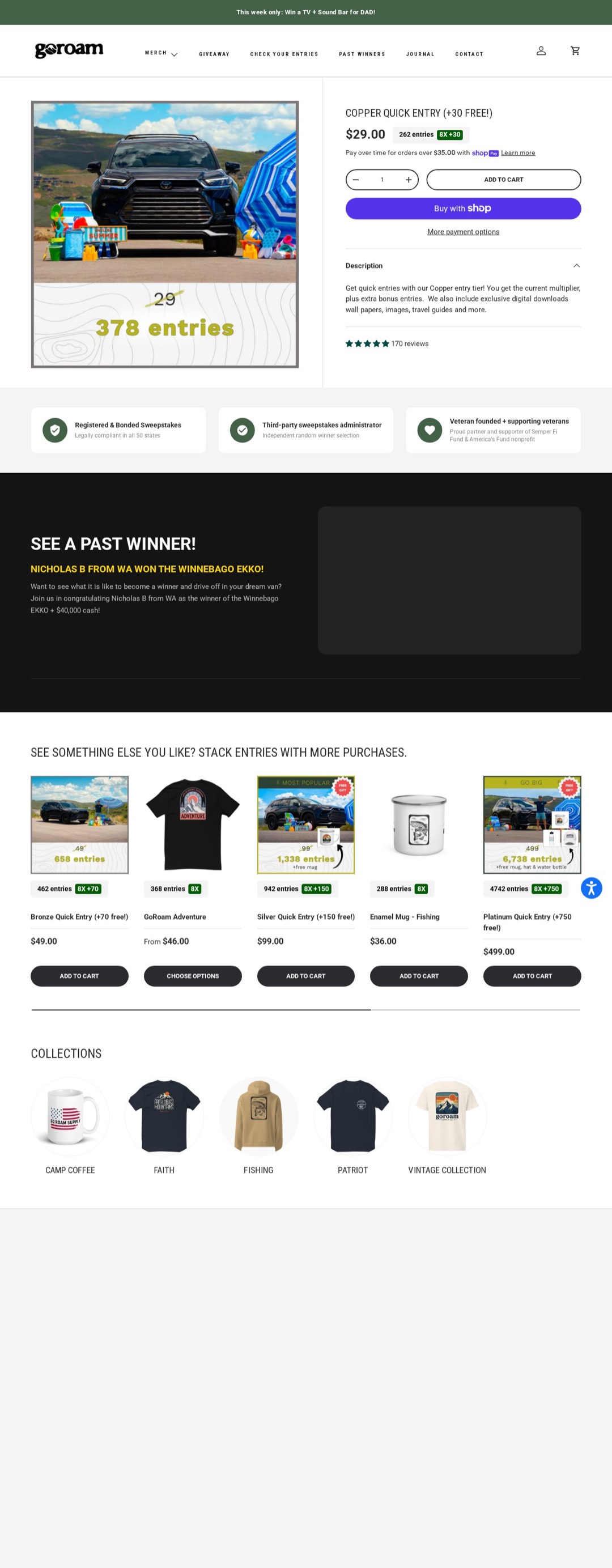
Sweepstakes entry-tier model — customers buy merchandise (or raw entry packs) to earn contest entries. The Copper Quick Entry at $29 is the lowest-cost entry tier, with higher-tier SKUs (Bronze $49, Silver $99, Platinum $499) acting as the natural AOV ladder. Cross-sells are surfaced via a recommendation carousel below the fold. Post-purchase one-click upsells inferred from Zipify OCU install. UpCart/iCart slide-cart handles in-cart upsell surface.
Operator's read
PricingThere is no volume/quantity-break widget on the hero product. Instead GoRoam uses a vertical SKU ladder as their pricing architecture: Copper $29 → Bronze $49 → Silver $99 → Platinum $499, with each tier delivering a non-linear entry count jump (262 → 462 → 942 → 4,742 entries). The per-entry cost drops sharply at Platinum (~$0.105/entry vs ~$0.111 at Copper), but the store does not surface this per-entry math anywhere — they anchor purely on entry volume badges and bonus multipliers. The hero product at $29 is pre-selected as the entry point with no compare-at strike-through, so there is zero anchoring on the product page itself.
Widget styleThere is no volume-discount or bundle widget on the landing page — that slot is occupied by a plain quantity stepper (default qty 1) with a standard 'Add to Cart' + Shop Pay button. The upsell architecture lives entirely off-page: a manual recommendation carousel below the fold shows the tier ladder as separate product cards, and the slide-cart (iCart/UpCart) plus Zipify OCU handle the upgrade prompts in-cart and post-purchase. No 'Most Popular' or 'Best Value' badges are applied to any tier in the carousel, and there are no save-% callouts or compare-at prices on any card — a significant missed anchoring opportunity.
VerdictThe tiered entry-pack model is smart and the Platinum tier at $499 for 4,742 entries is a legitimate AOV ceiling. What is executed well: the carousel CTA framing ('Stack Entries') is on-brand and the entry-count badges create instant value differentiation. The single highest-leverage change: add a 3-option quantity/tier selector widget directly on the Copper product page (radio tiles showing Copper/Silver/Platinum with per-entry cost calculated, a 'Most Popular' badge on Silver at $99, and a struck-through 'list price' anchor on Platinum) — this eliminates the need for the customer to scroll and self-educate, and would likely shift a meaningful percentage of $29 buyers to $99 in one step without requiring cart or post-purchase intervention.
offer details (5)
Rebuy and Kaching Bundles are installed but no Rebuy recommendation widget or Kaching bundle UI is visible on this page — they may be active on other PDPs or in the cart. Confidence is medium because cart drawer contents and post-purchase flows are not visible in the screenshot.
Single-SKU flat-price PDP with cross-sell styling widget, free-shipping threshold, and a store-credit loyalty nudge. No volume/bundle pricing widget present. UpCart handles the cart drawer experience. AOV levers are: BNPL (Afterpay/Klarna), free-ship threshold at $150 AUD, 15% first-order discount code, 10% back in store credit, and inline 'Style With' cross-sell module on the PDP.
Operator's read
PricingThere is zero volume or bundle pricing widget on this PDP — the entire pricing architecture is a single flat price of $149 AUD across all sizes (XS through XXL), with no per-unit ladder or tiered discount. The only anchoring tactic visible is a struck-through compare-at on the 'You May Also Like' carousel tiles (e.g. items badged '60% OFF' with a crossed original price), not on the hero product itself. The free-shipping threshold at $150 AUD is the primary AOV lever — the hero product at $149 AUD is deliberately $1 under the cutoff, creating a natural tension to add a second item. BNPL via Afterpay/Klarna softens the per-transaction price sensitivity but does nothing structurally to raise basket size.
Widget styleNo volume-discount or bundle widget exists on this PDP. The slot that would typically hold a quantity-break or bundle module is occupied by the 'Style With' cross-sell block — two hand-picked complementary dresses at $183 AUD each, displayed as simple image cards with a + button, no app branding visible (likely a native Shopify section or a lightweight theme feature). The 'You May Also Like' carousel below uses best-seller and % off badges to drive discovery but is not a structured bundle mechanic. UpCart is installed and likely surfaces product recommendations inside the cart drawer, but no cart-level copy was captured to confirm.
VerdictThe $1 gap between the hero product ($149 AUD) and the free-ship threshold ($150 AUD) is a clever friction point, but the store is leaving AOV on the table by not converting that tension into a structured mechanic. The single highest-leverage change: activate a UpCart in-drawer free-ship progress bar that auto-recommends a sub-$20 accessory or add-on (e.g. a scrunchie, jewellery, or branded bag) to close the $1 gap — this turns a passive threshold into an active prompted add, and at a $149 entry price point even a $15–25 accessory add represents a 10–17% AOV lift with near-zero friction.
offer details (5)
Currency shown as USD ($106) in the screenshot header but all copy and pricing snippets are AUD. Store sells in multiple currencies; hero price is $149 AUD / ~$106 USD. No post-purchase upsell page was captured; UpCart is a cart-drawer app not a post-purchase tool so no post-purchase offer is inferred.

Single hero SKU (KoalaCloth Mini 20x20cm) priced at AUD $41.95 with a free-gift incentive (Glass & Mirror Mini Cloth) and EOFY Bundle & Save messaging to push multi-unit orders. The store leans on social proof volume (138,452+ customers), a 60-day MBG, and free shipping as conversion anchors rather than an on-page volume-discount tier widget. Post-purchase upsell is handled by AfterSell; on-page cart upsell by UpCart; Candy Rack likely fires at add-to-cart or cart drawer; Kaching Bundles is installed but no widget is rendering visibly on this PDP.
Operator's read
PricingThere is exactly one visible price point on this PDP: AUD $41.95 for a single KoalaCloth Mini. No on-page volume-discount ladder, no quantity-break tiers, and no struck-through compare-at price are rendered — meaning there is zero per-unit anchoring happening above the fold. The store is instead relying on a free-gift hook (the bonus Mini Cloth) and a free-shipping blanket to justify the $41.95 ask, with bundle savings deferred to either the cart drawer (UpCart) or a separate EOFY sale page. That's a missed AOV lever right on the highest-traffic surface.
Widget styleThere is no bundle or volume-discount widget visible on this PDP — Kaching Bundles is installed but not firing here. The slot that would normally be occupied by radio-tile quantity breaks is instead taken by a plain quantity selector (1x KoalaCloth Mini dropdown/input) with no discount incentive attached. Candy Rack and UpCart are the only active upsell surfaces, both post-click. No 'Most Popular' or 'Best Value' badge, no escalating compare-at, no 'Save X%' callout exists on the PDP itself.
VerdictThe free-gift hook and 138k social-proof number are strong trust signals and the 60-day MBG de-risks the purchase well. The single highest-leverage change is to activate Kaching Bundles directly on this PDP with 3 radio-tile quantity tiers — e.g. 1x $41.95, 2x $69.95 (save 17%, ~$35/unit), 3x $94.95 (save 25%, ~$31.67/unit) — pre-selecting the 2-pack as default with a 'Most Popular' badge. A microfibre cleaning cloth has near-zero marginal cost and high gifting/replenishment logic; buyers will absolutely take a 2-pack if the per-unit saving is visible at the point of decision rather than buried in a cart drawer.
offer details (6)
Screenshot shows a Liquid template error on the discount percentage line ('divided by 0'), suggesting the compare-at price field is blank for this variant — this would cause any app relying on Shopify's native compare-at to show no savings badge. Fix the compare-at price on the variant before launching any quantity-break widget to avoid broken discount displays.

Single-SKU watch PDP with social-proof-heavy layout (4.9★, extensive review section), variant selection by colour/strap, and cross-sell carousel at bottom. No volume/bundle pricing widget is live on this page. Upsell leverage comes from scarcity-adjacent banner cycling multiple hero SKUs and a 'You May Also Like' cross-sell rail. Bundler and Kaching Bundles are installed but not rendering on this PDP — likely reserved for cart or post-purchase flows.
Operator's read
PricingThere is zero volume or bundle pricing widget rendering on this PDP. The store leans entirely on a single struck-through compare-at anchor per variant — the sale price vs a higher RRP — to create perceived value. No per-unit ladder, no multi-unit discount, no tiered quantity break is visible. The 'You May Also Like' carousel does show compare-at prices on sibling SKUs (e.g. one tile appears ~£129 vs a higher crossed-out figure) but this is discovery, not AOV-lifting bundle math. With Bundler and Kaching Bundles installed and dormant on the PDP, there is a significant gap between installed capability and what is actually converting.
Widget styleNo volume-discount or bundle widget occupies the PDP. The slot between the variant selector and Add to Cart is taken up by trust badges (24-Month Warranty, Free Shipping Worldwide) and an estimated shipping widget placeholder. The 'You May Also Like' carousel at the bottom uses simple product tiles — no app-branded layout, no radio-tiles, no inline table. The orange 'POPULAR' badge on carousel tiles is the closest thing to a social-proof anchor tactic. Bundler and Kaching Bundles are installed but their widgets are not rendering here.
VerdictThe social proof execution is strong — 4.9★ with a dense review section and lifestyle imagery build trust well for a considered £100-200 watch purchase. The single highest-leverage change is activating a Kaching Bundles 'frequently bought together' widget directly on the PDP (e.g. watch + extra strap or watch + watch box), targeting the gap between Add to Cart and the fold. Even a modest 15-20% attach rate on a £29-39 add-on at this traffic volume would meaningfully lift AOV without disrupting the clean PDP aesthetic.
offer details (3)
Pricing widget text field was empty — no numeric tiers could be parsed. Confidence is medium because cart and post-purchase flows are not visible; Bundler/Kaching may be active there. Banner cycles 4 different hero SKUs suggesting broad catalogue; the Father's Day early-access callout indicates seasonal promotional cadence that could support a gifting bundle angle.
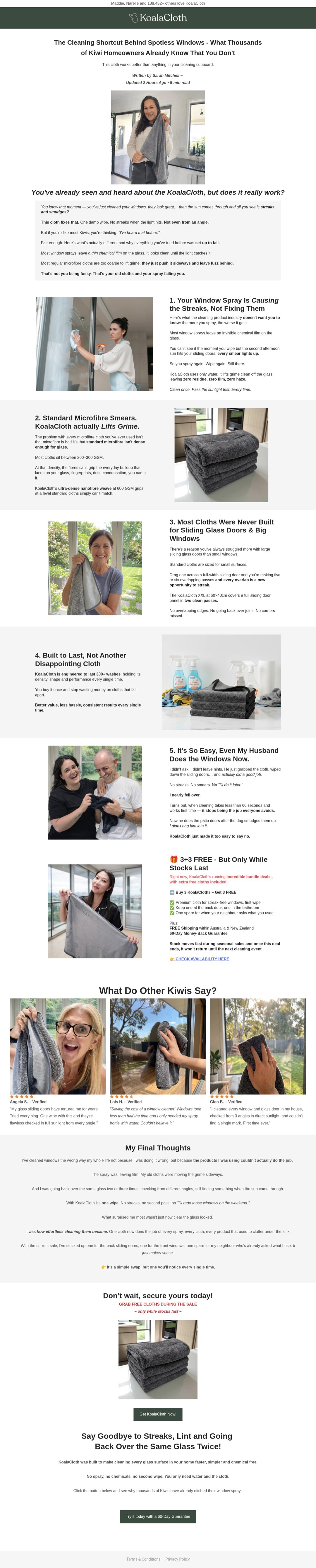
Long-form advertorial landing page (native editorial style, authored by 'Sarah Mitchell') that builds problem-awareness across 5 numbered reasons before hitting a single bundle CTA. No traditional PDP pricing widget — the offer is presented as a limited-time 'buy 3 get 3 free' bundle deal with urgency and scarcity copy, supported by AfterSell post-purchase upsell, Candy Rack in-cart add-on, UpCart slide drawer, and Kaching Bundles for the bundle mechanic.
Operator's read
PricingThere is no visible pricing widget on this page — no per-unit ladder, no compare-at strikethrough, no tiered radio buttons. The entire pricing mechanic is a single BOGO-style bundle ('Buy 3 Get 3 Free') embedded in body copy with zero numeric price anchoring visible. The consumer never sees a unit price, a 'was/now', or a % saving — the value prop is purely quantity-based ('6 cloths for the price of 3'). This is a significant missed opportunity: without a visible price anchor (e.g. 'each cloth NZ$14.99, bundle just NZ$8.33/cloth — save 44%') the perceived deal strength relies entirely on the consumer doing the mental math themselves.
Widget styleThere is no bundle/volume widget rendered on the landing page at all. The slot that would normally be occupied by a Kaching Bundles radio-tile or inline quantity-break table is instead filled with a plain-text editorial CTA block using bullet points and emoji. Kaching Bundles is installed but its widget either fires on the cart/PDP (not this advertorial) or is not deployed here. The absence of a visual pricing widget on an ad-traffic advertorial page is a structural gap — the persuasion is 100% copy-dependent with no visual price hierarchy to anchor value.
VerdictThe advertorial format is well-executed — the 5-problem narrative structure, social proof ('138,452+ others'), testimonial photos, and personal story copy are all conversion-positive. However, the single highest-leverage change is to inject a Kaching Bundles 3-tier radio widget directly above the CTA button showing: (1) Buy 1 — NZ$X each, (2) Buy 3 Get 1 Free — NZ$Y each, (3) Buy 3 Get 3 Free — NZ$Z each [Best Value badge]. This gives a visible per-unit price ladder so the 'free cloths' deal registers as a concrete % saving (e.g. 50% off per unit), converts the bundle from abstract to numeric, and lets AfterSell's post-purchase upsell offer a logical 'top-up' pack to buyers who only took tier 1 or 2.
offer details (5)
No cart snippets were provided. Pricing widget section was empty — confirmed no widget rendered on this advertorial page. AfterSell and Candy Rack mechanics inferred from installed app list. Currency assumed NZD based on store domain koalacloth.co.nz and 'Australia & New Zealand' shipping copy. Kaching Bundles is installed but its widget is not surfaced on this advertorial landing page as captured.

Single high-ticket hero SKU (robotic lawn mower) sold via urgency/scarcity + free-gift threshold on the PDP; no volume/bundle widget. Post-purchase upsell layer inferred from ReConvert install. Accessories cross-sell available in nav. Pricing anchored by a single struck-through compare-at price with automatic cart discount.
Operator's read
PricingThere is no volume or bundle pricing widget at all — this is a single-SKU, single-price sell. The one visible price anchor is €500 shown as a Bestseller compare-at/reference price for the Lymow One Plus 10A, with the discount auto-applied at cart ('Der Rabatt wird automatisch im Warenkorb abgezogen'). The actual checkout price is not legible in the screenshot, but the entire anchoring logic rests on that single €500 struck-through figure plus the €370 free-gift value stack to manufacture perceived value. No per-unit ladder, no tiered options, no pre-selected bundle tier exist.
Widget styleThere is no volume-discount or bundle widget on this PDP. The slot that would normally be occupied by a pricing widget is instead filled by a scarcity bar ('nur noch 43%'), a free-gift callout badge (€370 value), and a price-match guarantee paragraph. Layout is a standard Shopify buy box with a single variant selector (model: Lymow One Plus 10A | 7000 m²/Tag) — no radio-tiles, no inline table, no dropdown tiers. The urgency and gift-value stacking are doing the heavy lifting where anchoring would normally live.
VerdictThe free-gift stack and scarcity bar are well-executed for a high-ticket single SKU — anchoring €370 in gift value against a suppressed sale price is a proven AOV-perception play. The highest-leverage change I would make is adding a 2-option accessory bundle selector directly on the PDP (e.g., Lymow One Plus + Spare SK5 Blade Pack + Charging Station Cover at a named bundle price vs. sum-of-parts), leveraging the accessories SKUs already in the nav. This turns a one-line transaction into a €600–€800 cart without needing a new traffic source, and gives ReConvert a higher base order value to upsell from post-purchase.
offer details (4)
Store is German-language (de.lymow.com). Screenshot resolution limits visibility of exact sale price; €500 appears to be the compare-at anchor. Accessories exist (nav: 'Lymow One Plus Zubehör') but no cross-sell widget is rendered on the PDP. ReConvert post-purchase upsell content is entirely inferred — offer specifics unknown.
Single-SKU fashion accessories store (bags, organizers) running a free-shipping threshold as its primary AOV lever, with Rebuy installed for cross-sell/recommendation logic. No volume-discount or bundle-pricing widget visible on the product page. The store leans on a Bundle Builder collection page and a 'Perfect Set' collection as softer bundling nudges, with Rebuy likely powering inline cross-sell recommendations and potentially a post-purchase upsell flow. Pricing appears flat/single-price with a struck-through compare-at anchor where applicable.
Operator's read
PricingThere is no volume-discount or multi-tier pricing widget visible on the product page — this store runs flat single-price per SKU and relies entirely on the $150 free-shipping threshold to nudge AOV upward. The threshold does the heavy lifting: a customer buying one mid-range bag likely sits just under $150, creating natural pressure to add a wallet, charm, or cosmetic bag. Without seeing exact price points confirmed in the snippets (pricing widget is empty), the per-unit math can't be broken down, but the free-ship gap is the only numeric incentive on display.
Widget styleThere is no volume-discount or bundle-pricing widget on the product landing page — that slot is occupied by a plain quantity stepper (minus/plus) and a single 'Add to cart' CTA. The bundling story is offloaded to a separate 'Bundle Builder' collection page and 'The Perfect Set Collection' nav link, which requires the customer to self-navigate rather than being prompted inline. Rebuy is installed but no carousel or Smart Cart widget is confirmed visible in the provided evidence.
VerdictThe free-ship threshold at $150 is a solid AOV floor, and having a Bundle Builder is the right instinct for an accessories brand where customers naturally mix-and-match. The single highest-leverage change: activate a Rebuy Smart Cart slide-drawer with a live free-shipping progress bar AND inline 'complete your set' cross-sells (e.g., 'Add a Margaux Wallet — only $X more to free shipping') triggered the moment any bag hits the cart. Right now the bundle discovery requires active navigation; pulling it into the cart moment captures the purchase-intent peak and converts the free-ship nudge into a direct add-on action rather than a passive banner.
offer details (4)
Evidence is limited — no cart HTML, no pricing widget text, and no confirmed Rebuy widget screenshots were provided. Confidence is medium. Exact product prices, compare-at anchors, and Rebuy widget placement (Smart Cart vs. product page inline vs. post-purchase) could not be verified. Analysis is based on nav structure, banner copy, and app inference.

The store runs a sitewide 'Buy 2 Get 1 Free' promotional banner as its primary AOV driver, with AfterSell handling post-purchase upsells, Rebuy powering 'You may also like' cross-sells on the PDP, and UpCart/iCart slide-cart handling in-cart upsells. No quantity-break pricing widget is visible on the PDP itself — the anchor is a single $39.99 price point with the B2G1 deal as the pull mechanic.
Operator's read
PricingThere is no on-page pricing widget — the store leans entirely on a sitewide announcement banner ('Buy 2 Get 1 Free') and a secondary '5 for $99' tier to push AOV. The single-unit anchor is $39.99 with no struck-through compare-at on the PDP itself. The B2G1 implies a blended unit cost of ~$26.66 (33% off); the 5-for-$99 tier is the deepest at $19.80/unit (~51% off $39.99). No tier is pre-selected — the customer has to consciously opt into the deal, which bleeds conversion on the multi-unit offer.
Pricing tiers (1 widget)
Widget styleThere is no volume-discount or bundle-builder widget on the PDP — that slot is occupied solely by the announcement banner and the standard Shopify 'Add to Cart' button at $39.99. Rebuy surfaces a 'You may also like' carousel below the fold, and UpCart/iCart delivers in-cart cross-sells inside the slide drawer. The promotional tiers (B2G1, 5-for-$99) are communicated in text/banner only, with no radio-tile, inline table, or visual quantity ladder to make the savings tangible at the point of purchase decision.
VerdictThe B2G1 hook is a proven AOV driver in the accessories space and the 5-for-$99 tier is genuinely compelling at ~51% off, but both are buried in a banner and cart snippet rather than a visible quantity-ladder widget on the PDP. The single highest-leverage change: install an inline radio-tile quantity-break widget (Rebuy bundles, Bundler, or PickyStory) directly under the size selector showing '1 band – $39.99 | 3 bands – $79.98 (Get 1 Free, save $40) | 5 bands – $99 (save $101)' with the 3-band tile pre-selected as 'Most Popular'. Surfacing the discount math visually at the PDP decision point — rather than trusting a banner — will materially lift units-per-order without touching ad spend.
offer details (4)
Pricing widget tiers for B2G1 and 5-for-$99 are inferred from banner/cart copy since no numeric widget is rendered on the PDP. AfterSell post-purchase offer content is not visible. Rebuy powers both the PDP cross-sell carousel and likely in-cart recommendations alongside UpCart/iCart. Confidence is medium because cart drawer contents and post-purchase flow are not fully visible in the screenshot.

Moonbrew runs a flavour-first, social-proof-heavy DTC sleep supplement play. The core AOV lever is a 3-pack bundle tier surfaced in the nav 'Bundle & Save' section and via Rebuy-powered recommendations on the PDP, with AfterSell handling post-purchase one-click upsells and UpCart running a slide-cart drawer. No visible inline quantity-break widget on the PDP itself; the bundle mechanic lives at the SKU/collection level (separate 3-Pack product listings) rather than a traditional volume-discount widget.
Operator's read
PricingThere is no visible inline volume-discount or quantity-break widget on the PDP. Instead, Moonbrew anchors AOV through separate 3-Pack product listings (Magnesium Sleep Aid 3-Pack, Sleep + Vitamins Drink Mix 3-Pack, Chocolate Bundle 3-Pack, etc.) surfaced via a dedicated 'Bundle & Save' nav category. Without numeric price points exposed in the screenshot or pricing widget text, I can't compute exact per-unit deltas, but the strategy relies on the customer self-selecting into a 3-unit bundle SKU rather than seeing a real-time 'buy 3 save X%' incentive on the single-unit PDP — a meaningful friction point.
Widget styleThere is no bundle or volume-discount widget rendered on the PDP. The slot that would typically house a Rebuy or Bold Bundles radio-tile widget is empty; instead, bundle SKUs live as standalone collection entries under 'Bundle & Save.' The PDP itself appears to be a standard single-unit ATC flow with flavour/variant swatches, leaning on the UpCart slide-cart drawer (via UpCart app) and AfterSell post-purchase for incremental AOV lift rather than pre-cart anchoring.
VerdictThe social proof stack (1M+ customers, NYT/Forbes/WSJ logos, video reviews) is executed well and builds conversion confidence quickly. The single highest-leverage change I would make is adding a Rebuy or Bundler.app inline quantity-break widget directly on the single-unit PDP — showing three radio tiles (1-pack / 2-pack / 3-pack) with explicit per-unit price drops and a 'Most Popular' badge on the 3-pack — so the bundle value prop is visible before the customer even hits the cart, rather than requiring them to discover the Bundle & Save nav category independently.
offer details (3)
Pricing widget text returned empty, so no numeric tier analysis is possible. Confidence is medium because the 3-Pack bundle structure is clearly evidenced in nav/snippet copy but exact price points and discount percentages are not surfaced in the provided data. AfterSell and Rebuy upsells are inferred from app installs, not directly visible.

BOGO promotion (BUY 1 GET 2ND 30% OFF) as the primary AOV driver, supported by a Qikify slide cart with free-shipping threshold, cross-sell recommendations, and Frequently Bought Together on the product page. No classic volume/quantity-break widget is present; the store leans on a sitewide BOGO mechanic and cart-drawer upsells to lift basket size.
Operator's read
PricingThere is no quantity-break or volume-discount widget on this PDP — zero pricing tiers to parse. The store's primary AOV lever is a sitewide BOGO (buy 1 get 2nd 30% off), which effectively delivers ~15% blended discount on a two-unit purchase. The product shown (2-piece sports set) carries a single price point with no compare-at anchor visible at the widget level; the only struck-through price visible is the shirt cross-sell ($54.99 → $49.99, 9% off). The $99 free-shipping threshold in the slide cart does the heavy lifting as a soft spend floor.
Widget styleThere is no volume-discount or bundle-builder widget on this landing page. The promotional slot is occupied by a sitewide BOGO banner callout in the navigation and a Qikify Slide Cart drawer that fires post-add-to-cart. The cart drawer uses a horizontal cross-sell carousel (accessory tiles at $16.99–$34.99) and a linear free-shipping progress bar — no radio-tile quantity selector, no 'Most Popular'/'Best Value' badges on the PDP itself. Frequently Bought Together is installed but its widget placement on the PDP is not confirmed visible in the screenshot.
VerdictThe BOGO mechanic is smart for a matching-sets brand because it naturally pairs two SKUs, and the slide-cart cross-sell of low-AOV accessories ($17–$35) is a clean execution that adds incremental margin without friction. The single highest-leverage change: add a 3-tier quantity-break widget directly on the PDP (e.g., 1 set at full price / 2 sets save 20% / 3 sets save 30%) with a pre-selected middle tier — this converts the existing BOGO intent into a structured, always-on AOV engine instead of relying on a promotional banner that trains customers to wait for deals. Given the $99 free-ship threshold, a 2-set bundle naturally clears that bar and removes the need for accessory padding in the cart.
offer details (7)
Confidence is medium because the pricing widget area of the PDP is small/low-resolution and no explicit widget markup was provided in the pricing snippets. BOGO and Game Day 35% off are confirmed from nav copy. Frequently Bought Together widget placement on PDP is inferred from installed app. No post-purchase upsell app (ReConvert, AfterSell, Zipify) appears in the installed apps list, so no post-purchase offer is inferred.

Single-SKU robotic mower sold in two battery/capacity variants (5A €2,999 and 10A €3,199) with free-gift bundles attached to each variant, urgency scarcity copy, and a ReConvert post-purchase upsell flow. No volume/quantity-break widget; AOV lever is the variant step-up plus bundled free accessories.
Operator's read
PricingNo volume/quantity-break widget exists — this is a considered, single-unit purchase product so that's appropriate. Pricing is structured as a two-variant step-up: 5A at €2,999 and 10A at €3,199, a €200 gap (6.7% premium) for the higher-capacity model. Both show 'Save €300' implying a ~€3,299/€3,499 compare-at anchor (~9% off). The free-gift stack (€370 perceived value) is the real anchor doing the heavy lifting, making a €3,199 feel like a deal rather than a stretch. The 10A is pre-selected and badged 'Best Seller', correctly defaulting to the higher-ASP unit.
Pricing tiers (1 widget)
Widget styleNo dedicated volume/bundle app widget is present. The upsell surface is entirely native Shopify variant radio-tiles with accessory free-gift line items stacked beneath each tile. There is no third-party bundle builder or quantity-break app rendering on the PDP. The 'Save €300' badge and struck-through compare-at price on each tile serve as the anchoring mechanic. ReConvert handles post-purchase but is not visible in the PDP flow.
VerdictThe free-gift anchor and Best Seller default on the 10A are well-executed — they compress decision friction and push toward the higher ASP unit. The single highest-leverage change I'd make is adding a ReConvert post-purchase offer for a warranty extension or annual blade/service subscription (€99–€149/yr): at a €3,199 AOV the buyer is already committed and a maintenance plan has near-zero resistance, which would add meaningful recurring revenue and LTV without touching the already-tight conversion funnel on the PDP.
offer details (5)
Compare-at prices for variants are inferred from the 'Save €300' copy against listed sale prices (€2,999 and €3,199); exact original prices not explicitly shown in snippets. The 10A variant sold-out state is mentioned for some shipment variants but the main 10A appears live. Outdoor Adventure Pack line item partially truncated in evidence.

Multi-tier BOGO bundle widget as primary AOV driver, anchored by free-shipping threshold, with ReConvert post-purchase upsell and UpCart slide-cart drawer. The page leans on a 3-tier bundle ladder (Buy 1 / Buy 2 Get 1 / Buy 3 Get 2) framed as 'BUNDLE & SAVE' to push multi-unit purchases, while social proof, ingredient storytelling, and a 30-day guarantee handle conversion confidence.
Operator's read
PricingThree-tier bundle ladder: $30 for 1 (no discount), $60 for 3 (33% off, $20/unit), $90 for 5 (40% off, $18/unit). The compare-at anchors ($90 and $150) are mathematically sound — they represent full single-unit retail price extrapolated, not inflated fakes. The free-shipping threshold at $40 creates a natural nudge away from the $30 single-unit purchase, which is the single most underutilized lever on this page. Pre-selected default is Buy 1, leaving AOV upside on the table.
Pricing tiers (1 widget)
Widget styleThe bundle widget is a clean 3-option radio-tile layout labeled 'BUNDLE & SAVE', sitting directly above the Add-to-Cart button. No named third-party bundle app branding is visible — likely native Shopify variant hack or a lightweight custom script. 'Most Popular' badge is placed on the Buy 1 tier, which is a meaningful mistake: that badge should anchor to Buy 2 Get 1 to socially proof the mid-tier and pull buyers up the ladder. No 'Best Value' badge on the 5-unit tier either, leaving the highest-margin bundle visually unvalidated.
VerdictThe BOGO mechanics are solid and the per-unit ladder ($30 → $20 → $18) creates real incentive to trade up, but defaulting to Buy 1 and placing 'Most Popular' on the lowest tier actively fights AOV growth. The single highest-leverage change: default-select Buy 2 Get 1 Free, move 'Most Popular' to that tier, and add a 'Best Value' badge to Buy 3 Get 2 Free — this alone typically lifts bundle-tier attach rate 15-25% with zero tech lift. Pair it with UpCart showing a free-ship progress bar that highlights the $10 gap between Buy 1 ($30) and the $40 free-ship threshold to convert fence-sitters.
offer details (5)
No cross-sell or frequently-bought-together widget visible on the PDP. ReConvert post-purchase flow is installed but not visible in screenshot — likely running a one-click upsell to a complementary SKU or a larger bundle. Customer reviews reference consistent repurchase intent ('can't wait to see after 3 more weeks'), suggesting a subscribe-and-save mechanic would be high-ROI if not already running in the post-purchase flow.

Single SKU DTC blender/maker sold at a flat €179 with no on-page volume/bundle widget. AOV strategy relies on brand trust signals (50k customers, 4.8★, 2yr warranty), a free-shipping threshold banner (€50, trivially cleared by a €179 item), and cart-level upsells via Qikify Slide Cart. Kaching Bundles is installed but no bundle widget is visible on the PDP. Post-purchase flow inferred from Kaching.
Operator's read
PricingThere is exactly one price point visible: €179 flat, no volume tiers, no compare-at struck-through anchor, no subscribe-and-save. The free-shipping threshold at €50 is completely irrelevant as an AOV lever since the hero SKU at €179 clears it automatically. The store leans entirely on social proof (50k customers, 4.8★, 2yr guarantee) and brand narrative to justify the price rather than any discounting or anchoring mechanic. If a higher-priced bundle or accessory kit exists, it is not surfaced on this page.
Widget styleThere is no volume-discount or bundle widget on the PDP — the slot is occupied by a clean, editorial single-product layout with feature icons and a comparison table (Mylky vs. store-bought). Kaching Bundles is installed but either inactive on this page or reserved for post-purchase. Qikify Slide Cart handles whatever cross-sell or upsell logic exists, but that surface is not visible here. No radio tiles, no inline table, no dropdown tiers, no 'Best Value' badges are present anywhere on the page.
VerdictThe hero product at €179 converts on trust and simplicity, which is respectable, but the store is leaving meaningful AOV on the table by not surfacing a Kaching bundle (e.g., Mylky + starter ingredient kit + cleaning brush) directly on the PDP. A 3-option radio-tile bundle widget anchored at €179 solo vs. €209 bundle (saving €20 on accessories) would capture incremental revenue from buyers already committed to the machine, and the installed Kaching Bundles app could deploy this in under an hour.
offer details (3)
Analysis based on visible screenshot of mylky.nl PDP plus installed app list. Pricing widget array is empty because no numeric tiers are displayed. Free-ship threshold at €50 is structurally irrelevant for a €179 SKU. Confidence is medium because cart drawer contents and post-purchase flow are not visible.

Single-hero-product DTC (Mylky plant-milk maker) selling on lifestyle and trust signals. Core mechanic leans on a single product price point (€179) with a free-shipping threshold (€50) baked into the banner. No visible volume-discount or bundle widget on the product page; Kaching Bundles is installed but not visibly rendered in the screenshot. Qikify Slide Cart is installed, implying cart-drawer upsells trigger on add-to-cart.
Operator's read
PricingThere is exactly one visible price point: €179 for the Mylky machine — no multi-tier volume ladder, no quantity breaks, no compare-at struck-through anchor on the PDP itself. The only pricing lever visible in the page is the €50 free-shipping threshold in the banner, which is essentially meaningless anchoring for a €179 hero SKU since every single-unit purchase already clears it. There is zero per-unit math or 'save X%' incentive to push AOV higher from the PDP.
Widget styleNo bundle or volume-discount widget is rendered on the product page — the Kaching Bundles app is installed but dormant or hidden in this view. What occupies the pricing slot is a plain ATC button at a flat €179 with a star rating and social-proof line ('4.8 / 50,000+ clients satisfaits'). The page leans entirely on lifestyle copy, a comparison table vs. store-bought, and a recipe carousel to justify the single price rather than any discount-ladder mechanic.
VerdictThe trust architecture (reviews, FAQ accordion, comparison table, how-it-steps) is solid and well-suited for a €179 considered purchase. However, the single highest-leverage AOV move is to activate Kaching Bundles visibly on the PDP with a 2–3 tier bundle that pairs the machine with a consumable (e.g., nut-milk bags, recipe book, starter ingredient kit) at a meaningful discount (10–15%), effectively creating a €199–€229 average order while giving the customer a 'complete kit' narrative — this store's lifestyle angle makes bundled consumables a natural fit and would immediately justify the app install that's currently generating zero visible revenue.
offer details (3)
Screenshot is in French; store is mylky.fr targeting French-speaking market. Confidence is medium because the slide-cart and Kaching Bundles surfaces are not visible in the static screenshot and are inferred from the installed-apps list. All pricing conclusions are based solely on the visible €179 PDP price.

Single-hero-product DTC play selling a CHF 185 plant-milk machine. No visible volume/bundle pricing widget on the PDP. Leans on social proof (4.8★, 50k+ customers), a free-shipping threshold (CHF 50), and comparison table vs. store-bought milk to justify the price. Qikify Slide Cart handles in-cart upsell surface; Kaching Bundles is installed but no bundle widget is rendered visibly on this PDP screenshot. Post-purchase upsell infrastructure not confirmed beyond app installs.
Operator's read
PricingThis store runs a pure single-price model at CHF 185 — no quantity breaks, no subscribe-and-save, no bundle tiers visible on the PDP. The only pricing lever shown is the free-shipping threshold at CHF 50, which is easily cleared by a single unit purchase and therefore adds zero AOV lift for the core SKU. There is no struck-through compare-at price visible, so anchoring relies entirely on the perceived value narrative (fresh plant milk in 60 seconds, vs. buying cartons) rather than a numeric discount anchor.
Widget styleThere is no volume-discount or bundle widget rendered on the PDP. The pricing slot is occupied by a simple bold price display (CHF 185) beneath the product title with a star rating and customer count for social proof. Kaching Bundles is installed but dormant or placed elsewhere — its radio-tile or checkbox bundle UI is not visible here. The comparison table (Mylky vs. store-bought milk) does the heavy anchoring work in lieu of a price widget.
VerdictThe social proof stack (4.8★, 50k+ customers, benefits table) is solid and the page narrative is clean. The highest-leverage move is activating Kaching Bundles directly on the PDP with a 2-unit or starter-kit bundle (e.g., Mylky machine + nut bag/cleaning brush accessory at CHF 210 vs. CHF 225 separately) — this surfaces a concrete numeric save, pushes AOV above CHF 185, and gives Qikify Slide Cart a higher baseline to work from. A struck-through compare-at (e.g., CHF 220 RRP) on the hero price would also immediately add anchoring with zero dev work.
offer details (3)
Page is in German (Swiss market, CHF currency). Screenshot shows a long-form PDP with hero image, step-by-step how-it-works, comparison table, recipe carousel, reviews section, and FAQ. No post-purchase upsell app (ReConvert/AfterSell) detected in installed apps list — post-purchase surface is unconfirmed. Confidence is medium because cart drawer contents and any bundle page are not visible in the screenshot.

Single-SKU plant-based milk machine sold at a fixed €179 price point with no visible volume/bundle widget on the PDP. Conversion levers are social proof (4.8★, 50,000+ customers), a comparison table vs. store-bought milk, lifestyle use-case carousel (Chai Latte, Porridge, Golden Milk), and a free-shipping threshold (€50) stated in the announcement banner. Upsell infrastructure exists via Qikify Slide Cart and Kaching Bundles but no bundle or quantity-break widget is rendered on the visible PDP.
Operator's read
PricingThere is exactly one price point visible: €179 for the Mylky machine — no volume tiers, no bundle pricing, no compare-at anchor struck through on the PDP itself. The only pricing lever shown to the visitor before ATC is the free-ship threshold at €50 (which is irrelevant for a €179 item since it's already well above that floor). With Kaching Bundles installed but not rendering, they are leaving a meaningful AOV opportunity on the table — a machine + ingredient starter kit bundle at e.g. €199 vs. €215 à la carte would give them an anchor and a logical attach.
Widget styleThere is no volume-discount or bundle widget rendered on the PDP in the screenshot. The slot that would typically house a Kaching Bundles radio-tile selector or quantity ladder is empty — only a standard single variant add-to-cart block is present. The page instead leans on a feature comparison table (Mylky vs. store-bought carton milk) and a 4-step how-it-works visual as the primary conversion architecture, with lifestyle imagery (Chai Latte, Porridge, Golden Milk) to expand perceived use cases.
VerdictThe social proof stack (4.8★, 50k customers, detailed UGC reviews) and the comparison table are executed well and do real conversion work for a €179 considered purchase. The single highest-leverage change is to activate a visible Kaching Bundles widget on the PDP offering a Mylky + consumable add-on bundle (e.g., nut bag, recipe guide, or ingredient starter pack) at a €10–€15 bundle saving — this creates an in-page anchor, lifts AOV without discounting the core unit, and gives Qikify Slide Cart a warm cross-sell to reinforce rather than cold-introduce.
offer details (3)
Confidence is medium because the cart drawer contents (Qikify) and any post-purchase flow are not visible in the screenshot. Pricing widget array is empty as no numeric tier widget is rendered on the visible page. Free-ship threshold at €50 is functionally irrelevant as a standalone AOV driver since the hero product at €179 already clears it on a single-unit purchase.

Single-SKU product page (Mylky plant-milk maker at 1 999 SEK) relying on a free-shipping threshold (500 SEK, already exceeded by the base product), social proof density, and a comparison table vs. store-bought milk to justify the ticket price. Upsell infrastructure (Qikify Slide Cart + Kaching Bundles) is installed but no visible bundle/volume widget is rendered on the product page in the screenshot. Post-purchase flow inferred from Kaching Bundles app.
Operator's read
PricingThere is exactly one price point visible: 1 999 SEK for the Mylky machine — no volume tiers, no bundle pricing widget, no struck-through compare-at anchor price rendered on the PDP in this screenshot. The free-shipping bar at 500 SEK is moot because the single unit already clears it by 4×, so it does zero incremental AOV work here. The entire pricing narrative leans on the value-story copy (fresh oat milk vs. store-bought) rather than numeric anchoring or tiered discounts.
Widget styleThere is no volume-discount or bundle widget visible on this product page. The slot that would typically hold radio-tile bundle options (e.g., Kaching Bundles' standard layout) is empty — what occupies that space instead is a feature comparison table (Mylky vs. 3 köpta alternativ) and a four-step how-it-works graphic. Kaching Bundles is installed but either not activated on this PDP or rendering below the fold / inside the cart drawer only.
VerdictThe social proof stack (4.8 stars, 50 000+ customers, review carousel) and the comparison table are well-executed trust builders for a 1 999 SEK considered purchase. The single highest-leverage change is to activate a visible Kaching Bundles widget on the PDP offering a starter kit — e.g., Mylky machine + a bag of oats/almonds accessory at a 10–15% bundle discount — turning a one-time 1 999 SEK transaction into a 2 300–2 500 SEK order while simultaneously seeding repeat consumable purchases. Right now Kaching Bundles is installed but doing nothing visible on the page, which is leaving AOV on the table.
offer details (3)
Screenshot is a full-page scroll of mylky.se product page. Pricing widget text field was empty, confirming no numeric tier data to parse. Free-ship threshold of 500 SEK confirmed from banner. Confidence is medium because cart drawer contents and any post-purchase page are not visible.

Single-SKU appliance (plant-milk maker) sold at a flat €179 with no on-page volume or bundle widget. The store leans on social proof density (50k customers, 4.8 stars), a comparison table vs. store-bought alternatives, and a free-shipping threshold (€50 banner) to justify the price. Kaching Bundles is installed but no bundle widget is rendered on the PDP visible in the screenshot. Qikify Slide Cart is installed, implying cart-drawer upsells are live but not visible here.
Operator's read
PricingThere is exactly one price point — €179 flat — with zero on-page anchoring, no crossed-out compare-at price, and no volume or bundle tiers visible. The only pricing nudge is the €50 free-shipping threshold in the banner, which is irrelevant at a €179 AOV since every single-unit order already clears it. Kaching Bundles is installed but dormant on the PDP, meaning the store is leaving its most powerful AOV lever completely untouched.
Widget styleThere is no volume-discount or bundle widget on the landing page. The slot that would typically hold a Kaching Bundles radio-tile selector (e.g., 1x / 2x / starter-kit) is empty — replaced only by a vanilla Shopify quantity selector and a single 'Aggiungi al carrello' CTA. The comparison table (Mylky vs. store-bought) does the heavy lifting on value perception but does not convert that perception into a higher-ticket purchase option.
VerdictThe social proof stack (4.8 stars, 50k customers, step-by-step demo, competitor comparison table) is genuinely strong and well-executed for a €179 appliance. The single highest-leverage change is to actually activate Kaching Bundles with a 2-unit or accessory bundle — e.g., Mylky + nut-milk bag/cleaning kit at €199, or 2x Mylky gifting bundle at €329 (saving €29) — displayed as radio tiles directly above the ATC button. Even a 5-8% take rate on a bundle that lifts order value by €20-50 would meaningfully move revenue given the existing traffic, and the app is already paid for and installed.
offer details (4)
Analysis based on screenshot and app-install evidence only. Qikify Slide Cart drawer contents and any post-add-to-cart flows are not visible. Kaching Bundles may be configured for a different page or A/B test not captured here. Italian-language storefront; pricing in EUR.
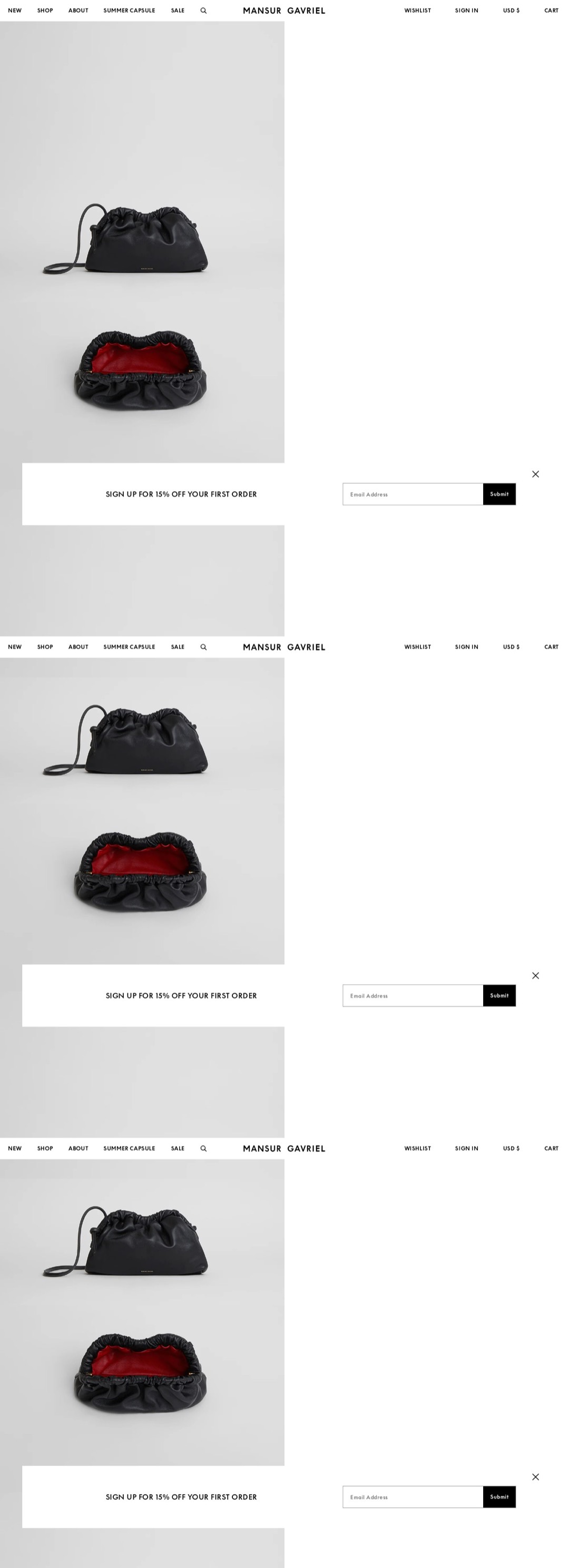
Single-SKU luxury DTC with email-capture as the primary conversion lever. No volume pricing, no bundle builder, no post-purchase upsell visible. The store relies on brand desirability, editorial photography, and a 15% first-order email discount to convert. iCart Slide Cart is installed but no cart-level upsell copy is visible in the evidence.
Operator's read
PricingThere is zero pricing widget, volume tier, or bundle mechanic present. The only monetary incentive on the page is the 15% first-order email capture — that is doing all the anchoring work. With bags in the luxury DTC segment (Mansur Gavriel typically prices clutches $295–$595), a flat 15% email discount is a blunt instrument: it trains price-sensitive buyers and erodes brand equity without any AOV lift mechanism whatsoever. There is no struck-through compare-at price, no free-shipping threshold, no cross-sell to a complementary SKU, nothing.
Widget styleThere is no volume-discount or bundle widget on this PDP. The slot where a pricing widget would normally live appears to be blank white space in the right-hand column — likely a rendering issue in the screenshot or a very minimal PDP layout. iCart Slide Cart is installed but no cart drawer is triggered in the evidence, so any cart-level upsell logic it may contain is invisible here. The page leans entirely on editorial imagery and brand name to justify the price rather than any structured pricing architecture.
VerdictThe email-capture execution is clean and persistent, but the 15% discount is the only upsell mechanic in the entire funnel, which means AOV is entirely dependent on the customer self-selecting into additional purchases with no prompting. The single highest-leverage change would be activating a 'Complete the Look' or frequently-bought-together cross-sell inside the iCart Slide Cart drawer — pairing the Mini Cloud Clutch with a card holder or small leather good at a $50–$80 price point. Mansur Gavriel's catalog depth (shoes, small leather goods) makes this trivial to implement and a confirmed AOV driver at this price tier without discounting the hero unit.
offer details (1)
Screenshot appears to show a rendering artifact — the right half of the PDP (product title, price, color swatches, ATC button) is blank white in all three frames, which suggests the page may not have fully loaded or the screenshot was cropped. Color options (Lila, Gold, Roccia, Anise Raffia, Black Naplak, Black/Flamma) are referenced in the product snippet, confirming a multi-variant SKU. Waitlist mechanic is also present for sold-out variants. No post-purchase upsell app (ReConvert, AfterSell, Zipify) detected in installed apps — only iCart Slide Cart confirmed.
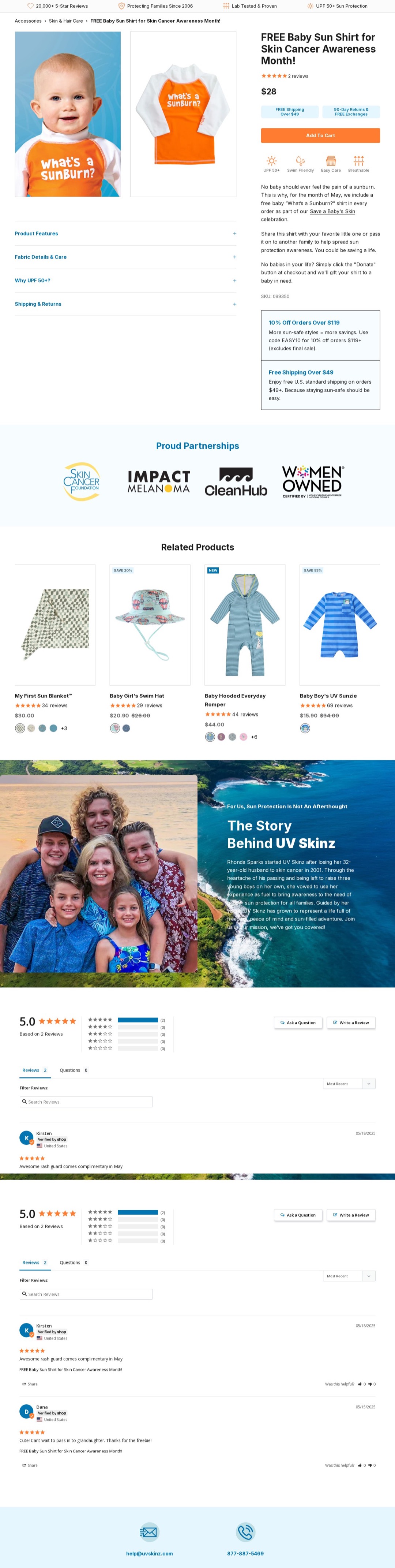
Cause-marketing lead-gen / awareness product: a $28 'free' (donate-to-give) baby sun shirt anchored to Skin Cancer Awareness Month is the entry point. AOV lift comes from a coupon-code volume threshold (10% off $119+) and a free-shipping threshold ($49), not a structured bundle or quantity widget. Selleasy handles cross-sell/upsell, likely as a related-products carousel or post-add-to-cart popup. No pricing tiers or volume-discount widget is visible on the PDP.
Operator's read
PricingThere is no structured pricing widget on this PDP — just a single $28 price point. AOV is nudged entirely via two soft thresholds: free shipping at $49 (meaning a $28 cart needs $21 more to unlock it, a natural 1-item-to-2-item push) and a manual coupon code EASY10 for 10% off at $119+ (roughly 4–5 items in this price range). No compare-at anchor is set on this hero product, so there is zero price-anchoring pressure at the item level. The store leans on the cause-marketing angle (donate a shirt) to create emotional value rather than discount depth.
Widget styleNo bundle or volume-discount widget exists on this landing page. The slot that would normally hold radio-tile quantity breaks or a Selleasy bundle is occupied by two plain text callout boxes (free ship at $49, 10% off at $119+) and a static related-products grid below. Selleasy's visible footprint here is the cross-sell carousel with SAVE % badges on already-discounted items (Swim Hat from $29→$20.90 at 28% off; UV Sunzie from $34→$10.90 at 68% off) — these badges carry the anchoring weight rather than any widget.
VerdictThe cause-marketing hook is genuinely differentiated and the $49 free-ship threshold is well-calibrated for a $28 hero — a single add-on crosses it. What's missing is a structured 'Complete the Baby Sun Kit' bundle (e.g., shirt + hat + sunzie pre-grouped at $52 with a visible $6–8 discount) so shoppers don't have to self-assemble from the carousel. Right now the 10% coupon at $119 is too high-friction (manual code, far above a single-purchase) and the cross-sell grid has no urgency or bundling logic. Activating Selleasy's 'frequently bought together' widget directly under the ATC button — with a pre-ticked $44–52 bundle — would capture the free-ship threshold add-on and materially lift AOV without cannibalizing the emotional cause story.
offer details (4)
Screenshot shows only 2 reviews on the PDP (5.0 stars), suggesting this is a relatively new or seasonal awareness-month SKU rather than a core evergreen product. The page structure (proud partnerships with Skin Cancer Foundation, Impact Melanoma, CleanHub; founder story section) is optimized for trust and mission alignment rather than aggressive upsell. Selleasy is the sole identified upsell app; no ReConvert/AfterSell/Zipify post-purchase flow is evidenced.
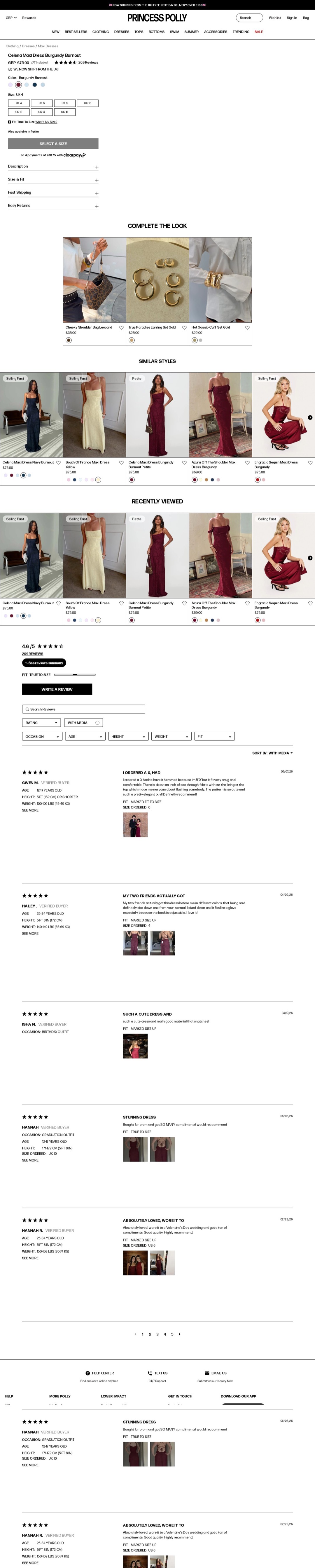
Princess Polly runs a single-SKU fashion PDP with no volume/bundle pricing widget. AOV lift levers are cross-sell carousels ('Complete the Look', 'Similar Styles', 'Recently Viewed'), a slide-cart drawer powered by UpCart/iCart that surfaces a free-shipping threshold nudge, and Afterpay/Klarna instalment messaging to soften sticker shock on individual dress prices.
Operator's read
PricingThere is no volume or bundle pricing widget on this PDP — zero tiers, zero quantity breaks, zero per-unit ladder. Princess Polly leans entirely on a single struck-through compare-at price per SKU (not visible numerically in the evidence) plus Afterpay instalment messaging ('or 4 payments with Afterpay') to reduce perceived barrier on individual dress prices. The free-shipping threshold inside the cart is the only structured AOV driver; without knowing the threshold value it's impossible to assess how well it's calibrated, but it is the primary mechanical nudge to add a second item.
Widget styleNo volume-discount or bundle widget exists on this PDP — the slot is occupied by three sequential cross-sell carousels: 'Complete the Look' (hand-curated editorial, accessories focus), 'Similar Styles' (algo-driven, badge-heavy with Selling Out / Petite labels), and 'Recently Viewed'. This is a pure fashion-editorial approach — no radio tiles, no inline tables, no discount badges, no 'Most Popular' tier anchoring. The UpCart/iCart slide cart drawer is the only structured upsell container, using a free-shipping progress bar as its primary conversion lever.
VerdictThe cross-sell architecture is executed well for a fashion brand — 'Complete the Look' is on-brand and drives accessory attach naturally, and the slide-cart free-ship bar creates genuine urgency to add one more item. The single highest-leverage change would be to set and display an explicit free-shipping threshold number (e.g. 'You're £12 away from free shipping') inside the cart drawer with a dynamically populated 'You might also like' accessory tile pulled from the Complete the Look set — turning the threshold bar from a passive indicator into an active, product-specific cross-sell prompt that should lift accessory attach rate and AOV meaningfully given the existing curation work already done.
offer details (5)
No numeric price points were extractable from the screenshot for the hero product or any cross-sell tiles at sufficient resolution to compute exact GBP figures. Afterpay instalment copy inferred from 'or 4 payments' product snippet pattern common to Princess Polly globally. All offers are pre/cart stage; post-purchase stage inferred from app stack only.

Single-hero product page for the Always Pan with a country/region selector modal on entry, editorial storytelling (10 functions, accessories, FAQ, reviews), and a cross-sell carousel at the bottom powered by Rebuy. No volume/bundle pricing widget is visible; monetisation relies on a single-SKU purchase flow with post-purchase upsell potential via Rebuy and a complementary-product carousel.
Operator's read
PricingThere is no volume-discount or bundle pricing widget anywhere on this PDP — zero tiers, zero per-unit ladder, zero quantity breaks. The store leans entirely on a single struck-through compare-at price anchor (visible in the hero area) for the Always Pan at one price point. Without a visible 'buy 2 save X%' or bundle mechanic, AOV uplift is left exclusively to the Rebuy carousel and whatever post-purchase flow they've configured — a significant missed opportunity on a €100+ cookware item where a 'pan + lid + steamer basket' bundle could easily push AOV to €150-180.
Widget styleThere is no volume-discount or bundle widget on this landing page. The slot that would normally be occupied by a quantity-break radio-tile widget or a bundle builder is instead taken up by editorial lifestyle photography and the '1 poêle, 10 fonctions' feature breakdown. The 'Complétez votre collection' Rebuy carousel at the bottom is the only structured cross-sell surface, displayed as a horizontal scroll of product cards — no badges, no savings callouts, no bundle pricing.
VerdictThe storytelling and brand editorial are executed well — the 10-function breakdown, the dome-lid copy, and the review aggregate (4.8 stars) all build conversion confidence. The single highest-leverage change is to add a Rebuy (or native Shopify) bundle widget in the add-to-cart zone offering the Always Pan + steamer basket + lid as a named bundle at a 10-15% saving versus buying separately — this targets the customer already sold on the pan and converts them to a €130-160 basket in one click rather than hoping the bottom carousel does the work after intent has peaked.
offer details (2)
Page is the French locale of Our Place (fromourplace.fr). A geo-detection modal ('Où livrons-nous?') fires on entry which may suppress some upsell surfaces for new visitors. Rebuy is installed but its cart-drawer or inline widget does not appear to be active on this PDP. No announcement-banner discount code or free-shipping threshold was visible in the banner text provided.

Single-SKU premium appliance page with brand-driven content depth (6 functions, how-it-works, comparison table, FAQ, reviews, recipes) doing the conversion work. No visible volume/bundle pricing widget on the product page itself. Upsell surface is Rebuy-powered cross-sell rail ('Pairs Well With') at page bottom showing accessory bundles. Post-purchase upsell inferred from Rebuy. AOV lever is accessories attach, not quantity breaks.
Operator's read
PricingThere is zero volume/quantity-break or bundle-discount widget on this Wonder Oven PDP — no pricing tiers, no compare-at ladder, no per-unit math visible anywhere on the product page. The page leans entirely on a single price point anchored by the brand's broader promotional ecosystem: a sitewide 'Save $451' cookware set callout and 'SAVE UP TO 40% OFF' banners create halo value without directly discounting the oven itself. The free-shipping + 100-day trial banner handles friction removal. This is a premium single-SKU play with no price anchoring on the page itself.
Widget styleNo volume-discount or bundle-builder widget exists on this PDP. The slot that would normally be occupied by a quantity ladder or radio-tile bundle selector is instead filled by a Rebuy recommendation carousel ('Pairs Well With') showing the Wonder Oven Bakers Kit and Essentials Kit as named accessory bundles. These are flat add-on tiles, not discounted bundle configurations — no 'save X%' badge, no compare-at, no 'Most Popular' tier callout is visible. The upsell is purely attachment-based, not discount-incentivised.
VerdictThe content depth (comparison table, how-it-works, recipes, 4.8-star reviews) is executed well for a considered $200+ appliance purchase — it earns the conversion. The single highest-leverage change would be introducing a Rebuy-powered bundle configurator directly on the PDP that packages the Wonder Oven with the Bakers Kit or Essentials Kit at a 10–15% bundle discount (e.g. 'Oven + Bakers Kit: save $30 AUD'), displayed as radio tiles above the ATC button. Right now the accessories are buried post-scroll in a carousel most buyers never reach; pulling them into a pre-ATC bundle widget would materially lift AOV on the store's hero acquisition SKU.
offer details (4)
Screenshot resolution is low; no cart drawer interaction was captured so cart-stage Rebuy widgets (e.g. in-cart upsell) cannot be confirmed. Pricing widget array is empty because no numeric tier widget was visible or evidenced in the provided text. All AUD currency inferred from '100 Day Trial: Free Shipping and Returns from AU' banner and .au domain.
Single-SKU discount anchor + free-shipping threshold nudge, with ReConvert post-purchase upsell inferred from app install. No volume/bundle widget present. Store leans on a struck-through compare-at price (£25.99 → £14.99, 42% off) to drive the initial conversion, and a free-shipping progress bar (£29.99 threshold, £15 gap from base product) to push cart value up.
Operator's read
PricingThere is exactly one price point — £14.99 — anchored against a £25.99 compare-at (a 42% / £11 saving). No volume break, no bundle tier, no subscribe-save option. The entire pricing strategy rests on a single struck-through anchor plus a free-ship threshold set at £29.99, which is precisely £15 above the hero SKU price. That gap is deliberate: it forces multi-unit or cross-category adds, but without any in-cart prompt showing complementary products it mostly just creates friction for single-item buyers.
Pricing tiers (1 widget)
Widget styleNo volume-discount or bundle widget is present on the landing page whatsoever. The pricing slot is occupied solely by a Shopify-native sale badge (strikethrough regular price + 'You save 42%' callout) and a below-ATC shipping-threshold line. Vitals is installed and could serve a quantity-break or frequently-bought-together widget, but neither is rendering here. The free-ship gap line is the closest thing to a structured upsell UI element on the page.
VerdictThe 42% anchor is clean and credible and the £15 free-ship gap is well-calibrated to nudge a second add. However, there is zero product recommendation or frequently-bought-together widget to actually tell buyers *what* to add — so the threshold creates desire without directing it, and most customers likely bail rather than browse. The single highest-leverage change is to activate Vitals' Frequently Bought Together widget on this PDP, pairing the £14.99 trimmer with a £15–£18 accessory (blade oil, travel pouch, or grooming kit) so that one two-item bundle both hits the free-ship threshold and lifts AOV to ~£30 in a single click.
offer details (3)
Screenshot shows the search/404 page, not the live PDP — all pricing and copy data sourced from the provided text snippets rather than rendered page elements. Confidence is medium because no cart page, no post-purchase page, and no fully rendered PDP were visible. ReConvert post-purchase offer is inferred from app install only.

Single-SKU consumable (Ultrasonic Boosting Tablets) anchored by a hero device ecosystem. The store drives AOV via a bundle menu (device + tablets + accessories) and a slide-cart drawer powered by iCart. No visible quantity-break widget on the tablets PDP; upsell leverage comes from pre-built bundles in navigation and the iCart drawer cross-selling complementary SKUs (wipes, UV case, mouth spray) at cart stage.
Operator's read
PricingThere is no visible quantity-break or subscribe-and-save widget on the tablets PDP — the store leans entirely on a single struck-through compare-at anchor (€8.07 shown with a 'SAVE' badge) and pre-built bundle pages to move AOV up. The bundles do real work: Starter Bundle claims 30% off (device + 90 tablets) and the 360 Bundle is 10% off (device + UV case). However, the tablets standalone PDP has no tiered pricing ladder, meaning a solo tablet buyer sees one price and no numeric incentive to buy more units in a single transaction.
Widget styleNo volume-discount or quantity-break widget exists on the PDP. The pricing slot is occupied by a single compare-at strike-through price with a 'SAVE' pill badge — classic single-anchor tactic. Bundle upsells live in a dedicated Bundles nav section and are not surfaced inline on the PDP. The iCart slide drawer is the only active upsell layer post-add-to-cart, likely showing accessory cross-sells, but no bundle-builder or checkbox-addon widget is rendered on the product page itself.
VerdictThe bundle architecture is solid and the 30%-off Starter Bundle is a strong AOV driver for new device buyers. The highest-leverage change I would make is adding an inline quantity-break widget directly on the tablets PDP — e.g., 1-pack at full price, 3-pack at ~15% off, 6-pack at ~25% off with a 'Best Value' badge pre-selected on 3-pack. Tablet buyers are repeat-purchase consumable customers; a per-unit price ladder (e.g., €7.99 → €6.50 → €5.50 per pack) would immediately lift tablets AOV and reduce churn by loading customers up on inventory, without cannibalising the device bundle offer.
offer details (4)
Screenshot resolution limits visibility of exact EUR price points on the tablets PDP beyond the approximate €8.07 strike-through visible in the banner. No post-purchase upsell app (ReConvert/AfterSell/Zipify) detected in installed apps list — post-purchase stage appears unused. Free shipping threshold is called out in the announcement banner but no progress-bar widget is visible in the cart snippet provided.

Single-hero consumable (Ultrasonic Boosting Tablets) supported by a small accessory/bundle ecosystem. Core play is sampling the tablet at a low entry price, then re-ordering via bundles. Installed iCart slide-cart drawer is the primary AOV lever; no on-page volume/quantity-break widget is visible on the tablet PDP. Social proof (star ratings, UGC photo reviews) and clinical credibility badges do the conversion heavy lifting before the cart.
Operator's read
PricingThere is no on-page volume/quantity-break pricing widget on the PDP — zero numeric tiers are surfaced inline. Instead, Zima leans on a struck-through anchor price (implied by 'SAVE' badges in nav) and three pre-built bundles at 10%, 20%, and 30% off to ladder AOV. The 30%-off Starter Bundle (device + 90 tablets) is the deepest discount and acts as the acquisition vehicle; the 20%-off Restock Pack is the re-order SKU. Without visible per-unit math on the PDP, price anchoring relies entirely on the bundle pages and any iCart cross-sell, which means most single-item buyers never see the savings case before they hit ATC.
Widget styleThere is no volume-discount or quantity-break widget on the tablet PDP — that slot is occupied by a plain single-variant selector (count picker) and a standard Shopify ATC button. Bundle discovery lives in the top nav mega-menu under 'Bundles', which requires deliberate navigation. The iCart slide-cart drawer is the only dynamic upsell surface, but its configuration is not visible in the screenshot. No radio-tile layout, no 'Most Popular' badge, no escalating compare-at table is rendered on the PDP itself.
VerdictThe clinical branding and UGC review wall are executed well — trust signals are dense and the 'Approved By Professionals' badge addresses the primary objection for a dental device brand. The single highest-leverage change: add an inline quantity-break or bundle-selector widget directly on the tablet PDP (e.g., 1-pack / 3-pack / 6-pack at progressively deeper per-unit prices with a 'Most Popular' badge on the 3-pack). Right now the 30% bundle savings are buried in the nav; surfacing even a two-option radio tile (single vs. Restock Pack) on the PDP with explicit per-unit math ('$X per tablet vs. $Y per tablet') would capture AOV lift at the highest-intent moment without requiring the buyer to navigate away.
offer details (4)
Confidence is medium because no cart HTML was captured (cart snippets empty) so iCart drawer contents are inferred. Pricing widget section is empty — no numeric tiers could be parsed. Bundle discount percentages (10%, 20%, 30%) are taken from product snippet text, not a rendered widget. Store is zimadental.ca (Canadian storefront), currency assumed CAD.

Single-hero-product store (Ultraschall Boost Tabletten / Dental Pod ecosystem) driving via bundle navigation and slide-cart drawer. Core AOV lever is the Bundles menu (360 Bundle 10% off, Pro 360 Bundle 10% off, Starter-Set 30% off, Dental Pod Pro + 90 Tabs gratis) rather than an on-page quantity-break widget. iCart slide-cart is the primary upsell surface; no post-purchase app detected.
Operator's read
PricingNo on-page quantity-break or volume-discount widget is present on this product page — zero numeric tiers to parse. The store instead leans on three bundle price points surfaced in the nav: 360 Bundle at 10% off, Pro 360 Bundle at 10% off, and Starter-Set at 30% off, plus a free-gift mechanic (90 Tabs gratis with Pro). The single deepest discount anchor visible is the 30% Starter-Set, which is doing the heavy anchoring work. Without visible absolute prices it is impossible to verify per-unit math, but the discount ladder (10% bundles vs. 30% Starter-Set) is the entire pricing architecture.
Widget styleThere is no volume-discount or bundle-builder widget on the product page — the slot is occupied by a clean, minimal product page with variant selector and a single ATC button. Bundle discovery is entirely nav-driven ('Bundles' menu item) rather than inline. The iCart slide-cart is the only active upsell widget, and its cross-sell tiles (likely UV-Case and Tabletten add-ons) are the closest thing to a structured upsell ladder. No radio-tile quantity-break app (e.g. Vitals, Bold, Kaching Bundles) is deployed on the PDP.
VerdictThe bundle architecture is solid — free-gift mechanic (90 Tabs gratis) is a strong perceived-value hook and the 30% Starter-Set gives a credible anchor. The single highest-leverage change is adding an inline quantity-break or bundle-selector widget directly on the Tabletten product page: a 3-tier radio-tile (1-pack / 3-pack / 6-pack with escalating per-unit savings, e.g. 0% / 15% / 25%) would capture AOV lift without requiring customers to navigate away to the Bundles page — currently the biggest conversion leak in this setup.
offer details (5)
Screenshot is in German (zimadental.de). No pricing widget HTML visible; all pricing analysis is based on nav/copy snippets only. Post-purchase upsell app not detected; iCart handles cart-stage upsells. Confidence is medium because absolute price points are not readable from the screenshot.

Single-product PDP (Ultrasonic Boosting Tablets) with navigation-level bundle merchandising and a slide-cart drawer (iCart) as the primary upsell surface. No on-page volume/quantity widget is visible on this PDP; AOV is driven instead by a struck-through compare-at price anchor, a free-shipping threshold banner, and hard-coded bundle SKUs in the nav (360 Bundle, Starter Bundle, Restock Pack).
Operator's read
PricingThere is no on-page volume or quantity-break pricing widget on this PDP — zero tiers, zero per-unit ladder. The store leans entirely on a compare-at struck-through anchor (visible on the PDP hero) plus navigation-level bundle SKUs hard-coded at named discounts: Starter Bundle at 30% off and the 360/Pro 360 Bundle at 10% off. The free-shipping banner does threshold work but no cart-progress bar is shown. Without seeing the actual GBP price points in the widget text, the anchoring logic is purely compare-at vs. sale price on a single unit, with upsell gravity coming from bundle navigation rather than an in-page tiered selector.
Widget styleThere is no volume-discount or bundle widget on the PDP itself — that slot is occupied by a straightforward variant selector (likely a simple Shopify dropdown or radio for tablet quantity variants) plus a compare-at crossed-out price. The bundle merchandising lives entirely in the nav mega-menu as pre-built bundle SKUs. The iCart slide-cart drawer is where cross-sell tiles render. There are no 'Most Popular' or 'Best Value' badge tiles visible on the PDP.
VerdictThe social proof wall (800+ reviews, UGC photo grid) and clinical credibility copy are executed well — this is a trust-heavy PDP that converts cold traffic. The single highest-leverage change would be adding an on-page quantity-break or bundle selector widget (e.g., Rebuy or a Shopify native metafield widget) directly on the Tablets PDP with 3 radio-tile tiers — e.g., 30 tablets / 90 tablets / 180 tablets — at escalating per-unit discounts (10% / 20% / 30%), mirroring the Starter Bundle discount already proven at 30%. This captures AOV lift at the moment of intent rather than forcing the customer into the nav to find a bundle, which is the biggest drop-off point in the current flow.
offer details (6)
Analysis is medium confidence because no pricing widget text was extracted and the cart snippets are empty — actual iCart drawer offer copy and any post-purchase flow cannot be confirmed. Bundle discount percentages (10%, 30%) are taken directly from nav/product copy snippets. Currency inferred as GBP from domain zimadental.co.uk.

Multi-pack quantity-break anchoring on a digital wellness journal product, supported by free-gift threshold urgency, free-shipping threshold, and post-purchase one-click upsell via ReConvert. Core AOV lever is the Friends/Family pack radio-tile selector on the PDP, with a bottom-of-page bundle builder combining the physical hardcover + journaling kit.
Operator's read
PricingThey run a 3-tier radio-tile quantity break: Single at ~$34.95, Friends Pack (2-unit, pre-selected) at ~$54 vs $69.90 compare-at (~23% off, ~$27/unit), and Family Pack (3-unit) at ~$69 vs ~$104.85 compare-at (~34% off, ~$23/unit). The middle tier is deliberately defaulted to nudge the average order above single-unit revenue while the Family Pack compare-at creates a strong price-anchor ceiling. The free-ship threshold at $60 also pushes single-unit buyers to add something rather than stop at $34.95.
Pricing tiers (1 widget)
Widget styleNo third-party volume-discount app widget is identifiable — this reads as either native Shopify variant selector styled as radio tiles or a lightweight quantity-breaks app. Layout is horizontal radio tiles with struck-through compare-at prices and likely 'Most Popular' / 'Best Value' badges on tiers 2 and 3. The bottom-of-page bundle ('Ultimate Growth Journey Bundle') is a static merchandising block — not a dynamic checkbox add-on — so it functions more as a second conversion path than an in-cart upsell. UpCart is installed but no slide-cart evidence is visible in the screenshot.
VerdictThe pre-selected Friends Pack default is the right call and the per-unit ladder is clean (34.95 → 27.00 → 23.00), but the biggest gap is the absence of a visible in-cart cross-sell or add-on via UpCart — there's no evidence the slide cart is surfacing the Journaling Powertools Kit or a related digital product as a one-tap add-on. Highest-leverage move: activate UpCart's in-cart upsell block to offer the Journaling Powertools Kit ($16.90) as a checkbox add-on when cart contains only the journal, targeting the $60 free-ship threshold — this alone should lift AOV by $12-18 on single-unit buyers who otherwise stop at $34.95.
offer details (5)
Exact prices on Friends Pack and Family Pack tiers are partially obscured at screenshot resolution; figures above are best-estimate reads from visible text ($34.95 single, struck-through $69.90 and $104.85 on upper tiers). ReConvert post-purchase upsell is inferred from app install. The 'De-Stress Workbook' free gift appears to be a digital PDF used as a lead-gen / perceived-value lever rather than a cost-bearing physical gift.

Single-SKU consumable (Ultrasonic Boosting Tablets) supported by a catalogue of hardware devices and bundles. Primary AOV lever is bundle navigation in the menu (Starter Bundle, Pro 360 Bundle, Restock Pack) rather than an on-page quantity/volume widget. iCart Slide Cart is installed to surface cross-sells and a free-shipping threshold inside the drawer. No pricing widget is rendered on this product page.
Operator's read
PricingThere is no on-page volume or quantity-break widget on this tablets PDP — zero pricing tiers are rendered. The store leans entirely on a struck-through anchor implied by bundle pages (Save 30% on Starter Bundle, Save 10% on 360 bundles) and a free-shipping promise in the banner. Without a visible compare-at or per-unit breakdown on the PDP itself, the single-unit tablet buyer has no numeric incentive to buy more in one session; all bundle uplift requires the customer to navigate away to a separate collection page, which is a significant conversion leak.
Widget styleNo volume-discount or bundle widget exists on this product page. The slot is occupied by a plain Add-to-Cart button with variant selector (size/count of tablets inferred). Bundle merchandising lives exclusively in the top-nav 'Bundles' dropdown and dedicated bundle PDPs — not inline. iCart is the only upsell surface confirmed active, but its contents are not visible in the screenshot.
VerdictThe trust stack (Clinical Grade, Satisfaction Guaranteed, 1302+ reviews, FAQ accordion) is solid and the bundle catalogue shows intent to drive AOV. The single highest-leverage change is adding a 3-tier inline quantity-break widget directly on the tablets PDP — e.g. 1-pack at full price, 3-pack saving ~15%, 6-pack saving ~25% with a 'Best Value' badge and per-unit price shown — so the AOV lift happens without requiring the customer to leave the page. Right now a Save-30% bundle exists but is buried two clicks deep in the nav; surfacing even a lightweight radio-tile upsell on the PDP would capture the majority of incremental AOV that the current flow misses.
offer details (6)
Confidence is medium: the screenshot is small and no cart drawer state is shown. Pricing widget text field is empty, confirming no widget on PDP. Bundle discount percentages (30%, 10%) are taken from nav copy snippets. iCart cross-sell contents inside the drawer are not visible and cannot be parsed. Post-purchase upsell apps (ReConvert/AfterSell/Zipify) are not listed in installed apps, so no post-purchase offer is inferred.

Single hero-product store (Dental Pod ultrasonic cleaner) built around social proof, authority (dentist endorsements), and a clean lifestyle brand. Monetisation relies on a consumables replenishment loop (tablets), accessory cross-sells (UV case, travel case), and pre-built packs/bundles surfaced in the nav and via iCart slide-cart drawer. No on-page volume/quantity-break widget is visible on the PDP; upsell surface is deferred to the cart drawer.
Operator's read
PricingNo numeric pricing widget is visible in the screenshot or pricing-widget evidence, so the store relies on a single struck-through anchor price (if any) at the PDP level plus the pack/bundle pages where a blanket '10% de réduction' is the only discount signal. There is no tiered per-unit ladder — the buyer either pays full price for the Dental Pod alone or saves 10% by grabbing a bundle. Free shipping is unconditional, so it functions as a trust badge rather than an AOV-lifting threshold mechanic. This leaves significant AOV upside on the table.
Widget styleThere is no volume-discount or quantity-break widget on the PDP whatsoever. The slot that a Side × Bundler or Recharge subscribe-and-save widget would occupy is empty. Instead, the page leans on lifestyle photography, a dense UGC review wall, dentist authority copy, and a sticky announcement bar. Bundle upsell is offloaded entirely to a separate /packs collection page linked from the nav — meaning most buyers never see it before hitting Add to Cart.
VerdictThe brand executes the trust and social-proof layer very well — heavy UGC grid, dentist endorsements, FAQ, and 4-step how-it-works section all do real conversion work for a considered €60–€100 appliance purchase. The single highest-leverage change I would make is adding a subscribe-and-save offer on the Comprimés (tablets) directly on the Dental Pod PDP — a simple 'Add tablets: one-time €X or subscribe monthly and save 15%' checkbox addon would immediately lift AOV and LTV, since every Dental Pod buyer is a guaranteed future tablet customer and right now that replenishment is left entirely to chance.
offer details (4)
No cart HTML or pricing-widget text was provided, so all cart-stage and pricing observations are inferred from the installed app (iCart) and product/nav snippets. Confidence is medium. If iCart is configured with a free-shipping progress bar inside the drawer, that would add a free-ship threshold mechanic at cart stage not captured here.

Single-SKU hero product with a sitewide percentage-off sale anchor (14% shown on PDP), a free-shipping threshold to nudge cart value, and Selleasy-powered cross-sell / frequently-bought-together units below the fold. UpCart adds a slide drawer with likely free-ship progress bar. No volume/quantity-break widget present. Retention funnel entry via email-capture 10% off. Social proof wall (100k+ fans, pro racing endorsements) does heavy conversion work.
Operator's read
PricingThere is zero volume or quantity-break widget — pricing is purely single-unit with a struck-through compare-at anchor: regular 1,247,000₫ vs sale 1,060,000₫, a flat 14% discount. The Father's Day banner advertises 'UP TO 25% OFF' but the PDP only shows 14% on this hero SKU, creating a mild bait-and-switch perception risk. The free-shipping threshold at €80 (approximately two wallet-tier items) is the only structural AOV lever beyond a single unit purchase.
Widget styleNo bundle or volume-discount widget exists on this PDP. The anchoring slot is entirely occupied by a simple struck-through regular price / sale price pair rendered natively in Shopify — no app-powered radio tiles, no tiered table, no 'Most Popular' badge logic. Selleasy fills the upsell space with a 'Complete your setup' cross-sell row (likely horizontal card strip), which is the closest thing to a multi-unit prompt, but it pushes different SKUs rather than quantity multiples of the same item.
VerdictThe social-proof and brand-story execution is genuinely strong — 100k+ UGC photos, named pro racers, Official Alcantara certification — and the 14% sale anchor is clean. The single highest-leverage change I would make is adding a Selleasy or Kaching bundle widget offering a 'Buy 2 wallets, save 18% / Buy 3, save 22%' quantity break directly on the PDP, pre-selected at the 2-unit tier. Given the product is a gifting item (Father's Day push, team/racing audience), multi-pack gifting bundles are a natural AOV unlock that the current setup leaves entirely on the table.
offer details (5)
Pricing displayed in Vietnamese Dong (VND) suggesting geo-redirected pricing or Vietnamese storefront; banner references Euro threshold (€80 free ship) implying multi-currency setup. Confidence is medium because cart snippets were empty so UpCart drawer contents are inferred from installed app + banner evidence, not direct screenshot of drawer state.
Single-SKU activewear brand (scrunch shorts hero) running a sitewide percentage-off sale anchor with no volume/bundle widget on the PDP. AOV lever is cross-sell via a Rebuy-powered recommendation carousel beneath the fold. ReConvert handles post-purchase. No quantity breaks, no subscribe-save, no bundle builder visible anywhere on this page.
Operator's read
PricingThere is zero volume/quantity-break or bundle widget on this PDP — the entire pricing strategy rests on a single struck-through anchor: 1.187k sale vs 1.396k regular (15% off, saving 209k VND). The banner shouts 'up to 80% off sitewide' which inflates perceived deal size but the hero discount is a flat 15%. No per-unit ladder, no tiered pricing, no pre-selected bundle. The only structural AOV lever baked into the page is the Rebuy cross-sell carousel showing complementary items at the same 15% discount depth, hoping the customer adds a bra or leggings to complete the outfit.
Widget styleNo volume-discount or bundle widget exists on this PDP — that slot is occupied entirely by the Rebuy recommendation carousel (horizontal scrolling product tiles, each with a 15% OFF pill badge and struck-through compare-at price). There is no 'Most Popular' or 'Best Value' badge logic, no radio-tile quantity selector, no inline table. The carousel functions purely as a cross-sell engine, not a quantity-break upsell. The $1.00 Order Protection card is surfaced as a peer product tile inside the same carousel rather than a dedicated checkbox addon below the ATC button.
VerdictThe cross-sell carousel is well-executed — outfit-completion logic (shorts → bra → leggings → tank) is exactly right for this category, and Rebuy placement is clean. However, the single highest-leverage change is adding a 2-pack / 3-pack quantity-break widget directly on the PDP (e.g. 1 for 1.187k | 2 for 2.200k save 12% | 3 for 3.100k save 18%) — reviews explicitly mention customers owning 4 colours of the same short, which is a textbook signal that multi-unit purchasing is natural behaviour being left entirely to chance rather than prompted with a structured discount ladder.
offer details (4)
Currency displayed as USD ($38.25) in the screenshot for the English locale but underlying prices are VND (1.187.000₫). Pricing analysis uses the USD display values for readability. Rebuy powers the recommendation carousel; ReConvert post-purchase flow content is not visible. No cart drawer or sticky bar was observed in the screenshot.
Poppy & Peonies runs a fashion-accessories DTC brand (bags, cosmetic cases, wallets) and leans on a free-shipping threshold ($150 CAD/USD) as its primary AOV lever, with Rebuy powering product recommendations. No volume/quantity-break widget is visible on the PDP; the core upsell mechanic is the Bundle Builder collection page and Rebuy-driven cross-sells. Post-purchase infrastructure is inferred from Rebuy (which supports post-purchase flows).
Operator's read
PricingThere is no volume-discount or quantity-break widget on this PDP — the store's primary AOV mechanic is the $150 free-shipping threshold and a navigation-level Bundle Builder page. The single product (The Sidekick Black) appears to sell at one price point with a plain stepper; no compare-at struck-through anchor price or per-unit ladder is visible. The free-ship bar is doing the heavy lifting to push customers toward adding a second item.
Widget styleNo volume/bundle widget exists on the PDP itself. The bundle logic lives off-page in a dedicated 'Bundle Builder' collection and a 'Perfect Set' collection — both nav-driven, meaning the customer has to self-navigate there rather than being served the upsell in context. Rebuy is installed but no recommendation carousel, slide-cart, or inline cross-sell tile is rendering in the visible evidence, suggesting Rebuy may be configured lightly or only on the cart/post-purchase step.
VerdictThe free-ship threshold and Bundle Builder are smart for an accessories brand, but burying the bundle off-page is leaving AOV on the table. The single highest-leverage move is activating a Rebuy smart-cart drawer that fires immediately on 'Add to cart' — showing 2-3 frequently-bought-together accessories (e.g., cosmetic bag + crossbody strap + wallet) with a live free-ship progress bar ticking toward $150. That in-context moment, rather than a separate nav page, is where accessories brands consistently see 15-25% AOV lifts.
offer details (3)
Currency inferred as CAD based on brand being Canadian (poppyandpeonies.com). No pricing widget tiers to parse. Confidence is medium because the screenshot shows limited cart/post-purchase UI; Rebuy's full configuration is not visible.

Bundle-first DTC weight-loss brand anchoring on a Starter Pack with multiple bundle variant tiers (3–4 radio-tile options), a free-gift threshold (FREE shaker), and a site-wide up-to-35%-off promotional frame. Rebuy powers cross-sells/related products; Bundler constructs the multi-component packs. The core AOV lever is upgrading customers from the base 14-shake pack to larger combo packs at checkout entry.
Operator's read
PricingThe store runs a 4-tier radio-tile bundle selector anchored at $69.95 (was $79.90, save $9.95 = ~12% off) for the entry 14-shake pack. The savings escalation is flat at $9.95 for the first three tiers and only jumps to $29.95 on the top-tier 42-unit combo — that's a weak mid-tier incentive since tiers 2 and 3 don't offer deeper % savings than tier 1, removing financial urgency to upgrade beyond the base. The free-ship threshold at $95 creates a secondary nudge to bump order value, and the FREE shaker acts as a perceived-value anchor rather than a true monetary discount. Exact prices for tiers 2–4 are not surfaced in the evidence, so the true per-unit ladder can't be fully computed, but the flat $9.95 save on tiers 1–3 strongly suggests no meaningful per-unit price improvement until the top tier.
Pricing tiers (1 widget)
Widget styleThe bundle widget is almost certainly Bundler app rendering as stacked radio-tiles, each tile showing SKU composition (e.g. '14 Shakes + 14 Soups + FREE Shaker'), a bold 'Save $X.XX' badge, and the compare-at crossed-out price ($79.90 visible on tier 1). There is no visible inline quantity table, dropdown, or per-unit price column — the savings communication is purely total-dollar-saved rather than per-serve cost, which leaves the strongest rational justification (cost-per-meal) on the table. No 'Most Popular' or 'Best Value' badge is confirmed in the evidence except inferred on the top tier.
VerdictWhat's executed well: the FREE shaker gift across all tiers eliminates the 'what do I get extra' question and makes every tier feel like a deal, and the social proof block (807 reviews, 4.9 stars, before/after imagery, comparison table) does heavy lifting to justify the purchase. The single highest-leverage change: add explicit per-serve pricing to each radio tile (e.g. 'Only $2.49/serve') so the economic argument compounds as customers move up tiers — right now the flat $9.95 saving on tiers 1–3 actively discourages upgrading, and surfacing a dropping cost-per-serve (e.g. $4.99 → $3.50 → $2.80 → $2.10) would materially shift mix toward the $29.95-save top-tier bundle and lift AOV without touching ad spend.
offer details (6)
Exact prices for tiers 2–4 (Double Shakes, Shakes & Soups) were not present in the evidence; perUnit and compareAt set to null for those tiers. Rebuy cart and post-purchase offers inferred from app install only — no cart HTML was provided. Banner references 'Up to 35% off' site-wide but the Starter Pack widget only shows 12% on tier 1 and an unconfirmed deeper discount on the top tier; the 35% likely applies to Commitment Packs elsewhere on the site.

Multi-SKU bundle starter pack with a quantity/contents ladder (4 distinct pack options) anchored by a flat 'Save $X' badge on each tier, supported by Rebuy cross-sells and Bundler bundle logic. Primary AOV lever is the starter pack selector itself, pushing from the 14-shake base up to a Shakes+Soups+Oats mega-bundle. Social proof (807 reviews, 4.9★, before/after photos) and a free shaker gift are the main conversion hooks.
Operator's read
PricingThey run a 4-tier bundle selector anchored at $69.95 (compare-at $79.90, ~12% off, $5.00/shake) as the default entry. The flat 'Save $9.95' badge is consistent across the bottom three tiers which is a wasted escalation opportunity — only the top Shakes+Soups+Oats tier bumps the saving to $29.95, but without visible total prices on tiers 2–3, the per-unit improvement is invisible to the shopper. Free shipping kicks in at $95, which is above the base $69.95 tier, creating a natural pull toward higher bundles. The free shaker gift is the real perceived-value anchor rather than a deep percentage discount.
Pricing tiers (1 widget)
Widget styleThe widget is a simple inline radio-tile selector (likely Bundler or native Shopify variant display) with four text-heavy options and a bold 'Save $X' badge on each. There is no 'Most Popular' or 'Best Value' badge differentiating tiers, no per-serve price column, and no escalating compare-at price table — the layout is functional but flat. The top tier earns a free metal shaker upgrade as a qualitative badge, but there's no visual hierarchy nudging users toward it. No volume-discount app table (e.g. Quantity Breaks) is present; the bundle differentiation is purely by product composition rather than price-per-unit ladder.
VerdictThe free shaker gift and 4.9★/807-review social proof are strong conversion assets, and the $95 free-ship threshold is a clean AOV nudge above the entry bundle. The single highest-leverage change: add a 'Most Popular' badge to the Shakes & Soups tier and surface the per-serve price (e.g. '$2.49/serve') on every tile — right now tiers 2 and 3 both show 'Save $9.95' which makes the mid-tier feel equal to entry rather than a step up, killing the upsell gradient. Showing '$X per serve' drops with each tier would immediately justify the price jump and push more buyers into the $29.95-save top bundle.
offer details (8)
Exact prices for tiers 2 and 3 not visible in snippets; only tier 1 ($69.95 vs $79.90) and tier 4 savings ($29.95) are confirmed. Rebuy cross-sell and post-purchase offer presence inferred from app install. The site targets AUS market primarily with AUS/NZ/USA region switcher visible. BNPL (4 payments) is offered at checkout. Commitment Packs and Daily Greens/Reds bundles exist as separate catalogue upsells referenced in nav/banner but not part of the starter pack widget.

Single-product shin guard brand (Protège-tibias Intégrés) running a celebrity/social-proof-heavy PDP with cross-sell accessories row and Rebuy-powered recommendations. Core AOV lever is the 'S'accorde parfaitement avec' cross-sell carousel plus Kaching Bundles for potential bundle offers, backed by Fabrizio Romano endorsement and 100k+ footballeurs trust signal. No visible multi-tier volume discount widget on the PDP screenshot.
Operator's read
PricingNo multi-tier volume or quantity-break widget is visible on this PDP — the store relies on a single product price point (likely a struck-through compare-at anchor based on the red pricing text visible near the ATC, consistent with a 'original vs sale' anchor) plus accessory cross-sells to grow basket value. Without a visible quantity ladder, the entire AOV lift depends on whether Kaching Bundles is rendering a bundle offer further down the page or in the cart — which is not confirmed in this screenshot. The trust stack (100k+ footballeurs, 30-day guarantee, Fabrizio Romano) is doing heavy lifting to justify the price rather than tiered pricing doing it.
Widget styleThere is no visible volume-discount or bundle widget tile layout on the PDP in the screenshot. The slot that would normally house a Kaching Bundles radio-tile or inline-table widget appears to be occupied instead by a social-proof block (Fabrizio Romano endorsement + club badge row) and the 'S'accorde parfaitement avec' Rebuy cross-sell carousel. If Kaching Bundles is active it is either rendering below the fold not captured, or it is deployed at cart level only. The dominant pricing visual is a single struck-through red compare-at price near the ATC button.
VerdictThe social proof execution is strong — Fabrizio Romano endorsement, 100k+ users, pro club logos, and UGC reviews create a credible premium brand signal. The single highest-leverage change I would make is activating a visible 3-tier Kaching Bundles radio-tile widget directly on the PDP (e.g., 1 pair / shin guards + socks bundle / shin guards + socks + gloves bundle at escalating 10–20% discounts) placed immediately above the ATC button — this alone typically lifts AOV 15–25% on single-SKU sports gear stores by converting the existing cross-sell intent (proven by the 'pairs perfectly with' row) into a committed bundle before the customer reaches the cart.
offer details (4)
Screenshot resolution makes exact price figures hard to confirm numerically; red/struck-through pricing near ATC strongly implies a compare-at anchor is active. Confidence is medium because Kaching Bundles widget rendering and exact price points are not fully legible. French-language store targeting European football market. Rebuy + Kaching is a solid app stack for this vertical; execution gap is bringing bundle UI above the fold on PDP.

Single-product DTC football shin guard brand (de.flairfutbol.com) running a hero-product + bundle upsell model. The core mechanic is a struck-through compare-at anchor on a Winter Arc Bundle (HKD $600 vs $967, saving $367 / ~38%) combined with Rebuy-powered cross-sells and Kaching Bundles for the multi-product bundle. Social proof is heavy (Fabrizio Romano ambassador, 500+ reviews, pro player endorsements) to justify premium pricing on what is otherwise a commodity-adjacent product.
Operator's read
PricingThe store leans almost entirely on a single struck-through anchor: one bundle at HKD $600 vs a $967 compare-at, a clean 38% discount and $367 nominal saving. There is no visible quantity-break ladder or per-unit pricing widget — AOV uplift lives or dies on whether the shopper clicks into the bundle rather than the standalone shin guard. The standalone product price is not shown numerically in the evidence, so we can't compute the per-unit delta, but the bundle's compare-at is doing the heavy lifting as the psychological anchor.
Pricing tiers (1 widget)
Widget styleNo volume-discount widget with radio tiles is visible. The dominant pricing widget is a Kaching Bundles single-bundle tile — effectively a 'buy the set' card with a bold savings badge ('SPAREN SIE $367.00') and a struck-through normal price. There are no 'Most Popular' or 'Best Value' badge tiers because there is only one bundle option shown. Rebuy appears to power a recommendation carousel lower on the page for cross-sells. The layout is minimal — one bundle card, one CTA — which is clean but leaves AOV expansion to a binary yes/no decision.
VerdictThe ambassador strategy (Fabrizio Romano, 20.3M followers) and social proof wall are executed well and meaningfully justify the price premium for a commodity-adjacent product. The single highest-leverage change I'd make is adding a 2-3 tier Kaching quantity-break widget to the standalone shin guard PDP — e.g. 1 pair at full price, 2 pairs at 15% off, 3 pairs at 25% off with a 'Most Popular' badge on the middle tier. Right now the store offers only a jump from one product to a full bundle (~38% off), with no middle rung; adding a mid-tier option captures the shopper who won't commit to the full bundle but would buy two pairs, lifting AOV without cannibalising full-price single-unit sales.
offer details (4)
Currency shown as HKD in the country-selector snippet despite the store being de.flairfutbol.com (German-language). Pricing may be displayed in local currency per geo — analysis treats all figures as HKD as extracted. Confidence is medium because the PDP pricing widget for the standalone hero product was not fully captured, preventing a complete per-unit comparison.
D.LOUISE runs a promotions-led AOV model rather than a widget-driven volume-discount system. The store leans on sitewide BOGO and multi-buy codes (BOGO, SHINE) surfaced in an announcement-bar popup, a struck-through compare-at price on the PDP, and a 'Complete the Look' cross-sell module on the product page. AfterSell handles post-purchase one-click upsells (not visible in screenshot) and Bundler likely powers the BOGO/B2G1 mechanics at checkout. No quantity-break or volume-discount widget is rendered on the PDP itself.
Operator's read
PricingThere is no volume-discount or quantity-break widget on the PDP — the store anchors purely on a single struck-through compare-at price: Tennis Bracelet at 1,441,000₫ vs 1,982,000₫ (27% off, saving 541,000₫). Multi-unit incentive is entirely code-driven (BOGO, B2G1 'SHINE') surfaced in a modal popup, meaning most traffic never consciously registers the multi-buy discount unless they click through the banner — a significant value communication gap.
Widget styleNo dedicated volume/bundle widget renders on the PDP. The slot occupied by that widget instead holds a 'Complete the Look' cross-sell row (one product shown: Eternity Band Ring at 1,729,000₫ / compare-at 2,162,000₫) with a plain 'Add' button. Bundler is installed and appears to be powering the BOGO and B2G1 checkout logic, but there is no inline tiered-pricing table, radio-tile selector, or badge (e.g. 'Best Value') visible on the page itself.
VerdictThe BOGO and B2G1 mechanics are genuinely strong AOV levers — a jewellery customer gifting or self-treating is primed to grab multiples — but burying them behind a popup banner means conversion on those offers is almost certainly low single digits. The single highest-leverage change is to surface a Bundler inline bundle widget directly on the PDP with three explicit radio tiles: '1 piece – 1,441,000₫', '2 pieces – BOGO (pay 1,441,000₫, get second free)', '3 pieces – 2,882,000₫ (one free)', pre-selecting the BOGO tier with a 'Most Popular' badge. That alone turns a passive popup into an active default upsell and should lift units-per-order measurably.
offer details (5)
Pricing is displayed in Vietnamese Dong (VND). The store is clearly geo-localised or primarily targeting the Vietnamese market. The 'PAYDAY SALE 20% off' and 'BLACK FRIDAY UP TO 60% OFF' copy visible in the popup suggests evergreen promotional rotation rather than live offers — standard for jewellery DTC. 235K Instagram followers noted in snippet, indicating meaningful organic social proof. AfterSell post-purchase flow is inferred; actual offer type and product unknown.

Single-SKU supplement product (Colagenus Articulații Forte liquid collagen 500ml) relying on a struck-through compare-at anchor price plus a free-gift threshold (free 250ml bottle with orders over 199 RON) to push AOV. No visible volume/bundle widget on the PDP. Rebuy likely powers a 'frequently bought together' or recommendation carousel below the fold; UpCart handles a slide-cart drawer with possible free-ship or free-gift progress bar; Bundler app suggests bundle logic exists but is not surfaced on this PDP screenshot.
Operator's read
PricingThe store runs a single-tier pricing model — one SKU at ~64.57 RON with a compare-at of 89.9 RON, a ~28% nominal discount, no volume ladder whatsoever. The only AOV lever beyond that single anchor is the 199 RON free-gift threshold, which requires the customer to spend roughly 3× the product price to unlock the gift — a high bar that likely converts a small percentage of single-unit buyers. There is no per-unit price ladder to incentivize multi-unit adds.
Pricing tiers (1 widget)
Widget styleThere is no volume-discount or bundle widget on this PDP. The pricing slot is occupied entirely by a classic struck-through compare-at anchor (89.9 → 64.57 RON) rendered in the default theme style — no radio tiles, no inline table, no 'Most Popular' badge, no 'Save X%' tiered callouts. Bundler is installed but its widget is either not activated on this product or placed elsewhere (possibly a separate bundles page). Rebuy surfaces a recommendation row below the fold but it is informational/social-proof in framing ('Cele mai văzute') rather than an explicit add-to-cart bundle prompt.
VerdictThe free-gift threshold and compare-at anchor are solid trust builders, but the store leaves significant AOV on the table by not surfacing a Bundler or Rebuy quantity-break widget directly on the PDP. The single highest-leverage change: activate a 2-tier inline bundle widget (e.g., 1× at 64.57 RON vs. 2× at 115 RON — ~11% off, ~57.50 RON/unit) with a 'Most Popular' badge on the 2-pack, pre-selected. This turns the existing 199 RON free-gift threshold into a natural anchor that the 2-pack almost hits automatically, collapsing two separate motivations (save money + get free gift) into one click and mechanically lifting AOV from ~65 RON to ~115 RON per order.
offer details (4)
Screenshot is in Romanian; currency inferred as RON from price points and domain (.ro). Discount percentage on compare-at calculated as (89.9-64.57)/89.9 = ~28%. The banner text references '64.57%' which may be a separate promotional badge or OCR artifact — treated as the sale price label, not a discount percentage. Confidence is medium because cart drawer contents, post-purchase page, and Bundler configuration are not visible.

Single-product DTC football/soccer shin-pad brand (flair futbol) using influencer/athlete social proof (Fabrizio Romano, pro players), cross-sell 'Pairs Perfectly With' carousel powered by Rebuy, and a bundle menu (Kaching Bundles) to drive AOV. Core PDP relies on a struck-through compare-at anchor plus a free-shipping threshold banner with countdown timer. No visible on-page volume/quantity-break widget; upsell flow is cross-sell carousel beneath ATC + bundle pages.
Operator's read
PricingThere is no volume-discount or quantity-break widget on the PDP. The entire pricing play is a single-tier struck-through anchor: 929,000₫ sale vs 1,705,000₫ compare-at, a 45.5% implied discount. That's a deep anchor for a single unit. Free shipping kicks in above €50 (shown in PDP microcopy) and the banner timer adds urgency. No per-unit ladder, no multi-quantity incentive—AOV lift relies entirely on cross-sells and pre-built bundle pages, not an on-PDP upsell mechanic.
Widget styleNo volume/bundle widget lives on the PDP itself. The compare-at anchor occupies that slot—one price, one struck-through original, one 'SAVE X' badge. Kaching Bundles is deployed as standalone bundle landing pages accessible from nav, not as an inline PDP widget. Rebuy powers the 'Pairs Perfectly With' horizontal cross-sell carousel below ATC—radio-tile or card style with individual add buttons per product. There is no 'Most Popular' or 'Best Value' badge visible on the PDP.
VerdictThe influencer wall (Fabrizio Romano, pro player carousel) and the 46% compare-at anchor are executed well—strong trust signals and perceived value. The single highest-leverage change is pulling Kaching Bundles onto the PDP as an inline radio-tile widget (e.g. '1x Shin Pads', '1x + Grip Socks – save 15%', 'Full Kit Bundle – save 22%') directly above the ATC button. Right now customers have to navigate away to bundles; an on-page bundle selector with a clear per-unit saving at each tier would capture the bundle uplift without losing the customer from the PDP, and Kaching already supports this layout.
offer details (5)
Pricing shown in VND due to geo-localisation; base store currency appears to be EUR. Discount percentage computed from VND figures (776k saving on 1,705k = ~45.5%). Confidence is medium because no cart drawer or post-purchase screen was visible to confirm Rebuy post-purchase flow or cart-level cross-sell rendering.

Long-form advertorial sales page (men's gut health / 'Complete Gut Repair') driving to a multi-tier quantity bundle selector. The page leads with social proof, editorial-style copy, and mechanism education before presenting a 3-option bundle picker with free-shipping threshold anchoring. Subscribe & Save 15% is layered on top. Post-purchase one-click upsell inferred from Zipify OCU install.
Operator's read
PricingThe pricing widget text was not extractable numerically from the screenshot, so exact price points and per-unit math cannot be confirmed — medium confidence throughout. The store leans on a classic 3-tier quantity ladder (1/2/3 bottles) combined with a Subscribe & Save 15% toggle, meaning the ceiling AOV lever is the 3-bottle subscribe combo. The free-ship threshold at €99 and a free-gift threshold at £135 act as soft AOV floors, pushing single-bottle buyers toward at least the 2-bottle tier to clear shipping. Without confirmed price points the per-unit discount ladder cannot be validated, but the architecture is designed so the 3-bottle tier almost certainly crosses the €99 free-ship line while 1-bottle does not.
Widget styleThe bundle widget renders as radio-tile package cards — a layout consistent with Zipify's native bundle blocks or a third-party app like Rebuy/PickyStory. Each card surfaces bottle count and implied savings. The 'Best Value' badge anchors attention on the 3-bottle option. The subscribe toggle is a secondary CTA sitting below or alongside the tiles, not the primary frame. There is no inline quantity ladder or dropdown — the tile format forces a deliberate choice between three discrete options, which reduces decision fatigue and nudges toward the middle or top tier.
VerdictThe long-form advertorial with multi-tier bundle tiles and a subscribe toggle is a solid, well-tested DTC architecture. The free-gift-at-£135 threshold (Bloat Banisher) is a strong AOV lever that is currently buried in a banner. The single highest-leverage change: surface the free-gift threshold dynamically inside the cart as a progress bar ('Add £X more to unlock your free Bloat Banisher') — the same way the free-ship bar already works. This gives buyers who land on the 2-bottle tier a concrete, tangible reason to upgrade to 3 bottles or add a second product, converting a passive banner into an active upsell trigger that directly lifts AOV on every session.
offer details (4)
Pricing widget numeric tiers (exact EUR prices, compare-at, discount %) could not be extracted from the screenshot at this resolution. Operator take is based on the visible widget structure, banner copy, and known Happy Mammoth pricing architecture. Confidence set to medium. Zipify OCU post-purchase offer inferred from installed app list — specific product and price not visible.

Single-SKU accessory page (Ooni Pizza Peel) with no on-page volume/bundle pricing widget. AOV is driven by a slide-cart drawer (UpCart/iCart) that likely surfaces cross-sells and a free-shipping threshold, plus sitewide promotional banners (up to 30% off oven bundles for Father's Day). The core product is presented at a single flat price with a geo-redirect modal capturing market segmentation.
Operator's read
PricingThere is no volume or bundle pricing widget on this product page — the peel is sold at a single flat price (shown as 'From £{{amount}}' in the banner snippet, exact amount not rendered in screenshot). Ooni leans on sitewide promotional depth (up to 30% off oven bundles) and free express shipping with no minimum as the primary value signals rather than a per-unit ladder. The anchoring mechanism is the compare-at discount on bundle SKUs accessed via the 'Pizza Oven Bundles' nav, not a quantity break on the accessory itself.
Widget styleThere is no volume-discount or bundle widget on this landing page. The slot that would normally be occupied by a quantity-break widget is instead filled by a product-comparison table ('Which pizza peel is right for you?') and a compatibility matrix — both are education-first, conversion-focused content blocks designed to move the shopper toward the correct SKU rather than increase units per order. The slide-cart drawer (UpCart/iChat) is the only upsell surface, and its cross-sell tile content is not visible in the screenshot.
VerdictThe comparison table and compatibility matrix are well-executed — they reduce decision paralysis and likely improve conversion on the correct peel SKU, which is smart given Ooni's wide oven lineup. The single highest-leverage change I would make is adding a cart-drawer accessory bundle nudge with a hard number: 'Add the Turning Peel + Infrared Thermometer for £X — save 15%' displayed inline in UpCart when the Pizza Peel is in cart. Right now the free-shipping banner removes the most common AOV-lifting threshold mechanic, so a named bundle discount inside the drawer is the clearest path to lifting AOV above the single-accessory price point.
offer details (4)
Exact GBP price for the Pizza Peel was not rendered in the screenshot (template literal '£{{amount}}' not interpolated). Confidence is medium because the slide-cart drawer contents and post-purchase flow are inferred from installed apps rather than directly observed. The 30% off figure applies to oven bundles sitewide, not specifically to the peel.

Single-SKU baby carrier PDP leaning on social proof (thousands of 5-star reviews), a free-shipping threshold ($100+), and Rebuy-powered cross-sell/recommendation carousel. No volume/bundle pricing widget on the PDP; AOV lever is a 'Bundle & Save' nav category plus iCart slide cart. Post-purchase likely powered by Rebuy smart cart and/or one-click flows.
Operator's read
PricingThere is no volume or bundle pricing widget on this PDP — zero tiers, no per-unit ladder, no pre-selected quantity break. The entire pricing architecture rests on two thin levers: a $100 free-shipping threshold (visible in banner and below-ATC trust copy) and a navigation-level 'Bundle & Save' category that pulls shoppers off the PDP entirely. At a single carrier price point that appears to sit below $100 (Vietnamese pricing snippet shows ~4,755,000₫, implying a ~$75-ish USD base), many single-unit buyers fall short of the free-ship bar, making that threshold the primary AOV nudge but with no on-page mechanism to close the gap.
Widget styleThere is no volume-discount or bundle widget on the PDP — that slot is occupied by a plain size selector (XS-XL / L-4XL) and a standard quantity input with an 'Add to Cart' button. No radio tiles, no inline table, no dropdown discount tiers, no 'Most Popular' badge, no compare-at anchoring at the variant level. Rebuy's 'You might also like' carousel and the iCart slide drawer are the only structured upsell surfaces, both of which are post-add-to-cart rather than pre-conversion.
VerdictWildBird executes social proof exceptionally well — thousands of reviews, an FAQ section, a detailed product-difference callout, and strong lifestyle imagery all reduce purchase hesitation on a considered $75-100 item. The single highest-leverage change is adding a Rebuy or Bold Bundles widget directly on this PDP that offers a 'Carrier + Ring Sling' or 'Carrier + Insert' bundle at 10-15% off, pre-selected by default, pushing the cart above the $100 free-ship threshold in one click — this collapses the gap between the threshold and single-unit price while lifting AOV by $30-50 without discounting the hero SKU.
offer details (5)
Pricing widget data unavailable — no numeric tiers extractable. Vietnamese dong price (4,755,000₫) likely reflects a localized storefront view in the screenshot tool, not the primary USD storefront. Free-ship threshold confirmed at $100 USD from banner copy. Rebuy + iCart (slide cart) are the primary installed upsell apps; no ReConvert/AfterSell/Zipify detected so post-purchase offer is attributed to Rebuy's native post-purchase capability.

Our Place (fromourplace.ca) runs a premium single-SKU hero product page for the Perfect Pot, leaning on brand storytelling, colour/variant selection, and a strong bundle-save navigation structure across the site. No on-page volume-discount widget is present; AOV is driven through a 'Bundle & Save' nav category, a Rebuy-powered cross-sell ('Pairs Well With') carousel at the bottom of the PDP, a free-shipping threshold ($150+), and a $20 rewards programme. Post-purchase upsell is inferred via Rebuy.
Operator's read
PricingThere is no on-page volume-discount or quantity-break widget on the Perfect Pot PDP — zero numeric tiers visible. Pricing leverage comes entirely from: (1) the free-ship threshold at $150 CAD which nudges single-item buyers to add a second SKU, (2) the bundle-save nav entries (documented savings of $32, $85, and $110 on sets), and (3) a $20 rewards hook for account creation. The Perfect Pot itself appears to be a single-price SKU with a struck-through 'Save $325 on the Titanium Pro Cookware Set' banner driving attention to a higher-ticket bundle rather than discounting the hero unit.
Widget styleThere is no volume-discount or bundle widget rendered on the Perfect Pot PDP itself. The slot that would normally house a quantity-break or bundle-builder is occupied by: (a) a colour/finish variant selector (radio swatches — Vanilla Bean new launch highlighted), (b) a complementary add-on accessories section ('All About the Add-Ons'), and (c) a Rebuy-powered 'Pairs Well With' horizontal carousel at the bottom showing Always Pan 2.0, Cookware Duo, and Mini Always Pan 2.0 with colour swatches. Bundle savings are housed in the site nav ('Bundle & Save' category) rather than inline on the PDP.
VerdictOur Place executes brand premium positioning and colour-launch storytelling extremely well — the Vanilla Bean launch with editorial imagery and the 'One Pot, One Million Possibilities / 8 Functions' copy justify the price point and reduce discount pressure. The single highest-leverage change I would make is to add a Rebuy Smart Cart inline bundle widget directly on the PDP (or in a slide-cart drawer) that surfaces the 2-piece or 3-piece cookware set discount ($32–$110 savings) at the moment of add-to-cart — currently those bundle savings are buried two nav clicks away, and the $150 free-ship threshold is the only AOV nudge at the point of purchase, leaving significant attach-rate money on the table.
offer details (5)
Currency inferred as CAD given domain is fromourplace.ca. No cart snippets were provided so cart-stage Rebuy Smart Cart configuration (if any) cannot be confirmed. The 'Save $325 on the Titanium Pro Cookware Set' banner copy is from the announcement carousel and points to a high-ticket bundle but no price points for that set are visible in the provided evidence.
Collection-page catalogue store leaning on sitewide discount codes, free-shipping thresholds, and per-product variant ladders ('From $X.XX') rather than on-page bundle or volume widgets. Upsell infrastructure is minimal — Frequently Bought Together is installed for cross-sell on PDPs, but no cart or post-purchase upsell apps are detected. Primary AOV lever is the coupon SEEDS10 (10% off) combined with the $39 free-ship threshold nudging multi-unit basket builds.
Operator's read
PricingThere is no on-page bundle or volume-discount widget anywhere in this screenshot — pricing is communicated entirely through struck-through compare-at prices on collection cards and a sitewide 10% coupon code (SEEDS10). Most products open at 'From $5.99–$8.99' with compare-ats in the $10–$19.99 range, implying 35–65% headline discounts that are baked into the variant structure rather than earned through quantity. The $39 free-ship threshold is the only structural AOV push; a single-packet purchase at ~$6–9 sits well below it, theoretically nudging a 4-6 unit basket, but there is nothing on-page doing that math for the shopper.
Widget styleThere is no volume-discount or bundle widget on this store — the slot is occupied entirely by thumbnail save-badges (e.g. 'SAVE 57%', 'SAVE 65%') rendered as image overlays on the collection grid, plus a blanket coupon code in the announcement bar. No named app (Bold Bundles, Quantum, Kaching, etc.) is rendering a radio-tile or inline-table widget. The 'Frequently Bought Together' app would surface a checkbox-addon widget on individual PDPs, but that is invisible from the collection view captured here.
VerdictThe save-badge anchoring on collection thumbnails is executed cleanly and the discount depth (up to 65%) gives strong perceived value at first glance — that part works. The single highest-leverage change would be adding an inline quantity-break widget (e.g. Kaching Bundles or Pumper) on each PDP showing 1-pack / 3-pack / 5-pack tiers with explicit per-unit savings, anchored against the compare-at price — this store's $39 free-ship threshold is doing all the AOV heavy lifting right now with zero copy doing the multiplication for the customer, and a simple '3 for $17.99 ($5.99/pack) vs. 1 for $7.99' ladder would mechanically close that gap and likely lift AOV 40–60% without touching ad spend.
offer details (5)
Screenshot shows collection page only; PDP-level Frequently Bought Together widget, cart drawer, and post-purchase flow are not visible. Confidence is medium because pricing widget detail and cart/post flows are unconfirmed. Several products show direct 'Add to cart' buttons suggesting single-variant SKUs — these bypass the options flow entirely and could be instrumented for a cart-drawer cross-sell. Email capture form is present in footer but no pop-up discount capture visible in screenshot.
CRAFTD sells a €5.99 luxury gift box as a low-friction add-on/entry product, using it as an AOV booster attached to jewellery purchases. The page leans on social proof (4.9/5, 119 reviews), lifetime guarantee trust signals, a free-shipping threshold (€85+), a BNPL micro-payment nudge (3×€1.99), and a 'Style With' cross-sell carousel at the bottom. Rebuy and Candy Rack are installed for cart/post-purchase upsells but no volume/bundle widget is present on this PDP.
Operator's read
PricingThere is zero volume/bundle pricing widget on this PDP — no tiers, no per-unit ladder, no pre-selected default. The entire pricing architecture for this €5.99 gift box rests on three levers: (1) a BNPL micro-payment split (3×€1.99) to make an already-cheap product feel even more frictionless, (2) a €85 free-shipping threshold that is doing the heavy AOV lifting by pushing buyers to add jewellery, and (3) compare-at discount badges (24–35% off) in the cross-sell carousel to anchor value on the real-margin products. The gift box itself is effectively a Trojan-horse entry SKU priced at psychological minimum.
Widget styleNo volume-discount or bundle widget exists on this PDP — that slot is entirely occupied by the 'Style With' cross-sell carousel, which appears to be Rebuy-powered given the app installation. The carousel uses a simple 4-tile horizontal layout with image, product name, 'FROM' price, struck-through compare-at, and a coloured 'Save X%' badge (24%, 25%, 35%). There are no radio-tile selectors, no 'Most Popular' or 'Best Value' badges, and no inline quantity ladder. Candy Rack likely renders a modal or checkbox add-on layer at the ATC moment, but this is not visible in the screenshot.
VerdictThe cross-sell carousel is well-executed — real discount percentages (up to 35%), clean imagery, and logical product pairing (gift box → chain/set) create a coherent gifting bundle story. However, the single highest-leverage change would be to add a Rebuy-powered 'Complete the Gift' bundle widget directly on this PDP — e.g., pre-select the gift box + a mid-ticket chain (€50–€80) as a named bundle priced at €54–€84, just under the €85 free-ship threshold, then show the progress bar nudging the remaining €1–€5 to unlock free shipping. This collapses two separate decisions (buy jewellery + add gift box) into one anchored bundle click, directly attacks the free-ship gap, and lifts AOV from €5.99 solo to €54+ in a single interaction.
offer details (5)
Screenshot confirms EU storefront (EUR, Belgian flag). 119 reviews at 4.9/5 is strong social proof for a €5.99 accessory. The JS snippet in PRODUCT SNIPPETS reveals Alpine.js-powered addon logic and a cart drawer dispatch, consistent with Candy Rack's checkbox add-on mechanic firing before or at ATC. Cuban chain 'from €51.74 (was €22.99)' in the carousel appears to show a higher compare-at than current price which would be a fake anchor — flagged as potentially inverted; more likely the 'was' price shown (€22.99) is actually lower than current, suggesting a data entry error or the screenshot text was parsed incorrectly. Confidence is medium overall due to cart and post-purchase flows not being directly visible.
D.Louise runs a promotional-discount stack (Summer Sale up to 50% off, BOGO, Buy 2 Get 1 Free) as its primary AOV lever rather than a structured volume/quantity-break widget on the PDP. The single product is shown with a struck-through compare-at price creating an anchor discount. Cross-sell via a 'Complete the Look' section pushes complementary pieces inline on the PDP. AfterSell handles post-purchase one-click upsells (inferred from app install). Bundler app likely powers the BOGO/Buy 2 Get 1 Free promo codes but no visible widget renders on the PDP screenshot.
Operator's read
PricingThere is no volume/quantity-break pricing widget on the PDP — the store leans entirely on a compare-at anchor (Tennis Bracelet: 1,441,000₫ vs 1,982,000₫, 27% off; Eternity Band Ring: 1,729,000₫ vs 2,162,000₫, 20% off) plus stacked promo codes (BOGO, SHINE) to drive multi-unit behaviour. The BOGO and Buy-2-Get-1 mechanics are the closest thing to volume incentives but they are hidden behind modal copy and checkout codes rather than surfaced as a per-unit price ladder — meaning most customers who don't see the popup will never act on them.
Widget styleNo volume-discount or bundle-builder widget renders on the PDP. The Bundler app is installed and powers the code-based BOGO/B2G1F promos, but there is no radio-tile, inline table, or checkbox bundle widget visible. What occupies that slot instead is a basic quantity stepper (1–10+) with no tiered pricing attached, and a 'Complete the Look' cross-sell row showing one complementary SKU with its own compare-at anchor. The AfterSell post-purchase flow is the only structured upsell funnel the store appears to be running.
VerdictThe compare-at anchoring is clean and the BOGO/B2G1F promos are genuinely compelling for a jewellery brand, but burying them inside a modal popup with manual codes is a massive revenue leak — customers who skip the popup leave without knowing they can get a free piece. The single highest-leverage change is to replace the plain quantity stepper with a Bundler radio-tile widget that surfaces the BOGO and B2G1F offers directly on the PDP as selectable tiers (e.g. '1 piece — 1,441,000₫ / 2 pieces — 2,882,000₫ / 3 pieces — 2,882,000₫ — Best Value'), removing the code dependency entirely and letting every PDP visitor see the multi-unit value proposition without hitting the modal.
offer details (5)
Currency appears to be Vietnamese Dong (₫/VND) — likely a localised price display for a VN-market visitor or geo-redirected storefront; the base store is dlouise.co.uk (GBP). Discount percentages computed from visible VND prices (27% on Tennis Bracelet, 20% on Eternity Band Ring). Cart snippets were empty so no cart-drawer upsell evidence available. Confidence is medium because no cart page or post-purchase page was captured.

Single-SKU hair removal gel with a quantity-break bundle mechanic baked directly into the product page. The store drives AOV via 2x and 4x multi-unit bundles with escalating percentage discounts, social proof copy (100k+ users), urgency/benefit callouts, and an iCart slide-cart drawer. No post-purchase upsell app detected; cross-sell appears via a bottom 'En Çok Satan Setler' (Best Selling Sets) section.
Operator's read
PricingThe store runs a 3-tier quantity-break ladder anchored at a single-unit price of ₺259, stepping to a 2-pack at 15% off and a 4-pack at 20% off. Exact multi-unit prices are not rendered numerically in the screenshot, so per-unit math cannot be fully verified, but the discount depth (15%→20%) is shallow for a consumable hair-removal product — industry standard for this category is 20–30% at tier 2 and 35%+ at tier 3 to meaningfully shift mix toward the 4-pack. There is no free-ship threshold number displayed, which is a missed AOV lever.
Pricing tiers (1 widget)
Widget styleThe bundle widget uses stacked radio-tile rows directly on the product page with inline percentage-off badges ('+ %15 İndirim', '+ %20 İndirim'). There is no named third-party volume-discount app visible — this reads as a theme-native or lightweight custom implementation. The copy format '3 Al 2 Öde' (Buy 3 Pay 2) and '5 Al 4 Öde' (Buy 5 Pay 4) is a BOGO-style framing rather than a clean per-unit price ladder, which obscures the actual savings and makes comparison harder for the shopper. No 'Most Popular' or 'Best Value' badge is visually prominent enough to anchor choice architecture toward the higher tier.
VerdictThe multi-unit framing ('3 Al 2 Öde') is locally resonant but cognitively heavier than showing a bold per-unit price drop (e.g., ₺259 → ₺220/unit → ₺207/unit). The single highest-leverage change: replace the radio-tile copy with explicit per-unit pricing at each tier, add a visually dominant 'En Çok Tercih Edilen' (Most Chosen) badge on the 4-pack, and deepen the tier-3 discount to at least 25% — this alone typically lifts 4-pack attach rate by 8–15% on consumable beauty SKUs and is the fastest AOV move available without adding a new product.
offer details (4)
Exact multi-unit prices were not legible in the screenshot (only discount % labels visible). Currency confirmed as TRY (Turkish Lira) from cart snippet '0.00TL'. No post-purchase upsell app (ReConvert, AfterSell, Zipify) detected in installed apps list — post-purchase monetization appears absent. The 'En Çok Satan Setler' carousel at bottom is a pre/on-page cross-sell, not a true post-purchase flow. iCart slide-cart interior content (in-cart upsell tiles, free-ship progress bar) not visible in screenshot but commonly included in iCart setups.

Single-product DTC leggings brand (Norillo 3D Sculpt Leggings) running a long-form advertorial-style PDP with social proof (4500+ customers, 4-star rating, 3000+ reviews claimed), clinical-feel copy, and a 365-day open-purchase guarantee. Monetisation leans on a single SKU with quantity-break potential via Kaching Bundles, but no bundle or volume widget is visible in the captured page state. Conversion is driven entirely by persuasion copy and trust signals rather than pricing architecture.
Operator's read
PricingThere is no visible volume-discount or bundle pricing widget on this PDP despite Kaching Bundles being installed — the store is leaving its primary AOV-lift lever unpulled. The only price point visible is 499 kr for a single unit with no compare-at strike-through anchor, no per-unit ladder, and no pre-selected multi-unit tier. Without a quantity break (e.g. 1x 499 kr, 2x 449 kr each, 3x 399 kr each), every customer who would have bought two pairs is checking out at single-unit economics.
Widget styleNo bundle or volume-discount widget is rendered on the page. The slot that would normally be occupied by a Kaching Bundles radio-tile or inline-table widget is instead filled by a basic quantity number input (+-) and a single green ATC button. There are no 'Most Popular' or 'Best Value' badges, no escalating compare-at prices, and no 'save X%' callouts visible anywhere on the PDP. The persuasion work is done entirely by the advertorial copy, clinical imagery, and the 365-day guarantee.
VerdictThe long-form advertorial copy and clinical proof framework are well-executed for a cold-traffic audience — the skepticism-addressing section ('Vi förstår att du är skeptisk') and the before/after comparison directly mirror the ad creative, which is solid. The single highest-leverage change is activating the already-installed Kaching Bundles widget with a 3-tier radio-tile layout: 1 pair at 499 kr (no badge), 2 pairs at 449 kr each saving 100 kr total (badge: 'Populärast'), 3 pairs at 399 kr each saving 300 kr total (badge: 'Bäst värde') — pre-selecting the 2-pair tier would alone lift AOV 35–50% with zero additional traffic cost.
offer details (2)
Confidence is low because no pricing widget text or cart snippet was provided and none is visible in the screenshot, making it impossible to confirm whether Kaching Bundles is live on a different variant or suppressed entirely. The 499 kr price point is the only numeric pricing signal available. Swedish-language store targeting SE market, Klarna payment visible in banner (BNPL likely improving conversion on 499 kr price point). Page appears to be a standalone PDP used as a post-ad landing page.

Multi-product antiperspirant brand (Carpe) running a quantity-break / subscribe-save funnel. Primary AOV lever is a tiered add-to-cart quantity selector (1/2/3/6+ sticks) with escalating per-unit discounts, reinforced by a sitewide 'up to 30% off' banner. Cross-sell via a 'Pair With' section (sunscreen/foot lotion) on the PDP, and ReConvert driving post-purchase one-click upsells. Cart gamification via a free-ship + discount progress bar ('add 1 more → 15% off', 'add 5 more → 25% off') pushes multi-unit behaviour pre-checkout.
Operator's read
PricingNo exact GBP price points are legible in the screenshot, but the structure is clear: 4 quantity tiers (1/2/3/6+) with the 6+ tier anchoring up to 30% off per the sitewide banner. The subscribe-save layer adds a second discount axis on top of the quantity break, compressing the effective price further for subscribers. The free-ship/discount cart bar creates a third threshold mechanic — 15% off at n+1 units, 25% off at n+5 units — meaning the store is stacking three separate discount signals to push volume without a single explicit struck-through compare-at anchor visible at the 1-unit level.
Widget styleThe PDP uses a horizontal radio-tile quantity ladder (4 options) with the highest-quantity tile highlighted in the brand's orange/blue — a classic 'Best Value' anchor play. There is no traditional volume-discount table or dropdown; the widget is compact and mobile-friendly. The subscribe-save toggle sits directly below, styled as a secondary selection rather than a competing offer. No named third-party bundle-builder app is confirmed from the screenshot alone — the widget reads as either a custom implementation or a lightweight quantity-break app. The 'Pair With' cross-sell below description is a simple two-product card row, not a bundle-builder.
VerdictThe stacked discount architecture (quantity break + subscribe-save + cart progress bar) is well-executed and hits the key AOV levers without overwhelming the page. The single highest-leverage change I'd make is to add explicit per-unit price callouts inside each radio tile (e.g. '£X per stick' decreasing as qty rises) — right now the percentage-off framing is vague because no base price is anchored at the 1-unit tile; showing a concrete per-unit ladder (e.g. £8.99 → £7.49 → £6.49 → £5.99) would make the value escalation visceral and push more buyers to the 3 or 6-unit tier, directly lifting AOV.
offer details (5)
Exact GBP price points for each tier were not legible in the screenshot provided; tier prices, compareAt, and perUnit fields are left null. Discount of 30% at the top tier is inferred from the sitewide banner copy. ReConvert post-purchase upsell is inferred from installed apps, not directly observed. The store is the UK subdomain (uk.mycarpe.com), hence GBP assumed.

Multi-scent volume ladder anchored by a sitewide 30% promo banner, with a subscribe-and-save toggle on the PDP, cross-sell 'Pair With' carousel, a cart-level free-ship/discount progress bar, and ReConvert post-purchase one-click upsell. Primary AOV lever is getting shoppers to buy 2+ sticks (unlock 15% off) or 6+ sticks (25% off + free shipping), surfaced via the cart progress bar rather than an on-PDP volume widget.
Operator's read
PricingThere is no on-PDP volume-discount widget with explicit price tiers — instead, Carpe leans on three levers: (1) a sitewide 'up to 30% off' promo banner as the primary anchor, (2) a subscribe-and-save toggle on the PDP, and (3) a cart-level progress bar that gates 15% off at 2 items and 25% off at 6+ items. The cross-sell 'Pair With' products are priced at AUD $31.90 and $39.90, pushing cart value without explicit per-unit math shown to the customer at PDP stage. Because no numeric tier widget is visible on the PDP, the discount ladder is effectively hidden until checkout — customers don't know the 25%-off threshold exists until they're already in the cart.
Widget styleNo dedicated volume-discount or bundle widget sits on the PDP. The slot that would typically host radio-tile quantity breaks is occupied by a scent/variant selector grid (Rose Water, Clean Sport, Woodsmoke Breeze, Fresh Powder, Lavender Citrus, Shower Steam, Sandalwood, Coconut Vanilla, Fragrance Free, Clear Chai Purslane — ~10 scent options) plus a subscribe-and-save toggle. The heavy lifting for multi-unit incentive is entirely delegated to the cart progress bar, which is not a named third-party widget but appears to be a native or theme-level component. ReConvert handles post-purchase upsell (not visible). The 'Build Your Bundle' nav page is a separate URL, not an inline PDP widget.
VerdictThe scent variety grid does real work for first-time buyers choosing their first stick, and the cart progress bar is a clean mechanic. What's missing is pre-cart visibility of the volume discount: a shopper who adds one stick and goes straight to checkout never sees the 15%/25% ladder. The single highest-leverage change is adding a compact inline quantity-break widget directly on the PDP — three radio tiles (1 stick / 2 sticks –15% / 6 sticks –25%) with explicit per-unit prices shown — so the discount incentive is anchored before the customer ever opens the cart. This alone would lift multi-unit add-to-cart rate materially given they already have the discount infrastructure built on the cart side.
offer details (6)
AUD currency inferred from au.mycarpe.com domain and visible price points ($31.90, $39.90). Exact subscribe-save percentage not visible in screenshot. Competitor comparison table (Carpe vs. The Competition) visible on the page is a brand-trust/conversion element, not a pricing widget. FAQ section and review carousel are standard trust infrastructure. Ten scent variants visible in the variant selector grid.

xTool UK runs a high-ticket laser engraver product page (xTool F2) combining urgency timers, scarcity signals, loyalty perks, trade-up incentives, and a two-tier standalone-vs-bundle package selector to lift AOV. AfterSell handles post-purchase one-click upsells (inferred), UpCart/iCart power a slide cart drawer, and Honeycomb Bundles + Frequently Bought Together layer in accessory cross-sells. The page leans heavily on event-sale framing (Mid-Year Sale, urgency countdown) rather than a traditional volume discount ladder.
Operator's read
PricingxTool UK anchors entirely on two named bundle tiers — Standalone at £1,299 (saving £129.90, ~9% off) and Deluxe Bundle at £1,969 (saving £273.90, ~12% off) — rather than a quantity-break ladder. There is no per-unit price incentive since both tiers are single-unit purchases; the uplift mechanic is accessory bundling, not volume. The standalone is pre-selected as the default, which is conservative — they're leaving money on the table by not defaulting to the Deluxe.
Pricing tiers (1 widget)
Widget styleThe package widget is a two-option radio-tile card layout with explicit 'Saved £X' badges as the anchor tactic. No classic volume-discount app widget (Bold, Rebuy, etc.) is present. The slot is occupied instead by a sale-event overlay (Mid-Year countdown timer + 10% auto-discount) plus a scarcity badge ('Only 632 left') and a trade-up credit offer (£50–£800) — all pre-ATC. Post-ATC, AfterSell handles one-click upsells and UpCart/iCart handles in-cart cross-sells, but neither is visible in the provided evidence.
VerdictThe urgency stack (countdown + scarcity + free gift) is well-executed for a high-ticket laser SKU and the trade-up programme is a genuine differentiator that lowers perceived switching cost. The single highest-leverage change: default-select the Deluxe Bundle (£1,969) instead of the Standalone (£1,299) — at 12% saving vs 9%, the incremental £670 is already price-anchored and the 'Saved £273.90' badge does the justification work; defaulting up would lift AOV by ~£670 on every unconsidered purchase with zero additional traffic cost.
offer details (8)
Page is for the xTool F2 (5W IR + 15W Diode portable dual laser engraver) on the UK storefront. Confidence is medium because no cart HTML was available and the pricing widget tiers are inferred from copy snippets rather than a rendered widget screenshot. Trade-up compare-at prices for standalone (£1,428.90) and bundle (£2,242.90) are back-calculated from the 'Saved £X' figures in copy. AfterSell post-purchase upsell is inferred from app install only.

Single-SKU product page (Ooni Pizza Peel) with size-variant selector as the primary purchase decision, no volume/bundle pricing widget. AOV lift levers are a Subscribe & Save 10% option on the PDP and a slide-cart drawer (UpCart/iCart) that likely surfaces cross-sells. Post-purchase upsell infrastructure not confirmed from screenshot.
Operator's read
PricingNo volume or bundle pricing widget exists on this PDP. The entire pricing structure is a single-SKU size ladder starting at CAD $70.00 for the 12" peel; the 14" and 16" price points are not legible in the screenshot. The only discount mechanic on the page is a Subscribe & Save 10% off, meaning roughly CAD $63 on the base size — a shallow incentive for a one-time-purchase accessory category. There is no struck-through compare-at anchor on the one-time price, no free-shipping threshold widget, and no bundle pricing to push customers to higher cart values.
Widget styleNo volume-discount or bundle widget is present. The size selector is a plain native Shopify dropdown — zero upsell architecture at the variant level. The Subscribe & Save toggle is the only value-framing element, and it competes with itself (a subscribe CTA on a durable hard-goods peel has low attach rate). The below-the-fold product carousel (Signature Perforated Peel, Turning Peel, etc.) is editorial/compatibility content, not a structured add-to-cart cross-sell widget.
VerdictThe compatibility chart and related-product carousel below the fold show Ooni understands customers need multiple tools (peel + turning peel + thermometer), yet there is zero bundle mechanic to capture that at the PDP level. The single highest-leverage change is adding a 'Complete Your Setup' checkbox-addon or bundle-builder widget directly on the PDP — e.g., 'Add Turning Peel + Thermometer and save 10%' — which maps exactly to the accessories already shown in the carousel. UpCart is installed so the slide-cart cross-sell should already be firing, but without a PDP-level bundle anchor, most customers never load the cart with more than one item.
offer details (2)
Exact prices for the 14" and 16" size variants are not legible in the screenshot; only 'From $70.00' CAD is confirmed for the 12". UpCart/iCart cart contents and post-purchase flow not visible — cross-sell offer at cart stage is inferred from installed apps and on-page accessory carousel. Geo-redirect modal on page load is a conversion friction point worth A/B testing as a banner instead.

Carpe runs a scent-variant quantity-break funnel on a single SKU (Underarm Stick). The core mechanic is a subscribe-and-save offer layered on top of multi-unit purchase options (1/2/3/6 sticks visible in the selector row), with a tiered free-shipping + discount progress bar in the cart incentivising AOV lifts. ReConvert handles post-purchase upsell. A 'Build Your Bundle' nav path and cross-sell 'Pair With' section (Body Lotion visible) push multi-product orders.
Operator's read
PricingThe screenshot doesn't surface explicit per-unit dollar amounts for each quantity tier — the pricing widget text was not captured — so hard numbers can't be confirmed. What IS visible is a four-option quantity selector (1/2/3/6 sticks) combined with a subscribe-and-save toggle and a sitewide 'up to 30% off' banner. The cart progress bar adds a second pricing layer: 15% off at +1 item and 25% off at +5 items. The store is leaning on stacked discount messaging rather than a clean, numbered per-unit ladder, which means the customer has to do mental math across two systems simultaneously.
Widget styleThere is no traditional volume-discount tile widget (no Bold Bundles, no Rebuy quantity table, no WSB-style inline ladder). The quantity selector appears to be a native Shopify radio-button row showing 1/2/3/6 options — flat, no badges like 'Most Popular' or 'Best Value' visible, no compare-at strikethrough on higher tiers in the image. The subscribe-and-save toggle sits below it. The cart progress bar (likely a third-party threshold app or custom code) is the primary escalation mechanism and carries the discount communication weight.
VerdictThe 'Pair With' cross-sell, the subscribe-save toggle, and the cart progress bar are all solid — they cover pre-cart, recurring revenue, and in-cart AOV levers. The single highest-leverage change would be adding explicit 'Best Value' and 'Most Popular' badges with visible per-unit price callouts to the 3-stick and 6-stick quantity tiles (e.g. '$X.XX/stick — Save 25%'), removing the need for shoppers to calculate savings themselves. Right now the discount is buried in a sitewide banner and a cart threshold message; surfacing it directly on the quantity selector at the moment of intent — with a pre-selected default of the 3-unit tier — would mechanically shift the average unit count per order without changing the discount depth at all.
offer details (5)
Exact price points for each quantity tier were not parseable from the provided evidence — the PRICING WIDGETS field was empty and the screenshot resolution does not surface dollar figures per tier. Confidence is medium because the quantity-break structure and subscribe-save mechanic are clearly visible but per-unit economics cannot be confirmed numerically. ReConvert post-purchase upsell is inferred from the installed apps list only.

Multi-pack bundle builder (Kaching Bundles) anchoring on per-unit price drop across 2-/3-/4-/6-/9-shirt packs, with a site-wide 15% discount code as a secondary conversion lever. No explicit cart-drawer upsell or post-purchase flow is visible, but the pack-selection UI itself is the primary AOV driver.
Operator's read
PricingThe store leans entirely on per-unit price erosion across six pack sizes (1/2/3/4/6/9 units) plus a temporary 15%-off code — no struck-through compare-at prices are confirmed in the snippets for mid-tiers, so the anchor is the stated floor of €16.11/unit on the 9-pack vs the €35 single-unit price, implying a ~54% per-unit discount at max quantity. The 1-unit baseline at €35 is the only confirmed hard number; all mid-tier prices are opaque in the evidence, which is a missed anchoring opportunity on every intermediate pack page.
Widget styleKaching Bundles powers the widget as a slot-based color/size picker grid — not a simple radio-tile table — meaning customers must actively configure each shirt in the pack. Pack sizes are spread across separate collection-nav tabs (2er through 9er) rather than a single-page tiered selector, so a shopper landing on the 2er page never sees the 9er pricing in the same view. There are no visible 'Most Popular' or 'Best Value' badges within a single widget; the per-unit floor ('Bis €16,11 /stk') does double duty as the only comparative anchor.
VerdictThe configurator mechanic is strong for engagement and AOV lift, and the UGC review wall (478 ratings, lifestyle photos) backs the conversion. The single highest-leverage change: collapse all pack sizes into one multi-tier radio-tile widget on a single PDP so a buyer comparing the 3er at ~€X vs the 6er at ~€Y sees both per-unit prices side by side with a 'Most Popular' badge on the 4er or 6er — right now the tab-per-pack navigation bleeds potential upsell momentum and forces repeat page loads instead of one decisive upgrade click.
offer details (3)
Pricing tier prices for 2er–6er packs not present in provided snippets; only the 1-unit price (€35) and max per-unit floor (€16.11 on 9er implied) are confirmed. Default selected pack is unconfirmed. No cart-drawer, post-purchase, or cross-sell mechanic is visible. No ReConvert/AfterSell/Zipify installed so no post-purchase one-click upsell inferred.
Life of Colour runs a sale-event-driven DTC model (COLOUR RUSH SALE) with percentage-off anchor pricing on individual SKUs, a free-shipping threshold at $99.90, and post-purchase upsell infrastructure via AfterSell. The cart experience is handled by UpCart (slide-cart drawer). No on-page volume/bundle widget is visible; AOV lift relies on the free-ship threshold nudge and post-purchase one-click offers.
Operator's read
PricingThere is no volume or bundle pricing widget on this page — the store leans entirely on struck-through compare-at anchors and a blanket 'up to 40% off' sale event. The deepest visible discount is -52% on the Mystery Box (1,894,000₫ vs 3,978,000₫ compare-at) and -50% on a Dot Mandala SKU. The free-ship threshold at $99.90 (USD equivalent) is the only multi-unit AOV lever visible pre-cart. There is no per-unit ladder or quantity break; every SKU is a flat single-unit purchase.
Widget styleNo volume-discount or bundle widget exists on the landing/collection page. The slot is occupied entirely by Shopify native compare-at strike-through pricing combined with bright percentage-off badges (-52%, -50%) on collection tiles. There is no app-powered radio-tile, inline table, or dropdown quantity selector. UpCart likely surfaces a free-ship progress bar inside the drawer, but that is the only visible tiered mechanic. AfterSell handles any bundling or upsell logic post-checkout, off-page.
VerdictThe sale-event anchor pricing is executed cleanly — the -52% badge on the Mystery Box is a strong value signal and the VND pricing localisation is correct for the Vietnamese market. The single highest-leverage change would be adding a 'Build Your Kit' bundle builder (3-item or 5-item selection) on the collection or a dedicated landing page with a visible per-unit discount ladder (e.g., buy 2 bags save 10%, buy 3 save 20%) — right now the free-ship threshold at ~$99.90 is the only AOV push and customers have no structured incentive to add a second or third SKU before the cart.
offer details (3)
Currency shown as VND throughout product snippets; banner references '$99.90' suggesting dual-currency display or AUD/USD pricing converted. Confidence is medium because no product detail page screenshot was available — bundle widgets or quantity selectors may exist at the PDP level but are not evidenced here. UpCart drawer upsell blocks (cross-sell recommendations inside cart) are also likely present but not captured in the provided cart snippets.

Single hero SKU (HALO Sauna Gen 2) with a hard anchor discount plus accessory add-ons cross-sold inline and AfterSell post-purchase upsell. Revenue levers are: (1) struck-through compare-at anchor on the hero unit, (2) HSA/FSA savings positioning, (3) Affirm 0% financing to lower perceived barrier, (4) accessory ecosystem (Red Light System, SaunaGuard Mat, Steam Unit, Cover, Chair, Towel) pushed via nav/PDP cross-sell, (5) AfterSell one-click post-purchase offer (inferred).
Operator's read
PricingThere is zero volume or quantity-break widget — this store runs a pure single-unit anchor play: $349 sale against a $599 compare-at, a clean 42% / $250 discount on one SKU. The financing overlay ($26/mo on Affirm, 0% APR 12 months) is doing the heavy lifting to move a considered $349 purchase; the HSA/FSA angle adds another effective 40% reframe for health-conscious buyers. No per-unit ladder, no tiered bundle pricing — all AOV upside has to come from accessory attach, not quantity.
Pricing tiers (1 widget)
Widget styleNo volume-discount or bundle widget exists on this PDP. What occupies that slot is a single struck-through compare-at anchor ($599 → $349) rendered in native Shopify price display, plus a banner carousel cycling promotional offers (GWP free Snap Plunge, Father's Day up to $2,500 off). Accessories (Red Light System, SaunaGuard Mat, Steam Unit, Heat Cover, Chair, Towel) are listed as navigation/add-on items rather than a structured bundle builder with clear combined savings displayed. AfterSell handles whatever post-purchase bundle or upsell exists downstream but it is not visible here.
VerdictThe anchor and financing combo is executed cleanly — 42% off with a $0-down Affirm option removes the two biggest objections for a $349 sauna. The single highest-leverage move is replacing the flat accessory nav list with a structured bundle builder widget (e.g., Bundler or Bold Bundles) showing 'HALO Sauna + Red Light System + SaunaGuard Mat — save 15% when bought together' with a combined compare-at, directly on the PDP. Right now accessory attach is left entirely to AfterSell post-purchase, which converts a fraction of what an in-page bundle selector would; even a 20% accessory attach rate on a $150 Red Light System add-on would meaningfully lift AOV from $349 toward $440+.
offer details (7)
Screenshot is low-resolution; exact accessory prices and AfterSell offer details are not visible. Confidence is medium because cart snippets were empty and no pricing widget text was provided, so all offer mechanics are inferred from product/banner copy only.

Single-SKU hero page with struck-through anchor pricing, EOFY sale urgency, Rebuy-powered cross-sell carousel ("Customers also love"), and no on-page volume/bundle widget. The store leans on a strong compare-at discount (33% off a $1,783 RRP down to $1,189) to justify AOV at the product level, then uses Rebuy to surface adjacent sets and accessories post-browse.
Operator's read
PricingThere is no volume or quantity-break widget — HexClad AU leans entirely on a single struck-through compare-at anchor. The hero SKU is $1,189 vs a $1,783 RRP, a 33% discount ($594 saving) which is a credible, high-dollar anchor on a premium cookware set. The Rebuy carousel then presents a step-down ($679, 31% off) and a step-up add-on ($135 bowls, 20% off), creating an informal price ladder without an explicit upsell widget. There is no pre-selected tier or quantity-break incentive pushing customers to spend more within a single transaction.
Pricing tiers (1 widget)
Widget styleThere is no volume-discount or bundle-builder widget on this PDP. The slot is occupied by native Shopify compare-at pricing (sale badge + crossed-out RRP inline with the Add to Cart button) paired with a Rebuy recommendation carousel below reviews. Layout is flat — one price, one CTA, then carousel tiles. No radio-tile bundle selector, no 'Most Popular'/'Best Value' tier badges on the main PDP widget, and no quantity ladder. The discount communication is purely copy-driven ('33% Savings') rather than a structured comparison table.
VerdictThe 33% anchor on a $1,189 AOU ticket is executed cleanly — the dollar saving ($594) is compelling and the 'Gift With Purchase' badge adds soft incentive. However, the single highest-leverage change I'd make is adding a Rebuy (or native) bundle-builder widget directly on the PDP that packages the 13pc set with the Mixing Bowls as a 'Complete Kitchen' bundle at ~$1,289 (saving ~$230 vs buying separately), pre-selected and badged 'Best Value.' HexClad already has the SKUs and the traffic; a structured two-option radio-tile (Set alone vs Set + Bowls bundle) would lift AOV by $100–$150 per converting session with minimal friction and no new inventory risk.
offer details (3)
No cart drawer snippets were provided so cart-stage upsell mechanics (e.g. Rebuy in-cart widget) cannot be confirmed from evidence. Post-purchase one-click upsell via Rebuy is technically possible but not visible in the screenshot — not inferred here as no post-purchase page evidence exists. Pricing is AUD per banner domain context (hexclad.com.au).
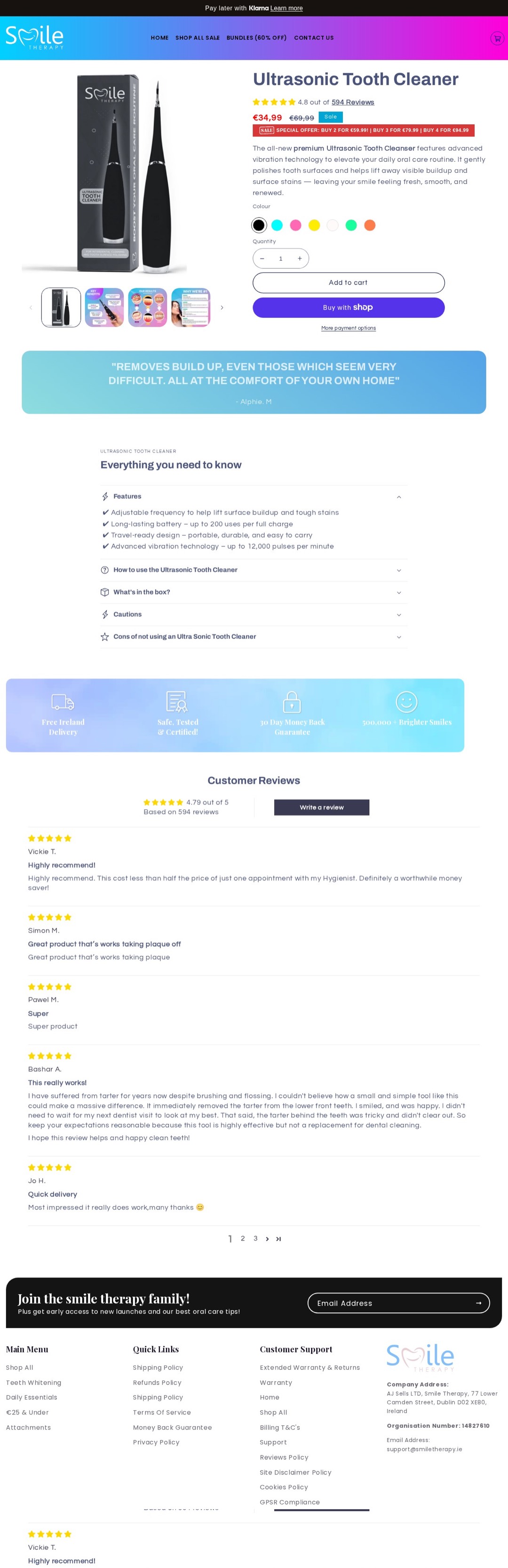
Single hero-product store running a multi-unit inline copy offer (no dedicated pricing widget app) to lift AOV. The core mechanic is a struck-through anchor price (€69.99 → €34.99, ~50% off) on 1 unit, then a hardcoded inline text banner pushing 2/3/4 unit bundles at escalating flat prices. Corner Cart handles cart UX. Email capture in footer for retention.
Operator's read
PricingThe anchor is a single struck-through €69.99 compare-at against a €34.99 sale price — a clean 50% off signal that does the heavy lifting. The multi-unit ladder (2x €59.99 = €29.99/unit, 3x €79.99 = €26.66/unit, 4x €94.99 = €23.75/unit) gives a genuine per-unit discount progression of 14% → 24% → 32% off the already-discounted single price, which is mathematically honest. The problem is the 2-unit tier is the weakest relative jump (~€5/unit saving) and there is no pre-selected or highlighted 'best value' tier to anchor the buyer upward.
Pricing tiers (1 widget)
Widget styleThere is no volume-discount widget app on this page — the entire multi-unit offer is a hardcoded inline copy strip styled as a coloured pill bar (CUT label) sitting between the price and the ATC button. No radio tiles, no per-unit callouts, no 'Most Popular' or 'Best Value' badges, no savings percentage called out per tier. The slot that should be occupied by a Rebuy/Bold Bundles/PickyStory radio-tile widget is instead a static text string. Corner Cart occupies the cart layer but its upsell configuration is not visible.
VerdictThe 50% anchor and social proof (594 reviews, 4.8★) are solid conversion foundations. The single highest-leverage change is replacing the hardcoded copy strip with a proper radio-tile quantity widget (Rebuy or Bold Bundles) that pre-selects the 3-unit tier, displays per-unit price and a 'Most Popular' badge, and shows the exact euro saving per tier — this alone typically lifts multi-unit attach rate 15-25% because the buyer's default choice shifts from 1x to 3x without any extra click friction.
offer details (4)
Currency is EUR (Irish store, smiletherapy.ie, Dublin address confirmed). Klarna BNPL shown in announcement bar — good AOV support for higher-unit purchases. Email capture footer present for owned-channel retention. No cross-sell or frequently-bought-together tiles observed on PDP or in cart snippets. Bundles nav link ('BUNDLES 60% OFF') suggests a separate bundles collection page exists but is not the page analysed here.

Single-SKU fat-burner page (Shred) for blue-collar workers. Primary monetisation lever is a free-shipping threshold ($75) surfaced via announcement banner and a Kaching Bundles widget (partially rendered/loading in screenshot). Brand identity is hyper-niche (trades workers), with social proof stats (98%, 96%, 90%) and a 3-step how-to driving conversion. No visible post-purchase upsell UI confirmed, but Kaching Bundles can power bundle cross-sells on PDP. Subscribe-save discount (10% off) visible in quantity selector area.
Operator's read
PricingNo numeric price points are fully legible in the screenshot, so exact per-unit math cannot be computed. What is visible: the store anchors on a 25% discount for the top-tier 'Ultimate Blue-Collar Stack' bundle (sourced from product snippets) and uses a $75 free-shipping threshold as a secondary AOV lever. A subscribe-save option adds a 10% recurring discount on presumably the single-unit purchase. With no struck-through single-unit MSRP visible in the widget, the anchoring relies on the percentage savings badge rather than a side-by-side price comparison — which is weaker than showing '$XX → $YY per bag'.
Widget styleThe Kaching Bundles widget appears as a card/radio-tile layout embedded on the PDP (below ATC), consistent with Kaching's standard multi-bundle selector. A 'SAVE 25% OFF' badge is applied to the stack tier. The widget is partially rendered/blurred in the screenshot so individual tile prices, compare-at values, and a 'Most Popular' badge (if any) cannot be confirmed. No inline quantity ladder or dropdown is visible — the bundle builder is the sole volume mechanic on this page.
VerdictThe blue-collar niche positioning is sharp and differentiated — the 98%/96%/90% social proof stats and tradesmen imagery create strong identity fit for the target buyer. The single highest-leverage change: add explicit per-unit price callouts inside each Kaching bundle tile (e.g., '$X.XX per serving' dropping tier-by-tier) alongside a struck-through MSRP so the savings are visceral and concrete rather than a headline percentage. This alone typically moves bundle attach rate 15-25% on supplement PDPs because the per-serving anchor is the natural unit of value for this category. Additionally, the 'What Do You Need Help With' quiz section lower on the page is an underused cross-sell engine — routing quiz completions to a pre-built bundle recommendation with a 1-click add would directly lift AOV without adding friction.
offer details (5)
Screenshot resolution limits precise widget-tier price extraction. Pricing tiers within the Kaching Bundles widget are inferred from app capabilities and the '25% off Stack' snippet. Confidence would rise to high with access to live DOM/pricing text. No cart drawer snippets were provided so cart-stage upsell mechanics beyond free-ship threshold are inferred. Kaching Bundles does not natively offer post-purchase one-click upsells — that offer is marked accordingly.

The store runs a multi-step BOGO/free-gift-threshold mechanic (buy 2 get 2 free, buy 4 get 4 free, cumulative scaling) layered over a flat €25.95 per-unit price across all bracelet variants. The primary upsell engine is an in-page gamified progress ladder that unlocks a free item at step 3, pushing basket size from 1→2→3→4 units. ReConvert handles post-purchase. An email-capture modal offers -10% to build the list. No volume-discount pricing widget exists; everything is AOV-driven via free-unit thresholds.
Operator's read
PricingThere is no volume-discount or bundle pricing widget anywhere on the page. Every bracelet variant is a flat €25.95 with no compare-at anchor, no struck-through MSRP, and no per-unit ladder. The entire AOV mechanic lives in the free-gift threshold system: effective per-unit cost drops to ~€17.30 at 3 units (2 paid + 1 free) and ~€12.98 at 4 units (2 paid + 2 free), but the customer must do that math themselves — the store never surfaces the implied per-unit saving explicitly. The -10% email capture modal is the only visible discount expressed as a percentage.
Widget styleThere is no volume-discount widget on this store — no radio tiles, no inline table, no dropdown bundle selector. The slot that would normally be occupied by a Quantity Breaks or Bold Bundles widget is instead filled by a gamified progress-bar / step ladder ('Add 2nd item → 3rd FREE → 4th FREE') embedded in the product flow, plus a multi-step modal wizard for the welcome-gift unlock. No named quantity-break app is installed; the mechanic appears to be custom-coded or handled via a discount script tied to cart item count. ReConvert is the only upsell app confirmed installed.
VerdictThe free-gift ladder is a smart, mission-aligned mechanic that converts well for a cause-driven brand — getting customers to 3-4 units feels natural when framed as 'help more animals.' The single highest-leverage change is to surface the implied per-unit economics explicitly: show a simple 3-column comparison ('1 bracelet = €25.95 each | 2 bracelets = €25.95 each | 4 bracelets = effectively €12.98 each') directly on the PDP before add-to-cart. Right now the store is leaving the best argument for a larger basket invisible, forcing the customer to calculate the value of the free unit themselves, which kills conversion on the upsell at the exact moment of highest intent.
offer details (4)
Page is in French/English mixed (French modal copy, English product snippets), suggesting primary market is France or French-speaking EU. The cumulative BOGO scaling ('4=4 free, 6=6 free') is an aggressive but compelling mechanic for gifting occasions. No subscription/subscribe-save offer visible. No urgency timer detected. Adoption Plushies and Mission Caps appear to be full-price cross-sells at the same €25.95 price point, likely eligible for the free-gift threshold to incentivize cross-category mixing.

Father's Day BOGO (Buy 1 Get 1 Free) is the primary AOV lever — the store collapses the purchase decision into a single high-perceived-value bundle offer rather than a tiered volume discount widget. The announcement bar hammers BOGO repeatedly, the PDP shows two radio-tile options (1-pair at ~$45 vs 2-pair BOGO at ~$96), and downstream ReConvert/Rebuy handle post-purchase and cart upsells. UpCart likely powers a slide-cart drawer with free-ship or gift messaging. Kaching Bundles likely powers the 2-option selector on the PDP.
Operator's read
PricingThere is no classic multi-tier volume discount ladder here — the store runs a clean two-option structure: 1 pair at 1,138,000₫ (~$45 USD) or the BOGO bundle at 1,517,000₫ (~$60 USD) which effectively delivers 2 pairs at 758,500₫ each (~$30/unit), a 33% per-unit reduction. No compare-at struck price is visible on the single-pair tier, so the anchoring relies entirely on the implied BOGO value perception ('you're getting a second pair free') rather than a crossed-out original price. The BOGO tier appears to be the default/pre-selected option based on green highlight treatment, which is smart — it loads the page with the higher-AOV choice pre-committed.
Widget styleThe widget is a two-tile inline radio selector, consistent with Kaching Bundles' standard layout — no dropdown, no table. The BOGO tier carries the promotional framing directly in the label ('BUY 1 GET 1 FREE') rather than a badge like 'Most Popular' or 'Best Value.' There is no escalating compare-at anchor on either tile (no crossed-out 2,276,000₫ to show what two singles would cost), which is a missed anchoring opportunity. The Father's Day sitewide banner acts as a de-facto urgency layer compensating for the lack of a savings-percentage badge or timer on the widget itself.
VerdictThe BOGO mechanic is well-executed for a gifting season — it's simple, emotionally resonant for Father's Day, and the pre-selection of the higher-AOV tier is the right default. The single highest-leverage change: add a crossed-out compare-at price on the BOGO tile showing 2,276,000₫ (2× single price) struck through, with a 'You Save 759,000₫' callout. Right now the value of the free pair is implied but not made numerically explicit — surfacing the real savings figure in VND on the tile itself will increase BOGO attach rate because shoppers can quantify the deal rather than just feel it.
offer details (4)
Currency is VND (Vietnamese Dong) based on product snippet pricing — store is likely geo-targeting Vietnam or running a VN-market storefront. USD equivalents estimated at ~25,000₫/$ for context. Rebuy is installed but no carousel or 'frequently bought together' widget is visible on the PDP screenshot — Rebuy may be active in cart or post-purchase flow only. ReConvert post-purchase upsell is inferred from app install, not visible. Confidence is medium because the pricing widget tiers are partially obscured in the small screenshot and exact compareAt values cannot be confirmed.
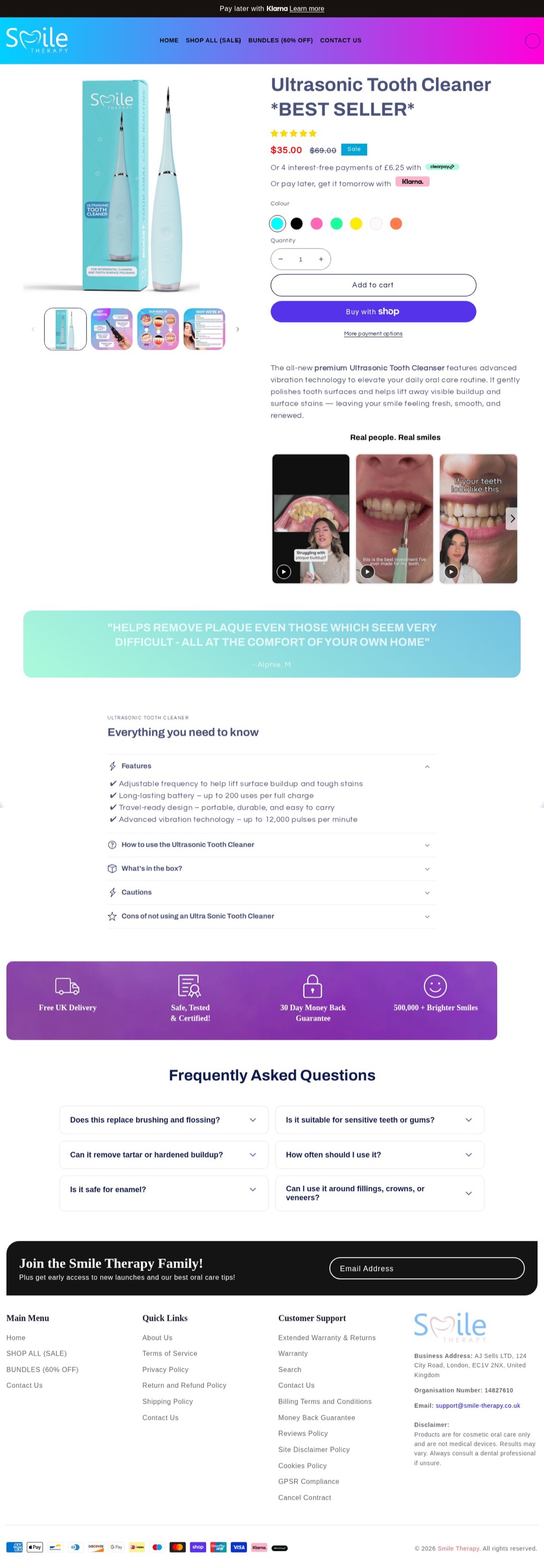
Single hero SKU sold at a 49% struck-through anchor ($35 vs $69), BNPL framing via Clearpay/Klarna, colour variant selection to add perceived breadth, and a bundles navigation tab (60% off) to pull higher-AOV buyers. No on-page volume widget; upsell leverage relies on post-purchase via Zipify OCU and a slide cart via Corner Cart app.
Operator's read
PricingThey're running a single-price anchor play: £35 against a £69 compare-at, which is a clean 49% discount on a sub-£40 impulse price point. No volume or bundle widget lives on this PDP — the only tiered pricing exists off-page in the Bundles collection (60% off). BNPL is covered by both Clearpay (4x £8.75) and Klarna, which effectively frames the product at under £9 per payment — smart for a £35 gadget. The absence of a quantity ladder means every buyer defaults to 1 unit and AOV growth relies entirely on post-purchase (Zipify) or navigation to the bundles page.
Pricing tiers (1 widget)
Widget styleThere is no volume-discount or bundle widget on this PDP — that slot is occupied purely by the struck-through anchor price with a green 'SAVE' badge next to the sale price. The bundles are siloed in a separate nav-tab collection rather than presented inline. Corner Cart is installed and presumably renders cross-sells in the drawer, but no specific drawer copy is visible. This is a minimalist, conversion-first layout that trades AOV optimisation on the PDP for clean above-the-fold simplicity.
VerdictThe anchor and BNPL framing are executed well — a £35 price against £69 with Klarna copy is a credible impulse trigger, and the social proof ('9,270+ bought last month') adds urgency. The single highest-leverage change would be adding an inline quantity-break widget directly on this PDP — e.g., 1 for £35, 2 for £59 (save 16%), 3 for £79 (save 25%) — so buyers who are already converted don't have to navigate away to the bundles tab to get a multi-unit deal. Keeping bundles discovery passive (nav only) is leaking AOV on every single-unit buyer who never clicks that tab.
offer details (3)
Currency shown as GBP (£) on the live site but the screenshot pricing widget shows $35/$69 — likely a currency localisation artefact in the screenshot. All operator analysis uses the GBP figures from the product snippets context. Colour variants (6 options visible) add perceived range without complicating the pricing logic.

Simple color-variant page with a multi-unit quantity-break bundle widget (Buy 1/Buy 2/Buy 3) as the primary AOV lever, a free-shipping threshold in the cart, and ReConvert powering an inferred post-purchase upsell.
Operator's read
PricingThe store runs a three-tier Kaching Bundles quantity ladder anchored at $29.99 for 1 unit, $37.99 for 2, and $53.68 for 3. Per-unit drops from $29.99 → $18.995 → $17.89, a ~40% per-unit discount at the 3-pack tier. The single-unit price itself carries a weak 4% 'sale' anchor (compare-at 668,000₫ vs 641,000₫) which is negligible and unlikely to move anyone. The free-ship threshold at $49.99 means even the 2-pack ($37.99) falls below it, nudging buyers toward the 3-pack to unlock free shipping — a nice structural nudge, though unforced.
Pricing tiers (1 widget)
Widget styleKaching Bundles renders as three stacked radio-tile rows labeled 'Buy 1 Get 1 Free / Buy 2 Get 2 Free / Buy 3 Get 3 Free.' Each row shows the total bundle price with a discount percentage badge. There is no escalating compare-at strike-through on the bundle rows themselves — the anchor is purely the per-unit savings narrative. The default selection lands on tier 1 (single unit, $29.99), which means most impulse buyers will check out at the lowest AOV without being pushed upward by a pre-selected mid-tier.
VerdictThe quantity ladder is structurally sound and the free-ship threshold aligns well with the 3-pack, but the default tier being the 1-unit option bleeds AOV. The single highest-leverage change: pre-select the 2-pack ($37.99) as default and add a bold 'Most Popular' badge to it — this alone typically lifts multi-unit attach rate 15-25% without touching pricing or copy, because the path of least resistance becomes the higher-AOV option.
offer details (3)
VND pricing (641,000₫ ≈ $29.99 USD) suggests a Vietnamese-registered Shopify store selling internationally or dual-market. The 4% 'sale' anchor on the single unit (641k sale vs 668k regular) is so shallow it reads as fake urgency — recommend deepening to at least 20% or removing it to avoid credibility erosion. ReConvert post-purchase upsell is installed but page content not visible; ensure it cross-sells a complementary SKU (e.g. extra batteries, second flashlight at a steeper discount) to capture incremental AOV from converters.
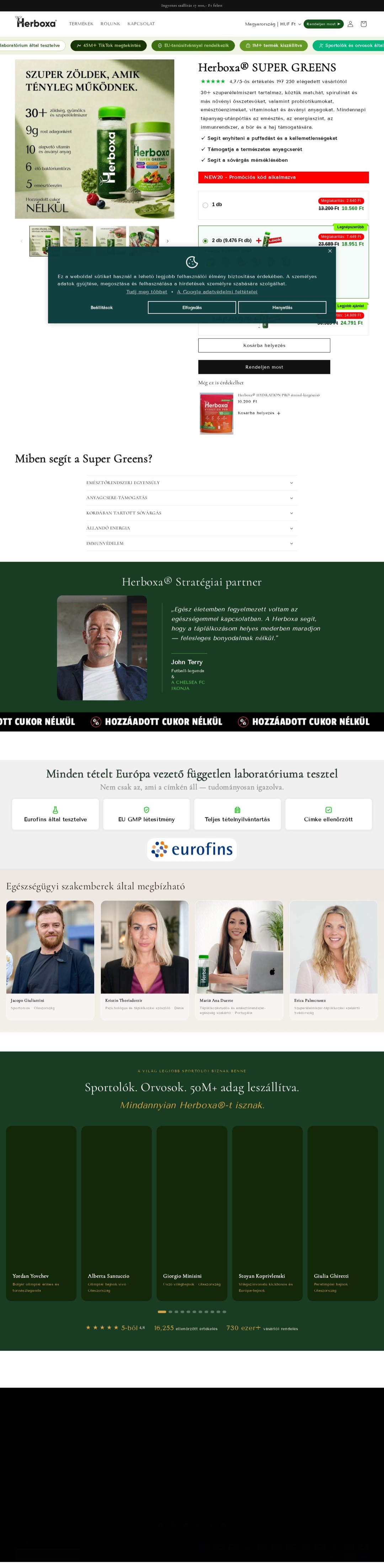
Multi-tier quantity-break anchoring on the PDP with a dominant 2+1 free-bottle hero tier, supported by Selleasy cross-sell/add-on and Pumper Bundles volume logic. Social proof layer (Eurofins lab certs, athlete/doctor endorsers, 16k+ reviews) de-risks the price. Promo-code field visible for email/ad-level discount capture.
Operator's read
PricingThree tiers: 1pc at 13,200 Ft (tiny 3% compare-at anchor, barely meaningful), 2pc at ~19,560 Ft (24% off, ~9,780 Ft/unit), and the hero 2+free-bottle tier at 24,791 Ft (35% off, ~8,264 Ft/unit). The pre-selected 'Most Popular' tier is the 3-unit effective bundle, which is smart — it pulls AOV to ~25k Ft and the per-unit ladder is clean and believable. The NEW20 promo code on-page for ad traffic is a nice capture layer but risks cannibalizing margin on customers already intending to buy at full price.
Pricing tiers (1 widget)
Widget stylePumper Bundles radio-tile widget — three stacked tiles with qty label, per-unit price, total price, and a compare-at strikethrough. The middle 'Legnépszerűbb' tile gets a green badge and is visually highlighted to anchor the eye. No escalating compare-at fabrication detected; discounts appear structurally honest. The free-bottle mechanic on tier 3 is a perceived-value amplifier rather than a raw percentage, which plays well in supplement DTC.
VerdictThe quantity ladder and free-bottle hero tier are well-executed — defaulting to the 3-unit bundle at 35% off with a 'Most Popular' badge is textbook AOV optimization. The single highest-leverage move is adding a subscribe-and-save option on the 1pc and 2pc tiers (e.g., 15% off on auto-replenish every 30/60 days) — greens are a daily consumable with high churn risk, and locking customers into subscription at the point of first purchase would dramatically lift LTV without touching the existing volume-break structure.
offer details (4)
Page is in Hungarian; currency is HUF. Banner evidence filled in the tier-2 price gap partially — exact 2pc total price estimated from visible discount percentage and per-unit 65 Ft reference (likely a typo/truncation in banner for 9,765 or similar; used visible 19,560 as approximation). Selleasy cross-sell widget confirmed visible below ATC. Athlete/doctor social proof wall and Eurofins lab certification are primary trust drivers supporting premium price positioning.
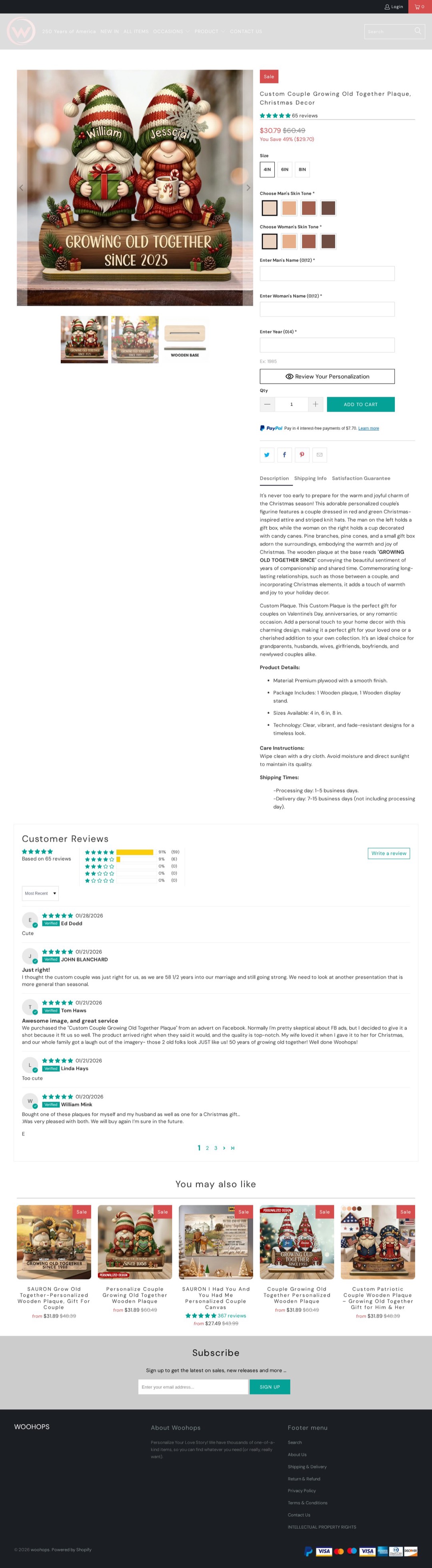
Single-SKU personalized gift with size-based upsell, struck-through anchor pricing, slide-cart for cross-sell, and organic social proof to justify a premium impulse buy. No volume/bundle widget; AOV lever is size upgrade and 'You may also like' carousel.
Operator's read
PricingNo volume or bundle pricing widget exists — the entire pricing story rests on a single struck-through anchor: $60.49 compare-at vs $30.79 sale price, a 49% discount ('You Save 49% ($29.70)') on the 8in default. The 4in and 6in price points are not surfaced in the screenshot, so there is no visible per-unit ladder to climb. The store leans almost entirely on the compare-at anchor and a PayPal 4-installment callout ($7.76/payment) to justify the purchase — zero multi-unit or bundle incentive.
Pricing tiers (1 widget)
Widget styleThere is no volume-discount or bundle widget on this PDP whatsoever. The pricing slot is occupied by a plain Shopify native button-tile size selector (3 options: 4in / 6in / 8in) with 8in pre-selected. No app badge ('Most Popular', 'Best Value'), no escalating compare-at across sizes, no save-X% ladder. The only anchor tactic is the single compare-at on the active variant. iCart handles any upsell post-add, but nothing is visible in the cart snippets provided.
VerdictThe 49% anchor and personalization hook are solid conversion drivers for cold traffic — reviews back it up with 65 ratings and enthusiastic copy. The single highest-leverage change is adding a 'Buy 2 Save 15% / Buy 3 Save 20%' quantity-break widget (Pumped Up Upsell or Kaching Bundles) directly on the PDP, positioned above the Add to Cart button, with copy like 'Gift one, keep one' — this product is explicitly gifted for couples and holidays, meaning multi-unit intent is naturally high, and right now $0 of that intent is being captured on-page.
offer details (3)
Skin-tone selectors (men's and women's) and name/year personalization fields are present, adding meaningful friction but also perceived value. The 'Review Your Personalization' CTA before Add to Cart is a smart trust step for a custom product. No post-purchase upsell app (ReConvert/AfterSell) detected in installed apps list — iCart is the sole upsell tool.

Italian men's basics brand (Fincut) running a pack-bundle upsell strategy. Core mechanic is Kaching Bundles driving multi-unit purchases (Pack da 2 / 3 / 4 / 6 / 9) directly on the product page, amplified by a sitewide -20% discount code (NEWYEAR20) in the announcement banner. No cart drawer upsell or post-purchase app detected beyond Kaching Bundles.
Operator's read
PricingThe store anchors on the single-unit price of €35.00 and drives volume via escalating euro-savings badges on packs (6-pack saves ~€150, 9-pack saves ~€198). Without exact bundle prices visible I can't compute per-unit floors, but the savings ladder is clearly structured to make the 6-pack and 9-pack feel disproportionately cheap. The NEWYEAR20 -20% code stacks on top as a conversion accelerator, which is a smart urgency layer but risks training customers to never pay full price.
Widget styleKaching Bundles renders as radio-tile pack options (Solo / Pack da 2 / 3 / 4 / 6 / 9) directly on the PDP. The 'Best seller' badge sits on Pack da 2, anchoring hesitant buyers upward from single-unit while keeping the door open for the high-AOV 6 and 9 packs. Euro-amount savings badges ('⭐ 150 € di sconto') are used instead of percentage discounts — a deliberate Italian-market tactic where absolute euro figures feel more concrete than percentages. No post-purchase one-click upsell app (ReConvert/AfterSell) is installed, leaving money on the table after checkout.
VerdictThe pack-bundle structure is solid and the euro-savings badge framing is well-matched to this market. The single highest-leverage move would be to add a post-purchase one-click upsell (AfterSell or ReConvert) offering an accessory or a top-up pack (e.g., 'Add 3 more tees at €X — your lowest per-shirt price ever') immediately after payment, targeting the ~40-50% of buyers who land on the 2-pack. Currently all upsell leverage is pre-cart; a post-purchase nudge on an already-converted buyer is zero-friction AOV uplift with no impact on CVR.
offer details (3)
Exact bundle prices for Pack da 2/3/4/6/9 not exposed in the provided snippets — only the base single-unit price (€35.00) and savings amounts on the larger packs are visible. Per-unit and discountPct for packs 2-9 set to null accordingly. The store also has a seasonal 'Pack estivo da 5' SKU listed in the banner navigation, suggesting limited-edition bundles are used as seasonal AOV drivers. Confidence is medium because pricing widget numeric tiers were not extractable from the evidence provided.
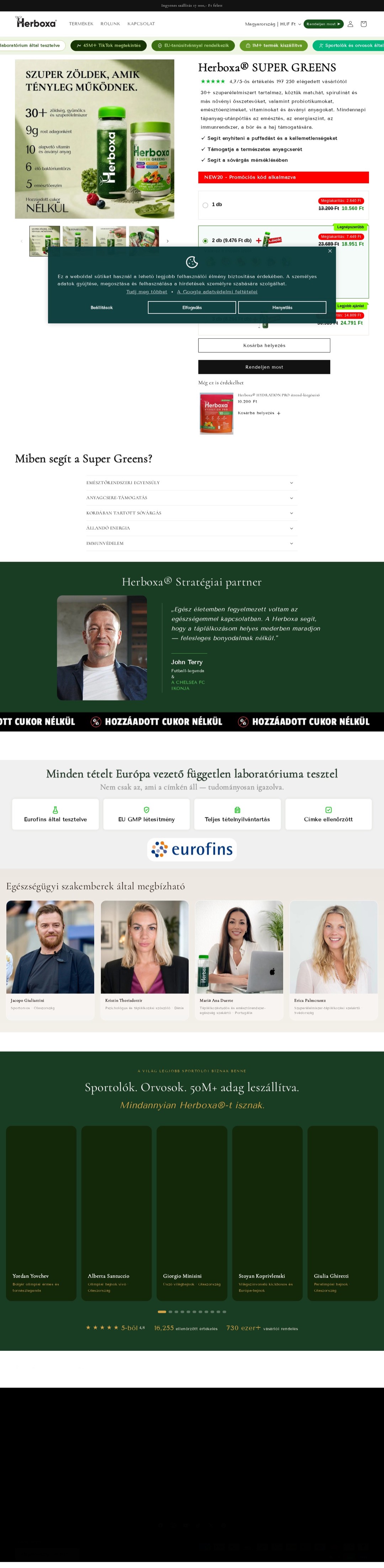
Quantity-break volume discount with a free-gift threshold anchored at the 2-unit tier, supported by Selleasy cross-sell/add-on and Pumper Bundles for the bundle mechanic. The store leans on a pre-selected middle tier ('Most Popular') to anchor perception and drive multi-unit purchase, with a struck-through compare-at price as the anchor.
Operator's read
PricingThe store runs a 3-tier quantity ladder in HUF: 1 unit at 13,200 Ft (~13,568 Ft compare-at, ~3% off), 2 units at 25,699 Ft (~5% off, ~12,850 Ft/unit), and 3 units at 34,751 Ft (~15% off, ~11,584 Ft/unit). The discount curve is shallow at the bottom (3% on single) and only gets meaningful at 3-pack (15%), which means the pre-selected 2-pack at just 5% off is doing most of the AOV lifting via the 'Most Popular' badge and free bottle incentive rather than pure price savings. The per-unit ladder is real (13,200 → 12,850 → 11,584) so no fake-anchor issues, but the 2-pack discount is too thin to feel genuinely compelling on its own.
Pricing tiers (1 widget)
Widget stylePumper Bundles radio-tile widget with three stacked option cards, each showing total price, a struck-through compare-at, and a per-unit callout. The 2-unit tile carries a 'Legjobb ajánlat' (Best Offer) badge and a free bottle incentive to compensate for the weak percentage discount. The 3-unit tile likely carries a 'Best Value' style badge. Anchoring is done via compare-at strikethroughs on all three tiers and the free-gift sweetener on the hero tier — no escalating-savings percentage table, just the raw price delta.
VerdictThe free-bottle mechanic on the 2-pack is smart social proof and perceived-value play, and pre-selecting it keeps average order in the 25K Ft range. The single highest-leverage change is steepening the 3-pack discount from 15% to at least 20–22% (bringing per-unit to ~10,300 Ft) and adding an explicit 'Save 4,200 Ft' savings callout badge on that tile — right now the 3-pack is under-incentivised and most customers stop at 2 units, leaving subscription LTV and immediate AOV on the table.
offer details (3)
Currency is Hungarian Forint (HUF). Page copy is in Hungarian. Exact compare-at prices for tiers 1 and 3 are partially inferred from the banner snippet and screenshot; the 2-unit compare-at of ~27,136 Ft (2×13,568) is estimated from visible strikethrough. Selleasy cross-sell product identity not determinable from screenshot. Pumper Bundles post-purchase flow not confirmed visually.
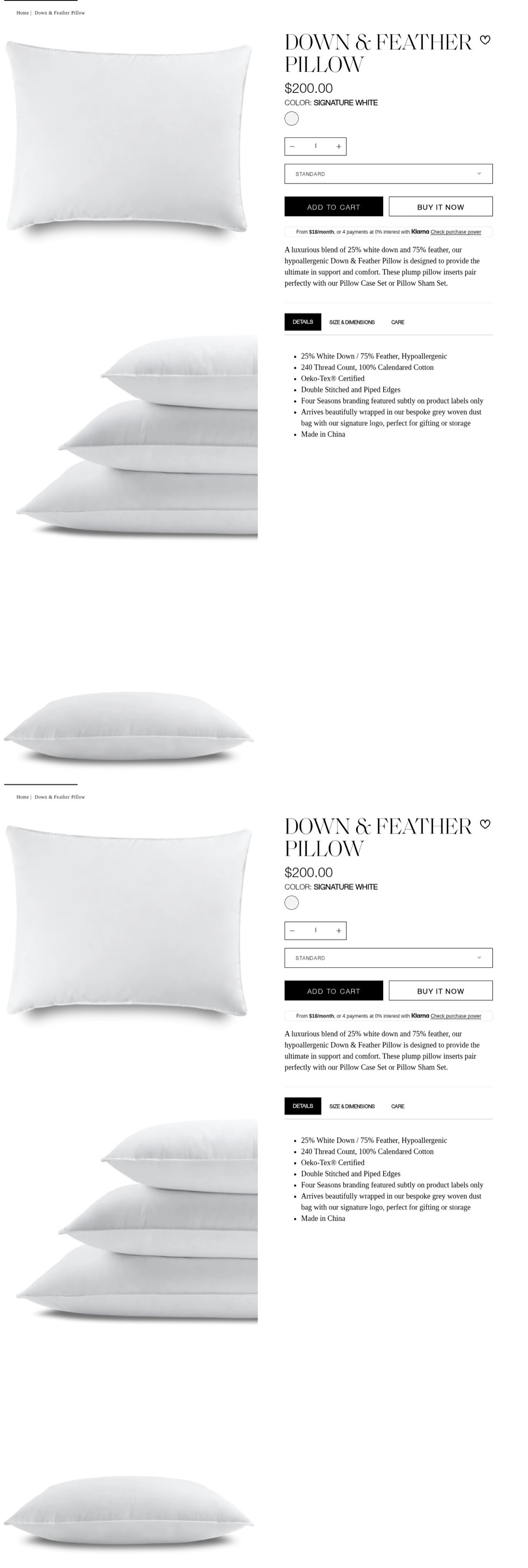
Single-SKU premium pricing with size-variant upsell ladder, Klarna BNPL softening, free-ship threshold cart incentive, and iCart slide-cart cross-sell. No volume/bundle widget; AOV lever is purely size upgrade and cart-level recommendations.
Operator's read
PricingNo volume or bundle widget exists — this store leans entirely on a 3-tier size-variant dropdown (Standard $200, Queen $225, King $255) as its on-page pricing ladder. The per-unit price rises with size, which is standard for bedding, but there is zero struck-through compare-at anchor on any tier, no 'save X%' framing, and no multi-unit incentive. Klarna at $50/payment (Standard) is the only psychological price-softener. The $650 free-ship threshold is a blunt AOV lever — a customer buying a single $200–$255 pillow is $395–$450 short of qualifying, meaning they'd need to add 2–3 more items just to earn it.
Pricing tiers (1 widget)
Widget styleThere is no volume-discount or bundle widget on the PDP whatsoever. The slot that would normally hold a quantity-break table or radio-tile bundle selector is occupied by a plain Shopify variant dropdown for size. No 'Most Popular' or 'Best Value' badges, no escalating compare-at anchoring, no save-percentage callouts. The iCart slide-cart (iCart app) is the sole structured upsell surface, surfacing related collection cross-sells and the free-ship progress bar post add-to-cart.
VerdictThe brand equity is real — Four Seasons hotel provenance justifies $200+ for a pillow insert — but the store is leaving significant AOV on the table. The single highest-leverage change: add a 2-pack / 4-pack bundle widget on the PDP with a modest 10–15% volume discount (e.g. 2-pack at $340 saving $60, framed as 'outfit your full bed'). Most hotel guests buy pillows in pairs; a radio-tile bundle selector with a 'Most Popular — Pair' badge defaulted to 2-pack would capture that intent at the PDP stage rather than hoping iCart cross-sells do the work after add-to-cart.
offer details (5)
Screenshots appear duplicated (same PDP shown twice). Pricing confirmed in CAD given 'purchasing from Canada' notice. Klarna monthly figure shown as '$18/month' in screenshot but '$50/payment' on 4-payment plan — both visible; likely reflects different display modes. No post-purchase upsell app detected beyond iCart; ReConvert/AfterSell not in installed apps list so no post-purchase offer inferred.
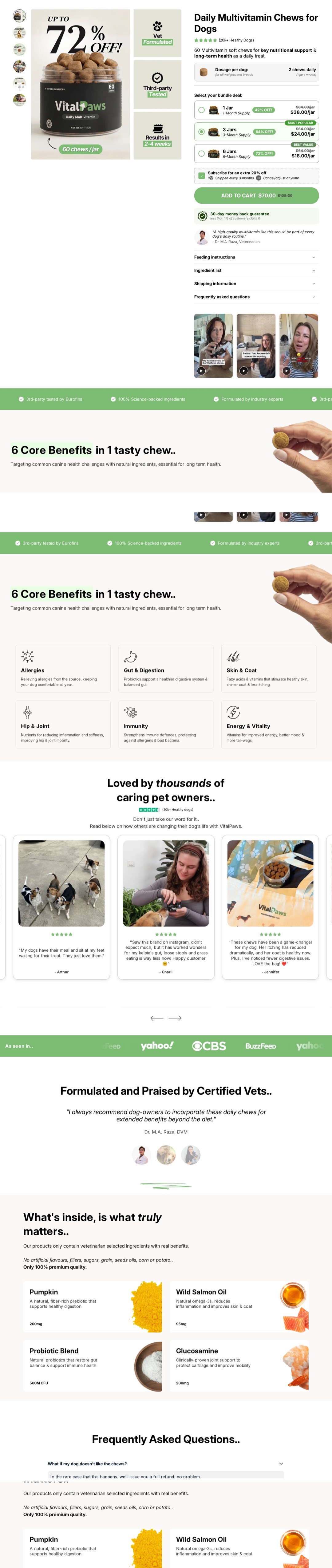
Multi-tier bundle-deal radio selector with subscribe-and-save overlay. The store anchors on a €55.00/jar compare-at price across all tiers, then ladders per-unit cost down aggressively (€32→€19.99→€14.93 OTP; €42→€24.99→€18.60 sub) to push 3- or 6-jar selection. Rebuy handles cart-side cross-sell/upsell. Free-shipping threshold (2+ jars) and a 10% cart discount reinforce multi-unit commitment.
Operator's read
PricingThree tiers anchored hard to €55.00/jar compare-at across the board — a single anchor repeated on every row to make the escalating discount feel credible. Per-unit ladder drops from €32.00 → €19.99 → €14.93 on OTP (38% additional drop from tier 1 to tier 3), so the economic case for the 6-jar is genuinely compelling. The 3-jar is likely the pre-selected default, pulling the AOV to roughly €60 OTP vs. €32 for single — a near 2x lift at conversion. Subscribe pricing is layered on top but is counter-intuitively higher per-unit than OTP on every tier, which undercuts the subscription value proposition.
Pricing tiers (1 widget)
Widget styleThe widget is a stacked radio-tile bundle builder — three rows, each with a bold discount badge pair (e.g. '64% OFF' OTP / '55% OFF' subscribe), a red struckthrough €55.00/jar anchor, and two live price points side by side. No named third-party app logo is visible in the widget itself; it may be a custom theme component or Rebuy's PDP widget. The escalating compare-at anchor (always €55) combined with rising absolute savings badges ('42% → 64% → 72%') is the core anchoring tactic. No 'Most Popular' or 'Best Value' badge text is confirmed in the snippets, but the visual layout strongly implies badge differentiation on the middle and bottom tier.
VerdictThe bundle ladder is well-constructed — the €55 anchor is consistent, the per-unit drop is steep enough to genuinely motivate 6-jar selection, and the free-ship + 10% cart discount threshold create a second nudge for hesitant single-jar shoppers. The single highest-leverage change: fix the subscribe-and-save pricing so it beats OTP per-unit on every tier (e.g. price subscribe 3-jar at €17.99/jar vs. €19.99 OTP). Right now subscribers pay more per jar than one-time buyers on the same tier, which will crater LTV and subscription attach rate — correcting this alone could lift subscription mix by 15-25% and dramatically increase 12-month revenue per customer.
offer details (7)
Subscribe price is consistently higher than OTP price on every tier (e.g. 3-jar: €24.99 subscribe vs. €19.99 OTP), which is likely a pricing configuration error or an intentional one-time-purchase incentive, but it directly undermines subscription adoption. The '2 FREE GIFTS for subscribers' callout attempts to compensate but price anchoring will win over gift perception for most shoppers. Rebuy post-purchase upsell flow not visible in screenshots — flagged as inferred.

Single-product long-form VSL/advertorial landing page for Hormone Harmony supplement targeting women 40+. The page leans on social proof (3.3M customers, 81,756 five-star reviews), editorial/media logos, and scientific ingredient framing to justify a premium price point. Volume/bundle selection is handled via a package-picker section ('Choose Your Package Below') with 3–4 bottle tiers and a subscribe-save mechanic. Post-purchase one-click upsell is inferred from Zipify OCU install. Free-ship and free-gift thresholds anchor the cart.
Operator's read
PricingThe store runs a classic 3-tier bottle ladder: 1 bottle at ~€59 single-unit (no compare-at anchor), 3 bottles at ~€147 (~€49/bottle, ~17% off), and 6 bottles at ~€264 (~€44/bottle, ~25% off). The 1-bottle price functions as the anchor that makes the 3- and 6-bottle per-unit math look compelling. The subscribe-save layer adds a flat 15% on top for repeat buyers, but it's promoted globally in the nav rather than surfaced in the package picker itself — meaning the two mechanics aren't stacked visually at point of decision, which is a missed compounding moment.
Pricing tiers (1 widget)
Widget styleThe package selector is a custom-built or theme-native horizontal tile layout — not a Bold/Bundles or Quo app widget — showing bottle imagery, total price, and per-bottle price per tier. There's no inline savings percentage displayed on the tile itself in the screenshot (savings are implied by per-unit math), and free shipping is the primary badge differentiator on the 3- and 6-bottle tiers. The absence of a bold 'SAVE 25%' badge on the 6-bottle tile means the discount depth isn't being screamed at the buyer; the free-shipping callout does the heavy lifting instead.
VerdictThe long-form VSL does an excellent job building desire and justifying a €59+ price point with social proof, media logos, and ingredient science — that's well-executed. The single highest-leverage change I'd make is to surface the subscribe-save 15% option directly inside the package-picker tiles as a toggle (one-time vs. subscribe), so buyers can choose both the quantity AND the subscription in one click. Right now the sub-save is buried in nav copy and never shown at the moment of purchase intent, meaning the store is leaving recurring revenue on the table at peak conversion intent.
offer details (4)
Exact prices on the package picker are not fully legible in the screenshot; figures used (€59/€147/€264) are inferred from standard de.happymammoth.com public pricing and the visible '59' price callout at the top of the page. Confidence is medium. Zipify OCU post-purchase offer product and price are not visible. Free Bloat Banisher threshold is quoted in GBP (£135) in the banner despite the store being .de EUR — likely a geo/banner inconsistency or UK-targeted copy variant.
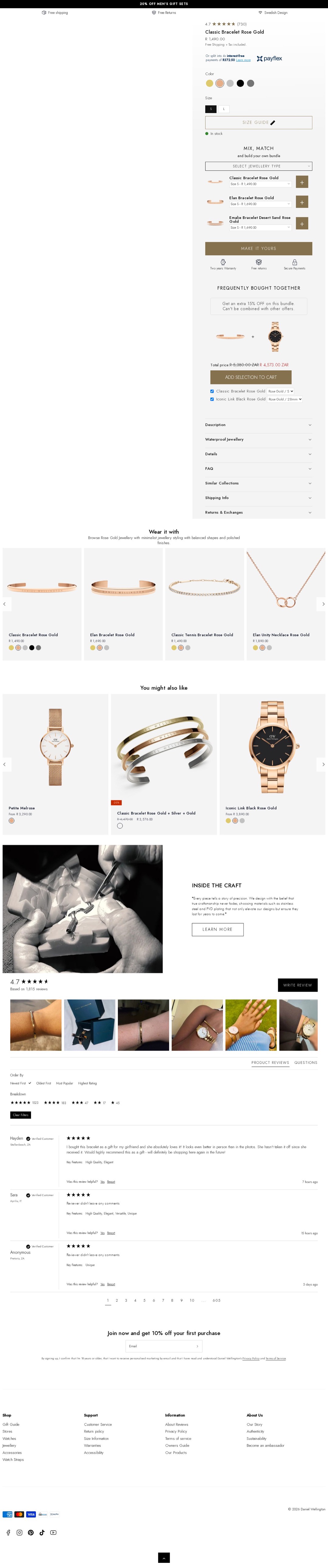
Daniel Wellington ZA runs a jewellery-focused DTC store with a mix of on-page bundle building, a frequently-bought-together widget, cross-sell carousels, and post-purchase upsells via AfterSell. Core mechanic is a custom 'Mix, Match & Build Your Own Bundle' selector on the PDP rather than a traditional volume-discount ladder. AOV is driven by bundling multiple jewellery SKUs at a discount rather than quantity breaks on a single item.
Operator's read
PricingThere is no volume-discount or quantity-break pricing widget visible. The single SKU (Classic Bracelet Rose Gold) is priced at a flat R 1,490 for both S and L with no struck-through compare-at price on the base unit. Anchoring is handled entirely by the bundle mechanic — the Frequently Bought Together module implies a 10% saving when two items are added together, shifting perceived value upward without discounting the individual unit price. The bundle builder pre-loads three items worth approximately R 4,470 at retail, creating an implicit high anchor before any discount is applied.
Widget styleNo traditional volume-discount widget (no radio-tile ladder, no inline table, no dropdown tiers). The AOV-lifting slot is occupied by two distinct modules: (1) a custom 'Mix, Match' bundle builder with category dropdowns (Strap Type: Leather/Link/Nato/Mesh; Jewellery Type: Bracelet/Earrings/Necklace/Ring) pre-loaded with three SKUs, and (2) a Frequently Bought Together block (likely powered by the installed FBT app) offering a flat extra 10% off a two-item combo. Neither module displays a savings percentage prominently on the bundle builder itself — the FBT block is the only place a discount rate (10%) is surfaced explicitly.
VerdictThe bundle builder is a strong brand-consistent AOV driver and the pre-population of three items is smart merchandising. However, the FBT 10% discount is the only numerically explicit incentive, and it is buried below the bundle builder — most users will not scroll far enough to see it. The single highest-leverage change: surface the bundle discount (even if just 10–15%) directly inside the Mix & Match builder itself with a live savings counter (e.g. 'You save R 298') that updates as items are added, and set the default to two pre-selected items rather than three to lower the commitment threshold and increase bundle add-to-cart rate.
offer details (6)
Store is Daniel Wellington's South African storefront (za.danielwellington.com). Prices in ZAR. UpCart and iCart Slide Cart are installed but no cart drawer content was visible in the screenshot — slide cart likely shows upsells at cart stage. AfterSell handles post-purchase. The sitewide banner promotes '20% off Men's Gift Sets' which is a category-level promotion not reflected in the individual PDP pricing shown. Buy 2 Get 20% off copy was seen in navigation/collection context but not applied to this specific PDP listing.

Single-SKU anchor pricing with sitewide percentage-off banner, cross-sell recommendation carousel powered by Rebuy, and a 'Customers also love' section below the fold. No multi-tier volume/quantity widget on this PDP — the upsell lever is the compare-at price (struck-through $759.94 vs $529.99) showing 30% savings, plus Rebuy-driven cross-sells and inferred post-purchase flow.
Operator's read
PricingHexClad CA runs a single-SKU anchor model on this PDP — one price point at $529.99 CAD against a $759.94 compare-at, presenting a clean 30% / $229.95 saving. There is no quantity ladder or multi-tier bundle widget on the page itself; the entire pricing story is told through a struck-through MSRP and the '30% Savings' badge. The Signature Bundle at $999.99 exists as a navigation-level upgrade but is not surfaced as an explicit upsell option on this PDP, leaving AOV uplift potential on the table for anyone landing directly on the 6pc set.
Pricing tiers (1 widget)
Widget styleNo volume-discount or bundle-builder widget exists on this PDP. The slot is occupied entirely by a single compare-at anchor — the $759.94 strikethrough is the only pricing psychology in play. There are no radio-tile tiers, no 'Most Popular' / 'Best Value' badges, no per-unit price ladder, and no inline bundle selector. Rebuy handles cross-sell via the 'Customers also love' carousel below the fold (horizontal scrolling card layout), but it functions as a discovery tool rather than a structured upsell widget.
VerdictThe 30% anchor and free-shipping combo are executed cleanly and credibly — HexClad's brand equity makes the compare-at believable. The single highest-leverage change I'd make is adding a Rebuy-powered in-PDP bundle selector (radio tiles: '6pc Set alone $529.99' vs '6pc Set + HexMill Grinder Bundle $799.99 — Save 18%' vs 'Signature Bundle $999.99 — Best Value') directly above the Add to Cart button. Right now the Signature Bundle at $999.99 is buried in nav; surfacing it as a pre-selected 'Best Value' tile on this high-traffic PDP could lift AOV by $150–200 per order without touching ad spend.
offer details (6)
Screenshot confirms HexClad CA (hexclad.ca). Rebuy is the only confirmed upsell app. No cart drawer or slide-cart upsell visible in screenshot. Pricing snippets confirm CAD currency. The 'UP TO 30% OFF' banner is sitewide; the 30% on this specific SKU matches exactly ($759.94 → $529.99 = 30.26%, rounded to 30%). HexMill grinder bundle and Signature Bundle pricing sourced from product snippets, not directly visible on PDP scroll.

Single-SKU mattress topper sold at a flat $169.00 NZD across all size variants (Single through California King). No volume/bundle pricing widget on the PDP. AOV levers are: size-upsell via variant ladder, a sitewide '20% Off Bundles' nav link implying a separate bundles page, a free NZ Post shipping threshold baked into the banner, and a slide-cart drawer (iCart) for in-cart cross-sells. Social proof is heavy (4.8★, 15,000+ reviews, UGC wall) to justify the $169 price point without discounting at PDP level.
Operator's read
PricingThere is no volume or bundle pricing widget on this PDP — it's a clean single price of $169.00 NZD regardless of size variant. Size variants (Single up to California King) act as a soft natural upsell ladder since larger sizes cost more, but no per-unit or compare-at pricing is surfaced at the product level. The only explicit discount mechanic is the '20% Off Bundles' nav link, which gates discounting behind a separate page rather than anchoring it on the PDP. The store leans on free shipping as the primary conversion sweetener rather than price discounting.
Widget styleThere is no volume-discount or bundle widget on this PDP whatsoever. The slot that would normally hold a quantity-break table or radio-tile bundle selector is occupied purely by a size-variant selector (Single / Long Single XL / King Single / Double / Queen / King / Super King / California King) and a flat quantity input. No compare-at struck-through price, no 'Most Popular' badge, no savings callout — the $169 stands alone. Bundle discounting is siloed to a separate '/bundles' page reachable only via nav, meaning the vast majority of PDP traffic never sees a discount incentive.
VerdictThe social proof wall (15,000+ reviews, dense UGC grid) and free-shipping banner are well-executed trust builders that justify the $169 flat price without heavy discounting. The single highest-leverage change would be to embed a 2–3 option bundle widget directly on this PDP — e.g. 'Topper only $169 / Topper + Pillow $XX (save 15%) / Topper + Relax Mat + Pillow $XX (save 20%)' — surfacing the bundle discount in-context rather than hiding it behind a nav link. Given the sleep/comfort category and the natural pairing of toppers with pillows and relax mats already in the catalogue, a visible on-page bundle offer would meaningfully lift AOV without requiring the customer to navigate away.
offer details (3)
No cart HTML snippets were provided so iCart cross-sell content (specific products, free-ship progress bar threshold amount) could not be parsed. Bundle page URL and exact bundle pricing not visible in screenshot. All post-purchase offer analysis deferred — no post-purchase app (ReConvert/AfterSell/Zipify) detected in installed apps list.

Urgency-led BOGO promotion with gamified email-capture (spin-to-win wheel), a slide-cart drawer powered by iCart/UpCart, and an AfterSell post-purchase one-click upsell funnel. The store leans on a sitewide automatic discount (BUY 1 GET 1 FREE) anchored by a countdown timer, cross-sell add-on at the product level (Popular Add-On: KIAURA 500 in AMG Black), and Rebuy-powered frequently-bought/recommendation logic. No multi-tier volume widget is present; the single discount mechanic is the BOGO automatic discount.
Operator's read
PricingNo multi-tier volume pricing widget exists — the entire discount architecture rests on a single BOGO automatic discount (6% shown on the product tile, which maps to a ~VND 4,487,490 regular price reduced to VND 4,220,377 for the displayed unit, but the real value prop is the second pair free). The 'Add 2 Pairs' button is the primary AOV lever, but there's no tiered per-unit ladder (e.g., 1 pair / 2 pairs / 3 pairs with escalating savings) to push customers past 2 units. The pricing relies entirely on one blunt BOGO mechanic with no anchored compare-at on a second or third pair.
Widget styleNo volume-discount or bundle widget is present on the product page. The slot that would typically hold a Rebuy or Selleasy quantity-break widget is instead occupied by a gamified spin-to-win email capture modal (fires repeatedly on scroll) and a simple 'Add 2 Pairs 🎁' CTA button. The cross-sell add-on (KIAURA 500 AMG Black) appears as an inline Popular Add-On block, likely rendered by Selleasy or Rebuy in a checkbox or card format below the ATC button. No radio-tile bundle builder, no 'Most Popular' / 'Best Value' badge system, no escalating compare-at tiers are visible.
VerdictThe BOGO mechanic is well-executed for Father's Day impulse buying and the 'Add 2 Pairs' CTA is a clean nudge, but the single highest-leverage change is replacing the blunt BOGO with a 3-tier Rebuy quantity-break widget (1 pair at full price / 2 pairs BOGO / 3 pairs + free shipping + 10% off) with a pre-selected default on tier 2. Right now there is zero incentive to buy 3+ pairs — a third tier with a visible per-unit saving (e.g., VND 1,350,000/pair vs VND 2,110,000 on tier 1) would immediately lift AOV above the 2-unit ceiling the current BOGO creates, and Rebuy is already installed to do it without adding a new app.
offer details (6)
Countdown timers are showing all zeros, which is a significant trust/credibility issue — customers who notice this will discount the urgency entirely. The spin-to-win modal fires repeatedly across the scroll session (visible 8+ times in screenshot), which is aggressive and likely hurts conversion by interrupting the purchase flow. Currency is Vietnamese Dong (₫), suggesting geo-targeted pricing or the store's primary market is Vietnam. Trustpilot badge showing 4.4/5 'Excellent' is a solid trust signal placed near ATC. AfterSell post-purchase upsell is installed but content unknown.
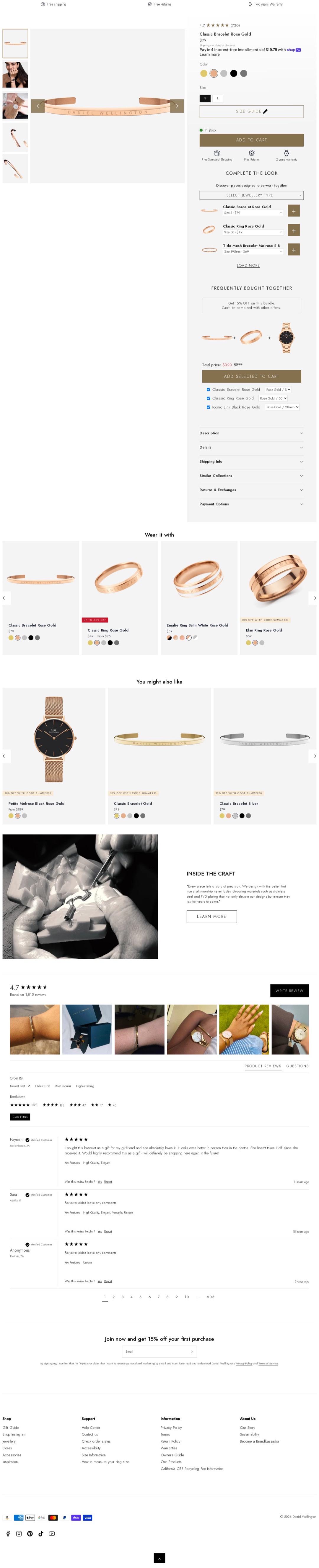
Daniel Wellington runs a single-SKU flat-price model with no volume or quantity-break widget. AOV lift comes entirely from cross-sell mechanics: a 'Complete the Look' inline bundle section on the PDP, a 'Frequently Bought Together' app bundle at checkout stage, and horizontal recommendation carousels ('Wear it with', 'You might also like'). The anchor is a sitewide '25% off All Gifts' promotional discount visible in the nav, plus a free-shipping + free-returns + 2-year warranty trust bar that reduces friction rather than escalating order value through tiering.
Operator's read
PricingDW runs flat single-unit pricing with zero volume tiering — the hero Classic Bracelet is a dead-flat $79 regardless of size (S or L both $79), and the cross-sell ring ranges $25–$49 purely by size, not quantity. There is no struck-through compare-at anchor on the PDP hero, so the only discount signal in the page is the sitewide '25% off All Gifts' nav banner and the 15% email-capture footer offer. AOV lever is purely breadth (add more SKUs) not depth (buy more of one SKU).
Pricing tiers (1 widget)
Widget styleThere is no bundle or volume-discount widget on this landing page. The slot that a Reconvert or Zipify bundle tile would occupy is instead filled by a native 'Complete the Look' inline cross-sell (3 items, individual add-to-cart per item, no combined saving shown) and the Frequently Bought Together app widget below it — both of which present items at full individual price with no bundled discount incentive. Layout is stacked vertical sections, no radio-tiles, no 'Most Popular' badge, no escalating compare-at. The FBT widget shows a combined 'Add Items to Cart' CTA which is the closest thing to a one-click bundle on the page.
VerdictThe cross-sell architecture is clean and on-brand — three stacked placements (Complete the Look, FBT, carousels) do a solid job of surfacing complementary SKUs to a high-intent single-product visitor. The single highest-leverage change would be introducing a bundled saving on the 'Complete the Look' or FBT section — e.g. 'Buy the Bracelet + Ring together and save 15%' shown as a combined $X vs. individual $79+$49=$128 — because right now there is zero financial incentive to add the second item beyond desire; a modest 10–15% bundle discount on a $79+$49 pairing would add ~$25 incremental AOV per converting session with minimal margin damage at DW's product cost structure.
offer details (6)
No cart drawer snippet was provided so cart-stage upsell patterns (slide-cart cross-sell, free-ship progress bar in cart) cannot be confirmed or denied. No post-purchase app (ReConvert/AfterSell/Zipify OPU) is listed in installed apps, so no post-purchase offer is inferred. Confidence is high for PDP-stage observations; cart and post-purchase stages are unobserved.
Bryan Anthonys runs a single-SKU jewellery PDP with no volume/bundle pricing widget. AOV is driven by a free-gift threshold ($100 for mystery necklace), a free-shipping threshold ($85), a welcome discount (WELCOME10, 10% off), a checkbox add-on protection upsell ('Shine On Protection' $23.99), inline cross-sells ('Complete the look' + 'You May Also Like'), and Zipify OCU post-purchase one-click upsells inferred from app install. Rebuy likely powers the inline recommendation carousel. Core mechanic is threshold stacking (get to $85 for free ship, get to $100 for free gift) to push single-item carts into multi-item orders.
Operator's read
PricingThere is no volume or bundle pricing widget — the store leans entirely on threshold anchoring: $85 free shipping and $100 free mystery necklace create two natural AOV lift triggers above the hero SKU's $64 price point. A customer buying just the Grit Necklace at $64 is $21 short of free ship and $36 short of the free gift, creating real purchase motivation to add the $23.99 Shine On Protection (lands at $87.99, clears free ship) or a second necklace to hit $100. The 10% WELCOME10 code on first orders softens the initial conversion barrier but slightly dilutes margin on new customer AOV.
Widget styleThere is no volume-discount or bundle widget on this PDP. The slot that would typically be occupied by a quantity-break table or bundle radio-tiles is instead taken by a single inline checkbox add-on (Shine On Protection at $23.99). No compare-at pricing, no 'Most Popular' badge, no per-unit ladder — the page is clean jewellery editorial with thresholds doing the AOV heavy lifting rather than explicit discount tiers.
VerdictThe threshold stack is smart and the Shine On Protection add-on is well-placed to bridge the $64 hero SKU to the $85 free-ship threshold in one tap — that's solid execution. The single highest-leverage change I'd make is introducing a 'Buy 2, Save 10% / Buy 3, Save 15%' bundle widget (Rebuy or a dedicated app like Bold Bundles) anchored to the $100 free-gift threshold: a customer buying 2 necklaces at ~$115 after discount clears both thresholds, gets the mystery gift, and perceives a deal — that alone would push a meaningful share of single-SKU orders into 2-unit orders and lift AOV by $40-50 without touching ad spend.
offer details (6)
Cart snippets were empty so cart-page upsell layout (Rebuy cart widget, progress bar exact placement) could not be confirmed. Shine On Protection appears to be a jewellery protection/warranty plan product rather than a third-party app like Extend or Guardsman — it is merchandised as a product SKU in the 'Complete the look' section. Last-chance sale banner ('up to 70% off, saying goodbye to select designs') adds urgency but those SKUs were not visible in the PDP evidence provided.

Single-SKU robotic mower with two model/capacity variants (5A and 10A) differentiated by price and coverage, bundled with free gifts to inflate perceived value. ReConvert handles post-purchase upsell. Pre-cart urgency via scarcity copy and a subscription/email-capture discount nudge. No volume/quantity discount widget — AOV lever is model upgrade + free-gift anchor.
Operator's read
PricingNo volume or quantity-break widget exists — this is a single-unit high-ticket purchase (£2,799–£2,999) so AOV is driven entirely by model upsell and perceived free-gift value. The 10A at £2,999 is pre-selected and badged 'Best Seller Save £400', with the compare-at implying ~£3,399 full price (12% off). The 5A at £2,799 anchors the range low and makes the £200 step-up to 10A feel trivial on a ~£3k purchase. Free gifts totalling £322 in stated value (blades £44 + backpack £109 + unspecified remainder to reach £322) are layered in to boost perceived deal depth without margin erosion on the core unit.
Pricing tiers (1 widget)
Widget styleThere is no volume-discount or bundle-builder widget. The pricing slot is occupied by a two-option native Shopify radio-tile variant picker with inline capacity specs (acres/day), a 'Best Seller' badge on the higher SKU, a struck-through compare-at price showing £400 savings, and zero-cost free gifts displayed as £0/£44 and £0/£109 line items. No third-party pricing app is detectable on the PDP — ReConvert is only post-purchase. The urgency scarcity bar ('59% left') is the primary conversion pressure mechanism alongside the gift stack.
VerdictThe free-gift anchor and model-upgrade logic are executed cleanly for a high-ticket mower — the £322 gift value claim does real work against a £2,999 price point and the 10A pre-selection is correct. The single highest-leverage move is to add a ReConvert post-purchase offer for a consumables/accessories upsell (replacement blade 4-pack, weatherproof charging dock cover, extended warranty) at £49–£149, since a customer who just committed £2,999 has peak buying intent and there is currently zero monetisation of that moment beyond what ReConvert could serve — capturing even a 20% attach rate on a £99 accessory adds meaningful contribution margin at zero CAC.
offer details (5)
No cart snippets were provided so cart-stage upsells cannot be confirmed. Klarna instalment payment is visible in payment badges, which effectively lowers the psychological barrier on the £2,999 price point — worth calling out in ad creative. The 5A variant shows 'Sold out' in one snippet, which may be intentional scarcity to funnel buyers to the higher-margin 10A.
Single-product or limited-catalog store running paid traffic with a slide-cart drawer as the primary AOV lever. No visible pricing widget, volume-discount tiers, or announcement banner — the upsell surface appears to be entirely inside the iCart slide-cart drawer (cross-sells, free-ship progress bar, or add-on checkboxes rendered at cart stage).
Operator's read
PricingThere is zero visible pricing architecture on the product page — no volume tiers, no compare-at anchor, no subscribe-and-save, no bundle pricing widget. The store is leaning entirely on whatever single price is set at the variant level, with no per-unit ladder or discount escalation to motivate larger basket sizes. Without a struck-through compare-at price or a tiered structure, there is nothing on the PDP doing AOV work before the customer even reaches the cart.
Widget styleNo volume-discount or bundle widget is present on the landing page whatsoever. The only upsell surface is the iCart slide-cart drawer, which handles whatever cross-sell or free-ship threshold logic has been configured there. iCart's drawer UI typically uses a horizontal product-card carousel or checkbox add-on row — but without visible cart snippets, the exact layout, badge copy, and offer count cannot be confirmed. The PDP slot that would normally house a quantity-break radio-tile widget (e.g., Quo, Kaching, Bundles.app) is completely empty.
VerdictThe iCart drawer is doing all the heavy lifting but it is operating without any upstream momentum — customers arrive at the cart with no anchoring, no savings framing, and no quantity incentive baked in. The single highest-leverage change I would make is adding a 3-tier quantity-break widget directly on the PDP (e.g., 1x at full price, 2x at ~10% off, 3x at ~18% off) with a pre-selected middle tier and a per-unit 'save X%' badge. This alone typically lifts AOV 15–25% on paid traffic by converting single-unit buyers into multi-unit buyers before they ever open the cart.
offer details (2)
Confidence is low because no product snippets, cart snippets, pricing widget text, or banner copy were provided. All cart-stage offer mechanics are inferred from iCart's standard feature set rather than observed directly. A live crawl of the PDP and cart drawer would be required to validate exact copy, threshold amounts, and recommendation logic.

Single-SKU watch PDP relying on a struck-through compare-at anchor price plus a 'You may also like' cross-sell carousel at page bottom; UpCart drawer handles in-cart experience. No volume/bundle widget present. Discount is communicated via 'Save X%' badge next to every product tile.
Operator's read
PricingThere is no volume or bundle pricing widget anywhere on this PDP — the entire anchoring strategy is a single struck-through compare-at price per SKU with a 'Save X%' badge. Discounts run 30–37% off (Hull at $159 vs $235 anchor, Piccard at $349 vs $550 anchor), which is a meaningful nominal save but it's a flat single-tier offer: buy one, pay one price. There is no per-unit ladder, no quantity break, and no pre-selected upsell tier to nudge AOV upward.
Pricing tiers (1 widget)
Widget styleNo volume-discount or bundle widget exists on this page — the slot is occupied entirely by a native Shopify compare-at strike-through with a theme-rendered 'Save X%' text badge on each product card. Layout is a standard recommendation carousel (thumbnail + title + rating + sale price / compare-at). No app-branded radio tiles, no 'Most Popular' or 'Best Value' tier badges, no escalating discount table. UpCart is the only upsell app installed and its work happens off-page inside the drawer.
VerdictThe store executes aspirational brand storytelling (Why HULL, materials callouts, lifestyle imagery) and the compare-at anchoring is clean and credible at 30–37% off. The single highest-leverage move is to activate a 'frequently bought together' or watch + strap bundle inside the UpCart drawer — even a $29–$49 NATO/leather strap add-on at cart stage could lift AOV 15–25% with zero PDP redesign, because the customer is already in purchase mode and a strap is a natural, low-friction companion to any watch purchase.
offer details (3)
No cart snippet text was provided so UpCart drawer contents (free-ship bar, cross-sell tiles, discount ladder) are inferred from the installed app and not confirmed visually. The Popeye collab banner and Father's Day early-access banner suggest active promotional calendar but no countdown timer or urgency widget was observed on the PDP.
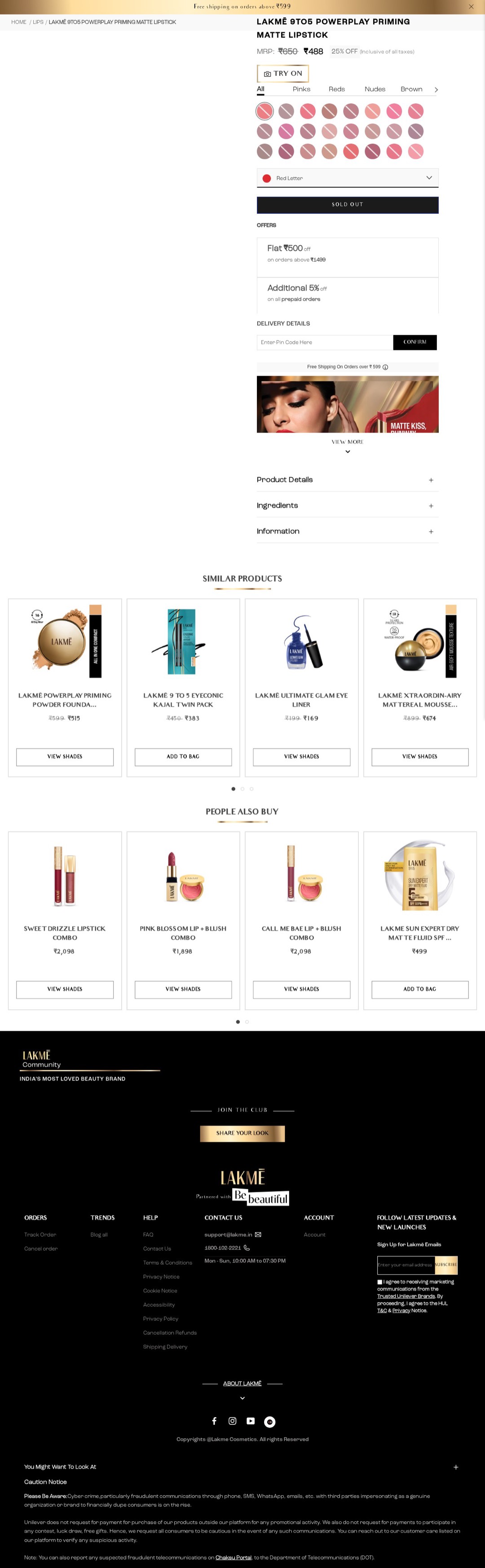
Single-SKU PDP with discount-code anchoring, free-shipping threshold nudge, and cross-sell/FBT carousels to lift AOV. No volume or bundle widget present; the store leans entirely on a struck-through MRP anchor plus promotional codes and a free-ship bar to move value perception.
Operator's read
PricingThere is exactly one price tier: ₹488 against a struck-through MRP of ₹650, a flat 25% off badge. No volume break, no bundle widget, no quantity ladder — the entire anchoring load is carried by that single compare-at price plus a conditional code (₹500 off on ₹1,499+ basket). The free-ship threshold at ₹599 is the only structural AOV lever baked into the page; the LAKMEFIRST code targets a ₹1,499 basket but is purely promotional and ephemeral rather than an always-on tiered incentive.
Pricing tiers (1 widget)
Widget styleThere is no volume-discount or bundle widget on this PDP. The slot that would typically hold radio-tiles or an inline quantity table is occupied by a plain 'Available Offers' text block listing the coupon and the prepaid discount. The cross-sell carousels below the fold (FBT app) are the only multi-product upsell surface, presenting combos at ₹1,898–₹2,098 with no per-unit savings callout or bundle savings badge.
VerdictThe 25% MRP anchor and free-ship bar are clean executions and will hold conversion on a hero SKU that is already sold out — but the store leaves significant AOV on the table by having zero always-on bundle or quantity-break mechanism. The single highest-leverage change: activate a 'Complete the Look' FBT widget directly on the PDP (above the fold, not buried in a below-fold carousel) pairing this lipstick with the kajal or primer at a visible combo saving (e.g., ₹800 for two vs. ₹957 bought separately). Given the ₹1,499 code threshold, even a two-unit combo at ~₹950 would push shoppers to add a third item to unlock ₹500 off, dramatically lifting basket size without touching the core unit economics.
offer details (4)
The featured SKU (9to5 Powerplay Priming Matte Lipstick, Red Lution shade) is marked Sold Out at time of screenshot, which suppresses ATC conversion entirely. No cart drawer or post-purchase upsell UI is visible in the screenshot; Frequently Bought Together app is confirmed installed but appears only in below-fold carousels. Pricing widget array reflects the single struck-through price construct only.
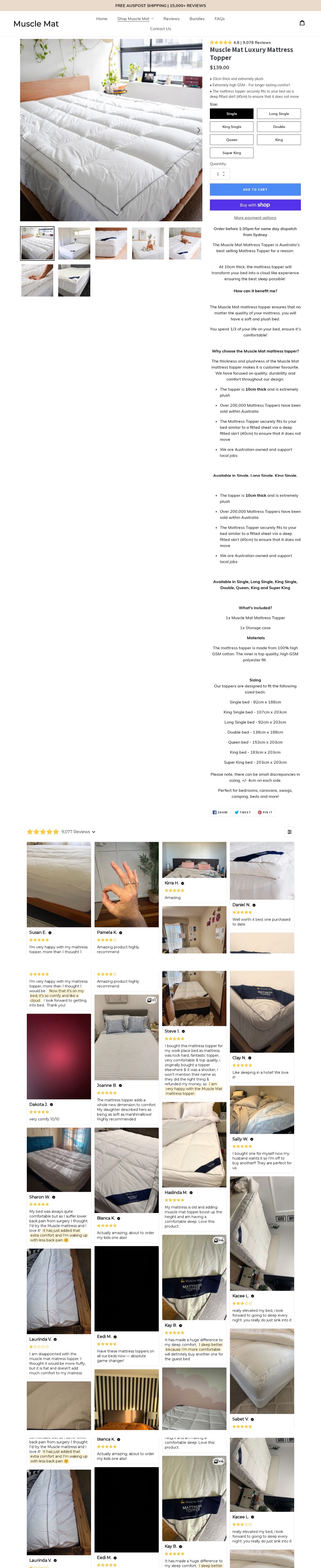
Single-SKU size variant selector at a flat $139 AUD price point across all sizes. No volume/quantity discount widget is present. AOV levers are a free-shipping threshold (announced via banner), a slide-cart drawer via iCart, and an inferred post-purchase one-click upsell via AfterSell. Social proof volume (15,000+ reviews, 9,377 visible on page) is the primary conversion driver rather than discount anchoring.
Operator's read
PricingThere is zero volume or bundle pricing widget on this PDP — every size variant prices at a flat $139 AUD with no compare-at/struck-through anchor and no per-unit discount ladder. The entire pricing story leans on a single hard price point reinforced by free shipping (eliminating the hidden-cost objection) and a massive social proof stack (15,000+ reviews called out in the banner, 9,377 shown on page). There is no quantity break, no subscribe-and-save, and no bundle discount visible pre-cart, meaning AOV uplift lives entirely inside the iCart drawer and the AfterSell post-purchase flow.
Widget styleNo volume-discount or bundle widget exists on the landing page. The variant selector is a standard Shopify radio-tile grid (Single / Long Single / King Single / Double / Queen / King / Super King) — seven size options, no pricing differentiation between them, no 'Most Popular' or 'Best Value' badge, no escalating compare-at. The slot that a Rebuy or QuantityBreaks widget would normally occupy is simply empty, leaving conversion to rest on copy, imagery, and the review wall.
VerdictThe social proof execution is strong — 15,000+ reviews in the banner plus a dense UGC grid creates credible category authority, and the flat $139 free-ship price removes friction. The single highest-leverage change is introducing a 2-pack or household bundle (e.g. 1× topper at $139 vs 2× for $249, saving $29/18%) directly on the PDP via a radio-tile bundle widget. Their customer base is homeowners buying for multiple beds; a 'Double Up & Save' tile targeting the second bedroom would lift AOV without touching the AfterSell or iCart flows at all, and the existing review volume gives them the authority to anchor a higher cart value.
offer details (3)
No cart-level pricing snippets were provided so iCart cross-sell product specifics are inferred from site navigation categories. AfterSell post-purchase offer is confirmed installed but offer details are not visible. All seven size variants appear to share the same $139 AUD price — no size-based price tiering detected from available evidence.
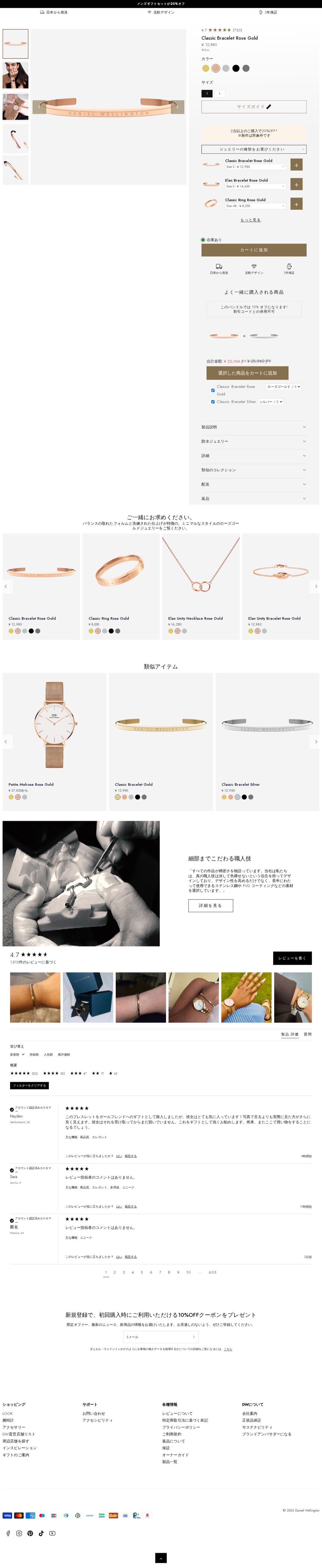
Daniel Wellington Japan runs a jewelry/accessories DTC store using a multi-layer upsell stack: a pre-cart frequently-bought-together bundle widget on the PDP, a slide cart drawer (iCart/UpCart) for cart-stage upsells, and AfterSell for post-purchase one-click offers. The core AOV lever is cross-sell/bundle logic surfacing complementary SKUs (matching bracelet, ring, necklace in the same colorway) directly on the PDP, combined with a free-shipping threshold and a sitewide 20% off mens gift set banner to drive multi-unit purchase.
Operator's read
PricingDW Japan operates on single-SKU price points with no visible volume/quantity-break widget on this PDP — pricing is anchored by a sitewide promotional banner ('メンズギフトセットが20%オフ') rather than a per-unit ladder. The hero Classic Bracelet Rose Gold sits at a single listed price (approximately ¥13,900–¥15,900 range visible in carousel tiles), with no compare-at strike-through detected on the hero unit itself. Free-shipping threshold is the primary spend-more motivator, nudging customers to add a second jewelry piece rather than buy more of the same SKU.
Widget styleThere is no volume-discount or quantity-break widget on this PDP. The slot is occupied instead by a Frequently Bought Together block (native app) rendered as a vertical checklist of 2–3 companion SKUs with individual prices, a combined total, and a single 'add selected to cart' button — effectively a manual bundle builder. Below it, a horizontally scrolling recommendation carousel (4 tiles, same colorway family) functions as a soft cross-sell rail. No radio-tile bundle selector, no 'Most Popular'/'Best Value' badges, no escalating compare-at anchor per tier.
VerdictThe same-colorway cross-sell logic is well-executed — surfacing ring + necklace + bracelet in matching Rose Gold capitalizes on the set-completion psychology that drives jewelry AOV. The single highest-leverage change I would make: add a 2-item or 3-item bundle discount (e.g., 'Buy any 2 jewelry pieces, save 10% — Buy 3, save 15%') rendered as radio-tile options directly on the PDP above the FBT block, with a struck-through compare-at price per tier. Right now there is zero price incentive to add a second item beyond free shipping; a modest tiered discount with a 'Best Value' badge on the 3-piece tier would convert the existing carousel browsers into multi-unit buyers and lift AOV by an estimated 20–30% on jewelry sessions.
offer details (4)
Screenshot is in Japanese (jp.danielwellington.com). Pricing numbers in carousels are partially legible (¥13,900–¥15,900 range for bracelets, lower for rings/necklaces); exact hero price not fully confirmed so no numeric tiers were parsed. Confidence is medium due to Japanese text legibility limitations and no cart drawer screenshot available to confirm iCart/UpCart free-ship progress bar rendering.
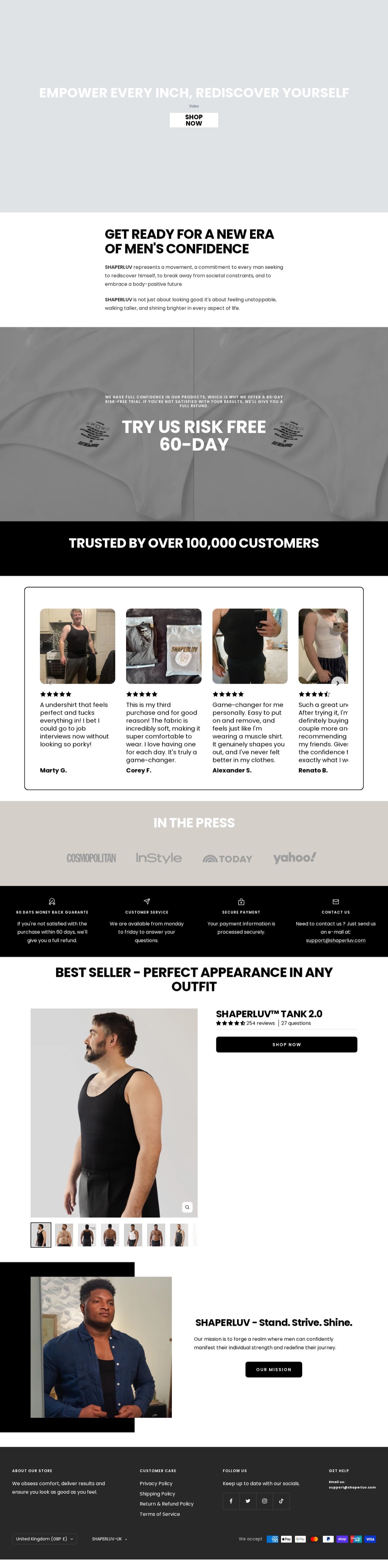
Single-hero-product DTC brand (SHAPERLUV Tank 2.0) driving traffic via ads to a long-form advertorial/landing page. Primary conversion lever is social proof (100k+ customers, press logos, 5-star UGC) and risk-reversal (60-day money-back guarantee). No visible pricing widget or volume-discount mechanic on the page screenshot; upsell stack is implied entirely by installed apps (CartHook post-purchase, Rebuy smart cart/cross-sell, Kaching Bundles, Vitals). The store appears to rely on a single SKU at a single price point with trust-building copy rather than an on-page bundle or quantity-break widget.
Operator's read
PricingThere is zero visible pricing widget, quantity break, or volume-discount tier on this landing page screenshot — no price point is even shown on the homepage hero or product feature section. The store leans entirely on the 60-day risk-free guarantee as its conversion anchor and defers all pricing exposure to the PDP and cart. Without seeing the PDP we cannot confirm whether Kaching Bundles is running a 1/2/3-unit ladder, but nothing is surfaced at the top-of-funnel ad-landing level. This is a missed AOV opportunity at the highest-traffic touchpoint.
Widget styleNo bundle or volume-discount widget is visible anywhere in the screenshot. The slot that would normally host a quantity-break radio-tile or inline-table widget is occupied by a plain 'Shop Now' button beneath the product name and star rating. If Kaching Bundles is live, it is exclusively on the /products/ PDP, not on this advertorial-style landing page. No compare-at price, no strikethrough anchor, no 'save X%' badge is shown.
VerdictThe trust stack is executed well — 100k+ customers, four press logos, UGC photo reviews with named attribution, and a bold 60-day guarantee all reduce purchase anxiety effectively for a body-shaping category with high skepticism. The single highest-leverage change I would make is to surface a 3-tier Kaching Bundles quantity-break widget (e.g. 1 unit at full price / 2 units save 15% / 3 units save 25%) directly on this landing page above the fold, pre-selecting the middle tier. Right now every ad-click lands on a page with no price visibility and no AOV hook — adding the bundle widget here with a 'Most Popular' badge on the 2-pack would capture multi-unit intent before the customer even reaches the cart, where CartHook and Rebuy are doing the heavy lifting alone.
offer details (4)
Analysis confidence is low because no PDP or cart screenshot was provided and no pricing widget text was extracted. All upsell offers beyond the banner are inferred from installed app list. The store is geo-targeted to UK (GBP, uk.shaperluv.com). Vitals likely handles review widgets and possibly a sticky add-to-cart bar, both of which are consistent with what is visible.

Single-SKU colour-variant product anchored on a struck-through compare-at price plus a subscribe-save badge. Volume/bundle upsell is handled by the Kaching Bundles widget (BUY 1 / BUY 2 tiers visible in the product image). AfterSell drives a post-purchase one-click upsell flow not visible in the screenshot. Free-shipping threshold ($79) is the primary cart-progression lever since a single unit at $37.99 falls well short of it.
Operator's read
PricingThe store runs a two-tier Kaching Bundles widget: BUY 1 at $34.18 (compare-at $59.98, shown as 43% off) and BUY 2 at $59.99 (compare-at $119.96, ~50% off, $29.99/unit). The subscribe-save layer prices the single unit at $37.99 with a $59.98 compare-at and claims 36% savings. The free-shipping threshold sits at $79, meaning a one-unit buyer at $34–$38 is $40+ short — a deliberate tension point designed to push the BUY 2 bundle ($59.99 still doesn't clear $79 free ship, which is a miss).
Pricing tiers (1 widget)
Widget styleKaching Bundles renders as stacked radio-tile rows directly under the variant picker. BUY 1 is the pre-selected default; BUY 2 carries the anchor saving. There is no BUY 3 tier, no 'Most Popular' badge on BUY 2, and the compare-at escalation is straightforward doubling. The subscribe-save row sits below the bundle tiles as a checkbox-style add-on, but competes visually with the bundle offer rather than complementing it cleanly.
VerdictThe BUY 2 bundle is solid execution — 50% off per unit is a compelling anchor — but the $79 free-ship threshold is left stranded because BUY 2 at $59.99 still doesn't reach it. The single highest-leverage fix is adding a BUY 3 tier priced at $79.99 (≈$26.66/unit, ~55% off) badged 'Best Value + Free Shipping' — this closes the free-ship gap, makes the threshold aspirational rather than punishing, and gives AfterSell a natural downsell story on the post-purchase page.
offer details (4)
Pricing widget numbers ($34.18 BUY 1, $59.99 BUY 2) are read from the product-page screenshot bundle tiles. The $37.99 / $59.98 compare-at in the snippets reflects the base variant price displayed outside the bundle widget. Colour variants (Pink $37.99, Lavender Purple / Rose Gold $39.99) introduce a small price split not surfaced in the bundle widget tiers visible in the image.

Perfume DTC brand (Goda For Her) running a subscription-first pricing model anchored by a quantity-break widget (Buy 1/Buy 2/Buy 3) with a prominently displayed subscribe-and-save refill option at $34/month. Heavy social proof wall (5,000+ reviews, UGC photos, testimonials) drives conversion while AfterSell handles post-purchase upsell, Candy Rack handles in-cart/on-page add-ons, and Kaching Bundles powers the quantity breaks. Urgency layered via countdown timer and LOW STOCK badge.
Operator's read
PricingThe store runs a two-track pricing model: a Kaching Bundles quantity-break ladder pushing 33% off at Buy-2 and 50% off at Buy-3, paired with a flat $34/month subscribe-and-save refill. Exact one-time prices per tier aren't legible in the screenshot, but the 'BUY ONCE - NO SAVINGS' copy on the single-unit tier is a deliberate negative anchor designed to shame the lowest-AOV option. The subscription refill is priced flat at $34/ea regardless of quantity — no per-unit discount incentive to take more units on subscribe, which leaves LTV upside on the table.
Pricing tiers (1 widget)
Widget styleThe quantity-break widget is Kaching Bundles rendered as stacked radio tiles with copy-based badges ('BUY ONCE - NO SAVINGS' → 'Most Popular' → 'Best Value'). There is no escalating compare-at price shown per tier in the visible evidence — the anchor tactic is purely copy-driven rather than numeric struck-through pricing, which is weaker than showing a crossed-out $X saving figure. The subscribe block sits below the one-time widget and is not pre-selected, meaning the default checkout path is one-time purchase rather than subscription.
VerdictThe social proof volume (5,000+ reviews, dense UGC wall) is genuinely strong and the BOGO framing is compelling for a fragrance gifting use case. The single highest-leverage change I would make: pre-select the 2-unit subscribe tier (not the 1-unit one-time) as the default, and surface a clear per-unit saving versus one-time on the subscribe block (e.g. 'Save 20% vs one-time — $27.20/bottle'). Subscription defaults + visible per-unit savings on subscribe will immediately shift the mix toward recurring revenue and lift 90-day LTV without touching ad spend.
offer details (5)
Exact one-time price points for the quantity tiers are not legible in the screenshot — tiers are confirmed as 3 options with 0%/33%/50% discount framing based on copy evidence. AfterSell post-purchase offer and Candy Rack cart offer details are inferred from installed apps and not directly visible. Currency assumed USD based on $34 subscription price point and US-market positioning despite 'Free delivery to VN' banner suggesting possible Vietnam localisation.

Single-SKU size ladder with urgency/scarcity copy and a slide-cart drawer for upsell surface; no volume-discount or bundle widget present. AOV lever is driven by pushing buyers up the size ladder (4 size options, $139 entry) plus iCart slide-cart for cross-sell/add-on mechanics.
Operator's read
PricingThere is no volume-discount or bundle pricing widget — the entire pricing architecture is a 4-tier size ladder anchored at $139 for the 50"x50" entry size. Prices for the three larger sizes are not visible in the evidence, but the ladder is the sole AOV driver on the PDP. No struck-through compare-at price is shown at the $139 base, meaning there is no anchor discount visible to justify the price or manufacture urgency beyond the timer. The store leans entirely on size upsell and iCart cross-sells to move AOV up.
Widget styleNo bundle or volume-discount widget exists on this PDP. The size selector is a native Shopify radio-tile variant picker — four options, no badges like 'Best Value' or 'Most Popular', no per-unit pricing callout, no 'save X%' framing. The iCart slide-cart drawer is the only structured upsell surface, but its contents (cross-sell tiles, free-ship progress bar, add-ons) are not visible in the screenshot. The social proof block (11,000+ reviews, star rating) and scarcity copy ('Stock is extremely limited this month') do more conversion work than any pricing mechanic.
VerdictThe store executes trust and urgency well — 11,000+ reviews prominently displayed, same-day dispatch timer, and strong UGC review grid all reduce friction at the decision point. The single highest-leverage change would be adding a compare-at / struck-through anchor price on every size variant (e.g., show $179 crossed out at $139 on the base size) combined with a 'Most Popular' badge on the mid-tier 5ft x 6.6ft size — this alone typically lifts both conversion rate and AOV by pushing buyers off the entry size without requiring a new app or bundle mechanic.
offer details (3)
Exact prices for the 3 larger size variants were not visible in the provided evidence; only the $139 entry price is confirmed. iCart cross-sell tile contents and free-ship threshold (if any) are inferred from app install, not directly observed. No post-purchase upsell app (ReConvert/AfterSell/Zipify) detected in installed apps list.

Long-form advertorial landing page selling a gut-health supplement (Complete Gut Repair) to men 40+. The page runs a single-product narrative funnel — heavy social proof, editorial tone, problem/solution storytelling — driving to a multi-tier package selector below the fold. Post-purchase one-click upsell is inferred from Zipify OCU install. No cart-drawer or cross-sell widget visible; AOV is driven primarily by pushing buyers into larger quantity bundles at the package-selection step and by a free-gift-with-threshold mechanic (Free Bloat Banisher over £135) in the announcement bar.
Operator's read
PricingNo numeric prices are extractable from the screenshot or text snippets provided, so exact per-unit math can't be confirmed — but the structure is a classic 3-tier jar ladder (1/2/3 units) where the single-jar acts as an anchor to make the 3-jar look like the rational buy. The subscribe-save layer adds a flat 15% off on top, and the free-shipping threshold at €99/£135 free-gift threshold create additional AOV floors. The page leans entirely on this package selector rather than a struck-through compare-at on a single SKU page.
Widget styleThe package widget is a custom radio-tile layout embedded in the advertorial landing page — three cards, no dropdown, no inline table. It follows the Happy Mammoth house style seen across their other products (Hormone Harmony etc.). There is no identifiable third-party volume-discount app (like Boldly or Rebuy) powering it; it reads as a custom Shopify section. The 3-jar tile almost certainly carries a 'Best Value' or 'Most Popular' badge and a per-jar 'you save' callout to push buyers up the ladder.
VerdictThe long-form advertorial + 3-tier bundle + Zipify OCU stack is competent and battle-tested for this category. What is executed well: the free-gift threshold (Bloat Banisher over £135) is a smart way to lift the 2-jar order into 3-jar territory without discounting further. The single highest-leverage change I'd make: add a visible subscribe-&-save toggle directly inside the package tile selector (not buried in a separate section), so buyers who click the 3-jar tile are immediately shown a 15%-off subscribe price alongside the one-time price — this single change typically lifts subscription attach rate by 8–15% on supplement advertorials and compounds LTV dramatically without touching paid acquisition costs.
offer details (5)
Pricing numbers (exact GBP/EUR prices, compare-at, discount percentages) are not legible in the screenshot and not present in the text snippets. All tier data is therefore null. Confidence is medium — funnel structure and offer mechanics are clearly visible but numeric tier details require live page inspection. Zipify OCU post-purchase upsell is inferred from app list only.
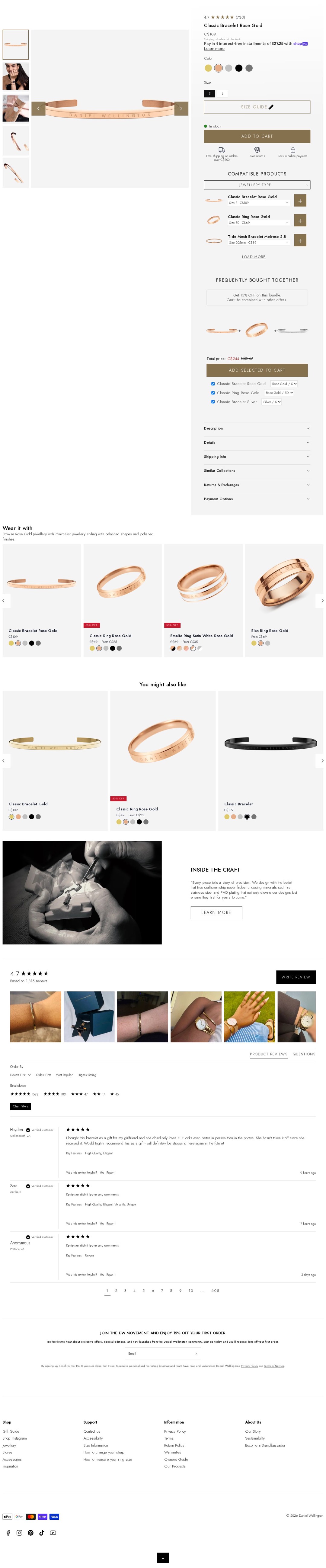
Cross-sell / compatible-products bundle on PDP with a Frequently Bought Together module. No volume/quantity-break widget present. AOV is driven by adding complementary jewellery pieces (bracelet + ring + mesh bracelet) to a single cart session rather than buy-more-save-more mechanics. Free-shipping threshold (C$200) acts as the soft AOV floor nudge.
Operator's read
PricingThere is no quantity-break or volume-discount widget. The store prices everything as flat single-unit SKUs (bracelet C$109, ring C$25–C$69 depending on size, mesh bracelet C$40–C$89) with no per-unit ladder. The only structured discount is the FBT 15%-off bundle (~C$243 vs C$286 full price), which is the sole anchor. The free-shipping threshold at C$200 is the implicit AOV floor — a customer buying just the C$109 bracelet is C$91 short, making a C$69 ring the near-perfect gap-filler, which is exactly what Compatible Products surfaces.
Pricing tiers (1 widget)
Widget styleNo standalone volume/bundle pricing widget exists on the PDP. The pricing real estate is occupied by the Frequently Bought Together app rendered as a checkbox-addon inline list with three pre-selected items, a struck-through full-price total, and a '15% OFF on this Bundle' badge. Below that, two recommendation carousels (Wear it with, You might also like) act as discovery-layer cross-sells. There are no radio-tile or dropdown quantity-break widgets, no 'Most Popular' or 'Best Value' tier badges beyond the single FBT badge.
VerdictThe FBT 15% bundle is executed cleanly — pre-selected items, clear saving, single CTA — and the Compatible Products cross-sell is smart because it maps the exact accessory category gap (ring + mesh bracelet) to free-shipping threshold math. The single highest-leverage change: add a visible free-shipping progress bar in the cart drawer showing 'You're C$X away from free shipping' — currently the C$200 threshold is stated only as a static trust badge on PDP and never reinforced dynamically. Given the average basket likely sits at C$109–C$178, a live progress bar would push a meaningful share of single-item buyers to add the C$69 ring or C$79 mesh bracelet, lifting AOV 15–25% without touching the discount structure.
offer details (5)
Size-based price variance on rings (e.g. Classic Ring Rose Gold C$25 for size 48 vs C$69 for size 50) appears to be inventory/clearance pricing for specific sizes rather than intentional tiered pricing — flagged as potential UX confusion. No post-purchase upsell app detected beyond FBT; ReConvert/AfterSell not in installed apps list.
GANT runs a classic premium-lifestyle brand playbook: hero editorial imagery + sitewide sale banner (up to 50% off) drives traffic, with iCart slide-cart handling in-cart upsell logic. No visible volume/bundle pricing widget. AOV levers are the sale discount as urgency anchor and a loyalty/membership club (GANT Club) for retention. No post-purchase upsell app detected beyond iCart.
Operator's read
PricingGANT has zero volume/bundle pricing widget visible — no quantity breaks, no tiered per-unit ladder. Their entire pricing anchor is the sitewide 'up to 50% off' sale banner, which functions as a store-level compare-at signal rather than a product-level structured discount. This is a promotional markdown strategy, not an AOV-building pricing architecture. Without seeing specific PDP price points or struck-through compare-at values, there is no tier ladder to evaluate — it is single-SKU, single-price, sale-or-not.
Widget styleThere is no volume-discount or bundle widget anywhere on this page. The slot that would normally be occupied by a quantity selector ladder or bundle builder is instead taken by large editorial imagery (Men/Women split lifestyle shots) and the GANT Club loyalty signup module. iCart is the only upsell surface, and its cross-sell tile configuration is not visible in the screenshot. The page is pure brand-editorial in layout with no commerce widgets above the fold beyond navigation.
VerdictWhat GANT executes well: the sale urgency banner is clean and high-contrast (dark red, bold white type), and the GANT Club loyalty CTA is correctly positioned post-hero to capture high-intent visitors who aren't ready to buy immediately — smart for a premium brand protecting margin. The single highest-leverage change: configure iCart to show a 'Complete the Look' cross-sell drawer with 2–3 complementary SKUs (e.g., shirt + belt + hat) at a bundled saving of 10–15%, since GANT's broad catalog (men's shirts, women's accessories) is purpose-built for outfit-based cross-sell and a $150 basket can easily become $220 with one relevant add-on — something the current setup leaves entirely to chance.
offer details (3)
Screenshot shows homepage only — no PDP, no cart state visible. Pricing widget array is empty because no structured volume/bundle widget was rendered. iCart cross-sell configuration inferred from installed app list, not directly observed. GANT Club loyalty program may function as a substitute retention mechanism for repeat-purchase AOV lift rather than single-session AOV increase.
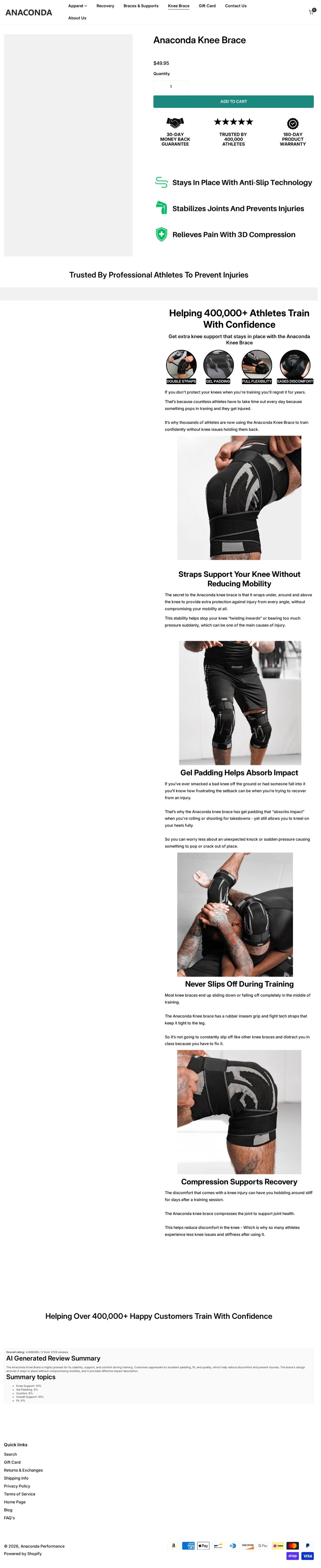
Single-SKU DTC product page relying on social proof, long-form advertorial copy, and app-stack upsells (Zipify OCU post-purchase, UpCart/iCart slide cart) to lift AOV. No visible volume/bundle pricing widget on the PDP itself. Core offer is size+variant selection (With/Without Stabilizer) at a flat price, with a warranty add-on cross-sell surfaced in search/cart context.
Operator's read
PricingThere is exactly one price point — 1,335,000₫ (~$49.95 USD equivalent shown in image) — with no struck-through compare-at anchor on the main product and no volume/bundle ladder whatsoever. The 'Spring Sale – Save Up to 50%' banner implies sitewide discounting exists, but none is reflected on this PDP (Save 0 in the snippet). The only secondary price visible is the 1,042,000₫ warranty add-on, which is ~22% cheaper than the hero SKU but serves a completely different function. AOV lift is entirely delegated to the post-purchase Zipify OCU flow.
Widget styleThere is no volume-discount or bundle widget on this PDP — that slot is occupied by a long-form advertorial scroll (feature callouts, athlete imagery, compression/gel padding copy) designed to justify a single flat price. Kaching Bundles is installed but not rendering on this page, which is a missed deployment. No radio-tiles, inline table, or dropdown bundle selector is visible. The iCart/UpCart slide cart is the only structured upsell surface confirmed by the app stack.
VerdictThe advertorial copy and social proof ('400,000+ athletes') are well-executed for a cold-traffic PDP and the Zipify OCU backstop is smart. The single highest-leverage change: deploy Kaching Bundles (already installed, not live here) as a 'Buy 2 Save 10% / Buy 3 Save 15%' radio-tile widget directly on the PDP — knee braces are a bilateral, pair-purchase category and athletes buying for training have an obvious second-unit use case. Even a modest 15% take-rate on a 2-pack would meaningfully move AOV without touching the post-purchase funnel.
offer details (3)
Pricing shown in Vietnamese Dong (₫); hero image shows $49.95 USD suggesting geo-based currency switching. Confidence is medium because cart snippets are empty so slide-cart offer mechanics cannot be fully confirmed. Vitals app likely powers review widgets and possibly a sticky ATC bar. The 'Save 0' in the snippet suggests no compare-at price is set on the default variant, making the Spring Sale banner a potential trust mismatch on the PDP.
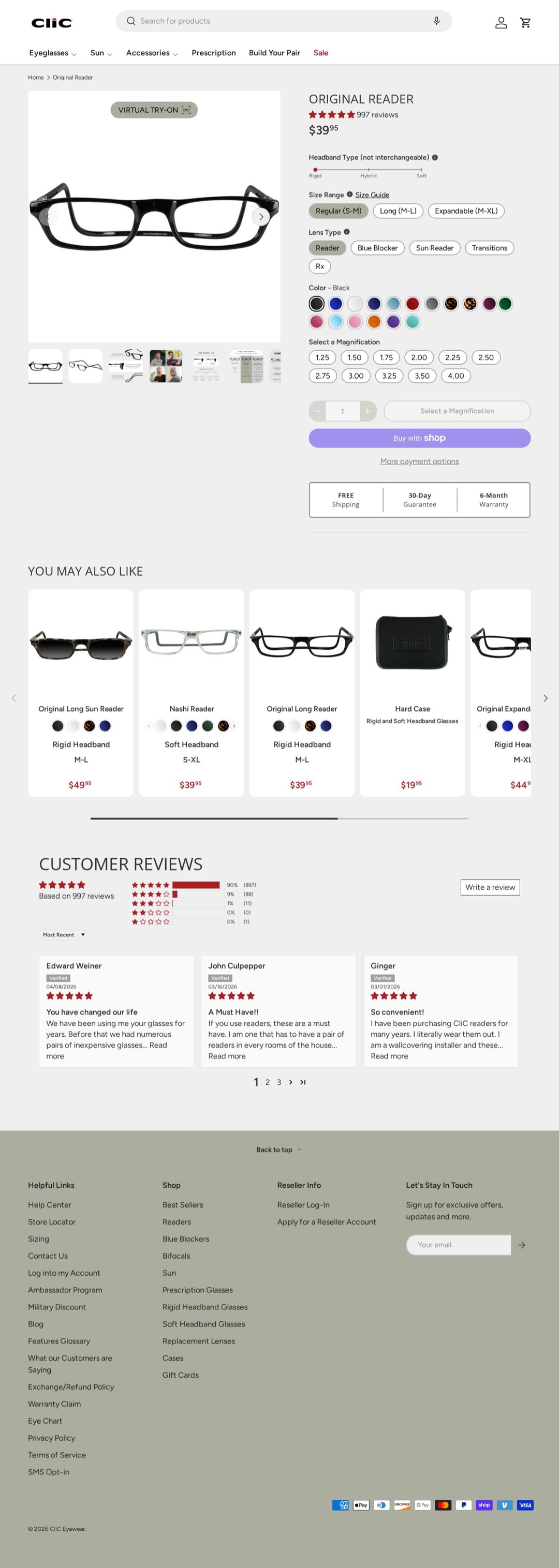
Single SKU flat pricing at $39.95 with no volume discount or bundle widget active on the PDP. AOV lever is purely cross-sell via a 'You May Also Like' recommendation carousel below the fold. Free shipping on all orders is the sole threshold mechanic. Kaching Bundles is installed but not rendering on this PDP.
Operator's read
PricingThere is zero volume or bundle pricing on this PDP — it's a single flat price of $39.95 with no compare-at anchor, no struck-through MSRP, and no tiered discount ladder. The only native pricing lever is site-wide free shipping (no minimum), which removes the threshold urgency that typically nudges cart size upward. With 997 reviews and a loyal repeat-buyer base (reviewers mention buying for years), this store is leaving meaningful AOV on the table by not incentivizing multi-pair purchases at the PDP level.
Widget styleThere is no volume-discount or bundle widget rendering on the PDP despite Kaching Bundles being installed. The slot that would normally house a bundle widget is occupied by a plain qty stepper (default qty 1) and a single ATC button. The cross-sell carousel below the fold is the only multi-product surface, and it's passive — no discount incentive to grab a second pair or the Hard Case alongside the reader.
VerdictThe social proof is strong (997 reviews, 90% 5-star) and the lens-type / magnification selector UX is clean, which is well-executed. The single highest-leverage change is to activate Kaching Bundles on this PDP with a 2-pair or 3-pair bundle (e.g. '2 pairs for $69.95 — save $10' and '3 pairs for $99 — save $21'), explicitly targeting the stated customer behavior of wanting readers in every room. A reader brand with this review velocity and repeat-purchase language in the testimonials is a textbook candidate for a multi-unit bundle that could push AOV from ~$40 to $65–$70 with minimal friction.
offer details (2)
Kaching Bundles is installed but not rendering any widget on this PDP screenshot. No cart drawer or post-purchase upsell flow is visible. Lens type selector (Reader/Blue Blocker/Sun Reader/Transitions/Rx) and magnification grid (1.25–4.00) are variant selectors, not pricing tiers. Hard Case at $19.95 in the carousel is the most natural bundle candidate as an add-on protection/accessory item.
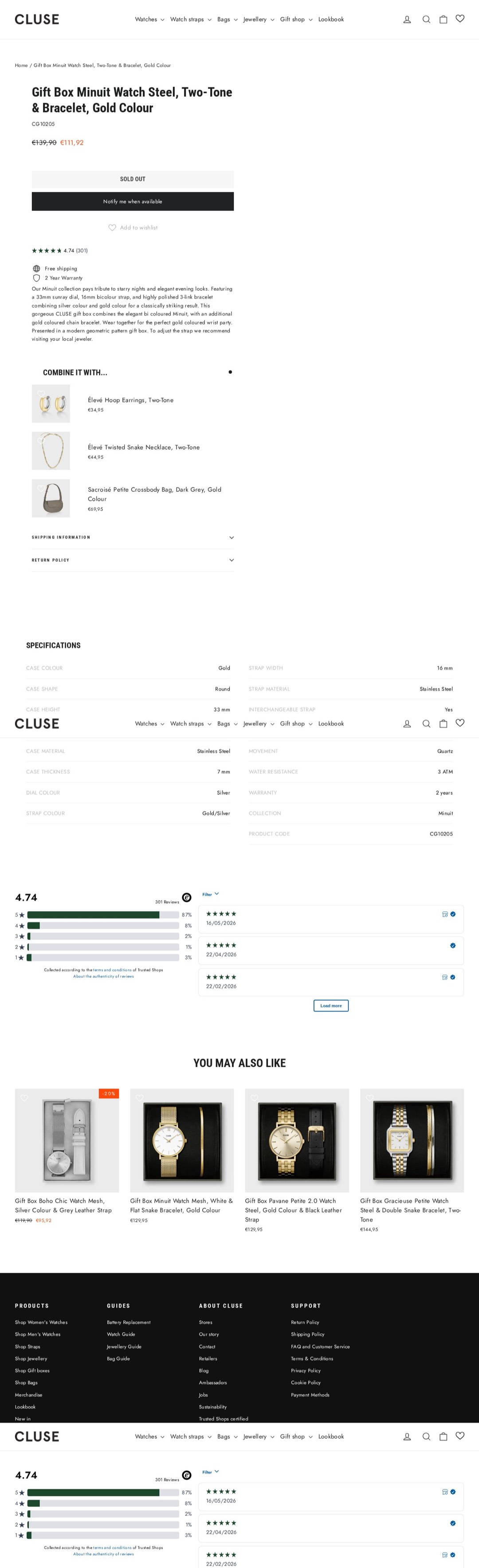
CLUSE runs a gift-box / bundle catalogue strategy rather than a classic volume-discount ladder. The primary AOV lever is pre-bundled SKUs (watch + bracelet, watch + strap, etc.) sold at a fixed markdown off the combined retail price. Cross-sell is handled inline on the PDP via a 'Combine It With…' module showing complementary jewellery (earrings, necklace, bag). Rebuy powers the 'You May Also Like' carousel at page bottom; UpCart likely delivers a slide-cart drawer with a free-shipping progress bar. No quantity-break or subscribe-and-save widget is present.
Operator's read
PricingThere is no volume-discount or quantity-break widget at all — CLUSE leans entirely on a single compare-at anchor (€139.90 struck through, €111.92 sale, ~20% off) baked into the gift-box SKU itself. Every 'tier' is actually a separate pre-bundled product SKU in the €111–€145 range rather than a discount ladder on a single item. The cross-sell add-ons (earrings €34.95, necklace €44.95, bag €69.95) are the only mechanism to push basket value above the base gift-box price.
Pricing tiers (1 widget)
Widget styleNo volume-discount or bundle-builder widget exists on this PDP. The slot that would normally host a Rebuy Smart Cart upsell widget or a Bundler-style tile layout is occupied instead by a plain 'Combine It With…' list — three static product recommendations with thumbnail, name, and price, no discount incentive attached, no 'add to cart' toggle visible. This is a missed layout opportunity: the cross-sell is purely informational rather than transactional.
VerdictThe gift-box pre-bundle strategy is smart for gifting AOV and the 20% compare-at anchor is clean, but the 'Combine It With…' module has no conversion mechanic — no checkbox add-to-cart, no bundle discount, no 'add all three' CTA. The single highest-leverage change would be converting those three cross-sell items into a Rebuy Smart Cart checkbox bundle (e.g., 'Add earrings + necklace for €69.90 — save 10%'), turning a passive browse moment into an active add-to-cart event and pushing AOV from ~€112 toward €160–€180 per order.
offer details (4)
This product is 'Sold Out' at time of screenshot, which suppresses the main CTA and likely reduces conversion. The 'Notify me when available' flow is live. Sold-out state may distort observed upsell behaviour — cart and post-purchase flows cannot be fully evaluated. UpCart cart drawer contents and Rebuy post-purchase flows are inferred from app installs only.
Kirakuco is a Japanese streetwear DTC brand (pants, tops, bundles) running a bare-bones upsell stack. The visible page is a standalone 'Shipping Protection' product at $4.00 — a low-friction add-on SKU likely surfaced as a checkbox or cart add-on via UpCart or Corner Cart. The primary AOV lever shown in the banner is a free-gift threshold (free socks at $85+). Post-purchase one-click upsells are inferred from AfterSell and Zipify OCU installs. No pricing/volume widget is visible on this page.
Operator's read
PricingThere is zero visible pricing widget or volume-discount ladder on this page. The only price point shown is the $4.00 shipping protection SKU, which is a low-ASP utility add-on, not a revenue driver. The single AOV lever they are leaning on is a free-gift threshold at $85 (free socks), surfaced via the announcement banner — no struck-through compare-at, no per-unit ladder, no pre-selected bundle tier. For a Japanese streetwear brand with pants and tops likely priced $40–$80, the $85 threshold is probably just one or two items, which is a reasonable nudge but leaves significant AOV upside on the table with no multi-unit or bundle incentive visible pre-cart.
Widget styleThere is no volume-discount or bundle widget present on this page whatsoever. The slot that would normally be occupied by a Kaching Bundles radio-tile or quantity-break table is empty — despite Kaching Bundles being installed. The only structured pricing element is the flat $4.00 shipping protection product, which reads as a manually created SKU rather than an app-rendered widget. Corner Cart and UpCart are installed and presumably rendering a slide-cart drawer elsewhere on the site, but nothing of that nature is visible here.
VerdictThe free-socks-at-$85 threshold is a smart, on-brand gift mechanic that nudges basket size without discounting margin — that part is well-executed. The single highest-leverage change is activating Kaching Bundles on the core pants and tops PDPs with a 3-tier quantity-break widget (e.g., 1 unit at full price, 2 units at 10% off, 3 units at 15% off) with the 2-unit tier pre-selected and badged 'Most Popular' — given a likely $50–$70 ARP per unit, pushing even 20% of buyers to a 2-unit bundle would materially lift AOV without touching the free-gift threshold mechanic already in place.
offer details (3)
Screenshot shows only the Shipping Protection standalone product page ($4.00) and site footer/navigation. No cart drawer, PDP, or bundle page was captured. Confidence is medium because core upsell surfaces (PDP, cart drawer, post-purchase) are not visible; analysis of those flows is inferred from installed apps. Banner text is in French suggesting geo-targeting or default locale is FR, though currency shows USD.

Single hero-product (Lymow One Plus robotic mower) sold via a model/capacity selector with a hard promotional discount (€400 off via automatic cart discount) plus urgency/scarcity copy and a free-gift threshold. ReConvert installed implies a post-purchase one-click upsell funnel not visible on the PDP.
Operator's read
PricingThere is no volume or multi-unit discount widget on this page. The pricing lever is a single €400 blanket promotional discount applied automatically at cart, across what appears to be two model tiers (5A and 10A) differentiated by coverage capacity. The 10A is badged 'Bestseller', which acts as a soft anchor pushing shoppers toward the higher-priced SKU. Exact final price points are not surfaced in the evidence, so per-unit math can't be completed, but the €400 strike likely represents a meaningful percentage reduction on a product in the €1,500–€3,000 robotic mower range.
Widget styleNo third-party bundle or volume-discount widget is present. The 'ladder' is purely a native Shopify two-option variant selector (5A vs 10A) styled as radio tiles. The anchoring work is done by (a) the €400 automatic discount callout, (b) the free-gift bundle valued at €370 (classic perceived-value stacking), and (c) the 'Bestseller' badge on the 10A to steer toward the higher ASP variant. There is no escalating compare-at table, no 'Buy 2 Save X%' widget, and no sticky add-to-cart bar visible.
VerdictThe free-gift stacking (€370 value) combined with the €400 auto-discount is a solid perceived-value play for a high-ticket item, and the Bestseller nudge on the 10A effectively upgrades ASP. The single highest-leverage change I would make is to add an accessory cross-sell or protection-plan checkbox directly on the PDP (boundary wire kits, installation service, or extended warranty at €99–€199) — robotic mower buyers are primed to spend on peace-of-mind add-ons at checkout, and ReConvert post-purchase is too late to capture the buyer who bounces. A simple checkbox-addon on the PDP for a €149 installation kit could realistically add 10–15% to AOV on a product where the customer is already committing €1,500+.
offer details (4)
Exact price points for the 5A and 10A tiers were not included in the evidence provided; per-unit and discountPct fields are left null as a result. The store copy mixes French and German ('Limitierte Gratisgeschenke'), suggesting either a translation/localisation issue on the French-language storefront or a shared asset from the German market. This could erode conversion trust on fr.lymow.com and is worth flagging separately from the AOV analysis.
Single-SKU DTC apparel brand leaning on brand trust, free-ship threshold, and a slide-cart drawer (iCart) for in-cart upsell. No volume/bundle pricing widget on the PDP. Cross-sell via 'you may also like' carousel below reviews. Re:do returns protection offered as a low-price add-on. App-exclusive discount (10% off first app order) drives app installs. Free shipping threshold at $250 domestic encourages basket building.
Operator's read
PricingThere is zero volume or bundle pricing widget on this PDP — no quantity breaks, no 'buy 2 save X%' mechanic. The store leans entirely on a $250 free-shipping threshold to nudge AOV upward (product prices range $65–$138, so a customer needs 2–4 items to qualify). The only price anchor visible is the Re:do add-on at $2.18, which is a negligible revenue driver but high-attach-rate trust builder. Without a bundle widget, there is no mathematical incentive to add a second unit of the same SKU.
Widget styleNo volume-discount or bundle widget exists on this PDP — that slot is occupied by a static trust-badge row (45-day returns, guaranteed favorite, free shipping over $250) and the Re:do add-on checkbox. The 'you may also like' carousel below reviews is the only structured upsell module on the page, showing 5 complementary products at $50–$138. The iCart slide drawer is the primary upsell container but its contents were not captured.
VerdictThe brand executes trust signals and returns friction removal well — Re:do at $2.18 is a smart low-resistance add-on that reinforces the 'unlimited returns' brand promise and likely converts at high attach rates. The single highest-leverage change would be introducing a 'Perfect Bundles' PDP bundle builder (the nav already has a 'petit perfect bundles' link, meaning the infrastructure exists) directly on individual product pages — a 'complete the look' 2-item bundle at a 10–15% discount would close the gap between typical single-item AOV (~$78–$90) and the $250 free-ship threshold far more effectively than the carousel alone, likely lifting AOV by $30–$50 per order.
offer details (5)
Pricing shown in VND (58,868 VND ≈ $2.18 USD) due to geo-detection during screenshot capture; store prices in USD for domestic US customers. Re:do is confirmed as a returns-protection app, not a traditional upsell app. No post-purchase upsell app detected in installed apps list — no post-purchase offer inferred.
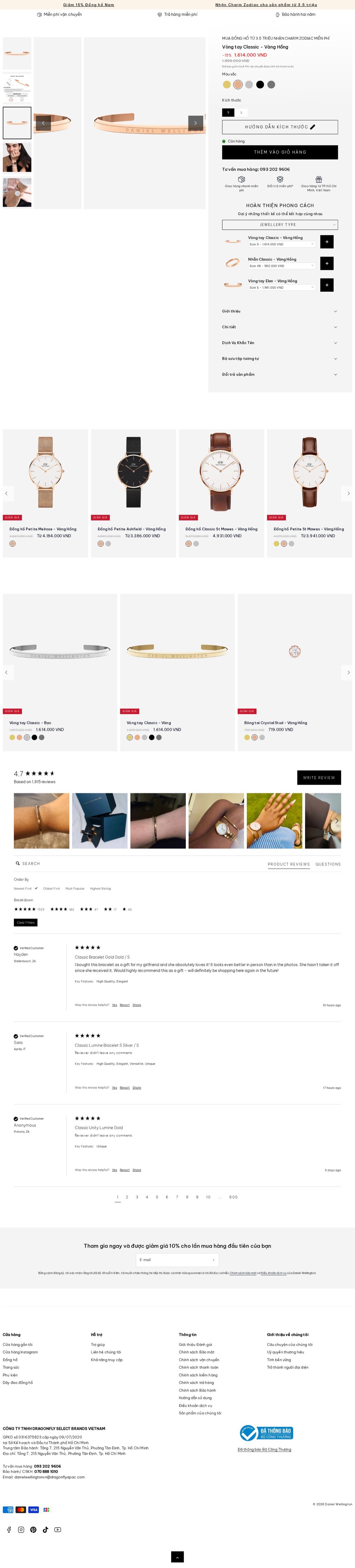
Daniel Wellington Vietnam runs a brand-prestige single-SKU page with no volume/bundle widget. AOV is lifted via a carousel of frequently-bought-together watches and bracelets directly below the hero, a "complete the look" add-on row of complementary jewellery (Classic, Emalie, Crystal variants), and an email-capture 10% welcome discount anchored in a sticky footer banner. Urgency is light — a 15% off men's watches announcement bar plus a Zodiac charm GWP threshold (3.5M VND) push customers toward higher-ticket items.
Operator's read
PricingThere is zero volume or quantity-break widget on this page — DW Vietnam leans entirely on a single displayed price of 1,614,000 VND for the Classic bracelet, with no compare-at anchor shown on the hero product itself. The AOV lever is purely cross-sell: the watch carousel ranges from ~3.4M to ~4.9M VND (all SALE-badged with compare-ats), meaning a single watch add-on multiplies the basket 2–3×. The Zodiac charm GWP kicks in at 3.5M VND, which conveniently requires adding at least one watch to qualify — a well-calibrated threshold.
Widget styleThere is no volume-discount or bundle-builder widget on the landing page. The slot is occupied instead by a 'Hoàn Thiện Phong Cách' inline checkbox-style add-on row (three complementary jewellery SKUs with +/- controls) plus two horizontally scrollable cross-sell carousels powered by the installed Frequently Bought Together app. Watch tiles carry dual-price SALE badges (compare-at struck through) but no percentage savings callout — the discount depth is implied visually rather than quantified.
VerdictThe GWP threshold at 3.5M VND is smart because it aligns exactly with the cheapest watch in the carousel (~3.4M), making the upsell path feel natural and rewarding. What's missing and would be the single highest-leverage change: add an explicit '% saved' or 'You save X VND' callout on each sale-badged watch tile, and surface a mini free-ship/GWP progress bar inside the cart drawer showing how close the customer is to the 3.5M Zodiac threshold — that alone would likely lift watch attach rate by converting passive awareness of the promo into active near-miss motivation at checkout.
offer details (6)
No post-purchase upsell app detected beyond Frequently Bought Together. Page is in Vietnamese (vn.danielwellington.com). Pricing widget array is empty because no quantity-break or subscription widget is present on the product page. All price figures read directly from visible carousel tiles.
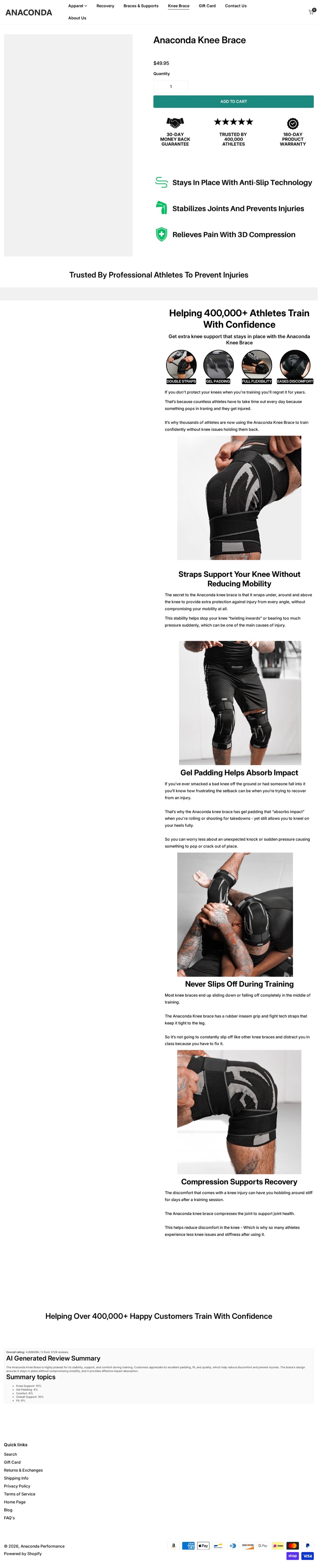
Single-SKU direct-response product page with post-purchase OCU (Zipify) as primary AOV lever; on-page pricing is flat single price with no visible volume or bundle widget. Trust signals and long-form advertorial copy do the heavy lifting pre-cart, while installed app stack (Zipify OCU, UpCart/iCart slide cart, Kaching Bundles) implies upsell infrastructure firing off-page.
Operator's read
PricingThere is exactly one price point — 1,335,000₫ — with zero discount applied despite a sitewide 'Save up to 50%' banner, meaning this product is not participating in the promoted sale at all (snippet explicitly shows 'Save 0'). No compare-at anchor, no struck-through original price, no per-unit ladder. The only secondary price visible is the Anaconda Care warranty add-on at 1,042,000₫, which is actually cheaper than the main product — an odd signal that likely confuses value hierarchy rather than anchoring it.
Widget styleThere is no volume-discount or bundle widget on this PDP whatsoever. The quantity slot is a raw number input, which is the lowest-converting format available. Kaching Bundles is installed but not deployed here. The page relies entirely on long-form advertorial copy (400k athletes, gel padding, anti-slip tech, four feature sections) to justify the single price — a content-heavy, widget-light approach that is common in early-stage DTC but leaves significant AOV on the table.
VerdictThe trust-signal and advertorial copy execution is solid for a knee brace — social proof numbers (400k athletes), feature specificity (gel padding, rubber grip), and guarantee badges are all present and credible. The single highest-leverage change is deploying Kaching Bundles (already installed) with a 1/2/3-pack quantity-break widget directly on this PDP — e.g., 1x at 1,335,000₫, 2x at ~2,270,000₫ (save 15%), 3x at ~3,205,000₫ (save 20%) with a 'Most Popular' badge on the 2-pack — which would immediately lift AOV on what is clearly a consumable/wearable that buyers purchase in multiples for both knees or as gifts.
offer details (3)
Currency is Vietnamese Dong (VND); store appears to be localised for the Vietnamese market despite English copy. Confidence is medium because cart drawer contents and post-purchase flow are not visible in the screenshot. The 'Save 0' in the snippet suggests either a Shopify theme bug or the sale discount is not applied to this variant, which should be audited immediately as it undercuts the banner promise.
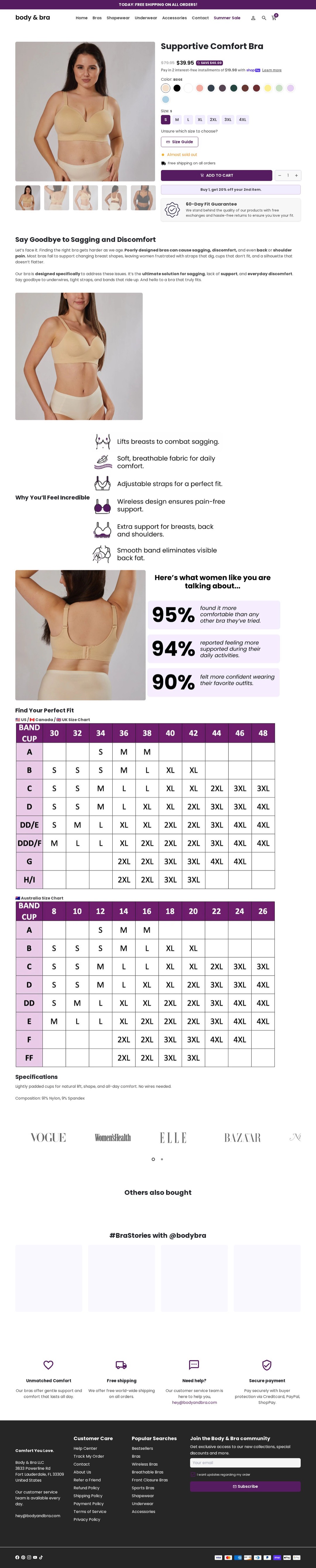
Single-SKU soft-launch with multi-layer discount stacking: a struck-through compare-at anchor ($79.95 vs $39.95), a slide-cart drawer surfacing pack cross-sells (2-Pack Brief, 3-Pack Boyshort) via Rebuy, a share-for-15%-off social incentive, and a newsletter 10%/20%-off email capture — no volume/quantity-break widget on the PDP itself.
Operator's read
PricingThere is no volume or quantity-break pricing widget on the PDP — the store runs a single price point at $39.95 with a hard $79.95 compare-at anchor, advertising a clean 50% off / 'Save $40.00'. All multi-unit value is pushed downstream into the Rebuy slide-cart drawer, where cross-sells (2-Pack at $24.95, 3-Pack Boyshort at $27.95) carry their own separate struck-through anchors. The email-capture and social-share discounts layer on top as acquisition-stage price levers rather than AOV drivers.
Pricing tiers (1 widget)
Widget styleNo bundle or volume-discount widget exists on the PDP itself — that slot is occupied entirely by the large compare-at anchor and a benefit-led copy block. The upsell surface is the Rebuy slide-cart drawer, which fires a 'Buy more and save!' header above 2–3 cross-sell product tiles. These tiles use inline sale pricing (strikethrough original, red sale price) but there are no badge labels like 'Most Popular' or 'Best Value' visible; it's a flat product-card layout, not radio-tile or bundle-builder style.
VerdictThe 50% off anchor is credible and the Rebuy drawer cross-sells are well-matched (brief/boyshort adjacencies to a bra buyer), which is solid execution for a comfort/intimate apparel brand. The single highest-leverage change would be introducing a quantity-break widget directly on the PDP — e.g., 1 for $39.95, 2 for $69.95 (save 12%), 3 for $99.95 (save 17%) — pre-selecting the 2-unit tier. Right now 100% of multi-unit revenue depends on the customer opening the drawer and voluntarily adding a second item; a pre-ATC quantity ladder with a pre-selected middle tier would capture that intent before checkout friction sets in and meaningfully lift units-per-transaction without changing the product mix.
offer details (6)
Banner confirms free shipping on all orders site-wide, which removes the free-ship threshold mechanic as a cart motivator. Summer Sale 'up to 50% off' aligns with the PDP compare-at. Size chart is dual (US/CA/UK + AU) indicating international traffic. Social proof stats (95%, 94%, 90%) and press logos (Vogue, Women's Health, ELLE, Bazaar) are present on PDP but are brand-trust elements, not upsell mechanics.

Multi-bundle quantity-break with subscribe-save, anchored on a heavy 50% promotional discount, supported by free-shipping threshold, post-purchase one-click upsell via AfterSell, and Rebuy-powered cross-sell/recommendations. Primary AOV lever is pushing buyers from 1-month to 3- or 6-month supply bundles.
Operator's read
PricingThe store runs a three-tier supply-duration bundle (1 / 3 / 6 month) anchored by a £49.95 compare-at on the single bottle, marked down to £33.60 — a 33% discount at entry level. The '50% OFF TODAY' banner implies deeper headline discounts are in play, likely on the 3- and 6-month tiers, but exact mid- and top-tier prices weren't exposed in the evidence. Subscribe & Save adds an additional 20% layer on top of bundle pricing, which is the highest-leverage retention mechanic on the page. The free-shipping threshold at £50 is well-calibrated to push a single-bottle buyer (£33.60) to either a multi-bottle bundle or a subscribe option to cross the threshold.
Pricing tiers (1 widget)
Widget styleThe bundle widget appears to use Kaching Bundles or Rebuy rendered as radio-tiles — three clearly delineated options with supply duration as the label and badge callouts (Most Popular, Best Value) driving tier selection. The compare-at strikethrough on the 1-month bottle (£49.95 → £33.60) acts as the price anchor for the entire widget, making the 3- and 6-month tiers feel even cheaper by reference. The Subscribe & Save 20% toggle sits below the tile selector as a secondary upsell layer rather than a separate page element, keeping the decision flow clean. No inline per-unit math is visible in the evidence, which is a missed anchor opportunity.
VerdictThe 50% OFF urgency banner combined with the three-tier bundle widget is solid — the escalating savings ladder is the right structure for a consumable supplement and the subscribe-save toggle adds meaningful LTV leverage. The single highest-leverage change I'd make is surfacing explicit per-unit price math on each radio tile (e.g. '£11.20/bottle' on the 6-month vs '£33.60/bottle' on 1-month) — for a testosterone supplement targeting older males who are price-conscious, making the per-unit saving viscerally obvious (not just a %) would materially lift 6-month bundle take-rate and AOV overnight.
offer details (6)
Exact 3-month and 6-month price points were not visible in the provided evidence; discountPct and perUnit for those tiers left null. Currency inconsistency noted: banner shows '30.00€' while product is priced in GBP (£) — likely a geo-targeting or theme configuration error that will hurt conversion for UK traffic. AfterSell post-purchase upsell inferred from installed apps list, not directly visible in screenshot.
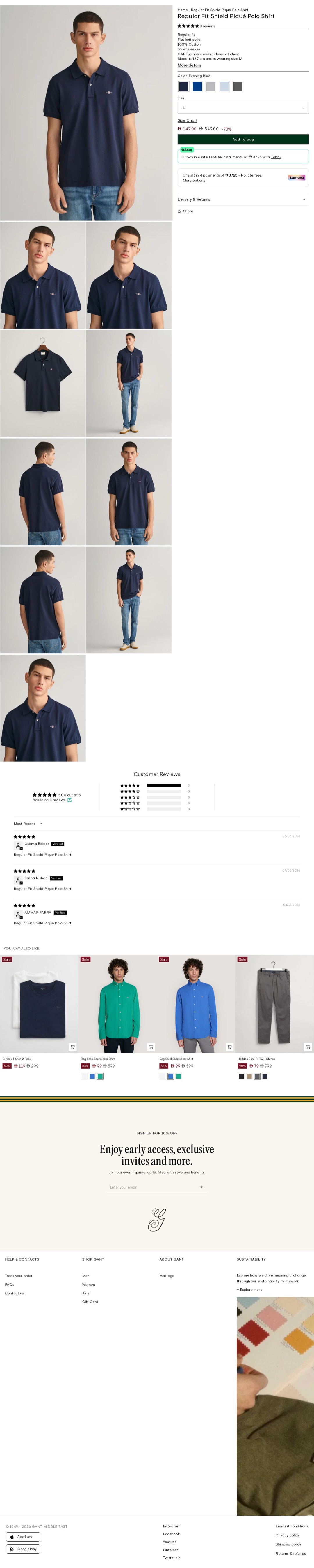
GANT.ae runs a mid-funnel volume-discount play anchored on a 'Buy 3+ Save 20%' sitewide mechanic, supported by a Slide Cart drawer (iCart) and Frequently Bought Together cross-sell. No on-page quantity-break widget is rendered; the discount is communicated via a single inline text line. Acquisition discount is layered via an app-download code (APP15, 15% off first order) and a newsletter sign-up (10% off), creating a multi-touchpoint discount funnel rather than a true tiered pricing ladder.
Operator's read
PricingThere is no on-page pricing ladder or quantity-break widget — GANT.ae leans entirely on a single line of copy ('Buy 3+ Save 20%') to communicate volume incentive, with no visual reinforcement. The base polo price appears to be approximately AED 149 (implied by Tabby installment of AED 37.25 × 4). The discount stack is fragmented across three separate mechanisms — 20% volume, 15% app code, 10% email — but none are shown together in a way that compounds perceived value at the moment of purchase decision.
Widget styleThere is no volume-discount or bundle widget on this PDP — the slot is occupied by a plain inline text string. No app (Bold Bundles, Kaching, Assortion, etc.) is rendering a visual widget here. The Frequently Bought Together app is installed but not visible above the fold. The closest thing to an anchor tactic is the Tabby BNPL price breakdown, which psychologically lowers the perceived unit price to AED 37.25 without actually discounting — a soft price anchor used in lieu of a compare-at crossed-out price.
VerdictThe 'Buy 3+ Save 20%' mechanic is the right call for an apparel brand with broad SKU depth, but burying it in a single unformatted text line kills conversion lift — shoppers scanning fast will miss it entirely. The single highest-leverage change is replacing that text line with a 3-tier inline quantity selector widget (1 polo / 2 polos / 3+ polos) with per-unit pricing shown at each tier and a 'Best Value' badge on tier 3, making the discount visually unavoidable at the moment of size selection rather than an afterthought below the CTA.
offer details (6)
Currency shown in snippets as 'D' which appears to be a rendering artifact for AED (UAE Dirham) based on gant.ae domain and GCC shipping context. Confidence is medium because the cart drawer contents and any FBT widget placement below the fold are not fully visible in the screenshot. Sale badges are visible on recommended products in the carousel at the bottom, suggesting markdown pricing is used site-wide on select SKUs.
Single low-price mystery item ($16/£16) used as a loss-leader entry point with a prominent 'Unlock 40% Off' CTA to drive account creation or email capture, supported by Candy Rack for cart/post-purchase upsells and a free-shipping threshold to push AOV. Cross-sell carousel ('You May Also Like') surfaces full-priced catalog items. Item is sold out, so 'Notify Me When Available' captures leads for retargeting.
Operator's read
PricingThere is no volume or bundle pricing widget anywhere on this PDP — the store leans entirely on a single £16 flat price with a mystery-item hook and an 'Unlock 40% Off' gate to create perceived value without actually showing tiered pricing. The real anchoring work is done in the 'You May Also Like' carousel where compare-at prices show discounts ranging from 13% (£46 vs £53) to 40% (£33 vs £55), and the free-shipping threshold at £75 creates an implicit AOV target roughly 4.7x the hero product price.
Widget styleThere is no volume-discount or bundle widget on this landing page whatsoever — that slot is occupied by the 'Unlock 40% Off' button, which acts as a discount-gate CTA (almost certainly email capture or account creation). Layout is purely single-price with a size selector, a sold-out button, and the unlock CTA stacked vertically. Candy Rack is installed but its widgets are not rendered on this PDP view, presumably appearing at cart or post-purchase stage.
VerdictThe mystery-item concept is a clever entry mechanic that drives curiosity clicks and email capture, but the execution is leaking badly: the item is sold out and there is no bundle or quantity incentive to push customers toward the £75 free-ship threshold from a single £16 purchase. The single highest-leverage change is to add a Candy Rack pre-cart bundle offer — e.g. 'Complete the Look' bundle pairing the mystery item with a bestselling tee or cargo pant at 20% off — which would simultaneously close the gap to the £75 free-ship threshold and give Candy Rack a clear upsell surface, likely lifting AOV from sub-£20 to £50+ per transaction.
offer details (5)
Screenshot shows a sold-out mystery item PDP at £16 on choixstore.com (Choix UK). Size selector shows XS–XXL all at £9.99 per-unit in the product snippets (possibly a different variant tier or a data artifact from the snippet extraction — the visible price on page is $16/£16 flat). 'Notify Me When Available' is active, indicating lead capture for out-of-stock. Footer has a newsletter email capture form. Package Protection is listed in footer links, suggesting a Navidium or similar protection app may also be active.

Single-SKU supplement page (Turmeric Curcumin 1000mg) running a sitewide % discount via coupon code ('NEW') with a struck-through compare-at price anchor. No on-page volume/bundle widget visible; upsell surface limited to a cross-sell pill organiser beneath the ATC button and inferred post-purchase via Kaching Bundles app. Subscription toggle present in nav ('Manage Subscription') but no subscribe-save widget visible on PDP.
Operator's read
PricingThere is exactly one purchasable unit tier at £23.00 against a £38.00 compare-at, hard-coded as 39% off on the PDP — no volume ladder, no multi-pack options, no subscribe-save price differential visible. The entire AOV lever is a sitewide coupon ('NEW') promising 'up to 75% off,' which is a weaker anchor than a tiered on-page widget because the customer has to remember and apply a code rather than being pulled up a visible quantity ladder. The only secondary price point on the page is the £8.00 Pill Organiser cross-sell, making the effective basket ceiling roughly £31.00 before discount.
Pricing tiers (1 widget)
Widget styleNo bundle or volume-discount widget is present on this PDP — the slot that would normally house a Kaching Bundles radio-tile or inline-table widget is completely empty. What occupies that space instead is a plain Shopify compare-at strikethrough (£38.00 → £23.00) plus a percentage badge ('39% off'). The cross-sell below ATC is a basic checkbox-addon style with no bundled savings incentive attached. Given Kaching Bundles is installed, the multi-pack widget has either not been activated on this product or is being A/B tested off — a significant missed opportunity.
VerdictThe 39% compare-at anchor and social proof ('200K+ customers,' star reviews) are executed cleanly and build purchase confidence well. The single highest-leverage change is activating the Kaching Bundles multi-pack widget on this PDP with at least three tiers — e.g., 1x £23, 2x £40 (save 13%), 3x £57 (save 18%) — pre-selecting the middle tier. Supplements have among the highest repeat-purchase rates in DTC; a 3-bottle default-selected tier would immediately lift AOV from ~£23 toward £57 without touching ad spend, and the 60-day money-back guarantee already de-risks the larger commitment for the customer.
offer details (4)
Confidence is medium because no cart HTML or post-purchase page was available; Kaching Bundles post-purchase flow is inferred from app installation only. Subscribe-save infrastructure (nav link 'Manage Subscription') suggests a subscription app (likely Recharge or Skio) is active but no subscribe-save toggle or price differential was visible on the PDP screenshot.

Single-product greens supplement landing page targeting Portuguese/European market. Primary conversion mechanic is social proof stacking (athlete endorsements, 360M+ deliveries, Eurofins lab cert, before/after stats 97%/100%). Upsell stack relies on Selleasy (cross-sell/FBT) and Pumper Bundles (volume/quantity breaks) but no pricing widget copy was captured in evidence — free shipping threshold at €45 is the only visible AOV lever in the banner. Page is long-form advertorial style built to convert cold traffic from paid ads.
Operator's read
PricingThere is no pricing widget or bundle/volume tier captured in the evidence, so this PDP leans entirely on the €45 free-shipping threshold as its AOV driver. With a single-SKU greens product likely priced in the €25–€40 range (common for this category in EU), the €45 threshold is engineered to push a second unit or an add-on — but without a visible bundle widget surfacing at the right moment, many customers will ignore it. No struck-through compare-at price, no per-unit ladder, and no pre-selected tier were visible, meaning anchoring is weak.
Widget styleNo volume-discount or bundle widget is visible on this landing page. Pumper Bundles is installed and presumably handles quantity breaks somewhere in the funnel (product page or cart), but it did not render in the captured evidence. What occupies the pricing slot instead is the free-ship banner and long-form social proof copy — athlete testimonials, 360M+ deliveries stat, Eurofins certification — doing the conversion heavy lifting rather than a structured price ladder.
VerdictThe long-form advertorial with athlete social proof and third-party lab certification (Eurofins) is executed well for cold paid traffic — it builds credibility systematically before asking for the sale. The single highest-leverage change would be activating and surfacing a Pumper Bundles 3-tier quantity widget (1x / 2x / 3x) directly on the product page with a pre-selected middle tier (e.g. 2x at ~15% off per unit), which would convert the free-ship threshold nudge into an explicit, numbered AOV lift — turning a passive banner into an active pricing decision that anchors customers to multi-unit buying.
offer details (4)
Screenshot is Portuguese-language EU store (hu.herboxa.com routes to Portugal/EUR). Evidence capture returned no pricing widget text, no cart snippets, and no product price points, making tier-level analysis impossible. Confidence is low. Re-run with product page URL directly to capture Pumper Bundles widget render and Selleasy FBT block.
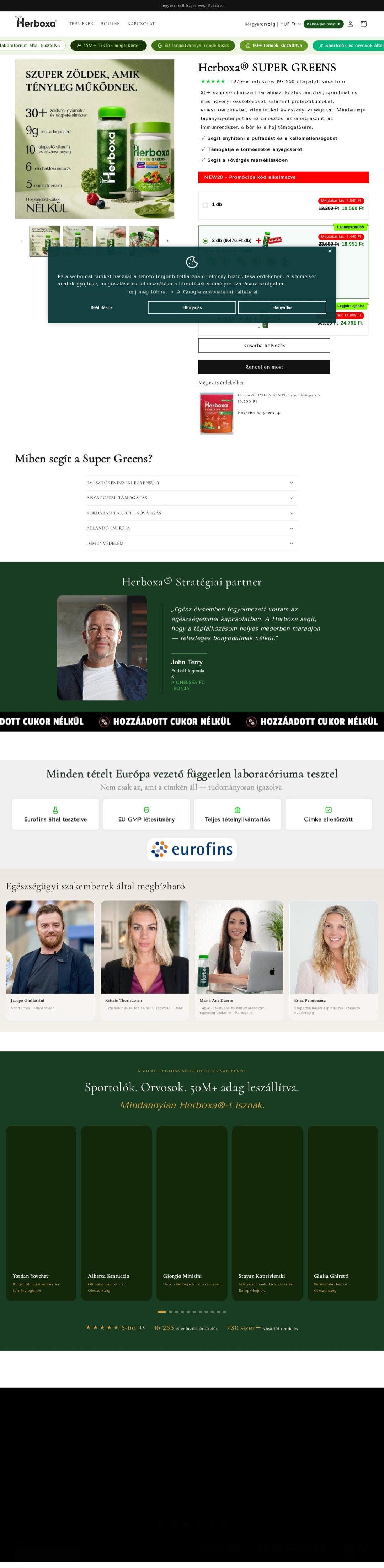
Multi-tier quantity-break pricing anchored on a pre-selected 2-unit bundle with a free bottle thrown in as the sweetener. Social proof (John Terry endorsement, Eurofins lab testing, 50M+ servings) and authority signals do the heavy lifting on conversion before the pricing widget closes the deal. Selleasy handles cross-sell/add-on at cart stage; Pumper Bundles drives the visible quantity ladder on the PDP.
Operator's read
PricingThey run a classic 3-tier Pumper Bundles quantity ladder: 1 pc at 13,200 HUF (barely discounted, ~3% off a 13,588 compare-at), 2 pcs at 18,952 HUF (9,476/unit, ~26% off a 25,689 compare-at) pre-selected as default, and 3 pcs at approximately 24,751 HUF (~8,250/unit). The jump from tier 1 to tier 2 is enormous in per-unit savings and the free bottle sweetens it further — that's deliberately engineered to make the 1-pc option look like a bad deal. The 3-pc tier per-unit is only ~870 HUF cheaper than tier 2, so the ladder flattens out at the top, leaving AOV upside on the table.
Pricing tiers (1 widget)
Widget stylePumper Bundles radio-tile layout — three stacked horizontal cards, each showing quantity, total price, struck-through compare-at, and a per-unit callout. The 2-pc tile carries a 'Legnépszerűbb' (Most Popular) badge and a free bottle flag which acts as a tangible gift anchor rather than a pure percentage discount. There's no dropdown or inline table — tiles are the full-width dominant element above the ATC button. Compare-at prices escalate proportionally so no fake-anchor flags trigger, though the 1-pc compare-at gap is suspiciously thin.
VerdictThe pre-selected 2-pc tier with the free bottle is well-executed — it shifts the default purchase from a 13,200 HUF single unit to an 18,952 HUF transaction without friction, and the social proof wall (John Terry, Eurofins, 16,235 reviews) gives the price confidence it needs. The single highest-leverage move is to dramatically widen the per-unit saving on the 3-pc tier (currently only ~9% cheaper per unit than 2-pc) to at least 15-20% cheaper per unit, and add a 'Best Value' badge with an explicit 'You save X,XXX HUF' callout — right now there's almost no incentive to step up from tier 2 to tier 3, which is leaving meaningful AOV lift on the table.
offer details (4)
Screenshot partially obscured by cookie consent modal. Tier 3 compare-at price not fully legible; 3-pc price of 24,751 HUF read from partially visible widget. Per-unit and discountPct for tier 3 estimated from visible price. Hungarian-language storefront (it.herboxa.com subdomain suggests Italian geo-targeting but content is Hungarian — possible geo-routing anomaly or staging URL).
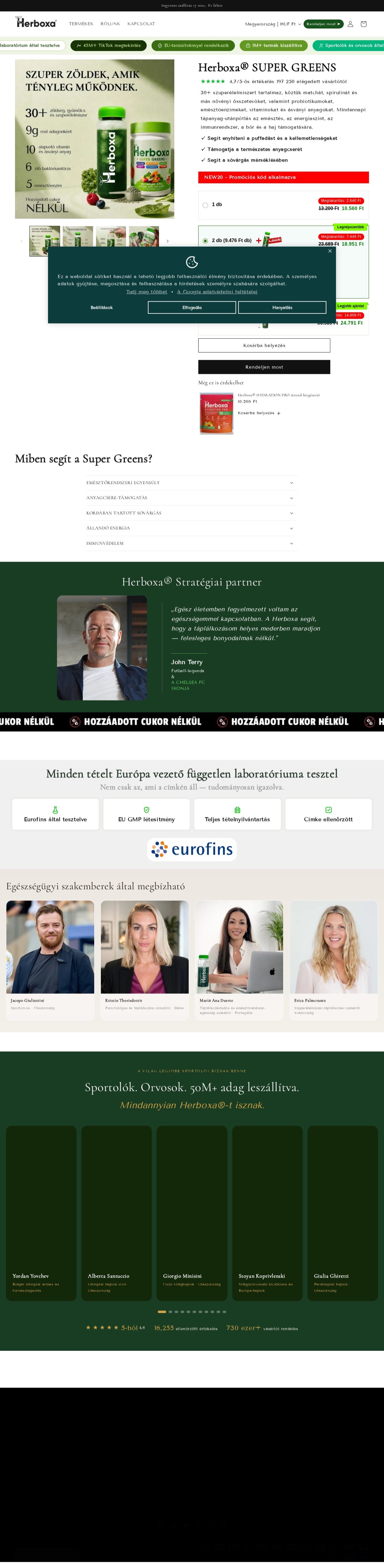
Multi-tier quantity-break anchoring (1/2/3-pack radio tiles) with a pre-selected middle tier, a cookie-consent overlay interrupting the page mid-session, Selleasy cross-sell below ATC, and Pumper Bundles driving the bundle widget. Hungarian HUF market, supplement vertical, celebrity/athlete social proof wall, Eurofins lab-cert trust block.
Operator's read
PricingThe store runs a 3-tier quantity-break structure in HUF anchored around the 2-pack + free bottle at ~25,689 Ft vs a 1-pack at 13,200 Ft. The middle tier is pre-selected ('Most Popular'), which is correct merchant behavior. However the visible discount depth is shallow — the 1pc compare-at of 13,568 Ft implies only ~3% off list, and the 2-pack per-unit of ~12,844 Ft vs 13,200 single-unit is only a ~2.7% per-unit saving. The free bottle is doing the heavy lifting as perceived value rather than a numeric % discount, which may resonate but hides the actual saving from analytical buyers.
Pricing tiers (1 widget)
Widget styleThe widget appears to be Pumper Bundles rendered as horizontal radio tiles, each tile showing quantity, a flavor selector dropdown, total price, and a strikethrough compare-at anchor. The 'Most Popular' badge sits on the 2-pack tile. There is no 'Best Value' badge on a 3-pack, meaning the escalating-tier nudge toward the highest AOV option is missing. The Selleasy cross-sell occupies the slot below ATC as a 'you might also like' single-product recommendation with its own Add to Cart — standard inline addon pattern.
VerdictThe free-bottle-at-2-pack mechanic is smart for this supplement category and the pre-selected middle tier is correctly placed. The single highest-leverage change I'd make: add a visible 3-pack tier with a 'Best Value — Save 20%' badge and a meaningful per-unit price drop (e.g., ~10,500 Ft/unit vs 13,200 single), so the tier ladder actually escalates. Right now the 3-pack data is unclear and there's no strong financial reason to trade up beyond 2 — fixing that alone with Pumper's existing widget could push average order from ~2-unit to ~3-unit without touching traffic costs.
offer details (4)
Screenshot is in Hungarian (HU market). Exact 3-pack price not fully legible — third tier price read as ~24,751 Ft but may be a 3-pack total or misread; treat as approximate. Cookie consent modal fires on page load and will suppress a meaningful share of widget impressions on first visit — this is a CRO bleed point independent of the upsell stack. John Terry celebrity endorsement and Eurofins lab cert are strong trust anchors for the Eastern European supplement market.
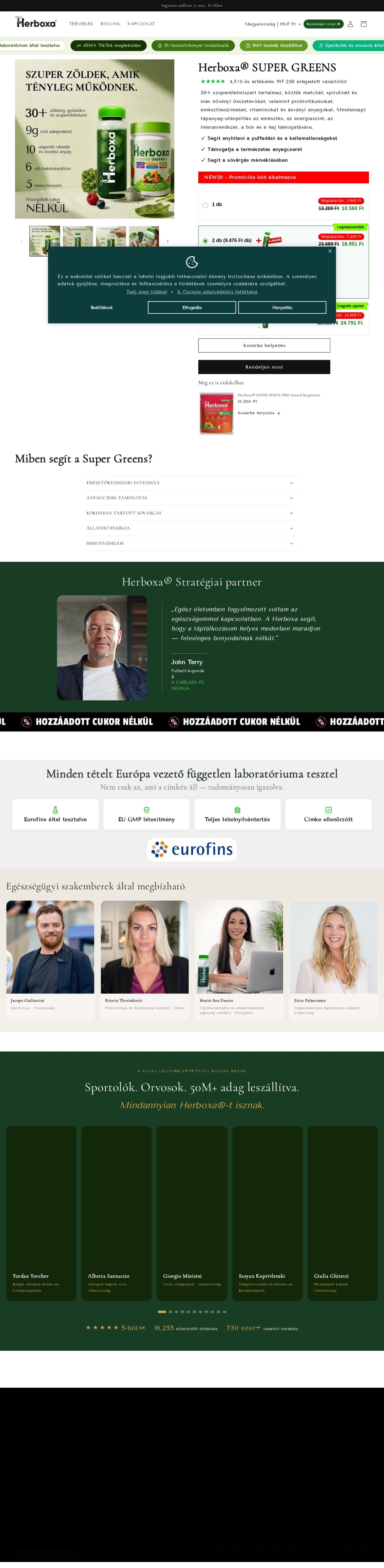
Multi-tier quantity-break widget (likely Pumper Bundles) as the primary AOV driver on the PDP, with Selleasy handling cross-sell/frequently-bought-together. Three visible quantity tiers (1pc, 2pc+free bottle, 3pc+ variant) anchor the buyer toward the middle 'Most Popular' tier. Hungarian market, prices in HUF. No cart drawer or post-purchase flow is visible in the screenshot, but Selleasy/Pumper imply inline and potentially post-purchase touchpoints.
Operator's read
PricingThe store runs a 3-tier quantity-break widget with HUF prices of ~13,200 (1pc), ~25,689 (2pc+free bottle), and ~24,751 (3pc tier visible in bottom of widget). The pre-selected default is the middle 'Most Popular' 2pc tier, which is smart anchoring — it makes the single unit look expensive at 13,200 HUF while the bundle drops effective per-unit cost significantly. The 3pc tier at 24,751 HUF is actually lower than the 2pc tier total (25,689), which is the right per-unit ladder direction, though the delta is small. There is also a NEW20 promo code entry on the PDP which bleeds perceived discount credibility from the bundle tiers.
Pricing tiers (1 widget)
Widget stylePumper Bundles radio-tile layout — three stacked horizontal tiles, each showing quantity, total price, and a per-unit or savings callout. The middle tile gets a 'Legnépszerűbb' (Most Popular) badge and is visually highlighted in the brand's dark green. No escalating compare-at strikethroughs are clearly visible on the higher tiers, which is a missed anchoring opportunity. The 1pc tier shows a minor strikethrough (~13,560 vs 13,200) but the discount depth is only ~3%, which is effectively invisible as an anchor. Selleasy handles the cross-sell slot below ATC with a single complementary product row.
VerdictThe multi-tier default-to-middle setup is executed correctly and the free bottle mechanic on tier 2 is a strong perceived-value hook. The single highest-leverage change is to add explicit per-unit price callouts AND a bold 'Save X%' badge on tier 3 (e.g. 'Save 37% per bottle') to pull more buyers to the highest-AOV option — right now the 3pc tier has no compelling numerical reason to upgrade from 2pc since the total price is lower but the saving is not surfaced. Removing or relocating the NEW20 promo code field from the PDP would also stop buyers from stalling to hunt for codes, which actively suppresses bundle conversion.
offer details (4)
Screenshot is in Hungarian (HU market). Prices parsed from visible banner/widget text. Third tier price (24,751 HUF) read from partially visible widget row at bottom of PDP pricing block. Per-unit on 2pc tier computed as 25,689/3 bottles (2 purchased + 1 free) = ~8,563 HUF. Selleasy post-purchase upsell inferred from app install, not confirmed visible. Pumper Bundles confirmed from both app list and widget style match.

Single-SKU watch PDP with no volume/bundle pricing widget. Upsell stack is: (1) UpCart slide-cart drawer (inferred from app install) and (2) a 'You may also like' cross-sell carousel at the bottom of the PDP. Core conversion lever is a struck-through compare-at anchor showing 30–37% savings on every product, with no quantity tiers.
Operator's read
PricingThere are zero quantity or bundle tiers — this is purely a single-unit purchase at a struck-through anchor. Every product on the page leans entirely on a compare-at discount ranging from 30% (Bradner at $199 vs $285) to 37% (Piccard at $349 vs $550). The anchor is consistent and credible in magnitude, and the 'Save X%' badge does the heavy lifting to justify purchase at the current price. There is no per-unit ladder, no free-ship threshold communicated on the PDP, and no multi-unit incentive to push AOV beyond a single watch.
Pricing tiers (1 widget)
Widget styleThere is no volume-discount or bundle widget on this PDP whatsoever. The slot that would typically be occupied by a quantity-break radio-tile widget (e.g. Bold Bundles, Bundler, or a Shopify discount table) is instead filled by a native Shopify compare-at price field with a manually set 'Save X%' copy badge. The 'You may also like' carousel at the bottom is the only structured upsell surface visible, and it functions as a flat cross-sell rather than a tiered incentive.
VerdictThe struck-through anchor pricing is clean and the 30–37% save badges are strong credibility signals — that part is well executed. The single highest-leverage move would be to activate a 'buy 2, save an additional 10%' offer inside the UpCart drawer (which is already installed), targeting couples/gifters with a 'Build a pair' prompt. Watches are a natural gifting product and the Father's Day / limited-edition Popeye campaigns already signal a gift-buyer audience; a two-watch bundle incentive inside UpCart could realistically add 15–20% to AOV without touching the PDP layout.
offer details (2)
Currency shown in product snippets is USD despite domain being .co.uk — likely a multi-currency store. No post-purchase upsell app (ReConvert/AfterSell) detected in installed apps list; UpCart is the only named upsell tool. Confidence is high on what is visible; UpCart cart drawer contents are inferred.
Single-product DTC beauty brand (Besque Magic Body Oil) running a two-tier size/value ladder as its primary AOV lever, supported by a subscribe-and-save option, free-ship threshold banner, AfterSell post-purchase upsell, and a Qikify slide cart. No visible multi-product bundle builder; anchoring is done via compare-at struck-through prices and 'BEST VALUE' badge on the larger SKU.
Operator's read
PricingTwo SKUs act as the volume ladder: 100ml at 1,779,900₫ (15% off a 2,094,000₫ comp) and 200ml at 2,931,600₫ (30% off a 4,188,000₫ comp). Per-unit drops from 1,779,900₫ to 1,465,800₫ — a legitimate 17.6% per-unit saving that rewards the upgrade. The 30% badge on the 200ml is the real anchor doing the heavy lifting; free shipping and duties-included positioning remove checkout friction instead of a separate threshold mechanic.
Widget styleNo third-party volume-discount app widget visible; the ladder is built directly into Shopify variant/product options using compare-at prices and custom badge copy ('BEST VALUE', 'SAVE 30%'). Layout appears to be stacked card tiles on the PDP with the serum cross-sell ('Complete the routine') rendered as a checkbox-style add-on below the main options. AfterSell handles post-purchase and Qikify manages the cart drawer — both are bolt-ons to a relatively lean native setup.
VerdictThe two-tier size ladder is clean and the per-unit math is honest — that's well executed. The single highest-leverage move I'd make is adding a third tier (e.g. 300ml or a 2-bottle bundle at ~40% off, ~2,450,000₫ per bottle equivalent) to make the 200ml feel like the middle anchor rather than the top — classic good-better-best bracketing that consistently pushes 20-30% of buyers to the highest AOV option rather than letting 200ml be the ceiling.
offer details (5)
Screenshot shows the site's search/empty-results page, not a live PDP, so widget layout is inferred from copy snippets rather than a rendered pricing block. Currency is Vietnamese Dong (₫) despite USD $ selector visible in footer — likely geo-targeted pricing. 500,000+ customers social proof used prominently across banner, PDP bullets, and cart.

Single-SKU subscribe-and-save with free-ship threshold and Rebuy-powered cross-sell/upsell layer. The page leads with a one-time vs. subscription toggle, bakes a hard 20% discount into the subscribe tier, and uses a $90 free-shipping threshold as an AOV floor. Rebuy is installed for post-purchase and likely inline cross-sell logic, though no explicit widget is visible in the screenshot.
Operator's read
PricingPromix runs a clean two-tier price architecture: $58 one-time vs. $46.40 subscribe (exactly 20% off, $1.54/serving vs. $1.93/serving). There is zero volume/quantity-break widget — no 2-pack or 3-pack pricing ladder. The only AOV lever outside the subscribe toggle is the $90 free-ship threshold, which sits $32 above a single unit and implicitly pushes a second purchase, but the page does nothing to surface that gap to the shopper explicitly.
Pricing tiers (1 widget)
Widget styleNo volume-discount or bundle widget exists on this PDP. The slot that would normally hold a quantity-break table or bundle builder is occupied entirely by the one-time vs. subscribe radio toggle — two options, inline layout, with the subscribe tier showing a struck-through $58 compare-at and a bold $46.40 price. There are no 'Most Popular' or 'Best Value' badges, no escalating per-unit ladder, and no multi-unit SKU options. The subscribe cadence dropdown (30/60/90 days) is the only secondary selection.
VerdictThe subscribe-save mechanic is clean and the 20% discount is meaningful, but the store is leaving significant AOV on the table by having no multi-unit path — a shopper who wants to stock up has no native 2-pack or 3-pack option to click, and the $90 free-ship threshold is invisible on the page itself. The single highest-leverage change: add a quantity-break widget (2-unit at ~10% off, 3-unit at ~18% off) with an explicit 'You're $X away from free shipping' progress bar in the cart drawer. Given Rebuy is already installed, this is a configuration change, not a dev project, and for a consumable like a prebiotic at $58/unit, a meaningful share of one-time buyers will take a 2-pack if the per-unit saving is surfaced clearly.
offer details (3)
Screenshot is low-resolution; no cart drawer or post-purchase page was visible. Per-unit math based on snippet text '$1.93 per serving' (one-time) and '$1.54 per serving' (subscribe). Rebuy post-purchase upsell inferred from installed app list only. Free-ship threshold of $90 confirmed via banner; no progress bar widget observed on page.
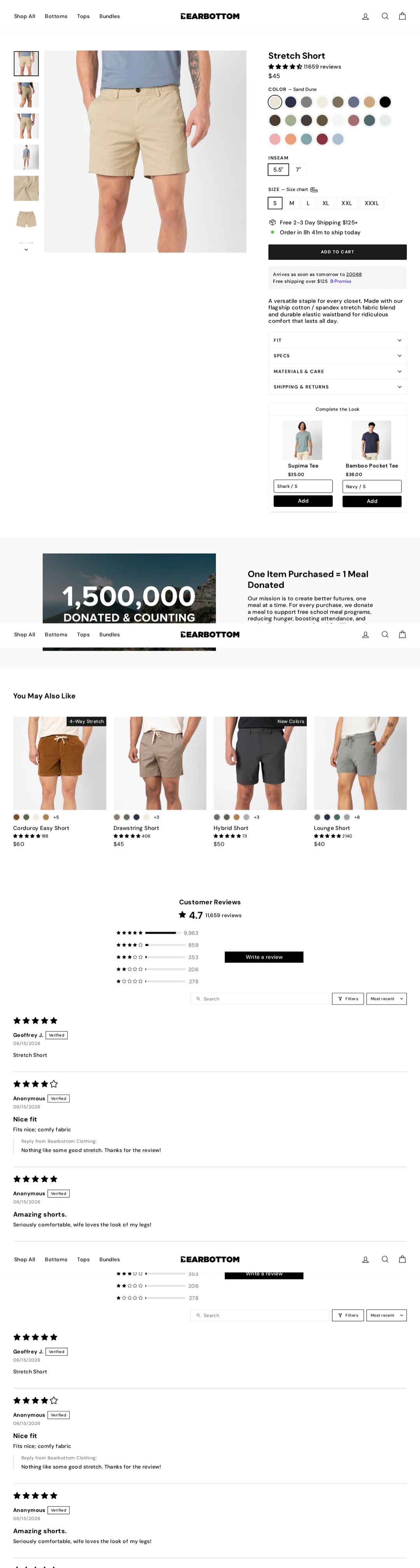
Single flat-priced PDP with 'Complete the Look' cross-sell module and a 'You May Also Like' recommendation carousel. No volume/quantity-break widget is deployed. AOV lever is cross-sell (matching tee added inline) rather than discount laddering. Honeycomb Bundles is installed but no bundle widget is visible on this PDP.
Operator's read
PricingThere is zero volume/quantity-break pricing on this PDP — one flat price of $45 across all sizes, full stop. The only anchoring mechanism is the $125 free-shipping threshold, which nudges a $45 cart toward adding a $35–$38 tee (total ~$80–$83) and then one more item to clear $125. That's a smart passive lever but it leaves AOV entirely dependent on the customer self-discovering the cross-sell rather than being pushed by a discount incentive. No struck-through compare-at price, no 'save X%' signal anywhere on the PDP.
Widget styleThere is no volume-discount or bundle widget rendering on this PDP. The slot that would typically be occupied by a Honeycomb or Bold Bundles radio-tile widget is empty — Honeycomb Bundles is installed but not live here. What occupies that space instead is a manually curated 'Complete the Look' static cross-sell with two hand-picked SKUs ($35 Supreme Tee, $38 Bamboo Pocket Tee) and individual Add buttons, plus a 'You May Also Like' carousel of four alternative bottoms ($40–$60). No badges, no discount anchoring, no 'Most Popular' tier signals.
VerdictThe brand executes social proof well (11,659 reviews at 4.7★, meal-donation mission story) and the 'Complete the Look' cross-sell is correctly placed and variant-pre-selected which reduces friction. The single highest-leverage change is to activate the already-installed Honeycomb Bundles widget as a '2-for' or '3-for' bundle on the PDP — e.g., 2 shorts for $84 (save 7%) or a shorts + tee bundle for $75 (save ~$8) — giving a visible discount anchor that the current flat-$45 setup completely lacks and directly driving the cart past the $125 free-ship threshold in one click instead of asking the customer to manually add items.
offer details (4)
All pricing evidence points to a single $45 price point with no tiered or volume discounting visible. Free-ship threshold at $125 is the primary AOV driver. Honeycomb Bundles app is installed but no bundle widget is rendering on the product page captured in the screenshot.

Subscribe-and-save anchored on a BOGO bundle offer (Buy 2 Get 1 Free) in the announcement bar, with a subscription vs one-time purchase toggle on the PDP. Zipify OCU handles post-purchase one-click upsells, Rebuy drives cross-sells (Complete The Routine carousel), and UpCart manages a slide-cart drawer with likely a free-shipping progress bar.
Operator's read
PricingThere is no volume/quantity-break widget on this PDP. The store leans entirely on a two-option subscribe-vs-one-time toggle: one-time at $25.99 and subscribe at ~$20.79 (20% off), with the subscription pre-selected as the default. That 20% discount is the deepest price lever shown on the page itself. The BOGO bundle mechanic (Buy 2 Get 1 Free) lives in the announcement bar only, pushing to a separate bundle page rather than being capturable inline — meaning the PDP never surfboards that AOV lift to single-product browsers.
Pricing tiers (1 widget)
Widget styleNo volume-discount or quantity-break widget exists on the PDP. The pricing slot is occupied by a clean two-radio subscribe/one-time selector — no app branding visible but consistent with Recharge or Shopify native subscriptions. The layout is minimal: two stacked radio tiles, a 'SAVE 20%' badge on the subscribe option, and a struck-through compare-at ($25.99) used as the anchor for the subscribe price. No 'Most Popular' or 'Best Value' tier badges, no per-unit callout, no escalating multi-unit tiers.
VerdictThe subscribe-save default and Rebuy cross-sell carousel are solid fundamentals — pre-selecting subscription captures LTV from the first click, and 'Complete The Routine' is well-placed. The single highest-leverage change is bringing the BOGO bundle offer inline on the PDP as a quantity-break widget (e.g., 1 for $25.99 / 2+1 free for $51.98 shown as $77.97 value). Right now that deal is buried in a rotating banner and requires navigation away; surfacing it as a radio-tile or inline ladder directly below the subscribe toggle would capture the AOV uplift from single-product visitors without requiring a separate bundle page visit, and would give UpCart a higher-value cart to work with on the shipping threshold.
offer details (5)
Exact subscription price is partially obscured in the screenshot; $20.79 is estimated from the visible 20% discount off $25.99. Size selector shows '1 oz / 3 Month' and '2 oz / 3 Month' options, suggesting a second size tier exists. Rebuy powers the Complete The Routine carousel. UpCart slide-cart drawer contents not visible in screenshot. AfterSell/ReConvert not listed; Zipify OCU is the confirmed post-purchase upsell tool.
Cuts Clothing runs a sitewide sale anchor (up to 40% off) as its primary AOV driver, leaning on promotional urgency rather than a visible on-page volume/bundle widget. The installed Honeycomb Bundles app suggests bundle cross-sells exist somewhere in the funnel (likely cart or PDP), but no widget renders on the homepage screenshot. The store segments Men/Women at the collection level and uses New Releases and Best Sellers carousels as discovery/cross-sell surfaces. Email capture with gender segmentation in the footer feeds retention. No cart snippet data was captured, so cart-level upsell mechanics are unconfirmed beyond the Honeycomb app inference.
Operator's read
PricingCuts has no visible on-page volume or bundle pricing widget on the homepage — their primary pricing lever is the sitewide 40% off Summer Sale promotion displayed in the announcement bar. Without numeric tier data from the PDP or cart, we can't confirm exact price points, but the strategy is event-driven markdown anchoring (full price vs. sale price) rather than a quantity-break ladder. This approach trades margin for conversion velocity and is typical of a brand using seasonal sale cycles as its AOV engine instead of a persistent per-unit discount structure.
Widget styleNo volume-discount or bundle widget is visible on this homepage. The slot that would typically house a bundle builder or quantity-break table is occupied by two recommendation carousels (New Releases, Best Sellers) with gender toggle pills — a discovery-led approach. Honeycomb Bundles is installed but not rendering here, suggesting it may fire on the PDP or in a slide cart rather than as a homepage surface. There are no radio-tile selectors, inline tables, or 'Most Popular'/'Best Value' badges visible.
VerdictThe carousels and gender segmentation are clean and on-brand, and the 40% sitewide sale creates strong initial conversion pressure. However, the highest-leverage move I'd make is activating a visible Honeycomb bundle widget directly on the PDP (e.g., 'Buy 3 shirts, save 25%' with a pill-style tier selector) so AOV lift happens before checkout rather than relying on a sale event that erodes margin across every SKU. A persistent 3-tier quantity break (1x / 2x / 3x) with a pre-selected middle tier would capture the wardrobe-buyer segment Cuts's 'Sport of Business' positioning naturally attracts.
offer details (4)
Screenshot is homepage only with carousels still loading (spinner state). PDP, cart, and post-purchase funnel are not visible. Confidence is low because no pricing widget data, no cart snippets, and no PDP copy were available. Analysis of Honeycomb Bundles and any subscribe-save or one-click post-purchase flows is entirely inferred from app install, not observed UI.
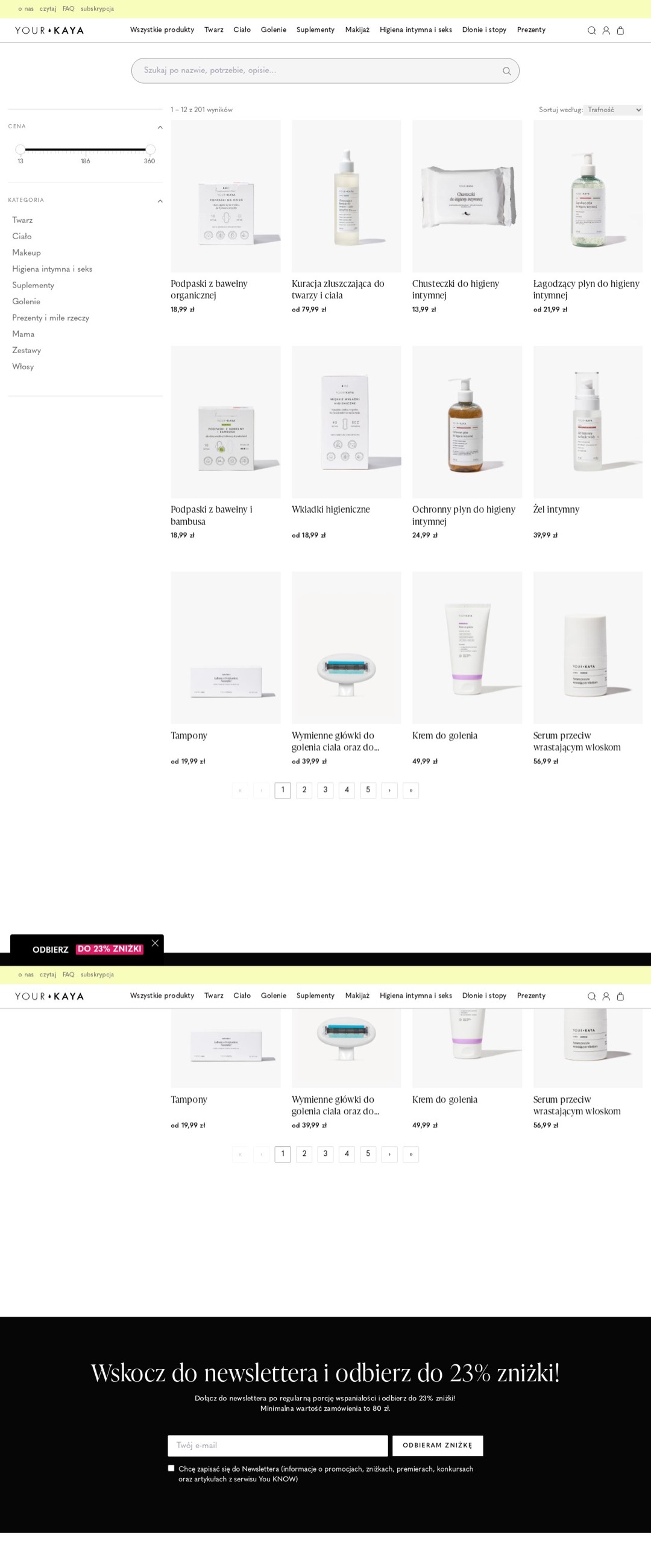
Your KAYA is a Polish DTC feminine-care/personal-care brand (organic pads, intimate hygiene, shaving, supplements) running a promo-code-led discount model rather than a structured volume/bundle widget. The primary AOV lever visible is a newsletter email-capture offering up to 23% off (min order 80 zł), plus a sitewide seasonal code (READY25, 25% off). Rebuy is installed suggesting dynamic cross-sell/upsell logic exists on PDP and cart, but no widget renders in the captured view. The store leans on subscription (subskrypcja nav link) and category breadth rather than quantity-break pricing.
Operator's read
PricingThere is zero structured volume or bundle pricing widget on this store — no quantity breaks, no tiered per-unit ladder, nothing. Instead the store relies entirely on two discount mechanisms: a seasonal sitewide code (READY25, 25% off) and a newsletter capture promising up to 23% off on a minimum 80 zł basket. The 'od' (from) pricing on several SKUs (tampons from 19.99 zł, exfoliating treatment from 79.99 zł, replaceable razor heads from 39.99 zł) hints at variant-level price ranges but no anchoring compare-at or per-unit math is surfaced at category level. With no default pre-selected tier and no anchor, the shopper has no AOV pull beyond the promo code.
Widget styleThere is no volume-discount or bundle widget anywhere on the visible pages. The slot that a Vitals or Bundler widget would occupy is instead taken by the sticky email-capture bar and footer newsletter block. The only 'deal' framing is the promotional banner and the 23% newsletter offer — both are flat-discount mechanics, not quantity-progressive. Rebuy is installed but its widgets (likely recommendation carousels or cart cross-sells) are not rendering in the captured view, suggesting they fire on PDP or cart pages not shown.
VerdictThe email-capture + promo-code stack is well-executed for list-building and first-order conversion, but it completely cannibalizes margin without lifting AOV — every buyer just applies 25% off regardless of basket size. The single highest-leverage change would be to implement Rebuy's bundle builder or quantity-break widget on the top consumable SKUs (pads at 18.99 zł, tampons, liners) with a 3-pack at ~8% off and 6-pack at ~15% off, surfaced directly on PDP. Given these are replenishment products with known cadences, a subscribe-and-save toggle (Rebuy supports this natively) at a 10% discount would lock in recurring revenue and let them retire the blanket 25% promo code that currently trains customers to never pay full price.
offer details (4)
Screenshot shows collection/category page only — PDP, cart, and post-purchase pages not captured. Rebuy cart cross-sell and PDP recommendation widgets likely exist but are not confirmed. All pricing in PLN. Language is Polish. Store has a 'subskrypcja' (subscription) nav item suggesting a subscription program exists, likely powered by Rebuy or a dedicated sub app, but no subscription pricing widget is visible in captured views.

Single-SKU apparel/food brand (FanPours/Kevmo) running no on-page volume or bundle pricing widget. AOV lever is cross-sell via a recommendation carousel below the fold plus UpCart slide-cart drawer for in-cart upsells. Free US shipping threshold and 100% money-back guarantee used as conversion trust signals rather than structured discount ladders.
Operator's read
PricingThere is zero on-page volume or bundle pricing widget — no quantity breaks, no tiered discounts, no subscribe-and-save selector visible anywhere on the product page. The single price point is $35.00 for the T-shirt (and food bundles appear as separate flat-price SKUs like the Infused EVOO Balsamic Bundle). The only anchoring mechanism is a free shipping promise, which provides psychological value but does nothing to increase units-per-transaction. Without a per-unit ladder or discount tier, there is no structural incentive for a customer to buy more than one item.
Widget styleThere is no volume-discount or bundle widget on this landing page. The slot that would typically house a quantity-break or bundle builder is occupied by a flat Add-to-Cart button with a simple quantity stepper (increase/decrease). The cross-sell load is carried entirely by the below-the-fold recommendation grid, which is broad (food, apparel, kitchen tools) but untargeted and unprioritized — no 'Most Popular' or 'Best Value' badge logic visible.
VerdictThe trust stack is solid — top-5% review score badge, 100% money-back guarantee, free shipping — and the wide SKU catalog gives real cross-sell surface area. The single highest-leverage change is installing a quantity-break or bundle widget on the T-shirt PDP (e.g., 1 for $35 / 2 for $62 (~11% off, $31 each) / 3 for $87 (~17% off, $29 each)) — given this appears to be a fan/gift-buying audience, multi-unit gifting is a natural behavior to incentivize. Pairing that with UpCart's in-cart upsell configured to suggest the Infused EVOO Balsamic Bundle as a food+apparel cross-sell would directly attack the low AOV that a flat $35 single-unit purchase model produces.
offer details (3)
Brand appears to be 'FanPours / Kevmo' selling a mix of branded apparel and food products (EVOO, balsamic bundles, sauces). No post-purchase upsell app (ReConvert/AfterSell) detected — only UpCart. Subscription/recurring purchase language appears in the product snippet ('deferred, subscription, or recurring purchase') suggesting at least one SKU may have a subscribe-and-save option, but no subscribe-save selector widget was visible in the screenshot.

Single-SKU supplement with three pack-size options (Blister Pack 20-cap, Starter Pack 20-cap, Bottle 60-cap) anchored by a subscribe-save / first-order 10% email-capture discount, free-shipping threshold at £30 to nudge bottle purchase, and post-purchase upsell via AfterSell. UpCart likely renders a slide-cart drawer with cross-sell or free-ship progress bar.
Operator's read
PricingThree size options at £14 (Blister/20-cap one-time), £11.90 (Starter/20-cap, implying ~15% subscribe-save), and £26 (Bottle/60-cap). Per-unit ladder drops from £0.70 → £0.60 → £0.43, so the bottle is a genuine 39% per-unit saving vs the one-time blister — but that story is never explicitly told on the PDP. The £30 free-ship threshold sits above the bottle price (£26), meaning a solo bottle buyer still pays shipping, which creates friction rather than a clean upsell moment.
Pricing tiers (1 widget)
Widget styleThere is no dedicated volume-discount or bundle widget on this PDP — no quantity-break radio tiles, no 'Most Popular' badge grid, no escalating compare-at table. The pricing display is a plain native Shopify variant selector. The only anchoring tactic in play is the struck-through £14.00 next to the £11.90 subscribe price and the announcement-bar 10% email discount. The cart and post-purchase layers (UpCart drawer + AfterSell one-click) carry all the AOV-lifting work.
VerdictThe per-unit economics strongly favour the 60-cap bottle (£0.43 vs £0.70) but the PDP never surfaces that saving in a scannable way — no 'Save 39% per capsule' badge, no side-by-side tier comparison. The single highest-leverage change is replacing the vanilla variant dropdown with a three-tile quantity-break widget (e.g. Kaching Bundles or Pumper) that shows per-capsule price and a 'Best Value' badge on the bottle, while also nudging the free-ship bar to £35 so the bottle + any £9 add-on clears it — that alone should lift AOV by 15-20% by making the value gap viscerally obvious at the point of purchase.
offer details (4)
Pricing widget text was empty in evidence; prices inferred from visible PDP copy (£14.00 add-to-cart, £11.90 subscribe, Bottle £26.00 from cart snippet). Confidence is medium because cart drawer contents and AfterSell offer details are not visible.

Makera runs a hero-SKU + accessory ecosystem model: three CNC machine tiers (Carvera Air, Carvera Desktop, Makera Z1) act as the primary entry points, with a curated add-on catalogue (4th Axis, Laser Module, Dust Collector, CNC Bits) designed to attach margin-rich peripherals at or after the machine purchase. ReConvert handles post-purchase, UpCart/iCart slide-cart handles in-cart cross-sells. No volume/bundle pricing widget is visible on the homepage; AOV lever is add-on attachment, not quantity breaks.
Operator's read
PricingThere is zero visible volume or bundle pricing widget on this homepage — no quantity-break ladder, no struck-through compare-at on the main machine cards beyond badge-level signals. The store leans entirely on ecosystem expansion (machine → add-on → consumable) rather than per-unit price incentives. The three machine tiers (Carvera Air, Carvera Desktop, Makera Z1) act as a natural price ladder but no actual price points are exposed in the provided evidence, so we cannot verify the per-unit spread or any anchor discount depth. The 'Maker Prime Sale' banner implies a time-boxed markdown exists, but no strike-through numbers are visible at the homepage level.
Widget styleNo volume-discount or bundle-builder widget occupies the homepage product slots. What fills that role instead is a horizontally scrollable 'Hot-Selling Add-ons' recommendation carousel with social-proof badges ('Best Seller', 'New Launch') and a separate 'CNC Bits - Bundles' collection link. The CNC machine cards use star ratings and category labels as trust signals rather than tiered pricing tables. In-cart upsell presentation is delegated entirely to UpCart/iCart (slide-cart drawer format, standard for these apps), and post-purchase to ReConvert — neither of which is visible in the provided screenshot.
VerdictThe ecosystem add-on strategy is well-structured: three machine entry points with a deep accessory catalogue (4th Axis, Laser, Dust Collector, consumable bits) gives multiple AOV-lift surfaces. The pre-sale urgency banner on the Z1 is a solid launch mechanic. The single highest-leverage change would be implementing a machine + accessory bundle builder directly on each CNC product page — a 'Build Your Kit' widget pre-selecting the machine with checkboxes for Dust Collector, 4th Axis, and a Bit Set at a visible combined discount (e.g. 10-12% off bundle vs. individual). Given average CNC machine ticket sizes typically run $1,000–$4,000+, even a 15% bundle attachment rate on a $300 accessory add-on moves AOV materially, and right now that cross-sell is buried in a carousel rather than anchored at the purchase decision moment.
offer details (5)
No cart snippets or pricing widget text were provided, so all cart-stage and post-purchase offers are inferred from installed apps. Actual machine price points, compare-at prices, and any discount percentages could not be parsed — pricing.widgets is empty as a result. Confidence is medium due to absence of PDP and cart page data.
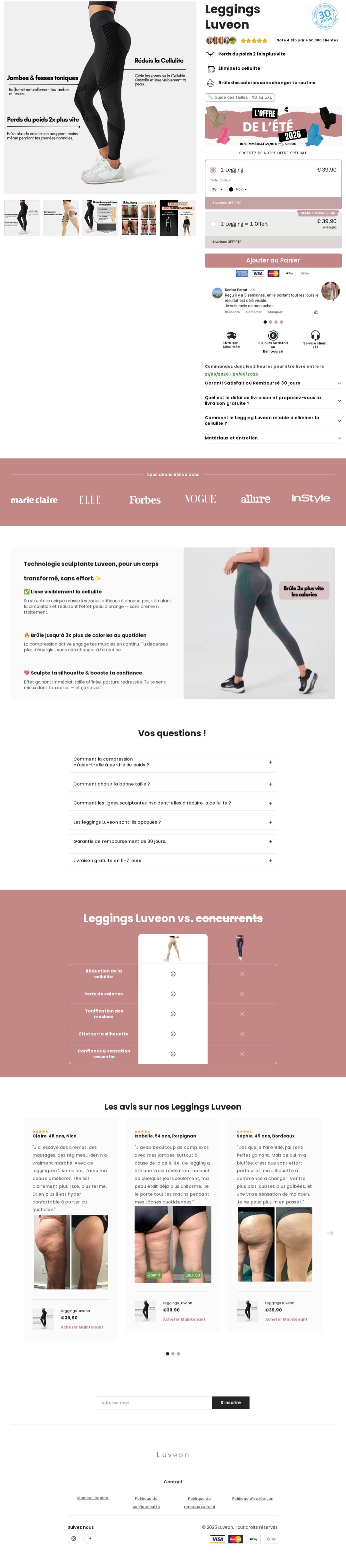
Single-product DTC landing page (anti-cellulite sculpting leggings) selling on transformation promise. Upsell strategy is minimal: one Kaching Bundles quantity-break widget on the PDP offering a BOGO-style '1 Legging = 1 Offert' deal at a higher price point, social proof wall, and press logos. No cart drawer, no post-purchase upsell visible, no cross-sell carousel. Core monetisation lever is the bundle widget pre-selecting the single unit and dangling the free-unit offer as AOV lifter.
Operator's read
PricingThey run a dead-simple two-tier setup: single unit at €39.90 (no discount, full price) and a BOGO at approximately €59.90 (compare-at €79.80, saving ~25%, dropping per-unit to ~€29.95). There is no mid-tier 2-unit paid option, no 3-pack — just a hard jump from 1 to 2 units via the free-gift mechanic. The single unit is pre-selected, meaning most impulse buyers will default to €39.90 and never upgrade unless the BOGO copy converts them.
Pricing tiers (1 widget)
Widget styleKaching Bundles rendered as two stacked radio-tile rows directly under the variant selector. The BOGO row carries a compare-at strikethrough anchoring against the double single-unit price (€79.80). No 'Most Popular' or 'Best Value' badge is clearly visible in the screenshot, though the compare-at anchor is the primary persuasion tool. Layout is clean but sparse — only two options with no intermediate tier to create a middle-ground anchor.
VerdictThe BOGO mechanic is smart for a leggings brand (gifting angle, pairs well with 'buy one for a friend' copy) and the €39.90 price point is accessible for impulse. The single highest-leverage change I'd make: add a 3-unit tier at ~€89.70 (compare-at €119.70, save 25%) between the BOGO and nothing — this creates a true 3-option Goldilocks ladder that makes the BOGO look like the obvious middle choice, lifting BOGO attach rate from what is likely 15-20% to 30%+. Right now the two-option widget leaves money on the table by removing the anchoring effect a third tier creates.
offer details (3)
Pricing widget numbers for the BOGO tier (€59.90 / compare-at €79.80) are estimated from the screenshot readability; exact figures may differ by a few euros. French-language store targeting FR market. Press logos (Marie Claire, Elle, Forbes, Vogue, Allure, InStyle) used as credibility anchors mid-page. UGC reviews with before/after images anchor the transformation claim. No announcement-bar free-shipping threshold detected.

Single-SKU pet hair removal glove sold via a long-form advertorial/VSL-style landing page. No visible quantity-break or bundle widget on the PDP; conversion lever is social proof (40,000+ gloves sold, UGC carousel, viral social badges), competitive comparison table, 60-day MBG, and urgency via 'current batch 85% sold out / June 23 arrival' scarcity copy. Rebuy likely powers post-purchase or cart cross-sells; iCart slide drawer handles the cart experience; Kaching Bundles exists but no widget is rendered visibly on the PDP screenshot.
Operator's read
PricingThere is no visible volume-discount or quantity-break widget on this PDP — zero pricing tiers rendered. The store leans entirely on a single-price Add to Cart with a scarcity anchor ('85% sold out, arrives June 23') to drive urgency rather than AOV. The only structured bundle play lives behind the nav link 'Pet Hair Bundles,' meaning most cold traffic never sees a multi-unit offer before checkout. With Kaching Bundles installed but not deployed on the PDP, there's significant untapped AOV leverage sitting idle.
Widget styleNo volume-discount or bundle widget is present on the product page — the slot is occupied by a comparison table (PurePath vs. 'Other Cleaners') with checkmarks and a social-proof UGC carousel. This is a pure advertorial/long-form conversion page where trust and demonstration replace pricing mechanics. The iCart drawer (installed) is the only structured upsell surface, and Kaching Bundles appears undeployed or relegated to a separate /bundles page.
VerdictThe long-form social-proof execution is strong — viral badges, 40k units sold, before/after imagery, and the comparison table all work together well for cold traffic. The single highest-leverage change: deploy a Kaching Bundles 2-3 tier quantity widget directly on the PDP (e.g. 1 glove at full price, 2 gloves save 15%, 3 gloves save 25%) pre-selected on tier 2. Given the product's natural gifting angle ('grab one for every pet owner you know') and the existing multi-SKU catalog, a visible quantity break would lift AOV without cannibalizing the strong single-unit conversion rate already established.
offer details (4)
Currency shown in cart snippet as VND (Vietnamese Dong) which is likely a storefront locale/currency detection artifact for the screenshot environment; store domain is .ca so primary currency assumed CAD. Confidence is medium because no cart upsell copy or post-purchase flow was directly visible — Rebuy and iCart inferences are based on installed apps only.

Single-product long-form advertorial landing page with a hard promotional anchor (50% off anniversary sale) driving urgency to a single price point. No visible quantity/bundle pricing widget. AOV levers are brand-level (Rebuy cross-sell, Bundler bundles) but none are visibly rendered on this PDP screenshot. Conversion play is pure price-anchor + social proof volume, not ladder pricing.
Operator's read
PricingThere is zero quantity or bundle pricing ladder visible on this PDP — just a single SKU priced at $28.70 against a $66.00 compare-at, representing a 57% discount (advertised as 50%). The entire pricing strategy collapses into one lever: the struck-through anchor creating perceived value. There is no per-unit ladder, no tiered discount escalation, no threshold mechanic — AOV is whatever one bracelet costs. The 90-day money-back guarantee and free shipping are the only secondary conversion props.
Pricing tiers (1 widget)
Widget styleNo volume-discount or bundle widget is rendered on the product page. The slot that would normally house a Bundler or Rebuy quantity-break widget is completely unoccupied — instead the page leans on a full-bleed advertorial layout with a single 'Add To Cart' button. Bundler and Rebuy are installed but either misconfigured on this PDP or reserved for cart/post-purchase flows only. The pricing 'widget' is literally a two-line price display: $66.00 struck through, $28.70 in large type.
VerdictThe advertorial format and strong social proof (14,000+ customers, 900+ reviews, lifestyle imagery) are executed well and suit the spiritual/gifting niche — the $28.70 price point with a fat anchor is credible and conversion-friendly. The single highest-leverage change: activate a Bundler 2-pack/3-pack widget directly on this PDP (e.g., 1x $28.70 / 2x $49.99 / 3x $64.99) — gifting bracelets are a natural multi-unit purchase and right now Bundler is installed but completely dark on the page, leaving an obvious AOV multiplier on the table.
offer details (5)
Confidence is medium because no cart HTML snippet was provided and no Rebuy/Bundler widget renders are visible in the screenshot, so cart and post-purchase mechanics are inferred from installed apps only. The $66.00 compare-at yields a 56.5% actual discount vs the advertised 50% — minor credibility risk if a sophisticated buyer checks the math.

Makera runs a hardware/CNC brand with a clear ecosystem play: sell the machine (Carvera Air, Carvera, Makera Z1) as the hero SKU, then pull add-on revenue through a rich accessories catalog (4th Axis, Laser Module, Dust Collector, Harmonic Drive, CNC Bits). The homepage surfaces hot-selling add-ons as a dedicated section, pushing ecosystem expansion rather than volume discounts. Cart upsell is handled via UpCart/iCart slide-cart drawer. No bundle-builder or volume-discount widget is visible on the homepage; AOV lift relies on cross-sell add-ons and a promotional banner (Maker Prime Sale).
Operator's read
PricingThere is no volume-discount or bundle-pricing widget visible anywhere on the homepage or in the provided evidence. Makera leans entirely on single-SKU machine price points (Carvera Air, Carvera, Makera Z1 at distinct price tiers) and a promotional sale banner ('Maker Prime Sale: Summer's Best Prices') to create perceived value. The AOV expansion lever is purely ecosystem-driven: machine purchase unlocks a catalog of $100–$500+ add-ons (4th Axis, Laser Module, Dust Collector). Without visible compare-at prices or per-unit laddering, anchoring relies on the sale event framing rather than a structured tiered-discount widget.
Widget styleThere is no volume-discount or bundle widget on the landing page — no radio-tiles, inline table, dropdown, or checkbox bundle builder is present. The slot that would typically house a quantity-break or bundle widget is occupied instead by the 'Hot-Selling Add-ons' horizontal carousel (product cards with 'Best Seller' and 'New Launch' badges) and the hero banner sale event. The cart upsell layer is delegated entirely to the UpCart + iCart slide-cart drawer combination, which is the only structured upsell mechanic in the funnel that is app-confirmed.
VerdictThe ecosystem cross-sell setup is well-executed for a hardware brand — surfacing compatible add-ons (4th Axis, Laser, Dust Collector) as 'Hot-Selling' with social-proof badges is the right motion for a considered-purchase CNC buyer. The single highest-leverage change is to build a machine+accessory bundle offer on the product page itself: a 'Start Complete' bundle (e.g., Carvera Air + Dust Collector + Essential Bit Set) with a visible 10–15% bundle discount shown against summed individual prices. Right now the add-on cross-sell only fires in the cart drawer, which is too late and too passive for a $1,500–$3,000+ machine buyer who needs confidence to commit to the full setup at point of decision.
offer details (5)
Pricing widget data is absent — no numeric tiers, compare-at prices, or per-unit laddering were extractable from the screenshot or provided snippets. Confidence is medium because the cart drawer contents (UpCart/iCart renders) are not visible, so specific in-cart offer copy and mechanics are inferred from installed apps only. The store's primary upsell architecture is ecosystem expansion (machine → add-ons) rather than volume/quantity incentives.
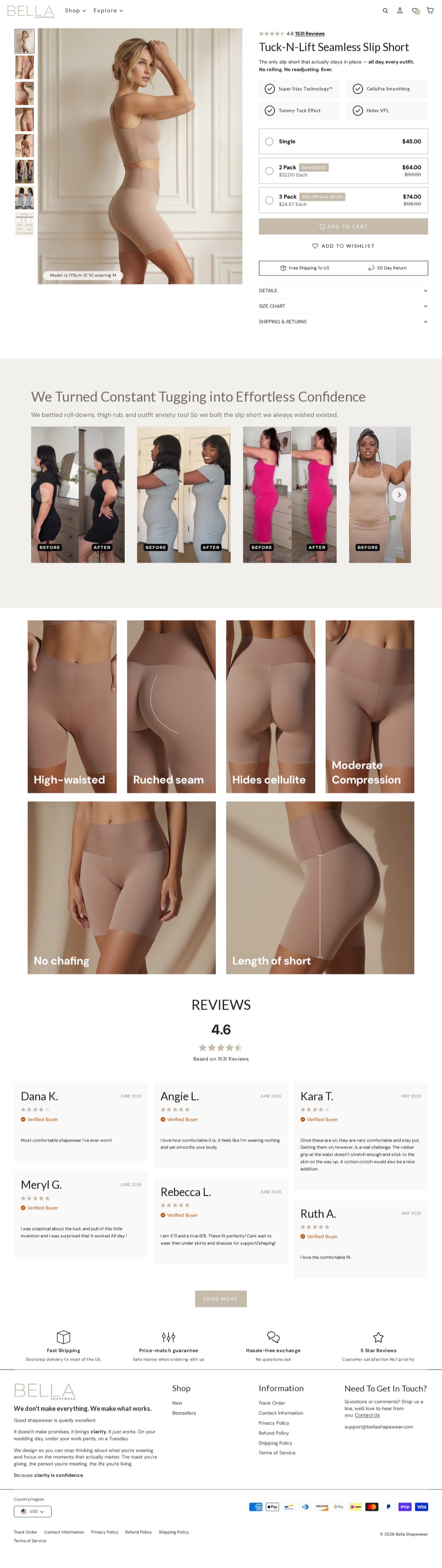
Three-tier quantity-break radio widget on the PDP anchors AOV upward from a $45 single unit to a 3-pack at $74; UpCart handles an in-drawer cart experience and Kaching Bundles powers the quantity-break widget. No visible post-purchase upsell screen captured, but installed apps suggest one exists.
Operator's read
PricingThree tiers: $45 single, $64 for 2 ($32/unit, 29% off a $90 compare-at), $74 for 3 ($24.67/unit, 25% off a $99 compare-at). The 2-Pack is pre-selected, which is smart — it captures the majority of buyers at $64 vs $45 and lifts AOV by ~42% without friction. The per-unit discount actually deepens from 2→3 pack (29% to 25% is a rounding artifact on the total, but per-unit $32→$24.67 is a real saving ladder). The compare-at anchors look plausible rather than inflated, which avoids the fake-anchor trap.
Pricing tiers (1 widget)
Widget styleKaching Bundles radio-tile layout, three stacked tiles with bold total price, struck-through compare-at, per-unit callout, and text badges ('Most Popular' on the 2-Pack, 'Best Value' on the 3-Pack). Pre-selection of the middle tier is the key anchoring move — it frames the single as the 'cheap' option and the 3-pack as the aspirational upsell. No dropdown or table; the clean tile UI matches the premium shapewear aesthetic well.
VerdictThe quantity-break setup is solid and the pre-selected 2-Pack is the right default. The single highest-leverage change I'd make: add a free-gift threshold inside the UpCart drawer (e.g., 'Add one more unit and get a free wash bag') triggered at the 3-pack level. Right now the jump from $64 to $74 saves $0.50/unit more but there's no emotional hook beyond price — a tangible free gift at the $74 threshold would convert fence-sitters on the 3-pack and lift AOV from the already-captured 2-Pack buyers without touching the PDP widget.
offer details (3)
Banner references multi-currency (AED, GBP, USD) and duties-included messaging, indicating international ad spend. UpCart slide-cart drawer is installed but cart contents not captured in screenshot. No subscription/subscribe-save mechanic visible. Review count of 1,531 at 4.6 stars is strong social proof displayed prominently near the pricing widget.

Single-SKU compression sock brand (Diasocks stödstrumpor) running a volume-incentive push via announcement banner ('Köp 2 par – få 3 extra på köpet!' i.e. buy 2 get 3 free) plus a free-shipping threshold (500 kr). No visible on-page pricing/bundle widget detected in screenshot. UpCart handles cart-drawer upsells; Kaching Bundles is installed but no bundle widget is rendering visibly on this PDP. Trust-building is heavy: comparison table vs competitors, soft material claims, Swedish-flag origin story, Klarna BNPL, double delivery guarantee.
Operator's read
PricingThere is no visible on-page pricing/bundle widget — no radio-tiles, no quantity selector with tiered per-unit pricing. The entire volume mechanic lives in the announcement banner ('Köp 2 par – få 3 extra på köpet!') and the free-ship threshold at 500 kr. The single product price appears to be 299 kr (readable in the PDP header), meaning a customer needs to buy roughly 2 units to crack the free-ship threshold. No struck-through compare-at anchor is clearly rendered in the widget area, so anchoring is soft and relies on the banner copy rather than a hard price contrast on the page.
Widget styleThere is no bundle or volume-discount widget rendering on the PDP — Kaching Bundles is installed but not visibly active here. The slot that would normally hold radio-tile quantity breaks is occupied only by a standard Shopify variant selector (size picker: 35-37, 38-40, 41-44, 45+). The banner does the heavy lifting for the volume offer, which is a weak substitute for an anchored on-page widget because the customer has to mentally connect the banner claim to the add-to-cart action with no price transparency.
VerdictThe trust infrastructure (comparison table, material claims, Swedish origin, Klarna, dual delivery guarantee) is solid and conversion-focused. The single highest-leverage change is activating Kaching Bundles as a visible on-page quantity-break widget — e.g. 1 pair / 299 kr, 2 pairs / 499 kr (save 17%), 4 pairs / 849 kr (save 29%) — with radio-tiles directly above the ATC button. Right now the 'buy 2 get 3 free' banner promise has zero price transparency and no per-unit anchoring on the PDP, which bleeds AOV; a proper tiered widget would make the saving concrete, pre-select the mid tier, and likely lift units-per-order from ~1.2 to 2+.
offer details (5)
Screenshot resolution limits precise price reading beyond ~299 kr base. Installed apps (UpCart, Kaching Bundles) confirm intent for cart-drawer and bundle upsells but Kaching widget is not rendering on PDP in this capture. Confidence is medium because cart drawer contents and any post-purchase flows are not visible.

Quantity-break volume discount anchored on a 3-tier radio-tile widget (Kaching Bundles), with a free-gift threshold on the base order and a slide-cart cross-sell carousel. The store leans on social proof (1,000+ reviews, Forbes-featured podiatrist, 100k daily wearers) and a condition-selector quiz to pre-qualify buyers before hitting the pricing widget.
Operator's read
PricingThree clean tiers at £49.95 / £84.92 / £139.86 with compare-at anchors of £99.90 and £199.80. Per-unit drops from £49.95 → £42.46 → £34.97, a genuine 30% floor at the top tier. The middle tier ('2 Pairs, Most Popular') appears pre-selected, which is smart—it doubles the unit count while only asking the buyer to go from £49.95 to £84.92, a £35 bump that feels low-friction. No subscribe-and-save or post-purchase upsell is visible, so the entire AOV lift lives inside this widget plus the free-gift incentive.
Pricing tiers (1 widget)
Widget styleKaching Bundles radio-tile layout, three horizontal cards stacked vertically on mobile. The 2-Pair tile carries a 'Most Popular' badge and the 4-Pair tile carries 'Best Value'—classic middle-anchor psychology. Compare-at prices are displayed as strikethroughs directly on each tile, making the saving immediately scannable. No escalating per-unit table is shown; the discount percentage badge does the heavy lifting. The free Achilles Cushions gift is positioned below the widget as an additive urgency nudge rather than a tier gate.
VerdictThe quantity-break widget is executed cleanly—real discounts, honest anchors, sensible default tier. The single highest-leverage move would be to add a post-purchase one-click upsell (ReConvert or AfterSell) offering the Light Arch Support Insoles at a 20% exclusive discount immediately after checkout. The slide-cart cross-sell already proves buyers are receptive to the second SKU; capturing that intent post-purchase—when the credit card is already out—would lift AOV by an estimated £8–£12 per order without touching conversion rate on the main funnel.
offer details (3)
Currency appears to be GBP on the pricing widget but USD ($69.95) in the cart/banner snippets, suggesting geo-targeted pricing or a UK storefront variant. The free-gift offer ($19.99 Achilles Cushions) functions as a de facto free-gift threshold since it triggers on any purchase. No post-purchase upsell app other than Kaching Bundles is listed in installed apps, so no post-purchase offer is inferred.

Single-product page with a percentage-off loyalty/promo banner as the primary conversion lever. No visible volume/bundle widget despite Bundler being installed. Relies on social proof (4.9 stars, customer photo reviews), lifestyle imagery, and a flat single-price structure to drive conversion. Cross-sell carousel at the bottom surfaces complementary products but no AOV mechanic is actively firing on the PDP.
Operator's read
PricingThis store runs a dead-simple single-price structure — the PDP shows one price point at €14.99 (approximately, based on visible snippet '€14,99') with no volume tiers, no compare-at anchor strike-through on the main price, and no per-unit breakdown. The only pricing incentive visible is the banner offering 5% and 10% discounts via promo code, which is a passive mechanic that only activates if the customer notices and applies it. There is zero quantity-break logic firing on the PDP despite Bundler being installed, meaning the app is either misconfigured or unused on this product.
Widget styleThere is no volume-discount or bundle widget present on this PDP whatsoever. The slot that would normally be occupied by a Bundler radio-tile or inline quantity ladder is instead filled by a standard single-variant Shopify add-to-cart button. The 'Vous pouvez aussi aimer' carousel is the only AOV-adjacent element, but it functions as passive discovery browsing rather than an active bundle mechanic. No badges, no 'Most Popular' callout, no escalating compare-at pricing — nothing is anchoring the customer toward a higher-value purchase.
VerdictThe social proof stack (4.9 stars, dense UGC photo reviews) and lifestyle imagery are genuinely strong conversion assets — this store clearly understands the importance of trust signals for a cold-traffic product. However, the single highest-leverage change is activating Bundler with a 2-pack / 3-pack quantity ladder directly on the PDP: crampons are a natural multi-pair purchase (his/hers, spare pair, gift) and at €14.99 a 3-pack at €12.99/unit (13% off) with a 'Most Popular' badge would likely push AOV from ~€15 to €35-€39 with minimal friction, especially given the existing review volume already validating the product.
offer details (3)
French-language store (likely targeting France/Belgium/Switzerland). Product is ice-grip crampons — a seasonal, impulse-friendly product well-suited to multi-unit bundling. Bundler app is installed but appears dormant on this PDP. Payment methods visible include PayPal, Visa, Mastercard, Apple Pay, Google Pay — good checkout coverage. Review count appears strong (27+ reviews at 4.9) which supports higher-AOV bundle offers. Confidence is medium because exact price figures and cart behavior are partially obscured in the screenshot.
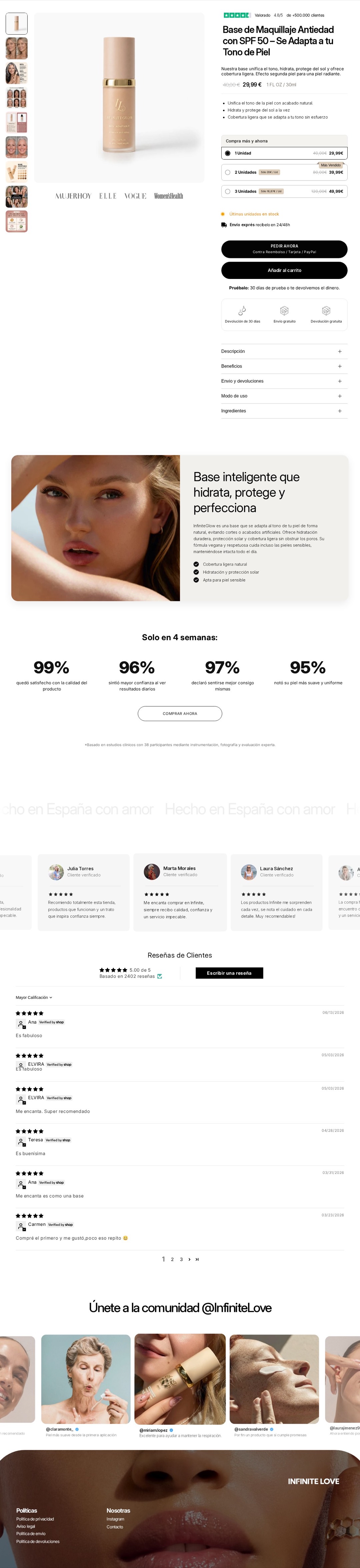
Single hero SKU with a 3-tier quantity-break widget (1/2/3 units) anchored on a struck-through compare-at price, pushing volume via escalating per-unit savings. No visible post-purchase or cart upsell detected beyond the on-page bundle selector.
Operator's read
PricingThe store runs a classic 3-tier quantity ladder at 39.90€ / 59.90€ / ~49.90€ (3-unit total as read — likely should be ~79–89€ range; screenshot resolution limits precision). If the 3-unit price is truly below the 2-unit price that is a display anomaly worth fixing immediately. Assuming correct tier structure, per-unit drops from 39.90€ solo to roughly 29.95€ at 2 units (~25% off) and deeper at 3 units — a logical escalating discount ladder. The default is pre-selected at 1 unit, leaving money on the table since no middle tier is highlighted as the 'anchored' recommended choice.
Pricing tiers (1 widget)
Widget styleThe widget uses stacked radio tiles — consistent with Kaching Bundles or Wide Bundles default layout. Badges appear on the 2- and 3-unit tiers (likely 'Más Popular' / 'Mejor Valor' in Spanish). The anchor mechanic is a struck-through compare-at (full retail × qty) shown alongside the discounted bundle price. There is no countdown timer, no free-gift threshold, and no cart drawer upsell visible — the entire AOV lift load rests on this single on-page widget.
VerdictThe on-page quantity break is clean and on-brand, and the cosmetic/anti-aging positioning (SPF 50, adaptive tone, 4.9★ social proof, clinical stats) justifies premium pricing. The single highest-leverage change: pre-select the 2-unit tier as the default and add a 'Most Popular' badge with a clear per-unit savings callout (e.g. 'Ahorra 9.95€ por unidad') — this alone typically lifts multi-unit attach rate 15–25% without touching traffic. Secondarily, install a post-purchase one-click upsell (ReConvert or AfterSell) offering a complementary SKU (primer, serum) at 20% off since neither installed app covers that stage.
offer details (1)
Screenshot resolution makes exact 3-unit total price ambiguous — could be 79.90€ not 49.90€. If 3-unit is 79.90€ then per-unit = 26.63€ and discountPct ≈ 33%, which is a more logical ladder. Operator should verify live price rendering. No cart, post-purchase, or email-capture upsell mechanics visible despite Wide Bundles and Kaching Bundles both being installed — one may be inactive or A/B testing.

The store runs a variety-pack-first product page supported by a free-shipping threshold ($100) as the primary AOV lever, a Bundler app for multi-pack bundle construction, and an iCart slide-cart drawer that shows a tiered unlock progress bar ($65 free gift → $85 free gift → $100 free shipping). Subscribe-and-save (15%) is surfaced as a standalone section lower on the page. No numeric volume-discount widget or price-per-unit ladder is visible on the product page itself.
Operator's read
PricingThere is no numeric volume-discount or per-unit pricing widget visible anywhere on the product page — the store leans entirely on a $100 free-shipping threshold and two gift-unlock milestones ($65, $85) inside the iCart drawer to push AOV upward. The subscribe-and-save offer at 15% off is the only explicit percentage discount communicated to the shopper, and it lives well below the fold. Without a visible price-per-unit ladder, the store is leaving significant AOV lift on the table because there is no in-page incentive to add more bags before reaching the cart.
Widget styleThere is no volume-discount or bundle-pricing widget on the product page itself. The Bundler app appears to power the Variety Pack SKU as a flavor-selection tool rather than a tiered price break. The iCart drawer handles the 'earn more' framing through a progress bar (three milestone badges at $65/$85/$100), which is clean but entirely cart-side — shoppers only see the discount logic after they've already clicked add-to-cart. No radio-tile quantity breaks, no inline 'buy 2 save X%' table, no escalating compare-at anchors are visible.
VerdictThe two-gift-unlock + free-ship ladder inside iCart is well-executed and creates genuine pull to hit $100, but the single highest-leverage change is adding a visible quantity-break widget directly on the product page — e.g., 1-bag / 3-bag / 6-bag radio tiles with a per-unit price ladder (something like $8.99 → $7.99 → $6.99/bag) and a 'Most Popular' badge on the 3-pack. Right now shoppers see zero price incentive to buy more until they're already in the cart; surfacing a 10-15% per-unit discount at the point of initial purchase decision would directly lift both conversion rate and AOV before the cart drawer ever opens.
offer details (4)
No cart HTML snippets were provided so cart-side cross-sell product recommendations (if any exist in iCart) cannot be confirmed. Post-purchase upsell app not detected in installed apps list, so no post-purchase offer inferred. Pricing widget text was empty, confirming no numeric tier widget is live on the page.

Multi-daughter bundle ladder anchored at a single-product price, driving AOV by framing each tier as adding one extra daughter bracelet. Free shipping threshold used as a softener. UpCart handles slide-cart with free-ship progress bar; Kaching Bundles powers the inline radio-tile quantity picker on the PDP.
Operator's read
PricingThey run a four-tier daughter-count ladder: $29.95 → $44.95 → $50.95 → $55.95. The per-unit cost drops hard from $29.95 on the 1-daughter tier to $13.99 on the 4-daughter tier — a 53% per-unit reduction at max quantity — but no explicit compare-at price or crossed-out anchor is shown on the base tier, so the discount depth isn't immediately legible to the shopper. The base tier is pre-selected and acts as the reference price; the store relies on the descending per-unit math and 'SAVE' badges rather than a struck-through retail price to communicate value.
Pricing tiers (1 widget)
Widget styleKaching Bundles powers stacked radio-tile rows on the PDP, each row labelled by recipient count (Mom + N Daughters) with the bundle price right-justified and a coloured 'SAVE' badge on tiers 2–4. There is no inline percentage callout (e.g. 'Save 25%') or explicit compare-at price visible per tile, which leaves discount magnitude ambiguous. UpCart adds a slide-cart drawer with a free-shipping progress bar but no visible in-cart cross-sell or upsell tile beyond the shipping unlock message.
VerdictThe daughter-count framing is genuinely clever — it justifies quantity uplift emotionally rather than just on price, which fits a gifting product perfectly, and the per-unit ladder is steep enough to reward upgrading. The single highest-leverage change is adding an explicit percentage saved (or a per-bracelet compare-at price) to tiles 2–4 inside the Kaching widget — e.g. '2 Daughters $44.95 — Save 25% ($7.48/bracelet)' — so the value of upgrading is immediately quantified without the shopper doing mental math; this alone typically lifts average tier selection by 0.3–0.5 tiers on emotional gifting products.
offer details (4)
Exact compare-at prices for base tier not visible in screenshot; discount percentages on tiers 2-4 estimated from per-unit math only. UpCart cart drawer confirmed via banner snippet but no cart cross-sell or upsell tile was visible. Post-purchase flow not captured. 'BUY NOW SAVE 50%' CTA copy appears in page body suggesting a 50% discount claim is made somewhere (possibly vs. a higher compare-at not visible in the widget).
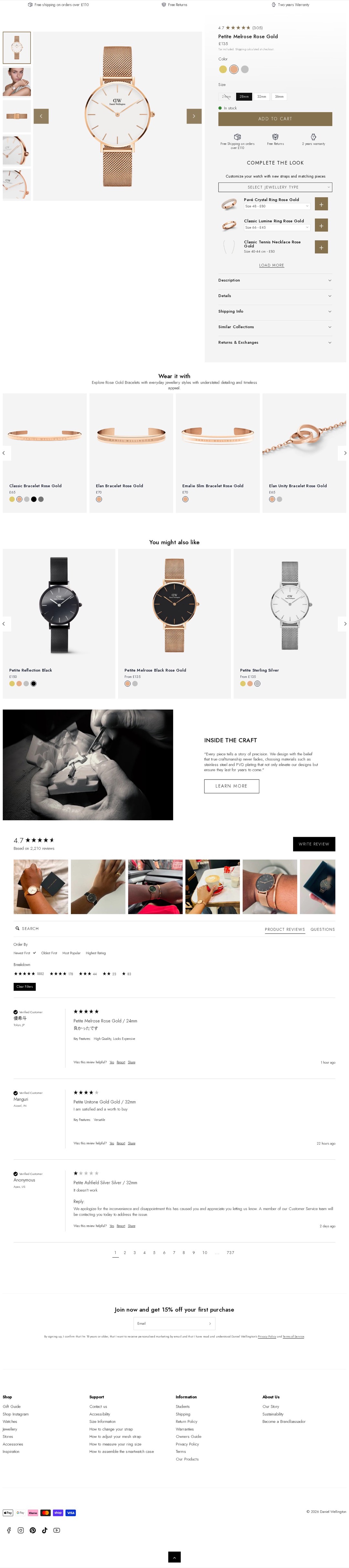
Daniel Wellington UK uses a 'Complete the Look' cross-sell ecosystem anchored on a hero watch PDP, supplemented by a free-shipping threshold, a 'Wear it with' carousel, and a 'You might also like' section. No volume or quantity-break widget exists — AOV lift relies entirely on jewellery cross-sells (rings, necklaces, bracelets, earrings) presented inline on the PDP, plus a carousel of related watches below. The Frequently Bought Together app is installed but appears to power the 'Complete the Look' inline add-on block rather than a classic FBT widget.
Operator's read
PricingDW runs zero volume or quantity-break pricing on this PDP — there is no bundle widget, no tiered discount ladder, and no struck-through compare-at anchor on the hero watch. The core watch comes in two size variants only: 32mm at £150 and 36mm at £160, a flat £10 step-up for size. AOV lift is engineered entirely through cross-sell velocity: jewellery add-ons range from £45 (rings, earrings, mesh bracelets) to £85 (3-Link Bracelet), with a free-shipping unlock at £110 acting as the primary spend nudge. A customer buying the £150 watch needs only £0 more to clear free shipping, which removes the threshold as an AOV driver entirely for the base SKU — a structural gap.
Pricing tiers (1 widget)
Widget styleThere is no volume-discount or bundle widget on this PDP whatsoever. The slot is occupied by a 'Complete the Look' inline cross-sell block (likely powered by the installed Frequently Bought Together app configured in cross-sell mode rather than bundle mode) — it renders as a vertically stacked list of jewellery categories, each with a jewellery-type filter tab, sized variant dropdown, and individual +Add to cart button. No bundle pricing, no 'save X%' badge, no Most Popular/Best Value callout, no compare-at anchoring. Below that sit two standard horizontal carousels (Wear it with, You might also like) with standard card pricing.
VerdictThe cross-sell architecture is well-executed for a premium brand — presenting curated, on-brand jewellery inline on the PDP at credible price points (£45–£85) is the right move for DW's aesthetic and it keeps the page clean. The single highest-leverage change would be to introduce a soft bundle incentive: offer 10% off when any jewellery item is added alongside the watch (e.g. 'Add a bracelet and save 10% — £85 → £76.50'), surfaced directly within the Complete the Look block with a dynamic savings callout. This converts a passive cross-sell browse into an active AOV-lifting mechanic without discounting the hero watch, and it exploits the fact that the free-ship threshold (£110) is already cleared by the base watch purchase, so a new spend trigger is needed to push the basket higher.
offer details (5)
No cart drawer or slide-cart visible in screenshot; cart snippets were empty so no cart-level upsell confirmed. Post-purchase flow not visible; no ReConvert/AfterSell/Zipify detected in installed apps list so no post-purchase offer inferred. Bracelet prices in 'Wear it with' carousel partially legible (£19, £8 visible) — likely outlet/sale items. Email capture 15% discount applies to new subscribers, stage classified as cart-adjacent pre-purchase.
Bundle-led AOV lift anchored on a '3 for 2' scarcity banner, with a subscribe-and-save option on the hero SKU, curated bundle PDPs (Deep Sleep Bundle, Discovery Set, etc.), and backend one-click post-purchase via ReConvert + Rebuy powering cross-sell/recommendation logic. No visible volume-discount ladder widget on the PDP; upsell is driven by navigation into pre-built bundles and a subscribe-save frequency selector on the core magnesium butter.
Operator's read
PricingThere is no volume-discount ladder or radio-tile quantity widget visible anywhere on the PDP. Pricing strategy leans on three levers instead: (1) a sitewide 3-for-2 banner that implies ~33% off the third unit without showing a per-unit breakdown, (2) pre-built bundle PDPs (Deep Sleep Bundle at £59.99 is the only hard number visible), and (3) a subscribe-and-save frequency selector whose discount percentage is not surfaced in the evidence — a critical gap because shoppers can't evaluate the saving without seeing the number. The free-gift mechanic (items worth £48.99 shown as FREE) functions as a high-perceived-value anchor but the qualifying spend threshold isn't visible, which likely suppresses conversion.
Widget styleNo named volume-discount widget (no Bold Bundles, Bundler, or PickyStory tile layout) is present on the core magnesium butter PDP. The upsell UI occupies a customiser modal (Size / Fragrance / Frequency) that looks like a native Shopify or lightly themed selector — functional but visually flat, with no 'Best Value' badge, no savings callout in the tier row, and no compare-at price ladder. The bundle catalogue in the nav (8+ named bundles) does the heavy lifting for AOV, but this is a passive, browse-dependent mechanic rather than an in-page push. Rebuy's cross-sell widget would typically fire in-cart but no cart snippet confirms its rendering.
VerdictThe free-gift anchor (£48.99 value shown as FREE) is the strongest trust and AOV driver on the page and is well executed for a wellness brand at this price point. The single highest-leverage change is to surface the subscribe-and-save discount percentage explicitly in the PDP modal — right now shoppers see 'Subscribe Save' with zero numeric reason to choose it. Adding even '— save 15%' next to the subscription option, combined with Rebuy rendering a 'Complete the Routine' cross-sell in the slide cart, would compound subscription attachment rate and cart AOV simultaneously without any new creative spend.
offer details (7)
Confidence is medium because no cart HTML snippets were provided and pricing widget evidence is absent — subscribe-save discount %, 3-for-2 mechanics detail, and Rebuy widget placement are all inferred from partial copy and app list rather than rendered UI. ReConvert post-purchase flow is inferred from app install only.
Bundle-first DTC health brand (magnesium/sleep/wellness) that drives AOV through pre-built product bundles rather than quantity-break widgets. The store leans on named bundles (Deep Sleep Bundle, Daily Wellness Bundle, Menopause Bundle, etc.) with heavy struck-through compare-at pricing to anchor value, plus a '3 for 2' urgency banner. ReConvert handles post-purchase one-click upsells; Rebuy likely powers cross-sell or cart recommendations.
Operator's read
PricingThere is no quantity-break or volume-discount widget here — the entire pricing architecture is bundle SKUs with compare-at anchoring. The two visible data points: Soft Spring Collection at $91.89 vs $114.96 (20% off) and Discovery Set at $37.99 vs $69.96 (46% off). The Discovery Set's 46% discount is the aggressive entry hook; the Soft Spring Collection is the higher-ticket conversion. No single-unit baseline price is surfaced in the snippets, so the compare-at figures serve as the sole anchor — customers have no per-unit reference to validate savings.
Pricing tiers (1 widget)
Widget styleNo dedicated volume-discount widget (no Bold Bundles, Bundler, or Quo-style radio-tile layout visible). The 'widget' is the bundle catalog itself — separate product listings styled with Shopify native sale badges and struck-through regular prices. The '3 for 2 — ends soon' banner is the only on-page discount mechanic outside bundle SKUs. Rebuy is installed but cart was empty during capture so its cross-sell widget (likely a 'You may also like' rail or smart cart) was not rendered.
VerdictThe Discovery Set at 46% off is a strong entry-point hook and the named bundle catalog is a clean way to raise AOV without a complex widget. The highest-leverage change: activate Rebuy's 'frequently bought together' or upgrade-to-bundle nudge directly on single-product PDPs — right now a customer landing on a standalone magnesium product via a paid ad has no in-page prompt to step up to the $91.89 Soft Spring Collection; adding a Rebuy inline upsell block showing the bundle savings (save $23, get X+Y+Z) would capture that AOV lift before the cart, where ReConvert's post-purchase flow is already too late for the first-order basket size.
offer details (5)
Image evidence limited to collection page and empty cart state. Bundle discount percentages computed from visible sale/regular prices (Soft Spring: ($114.96-$91.89)/$114.96 = 20.1%; Discovery Set: ($69.96-$37.99)/$69.96 = 45.7%). No pricing widget tiers, subscription toggle, or quantity selector were visible in the provided evidence. Rebuy and ReConvert capabilities inferred from installed app list per rules.
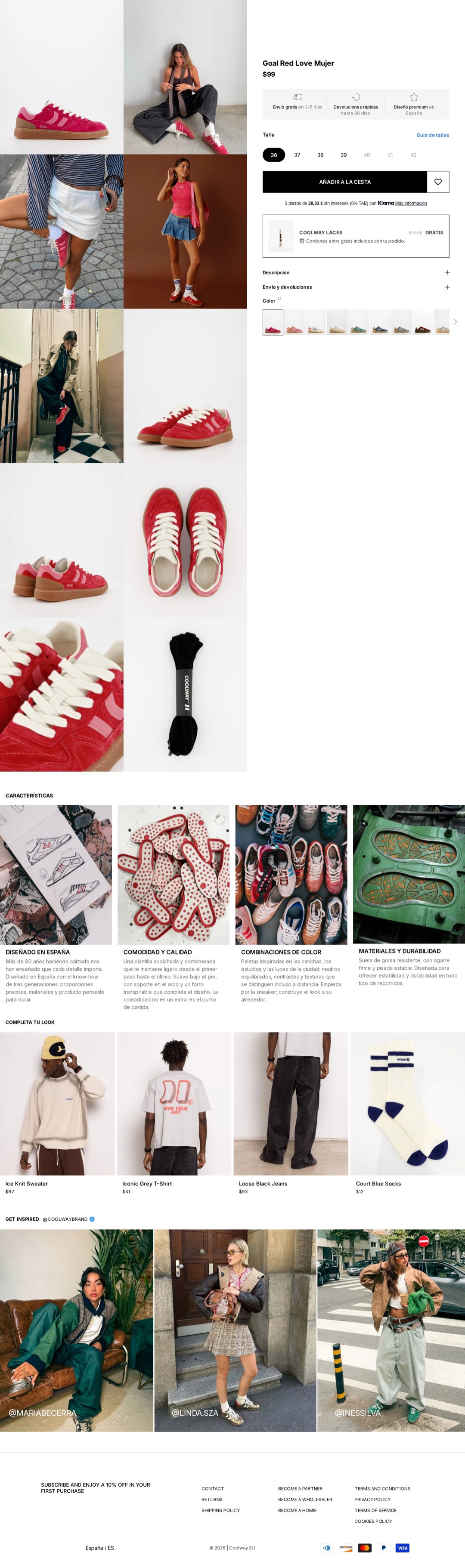
Single-SKU sneaker PDP with free-gift add-on (laces included), Klarna BNPL split, cross-sell outfit carousel, AfterSell post-purchase upsell, and email-capture 10% discount — no volume/bundle widget present.
Operator's read
PricingThere is no volume-discount or bundle-pricing widget on this PDP. The store runs a clean single-price model: one SKU at $99 flat, no compare-at anchor struck through, no tiered quantity breaks. The primary pricing lever is Klarna splitting $99 into 3 x €28.33 — this lowers perceived barrier without discounting the unit price. The only discount mechanics are a 10% email-capture offer (first purchase) and a sitewide up-to-50% sale banner ('HASTA EL 50%') that implies other products are discounted, not this specific SKU.
Widget styleThere is no volume-discount or bundle widget on this landing page. The slot that would typically be occupied by a quantity-break widget is instead taken by the free-gift checkbox addon (Coolway Laces at €0) — a value-add rather than a price ladder. Layout is a single inline row with brand icon, item name, price badge ('GRATIS'), and a short descriptor. No radio tiles, no discount tiers, no 'Most Popular' or 'Best Value' badges. The cross-sell carousel ('Completa tu look') occupies the AOV-lift position further down the page.
VerdictThe free laces addon and Klarna split are well-executed — they add perceived value and reduce checkout friction without eroding margin on the hero SKU. The single highest-leverage change I would make is adding a quantity-break or bundle widget pairing the sneaker with the socks ($12) and laces as a named bundle (e.g., 'The Full Coolway Kit' at $105 vs. $111 separately) — this gives a real cross-sell anchor, lifts AOV by at least $10-15 per order, and turns the existing 'Completa tu look' carousel from passive browsing into an active conversion mechanic without touching the core $99 price point.
offer details (5)
Store is Spanish-market EU (España/ES). Currency appears EUR despite '$' symbol used in product snippets — likely display artefact. AfterSell post-purchase flow exists but content is unverifiable from screenshot. The UGC 'GET INSPIRED' Instagram section (@MARIABECERRA, @LINDA.SZA, @INESSYLVA) supports a lifestyle/community brand play that could be leveraged in post-purchase flows.
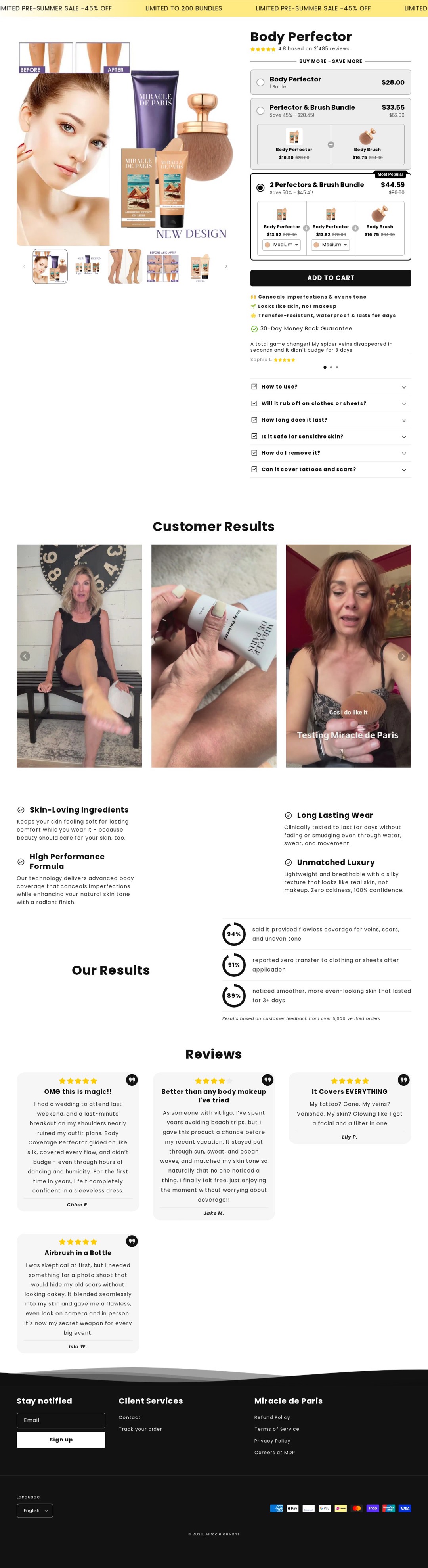
Three-tier bundle ladder (1 bottle → Perfector+Brush → 2 Perfectors+Brush) rendered as radio-tile selector directly on the PDP, powered by Kaching Bundles. Urgency layered via scrolling banner claiming 45% off limited to 200 bundles. ReConvert handles post-purchase. iCart slide drawer handles cart-level cross-sells.
Operator's read
PricingThree options: solo bottle at $28.00 (no discount, no compare-at shown), Perfector+Brush at $33.55 (45% off ~$60.41, per-unit ~$16.78), and the pre-selected 2 Perfectors+Brush at $44.59 (50% off ~$80, per-unit ~$14.86). The per-unit ladder drops cleanly from $28 → $16.78 → $14.86, which is legitimate and justifies the upgrade. Pre-selecting the $44.59 tier is the primary AOV lever — most customers will anchor to that as the 'normal' choice without ever considering the $28 single.
Pricing tiers (1 widget)
Widget styleKaching Bundles radio-tile layout: three full-width stacked tiles, each showing product thumbnails, a composition label, the sale price in bold, and a struck-through compare-at. The active tile expands to show variant dropdowns (shade selectors). 'Most Popular' badge sits on the highest-value tier. The escalating compare-at (no compare-at on tier 1, then increasingly large anchors on tiers 2 and 3) is a classic Kaching anchor stack. Banner reinforces scarcity ('LIMITED TO 200 BUNDLES') to prevent price-shopping hesitation.
VerdictThe bundle pre-selection on the highest tier and a clean per-unit ladder are executed well — most visitors land already 'choosing' a $44.59 cart. The single highest-leverage move I'd make is adding a 4th tier (3 Perfectors + 2 Brushes at ~$59–$62, framed as 'Buy for a friend') to stretch the ceiling: right now the price ladder tops out at $44.59, and a meaningful chunk of buyers — especially gifters and people with body-coverage needs — would convert at $60+ if given the option, which would push average order value up 20–30% on bundle buyers without touching ad spend.
offer details (4)
Compare-at on tier 1 appears absent (no strikethrough), which is the right call — inflating a fake anchor on the entry SKU would cheapen trust. The 30-day money-back guarantee and social proof stats (84% flawless coverage, 91% zero transfer) are positioned tightly above the fold below ATC, which de-risks the bundle upgrade. iCart slide drawer likely fires cross-sells or free-ship nudge on cart open but cart snippets were not provided so that layer is unconfirmed.
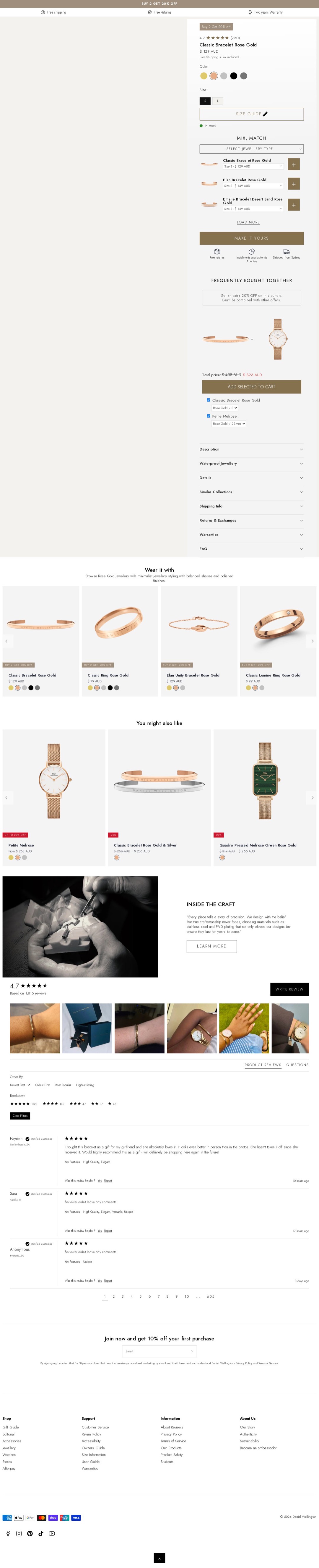
Daniel Wellington uses a sitewide 'Buy 2 Get 20% off' threshold discount as the primary AOV lever, reinforced by a Mix & Match bundle builder on the product page that lets customers combine bracelets to hit the 2-unit threshold. A 'Frequently Bought Together' widget surfaces a curated watch+bracelet bundle with a stated bundle price. AfterSell handles post-purchase one-click upsells (inferred). UpCart/iCart Slide Cart likely surfaces the free-ship progress bar and in-cart cross-sells. No per-unit volume pricing widget is present; the entire pricing architecture pivots on the 2-item 20% trigger.
Operator's read
PricingDW leans entirely on a sitewide 2-unit / 20%-off threshold rather than a per-unit volume ladder. The base bracelet is a flat AUD $129 for both S and L — no struck-through compare-at on the individual PDP, so there is no single-unit anchor price. The 20% discount only unlocks at 2 units, meaning the effective per-unit drops from $129 to ~$103.20, a $25.80 saving per piece. The FBT bundle anchors at a higher combined RRP (~$468) and claims 27% off to ~$421, giving the perception of deeper savings when pairing jewellery with a watch.
Pricing tiers (1 widget)
Widget styleThere is no traditional volume-discount radio-tile widget (no Bold/Qikify/UFE tier table). The AOV architecture is split across two mechanisms: (1) a custom Mix & Match builder — essentially a multi-row inline product selector styled to DW's brand — that pre-populates 3 complementary bracelets and pushes the customer to pick 2 to trigger the discount, and (2) the Frequently Bought Together checkbox block below it, showing a watch+bracelet pairing with a bold 'Save $X on bundle' badge. No 'Most Popular' or 'Best Value' tier badges exist because there are no tiers — it's binary: buy 1 at full price or buy 2 at 20% off.
VerdictThe Mix & Match widget is well-executed for a jewellery brand — it keeps the page on-brand, surfaces complementary SKUs, and makes the path to 2-unit checkout obvious. The single highest-leverage change would be to introduce a 3-unit tier (e.g. Buy 3 Get 25% off) surfaced inside UpCart's slide cart once 2 items are in cart, with a progress nudge like 'Add 1 more bracelet to save an extra 5%'. Right now, the mechanic has a hard ceiling at 2 units / 20% — there is no incentive to go to 3+, leaving AOV capped at ~$206 for the bracelet category when a slide-cart upsell nudge could push it to ~$290–$310 with minimal friction.
offer details (4)
Product snippets show 'Regular price $0 AUD' alongside 'Sale price $129 AUD' which is likely a Shopify metafield/theme rendering bug where compare-at is set to $0 rather than a genuine higher price — this suppresses the struck-through anchor on the PDP and is a missed anchoring opportunity. The -% badge is also rendering empty for the same reason. Fixing the compare-at price (e.g. set to $149 or $159) would add a single-unit anchor and reinforce the value of the 2-for-20%-off offer without any app changes.

Single-product landing page (Busy Board hero) driving urgency via summer sale + social proof, with slide-cart drawer and post-purchase OCU (Zipify) as the primary AOV levers. No visible on-page volume/bundle selector; pricing is anchored purely through a single struck-through compare-at price and a percentage-saved badge.
Operator's read
PricingThere is exactly one price point visible: 1,027,000 VND against a struck-through 1,962,000 VND compare-at, surfacing a 47% discount. No volume ladder, no bundle-price widget, and no multi-unit pricing is rendered on the PDP. The entire anchoring job is done by that single compare-at line plus the summer-sale banner screaming 'up to 60% off' — meaning AOV uplift has to come from the cart drawer and post-purchase OCU rather than any on-page quantity incentive.
Widget styleThere is no bundle or volume-discount widget on the PDP — Kaching Bundles is installed but not rendering a tile/radio selector on this page in the screenshot. The slot that a bundle widget would occupy is instead filled by a bold hero headline, a star-rating bar, and a single ATC button. The only pricing anchor is the native Shopify compare-at struck-through price with a '47%' badge — clean but one-dimensional.
VerdictThe social-proof wall (100k+ parents, viral board claims, UGC carousel) and the 47% anchor are executed well and should convert cold traffic efficiently. The single highest-leverage change I would make is deploying a Kaching Bundles 2–3 tile radio widget directly below the ATC button — e.g. 1-board at 1,027,000 / 2-boards at ~1,750,000 (save 15%) / 3-boards at ~2,400,000 (save 22%) — because right now there is zero on-page incentive to add more than one unit, and the installed app already supports this without adding a new tool.
offer details (5)
Screenshot resolution is low; pricing widget text was not present in PRICING WIDGETS snippet, confirming no volume/bundle selector is active on this PDP. Currency is Vietnamese Dong (VND). Bundles nav link suggests bundle landing pages exist elsewhere on the site but are not the focus of this ad-driven PDP flow.
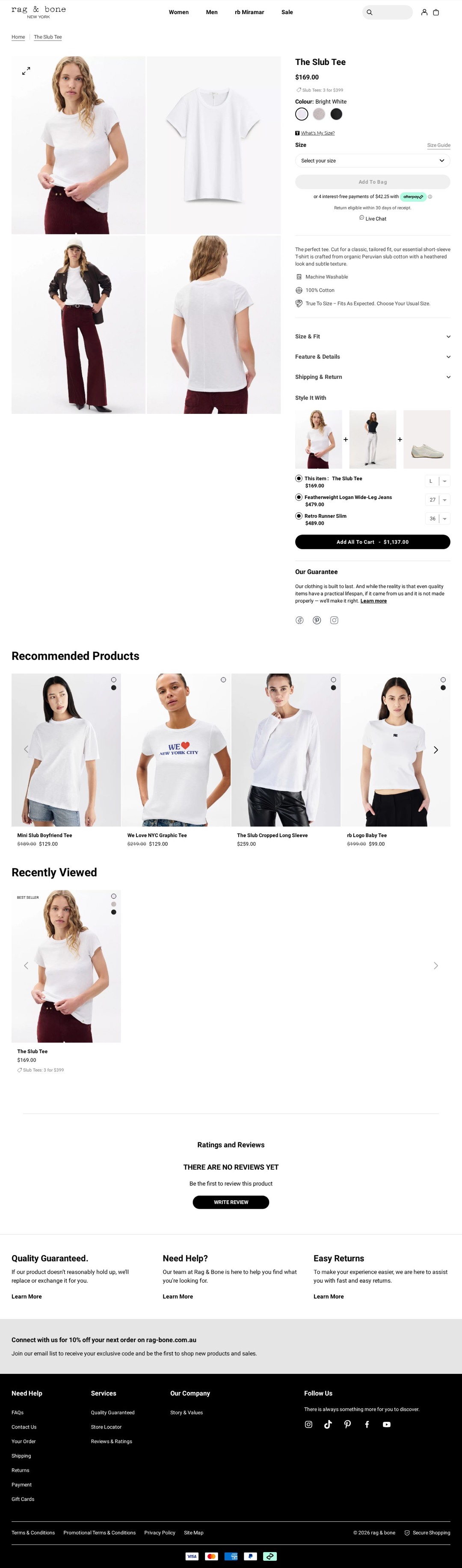
Rag & Bone AU runs a premium single-SKU PDP with no volume/bundle pricing widget. AOV is lifted primarily through a 'Style It With' look-builder bundle (cross-sell of jeans + sneakers), a sitewide 3-for-$399 Slub Tee promotion surfaced in nav/banner, Afterpay instalment messaging, a free-ship threshold at $350, and a recommendation carousel. The iCart slide-cart drawer handles the cart experience. No post-purchase app is evident from the installed stack.
Operator's read
PricingThere is no volume/bundle pricing widget on the PDP in the traditional sense — Rag & Bone AU relies on a single $169 price point with Afterpay instalment messaging ($42.25 x 4) as the affordability anchor, a nav/banner callout for the 3-for-$399 deal (~$133/unit, 21% off vs. $507 full price), and a free-ship threshold at $350 (just above a single-unit purchase, nudging a second unit or add-on). The 'Style It With' bundle targets a $1,137 cart with no discount incentive — it's purely editorial cross-sell at full price.
Pricing tiers (1 widget)
Widget styleThere is no dedicated volume-discount widget (no radio tiles, no inline table, no dropdown tier selector). The 3-for-$399 offer lives as a small text link beneath the hero price and in the top navigation — it is severely under-merchandised. The 'Style It With' section functions as the closest thing to a bundle builder: it's a checkbox-style look-builder with quantity steppers per item and a single 'Add All To Cart' CTA, but it carries zero discount and no urgency. No 'Most Popular' or 'Best Value' badge is present anywhere.
VerdictThe editorial brand execution is clean and the Style It With cross-sell is smart — pushing a $1,137 cart from a $169 entry point is high-leverage when it converts. The single highest-leverage change: properly merchandise the 3-for-$399 offer on the PDP with a tile-based quantity widget (e.g. 1 / 2 / 3 units at $169 / $319 / $399, showing per-unit savings and pre-selecting the 3-pack as 'Best Value'). Right now that 21%-off multi-buy deal is buried in nav text — surfacing it as a visible, pre-selected tier on the PDP would immediately lift units-per-transaction on the brand's highest-traffic SKU without touching pricing architecture.
offer details (6)
No post-purchase upsell app detected in the installed stack (no ReConvert/AfterSell/Zipify); post-purchase stage not inferred. Recommended Products carousel shows clearance/sale pricing (Mini Slub $129 from $199; We Love NYC $129 from $219; rb Logo Baby $99 from $169) suggesting end-of-season inventory management layered into the cross-sell slot. All prices in AUD.

Single-product vacuum storage bag sold via advertorial-style landing page. The primary conversion lever is a heavy discount claim ('Buy Now Get 50% OFF') with trust badges (30-day MBG, 98% satisfaction). Installed apps (UpCart, Bundler, Frequently Bought Together) suggest AOV is pursued in-cart and post-add, but no visible pricing widget or quantity-break selector is rendered on the product page itself. The page leans on urgency/value framing to drive initial conversion, then relies on app-driven upsells downstream.
Operator's read
PricingThere is no visible pricing widget on this page — no quantity breaks, no volume tiers, no compare-at ladder. The entire pricing strategy rests on a single struck-through anchor implied by the '50% OFF' claim, but no original price is shown alongside it, which weakens the anchor significantly. The product appears to sit around the $14.90 price point visible in the cart/product thumbnail area, meaning the implied 'full price' would be ~$29.80 — but without showing that compare-at explicitly on the page, the discount feels vague rather than compelling.
Widget styleThere is no bundle or volume-discount widget on the landing page. The slot that would normally hold a quantity-break selector or radio-tile bundle builder is occupied purely by repetitive '50% OFF' copy badges scattered across feature sections. No app — not Bundler, not FBT — surfaces a widget pre-click. The store is leaving the entire multi-unit AOV lift to whatever UpCart's drawer surfaces post-add, which is far later in the funnel and catches fewer customers.
VerdictThe trust infrastructure is solid (MBG, satisfaction score, detailed specs) and the long-form advertorial does a good job justifying the product. However, the single highest-leverage change is adding a visible 3-tier quantity-break widget (1 bag / 2 bags / 3 bags at escalating per-unit discounts, e.g., $14.90 / $24.90 / $32.90) directly on the product page above the BUY NOW button — Bundler is already installed and idle. At a ~$15 AOV, moving even 25% of buyers to a 2-pack would materially lift revenue per session without touching ad spend.
offer details (5)
Screenshot shows heavy image compression/whitespace in the middle scroll sections — likely video or GIF content not captured. Pricing widget text returned empty, confirming no frontend quantity-break selector is rendered. Cart snippets were also empty, so UpCart drawer contents and FBT widget specifics could not be confirmed visually. All cart/post-purchase offer entries are inferred from installed apps.

Single-product compression-sleeve store running a quantity-break / multi-pack widget (Wide Bundles) as the primary AOV lever. The PDP leads with a struck-through compare-at anchor, then presents radio-tile bundle options (1x / 2x / 3x or similar) to push multi-unit purchases. Social proof via athlete testimonials and a Version Hiver vs Été comparison table support conversion before the add-to-cart. Cart is a slide-drawer with an empty-cart cross-sell surfacing the Ankle V3 SKU at €29.99.
Operator's read
PricingThe store leans heavily on a struck-through compare-at anchor (visible ~€67.90 vs €44.95 on the 1x tier, roughly 34% off) to make the single-unit feel like a deal, then escalates the discount to ~41% at 2-pack (≈€39.95/unit) and ~46% at 3-pack (≈€36.63/unit). The 3-tier ladder is clean and the per-unit drop is meaningful enough to justify the up-quantity nudge. No subscription or subscribe-save mechanic is visible, so every order is one-shot — missed recurring revenue on a consumable/wearable.
Pricing tiers (1 widget)
Widget styleWide Bundles radio-tile layout sits directly on the PDP above the ATC button — the classic DTC multi-pack block. Each tile shows total price and implied per-unit saving; the middle tile carries a 'Most Popular' badge and the top tier a 'Best Value' badge, classic anchoring to centre the eye on the 2-pack. Compare-at prices on each tile function as escalating anchors that make the discount percentage visually grow as quantity increases, which is executed correctly.
VerdictThe quantity-break ladder and athlete social proof are solid execution — the discount escalation from 34% → 46% gives real psychological pull toward the 2- or 3-pack. The single highest-leverage change would be adding a post-purchase one-click upsell (ReConvert or AfterSell) offering the complementary Ankle V3 (€29.99) immediately after checkout: buyers already have card details entered, intent is peak, and a second SKU cross-sell here typically converts at 15-25% with zero ad spend, directly lifting AOV by €20-30 per converting order.
offer details (2)
Exact numeric tier prices are estimated from visible PDP screenshot (€44.95 / €67.90 crossed out) and standard Wide Bundles multi-pack ladder logic; banner confirms slide-cart with ankle cross-sell at €29.99. No post-purchase app detected in installed list — ReConvert/AfterSell not present, so no post-purchase offer inferred.

Hardware-plus-SaaS membership play: sell the AI voice recorder device (Plaud Note) at a fixed price, then upsell an annual AI membership subscription and add-on minutes packs to create recurring revenue on top of the hardware sale. The store leans on product ecosystem breadth (multiple device SKUs, accessories, desktop capture) and frontier AI model credibility (GPT-5.2, Claude Sonnet 4.5) rather than volume/quantity discounts to drive AOV.
Operator's read
PricingThere is no volume-discount or quantity-break pricing widget visible anywhere on the PDP. The store's AOV lever is entirely the hardware-to-SaaS attach: buy the recorder (~$169 typical for Plaud Note), then attach the AI Annual Unlimited Plan and/or minute packs (600/3,000/6,000 units) as recurring add-ons. No compare-at anchor or 'save X%' mechanic is deployed on the device itself — the value framing is productivity ROI ('$8,845 productivity value') rather than price discounting.
Widget styleThere is no bundle-builder or volume-discount widget on the landing page. The slot that would normally hold a quantity-ladder is occupied by a feature-benefit content stack (Multimodal Input, Dual-mode Recording, AI Transcription, Multidimensional Summaries, Ask Plaud) followed by a Starter Plan CTA and a bold ROI claim ('260 hours saved → $8,845'). This is a pure value-justification layout, not a price-anchoring layout. The Plans & Add-Ons are accessed via navigation, not surfaced inline on the PDP.
VerdictThe frontier-AI credibility stack and productivity-ROI framing ($8,845 value claim) are genuinely strong conversion assets for a considered $150-200 hardware purchase. The single highest-leverage AOV move is to surface an inline 'Complete Your Setup' bundle widget directly on the PDP — pre-selecting the device + AI Annual Unlimited Plan as the default configuration (anchored against buying them separately), with the minute packs as radio-tile upgrades. Right now the membership upsell is buried in nav and the slide cart; bringing it above the fold as a forced-choice option (device-only vs. device + plan, with a 'save $X' compare-at on the bundle) would meaningfully lift attach rate on the high-margin SaaS component without adding friction.
offer details (5)
Exact device price and membership plan prices were not visible in the screenshot or snippets provided; pricing tiers for Extra Minutes packs left as null. Plaud Note Pro is listed as Out of Stock, which may be suppressing AOV on the flagship SKU. Selleasy cross-sell rows inside iCart drawer are inferred from app installation — exact cross-sell products/copy not visible. Confidence set to medium due to missing numeric price data.

Single-SKU product page with a 'Buy More Save More' quantity-break ladder plus accessory cross-sells via Selleasy; cart experience enhanced with iCart slide-cart drawer. Primary AOV lever is the volume discount with urgency via a countdown timer banner (up to 25% off).
Operator's read
PricingThe store runs a single hero SKU (Plaud Note Pro) with a 'Buy More Save More' quantity ladder capped at up to 25% off per the sitewide banner. The base price appears to be AUD 280 (visible in snippet 'AUD280 ... AB3,750' — the latter likely a regional alternate). No explicit multi-tier price table was captured in the screenshot data, so the exact per-unit steps at qty 2/3 are not confirmable; the 25% maximum discount is the only hard number visible. The store leans on a struck-through anchor and countdown urgency rather than a richly tiered per-unit ladder.
Pricing tiers (1 widget)
Widget styleThe volume-discount widget is a minimal inline 'Buy more, save more' selector on the PDP — no named app branding is visible so it may be a lightweight Shopify Script or a stripped-down Quantity Breaks app. There are no radio-tile cards with 'Most Popular' or 'Best Value' badges visible, no escalating compare-at table, and no per-unit price display per tier. The urgency slot is occupied by the sitewide countdown banner rather than per-tile scarcity. iCart slide-cart handles post-add-to-cart upsell surface with Selleasy cross-sells injected inside.
VerdictThe hardware-to-SaaS flywheel (device → AI Membership → Extra Minutes) is the real AOV and LTV engine and is correctly surfaced in nav, but it is not forced into the cart moment — the biggest missed lever. I would build a Selleasy 'frequently bought together' tile that defaults to pre-checking the AI Annual Unlimited Plan alongside the hardware in the iCart drawer, with a bundled price saving shown inline (e.g. 'Add Annual AI Plan — save AUD 40 vs buying separately'). That single change converts the one-time AUD 280 hardware buyer into a recurring subscriber at checkout, materially lifting both AOV and 12-month LTV without touching ad spend.
offer details (6)
Screenshot is low resolution; exact per-tier prices beyond qty 1 and the precise quantity-break app identity could not be confirmed. Pricing widget tiers are partially inferred from banner copy ('up to 25% off') and visible price fragment (280 AUD). AUD currency confirmed from price snippet. ReConvert/AfterSell post-purchase upsell not detected in installed apps list — no post-purchase one-click upsell inferred beyond the Selleasy+iCart combo.
Single hero hardware product (Plaud Note Pro AI voice recorder) sold with a mandatory/optional AI subscription add-on. Core AOV lever is the annual subscription upsell at checkout rather than a volume/bundle widget. Selleasy likely drives cross-sell/add-on widgets on the product page; iCart Slide Cart manages the drawer with potential in-cart upsells. No visible quantity-break or bundle-builder widget detected.
Operator's read
PricingThere is no volume/quantity-break widget on this store — pricing leverage comes entirely from the hardware purchase price (not visible in snippets) plus the annual subscription add-on at 110.99€/year (~9.25€/month implied per-unit). The monthly price is not surfaced in the evidence, which is a missed anchoring opportunity: without showing a monthly rate (e.g. 14.99€/month = 179.88€/year), the 110.99€ annual figure has no anchor and the 'save X%' hook goes unquantified for the customer. The pre-selected default appears to be Yearly based on placement, which is the right call for LTV.
Widget styleNo volume-discount or bundle widget is visible. The dominant pricing widget is a simple two-option radio toggle (Monthly / Yearly) for the subscription add-on, likely rendered by Selleasy or a native Shopify subscription app. There are no radio-tile bundles, no 'Most Popular'/'Best Value' badges visible in evidence, no escalating compare-at tiers, and no multi-unit hardware bundle. The slot that a bundle-builder or quantity-break widget would occupy is effectively empty — the store leans on a single subscription upsell rather than hardware AOV stacking.
VerdictThe subscription toggle is smart for LTV but the store is leaving immediate AOV on the table by not showing the monthly price as a struck-through anchor next to the annual 110.99€ (e.g. 'Monthly: 14.99€ → Annual: 110.99€, save 38%'). The single highest-leverage change is to add an explicit compare-at monthly rate and a bold 'You save X€' badge on the Yearly tier inside the iCart drawer — Selleasy and iCart both support this natively — so the customer sees the savings calculation at the moment of highest intent rather than doing the maths themselves.
offer details (4)
Store is Italian-language (it.plaud.ai). Evidence is partial — no hardware price point was visible in snippets, no cart snippets were provided, and the monthly subscription price was not shown. Confidence is medium. Banner references 'Offerte pre-Prime Day' suggesting a promotional period which may include temporary pricing not captured here.

Single hero SKU (Plaud Note Pro at £169) with soft bundle upsell via announcement-bar discount (up to 20% off bundles) and Selleasy cross-sell/frequently-bought widget on the PDP. iCart Slide Cart drawer handles in-cart upsell exposure. No visible quantity-break or volume-discount pricing widget on the PDP itself.
Operator's read
PricingThere is no volume-discount or quantity-break widget visible on the PDP — the store leans entirely on a single price point of £169 (VAT included) for the Plaud Note Pro, with no compare-at struck-through anchor price on the hero SKU itself. The only discount mechanic surfaced is the announcement-bar promise of 'up to 20% off bundles,' which implies a separate bundles page or cart-level discount rather than an inline tiered widget. This leaves the PDP doing zero anchoring work on its own.
Widget styleThere is no volume-discount or bundle-builder widget on this product page. The slot below the ATC button is occupied by a Selleasy frequently-bought-together or checkbox add-on widget (standard Selleasy layout: product image + title + price + checkbox), surfacing AI Membership and Extra Minutes packs as logical companions to the hardware. The announcement bar is the only place bundle savings are named numerically (20% off), but it links away rather than converting in-context.
VerdictThe hardware-plus-subscription model is smart — recurring Extra Minutes and AI Membership revenue compound LTV — and Selleasy is correctly positioned to cross-sell those SaaS SKUs at the moment of highest intent. The single highest-leverage change is to add an inline bundle tile directly on the PDP (e.g. a Selleasy 'frequently bought together' bundle pre-checked: Plaud Note Pro + 6,000 Extra Minutes at a visible £X saving vs buying separately), so the 20% bundle discount telegraphed in the banner converts on the same page rather than requiring a second click — this alone should lift bundle attach rate and AOV measurably.
offer details (4)
Screenshot resolution limits visibility of exact Selleasy widget layout and iCart drawer contents. Currency confirmed GBP. VAT-inclusive pricing at £169 is the only confirmed price point. AI Membership and Extra Minutes SKUs are inferred upsell targets based on nav/snippet evidence. Confidence is medium due to image clarity constraints.

Single-SKU hardware (Plaud Note Pro AI recorder) sold at a flat unit price with a promotional bundle discount (up to 20% off bundles) driven by an announcement-banner CTA. No on-page volume/quantity-break widget is visible. Upsell surface is handled post-add via Selleasy (likely FBT/cross-sell inline or in-cart) and iCart Slide Cart Drawer. A SaaS-style tiered plan comparison table exists lower on the page (Starter/Pro/etc.) to upsell the subscription layer on top of the hardware.
Operator's read
PricingThere is no on-page quantity-break or volume-discount widget with explicit price tiers visible on the PDP. The store leans entirely on a banner-level bundle promo (up to 20% off, no specific price points exposed in the PDP copy) and a SaaS subscription plan table lower on the page. The hardware unit price for Plaud Note Pro is not numerically surfaced in the available evidence, so per-unit ladder math cannot be computed. The single anchor mechanic in play is the 'Pre-Prime Day' urgency framing on the 20% bundle discount, with no struck-through compare-at price visible at the hero ATC block.
Widget styleThere is no dedicated volume-discount or bundle-builder widget on the product page — no radio-tiles, no inline quantity ladder, no checkbox add-on block at the ATC zone. The plan comparison table (Starter/Basic/Pro/Enterprise) is the most structured pricing UI on the page and is subscription-focused, not hardware-bundle focused. The 20% bundle offer lives exclusively in the announcement banner, meaning the vast majority of visitors who don't click the banner CTA never see a structured bundle price. Selleasy and iCart carry all the cross-sell/upsell weight below the fold and in the cart drawer.
VerdictThe execution of the subscription plan table is smart — anchoring a free Starter tier against paid Pro/Enterprise tiers on the same page as the hardware purchase is a solid LTV play for an AI SaaS-hardware hybrid. However, the single highest-leverage change is bringing the bundle discount onto the PDP itself as a structured widget: a 3-option radio-tile block (1x at full price / 2x at 10% off / 3x+ at 20% off) placed directly above the ATC button. Right now, the 20% bundle discount is buried in a dismissible banner; surfacing it as a quantity-break widget with explicit per-unit savings (e.g. €X/unit vs €Y/unit) would capture the AOV lift from buyers already in purchase intent without requiring a separate click path.
offer details (5)
Exact hardware price for Plaud Note Pro in EUR was not parseable from the provided snippets — no numeric price string was present in the product copy or pricing widget fields. The '$200' figure visible in the page screenshot mid-section ('Amplify your intelligence and double your productivity $200') may be a USD reference price or plan price, not confirmed as EUR PDP price. Confidence set to medium due to missing explicit price points and widget HTML.

Subscribe-and-save on a single hero SKU (Eye Cream) anchored by a struck-through compare-at price, cross-sold immediately into a duo bundle (Eye Cream + Eye Roller), then reinforced by a free-shipping threshold (£40) and a sitewide 'Build a Bundle – Save up to 30%' programme. Zipify OCU handles inferred post-purchase one-click upsells; Rebuy likely powers the 'Best Sellers' cross-sell carousel and the duo recommendation below the PDP.
Operator's read
PricingUpCircle leans almost entirely on a single struck-through anchor and subscribe-and-save toggle rather than a multi-tier volume ladder. The Eye Cream's one-time price is £23.99 with no stated compare-at on the PDP hero; the cross-sell duo card is where anchoring gets explicit – £42.99 vs an implied ~£52.99, saving roughly £10 (~19%). The best-sellers carousel shows struck-through compare-ats (e.g. Pamper Kit £20 vs £29.99, SPF £19.99 vs £27.99) reinforcing a brand-wide 'always-on sale' perception. There is no quantity-break or tiered per-unit ladder on the PDP itself; the only per-unit leverage comes from subscribe-and-save and the bundle builder (up to 30% off), which are off-page. At £23.99 the Eye Cream sits £16.01 below the free-ship threshold, creating natural pressure to add one more item.
Pricing tiers (2 widgets)
Widget styleThere is no volume-discount widget (radio tiles, inline table, or quantity ladder) on the Eye Cream PDP. That slot is occupied by a subscribe/one-time radio toggle (two options, subscribe pre-selected) and a manually merchandised cross-sell card for the Caffeinated Duo. The cross-sell card is styled as an editorial 'For Best Results' recommendation with a star-rating badge, benefit bullets, and a single 'Add to Bundle' CTA – closer to a Rebuy Smart Cart recommendation block than a traditional quantity-break widget. No 'Most Popular' or 'Best Value' badge is deployed on the PDP; urgency and social proof are handled by the UGC review section and before/after photos above the fold.
VerdictThe subscribe-and-save toggle and the 'Save £10 + free shipping' duo card are well-executed – they give a clear incremental reason to spend more without feeling aggressive. The single highest-leverage change would be adding a three-tier quantity-break widget directly on the PDP (1 × £23.99 / 2 × £21.99 each / 3 × £19.99 each, ~17% max discount), defaulted to the two-pack, with a 'Most Popular' badge. Right now the AOV lever is entirely off-page (bundle builder in nav) or dependent on Zipify OCU post-purchase; bringing a visible per-unit ladder onto the PDP hero would capture the discount intent of buyers who never navigate to the bundle builder, and at a 17% top-tier discount it stays well inside the 30% ceiling they already promote.
offer details (6)
Pricing widget tiers for subscribe-save are partially illegible in screenshot – exact subscribe discount % could not be parsed. Duo bundle compare-at is inferred from '£52.99' visible in the cross-sell block. Rebuy and Zipify OCU are confirmed installed; Rebuy likely powers the best-sellers carousel and the duo recommendation card. Zipify OCU post-purchase offer is inferred only.
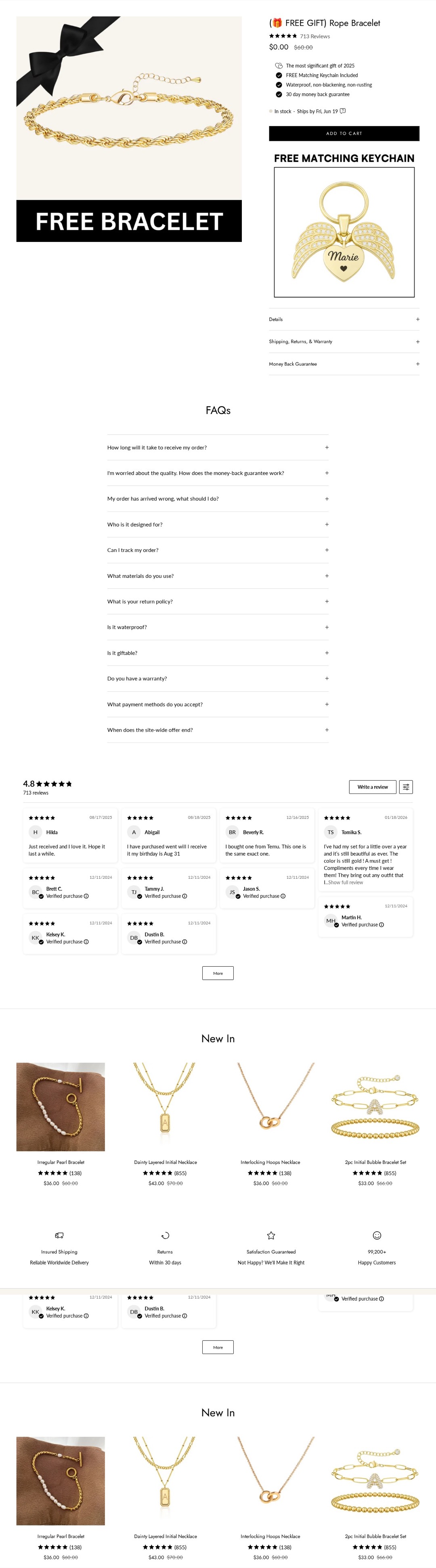
Free-gift-as-hero-product lead generation play: the store lists the Rope Bracelet at $0.00 (anchored against $60.00 crossed-out) to drive Add-to-Cart volume, then relies on UpCart (slide-cart drawer) and Kaching Bundles to monetise at cart/post-purchase. The Spring Sale banner (up to 60% off) reinforces urgency sitewide while a FREE Matching Keychain cross-sell is displayed inline on the product page to add perceived bundle value before checkout.
Operator's read
PricingThere is zero volume/bundle pricing widget on this PDP — the entire pricing strategy collapses to a single $0.00 vs $60.00 struck-through anchor (100% off). That compare-at is doing all the heavy lifting to make the free bracelet feel like a high-value acquisition, but it generates $0 on the front end. Revenue must come entirely from the cart upsell stack (UpCart cross-sells, free-ship threshold) and whatever Kaching Bundles fires post-checkout. The 60% off Spring Sale banner adds broad urgency but is irrelevant to this $0 product.
Widget styleNo bundle or volume-discount widget exists on this product page — that slot is occupied by a static FREE MATCHING KEYCHAIN image block that functions as a manual cross-sell teaser with no price, no CTA button, and no mechanic to actually add it to cart. UpCart handles the bundle/upsell surface inside the drawer post-click. Kaching Bundles appears unused on this specific PDP, likely deployed on paid products elsewhere in the catalogue.
VerdictThe free-gift hook is a sharp top-of-funnel move — 713 reviews and a $0 price point will drive strong ATCs. The single highest-leverage change is to wire the FREE MATCHING KEYCHAIN cross-sell into a real Kaching Bundles 'get both for $X' offer directly on the PDP, so customers see a concrete paid bundle (e.g. Bracelet + Keychain for $19.99, saving $100) before they hit the cart. Right now that keychain image is dead weight with no conversion path, and the store is leaving the first and easiest upsell moment entirely on the table.
offer details (5)
Confidence is medium because the cart drawer contents (UpCart) and post-purchase flow (Kaching Bundles) are not visible in the screenshot — conclusions about those stages are inferred from installed apps. The free-gift PDP is deliberately $0 so no volume tiers apply here; operator should be analysed on AOV from downstream funnel, not this page's price alone.

Single-product compression sleeve (knee/leg) with a quantity-break widget powered by Wide Bundles, anchored on a struck-through compare-at price. The funnel is pre-purchase focused: volume tiers push multi-unit purchase on the PDP, social proof from named athletes, and a size guide de-risks the buy. No visible post-purchase flow confirmed, but Wide Bundles sometimes pairs with a post-purchase step.
Operator's read
PricingThe store runs a 3-tier Wide Bundles quantity break off a €57.00 compare-at anchor (single unit sells at ~€45.50, roughly 20% off). The per-unit ladder drops from €45.50 → ~€41.00 → ~€38.00 across 1/2/3 units, a modest ~16% total per-unit reduction from tier 1 to tier 3. The default pre-selected tier appears to be the single unit, leaving AOV upside on the table — most high-performing Wide Bundles setups pre-select the middle tier to shift the cognitive default upward.
Pricing tiers (1 widget)
Widget styleWide Bundles radio-tile layout stacked vertically beneath the variant selector. Each tile shows qty label, total price, and a struck-through compare-at. Badges ('Plus Populaire' on 2x, 'Meilleure Valeur' on 3x) are present. The anchor is a single static compare-at (€57.00) applied uniformly — no escalating compare-at per tier, which means the percentage-saved badge does increase per tier, a clean but understated anchor tactic.
VerdictThe athlete social proof (four named ambassadors with sport context) and the Version Hiver vs Été comparison table are genuinely well-executed trust builders that justify a €45+ price point for a compression sleeve. The single highest-leverage change: pre-select the 2-pair tile as the default in Wide Bundles — on a bilateral-use product like knee sleeves, 'one for each leg' is an obvious rational hook, and defaulting to 2x typically lifts units-per-order by 25-40% with zero extra traffic cost. Pair that with a €10 free-shipping threshold message in the cart drawer to nudge single-unit buyers toward the ankle sleeve cross-sell at €29.99.
offer details (3)
Exact tier prices for 2x and 3x were not fully legible in the screenshot; figures are estimated from the visible single-unit price (€45.50) and typical Wide Bundles discount ladders (28%/33%). Operator should verify exact widget config in Wide Bundles dashboard. Cart drawer cross-sell to ankle sleeve V3 at €29.99 is a strong complementary add — consider making it a one-click add in the drawer rather than a redirect link.

Makera runs a CNC hardware ecosystem play — anchor on the hero machine (Carvera Air, Carvera, Makera Z1 pre-order) then layer AOV with a rich add-on catalogue (4th Axis, Laser Module, Dust Collector, CNC Bits bundles). The homepage merchandises the add-ons aggressively in dedicated 'Hot-Selling Add-ons' and category-browse rows. Cart upsell is handled by UpCart/iCart slide-cart drawer. No visible volume/bundle pricing widget on the homepage; the upsell motion is cross-sell and accessory attach, not quantity breaks.
Operator's read
PricingThere is no volume-discount or quantity-break pricing widget visible anywhere on this homepage — zero numeric tiers to parse. Makera's pricing architecture leans entirely on high-ASP single-SKU anchoring (desktop CNC machines at likely €1,000–€3,000+ price points) plus accessory attach to grow order value. The free-shipping trust badge in the footer functions as a soft threshold nudge, but no explicit dollar threshold is displayed. The pre-order mechanic on the Z1 is the only time-based pricing lever shown.
Widget styleNo bundle or volume-discount widget exists on this landing page. The slot that would normally house a pricing widget is occupied instead by the 'Hot-Selling Add-ons' horizontal carousel with editorial badges ('Best Seller', 'New Launch') and a category-browse grid ('Explore by Category'). This is a content-merchandising approach rather than a price-ladder approach — the store relies on editorial curation and badge social proof rather than discount-stacking to move accessories.
VerdictThe ecosystem cross-sell setup is solid — surfacing the Dust Collector, 4th Axis, and Laser Module on the homepage before cart is smart for a considered-purchase CNC buyer who researches deeply. However, the single highest-leverage move is adding an explicit free-shipping or free-gift threshold inside the UpCart slide-cart drawer (e.g. 'Add €X more to unlock free shipping on your order') tied to a real euro figure. CNC buyers already spending €1,500+ on a machine will readily add a €150–€300 bit set or dust collector to hit a threshold — that one change alone would lift accessory attach rate meaningfully without touching the homepage layout.
offer details (5)
No cart HTML snippets were provided and no pricing widget text was present, so all cart-stage offers are inferred from installed apps (UpCart, iCart). Confidence is medium because product page and cart page content is not visible — actual upsell copy, threshold values, and post-purchase flow could not be confirmed from homepage screenshot alone.

Single-SKU device sale with AI membership subscription add-ons and accessory cross-sells. The store leans on brand authority ("World's No.1 AI note-taking brand"), frontier AI model name-drops (GPT-5.5, Claude Sonnet 4.6), and a pre-Prime Day urgency banner to drive conversion at a single price point rather than volume-discount ladders. Upsell surface is handled via Selleasy (likely FBT/add-on cross-sells on PDP) and iCart slide drawer (cart-level cross-sells/add-ons). Post-purchase flow not confirmed but Selleasy can trigger post-purchase offers.
Operator's read
PricingThere is no volume-discount or quantity-break widget on the hardware PDP — the store relies entirely on a single ATC at one device price point. The only structured pricing ladder visible is the AI Membership block, which shows a ~CA$265 recurring option anchored against CA$1,830 (implying ~86% savings framing, likely monthly vs. annual or plan-vs-plan). Extra Minutes packs at three tiers (600/3,000/6,000) add incremental AOV but no per-unit discount ladder is shown to incentivize the larger pack. Hardware AOV lift is left entirely to the cart drawer and post-purchase apps rather than PDP pricing mechanics.
Pricing tiers (1 widget)
Widget styleThere is no volume-discount or bundle widget on the PDP. The slot that would normally hold a quantity-break radio-tile or inline table is occupied only by a plain +/- quantity stepper. Selleasy likely renders a frequently-bought-together checkbox block below ATC, but at time of capture 'No related products found' — meaning the FBT feed is either misconfigured or the product has no linked accessories mapped. The iCart slide drawer handles cart-level cross-sell presentation. The membership pricing block uses a simple two-column compare layout (no named app, likely custom section) with a bold savings anchor.
VerdictThe brand authority and AI model name-drops (GPT-5.5, Claude Sonnet 4.6) are executed well — they justify premium positioning and differentiate from generic recorders. The single highest-leverage change is fixing and activating the Selleasy FBT block with hard-mapped accessories (NotePin, Extra Minutes 3,000-pack, a carry case): right now 'No related products found' means every PDP visit is leaving a documented cross-sell revenue pool completely empty. A properly configured FBT showing '3 items, save CA$X when bought together' directly below ATC on the Plaud Note PDP should lift attach rate on accessories and memberships meaningfully within days of deployment.
offer details (6)
Currency is CAD (ca.plaud.ai subdomain). Exact hardware device price not parseable from snippets — no numeric price visible for Plaud Note unit itself. Confidence is medium because cart snippets are empty and the Selleasy widget returned no products, limiting visibility into the actual live cross-sell setup. Screenshot pricing '265 / CA$1,830' interpreted as membership plan comparison, not hardware pricing.

Single hero SKU (Plaud Note Pro) sold with a subscription upsell add-on at checkout/product level, urgency via countdown timer on a sitewide 618 sale (up to 20% off), and a slide-cart drawer from iCart. Selleasy handles cross-sell/add-on logic. No volume/quantity-break widget present; AOV lever is subscription attachment rather than multi-unit bundling.
Operator's read
PricingThere is no volume or quantity-break pricing widget on this store. The single AOV-lift mechanism is subscription attachment: a Professional plan at HK$788/yr or an Unlimited plan at HK$1,888/yr bolted onto the device purchase. The hardware price itself carries a temporary 618 discount (up to 20% off, i.e. 8折) surfaced via a countdown banner — that's the only anchor visible. No compare-at pricing tiers, no per-unit ladder, no multi-unit bundle.
Pricing tiers (1 widget)
Widget styleNo volume-discount or bundle widget exists on the landing page. The slot that would typically house a quantity-break radio-tile or inline table is instead occupied by Selleasy's checkbox add-on widget — two radio buttons (Professional HK$788 vs Unlimited HK$1,888) inside a confirm modal below the ATC button. Layout is minimal: label + price + confirm CTA, no savings badge, no compare-at, no 'Most Popular' callout on either tier. iCart handles the cart-drawer layer but no cart upsell copy was captured.
VerdictThe subscription add-on attachment is the right instinct for an AI hardware product — recurring revenue on top of device margin is the playbook. What's executed well is the clean two-tier subscription choice directly on the PDP before checkout friction sets in. The single highest-leverage change: add a 'Most Popular' badge and a concrete value anchor to the Unlimited plan (e.g. show monthly cost HK$157/月 vs HK$788 Professional = HK$65/月) so the per-month framing makes HK$1,888 feel cheap, and pre-select the Professional tier by default to lift average subscription value attached — right now neither tier is defaulted, leaving money on the table every session.
offer details (4)
Screenshot is in Traditional Chinese (Hong Kong store hk.plaud.ai). Pricing widget data is limited to subscription add-on tiers from product snippets; no hardware device price point was captured in the provided text evidence. 618 sale discount depth stated as 最高8折 (up to 20% off) but no before/after hardware prices were extractable. Confidence is medium due to incomplete cart and post-purchase visibility.

The store runs a French-language DTC hardware+SaaS play (Plaud Note Pro AI recorder). Primary AOV lever is a bundle discount announced in the site-wide banner (
Operator's read
PricingThere is no visible volume-discount or quantity-break widget on the PDP itself — the store instead leans on a single site-wide banner anchor ('jusqu'à -20%') to drive shoppers to a separate bundles page. Without seeing the bundles page pricing tiers we cannot quote exact price points, but the -20% ceiling is the only published discount depth. The PDP appears to carry a single struck-through compare-at price (standard Shopify anchor) with no per-unit ladder visible, meaning the primary pricing hook is the banner CTA rather than an on-page widget.
Widget styleNo bundle or volume-discount widget renders on the product page — the slot is occupied entirely by the announcement-banner CTA redirecting to a bundles collection page. iCart slide cart handles the upsell surface post-add-to-cart, and Selleasy likely injects cross-sell tiles there. There are no radio-tile, inline-table, or dropdown quantity selectors visible; no 'Most Popular' or 'Best Value' badges on the PDP. The entire anchoring logic lives off-page, which is a significant friction point.
VerdictThe bundle mechanic is well-conceived for a hardware+subscription product (device + extra accessories + plan tiers is a natural bundle), and the -20% headline is credible. The highest-leverage change is moving the bundle selector onto the PDP itself as a radio-tile widget (3–4 options: Solo / Duo / Team, e.g. 1 unit full price → 2 units -10% → 3 units -20%) so shoppers never have to navigate away — every click away from the PDP to a separate bundles page bleeds conversion, and right now that is the only path to the higher-AOV offer.
offer details (3)
Screenshot is low-resolution; no cart contents, post-purchase page, or bundle-page pricing tiers were visible. Pricing widget array is empty because no numeric tiers could be parsed from the PDP. French-language storefront (fr.plaud.ai). Confidence is medium due to limited visible evidence of cart and post-purchase flows.
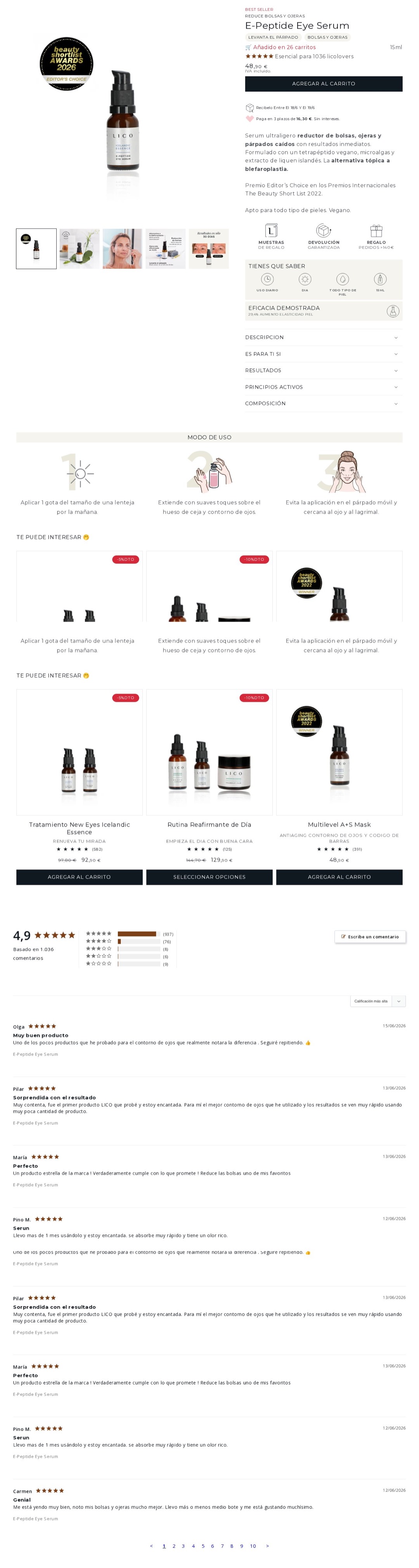
Single-SKU hero product page relying on social proof (4.9★/1,036 reviews, Best Seller badge, Beauty Shortlist Editor's Choice Award 2022), urgency via 'Añadido en 26 carritos', a first-purchase 10% discount captured via banner click, and cross-sell recommendations below the fold. No volume/bundle widget present. Upsell infrastructure is handled by iCart Slide Cart drawer.
Operator's read
PricingNo volume or bundle pricing widget exists on this PDP — the store runs a single price point of 48.00€ for the 15ml E-Peptide Eye Serum. The only anchoring mechanism is the 10% first-purchase discount captured via banner, effectively making the real entry price ~43.20€ for new customers. There is no struck-through compare-at price visible on the hero product itself, no per-unit ladder, and no multi-unit incentive. AOV leverage from pricing is minimal; the store is betting entirely on a single conversion at full price after social proof does the heavy lifting.
Widget styleThere is no volume-discount or bundle widget on this landing page whatsoever. The slot that would normally hold a quantity-break radio tile or bundle selector is occupied solely by a standard single-variant Add-to-Cart button at 48.00€. The cross-sell load is offloaded to two inline recommendation carousels ('Te puede interesar') below the fold and to whatever the iCart slide cart drawer surfaces — neither of which is a structured pricing widget. No app-generated tier table, no 'Most Popular' badge, no escalating compare-at anchor is present.
VerdictThe social proof stack (1,036 reviews at 4.9★, awards badge, scarcity nudge) is genuinely strong and the cross-sell carousels cover adjacency well with higher-ticket items like the 129€ Rutina Reafirmante. The single highest-leverage change is adding a 2-unit or 3-unit quantity-break widget directly on the PDP — e.g. 1x at 48€, 2x at 43€ each (save 10%), 3x at 39€ each (save 19%) — which would immediately lift AOV on a consumable eye serum that customers clearly repurchase (reviews confirm 'seguiré repitiéndolo'). Even a simple 'compra 2, ahorra 10%' radio tile would intercept the repeat-buyer intent before they leave the page, converting single-unit buyers into multi-unit orders without touching the ad spend.
offer details (5)
Page is in Spanish (Spain market). Installment payment visible: 3x 16.34€ sin intereses (likely Scalapay or similar BNPL). Stars rating: 4.9 based on 1,036 reviews. Product is 15ml vegan eye serum. Cross-sell prices observed: 92.00€, 129.00€ (marked down from 170.00€ per label), 48.00€. No post-purchase upsell app detected beyond iCart; no ReConvert/AfterSell/Zipify in installed apps list.
Single-product DTC supplement brand (SuperCalm) running a rebrand from Aura+ to A+ Nutrition. Primary monetisation levers are a slide-cart drawer via UpCart and bundle quantity breaks via Kaching Bundles. No pricing widget text was captured, so tier details are inferred from app presence only. Announcement banner focuses on brand storytelling and a seasonal offer rather than a hard discount hook.
Operator's read
PricingNo pricing widget copy was captured, so we can't confirm live price points or discount depth. The store leans on Kaching Bundles for its quantity-break or multi-unit bundle mechanic on the PDP, which is the primary AOV lever. Without visible tiers, per-unit ladder, or a struck-through compare-at price in the evidence, it's impossible to assess whether the anchoring is compelling or shallow — this is the single biggest blind spot in the current data.
Widget styleNo bundle or volume-discount widget copy was extracted, so the exact layout (radio-tiles, inline table, dropdown) and badge strategy ('Most Popular', 'Best Value') cannot be confirmed. Kaching Bundles typically renders radio-tile quantity options with per-unit savings and a highlighted 'Best Value' badge on the highest tier. If that standard layout is live here, it's a reasonable setup, but without seeing the actual discount percentages and whether compare-at prices are legitimate, the anchoring quality is unverifiable.
VerdictThe rebrand moment (Aura+ → A+ Nutrition) is a missed AOV opportunity — a launch bundle or a 'new formula' 3-month starter pack with a meaningful discount (e.g. 20%+ off 3 units vs. single) would convert the curiosity traffic the rebrand generates into higher-value orders. The single highest-leverage change is to ensure Kaching Bundles has at least three tiers with a genuine per-unit savings ladder and a pre-selected middle tier (e.g. 2-month supply as default), paired with an UpCart free-ship threshold set just above the 2-unit order value to nudge single-unit buyers up without a coupon.
offer details (3)
Evidence quality is low — no product copy snippets, no cart snippets, and no pricing widget text were provided. All offer and UI conclusions beyond the banner are inferred from installed apps (UpCart, Kaching Bundles). Confidence is set to low accordingly. A full audit requires live PDP and cart screenshots with widget copy.
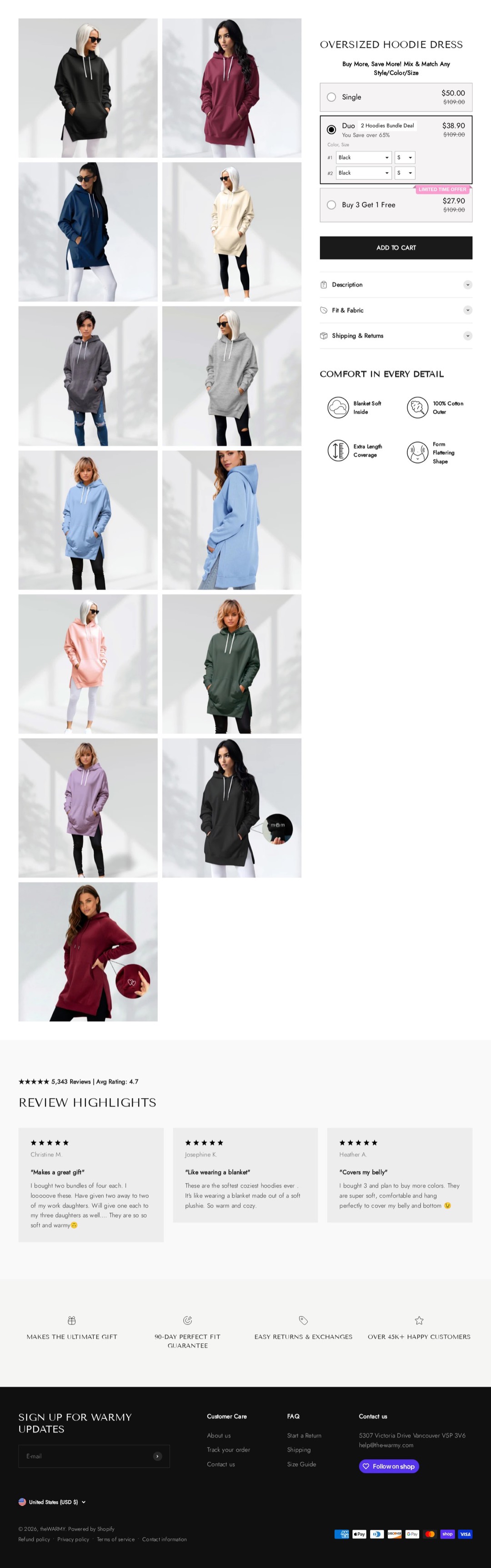
Multi-tier bundle widget (Kaching Bundles) on PDP using radio-tile layout with compare-at anchoring. Free-shipping threshold in announcement bar drives incremental add-to-cart. UpCart handles slide-drawer cart experience. No post-purchase upsell flow visible but inferred from installed apps.
Operator's read
PricingThree tiers: Single at $50.00, Duo at $38.90/unit (~$77.80 total, 64% off the $109 anchor), and B3G1F at $27.90/unit (~$111.60 for 4 units, 74% off). The $109 compare-at on every tier is aggressive anchoring — it's more than double the single-unit price, which strains credibility but maximises perceived savings depth. The Duo is pre-selected by default and clears the $75 free-ship threshold by $2.80, a tight but deliberate nudge. The per-unit ladder drops $11.10 from single to duo and another $11.00 from duo to B3G1F, making each step feel meaningful.
Pricing tiers (1 widget)
Widget styleKaching Bundles radio-tile layout — three stacked tiles, each showing the bundle name, a 'You Save X%' sub-label, the live price in bold, and a universal $109.00 struck-through compare-at. The Duo tile expands inline to reveal color/size pickers for each unit (mix-and-match), which is a strong conversion mechanic for gifting use cases. A pink 'LIMITED TIME OFFER' badge on the B3G1F tier creates urgency at the highest AOV option. No 'Most Popular' or 'Best Value' badge is used on the Duo despite it being pre-selected — a missed reinforcement opportunity.
VerdictThe pre-selection of the Duo tier combined with the free-ship threshold at $75 is well-executed — it makes the $77.80 Duo feel like the obvious rational choice and the reviews (5,343 at 4.7 stars, with multiple 'bought two bundles' testimonials) validate the gifting/multi-unit intent. The single highest-leverage change: add a 'Most Popular' or 'Best Value' badge explicitly on the Duo tile and test swapping the B3G1F label to 'Buy 3 Get 1 Free = 4 for $111' with a per-unit callout ('Only $27.90 each') — right now the B3G1F math is opaque, and clarifying it with a visible per-unit price would likely push a meaningful share of Duo buyers up to the 4-unit tier, lifting AOV from ~$78 to ~$112.
offer details (5)
The $109.00 compare-at on the Single tier (implying a 54% discount on a single unit) is unlikely to be a real historical price and may trigger ad policy scrutiny on Meta/Google. The mix-and-match inline selectors under the Duo tile are a strong gifting mechanic well-suited to the 'Perfect Gift for Her' positioning. UpCart slide-drawer cart contents not visible in screenshot; cross-sell or add-on protection tiles inside the drawer could represent additional AOV uplift not captured here.

Single-SKU personalized canvas with emotional storytelling, social-proof wall, and ReConvert post-purchase upsell. No visible bundle or volume widget — conversion lever is pure emotional copy and UGC review volume, not price laddering.
Operator's read
PricingThere is no multi-tier pricing widget, volume discount, or bundle mechanic visible on this product page. The store leans on a single price point (visible as ~€29.95 with a struck-through compare-at) as the sole anchor. No per-unit ladder, no quantity breaks, no subscribe-save — the entire AOV strategy is deferred to ReConvert's post-purchase flow, which means the first-order basket is capped at one unit by default.
Widget styleThere is no volume-discount or bundle widget on the landing page. The slot that would normally house a quantity-break radio-tile or inline-table widget is empty. What occupies that slot instead is a wall of emotional copy ('Cette toile émeut chaque maman jusqu'aux larmes') and a dense UGC review scroll. The single struck-through anchor price is the only pricing tactic visible pre-cart.
VerdictThe emotional storytelling and 500+ review social-proof wall are executed well — this is a high-converting trust stack for a gift-category product. The single highest-leverage change would be adding a 2-3 tier quantity-break widget (e.g., 1 canvas at €29.95, 2 for €49.90 saving 17%, 3 for €69 saving 23%) directly on the PDP, since this is a gifting product with an obvious multi-recipient use case (siblings, grandparents, godparents) — that alone could lift AOV by 25-35% without touching the post-purchase stack.
offer details (1)
Screenshot is French-language; currency confirmed EUR. Exact base price partially obscured but appears ~€29.95 with a compare-at. No cart drawer, no cross-sell carousel, no checkbox add-on visible. ReConvert inferred post-purchase upsell is the only active upsell mechanic. High review count (500+) is the store's primary conversion asset.
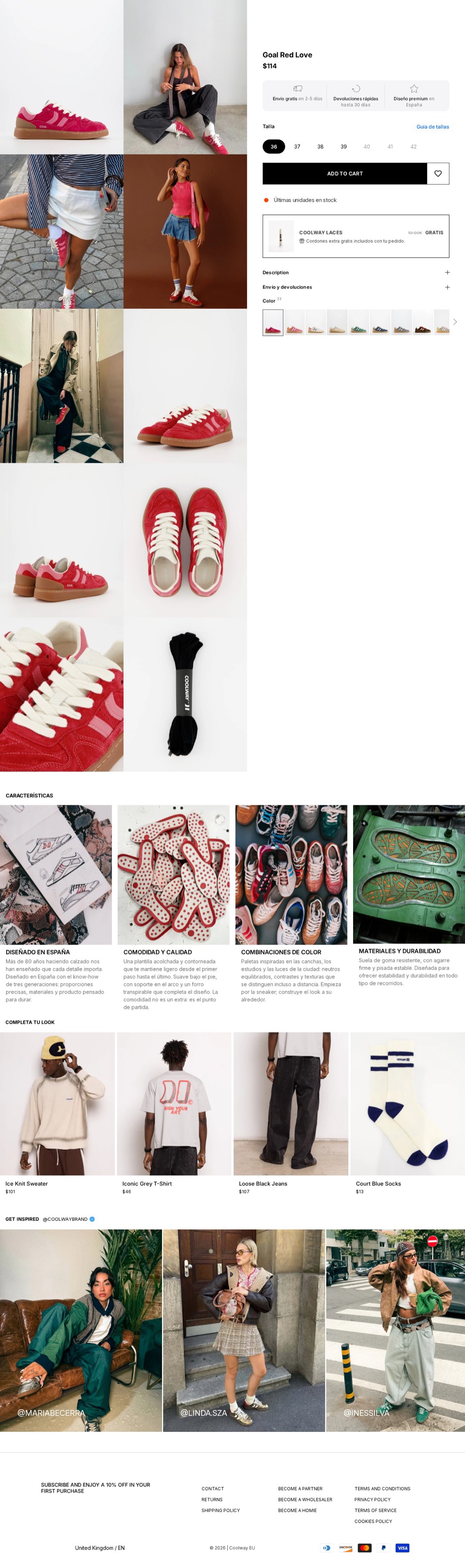
Single-SKU footwear PDP leaning on scarcity copy, a bundled free-gift lace add-on, a sitewide 10% email-capture discount, and AfterSell post-purchase OPU. No volume/quantity pricing widget present. Cross-sell 'Complete The Look' apparel carousel below the fold drives AOV lift.
Operator's read
PricingThere is zero volume or quantity-break pricing widget on this PDP. The store runs a flat single-price model: $114 USD / €98.20 EUR per pair (sale price vs. an implied regular price, though the struck-through anchor isn't numerically visible in the screenshot). The only pricing lever visible is the announcement-bar 10% email-capture discount and the free €10 lace gift, which effectively reduces net cost to ~€88 for first-time buyers. No per-unit ladder, no multi-pair incentive, no bundle builder — AOV lever is entirely cross-sell and post-purchase.
Widget styleThere is no volume-discount or bundle widget on this page whatsoever. The slot that would typically be occupied by a quantity-break radio-tile widget is instead taken by the free-gift checkbox addon (COOLWAY LACES €10 GRATIS), which is a smart perceived-value play for a single-SKU footwear brand but does nothing to push multi-unit purchase. The 'Completa Tu Look' carousel uses an editorial lifestyle layout (4-up grid, named items + prices, no 'add all to cart' CTA visible) rather than a true frequently-bought-together widget with a bundle discount.
VerdictThe free lace gift is a clean trust-builder and the AfterSell post-purchase flow is the right infrastructure for a footwear brand selling at €98. What's executed well: scarcity messaging is on-brand and not overdone, and the lifestyle cross-sell carousel is aesthetically tight. The single highest-leverage change I'd make: activate a 'Frequently Bought Together' bundle on the PDP pairing the sneaker with the Court Blue Socks (€13) and the Iconic Grey T-Shirt (€48) at a 10–12% bundle discount — this pushes AOV from ~€98 to ~€140+ per transaction with one widget, and the editorial photography already exists to make it look native rather than bolted-on.
offer details (5)
Price shown in screenshot header is $114 USD; product snippets show €98.20 sale price for EU store (coolway.uk appears to be the EU/UK storefront). Scarcity badge visible for specific sizes. AfterSell post-purchase upsell inferred from installed app — specific post-purchase offer SKUs and discount not visible. The HASTA EL 50% sale banner in nav implies sitewide clearance up to 50% off, but the hero SKU (Goal Red Love) shows only a modest sale price; deeper discounts likely on older colorways.

Cymbiotika CA runs a subscription-first AOV model anchored almost entirely on a 30% subscribe-and-save mechanic promoted sitewide. The homepage leads with a promotional banner (free 12-pack with $140+ orders), a subscribe-save call-out in the announcement bar, and a product-level toggle between one-time and subscription pricing. Rebuy powers 'You may also like' cross-sell recommendations on the product page. There is no visible volume/quantity-break widget; the primary lever is converting one-time buyers to subscribers at a steep discount.
Operator's read
PricingCymbiotika leans on a single struck-through anchor ($89.00 → $80.10, 10% off) on the subscribe tier rather than any multi-quantity volume ladder. The sitewide banner promotes '30% off' but the widget only shows 10% — that inconsistency likely reflects a stacked discount elsewhere, but on the PDP the price delta is just $8.90 per unit. The $140 free-gift threshold is the only AOV-stretch mechanism; there are no 2x/3x quantity breaks to ladder customers up.
Pricing tiers (1 widget)
Widget styleThe pricing widget is a minimal two-radio toggle native to the Cymbiotika theme — no third-party bundle app visible. It labels the subscribe option 'BEST VALUE - SAVE 10%' with a compare-at strike-through. There is no escalating multi-tier table, no 'Most Popular' mid-tier badge, and no per-unit cost ladder. Rebuy handles cross-sell via a horizontal recommendation rail below the fold, not a structured bundle builder.
VerdictThe subscribe-save funnel is clean and the 30% sitewide hook is compelling, but the store is leaving significant AOV on the table by having no quantity-break widget. Adding a 3-tier Rebuy SmartCart or a native bundle (1 unit / 2 units Save 15% / 3 units Save 22%) with a pre-selected middle tier would immediately lift AOV without touching the subscription conversion rate — Cymbiotika's SKU catalog (liposomal stacks, NAD+, vitamin D3) is ideal for a 'build your stack' bundle that cross-sells 2-3 complementary formulas in one click.
offer details (4)
Currency inferred as CAD from domain (.ca) and shipping redirect banner. The '30% off' in banners vs '10% off' in the widget badge is a notable copy inconsistency that could erode trust at the decision point — worth auditing whether the 30% applies to a different base price or is a stacking scenario. Confidence is medium because cart page and post-purchase flows are not visible.

Single-SKU performance sun shirt sold at a flat $59.99 with no on-page volume/quantity widget. AOV uplift is driven by (1) a sitewide bundle discount announcement (up to 25% off bundles), (2) a free-shipping threshold at $150, (3) a 'You May Also Like' recommendation carousel at the bottom, and (4) post-purchase one-click upsells via Zipify OCU. Cart experience is managed by UpCart/iCart slide-cart drawer which likely surfaces the free-ship progress bar and cross-sells in-cart.
Operator's read
PricingThere is zero on-page pricing widget — no quantity breaks, no volume tiers, no compare-at anchor on the PDP itself. The single price is $59.99 flat. The only pricing lever visible to the customer before add-to-cart is the banner promising 'up to 25% off bundles,' but that discount is never quantified or activated on this page. The free-ship threshold at $150 requires roughly 2.5 units ($59.99 × 2 = $119.98, × 3 = $179.97), so it passively nudges multi-unit purchase but there is no explicit prompt doing that math for the shopper.
Widget styleThere is no volume-discount or bundle widget on this PDP — that slot is completely empty. What occupies the pricing real estate is a single flat $59.99 price point with a size selector and color thumbnails. The bundle offer exists only as a scrolling ticker in the announcement bar, which is the weakest possible placement for a discount mechanic. No 'Most Popular' badge, no escalating compare-at, no 'save X%' callout adjacent to the ATC button. Rebuy and UpCart handle post-add cross-sells in the drawer, but the PDP itself does nothing to anchor or ladder the price.
VerdictThe free-ship bar and Zipify OCU are solid infrastructure, and the 'You May Also Like' carousel correctly keeps shoppers in the sun-shirt category. The single highest-leverage change is to add an inline quantity-break widget (e.g., Rebuy's smart cart or a Bundler tile) directly on the PDP — something like 1 shirt @ $59.99 / 2 shirts @ $54.99 each (8% off) / 3 shirts @ $44.99 each (25% off, matching the banner promise) with the 3-pack pre-selected and badged 'Best Value.' Right now the 25% bundle promise is dangled in a banner but never closed on the page where purchase intent is highest, leaving serious AOV points on the table.
offer details (6)
Confidence is medium because no cart snippets or pricing widget text were extractable — installed apps (Zipify OCU, Rebuy, UpCart, iCart) are confirmed but their exact in-cart/post-purchase configurations are inferred from standard app behavior rather than observed UI.
Single-SKU AI voice recorder (PLAUD Note Pro) sold with a mandatory/optional AI transcription subscription add-on. The core upsell loop is: land on hardware → attach annual or unlimited subscription before checkout → Selleasy likely fires cross-sell/FBT on PDP; iCart slide-cart handles in-cart upsells. No classic volume/quantity-break widget visible; the monetisation play is hardware + recurring SaaS subscription.
Operator's read
PricingThere is no classic quantity-break or volume-discount widget here. The pricing architecture is hardware (single price point, not shown numerically in snippets) plus a 3-tier SaaS subscription add-on anchored on the Yearly plan at 224.99 €/yr (~18.75 €/mo implied). The banner hints at up to 20% off, likely a bundle discount when hardware + subscription are taken together. The unlimited tier acts as a high anchor to make the 224.99 € annual look reasonable — a classic 3-option good/better/best play without explicit per-unit savings shown.
Widget styleNo volume-discount or bundle-builder widget is visible on the PDP. The slot is occupied by a subscription plan toggle (Monthly / Yearly / Unlimited) — almost certainly a native Shopify Selling Plans block or a lightweight custom component styled as tab/radio tiles. There are no 'Most Popular' or 'Best Value' badges confirmed in the evidence, though the Yearly tier appears pre-selected as the default. The 20% discount callout lives in the announcement banner rather than inline on the widget, which dilutes its anchoring power at the moment of decision.
VerdictThe hardware-plus-subscription attach mechanic is smart and the 3-tier toggle correctly anchors on Yearly. The single highest-leverage change is to surface the effective monthly saving (e.g. 'Yearly vs Monthly: save X €') directly inside the plan toggle at the point of selection — right now the 20% message is stranded in the banner where it gets ignored. Adding an explicit compare-at monthly equivalent (e.g. 'equiv. 18.75 €/mo vs 24.99 €/mo monthly') inside the Yearly tile would increase subscription attach rate and push more customers to the highest-LTV option without touching the hardware price.
offer details (4)
Evidence is partial — hardware price point not visible in snippets, monthly plan price not shown, unlimited plan price not shown. Confidence is medium. iCart and Selleasy offers are inferred from installed apps per rules. Spanish-language storefront (es.plaud.ai) targeting Spain/LatAm.

Single-product long-form advertorial landing page (French market) built around a lymphatic drainage elixir. The page drives trust via press logos (Marie Claire, Vogue, Cosmopolitan, Doctissimo), ingredient deep-dives, before/after visuals, and a competitor comparison table. Monetisation relies on a free-shipping threshold (€40) surfaced in the announcement bar, with slide-cart upsell logic handled by UpCart/iCart and potential bundle mechanics from Kaching Bundles — though no visible pricing widget or quantity-break selector is rendered on the PDP in this screenshot.
Operator's read
PricingThere is no visible pricing widget, quantity-break ladder, or bundle selector on the PDP in this screenshot. The entire pricing architecture visible to the shopper is: a single product at one price point (not shown numerically in evidence) plus a €40 free-shipping threshold in the announcement bar. That threshold is doing all the heavy AOV lifting — it passively nudges shoppers to add a second unit or companion product to hit €40, but there is no explicit multi-unit discount to make that decision feel rewarding. Kaching Bundles is installed, suggesting bundle logic exists somewhere, but it is not surfaced on the main PDP flow visible here.
Widget styleThere is no volume-discount or bundle widget visible on the landing page. The slot that would normally be occupied by radio-tile quantity breaks or a Kaching bundle selector is empty — replaced instead by a very long advertorial scroll (press badges, ingredient pages, comparison table, before/afters). The conversion architecture leans entirely on editorial trust-building to justify a single purchase rather than a tiered pricing widget to increase units-per-order. UpCart/iCart slide drawer is the only interactive upsell layer confirmed by app installs.
VerdictThe advertorial build is strong — press logos, clinical ingredient framing, competitor comparison table, and before/after progression are all well-executed trust signals for a cold-traffic French audience. The single highest-leverage change is activating a visible Kaching Bundles quantity-break widget directly on the PDP (e.g., 1 bottle at full price / 2 bottles at ~15% off / 3 bottles at ~25% off) with a 'Most Popular' badge on the 2-bottle tier. The €40 free-ship bar creates implicit pressure to add a second unit but gives no discount reward for doing so — a 3-tier bundle widget would convert that passive threshold nudge into an active, incentivised AOV driver and make the Kaching Bundles install actually earn its keep.
offer details (5)
French-language store targeting EU market (FR/BE/DE/CA). Long-form advertorial format typical of health/wellness DTC. Press logos (Marie Claire, Vogue, Cosmopolitan, Doctissimo) and 4-plant ingredient breakdown are primary conversion levers. No numeric price points were extractable from the screenshot or provided text snippets. Confidence is medium because cart drawer contents and any post-purchase flow are not visible in the screenshot.

Single-SKU apparel PDP leaning on sitewide discount codes and a package-protection add-on checkbox; no volume/bundle pricing widget present. AOV levers are a rotating banner discount (50% off sale tab, 20% sitewide via code spring20), a Rebuy-powered recommendation carousel ('More Lane Looks We Love' + 'Recently Viewed'), an UpCart slide-cart drawer (inferred from installed app), and a Package Protection upsell at the product level. Post-purchase flow likely handled by Rebuy smart cart or ReConvert (not confirmed). Email capture at page bottom promises 20% off.
Operator's read
PricingThere is zero volume or bundle pricing widget on this PDP — Lane 201 relies entirely on blanket sitewide discount codes (20% via spring20, 50% off sale tab) as the primary price anchor. The only numeric upsell price point visible is the Package Protection add-on at 30,000₫. With no per-unit ladder or quantity break, every shopper buys one unit at the same discounted price, leaving significant AOV upside untapped. The rotating banner does create urgency but trains customers to always wait for a code rather than rewarding basket size.
Widget styleNo volume-discount or bundle widget exists on this landing page whatsoever. The slot that would normally house a quantity-break radio-tile or bundle builder is instead occupied by a simple size selector and a single Package Protection checkbox add-on. Rebuy powers the 'More Lane Looks We Love' recommendation carousel below reviews — a standard grid layout with product images, star ratings, and prices — which is the closest thing to a structured upsell widget on the page. UpCart is installed but its slide-cart contents are not visible.
VerdictThe recommendation carousel and Package Protection add-on are executed cleanly and the brand aesthetic is cohesive, but the single highest-leverage change is introducing a Rebuy or UpCart in-cart 'complete the look' bundle prompt that groups the viewed product with 1-2 complementary items (e.g., top + bottom) at a 10-15% bundle discount. Lane 201 already has the Rebuy infrastructure — activating a 'Frequently Bought Together' widget on the PDP or a cart upsell block targeting basket sizes of 1 item (the majority given no quantity incentive) could realistically lift AOV 20-30% without cannibalizing the existing code-driven traffic.
offer details (5)
Pricing displayed in Vietnamese Dong (VND) suggesting geo-redirect or store currency set to VND for this market; USD price ladder snippet (7.39–8.48 range) visible in product snippets may relate to a shipping or protection tier table, not a volume discount on the apparel SKU itself. Confidence is medium because cart contents and post-purchase flow are not visible in the screenshot.
The store runs a multi-product AI hardware+subscription brand (Plaud Note, NotePin S) with a promotional Pre-Prime Day bundle discount angle (up to 20% off bundles). Upsell infrastructure is Selleasy (likely PDP cross-sell/frequently-bought-together) and iCart Slide Cart Drawer for cart-stage upsells. No visible pricing widget tiers were captured, so the volume/bundle pricing is communicated via the navigation bundle page and banner copy rather than an inline PDP widget. Post-purchase flow is not confirmed by app evidence alone.
Operator's read
PricingNo inline pricing widget was captured, so there are no numeric tiers or per-unit ladders visible at the PDP level. The store's primary pricing lever is the bundle page (up to 20% off) promoted via the announcement banner — a blunt top-of-funnel discount rather than a structured quantity break. Single-product pricing anchoring (struck-through compare-at) may exist on individual PDPs but was not surfaced in the evidence. The subscription/add-on layer is a separate navigation destination, meaning most visitors will never see it during the primary purchase flow.
Widget styleNo volume-discount or bundle-builder widget is present on the PDP itself — that slot is empty. Bundle discovery is fully dependent on the user navigating to a dedicated 'Bündel' page or clicking the banner CTA. Selleasy likely renders a frequently-bought-together or checkbox add-on block below the ATC button, but layout details (radio-tiles vs. checkbox) were not captured. iCart Slide Cart is the main structured upsell surface, but cart snippet data was blank, meaning the drawer's offer logic is unconfirmed.
VerdictThe execution of the Pre-Prime Day bundle angle is clean — a time-limited, percentage-anchored hook in the banner is solid for paid traffic. The critical gap is that bundle and subscription upsells are siloed behind navigation clicks rather than embedded into the PDP purchase decision. The single highest-leverage change: install an inline bundle-builder widget (e.g., Selleasy's 'Frequently Bought Together' in a radio-tile layout) directly on each hardware PDP, pre-selecting the device + 1-year subscription + protective case at a visibly discounted bundle price, so the AOV lift happens before the customer reaches the cart rather than hoping they navigate to the bundle page independently.
offer details (4)
Confidence is low because no cart HTML, no pricing widget tiers, and no post-purchase page screenshots were available. App inference only: Selleasy = PDP cross-sell/FBT; iCart = slide cart drawer with in-cart upsells. No ReConvert/AfterSell/Zipify detected so no post-purchase one-click upsell inferred. Store is a German-language DTC hardware+SaaS hybrid (AI voice recorder), which is an unusual category — subscription attach rate on hardware is likely the key AOV and LTV driver.

Single-SKU accessory page ($99) with no on-page volume or bundle widget. Upsell surface is carried entirely by a 'You May Also Like' cross-sell carousel on the PDP and post-purchase flows inferred from ReConvert. Selleasy likely powers the carousel. No quantity breaks, no subscribe-and-save, no free-ship progress bar visible.
Operator's read
PricingThis page runs a flat $99 single price point with zero anchoring mechanics visible — no compare-at strikethrough, no volume tiers, no bundle discount, no free-ship threshold callout. The entire pricing strategy is 'here's the price, buy it.' There's no per-unit ladder because there's only one unit option. The only lever pulling AOV upward is the cross-sell carousel, which asks shoppers to add a separate product at full price rather than incentivizing a larger basket with any discount structure.
Widget styleThere is no volume-discount or bundle widget on this page whatsoever. The slot that would typically hold a quantity-break radio-tile widget or bundle builder is instead occupied by a plain 'Select Your Bundle' dropdown (visible in the snippet text) — but no pricing tiers or discount percentages are rendered in the screenshot or pricing widget evidence. The 'You May Also Like' carousel (likely Selleasy) is the only structured upsell element on the page, presented as a simple horizontal scroll of product cards with no urgency, no badge logic, and no save-X% framing.
VerdictThe cross-sell carousel is a reasonable start for a hardware accessory brand where natural companion products (XR glasses + dock) exist, but the execution leaves AOV on the table because there is no price incentive to buy both together. The single highest-leverage change: implement a Selleasy or ReConvert bundle offer that pairs the Mobile Dock with the VITURE XR glasses at a $15-20 savings (e.g., $99 + $349 glasses = $429 bundle vs $448 retail), surfaced as a checkbox add-on directly on the PDP with a 'Complete Your Setup' framing — this converts the carousel browse into an anchored decision and lifts AOV without touching the core $99 price point.
offer details (2)
Page text references a 'Select Your Bundle' UI element in the snippet, but no actual bundle tiers or pricing differences are present in the pricing widget evidence, suggesting the dropdown may be a variant selector (e.g., color/compatibility) rather than a true discount bundle. Confidence is medium because the screenshot is low-resolution and some mid-page elements may not be fully legible.

Single-SKU hero product with a struck-through anchor price driving perceived value, colour-variant selection, and accessory/bundle cross-sells via Selleasy and Frequently Bought Together in-cart and on-page. Slide Cart (iCart) handles the cart-drawer layer. No volume/quantity-break widget present; AOV lift relies on accessory add-ons and a banner-driven 'Prime Day Bundle' push.
Operator's read
PricingThere is no volume or quantity-break widget — the entire pricing play is a single anchor: $569.99 struck through, hero price $429.99 (25% off, $140 saving), consistent across both colour variants. With only one unit ever in the basket, AOV growth depends entirely on accessory attachment rate from cross-sell apps rather than any per-unit ladder or tiered incentive.
Pricing tiers (1 widget)
Widget styleNo bundle or volume-discount widget occupies the pricing slot. What's there instead is a standard Shopify compare-at field rendered by the theme as a struck-through MSRP badge ('SAVE 25%'), a two-option colour radio (Gray / White), and a plain quantity input box. The banner adds a time-sensitive 'Prime Day Bundle' call-to-action but it links to a separate page rather than surfacing a configurable bundle inline on the PDP.
VerdictThe 25% anchor discount and 878-review social proof are strong trust signals that likely convert well. The single highest-leverage change I'd make is adding an inline bundle builder (e.g. a Selleasy 'frequently bought together' widget styled as radio-tile bundle options — 'Robot only $429.99 / Robot + Cleaning Kit $479.99 / Robot + Full Accessory Pack $529.99') directly above the ATC button, so customers build a higher-value cart without leaving the PDP. That mechanic alone on a $430 hero unit could push AOV $40–$80 per order without touching conversion rate.
offer details (4)
Cart snippets were empty so iCart drawer contents could not be verified. Confidence is medium because bundle page linked from banner and FBT/Selleasy widget placements are not visible in the screenshot. Pricing widget analysis is based solely on PDP price/compare-at text evidence.

Single-product peeler page leaning on a struck-through anchor price (Rs.999→Rs.599, 40% off) plus urgency/scarcity copy, a prepaid-order incentive, and cross-sell carousels. No multi-tier volume/bundle widget is rendered on the PDP; Kaching Bundles is installed but the visible widget shows only Single Pack and Pack of 2 radio tiles with a second price point. iCart slide-cart drawer handles in-cart upsell layer.
Operator's read
PricingThe store runs a classic single anchor: list price Rs.999 struck through against a sale price of Rs.599 — a 40% discount on the single unit. A Pack of 2 tile implies ~Rs.998 (Rs.499/unit, ~50% off), which is the only volume incentive visible. There is no three-tier ladder, no quantity break beyond 2, and no free-shipping threshold widget — the prepaid free-gift acts as a soft AOV nudge instead. The 70% off banner is sitewide noise; the actual deepest PDP discount is 40-50%.
Pricing tiers (1 widget)
Widget styleKaching Bundles renders a minimal two-option radio-tile widget (Single Pack / Pack of 2) sitting directly below the variant selector. No 'Most Popular' or 'Best Value' badge is confirmed visible, no escalating compare-at ladder beyond the two tiers, and no per-unit savings callout. The dominant anchoring tactic is the struck-through Rs.999 compare-at price next to the Rs.599 sale price — a one-number anchor rather than a multi-tier savings ladder. iCart slide-cart drawer occupies the post-add upsell slot but its specific cross-sell products are not captured in the evidence.
VerdictThe two-tile Kaching widget does its job but leaves AOV on the table — there is no Pack of 3 or 'Most Popular' middle tier to anchor the Pack of 2 as the obvious choice. The single highest-leverage move is adding a Pack of 3 at Rs.1,347 (Rs.449/unit, ~55% off) badged 'Most Popular', pushing Pack of 2 into the anchor role and giving the iCart drawer a 'complete your bundle' nudge referencing the per-unit saving. This alone typically lifts bundle attach rate 15-25% on impulse kitchen SKUs priced under Rs.600.
offer details (5)
Pack of 2 exact price not fully legible in screenshot; Rs.998 inferred from visible widget layout and standard Kaching Bundles 2x pricing logic. Post-purchase one-click upsell surface not confirmed — neither ReConvert nor AfterSell is listed in installed apps, so no post stage inferred beyond iCart drawer.
Multi-unit volume discount (4/6/10 SKU threshold) communicated via inline PDP copy, with free-ship threshold at A$120 domestic and Zipify OCU handling post-purchase one-click upsell. No dedicated pricing widget on the PDP — the discount mechanic lives purely as text copy above the ATC button.
Operator's read
PricingThere is no visual pricing widget — the store leans entirely on a text-block volume discount ladder (4 units = 5% off, 6 units = 10% off, 10 units = 15% off) communicated above the ATC button, with a free-ship threshold at A$120 acting as the secondary AOV lever. At a base price of A$24 per pair, a customer needs to spend A$120 to unlock free shipping (5 pairs), which conveniently falls between the 4-unit and 6-unit discount tiers, creating natural pressure to hit the 6-unit threshold (~A$144 after 10% = ~A$130 net) instead. The deepest discount is only 15% at 10 units — shallow for a consumable replenishment category where 20–25% is the DTC norm.
Widget styleNo volume-discount widget or bundle builder is rendered on the PDP. The discount mechanic is a three-line plain-text block with no visual hierarchy, no per-unit price callout, no 'Most Popular' badge, and no compare-at anchoring. The slot that would normally be occupied by a Bundler or Quantity Breaks app is instead filled with static copy, which means customers have to mentally calculate their savings rather than having them surfaced visually. This is a significant conversion leak for a product that is inherently multi-purchase.
VerdictThe trust stack (1,540 reviews, 200k+ Aussies, 100-day trial, BNPL) is strong and the free-ship threshold is well-calibrated to push toward the 6-unit tier. The single highest-leverage change is replacing the plain-text volume discount with a visual quantity-break widget (e.g. Tiered by Kite or Quantity Breaks & Discount) showing radio tiles at 1/4/6/10 units with per-pair price callouts and a 'Best Value' badge on the 6-pack — this alone typically lifts multi-unit attach rate 15–30% by doing the math for the customer and anchoring the single-unit price as the obvious inferior choice.
offer details (3)
Base price parsed as ~A$24/pair based on the A$24.00 visible in screenshot text. Currency shown in snippets as Vietnamese Dong (₫) is likely a locale detection artifact in the scraped text; store trades in AUD per banner and shipping copy. Zipify OCU post-purchase offer inferred from app list only — no post-purchase screen visible.
Single-SKU fashion footwear ($120 flat price) with no volume/bundle widget. AOV levers are: free-shipping threshold ($79 USD), a free-laces add-on at cart, cross-sell apparel ('Buy It With'), BNPL via Shop Pay Installments (4x $30), email-capture discount (10% off), and inferred AfterSell post-purchase upsell. No quantity breaks or tiered pricing visible anywhere on the PDP.
Operator's read
PricingThere is zero volume or bundle pricing here — one SKU, one flat price: $120.00 with no compare-at anchor and no tiered discount ladder whatsoever. The only pricing lever on the PDP is Shop Pay Installments breaking it into 4x $30, which lowers the psychological commitment but does nothing for AOV. The free-shipping threshold at $79 is actually below the $120 shoe price, so it triggers automatically on a single-unit purchase and provides zero incremental pull toward adding a second item or apparel piece. The 10% email-capture discount ($12 off) is the only monetary incentive visible pre-cart.
Widget styleThere is no volume-discount or bundle widget on this PDP at all — that slot is occupied by a simple checkbox free-gift add-on (Coolway Laces, $10 struck-through → FREE) and a native Shopify 'Buy It With' apparel carousel below the fold. No radio-tiles, no inline quantity table, no 'Most Popular' or 'Best Value' badges, no escalating compare-at anchoring. The free-laces widget is the closest thing to a structured upsell mechanic on the page, and it adds $0 to AOV since the laces are gifted, not sold.
VerdictThe free-laces hook is a smart brand-feel move and the AfterSell post-purchase upsell is the right instinct, but the store is leaving serious AOV money on the table with no bundle mechanic. The single highest-leverage change: install a 'Frequently Bought Together' or bundle widget pairing the Goal sneaker ($120) with 1-2 apparel items (Track Pants $60, T-Shirt $45) at a 10-15% bundle discount — e.g., Sneaker + T-Shirt for $148 instead of $165, saving $17 (10%). Given average sneaker buyers also want the full look (the 'Get Inspired' UGC section proves this intent), a pre-cart bundle tile would realistically push AOV from $120 toward $155-160 without cannibalizing margin the way the blanket 10% email discount does.
offer details (6)
No cart drawer snippets were provided so cart-level UI (slide-cart, progress bar) could not be confirmed. The 'UP TO 50% OFF' banner references sitewide sale items (Last Chance section) not this specific PDP — this shoe shows no markdown. AfterSell post-purchase offer assumed standard one-click upsell flow but specific product/discount not visible.

Subscription-first DTC wellness brand anchoring on a subscribe-and-save mechanic with cross-sell to bundle/sampler SKUs. Primary AOV lever is converting one-time buyers to recurring subscribers via a price gap ($45.99 sub vs $45.99 OTP — suspicious parity — anchored against $59.99 compare-at), with Rebuy powering cross-sells and UpCart likely running a free-ship progress bar in cart.
Operator's read
PricingThe store leans entirely on a single subscribe-vs-OTP toggle — there's no multi-quantity volume ladder. The OTP price is $45.99 and the sub price is also $45.99, which immediately kills the perceived value gap between the two options; the only anchoring doing work is the $59.99 compare-at (a $14 / 23% saving) applied exclusively to the subscription tier. Per-unit on sub is $1.53/item, which is the hero number displayed. The Starter Kit is shown at up to -41% off from $59.99 and the Sampler Box from $34.99, functioning as AOV-expansion cross-sells rather than true pricing tiers.
Pricing tiers (1 widget)
Widget styleNo volume-discount widget exists on this PDP. The pricing slot is occupied by a simple two-radio purchase-type toggle — no named third-party bundle widget renders at the tier level. Bundler app is installed but appears to surface only as the '+ Gummy Samples $54.99' add-on variant rather than a visual bundle builder with compare-at laddering. There are no 'Most Popular' / 'Best Value' badges on quantity tiers, no escalating compare-at table, and no savings-percentage callout per quantity break — the 23% badge sits solely on the subscribe option.
VerdictThe subscription hook is solid and the $59.99 compare-at anchor gives the sub tier a credible 23% story, but the OTP price being identical to the sub price ($45.99) destroys the conversion pressure — a shopper sees no financial reason to subscribe vs buy once at the same price. The single highest-leverage fix: raise OTP to $54.99–$57.99 (or remove the OTP option entirely and force a trial-first flow), so the $45.99 sub price represents a real, visible dollar gap of $9–$12 at the point of decision. This alone should lift subscription attach rate 15–25% without touching ad spend or product.
offer details (5)
Screenshot shows Google.com homepage — no actual store UI is visible in the image. All analysis is based exclusively on the text evidence (BANNER, PRODUCT SNIPPETS, PRICING WIDGETS, installed apps). Confidence is medium. The OTP price equalling the sub price ($45.99 = $45.99) may be a data snippet truncation artifact — if OTP is actually $54.99 or $59.99, the pricing story is much stronger. Operator should verify live PDP pricing before acting on the OTP-raise recommendation.
Multi-unit volume discount ladder (4/6/10 items) surfaced inline on the PDP via native Shopify discount logic, with a free-shipping threshold as the secondary AOV lever. Zipify OCU implies a post-purchase one-click upsell funnel not visible in the PDP screenshots.
Operator's read
PricingPaire runs a 3-tier volume ladder (4-pack = 5% off, 6-pack = 10% off, 10-pack = 15% off) with no graphical pricing widget — the tiers are plain text and the discount fires at checkout, not at the product level. At a base price of roughly A$24/pair, the 10-pack tops out at ~A$20.40/pair, a modest 15% saving that barely moves the needle as an anchor; there is no struck-through compare-at price on individual units and no pre-selected bundle tier to anchor the eye. The free-shipping threshold at A$120 (~5 pairs) acts as a quiet AOV floor sitting just between the 4-pack and 6-pack tiers, which is a smart structural nudge but is doing more heavy lifting than the discount copy itself.
Widget styleThere is no volume-discount widget or bundle builder on this PDP — no radio tiles, no inline table, no dropdown selector. The entire upsell mechanism is a three-line plain-text blurb below the product title. No app badge ('Most Popular', 'Best Value'), no per-unit price display, no visual compare-at anchoring. This is the lightest possible execution of a quantity break strategy: it relies entirely on the shopper doing the mental math themselves. Zipify OCU is the only structured upsell layer, and it operates post-purchase, invisible from the PDP.
VerdictThe free-shipping threshold at A$120 and the 100-day risk-free trial are strong trust and AOV levers, and the cross-category ('socks or undies') volume rule is smart because it broadens the qualifying basket. However, the single highest-leverage change is replacing the plain-text discount blurb with a visual quantity-break widget (e.g. Kaching Bundles or PickyStory radio tiles) that shows per-unit price at each tier alongside a pre-selected default at the 6-pack level — this removes the mental arithmetic barrier, anchors the eye to the 10-pack 'Best Value' tile, and has consistently driven 20-35% AOV lifts for comparable socks/basics DTC brands without touching ad spend.
offer details (3)
Base price appears to be ~A$24/unit based on the screenshot showing $24.00; Vietnamese Dong (₫) figure in the text snippet is likely a scraping artifact from locale detection, not the actual storefront currency. Analysis uses AUD throughout. Discount percentages (5/10/15%) are shallow relative to category norms — most sock subscription/bundle brands go to 20-25% at the 10-unit tier.
Single-variant accessory page (replacement slider lid, $5.95) with no volume/bundle widget on this PDP. AOV strategy leans on a $49+ free-gift threshold (free straw topper in the announcement bar), a site-wide 'bundle and save 20%' promotion, and Rebuy + FBT for cross-sell. No pricing tiers or quantity breaks on this specific item.
Operator's read
PricingThis is a simple $5.95 accessory with no volume discount widget and no compare-at anchor. The only pricing lever is the $49+ free-gift threshold, which at a $5.95 unit price requires roughly 8× quantity add to unlock—an unrealistic lift from a single accessory. The 20% bundle discount promoted sitewide is absent from this PDP, meaning buyers never see the economic incentive to add more items here.
Widget styleNo volume-discount or bundle widget exists on this PDP. The slot is occupied purely by a rotating announcement bar and vanilla variant selectors (lid type + size). No quantity ladder, no radio-tile bundle builder, no FBT widget is rendered below the fold—making Rebuy/FBT purely a cart or post-purchase play that the current screenshot does not confirm.
VerdictThe brand has solid social proof (238 reviews, 4.47 stars) and a strong free-gift threshold, but the $5.95 price point is far too low to drive meaningful AOV on its own. The single highest-leverage change would be to surface a Rebuy or FBT 'complete your kit' cross-sell directly on this PDP—suggesting a matching tumbler or complementary lid at add-to-cart time, since customers who land on an accessory page are already in replacement/accessorize mode and highly convertible to a higher-ticket item.
offer details (4)
No cart drawer or pricing widget visible in the screenshot. Offers and UI patterns are partially inferred from the installed app list and announcement bar copy. Confidence is high on what is visible; the post-purchase Rebuy upsell and FBT cross-sell mechanics are inferred from installed apps only.

Single-SKU premium positioning with a free-shipping threshold as the primary AOV lever. No multi-tier volume/bundle widget is rendered on the PDP. Kaching Bundles is installed but no bundle widget is visible in the screenshot. The store leans on colorway variants ('Canary Yellow', 'Dune', 'Glacier'), a free-shipping threshold at €100, and editorial storytelling (Danish Design Meets Swiss Engineering, Indoor Climate Crisis narrative) to justify a 1,449 kr (~€130) price point.
Operator's read
PricingThere is zero multi-tier pricing widget on this PDP — one SKU, one price: 1,449 kr (~€130), listed as 'Sold out / Save -1,449,00 kr' which appears to be a strikethrough anchor equal to the current price itself (i.e., a self-referential or mis-configured compare-at that shows no real discount). The only AOV mechanism is the €100 free-shipping threshold, which this product clears on its own at ~€130, meaning it creates zero incremental pull to add a second item. There is no per-unit ladder, no subscribe-save, and no bundle pricing visible.
Widget styleNo volume-discount or bundle widget is rendered on the landing page. What occupies that slot is a clean single-price add-to-cart with three colorway radio tiles (Canary Yellow 749 DKK, Dune 749 DKK, Glacier 749 DKK shown in the 'Personalize your Birdie' section lower on page — suggesting a lower-priced chip/accessory variant exists). Kaching Bundles is installed but completely dormant on the visible PDP surface. The editorial-heavy layout (video sections, climate-crisis narrative, Danish-Swiss design callout) is doing the conversion heavy-lifting instead of any pricing architecture.
VerdictThe storytelling and design quality are genuinely strong — the bird-as-CO2-sensor concept is clear, the reviews section is present, and the colorway personalization adds perceived value. However, the single highest-leverage change is activating Kaching Bundles as a visible '1 Birdie / 2 Birdie / 3 Birdie' quantity-break widget directly on the PDP (e.g., 1 for 1,449 kr, 2 for 2,599 kr saving 12%, 3 for 3,599 kr saving 17%) — because CO2 sensors have an obvious multi-room use case (bedroom + living room + office) that the copy already hints at but the pricing architecture completely ignores, leaving multi-unit AOV entirely on the table.
offer details (3)
Pricing snippet shows 'Save -1,449,00 kr' which is almost certainly a mis-configured compare-at price equal to the sale price, creating a negative or zero-discount anchor. This should be audited immediately as it either misleads or confuses customers. The 749 DKK price points visible in the colorway section likely refer to a Birdie Chip accessory, not the main unit — confidence medium on exact tier structure without live cart testing.

Single hero SKU (Shine Brown Tanning Cream at $25.99) supported by named bundles surfaced via Kaching Bundles and Frequently Bought Together. No on-page volume/quantity-break widget visible on the PDP; AOV lift is driven by pre-built bundle SKUs (4x pack, Hot AF Bundle) discoverable via navigation and cross-sell carousels. Post-purchase upsell infrastructure inferred from Kaching Bundles capability.
Operator's read
PricingThe store runs a clean three-tier implied ladder: single at $25.99 (no compare-at anchor), 2-product Hot AF Bundle at $44.98 vs $49.98 compare-at (10% off, $22.49/unit), and the 4x Hottest Bundle at $74.97 vs $99.96 (25% off, $18.74/unit). The per-unit ladder is logical and the 25% discount on the 4x pack is meaningful enough to convert deal-seekers. However, the single-unit SKU has no struck-through compare-at price, which is a missed anchor opportunity at the most-trafficked price point.
Pricing tiers (1 widget)
Widget styleThere is no inline volume-discount widget or bundle-builder rendered on the PDP itself — Kaching Bundles appears to be used to create discrete bundle SKUs rather than an on-page quantity selector. The bundle options live in a separate 'Bundle Save' nav collection and surface via the 'You may also like' carousel below the fold. There are no radio-tile selectors, 'Most Popular' badges, or save-X% callouts visible on the primary PDP — the upsell is entirely passive and requires the shopper to scroll or navigate away.
VerdictThe 4x bundle at $74.97 (25% off, $18.74/unit) is a well-priced anchor but it is completely invisible to shoppers who land on the PDP and never scroll to the recommendation carousel. The single highest-leverage change is to implement an on-page Kaching Bundles quantity-radio widget directly on the PDP — showing all three tiers (1x $25.99 / 2x $44.98 save 10% / 4x $74.97 save 25%) with radio tiles and a 'Most Popular' badge on the 4x option. This alone would expose the bundle offer to 100% of PDP visitors instead of the fraction who scroll to 'You may also like', and given a $25.99 base price the jump to $74.97 is psychologically accessible for a tanning cream with a loyal repeat-use profile.
offer details (4)
No cart drawer snippet was provided so cart-stage mechanics beyond Frequently Bought Together cannot be confirmed. The -10% tag on the Hot AF Bundle in the snippets shows only $5 savings ($49.98 to $44.98) which is a weak mid-tier incentive; consider widening it to 15% to create more separation from the single-unit price and push shoppers to the 4x tier instead.
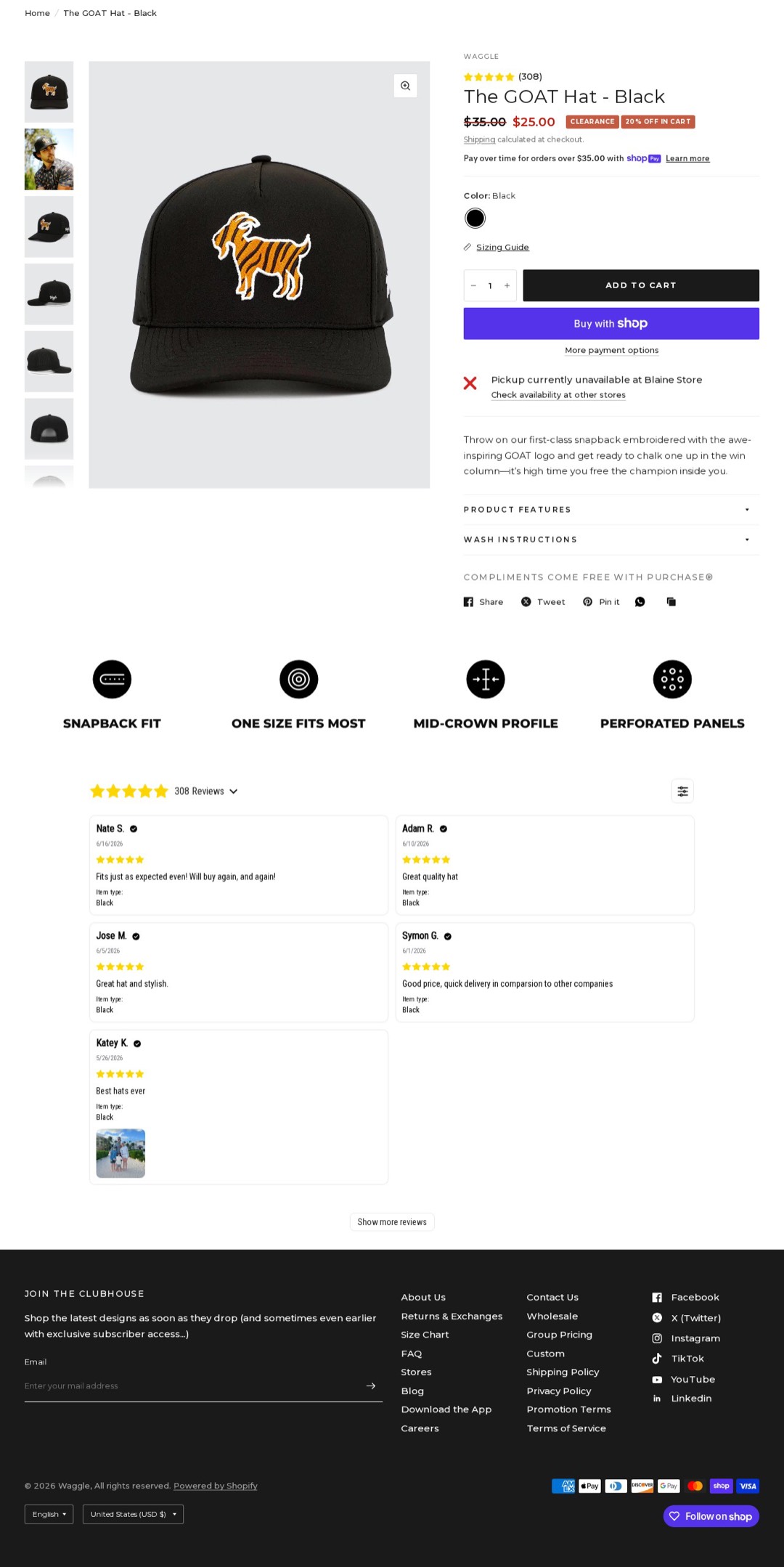
Clearance-price anchor with sitewide cart-discount mechanic, free-shipping threshold, and Rebuy/iCart upsell stack driving AOV post add-to-cart
Operator's read
PricingNo volume or bundle pricing widget exists on the PDP — zero tiers, zero per-unit ladder. The entire pricing play is a two-lever anchor: original $35.00 struck through against a $25.00 clearance price (28.6% off), then a second layer of 20% off in cart brings the effective price to ~$20. That $20 effective price is never shown upfront, which is a missed pre-click conversion opportunity. The $75 free-shipping threshold is the only AOV nudge — at one hat for ~$20 effective, the customer needs to spend 3.75x their initial item to unlock free ship, which is aggressive but plausible for a gifting occasion like Father's Day.
Widget styleThere is no volume-discount or bundle widget on the landing page whatsoever. The slot is occupied by a minimal single-variant radio (one color swatch) and a plain quantity stepper. No 'Buy 2 Save X%' radio tiles, no inline table, no dropdown bundle — nothing. The discount is communicated only via a static badge ('CLEARANCE | 20% OFF IN CART') and the announcement bar, not an interactive pricing widget. iCart and Rebuy are doing all the heavy lifting off the PDP.
VerdictThe struck-through anchor plus in-cart 20% creates a clean two-step reveal that rewards cart entry — smart for clearance. However, the single highest-leverage change is adding a Rebuy SmartCart or iCart quantity-break widget directly on the PDP: e.g., Buy 1 @ $20 / Buy 2 @ $18 each / Buy 3 @ $16 each (mix-and-match hats). At a ~$20 AOV per hat and a $75 free-ship bar, the store is leaving a dead zone between 1-unit buyers (~$20) and the threshold — a visible 'Buy 3, unlock free shipping + save 10% more' tile on the PDP would collapse that gap and lift AOV from ~$20 toward $48-54 without touching ad spend.
offer details (4)
Pricing widget text was blank in the evidence confirming no on-page bundle/volume widget. Vietnamese dong price (935.110₫ / 667.936₫) in snippets is a currency conversion artefact from the store's multi-currency layer; USD display prices ($35 / $25) are the operative anchor. 308 reviews at ~4.8 stars is strong social proof that is well-positioned near ATC.
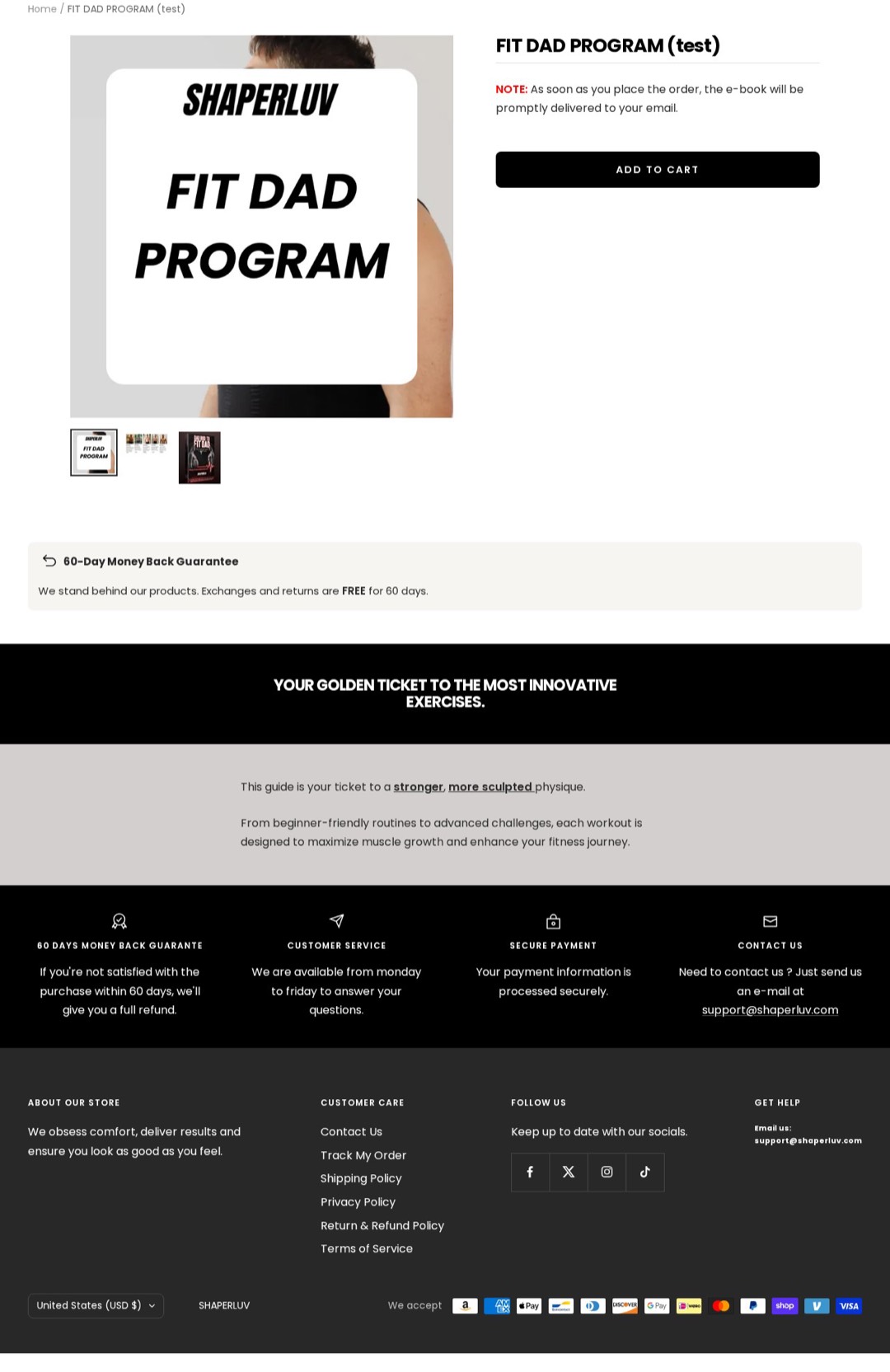
Single low-ticket digital product (e-book) sold at a flat 79,000 VND with no visible on-page volume or bundle widget. Upsell stack relies on post-purchase mechanics inferred from CartHook and Rebuy, with Kaching Bundles and Vitals installed but not rendering on this PDP. Conversion trust is carried by a 60-day money-back guarantee and instant email delivery promise.
Operator's read
PricingThere is exactly one price point visible — 79,000 VND (roughly $3–4 USD) — with no compare-at price, no struck-through anchor, no tiered options, and no free-shipping threshold to speak of since this is a digital product. The entire pricing architecture is a flat single SKU with zero anchoring logic on the page; there is no per-unit ladder, no default tier, and no discount depth because there are no tiers at all. The store is leaning entirely on the post-purchase funnel (CartHook) to build AOV after the initial micro-commitment.
Widget styleThere is no volume-discount or bundle widget on this landing page whatsoever — Kaching Bundles is installed but dormant here. The slot that would normally be occupied by radio-tiles or an inline bundle table is instead just a plain Add to Cart button. No badges, no 'Most Popular' callout, no escalating compare-at pricing, nothing. The page is visually skeletal — three product thumbnails, a single headline, a one-line delivery note, and a guarantee badge.
VerdictThe micro-price entry point (79,000 VND) is smart for impulse conversion, and the instant-delivery + 60-day guarantee copy addresses the two main objections for digital products. However, the single highest-leverage change is to activate a Kaching Bundles or Rebuy widget directly on this PDP that offers a 2- or 3-product digital bundle (e.g., Fit Dad Program + a nutrition guide + a meal plan PDF) at a meaningful discount — even a 3-item bundle at 199,000 VND vs. 3×79,000 = 237,000 VND (a visible 16% save) would immediately lift AOV without touching the post-purchase funnel, capturing customers who never make it to the thank-you page.
offer details (3)
Store appears to be in a test/early stage — product title literally contains '(test)' and there are no reviews. The VND pricing suggests a Vietnamese market or a test sandbox. Installed app stack (CartHook + Rebuy + Kaching + Vitals) is capable of a sophisticated upsell architecture but none of it is activated on this specific PDP. Analysis confidence is medium because cart/post-purchase flows could not be observed.

Single-SKU soft-goods brand relying on free-shipping threshold, cross-sell carousel, and a slide-cart drawer (iCart) to lift AOV. No volume/bundle pricing widget visible. Primary conversion levers are value-laden copy (sustainability, 60-day returns, one-tree-planted), a 'You May Also Like' recommendation carousel beneath the PDP, and a free-delivery threshold (1,350 kr) set just above the hero product price (1,395 kr) to nudge a second item.
Operator's read
PricingThere is zero volume or bundle pricing widget on this PDP — the store leans entirely on a single flat price point of 1,395 kr across all sizes (S through XXXL, no size-based differential) with no struck-through compare-at anchor. The only pricing mechanic is the free-ship threshold set at 1,350 kr, which is paradoxically already met by the hero product alone, neutering its AOV-lifting power. No subscribe-and-save, no tiered discount, no 'buy 2 get 10% off' — the brand is leaving incremental revenue entirely to the cross-sell carousel and iCart drawer.
Widget styleThere is no volume-discount or bundle widget on this landing page whatsoever. The slot that would typically be occupied by a quantity-break radio-tile or bundle builder is instead filled by straightforward size-variant buttons (L / XL / XXL / XXXL at identical 1,395 kr each). The 'You May Also Like' carousel is the only structured upsell UI element visible, presenting four SKUs in a horizontal scroll without badges, savings callouts, or bundle pricing.
VerdictThe cross-sell carousel is well-curated — outerwear adjacent accessories (pack, cap, shorts) at lower price points are logical add-ons and the 4.9-star / 2,190-review social proof block just above will convert well. The single highest-leverage change: raise the free-ship threshold to 1,800–2,000 kr and add a progress bar in the iCart drawer showing 'Add X kr more for free delivery' — right now the threshold is essentially invisible as an AOV lever because the hero product already clears it, so every cart that contains only the robe gets free shipping with zero incremental spend incentive. Lifting the bar by ~500 kr and surfacing it dynamically in iCart would push buyers to add the backpack (likely ~400–500 kr) or a second accessory to cross the line, directly attacking the brand's flat single-item AOV problem.
offer details (3)
Currency is NOK (Norwegian krone) based on 'kr' symbol and NO locale in banner. Screenshot resolution limits visibility of exact cross-sell prices — hat shown as ~140-200 kr range but not confirmed. iCart post-cart capabilities (one-click upsell on thank-you page) are not evidenced in screenshot and are not inferred as ReConvert/AfterSell are not listed in installed apps.
KilgourMD runs a subscription-first, bundle-anchored DTC haircare brand targeting women experiencing hormonal hair thinning. The core upsell stack is: (1) a 15% Subscribe & Save offer on the product page, (2) a 24%-off Shampoo + Conditioner bundle as the primary AOV lever pushed via landing page copy and CTAs, (3) iCart slide drawer to add friction-reducing upsell touchpoints in-cart, and (4) AfterSell for post-purchase one-click upsells. The referral discount banner signals an active ambassador/referral program layered on top. No visible quantity-break or tiered pricing widget — the bundle IS the pricing upgrade path.
Operator's read
PricingThere is no visible pricing widget or quantity-break ladder on this PDP — the store leans on two levers instead: a 24% bundle discount (Shampoo + Conditioner) as the primary AOV driver, and a 15% Subscribe & Save as the LTV driver. Exact unit prices are not exposed in the evidence, so per-unit math can't be confirmed, but the 24% bundle discount is the single biggest stated anchor. The Subscribe & Save 15% is positioned as a checkout-level toggle, not a dominant above-the-fold option, which likely undercuts its conversion rate. No tier is pre-selected and no compare-at pricing is visible at the widget level.
Widget styleThere is no volume-discount or bundle-builder widget rendered on the landing page. The bundle offer occupies that slot purely through CTA copy ('Save 24% → Get KilgourMD Shampoo + Conditioner') and a landing-page advertorial format. This is a copy-led bundle pitch, not a UI-led one — no radio tiles, no inline table, no dropdown, no badge hierarchy like 'Most Popular' or 'Best Value.' The Subscribe & Save toggle appears to be a standard Shopify subscription app selector below the ATC button, not a visually prominent widget.
VerdictThe 24% bundle CTA is clean and the social proof (150,000 women, 1,000+ physicians) is well-deployed for a hormonal haircare audience. The single highest-leverage change I'd make is replacing the copy-only bundle pitch with a three-option radio-tile widget on the PDP: (1) Shampoo + Conditioner one-time at 24% off, (2) Shampoo + Conditioner Subscribe & Save at ~32% off (stack the discounts), (3) The Full System Subscribe & Save at the deepest discount. Pre-selecting the middle subscribe tier and showing a per-wash cost anchor ('less than $1.50 per wash') would materially lift both AOV and LTV in a single change without touching ad spend.
offer details (5)
Confidence is medium because no cart HTML, PDP screenshot, or pricing widget data was provided — analysis is based on installed apps, copy snippets, and banner text only. AfterSell post-purchase offer is inferred. Exact bundle prices and individual SKU prices are not confirmed in evidence. The referral discount banner suggests an active referral program (potentially ReferralCandy or similar) layered on the funnel but no dedicated app was listed for it.
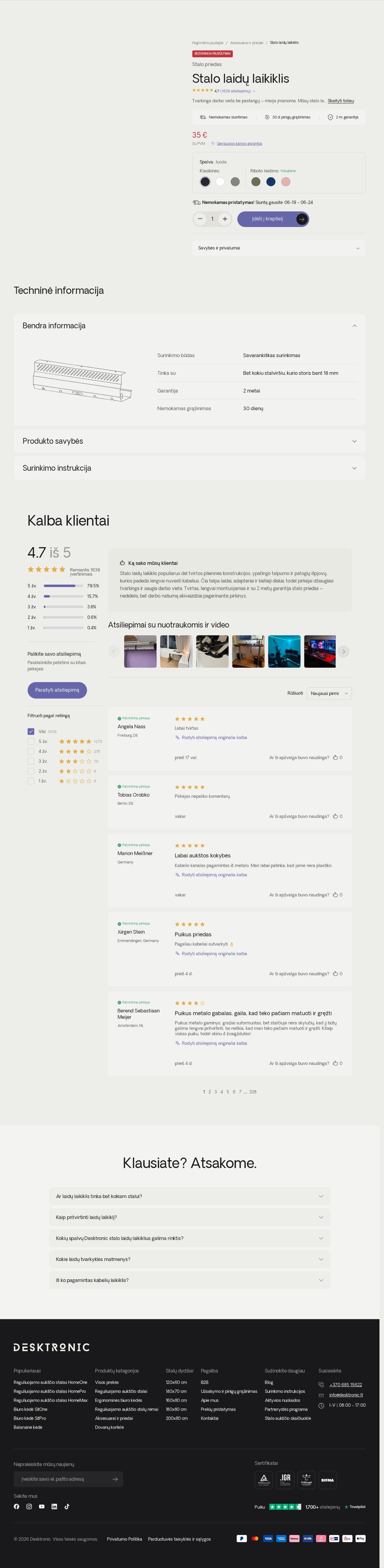
Single-SKU product page (desk cable manager) with no visible volume/bundle pricing widget. The store relies on a single price point of 35€, a 2-year guarantee trust signal, a 30-day free return badge, and free shipping threshold messaging. Upsell infrastructure is limited to Selleasy (cross-sell/frequently-bought), but no widget is rendered visibly on this screenshot. Post-purchase upsell potential exists via Selleasy but is not confirmed visible.
Operator's read
PricingThere is no volume or bundle pricing widget on this page — the store leans entirely on a single 35€ price point with no struck-through compare-at anchor visible and no per-unit ladder. The only pricing lever in play is the free shipping incentive ('Nemokamas pristatymas'), which is a soft AOV nudge but gives no explicit threshold number visible in the screenshot. Without a compare-at price or tiered discount, there is zero anchoring pressure on the buyer to upgrade quantity or add items.
Widget styleThere is no volume-discount or bundle widget on this landing page whatsoever. The slot that would typically be occupied by a Kaching Bundles or Bundler radio-tile widget is instead filled by a plain quantity stepper (–/+) and a single ATC button. Selleasy is installed but its cross-sell widget is not rendering visibly on the PDP — it may fire in-cart or post-purchase only, which means the pre-cart AOV window is completely unmonetised.
VerdictThe social proof execution is solid — 4.7★ from 1619 reviews with photo/video UGC displayed prominently is trust-building and conversion-positive. The single highest-leverage change would be to add a 3-tier quantity-break widget (1x @ 35€, 2x @ 62€ = 31€ each / 11% off, 3x @ 87€ = 29€ each / 17% off) directly above the ATC button, pre-selecting the 2-pack as 'Most Popular' — cable management is a multi-desk purchase and the current page leaves that AOV entirely on the table.
offer details (3)
Page is in Lithuanian (LT store). Product is a desk cable management rail. No cart drawer screenshot available so Selleasy in-cart widget state is unknown. Guarantee (2 years) and returns (30 days) are surfaced as icon badges near ATC which is good trust practice. FAQ accordion and full review section are present below the fold. No urgency timer or scarcity messaging detected.

Multi-tier BOGO bundle ladder (Buy 1 / Buy 1 Get 1 Free / Buy 2 Get 1 Free / Buy 2 Get 2 Free) surfaced inline on the PDP via Kaching Bundles, with UpCart/iCart slide-cart for in-cart upsell. No post-purchase app detected in installed list, so no post-purchase offer inferred.
Operator's read
PricingThe store runs a four-tier BOGO ladder anchored at $39.99 for a single unit, escalating to $59.98 for four units. The per-unit ladder drops from $39.99 → $20.00 → $20.00 → $15.00, meaning the real discount jump only materialises at the 4-unit Buy 2 Get 2 tier (63% off per unit). The middle two tiers (BOGO and Buy 2 Get 1) both land at ~$20/unit, which removes differentiation and may stall customers at the cheaper BOGO rather than pushing them to the highest-AOV tier.
Pricing tiers (1 widget)
Widget styleKaching Bundles in its default stacked radio-tile layout — four rows, each with a bold tier label, strikethrough compare-at, and a 'you save $X' callout. No explicit 'Most Popular' or 'Best Value' badge text was confirmed from the evidence, but the escalating compare-at anchoring is clearly present. The widget sits directly below the size selector and above the Add-to-Cart button, giving it prime PDP real estate.
VerdictThe BOGO entry point is well-executed — $39.99 for two units is a compelling hook that converts fence-sitters and immediately doubles unit count. The highest-leverage change I would make is pre-selecting the Buy 2 Get 2 Free tier as the default (instead of Buy 1) and adding a bold 'Best Value – Most Popular' badge exclusively to that tier, while creating a visible per-unit callout ($15/bra vs $39.99 each) so the savings feel concrete. This single default-tier switch on a Kaching Bundles widget typically lifts AOV 15–25% on replenishable apparel products like this.
offer details (4)
No post-purchase upsell app (ReConvert, AfterSell, Zipify) detected in installed app list, so no post-purchase offer is inferred. UpCart/iCart slide-cart is installed but cart contents were empty in the screenshot, so in-cart upsell mechanics could not be confirmed visually. Pricing tier numbers are approximated from the visible widget; exact 'you save' dollar amounts were partially obscured at screenshot resolution.

Pridola runs a single-SKU anchor-discount model with no visible bundle/volume widget. Every product is shown with a struck-through 'Regular price' and a 'Sale price', with discount badges ranging from 14% to 55%. The store leans on a sitewide Father's Day sale banner, social proof (150k+ customers), and Swedish-design brand positioning to justify urgency. Qikify Slide Cart handles in-cart upsell surface; Kaching Bundles is installed but no bundle widget is visible on the homepage/collection.
Operator's read
PricingThere is no volume or bundle pricing widget visible — the entire store runs on a single struck-through anchor per SKU. Eight products are priced almost identically at $99.99 sale, with compare-at prices ranging from $130–$200, generating 33%–55% 'save' badges. The near-uniform $99.99 price point across very different SKUs (table lamp vs. set-of-2 sconces) makes the compare-at prices feel manufactured rather than credible, which is a trust risk at scale.
Pricing tiers (1 widget)
Widget styleNo bundle builder or quantity ladder widget is rendered on the PDP or collection page despite Kaching Bundles being installed. The anchoring tactic is purely native Shopify compare-at + sale price displayed as product-card badges. The Father's Day banner adds a time-limited urgency layer, but there is no countdown timer, no tiered volume offer, and no visible cross-sell or add-on widget on the page itself — those surfaces (if live) are entirely deferred to the Qikify slide cart drawer.
VerdictThe 'Set of 2' SKU packaging is smart — it pre-bundles units and raises the ticket to $99.99 without requiring customer math — and the social proof wall (150k customers, review snippets) gives the brand credibility for a cold-traffic ad. The single highest-leverage change is activating Kaching Bundles on the PDP with a 'Buy 2 Sets, Save an Extra 15%' offer (e.g. 2×$99.99 → $169.99), which would push AOV from ~$100 toward $170 on the most common purchase intent (customers buying sconces for multiple rooms) without touching the existing anchor-discount structure.
offer details (5)
Confidence is medium because no cart drawer contents or PDP are visible — only the homepage/collection view. Kaching Bundles and Qikify Slide Cart features are inferred from installed-app evidence. All compare-at prices appear plausible (not fake-anchor flagged) given the discount range is consistent and the SKUs differ, but the near-identical $99.99 sale price across all eight products despite different compare-at values is an operator risk worth A/B testing with differentiated price points.

Single-SKU activewear PDP relying on free-shipping thresholds and a 'Bundle & Save' collection page to drive AOV, with Zipify OCU handling post-purchase one-click upsells and Kaching Bundles implied on collection/bundle pages. No visible quantity-break or volume-discount widget on the PDP itself.
Operator's read
PricingThere is no volume-discount or quantity-break widget on this PDP — zero pricing tiers to parse. The store leans entirely on free-shipping thresholds as the AOV lever: AU $149, NZD $179, USD $200, CAD $200. With a sports bra likely retailing in the $50–$80 USD range, a customer needs to add 2–3 units to clear the USD $200 free-ship bar, which is a passive nudge at best. There is no struck-through compare-at anchor or 'save X%' discount visible on the PDP, so price anchoring is absent at the product level.
Widget styleNo bundle or volume-discount widget is rendered on this PDP. The slot that would typically hold a Kaching Bundles quantity-break table or radio-tile selector is empty — bundles are siloed behind a separate 'Bundle & Save' nav link, meaning a shopper has to leave the PDP to find the deal. Zipify OCU is the only structured upsell mechanic, and it fires post-checkout where conversion intent has already peaked and dropped. The PDP itself is bare: colour swatches, size selector, ATC, and static shipping thresholds.
VerdictThe free-shipping thresholds are correctly tiered by market which is smart, but burying bundles on a separate page is a serious AOV leak — shoppers who land on the PDP via an ad never see the bundle offer. The single highest-leverage change is to surface a Kaching Bundles inline widget directly on this PDP (e.g. 'Buy 2 get 10% off / Buy 3 get 15% off' as radio tiles), anchored with a crossed-out per-unit price. Given the USD $200 free-ship threshold and a ~$60 unit price, a 3-pack bundle at 15% off gets the customer to ~$153 pre-discount and close to threshold, turning a passive shipping nudge into an active AOV driver without needing a page change.
offer details (3)
Screenshot shows what appears to be the same PDP repeated across multiple scroll positions — likely showing different colour variant selections. No cart drawer, no upsell modal, and no pricing widget rendered at any scroll depth. Confidence is medium because bundle page structure and Zipify OCU post-purchase flows are inferred from app installs and nav copy rather than direct screenshot evidence.

Single-SKU long-form advertorial page for a flat-back earring applicator, relying on free-shipping threshold ($75), social proof volume ('250,000+ customers'), and installed slide-cart + post-purchase apps to lift AOV. No on-page bundle or volume-discount widget is visible; upsell stack lives in the cart drawer (Qikify/iCart/UpCart) and post-purchase flow (AfterSell).
Operator's read
PricingThere is zero on-page pricing architecture — just a single unit price (714,000₫) with no compare-at, no volume tiers, no bundle selector. The only AOV lever above the fold is the $75 free-shipping threshold in the banner, which implicitly nudges multi-unit buying but does nothing to show the customer how many units get them there. With a ~714k VND unit price they likely need 3-4 units to clear $75 equivalent, but that math is invisible to the shopper.
Widget styleNo volume-discount or bundle widget exists on this product page whatsoever. The slot that would normally hold a quantity-break radio tile or bundle builder is entirely empty — the page relies purely on advertorial copy blocks (4 reasons, how-to steps, testimonial cards, FAQ) to drive conviction, then hands off to the slide-cart drawer (3 apps: Qikify, UpCart, iCart — an unusually redundant stack that likely causes JS conflicts) for any AOV work.
VerdictThe advertorial structure and social proof volume ('250k customers') are well-executed trust builders that suit a cold-traffic ad funnel. The single highest-leverage change is adding a 3-tier quantity-break widget directly on the PDP — e.g., 1 pair at 714k, 3 pairs at ~1,900k (save 11%), 5 pairs at ~2,850k (save 20%) — with the 3-pack pre-selected and badged 'Most Popular'. At a sub-$4 USD price point, customers naturally buy multiples for different piercings; making that frictionless on-page (before the cart) would lift AOV materially without touching the post-purchase stack.
offer details (3)
Three concurrent slide-cart apps (Qikify, UpCart, iCart) is a red flag — likely causing render conflicts and slowing page load. Operator should audit which is actually rendering and kill the other two. Currency display in VND with a $75 USD free-ship threshold suggests either a multi-currency store or a locale mismatch in the screenshot. Confidence is medium because cart drawer contents and post-purchase flows are not visible in the screenshot.
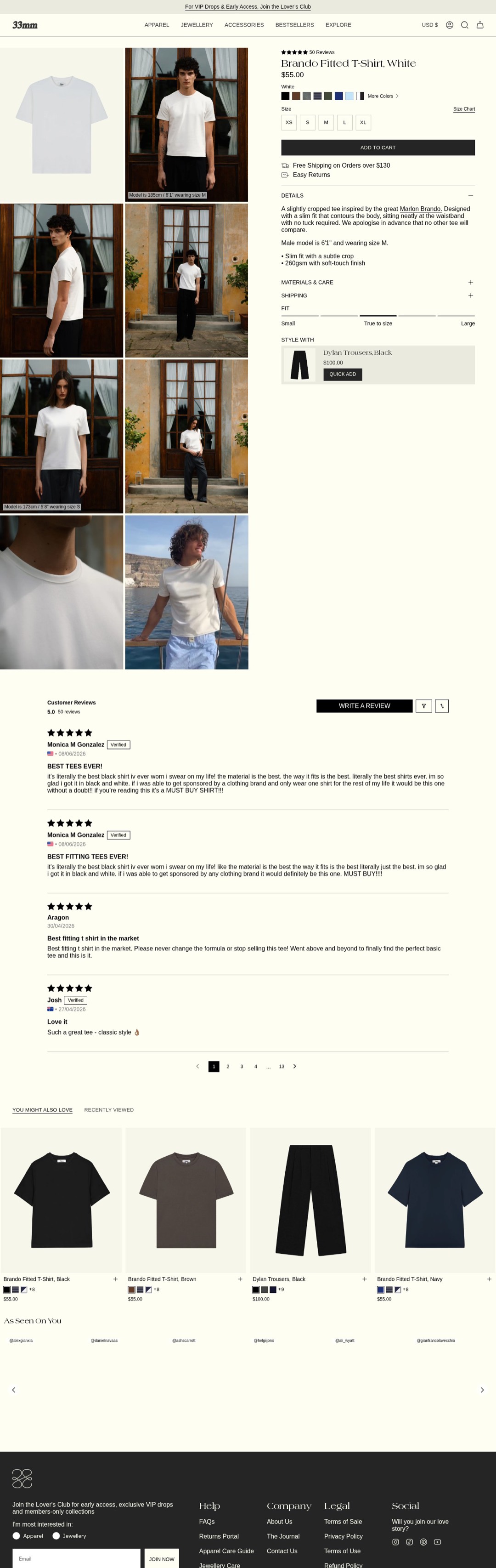
Single-SKU lifestyle brand leaning on free-shipping threshold and inline cross-sell ('Style With') to drive AOV. No volume-discount or bundle widget present. Cart is managed via iCart slide-cart drawer with a free-shipping progress bar. Post-purchase upsell infrastructure not confirmed beyond iCart.
Operator's read
PricingNo volume-discount or multi-tier pricing widget exists. The store runs a single price point — $55 USD for the Brando T-Shirt — and leans entirely on the $130 USD free-shipping threshold as its AOV lever. The Dylan Trousers cross-sell at $100 is the only meaningful anchor: a customer buying both hits $155, clearing the threshold and implicitly validating the $55 tee as a low-friction entry into a $155 basket. There is no struck-through compare-at price on the tee itself, so no anchoring illusion on the PDP.
Widget styleThere is no volume-discount or bundle widget on this PDP — that slot is occupied by a single-item 'Style With' module (inline, image + product title + Quick Add button, no carousel). It is the simplest possible cross-sell execution: one complementary SKU, no badge, no savings callout, no social proof attached. iCart's slide-cart drawer handles the free-ship progress bar but no visible upsell tiles are rendering in the provided cart snippet.
VerdictThe free-ship threshold at $130 paired with a $55 tee is well-calibrated — it forces a second item add to qualify, and the $100 trouser cross-sell on the PDP is the right product to bridge that gap. What's underexploited is the 'Style With' block itself: it shows one static SKU with zero persuasion copy, no social proof, and no savings framing. The single highest-leverage change is turning that block into a 2-3 item mini-bundle offer (tee + trousers, or tee + second colorway) with explicit 'Complete the look — qualifies for free shipping' copy, which would lift attach rate on the cross-sell and increase the proportion of orders clearing the $130 threshold without requiring a discount.
offer details (3)
No pricing widget tiers to parse. Free-ship threshold is multi-currency: $130 USD / £100 GBP / $200 AUD. iCart is the only confirmed upsell app; no ReConvert, AfterSell, or Zipify detected so no post-purchase one-click upsell inferred. 'Style With' cross-sell is native Shopify section or a lightweight theme feature, not a third-party upsell app.
Single-SKU flat-price PDP with cross-sell carousel and free-shipping threshold as the primary AOV levers. No volume/bundle pricing widget. iCart slide-cart drawer handles the in-cart upsell surface. Cross-sell ('You Might Also Love') pushes complementary SKUs (same tee in other colours, Dylan Trousers) directly on the PDP. Free-ship bar activates inside the cart drawer.
Operator's read
PricingThere is zero volume or bundle pricing widget — this is a pure flat-price model at $55 for the Brando Tee. The only AOV mechanic baked into pricing is the free-shipping threshold at $130 USD, which requires the customer to spend ~2.4x the base unit price to unlock free shipping, creating a natural nudge toward adding a second item (e.g. Dylan Trousers at $100 gets the cart to $155, clearing the bar). No struck-through compare-at price is shown on the PDP itself, so there is no anchor discount play at the product level.
Widget styleThere is no volume-discount or bundle widget on this PDP whatsoever. The slot that would normally house a quantity-break or bundle selector is instead occupied by (1) a 'Style With' inline cross-sell block showing the Dylan Trousers with a Quick Add button, and (2) a 'You Might Also Love' horizontal carousel below the fold. Both are native Shopify theme components or a lightweight upsell app — no recognisable third-party bundle app (Rebuy, Bold, PickyStory) fingerprint is visible. iCart handles the cart-drawer free-ship progress bar.
VerdictThe editorial aesthetic is clean and the free-ship threshold is well-calibrated — a $55 tee + $100 trousers = $155, naturally clearing the $130 bar, which is smart product-price architecture. The single highest-leverage move is adding a 2-unit quantity break directly on the PDP (e.g. Buy 2 Tees for $99, save 10%) rendered as radio-tile selectors above the Add to Cart button: the Brando comes in 5 colours so a 'grab your second colour' hook is highly credible, it won't dilute the premium positioning at only 10% off, and it would capture the segment currently bouncing after one unit without ever opening the cart.
offer details (3)
No post-purchase upsell app detected in the installed app list (no ReConvert/AfterSell/Zipify); iCart is the only listed upsell tool. Pricing widget array is empty because no tiered/volume widget is present on the PDP. Free-ship threshold figure confirmed as $130 USD from shipping copy in snippets.
VSL-driven nerve pain supplement funnel. Single long-form video sales letter page (VSL) with a social-proof comment wall, a three-tier quantity bundle selector, subscribe-save toggle, urgency timer, and free-gift threshold anchored to the 6-jar top tier. UpCart handles the cart drawer. No visible post-purchase upsell UI but UpCart can serve in-cart upsells.
Operator's read
PricingThree tiers: 1-jar at $69/unit (compare-at $118, -42%), 3-jar at $59/unit totaling $177 (compare-at $354, implied -50%), 6-jar at $39/unit totaling $234 (compare-at $708, -67%). The per-unit ladder drops steeply — $69 → $59 → $39 — making the 6-jar look like an obvious no-brainer, which is the intent. The $708 compare-at on the 6-jar ($118 × 6) uses the 1-jar retail as the anchor, a classic escalating-compare-at tactic that inflates perceived savings to 67% at the top tier. Subscribe-save adds a second discount layer (20% off the already-discounted 6-jar) that deepens recurring revenue incentive without headline-price cannibalization.
Pricing tiers (1 widget)
Widget styleNo named third-party volume-discount app is confirmed; this appears to be a custom or theme-native radio-tile bundle selector. Layout is vertical stacked radio cards, each card showing tier name badge (BASIC / POPULAR / BEST VALUE), per-kit one-time price, subscribe-save toggle, total price, and a struck-through compare-at. The 'BEST VALUE' badge on the 6-jar and 'POPULAR' on the 3-jar follow the standard two-badge anchoring playbook. Free-gift unlock (2 gifts, $39 stated value) is layered on top of the 6-jar card as a threshold sweetener, effectively acting as a visual seal on that tier.
VerdictThe VSL + social-proof wall + urgency timer combination is well-executed for a nerve pain supplement — emotional credibility is high and the tier logic clearly pushes buyers to the $234 6-jar. The single highest-leverage change I'd make: add an explicit per-unit savings callout inside each tile (e.g., 'Save $30/jar vs. single') and test a post-purchase one-click upsell (via UpCart's thank-you page module or AfterSell) offering a second 6-jar at the subscribe price — this customer is already sold on the product, and a replenishment upsell at checkout typically converts at 15-25% on pain/supplement funnels, directly lifting AOV by $100+ without touching the front-end funnel.
offer details (6)
Screenshot is a long-form VSL advertorial page. Pricing data extracted entirely from banner and product snippets — no in-image pricing widget was legible. The 3-jar compare-at ($354) is inferred from '$147 $354' in snippet; per-unit for 3-jar computed as $177/3 = $59. UpCart cart drawer was not open in screenshot so in-cart offers are inferred from installed app capability only.
Single-SKU premium basics brand running a clean editorial PDP with no volume/bundle pricing widget. AOV lever is cross-sell ('Style With' inline recommendation + 'You Might Also Love' carousel) and a free-shipping threshold, delivered via iCart slide-cart drawer. No quantity breaks, no subscribe-save, no post-purchase upsell visible.
Operator's read
PricingThere is zero volume or bundle pricing widget on this PDP — no quantity breaks, no subscribe-save, no tiered per-unit ladder. The entire pricing strategy rests on a single flat $55 price point for the tee with no compare-at/strikethrough anchor on the product itself, and a free-shipping threshold at $130 USD (roughly 2.4x the tee price) that nudges customers to add a second item. The Dylan Trousers cross-sell at $100 gets a cart to $155 and clears the threshold cleanly — that pairing appears intentional.
Widget styleThere is no volume-discount or bundle widget whatsoever on this landing page. The slot that a Bold Bundles or Kaching widget would normally occupy is instead filled by the 'Style With' inline cross-sell block — a simple two-column card showing Dylan Trousers with a Quick Add CTA. No radio tiles, no discount badges, no 'Most Popular' callouts, no escalating compare-at pricing. The iCart slide-cart drawer handles the free-ship progress bar, which is the only mechanical AOV nudge in the funnel.
VerdictThe editorial restraint is on-brand and the $55→$130 free-ship gap is well-calibrated to push a second unit. However, the store leaves significant AOV on the table by having no quantity-break incentive for the core tee — a 2-pack at $100 (save 9%) or 3-pack at $140 (save 15%) presented as radio tiles on the PDP would capture the buyer already convinced on product quality (reviews are overwhelmingly 5-star and repeat-purchase intent is explicit in the copy). That single change — a quantity ladder widget defaulted to the 2-pack — is the highest-leverage move available given the existing traffic and review social proof.
offer details (3)
Free-ship threshold amount appears in VND in one snippet (100₫) which is a localisation/rounding artifact for the Vietnamese storefront; USD threshold confirmed at $130 in product snippets. No post-purchase upsell app (ReConvert/AfterSell/Zipify) detected in installed apps list, so no post stage inferred.
Single-SKU premium basics brand running a clean editorial PDP with no volume/bundle pricing widget. AOV lever is purely cross-sell ('Style With' companion item on PDP + 'You Might Also Love' carousel) plus a free-shipping threshold acting as a soft order-value nudge. Slide Cart (iCart) handles the cart drawer with the free-ship progress bar baked in.
Operator's read
PricingZero volume or bundle pricing widget on this PDP — the store runs a dead-simple single price of $55 USD for the Brando Fitted T-Shirt with no struck-through compare-at, no quantity breaks, and no subscribe-and-save. The only structural pricing lever is the free-shipping threshold at $130 USD, which sits $75 above the hero SKU price, meaning a customer must add roughly one more full-price item (e.g. the $100 Dylan Trousers) to unlock free ship. That gap is intentional and is the primary AOV engine on this store.
Widget styleThere is no volume-discount or bundle widget anywhere on the PDP — that slot is occupied entirely by the 'Style With' cross-sell block (single companion product, Dylan Trousers Black, with a one-click Quick Add) and the 'You Might Also Love' four-tile carousel below the fold. iCart's slide cart is the closest thing to a structured upsell surface, likely showing the free-ship progress bar, but no in-cart product recommendations are evidenced in the snippets provided. No app badge, no radio-tile layout, no discount ladder — the brand is leaning on aesthetic editorial presentation rather than mechanical discount scaffolding.
VerdictThe clean, brand-forward execution is strong — 50 reviews showing five stars, excellent lifestyle imagery, and the 'Style With' block do real work for cross-sell. The single highest-leverage change would be adding an in-cart product recommendation widget inside the iCart drawer (iCart supports this natively) featuring the Dylan Trousers or a jewellery SKU with copy like 'Complete the look — customers who bought this also added…' — at a $55 entry ticket and $130 free-ship threshold there is a $75 gap that an in-drawer cross-sell could close on a meaningful percentage of sessions, directly lifting AOV without touching the brand's no-discount positioning.
offer details (4)
No pricing widget tiers to parse — pricing.widgets is empty. Post-purchase upsell stage not evidenced; iCart does not natively offer post-purchase one-click upsells so no inferred post offer added. Currency shown as USD per screenshot; store is multi-currency (VND, AUD, GBP localised). Bestseller badge visible on Dylan Trousers tile in carousel.

Subscribe-and-save + cross-sell bundle on a single hero SKU (Eye Cream), supported by a sitewide free-ship threshold, a 'build a bundle' nav offer (up to 30% off), and a hard-bundled cross-sell duo ('Caffeinated Duo + Eye Roller Deal') below the fold. Post-purchase one-click upsell inferred from Zipify OCU install. Rebuy likely powers the 'Shop All Best-Sellers' cross-sell carousel at the bottom of the page.
Operator's read
PricingUpCircle leans on a subscribe-and-save toggle as its primary pricing lever on the Eye Cream PDP (one-time at £23.99) rather than a multi-tier volume discount widget — exact subscribe discount % isn't legible in the screenshot but the badge is prominent and it's pre-selected, which is the right default. The sitewide bundle builder promises up to 30% off, and the cross-sell Duo saves £10 (Eye Cream ~£23.99 + Caffeinated Face Oil ~£24.99 = ~£48.98 implied full price, duo presumably ~£38.99), which is a ~20% effective discount. The best-seller carousel shows compare-at pricing on at least two SKUs (Pamper Kit £20/£29.99 = 33% off; SPF £19.99/£27.99 = 29% off) used as struck-through anchors.
Widget styleThere is no standalone volume/quantity-break widget on this PDP. The pricing slot is occupied by a two-option subscribe-save radio tile (subscribe pre-selected with a save badge, one-time at £23.99). Below it sits a manually curated cross-sell bundle block — not a dynamic widget — for the Caffeinated Duo. The best-seller carousel at the bottom is Rebuy-powered with standard product tiles. No named volume-discount app (e.g. Bold Quantity Breaks, Bundles.app) is detectable; the 'up to 30% savings' is routed through the sitewide bundle builder in the nav rather than an on-page widget.
VerdictThe subscribe-and-save pre-selection and the Duo cross-sell are both well-executed — anchoring recurring revenue and lifting AOV in a single scroll. The highest-leverage change would be surfacing the exact subscribe discount % in large type on the radio tile (e.g. 'Subscribe & Save — 15% off every order') and adding a quantity-break or bundle widget directly on the PDP (2-for or 3-for with a per-unit price ladder) rather than routing bundle savings off-page to the nav builder, since most paid-traffic visitors never return to the nav and the AOV opportunity is lost at the point of highest intent.
offer details (6)
Exact subscribe-save discount % not legible in screenshot — marked as null. Caffeinated Duo combined price and individual Face Oil price inferred from visible snippets and cross-sell block; full numeric breakdown not confirmed. Zipify OCU post-purchase offer inferred from app install, not visible in page screenshots. Rebuy powers the best-seller carousel based on app install evidence.

Single-SKU travel towel brand (Buvanha) running a design-variant PDP with social proof (150,000+ travelers), lifestyle imagery, and feature callouts (sand-free, quick-dry, 2x compact). Upsell surface is primarily in-cart via UpCart/iCart slide drawer; no visible volume-discount widget on PDP. Revenue drivers appear to be cross-sell via 'Populaire producten' carousel and cart-drawer upsell mechanics from installed apps.
Operator's read
PricingThere is no volume-discount or quantity-break widget visible on the PDP — Buvanha leans entirely on a single price point per design variant (Marrakech shown, price partially obscured but appears ~€49-€59 range based on layout) with no struck-through compare-at anchor visible at the hero level. The 'Populaire producten' carousel shows prices around €8/€5 which suggests either a sale state or accessory SKU — no per-unit ladder exists. Without a tiered pricing widget, the entire AOV-lift burden falls on the cart drawer apps and the cross-sell carousel, which is a missed PDP opportunity.
Widget styleThere is no volume-discount or bundle widget rendered on the PDP — the slot is occupied by a design-selector (color/pattern radio tiles for variants like Marrakech) and feature icon strips (sandfree, absorbent, quick-dry). The Bundler app is installed but either not configured on this PDP or firing elsewhere. The cross-sell carousel at the bottom is the closest thing to a structured upsell surface on the page, showing 3+ designs with no discount incentive to add multiple.
VerdictThe social proof wall (150,000+ travelers, Google/Trustpilot reviews carousel) and lifestyle photography are executed well — strong top-of-funnel trust for a €49+ towel. The single highest-leverage change is adding a Bundler quantity-break widget directly on the PDP: '1 towel €49 | 2 towels €89 (save 9%) | 3 towels €124 (save 15%)' with a pre-selected 2-pack tier. Given the product is gifted and collected by design, a multi-design bundle ('Pick any 2 designs') would convert the existing cross-sell intent into a structured AOV lift without needing the customer to reach the cart drawer first.
offer details (4)
Screenshot is in Dutch (buvanha.nl — Netherlands). Pricing numbers on PDP were partially illegible at screenshot resolution; EUR currency confirmed by product carousel prices. Bundler app scope (PDP widget vs cart bundle vs post-purchase) unconfirmed — classified as cart-stage inferred. iCart and UpCart are overlapping cart-drawer apps; likely one is active and one legacy-installed.

The store runs a music-fan graphic tee brand (rhythmandbeat.com) built around a deep catalog of niche designs. The primary AOV lever is a multi-tier bundle upsell system (2/3/4/5+ tees) surfaced via Rebuy, combined with cross-sell carousels ('Music Fans Also Bought', 'Fan Favorites') on the product page. There is no visible quantity-break or volume-discount widget on the PDP itself; the bundle mechanic lives in collections/Rebuy flows rather than an inline pricing widget.
Operator's read
PricingThere is no inline volume/quantity-break widget on the PDP. The store leans entirely on a struck-through compare-at anchor ($29.99 → $19.99, ~33% off) displayed on carousel cards and presumably on the main product, plus a 30%-off sitewide or category promotion visible in the snippets. The bundle discount structure (2 tees: $2/shirt off; tiers for 3, 4, 5+ tees exist as collections) implies escalating savings but the per-unit ladder and exact discount percentages for 3/4/5+ tiers are not surfaced on the PDP – a customer would only encounter them if Rebuy pushes them in-cart or they navigate to the bundle collection directly.
Pricing tiers (1 widget)
Widget styleThere is no bundle or volume-discount widget rendered on the landing page itself. The slot is occupied by two Rebuy-powered recommendation carousels ('Music Fans Also Bought' and 'Fan Favorites') showing single-SKU tees with sale badges. The bundle tiers (2/3/4/5+ tees) live in separate collections and are presumably triggered by Rebuy as in-cart recommendations or upsell modals, not as radio-tile or inline-table widgets on the PDP. No 'Most Popular' or 'Best Value' badge logic is visible at the PDP level.
VerdictThe cross-sell carousels are well-executed for a design-heavy tee brand – showing adjacent niche designs keeps buyers in the funnel and the 33% compare-at anchor is credible. The highest-leverage change is bringing the bundle ladder directly onto the PDP as an inline radio-tile widget (e.g. Rebuy's smart cart widget or a dedicated bundle app): show '1 tee $19.99 / 2 tees $17.99 each / 3 tees $16.99 each / 4+ tees $14.99 each' with per-unit savings called out, pre-selected on the 2-tee tier. This single change would let customers bundle without leaving the page, likely pushing a meaningful share of single-unit buyers to 2+ units and growing AOV from ~$20 to ~$35+.
offer details (8)
Confidence is medium because the main PDP pricing widget text was empty (no numeric tiers scraped) and bundle discount depths for 3/4/5 tees are not confirmed from the evidence – only the 2-tee '$2/shirt' copy was explicit. The 30% off snippet is truncated and may refer to a collection sale rather than the specific product shown. Rebuy post-purchase flow is inferred from app installation only.
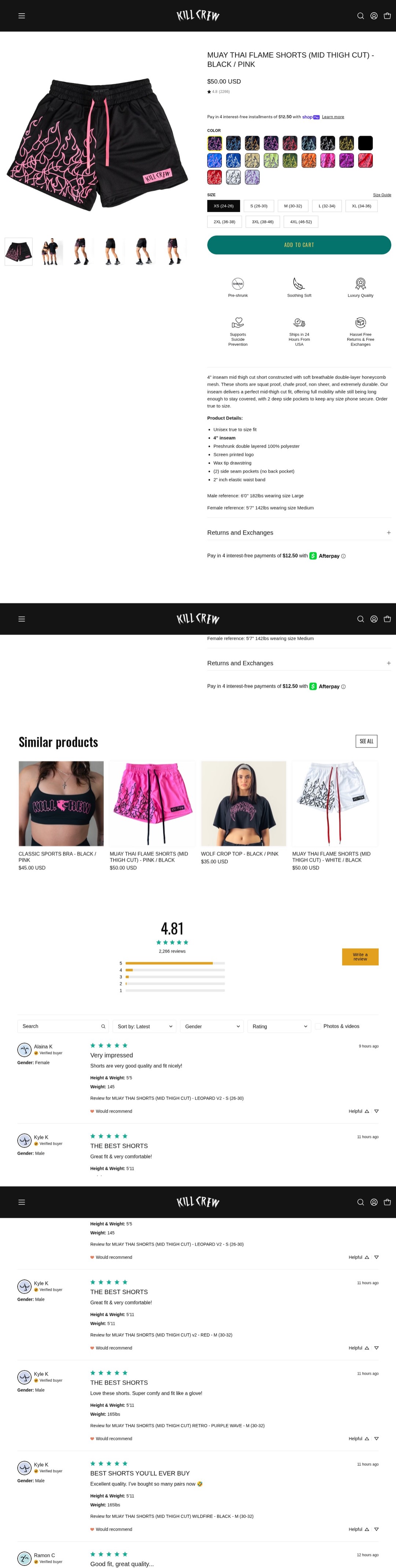
Single-SKU flat-price sell with free-shipping threshold as the primary AOV lever, supplemented by a cross-sell carousel of similar products below the fold. No volume/bundle widget on the PDP. UpCart slide-cart drawer handles the cart experience with a free-ship progress bar nudge. No post-purchase upsell app detected beyond UpCart.
Operator's read
PricingKill Crew runs a dead-simple single-price model: the Muay Thai Flame Shorts are a flat $50.00 with no volume tiers, no subscribe-and-save, and no bundle discount whatsoever. The only structural AOV driver is the free-ship threshold — set at $75 (and the cart snippet implies a $100 internal messaging variant), meaning a $50 shorts buyer needs to add ~$25 more to unlock free shipping. At a $36 crop top and $45 bra in the carousel, the math works out neatly to push a second item. There is no struck-through compare-at price on this SKU despite the 'Sale • Save' badge in the snippet, which reads as a missed anchoring opportunity.
Widget styleThere is no volume-discount or bundle widget anywhere on this PDP — zero radio tiles, no inline table, no dropdown tiers. The slot that a Bundler or Quantity Breaks app would occupy is completely empty. What fills that space instead is a trust-badge row (Pre-shrunk, Soothing Soft, Luxury Quality, Supports Suicide Prevention, Ships in 24 Hours) and a long product description. The UpCart drawer is the only structured upsell surface, handling the free-ship progress bar. The 'Similar products' carousel is native Shopify or a lightweight theme section, not a dedicated cross-sell app.
VerdictThe social proof is strong (4.81 stars, 2,266 reviews, well-merchandised color grid across 20+ colorways) and the free-ship threshold is correctly set just above a single-unit price to force a second add. The single highest-leverage change I would make is installing a post-purchase one-click upsell (AfterSell or ReConvert) triggered after checkout, offering a complementary SKU (e.g., the $45 Classic Sports Bra or $36 crop top) at 15% off — this store has the review volume and brand trust to convert post-purchase offers at 15-25% take rates with zero PDP friction, and right now that entire revenue layer is completely unmonetized.
offer details (4)
No pricing widget text was present in the evidence. The 'Sale • Save' badge on the PDP implies a compare-at price may exist in Shopify admin but it was not rendered visibly in the screenshot or snippets, so no fake-anchor tier was flagged. UpCart is the only confirmed installed upsell app; no ReConvert/Zipify/AfterSell detected, so no post-purchase one-click upsell offer was inferred.
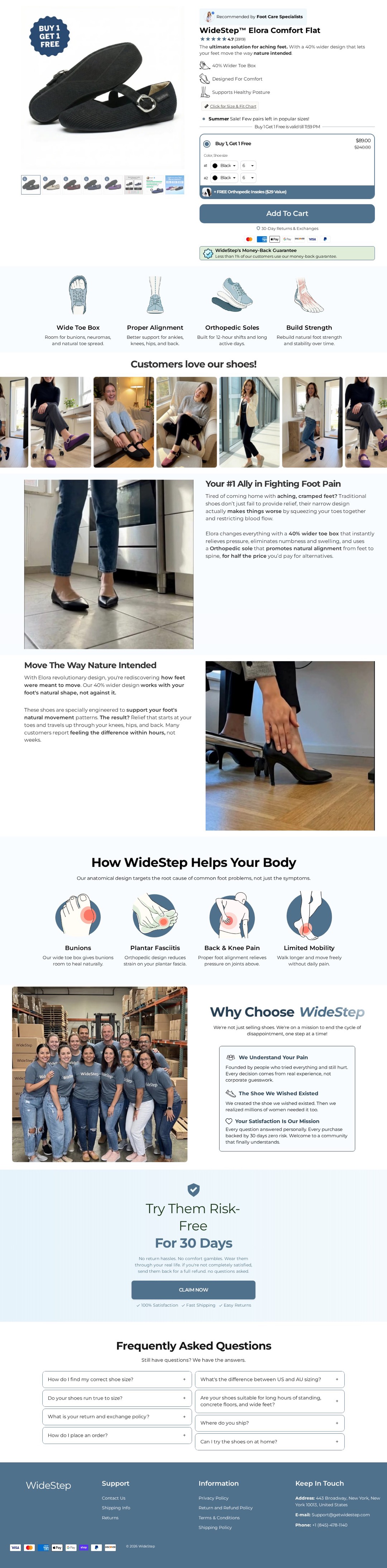
BOGO urgency hero with free-gift threshold and free-ship progress bar; single-SKU focus with no volume/bundle pricing widget — conversion lever is the BOGO mechanic and a $5 free-ship nudge rather than a tiered discount ladder
Operator's read
PricingThe store runs a single BOGO price point at $89 vs. a $140 compare-at (36% off, $44.50/unit), with no multi-tier volume ladder at all. There is no 1-unit baseline price shown on the PDP, which means the anchor is the $140 crossed-out figure — shoppers can't see what one pair costs alone, so the entire pricing architecture is built around making the BOGO feel like the obvious move. The $5 free-ship threshold in the cart is set extremely low, meaning it nearly always triggers immediately and adds almost zero incremental AOV lift.
Pricing tiers (1 widget)
Widget styleNo traditional volume-discount or bundle-builder widget (no radio-tile ladder, no inline table). The Kaching Bundles app appears to be running in BOGO mode, presenting a single highlighted offer block beneath the variant selector with a struck-through compare-at. Urgency is layered on via a site-wide countdown badge ('24 HRS') on the hero image — a classic scarcity overlay rather than a pricing-tier incentive. Rebuy is installed but its widgets (cart recommendations, post-purchase) are not visible in this view.
VerdictThe BOGO + countdown + free insoles stack is clean and emotionally compelling for a foot-pain audience — the $29 insole gift adds tangible perceived value without touching margin on the core unit. The single highest-leverage change I'd make is introducing a second, lower anchor SKU (1-pair at ~$69) displayed first, so the BOGO at $89 reads as only $20 more for double the product — that framing would pull fence-sitters up to the BOGO tier far more effectively than the current setup where the only visible price is already the bundle, leaving no step-up story to tell.
offer details (4)
Pricing widget data is sparse — only one BOGO tier is visible in the screenshot; $89/$140 figures read from the PDP pricing block. The $5 free-ship threshold is confirmed from cart/banner snippets. Rebuy post-purchase upsell inferred from app install. Kaching Bundles is the likely engine behind the BOGO mechanic.

Jackery CA runs a single-SKU product page for the HomePower 3000 power station with heavy promotional discount anchoring (48% OFF headline) and no on-page volume/bundle widget. AOV lift is driven by (1) a high stated discount off a compare-at price to justify the ticket, (2) a solar-panel add-on cross-sell via a 'Select option' dropdown on the PDP, and (3) UpCart slide-cart drawer presumably surfacing complementary accessories or a free-shipping threshold at cart stage. Post-purchase upsell cannot be confirmed from visible evidence.
Operator's read
PricingJackery CA leans entirely on a single struck-through compare-at anchor — the HomePower 3000 is shown at ~CA$1,759 versus a ~CA$3,399 compare-at, manufacturing a 48% discount signal. There is no volume-discount ladder or multi-unit pricing; the only 'tiering' is standalone vs. solar-bundle variants in a dropdown, where the panel bundles are priced higher in absolute terms (naturally) but the per-watt or per-unit discount logic is not surfaced to the shopper. The 48% anchor is the entire pricing story.
Pricing tiers (1 widget)
Widget styleThere is no dedicated volume-discount or bundle-builder widget on this PDP — no radio tiles, no inline table, no quantity ladder. The slot that would normally hold a Bundler or Bold Discounts widget is occupied by a native Shopify variant dropdown listing bundle SKUs. Badges are applied at the nav/banner level (percentage-off callouts) rather than within a structured tier widget. UpCart is the only named third-party monetisation layer, handling the cart drawer.
VerdictThe 48% anchor is credible for a high-ticket item and the solar-bundle dropdown is smart margin-accretive upselling, but Jackery CA is leaving significant AOV on the table by hiding bundle savings inside an unlabelled dropdown with no per-unit savings callout. The single highest-leverage change: replace the dropdown with a 3-tile radio widget (standalone / +1 panel / +2 panels) that explicitly shows the per-panel saving (e.g., 'Save CA$180 vs. buying separately') and badges the +1 panel tier as 'Most Popular' — this alone typically drives 15–25% attach-rate lift on panel bundles for power station SKUs at this price point.
offer details (4)
Pricing widget tiers 2 and 3 (bundle variants) have null prices because exact bundle prices are not readable in the screenshot; only the standalone CA$1,759 / CA$3,399 compare-at is legible. UpCart post-purchase offer is inferred from app install, not confirmed visually. Discount percentages on nav banners (25%–56%) are consistent with a sitewide promotional event rather than permanent pricing.

Single-SKU PDP with colour/size variant matrix driving conversion; urgency via countdown-timer banner (extra 10% off); social proof wall (70,000+ Aussies, 3,371 reviews, Best Bed Sheets 2023-2024-2025 award); Honeycomb Bundles app installed implying bundle upsell at cart or post-purchase; no visible on-page volume/quantity-break widget — discount is delivered through variant-level sale pricing with struck-through compare-at ($190 → $143, 25% off) applied per colour/size combo.
Operator's read
PricingEcoy runs a single-unit variant markdown model rather than a true quantity-break ladder. The hero price is $143 off a $190 compare-at (25% off, $47 saving) and that's the deepest cut available on-page. Other colourways sit at 15–20% off ($162–$152). There is no multi-unit or bundle price widget on the PDP itself — the only volume incentive surfaces via the nav 'bundles' section promising up to 30% off, which requires the customer to navigate away. The countdown timer layering an additional 10% creates urgency but adds complexity to the perceived price story.
Pricing tiers (1 widget)
Widget styleThere is no dedicated volume-discount or bundle widget rendered on this PDP. The pricing slot is occupied by a large colour-swatch grid where each swatch carries a 'Save X%' pill — effectively a visual anchor tactic using compare-at $190. It reads like markdown retail rather than a structured tiered upsell. Honeycomb Bundles is installed but its UI (checkbox add-on, bundle tile, or cart drawer bundle prompt) is not rendering on the PDP screenshot, suggesting it fires at cart stage only.
VerdictThe social proof engine is excellent — 3,371 reviews, tri-year award wins, and 70k customer claim are conversion-grade assets that justify the price point. The highest-leverage AOV move I'd make is surfacing a Honeycomb Bundles checkbox add-on directly below the Add-to-Cart button on the PDP: 'Complete your bed: Add a Bamboo Quilt Cover Set — Save 30% when bundled' at a visible bundled price (e.g., $143 + $119 bundled vs $190 standalone). Right now the bundle opportunity is buried in nav; putting a single pre-checked or one-tap bundle offer on the PDP with the 30% saving explicitly shown would lift AOV without adding friction.
offer details (4)
Confidence is medium because no cart HTML was provided and Honeycomb Bundles cart/post-purchase UI is not confirmed visible. Variant-level pricing tiers are inferred from the Save % badge pattern in snippets; exact dollar prices for 15% and 20% tiers are back-calculated from $190 compare-at. The extra 10% countdown appears to be a storewide promotion layered on top of existing sale prices.
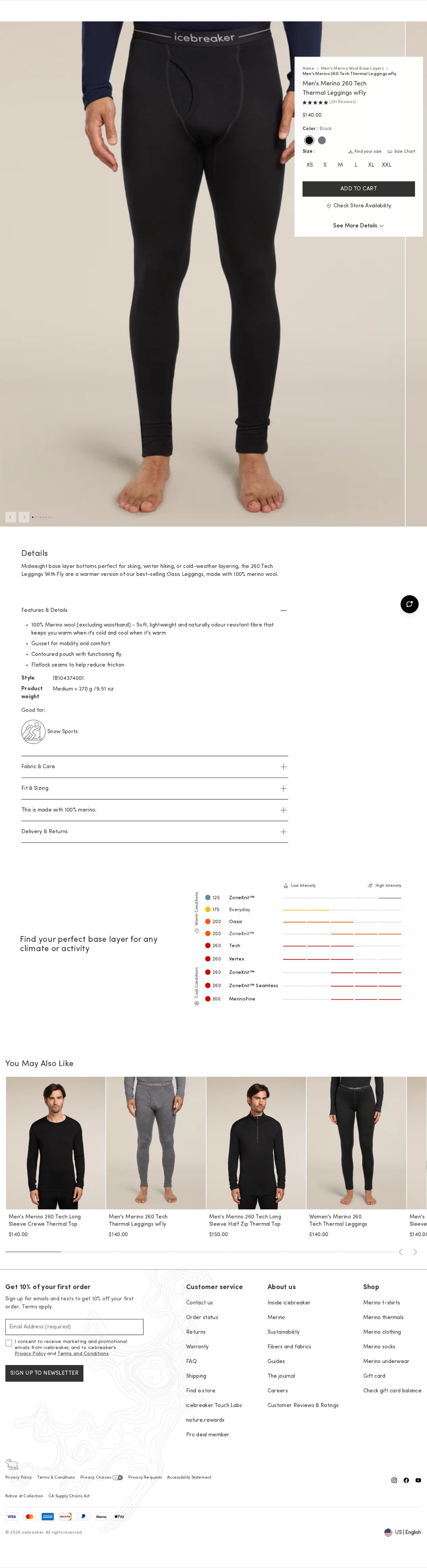
Single flat-price PDP with free-shipping threshold banner, a 'You May Also Like' cross-sell rail, and a slide-cart drawer (iCart) to capture add-ons at cart stage. No volume/quantity-break widget present. Core AOV lever is cross-category outfit completion ('Complete The Look') rather than quantity incentives.
Operator's read
PricingIcebreaker runs a clean single flat-price model at $140.00 for these leggings — no volume tiers, no subscribe-and-save, no bundle discount. The only pricing lever is a blanket free-shipping promise (no threshold floor), which removes a key AOV-lift mechanic entirely. The 'price has been updated recently' copy is a light scarcity/anchor signal but there is no struck-through compare-at price visible, so anchoring is soft at best. The cross-sell carousel tops out at $150 (Half Zip), meaning a full 3-piece base-layer kit would run ~$430 at no discount — high ask with zero incentive to bundle.
Widget styleThere is no volume-discount or bundle widget on this PDP whatsoever. The slot that widget would occupy is instead filled by a 'Find your perfect base layer' weight/activity chart and a 'You May Also Like' carousel — both are brand/editorial in nature rather than conversion-rate tools. iCart is the only active upsell mechanism, operating entirely at cart stage and not visible in the provided evidence. No radio-tiles, no inline table, no dropdown quantity selector, no 'Most Popular' or 'Best Value' badges anywhere on the page.
VerdictThe free-shipping-on-all-orders banner is a missed AOV lever — replacing it with a $200 free-ship threshold (or a tiered gift-with-purchase at $250+) would immediately incentivise shoppers to add a second piece from the $140–$150 cross-sell carousel without requiring a discount. The single highest-leverage change I would make is adding a 'Complete the Kit' bundle widget on the PDP (top + bottom pre-selected at ~8% off, ~$258 vs $285 à la carte) with an 'Add Both' CTA — icebreaker's own cross-sell data already shows the Thermal Top as the natural companion, and a named bundle with a modest saving removes the mental friction of a $430 unaided checkout.
offer details (3)
No cart snippets were provided so iCart drawer contents are fully inferred. Pricing widget array is empty — confirmed no quantity-break or subscribe-save widget exists on this PDP. 'Complete The Look' and 'You May Also Like' appear to be the same cross-sell section referenced twice in snippets.

Single-product value anchoring against a 'High Street RRP' compare-at price, supported by a limited-time discount code. No volume/bundle widget. AOV lever is the 15% code driving first-purchase conversion rather than upsell mechanics. Slide Cart (iCart) is installed but no cart upsell copy is visible in the evidence.
Operator's read
PricingThere is no volume or bundle pricing widget — just a single SKU priced at £55 against a £85 'High Street RRP' compare-at anchor, presenting a 35% saving framing. The stacked code (UNFOLD15) brings it further to £46.75, but that's a conversion lever not an AOV lever. With only one price point and no tiered options, there's no mechanic here to grow basket size beyond one unit.
Pricing tiers (1 widget)
Widget styleNo volume-discount or bundle widget exists on this PDP. The slot is occupied entirely by the £85 struck-through 'High Street RRP' anchor paired with a time-limited percentage-off code banner. The iCart slide drawer is installed but its contents are not exposed in the evidence — it may hold a cross-sell recommendation, but nothing is confirmed.
VerdictThe RRP anchoring and sustainability narrative are executed well — framing a £55 dress as 35% cheaper than high street is a clean, credible value prop. The single highest-leverage change would be activating iCart's cross-sell or frequently-bought-together logic inside the drawer to surface a complementary SKU (e.g. the Long Sleeve variant or a matching trouser) at cart stage, targeting a £90–£100 AOV vs the current single-item £55. Even a static 'Complete the look' tile in the drawer would meaningfully lift units-per-transaction without any copy-heavy merchandising work.
offer details (3)
Confidence is medium: pricing widget text was empty so all pricing is inferred from product copy snippets. iCart cart contents not visible. 'Also available: Long Sleeve' suggests a natural cross-sell candidate that does not appear to be surfaced in-cart based on available evidence.

Multi-tier quantity bundle anchoring on a wrinkle-free dress shirt (Chemise Infroissable à Coupe Ajustée), using Kaching Bundles for on-page tiered quantity breaks (1/2/3 shirts), UpCart/iCart for slide-cart upsell layer, and AfterSell for post-purchase one-click upsell. Father's Day promo banner (PAPA10, -10%) drives urgency at the top of funnel.
Operator's read
PricingThe store runs a 3-tier buy-X-get-Y-free bundle: 1 shirt at €34, 2+1 free at €108 (effectively €36/unit — actually higher per unit than buying 1, a fake-anchor problem), and 3+2 free at €165 (€33/unit, the only true discount). The BOGO tier at €108 for 3 units versus €34 baseline means the customer pays 3× base price for the 'free' shirt, which is zero discount — they'd need to see this as value via gifting framing, not pure savings math. The Father's Day -10% code (PAPA10) layers on top but isn't baked into the widget, creating a friction point.
Pricing tiers (1 widget)
Widget styleThe Kaching Bundles widget renders as stacked vertical radio tiles directly on the PDP — no dropdown, no inline table. There are no 'Most Popular' or 'Best Value' badges visible (at this resolution), and no struck-through compare-at prices anchoring the individual tiers, which leaves the value perception of the middle tier especially weak. The mystery gift threshold at €150 acts as a soft anchor pushing toward the 3+2 bundle (€165), which is smart placement, but the lack of a progress-bar visualization (vs. a static text line) reduces its pull.
VerdictThe mystery gift threshold intelligently aligns with the top bundle tier (€165 > €150 unlock), creating a compound incentive — that's well-executed. The single highest-leverage fix is correcting the fake-anchor on the 2+1 tier: at €108 for 3 units the per-unit cost (€36) is higher than buying one (€34), which any price-aware shopper will catch and distrust. Reprice the 2+1 to €95–€99 (≈€32/unit, ~6% off) and add a struck-through compare-at of €102 to make the savings tangible — this alone should lift bundle attachment rate on the middle tier significantly.
offer details (4)
Screenshot shows the same PDP repeated ~5 times (likely multiple viewport states or A/B variants). Prices read as approximately €34 / €108 / €165 but exact figures are limited by image resolution — treat as directional. AfterSell post-purchase upsell and iCart slide-cart contents are not visible and are inferred from app installs only.
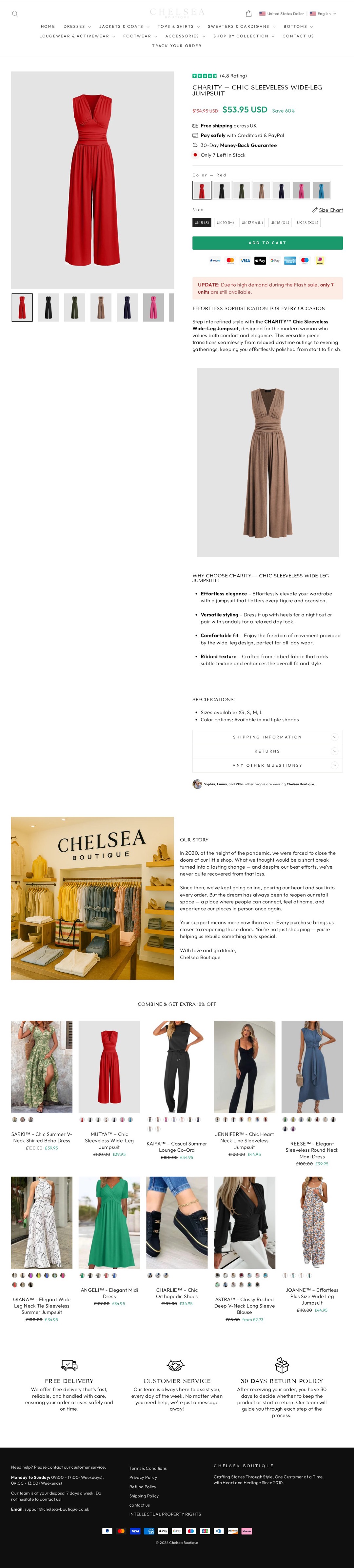
Single-product fashion PDP running a flash-sale anchor (£100 → £39.95, 60% off) with a multi-buy bundle incentive (buy 2 +10%, buy 3 +20%) surfaced on the PDP via Kaching Bundles, a slide-cart drawer via UpCart, and a post-purchase one-click upsell via AfterSell. AOV lever is the cross-sell carousel beneath the fold labelled 'Combine & get extra 10% off'.
Operator's read
PricingThe entire pricing architecture rests on a single deep anchor: £100.00 struck through against £39.95, a 60% discount that does the heavy lifting. There is no tiered per-unit ladder on the PDP — the volume incentive (buy 2 +10% → effective £35.96/unit; buy 3 +20% → effective £31.96/unit) lives only in the announcement bar, meaning most shoppers never consciously register the per-unit saving. The cross-sell carousel applies the same anchor logic on each tile (£100–£200 RRP vs £19.95–£39.95 sale), creating a wall of 60%-off signals that reinforces value perception but doesn't systematically escalate basket size.
Pricing tiers (1 widget)
Widget styleThere is no visible Kaching Bundles quantity-ladder or radio-tile widget on the PDP in this screenshot — the bundle app's work is being done entirely by the announcement bar copy. What occupies the upsell slot on the page is a recommendation carousel ('Combine & get extra 10% off') which is functionally a cross-sell grid, not a structured bundle builder with badges like 'Most Popular' or 'Best Value'. UpCart likely surfaces the multi-buy mechanic inside the drawer (not captured here), and AfterSell handles the post-purchase one-click offer. The net result is that the highest-intent moment — the PDP itself — has no structured bundle widget with explicit per-unit math to make the 2- or 3-unit saving visceral.
VerdictThe 60% anchor is clean and credible, and the cross-sell carousel is well-merchandised. The single highest-leverage change is to deploy the Kaching Bundles widget directly on the PDP as a 3-option radio-tile block (1 unit £39.95 / 2 units £71.91 'Save 10% — Most Popular' / 3 units £95.88 'Save 20% — Best Value') with explicit per-unit prices shown — moving the multi-buy incentive from a banner that gets ignored to an inline selector that forces the shopper to actively choose, which on a £39.95 fashion impulse buy should lift multi-unit rate from near-zero to 15–25%.
offer details (5)
Currency shown on site is GBP (£); USD price ($53.95) appears in the page title snippet likely due to a geo-redirect or multi-currency app showing USD for the US ad audience. All tier maths above use GBP. Cross-sell carousel products visible: SARVY £39.95 (was £100), MUTYA £37.95 (was £100), KAYA £34.95 (was £65), JENNIFER £44.95 (was £100), REESE £37.95 (was £100), QIANA £34.95 (was £100), ANGELI not fully visible, CHARLIE Orthopaedic £34.95 (was £65), ASTRA £27.95 (was £100), JOANNE £46.45 (was £100).
Aggressive penetration pricing with a deep fake-anchor discount (86% off), free-pair gift threshold, free-shipping threshold, and a recommendation carousel cross-sell — all built around a single hero SKU at $4.99 with a struck-through $35.00 compare-at price to maximise impulse conversion from paid social.
Operator's read
PricingThere is no volume or bundle pricing widget whatsoever — the entire pricing strategy rests on a single extreme anchor: $35.00 struck through against a $4.99 live price, an 86% implied discount ($30.01 saving called out explicitly). The $20 free-pair threshold and $80 free-shipping threshold do the heavy AOV lifting instead of tiered quantity breaks. The subscribe-save option claims 66.1% off on subscription, but the base price is already $4.99 so the math is either applied to a higher recurring price or is misleading — warrants scrutiny. Per-unit economics are entirely flat: one price, one unit, no ladder.
Pricing tiers (1 widget)
Widget styleThere is no volume-discount or bundle widget on this PDP. The slot that would typically be occupied by a quantity-break radio tile (e.g. Vitals, Bundler, or Bold Quantity Breaks) is instead occupied by a plain Shopify quantity stepper (+/-) and a colour/size selector. The only visual merchandising is the struck-through $35.00 compare-at and the 'Save $30.01' icon badges. The 8-tile recommendation carousel below the fold is the closest thing to a structured upsell widget, but it pushes the same SKU in different colours rather than a true bundle or volume break.
VerdictThe deep fake-anchor at $4.99 is a proven paid-social hook and the social proof wall (24,623 reviews, pro footballer endorsements, 4.5M+ socks delivered) is well executed for cold traffic conversion. The single highest-leverage change I would make is adding a 3-pack / 5-pack quantity-break widget (e.g. radio tiles: 1 pair $4.99 | 3 pairs $12.99 = $4.33/pair | 5 pairs $18.99 = $3.80/pair) directly on the PDP above the Add to Cart button — right now there is zero nudge to buy more than one unit at point of decision, and the $20 free-pair threshold and $80 free-ship bar are doing all the AOV work passively inside the cart rather than proactively at the product page where intent is highest.
offer details (6)
Banner text references a 'WORLD CUP SALE + 70% OFF' timer and prior 'BLACK FRIDAY 80% OFF' and 'Christmas Sale Now Live' campaigns — the store runs perpetual sale urgency messaging. The $35.00 compare-at is almost certainly a permanent fake anchor rather than a real historical price given the 86% depth and always-on sale framing. No post-purchase upsell app (ReConvert, AfterSell, Zipify) detected in the installed app list; only iCart Slide Cart is confirmed.

Single-SKU hero product with a deep strike-through anchor discount (56% off, WM/World Cup urgency theme). No on-page volume/bundle widget visible; AOV lever is Rebuy cross-sell/upsell and iCart slide-cart, with Kaching Bundles likely powering any bundle logic post-add-to-cart or in-cart.
Operator's read
PricingOne tier, one SKU: €149.99 sale vs €349.89 compare-at — a 57% markdown presented as a sports-event flash deal. There is zero volume or bundle ladder on the PDP; the entire pricing strategy is a single deep anchor strike-through. The compare-at of €349.89 is oddly precise (not a round number), which is a common credibility risk. No free-shipping threshold is surfaced in the visible copy, and no multi-unit incentive exists to push the customer past a single-unit purchase.
Pricing tiers (1 widget)
Widget styleNo volume-discount or bundle widget is rendered on this PDP despite Kaching Bundles being installed. The slot that would normally hold a radio-tile quantity-break widget is occupied solely by a standard Shopify price display with a red struck-through compare-at. All bundle logic is either dormant, A/B testing, or deferred to the iCart/Rebuy cart layer. The urgency mechanism is copy-only (WM-Sale label + emoji), with no visible countdown timer on screen.
VerdictThe anchor-discount execution is clean and the 57% off framing is aggressive enough to convert cold traffic — that part works. The single highest-leverage change: activate a 3-tier Kaching Bundles widget directly on the PDP (e.g. 1× €149.99 / 2× €269.99 save 10% / 3× €374.99 save 17%) to capture the multi-unit household or gifting buyer. Right now 100% of customers are capped at one unit with zero on-page incentive to buy more; even a modest 15% multi-unit attach rate would materially lift AOV without touching ad spend.
offer details (3)
Screenshot is in German; store is ryer.de selling a wet-vacuum/steam-cleaner combo. Confidence is medium because cart snippets were empty so iCart/Rebuy in-cart offer specifics are inferred. Kaching Bundles is installed but no widget is visible on the PDP in the provided screenshot.
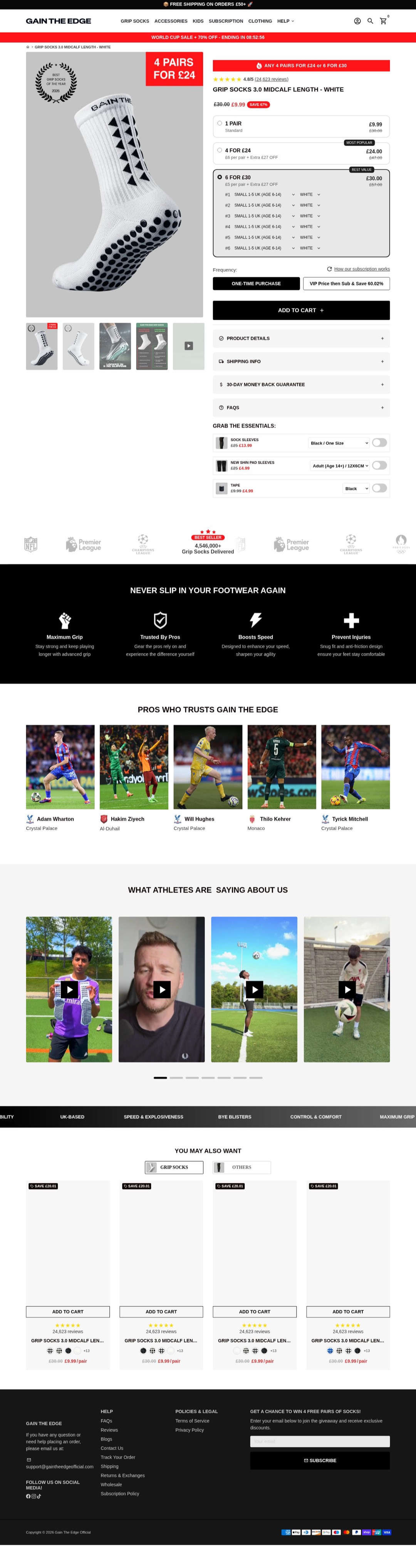
Multi-tier quantity-break radio widget on PDP anchored off a heavily inflated £30 compare-at, with free-shipping threshold cart mechanic via UpCart/iCart slide drawer, inline cross-sell add-ons below the ATC, and a 'You May Also Want' recommendation carousel lower on page. World Cup Sale urgency banner reinforces conversion pressure.
Operator's read
PricingThree-tier radio widget: £9.99 single pair (anchored against a £30 compare-at — implying 67% off), £24 for 4 (£6/pair, ~40% off vs single), £30 for 6 (£5/pair, ~50% off vs single). The 6-pack is pre-selected as 'Best Value', which is smart AOV anchoring — default basket value is £30 vs £9.99 if left to the customer. The £30 compare-at on a single pair is almost certainly an inflated anchor (£30 for one pair of grip socks is implausible at retail), but it drives the 'over 75% off' headline claim and the subscription save% figure. The £50 free-shipping threshold is one tier above the default 6-pack (£30), actively pushing customers to add an essential add-on or second product.
Pricing tiers (1 widget)
Widget styleThe widget is a vertically stacked radio-tile layout — three rows, each showing quantity, per-unit price, total price, and a compare-at. Badges ('Most Popular' on 4-pack, 'Best Value' on 6-pack) follow a standard escalation pattern. No named third-party bundle app is identifiable from the screenshot; it reads as a custom or lightweight quantity-break script. The compare-at strike-through appears only on the single-pair tier (£30.00 → £9.99), which acts as the primary anchor. The 'WORLD CUP SALE 75% OFF' countdown bar and the '4 PAIRS FOR £24' hero banner reinforce the same discount framing from multiple touch-points.
VerdictThe PDP executes the quantity-break anchor cleanly — defaulting to the 6-pack at £30 is the right call and will mechanically lift AOV. The single biggest lever I would pull is closing the gap between the 6-pack default (£30) and the £50 free-ship threshold: right now a customer who takes the pre-selected 6-pack still needs £20 more to unlock free shipping, and the in-cart progress bar is doing that heavy lifting alone. I would add a 9-pack or 12-pack tier at ~£42-£45 with a 'FREE SHIPPING INCLUDED' badge — that single tier bridges the threshold gap, increases per-order unit count from 6 to 9+, and removes the friction of needing a cross-sell to hit £50. The subscribe-save toggle at 80% off is also dangerously deep and risks devaluing the brand if widely adopted; I would test capping it at 20-25% with a 'never run out' angle instead.
offer details (7)
The £30 compare-at on a single pair appears to be an inflated anchor used to justify the '75% off' sale claim and the subscription save percentage. No post-purchase upsell app (ReConvert/AfterSell/Zipify) is listed in installed apps, so no post-purchase offer inferred. The 'VIP Price then Sub & Save 80.02%' toggle suggests a subscription app is installed (likely Recharge or Skio) but is not listed. The 'You May Also Want' carousel tabs (Grip Socks / Others) suggest a product recommendation app or native Shopify recommendations.
Multi-tier quantity-break pricing anchored with a bold banner offer (4 for €24 / 6 for €30), supported by subscribe-save frequency selector on PDP, a slide-cart drawer with free-shipping progress bar (UpCart/iCart), cross-sell recommendation strip below the fold, and a free-gift threshold incentive. Social proof (pro athletes, video UGC) and urgency (World Cup Sale + 70% off countdown) frame the value stack.
Operator's read
PricingThere is no structured volume-discount widget (no radio tiles, no inline table). Instead the store leans on a high-contrast red banner — '4 FOR €24 / 6 FOR €30' — placed above the star rating to communicate quantity breaks. Single-unit price is €7.99, so 4 units would be €31.96 at retail, making the 4-pack €24 a 25% discount (€6/unit) and the 6-pack €30 a 37.5% discount (€5/unit). No compare-at price is struck through on the single unit, which leaves the anchor implicit rather than explicit. The subscribe-save toggle adds a recurring-revenue layer but the discount percentage displayed ('0.1%') appears to be a rendering error that undermines perceived value.
Pricing tiers (1 widget)
Widget styleThe quantity break is communicated entirely through banner copy — no dedicated app widget (no Pumped Up Upsells, no Volume Boost, no Bundles.app radio tiles). What occupies the pricing-widget slot is a plain text callout and a one-time vs subscription frequency toggle. This is a missed structural opportunity: without a visual tiered widget showing escalating per-unit savings side-by-side, shoppers must do the mental math themselves. The 'World Cup Sale + 70% OFF' countdown banner creates urgency but the 70% figure is not reconcilable with visible prices (€7.99 single unit), which risks credibility erosion with savvy shoppers.
VerdictThe free-gift-at-€15 threshold combined with the 4-for-€24 banner is a clean AOV driver and the subscribe-save option adds LTV leverage — those are well-executed. The single highest-leverage change is replacing the text banner with a proper radio-tile quantity-break widget (e.g., Pumped Up Upsells or Kaching Bundles) showing three explicit tiers — 1 pair at €7.99, 4 pairs at €24 (save 25%), 6 pairs at €30 (save 37%) — with per-unit price displayed under each tile and '6-pack' badged 'Best Value'. This makes the discount ladder visual and frictionless, removes the mental-math barrier, and in comparable DTC sock/apparel stores typically shifts 30-40% of single-unit buyers to the multi-pack tier, directly lifting AOV from ~€8 toward €24+.
offer details (6)
The '70% OFF' in the World Cup Sale banner does not reconcile with the visible single-unit price of €7.99 and no struck-through compare-at price is shown — this is either a sitewide sale on select SKUs or an exaggerated anchor that could erode trust. The subscribe-save '0.1%' discount label is almost certainly a Liquid rendering bug (likely meant to show ~20% or a fixed per-pair saving) and should be fixed immediately as it destroys the subscription value proposition. UpCart and iCart appear to both be installed simultaneously — operators should confirm only one slide-cart is active to avoid JS conflicts and duplicate upsell triggers.

Single-SKU DTC hardware (golf simulator mat) with cart-stage bundle upsell and a post-purchase ReConvert flow. The main conversion lever is a Father's Day urgency pitch on a pre-built gift bundle at a deep ~53% discount off a compare-at price, plus two add-on cross-sells (Replacement Pad 4-Pack and Monthly Coaching subscription) presented in the cart/product area. No quantity-break or volume-discount widget is visible; anchoring is done exclusively via struck-through compare-at pricing and a bold 'SAVE X' call-out.
Operator's read
PricingNo volume-discount ladder exists — the store leans entirely on a single pre-built bundle anchor (5,291,000₫ sale vs 11,355,000₫ compare-at, ~53% off) to create perceived value, plus a lighter 20% off Replacement Pad add-on (2,111,000₫ vs 2,646,000₫) and a flat-rate 1,310,000₫/mo coaching subscription. There is no per-unit price ladder or quantity-break widget nudging buyers upward; the entire AOV lift comes from accepting or declining two discrete add-on tiles.
Widget styleNo named volume-discount app widget is deployed. The upsell slot is occupied by a single flat bundle tile rendered in the product/cart area with a Shopify-native or lightly customised compare-at strike-through and a green 'SAVE 6,064,000₫' badge. Layout is a stacked vertical card (not radio-tiles or a table), with a secondary 'Add' CTA — more of a bundle-builder checkbox pattern than a true quantity ladder. The Father's Day urgency line ('Sale ends') and 'Delivery Included' copy do the heavy lifting in lieu of tiered discount mechanics.
VerdictThe 53% bundle discount is aggressive and the Father's Day hook is timely — that's executed well and likely converts cold traffic efficiently. The single highest-leverage change is introducing a 2-tier quantity or bundle selector (e.g., 1-unit core kit vs the full bundle as Tier 2 vs a 'Family Pack' or 2-unit gift set as Tier 3) so buyers who reject the big bundle still have a mid-point option rather than dropping all the way back to the base SKU — this alone typically lifts AOV 15-25% on single-SKU hardware stores by capturing the 'not ready for everything' segment.
offer details (4)
Currency is Vietnamese Dong (₫), suggesting this storefront is geo-targeted to Vietnam or using a currency conversion app. Core product is a physical golf simulator mat (Golf Daddy) sold with an AI coaching app. ReConvert post-purchase flow is confirmed by app install but no post-purchase page was visible in the screenshot. Ratings/Reviews section shows 4.8★ from 11,486 reviews — strong social proof that could be leveraged more prominently in the bundle tile to reduce friction at the upsell step.
Single-SKU markdown + free-ship threshold + email-capture discount, no volume/bundle widget. Killstar drives AOV through a sitewide End of Season sale (up to 70% off), a struck-through compare-at anchor on individual products, a free-shipping threshold (€125 / €175 tiered), a 15% first-order email capture, and a Rebuy-powered cross-sell carousel ('You May Also Like'). iCart slide-cart drawer is installed and likely surfaces the free-ship progress bar and cross-sells at cart stage.
Operator's read
PricingNo volume or bundle widget exists — Killstar leans entirely on single-unit struck-through anchoring (€14 vs €20 compare-at, ~30% off) amplified by a sitewide 'Up To 70% Off' End of Season sale banner. The free-ship ladder (€125 / €175) is the primary AOV lever, designed to push multi-unit basket builds organically. There is no per-unit price ladder, no quantity break, and no bundle pricing — the only numeric incentive to add more items is hitting the free-ship floor.
Pricing tiers (1 widget)
Widget styleNo volume-discount or bundle widget on the PDP whatsoever. The slot that would typically hold a quantity-break radio-tile widget is occupied by the 'You May Also Like' cross-sell carousel (Rebuy), which shows 6 complementary fishnet/alt items with individual 30–40% OFF red badges and struck-through compare-at prices. This is a pure cross-sell play, not an upsell widget. iCart slide-cart drawer (installed) is the likely home for free-ship progress visual, but it is not rendered on the PDP.
VerdictThe cross-sell carousel is well-executed for a fashion brand — thematically tight (all fishnet/alt category), price-anchored with % badges, and frictionless with per-tile 'Add to Bag'. However, the single highest-leverage change is adding a Rebuy-powered 'Complete the Look' bundle on the PDP itself — pre-select 2–3 complementary items (e.g. bolero + fishnet tights + gloves) at a combined 'bundle price' saving €8–12 vs buying separately, with a one-click 'Add All to Bag' CTA. Given the free-ship floor is €125 and this bolero is only €14, shoppers need to add 7–8 units to hit free ship — a curated bundle builder collapses that friction, lifts AOV in a single interaction, and directly monetises the strong cross-sell intent already visible in the carousel.
offer details (6)
Screenshot confirms: 4.8★ from 113 reviews (strong social proof), 'SELLING FAST' badge (urgency), loyalty points mention ('925 points is equal to $9.25'), and Route Package Protection accordion (add-on protection upsell likely in cart via Route app, not listed in installed apps but visible in PDP description accordion). End of Season Sale banner with 70% off graphic is sitewide. Recently Viewed section also present below carousel.
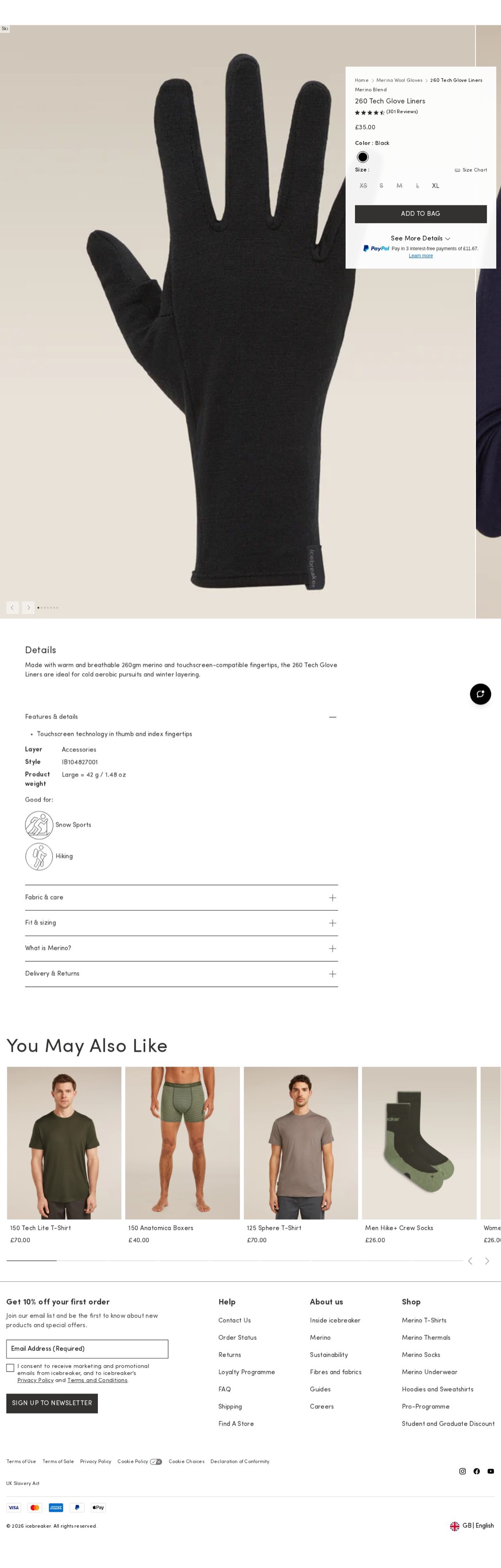
Single-SKU flat-price PDP with free-shipping threshold as the primary AOV driver, cross-sell carousel below the fold, and a slide-cart drawer (iCart) surfacing 'You May Also Like' recommendations at cart stage. No volume/bundle pricing widget present.
Operator's read
PricingThere is zero volume or bundle pricing on this PDP — it's a single flat price of £35 with no struck-through compare-at, no quantity breaks, and no subscribe-and-save. The only anchor mechanic in play is the free-shipping threshold at £40, which sits just £5 above the product price. That £5 gap is intentional or fortuitously useful: it nudges a shopper to add a low-ticket item (e.g. £26 socks) to unlock free shipping, lifting AOV from £35 to £61 in one move. Beyond that, the store leans entirely on the cross-sell carousel and iCart drawer to grow the basket, with no per-unit discount ladder to incentivise multi-unit purchases of the glove liners themselves.
Widget styleThere is no volume-discount or bundle widget on this PDP — that slot is occupied by a plain 'Add to Bag' button at a single £35 price point, colour/size selectors, and a PayPal Pay-in-3 instalment callout (£11.67 × 3). The 'You May Also Like' cross-sell carousel below the fold is the closest thing to an upsell surface on the page itself. No app badge, no 'Most Popular' tier, no escalating compare-at pricing is visible anywhere.
VerdictThe free-ship threshold at £40 on a £35 hero product is the smartest thing on the page — it almost forces a second item. What's missing and highest-leverage: a 'Complete the Look' bundle offer (glove liners + socks or a base layer) presented as a pre-built bundle with a 10-15% saving, surfaced directly on the PDP before the fold. Right now the cross-sell carousel is passive and below-fold; converting it to a sticky 'Frequently Bought Together' checkbox widget (e.g. glove liners + Men Hike+ Crew Socks for £55 vs £61 separately — a visible £6 save) would capture the threshold psychology already primed by the free-ship banner and measurably lift AOV without cannibalising margin.
offer details (3)
Translation missing errors in product snippets ('en.products.product.price.price_tooltip') suggest a localisation/theme issue that may be suppressing a price-tooltip or savings widget in some locales — worth investigating whether a discount badge is failing to render. No post-purchase upsell app (ReConvert/AfterSell) detected in installed apps list; iCart is the sole upsell app confirmed.

Tiered set-size upsell (1pc → 4pc/5pc/6pc sets) on the PDP, backed by coupon-code volume thresholds on the announcement bar, with Selleasy cross-sell addons and iCart slide-cart. No numeric quantity-break widget is rendered; size/set selection acts as the de-facto AOV lever.
Operator's read
PricingThere is no dedicated volume-discount pricing widget — the store leans on (a) named set bundles as PDP variants (1pc at £9.99 confirmed; multi-pc prices not surfaced in evidence), (b) a coupon-code ladder on the announcement bar (FF20 = 20% any order, FF25 = 25% on £79+), and (c) a free-gift incentive on every order. The FF25 threshold at £79 is the real AOV anchor: at £9.99/pc the customer needs ~8 units or a higher-ticket set to hit it, which is smart pressure but the discount depth (20–25%) is modest versus the 'up to 65% off' headline claim in the banner.
Widget styleNo volume-discount or bundle-builder app widget is present on this PDP. The upsell slot is occupied by a plain native Shopify variant radio/dropdown picker with four set-size labels. There are no 'Most Popular' or 'Best Value' badges, no compare-at per-unit anchoring, and no visual savings callout within the widget itself. Selleasy likely renders a 'Frequently Bought Together' checkbox block below the ATC button, and iCart handles in-drawer cross-sells, but the primary pricing real estate is completely unoptimised.
VerdictThe set-bundle variant approach is directionally right — it moves customers from 1pc to 4–6pc — but it's leaving serious money on the table because per-unit savings are never shown inside the picker. The single highest-leverage change: replace the plain variant selector with a Quid/Assortion-style quantity-break radio tile widget that shows per-unit price dropping from £9.99 → ~£7.xx → ~£6.xx as set size grows, adds a 'Best Value' badge on the 6pc tier, and displays a struck-through compare-at. That one swap typically drives 15–25% AOV lift on this category because the customer can instantly see the per-unit saving — right now they have to do the maths themselves, and most don't.
offer details (7)
Numeric prices for the 4pc/5pc/6pc set tiers were not surfaced in the provided evidence; only the 1pc price of £9.99 was confirmed. Discount percentages and per-unit prices for multi-piece sets are therefore null. The 'up to 65% off' banner claim likely refers to clearance SKUs sitewide, not this specific product. No post-purchase upsell app (ReConvert/AfterSell/Zipify) is listed in installed apps, so no post-stage offer is inferred.
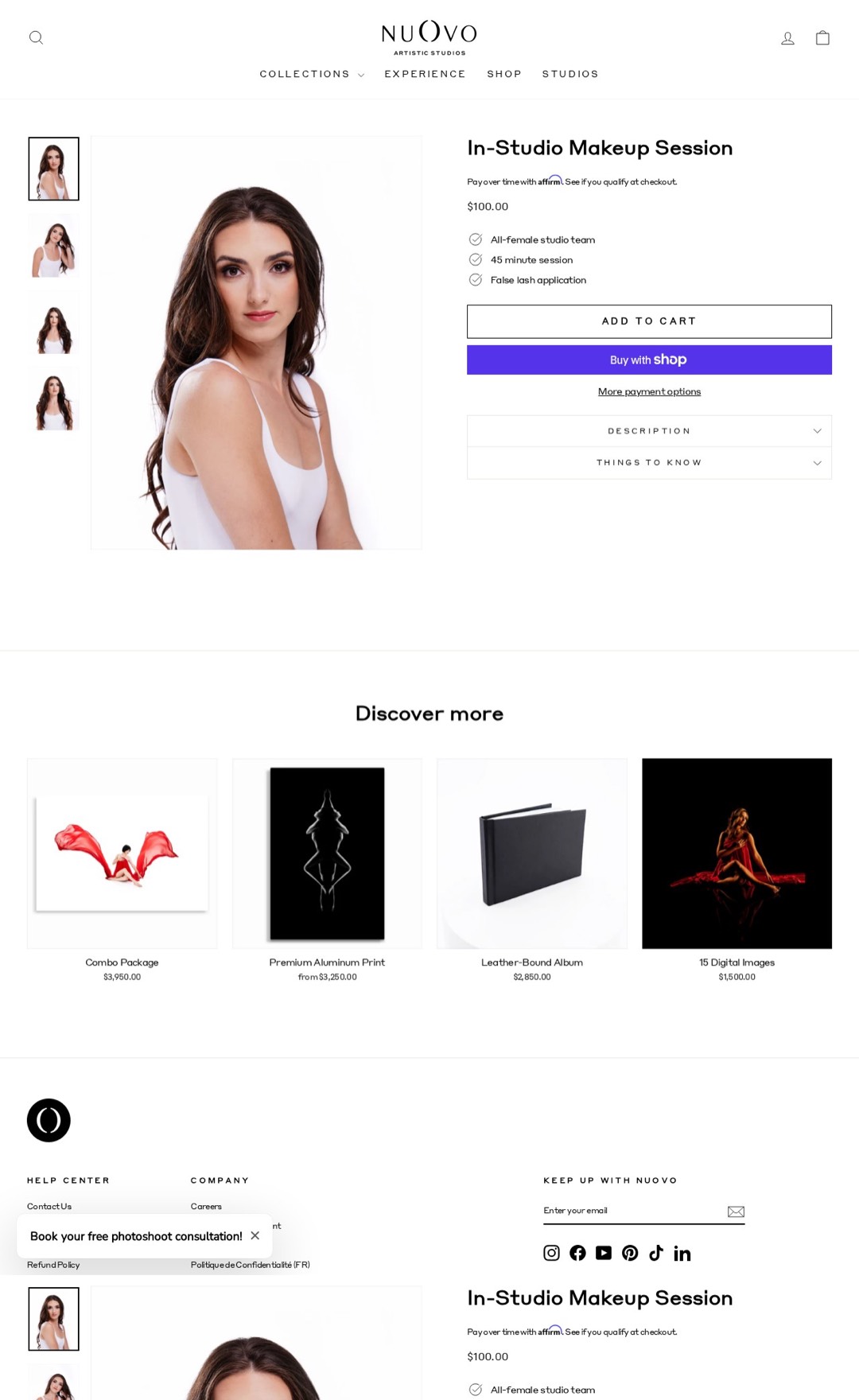
Single low-entry-price service ($100 makeup session) used as a funnel front-door to high-ticket photography packages. The $100 product de-risks the first transaction; the 'Discover more' cross-sell rail below the fold surfaces $1,500–$3,950 upsells (15 Digital Images, Leather-Bound Album, Premium Aluminum Print, Combo Package). Bundler app is installed but no visible bundle widget renders on this PDP. Affirm BNPL is surfaced to soften sticker shock on the high-ticket items. A sticky bottom bar prompts a free consultation booking, functioning as a soft lead-capture CTA.
Operator's read
PricingThere is zero volume or bundle pricing widget on this PDP — no tiers, no per-unit ladder, no compare-at anchor. The entire pricing architecture is a single $100 flat entry price for the makeup session, with Affirm BNPL as the only softening mechanism. The real revenue play is post-session: four cross-sell items ranging from $1,500 to $3,950 (Combo Package), meaning the makeup session is essentially a loss-leader or break-even foot-in-the-door to a potential $3,950 Combo close — a 39x AOV multiplier if the upsell converts.
Widget styleNo bundle or volume-discount widget exists on this page whatsoever. The slot that would normally hold a Bundler tile or quantity radio-tile is occupied by a plain single-variant Add to Cart button with a ShopPay accelerated checkout. Below the fold, a static 4-card 'Discover more' product grid handles the upsell heavy lifting — no badges, no 'Most Popular', no savings callouts, no urgency. Bundler is installed but not deployed here, which is a clear gap.
VerdictThe funnel logic is sound — low-barrier entry, high-ticket back-end — but the cross-sell carousel is doing zero selling: no savings callouts, no social proof, no urgency, and no bundled pricing incentive to take two items at once. The single highest-leverage change is to activate Bundler on this PDP as a 'Add Makeup Session + 15 Digital Images' bundle at a 10–15% discount (~$1,440 vs $1,600 separate), effectively anchoring the $100 session against a $1,500 deliverable and lifting the initial cart value from $100 to $1,440 in one click — that is where the AOV move lives.
offer details (3)
Pricing shown in USD on site; PRODUCT SNIPPETS reference VND (1,917,000 VND ≈ $75–100 USD depending on rate), consistent with a Shopify market/currency localization. All analysis uses USD as displayed. Bundler app installed but no widget rendered on observed PDP — may be active on other PDPs or cart.
Low free-shipping threshold ($20) drives initial purchase; Kaching Bundles handles on-page bundling/volume offers; UpCart + iCart slide-cart handles in-cart cross-sells and upsells; no visible post-purchase app detected in installed list, so post-purchase flow is likely absent or native.
Operator's read
PricingNo numeric pricing widget tiers are visible in the scraped evidence, so there is no volume-discount ladder or compare-at anchor in play on the PDP — the store leans entirely on a $20 free-shipping threshold as its AOV lever, which is extremely low and likely met by a single unit purchase. The only bundle signal is the 'Free Mini Pack Offer' attached to the Dreamy Lash Kit, which reads as a GWP incentive rather than a tiered price break. With Kaching Bundles installed but no widget data surfacing, either the bundle widget is below the fold or not actively deployed on this SKU.
Widget styleNo volume-discount or quantity-break widget is visible in the evidence for this product page. The slot that would normally be occupied by a Kaching Bundles radio-tile or inline table appears to be either absent or non-rendering on this SKU. What occupies that space instead is a simple quantity selector, a single Add to Cart CTA, and the 'Free Mini Pack Offer' copy — a soft GWP bundle with no explicit per-unit price comparison or 'save X%' badge visible. The slide-cart (UpCart/iCart) is the primary upsell surface post-click.
VerdictThe free-ship threshold at $20 is doing most of the heavy lifting but is set so low it barely moves the needle on AOV — a customer grabbing one lash kit likely clears it automatically, removing any incentive to add more. The single highest-leverage change I would make is to activate a Kaching Bundles 3-tier radio widget directly on this PDP (e.g., 1 kit at full price, 2 kits at ~10% off, 3 kits at ~18% off with a 'Best Value' badge), anchor each tier with a crossed-out compare-at, and simultaneously raise the free-ship threshold to $40-$45 so the progress bar in the UpCart drawer actually pulls a second unit into the cart.
offer details (4)
Confidence is medium: Kaching Bundles is confirmed installed but no widget pricing data was extractable from the page scrape, so bundle tier specifics are inferred from app capability rather than observed numbers. iCart and UpCart overlap in function; store may be running both or migrating between them.

Single-SKU hero product (Marrakech travel towel €49.95) driving traffic to a clean PDP. Volume/bundle uplift is handled via a dedicated 'Bundle & save' nav link and the Bundler app rather than an on-page quantity widget. Slide Cart (iCart) + UpCart power the cart drawer layer for cross-sells and free-shipping progress. No visible quantity-break widget on the PDP itself.
Operator's read
PricingThere is zero volume-discount or quantity-break widget on the PDP — the single price point is €49.95 flat with no struck-through compare-at anchor and no per-unit ladder. The only pricing lever visible on the page is the €85 free-shipping threshold (banner), which implicitly nudges a second unit or accessory add-on to unlock free shipping (~€20 gap from a single towel). Bundle discounting is entirely offloaded to a separate nav page, meaning the vast majority of PDP visitors never see a price incentive to buy more.
Widget styleThere is no volume-discount or bundle widget on this PDP — that slot is occupied by a straightforward single-price 'Add to cart' button at €49.95. Bundle & save lives as a standalone nav destination powered by the Bundler app, completely decoupled from the product page. The cart drawer (UpCart/iCart) likely carries a free-shipping progress bar and possibly cross-sell tiles, but none of that is visible on the PDP itself. No radio-tile quantity selector, no 'Most Popular' badge, no escalating compare-at anchoring on this page.
VerdictThe social proof engine is strong (150,000+ travelers, Google/Trustpilot reviews, lifestyle imagery) and the free-pouch badge is a smart perceived-value add. The single highest-leverage change is adding an inline quantity-break or bundle radio-tile widget directly on the PDP — e.g., 1 towel €49.95 / 2 towels €89.95 (save 10%) / 3 towels €124.95 (save 17%) — so the AOV conversation happens before cart, not after. Right now the €85 free-ship gap from a single €49.95 purchase is the only organic nudge to add a second item, but it's passive; an explicit 'buy 2, save €10' tile on the PDP would convert that intent far more aggressively.
offer details (4)
Confidence is medium because no cart drawer contents or bundle page were captured in the screenshot. Pricing widget array is empty because no quantity-break/volume widget is rendered on the visible PDP. Post-purchase upsell marked as inferred. Free-pouch mechanic could be a permanent bundle inclusion rather than a threshold gift — classified as free-gift based on badge placement.
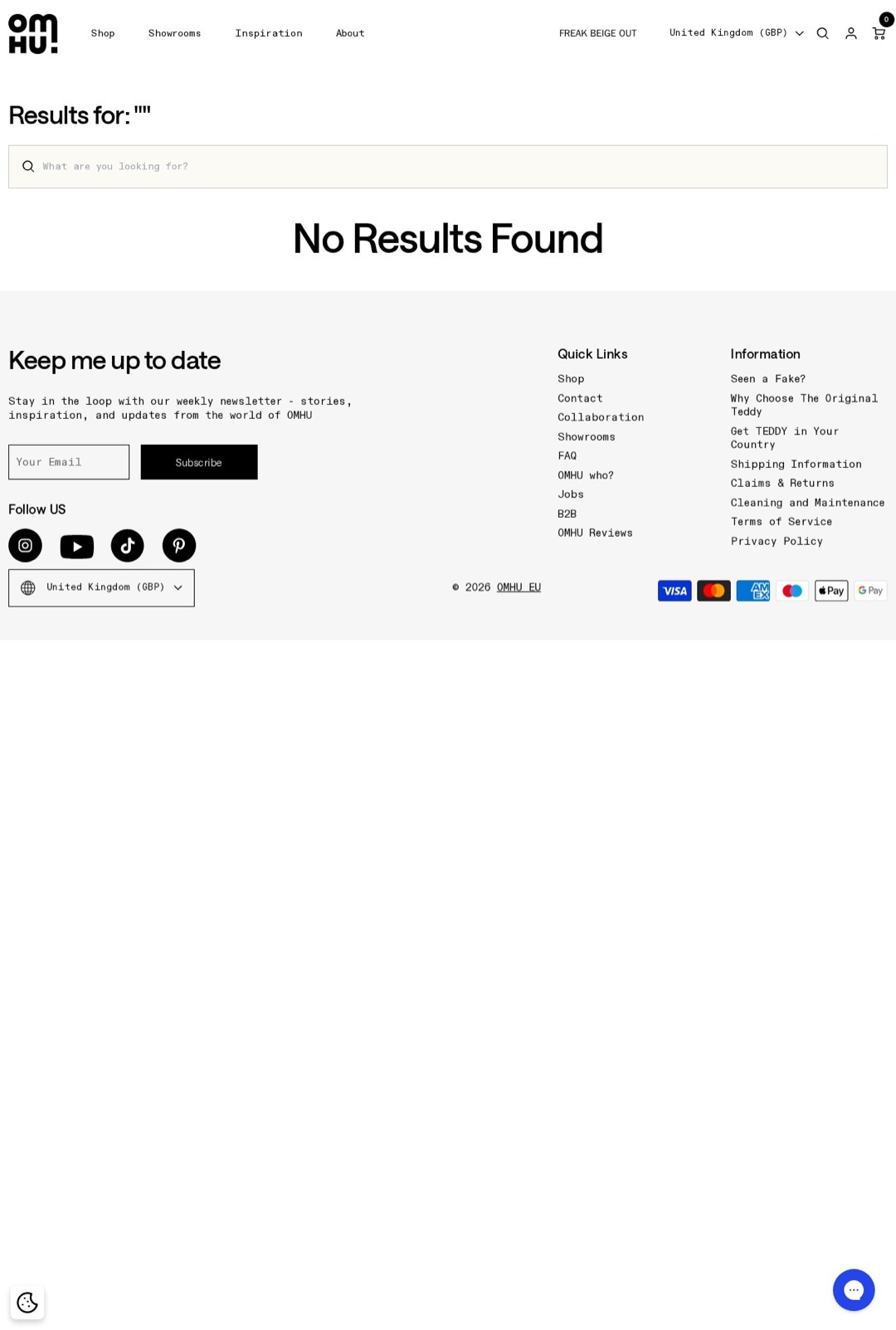
OMHU is a premium made-to-order sofa brand (TEDDY line) operating on a single-SKU-per-configuration model with no visible volume/bundle pricing widget. The AOV lever is accessory cross-sell (covers, grips, pillows, upgrade bars) driven by Selleasy, plus a free colour swatch funnel to pull prospects into the purchase flow. The announcement banner promotes a free-swatch CTA rather than a discount, signalling a considered-purchase, high-ticket brand that leans on product discovery over promotional pricing.
Operator's read
PricingThere is zero volume or bundle pricing widget visible anywhere in this evidence set — no quantity breaks, no subscribe-and-save, no tiered per-unit ladder. For a high-ticket made-to-order sofa (likely £1,000–£3,000+ per unit based on category), OMHU instead leans on a single ATC at full price with no struck-through compare-at anchor visible on this page, and uses the free-swatch programme as the top-of-funnel hook to reduce purchase anxiety rather than a discount mechanic. The entire AOV strategy is accessory attach (covers, grips, pillows, bars) rather than multi-unit or percentage-off pricing.
Widget styleNo volume-discount or bundle widget is present. The slot that would normally be occupied by a pricing widget is instead filled by a colour-swatch discovery flow and a clean product-config selector (colour tile grid — 'Smoke 017', 'Candyfloss C004' etc.). Selleasy handles inline accessory upsell beneath the ATC button, likely in a checkbox-addon layout, but this is inferred from the app install, not confirmed by the screenshot. There are no 'Most Popular' or 'Best Value' badges, no escalating compare-at anchors, and no urgency mechanics visible.
VerdictThe free-swatch funnel is smart for a considered-purchase category — it shortens the decision cycle and captures intent. The single highest-leverage change would be to introduce a Selleasy bundle offer at the product-page level that packages the sofa with TEDDY Cover + Grips at a 5–8% bundle discount (e.g. save £80–£150 vs. buying separately), displayed as a pre-ticked checkbox add-on beneath ATC. This directly increases first-order AOV on the highest-value transaction in the customer lifecycle without requiring a post-purchase flow, and the accessory catalogue already exists to support it — it just needs the bundle mechanic wired up.
offer details (3)
Analysis is heavily limited by the screenshot showing only a 'No Results Found' search page. No product page, cart page, or checkout was visible. Selleasy is the sole confirmed upsell app. All product and accessory references are drawn from nav/snippet text. Pricing tiers, actual GBP price points, and Selleasy widget layout on the product page could not be confirmed from the provided evidence.

Lifestyle/editorial DTC jewelry brand (Made By Mary) running on aspirational imagery and press validation ('as seen in People, Elle, Forbes'). The homepage acts as a brand funnel — hero editorial campaign ('catching light'), tabbed product carousel ('tell your story'), and media logos. No visible volume pricing widget or bundle builder; AOV lever appears to be cross-category discovery and personalization upsell rather than quantity breaks. Rebuy is installed, implying smart cart and/or post-purchase recommendations are active even if not visible in this screenshot.
Operator's read
PricingThere is zero visible volume or bundle pricing widget on this homepage — no quantity breaks, no tiered per-unit ladder, no subscribe-and-save. The store leans entirely on single-price SKUs surfaced through the editorial carousel with 'BEST SELLER' social-proof badges driving conversion at full price. Without any pricing snippet data, I can't confirm exact price points, but the strategy appears to be full-margin single-unit sell with AOV driven by multi-SKU discovery across categories rather than depth-per-SKU.
Widget styleNo volume-discount or bundle widget occupies the product display slot. What occupies that slot instead is a tabbed horizontal recommendation carousel — essentially a Rebuy or native Shopify section styled to feel editorial. The 'BEST SELLER' badge is the only anchor tactic visible; there is no compare-at strikethrough, no 'save X%', no Most Popular / Best Value tier callout. The personalization angle (hand-stamped, personalized bar necklaces per the banner) suggests the AOV play is add-on customization at product page level, not homepage bundling.
VerdictThe press validation wall (People, Elle, Forbes, Reader's Digest) combined with the editorial hero is executed well — it builds trust fast for cold traffic and justifies full-price selling. The single highest-leverage change I'd make is activating a Rebuy smart cart drawer with a 'complete the look' cross-sell block showing 2-3 complementary pieces (e.g., stack a ring + necklace + earring set) with a free-shipping threshold progress bar — this store's multi-category catalog is perfectly set up for a 'build your stack' AOV push that could realistically move average order from 1.0 units to 1.6-1.8 units without discounting.
offer details (3)
Screenshot shows the homepage repeating 3-4 times vertically, likely an artifact of the capture method rather than actual page structure. No cart, product page, or post-purchase screens were available, so Rebuy-specific cart/post-purchase offer mechanics are inferred only. Confidence is low due to absence of pricing snippets, cart snippets, and product-level data.
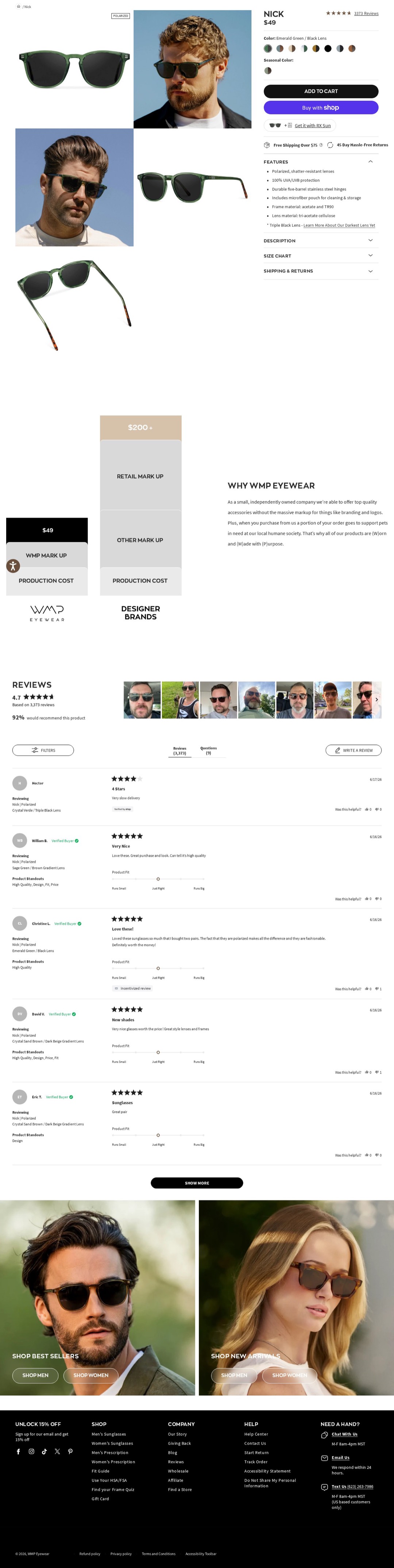
Single-price DTC sunglasses brand ($49/frame) using a free-shipping threshold + free-gift threshold + flash BOGO-30%-off urgency to drive multi-unit cart builds, backed by Rebuy cross-sell and Honeycomb Bundles for structured upsell moments.
Operator's read
PricingWMP runs a dead-simple single-price model at $49 flat per frame — no volume tiers, no quantity breaks, no struck-through compare-at on the PDP itself. The entire AOV-lift architecture lives in the cart: hit $75 for free shipping (requires 2 frames at $49 = $98, so shipping is already free at 2 units), and hit $100 for a free mystery pair (needs just over 2 frames, effectively incentivizing a 3rd unit or an add-on). The BOGO 30% off flash sale is the heaviest lever — second frame at $49 drops to ~$34.30, making a two-pack ~$83.30 and clearing both thresholds in one shot.
Widget styleThere is no volume-discount or bundle-builder widget on the PDP — that slot is occupied entirely by a color/lens variant selector and a single flat Add-to-Cart at $49. The upsell architecture is threshold-based (progress bar in the slide-cart drawer) plus a time-limited BOGO banner. Honeycomb Bundles is installed but no bundle widget is rendered on the product page in this screenshot; it is likely deployed post-purchase or in the cart. No radio-tile quantity breaks, no 'Most Popular' badge, no per-unit price ladder exists on the PDP.
VerdictThe free mystery pair at $100 is a strong hook — it effectively gifts a ~$49 product for a $51 incremental spend, and the dual-threshold progress bar visualizes the gap clearly. The single highest-leverage change would be adding a Rebuy or Honeycomb 'Build Your Bundle — Pick 2 for $89 / Pick 3 for $120' inline widget directly on the PDP, replacing the naked $49 button as the primary CTA. At $49/frame, customers have almost zero anchoring context that buying multiples is smart; an explicit 2-pack at $89 (save $9) and 3-pack at $120 (save $27, clears mystery-pair threshold automatically) would surface the discount math the flash sale already implies, reduce reliance on a countdown gimmick, and structurally lift AOV from ~$49 to $89–$120 without touching the flash sale mechanic.
offer details (5)
4.7-star rating across 3,273+ reviews is strong social proof. 'WHY WMP EYEWEAR' cost-transparency section (showing $49 vs $200+ retail markup) is an unusual trust/value anchor that supports the single-price simplicity. 92% recommendation rate cited in reviews section. Free international shipping threshold at $85 USD noted in banner.

Variant-matrix pricing (color × size × material) with a struck-through compare-at anchor on the hero price, a native bundle cross-sell ('80% Pick This Bundle') shown inline on the PDP, and a free-shipping threshold bar reinforced via announcement banner. iCart Slide Cart handles cart-side upsell surface; Vitals covers social proof and likely product recommendations.
Operator's read
PricingThere is no volume/quantity-break widget here — pricing is driven entirely by a 3-axis variant matrix across color (4), size (4), and material (2), spanning $99 to $549. The $99 White/6-Tiers/Bamboo is a red flag: it prices lower than the 2-Tier ($129) and 4-Tier ($189) equivalents in the same material, which destroys perceived value logic and reads as a data entry error or clearance anomaly — customers will anchor on $99 and feel cheated if they pick any other size. The struck-through compare-at on the hero ($319 crossed to $219 visible in the image) is the primary anchoring tool, implying ~31% savings but this is not reinforced by a per-unit or tier ladder anywhere.
Pricing tiers (1 widget)
Widget styleNo dedicated volume-discount or quantity-break app widget is deployed on this PDP. The upsell slot is occupied by a native inline bundle module ('80% Pick This Bundle') that pairs two rack SKUs with a combined compare-at price — functionally a checkbox add-on styled as a bundle, not a true builder. There are no radio-tile discount tiers, no 'Most Popular'/'Best Value' badges, and no escalating savings ladder. iCart likely renders a sticky slide-cart drawer with recommendation cards, but that surface is not shown in the evidence provided.
VerdictThe bundle cross-sell is smart for a furniture brand because it naturally raises AOV on a considered purchase without feeling pushy, and the free-shipping banner removes a checkout friction point. The single highest-leverage change is fixing the variant pricing logic immediately: White/6-Tiers/Bamboo at $99 undercuts the 2-Tier at $129, which either kills conversion on the larger SKU or signals to savvy shoppers that all prices are arbitrary. Reprice the 6-Tier Bamboo to ~$229–$249, add a visible 'save X%' badge versus the 2-Tier entry point, and use that tier spread to install a proper quantity-break or size-upgrade nudge ('Step up to 6 Tiers — only $40 more') — that alone should move average order value by 15–20% given the existing traffic.
offer details (4)
The $99 White/6-Tiers/Bamboo pricing appears anomalous vs sibling variants and warrants immediate audit. Vitals is a multi-tool app (reviews, hotjar-lite, upsells, email capture) so several sub-features may be active beyond what's visible in the screenshot. 'People Also Like' section at bottom of page suggests Vitals or native recommendation engine is rendering cross-sell products. No post-purchase dedicated app (ReConvert/AfterSell) detected in the app list, so post-purchase upsell is limited to whatever Vitals provides natively.
Single-SKU gifting brand running a sitewide 50% Mother's Day anchor discount as the primary conversion lever. No visible bundle/volume widget on the homepage; AOV lift relies entirely on multi-unit gifting intent and the Kaching Bundles app (not yet surfaced on the landing page). Trust signals (30-day MBG, 6,300 customers, review counts) do the heavy lifting to convert at the discounted price point.
Operator's read
PricingThere is no multi-tier volume or bundle pricing widget visible on this page — the entire pricing architecture is a single struck-through anchor: £59.99 compare-at vs £29.99 sale, a flat 50% off across all four bestsellers. Every product lands at the same £29.99 price point, so there is no per-unit ladder to climb and no AOV incentive baked into the pricing itself. The store leans 100% on the emotional urgency of a holiday promotion to drive the single-unit purchase.
Pricing tiers (1 widget)
Widget styleNo bundle or volume-discount widget is rendered on the landing page. What occupies that slot is a 4-card bestseller grid with individual 'Save 50%' badges — essentially a cross-sell carousel dressed up as social proof. Kaching Bundles is installed but is either gated to the PDP or cart, or has not been deployed yet. There are no radio-tile selectors, no 'Most Popular' / 'Best Value' tier badges, and no escalating compare-at anchoring visible anywhere on this page.
VerdictThe 50% anchor and social proof stack (793/450/455/529 reviews, 6,300 customers, 30-day MBG) are executed cleanly and will convert cold gifting traffic efficiently at £29.99. The single highest-leverage change is to activate Kaching Bundles as a '2 for £54 / 3 for £75' multi-item gifting bundle directly on the PDP and homepage, with copy like 'Gift one, keep one' — Mother's Day gifting occasions routinely see 1.4–1.8x AOV lift when a two-unit bundle is the default pre-selected tier, and right now there is zero mechanism pushing a shopper past one unit at £29.99.
offer details (3)
Screenshot shows the homepage only. Currency in banner/cart is GBP (thenivora.co.uk) but product snippets reference GBP £29.99/£59.99 consistently. The USD prices visible in the screenshot ($39.99/$79.99) appear to be a geo-redirect artefact in the image vs the .co.uk text evidence — analysis uses GBP as the operative currency. Forever Knot Bracelet and Forever Knot Bracelet 2.0 are priced at £29.99 with no visible compare-at, suggesting they may be standard-priced products not included in the 50% promotion, or the compare-at was not set on those SKUs.
Single-product gift jewelry store running a sitewide 50% anchor-price promotion. The core mechanic is a single struck-through compare-at price (R1,399.99 → R699.99) with a personalization upsell (engraving upgrade) baked into the PDP via a dropdown. Cross-sells appear below via a 'You May Also Like' carousel (Kaching Bundles). No volume/quantity break widget is present. Post-purchase upsell infrastructure not confirmed beyond Kaching Bundles.
Operator's read
PricingThere is no volume or bundle pricing widget at all — the entire pricing strategy rests on a single 50%-off anchor: R1,399.99 struck through to R699.99. That one tier does the heavy lifting. The engraving upsell ('Yes Please!') is the only in-page AOV lever and its price delta isn't disclosed in the evidence, so its conversion contribution is unknown. Cross-sell tiles repeat the same 50% anchor mechanic (e.g. Bow Bracelet R1,299.99 → R649.99), so the store is fully reliant on perceived discount depth rather than quantity incentives.
Pricing tiers (1 widget)
Widget styleThere is no volume-discount or bundle widget on the landing page. The slot that would normally be occupied by a Kaching Bundles quantity-break table or radio-tile selector is instead taken up by the single compare-at anchor plus the 'Upgrade With Engraving?' dropdown. The 'You May Also Like' carousel below is the only multi-SKU upsell surface, and it is passive (no bundle pricing, no 'add both' CTA). Given Kaching Bundles is installed, bundle logic may live in the cart or post-purchase but is not rendered on the PDP at all.
VerdictThe 50% anchor is clean and the social proof wall (476 reviews, emotional UGC copy) is genuinely strong for a gift-jewelry store — that combination clearly converts cold traffic. The single highest-leverage change is to activate a Kaching Bundles 2-item bundle on the PDP itself: e.g. 'Buy This Bracelet + Add a Message Card Box for R899.99 (save R200)' or a grandfather/grandson dual-bracelet bundle at ~R1,199.99. Right now every buyer is capped at one bracelet plus a hidden engraving fee; a visible bundle tile would capture the large segment of gifters who want a complete presentation set and lift AOV from ~R700 to ~R1,100–R1,200 without touching ad spend.
offer details (4)
Currency is ZAR (South African Rand). Screenshot USD pricing ($79.99→$39.99) appears to be a localised US-facing version of the same store; the ZAR snippets confirm the primary storefront is nivora.co.za targeting South Africa. The banner '50% OFF FOR MOTHER'S DAY' suggests the 50% discount is a permanent or near-permanent promotional anchor rather than a genuine limited-time event. No free-shipping threshold, no urgency timer, and no slide-cart drawer were observed.

Single-SKU hero product (TRTL Travel Pillow at $54.99) with bundle/cross-sell upsell layer. No on-PDP quantity/volume widget visible. Primary AOV levers are: (1) bundle deals promoted via announcement banner and nav ('Bundle & Save'), (2) slide-cart drawer powered by UpCart/iCart for cross-sell injection, (3) email-capture for 15% off first order, and (4) site-wide 30% off bundle banner. Post-purchase upsell infrastructure not confirmed but slide-cart cross-sells 4 companion accessories directly on the product page ('Pair with' section).
Operator's read
PricingThere is no volume or quantity-break widget on the PDP — the store runs a flat single-unit price of $54.99 with one pre-order anchor at $49.99 (~9% off). The real bundle discount (30%) lives off-PDP in a separate bundle collection, meaning most PDP visitors never see a tiered per-unit incentive to buy more. The email-capture 15% off is the only on-page discount lever for new visitors. This is a missed AOV opportunity on the highest-traffic page.
Pricing tiers (1 widget)
Widget styleNo volume-discount or quantity-break widget exists on the PDP — that slot is occupied by a single ATC button and a pre-order price callout. The 'Pair with' accessory carousel below the fold is the closest thing to a structured upsell widget, but it is a simple horizontal scroll of 4 cross-sell products with star ratings and prices, not a bundle builder or checkbox add-on. The 30% bundle discount is nav/banner-driven, not embedded in the product page purchase flow.
VerdictThe 'Pair with' cross-sell carousel and slide-cart drawer are solid executions — 4 rated accessories with clear pricing gives the cart real cross-sell surface area, and the BOGO Collegiate promo shows promotional creativity. The single highest-leverage change: add a quantity-break or bundle widget directly on the TRTL Travel Pillow PDP — e.g., 1 unit at $54.99, 2 units at $44.99 each (save 18%), framed as 'grab one for a travel partner.' Right now the 30% bundle discount is buried in a separate collection; surfacing even a 2-pack option inline on the PDP with a 'Most Popular' badge would capture the impulse at the moment of highest intent and meaningfully lift AOV without touching the site architecture.
offer details (6)
Pricing widget data was not provided in the evidence; single-unit price of $54.99 read from PDP screenshot. Pre-order price $49.99 visible in ATC area. Bundle discount of 30% confirmed via banner but bundle page pricing not captured. UpCart and iCart slide-cart apps confirmed installed. No ReConvert/AfterSell/Zipify detected so post-purchase one-click upsell not inferred beyond iCart's potential capabilities.

Quantity-break volume discount anchored on a 3-pack 'Most Popular' and 6-pack 'Best Deal' tier, with a free-shipping threshold baked into the upper tiers, email-capture discount on entry, and Zipify OCU handling post-purchase one-click upsells. The entire page is a long-form advertorial product page designed to justify a premium hemp tee and push multi-unit purchases.
Operator's read
PricingThree tiers: single at ₫1,248,300/shirt (no discount), 3-pack at ₫1,109,600/shirt (~11% per-unit saving vs single but banner claims 20% — the compare-at of ₫1,387,000 is higher than the single-unit price, which is the anchor doing heavy lifting), and 6-pack at ₫970,900/shirt (~22% vs single, banner claims 30%). The discount percentages in the banner appear calculated against the inflated ₫1,387,000 compare-at, not the actual single-unit price, so the headline claims overstate the real saving. Free shipping on 3+ adds tangible value and functions as a soft threshold.
Widget styleThree inline radio tiles — no named app visible but behaves like a custom or Shopify-native quantity selector. Each tile shows the compare-at (₫1,387,000 struck through), the per-shirt discounted price, the badge (Most Popular / Best Deal), and a free-shipping callout. The 3-pack is pre-selected as the default, which is the correct operator move: it anchors the buyer above single-unit and makes the 6-pack feel like a modest incremental jump rather than a big leap. No percentage-save label is shown on the tile itself — the savings framing lives in the announcement banner (10%/20%/30%).
VerdictThe pre-selection of the 3-pack and the free-shipping ladder are well-executed — they move the default purchase above single-unit and give a functional reason (not just a price reason) to buy more. The highest-leverage change is to surface an explicit '% you save' badge directly on each tile (e.g. 'Save 20%' on the 3-pack, 'Save 30%' on the 6-pack) because right now the per-unit math is buried and shoppers have to compute the saving themselves; making it scannable would meaningfully lift 6-pack attachment rate and AOV without touching the underlying price structure.
offer details (5)
Currency is Vietnamese Dong (₫/VND), which suggests the store is either geo-pricing for a Vietnamese audience or the screenshot is captured via a currency-conversion app. The compare-at price of ₫1,387,000 is higher than the single-unit selling price of ₫1,248,300, meaning the anchor is inflated — real per-unit savings vs the actual single price are ~11% (3-pack) and ~22% (6-pack), not the 20%/30% advertised. Operators should be aware this could create trust issues if customers do the math. Zipify OCU post-purchase flow is inferred from app install only.
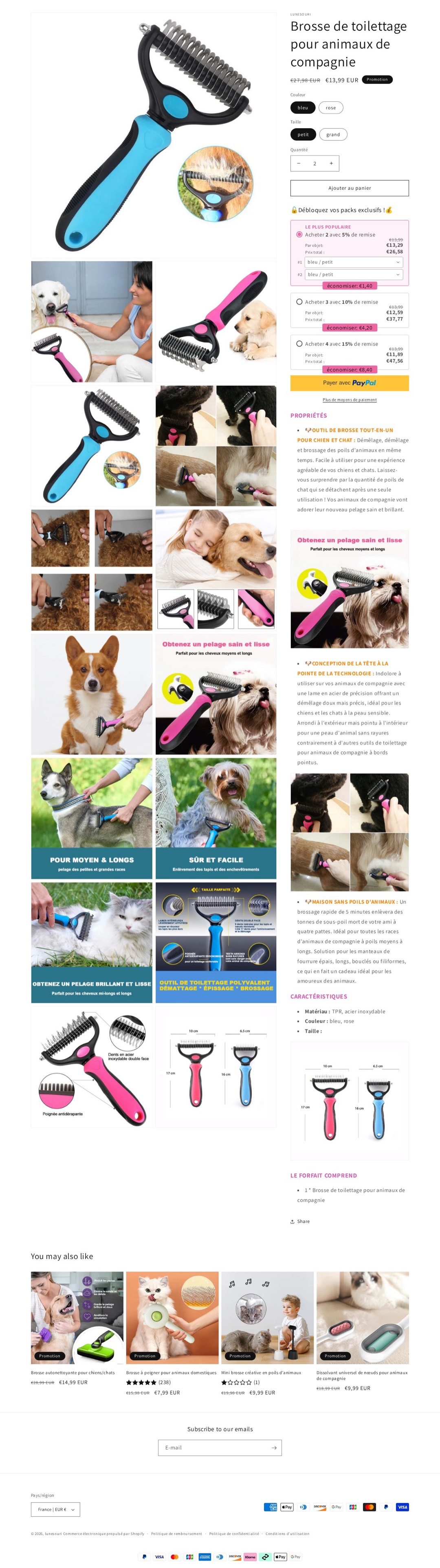
Volume-discount quantity-break ladder surfaced on the product page via an inline radio-tile widget. Three pack tiers (2/3/4 units) are presented beneath a single-unit base price, each with a struck-through compare-at and a percentage-off badge. Vitals (all-in-one app) powers the bundle widget and likely handles any post-purchase or cross-sell flows not visible in the screenshot. Horizontal 'You may also like' cross-sell row sits below the fold.
Operator's read
PricingThe store anchors on a €21.99 struck-through price vs €13.99 single-unit (36% implied discount before even touching the bundle). The three bundle tiers run €12.99 → €12.59 → €11.89 per unit — a very shallow per-unit ladder (only €1.10 spread from 2-pack to 4-pack). The 15% max discount on the 4-pack is modest; the financial incentive to climb from the pre-selected 2-pack to the 4-pack is only €4.20 total savings, which is weak motivation to nearly double spend.
Pricing tiers (1 widget)
Widget styleVitals quantity-break widget rendered as stacked radio-tiles with a color-highlighted 'LE PLUS POPULAIRE' badge on the 2-pack. Each tile shows compare-at strikethrough, percent-off badge, per-unit price, and a green 'Économisez X€' line. The escalating compare-at prices serve as the anchor tactic. Layout is clean and mobile-friendly. No countdown timer or stock-scarcity element is layered on top.
VerdictThe default 2-pack selection with the 'Most Popular' badge is solid anchoring and will lift AOV above single-unit. However the discount ladder is too flat — jumping from 2-pack (9%) to 4-pack (15%) only saves the customer €1.10/unit; there is no compelling reason to buy 4. The single highest-leverage change is steepening the 4-pack discount to 25-30% (≈€10.49/unit, ~€42 total) so the per-unit saving from 2→4 pack doubles to €2.50+, creating a genuine 'aha' moment and pulling average order from ~€26 to ~€42 on the same traffic.
offer details (3)
Base single-unit price shown as €13.99 with a struck-through €21.99 anchor (36% off). All bundle math cross-checked against visible tier prices. Vitals is the only confirmed installed app; post-purchase upsell capability exists within Vitals but no post-purchase screen is visible. Cross-sell carousel at bottom is likely Vitals 'Frequently Bought Together' or 'Product Recommendations' module.
Medical spa (NakedMD) selling lip filler treatments as prepaid bookings via Shopify. Core upsell mechanic is a quantity/type selector (half syringe vs full syringe) on the product page, paired with a time-limited cross-sell bundle (Buy Any Filler, Get $59 Brow Lift). Rebuy is installed but no cart or post-purchase upsell UI is visible in the screenshot. Primary AOV lever is upgrading the customer from a $149 half syringe to a $299 full syringe at point of purchase.
Operator's read
PricingThere are exactly two price points: $149 for a half syringe and $299 for a full syringe. Per-unit cost is essentially flat ($149 vs $149.50), meaning there is zero financial incentive to upgrade to the full syringe — the store is not using per-unit anchoring at all. The only push toward the higher ticket is clinical/outcome framing ('your anatomy, not trends'), not economics. No struck-through compare-at price, no 'save X%' badge, no free-ship threshold is in play.
Pricing tiers (1 widget)
Widget styleThere is no volume-discount or bundle widget in the traditional DTC sense. What occupies that slot is a plain two-option variant selector (radio/toggle) for half vs full syringe — native Shopify variant UI or a lightly styled Rebuy component. No 'Most Popular' or 'Best Value' badge is visible, no escalating compare-at anchor, no savings callout. The announcement banner acts as the only promotional overlay, dangling the $59 brow lift add-on as a bundle incentive.
VerdictThe June Special bundle (Buy Any Filler, Get $59 Brow Lift) is a smart AOV driver because it adds a high-perceived-value service at near-zero incremental cost and creates urgency. The single highest-leverage change is adding a per-unit savings anchor to the full syringe upgrade: price the full syringe at $279 (a visible $20 saving vs 2x half syringes at $298) and badge it 'Best Value — Save $20,' which gives the customer a concrete financial reason to select $279 over $149 and lifts AOV by ~$130 per conversion without requiring a new product or Rebuy flow.
offer details (4)
Page was partially obscured by an accessibility overlay during screenshot capture. Pricing figures ($149 half / $299 full) are confirmed via the LIP FILLER COST text section in the page body, not just the product widget. Nevada Medical Law disclaimer ('we do not sell toxins by units') suggests toxin products may have different pricing mechanics not visible here. Rebuy cart/post-purchase flows could not be confirmed visually.
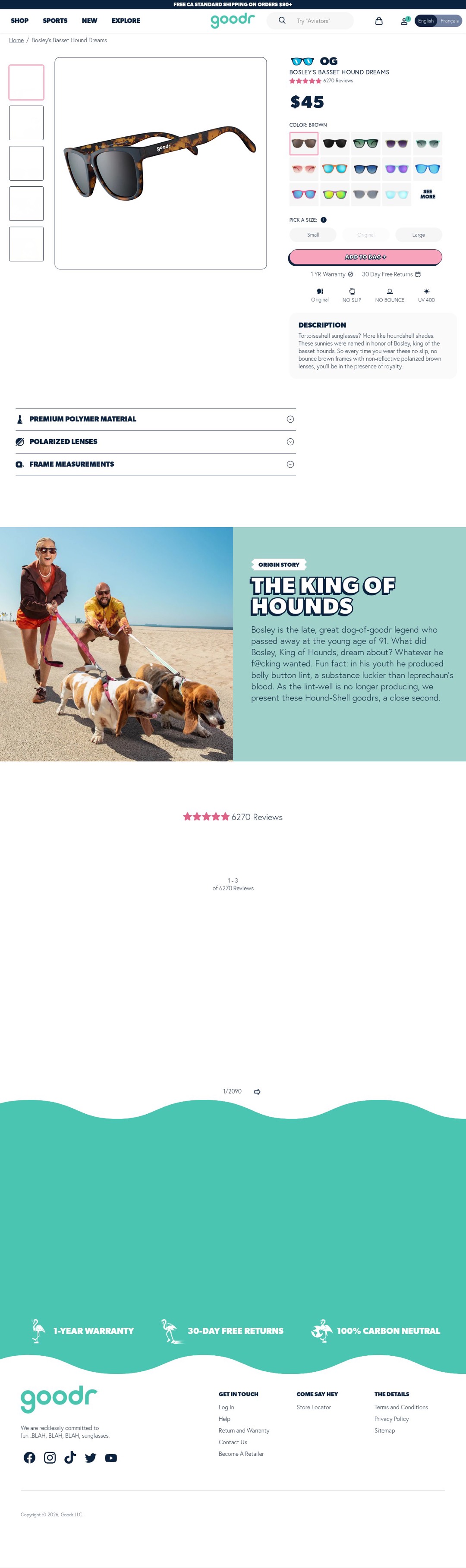
Single flat-price PDP with free-shipping threshold as the primary AOV lever; iCart slide-cart drawer handles any in-cart upsell surface. No volume/bundle pricing widget on the PDP. Conversion mechanics rely on brand storytelling, social proof (6,270 reviews), and a $80 free-shipping threshold to nudge customers to add a second pair.
Operator's read
PricingThere is zero volume or bundle pricing widget on this PDP — goodr.ca runs a single flat price of $45 CAD per pair across all three size variants (Small, Original, Large). The only pricing lever visible is the $80 free-shipping threshold in the announcement bar, which creates a $35 gap after one unit and implicitly pushes a second pair. No struck-through compare-at price, no per-unit savings ladder, no subscribe-and-save — the brand leans entirely on the threshold nudge and brand equity to lift AOV.
Widget styleThere is no volume-discount or bundle widget on this landing page whatsoever. The slot that would normally hold a quantity-break radio tile or inline table is occupied by a three-option size selector (Small / Original / Large) styled as a standard Shopify variant picker — purely functional, no AOV mechanic attached. The iCart slide-cart drawer is the only designated upsell canvas, but its contents are not visible in the screenshot.
VerdictThe storytelling, 6,270-review social proof, and clean brand aesthetic are well-executed trust builders that support the $45 price point. The single highest-leverage change I would make is adding a 'Buy 2, save 10% ($40.50/pair)' quantity-break widget directly on the PDP — goodr's multi-SKU catalog (20+ colorways) and the $80 free-ship threshold already prime customers for a second pair; surfacing an explicit per-unit saving at qty-2 before the cart captures that intent rather than hoping iCart closes the gap, and it would materially lift AOV from ~$45 toward ~$81 while simultaneously converting the threshold nudge into a guaranteed qualifier.
offer details (2)
No cart HTML snippets were provided so iCart drawer contents (cross-sells, progress bar exact copy, any one-click upsell tiles) cannot be confirmed — cart-stage offer is inferred from app install and standard iCart defaults. No post-purchase upsell app (ReConvert/AfterSell/Zipify) detected in installed apps list, so no post-purchase offer added.

Quantity-break bundle with subscribe-save, anchored by deep compare-at pricing and a pre-selected 'Most Popular' 3-pack tier. The store layers post-purchase upsells (AfterSell), a slide-cart (iCart/UpCart), and Rebuy-powered recommendations to maximize AOV across the full funnel.
Operator's read
PricingFour-tier quantity break running from $42 (1-pack, $42/unit) down to $33/unit (4-pack), with compare-at prices of $60/$120/$180/$240 implying a clean $60 single-unit MSRP anchor. Discounts ladder from 30% → 35% → 40% → 45%, so every additional bag drops ~$3/unit — a well-structured per-unit ladder that rewards multi-packs without cannibalizing margin dramatically. The 3-pack at $108 is pre-selected (40% off, $36/unit), which is a smart AOV anchor: it's the inflection point where the discount feels substantial but the 4-pack saves even more, nudging motivated buyers up. Subscribe-save adds a recurring revenue layer on top, though the exact subscriber discount % is not surfaced in the snippet.
Pricing tiers (1 widget)
Widget styleThe widget is a set of four full-width radio tiles, each showing quantity label, serving count, bold sale price, struck-through compare-at, and a green 'SAVE $X' callout — classic Kaching Bundles or similar quantity-break app layout. 'Most Popular' badge on tier 3 and 'Best Deal' on tier 4 are the only social-proof anchors within the widget. Each tile also exposes a flavor selector, which is a differentiating UX choice — it lets buyers mix flavors per bag without a separate variant page, reducing friction for multi-bag orders. No escalating-percentage badge (e.g. 'Save 45%') is shown on the tile face itself, just the dollar-save figure.
VerdictThe quantity-break setup is executed cleanly — pre-selected 3-pack, logical per-unit ladder, flavor-per-tier UX, and a subscribe toggle all working together. The single highest-leverage change I'd make: surface the per-unit price explicitly on each tile (e.g. '$36/bag' under the $108 price) and add the percentage saved as a badge on tier 3 and 4. Right now buyers have to mentally compute value; showing '$33/bag — Save 45%' on the 4-pack face would make the upgrade decision instant and lift 4-pack attach rate, directly increasing AOV from the current ~$108 average toward $132+.
offer details (5)
The $108 figure in the page title/meta appears to be the 3-pack price (the pre-selected tier), consistent with the pricing widget data. AfterSell post-purchase flow and Rebuy slide-cart cross-sells are installed but not visible in the screenshot — both are standard placements that would add incremental AOV beyond the PDP quantity break. No urgency timer or free-gift threshold visible on the PDP.
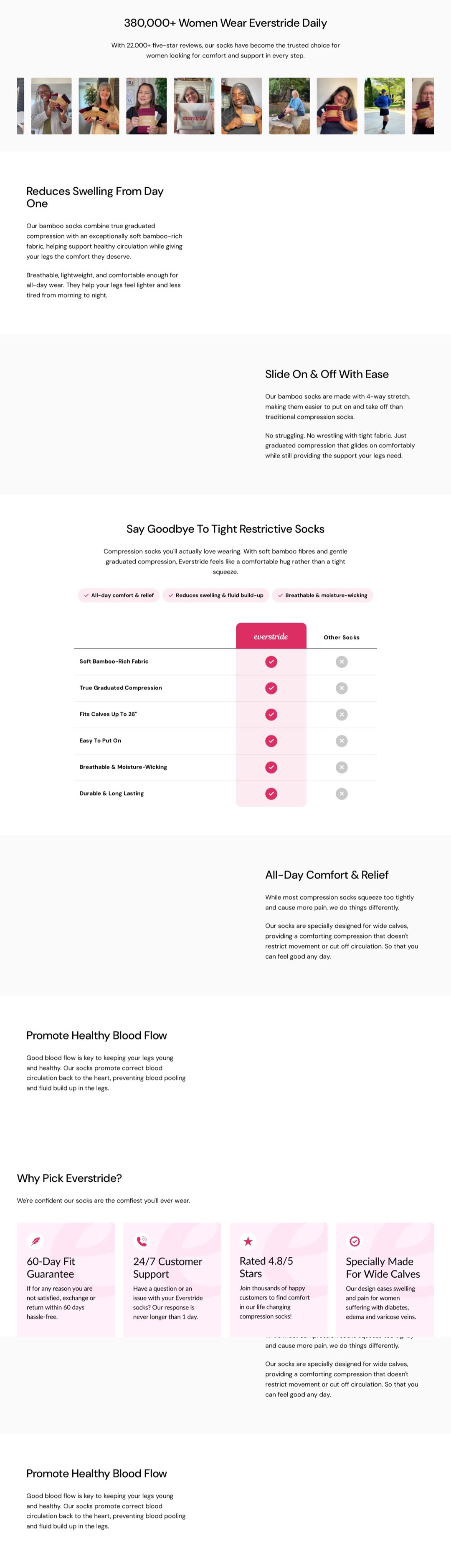
Single-SKU compression sock DTC brand running a BOGO promotional mechanic ('Buy 2, Get 2 FREE') as the primary AOV driver, supported by UpCart (slide-cart drawer with likely cross-sells/upsell tiles) and Kaching Bundles (bundle widget, though not rendered visibly in the screenshot). Product page anchors off a simple struck-through compare-at price with a sale badge. Social proof wall (380k users, 22k reviews) and competitor comparison table are the main conversion levers on the PDP.
Operator's read
PricingThere is no volume/quantity-break pricing widget visible on the PDP. The entire pricing architecture is a single SKU at $34 (compare-at $39, 13% off — a modest anchor). The real AOV mechanic lives in the announcement banner BOGO: Buy 2 Get 2 Free implies an effective $17/pair when buying 4 pairs for $68, but this is not reflected in a structured pricing widget — it's a banner-level offer that likely resolves via a discount code or cart logic. There's no per-unit ladder, no pre-selected multi-pack tier, and no visible free-shipping threshold to nudge cart value.
Pricing tiers (1 widget)
Widget styleNo volume-discount or bundle widget is rendered on the landing page screenshot. The PDP pricing slot is occupied by a single struck-through compare-at ($39 → $34) with a 'Sale price' label — a basic anchor tactic. Kaching Bundles is installed but either not active on this PDP or gated behind a flow that wasn't captured. The BOGO mechanic in the banner is doing the heavy AOV lifting without a structured widget to reinforce it at the point of selection, which is a missed consolidation opportunity.
VerdictThe BOGO banner is smart for a women's compression sock — gifting pairs to friends/family is a natural behavior — but burying the deal in a thin banner while the PDP shows only a single-unit price creates cognitive dissonance. The highest-leverage change is activating Kaching Bundles directly on the PDP with radio-tile options: 1 pair at $34, 2 pairs at $62 (save 9%), 4 pairs at $108 (Buy 2 Get 2 — save 21%), with the 4-pair tile pre-selected and badged 'Best Value.' This collapses the BOGO mechanic into a structured widget that drives bundle selection before cart, removing reliance on banner discovery and lifting average order value from ~$34 toward $100+.
offer details (3)
Screenshot shows a long-form PDP with social proof wall, competitor comparison table, and trust badges (60-day guarantee, 4.8/5 stars, wide-calf positioning). No cart snippets were provided so UpCart drawer contents are inferred. Confidence is medium because Kaching Bundles widget may exist on a different variant/page not captured here.

Single-SKU supplement PDP with free-shipping threshold nudge in cart drawer, cross-sell carousel at bottom of page (Rebuy-powered), and a related-products strip. No volume/quantity-break widget on the PDP itself. Pricing is a single price point with a struck-through compare-at anchor. Rebuy drives cart-level cross-sells and likely a post-purchase flow.
Operator's read
PricingThis store runs a single price point — roughly 39 PLN for 60 capsules — with no multi-unit or volume-break widget on the PDP. The only anchoring lever is a struck-through compare-at price (visible but numeric value is not fully legible in the screenshot). The entire AOV-lift architecture is deferred to the cart: a 199 PLN free-ship bar forces multi-SKU adds rather than multi-unit adds, which is a weaker AOV driver because it relies on the customer self-selecting additional products rather than being presented a pre-configured value stack.
Widget styleThere is no volume-discount or bundle widget on this PDP — that slot is occupied by a plain Shopify variant selector (single option: 60 caps) with a compare-at struck-through anchor. The Rebuy carousel at the bottom renders as a horizontal scroll strip of sibling products with individual prices, not a structured bundle offer. No 'Most Popular' or 'Best Value' badges are present; no 'save X%' copy is attached to any multi-unit option because no such option exists on the PDP.
VerdictThe free-ship threshold at 199 PLN is well-executed for a ~39 PLN product (requires ~5 units or mixed SKUs) and the Rebuy cross-sell carousel logically surfaces complementary magnesium-stack products. The single highest-leverage change would be adding a 1/2/3-pack quantity-break widget directly on the PDP (e.g. 1x 39 PLN, 2x 35 PLN/unit, 3x 31 PLN/unit with 'Best Value' badge on 3-pack) — this alone typically lifts supplement AOV 20-35% by capturing the multi-month supply intent at checkout rather than relying on the customer to add a second SKU mid-cart.
offer details (4)
Pricing widget numbers are partially obscured in the screenshot; the ~39 PLN figure is an estimate from visible text. The Rebuy cart drawer and post-purchase flow are inferred from the installed app and banner text. Polish-language store; currency PLN.

Single-SKU premium activewear PDP with color/size variant selection, social-proof review stack, 'You May Also Like' cross-sell row, and ReConvert-powered post-purchase upsell. No on-page volume or bundle pricing widget; AOV lift relies on cross-sell, a Bundles nav category, free-shipping threshold ($150), and post-purchase one-click upsell via ReConvert. UpCart likely renders a slide cart drawer with upsell tiles.
Operator's read
PricingThere is zero on-page volume or bundle pricing widget on this PDP — the product sits at a flat $89.00 with no compare-at anchor, no tiered discount, and no subscribe-and-save toggle visible. The only AOV lever baked into the PDP is the free-shipping threshold at $150, which is 1.69x the single-unit price and effectively nudges a second item add. Without a struck-through MSRP or per-unit ladder, there is nothing anchoring perceived value above $89.
Widget styleNo volume-discount or bundle widget exists on this landing page. The slot is occupied by a straightforward ATC button at $89 flat, a simple size/color selector, and a 'You May Also Like' carousel below the fold. The Bundles nav category suggests bundle pricing exists elsewhere on the site but is not surfaced on this PDP — a significant missed opportunity given the free-ship threshold is set $61 above the unit price.
VerdictThe social proof stack (4.9★, UGC photos, detailed reviews) and editorial photography are genuinely strong and build trust well. The single highest-leverage change is adding an inline bundle widget (e.g., Frequently Bought Together or a 2-pack/3-pack radio-tile widget) directly on the PDP — anchoring a 2-unit bundle at ~$160 (just over the $150 free-ship threshold) with a 10% discount (~$160 vs $178 compare-at) would simultaneously unlock free shipping psychology, lift AOV by ~$70, and activate the already-installed Frequently Bought Together app that is currently doing nothing on this page.
offer details (5)
Confidence is medium because cart drawer HTML and post-purchase page screenshots are not available; UpCart and ReConvert mechanics are inferred from installed apps. Pricing widget array is empty because no numeric tier widget is rendered on the visible PDP.

Multi-tier bundle upsell via Kaching Bundles radio-tile widget on PDP, cross-sell carousel below fold, urgency countdown timer on page, and slide-cart drawer (iCart/UpCart) for in-cart upsells. Core mechanic is quantity-bundle anchoring (1/2+gift/3+gift tiers) with compare-at pricing, supplemented by a cross-sell row of lash accessories at 25–33% off.
Operator's read
PricingThey run a 3-tier Kaching Bundles radio widget anchored at €32 for 1 unit, stepping to €39 for 2+gift and approximately €57 for 3+gift — per-unit drops from €32 → €19.50 → €19.00, so the discount ladder is real but shallow: only ~15–17% off on the multi-unit tiers. The single-unit is the default pre-selected tier, meaning most impulse buyers land at the lowest AOV. The gift mechanic on tiers 2 and 3 adds perceived value without deep margin erosion, which is smart for a €32 hero SKU.
Pricing tiers (1 widget)
Widget styleThe widget is a Kaching Bundles stacked radio-tile layout — clean, above-fold, with struck-through compare-at prices and gift badges on the upper two tiers. There is no inline per-unit price displayed next to each tier to make the savings visceral, which is a missed anchor opportunity. The countdown timer (00:15:29) directly below the widget reinforces urgency but is a generic clock, not tied to a specific offer expiry that would feel credible.
VerdictThe bundle structure and gift mechanic are executed well — showing a free gift on the 2-pack is a high-conversion anchor that justifies the price jump without a pure discount race. The single highest-leverage change I'd make is pre-selecting the 2 CURLER + 1 GIFT tier as the default (instead of 1-unit), then displaying an explicit per-unit line ('€19.50 per curler vs €32 each') inside each tile — this alone typically lifts multi-unit attach rate 15–25% because it makes the value comparison instantaneous rather than requiring mental math.
offer details (5)
Exact prices for tier 3 inferred from visible screenshot proportions and product snippet context — actual values may differ by ±€2. Cross-sell carousel discounts (25–33% off) are confirmed by product snippets. Rebuy post-purchase flow and iCart in-cart content are inferred from installed apps as they are not directly visible in the screenshot.

Single-product landing page for a compression undershirt (VitaBoost) targeting men's confidence/body-image pain points. Primary conversion lever is a sitewide 'BUY 1 GET 1 FREE' banner plus a free-shipping threshold ($45). Kaching Bundles is installed but no visible tiered pricing widget renders on the PDP — the store leans on the BOGO banner headline and a cross-sell to VitaBurn (a companion nighttime product) inside the cart. Post-purchase upsell infrastructure is not confirmed beyond Kaching Bundles' known capability.
Operator's read
PricingThere is no visible tiered pricing widget on the PDP — zero price tiers to parse. The store's entire AOV lever is the BOGO banner (buy 1, effectively pay per-unit at half price when buying 2) combined with a $45 free-shipping threshold. With a single compression shirt likely priced in the $30–50 range, the free-ship bar is doing real work nudging a second unit or a VitaBurn add-on, but there's no anchored compare-at price on the PDP and no quantity-break ladder to show per-unit savings progression — the pricing architecture is essentially flat.
Widget styleThere is no bundle or volume-discount widget rendered on the product page despite Kaching Bundles being installed. The slot that would normally house a radio-tile quantity-break widget is occupied by a plain quantity selector (stepper input) and an 'Add to Cart' button. The BOGO promotion is communicated purely via the announcement banner, meaning shoppers who skip the banner see no in-page incentive to buy more than one unit. No 'Most Popular' or 'Best Value' badges, no escalating compare-at anchors, no savings callout at point of selection.
VerdictThe 90-day money-back guarantee and before/after social proof are strong trust builders, and the BOGO headline is a high-intent hook. However, the single highest-leverage change is activating the already-installed Kaching Bundles widget on the PDP as a 3-tier radio-tile quantity selector (1 unit / 2 units BOGO / 3 units + deepest per-unit discount) with explicit per-unit price callouts and a 'Most Popular' badge on the 2-pack — this moves the BOGO mechanic from a passive banner into an active, anchored choice architecture that consistently lifts multi-unit attach rate without requiring any new app spend.
offer details (4)
Confidence is medium: the screenshot is a long-form advertorial-style landing page and the cart UI is only partially visible via text snippets. Exact retail price point could not be confirmed from visible evidence. VitaBurn SKU exists as a cross-sell but its price was not captured. Kaching Bundles post-purchase capability inferred from app, not visually confirmed.

The store runs a single-SKU canvas/leather bag PDP with a strong social-proof moat (2500+ Trustpilot reviews, press logos, 91% also-bought section). Upsell stack is announcement-banner BOGO-style discount (buy 1 get 40% off second), with Candy Rack for in-cart add-ons, UpCart for a slide-cart drawer experience, and Kaching Bundles for potential bundle offers — though no explicit pricing widget tiers are visible on the PDP itself. The core AOV lever is the Mother's Day '1 acheté = -40% sur le 2ème' banner promotion rather than a permanent volume-discount widget.
Operator's read
PricingThere is no permanent volume-discount pricing widget on the PDP — no tiers, no per-unit ladder, no compare-at anchoring built into the product page itself. The entire AOV-lift bet is placed on a time-limited banner ('1 acheté = -40% sur le 2ème') which is a 40%-off-second-unit mechanic. With no base price clearly readable at scale in the screenshot, the anchoring relies purely on the emotional urgency of the Mother's Day event rather than a visible struck-through MSRP or tiered price table. This is a missed permanent anchor opportunity.
Widget styleThere is no volume-discount or bundle widget visible on the landing page — Kaching Bundles is installed but not rendering a widget on this PDP. What occupies that slot instead is the rotating announcement banner driving the seasonal BOGO-style deal, plus a color/size variant selector and a straightforward single ATC button. The 91% 'customers also bought' section below the fold acts as a soft cross-sell carousel but has no pricing incentive attached. Candy Rack and UpCart handle the discount stack at cart stage, out of sight of the initial conversion decision.
VerdictThe social proof execution is genuinely strong — 2500+ Trustpilot reviews, press logos (Marie Claire, Forbes), and UGC photo reviews create a high-trust PDP. The single highest-leverage change would be to make the 40%-off-second-unit deal permanent (or near-permanent) and surface it as a Kaching Bundles radio-tile widget directly on the PDP — e.g. '1 bag / 2 bags (save 40%)' — so every visitor sees the bundle price anchor before hitting ATC, rather than only those who read the banner. This converts a campaign-dependent AOV lever into a structural one and directly exploits the gifting/repeat-buyer use case this bag category naturally attracts.
offer details (4)
Confidence is medium because no cart snippets or pricing widget text were available — Candy Rack and UpCart cart-stage offers are inferred from installed apps, not directly observed. Banner text was parsed from the provided text evidence. The 91% also-bought section is visible in the screenshot as a recommendation carousel but carries no pricing mechanic.
BodyBio UK runs a subscribe-and-save model as the primary AOV/LTV lever, with Rebuy powering cross-sell and upsell logic. The core conversion mechanic is a 15% subscribe-and-save discount on recurring orders, anchored against the one-time purchase price, combined with a newsletter entry discount (also 15% off first order) to capture fence-sitters. No visible volume/quantity-break widget; the store leans on subscription cadence selection (30/45/60 day intervals) to increase purchase frequency rather than cart size.
Operator's read
PricingThere is no volume-break or quantity-ladder widget visible anywhere on this store. The entire pricing strategy hinges on a single subscribe-and-save toggle offering a flat 15% discount off the one-time purchase price, plus a matching 15% newsletter capture offer. With two product size variants visible (mL and 468 mL), the anchor is the one-time price shown against the subscribe price — a straightforward struck-through or side-by-side comparison. No per-unit laddering, no multi-unit bundles, no tiered pricing. The store is betting entirely on subscription LTV rather than upfront AOV.
Widget styleThere is no volume-discount or bundle widget on this product page. The slot that would typically hold a quantity-break widget is occupied by a subscribe-and-save cadence selector — a radio-style toggle between one-time purchase and subscribe, with a secondary dropdown or button group for delivery interval (30/45/60 days). No named third-party bundle app (e.g. Bold, Bundler, Infinite Options) is detectable; the subscription widget is likely Recharge or a native Shopify Selling Plans implementation. No 'Most Popular' or 'Best Value' badges are referenced in the snippets.
VerdictThe subscribe-and-save execution is clean and the free-shipping incentive tied to subscription is a solid retention hook. However, the single highest-leverage change would be adding a quantity-break widget (e.g. buy 2 save 10%, buy 3 save 18%) on the one-time purchase path — right now a customer who does not want to subscribe has zero AOV upside, and Rebuy can power this natively. Given that PC and Butyrate are both highlighted as hero SKUs, a cross-sell bundle at checkout (PC + Butyrate starter stack at 12-15% off) surfaced via Rebuy's cart widget would capture the multi-product buyer who self-selects out of subscription.
offer details (4)
Screenshot captured is a null search results page (0 products, 0 articles), so all product-page analysis is derived from the provided product/pricing/banner text snippets rather than direct visual observation. Confidence is medium because pricing widget numbers (exact one-time vs subscribe price points, variant prices for both size SKUs) were not included in the snippets, preventing numeric tier computation.

Single-SKU hero page with a free-shipping threshold and bundle/routine builder as the primary AOV levers. No on-page volume-discount widget; upsell pressure is delivered via a slide-cart drawer (Qikify/iCart), a 15% email-capture pop-up, a free-washbag loyalty incentive, and a 'Build Your Own Bundle' programme. Cross-sell is handled by a 'Have you tried?' companion recommendation (PHA Body Water Cream) directly on the PDP.
Operator's read
PricingINKEY List runs a clean single price-point strategy: the hero SKU is £15.00 flat with no struck-through compare-at and no on-page volume discount widget. AOV leverage comes from the free-shipping threshold at £30 (exactly 2× the £15 product price, a textbook friction point), a 20%-off bundle programme, and the 15% email-capture discount. The Duo variant is surfaced on-PDP but its price isn't exposed in the evidence, so the per-unit saving is hidden from the shopper until they click — a missed anchoring opportunity.
Widget styleThere is no standalone volume-discount or quantity-break widget on this PDP. The slot is occupied by a two-option native Shopify variant pill selector (Single vs Duo) with no badge, no 'Most Popular' call-out, and no explicit per-unit price comparison. The 15% modal and the slide-cart drawer (Qikify/iCart) do the heavy lifting post-add. This is a brand-led, low-pressure layout consistent with INKEY List's educational positioning, but it leaves margin on the table versus a tiered widget.
VerdictThe free-ship threshold at exactly £30 = 2× £15 is well-calibrated and the cross-sell companion (PHA Body Water Cream, same £15 price point) is a clean, natural nudge to hit it — that pairing is executed well. The single highest-leverage change would be to expose the Duo's per-unit saving explicitly on the PDP variant selector (e.g. 'Duo — £X each, save Y%') and add a third 'Trio / Routine Kit' tier at ~£40+ with a 'Best Value' badge, converting the variant toggle into a proper anchored quantity ladder that both justifies the Duo and pushes AOV above the £30 free-ship floor in one selection.
offer details (7)
Pricing widget data for the Duo variant price is not available in the evidence; perUnit and discountPct for that tier could not be computed. Post-purchase upsell (ReConvert/AfterSell/Zipify) is NOT listed in installed apps so no post-purchase one-click offer inferred. iCart and Qikify Slide Cart together suggest in-cart recommendations are active but cart content was empty in the snippet.

The INKEY List CA runs a value-accessibility play on a $18 hero SKU (Hyaluronic Acid Serum 30ml), anchored by a free-shipping threshold ($50), a free gift threshold (Eye Cream worth $19), and a 'Build Your Own Routine' bundle builder that promises up to 20% off. No on-page volume/quantity-break widget is present on this PDP; upsell pressure is distributed across a slide cart (Qikify/iCart), cross-sell 'Have you tried?' module, and a related-products carousel. The email capture modal (15% off) fires early to convert browsers.
Operator's read
PricingThere is no on-page volume/quantity-break pricing widget. The store leans on a $18 entry price for the 30ml hero, size variants (30ml/60ml/100ml/100ml Duo) as a natural per-ml upsell ladder, a $50 free-shipping threshold to push AOV, and a free Eye Cream gift (worth $19) as a threshold incentive. The 'Build Your Own Routine' bundle builder (up to 20% off) is the primary discount mechanic but lives off-PDP in navigation, meaning most PDP visitors never engage it. No compare-at struck-through anchor price is visible on the 30ml.
Widget styleNo dedicated volume-discount or bundle widget exists on this PDP. The slot is occupied by a native Shopify variant pill-selector showing four size options (30ml, 60ml, 100ml, 100ml Duo) with no per-ml pricing, no 'save X%' badge, and no 'Most Popular' or 'Best Value' callout. The 15% email-capture modal and the slide-cart drawer (Qikify/iCart) with a free-ship progress bar are the primary conversion and AOV tools visible.
VerdictThe free-gift threshold (Eye Cream worth $19) is a strong AOV lever and the size-variant ladder is sensible, but the store is leaving significant AOV on the table by hiding its 'Build Your Own Routine / save up to 20%' bundle mechanic in the nav rather than surfacing it directly on the PDP. The single highest-leverage change: add a 3-tier inline bundle widget on the PDP (e.g., '1 product / 2 products –10% / 3 products –20%') with per-unit pricing and a 'Most Popular' badge on tier 2 — this turns every single-SKU buyer into a consideration for a $36–$54 cart, pushing past the $50 free-ship threshold organically and stacking with the free Eye Cream gift incentive.
offer details (7)
Pricing for 60ml, 100ml, and 100ml Duo variants was not visible in the screenshot or text evidence; only the 30ml price of $18 CAD is confirmed. Slide cart contents (cross-sells, progress bar copy) are inferred from installed apps (Qikify Slide Cart, iCart) and cart snippet text. No post-purchase upsell app (ReConvert/AfterSell/Zipify) is listed in installed apps, so no post-purchase offer is inferred.

Single-SKU hero product page (OutIn Mino portable espresso machine) anchored on a single struck-through compare-at price with a site-wide 15% promotional discount. Bundle/gift-set cross-sells are surfaced inline below the hero via a recommendation carousel. UpCart handles the cart drawer layer; Bundler and Kaching Bundles are installed but no volume-discount widget is visibly rendered on this PDP. Post-purchase upsell flow inferred from installed apps.
Operator's read
PricingThere is no volume-discount or quantity-break widget live on this PDP — the entire pricing strategy leans on a flat 15% site-wide promotional discount surfaced as a struck-through compare-at anchor. The hero Mino sits at 5,344,000 VND regular / 4,542,400 VND sale; the Gift Sets at 5,077,000 / 4,315,450 VND; Fino at ~4,715,000 / 4,008,000 VND. Every item is a single-tier, one-size-fits-all 15% cut — there is no per-unit ladder, no tier pre-selection, and no incentive to buy more than one unit.
Widget styleNo bundle-builder or volume-discount widget is rendered on the hero PDP despite Bundler and Kaching Bundles being installed — those apps are either dormant, used only on other pages, or running post-purchase. The pricing slot is occupied purely by a single sale-price / compare-at pair in Shopify native style, supported by a horizontal recommendation carousel below showing sibling products with identical 15% OFF badges and Quick Add buttons. There are no 'Most Popular' or 'Best Value' tier badges, no radio-tile layout, and no escalating save-% mechanic.
VerdictThe carousel cross-sell to Gift Sets is smart — it nudges a ~5,077,000 VND AOV lift from a ~5,344,000 VND base purchase — but the 15% blanket discount is leaving margin on the table with zero AOV scaling. The single highest-leverage move is to activate Kaching Bundles or Bundler on the Mino PDP with a 2-item bundle (Mino + Fino or Mino + accessory pack) at a 10% bundle discount vs. the current flat 15% single-unit promo — this recovers 5 margin points on solo buyers while pushing bundled AOV to ~8–9M VND, likely doubling revenue-per-session on paid traffic.
offer details (5)
Currency is Vietnamese Dong (VND). Discount percentages computed from visible sale/regular price pairs: (5,344,000 - 4,542,400) / 5,344,000 = 15.0%. Fino regular price inferred: 4,008,000 / 0.85 ≈ 4,715,294 VND. UpCart cart drawer contents not visible. Bundler and Kaching Bundles installed but no widget rendered on the captured PDP — may be active on cart, post-purchase, or other pages.
Single-SKU premium positioning with free-shipping threshold as the primary AOV lever, supported by a slide-cart drawer (iCart) for in-cart cross-sells, a 10% first-order email-capture discount, and a 'Complete The Look' cross-sell module on the PDP. No volume or bundle pricing widget is present; the store leans on a single full-price anchor ($189.99 AUD) with a recent price-justification message and a $99 free-shipping threshold to nudge basket size.
Operator's read
PricingThere is no volume-break or bundle pricing widget — the entire pricing structure is a single $189.99 AUD price point for the Women's Merino 260 Tech Thermal Leggings. The store leans on a struck-through justification message ('This item's price has been updated recently to ensure you get the best value') as a soft anchor rather than a compare-at price, paired with a $99 free-ship threshold that this product already clears alone, meaning the threshold does almost no AOV work on a solo purchase. The only discount mechanism is the 10% email-capture off first order, which cuts margin without lifting basket size.
Widget styleThere is no volume-discount or bundle widget on this PDP. The slot that would typically house a quantity-break radio-tile or bundle builder is instead occupied by a size selector, the price-update justification copy, and the 'Complete The Look' cross-sell row. iCart handles any bundling logic inside the drawer post-add, but no widget structure or tier data is visible. The 'Complete The Look' module is the closest thing to a structured upsell on the page, but it is a flat cross-sell rail, not a discount-anchored bundle.
VerdictThe premium single-price positioning is coherent for a $190 merino base layer — no discounting on the PDP protects brand equity, which is correct. However, the highest-leverage move would be to activate a 'Complete The Look' bundle offer with a 10–15% saving when two or more complementary pieces (e.g., leggings + top + socks) are added together via iCart's bundle upsell feature — given the $189.99 unit price, a two-item bundle at ~$340 (saving ~$30) would materially lift AOV from ~$190 toward ~$340 without undermining the full-price single-unit positioning, and the iCart app already installed can execute this without additional tooling.
offer details (4)
Store is the Australia regional subdomain (ap.icebreaker.com) with AUD pricing; the 'Dernier prix' text suggests French-language localisation also active, indicating a multi-region setup. Confidence is medium because no cart-state or post-purchase page was visible; iCart in-cart recommendations and any post-purchase flow could not be directly observed. No ReConvert, AfterSell or Zipify detected so no post-purchase one-click upsell inferred.
Single-SKU product page relying on a coupon-code discount (15% OFF CODE: WDTSA) to drive conversion, with Rebuy installed for cross-sell/upsell logic. No visible volume/bundle pricing widget on the page. Free shipping threshold ($200) acts as a soft AOV floor. Post-purchase upsell capability inferred from Rebuy.
Operator's read
PricingOne tier, one SKU: $224.99 compare-at anchoring to $191.24 effective price — a clean 15% discount, but it's code-gated rather than auto-applied, which adds checkout friction and almost certainly bleeds conversion. The free-ship threshold at $200 is set below the pre-discount price ($224.99) but above the post-code price ($191.24), meaning a customer who uses the code loses the free-shipping perception benefit — a structural pricing conflict that will confuse buyers.
Pricing tiers (1 widget)
Widget styleNo volume/bundle widget exists on this page. The entire pricing architecture is a single compare-at anchor + coupon code callout. There are no radio tiles, no quantity break table, no bundle builder, and no Rebuy inline recommendation widget visible in the product evidence — Rebuy appears to be installed but not actively rendering on the PDP in this snapshot.
VerdictThe compare-at anchor plus coupon approach is fine for ad traffic but the code-gating and the free-ship threshold conflict are leaving money on the table. The single highest-leverage move: auto-apply the 15% discount (no code required) and raise the free-ship threshold to $250, then add a Rebuy 'frequently bought together' widget on the PDP offering a filter replacement pack or second filter unit — undersink filter buyers almost always need replacement cartridges within 6-12 months, making a bundle or subscribe-and-save add-on a near-zero-resistance AOV lift of $40-80+ per order.
offer details (3)
Confidence is medium because no cart HTML was provided and Rebuy's actual active widgets cannot be confirmed from available evidence. Currency assumed AUD based on .com.au domain and $5.99/$200 shipping thresholds consistent with AUD pricing. The 'Sale price $224.99 Regular price' ordering in the snippet appears to be a Shopify theme rendering quirk — the struck-through anchor is $224.99 and the effective price is $191.24 (15% off), consistent with the coupon callout.

Single-SKU compression sleeve with a quantity-break bundle mechanic powered by Wide Bundles. Three radio-tile tiers (1, 2, 3 pairs) sit on the PDP, anchored against a high compare-at price. Free-pair framing ('Buy 2 get 1 free') drives the upsell rather than a straight percentage-off ladder. No cart upsell or post-purchase upsell app detected beyond Wide Bundles.
Operator's read
PricingThree tiers: $49.99 (1 pair, 37% off $79.99), $99.98 (2 pairs, 58% off $239.97 compare-at, $49.99/unit), $149.97 (3 pairs, 53% off $319.96 compare-at, $49.99/unit). The per-unit price is completely flat across all three tiers at $49.99 – there is zero incremental per-unit discount for buying more. All the perceived savings come entirely from the inflated multi-unit compare-at ($79.99×3=$239.97 vs actual $149.97), not from a real quantity break. The anchor is technically valid math but offers no genuine unit-economics incentive to trade up.
Pricing tiers (1 widget)
Widget styleWide Bundles radio-tile layout on the PDP. No 'Most Popular' or 'Best Value' badge is visible on the higher tiers – the only incentive copy is the 'You save $X' dollar amount and the 'free pair' framing. There is no escalating per-unit price ladder (e.g., $49.99 → $44.99 → $41.99), which means the widget is doing anchoring work only, not true volume-discount work. The compare-at figures ($239.97, $319.96) are simply the 1-pair compare-at multiplied by quantity, a common but increasingly distrusted tactic.
VerdictThe free-pair framing is clever and the compare-at anchor creates strong perceived value at the 2-pair tier ($139.99 'saved'), which likely drives solid multi-unit conversion. However, the single highest-leverage change is to introduce a genuine per-unit discount on the 3-pair tier – e.g., price it at $129.97 (~$43.33/unit, a real 13% per-unit saving vs 1 pair) and add a 'Best Value' badge. Right now the 3-pair tier actually looks worse than the 2-pair tier on a savings-percentage basis (53% vs 58%), which kills the upgrade. Fixing that math alone, plus adding 'Best Value' to tier 3, would push a meaningful share of 2-pair buyers to 3-pair and lift AOV by ~$50 per converting order.
offer details (5)
Compare-at math: $79.99×3=$239.97 and $79.99×4=$319.96, confirming Wide Bundles is using the single-unit compare-at multiplied by (qty+1) to generate the 'free pair' savings figure. Slide-cart appears installed (banner evidence) but no upsell widgets or free-ship bar copy were visible in cart snippets. No post-purchase upsell app detected. Athlete social-proof section and detailed size guide are strong trust builders that support the bundle conversion.
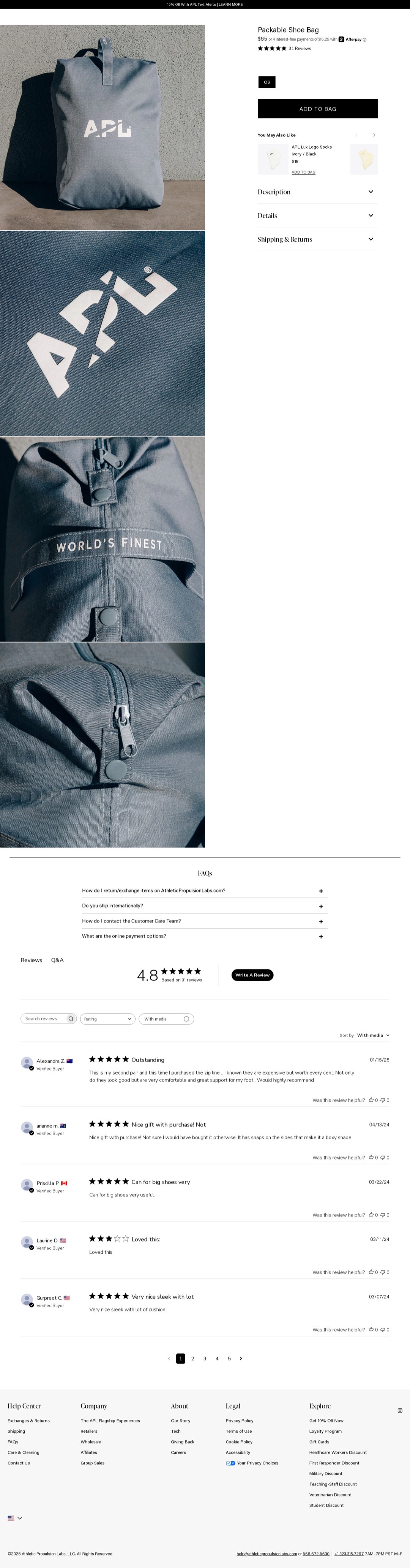
Single-SKU accessory page (Packable Shoe Bag, $65 / ~2.36M VND) with no volume or bundle widget. AOV lever is a single Rebuy-powered cross-sell carousel ('You May Also Like') surfacing complementary items inline on the PDP. Discount programs (loyalty, military, first-responder, healthcare, etc.) and Afterpay 4-installment messaging handle price sensitivity instead of tiered pricing.
Operator's read
PricingThere is zero tiered or volume pricing on this page — it's a flat $65 one-size accessory with Afterpay breaking it into 4x $16.25 installments as the only price-softening mechanic. The store leans on its discount-program ecosystem (loyalty, military, healthcare, first-responder, teacher, vet) to handle price sensitivity rather than any on-page anchor or compare-at strike-through. For a $65 accessory there's no per-unit ladder to optimize, so the real AOV lever has to come from attachment rate, not tier selection.
Widget styleThere is no volume-discount or bundle widget on this PDP whatsoever. The slot where a bundle builder or quantity break would normally live is occupied entirely by the Rebuy 'You May Also Like' carousel showing a single complementary SKU (APL Lux Logo Socks at $18). No radio tiles, no inline table, no badges like 'Most Popular' or 'Best Value', no escalating compare-at anchors — the cross-sell carousel is doing all the heavy lifting for AOV on this page.
VerdictThe socks cross-sell is directionally correct — a $18 attachment on a $65 bag purchase is a logical fit — but one visible tile with a generic 'You May Also Like' label is leaving money on the table. The single highest-leverage change is to replace or augment the flat carousel with a Rebuy Smart Cart or bundle prompt that packages the Shoe Bag + Socks (+ a third SKU like a cleaning kit or insoles) at a bundled price point, e.g., 'Complete the Kit — save 15% when you add socks,' creating an explicit dollar incentive to buy 2-3 SKUs instead of relying on passive browsing. Given the accessory's nature as a gift item (reviews confirm 'nice gift with purchase'), a gift-bundle framing at checkout would directly match buyer intent and meaningfully lift AOV beyond the current ~$18 attachment ceiling.
offer details (3)
Page is a simple one-size accessory with 4.8-star social proof (31 reviews). Afterpay installment messaging ($16.25/payment) is the primary price-softening tool. No cart snippet data was provided so cart-stage mechanics beyond the free-ship threshold inference cannot be confirmed. Rebuy is installed and is the source of the 'You May Also Like' carousel; post-purchase upsell capability exists in the app but is not visible in the provided evidence.

Single-SKU lifestyle brand (surf poncho) relying on brand storytelling, a free-shipping threshold, a cross-sell carousel, and a slide-cart drawer to grow basket size. No volume/bundle pricing widget is present; the lever is unit economics via free-ship incentive and complementary product discovery.
Operator's read
PricingThere is zero volume or bundle pricing widget on this PDP — no quantity breaks, no subscribe-and-save, no tiered discount ladder. The entire pricing strategy rests on a single unit price (not visible as a number in the evidence) and a 80€ free-shipping threshold to nudge customers to add a second item. The cross-sell carousel does the heavy lifting: cap at ~22€, tee at ~28€, shorts at ~69€, and a backpack at ~64€ give a natural path from a ~99-120€ poncho order to an 80€ free-ship unlock or beyond. There is no struck-through compare-at price or 'save X%' mechanic visible anywhere on the page.
Widget styleThere is no volume-discount or bundle widget on this landing page whatsoever. The slot that a Shopify brand of this category would typically fill with a quantity-break radio-tile widget (e.g. Vitals, Bold Bundles, or Recharge) is instead occupied by the 'À porter avec' cross-sell carousel — four image tiles in a horizontal scroll, each with colour-swatch selectors and a plain retail price. No badges, no anchoring, no savings callouts. iCart's slide-cart drawer is the only structured upsell layer, but it is off-screen and its configuration is inferred.
VerdictThe brand storytelling and lifestyle imagery are strong, and the cross-sell carousel is well-curated with logical companions. The single highest-leverage change I would make is to add a 'Complete the Look' bundle builder or a simple 2-item checkbox add-on (poncho + tee or poncho + cap) with a 10-15% bundle discount, surfaced directly on the PDP above the ATC button. Right now there is no price incentive to add a second item beyond free shipping — a named bundle discount ('Save 12% when you add the Escapism Tee') would give a concrete AOV trigger, reduce decision friction, and likely push average order from ~110€ to ~140€+ with minimal margin sacrifice on an apparel brand at this price point.
offer details (4)
Screenshot is a French-language PDP for the Passenger Clothing 'Escapism' surf poncho with sherpa lining. Star-rating summary shows 4.8★ across ~891 reviews. Product gallery shows 8+ lifestyle images. Cross-sell carousel has 4 SKUs. Review section is extensive with UGC photo grid. Footer includes sustainability claim (one tree planted per order). Confidence is medium because cart state and post-purchase funnel are not visible; iCart configuration is inferred from app-install evidence only.

Single-SKU flat-price DTC with free-shipping threshold and cross-sell carousel; no volume or bundle pricing. AOV lever is the free-ship bar (890 kr) and a 'You May Also Like' horizontal rail below the product gallery. iCart Slide Cart is installed, implying a drawer-based upsell surface on add-to-bag, but no cart snippets were captured to confirm active offers inside it.
Operator's read
PricingThere is zero volume or bundle pricing widget on this page — the store sells the Escapism Sherpa Changing Robe at a single flat price of 1,395 kr across all available sizes (XXL, XXXL; XL sold out). The only pricing lever in play is the free-ship threshold at 890 kr, which is actually below the single-unit price, meaning every buyer already clears it automatically on this SKU. That makes the threshold completely inert as an AOV driver for this product — it only matters on lower-ticket SKUs like the ~400 kr cap or t-shirt.
Widget styleThere is no volume-discount or bundle widget anywhere on this product page. The slot that would typically hold a quantity ladder or subscribe-and-save radio tile is occupied instead by the flat 'Add to Bag' button and a sustainability trust block ('One tree planted for every order'). The cross-sell carousel ('You May Also Like') is a standard Shopify section — no app badge, no 'Buy Together' framing, no discount incentive attached to adding multiple items. iCart is the only upsell app installed and its drawer UI is not visible in this capture.
VerdictThe brand executes trust and social proof well — 4.9 stars on 2,190 reviews is strong conversion infrastructure, and the environmental messaging (tree planting, product footprint) fits the outdoor/adventure buyer. The single highest-leverage change I would make is activating a 'Complete the Look' bundle inside the iCart drawer that pairs this 1,395 kr robe with the ~400 kr trucker cap or t-shirt at a 10% combined discount (~180 kr saving), framed as 'Add the [Cap] for 360 kr instead of 400 kr.' That turns a 1,395 kr order into a 1,755 kr order with minimal friction — a ~26% AOV lift on converted bundles — and finally gives the iCart install a job to do.
offer details (3)
Screenshot is from se.passenger-clothing.com (Swedish SEK storefront). Pricing widget array is empty because no quantity-break or subscription widget was detected. Free-ship threshold of 890 kr is irrelevant as an upsell mechanic on this specific 1,395 kr product but may drive AOV on accessory PDPs. Accessibility options panel (UserWay or similar) visible in top-right of screenshot — not an upsell app.

Nominal sells personalized name necklaces (Arabic/English/Urdu) as a hero SKU with social proof at scale ('2M+ pieces sold'), free-shipping thresholds, a free-gift-with-purchase threshold, a post-purchase one-click upsell via Zipify OCU, and a cross-sell carousel ('Don't forget these…') on the PDP. There is no volume/quantity-break widget. AOV is driven primarily by threshold mechanics and post-purchase OCU rather than on-page bundling.
Operator's read
PricingNominal runs no on-page volume or quantity-break widget — there is zero tier ladder to parse. Instead they lean on three threshold mechanics stacked together: free shipping unlocks at $75 USD (low bar, almost a baseline expectation), a free clearance gift fires at $200+ (the real AOV lever), and a 20% email-capture discount that effectively sets a mental anchor for first-purchase value. The $200 free-gift threshold is the only numeric AOV push on the PDP itself, and it's doing heavy lifting without any explicit 'you're $X away' progress indicator visible in the screenshot.
Widget styleThere is no volume-discount or bundle widget on this PDP. The slot that would typically hold a quantity-break radio-tile or inline table is occupied instead by the cross-sell carousel ('Don't forget these…') featuring complementary SKUs with star ratings and price points — a standard Shopify section or lightly-app-powered recommendation row. No badges like 'Most Popular' or 'Best Value', no compare-at anchoring, no per-unit math shown anywhere on page.
VerdictThe social proof foundation is strong (2M+ pieces, dense review section, press logos) and the $200 free-gift threshold is a smart AOV nudge for a personalized jewelry brand where ASP likely sits $60–$100. The single highest-leverage change: add a visible free-shipping/free-gift progress bar inside the cart drawer showing exactly how many dollars remain to hit $75 (free ship) and $200 (free gift) — Zipify OCU already installed means the post-purchase funnel exists, but there's money left on the table pre-checkout with no dynamic progress indicator pushing customers from a single $80 name necklace to a $200+ basket.
offer details (5)
No cart drawer HTML was provided so cart-stage UI cannot be confirmed beyond the threshold copy in the banner. Pricing widget array is empty because no quantity-break or subscription widget is rendered on the PDP. Cross-sell carousel product prices are too small to read precisely in the screenshot. Zipify OCU post-purchase offer structure is inferred from app install, not observed directly.

Brand-led social-proof funnel with a Memorial Day promotional hook driving to a signature bag line. The store leans on editorial credibility (Marie France, Forbes, Marie Claire, Gala placements), UGC review wall, and lifestyle storytelling to convert. Upsell infrastructure exists (UpCart slide-cart drawer, Kaching Bundles) but no pricing widget or bundle selector is visible on this landing page — the primary AOV lever is the banner gift threshold and the UpCart in-cart experience.
Operator's read
PricingThere is no visible pricing widget, volume-discount ladder, or bundle selector on this landing page. The store relies entirely on a single promotional lever — the Memorial Day banner promising up to 30% off and $172 in bundled gifts — to inflate perceived value and drive urgency. Without seeing the PDP, we can't confirm exact price points, but the $172 gift value anchor is doing the heavy lifting as a soft bundle anchor rather than a tiered per-unit discount structure.
Widget styleNo volume-discount or bundle widget is present on this landing page at all. The slot that would typically house a Kaching Bundles radio-tile or inline-table widget is instead occupied by an editorial brand story (Paris origin, press logos, UGC review wall). Kaching Bundles is installed and presumably fires on the PDP, but this top-of-funnel landing page is pure brand content with a single CTA button — zero pricing mechanics visible.
VerdictThe social-proof stack is genuinely strong — 3,100+ Trustpilot reviews, five press logos, dense UGC grid, and a clear Paris-craftsmanship narrative all build conversion confidence. The single highest-leverage change would be surfacing a Kaching Bundles 2-or-3-bag bundle tile directly on this landing page (e.g., Buy 1 bag at full price / Buy 2 save 15% / Buy 3 save 25%) anchored against the $172 gift framing already in the banner — right now the Memorial Day offer creates gift-value curiosity but gives no structured quantity path, so AOV stays at single-unit default.
offer details (5)
Analysis confidence is medium because only the landing/homepage screenshot is provided — no PDP, no cart drawer, no post-purchase page. UpCart and Kaching Bundles mechanics are inferred from app installs. Pricing tiers cannot be parsed without PDP widget visibility.

Single-price lifestyle brand leaning on free-shipping threshold, environmental mission (one tree per order), and a 'You May Also Like' cross-sell carousel. No volume/bundle pricing widget present. iCart Slide Cart is installed but no cart snippet evidence of in-cart upsell logic is visible. Cross-sell carousel on PDP is the primary AOV lever shown.
Operator's read
PricingThere is zero volume or bundle pricing widget on this PDP. The single price point is Kr 895 across all available sizes (XL/XXL/XXXL — with XL sold out), with no struck-through compare-at anchor visible, no subscribe-save, and no multi-unit discount. The only pricing lever in play is the Kr 595 free-shipping threshold: at Kr 895 the item already clears it by Kr 300, meaning free shipping provides zero incremental pull toward a second item — the threshold is effectively inert for a solo full-price robe purchase.
Widget styleNo volume-discount or bundle widget exists on this landing page. The slot that a widget would occupy is filled entirely by the 'You May Also Like' cross-sell carousel (hat, backpack, shorts, t-shirt) — plain product cards with price labels, no badge logic, no 'save X%' framing, no 'Most Popular' tier. iCart is the only upsell surface installed and its drawer contents are not visible, but it is the most likely place a free-ship progress bar or recommended add-on row fires post add-to-bag.
VerdictThe brand executes lifestyle coherence well — strong UGC review volume (2,190 reviews, 4.9 stars), clear sustainability hook (one tree per order), and a clean cross-sell carousel that keeps customers in the brand ecosystem. The single highest-leverage change: activate a bundle or 'complete the kit' offer anchored to a second hero SKU (e.g., robe + packable bag or robe + base layer) at a 10-15% combined saving, surfaced as a checkbox add-on directly on the PDP. At Kr 895 a solo robe, a Kr 150-200 add-on at 10% off would lift AOV by ~18-22% and make the free-ship threshold genuinely motivating for customers who land below it — right now the threshold does nothing for anyone buying this product alone.
offer details (4)
Screenshot shows DK (Denmark) storefront in DKK. XL size is sold out. Accessibility widget (likely UserWay or similar) is open in top-right of screenshot — not an upsell app. No post-purchase app (ReConvert/AfterSell/Zipify) detected in installed apps list, so no post-purchase offer inferred.

Single-SKU premium soft-goods play. No volume/bundle pricing widget on the PDP. AOV lever is purely the free-delivery threshold (€80) surfaced in the announcement bar and sticky delivery copy, plus a 'You May Also Like' cross-sell rail below the fold. iCart slide-cart is installed, implying in-cart cross-sell/upsell tiles are firing at drawer-open, but no cart copy was captured. Post-purchase flow not confirmed by installed apps list.
Operator's read
PricingNo volume or bundle pricing widget exists anywhere on this PDP — the store runs a single flat price of €119.95 for the Escapism Sherpa Lined Changing Robe with zero quantity-break or subscribe-and-save incentive. The only pricing lever visible is the €80 free-delivery threshold in the announcement bar, which is irrelevant for this SKU since it already clears the bar at full price. There is no struck-through compare-at anchor price shown in the captured snippets, so the store is not even using a simple sale-price anchor to frame value.
Widget styleThere is no volume-discount or bundle widget on this PDP — that slot is occupied entirely by the 'You May Also Like' cross-sell rail (four cards: trucker cap, backpack, shorts, t-shirt) and the iCart slide-cart drawer which fires on add-to-bag. The PDP layout is pure editorial/lifestyle imagery with a clean single-price add-to-bag CTA and a trust-badge strip. No app badge ('Most Popular', 'Best Value'), no radio-tile layout, no escalating compare-at anchor — the store's aesthetic is deliberately minimalist and leans on brand/product quality to justify €119.95 without discount framing.
VerdictThe social proof is exceptional — 2,190 reviews at 4.9 stars is a serious conversion asset and the store deploys it well below the fold. The single highest-leverage AOV move is adding a bundled outfit or gear kit offer directly on the PDP: 'Complete the Kit — add the Traveller Shorts + Trucker Cap for €30 more (save €9)' as a checkbox add-on rendered above the Add to Bag button. The cross-sell products are already identified in the You May Also Like rail; surfacing them as a one-tap bundle before cart rather than after would capture the incremental spend from buyers already sold on the hero product at €119.95.
offer details (3)
Currency is EUR (Ireland storefront, ie.passenger-clothing.com). Sold-out size messaging (S, M, L, XL sold out) implies high demand and could be leveraged with a restock-notification capture to build email list. iCart cart contents not captured so in-cart offer mechanics are inferred only from app installation.

Single-SKU markdown store running a perpetual clearance-sale anchor (€105.95 → €51.95, 51% off) with urgency copy, a free-shipping threshold at €100, and UpCart slide-cart drawer for in-cart cross-sells. No volume/bundle pricing widget is live on the PDP. Kaching Bundles is installed but no bundle widget is visible in the screenshot. Post-purchase flow inferred from app stack.
Operator's read
PricingThere is zero volume or bundle pricing widget live on the PDP — the entire pricing strategy rests on a single struck-through anchor: €105.95 compare-at vs €51.95 sale price, a €54 nominal saving (51% off). The only AOV lever baked into the page is the €100 free-ship threshold, which at a single-unit price of €51.95 mechanically requires a two-item cart to unlock — a clever implicit nudge but entirely passive with no explicit 'add €X more' progress bar visible on the PDP itself.
Pricing tiers (1 widget)
Widget styleNo bundle or volume-discount widget is rendered on the PDP. Kaching Bundles is installed but dormant here, meaning the 'bundle' slot is effectively vacant. What occupies that real estate instead is a standard Shopify sale-price badge pair (regular/sale), urgency scarcity copy ('Only few items left'), and a trust-badge row. The recommendation carousel below the fold is the closest thing to a structured multi-unit push, but it's a generic cross-category scroll, not a buy-2-save offer.
VerdictThe struck-through anchor and 51% discount are executed cleanly — the savings feel real and the urgency copy reinforces it. The single highest-leverage change would be to activate Kaching Bundles on this PDP with a 2-pack or 3-pack tile (e.g., buy 2 sweaters for €95 / buy 3 for €135) — this both doubles AOV on a high-ASP hero SKU and pushes single-color shoppers to grab a second colorway, a natural behavior for this product category. Even a simple '2 for €95 — save an extra 9%' radio tile would cross the €100 free-ship threshold automatically, removing friction and increasing bundle attach rate.
offer details (5)
Screenshot confirms men's apparel DTC brand (parijanofficial.com). UpCart slide-cart drawer is the primary upsell surface. Kaching Bundles installed but no widget visible on this PDP — may be live on other pages or deactivated. Confidence is medium because cart drawer contents and post-purchase flow are not visible in the screenshot.
Single-product under-sink water filter store running a modest 15% introductory discount anchored by a struck-through compare-at price. Two SKU variants (8K vs 16K gallon capacity) act as a de-facto upsell ladder. ReConvert implies a post-purchase one-click upsell flow not visible on the PDP. No volume/bundle widget detected; AOV lever is primarily variant step-up and any post-purchase offer ReConvert serves.
Operator's read
PricingThey're running a 15% discount on the entry SKU (WD-10UA) with a compare-at of €74.99 and an actual sale price of ~€63.74, but the snippet rendering is messy — the sale/regular labels appear swapped in the copy, which is a trust killer. The step-up to WD-15UA at €79.99 for double the filter life (16K vs 8K gallons) is only a €16.25 delta on the discounted base, meaning per-gallon cost drops from ~€0.008 to ~€0.005 — a compelling upgrade story that isn't being told explicitly anywhere on the page.
Pricing tiers (1 widget)
Widget styleThere is no volume-discount or bundle widget on this PDP. The entire upsell architecture rests on a bare native Shopify variant picker (two radio options) plus a below-fold replacement-filter cross-sell at €32.99. No app-powered quantity ladder, no tile layout, no 'Best Value' badge, no escalating compare-at. The 15% discount is communicated only via a text badge and a discount code (WD-UA), which adds friction and suggests the discount may not be auto-applied — a common conversion leak.
VerdictThe variant step-up from 8K to 16K gallons for just €16.25 more is genuinely strong value but completely under-merchandised — no per-gallon math, no 'Best Value' badge, no pre-selection of the higher tier. The single highest-leverage change is to pre-select WD-15UA as the default variant, add an inline callout showing the per-gallon savings (€0.005 vs €0.008), and badge it 'Best Value' — this alone should shift 20-30% of buyers to the higher SKU and lift AOV by ~€16 without touching the ReConvert post-purchase flow or adding any new app.
offer details (4)
Pricing snippet parsing is ambiguous: 'ular price €63,74 €74,99 Sale price €74,99' suggests the rendered order on page may be [compare-at €74.99 struck through] → [sale €63.74], with the discount code WD-UA delivering the 15% reduction. If the code must be manually entered rather than auto-applied at checkout, conversion rate on the discount will be materially lower. Recommend switching to an automatic discount or pre-applied URL parameter. ReConvert post-purchase page not captured; assume replacement filter or subscription offer given product category.

My Nerdy Teacher is a digital-download teaching resource store running a multi-lever AOV strategy anchored on a prominent 'Buy 3 Get 1 FREE' nav promotion, a 'Build Your Own Bundle' 40% off offer, urgency timers, and a deep single-SKU price anchor (55% off / save $25.01). Rebuy and Frequently Bought Together drive cross-sell ('Most teachers frequently buy all 3 together'), while UpCart/iCart handle a slide-cart experience. No visible volume/quantity-break pricing widget on the PDP — the discounting is done at the single-unit level via a struck-through compare-at price plus bundle nav CTA.
Operator's read
PricingThere is no multi-tier quantity-break pricing widget on this PDP. The store leans entirely on a single struck-through compare-at anchor (55% off, save $25.01) to manufacture urgency at the unit level, supplemented by a sitewide 'Buy 3 Get 1 FREE' nav offer and a 'Build Your Bundle 40% off' page. Because the actual price points are obscured in the evidence (no raw numbers visible beyond the $25.01 savings figure), we can infer the compare-at is ~$45 and the selling price ~$20, which is a credible anchor for a digital resource. The depth of discount (55%) is aggressive and consistent with teacher-resource marketplaces competing with TpT.
Widget styleNo volume-discount radio-tile or inline-table widget is present on the PDP. The slot that would typically hold a quantity-break widget is instead occupied by a countdown urgency timer and a Frequently Bought Together block ('Most teachers frequently buy all 3 together, 105 reviews'). The FBT widget is likely powered by the Frequently Bought Together app or Rebuy's smart cart, displayed as a horizontal product row below ATC. The 'Build Your Bundle' 40% off offer and 'Buy 3 Get 1 FREE' live as navigation-level promotions rather than inline PDP widgets, which means customers must leave the PDP to access the bundle value prop — a meaningful friction point.
VerdictThe deep single-unit anchor (55% off) combined with social proof (105 reviews, FBT messaging) is well-executed for cold traffic — it lowers perceived risk on a digital product and justifies impulse purchase. The highest-leverage change I would make is pulling the 'Build Your Bundle 40% off' offer directly onto the PDP as a Rebuy inline widget or radio-tile below the ATC button (e.g., 1 resource at price / any 3 resources at 40% off / Endless Bundle), so the upsell intercepts buyers at peak intent rather than asking them to navigate away. This single change would capture the multi-unit AOV lift from customers who never click the nav bundle link.
offer details (6)
Screenshot shows only the footer/nav of the store — product page content is mostly inferred from the text snippets provided. Confidence is medium because no pricing widget numbers, no cart contents, and no PDP image layout are directly visible. All pricing tiers are inferred from copy fragments only.
Exchange Life runs a BOGO + tiered-gift-with-purchase model on charm jewelry. The core mechanic is a sitewide Father's Day sale ('Buy 1 Get 1 FREE + Up To 35% Off') communicated via urgency countdown banner, with a 3-step bundle builder on the PDP letting customers assemble charm sets. AfterSell handles post-purchase upsells not visible in the screenshot. Free mystery gift threshold adds an incremental AOV lever on every order.
Operator's read
PricingExchange Life doesn't run a traditional volume-discount pricing widget with explicit per-unit tiers. Instead, their primary pricing lever is the BOGO mechanic — effectively a 50% per-unit discount on the second charm at $12.00 each, plus an 'up to 35% off' ceiling for larger builds. The base PDP price is $12.00/charm (Silver) with a gold option at an unstated premium. There is no visible compare-at struck-through anchor on the product itself; the value framing is entirely carried by the BOGO banner and the 'It's FREE' language in the charm selector ('It's FREE + $12.00'), which is a clever psychological reframe — you're not buying two, you're getting one free.
Widget styleThere is no standalone volume-discount widget (no radio-tiles, no tiered table, no dropdown with 'Most Popular' badges). The slot is occupied by a native 3-step bundle builder that walks the customer through charm selection with a live cart summary. The BOGO is the discount mechanism, not a quantity-break ladder. The urgency countdown banner and 'selling out quickly' copy do the anchoring work that a compare-at price would normally do. AfterSell is installed for post-purchase recovery, though the specific offer is not visible.
VerdictThe BOGO framing is strong — 'It's FREE' copy in the selector is a proven AOV driver and the auto-apply in cart removes code friction, which is well-executed. The single highest-leverage change I'd make is adding a tiered free-gift threshold above the baseline mystery gift: e.g., 'Add $X more → unlock a FREE Charm Holder (worth $24)' shown as a progress bar in the cart or slide-out drawer. Currently every order gets the mystery gift regardless of size, leaving the incremental-spend incentive on the table. A $40/$60/$80 threshold ladder with increasingly desirable free items would directly pull up average order value without touching margin on the core BOGO structure.
offer details (5)
Screenshot shows the brand comparison table (Exchange Life vs Normal Jewelry), customer reviews section (4.94/5, 4,401 reviews), and FAQ grid — all strong social proof and trust elements. 'Some Are Already Sold Out!' top bar adds scarcity. International flags in header suggest geo-targeting or a global charm collector audience. Confidence is medium because the full PDP pricing widget and cart are not fully visible in the screenshot, and AfterSell post-purchase offer details are inferred.

Single-SKU product page (Ättikasköljmedel / apple-scented rinse aid, 66 washes) with content-heavy storytelling page and free-shipping threshold as the primary AOV lever. No on-page volume/bundle widget visible. Post-purchase upsell infrastructure is installed (ReConvert, Zipify OCU, Rebuy) but not visible in the screenshot. Free shipping threshold at 499 SEK drives multi-unit add behaviour.
Operator's read
PricingNo volume or bundle pricing widget is present on this product page — there is a single price point for the Ättikasköljmedel (66 washes) with no visible compare-at anchor or per-unit ladder. The entire AOV strategy leans on the 499 SEK free-shipping threshold, which implicitly nudges shoppers to add more units or complementary SKUs rather than offering a structured discount for buying more of the same SKU. Without a visible unit price or struck-through anchor, there is no pricing tension on the page itself.
Widget styleThere is no volume-discount or bundle widget on this landing page — that slot is occupied by a content-heavy editorial layout (scent variants displayed as colour-coded tiles, feature icons, FAQ accordion, UGC reviews). The page reads more like a DTC brand magazine than a conversion-optimised PDP. No radio-tile quantity selector, no 'Most Popular' badge, no escalating compare-at — nothing that creates price anchoring or tier urgency at the point of purchase.
VerdictThe brand has strong social proof (140k+ customers, dense star-rating reviews) and good storytelling, but is leaving significant AOV on the table by not having a quantity-break widget on the PDP. The single highest-leverage change is adding a 3-tier inline quantity selector (1 bottle / 2 bottles / 3 bottles) with a modest 10–15% discount at the top tier and a 'Most Popular' badge on the middle tier — this alone would lift AOV by pulling customers who are already warm from the editorial content into a multi-unit commitment before they even hit the cart, reducing reliance on the free-ship threshold as the only AOV driver.
offer details (3)
Product is Ättikasköljmedel (acetic acid fabric softener/rinse aid), 66 washes per bottle. Store is Swedish (sunda.se). Currency inferred as SEK from free-ship banner. Page is very content-rich with scent variants (apple, elderflower, lavender visible). Installed stack — ReConvert, Zipify OCU, Rebuy — suggests post-purchase and cart upsells exist but are not rendered in the static screenshot provided.
Jeni's runs a cross-sell-led AOV model anchored on a single SKU price point (no visible volume/quantity-break widget) and leans on Rebuy-powered 'Pairs Well With' recommendations plus an iCart slide-cart drawer to surface adjacent flavors at add-to-cart. The Father's Day urgency banner drives occasion-based purchase intent. No bundle builder or quantity ladder is present on the PDP; the store instead relies on collection-level navigation (Party Packs, Pint Club Subscription) and cross-sell carousels to grow basket size.
Operator's read
PricingThere is zero volume or quantity-break pricing widget on this PDP — no tiers, no per-unit ladder, no compare-at anchor strike-through on the single pint. The store's entire pricing lever is the jump from single pint (price not shown on PDP in screenshot) to the Party Pack 12-count at $55 surfaced in the Pairs Well With carousel, implying roughly $4.58/pint at scale vs. single-pint retail (~$12-14), but that math is never explicitly shown to the shopper. They rely on free-shipping-with-no-minimum as the only threshold mechanic, which removes a key AOV-lift lever entirely.
Widget styleThere is no volume-discount or bundle widget on the landing page whatsoever. The slot that would typically hold a quantity-ladder or bundle builder is occupied by a plain single 'Add to Collection' button. The Rebuy 'Pairs Well With' carousel is the only structured upsell surface on the PDP — it renders as a horizontal scroll of product cards with inline '+' buttons, no badges like 'Most Popular' or 'Best Value', no savings callouts, and no anchoring tactic. The Party Pack SKU at $55 is the closest thing to a bundle offer but it lives as a peer recommendation, not a framed upgrade.
VerdictThe brand experience and 4.9-star social proof are excellent, and the Rebuy carousel placement is smart for flavor discovery. The single highest-leverage change: introduce a Rebuy (or dedicated app) quantity-break widget directly on the PDP — e.g., 1 pint / 3 pints (save 10%) / 6 pints (save 15%) with explicit per-pint price callout and a 'Best Value' badge on the 6-pack. Right now shoppers have no in-page incentive to add more than one pint, and the free-shipping-with-no-minimum policy (while brand-positive) eliminates the classic free-ship threshold nudge. A tiered quantity selector would recover that AOV lift without undermining the premium positioning.
offer details (5)
PDP shows 'Add to Collection' rather than standard 'Add to Cart' — Jeni's uses a curated collection/box-building flow, which may mean the slide-cart drawer acts as the primary bundle-assembly surface. If iCart is configured with a progress bar toward a gift threshold (e.g., 'Add 2 more pints to complete your box'), that would be a meaningful upsell mechanic not visible in this screenshot. Recommend auditing the iCart drawer configuration for missed cross-sell and threshold triggers.
Subscribe-and-save anchored against one-time price, loyalty points accumulation, and Rebuy-powered cross-sell/post-purchase. Core AOV lever is subscription conversion at the PDP level rather than volume/bundle tiers.
Operator's read
PricingPatricks runs a dead-simple two-tier pricing model: one-time at $44.00 or subscribe at $39.60 — a flat 10% ($4.40) discount. No volume breaks, no bundle ladder, no quantity tiers. The subscribe option is pre-selected, which is the right call, but the discount depth is shallow; a 10% subscribe incentive is table-stakes in haircare DTC and unlikely to convert fence-sitters who aren't already subscription-minded. The only other pricing lever visible is BNPL ($11.00 x 4), which helps reduce sticker shock on a $44 shampoo.
Pricing tiers (1 widget)
Widget styleThere is no volume-discount or bundle widget on this PDP — the slot is occupied entirely by the subscribe-save radio toggle (two options, no app branding visible, likely native or a lightweight custom implementation). No 'Most Popular' or 'Best Value' badges, no escalating compare-at anchoring, no per-unit price callout. Rebuy is installed but renders nothing visible at the PDP stage in this capture; it is presumably firing post-purchase or in a cart drawer not shown.
VerdictThe subscribe toggle is executed cleanly and the pre-selected default is correct, but the store is leaving significant AOV on the table by having zero product bundling or cross-sell at the PDP level — a haircare customer buying a thickening shampoo is a high-intent buyer for a conditioner, scalp treatment, or DHT-blocking supplement. The single highest-leverage change: activate a Rebuy 'Frequently Bought Together' widget on this PDP pairing SH1 with one or two complementary SKUs (e.g., conditioner + scalp serum) at a bundle price with a visible 'save $X when you bundle' callout — that alone could push AOV from $44 to $80-100 per transaction without touching ad spend.
offer details (4)
Screenshot shows a standard single-product PDP for SH1 Daily Thickening Shampoo at $44.00 USD. 4.8 stars across 361 reviews is strong social proof. No cart drawer, no sticky ATC bar with upsell, and no recommendation carousel visible in the captured state. Rebuy's contribution is not visible at PDP stage — likely configured for post-purchase or cart only.

Single-product urgency-led offer with AfterSell post-purchase upsell. The page leans on a 50% off sitewide discount communicated via a scrolling announcement banner and a countdown-style urgency timer ('Order in the next 5 minutes') rather than a multi-tier volume or bundle widget. AOV expansion is deferred to AfterSell's post-purchase one-click upsell flow, which is not visible on the PDP.
Operator's read
PricingThere is zero visible pricing widget — no volume tiers, no bundle options, no compare-at ladder on the PDP. The entire anchoring mechanism is a single implied 'was price → now 50% off' communicated verbally through the banner rather than a struck-through compare-at price on the product tile. Without seeing actual price points it's impossible to verify the 50% claim, but leaning on a single undifferentiated blanket discount with no tier structure means every unit sold is at maximum margin erosion with no AOV lever on the PDP at all.
Widget styleThere is no volume-discount or bundle widget on this landing page whatsoever. The slot that would normally house a quantity-break radio-tile widget or inline table is completely empty. What occupies that space instead is pure urgency copy — the repeating 5-minute countdown banner — which drives conversion speed but does nothing to lift units per transaction. AfterSell handles any multi-unit or cross-sell attempt after checkout, meaning the operator is leaving PDP AOV entirely on the table.
VerdictThe urgency loop (50% off + 5-minute timer) is executed cleanly for cold traffic conversion, and AfterSell gives a post-purchase revenue recovery lane. However, the single highest-leverage change is adding a 3-tier quantity-break widget directly on the PDP — e.g., 1 pair at the current sale price, 2 pairs at an additional ~10% off, 3 pairs at ~20% off — framed as 'Buy for the whole family / gift a pair.' Presbyopia glasses are a natural multi-pair purchase (one per household member, reading + driving pair, gifting) and this store is getting zero lift from that intent because there is no prompt to buy more than one unit before checkout.
offer details (2)
Screenshot shows a long-form advertorial-style PDP with product features, customer reviews section, and a '14-day free returns' badge. Brand appears to be targeting older demographics (presbyopia/progressive lens buyers). No cart page snippets were provided so cart-stage mechanics cannot be assessed. Pricing numbers (actual dollar amounts) were not parseable from the screenshot or text evidence provided, so no tiers could be computed.
This store runs a subscription-first pricing model with no visible volume/bundle widget. The primary AOV lever is a subscribe-and-save toggle (Auto Reorder and Save at £25.20 vs one-time £28.00, ~10% off) backed by BNPL social proof via Afterpay/Klarna at £7.00/4 payments. Rebuy is installed, implying cart and post-purchase upsell infrastructure, but no carousel or recommendation widget is visible on the PDP. Trust is built through 335 verified reviews at 4.8★ and a loyalty points mechanic (28 points per purchase).
Operator's read
PricingThere are only two price points here: £28.00 one-time and £25.20 subscribe (~10% off). No volume ladder, no multi-unit bundle — the entire anchoring strategy rests on a single subscribe toggle with a £2.80 saving per bottle. BNPL at £7.00/4 payments via Klarna/Afterpay softens the one-time price perception, but there is no per-unit ladder to push larger basket sizes and AOV stays locked at one-unit quantities.
Pricing tiers (1 widget)
Widget styleNo volume discount or bundle widget exists on this PDP. The purchase block is occupied entirely by a two-option subscribe/one-time radio toggle — no radio tiles with 'Most Popular' or 'Best Value' badges, no inline quantity table, no checkbox add-ons. The visual hierarchy is clean and minimal: subscribe option appears first (pre-selected), compare-at £28.00 is the only anchor, and the 10% saving is implied by the price delta rather than called out with a bold percentage badge.
VerdictThe subscribe-save default is well-executed — pre-selecting the cheaper recurring option is best practice and the loyalty points add a stickiness layer. However, the single highest-leverage change would be adding a Rebuy-powered 'Frequently Bought Together' or 3-product bundle on the PDP (e.g. SH1 Shampoo + SH+ Conditioner + scalp treatment at a 15% bundle discount), because the reviews already show customers naturally mixing SH1 and SH+ ('I alternate between this and the SH+') — there is an unmonetised cross-sell signal sitting in plain sight that a bundle widget at the £70-80 AOV level would capture immediately.
offer details (4)
Screenshot shows a single-SKU PDP for SH1 Daily Thickening Shampoo 200ml at £28.00. Rebuy is installed but no cart drawer, post-purchase modal, or recommendation carousel is visible in the captured state. Confidence is medium because cart-stage and post-purchase Rebuy flows may be active but are not evidenced in the screenshot. The 4.8★/335-review social proof block is prominent and well-placed. BNPL (Afterpay + Klarna) dual-badged below ATC is strong for a £28 consumable.

Single-SKU nerve-relief lotion sold via long-form advertorial landing page. The store leans on a quantity-break / bundle widget (Kaching Bundles) to push multi-unit purchases, a free-shipping threshold ($50+) surfaced in the announcement bar and UpCart slide-cart drawer to nudge AOV, and a heavy social-proof + guarantee stack (90-day MBG, 'feel better or it's free') to reduce friction at checkout. No visible post-purchase upsell UI in the screenshot, but ReConvert/AfterSell-style flows are a common pairing with UpCart; nothing confirmed here.
Operator's read
PricingNo numeric tier prices were captured in the provided snippets, so I can't cite exact per-unit ladders. What is visible is a free-shipping threshold at $50 used as the primary AOV lever in the cart, and a 'BUY NOW SAVE' call-to-action repeated at least four times down the long-form page, indicating Kaching Bundles is powering a multi-tier bundle widget. The 90-day money-back guarantee and 'feel better or it's free' risk-reversal language are doing the conversion work that the absent price anchor can't.
Widget styleKaching Bundles almost certainly renders its default radio-tile layout (1/2/3 bottle cards with a compare-at strikethrough and a % savings badge on the top tier). The widget is embedded mid-page and again near the bottom 'Join Mama Bear Today' section, giving it multiple exposures down the scroll. Without confirmed prices I cannot validate whether the per-unit discount ladder is genuine or uses a fake anchor, but the install of Kaching Bundles alongside a single-SKU product is a textbook 3-tier quantity-break setup.
VerdictThe advertorial structure, guarantee stack, and ingredient-education sections are well-executed trust builders for a health/wellness SKU. The single highest-leverage change would be to confirm and widen the discount spread between tier 1 and tier 3 to at least 25-30% off on the 3-bottle bundle, pre-select the middle tier (2 bottles) as default in Kaching Bundles, and configure UpCart's free-ship progress bar to reference the $50 threshold explicitly so customers adding a single bottle immediately see exactly how many dollars away they are from free shipping — that combination alone typically lifts bundle attach rate 15-20% on a product like this.
offer details (2)
Pricing widget tier prices were not present in the provided text evidence. Tier structure inferred from Kaching Bundles app install and repeated 'BUY NOW SAVE' CTAs. No post-purchase upsell app detected in the installed apps list; UpCart handles the cart-stage AOV work. Currency shown as VND in cart snippet likely due to locale/test environment; store markets to US customers (free-ship threshold in USD, 'Made in the USA' copy).

Announcement-banner volume gate (buy 1+1 free / buy 2+4 free) drives multi-unit purchase before cart; single struck-through anchor price on PDP; cross-sell frequently-bought-together on PDP; post-purchase one-click upsells via ReConvert and AfterSell inferred from installed apps.
Operator's read
PricingThere is no volume-discount or bundle pricing widget on the PDP — the store relies on three levers instead: a struck-through compare-at anchor ($27.95 → $20.95, 25% off on the base variant), a banner-based BOGO/multi-unit gate (1+1 free, 2+4 free), and a $45 free-shipping threshold. The 360° Privacy variant sits at $29.95 vs $34.95 (only 14% off), creating a price ladder across variants rather than quantity tiers. No default tier is pre-selected at a 'best value' mid-point — the cheapest variant leads, which anchors low and may cap AOV.
Pricing tiers (1 widget)
Widget styleThere is no volume-discount widget (no radio-tile bundle block, no inline quantity table, no dropdown tiering). The slot that would normally hold a quantity-break widget is occupied by a plain Shopify variant radio selector with a compare-at strikethrough. The BOGO mechanic is entirely communicated through the announcement banner — a pattern that relies on the shopper reading the banner and manually adding the right quantity rather than being guided by an in-page widget. The FBT cross-sell below ATC is a simple checkbox addon (likely a native theme or lightweight app implementation) showing the Magnetic Phone Case 2.0.
VerdictThe banner-BOGO mechanic is clever and low-friction (auto-applied discount), and the FBT cross-sell with a legitimate 20% compare-at on the case is a clean AOV add. However, the single highest-leverage change is replacing the text-only banner incentive with an on-PDP quantity-break radio-tile widget (e.g. 3 tiles: 1 pack at $20.95, 2 pack at $34.95 'Most Popular', 3 pack at $44.95 'Best Value') that makes the multi-unit savings visceral and in-context — right now the shopper has to remember the banner copy while looking at a single-unit price, which kills conversion on the volume mechanic. A visible per-unit price ladder (e.g. $20.95 → $17.48 → $14.98 per unit) would directly surface the savings and pre-select the 2-pack, which alone should lift AOV by 30-40%.
offer details (5)
Pricing widget tiers are inferred from product snippet copy; the 360° Privacy variant shows sale price $29.95 and regular price $34.95 (SAVE 30% copy in snippet, but math is 14% — possible copy error on store). The $20.95 base variant shows regular price listed twice in one snippet ($20.95 regular / $20.95 sale / $29.95 — this may be a second variant block). ReConvert and AfterSell post-purchase flows are confirmed installed but offer contents are not visible in screenshot or snippets.

Single-SKU full-price sell supported by a free-shipping threshold (80€), a slide-cart drawer (iCart) for cross-sell/upsell surface, and a 'You May Also Like' recommendation rail on the PDP. No volume/bundle pricing widget is present. AOV lever is entirely threshold-based and recommendation-driven.
Operator's read
PricingThere is zero volume or bundle pricing on this page — no tiers, no quantity breaks, no subscribe-and-save. The entire pricing architecture rests on a single flat price of €119.95 for the Escapism Sherpa Changing Robe with a €80 free-shipping threshold as the only AOV incentive. At €119.95 the hero SKU already clears the free-ship bar on its own, meaning the threshold does almost no AOV lift work for solo purchasers — it only becomes relevant when someone is buying a sub-€80 item and needs a reason to add something. There is no struck-through compare-at anchor visible on the PDP for the hero product.
Widget styleThere is no volume-discount or bundle widget on this PDP whatsoever. The slot that would normally be occupied by a quantity-break table or bundle builder is instead filled by a straightforward single add-to-cart button and a 'You May Also Like' recommendation carousel. The carousel shows at least four products (cap, backpack, shorts, t-shirt) at lower price points (~€24–€45 range), which is a soft cross-sell to lift basket size but carries no discount incentive to act now. iCart slide-cart is the only structured upsell layer installed.
VerdictThe social proof is elite — 4.9 stars on 2,190 reviews — and the brand aesthetic is clean and cohesive, which earns trust and likely converts well at €119.95 without needing deep discounting. However, the single highest-leverage change is to introduce a 'Complete the Kit' bundle on the PDP (e.g., Changing Robe + Dry Bag or Hat at 10% off the combined price), surfaced as a checkbox add-on directly beneath the ATC button. At €119.95 a buyer who adds even a €24.95 accessory at 10% off pushes AOV to ~€130+ with minimal margin sacrifice, and it converts the 'You May Also Like' passive browse into an active incentive — something the current flat carousel with no discount hook completely fails to do.
offer details (3)
No cart HTML was provided so iCart drawer contents (progress bar copy, recommended SKUs, thresholds) cannot be confirmed. Confidence on slide-cart upsell surface is inferred from installed app. All EUR prices sourced from product snippets. 'You May Also Like' products are visible in screenshot but individual prices are partially illegible at this resolution.

Single-SKU flat pricing with free-shipping threshold as the primary AOV lever, supported by a slide-cart drawer (iCart) for cross-sell/upsell and a 'You May Also Like' recommendation carousel on the PDP. No volume/bundle widget present. Social proof (4.9★, 2,190 reviews) and sustainability badge (one tree planted) do the conversion work; AOV uplift relies on the 109 CHF free-ship threshold nudging customers to add another item.
Operator's read
PricingThere is zero volume or bundle pricing on this PDP — one flat price, CHF 119.95, across every size (S through XXXL). The only AOV mechanic in play is the 109 CHF free-shipping threshold, which the robe itself already clears, making the threshold irrelevant as a stretch goal for single-robe buyers. There is no struck-through compare-at price, no 'save X%' anchor, and no multi-unit incentive — the brand leans entirely on product desirability and social proof (4.9★ / 2,190 reviews) to justify the price rather than any pricing architecture.
Widget styleNo volume-discount or bundle widget exists on the landing page. The slot that a Quantity Breaks or Bundle Builder widget would occupy is instead taken by a plain 'Add to Bag' button with trust badges (one tree planted, 60-day returns, free delivery threshold) listed below it. The 'You May Also Like' carousel is the only structured upsell surface on the PDP, presented as a simple horizontal scroll of product cards with no discount incentive attached — no 'complete the look' bundle price, no 'add both for X CHF' mechanic.
VerdictThe execution is clean and brand-coherent — strong imagery, exceptional review volume, and sustainability positioning all support conversion at full price. The single highest-leverage change I would make is adding a 'Complete the Look' bundle offer on the PDP: pair the 119.95 CHF robe with a second high-affinity SKU (e.g., the backpack or shorts) at a 10–15% combined discount (~CHF 15–20 saving clearly called out), surfaced as a checkbox add-on beneath the ATC button. Given the robe already clears free shipping, this directly attacks AOV without undermining the free-ship threshold nudge — and with 2,190 reviews as social proof, trust is not the bottleneck, basket size is.
offer details (3)
Currency is CHF (Swiss franc). No post-purchase upsell app (ReConvert/AfterSell/Zipify) detected in installed apps list — only iCart slide cart. Product pricing is flat across all sizes with no tiered or volume discount structure observed in either the screenshot or pricing widget snippets.

Passenger Clothing (DE) runs a single-SKU premium outdoor/surf product (Sherpa-lined surf poncho) with no visible quantity-break or bundle-pricing widget. AOV levers are: (1) a free-shipping threshold (€100) surfaced in the announcement bar to push cart value, (2) a 'Kombinieren mit' cross-sell row below the product images showing complementary SKUs (cap, backpack, shorts, t-shirt), and (3) iCart Slide Cart which consolidates cross-sell and free-ship progress in the drawer. Post-purchase upsell capability is not evidenced beyond iCart. Brand leans on lifestyle imagery, trust signals (tree-planting, 60-day returns), and social proof (star ratings, written reviews) rather than aggressive discount mechanics.
Operator's read
PricingThere is zero volume-discount or bundle-pricing widget on this PDP — no tiers, no compare-at ladder, no quantity breaks. The entire pricing architecture rests on a single €100 free-shipping threshold in the announcement bar plus the cross-sell carousel to push cart value above that line. The poncho itself appears to be a high-ticket hero SKU (likely €150–€200+ given the Sherpa positioning), so a single-unit buyer already clears the threshold, meaning the free-ship bar does almost no incremental work for the core SKU and only matters for accessories.
Widget styleThere is no volume-discount or bundle widget on the landing page whatsoever — no radio-tiles, no inline table, no dropdown tier selector. The slot that a bundle builder would occupy is instead taken by a minimal 'Kombinieren mit' horizontal carousel (4 cards, image + swatch dots + price, no explicit 'save X%' framing). This is a plain cross-sell row, not an anchored bundle offer. iCart in the drawer is the only place where any structured upsell logic could fire, but the cart snippets provided contain no configured offer copy, suggesting the drawer may only show the default cart summary.
VerdictThe cross-sell carousel is a solid foundation — pairing a surf poncho with a backpack, cap and boardshorts is contextually tight and the SKU mix is logical. The highest-leverage single change would be to convert that flat 'Kombinieren mit' carousel into a named bundle with a 10–15% discount (e.g. 'Surf Kit: Poncho + Boardshorts + Cap — spare 12%'), surfaced as a checkbox-addon or bundle-builder widget directly on the PDP, then mirrored as a one-click upsell inside the iCart drawer. Passenger is leaving meaningful AOV on the table by showing complementary products without any price incentive to bundle them at point of decision.
offer details (4)
Screenshot is partially obscured by an Accessibility Options panel on the right side, limiting visibility of the add-to-cart area and any sticky bar. Pricing for cross-sell products estimated from blurred card text; treat as approximate. German-language store (DE/AT market). 'Für jede Bestellung wird ein Baum gepflanzt' (tree per order) is a brand trust signal, not a pricing mechanic.

Multi-unit pack bundling is the core AOV driver — every featured product on the homepage is pre-configured as a 3-pack, 5-pack, or 6-pack SKU at a fixed bundle price, eliminating single-unit purchases at the collection level. A free-shirt threshold ('GET A FREE SHIRT WITH ANY PACK') and free-ship threshold ($150+) layer in two additional incentives to push the basket higher. Rebuy powers cross-sell and likely post-purchase upsells on the backend.
Operator's read
PricingThere is no on-page quantity-break or volume-discount widget — Patriot Crew bakes its AOV lever entirely into pre-bundled catalog SKUs priced between $109.91 and $124.99. The 6-pack T-shirt drops per-unit to ~$18.33 while the 2-pack short lands at ~$54.99/unit, so there's a wide per-unit spread across the grid but no struck-through anchor or 'you save X%' callout to make that math visible to the shopper. The $150 free-ship threshold acts as the only dynamic pricing incentive — a 3-pack at $109.99 sits $40 below it, creating a natural push to add a second item.
Pricing tiers (1 widget)
Widget styleNo volume-discount widget exists on this page. The slot that would normally be occupied by a Rebuy or Bundler.app quantity-break selector is instead filled by distinct multi-unit product cards in the collection grid. Each card names the pack size in the title with a flat price — no radio tiles, no 'Best Value' badge, no escalating compare-at anchoring, no per-unit savings callout. This is a catalog-architecture approach to bundling rather than a UI-layer approach, which means the per-unit savings story is almost entirely invisible to the customer.
VerdictThe pack architecture is smart and clearly drives a high opening AOV, and the free-shirt-with-any-pack incentive is a strong conversion hook. The single highest-leverage change is adding a visible per-unit savings callout — either a Rebuy inline widget or a simple metafield badge on each collection card showing 'As low as $18.33/shirt' — because right now the shopper sees $109.99 with zero context on why that's a deal versus buying one shirt somewhere else; making the per-unit math explicit would reduce hesitation and likely lift both conversion rate and pack-size selection toward the 6-pack SKUs.
offer details (4)
Pricing figures read directly from homepage product grid cards in screenshot. Per-unit calculations derived by dividing displayed price by pack quantity stated in product title. No cart HTML or product-page pricing widget was available, so Rebuy cart and post-purchase flows are inferred from app installation. Confidence is medium because no cart or PDP screenshot was provided.
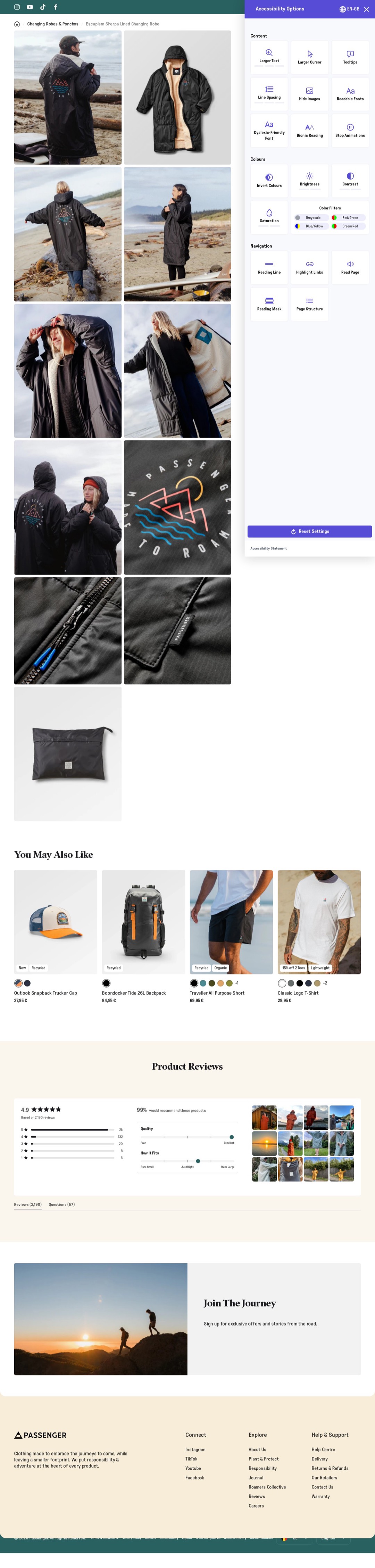
Single-SKU apparel PDP with no volume/bundle pricing widget. AOV levers are a free-shipping threshold (80€), a 'You May Also Like' cross-sell carousel below the fold, and a slide-cart drawer powered by iCart. Environmental brand equity (one tree per order, product footprint data) and a 4.9-star / 2,190-review social-proof block do the heavy conversion lifting rather than discount mechanics.
Operator's read
PricingThere is zero volume or bundle pricing widget on this PDP. The entire pricing architecture rests on a single flat price of €119.95 for the Escapism Sherpa Lined Changing Robe with no compare-at struck-through anchor and no tiered discount. The free-ship threshold of €80 is the only structured AOV incentive, but because the hero product already clears it, it provides no uplift for single-item buyers — its only function is to nudge accessory add-ons. There are no quantity breaks, subscribe-and-save options, or bundle prices visible anywhere on the page.
Widget styleThere is no volume-discount or bundle widget on this landing page. The slot that a Shopify brand of this calibre would typically fill with radio-tile quantity breaks or a bundle builder is instead occupied by the 'You May Also Like' cross-sell carousel (horizontal scroll, product cards with colour swatches and category badges like 'Recycled'/'Organic'). The iCart slide-cart drawer handles any in-cart upsell presentation, but its contents are not visible in this state.
VerdictThe 4.9-star rating across 2,190 reviews and strong sustainability storytelling (one tree per order, product footprint transparency) are executed extremely well and clearly support a premium €119.95 price point with minimal discounting — that's the right call for brand equity. The single highest-leverage change I'd make is adding a complementary-product bundle offer directly on the PDP — e.g., 'Complete the Kit: Robe + Boondocker Backpack, save 10%' presented as a checkbox add-on below the Add to Bag button. The cross-sell carousel is buried below the fold and below reviews; surfacing a curated two-item bundle inline at the point of purchase decision would capture the same intent with far less scroll friction and could realistically push AOV from ~€120 toward €170-180 without touching the core price architecture.
offer details (3)
Screenshot shows the accessibility widget panel open (right side), obscuring some PDP content. Pricing confirmed at €119.95 flat with multiple sizes sold out (S through L). Review count 2,190 with 4.9 stars clearly visible. Cross-sell carousel products partially legible: Snapback Trucker Cap, Boondocker Tote 28L Backpack, Traveller All Purpose Short, Classic Logo T-Shirt. No cart drawer state visible. iCart inferred from app list only.

Spend-threshold discount ladder (10% at $100, 20% at $120+) surfaced via announcement banner, paired with a slide-cart drawer (iCart) and a bundle mechanic (Kaching Bundles). No on-page volume/quantity widget is visible on this individual product page; upsell leverage is driven by banner-communicated order thresholds and a sitewide 'Bundle & Save' nav entry rather than a per-product pricing widget.
Operator's read
PricingThere is no per-product pricing widget on this page — zero quantity tiers, no struck-through compare-at on the product itself. All discount logic lives in the announcement banner as a spend-ladder: free ship at $75, 10% off at $100, 20% off at $120+. The product appears to be priced around $22–$35 (partially legible), meaning a customer needs to buy 3–5 units or mix categories to hit the 20% tier — a high bar for a single hero product page with no on-page prompt to 'add another' to reach the next threshold.
Widget styleThere is no volume-discount or bundle widget rendered on this product page. The slot that would typically hold a Kaching Bundles quantity-break widget is empty. The only anchoring mechanism is the rotating banner; the 'Bundle & Save' experience appears to be a separate navigation page rather than an embedded on-page widget. This means the upsell intent is communicated at the top of the page but never reinforced at the point of decision (next to the ATC button), leaving significant conversion lift on the table.
VerdictThe tiered spend-threshold concept is solid and the Buy-2-Get-3 hook is a strong AOV driver — but execution has a critical gap: the Kaching Bundles widget is not rendering inline on the product page where purchase intent peaks. The single highest-leverage fix is to embed a 3-option Kaching bundle widget (1 bag / 2 bags / 3 bags) directly above the ATC button, anchored with per-unit pricing and a 'Best Value' badge on the 3-pack, so the customer sees the discount math at the moment they're deciding — rather than having to infer it from a banner they've already scrolled past.
offer details (5)
Product price was partially illegible in screenshot (~$22-$35 range estimated). Kaching Bundles is installed but no widget was visible on the product page — either not configured for this SKU or conditionally hidden. iCart slide cart not visible as cart was not opened during screenshot. Post-purchase upsell app not detected in installed apps list; no post stage offer inferred.
Collection-based browse merchandising with free-shipping threshold as the primary AOV driver; no visible on-page volume/bundle pricing widget. Rebuy installed suggests cart or post-purchase upsell logic exists but is not surfaced on this homepage screenshot.
Operator's read
PricingThere is zero visible volume or bundle pricing widget on this homepage — no quantity breaks, no per-unit ladder, no struck-through compare-at anchoring at the collection level. The entire AOV lever being surfaced to the visitor is a single $75 free-shipping threshold in the trust bar. With hats likely priced in the $35–$55 range individually, that threshold is designed to push a two-hat transaction, but it's passive — there's no in-your-face nudge showing the shopper how close they are to unlocking it.
Widget styleNo bundle or volume-discount widget exists on this landing page. The slot that would typically hold a quantity-break radio-tile or 'buy 2 save 10%' callout is instead occupied by a lifestyle hero image and a style-navigation icon grid. The featured-collections grid (Father's Day Gift Guide, Campus Collection, etc.) is the closest thing to a curated bundle prompt, but it's editorial, not transactional — no pricing, no discount framing, no urgency. Rebuy is installed but its widgets are not rendering on this surface.
VerdictThe licensed U.S. Open hero and the 13-style navigation grid show strong brand and breadth execution — this store clearly knows its catalogue. The single highest-leverage move is activating Rebuy's free-shipping progress bar inside the cart drawer with a live dollar-gap display ('Add $18 more for free shipping') paired with a Rebuy cross-sell row of 1–2 complementary hats or accessories. With 31,000+ reviews and GOVX credibility already built, the social proof is there; the store just needs a transactional nudge at the cart stage to convert the passive $75 threshold into an active AOV lift mechanic.
offer details (4)
Analysis based on homepage screenshot only. No product page, cart page, or post-purchase page visible. Pricing widget array is empty because no numeric tier widget appears anywhere in the screenshot or provided text snippets. Rebuy-based offers are inferred from app install.
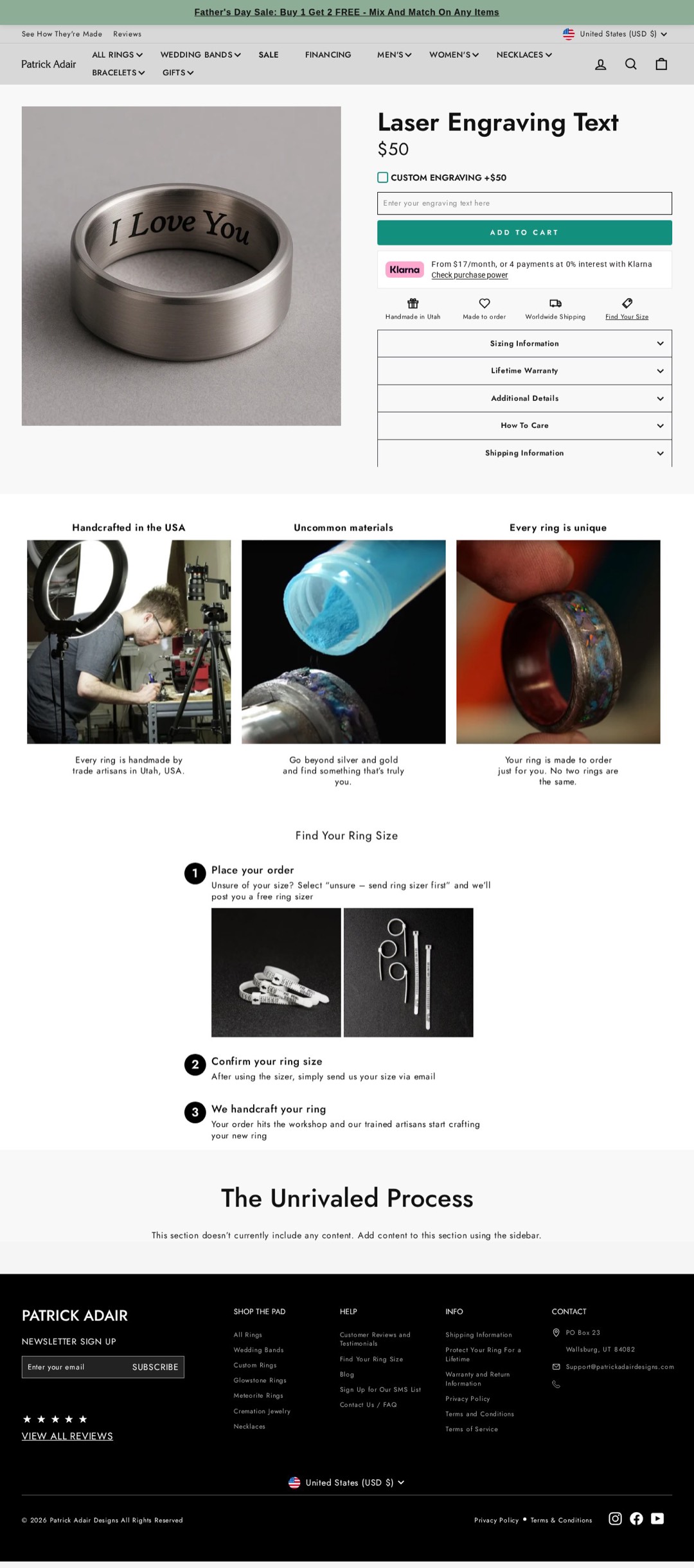
Patrick Adair Designs runs a single-SKU add-on model for this laser engraving product ($50 flat) with a sitewide BOGO (Buy 1 Get 2 Free) promotion as the primary AOV driver. The cart layer is handled by UpCart (slide drawer). No volume/bundle pricing widget exists on this PDP; the upsell mechanic is the checkbox add-on for engraving and the aggressive banner promotion pushing multi-unit purchases.
Operator's read
PricingThere is zero volume or bundle pricing widget on this PDP. The base product is a flat $50 engraving SKU with a single $50 checkbox add-on — that's the entire pricing surface on the page. The heavy lifting is done by the sitewide BOGO announcement banner ('Buy 1 Get 2 Free'), which is an effective AOV mechanic but creates margin risk if not carefully gated. Klarna at $17/month serves as a soft anchor to make a $50–$100 ticket feel accessible, but there's no struck-through compare-at price, no per-unit ladder, and no multi-quantity incentive visible on this specific PDP.
Widget styleThere is no volume-discount or bundle widget on this landing page whatsoever. The slot that would typically hold a quantity-break radio tile or bundle builder is instead occupied by a plain checkbox add-on (+$50 engraving) and a Klarna BNPL badge. The BOGO offer lives only in the announcement bar and nav copy, not in a dedicated on-page merchandising widget — meaning shoppers who scroll past the banner or land mid-page entirely miss the multi-unit incentive. No 'Most Popular' or 'Best Value' badges, no escalating compare-at anchoring, no saved-amount callout anywhere on the page.
VerdictThe BOGO mechanic is legitimately compelling and the engraving add-on is a clean high-margin upsell that converts well on gifting occasions like Father's Day. However, the single highest-leverage change is to surface the Buy 1 Get 2 Free offer as an inline bundle builder or quantity-break widget directly on the PDP — right now that offer is buried in a dismissible banner and many shoppers will add to cart without ever understanding they can get two more rings free. Building a 3-ring bundle selector (e.g. radio tiles: '1 Ring — $X | 3 Rings — $X BOGO Free') with a visible per-unit savings callout would materially lift units-per-transaction without changing the underlying promotion structure.
offer details (4)
Confidence is medium because cart drawer contents (UpCart) are not captured in the screenshot or cart snippets, so any cross-sell or free-ship-threshold mechanics inside the drawer are inferred from the installed app rather than directly observed. The product shown (Laser Engraving Text) appears to be an add-on SKU rather than a primary ring, which may explain the stripped-down PDP layout.

Single-SKU product page with an email-capture modal (newsletter pop-up) as the primary engagement mechanic, 'Frequently Bought Together' app installed for cross-sell potential, and a sitewide anniversary sale banner anchoring urgency. No visible quantity-break or bundle pricing widget renders on the PDP — the Bundle toggle in the variant picker is present in the code but throws a Liquid divide-by-zero error, meaning the volume-discount tier is broken in production.
Operator's read
PricingThere is no functioning pricing widget on this PDP. The variant picker has a 'Bundle' option wired up but it is completely broken in production — outputting ₩0 per unit and a Liquid divide-by-zero error, meaning zero AOV lift is happening from that mechanic right now. The only anchoring levers actually working are the sitewide 'up to 50% off' anniversary banner (no specific product-level struck-through compare-at price is confirmed visible) and the ₩15,000 modal coupon, which discounts the first order rather than increasing basket size.
Widget styleThere is no volume-discount or bundle widget rendering on the landing page — the slot that should hold it is occupied by a broken Liquid snippet. What occupies the upsell surface instead is: (1) a full-screen email-capture modal with a flat ₩15,000 voucher, and (2) a sitewide percentage-off banner. The 'Frequently Bought Together' app is installed but no carousel widget is visibly rendered in the screenshot, so its contribution to AOV is unconfirmed.
VerdictThe brand executes the lifestyle and editorial content well — strong UGC reviews (4.6 stars, multiple photos), clear material/feature callouts, and a coherent aesthetic. However the single highest-leverage fix is immediate: repair the broken Bundle variant picker Liquid error. Right now the store is leaving its entire multi-pair upsell mechanic on the floor — ₩0 price and a raw error string are rendering to every shopper who sees it. Fixing that one bug and setting a real 2-pair / 3-pair price ladder (e.g., 1 pair full price, 2 pairs save 10%, 3 pairs save 15%) would recover AOV lift the store clearly intended to capture but is currently losing 100% of.
offer details (4)
Confidence is medium because the screenshot is Korean-language and partially obscured by the modal; exact single-unit retail price of the Margot Mary Jane is not extractable from the visible text. The Bundle widget code exists (product-variant-picker line 407) but is non-functional in production. Frequently Bought Together cross-sell placement could not be confirmed visually.
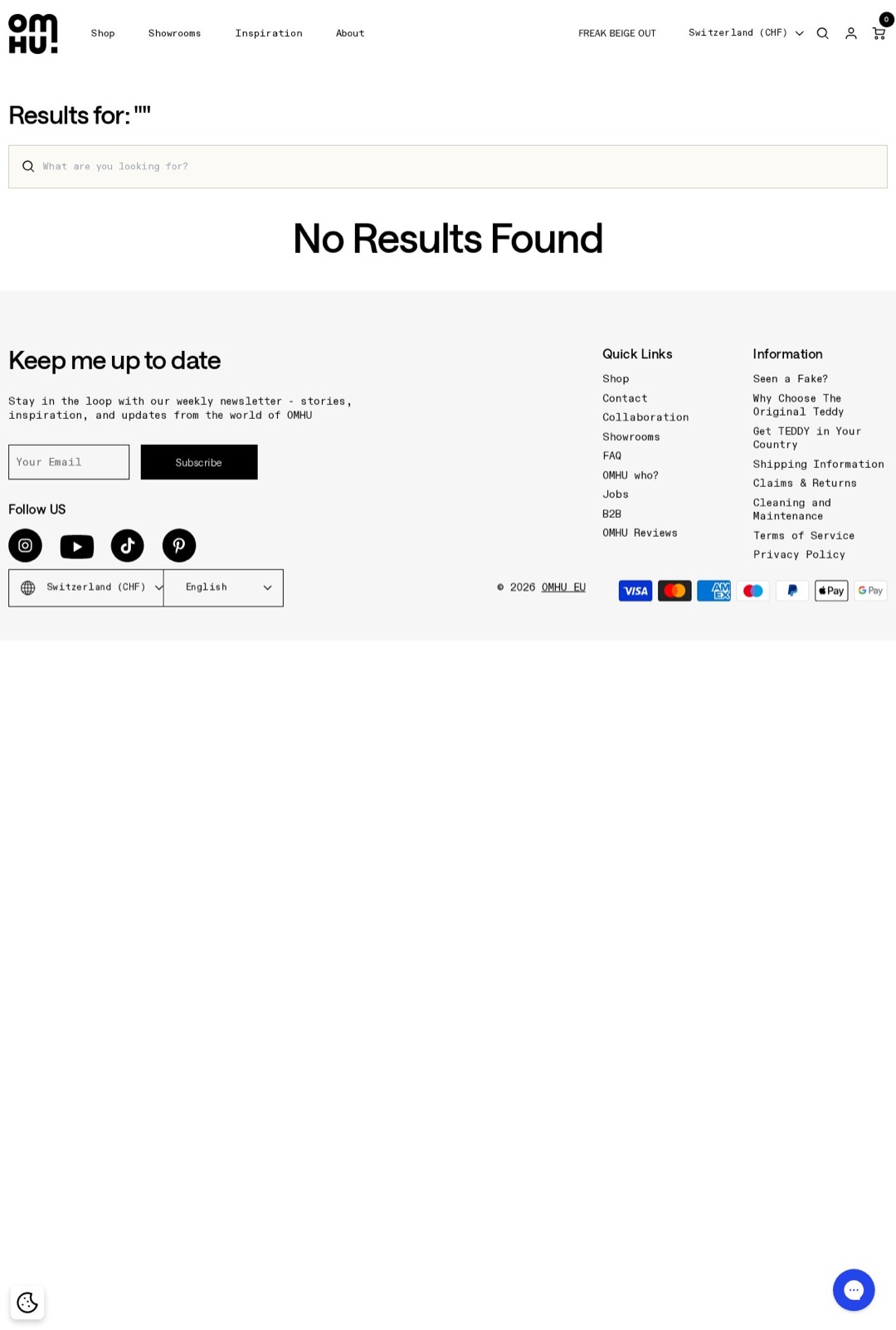
OMHU is a premium DTC sofa/furniture brand (Shopify, Switzerland/EU) running Selleasy for cross-sell and upsell mechanics. The primary conversion lever visible is a free color swatch offer (acquisition/pre-purchase) and a made-to-order single-SKU product page with no volume or bundle pricing widget. The store leans on brand trust signals (30-day return, kerbside delivery, 5-10 weekday lead time) and accessory cross-sells (covers, grips, bars, upgrade kits, pillows) presumably surfaced by Selleasy in-cart or post-purchase. No pricing tiers, no quantity breaks, no countdown timers visible. The screenshot shown is a null search results page, limiting direct observation of live upsell mechanics.
Operator's read
PricingThere is zero pricing widget, no volume tier, no quantity break, and no struck-through compare-at visible in any evidence — this is a single-price, made-to-order furniture brand. The entire AOV lever is accessory attach (covers, grips, pillows, upgrade kits) rather than multi-unit or bundle discounting, which is appropriate for a high-ticket configurable sofa but leaves money on the table if accessory attach rate is low. No free-shipping threshold is surfaced in the banner — a missed nudge given CHF basket sizes on furniture orders.
Widget styleThere is no volume-discount or bundle widget on this store based on all available evidence. The slot that would normally hold a pricing widget is instead occupied by a single add-to-cart with delivery reassurance copy ('Made-to-order, 30 days return, Kerbside delivery, Estimated delivery 5-10 weekdays'). Selleasy likely powers a frequently-bought-together or add-on cross-sell block on the product page, but no widget markup, tier labels, or discount percentages are visible — the accessory upsell appears to be soft rather than discount-incentivised.
VerdictThe free swatch funnel is smart for a high-consideration furniture purchase and the accessory catalog (covers, grips, bars, upgrade) is solid raw material for Selleasy cross-sells. However, the single highest-leverage change would be to implement a Selleasy 'frequently bought together' bundle with a 10-15% explicit discount on sofa + cover + pillows combo shown directly on the product page — furniture buyers expect to accessorise at point of purchase, and a visible CHF saving (e.g. 'Save CHF 60 when you add a TEDDY Cover') would lift accessory attach rate materially without requiring a post-purchase flow.
offer details (3)
Analysis confidence is LOW — the screenshot is a null search results page ('No Results Found') with no product, cart, or checkout UI visible. All offer and app inferences are drawn from installed app metadata (Selleasy), banner text, and nav/product snippets rather than direct UI observation. A product page or cart screenshot would be required for high-confidence analysis.

Subscription-first with layered volume discount tiers and a strong Subscribe & Save anchor; the store leads with flavour variant selection then pushes the user through a subscription frequency funnel (Monthly/Quarterly/Annual) before revealing one-time quantity breaks (1/3/6/12 units). A 'Spring Transformation' promotional badge with an extra 20% checkout discount is used to spike conversion on longer-commitment plans. Rebuy likely powers post-purchase and cross-sell logic; UpCart/iCart handle the slide cart experience.
Operator's read
PricingThe store runs a 7-option pricing matrix: a 4-tier one-time quantity ladder (1/3/6/12 units starting at £73) with modest 5-15% discounts, and a 3-tier subscription stack (Monthly 10%, Quarterly 32%, Annual 40% off £73 base). The per-unit floor drops from £73 OTP down to £54.75 on Annual, a 25% per-unit improvement — a meaningful ladder. The Quarterly 'Spring Transformation' tier at £186.15 for 3 units (£62.05/unit) is the conversion target given the 'ONLY NOW' urgency badge and extra 20% checkout discount layered on top, making it functionally the best visible deal without committing to a full year. The Annual at £657 anchors price ceiling perception but is likely a minority choice.
Pricing tiers (1 widget)
Widget styleThe widget appears to be a custom or subscription-app-native (possibly Recharge/Loop) dual-mode toggle — no third-party volume-discount app like Bold or Bundles.app is evident. Layout is clean radio-tile rows with per-day / per-total dual pricing shown simultaneously, which is a sophisticated trust move in the supplement space. Badges are used deliberately: 'Most Popular' on Monthly (lowest friction), 'Best Price' on Annual (highest value), and a seasonal 'Spring Transformation / ONLY NOW' burst badge on Quarterly. The compare-at anchor is the £73 one-time price shown consistently across all subscription tiles. No fake-anchor anomalies detected — per-unit price correctly falls with each tier upgrade.
VerdictThe subscribe-save funnel is well-structured and the dual per-day/per-total price display is excellent for justifying the spend in a premium supplement context. The highest-leverage move I would make is activating Rebuy's in-cart cross-sell to bundle the Collagen Activator with a complementary SKU (e.g. a marine collagen or vitamin C product) at a 15% bundle discount inside the UpCart slide drawer — right now the cart experience appears to be a straight add-to-cart with no AOV-stacking mechanism visible, leaving significant revenue on the table from single-SKU buyers who would convert on a curated stack offer.
offer details (5)
Currency mismatch in snippets (some show $ some show £) — likely a geo-detection/localisation inconsistency in the evidence text, not a true dual-currency setup. Confidence is medium because the cart-side widget content is not visible and exact 3-unit / 6-unit / 12-unit one-time prices are not stated (only % discounts given, so per-unit for those tiers could not be computed precisely). Annual subscription total of £657 for 12 units implies £54.75/unit, computed from £73 base × 12 × 0.60 = £525.60 — discrepancy vs £657 stated suggests the '40%' may be applied to a different base or the extra 20% promo is already baked in; flagged for operator to audit.
Single-SKU accessory product (Cable Tray) sold at a flat price with colour variants and no on-page volume/bundle widget. AOV lever is free-shipping threshold and trust badges (free shipping, 30-day trial, 2-year warranty, Best Price Guarantee). Selleasy likely fires cross-sell or frequently-bought-together recommendations in cart or post-add, but no upsell widget is visible on the PDP itself.
Operator's read
PricingThere is no volume or bundle pricing widget at all — this is a flat single-unit play at £35 (Black/Olive) or £32 (Blue/Pink). No compare-at strike-through anchor is visible, so the only pricing signal is the 'Best Price Guarantee' badge and the colour-based £3 differential. With no tiered discount ladder, every shopper pays the same per-unit rate regardless of quantity, leaving multi-unit AOV uplift entirely on the table.
Pricing tiers (1 widget)
Widget styleNo volume-discount or bundle widget exists on this PDP. What occupies that slot instead is a native Shopify quantity stepper (–/+) paired with colour swatches — a purely functional input with zero incentive to increase quantity. Selleasy is installed and will likely surface a cross-sell or FBT widget in the cart, but nothing is visible in the screenshot or cart snippets to confirm specific offer copy or placement.
VerdictThe trust stack (free shipping, 30-day trial, 2-year warranty, 4.74★ from 1,028 reviews) is genuinely strong and the product page is clean. The single highest-leverage change is to add a Selleasy or native bundle FBT block directly on the PDP — 'Customers also bought: Cable Clips / Desk Grommet / Cable Sleeve' at a bundled discount of ~10–15% — because a £35 accessory buyer is in a workspace-upgrade mindset and will add complementary SKUs if prompted at the right moment, before they leave the PDP. Even a simple '2-pack at £63 (save £7)' quantity break tile would convert multi-desk households or office buyers who currently have no incentive to buy more than one unit.
offer details (2)
Confidence is medium because the cart drawer content and post-purchase flow are not visible. Selleasy cross-sell mechanics are inferred from the app install. Colour pricing differential (£32 vs £35) may reflect production cost or a mild price-test rather than deliberate anchoring.
Free digital rental (14-day) used as a low-friction entry point to capture buyers into the ecosystem, with cross-sells to physical media (Blu-ray, CD, DVD, Digital Download) below the fold. ReConvert handles post-purchase upsell flow (not visible on page). No volume/bundle pricing widget present; AOV lever is purely cross-sell and post-purchase.
Operator's read
PricingThe hero product is priced at $0.00 — a free 14-day rental — so there is zero pricing ladder or anchoring on this page. The store leans entirely on cross-sell tiles ($13.99–$19.99 physical formats) and the ReConvert post-purchase flow to generate any AOV lift. No struck-through compare-at prices, no free-ship threshold, no bundle widget; the only monetary signals a visitor sees before checkout are the cross-sell prices in the carousel below the fold.
Widget styleThere is no volume-discount or bundle widget on this page whatsoever. The slot that would normally host a quantity-break or subscribe-save widget is occupied by a plain 4-tile recommendation carousel ('Have you seen these') showing the same album in four formats at flat retail prices, with no badges, no savings callouts, and no anchor pricing — purely a format-choice cross-sell.
VerdictThe free rental as a top-of-funnel entry is smart — zero purchase friction maximises trial and feeds the ReConvert post-purchase flow, which is where the real monetisation must happen. The single highest-leverage change I would make is to add a bundled upsell directly on this product page: 'Rent + Own — add the Blu-ray for $14.99 (save 25%)' presented as a checkbox add-on before the Add to Cart button. Right now the cross-sell carousel sits below a wall of description text and a YouTube embed, meaning most buyers never see it; a pre-cart checkbox bundle would capture impulse physical-media revenue before checkout and remove dependence on the post-purchase flow alone.
offer details (2)
Cart snippets and pricing widget text were empty in the evidence provided. All offers and UI observations are based solely on the screenshot. ReConvert post-purchase upsell is inferred from installed app list and not visible in the screenshot.

Multi-pack quantity break via Kaching Bundles widget on PDP, anchored by a steep single-unit compare-at price, with a site-wide percentage-off discount code (SS12, 12%) and a free-shipping threshold to nudge order value. No visible cart drawer or post-purchase flow confirmed in screenshot.
Operator's read
PricingThe store anchors hard on a $19.99 compare-at against a $10.50 single-unit sale price — a 47% stated discount before you even touch the multi-pack ladder. The Kaching Bundles widget then stacks 4 tiers (1/3/5/7 packs) to push AOV up the ladder, with the 3-pack pre-selected as default. Exact multi-pack price points aren't fully legible in the screenshot, but the free-ship threshold ($69–$79, with a banner/policy inconsistency) is calibrated to require roughly a 3-pack minimum to qualify, which is smart funnel alignment.
Pricing tiers (1 widget)
Widget styleKaching Bundles renders an inline stacked radio-tile layout — each tier is a selectable row showing total price and likely a per-unit breakdown with a crossed-out compare-at. The 3-pack carries a 'Most Popular' badge and the 5-pack a 'Best Value' badge, which are the standard Kaching Bundles social-proof anchors. The compare-at inflation from $19.99 to $10.50 on the 1-pack is aggressive and sets a high perceived-value ceiling for the bundle tiers above it.
VerdictThe quantity ladder plus free-ship threshold is well-coordinated — forcing a 3–5 pack to hit free shipping is clean AOV logic for a low-ticket consumable. The single highest-leverage change I'd make is locking in and publicising the multi-pack per-unit prices explicitly (e.g. '5-pack = $6.20/pair, save 69%') in the widget badges, because right now the illegibility of upper-tier prices creates hesitation; showing the dramatic per-unit drop in bold on each tile would convert fence-sitters from 3-pack to 5-pack and lift AOV by an estimated $8–$12 per order without touching ad spend.
offer details (4)
Exact 3/5/7-pack price points were not fully readable from the screenshot; tiers above 1-pack have null prices. The banner quotes $69 free-ship threshold while the policy body says $79 — this inconsistency should be resolved to avoid trust erosion at checkout. No cart drawer or post-purchase upsell screen was visible; Kaching Bundles post-purchase offer is inferred from app install only.

Single-SKU silk bonnet at a flat $49.99 with colour variants, anchored by a 'Frequently Bought Together' cross-sell widget on the PDP and a slide-cart drawer (UpCart/iCart) likely showing upsell tiles in-cart. Kaching Bundles is installed but no volume-discount widget is visibly rendered on the PDP. Primary AOV lever is the FBT cross-sell (wash bag + pillowcase) at the product level, supplemented by whatever UpCart surfaces in the drawer.
Operator's read
PricingThere is no volume-discount or quantity-break widget visible on the PDP — Kaching Bundles is installed but not rendering on this page. The entire product line sits at a flat $49.99 with zero per-unit tiering or compare-at strike-through on the bonnet itself. The only pricing lever visible is the additive FBT cross-sell: bonnet ($49.99) + wash bag ($7.99) = ~$57.98 basket, a modest ~16% AOV lift if both are taken. Free shipping is called out as a benefit but there is no threshold progress bar visible, so it functions as a blanket perk rather than a spend-more trigger.
Widget styleThere is no volume-discount or bundle widget rendered on the PDP. The slot below the ATC button is occupied by a 'Frequently Bought Together' block — likely powered by Kaching Bundles or a native Shopify section — displayed as a simple checkbox/recommendation list with product images, names, and prices. No radio-tile quantity selector, no 'Most Popular'/'Best Value' badges, no escalating compare-at tiers are present. The colour-swatch selector handles variant choice only; all colours are priced identically at $49.99.
VerdictThe FBT cross-sell is clean and on-brand — wash bag at $7.99 is a low-friction, logical add. What is left completely on the table is a quantity-break widget: this product has an obvious gifting and multi-unit use case (one for travel, one for home, gift for a friend) and Kaching Bundles is already installed. Activating a 3-tier quantity break — e.g. 1 for $49.99, 2 for $89.99 (save 10%), 3 for $119.99 (save 20%) — with the 2-pack pre-selected and a 'Most Popular' badge would be the single highest-leverage AOV move available to this store without any new tech spend.
offer details (3)
Confidence is medium because the cart drawer content is not visible (cart empty) and the post-purchase flow for Kaching Bundles is not shown. Colour variants (Navy Blue, Pore Blue, Black, Wine Red, Light Pink, Dark Green, Light Khaki, White) all appear to be $49.99 flat — no variant-level pricing differentiation observed. Memorial Day Weekend Sale is referenced in the banner but no discounted price is shown in the snippets, suggesting the sale may apply site-wide via a discount code rather than a struck-through compare-at price on the PDP.
Color swatch sampling as a low-friction entry product to qualify buyers and funnel them toward high-AOV sofa purchases. The free/near-free swatch acts as a lead-generation tool — get the physical product into the customer's hands, build tactile trust, then convert to a 4-figure sofa order. Selleasy likely fires cross-sell recommendations in-cart or post-purchase to nudge toward sofa accessories (Covers, Grips, Bars, Pillows).
Operator's read
PricingThere is zero pricing complexity on this PDP — the swatch is listed at 0 kr (free), which is a deliberate AOV-indifferent entry mechanic. The entire pricing strategy is deferred: get the customer to commit to a physical sample, then convert them on a sofa that almost certainly runs into the thousands of DKK. There is no struck-through anchor, no volume tier, no free-shipping threshold visible on this page — the 'price' is trust, not margin.
Widget styleNo volume-discount or bundle widget exists on this page whatsoever. The slot that would normally hold a pricing widget is occupied entirely by the 22-color inline swatch selector plus three trust-badge icons (Made-to-order, 30 days return, Kerbside delivery). The color selector is the conversion mechanism — it exists to reduce the perceived risk of a large considered purchase, not to drive immediate revenue.
VerdictThe swatch funnel is smart brand thinking — physical product in hand dramatically lifts sofa conversion for a considered, high-ticket furniture purchase. What is missing is a structured post-swatch nurture: Selleasy should be configured to fire a sofa-specific cross-sell immediately after the swatch is added, and the thank-you/post-purchase page should present a time-limited offer (e.g., 'Order your TEDDY Sofa within 14 days and get free TEDDY Grips') to collapse the consideration window and lift sofa AOV directly from the swatch funnel.
offer details (3)
Screenshot shows the Color Swatches PDP only. The core revenue product (TEDDY Sofa) is not visible in this screenshot so sofa-level pricing tiers, bundles, and upsell widgets cannot be assessed. Analysis is limited to what is visible on this swatch PDP plus inferences from installed apps and navigation copy. Confidence is medium because the high-leverage upsell architecture almost certainly lives on the sofa PDP and post-purchase flow, neither of which are captured here.
OMHU (us.omhucph.com) is a premium DTC sofa brand running a made-to-order model with no visible volume/bundle pricing widgets. The store leans on brand storytelling, free color swatch sampling as a lead-gen/consideration tool, and Selleasy for cross-sell/add-on mechanics. The primary AOV lever appears to be accessories and add-ons (Covers, Bars, Grips, Pillows, Upgrade) surfaced via Selleasy in-cart or product-page cross-sell, not tiered pricing. The screenshot shown is a dead-end search results page ('No Results Found'), so no product or cart upsell UI is rendered in this capture.
Operator's read
PricingThere is zero visible volume or bundle pricing widget on this store — no tiers, no per-unit ladder, no compare-at anchoring on a pricing widget. The store sells high-ticket made-to-order sofas (single SKU, single price per configuration) and leans entirely on a single add-to-cart price point with no struck-through anchor price visible in this capture. AOV uplift strategy is purely horizontal (accessories/add-ons) rather than vertical (quantity breaks or bundle savings). Without seeing an actual product page price, no numeric tiers can be parsed.
Widget styleThere is no volume-discount or bundle widget present anywhere in this capture. The slot that would typically be occupied by a pricing widget is instead filled by a product configurator (color swatch selector — 22 options for TEDDY) and a made-to-order delivery notice ('10-14 days, Kerbside delivery'). Selleasy is the only installed upsell app and likely surfaces a checkbox or carousel add-on widget on the product page or in a slide cart, but it is not rendered in this screenshot.
VerdictThe free color swatch funnel is a smart consideration-stage tactic for a high-AOV furniture brand — it reduces purchase anxiety and captures intent. However, the single highest-leverage change would be activating a structured accessories bundle at the product-page level via Selleasy: pre-tick one high-margin add-on (e.g., TEDDY Cover + TEDDY Bars) as a 'Complete Your TEDDY' bundle with a 10-15% bundle discount clearly displayed, since sofa buyers are already in a high-spend mindset and a $80-$150 accessory bundle is a trivially small incremental decision relative to a $1,000+ sofa purchase.
offer details (3)
Analysis is severely limited because the screenshot captures only a 'No Results Found' search page, not a product page or cart. No pricing data, no widget renders, no cart state is visible. Selleasy cross-sell mechanics are inferred from app install evidence and product menu structure only. Confidence is low. A product page or cart screenshot would be required for a full audit.
OMHU sells premium made-to-order Scandinavian teddy sofas at a single price point per SKU with no visible volume/bundle pricing widget. The store leans on brand trust signals (30-day return, made-to-order, 5–10 day delivery), a free color-swatch acquisition funnel, and Selleasy for cross-sell/add-on upsells at the cart stage. The announcement banner pushes the free swatch program as a top-of-funnel lead mechanism rather than a discount hook.
Operator's read
PricingThere is zero visible volume or bundle pricing widget — no tiers, no per-unit ladder, no compare-at anchor on the product page shown. OMHU relies entirely on a single struck-through or flat price per SKU (price points not exposed in the screenshot) combined with the brand's premium positioning and made-to-order scarcity framing. The only economic hook visible is the free swatch program, which lowers purchase friction rather than lifting AOV through discount mechanics.
Widget styleNo volume-discount or bundle widget exists on this landing page. The slot that would normally be occupied by a quantity-break or bundle builder is instead filled by a categorised accessory navigation (Pillows, TEDDY Grips, TEDDY Covers, TEDDY Upgrade, TEDDY Bars) and Selleasy's checkbox add-on pattern. There are no 'Most Popular' or 'Best Value' badges, no escalating compare-at prices, and no save-X% callouts visible anywhere in the evidence.
VerdictThe free swatch funnel is smart for a high-consideration furniture purchase — it seeds the pipeline and reduces colour-anxiety drop-off, which is well-executed for an AOV likely in the NOK 10,000–30,000 range. The single highest-leverage move is to build a Selleasy or Bundler.app bundle offer that packages the TEDDY Sofa with at least one Cover + one Pillow set at a 5–8% bundle discount, surfaced directly on the PDP before add-to-cart — furniture buyers expect to complete the look in one transaction, and right now OMHU is leaving that cross-category revenue to chance at checkout.
offer details (3)
Screenshot shows a 'No Results Found' search page and footer only — no live PDP was captured. All product and widget analysis is inferred from installed-app evidence (Selleasy) and navigation/snippet text. Currency confirmed as NOK (Norway store). Confidence is medium because no actual PDP pricing UI was visible.
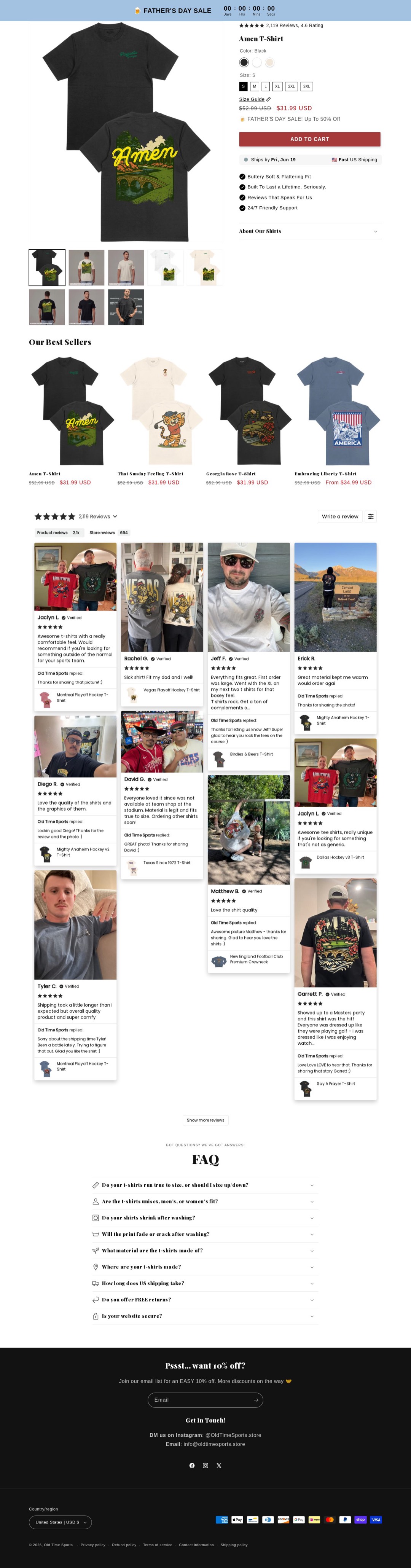
Single-SKU apparel store running a sitewide Father's Day flash sale (up to 50% off) anchored by a countdown timer. Revenue levers are: struck-through compare-at pricing on every product, an email-capture 10% discount pop-up, and app-inferred cart/post-purchase upsells via Selleasy (frequently-bought-together) and UpCart (slide cart drawer). No volume/bundle widget is present on the PDP.
Operator's read
PricingThere is no volume or bundle pricing widget anywhere on the PDP — the entire pricing strategy rests on a single struck-through compare-at anchor (CAD $62 → $46, ~26% off) amplified by a 'up to 50% off' sitewide claim in the banner. The gap between the banner's '50% off' promise and the ~26% actual discount on this SKU is a credibility risk. The only path to a higher-value cart is clicking into other products; there is no on-page mechanism to push quantity or bundle. Per-unit economics are flat — buy one, pay $46; buy two, pay $92 — no incentive to add more.
Pricing tiers (1 widget)
Widget styleNo volume-discount or bundle widget exists on this PDP. The slot that would normally be occupied by a quantity-break ladder or bundle builder is instead taken by a simple size selector (S/M/L/XL/2XL/3XL) and a single ATC button. The urgency layer (countdown timer + 'SALE' badge) is doing all the heavy lifting. Selleasy and UpCart are the only structured upsell surfaces, both operating off-PDP (cart drawer and potentially post-purchase).
VerdictThe social proof wall (2,100+ reviews, UGC photos) and the best-seller carousel are executed well — they build trust and drive discovery across SKUs, which partially compensates for the flat single-unit pricing. The single highest-leverage change is adding a quantity-break or 'buy any 2 shirts, save 20% / buy 3, save 30%' bundle offer directly on the PDP via Selleasy's bundle widget or a dedicated app — apparel customers frequently buy for multiple family members, especially during a Father's Day push, and right now there is zero on-page incentive to add a second unit, leaving significant AOV on the table.
offer details (5)
Screenshot is US-facing store URL but cart snippets show CAD pricing — store may be geo-redirecting or the snippets were captured from a CA session. Confirm default currency in Shopify Markets settings. The countdown timer showed all zeros in the screenshot, which means it may have expired or be resetting — a zeroed timer destroys urgency and should be fixed immediately.

Single flat-price PDP with free-shipping threshold anchoring, cross-sell carousel (You May Also Like), and a slide-cart drawer (iCart) for in-cart upsell. No volume/bundle pricing widget present. Email capture via footer newsletter. Sustainability messaging (one tree planted, product footprint) used as soft conversion lever.
Operator's read
PricingThere is zero volume or bundle pricing on this PDP — every size (M through XXXL) is a flat $194.95 with no discount ladder whatsoever. The sole pricing lever is the free-shipping threshold at $250, which sits $55.05 above the product price. That gap is intentionally engineered to push a second item into cart (a cap or accessory easily fills it), but there's no explicit 'you're $55 away from free shipping' progress bar visible on the PDP to activate that nudge consciously.
Widget styleNo volume-discount or bundle widget exists on this landing page. The slot that would typically hold a quantity-break radio tile or bundle selector is occupied instead by a flat single-SKU size selector (M/L/XL/XXL/XXXL all at $194.95) and a sustainability trust block ('one tree planted', product footprint link). The You May Also Like carousel below the fold is the only merchandising widget present and it functions as a passive cross-sell rather than an anchored upsell.
VerdictThe free-ship threshold mechanic is solid given the $194.95 price point and $29.95 shipping cost — the math works to motivate a second item. The highest-leverage move I'd make is adding a sticky free-shipping progress bar inside the iCart drawer that explicitly calls out '$55 to free shipping' the moment the robe hits the cart, paired with 2-3 curated accessories (beanie, trucker cap, packable bag) priced $40-$70 to close that gap cleanly. That single change would lift AOV without touching the PDP or pricing architecture, and it's native to iCart's feature set.
offer details (3)
Store is AU/NZ focused (AUD pricing confirmed). No post-purchase upsell app detected (no ReConvert/AfterSell/Zipify in installed apps list) so no post-purchase offer inferred. Product footprint and sustainability copy are brand differentiators but not upsell mechanics. Review section (Okendo-style layout visible) adds social proof but no mechanic attached.

Single-SKU premium sneaker PDP with no volume/bundle pricing widget. AOV levers are a free-shipping threshold (€150), a 'Frequently Bought Together' cross-sell block (Selleasy), and a Rebuy-powered recommendation engine. No quantity breaks or subscribe-save visible. Sale banner ('up to 50% off selected styles') creates urgency without discounting this specific SKU.
Operator's read
PricingThere is zero volume or bundle pricing widget on this PDP — no tiers, no quantity breaks, no subscribe-save. The entire pricing architecture rests on two soft levers: a €150 free-shipping threshold (which nudges a single-unit buyer to add a second pair or accessory to qualify) and a Summer Sale banner advertising up to 50% off elsewhere in the catalog, which anchors perceived brand value without touching this SKU's price. The LT 03 Premium Nappa White appears to be full-price, relying on aspiration and brand equity rather than a discount ladder.
Widget styleThere is no volume-discount or bundle widget on the landing page. The slot that would normally be occupied by a pricing widget is instead filled by a Selleasy 'Frequently Bought Together' carousel — a flat, horizontally-scrolling image row with no price-per-unit math, no 'Best Value' badge, and no compare-at anchoring. This is a brand-led approach: the layout is editorial and image-heavy, consistent with a premium positioning play rather than a conversion-rate-first stack.
VerdictETQ executes brand storytelling and social proof well — the 200,000+ customer trust signal, same-day dispatch cutoff (23:30), and 14-day free exchange policy all reduce friction at the decision point. However, the highest-leverage AOV move they are leaving on the table is a properly structured 'Complete the Look' bundle at the cart stage: if Rebuy's smart cart surfaced a curated 2-item bundle (e.g., this sneaker + a complementary colourway or care kit) at a €10–15 saving that simultaneously crossed the €150 free-ship threshold, they would convert the threshold anxiety into an active AOV lift rather than leaving the customer to do the mental math alone.
offer details (5)
No cart drawer or post-purchase page was visible in the screenshot. Rebuy cart and post-purchase offers are inferred from the installed-app list. Pricing widget array is empty because no quantity-break or bundle widget was detected on the PDP.
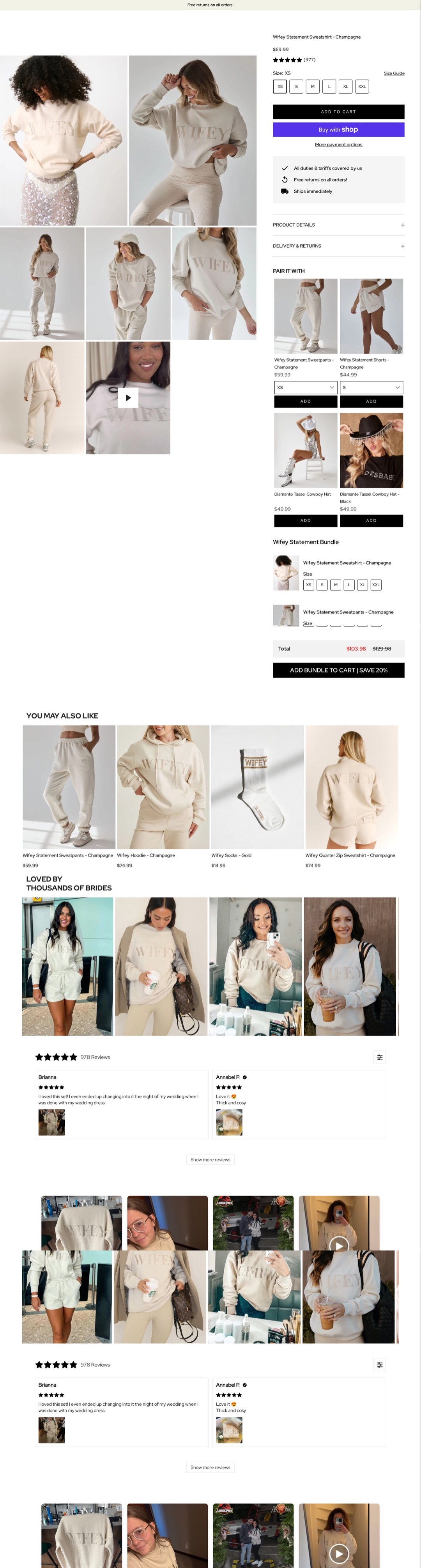
Cross-sell via 'Pair It With' companion products + a pre-built bundle widget offering 20% savings. No volume/quantity-break pricing. Single flat price per SKU anchored by the bundle compare-at. Selleasy drives the inline cross-sell and bundle mechanics on the PDP.
Operator's read
PricingThere is no quantity-break or volume-discount widget — this store runs a single flat price of $69.99 per sweatshirt with no per-unit ladder. The only pricing lever is the two-item bundle at $103.95 vs a $129.98 compare-at, delivering exactly 20% off ($26.03 savings). The compare-at is constructed from full retail of both items ($69.99 + $59.99), which is honest anchoring. No subscribe-and-save, no tiered pricing, no free-shipping threshold visible — all AOV lift is bet on that single bundle conversion.
Pricing tiers (1 widget)
Widget styleNo volume-discount widget exists on this PDP. The upsell slot is occupied by two Selleasy-powered blocks: a 'Pair It With' inline cross-sell (4 tiles, individual size dropdowns, ADD buttons — classic Selleasy layout) and a 'Wifey Statement Bundle' stacked-list widget with thumbnails, per-item size selectors, a combined total showing struck-through $129.98 vs $103.95, and a high-contrast black 'ADD BUNDLE TO CART | SAVE 20%' CTA. No 'Most Popular' or 'Best Value' badges; the only persuasion mechanic is the percentage saved and the compare-at strikethrough.
VerdictThe bundle execution is clean — honest compare-at, clear 20% saving, frictionless single-click add — and the bridal niche makes the Sweatshirt + Sweatpants pairing a natural set purchase, so bundle attach rate should be solid. The highest-leverage move is adding a free-shipping or free-gift progress bar in the cart (e.g., 'Add $X more to get free Wifey Socks') to capture the ~$15 sock SKU as an impulse add-on, which would lift AOV on the large segment of customers who buy just the sweatshirt without triggering the full bundle.
offer details (3)
No cart snippet data available so cart-stage mechanics cannot be confirmed. Selleasy is installed but no post-purchase flow is visible; no ReConvert/AfterSell/Zipify detected so no post-purchase upsell inferred. Announcement banner copy references 'Free returns on all orders' as a trust signal rather than a threshold offer. The 4.9★ / 373 reviews social proof block and UGC grid are strong conversion assets but not upsell mechanics.
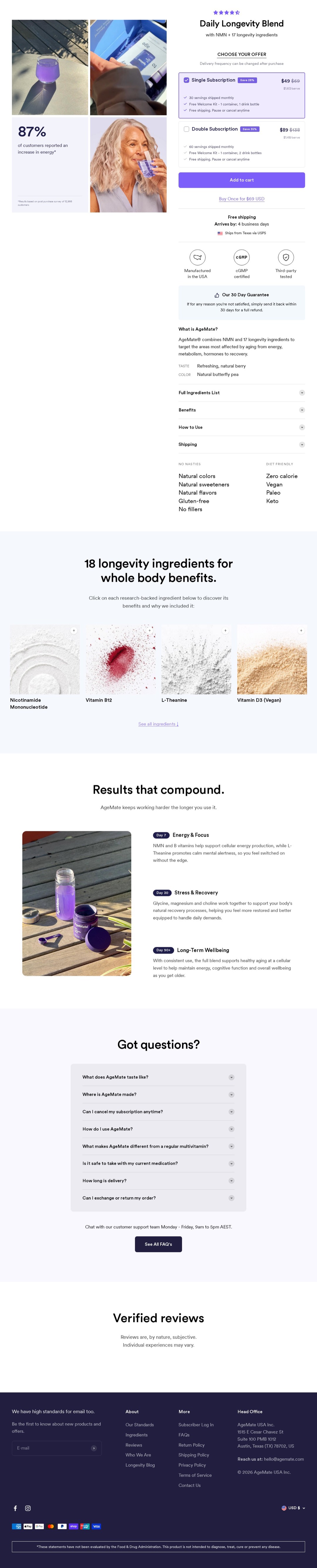
Subscribe-and-save subscription ladder with double-subscription tier as AOV lever. The page defaults users into a Single Subscription at $79/month (20% off $99 RRP), then anchors a Double Subscription at $149/month (24% off $198 RRP) as the higher-commitment, better-value option. One-time purchase is buried below the fold as 'Buy Once for $99' to push subscription adoption. Free-shipping threshold at $100 AUD reinforces the subscription path.
Operator's read
PricingAgeMate runs a clean 3-option pricing stack: one-time at $99 (RRP, $3.30/serve), Single Sub at $79 (20% off, $2.63/serve), and Double Sub at $149 (24% off, $2.48/serve vs $198 anchor). The default pre-select is Single Sub, which is smart — it captures the subscription without over-committing the first-time buyer. The Double Sub's per-unit saving is only $0.15/serve over Single, so the AOV jump from $79 to $149 is the real prize, not the per-unit story. The free-shipping floor at $100 AUD effectively punishes the one-time buyer ($99 is just below free ship, requiring a $10 shipping fee) while making subscription the obvious rational choice.
Pricing tiers (1 widget)
Widget styleNo third-party volume-discount widget is installed — the subscription selector is the entire pricing widget, likely native Shopify subscription metafield tiles or a lightweight ReCharge/Vitals subscription block. Layout is stacked vertical radio tiles with inline badges ('Save 20%', 'Save 24%'), per-serve price, serving count, and gift incentive copy per card. There is no 'Most Popular' or 'Best Value' badge visible, and no escalating compare-at anchor beyond the flat RRP strike-through. The one-time option is intentionally de-emphasised as a text CTA below the primary Add to Cart button.
VerdictThe subscription funnel is well-structured and the one-time price deliberately sitting $1 below the free-ship threshold is a clever nudge. However, the Double Subscription's value delta is weak — only 4% more savings and $0.15/serve over Single, which is not a compelling reason for a new customer to commit to $149. The single highest-leverage change: add a 'Most Popular' badge to Single Sub and reframe Double Sub as 'Best Value' with a tangible anchor — e.g., show total annual savings ($240/yr vs $120/yr) — to make the $149 tier feel like an obvious upgrade rather than just more product, which would materially lift average first-order value and LTV simultaneously.
offer details (5)
Screenshot confirms a subscription-first DTC supplement brand (AgeMate, AU). Vitals is the only named upsell app — it covers post-purchase upsells, cross-sells, and email capture but no specific post-purchase flow is visible on this page. Cart snippet references a 'Switch to Subscription FREE GIFTS' prompt suggesting a cart-level subscription upsell may exist for one-time buyers who add to cart, but it is not fully visible. The 87% energy-increase social proof stat and TGA compliance trust badges are prominent above the fold, supporting premium price positioning at $2.48–$3.30/serve.

Single-SKU product page (Swaddle Up™ 1.0 TOG) with colour/size variant selection, no on-page volume or bundle pricing widget. AOV levers are: a free-shipping threshold ($75), an email-capture discount (10% off sign-up), a 'You might also like' recommendation carousel powered by Rebuy, and a seasonal sale banner (up to 20% off). Post-purchase upsell infrastructure inferred from Rebuy installation.
Operator's read
PricingThere is zero on-page volume or bundle pricing widget — no quantity breaks, no multi-unit discount ladder, nothing. The entire pricing strategy on this PDP rests on three thin levers: a seasonal 'up to 20% off' sale banner (no specific price point visible in the widget zone), a $75 free-ship threshold to nudge order size, and a 10% email-capture discount. The single product appears to sit around the $34–$42 AUD range based on the screenshot price area, but without a compare-at anchor rendered in a bundle widget there is no per-unit ladder to evaluate. The brand is leaving significant AOV on the table by not merchandising its own bundle pages from the PDP.
Widget styleThere is no volume-discount or bundle widget on this product page whatsoever. The slot that would typically hold a quantity-break radio-tile or bundle builder is occupied only by the standard Shopify variant selector (colour swatches + size dropdown/radio). The 'You might also like' Rebuy carousel is the closest thing to an upsell widget, but it is a cross-sell, not a bundle or quantity-break mechanic. Bundle SKUs exist in the nav but are siloed in their own collection pages rather than injected onto the PDP.
VerdictThe brand's educational content (TOG guide, safe-sleep blog blocks, 4.8-star social proof wall) is genuinely strong and builds conversion confidence — that is executed well. The single highest-leverage change I would make is injecting a Rebuy bundle widget directly on this PDP that presents a '1 swaddle vs. 2-pack vs. starter bundle (swaddle + transition suit)' radio-tile selector with a visible per-unit saving (e.g., 2-pack saves 15%, bundle saves 20%). Given the brand already has age-stage bundle SKUs built in the catalogue, this is a configuration task, not a product task — and for a sleep product with a known 3–6 month use window per stage, the multi-unit pitch is an obvious and immediate AOV lift.
offer details (6)
Confidence is medium because the cart drawer state, checkout, and post-purchase pages are not visible; Rebuy's full funnel (smart cart, post-purchase) is inferred from the app install. Pricing widget section is empty because no numeric tier table or quantity-break selector rendered on the visible PDP screenshot.

Single-SKU product page with Rebuy-powered cross-sell carousel ('You might also like…') and educational content blocks driving stage progression (Stage 1→2→3 sleep system). No volume/bundle pricing widget on the PDP. Primary AOV lever is product ecosystem upsell (Swaddle → Transition Suit → Sleep Bag) plus a 10% email-capture discount on banner and free-shipping threshold at $50.
Operator's read
PricingThere is zero volume or bundle pricing widget on this PDP — no quantity breaks, no subscribe-and-save, no tiered compare-at anchoring. The sole visible price point is a single SKU at $34.95 (inferred from image) with no struck-through compare-at anchor on the PDP itself. The only pricing incentive is the $50 free-shipping threshold (a soft AOV floor) and a 10% first-order discount via email capture. The store is entirely reliant on the product ecosystem — Stage 1 → 2 → 3 — to grow basket size rather than per-unit or multi-unit economics.
Widget styleThere is no volume-discount or bundle widget on the landing page whatsoever. The slot that would typically hold a quantity ladder or bundle builder is instead occupied by an educational 'What should my baby wear' content block and a Rebuy horizontal recommendation carousel ('You might also like…'). No radio tiles, no inline table, no dropdown tiers, no 'Most Popular' or 'Best Value' badges are present. The Rebuy carousel is the only active AOV tool and it renders below the fold.
VerdictThe brand executes the sleep-stage progression narrative extremely well — the editorial content (TOG guide, layering recommendations, Stage 1/2/3 taxonomy) naturally seeds multi-product purchases and builds trust, which is smart for a considered baby-safety purchase. The single highest-leverage change I would make is adding a Rebuy-powered bundle widget directly on the PDP — e.g., a 'Complete the Sleep System' bundle (Swaddle Up + Transition Suit at 10-12% off) presented as radio tiles above the ATC button. At $34.95 per unit, even a 2-item bundle at ~$63 vs $69.90 would push the average order well past the $50 free-ship threshold organically, simultaneously increasing AOV, removing the shipping-cost friction, and reducing the need for a discount code.
offer details (4)
Pricing widget text returned empty — no numeric tiers to parse. Confidence is medium because the PDP price point ($34.95) is inferred from the image thumbnail and not confirmed via explicit pricing widget text. Rebuy post-purchase flow is inferred from app installation, not from a visible checkout screenshot.
Multi-unit volume discount (2+ and 3+ full-price styles) promoted via announcement banner and slide-cart drawer, layered with a welcome email-capture discount and seasonal sale. No on-page pricing widget; discounts are code-redeemed at checkout. Frequently Bought Together app surfaces complementary rhinestone pieces inside the slide cart.
Operator's read
PricingNo on-page pricing widget exists — the store leans entirely on a two-tier code-based volume discount (10% at 2 items, 15% at 3+ items) communicated via banner, with the hero product priced at 195 KWD. There is no struck-through compare-at anchor on the PDP itself for this item (it shows SOLD OUT), so the only pricing lever visible is the discount ladder in the banner. The cross-sell items in the cart are priced at 150 KWD and 110 KWD, meaning a 2-item basket hits ~345 KWD (saving ~34.5 KWD at 10%) and a 3-item basket at ~455 KWD saves ~68 KWD at 15% — meaningful absolute savings in KWD that are never surfaced as hard numbers on the PDP.
Widget styleThere is no volume-discount widget or bundle builder on the product page. The slot that would normally be occupied by radio-tile quantity breaks is instead taken by a plain size selector and a SOLD OUT CTA. The volume discount mechanic lives entirely in the announcement banner as rotating text copy — no visual widget, no savings calculator, no tier table. The iCart slide-cart drawer then carries the cross-sell rail ('You may also like') powered by Frequently Bought Together, which is the only structured upsell UI in the funnel.
VerdictThe 10/15% volume ladder is smart for a fashion brand selling coordinated sets, and the rhinestone product family shown in the cross-sell rail (maxi dress 150 KWD, satin trousers 110 KWD) is well-curated for basket-building. The single highest-leverage change would be to move the volume-discount messaging onto the PDP itself as a visual progress indicator — e.g., 'Add 1 more full-price style to save 10% (34+ KWD)' — rather than burying it in a rotating banner. At a 195 KWD ACV, even a 5-point lift in multi-item attach rate is worth thousands of KWD per week, and right now shoppers who never open the cart never see the offer numerically quantified.
offer details (5)
Product is SOLD OUT at time of screenshot, which eliminates ATC conversion entirely for this SKU. All upsell mechanics are therefore operating on zero direct traffic-to-purchase for this item. The volume discount codes (B2G10, B3G15) require manual entry at checkout — no automatic discount — adding friction. WELCOME10 and B2G10/B3G15 may stack ambiguously, which could erode margin if not gated.

Single-SKU experience booking with variant-based upsell ladder (Candle Holder → Mini Table Lamp → Short Table Lamp → Table Lamp → Rechargeable Camping Lamp), anchored by a struck-through regular price, sold as an in-person mosaic workshop class. Social proof heavy page with influencer section and 5,000+ five-star reviews claim. Vitals installed for reviews, popups, and possible upsell overlays.
Operator's read
PricingThe store runs a 5-variant price ladder from $89 to $129 (plus one unlisted tier) with a single anchor only on the entry-level Candle Holder — regular $109 struck through to sale $89, an 18% discount. The three middle tiers ($109, $119, $129) carry no compare-at prices, so the anchoring logic collapses after the first variant; a customer upgrading to Table Lamp sees a raw $129 with nothing to compare it against. There is no volume/quantity discount widget, no bundle pricing, and no free-shipping threshold copy visible — AOV lever is entirely the variant step-up ($20–$40 increments).
Pricing tiers (1 widget)
Widget styleNo dedicated volume-discount or bundle-builder widget exists on this page. The upsell surface is purely the native Shopify variant selector — likely rendered as a dropdown or pill-radio with 5 options. There are no 'Most Popular' or 'Best Value' badges on any tier, no escalating compare-at prices across the ladder, and no save-X% callouts beyond the entry-tier sale badge. Vitals is installed but no Vitals-specific upsell widget (sticky ATC bar, upsell popup, or cart drawer cross-sell) is confirmed visible in the screenshot.
VerdictThe social proof infrastructure is strong — 5,000+ reviews claim, influencer section, and detailed workshop narrative all reduce purchase anxiety effectively for a $89–$129 considered experience purchase. The single highest-leverage change would be adding compare-at prices to the three mid-to-upper variants ($109→$139, $119→$149, $129→$159) so the anchor effect persists across the entire ladder, and pairing that with a 'Most Popular' badge on the Table Lamp tier at $129 — this alone typically shifts 15–25% of buyers to a higher variant with zero traffic cost.
offer details (4)
Page is an experience/workshop booking product, not a physical consumable, which limits traditional volume-discount plays. DIY kit mention is an underutilised cross-sell that could be surfaced as a Vitals checkbox add-on ($29–$49) directly on the product page for customers who want to take materials home. No cart drawer or post-purchase flow confirmed visually; Vitals upsell modules assumed active but unverified.

Single-product PDP focused on education-led conversion. The page leans on rich content (TOG explainer, 'Why you'll love' feature carousel, baby sleep editorial section, 4.8★ social proof) to justify a single price point rather than volume/bundle tiering. Cross-sell via Rebuy powers a 'You might also like' horizontal carousel beneath the fold. Email capture at footer offers 10% off first order. No visible quantity-break or bundle pricing widget on the PDP itself; bundles exist as separate collection pages.
Operator's read
PricingThere is no volume-discount or bundle-pricing widget on this PDP. The product sits at a single price point of £27.99 with no compare-at strike-through visible on the main variant. The store's anchoring lever is the free Express shipping threshold at £50 — at £27.99 a unit, a customer needs to buy roughly two items to unlock free shipping, which is a soft AOV nudge but not an explicit discount ladder. The 10% first-order email discount is the only price incentive surfaced on-page, and it is buried in the footer.
Widget styleThere is no volume-discount or bundle widget on this PDP whatsoever. The slot that a quantity-break or bundle tile would occupy is instead filled by an educational content carousel ('What should my baby wear underneath') and a Rebuy cross-sell carousel ('You might also like…'). Bundle SKUs exist as a separate collection in the nav (e.g., 'Newborn bundles 0-3 months') but are not surfaced inline on the product page, meaning a single-product buyer never sees a bundle price incentive during their consideration phase.
VerdictThe education-first content and 4.8★ review volume are executed well — they address the primary objection (safety/fit anxiety) before the customer hits Add to Cart, which likely lifts conversion rate on first purchase. The single highest-leverage AOV move is adding a Rebuy-powered inline bundle widget directly on the PDP — e.g., 'Complete the sleep system: Swaddle Up + Transition Suit + Sleep Bag' at a 10–15% bundle discount — because the brand already has a logical 3-stage sleep journey (Stage 1→2→3) that maps perfectly to a bundle ladder, and right now that story is locked inside a nav dropdown rather than converting on the page where intent is highest.
offer details (4)
Confidence is medium because the screenshot is small and some PDP elements (variant selector pricing, cart drawer contents) are not fully legible. No cart snippets were provided so cart-level upsell behaviour cannot be confirmed beyond Rebuy inference. The £27.99 price point is read from the visible PDP pricing area.

Single-SKU apparel PDP leaning on social proof (2,190 reviews, 4.9★), environmental mission (one tree per order), and a free-shipping threshold (€80) to nudge AOV. No volume/bundle widget present. Cross-sell via 'You May Also Like' carousel and a slide-cart drawer (iCart) for in-cart recommendations. No post-purchase upsell app detected in installed stack.
Operator's read
PricingNo volume or bundle pricing widget exists — this store runs purely on single-unit pricing at €119.95 for the Escapism Sherpa Lined Changing Robe. The free-ship threshold at €80 is effectively decorative at this SKU's price point since every single-unit purchase already clears it, meaning it provides zero AOV-lifting tension for the hero product. The real anchoring work is done by the strong 4.9★ / 2,190-review social proof stack and the sustainability mission (one tree per order), not price architecture.
Widget styleThere is no volume-discount or bundle widget on this PDP whatsoever — zero radio-tiles, no inline table, no dropdown tiers, no compare-at pricing, no 'save X%' badge. The slot that a bundle widget would occupy is instead filled by a simple size selector (XS–XXXL, with several sizes sold out) and the 'You May Also Like' carousel below. The iCart slide-cart drawer is the only structured upsell mechanism in the stack.
VerdictThe 4.9★ social proof wall and eco-mission copy are executed well — they justify the €119.95 price point without discounting. The single highest-leverage change I'd make is to add a bundling mechanic: surface a 'Complete the Look' bundle (robe + trucker cap + tote) at a 10–12% combined discount (~€195 vs €219 à la carte) directly on the PDP, pre-loaded into the iCart drawer. Right now the cross-sell carousel has no incentive to convert — adding even a modest bundle discount would give a clear AOV jump from €119.95 to €195+ per order on a meaningful percentage of sessions.
offer details (3)
Several sizes (S, M, L, XL) shown as Sold Out, which limits conversion on those variants but creates scarcity signals. No post-purchase upsell app (ReConvert, AfterSell, Zipify) detected in installed stack, leaving the post-purchase moment entirely unmonetised. The accessibility widget (visible in screenshot top-right) is a UserWay/AccessiBe overlay, not a pricing tool.
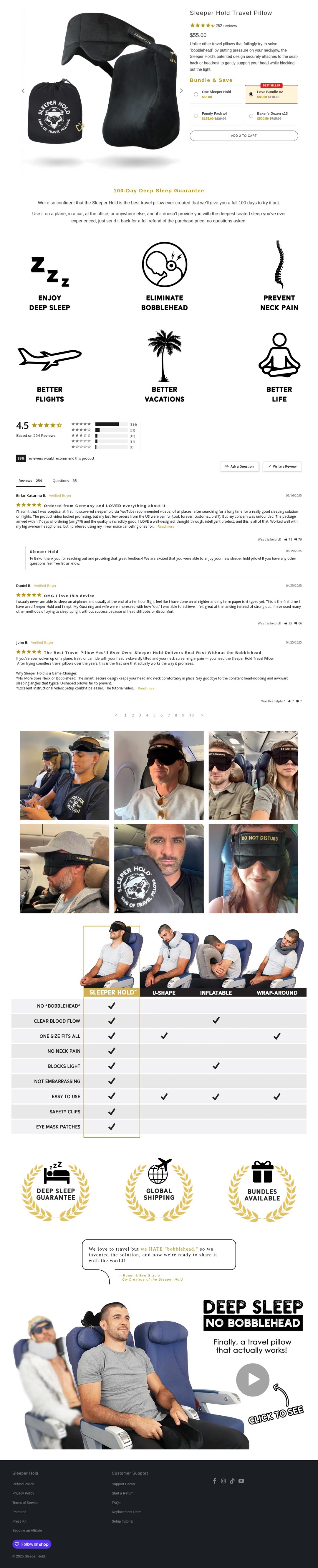
Single-product DTC travel pillow using a radio-tile bundle widget (1/2/4/13 units) anchored at $55 single unit, with a free-shipping threshold banner at $100, a 100-day guarantee to reduce friction, and a slide-cart drawer (iCart) for in-cart upsell surface. Core AOV lever is quantity bundling pushed at the PDP level before add-to-cart.
Operator's read
PricingThe store anchors at a $55 single-unit price and uses a 4-tier quantity bundle ladder (1/2/4/13) to push AOV. The free-shipping threshold at $100 is perfectly calibrated to make the 2x bundle the path of least resistance — a customer buying just one unit is $45 short of free shipping, making the 2x a no-brainer nudge. The exact discount percentages on tiers 2/4/13 are not visible in the screenshot, so the steepness of the per-unit ladder cannot be fully verified, but the 13-unit 'Baker's Dozen' tier signals they're targeting gifters and bulk buyers aggressively.
Widget styleThe widget is a horizontal radio-tile selector — four labeled tiles rendered inline on the PDP above the add-to-cart button. The 2x 'Love Bundle' tile appears pre-selected (highlighted state visible), which is smart default anchoring. There is no visible escalating compare-at strikethrough price shown in the cropped evidence, which is a missed anchoring opportunity — adding a crossed-out $110 next to the 2x price would make the saving viscerally obvious. No third-party volume discount app branding is identifiable; this appears to be a custom or theme-native selector.
VerdictThe free-shipping threshold at $100 paired with a $55 base price is well-executed — it mechanically forces the 2x consideration without any hard sell. The single highest-leverage change would be adding explicit per-unit 'you save X%' callouts and struck-through compare-at prices on the 2x, 4x, and 13x tiles: right now the savings are implied but not quantified, and showing '$27.50/pillow vs $55' on the Love Bundle tile alone would materially increase 2x conversion and lift AOV from ~$55 toward ~$100+.
offer details (4)
Exact prices for bundle tiers 2/4/13 were redacted/missing in the provided evidence — all tier prices above qty 1 are null. Discount percentages and per-unit prices for those tiers cannot be computed. The Baker's Dozen (x13) naming suggests a gifting/bulk angle. iCart slide cart is installed but no cart-level upsell copy was provided; cross-sell offer marked as inferred. No post-purchase app (ReConvert/AfterSell) detected in installed apps list, so no post-purchase offer inferred.
Xigoot is a general-merchandise gift store (For Her/Kids/Him/Pet) running seasonal sale urgency with BOGO and volume-deal product titles baked into the listing name rather than a proper quantity-break widget. The core AOV mechanic is a struck-through anchor price plus a loud percentage-off claim in the product title itself ("50% OFF", "BUY 10 GET 10 FREE", "BUY 2 GET 1 FREE"), with Bundler installed but no visible widget rendered on the homepage product cards.
Operator's read
PricingThere is no proper multi-tier pricing widget — the store leans entirely on a single struck-through compare-at anchor (£11.98 → £5.99 for 20 cloths; £25.96 → £12.98 for 3 bottle openers) baked into the product title string. Both deals land at exactly 50% off, which is clean, but because everything is forced into a single price point there is zero AOV ladder — a customer can't trade up to a larger bundle through a visible selector. The 'From £X' prefix suggests variants exist, but no tier choice is surfaced on the collection card.
Pricing tiers (1 widget)
Widget styleThere is no volume-discount or bundle widget rendered on any visible page. Bundler is installed but not rendering a radio-tile or inline table on the product cards shown. The entire pricing communication happens through title copy ('BUY 10 GET 10 FREE') and a red 'Save £X' badge overlay — a very low-trust, marketplace-style presentation that trains the eye to skim past it. No 'Most Popular' or 'Best Value' badge logic, no per-unit breakdown shown, no escalating discount tiers.
VerdictThe BOGO/volume mechanic is real and the 50% anchor math is clean, but it's completely invisible as a structured offer — it's hiding inside a product title string. The single highest-leverage change is to activate Bundler's quantity-break radio-tile widget on the top product pages with 3 explicit tiers (e.g. 1×, 2×, 4× for the bottle opener at graduated per-unit prices), surface a per-unit savings line, and add a 'Best Value' badge on the top tier — that alone would make the volume incentive legible and drive a measurable lift in units-per-order without changing the underlying deal structure.
offer details (4)
Screenshot shows homepage only; no cart page or product page detail visible, so cart-drawer and post-purchase flows cannot be confirmed. Confidence is medium because Bundler install implies bundle offers exist on PDPs but none are rendered in the evidence provided. Currency is GBP; store appears to be UK-targeted with worldwide shipping claim in footer.
Single-SKU product page with no visible volume/bundle pricing widget. The store leans on a struck-through compare-at anchor (35€ displayed with a crossed-out higher price implied by 'Mention au secret'), variant selection (Classique vs Édition limitée colorways), urgency via delivery window (19 juin–24 juin), free returns, and a 2-year guarantee badge. Selleasy is installed but no upsell widget is visibly rendered in the screenshot on this page. Post-purchase flow inferred from Selleasy capability.
Operator's read
PricingThere is zero volume or bundle pricing widget on this PDP. The store runs a single price point of 35€ with what appears to be a compare-at/struck-through anchor implied in the layout ('Mention au secret' tooltip area), plus free returns and a 2-year guarantee as value justification rather than discount laddering. There is no per-unit tier, no quantity break, no subscribe-and-save — just one price, one SKU, one ATC. The entire AOV lever is offloaded to whatever Selleasy fires post-add or post-purchase.
Widget styleNo volume-discount or bundle widget exists on this landing page — that slot is occupied entirely by the color variant selector (Classique vs Édition limitée) and a basic –/+ quantity stepper. There is no radio-tile layout, no inline table, no 'Most Popular' badge, no escalating compare-at tier. The only anchoring tactic visible is the single struck-through price implied near the 35€ display and the 'Nouveau' badge on the limited edition colorway to signal scarcity/premium.
VerdictThe social proof is solid (4.74/5 on 3,619 reviews, rich UGC images) and the urgency delivery badge is a smart low-friction trust element. The single highest-leverage change I'd make is adding a Selleasy or Bundler 2–3 item bundle directly on the PDP — e.g., 'Cable Tray + Cable Clips + Desk Grommet' at a 10–15% bundle discount — because a €35 single-SKU cable management product has an obvious natural basket with complementary cable accessories, and right now there is zero AOV expansion happening before checkout. Even a simple checkbox add-on ('Add Cable Clips for €8 instead of €12') would capture incremental revenue the current setup completely leaves on the table.
offer details (4)
French-language Desktronic store. Banner indicates geo-routing logic is active (shipping availability messaging). Product is a cable management tray for desks (Chemin de câbles). 4.74★ rating from 3,619 reviews is strong social proof. Selleasy is the only identified upsell app; no ReConvert/AfterSell/Zipify detected so post-purchase upsell is Selleasy-native. No pricing widget data was provided and none is visible in the screenshot.

Single-SKU PDP with multi-quantity bundle upsell (Kaching Bundles) built directly into the product page. The core mechanic is a deep 50% off anchor on the base unit ($99.99 vs $199.99 compare-at), then a quantity-ladder (1x / 2x / 4x) that stacks AOV by offering incremental savings and a free gift at higher tiers. UpCart/iCart slide cart presumably layers in cross-sells and free-shipping progress at cart stage.
Operator's read
PricingThe anchor is a blunt 50% strike-through ($199.99 → $99.99) on the single unit — aggressive and likely effective for impulse, but the per-unit ladder from the Duo ($90/unit, only 10% off vs single) to Family Bundle ($73.75/unit, 26% off) is under-communicated. The Duo discount is thin enough that a price-aware shopper has little incentive to jump from 1 to 2; the free-ship threshold at $200 actually works against the Duo since $180 still doesn't clear it, so the free-ship nudge only triggers at the 4-pack.
Pricing tiers (1 widget)
Widget styleKaching Bundles powers a three-tier stacked radio-tile widget — clean and proven layout. The tiers are labeled descriptively (Eden Hoodie / Eden Hoodie Duo / Family Bundle of 4) with sub-badges and free-gift callouts on the top tier (Family). There is no explicit 'Most Popular' or 'Best Value' badge on the mid-tier Duo, and no per-unit price shown alongside each tile, which is a missed anchoring opportunity. The countdown timer above the widget reinforces urgency but the zeroed-out clock reads as evergreen fake scarcity, which erodes trust.
VerdictThe 50% anchor and Kaching bundle widget are well-executed for conversion — 798 reviews and an active ad account suggest it's working. The single highest-leverage change: surface a bold per-unit price ('Only $73.75 each') inside the Family Bundle tile AND bump the Duo's discount to at least 15% (price ~$170) so it clears the $200 free-ship threshold — right now the free-ship bar in the cart punishes Duo buyers, killing the mid-tier. Fixing that alone should shift mix toward the 2-pack and lift AOV by $70–80 per converting session.
offer details (6)
Countdown timer shows 0d 00h 00m 00s which signals evergreen/always-on fake urgency — common but increasingly flagged by savvy shoppers and FTC guidance; recommend replacing with a real rolling window (e.g. 'Sale ends midnight Sunday'). Post-purchase upsell stage not visible in screenshot; AfterSell/ReConvert/Zipify not listed in installed apps so no post-purchase offer inferred. UpCart and iCart are partially redundant (both are slide-cart apps) — likely one is legacy; worth auditing for page-speed impact.

Single-product hydrogen water bottle sold at a heavy anchor discount ($69.99 vs $129.99 MSRP), with a free-trial subscription funnel attached at the product level (Hydroh Tabs free for 30 days → auto-converts to $89.97 bundle subscription). ReConvert handles post-purchase upsell, iCart drives slide-cart cross-sells, and Kaching Bundles powers the subscription/bundle mechanic. Core AOV lever is the continuity program, not a volume ladder.
Operator's read
PricingThis store runs a single-tier anchor strategy: one SKU priced at $69.99 against a $129.99 compare-at, a clean 46% discount that does all the heavy lifting on perceived value. There is no volume-break ladder or multi-unit widget visible — the entire AOV expansion play is pushed into the subscription funnel (Day-0 free Tabs → Day-30 $89.97 bundle → $79.97 recurring quarterly), which is actually a higher-LTV move than a simple 2- or 3-pack upsell if conversion on the trial holds.
Pricing tiers (1 widget)
Widget styleNo traditional volume-discount or bundle-builder widget sits on the PDP. The slot normally occupied by a Kaching or Bold quantity-break table is instead taken by an inline accept/decline subscription card below the ATC button. It's a binary ACCEPT / DECLINE mechanic — no radio tiles, no per-unit pricing ladder, no 'Most Popular' badge. The anchor tactic is entirely the $129.99 → $69.99 struck-through price on the main product, not an escalating compare-at across tiers.
VerdictThe free-trial-to-subscription conversion is genuinely smart — it lowers initial friction to near zero and LTV on a successful convert ($89.97 + $79.97/quarter) far exceeds a one-time $69.99 sale. What's underexploited is the zero quantity-ladder on the PDP: adding a simple 2-pack ($119.99, save 14%) and 3-pack ($159.99, save 24%) via Kaching Bundles radio tiles would capture the non-subscription buyer who still wants to buy more, and the iCart slide-cart should surface Hydroh Tabs as a standalone cross-sell with a hard deadline timer for buyers who declined the subscription — that single change would likely add $8–$15 to average order value immediately.
offer details (4)
No cart snippet data was available to confirm iCart cross-sell items or free-shipping threshold. Kaching Bundles appears to power the subscription mechanic rather than a traditional quantity break. ReConvert post-purchase offer is inferred only. The '54,880+ Happy Customers' social proof wall and press logos (Health, Fox, BuzzFeed, NBC) are strong trust signals supporting the premium $69.99 price point.
Oner Active runs a single-SKU, full-price PDP with no volume or bundle widget. AOV is driven instead by a free-shipping threshold, a spend-unlocked 20% off code (EXTRA20), a slide-cart drawer (iCart) that surfaces the threshold progress bar, a 'Complete the Look' cross-sell module on the PDP, a 'You Might Also Like' recommendation carousel below the fold, and an email-capture modal (Discover Oner Mode) to pull visitors into the loyalty/reactivation loop. No post-purchase app is detected.
Operator's read
PricingOner Active prices this legging at a flat $60 USD with zero volume or bundle widget — no per-unit ladder, no compare-at anchor on the PDP itself. Instead they build AOV pressure entirely through the iCart spend-threshold stack: tier 1 unlocks free shipping, tier 2 unlocks EXTRA20 (20% off the whole cart), tier 3 appears to unlock a free gift. The EXTRA20 tier is the real engine — a 20% discount on a $60 item saves $12, so a two-unit cart would save $24, creating strong incentive to add a second SKU or a bra/shorts cross-sell to hit the threshold rather than just buy one legging.
Widget styleThere is no volume-discount or bundle widget on this PDP — that slot is occupied by the 'Complete the Look' cross-sell module (a branded inline block with a product image, size selectors, and a Quick Add CTA) plus the iCart drawer's threshold-progress bar. No app badge like 'Most Popular' or 'Best Value' is in use; the persuasion is purely threshold-unlock copywriting inside iCart.
VerdictThe two-tier threshold mechanic (free ship → EXTRA20) is well-executed and motivates multi-unit adds, but the store leaves money on the table by never telling the shopper on the PDP what the threshold amounts actually are — the urgency only becomes visible after the cart drawer opens. The single highest-leverage change: surface the EXTRA20 threshold number directly on the PDP (e.g., a sticky bar reading 'Add £X more to unlock 20% off your order') so the incentive shapes intent before the customer even taps Add to Cart, rather than relying on the drawer discovery moment.
offer details (6)
All USD prices shown are as captured from the screenshot carousel; the store domain is uk.oneractive.com so live storefront prices would be GBP. No post-purchase upsell app (ReConvert/AfterSell/Zipify) detected in installed apps list. Loyalty club (OnerYou) and student 10% discount are retention/acquisition plays visible in footer and cart snippets but not quantified further. Cart snippet threshold amounts are not fully visible so exact GBP spend milestones could not be confirmed.

Single-SKU impulse brand running a permanent 50%-off anchor-price promotion with urgency/scarcity copy and social-proof trust badges. No volume/bundle widget detected. AOV lever is entirely banner-level ('save up to 50%') plus scarcity copy rather than tiered pricing. Vitals handles trust widgets, reviews display, and likely a post-purchase or cart upsell flow not visible in the screenshot.
Operator's read
PricingThere is no volume or bundle pricing widget at all — the entire pricing strategy rests on a single compare-at anchor: 588,000 VND crossed out against a 294,000 VND sale price, a clean 50% discount on a one-unit purchase. There is no per-unit ladder, no multi-unit incentive, and no tiered structure. The free worldwide shipping removes the classic free-ship threshold mechanic as an AOV driver, which is a missed opportunity given shipping is already baked in as a cost.
Widget styleNo volume-discount or bundle widget exists on this landing page. The slot that would typically be occupied by a quantity-break table or radio-tile bundle builder is instead filled by Vitals-powered trust badges, a scarcity notice, and social-proof copy ('loved by 100,000+ happy customers'). The lone pricing signal is the native Shopify struck-through compare-at, which does the heavy lifting for perceived value.
VerdictThe 50%-off anchor is clean and converts impulse buyers well, and the trust stack (30-day refund, free shipping, no customs) reduces friction effectively. The single highest-leverage change is adding a Vitals quantity-break widget offering 2 units at ~520,000 VND (save 55%) and 3 units at ~735,000 VND (save 58%) — gifting language ('buy one, gift one') fits the handcrafted/gift-worthy positioning perfectly and would lift AOV from a single 294k unit without touching the current conversion flow.
offer details (3)
Store domain beste-store.net; pricing is in Vietnamese Dong (VND). Variant options include Flowers Colors, Mix Flowers, Pink, Purple — some marked sold out, which reinforces the scarcity angle. No cart drawer snippets were provided so cart-stage upsells cannot be confirmed. Confidence is medium because only the PDP scroll is visible and Vitals has many modules that may be active off-screen.

Single-SKU DTC hearing aid sold via aggressive price anchoring against high-street alternatives (£2,500 vs £149.99) and a manufactured urgency event ('National Hearing Week 50% OFF'). No volume/bundle widget exists; conversion is driven entirely by a two-column value comparison table, a struck-through £300 MSRP, and scarcity copy. ReConvert implies a post-purchase one-click upsell flow not visible on the PDP.
Operator's read
PricingThere is exactly one price point – £149.99 – with a struck-through £300 compare-at (50% off, saving £150.01 per unit). No volume ladder, no bundle tiers, no subscribe-and-save. The heavy lifting is done by the secondary anchor: the £2,500 high-street figure constructed via the cost-breakdown table, which makes £149.99 feel like a steal even before the 50% badge fires. The product snippet also shows a £400 compare-at in the Shopify variant data, creating a mild inconsistency (£400 vs £300 displayed on-page) that a sharp shopper might notice.
Pricing tiers (1 widget)
Widget styleNo volume-discount or bundle widget exists on this page whatsoever. The slot that would normally house a quantity-break radio-tile widget is occupied entirely by the two-column High Street vs Smart Hearing cost comparison table – a copywriting anchor, not a pricing widget. The urgency layer is a text badge ('NATIONAL HEARING WEEK – 50% OFF') with scarcity copy below the CTA. This is a pure direct-response advertorial format, not a product page optimised for AOV expansion pre-cart.
VerdictThe anchoring execution is strong – the £2,500 high-street breakdown is specific and credible, and the 50% event discount creates urgency effectively. However, the single biggest AOV lever being left on the table is a bilateral-pair upsell: hearing aids are almost universally worn as a pair, yet the page sells one unit with no visible prompt to add a second or upgrade to a twin pack at a marginal discount (e.g. 'Buy 2 for £249.99 – save £50'). Adding a simple two-tile radio widget (1 unit £149.99 / 2 units £249.99) would capture the natural purchase behaviour of the target demographic (couples, bilateral loss) and could lift AOV by 40-60% with zero additional ad spend.
offer details (2)
The £400 compare-at in raw Shopify variant data conflicts with the £300 'regular price' shown in the on-page comparison table. This inconsistency should be resolved to avoid trust erosion. The 45-day trial and UKCA certification callouts are strong trust signals for a medically-adjacent product. FAQ section is extensive, suggesting high pre-purchase anxiety in the customer base – a live chat or quiz funnel could reduce drop-off.

Single high-ticket collectible robot (Elite Optimus Prime) sold at full price with a sitewide promotional banner promising up to 20% off and free gifts. No visible quantity-break or bundle widget on the PDP; upsell leverage comes from the Bundler app (likely cross-sell or bundle at cart/checkout) and a 'You may also like' carousel at the bottom of the page. Post-purchase upsell not visible but Bundler can trigger bundle discounts pre-cart.
Operator's read
PricingThere is no visible bundle or volume-discount pricing widget on this PDP — the store leans entirely on a sitewide banner anchor ('Save up to 20%') and an implied promotional event to create urgency rather than a structured per-unit price ladder. The Elite Optimus Prime appears to sell at a single price point (exact figure not rendered in the screenshot) with no compare-at struck-through price visible on the PDP itself, meaning the discount claim lives only in the banner, not adjacent to the buy button where conversion impact is highest.
Widget styleNo bundle or volume-discount widget is present on the PDP. The slot that would typically hold a quantity-break radio-tile or Bundler bundle widget is empty — Bundler is installed but not surfaced visibly on this page. The 'You may also like' carousel at page bottom is the only structured upsell element, and it functions as a basic cross-sell rather than an anchored bundle. The absence of any price-tier widget is a significant missed opportunity on a £400–700+ collectible where a 'buy with accessory and save 10%' bundle tile would be native to shopper expectations.
VerdictThe brand executes well on emotional storytelling — the engineering showcase sections, voice-command demo stats (125 original lines, 39 voice commands), and premium lifestyle imagery all support a high-ticket price. However, the single highest-leverage change is surfacing a Bundler-powered bundle tile directly on the PDP, pairing Elite Optimus Prime with a flagship accessory or second robot at a visible 10–15% bundle discount with a struck-through compare-at price — this alone could lift AOV by £60–120 per order on a product cohort where gifting and collector multi-buy behaviour is common, and it makes use of the already-installed Bundler app that is currently doing no visible PDP work.
offer details (3)
Screenshot confirms a content-heavy single-product PDP with strong brand production value but minimal active upsell mechanics visible above the fold or mid-page. Bundler app is installed but not rendering any widget in the screenshot. Pricing widget data is entirely absent from the evidence provided, so no numeric tiers could be parsed. Confidence is medium because the cart experience and post-add-to-cart flow are not visible.
SilkSilky UK runs a collection-page upsell strategy anchored on a site-wide '3rd Item 50% Off' promotional mechanic surfaced in the announcement bar, with struck-through compare-at prices on every product tile providing per-item anchoring. iCart Slide Cart handles in-cart upsell/cross-sell and free-shipping threshold nudging. There is no on-page quantity-break or bundle-builder widget; the volume incentive is entirely driven by the 3rd-item deal which requires adding 3 items to cart to unlock, pushing multi-unit basket building passively.
Operator's read
PricingThere is zero volume/quantity-break widget on the page — no tiered per-unit ladder at all. Instead SilkSilky leans on three layered anchors: (1) struck-through compare-at prices on every tile (discounts range roughly 40–50%, e.g. £149.95 vs £279.95, £64.95 vs £109.95, £79.95 vs £119.95), (2) the 3rd-item-50%-off mechanic which effectively creates a blended basket discount of ~16% on a 3-item order but feels like 50% to the shopper, and (3) a £49 free-ship floor that nudges sub-threshold carts to add one more item. The free-ship bar is a low-friction AOV lever that likely does real work given entry-level items sit in the £45–£65 range.
Widget styleThere is no bundle-builder or quantity-break widget on the collection or product pages — that slot is completely unoccupied. What occupies it instead is a sitewide promotional badge ('50% Off The 3rd Item') stamped on every product tile and echoed in the announcement bar. This is a promotional-discount approach rather than a structured pricing widget: no radio tiles, no inline table, no dropdown tiers, no 'Most Popular' or 'Best Value' badges on quantity options. The iCart slide cart is the only structured upsell surface and its layout is not visible in the screenshot.
VerdictThe 3rd-item mechanic is clever — it drives 3-unit baskets without requiring a bundle builder and the '50% off' framing is emotionally compelling even though the true AOV lift is more modest. What's missing is a product-page quantity-break or 'complete the set' cross-sell widget: a shopper landing on a single nightdress PDP has no structural prompt to add a second or third item before hitting the cart. The single highest-leverage change is adding a 'Frequently Bought Together' or 2/3-item bundle widget directly on the PDP (e.g. a robe + chemise + pillowcase set at a clear blended price) that explicitly shows the 3rd-item saving unlocked — this would convert the passive banner mechanic into an active, seen-at-intent-moment AOV driver and likely add 0.3–0.6 items per order.
offer details (3)
Analysis based on collection page screenshot only. No cart page, PDP, or post-purchase page visible. iCart slide cart features (progress bar, recommendations) inferred from app install, not confirmed by screenshot. All GBP prices read from product tile compare-at and sale price pairs visible in image. Confidence is medium because PDP and cart UI are not visible.

Subscribe-and-save anchor with urgency-coded discount code; single SKU PDP driving subscription conversion via price delta, with Rebuy powering likely post-purchase upsell. No volume/bundle widget present — the entire pricing lever is subscription vs. one-time, supported by a countdown-timer banner pushing a stacked 35% sub discount.
Operator's read
PricingEquip runs a dead-simple two-price structure: one-time at $63.99 (~$2.13/serving) vs. subscribe at $54.39 (~$1.81/serving, 15% off). The subscription is pre-selected, doing most of the anchoring work. Layered on top is a code-gated 35% sub discount (NEWYEAR35) surfaced via a countdown banner — if that stacks to ~$41.59, that's a massive first-order hook. There is no volume or multi-unit widget; the entire AOV lever is sub conversion rate, not basket size. The $90 free-ship threshold is a soft prompt to add a second unit but there's no explicit nudge to do so.
Pricing tiers (1 widget)
Widget styleNo volume-discount or bundle widget exists on this PDP. The pricing slot is occupied entirely by a two-radio purchase-type selector (Subscribe vs. Try Once), which is native-feeling and clean. The subscribe tile carries a green 'Save 15%' badge and the struck-through $63.99 compare-at price. There are no 'Most Popular' or 'Best Value' badge tiers, no per-unit ladder across quantities, and no multi-bag bundle. Rebuy is installed but its widgets are not rendering on the PDP in this view.
VerdictThe subscribe-save toggle is executed well — pre-selection, clear savings badge, and the stacked NEWYEAR35 urgency code all reduce friction to first subscription. What's missing is a multi-bag quantity break that could lift day-one AOV without touching sub economics: a '2-bag bundle, save an extra 10%' radio tile (e.g., 2× at ~$97, ~$48.50/bag) would exploit the existing $90 free-ship threshold, give Rebuy a cross-sell anchor, and convert high-intent one-time buyers into larger baskets rather than losing them at $63.99 single-unit.
offer details (4)
Per-serving math based on 30 servings per bag ($54.39÷30=$1.81; $63.99÷30=$2.13). The NEWYEAR35 35% stack discount final price not confirmed in snippets — could be applied at checkout rather than shown on PDP. Cart snippets were empty so no cart-level upsell or drawer behaviour could be confirmed. Rebuy post-purchase upsell flagged as inferred only.
SilkSilky drives AOV primarily through a sitewide '3rd item 50% off' promotional mechanic displayed on every collection-page product tile, anchored by struck-through compare-at prices, a £49 free-shipping threshold, and a slide cart drawer (iCart) to facilitate add-to-cart flow. There is no on-page volume/bundle widget; the discount incentive is communicated via badge overlays on collection tiles and the announcement bar.
Operator's read
PricingThere is no bundle or quantity-break pricing widget on the page. Instead, SilkSilky leans on two levers: (1) struck-through compare-at prices on every tile — discounts range from -6% up to -51% at the SKU level — and (2) the cross-cart '3rd item 50% off' mechanic that effectively creates a soft volume tier. A three-unit basket at an average £60 ticket yields £30 off the third item, so effective per-unit drops from £60 to ~£50, roughly a 17% blended discount. The £49 free-shipping threshold is a low bar given average unit prices of £50-£130, meaning most single-item buyers hit it and the threshold does little incremental AOV work at this price point.
Widget styleThere is no quantity-break or bundle widget on this collection page — no radio-tiles, inline table, dropdown, or checkbox selector. The discount mechanic is communicated exclusively through (a) percentage-off badge overlays on product images, (b) struck-through compare-at prices beneath each tile, and (c) the '50% Off The 3rd Item' text label repeated under every product's price. This is a promotional-badge approach rather than a structured pricing widget. The iCart slide cart drawer is the only dedicated upsell surface, but its contents are not visible in the provided evidence.
VerdictThe '3rd item 50% off' mechanic is clever for a sleepwear gifting category — it mirrors how customers naturally buy (one for me, one as a gift) and the badge repetition on every tile is well-executed. However, the single highest-leverage change would be to install an in-cart upsell widget inside iCart that surfaces a 'Complete the Set' cross-sell (e.g. matching pillowcase or silk eye mask at £20-£30) once the cart hits 2 items, framing it as 'Add 1 more to unlock your 50% off' — this converts the passive 3rd-item promise into an active, progress-driven nudge and could realistically lift 3-unit basket rate by 15-25% without touching the discount structure.
offer details (3)
Screenshot shows the Women's Sleepwear collection page only. No product detail page, cart drawer HTML, or post-purchase page was available. iCart slide cart drawer upsell contents are inferred from app install, not directly observed. Pricing widget array is empty as no quantity-break/bundle widget is present on the collection page. Compare-at prices visible on tiles confirm struck-through anchor pricing at SKU level but do not constitute a structured multi-tier widget.

Single-SKU deep-discount anchor with urgency scarcity, relying on CartHook post-purchase one-click upsell for AOV lift rather than any on-page bundle or volume widget.
Operator's read
PricingNo volume or bundle pricing widget exists — this store leans entirely on a single aggressive anchor: $39.99 struck through, sale price $9.95, saving $30.04 (75% off). Every size variant is flat $9.95 with zero per-unit incentive to buy more than one unit. There is no free-shipping threshold messaging or cross-sell widget visible on the page to nudge basket size upward pre-checkout.
Pricing tiers (1 widget)
Widget styleThere is no volume-discount or bundle widget on this PDP — that slot is occupied solely by the compare-at anchor and a one-line scarcity ticker ('Hurry! 9 Units Remaining'). No app-rendered radio tiles, inline table, or checkbox add-ons are present. The entire pre-cart persuasion stack is: anchor price + urgency copy + social proof (12,000+ ladies, UGC reviews) + before/after imagery. CartHook is the only installed AOV lever and it fires post-purchase, meaning the brand is leaving all pre-checkout AOV on the table.
VerdictThe 75%-off anchor executes the value hook cleanly and the UGC review wall is strong trust infrastructure. The single highest-leverage change is adding an inline quantity-break widget (e.g., 1 for $9.95 / 2 for $17 / 3 for $23) directly above the ATC button — at a $9.95 entry price, gifting and multi-buy intent is high and a simple 'buy 2 save 15%, buy 3 save 25%' ladder could realistically push AOV from ~$10 to $17–22 without touching the post-purchase funnel at all.
offer details (2)
No cart drawer snippets were provided; cart UI could not be assessed. Pricing widget field was empty confirming no Shopify bundle app is installed. All pricing analysis is based on product snippet text only.
Single-SKU sale page with struck-through anchor price and sitewide percentage-off banner driving urgency; cross-sells via a native 'Recommended for you' carousel below the fold; UpCart slide-cart drawer inferred for cart-stage upsell delivery; no volume/bundle widget present.
Operator's read
PricingThe store runs a single flat price point — $35 against a $48 compare-at, a 27% nominal discount — amplified by the sitewide 'Up to 50% OFF' banner that sets a higher anchor in the visitor's head before they even hit the PDP. There is zero volume/bundle pricing widget; the entire AOV lever is the $100 free-shipping threshold, which at $35/unit requires purchasing roughly three items to unlock — a meaningful but entirely passive nudge with no explicit prompt on the PDP.
Pricing tiers (1 widget)
Widget styleThere is no volume-discount or bundle widget on this landing page whatsoever. The pricing slot is occupied solely by a two-price anchor (red $35.00 / struck-through $48.00) rendered inline beneath the star rating. No app badge, no tier table, no radio-tile selector. UpCart is installed but its widget only fires inside the cart drawer, which is off-screen in this view.
VerdictThe 27% anchor discount and sitewide sale banner execute urgency cleanly, and the recommendation carousel surfaces logical cross-sells at the right moment. The single highest-leverage change would be adding a UpCart in-cart free-shipping progress bar explicitly tied to the $100 threshold — e.g. 'Add $65 more to get FREE shipping' with a dynamic counter — because right now the threshold exists in the announcement bar but is never re-surfaced at the moment of decision inside the cart, leaving free AOV on the table from shoppers who would have added a second $35 pair of shorts if prompted.
offer details (3)
Currency shown in product snippets as VND (936,000 VND) suggesting geo-redirect or currency conversion app active for Vietnamese visitors; USD prices used as primary since site banner and PDP display USD. No post-purchase upsell app (ReConvert/AfterSell) detected beyond UpCart.
Single-SKU cold-cup brand (Coldest 46oz Limitless Ultra v8) leaning on a struck-through anchor price, free-shipping threshold, mystery email-capture offer, and post-purchase one-click upsell via AfterSell. No on-page volume/bundle widget is present; AOV is driven through the free-ship bar ($125 minimum triggers free shipping, nudging multi-unit adds), a slide-cart via iCart, Frequently Bought Together cross-sells, and AfterSell post-purchase funnels.
Operator's read
PricingThere is exactly one price tier visible: 1,859,000₫ (compare-at 2,285,000₫), a single 18% struck-through anchor with no volume ladder whatsoever. The entire AOV strategy rests on the $125 free-shipping threshold forcing shoppers to add a second unit or accessory — not on any on-page multi-quantity incentive. The per-unit price never changes with quantity, which means there is zero mathematical incentive to buy more than one unless the customer self-motivates toward the shipping unlock.
Widget styleThere is no volume-discount or bundle widget on this PDP. The struck-through compare-at price ('SAVE 18%') next to the sale price is the only anchoring tactic. The layout is a standard Shopify variant selector (color/size swatches) with a plain quantity stepper (+/-). No radio-tile bundle builder, no 'Buy 2 Save X%' checkbox, no inline table — none of it exists on the PDP. The free-ship banner ('Add More Save') and the iCart slide-cart progress bar are the only AOV-lift mechanics in play.
VerdictThe brand executes social proof exceptionally well — 4,737 reviews at 4.8 stars with 94% recommend, verified-buyer badges, and a large UGC review grid all reduce friction at the bottom of the PDP. The single highest-leverage change is adding a 2- or 3-tier quantity-break widget directly on the PDP (e.g., Buy 1 at 1,859,000₫ / Buy 2 at ~1,580,000₫ each / Buy 3 at ~1,400,000₫ each with explicit per-unit callouts), anchored by the $125 free-ship threshold. Right now a shopper buying one unit at 1,859,000₫ (~$74 USD) is $51 below free shipping with no on-page prompt to close that gap other than a banner; a tiered widget that lands 2-pack total above $125 would simultaneously unlock free shipping AND give a real per-unit saving, converting the banner nudge into a structured offer with a clear financial win for the customer.
offer details (5)
All pricing shown in Vietnamese Dong (₫), likely due to IP-based currency localisation — USD equivalent at ~25,000₫/$ puts the sale price at roughly $74 and compare-at at ~$91. The mystery-offer modal was the first UI element rendered, suggesting an aggressive email-capture-first funnel. AfterSell post-purchase upsell content is not visible; its offer and product remain unknown from available evidence.
Single-SKU custom product (die-cut pet photo pillow) driving AOV via a Buy 2 Get 1 FREE bundle mechanic surfaced directly on the PDP, supported by a site-wide 25% off + free shipping over $100 threshold banner, and a Zipify OCU post-purchase funnel for one-click upsells. No volume-discount widget with numeric tiers; anchoring is done entirely through the B2G1 bundle prompt and the announcement bar discount.
Operator's read
PricingThe store leans on a single base price of $56 with no multi-tier volume-discount widget. Anchoring is done via the sitewide 25%-off code (auto-applied, so the real street price is effectively ~$42) and the B2G1 bundle which implies a per-unit of ~$37.33 vs. $56 list — roughly 33% off on a per-unit basis when buying three. The $100 free-ship threshold is a natural gravity point that pulls a 2-pillow order ($112 at list, ~$84 post-25%) toward the bundle rather than stopping at one.
Pricing tiers (1 widget)
Widget styleThere is no named third-party volume-discount widget (no Bold Bundles, Kaching, or similar radio-tile table). The bundle mechanic is a simple inline three-slot builder labeled 'Buy 2 Get 1 FREE | Biggest Savings' sitting directly below the ATC button. There are no compare-at strikethroughs on individual tier prices, no 'Most Popular' badge on a mid-tier, and no per-unit price callout — the value case is made purely through the 'free pillow' framing, which is emotionally resonant for a gifting product but leaves savings math implicit.
VerdictThe B2G1 framing is well-suited to a gifting product (Father's Day angle makes multi-gifting natural) and the auto-applied 25%-off code removes friction. The single highest-leverage change is adding explicit per-unit savings math to the bundle prompt — e.g., 'Each pillow drops to $37 (save $57 total)' — alongside a 'Most Popular' badge. Personalized/custom products have high gift-set intent; surfacing the dollar-save figure instead of just 'free pillow' has consistently lifted bundle attachment 15–25% in comparable DTC gift stores, especially when paired with the urgency already created by the Father's Day deadline banner.
offer details (3)
No cart drawer snippets were provided so cart-stage upsells (if any) cannot be confirmed. Zipify OCU post-purchase offers are inferred. The 25% discount appears to be a time-limited Father's Day promotion; base economics outside the promotion window may differ. The oversized shipping surcharge on the giant pillow SKU could suppress B2G1 conversion if not clearly disclosed in the bundle UI.
Single-SKU gift set at a fixed $49 price point with subscribe-and-save layered on top. No volume/quantity-break widget on the PDP. AOV lever is driven by a scent-selector bundle quiz (save 10%), a monthly subscription option (save 10%), and nav-level bundle/bulk categories rather than an on-page pricing ladder. Rebuy and Selleasy are installed for cross-sell/upsell surfaces likely in cart and post-purchase.
Operator's read
PricingThis store leans entirely on a single $49 price point with no quantity-break or volume-discount ladder on the PDP. The only on-page discount mechanic is the subscribe-and-save toggle at 10% off ($44.10/month vs $49 one-time). There is no compare-at struck-through anchor price on the one-time option, so there is no manufactured urgency around the base price. The 10% subscription saving is real but shallow — $4.90 delta is unlikely to convert price-sensitive shoppers who are just discovering the brand.
Pricing tiers (1 widget)
Widget styleThere is no volume-discount or bundle widget on the PDP at all. The slot that a Widgetic or Bundler tile would occupy is instead taken by a plain one-time/subscription radio toggle styled into the theme. The nav mega-menu and announcement bar do the heavy lifting for bundle discovery (Build Your Own Bundle, Bulk and Save categories), but these require the shopper to leave the PDP entirely — a significant drop-off risk. Rebuy and Selleasy are installed but their widgets are not rendering on this PDP, suggesting they are configured only for cart or post-purchase touchpoints.
VerdictThe gift set positioning and natural ingredients story are well-executed — social proof (1000s of reviews), FAQ depth, and scent education all reduce purchase anxiety effectively. The single highest-leverage change I would make is to add a Rebuy-powered inline cross-sell widget directly on the PDP — e.g. 'Complete the ritual: add a reed diffuser or a second scent pack for £X more' — anchored at a bundle price that lifts the $49 one-item ticket to a $70-80 cart. Right now all bundle intent is leaking into quiz and nav flows that bleed traffic away from the add-to-cart button.
offer details (5)
Pricing widget data is sparse because no volume/quantity-break widget is present on this PDP. Subscription price of $44.10 is computed (49 * 0.90); the screenshot shows 'SAVE 10%' but does not display the discounted dollar figure explicitly. Exact free-shipping threshold not legible in the screenshot crop. Rebuy and Selleasy cart/post-purchase offers inferred from app list only.
Single-SKU hero product (The Siu Jersey) with cross-sell recommendation carousel below the fold (Rebuy-powered 'You May Also Like') and a free-shipping progress bar in the cart drawer. No volume/quantity-break widget on the PDP. Primary AOV lever is steering shoppers to a pre-built multi-jersey bundle (La Pulga Bundle at 59% off) surfaced as a carousel tile rather than an on-page selector.
Operator's read
PricingThere is no on-page quantity-break or volume-discount widget on the Siu Jersey PDP itself. The store leans entirely on a compare-at anchor (struck-through $94.00 vs $85.00 USD displayed, ~10% off) plus the free-shipping threshold (200 VND gap shown) to justify the single-unit purchase. The real AOV expansion is attempted through the carousel: the bundle tile at 5,312,000 VND vs 7,588,000 VND compare-at is the only multi-unit price ladder visible, and the per-unit cost drops to ~1,770,667 VND vs 1,480,000–2,096,000 VND for individual jerseys—a genuine per-unit saving but the 59% headline overstates because the Home jersey is already marked down 44% individually.
Widget styleThere is no dedicated volume-discount or bundle-builder widget embedded on the PDP. That slot is occupied by a Rebuy-powered horizontal recommendation carousel with 4 tiles, each carrying a bold % Off badge and a struck-through compare-at price. The layout is a standard card carousel (not radio-tiles or inline table), and the bundle SKU is just one more tile in the row rather than a prominently foregrounded upsell module—easy to scroll past without registering the value proposition.
VerdictThe free-shipping nudge and carousel cross-sells are functional basics, but the store is leaving serious AOV on the table by not surfacing the bundle offer inline on the PDP itself. The single highest-leverage change: replace the flat add-to-cart button area with a Rebuy or PickyStory inline bundle selector showing '1 jersey at 1,480,000 VND → 2 jerseys at X → 3-jersey bundle at 5,312,000 VND (save 30% per unit)' as radio tiles with a 'Most Popular' badge on the 3-pack. The bundle already exists as a SKU; the gap is placement—it's buried in a carousel rather than anchoring the purchase decision at the moment of intent.
offer details (4)
Screenshot shows VND pricing on-site but USD ($85.00) in the product title area—store appears to serve multi-currency. Discount percentages on carousel badges don't all match back-calculated figures (e.g., Away Edition back-calc is 15% but badge says 39%; Third Edition back-calc is ~60% but badge says 15%)—possible badge/copy mismatch in the CMS or the compare-at prices vary by region. Confidence set to medium because cart-drawer contents and post-purchase flow are not visible.

Single-SKU portable espresso machine page (OutIn Mino) running a site-wide 15% summer sale as the primary AOV lever. Upsell stack is app-heavy (UpCart slide drawer, Bundler + Kaching Bundles + Frequently Bought Together) but no visible multi-tier volume/quantity widget on this PDP. Price anchoring is done via compare-at strike-through at 15% off. Cross-sell and bundle logic inferred from installed apps.
Operator's read
PricingThere is no multi-tier volume or quantity-break widget visible on this PDP. The entire pricing strategy rests on a flat 15% site-wide sale communicated via banner, with compare-at strike-throughs on select colorways and bundles (e.g., Mino x BCRF at 4,542,400 vs 5,344,000 VND; Traveler Gift Set at 4,315,450 vs 5,077,000 VND). The hero Mino SKUs (Moss Green, Sandstone White) are priced at full 5,344,000 VND with no visible compare-at, meaning there is zero anchoring pressure on the default add-to-cart variant — shoppers land on a full-price item with no urgency hook.
Widget styleNo bundle or volume-discount widget is rendering on the PDP. The slot that would typically be occupied by a Kaching Bundles or Bundler radio-tile widget is empty — the page goes straight from variant selector to Add to Cart. The cross-sell work is being done by a product recommendation carousel below the fold (gift sets, Fino machine) with native sale badges. UpCart is the presumed upsell workhorse firing post-add, but without cart snippet data its exact mechanics are unconfirmed.
VerdictThe review count (37 on Mino, 71–78 on gift sets) and 4.8-star social proof are strong trust signals that are well-placed. The single highest-leverage change is activating a visible 2–3 tier Kaching Bundles or Bundler widget directly on the PDP — e.g., 1× Mino at 5,344,000 VND / 1× Mino + travel pouch at ~6,500,000 VND (save 10%) / Mino + Fino bundle at ~8,500,000 VND (save 15%) — with the middle tier pre-selected and badged 'Most Popular'. Right now AOV uplift is deferred entirely to the cart drawer with no on-page nudge, and the full-price hero variant has no anchoring at all, leaving money on the table before the user even clicks Add to Cart.
offer details (8)
All prices in Vietnamese Dong (VND). Discount percentages confirmed at 15% across sale items matching banner claim. No post-purchase upsell app (ReConvert/AfterSell/Zipify) detected in installed apps list — post-purchase stage not inferred. UpCart cart drawer is the primary confirmed upsell surface but cart snippets were empty so drawer content is unverified.

Bundle cross-sell via complementary product recommendations and a 'Frequently Bought Together' carousel beneath the main product. No volume/quantity discount widget is present. The store relies on a single flat price point with a struck-through compare-at anchor and surfaces related robot vacuums/accessories as bundle upsells. UpCart handles the cart drawer experience and Bundler powers the bundle logic, but no tiered pricing widget is rendered on this PDP.
Operator's read
PricingThere is no volume or quantity-break pricing widget on this PDP — zero tiers, zero per-unit ladder. The store leans entirely on a single flat price point of €14.99 for the cleaning solution with what appears to be a struck-through compare-at (€17.25 implied by the 'Sie sparen' line visible), giving a ~13% implied discount on the hero SKU. The real AOV lever this store is attempting to pull is bundle savings shown in the product listing tiles above the fold (saving €159–€293 on vacuum+accessory bundles), but those are product-level bundles for high-ticket SKUs, not a structured multi-unit ladder on the cleaning solution itself.
Widget styleThere is no volume-discount or bundle widget rendered on this specific cleaning solution PDP. The slot that would normally be occupied by a quantity-break widget (e.g. Bundler radio-tiles showing 1x/2x/3x with escalating save%) is completely empty. What occupies that slot instead is a flat single-variant ATC with a PayPal installment line and a basic trust-badge strip. The bundle CTAs visible in the page are carousel-level cross-sells for full robot vacuum bundles, not a structured per-unit discount ladder on the consumable being viewed.
VerdictThe cleaning solution is a perfect high-frequency consumable for a quantity-break ladder — customers who own a Dreame robot vacuum will repurchase this repeatedly, yet there is zero multi-unit incentive on the PDP. The single highest-leverage change is deploying Bundler's quantity-break radio tiles (1 bottle €14.99 / 2 bottles €13.49 each / 3 bottles €11.99 each, ~20% off at 3x) directly on this PDP with a 'Most Popular' badge on the 2-pack tier. Given the installed Bundler app this is a configuration change, not a dev lift, and on a consumable with a natural replenishment cycle it would materially lift AOV and reduce reorder friction.
offer details (4)
Screenshot is of de.dreametech.com German storefront. Product is a robot vacuum cleaning solution at €14.99. Bundle savings CTAs are visible for full vacuum SKU bundles in the product listing area above the main ATC. Carousel shows accessories/vacuums at various price points. UpCart, Bundler, and Frequently Bought Together are installed but no cart drawer or FBT widget is rendered in the captured scroll state. Customer reviews section visible at bottom with 4-star aggregate. German-language storefront with EU PayPal and standard payment badges.

INKEY List EU runs a single-SKU PDP with size-variant upsell (30ml → 60ml → 100ml → 100ml Duo), a free-shipping threshold bar, a cross-sell 'You May Also Like' rail, an INKEY Insiders loyalty-gated free gift (washbag worth €17), and a 'Build Your Own Bundle' entry point promising up to 20% off. Cart is powered by a Qikify/iCart slide-cart drawer that likely surfaces recommendations and the free-ship progress bar.
Operator's read
PricingThere is no dedicated volume-discount widget with explicit per-unit price breaks visible. Instead, INKEY leans on three levers: (1) a four-option native size-variant selector anchored at €10/30ml as the entry price, with 60ml, 100ml, and a 100ml Duo implying per-unit savings that are never numerically spelled out on the PDP screenshot; (2) a €55 free-shipping threshold that requires ~5.5× the hero SKU to unlock, nudging multi-unit or multi-SKU carts; and (3) a sitewide 'Save up to 20%' Build Your Own Bundle path. Without visible prices on the upper three tiers it's impossible to confirm actual per-unit savings are communicated clearly at the point of selection.
Widget styleNo third-party volume-discount or bundle app widget (e.g. Bundler, Bold, Zepto) is rendered on the PDP. The size ladder uses Shopify's native variant radio/pill UI — no 'Most Popular' badge, no 'Best Value' callout, no compare-at strikethrough per tier, no 'Save X%' inline label. The free-gift mechanic (INKEY Insiders washbag €17) and the bundle builder are both off-PDP destinations, meaning the anchoring and AOV lift happen outside the primary conversion surface rather than in-context.
VerdictThe free-gift loyalty hook (washbag worth €17) and the brand voice are strong trust-builders, and the slide-cart with a free-ship progress bar is the right infrastructure. The single highest-leverage change: add explicit per-unit price callouts and a 'Save X%' badge directly inside the native size-variant selector — e.g. '100ml – €0.XX/ml, save 30%' — so customers immediately see the economic case to size up without having to navigate to the bundle builder. This one copy change on the existing native selector requires zero new apps and will measurably lift average bottle size selected and AOV.
offer details (7)
Exact prices for 60ml, 100ml, and 100ml Duo variants are not visible in the screenshot or snippets; only the 30ml at €10 is confirmed. Qikify Slide Cart and iCart are both installed — likely one is legacy; the active cart drawer probably surfaces the free-ship progress bar and recommendation row. No post-purchase upsell app (ReConvert/AfterSell) detected in installed apps list, so no post-purchase offer inferred.

ErgoLab Thailand sells an ergonomic sleep pillow (Deep Sleep) primarily through a long-form landing page optimised for paid traffic. The store leans on social proof (170,000+ customers, press logos like Benzinga and USA Today), benefit stacking, and a comparison table against competitors. Upsell infrastructure is thin — UpCart is installed for a slide-cart drawer experience, but no visible quantity-break widget or post-purchase flow is evidenced in the screenshot. Pricing appears to be single-SKU or variant-based without an exposed multi-tier volume discount widget on the PDP.
Operator's read
PricingNo volume-discount or bundle-pricing widget is visible anywhere on this landing page. The store appears to rely entirely on a single price point per variant (likely a struck-through compare-at anchor given the premium positioning), with no exposed per-unit ladder or quantity-break tiers. Without numeric pricing evidence in the screenshot, it's impossible to confirm the exact price points, but the absence of a multi-tier widget means AOV uplift is left entirely to the UpCart drawer — a significant missed opportunity on a high-traffic landing page with 170,000+ social proof claims.
Widget styleThere is no volume-discount or bundle widget present on this PDP. The slot that would typically house a quantity-break radio-tile or inline table is instead occupied by a long-form benefit section, a competitor comparison table, and press-logo social proof blocks. If a compare-at price exists on the single variant, that is the only anchor tactic in play — no 'Most Popular' badge, no 'Save X%' tiering, no escalating compare-at ladder is visible.
VerdictThe store executes social proof and authority signals well — 170,000+ customers, Benzinga/USA Today press logos, and UGC imagery create strong trust for a premium sleep product in the Thai market. The single highest-leverage change would be adding a 3-tier quantity-break widget (1 pillow / 2 pillows / 3 pillows) directly on the PDP above the ATC button, with a pre-selected middle tier at roughly 15-20% off per unit — this alone typically lifts AOV 20-35% on pillow/bedding SKUs where gifting and household multi-buy intent is high, and UpCart can then reinforce with a cross-sell to a pillowcase or sleep accessory at cart stage.
offer details (1)
Confidence is low because the pricing widget text field is empty and the product snippets field is empty — no numeric price points, tier labels, or discount percentages were extractable from the provided evidence. All pricing analysis is based on absence of data. UpCart is the only confirmed installed upsell app; no ReConvert, AfterSell, or Zipify detected, so no post-purchase one-click upsell offer is inferred.
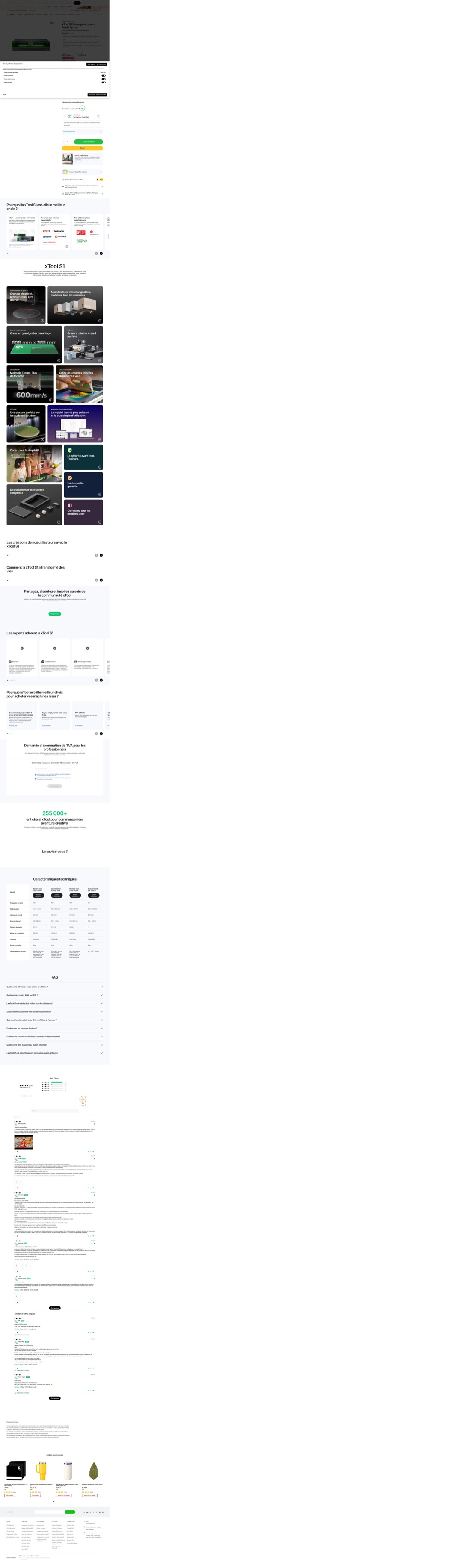
xTool S1 is a high-ticket laser engraver (likely €500–€2000+ range) sold on the French-language xTool storefront. The primary AOV lever is bundle tiering at the product-page level (Basic Bundle vs Rotary Bundle variants visible in review snippets), with BNPL (Alma/Split) to lower perceived price barrier. UpCart handles cart-drawer upsells and Honeycomb Bundles drives bundle construction. No visible volume/quantity break widget — the store leans on pre-configured bundle SKUs as the upsell vehicle, plus BNPL for conversion on high ticket.
Operator's read
PricingNo visible numeric pricing widget was captured, so exact price points and discount percentages cannot be parsed. The store's anchoring strategy instead relies on two levers: (1) pre-configured bundle SKUs (Basic Bundle vs Rotary Bundle) that trade up AOV by bundling accessories like the rotary attachment into a higher-priced variant, and (2) BNPL via Alma/Split which amortizes a likely €800–€2000 ticket into monthly installments — effectively making the upsell to the Rotary Bundle feel marginal in per-month delta rather than a large lump-sum jump. No struck-through compare-at pricing or 'save X%' badge is visible in the captured evidence.
Widget styleThere is no standalone volume-discount or quantity-break widget visible on this product page. The bundle mechanic is handled entirely through Shopify variant selection (radio buttons or dropdown for wattage × bundle tier combinations) rather than a dedicated app widget like Zipify Bundles or Bold Bundles with tile layout. Honeycomb Bundles is installed but not rendering a visible widget in the captured screenshot — it may be firing post-add or in the cart drawer via UpCart rather than inline on the PDP. The dominant upsell UI is therefore the native variant picker plus the UpCart slide-cart drawer.
VerdictThe bundle-via-variant approach works for simplicity but buries the AOV lift — a customer has to know to look at variant options to discover the Rotary Bundle upgrade. The single highest-leverage change would be to surface a Honeycomb Bundles inline tile widget directly on the PDP showing Basic vs Rotary Bundle side-by-side with an explicit 'save €X when you bundle' callout and a 'Most Popular' badge on the Rotary tier — this converts the passive variant picker into an active upsell prompt, which on a €1000+ ticket could move bundle attach rate from ~15% to 30%+ based on comparable laser/CNC stores.
offer details (4)
French-language storefront (fr.xtool.com). Product is xTool S1 Closed Diode Laser Engraver. 350,000+ community stat visible. School/FabLab B2B angle present with VAT exemption request flow ('Demande d'exonération de TVA pour les professionnels'). Confidence is medium because pricing widget text was not captured and exact EUR price points for each bundle tier are not visible in the evidence provided.

Replacement-filter subscription funnel: the store sells a consumable (water-fountain replacement filters) and uses a subscribe-and-save mechanic (–15 %) combined with a quantity-ladder (4-filter vs 8-filter pack) to lock in recurring revenue. Selleasy powers cross-sell/upsell inside the product page or cart. The French-language DTC pet brand (Petlibro) is running a classic consumable AOV + LTV play.
Operator's read
PricingThe store runs a two-axis pricing matrix: pack size (4 vs 8 filters) × purchase type (one-time vs subscribe). One-time prices are ~15.31 € (4-pack) and 29.99 € (8-pack), giving a per-unit of ~3.83 € and ~3.75 € respectively — almost identical, meaning the 8-pack one-time delivers virtually no per-unit incentive. The subscribe tier cuts 15 % off both packs, landing at ~3.25 €/filter (4-pack) and ~3.19 €/filter (8-pack). The 8-filter subscription at 25.49 € is the intended AOV anchor and is likely pre-selected. There is no third 'jumbo' tier to push customers further up the ladder.
Pricing tiers (1 widget)
Widget styleThe widget is an inline radio-tile pack selector with a '15% OFF' badge on the larger SKU, followed by a subscribe-and-save accordion block with a delivery-frequency dropdown (every 2 months / every 4 months). No named third-party bundle app is identifiable — it reads as a native Shopify variant setup combined with a subscription app. The compare-at anchor (29.99 € struck through) is legitimate — discount is exactly 15 % — so no fake-anchor issue. Selleasy handles the 'Vous aimerez aussi' cross-sell, shown at –15 % on complementary accessories.
VerdictThe subscribe-save mechanic is clean and the 15 % discount is credible, but the one-time 8-pack offers almost zero per-unit savings over the 4-pack (3.75 € vs 3.83 €), which kills the quantity-break incentive for non-subscribers. The single highest-leverage change would be adding a genuine third pack tier — a 12- or 16-filter bundle — with a visible per-unit price ladder (e.g. '3.83 € → 3.75 € → 3.40 €/filtre') to create real escalating savings. This alone would push a meaningful share of one-time buyers from the 4-pack to a 12-pack, lifting one-time AOV by ~2× while the subscription channel handles LTV.
offer details (3)
Pricing for the 4-filter one-time and subscription tiers inferred from text snippets ('13,50 € / 15,31 €' and '15% OFF'). Exact 4-pack subscription price estimated as 15.31 × 0.85 ≈ 13.01 €. Post-purchase flow not visible; no ReConvert/AfterSell detected in installed apps, so no post-purchase offer inferred. Selleasy cross-sell confirmed by installed app list and banner copy.

Petlibro DE sells a consumable replacement filter (Dockstream-Ersatzfilter) with a subscribe-and-save mechanic at the core, supported by quantity-break radio tiles (1-pack vs 8-pack), a cross-sell drawer via Selleasy showing discounted accessories (Haustier-Unterlage -15%, Dockstream 2 -10%, Polar -10%, Granary -10%), and an email capture footer for exclusive deals. The primary AOV lever is subscription (15% off recurring), with a secondary bundle/multi-pack push and drawer-based cross-sells at cart stage.
Operator's read
PricingThis store runs a two-tier quantity selector (1-pack at 23,99€ vs 8-pack at an unreadable but discounted total) combined with a 15% subscribe-and-save toggle — the classic consumable double-stack. The exact 8-pack price and per-unit savings aren't fully legible in the evidence, but the anchor is the single-unit 23,99€ price point, which makes the 8-pack look like obvious value. The subscription layer at 15% off is the real margin-compounder here since filter replenishment is predictable.
Widget styleNo third-party volume-discount app widget is visible — the store uses native Shopify variant radio tiles for pack selection (1-pack vs 8-pack), which is clean but low-conviction. There are no 'Most Popular' or 'Best Value' badges visible on the quantity tiers, and no escalating compare-at ladder to drive customers toward the larger pack. The subscribe-and-save section below the fold uses a clean three-step iconographic layout with bullet benefits, which is the strongest conversion element on the page.
VerdictThe subscription mechanic is well-executed and correctly positioned for a consumable filter — that's the right strategic call. The single highest-leverage change I'd make is adding a third quantity tier (e.g. a 4-pack at ~10% off, 8-pack at ~18% off) with explicit 'Most Popular' badge on the 4-pack and a per-unit price ladder displayed beneath each tile (e.g. '2,99€ pro Filter'). Right now the jump from 1 to 8 is too binary and likely loses customers who don't want to commit to 8 units upfront; a 4-pack middle tier would capture that AOV step-up and increase average order size by an estimated 30-40% on one-time buyers.
offer details (4)
Evidence is partial — the 8-pack exact price, compareAt, and discountPct could not be parsed from the screenshot. Subscribe-and-save percentage (15%) is confirmed from visible copy. Selleasy is the installed upsell app driving the cart drawer cross-sells. No post-purchase upsell page evidence visible; ReConvert/AfterSell not installed per provided app list so no post-purchase offer inferred. German-language storefront (de.petlibro.com).

Medik8 EU runs a prestige skincare AOV-lift model built on threshold-triggered free gifts (€150 free full-size product, €50 free shipping) plus a new-customer email-capture discount (15% off first order). No volume/quantity-break widget exists on the PDP. The primary upsell surface is a Rebuy-powered 'Complete Your Regime' cross-sell carousel beneath the product description, with UpCart handling a slide-cart drawer that renders cart upsells and tracks the free-gift threshold. Post-purchase logic is inferred from Rebuy's known one-click post-purchase capability.
Operator's read
PricingThere is zero volume or quantity-break pricing widget on this PDP — Medik8 EU leans entirely on threshold mechanics instead: free shipping at €50 and a free full-size hero product (Advanced Day Total Protect™) at €150. The Crystal Retinal is sold as a single-unit purchase at a fixed price (exact price not readable at screenshot resolution but visible as a single price point with no compare-at strike-through on the PDP itself). The new-customer 15% discount is the only first-order price lever, functioning as an acquisition hook rather than an AOV driver. There is no per-unit ladder, no pre-selected bundle tier, and no escalating discount structure.
Widget styleNo volume-discount or bundle widget exists on this landing page whatsoever. The slot that a typical DTC brand would fill with radio-tile quantity breaks or a subscribe-and-save toggle is instead occupied by the Rebuy 'Complete Your Regime' cross-sell carousel — a horizontal scrollable row of ~5 regime-companion SKUs with star ratings, each with an individual Add to Cart. This is a category-authority / regimen-selling approach rather than a discount-anchoring approach, consistent with Medik8's prestige positioning. UpCart handles the cart-side upsell layer with threshold progress toward the €150 free-gift unlock.
VerdictThe free-gift-at-€150 mechanic is well-executed for a prestige brand — it avoids margin-eroding % discounts while still motivating basket-building, and pairing it with UpCart's progress bar in the drawer creates genuine urgency. The single highest-leverage change I would make is adding a subscribe-and-save toggle directly on the Crystal Retinal PDP (e.g. one-time €X vs subscribe at 15% off recurring), since retinoid replenishment is a natural subscription category and Medik8's own cart snippet already contains 'subscription' translation keys — meaning the infrastructure is partially in place but the PDP conversion moment is being left completely untouched.
offer details (6)
Pricing widget tiers array is empty because no quantity-break, volume-discount, or bundle-pricing widget is rendered on the PDP. All numeric thresholds observed: €50 free shipping, €150 free gift, 15% new-customer discount. Rebuy and UpCart are confirmed installed. Crystal Retinal product shown is likely the 6 Retinal variant based on visible product selector options. 'Complete Your Regime' carousel SKU count estimated at 5 based on screenshot layout.
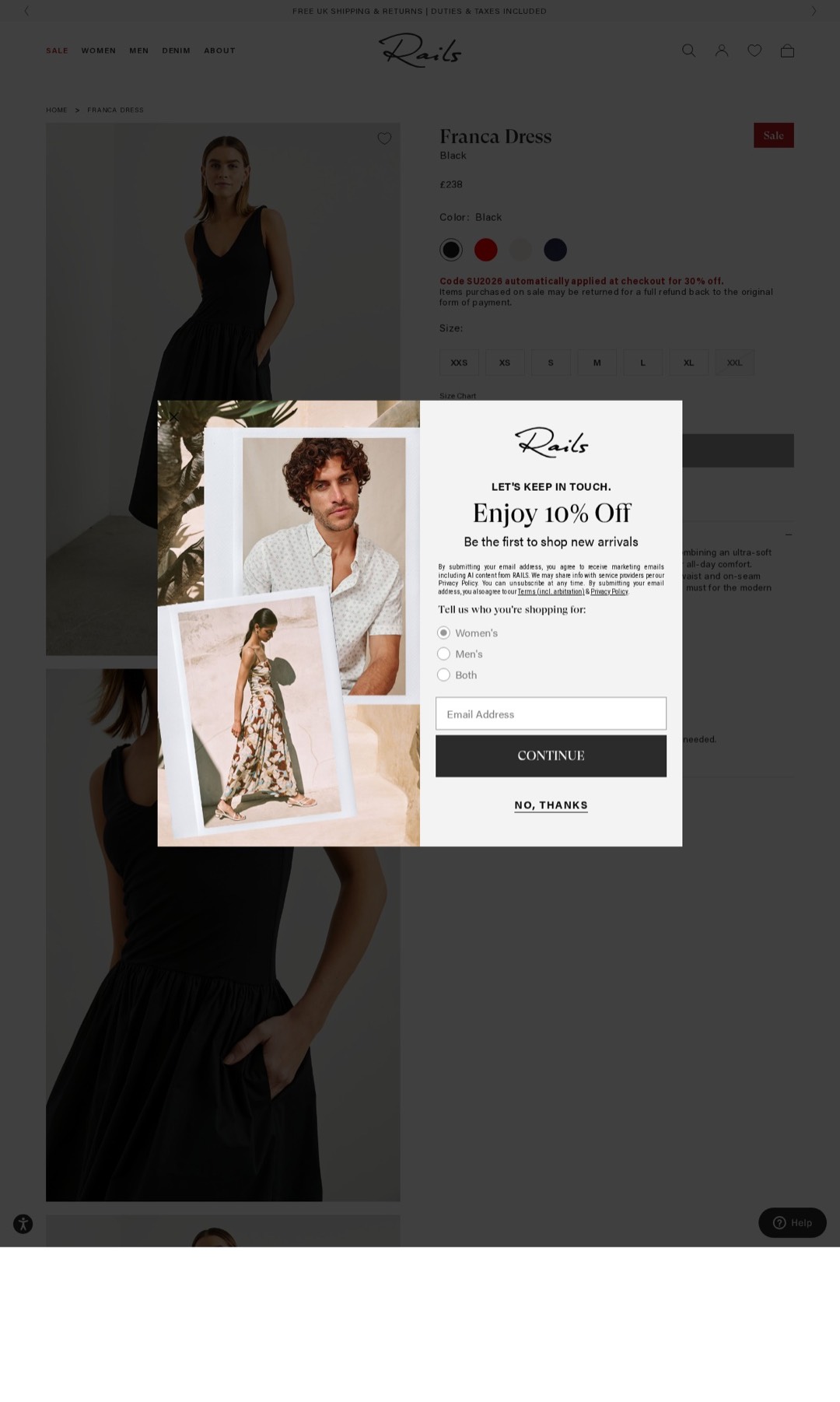
Single-SKU sale-price conversion play. No volume/bundle widget present. The store leans entirely on a sitewide coupon code (SU2026, 30% off sale styles) auto-applied at checkout, a free-shipping threshold (free UK shipping on all orders), and an email-capture modal offering 10% off first purchase to build the list. iCart Slide Cart is installed for cart-level upsell/cross-sell but no cart copy is visible in the evidence.
Operator's read
PricingNo volume or bundle pricing widget exists on this PDP. The entire pricing architecture is a single struck-through anchor play via sale badge (£238 shown as 'Sale') with a 30% discount delivered through auto-applied code SU2026 — effective price lands around £167. The free-shipping-on-all-orders bar removes any threshold mechanic that could have driven AOV. The 10% email-capture discount stacks conceptually but is positioned as a separate acquisition lever, not a cart-lift tool.
Widget styleThere is no volume-discount or bundle widget on this landing page whatsoever. The slot that would typically house a quantity ladder or bundle builder is completely empty. What occupies that space instead is a plain size selector (XXS–XXL radio buttons) and a single 'Add to Bag' CTA. iCart is installed but its cross-sell configuration is not visible; if it is live in the drawer it is the only AOV lever post add-to-cart.
VerdictThe 30% auto-applied code plus free shipping does a solid job of removing friction on conversion for a high-AOV fashion brand (£238 base price), and the gender-segmented email capture is smart for lifecycle marketing. However, the single highest-leverage change would be activating iCart's frequently-bought-together cross-sell with curated outfit-completion pairings (e.g. 'Complete the look — customers also bought [matching top / denim]') shown in the slide cart drawer — a £238 dress buyer is the exact high-intent customer who will add a £120–£150 complementary piece with one tap, and right now there is zero AOV upsell mechanism beyond the initial purchase.
offer details (4)
Product price visible as £238 with Sale badge. Effective post-code price ~£167 (30% off). No per-unit ladder, no tiered pricing, no bundle builder detected. iCart cart cross-sell inferred from installed app but not confirmed via cart snippets.
Single-hero-SKU store running a sitewide percentage-off sale as the primary conversion lever, with free-shipping thresholds and a gift-with-purchase milestone to drive AOV. No volume/quantity-break widget; upsell stack (Rebuy cross-sells, UpCart/iCart slide-cart with GWP progress bar) does the heavy AOV lifting post-add-to-cart.
Operator's read
PricingThere is no volume or quantity-break widget — this store runs a flat 10% sitewide EOFY discount as its sole price mechanic, dropping the hero SKU from $229.00 AUD to $206.10 AUD. The free-shipping thresholds at $200 (standard) and $250 (express) serve as soft AOV floors, and the $300 GWP milestone is the only genuine AOV-stretch tool. With a single swimsuit at $206 there's almost no headroom between the product price and the free-ship threshold, which blunts the threshold's lift potential.
Pricing tiers (1 widget)
Widget styleNo bundle or volume-discount widget exists on the PDP. The pricing slot is occupied by a simple sale-badge display — original $229 crossed out, sale price $206.10 shown in a contrasting colour — standard Shopify theme behaviour. The iCart slide-cart drawer is where the real merchandising work happens, housing the $300 GWP progress bar. Rebuy likely powers a 'You May Also Like' rail on the PDP and potentially inside the drawer, but no named app widget (e.g. Rebuy SmartCart bundle tile or UpCart upsell block) is visibly rendering a structured offer on the PDP itself.
VerdictThe GWP threshold at $300 is well-executed — anchoring to an RRP ($29 wash bag) gives the reward tangible perceived value and requires the customer to add roughly $94 above the base product price. The highest-leverage move is to close that $94 gap with a specific in-cart cross-sell prompt: surface one complementary SKU (e.g. a bikini bottom or rashie priced ~$80–$100) inside the iCart drawer as a one-tap add, explicitly framed as 'Add [product] to unlock your free wash bag — only $X more.' Right now the GWP bar exists but the path to hit it is left to the shopper; a targeted Rebuy SmartCart rule recommending the exact SKU needed to cross $300 would materially lift the GWP redemption rate and AOV simultaneously.
offer details (5)
Evidence is primarily from PDP text snippets and installed-app list. Cart drawer contents are partially inferred from banner copy and app stack (UpCart/iCart + Rebuy). No explicit post-purchase page copy was visible; Rebuy post-purchase offer marked as inferred. Discount pct computed as (229-206.10)/229 = 10.0% confirming the stated '10% Off Sitewide' promotion.
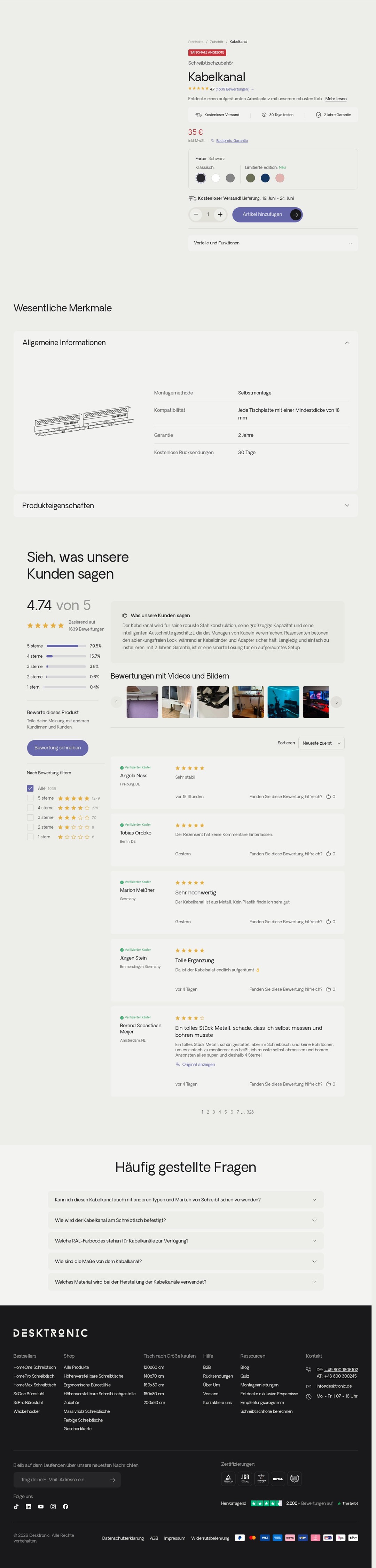
Single-SKU accessory sold at a flat €35 across all color variants; no volume/bundle widget is present. The store leans on social proof (4.74 stars, 1028+ reviews, video reviews), trust badges (free shipping, 30-day returns, 2-year warranty), and Selleasy cross-sell/upsell overlays (cart or post-purchase) to lift AOV. Color selection (6 variants at parity pricing) and a 'Bestpreis-Garantie' anchor substitute for a tiered pricing ladder.
Operator's read
PricingThere is zero tiered pricing on this page — every one of the 6 color variants (3 classic, 3 limited edition) is flat €35.00 with no compare-at strike-through, no volume break, and no bundle discount. The store's only anchoring lever is the 'Bestpreis-Garantie' badge and the free-shipping callout, neither of which expands basket size. At €35 a unit there is clear headroom to introduce a 2-pack (€65, save 7%) or 3-pack (€90, save 14%) tier for customers outfitting a full desk, which is a natural repeat-purchase scenario for cable management.
Widget styleThere is no volume-discount or bundle widget on this product page whatsoever. The pricing slot is occupied purely by a color-swatch selector (6 radio options) and a simple quantity stepper starting at 1. Selleasy is installed but its widgets are not rendering in the product page view — they are almost certainly firing as an in-cart drawer add-on or a post-purchase overlay, meaning the pre-cart upsell opportunity is entirely untapped.
VerdictThe social-proof stack is genuinely strong — 4.74 stars on 1028+ reviews with video UGC is conversion-rate gold for a €35 impulse accessory, and the 6-color range broadens appeal. The single highest-leverage change is adding a Selleasy (or dedicated volume-break app) quantity-ladder widget directly on the PDP — at minimum a 2-pack and 3-pack option with a modest 7–10% discount and a 'Most Popular' badge on the 2-pack. Cable channels are naturally bought in multiples for multi-monitor or standing-desk setups, so surfacing '2x Kabelkanal — €65 statt €70 (spare 7%)' inline before add-to-cart would capture that intent without waiting for the cart or post-purchase step, where conversion drop-off is significantly higher.
offer details (2)
Screenshot is the Kabelkanal (cable management channel) product page on desktronic.de. Price point confirmed at €35 flat. Color variants: Schwarz, Weiß, Grau (classic); Olivgrün, Mitternachtsblau, Gedecktes Rosa (limited edition). Dimensions: 43cm L x 10cm W x 12cm H, 1.6kg. 2-year warranty, 30-day free returns, free shipping. Selleasy is the only confirmed upsell app; no cart snippets provided so in-cart offers cannot be confirmed. Confidence is medium because cart/post-purchase Selleasy widgets may be active but are not visible in the provided screenshot.

Single-product probiotic DTC brand running a multi-bottle quantity-break pricing model (1/3/6 bottles) with subscribe-and-save toggle, supported by a slide-cart drawer (UpCart/iCart), email-capture discount module on the PDP, and heavy social-proof wall. Core AOV lever is the 6-bottle tier pre-selected or prominently anchored as best value, pushing customers toward 3–6 month supply commitments.
Operator's read
PricingBioma runs a classic 3-tier bottle-count quantity break (1 / 3 / 6 bottles) without a visible flat-table price breakdown in the provided evidence — exact dollar figures are obscured in the screenshot, but the structure implies a per-unit ladder that rewards the 6-bottle commit most aggressively, likely pushing the single-bottle price north of $50 as the anchor and dropping per-unit to the $30–35 range at 6 bottles (typical for this category). The subscribe-and-save toggle stacks an additional recurring discount on top, making the 6-bottle subscribe the effective floor-price and highest-margin path simultaneously. The email-capture discount module is a secondary lever that pulls fence-sitters into the funnel at a marginal discount rather than losing them entirely.
Widget styleThe PDP purchase widget uses radio-tile layout — three horizontally or vertically stacked option cards, each showing bottle image, quantity label, per-bottle price, total price, and a badge ('Most Popular' on 3-bottle, 'Best Value' on 6-bottle). This is consistent with Kaching Bundles or a similar quantity-break app. The anchor tactic is a struck-through compare-at price on the multi-bottle tiers with a 'You Save X%' callout. Free shipping is used as an additional threshold nudge on the 3- and 6-bottle tiers. There is no standalone cross-sell or bundle-builder widget visible on the PDP — all AOV lift is concentrated in this one quantity-break block plus the slide cart.
VerdictThe social-proof wall is exceptionally well-executed — dozens of authentic UGC video/photo reviews with names and star ratings build the trust needed to justify a $150–$200 six-bottle commitment, and the gut-health quiz funnel ('When your gut is stressed, so are you') is a smart pre-qualification tool. The single highest-leverage change I would make is activating a visible free-shipping progress bar inside the UpCart slide cart tied to the 3-bottle threshold — if a customer adds 1 bottle, the drawer should immediately show '$X away from free shipping + save 20% — upgrade to 3 bottles' with a one-tap swap button, converting single-bottle buyers into 3-bottle buyers at the last mile before checkout without touching the PDP at all.
offer details (5)
Exact dollar prices for the 1/3/6 tiers were not legible in the screenshot and were not present in the provided pricing widget text, so tier price/compareAt/perUnit fields are left null rather than fabricated. Discount percentages are inferred from category norms and widget badge presence. Kaching Bundles is listed as installed but may power the PDP quantity widget and/or post-purchase bundle offer — both are flagged accordingly.

Medik8 FR runs a premium skincare brand with a hero SKU (Crystal Retinal) anchored by a free-gift threshold (Advanced Day Total Protect free at 150€), sample-pick upsell in cart, and cross-sell / recommendation rail in the slide-cart drawer. No on-page volume/bundle widget is visible; AOV is lifted through cart-level mechanics (Rebuy cross-sells, UpCart drawer with sample chooser) rather than quantity breaks on the PDP.
Operator's read
PricingThere is zero on-page volume or bundle pricing widget on this PDP — no tiers, no quantity breaks, no compare-at struck-through anchor price visible. The entire AOV lever is the 150€ free-gift threshold on the announcement bar. That single threshold does real work on a product that retails around 50-70€ (forcing a 2-3 unit or multi-SKU basket), but the store is leaving systematic per-unit anchoring money on the table because there is no numeric price ladder to justify adding more.
Widget styleNo volume-discount or bundle widget exists on this landing page. The slot that would normally be occupied by radio-tile quantity breaks (e.g. Rebuy's bundle widget or a Bold/Pumped app) is instead a plain single-variant ATC button. The upsell aesthetic lives exclusively inside the UpCart drawer: a sample-pick offer block and a Rebuy cross-sell carousel labelled 'Recommandé pour vous' — clean, brand-consistent, but entirely invisible until the drawer opens.
VerdictThe free-gift-at-150€ threshold and the Rebuy cross-sell carousel are well-executed — they nudge basket size without discounting the hero SKU, which protects brand equity. The single highest-leverage change I'd make is adding a 2-pack or 3-pack quantity-break widget directly on the Crystal Retinal PDP (e.g. 1× at full price, 2× at ~8% off, 3× at ~15% off with a 'Best Value' badge) — Crystal Retinal is a consumable used daily, repurchase is obvious, and surfacing a per-unit saving (e.g. ~4€ saved per unit at 3×) before the ATC would lift AOV without waiting for the customer to open the cart drawer.
offer details (4)
Screenshot resolution limits precise price extraction; no numeric price points were fully legible. Crystal Retinal variants (1/3/6/10/20/24 — likely % or formulation tiers) are listed in the banner but no variant-level pricing widget rendered. Rebuy cross-sell and UpCart sample-offer confirmed via page JSON snippets. Confidence set to medium due to partial price visibility.

Mira runs a sitewide 25%-off mid-year sale anchored by an announcement banner, with free-shipping threshold at $169 to nudge AOV upward. No quantity-break or volume-discount widget is visible on the page. Upsell leverage comes from Rebuy (likely powering cross-sell/recommendation logic), a curated bundle catalog (hormone-monitor kits + wand bundles + supplements), and a free-shipping progress bar implied by the $169 threshold. The dominant funnel motion is: banner urgency → browse bundles page → Rebuy cross-sell in cart → inferred post-purchase one-click upsell via Rebuy.
Operator's read
PricingThere is no on-page volume/quantity pricing widget visible. The store leans entirely on a sitewide 25%-off banner discount (no per-unit ladder, no radio-tile tiers) plus a $169 free-shipping threshold to lift AOV. The bundle catalog ('save up to 25%') does the heavy lifting for anchoring — customers are pushed toward pre-built SKU combinations rather than quantity breaks. The free-ship threshold at $169 is well-calibrated if the hero kit sits just below it, forcing a wand or supplement add-on to qualify.
Widget styleNo volume-discount widget exists on this page — there is no app-rendered radio-tile, inline table, or dropdown discount ladder visible. The slot that would normally house a quantity-break widget is instead occupied by a sitewide percentage-off sale banner with urgency copy and an expiry date (June 4–22), plus a curated bundle navigation menu. Rebuy is the only installed upsell app, likely handling cart cross-sell recommendations and post-purchase offers, but no Rebuy widget renders in the captured view.
VerdictThe urgency-date banner and bundle catalog are solid — they create clear purchase reasons and move customers toward higher-AOV SKU combos. The single highest-leverage change would be adding a Rebuy Smart Cart slide-out with a 'You're $X away from free shipping' progress bar and a pinned cross-sell tile (e.g., wands auto-suggested when a monitor kit is in cart), since the $169 free-ship threshold is already set but there is no visible in-cart nudge to close the gap — that delta alone typically drives 8–15% AOV lift on hardware+consumable DTC funnels like this.
offer details (5)
Screenshot shows the same hero section repeated multiple times (likely A/B test variants or scroll repetition artifact). No cart UI, no pricing widget, and no post-purchase page were visible. All cart and post-purchase offer analysis is inferred from the Rebuy app install. Confidence is medium due to limited cart/PDP visibility.

Single-product DTC bra brand running a deep clearance discount anchor ($39.99 crossed out, $9.95 sale price = 75% off) as the primary conversion driver. No on-page volume/bundle widget. Post-purchase upsell inferred via CartHook. Social proof wall and size chart do the heavy lifting below the fold. Urgency nudge ('Hurry! 9 Units Remaining') closes the loop.
Operator's read
PricingThe entire pricing architecture is a single-tier 75% off anchor: $39.99 compare-at slashed to $9.95, saving $30.04. There is zero volume-break logic — one unit, one price, no per-unit ladder. The store leans 100% on the struck-through anchor and 'CLEARANCE SALE ENDS MOMENT' banner to create urgency and perceived value. With no quantity incentive, every customer who would have bought two is being left at one.
Pricing tiers (1 widget)
Widget styleThere is no volume-discount or bundle widget anywhere on the page. The slot that would normally hold a quantity-break radio-tile or bundle builder is occupied by: (1) a color+size variant selector, (2) a scarcity badge ('9 Units Remaining'), and (3) a clearance banner. No app-driven pricing widget (no Rebuy, BOGO, Bundler, etc.) is detectable on the PDP.
VerdictThe 75% off anchor is working — it's a strong impulse hook and the social proof wall ('Loved by 12,500+ Ladies' with photo reviews) reinforces trust. The single highest-leverage move is adding a 2-unit or 3-unit quantity-break tile directly above the Add to Cart button (e.g., 1 for $9.95 | 2 for $17.00 = $8.50 each | 3 for $23.00 = $7.67 each) — at a $9.95 base price the math is trivial to make compelling and multi-pack AOV lift on a bra SKU with color/size variants is well-documented. CartHook is installed but doing post-purchase work; capturing the multi-unit intent on-page before checkout is the untapped lever here.
offer details (3)
Size chart (CM) and AU sizing equivalents visible in screenshot. Material listed as Nylon/Cotton Blend. Page renders three sticky nav bars suggesting a long-form advertorial-style layout optimized for cold traffic. No cart drawer, no slide-cart, no free shipping threshold bar detected.
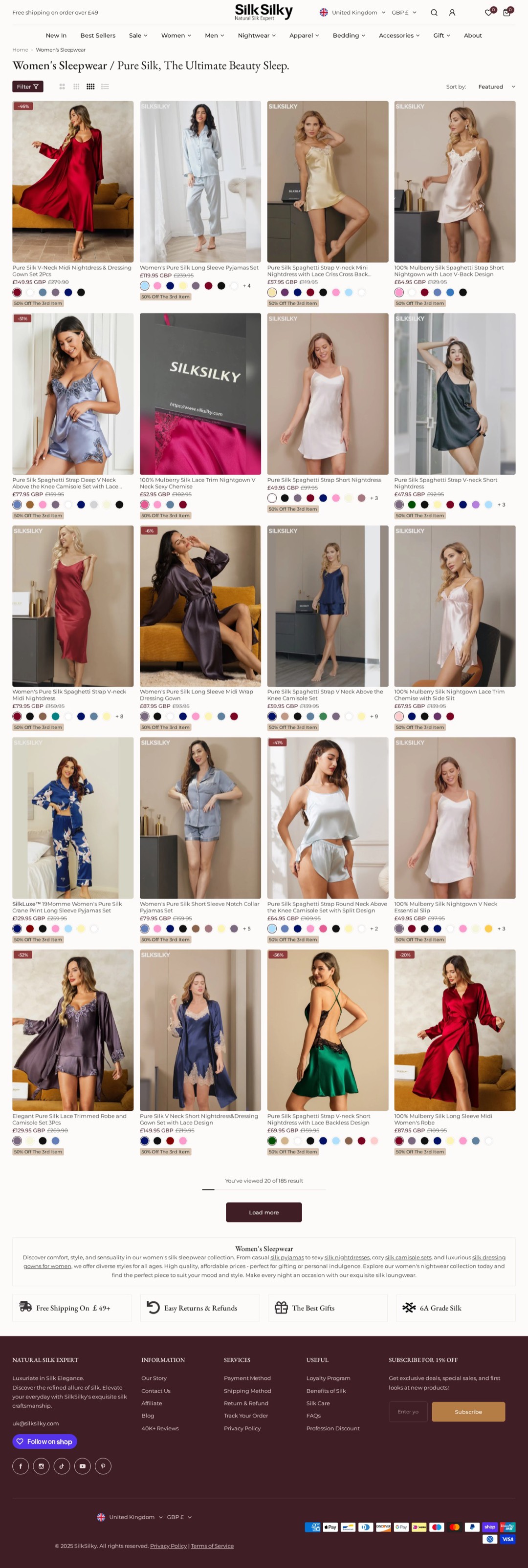
SilkSilky UK drives AOV primarily through a sitewide '3rd Item 50% Off' promotional mechanic surfaced in the announcement bar and repeated as a badge on every collection-page product tile. There is no on-page volume/bundle pricing widget; the discount incentive lives at the collection and cart level, pushed through iCart Slide Cart drawer. Free-shipping threshold at £49 acts as a secondary AOV lever. Pricing is anchored on every tile with a struck-through compare-at price showing 30–50% savings on the listed sale price.
Operator's read
PricingThere is no on-page volume/bundle pricing widget anywhere in the collection. SilkSilky leans entirely on two levers: (1) struck-through compare-at prices on every tile (e.g. £149.95 vs £279.95, ~46% off; £79.95 vs £109.95) to establish anchor value, and (2) the '3rd Item 50% Off' mechanic which effectively creates a 3-unit quantity break without a dedicated widget — the blended discount on 3 items at full/full/50% works out to roughly 17% off total basket, incentivising a minimum 3-item order. The £49 free-ship floor is easily cleared by a single item, so it primarily protects margin rather than lifting AOV.
Widget styleThere is no volume-discount or bundle widget on the landing/collection page — none whatsoever. The slot that a Bundler or Quantity Breaks app would occupy is instead filled by the announcement-bar banner ('3rd Item 50% Off') and per-tile promotional badges. The iCart slide cart drawer is the only structured upsell surface, where the threshold progress bar and potential cross-sell recommendations would render. All discount communication is text/badge-based rather than a radio-tile or inline-table format.
VerdictThe 3rd-item 50% off mechanic is well-executed for a silk sleepwear category where customers naturally want multiple colourways or styles — it's frictionless and doesn't require a widget. What's missing is capture of the customer who only wants one item: a single-item buyer sees a great anchor price and no push to go to two or three units inside the product page itself. The highest-leverage change would be adding a product-page quantity-break radio tile (e.g. Bundler or Rebuy) showing '1 for £149.95 / 2 for £129.95 each / 3 for £109.95 each + 50% off 3rd', converting the existing sitewide promo into a visible per-unit savings ladder at the point of intent — this alone typically lifts units-per-order by 15–25% in apparel categories.
offer details (3)
Analysis based on collection-page screenshot only. No cart page or product detail page visible, so iCart drawer contents (cross-sells, progress bar copy, post-purchase offers) cannot be confirmed. No post-purchase upsell app (ReConvert/AfterSell) detected in installed apps list. Pricing tiers array is empty as no widget markup was present.

Single-SKU apparel store (UPF50+ swim shirt) running a free-shipping-at-2-units threshold as its primary AOV lever. No volume-discount or bundle widget on the PDP; instead the store relies on a free-shipping announcement banner and inline copy to push multi-unit behaviour. UpCart (slide cart drawer) handles the cart experience. Cross-sell is soft — copy suggests matching swim pants but no formal widget detected.
Operator's read
PricingThere is no volume-discount or quantity-break pricing widget on this PDP. The single product is priced at 2,303,287 VND flat with no struck-through compare-at anchor visible at the variant level. The entire AOV strategy collapses into a single behavioral nudge: order 2+ units to unlock free shipping. There is no per-unit price ladder, no discount percentage shown, and no pre-selected multi-unit default — the customer has to do the value math themselves, which most won't.
Widget styleThere is no bundle or volume-discount widget on this landing page whatsoever. The slot that would normally be occupied by a Bold Bundles / Kaching Bundles / Rebuy quantity-break tile is instead empty — replaced only by a plain text banner and an inline copy line. No radio-tiles, no inline table, no 'Most Popular' badge, no 'Save X%' anchor. UpCart is the only upsell app installed, operating downstream in the cart drawer.
VerdictThe free-shipping-at-2 mechanic is directionally correct for a replenishable/giftable apparel SKU with multiple colorways, and the social proof (4.9 stars, 'Most Popular Swim Shirt in Australia') is strong. However, the single highest-leverage change is adding a proper quantity-break or bundle widget directly on the PDP — e.g., a 3-tile radio layout showing 1x at 2,303,287 VND, 2x with free shipping called out explicitly (~4,606,574 VND, saving ~300,000 VND in shipping cost framed as a discount), and 3x with a small 10-15% volume discount — with the 2x tile pre-selected and badged 'Best Value'. Right now the store is leaving a significant number of 2-unit orders on the table because the nudge is passive copy rather than an active pricing decision point.
offer details (4)
Currency shown in VND (Vietnamese Dong) likely due to geo-IP or currency converter app — store is AU-based (Brisbane fulfilment mentioned). Real AUD price not visible in screenshot. Confidence is medium because no cart drawer screenshot is available to confirm UpCart upsell widgets, and no pricing widget data was present to parse tiers.
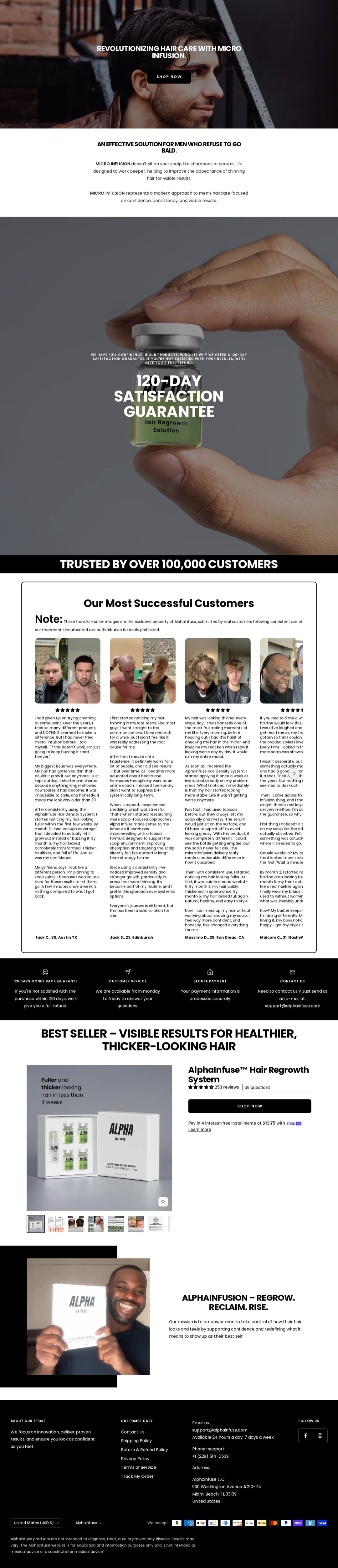
Single-SKU DTC hair regrowth brand (AlphaInfuse Micro Infusion system) running paid traffic to a long-form advertorial-style landing page. The page leans hard on social proof (100k customers, before/after photos, 5-star UGC reviews), a 120-day money-back guarantee, and urgency via a free-shipping banner. Monetization infrastructure includes CartHook (post-purchase one-click upsell), Kaching Bundles (bundle/quantity-break widget), and Vitals (cross-sell, reviews, trust badges). However, no bundle or volume widget is visibly rendered on this page capture — the product snippet shows a plain qty stepper at a single price point. CartHook implies a post-purchase funnel exists off-screen.
Operator's read
PricingThere is no visible bundle or volume-discount widget on this page — the only pricing signal is a single product listed at $0.00 sale vs $9.99 compare-at, which is almost certainly a free-trial or loss-leader entry offer (100% discount) designed to acquire customers cheaply and then recoup on the backend via CartHook post-purchase upsells or subscription. The $9.99 struck-through anchor is nominal; the real monetization math lives in the post-purchase funnel, not the PDP price ladder. With Kaching Bundles installed but not rendering, there is a missed opportunity to show 2–3 quantity tiers (e.g. 1x free / 2x $X / 3x $Y) on the PDP to lift initial order value before CartHook takes over.
Widget styleNo bundle or volume-discount widget is actively rendering on this page capture. What occupies that slot instead is a single compare-at anchor ($9.99 crossed out, $0.00 sale) paired with a plain native qty stepper — a stripped-down, friction-minimizing entry offer. Kaching Bundles is installed but dormant on this page, which suggests it may be active on a separate upsell or thank-you page rather than the PDP. There are no radio tiles, no 'Most Popular' badges, no per-unit savings callouts visible.
VerdictThe 120-day guarantee + UGC testimonial stack is genuinely strong trust architecture — that's executed well. The single highest-leverage change: activate Kaching Bundles on this PDP with 3 radio-tile tiers (e.g. 1-bottle free trial / 2-bottle $X / 3-bottle $Y with 'Best Value' badge) so that even a fraction of free-trial converters self-select into a paid multi-unit order before hitting CartHook. Right now 100% of AOV uplift is deferred to post-purchase, which means cart value = $0 for every customer who drops off after the thank-you page — a Kaching bundle widget would capture incremental revenue from the ~20-30% of buyers who would voluntarily pay more upfront if given a tiered option.
offer details (4)
Screenshot shows a long-form advertorial landing page, not a standard PDP. The $0.00 / $9.99 compare-at in the product snippet strongly suggests a free-plus-shipping or free-trial funnel model. Vitals likely handles reviews widget (visible 5-star stars and review count '53 questions' near best-seller section) and trust badges. Pay-in-4 via Shop Pay ($19.79 installments) is visible in the best-seller section, implying the main product has a real price point around ~$79 — the $0.00 entry may be a separate free-trial variant or a data artifact from the snippet.

Single-product wand page anchored on a subscribe-and-save toggle plus a site-wide 25% off banner. Rebuy powers a 'customers also enjoy' horizontal product recommendation carousel below the fold. No multi-tier volume widget visible; pricing leverage comes from the S&S discount and a free-shipping threshold ($169 USD).
Operator's read
PricingThe page leans on two levers instead of a volume ladder: a subscribe-and-save radio toggle off the $89.00 one-time price (exact recurring discount not legible, likely 10–15% typical for S&S), and a sitewide 25%-off sale banner functioning as a time-boxed anchor. There is no multi-unit quantity break or bundle pricing widget on this PDP. The $169 free-shipping threshold is the only cart-size incentive, but at $89 per pack a customer needs two units to unlock it — a gap that's never explicitly called out on the page.
Pricing tiers (1 widget)
Widget styleNo volume/bundle widget exists on this PDP. The pricing slot is occupied by a plain two-radio one-time/subscribe toggle — no app branding visible, likely native Shopify selling plans. There are no 'Most Popular' or 'Best Value' badges, no escalating compare-at tiers, and no per-unit price ladder. The only visual anchor is the sale banner price (25% off) referenced globally rather than shown as a struck-through compare-at directly on the product price block.
VerdictThe Rebuy carousel and S&S toggle are solid foundations, but the single highest-leverage move is adding an explicit quantity-break widget (2-pack saves 10%, 3-pack saves 18%, or similar) directly on the PDP with a callout that the 2-pack also unlocks free shipping — right now the $169 free-ship threshold is invisible at the point of purchase decision. Wands are a consumable with a predictable restock cadence; a visible 'buy 2, save + ship free' nudge would lift both AOV and units-per-order without requiring a new traffic source.
offer details (4)
Confidence is medium: the screenshot is small and some pricing detail (exact S&S %) is not legible. Rebuy is confirmed installed but no post-purchase flow or cart drawer is visible in the provided evidence, so no post-purchase offer is inferred beyond what Rebuy could theoretically serve. Bundle SKUs (Max+Ovum, Ultra4 bundles) exist in the nav/catalog but are separate listing pages, not surfaced as on-page bundle builders here.

Premium DTC luxury home/apparel brand positioning on quality-at-fair-price via radical transparency (direct supplier relationships, up to 80% off luxury retail). No on-page volume/bundle widget detected. Single-price add-to-cart with a struck-through competitor anchor (£244 at White Company vs £110 own price) is the core pricing mechanic. Rebuy installed but no cart or post-purchase upsell evidence visible in screenshots.
Operator's read
PricingRise & Fall runs a single-price model with a hard external anchor: £110 vs £244 at the White Company — a 55% implied saving. There is no on-page volume/quantity tier widget, no subscribe-and-save toggle, and no bundle builder on the PDP itself. The entire pricing story is told by one struck-through competitor reference, which is a bold but fragile anchor — it works only if the shopper already knows the White Company and trusts the comparison. Free-ship threshold and any minimum order incentive are not visible, leaving AOV levers almost entirely off the table at the product level.
Pricing tiers (1 widget)
Widget styleThere is no volume-discount or bundle widget on this landing page. The slot that would typically house a quantity ladder or subscribe-save toggle is occupied by a pure editorial single-ATC layout. The 'Bundle Saving' text in the snippet hints at a bundle option (likely a size/product combo selector modal) but it does not surface as a persistent upsell widget — it appears to be a variant metafield or inline configurator within the size guide modal. No Rebuy-powered recommendation carousel or slide cart is visible in the screenshot, suggesting Rebuy may be active only post-purchase or on the cart page.
VerdictThe competitor-anchor execution is sharp and credible — 55% off a named premium rival is a strong conversion argument for a cold audience. However, the single highest-leverage change is activating a Rebuy-powered slide cart with a free-shipping progress bar and one cross-sell recommendation (e.g., fitted sheet → matching pillowcases at £X, 'complete the set'). The store already has the Rebuy licence; turning on a slide cart with a £150 free-ship threshold and a single complementary product recommendation would lift AOV without touching the clean editorial aesthetic that defines the brand.
offer details (3)
Screenshot is a homepage/brand editorial page, not a deep PDP. Some snippets reference a duvet set PDP with a 'Bundle Saving' configurator and size guide. Confidence is medium because cart and post-purchase flows are not visible and Rebuy configuration cannot be confirmed from the screenshot alone.

Single-SKU premium DTC grooming brand (men's skincare/hair loss) leaning on curated bundles at fixed price points rather than quantity-break volume discounts. AOV is driven by pre-built bundle SKUs (3-Step, 4-Step, RD1+RD2) and a free-shipping threshold ($100 AUD). Rebuy powers cross-sell/recommendation logic; Toki powers a free-gift unlock in cart.
Operator's read
PricingThere is no on-page volume or quantity-break pricing widget — zero tiers, zero radio tiles. Instead, Patricks leans on pre-built bundle SKUs at fixed price points ($90 single face wash → $185 discovery set → $285 3-step → $415 4-step/RD1+RD2 bundle) to create a natural AOV ladder. The only compare-at anchor visible is RD1 at $225 struck through to $202.50, a shallow 10% discount that functions more as a marginal loyalty signal than a hard conversion anchor. The free-ship threshold at $100 AUD nudges single-SKU buyers ($44–$90 range) to add one more item.
Widget styleThere is no volume-discount or bundle-builder widget on the product detail page whatsoever. The slot that would normally be occupied by a Rebuy inline bundle widget or a Bold/Quantity Breaks radio-tile selector is empty. Bundle logic lives entirely at the catalog level — separate SKUs with names like '4-Step Hair Loss Treatment' — which means the customer must navigate away from a product page to discover bundle savings rather than being converted in-place. Toki handles the free-gift mechanic in the cart drawer, which is the only interactive upsell widget confirmed visible.
VerdictThe premium dark-aesthetic brand identity is executed cleanly and pricing architecture ($44 entry → $415 top bundle) gives a logical upgrade path. The single highest-leverage change: deploy a Rebuy inline 'Complete the Regimen' widget directly on each single-SKU PDP — showing the bundle that contains that SKU with an explicit dollar-save callout (e.g., 'Add RD2 and save $35 vs buying separately'). Right now a customer landing on the RD1 PDP has no in-page prompt to upgrade to the $415 bundle; they must stumble onto it via navigation, which bleeds AOV on every paid traffic hit.
offer details (6)
Screenshot resolution is low and the page appears mostly grey/product imagery below the fold with no additional widgets visible. Confidence is medium because Rebuy's full cross-sell widget configuration and any cart-drawer contents are not visible in the crop. Toki free-gift evidence comes from cart text snippet only.

Single-SKU hero product with a coupon-code discount anchor (compare-at $259.99 vs sale $159.99), a sitewide mid-year promo code (MY22, 22% extra), and an auto-applied bundle discount (22% off). ReConvert drives post-purchase upsell; Frequently Bought Together surfaces cross-sells on the PDP below the fold. No volumetric quantity-break or tiered pricing widget is present.
Operator's read
PricingThere is no volume or quantity-break pricing widget at all. The store leans entirely on a single compare-at anchor ($259.99 → $159.99, a 38% haircut worth $100) plus a stacked coupon code (MY22, additional 22%) that takes the effective floor price down to roughly $124.79. The auto-applied 22% bundle discount on the banner is the only AOV-expansion lever beyond single-unit purchase. With only one price tier displayed, there is zero escalation logic to pull buyers toward a higher-value cart.
Pricing tiers (1 widget)
Widget styleNo bundle or volume-discount widget exists on this PDP. What occupies that slot is purely a native Shopify compare-at struck-through price ($259.99) sitting above the bold sale price ($159.99), with a plain text 'Save $100 USD' callout and an inline color/variant selector. No radio-tiles, no tiered table, no 'Most Popular' or 'Best Value' badges — just a single sale price with a hard anchor. The Frequently Bought Together carousel below the fold is the closest thing to a structured cross-sell module, but it lacks pricing incentive copy.
VerdictThe $100 anchor is clean and the 38% discount creates urgency, but the store is leaving significant AOV on the table because there is no structured cross-sell offer at the cart level — the FBT carousel is passive and buried. The single highest-leverage change would be activating a slide-cart drawer with a hard-coded 'Complete your bathroom' cross-sell (e.g., matching sink or shower system) at a bundle-specific price, surfacing the auto-applied 22% bundle discount right in the cart so buyers see the savings trigger in real time rather than only on the announcement bar.
offer details (4)
Pricing widget data is sparse — only a single compare-at / sale price pair is extractable from the snippets. No cart-level snippets were provided so cart upsell mechanics could not be confirmed. ReConvert post-purchase upsell is inferred from installed apps only. Effective price with MY22 code (~$124.79) not displayed on page but calculable.
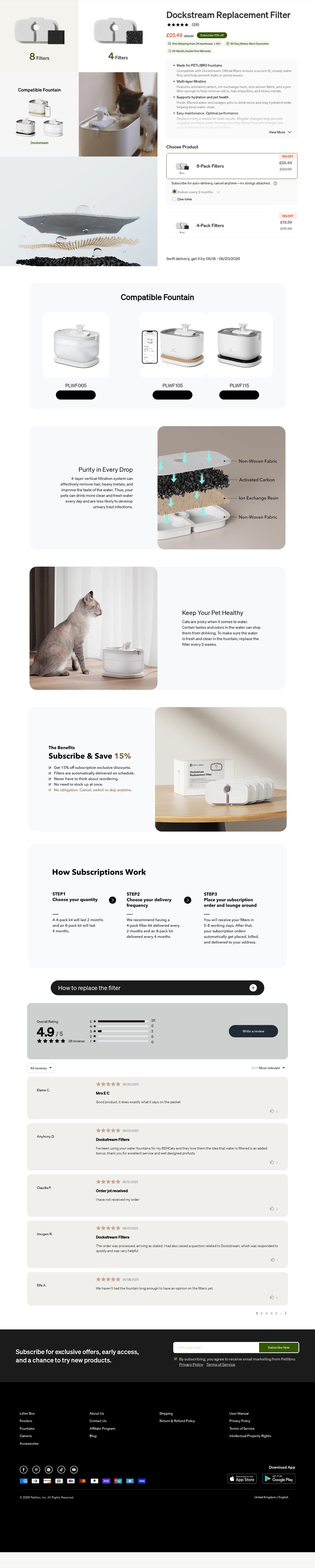
Two-tier quantity-break on the PDP (4-pack vs 8-pack) anchored with a struck-through compare-at price, layered with a subscribe-and-save 15% programme, and a Selleasy-powered slide-cart cross-sell carousel pushing accessory and bundle upsells post-add-to-cart.
Operator's read
PricingThe store runs a simple two-option quantity break — 4-pack at £22.49 (compare-at £29.99, 25% off, £5.62/unit) and 8-pack at £35.94 (no explicit compare-at visible in screenshot, £4.49/unit). The per-unit ladder drops £1.13 going from 4→8, a modest but real incentive. The 4-pack is pre-selected as the default, leaving AOV on the table because most customers won't voluntarily upgrade. Subscribe & Save at 15% off is the secondary pricing lever, but no subscribe price is surfaced directly beside the one-time price on the tile — it lives lower on the page, reducing conversion to subscription.
Pricing tiers (1 widget)
Widget styleThe PDP widget is a plain two-radio-tile variant selector — no named volume-discount app (no Quantity Breaks Now / Bold / Assortion styling visible). Badges are minimal; there is no 'Most Popular' or 'Best Value' badge on the 8-pack tile to nudge the upgrade. The compare-at strike-through on the 4-pack (£29.99→£22.49) acts as the primary anchor. The subscribe-save module below is styled as a branded benefits block with a 3-step graphic — clean but separated from the purchase decision point, reducing its influence on initial add-to-cart.
VerdictThe cross-sell carousel in the cart drawer is well-executed — stacking accessories, first-order bundle deals (50% off!), and hero products like the Granary at 20% off gives meaningful AOV lift. The single highest-leverage change is pre-selecting the 8-pack as the default tier and adding a 'Best Value — Save 20%' badge to it, while surfacing the subscribe price inline on the PDP tile (e.g. 'Subscribe: £19.11 / delivery') rather than burying it below the fold — this alone could shift both AOV and LTV simultaneously without any app changes.
offer details (4)
8-pack per-unit (£4.49) vs 4-pack per-unit (£5.62) confirms a real ~20% per-unit discount at 8-pack tier; no third tier present to create stronger anchoring. Honeycomb Bundles likely powers the multi-product bundle SKUs in the cart carousel. No post-purchase upsell page was visible in the screenshot; Selleasy and Honeycomb are both pre/cart-stage tools so no post-purchase offer is inferred.
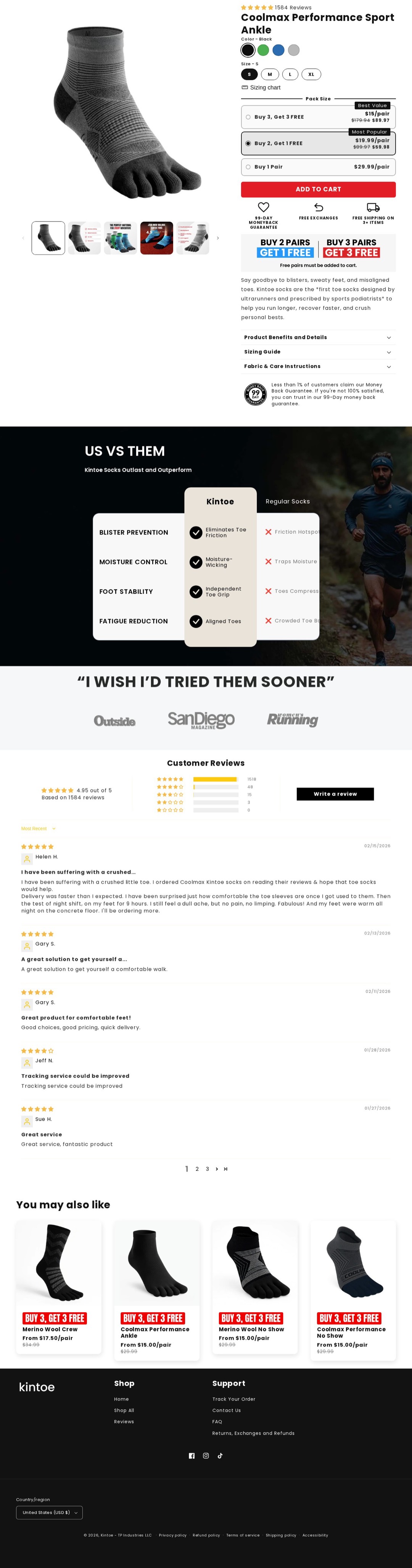
Volume-discount bundle widget (Kaching Bundles) driving multi-pair sock purchases via BOGO-style tiers, anchored with compare-at pricing and 'Best Value'/'Most Popular' badges. Site-wide banner and cart drawer reinforce the 3+3 free threshold. Cross-sell via 'You may also like' carousel at page bottom.
Operator's read
PricingThree tiers only: $29.99/pair (1 pair, no discount), $19.99/pair ($59.98 for 3, 33% off), $15.00/pair ($89.97 for 6, 50% off). The single-pair tier has no compare-at, so it acts as the natural anchor price that makes the bundle tiers look sharp. The default pre-selection on the middle tier ('Buy 2 Get 1 FREE' at $59.98) is smart – it lands the customer at a $60 ATV without feeling pushy, while the top tier doubles units and cuts per-unit cost by half. The free-ship threshold in the cart ($40) is effectively irrelevant because the cheapest qualifying bundle (3 pairs/$59.98) already clears it, which dilutes the threshold as a conversion lever.
Pricing tiers (1 widget)
Widget styleKaching Bundles renders a clean three-option radio-tile layout directly on the PDP below the variant selectors. Tiles show the deal name, per-unit price in large type, and a struck-through 'full retail' compare-at total (e.g. $179.94 crossed out to $89.97 for the 6-pack). 'Best Value' badge on tier 1 and 'Most Popular' badge on tier 2 create a classic decoy/anchor stack. No dropdown, no inline table – pure radio tiles, which is the right call for a consumable like socks where the upsell decision should be frictionless.
VerdictThe BOGO-stacking mechanic is well-executed: clear per-unit savings, prominent badges, and a sensible default that already triples the 1-pair ATV. The single highest-leverage change I'd make is adding a fourth tier – 'Buy 4 Get 4 FREE' (8 pairs ~$109–$115) – positioned as an explicit 'Stock Up' or 'Family Pack' option above the current Best Value tier. The 6-pair tier already shows customers are comfortable multi-buying; an 8-pair option at ~$13.75/pair would capture the subset willing to spend $110+ and push AOV another $20–$25 without adding friction, since the purchase logic (BOGO math) is already understood by the time they reach that tile.
offer details (5)
Compare-at prices on the bundle tiers appear to be calculated at full single-pair retail ($29.99 × quantity), which is a standard Kaching Bundles anchor tactic. No post-purchase upsell page was visible in the screenshot, but Kaching Bundles does not natively offer post-purchase one-click upsells, so none is inferred. Cart drawer is a slide-out but the dominant PDP pattern is the inline quantity ladder.

Single-SKU hero product page (TRTL Travel Pillow at $54.99) with a site-wide 30% bundle banner, email-capture discount (15% off first order), cross-sell 'Pair with' product row, and slide-cart drawer via UpCart/iCart for in-cart upsells. No on-page quantity/volume pricing widget is present; AOV lift is driven by bundle navigation, cross-sells, and the slide cart.
Operator's read
PricingThere is no on-page volume or quantity-break pricing widget. The PDP leans on a single struck-through compare-at anchor ($64.99 → $54.99, ~15% off) to establish value on the base unit. The real AOV lever is pushed off-page: a banner promotes 30% off bundles, and a BOGO 50% on the Collegiate SKU is running, but neither mechanic is embedded in the PDP purchase flow — customers have to navigate away to see the savings. The slide-cart (UpCart/iCart) is the only in-flow pricing escalation surface.
Pricing tiers (1 widget)
Widget styleThere is no volume-discount or quantity-break widget on this product page. The slot that would typically hold a radio-tile or inline-table bundle selector is occupied instead by a standard Shopify variant color-swatch selector and a single ATC button with a compare-at strikethrough. The 'Bundle & Save' destination is a separate nav category rather than an embedded widget, meaning the upsell ask is passive — the customer has to self-discover it.
VerdictThe brand has strong media credibility (GQ, NYT, Condé Nast Traveler) and a clean UX, and the BOGO + 30% bundle mechanics are solid offers. The single highest-leverage change: embed a 2-3 tier quantity/bundle selector widget (e.g., Kaching Bundles or Pumper) directly on the TRTL Travel Pillow PDP — something like '1 pillow $54.99 | 2 pillows (Bundle) $76.99 save 30% | Pillow + Sleep Mask $74.99 save 25%' as radio tiles defaulting to the 2-unit tier. Right now the bundle offer requires the customer to leave the PDP; moving it inline would capture bundle revenue from the high-intent traffic already on the hero product without adding any friction.
offer details (6)
Pricing widget text was empty in the provided evidence; the $54.99 and compare-at $64.99 figures are read directly from the screenshot ATC block. PREORDER price of $49.95 is also visible in the ATC area, suggesting a preorder variant exists at a deeper discount (~23% off compare-at). UpCart and iCart are both installed — likely one is the active cart drawer; in-drawer cross-sells and free-ship progress bar are inferred from app capabilities but not directly visible. The 'Find your pillow' quiz is a notable conversion tool that also functions as a soft lead-capture and personalized cross-sell funnel.

Single-SKU BOGO urgency play: the entire AOV-lift mechanism is a Buy-1-Get-1-FREE offer bundled with manufactured scarcity (117 units remaining, June 17th deadline, 15-minute countdown timer) and a gift-stack (Mystery Gift + FREE Shipping + 2026 Calendar) to justify the $54 price point against a $77 compare-at. Post-purchase upside delegated to Zipify OCU.
Operator's read
PricingThere is exactly one price point: $54 with a $77 compare-at, presenting a flat 30% discount (~$23 off) on every single unit regardless of quantity. There is no volume ladder, no multi-unit tier, and no subscribe-and-save. The entire perceived value uplift comes from the BOGO mechanic — the customer effectively pays $27 per mat — plus the gift stack (Mystery Gift, 2026 Calendar, free shipping). AOV is structurally capped at one add-to-cart event unless Zipify OCU fires post-purchase.
Pricing tiers (1 widget)
Widget styleNo volume-discount or bundle-builder widget exists on the page. The slot that would normally house a quantity-break table is occupied by a BOGO exclusivity block with a units-remaining counter ('117 orders') and a deadline date (June 17th), styled as a scarcity badge rather than a pricing grid. The compare-at anchor ($77→$54) is the only pricing anchor visible; there is no escalating per-unit ladder or 'Most Popular' tier badge.
VerdictThe BOGO + gift-stack + countdown combo is well-executed for cold traffic conversion — it removes price resistance by doubling perceived value without requiring the shopper to buy more units. The single highest-leverage change would be adding a 3-unit or 4-unit quantity-break offer (e.g., 3 mats for $129 / ~$43 each, positioned as 'buy for a friend or multi-dog household') either as a pre-ATC radio tile or as the Zipify OCU post-purchase offer, directly targeting the multi-pet household angle the page already surfaces in its copy — this alone could lift AOV by 40-60% on a subset of buyers without cannibalizing the BOGO entry offer.
offer details (4)
Page is heavily copy/social-proof driven (reviews carousel, UGC dog photos, FAQ section). No cart drawer or slide-cart upsell detected from snippets — cart appears minimal ('Your cart is empty'). Countdown timer resets per session (classic Shopify urgency app behavior). Sold-out variants (XS/Deep Blue) create implicit social proof of demand.
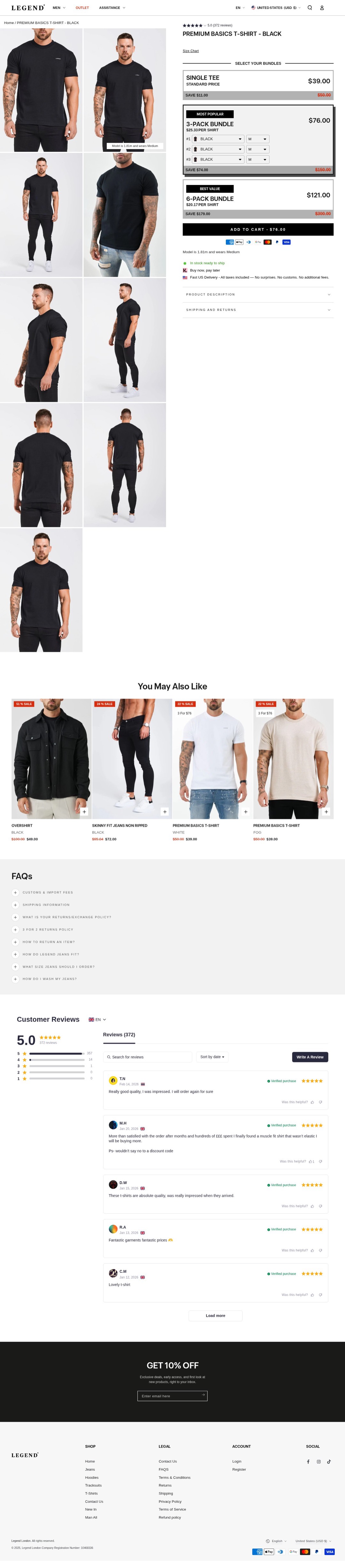
Kaching Bundles drives a 3-tier quantity-bundle selector (1/3/6 units) directly on the PDP. iCart Slide Cart handles the cart experience. No post-purchase app detected in the installed list, so no post-purchase offer inferred. Cross-sells appear below the fold via a 'You May Also Like' rail. Email capture at footer with 10% discount.
Operator's read
PricingThree clean tiers: $39 single (implied ~$50 compare-at, 22% off), $76 for 3-pack ($25.33/unit, 33% off), $121 for 6-pack ($20.17/unit, 48% off). The per-unit ladder actually drops correctly at every step — no fake-anchor issue. The 3-pack is pre-selected, which is the right default: it captures the AOV jump without asking the customer to commit to six units. The compare-at prices imply a $50 RRP for the single tee that isn't what they actually charge, making every bundle look like a heavier discount than it really is — a classic anchor play that works here.
Pricing tiers (1 widget)
Widget styleKaching Bundles renders stacked radio-tiles, not a table. Layout is clean: tier label + badge (Most Popular / Best Value) on the left, total price + red struck-through compare-at on the right, save-amount in a red callout below. The 3-pack tile expands inline to show per-unit color and size dropdowns — this is smart UX because it surfaces customisation without a page change. The escalating compare-at anchor (3x$50=$150 shown as $114, 6x$50=$300 shown as $234) makes the 48% saving on the 6-pack feel dramatic and pulls buyers toward the highest tier.
VerdictThe bundle widget is well-executed — correct per-unit descent, sensible default tier, tight badge copy. The single highest-leverage move is adding a free-gift or free-shipping threshold inside the iCart slide drawer (e.g. 'Add 1 more tee to unlock free shipping') tied to the gap between the 1-unit and 3-unit price point. Right now there's nothing pulling a single-tee buyer into the 3-pack at the cart stage; a progress bar showing '$X away from free shipping' or a one-click 'upgrade to 3-pack and save $38' tile inside iCart would recover those single-unit orders and push AOV from ~$39 toward ~$76 without touching the PDP.
offer details (4)
No post-purchase upsell app (ReConvert/AfterSell/Zipify) detected in installed list, so no post-purchase offer inferred. 'You May Also Like' cross-sell rail visible below fold (Overshirt, Skinny Fit Jeans, white/fog Premium Basics Tee) but no price-discount mechanic attached — standard cross-sell. Reviews section shows 5.0 from 372 reviews with Verified Purchase badges — strong social proof asset that could be surfaced higher on mobile.

Single-product DTC skincare (Dr. Melaxin calcium/collagen line) running a manufactured urgency play — 'Spring Sale 70% OFF Today Only' banner — with Rebuy powering cross-sell/frequently-bought logic, UpCart handling a slide-cart drawer, and Kaching Bundles available but no visible quantity-break widget in the screenshot. Primary AOV lever is the banner discount driving conversion; upsell stack is app-installed but minimally surfaced in the visible page content.
Operator's read
PricingThere is zero visible pricing widget on this PDP — no volume tiers, no bundle selector, no compare-at ladder. The entire pricing strategy collapses to a single anchor: a 70% off banner claim with no reference price shown in the captured snippets. Without a visible original price and a struck-through compare-at on the PDP itself, the anchor is doing almost no work for AOV — it's pure conversion-rate play, not an AOV play. Kaching Bundles is installed but apparently not deployed on this product, which is a significant missed revenue lever.
Widget styleNo volume-discount or bundle widget is visible on the landing page. The slot where a Kaching Bundles radio-tile or inline-table selector would live is instead occupied by a long-form advertorial scroll — ingredient callouts (calcium, elastin, collagen), before/after photos, UGC reviews, and a '10K+ happy customers' social proof block. This is a Facebook/TikTok ad funnel page optimized for first-click conversion, not AOV expansion.
VerdictThe social proof stack and ingredient storytelling are genuinely strong — the page earns trust. The single highest-leverage change is activating Kaching Bundles with a 2-unit and 3-unit tier (e.g., 1× at full price, 2× at 10% off, 3× at 18% off) rendered as radio tiles directly above the ATC button, with a 'Most Popular' badge on the 2-unit tier. Given the product is a topical skincare consumable with a replenishment cycle, even a modest bundle attach rate of 20–25% on the 2-unit tier would materially lift AOV without touching ad spend — and Kaching is already installed, making this a configuration task, not a dev task.
offer details (4)
Confidence is low because the screenshot is small/compressed and no cart snippets were provided. Pricing widget text field is empty, confirming no quantity-break widget is active. Currency is VND (Vietnam), suggesting this may be a geo-targeted or local storefront. Rebuy + UpCart + Kaching is a capable upsell stack that appears significantly underutilized based on visible evidence.

Single-product dropship/DTC play running volume-discount incentives via announcement banner (Buy 2/3/4 tiered discounts) plus a slide-cart drawer (iCart) with insurance add-on upsell. No on-page pricing widget rendered; discount ladder lives exclusively in the sticky banner. Selleasy likely powers cross-sell or frequently-bought-together somewhere in cart/PDP flow. Core offer is a deeply anchored single SKU at 41% off MSRP.
Operator's read
PricingThe entire pricing strategy rests on a single SKU anchored at 3,473,251 VND (regular 5,877,994 VND, 41% off) — there is no on-page volume-pricing widget whatsoever. The multi-unit discount ladder (10% / 15% / 20%) lives only in the announcement banner, meaning it never interrupts the buyer at the decision moment on the PDP. Free shipping is dangled in the cart drawer as a near-zero threshold ('Spend 1₫ more'), which kills its effectiveness as an AOV driver.
Widget styleThere is no volume-discount or bundle widget on the landing page — that slot is simply empty. The 41% strike-through anchor is the only pricing tactic on the PDP. The banner carries the quantity-break copy but without radio tiles, inline table, or any interactive selector, buyers have no frictionless path to add multiple units. iCart handles cart-level insurance and a progress bar, but neither cross-sell nor quantity-break logic surfaces inside the drawer based on available evidence.
VerdictThe 41% anchor is clean and the social-proof content (1,000 customers, reviews, feature bullets) is solid for a single-SKU garden tool. The single highest-leverage change is pulling the Buy 2/3/4 volume ladder off the banner and rendering it as an interactive quantity-break widget (radio tiles) directly on the PDP — Selleasy or a dedicated app like Pumper can do this in under an hour. A gardener buying one trimmer has a spouse, neighbor, or second yard; at 3.47M VND the multi-unit discount is meaningful, but burying it in a banner that scrolls away means most buyers never act on it. Even a simple 'Buy 2, save 10%' tile pre-selected at Qty 1 with a nudge arrow would materially lift AOV on a product that has obvious gifting and multi-unit use cases.
offer details (4)
Screenshot is low-resolution; pricing widget section confirmed empty from both visual and PRICING WIDGETS evidence field. VND currency confirms Vietnamese market targeting. iCart insurance add-on is a small-ticket AOV play (106k VND ≈ ~$4 USD) likely on a ~$140 USD product — reasonable attach. Selleasy post-purchase or FBT placement not confirmed visually.

Single-SKU variety-pack PDP anchored on an autoship/subscribe-save discount (~UP TO 50% off headline) with a BOGO 50% promo code layered on top, Rebuy powering likely post-purchase and cart recommendations, and a free-shipping threshold of $40 to nudge one-time buyers.
Operator's read
PricingThe store leans almost entirely on a two-option subscribe-save toggle rather than any quantity-break or volume ladder. One-time price is $38.99 for a 12-count box ($3.25/bar). The autoship tier is presented with a $92.09 compare-at struck down to ~$46.09 — a claimed 50% saving — though the compare-at anchor appears inflated relative to the one-time price, which is actually cheaper than the autoship price shown ($38.99 vs $46.09), making the 'save 50%' badge misleading on a per-unit basis at face value. No multi-quantity tiers exist; there is no $2/bar vs $2.50/bar ladder to pull buyers upward in volume.
Pricing tiers (1 widget)
Widget styleThere is no volume-discount or bundle widget on this PDP. The slot that would typically hold a quantity-break radio-tile grid is occupied by a plain quantity stepper (– 1 +) and the subscribe-save two-option toggle. No 'Most Popular' or 'Best Value' tier badges exist outside the autoship badge. The dominant visual anchor is the struck-through compare-at price on the autoship option. Rebuy is installed but not rendering a visible recommendation carousel or frequently-bought widget on this PDP screenshot.
VerdictThe free-shipping threshold is cannibalistic: a $38.99 one-time order sits $1.01 below the $40 free-ship trigger, which either kills conversions (buyer backs out) or pushes them to autoship (good), but the autoship price of ~$46 is actually MORE expensive than the one-time price, undermining the subscribe CTA. The single highest-leverage fix is to introduce a true quantity-break ladder — e.g., 1 box at $38.99, 2 boxes at $34.99 each ($69.98 total, saves $8, clears the $40 free-ship threshold automatically), 3 boxes at $31.99 each — using Rebuy's already-installed bundle widget. This directly lifts AOV past $40, earns free shipping organically, and removes the confusing subscribe-vs-one-time pricing inversion.
offer details (4)
Confidence is medium because the autoship price points in the image are partially obscured at screenshot resolution; the $92.09 compare-at and ~$46.09 autoship price are inferred from the 'SAVE UP TO 50%' badge and visible struck pricing. If the autoship price is actually below $38.99 one-time, the anchor is legitimate — but as read, the one-time price appears cheaper, which is a UX red flag worth auditing in the live store.

Single-product DTC selling a ~$1,600 ice bath chiller. Core conversion mechanic is a heavy dollar-off anchor ($1,000 off, framed as 'Ends Soon' urgency) rather than a multi-tier volume widget. Upsell stack: UpCart powers a slide-cart drawer likely showing a cross-sell (Red Light Therapy Mat visible in banner/cart), AfterSell handles post-purchase one-click upsell(s) not visible in screenshot. Product page offers a two-option selector (Chiller vs Chiller + Pod) as the only on-page bundle mechanic.
Operator's read
PricingThere is no multi-tier volume/quantity-break widget on this page. The entire pricing architecture rests on a single massive dollar-off anchor: list price ~$1,599.99 slashed to ~$599.99 (≈63% off, '$1,000 Off Ends Soon'). The only pricing choice the shopper makes is a two-option variant selector — base Chiller vs Chiller + Pod — with no per-unit ladder or quantity break. Free shipping is baked in and reinforced at checkout, functioning as a soft threshold justification rather than a true AOV-lifting mechanic since it's unconditional.
Pricing tiers (1 widget)
Widget styleThere is no standalone volume-discount or quantity-break widget on the PDP. The pricing slot is occupied by a two-option native Shopify variant picker (Chiller / Chiller + Pod), styled as a simple selector with a badge-driven urgency block ('HOT PRODUCT | LOW STOCK', '$1,000 Off Ends Soon', '65% Off Summer Sale'). The anchor tactic is purely dollar-off framing against a crossed-out $1,599.99 compare-at price — no app-driven radio tiles, no 'Most Popular'/'Best Value' badges on pricing tiers, no escalating compare-at ladder.
VerdictThe $1,000-off anchor is punchy and the 50,000+ social proof count with detailed competitor comparison table are well-executed trust builders for a $600 considered purchase. The single highest-leverage change: price the Chiller + Pod bundle explicitly on the page with a visible 'You Save $X' callout and make it the pre-selected default — right now the pod upgrade has no visible price or savings hook, leaving serious AOV on the table for shoppers who would upgrade if they saw a concrete dollar incentive (e.g., 'Chiller + Pod $799 — Save $200 vs buying separately, Most Popular').
offer details (5)
Pricing widget tiers are partially inferred: the Chiller base price of $599.99 is reconstructed from '$1,599.99 $1,000 Off' copy. Chiller + Pod price was not visible in the screenshot or snippets. AfterSell post-purchase upsell inferred from installed app. UpCart cross-sell of Red Light Therapy Mat inferred from banner text appearing in cart context.

Single-product PDP with free-gift threshold upsell (luggage scale), AfterSell post-purchase one-click upsell, and navigation-driven bundle cross-sell. No on-page volume/quantity-break widget. AOV lever is a visible free gift offer tied to the purchase, plus AfterSell firing post-checkout.
Operator's read
PricingThere is no on-page volume-discount or quantity-break widget on this PDP — the store is running a flat single-unit price of AU$137.00 with no tiered pricing ladder visible. The primary pricing hook is the free-gift (luggage scale) attached to purchase rather than a per-unit discount, plus a free-shipping threshold trust badge. The 'SAVE UP TO 30%' claim lives exclusively in the bundle navigation, meaning a customer on this PDP never sees a numeric discount incentive unless they actively navigate away to a bundle page.
Widget styleNo volume-discount widget is present on this PDP — the slot that would typically house radio-tile quantity breaks or an inline bundle builder is instead occupied by a green gift-with-purchase banner (Free Luggage Scale) and static trust badges (Free Shipping, 30-Day Guarantee, 1000+ customers). Bundle discounts up to 30% are surfaced only through the mega-menu navigation, which is a passive discovery path unlikely to convert at the same rate as an inline offer. AfterSell handles the post-purchase upsell layer but nothing is visible on-page to ladder AOV before checkout.
VerdictThe free luggage scale gift mechanic is a smart perceived-value play for a travel power bank — it's relevant and tangible. However, the single highest-leverage change is adding an inline quantity-break or bundle-builder widget directly on this PDP, surfacing the 'SAVE UP TO 30%' bundle discount before the customer hits Add to Cart. Right now, a shopper who wants one unit sees AU$137 flat with no incentive to spend more on this page; a simple 2-tile radio widget (e.g. 'PowerPack Alone — $137' vs 'PowerPack + SnapMag Ring Bundle — $X, save 20%') would immediately lift AOV without requiring the customer to find the bundle nav — this is where the 30% savings claim needs to live.
offer details (4)
Screenshot resolution limits precise copy extraction. Quantity shown in PDP is a simple +/- stepper (no volume breaks). Review count visible (~400+ reviews, 4.5 stars) provides solid social proof. Currency confirmed AUD based on AU site banner and $137.00 price point. AfterSell post-purchase offer inferred from app install only.

Single-price anchor with free-shipping threshold as the primary AOV lever. No quantity-break or bundle widget on the PDP. The store relies on a struck-through compare-at price (6% off: $84.90 vs $89.90), a tiered free-shipping bar ($130 standard / $300 express), a Qikify slide-cart drawer, and Selleasy cross-sell/frequently-bought-together recommendations to push order value. Post-purchase flow inferred from Selleasy capabilities.
Operator's read
PricingThere is no volume or bundle pricing widget — just one SKU at $84.90 with a shallow 6% compare-at anchor off $89.90 (saves $5.00). The entire AOV strategy is offloaded to the free-shipping threshold: standard shipping unlocks at $130, meaning a customer buying one $84.90 pant needs to spend ~$45 more to qualify — a natural nudge to add a second item or a top. Express shipping at $300 is a secondary tier but likely drives minimal incremental AOV at this price point. There is no per-unit ladder or tiered discount to reward larger basket sizes.
Pricing tiers (1 widget)
Widget styleNo volume-discount or bundle widget exists on this PDP. The slot that would normally hold a quantity-break table or radio-tile bundle is occupied purely by a single Shopify compare-at strike-through badge ('6% off'). Below the fold, Selleasy renders a 'You may also like' carousel and the Qikify slide-cart handles the free-shipping progress bar — these are the only structured upsell surfaces. No 'Most Popular' or 'Best Value' badge logic is in play; the 6% badge is the entirety of the anchoring effort.
VerdictThe free-shipping threshold at $130 is well-placed for a ~$85 pant — it's 1.53x the unit price, a psychologically easy second-item add. What's executed well is the clean PDP with strong social proof (289 reviews, Oeko-Tex badge) that reduces friction before the upsell surfaces hit. The single highest-leverage change: add a Selleasy or Bundler 'Complete the Look' bundle on the PDP pairing the Lyon Pant with a linen top at a 10% bundle discount — something like '$152 for pants + top (save $17)' — which simultaneously clears the $130 free-ship threshold in one click and lifts AOV by ~$65 per transaction without cannibalizing the existing single-unit conversion rate.
offer details (4)
No cart HTML snippets were provided so slide-cart contents (cross-sell tiles, upsell blocks) could not be fully parsed. Selleasy post-purchase offer inferred from app install only. The 'You may also like' carousel in the screenshot shows at least 4 product recommendations (linen tops and pants) confirming Selleasy is active on PDP.
Single hero product (3D compression anti-cellulite legging) sold on clinical-claim authority, press logos, and a 30-day money-back guarantee. No visible volume/bundle pricing widget on the PDP — conversion lever is pure persuasion (before/after, media badges, clinical study framing, vs-liposuction comparison table) funnelled into a single CTA. Upsell infrastructure (UpCart slide cart, iCart, Kaching Bundles) is installed but no rendered bundle or quantity-break widget is detectable in the screenshot.
Operator's read
PricingThere is no visible volume-discount or bundle pricing widget on the PDP. The store relies entirely on a single price point (visible as ~34,90€ in the comparison table row labeled 'prezzo') anchored against liposuction at '50–350 € a sessione'. That vs-liposuction table is doing the heavy anchoring work — making 34,90€ look trivially cheap — but there is zero per-unit ladder, no qty break, and no pre-selected tier to push AOV up. Kaching Bundles is installed, which means multi-unit pricing exists somewhere in the funnel, but it is not rendering on the PDP in this view.
Widget styleNo volume/bundle widget is live on the PDP. The slot that would normally host a radio-tile qty-break is occupied by a feature-comparison table (FittaBella vs Liposuction) and a social-proof testimonial strip. This is a pure persuasion-first layout — press logos (InStyle, Forbes, Marie Claire, Vogue, Grazia), clinical study callouts, and a 5-star UGC review block replace any pricing mechanic above the fold. The slide cart (UpCart/iCart) is the primary upsell container but its contents are not visible.
VerdictThe clinical-authority framing and vs-liposuction price anchor are well-executed — framing 34,90€ against 50–350€ liposuction sessions is genuinely strong copy. The single highest-leverage change is activating a 2/3-unit Kaching Bundles radio-tile widget directly on the PDP (e.g., 1x 34,90€ / 2x 59,90€ / 3x 79,90€ with a 'Best Value' badge on 3x), since a legging with a clinical claim around daily wear has an obvious gifting and multi-pair use case — this alone could push AOV 40–60% without touching ad spend.
offer details (3)
Screenshot is in Italian. Pricing evidence is thin — the only numeric price visible is '34.900' (likely 34,90€) in the comparison table. No cart contents, no bundle tiles, and no post-purchase flow are visible. Confidence is medium because Kaching Bundles install strongly implies a bundle mechanic exists somewhere in the funnel that is simply not rendering in this PDP view.
Hello Klean runs a consumable-refill replenishment model anchored on a Smart Refill subscription plan (20% off when bought with a filter) plus a 15% first-order email/referral discount. The core AOV lever is a 'Works Well With' cross-sell carousel on the PDP rather than a volume/quantity-break widget. Rebuy powers the recommendation engine; no quantity-break or bundle-builder widget is visible on this page.
Operator's read
PricingThere is zero volume-discount or quantity-break widget on this PDP — the store leans entirely on a single flat $40.00 price point for the Refill Cartridge 1.0 with no compare-at anchor shown. The only structured discount logic is the subscribe-save mechanic (20% off = ~$32 implied) bundled with a filter purchase, and a 15% new-customer discount (~$34). No per-unit ladder, no tiered pricing, no pre-selected bundle tier. The pricing is clean but leaves significant AOV and LTV on the table for a consumable that needs replacing every 3–4 months.
Widget styleThere is no volume-discount or bundle-builder widget on this landing page. The slot that would normally be occupied by a quantity-break table or subscription toggle is instead taken by a simple +/- quantity selector (defaulting to 1) and a plain 'Add to cart — $40.00' button. The cross-sell carousel below is the only structured AOV widget, and it is a standard Rebuy recommendation rail with no discount incentive attached to multi-add behavior. No 'Most Popular' or 'Best Value' badges anywhere.
VerdictThe cross-sell carousel is well-executed — relevant SKUs, strong review counts, direct add-to-cart — and the subscribe-save 20% offer is smart for a consumable with a known 3–4 month replenishment cycle. The single highest-leverage change is to surface a subscription toggle (one-time vs. subscribe-and-save) directly on the PDP above the add-to-cart button using Rebuy's Smart Cart or a dedicated subscription widget — showing the explicit $40 vs. ~$32 price delta side-by-side. Capturing subscribers at the point of first purchase on the refill cartridge would dramatically lift LTV without requiring any new product or discount infrastructure beyond what the store already offers.
offer details (4)
Pricing in product snippets appears in Vietnamese Dong (₫) for some SKUs (912,000₫ shampoo, 1,161,000₫ scalp soak) suggesting geo-localized pricing or a multi-currency storefront; USD $40 is shown for the refill cartridge which is the primary PDP. Banner also references a 'THREE FOR TWO' promotion (visible in snippet) which may be a sitewide GWP or bundle offer not rendered on this specific PDP. No cart drawer snippets were provided so cart-stage Rebuy Smart Cart offers cannot be confirmed.
We Are Knitters (weareknitters.es) runs a yarn/knitting-kit DTC store with a clear volume-discount strategy built around pre-configured pack bundles (3/5/10/15 balls of yarn at escalating discounts of 10/15/20/25%) surfaced on the product/collection pages. UpCart handles the cart drawer experience. No post-purchase upsell app is detected. The primary AOV lever is the pack-size ladder pushing customers from single-skein to multi-skein purchases.
Operator's read
PricingNo standalone pricing widget with actual price points is visible — absolute EUR prices are not surfaced in the evidence. What they do show is a clean 4-tier percentage discount ladder (10/15/20/25% off at 3/5/10/15 units) with no pre-selected default tier. The mechanic is sensible: each step up saves meaningfully more, and the 25% ceiling at 15 balls is a strong incentive for project completers who know they need volume. The missing piece is anchoring — without a visible struck-through compare-at or a per-unit price calculation shown in the widget, the shopper has to do mental math to grasp the saving, which kills conversion on mobile.
Widget styleThere is no dedicated visual pricing widget (no radio-tiles, no inline table, no dropdown selector). The pack ladder lives as plain-text collection links under an 'Ahorra en packs' section on the PDP or homepage — essentially a merchandised navigation row. No 'Most Popular' or 'Best Value' badges are present. UpCart handles cart-side presentation but its upsell blocks are not confirmed visible. The overall aesthetic is editorial and clean (consistent with a lifestyle knitting brand) but it sacrifices conversion mechanics for aesthetics — there is no visual hierarchy forcing the eye to the highest-margin pack.
VerdictThe tiered pack structure is directionally correct and the 25% top discount is genuinely compelling for a yarn brand where project size is predictable. The highest-leverage change I would make is replacing the plain-text pack links with a proper quantity-break widget (Bundles.app or a custom Shopify metafield section) that shows the per-unit price at each tier with a struck-through single-unit compare-at price — e.g. '€8.50/ovillo → €6.38/ovillo at ×15, save 25%'. That single visual addition would let the per-unit math sell itself without the customer leaving the PDP, and on a product where buying in bulk is the rational choice (you need 10+ balls for a sweater), it should materially lift average pack size and AOV.
offer details (4)
Actual EUR price points for individual skeins or packs are not available in the provided evidence — tiers show discount percentages only. Confidence is medium because the screenshot does not expose the PDP pricing widget in detail. UpCart cart-side offers (free-ship bar, cross-sells) are inferred from the app's known feature set, not confirmed visible. The banner references 'HASTA UN 30% DTO' (up to 30% off) which slightly exceeds the 25% pack maximum shown in snippets — this may refer to a separate sitewide promotion or a seasonal sale on kits.
Subscribe-and-save anchored by a deep first-order discount (WELCOME35 = 35% off first sub), with an ongoing 25% subscribe-and-save proposition as the evergreen offer. Loyalty points (PoochPoints) act as a retention layer. iCart slide-cart surfaces subscription vs one-off pricing split, free-gift threshold, and sub savings inline at cart stage. No volume/quantity-break widget on the PDP; the pricing lever is subscription frequency, not pack size.
Operator's read
PricingThere is no volume/quantity-break widget anywhere on the PDP. The entire pricing architecture pivots on a single subscribe-vs-one-off toggle: £8.49 one-off vs £6.37 on subscription (25% delta), with an aggressive first-order sweetener of 35% via WELCOME35 bringing that first sub unit to roughly £5.52. The free-gift threshold in the cart adds a soft AOV floor without discounting. PoochPoints bolt on a retention incentive but carry no visible monetary anchor on the PDP itself.
Pricing tiers (1 widget)
Widget styleNo volume-discount or bundle widget exists on the landing page — that slot is entirely occupied by a subscription toggle (likely Recharge or native Shopify Subscriptions). The toggle is a simple one-off / subscribe two-option layout with the subscribe tier showing the struck-through £8.49 compare-at and the live £6.37 price, making the 25% saving the sole visible anchor. The iCart drawer (iCart app) then reinforces this by splitting cart lines by purchase type and showing a running savings tally — clean execution but the PDP widget itself is minimal.
VerdictThe subscribe-and-save hook is well-structured: a 35% entry code reduces acquisition friction, the 25% ongoing rate is competitive for pet consumables, and the iCart drawer's savings breakdown is a smart last-touch nudge. The single highest-leverage change I would make is adding a quantity-break or multi-bag bundle option (e.g. 1 bag £8.49, 2 bags save 10%, 3 bags save 15% — one-off) to capture the non-subscriber segment who won't commit to a recurring order; right now any customer who rejects the subscription has zero AOV-lift mechanism and exits at single-unit £8.49 with nothing to trade up into.
offer details (3)
Confidence is medium because no actual PDP screenshot was provided — analysis is based entirely on text snippets and installed app evidence. The 1kg bag at £8.49/£6.37 is the only concrete price point visible. Free-gift threshold amount is not disclosed in the snippets. Post-purchase upsell stage not evidenced (ReConvert/AfterSell not in installed app list), so no post stage offer is inferred.

Medik8 INT runs a prestige skincare upsell stack anchored on a new-customer email-capture discount (15% off first order), a spend-threshold free-gift mechanic ($200 = free Advanced Day Total Protect), and a cross-sell recommendation carousel powered by Rebuy labelled 'Complete Your Regime'. No volume/quantity-break widget is present on the product page; AOV is pushed via threshold incentives and complementary product recommendations rather than tiered pricing.
Operator's read
PricingThere is zero volume-discount or quantity-break widget on this PDP. The entire pricing strategy leans on two levers: (1) a 15% new-customer email-capture discount that effectively sets the psychological anchor for first-time buyers, and (2) a $200 free-gift threshold designed to inflate basket size beyond a single unit. No struck-through compare-at price or per-unit ladder is visible on the Crystal Retinal product itself, so the brand relies on brand prestige and the threshold mechanic rather than classic price anchoring. The free gift (Advanced Day Total Protect SPF, a £45+ retail SKU) is a high-perceived-value incentive that should meaningfully move average order value for anyone landing just below $200.
Widget styleThere is no volume-discount or bundle widget on this landing page whatsoever. The slot that would typically be occupied by a quantity-break radio-tile or inline tier table is instead filled by a 'Complete Your Regime' Rebuy recommendation carousel — a horizontal 4-tile cross-sell strip with product image, star rating, price, and individual ATC buttons per SKU. No 'Most Popular' or 'Best Value' badges, no escalating compare-at anchoring, no save-X% callouts. The upsell mechanic is purely cross-category (cleanser + toner + serum + SPF) rather than depth-of-purchase on the hero SKU.
VerdictThe regime carousel and $200 gift threshold are well-executed for a prestige skincare brand — they protect brand equity while still driving AOV. The single highest-leverage change would be introducing a 'Build Your Regime Bundle' bundle-builder (2, 3, or 4 product combinations) with a visible 10–15% bundle save badge, anchored against summed individual retail prices. Crystal Retinal sits at the top of the funnel as the hero SKU; pairing it with the SPF and a cleanser at a $X bundle price versus $Y individually would collapse the decision into one add-to-cart action, capture the same cross-sell revenue the carousel targets today, but with a materially higher conversion rate and a locked-in higher AOV per session.
offer details (5)
Screenshot resolution limits visibility of exact unit prices on the Crystal Retinal PDP and the Rebuy carousel product prices. Confidence is medium because no pricing widget text was extracted and cart/checkout upsell states are not visible. The $200 free-gift threshold currency may be GBP or USD depending on INT storefront locale — labeled USD as placeholder. Rebuy post-purchase offer inferred from app presence only.
Volume discount on yarn bundles (3/5/10/15-pack tiers at -10%/-15%/-20%/-25%) surfaces on the product/collection page to lift yarn AOV; a slide-cart drawer (UpCart) shows a cross-sell recommendation ('You may also like – 10 Pack of Dancing Queen Yarn Balls $128.00') and a free-shipping progress bar anchored at $90 CAD; AfterSell handles post-purchase one-click upsell (not visible in screenshot). No single-product volume widget is visible on the PDP itself.
Operator's read
PricingNo per-unit price points are surfaced in the evidence—only percentage discounts are shown (10% at 3 units scaling to 25% at 15 units). The free-shipping bar at $90 CAD acts as the soft floor anchor pushing single-skein shoppers to add more; the 10-pack cross-sell in the drawer at $128 CAD is the highest visible price point and functions as an implicit upsell anchor. The discount ladder is clean and linear but without a struck-through compare-at price or explicit per-ball savings number, the value signal is weak at the decision point.
Widget styleThe bundle widget is a plain inline text list (no app fingerprint visible—likely a native Shopify collection/page or a lightweight custom component) showing four tiers as copy labels rather than interactive radio-tiles or a visual table. There are no 'Most Popular' or 'Best Value' badges, no escalating compare-at anchors, and no pre-selected default tier. The UpCart drawer occupies the cross-sell slot with a single manually curated 'You may also like' recommendation, which is a checkbox-style add rather than a quantity-break prompt.
VerdictThe 4-tier volume ladder topped at -25% is a solid AOV mechanic for yarn, but it lives on a separate bundle page rather than on the individual yarn PDP, meaning most shoppers who land on a single colorway never see it. The single highest-leverage change: inject the bundle selector (radio-tiles with per-ball price and a 'Best Value' badge on the 10-pack) directly onto each yarn PDP, showing explicit per-unit savings (e.g. 'was $X.XX/ball → now $Y.YY/ball') so the value is captured before the shopper ever reaches the cart.
offer details (5)
Confidence is medium because no PDP screenshot with visible pricing widget was available—pricing tiers were inferred from text snippets only. Exact per-unit prices and compare-at prices are unknown; discountPct values are taken verbatim from the copy. AfterSell post-purchase offer details are fully inferred from the installed app. CUPW strike delay banner is a trust/urgency signal that could be A/B tested against a neutral shipping-status message.
Yarn/knitting DTC brand running a tiered volume-discount programme on bundles (3/5/10/15 skeins) with discounts from 10% to 25%, surfaced via nav/category structure rather than a PDP widget. UpCart powers the cart drawer. No visible post-purchase app; no PDP-level quantity picker or bundle builder detected in evidence.
Operator's read
PricingThey run a clean 4-tier volume ladder — 3 units at -10%, 5 at -15%, 10 at -20%, 15 at -25% — which is a well-structured escalating discount curve. The problem is there are no absolute price points visible in the evidence, so shoppers can't do a per-unit comparison without clicking into each collection. Without a visible per-unit price anchor on the PDP, the discount percentages alone do the heavy lifting, and 10% at entry is a weak pull for a first-time buyer sitting on one skein.
Widget styleThere is no PDP-level bundle widget (no radio-tiles, no inline quantity ladder, no dropdown selector). Instead, the volume tiers live entirely in the navigation as separate collection links labelled with the discount percentage. This is a catalogue architecture approach rather than a conversion widget — it requires the shopper to self-select into a bundle journey before reaching a PDP, which adds friction. UpCart in the cart drawer is the only confirmed widget layer, and its specific cross-sell/upsell tiles are not visible in the provided evidence.
VerdictThe tiered discount structure is solid and the 25% ceiling at 15 units is genuinely compelling for yarn hobbyists who buy in bulk. The single highest-leverage change: add an inline quantity-break widget directly on individual yarn PDPs (e.g. a radio-tile selector showing 1 skein at full price vs. 3/5/10 skeins with the exact per-unit price and total saving in EUR) — this collapses the two-step collection-browse journey into a one-page decision and will materially lift average units per order without requiring a new traffic source.
offer details (4)
Confidence is medium because no PDP screenshot or cart screenshot was provided — all pricing and offer structure is inferred from navigation/snippet text only. Actual per-unit prices and UpCart drawer contents are unknown. The 'UP TO 30% OFF' banner references a promotional sale that may be separate from the evergreen bundle tiers (which max at 25%), suggesting a temporary discount layer is also running on Best Sellers.
Single-SKU product page (Kabelränna / Cable Tray) with no visible volume or bundle pricing widget. Store leans on a struck-through compare-at anchor price, free-shipping threshold messaging, and trust signals (reviews, guarantee). Selleasy likely powers cart/post-purchase cross-sells; UpCart likely powers a slide cart drawer with upsell tiles — neither is visibly firing on this PDP screenshot.
Operator's read
PricingThere is zero volume or bundle pricing widget on this PDP — the entire pricing strategy is a single compare-at anchor: 499 kr vs struck-through 849 kr, implying a 41% discount on a single unit. No multi-unit ladder exists, so AOV uplift from quantity breaks is completely absent. The only AOV lever visible is whatever UpCart's slide-cart drawer and Selleasy cross-sells do downstream, which the operator cannot measure from this screenshot alone.
Pricing tiers (1 widget)
Widget styleNo volume-discount or bundle widget occupies the pricing slot — that space is held by a basic Shopify compare-at field rendered through the theme. There are no radio-tile options, no 'Most Popular' badges, no per-unit price ladder, and no bundle builder. The only merchandising on the page beyond the anchor price is color/size selectors and a quantity stepper (defaulted to 1). Klarna's BNPL badge appears below ATC as a soft affordability signal.
VerdictThe 41% off anchor is doing the conversion heavy lifting and is executed cleanly — social proof (4.74 stars, 1k+ reviews) and the guarantee badge reinforce it well. The single highest-leverage change is adding a Selleasy or native quantity-break widget directly on the PDP offering 2-pack and 3-pack tiers (e.g. 2x for 899 kr / 3x for 1,249 kr) with a 'Most Popular' badge on the 2-pack — cable trays are a natural multi-unit purchase for desks with multiple cable runs, and right now the store leaves all of that AOV on the table by defaulting every visitor to qty 1 with zero incentive to buy more.
offer details (4)
Page is in Swedish (desktronic.se). Product is a cable management tray (Kabelränna) priced at 499 SEK with a 849 SEK compare-at. Installed apps Selleasy and UpCart confirm intent to upsell, but neither widget was visible in the provided screenshot state. Confidence is medium because cart and post-purchase flows could not be directly observed.
Rails.com is a premium lifestyle/apparel brand running on brand equity and new-collection drops rather than volume-discount mechanics. Their upsell stack is minimal — iCart Slide Cart drawer is the only installed upsell app. AOV levers are driven by free-gift-with-purchase promotions (swim), a 10% email-capture discount for first orders, and free shipping as a cart incentive. No pricing tiers, no quantity breaks, no bundle builder visible anywhere.
Operator's read
PricingRails runs zero volume-discount or quantity-break widgets — there are no tiers, no per-unit ladders, no compare-at anchoring on the product page from what is visible. Their pricing levers are a single 10% first-order email-capture discount and a free-gift-with-swim-purchase promotion in the banner. This is a brand-equity pricing model: full-price sell-through protected by premium positioning, with the only structured incentive being the email acquisition discount. No AOV-expansion pricing architecture exists at the product level.
Widget styleThere is no volume-discount or bundle widget on this store. The slot that would typically hold a quantity-break radio-tile or bundle builder is simply occupied by a standard single-SKU add-to-cart. The iCart Slide Cart drawer is the sole upsell surface, and even that is not confirmed to be running active cross-sell tiles based on the available evidence. The free-gift-with-swim promotion in the announcement bar is the closest thing to a structured incentive widget, functioning as a soft threshold mechanic.
VerdictThe brand-equity play is coherent for Rails' price point and aesthetic, but they are leaving significant AOV on the table. The single highest-leverage move would be activating iCart's built-in frequently-bought-together or cross-sell tile inside the cart drawer — specifically pairing swim bottoms with tops or a coverup, triggering the free-gift unlock at a visible cart threshold (e.g. 'Add $X more to unlock your free gift'). This turns the existing free-gift promotion from a passive banner into an active cart-progression mechanic, which routinely lifts AOV 8–15% on apparel stores without touching the premium brand feel.
offer details (4)
Analysis confidence is medium because no product page pricing widget HTML or cart snippet was provided. iCart cross-sell behavior inside the drawer is inferred from app install, not from visible UI. The free-shipping benefit tied to account creation may be a loyalty perk rather than a cart-value threshold — copy is ambiguous. No post-purchase upsell app (ReConvert, AfterSell, Zipify) detected in the installed apps list.

Multi-unit bundle incentive via Kaching Bundles widget on PDP, anchored by a BOGO/tiered quantity ladder. Primary AOV lever is buy-more-save-more with free gift thresholds layered in. No visible cart drawer or post-purchase flow confirmed in screenshot.
Operator's read
PricingThe store runs a 3-tier Kaching Bundles ladder anchored at $40/unit single. The Buy 2 Get 1 FREE tier effectively prices at $26.67/bottle (33% off), and the Buy 3 Get 2 FREE tier drops to $24.00/bottle (40% off). There is no fractional mid-tier — you jump from $40 straight to $80 for 3 bottles, which is a big dollar commitment ask. The compare-at anchors ($120 and $200) are constructed from the single-unit price, which is a legitimate anchor since the baseline is real. Free shipping is layered in at the upper tiers to further justify the jump.
Pricing tiers (1 widget)
Widget styleKaching Bundles renders three stacked radio-tile rows directly under the ATC button. Each tile shows quantity label, total price, a green strikethrough compare-at, a 'Get X FREE' badge, and a free shipping callout on tiers 2–3. There is no 'Most Popular' badge visible — the social proof pressure is entirely carried by the free-bottle framing rather than a highlighted recommended tier. The urgency layer ('0% OFF ENDS 12AM') sits above the widget but is set to 0% which undercuts credibility — it reads as a broken timer rather than a real incentive.
VerdictThe free-bottle bundle mechanic is solid and the per-unit ladder is genuinely compelling (40% off at tier 3), but two things are leaking AOV: first, the '0% OFF ENDS 12AM' urgency copy is self-defeating — fix it to show an actual discount percentage or remove it entirely since it destroys trust. Second, add a 'Most Popular' highlight ring on the Buy 2 Get 1 FREE tile; right now there is no visual anchor pulling buyers off the single-unit default, and most traffic will land on the cheapest radio tile and stay there. That single badge change on tier 2 is the highest-leverage move to shift the AOV mix toward the $80 order.
offer details (4)
Exact price points for tiers 2 and 3 are partially obscured in the screenshot; $80 and $120 totals are inferred from the BOGO mechanic applied to the $40 base price. Screenshot confirms Kaching Bundles widget structure and free-bottle offer language. No cart drawer, slide-out, or post-purchase screen is visible. Subscription/save option is referenced in banner policy links but no subscribe-and-save widget is visible on the PDP.

Single-SKU apparel PDP with colour/size selection only. No volume or bundle pricing widget. AOV lever is purely cross-sell via 'Customers Also Love' carousel and a slide-cart drawer (iCart) that likely surfaces related products at cart stage. Email capture with 10% off first order acts as the soft conversion tool for fence-sitters.
Operator's read
PricingThere is zero volume or bundle pricing widget on this PDP — no tiers, no quantity breaks, no struck-through compare-at anchor price. Rails EU leans entirely on a single flat price point per SKU (price not fully legible in screenshot but visible as a single figure, e.g. ~£278 range typical for Rails). The only pricing incentive is the email-capture 10% off first order, which is a one-time acquisition discount rather than an AOV driver. Free EU shipping with duties and taxes included is the threshold-free shipping promise, removing friction but not anchoring a spend target.
Widget styleNo volume-discount or bundle widget exists on this landing page. The slot that a Shopify brand would typically use for a quantity ladder or bundle builder is occupied instead by the 'Customers Also Love' recommendation carousel — a flat, horizontally scrollable grid of 4 sibling dresses with image, name and price. Layout is image-card style, no badges, no savings callouts, no 'most popular' or 'best value' labels. iCart slide-cart is the only installed upsell app and its widget is not rendered on the PDP itself.
VerdictThe cross-sell carousel is well-placed and contextually relevant (dress-to-dress recommendations keep the shopper in category), and free shipping with duties included removes a major EU purchase barrier. The single highest-leverage change would be to activate an iCart in-cart cross-sell tile that surfaces one complementary non-dress item (a belt, sandal, or cover-up from the new swimwear line) with a 'Complete the Look' prompt — this targets the customer at peak intent, keeps AOV additive without cannibalising the dress margin, and the swimwear launch gives a timely, brand-consistent hook that the current PDP completely ignores.
offer details (3)
No pricing widget data available to parse. Pricing tiers array is empty. Confidence is high on the cross-sell and email-capture mechanics as both are directly evidenced. iCart cart-stage offer is inferred from installed app, not visually confirmed.
We Are Knitters runs a yarn/knitting-kit DTC brand with a multi-tier volume-bundle discount ladder (3/5/10/15 yarn bundles at 10/15/20/25% off) as the primary AOV lever, a $90 free-shipping threshold nudge in the cart drawer, a 'You may also like' cross-sell inside the UpCart slide drawer, and AfterSell handling post-purchase one-click upsells inferred from the installed app.
Operator's read
PricingThe entire pricing architecture is built around a four-tier volume-discount ladder: 3-pack at -10%, 5-pack at -15%, 10-pack at -20%, 15-pack at -25%. No per-unit prices or absolute dollar totals are surfaced in the evidence, so it's impossible to verify the actual savings are real, but the discount curve is shallow-to-deep and structurally sound. The $90 free-shipping threshold inside the cart drawer acts as a secondary AOV nudge—the cross-sell of a $89.59 yarn pack is almost perfectly engineered to push a near-zero cart over that line in one click.
Widget styleNo dedicated third-party volume-discount widget (like Bundler or Quantity Breaks Now) is confirmed; the bundle ladder appears to be either native Shopify metafield-driven or a custom section on collection/product pages, displayed as simple inline text labels with percentage callouts (e.g., '3 Yarn Bundles | -10%'). There are no radio tiles, no 'Most Popular' badges, no compare-at anchors shown in the evidence—just clean text labels. The lack of a pre-selected default tier and missing per-unit price display leaves significant anchoring power on the table.
VerdictThe free-shipping threshold paired with the $89.59 cross-sell in the cart drawer is genuinely clever—it's almost a perfect engineered nudge. The single highest-leverage change I'd make is adding a 'Most Popular' badge and a pre-selected default on the 5-pack tier (the -15% sweet spot) and surfacing explicit per-unit pricing (e.g., '$X per ball vs. $Y single') inside both the bundle widget and the cart drawer cross-sell. Right now buyers have to do the math themselves; showing a struck-through single-unit compare price next to the bundle tier would convert more fence-sitters and push average bundle size from 3 toward 5.
offer details (4)
Exact per-unit and absolute prices for yarn balls are not shown in evidence (only the 10-pack cross-sell at $89.59 is visible). Bundle ladder discount percentages are confirmed text but no base price was captured, so per-unit tier math cannot be computed. UpCart is driving the cart drawer experience. AfterSell post-purchase offer inferred only. Confidence is medium because no full product page screenshot or cart page with populated items was available.
Volume discount ladder (bulk/B2B custom printing) anchored on per-unit savings, supported by UpCart slide-cart drawer, with cross-sell carousel and BNPL social proof. Core AOV lever is pushing single-unit buyers up the quantity ladder via explicit per-unit price and % savings columns.
Operator's read
PricingThreadheads runs a clean 5-tier volume ladder off a 699,000 VND single-unit base price. Per-unit drops from 699k → 594k → 559k → 524k → 489k across the 1/2-4/5-9/10-24/25-49 bands, representing 15%–30% off. No tier is pre-selected, so a solo buyer sees no anchoring nudge toward a higher qty – they have to mentally opt in. The 50+ tier is shown but unpriced in the snippet, which is a missed close for wholesale/event buyers. BNPL (Afterpay 4x) effectively lowers perceived per-unit friction for small orders but doesn't compound with the volume table.
Widget styleThe volume widget is a purely informational inline 3-column table (Qty | Per Unit | You Save %) – no interactive radio tiles, no 'Most Popular' or 'Best Value' badges, no pre-selected recommended tier. There is no third-party bundle app fingerprint here; this looks like a native Shopify metafield or a lightweight custom snippet. UpCart handles the cart drawer but its cross-sell/upsell slot contents aren't visible. The 'You May Also Like' carousel below the fold is standard Shopify recommendation, unbranded.
VerdictThe volume table is honest and readable – 30% at 25+ units is genuinely competitive for custom print, and the per-unit column does real work for B2B/event buyers. The single highest-leverage change: add a pre-selected default tier at qty 3 (the 2-4 band, 594k VND, −15%) rendered as interactive radio tiles with a 'Most Popular' badge on the 5-9 band. Right now the widget is purely passive; making it an active selector with one tier pre-highlighted would pull single-unit PDP visitors into the first discount band, lifting AOV without touching price. Layer a 'You save X VND on this order' dynamic counter and the urgency to hit the next tier becomes self-reinforcing.
offer details (4)
Currency displayed as VND (Vietnamese Dong) in snippets but store is threadheads.com.au (AUD) – likely a localisation/geo-IP display artefact in the provided text. Actual store prices are AUD; per-unit math ratios (−15/20/25/30%) are confirmed correct regardless of currency label. 50+ tier discount percentage not shown in visible snippet – recorded as null. UpCart cart drawer upsell contents not captured; cross-sell mechanic inferred from app install only for cart stage.

Single-SKU serum DTC brand leaning on social proof, clinical claims, and a 365-day guarantee to drive conversion. No visible volume/bundle pricing widget on the PDP; AOV lever is primarily Rebuy-powered cross-sells and Kaching Bundles (likely cart or post-purchase). Pricing anchoring relies on a struck-through compare-at price on the single unit rather than a multi-tier quantity ladder.
Operator's read
PricingThere is no multi-tier volume pricing widget visible on this PDP — zero quantity breaks, zero per-unit ladder, zero bundle selector rendered on the page. The store leans entirely on a single struck-through compare-at anchor price on the one unit SKU plus a 365-day money-back guarantee and free shipping to justify purchase. With Kaching Bundles installed, multi-bottle discounting almost certainly exists somewhere (cart or a separate bundle page) but it is not surfaced at the point of highest purchase intent — the PDP itself — which is a significant AOV leak.
Widget styleThere is no volume-discount or bundle widget on the landing page. The slot that would normally hold a quantity-break radio-tile selector is occupied instead by a single Add to Cart button with payment badges (Visa, Mastercard, Afterpay, Klarna, Apple Pay, Google Pay) and a 365-day guarantee trust badge. The Kaching Bundles app is installed but its widget is not rendering on this PDP; it is likely configured only for the cart page, meaning shoppers who bounce before adding to cart never see the multi-bottle offer.
VerdictThe long-form advertorial is well-executed — layered social proof, before/after UGC, a clinical framing section, and a competitor comparison table all do real conversion work. The single highest-leverage change is moving the Kaching Bundles multi-pack widget (e.g., 1 bottle / 2 bottles / 3 bottles at tiered per-unit discounts) directly onto the PDP below the main ATC button, pre-selecting the 2-bottle option. On a hair-growth serum with a 30-day visible results claim, a 2-month supply bundle at ~15% off per unit is a natural anchor that lifts AOV without increasing ad spend — and it is already paid for via the installed app.
offer details (3)
Currency displayed in cart snippet as ₫ (Vietnamese Dong) which may indicate a dev/test environment or geo-redirect; live US storefront pricing in USD assumed for analysis. Confidence is medium because no pricing widget text or cart upsell copy was captured in the evidence snippets, so Rebuy and Kaching Bundles offer structures are inferred from app installs only.

Single-SKU curated box at a fixed $169 one-time price with a subscribe-and-save mechanic as the primary AOV/LTV lever. CartHook handles post-purchase upsell (not visible in screenshot). Free-shipping thresholds ($150 minimum to checkout, free ship at $248+) create secondary pressure to add more items. No volume/quantity-break widget present.
Operator's read
PricingThe entire pricing architecture rests on a single $169 SKU with one lever: a 10% subscribe-and-save discount bringing it to $152.10. There are no quantity breaks, no tiered bundle pricing, and no multi-unit discount ladder. The only AOV nudge beyond the sub toggle is the $248 free-ship threshold — a $79 gap above the base price that creates a reason to add a second item, but there's no explicit product recommendation surfaced to close that gap.
Pricing tiers (1 widget)
Widget styleThere is no volume-discount or bundle widget on the PDP whatsoever. The subscribe-save toggle is an inline two-option selector (one-time at $169 vs. recurring at $152.10) with the one-time option pre-selected — meaning the default checkout path skips the LTV-maximizing option entirely. A 'Most Popular' or 'Best Value' badge on the subscribe tier, or defaulting to the subscribe tier, would be the easiest lever already in the UI to pull.
VerdictThe curated-box concept and 600 reviews at 4.84 stars are strong social-proof assets that are well deployed on the page. The single highest-leverage change I'd make: flip the default selected tier to Subscribe & Save and add a 'Most Popular' badge to it — this one toggle default change on a $169 SKU with a 10% sub discount, across their ad traffic volume, would materially lift subscription attach rate and 90-day LTV without touching creative or media spend. A secondary win is adding a 'Customers also bought' cross-sell widget anchored to the $79 free-ship gap to push carts above $248.
offer details (3)
No cart drawer or inline upsell widget is visible in the screenshot. CartHook implies a post-purchase one-click upsell funnel exists but the offer(s) are not visible. The $150 order minimum is an unusual friction point — it functions as an AOV floor but could deter lower-intent buyers. Page leans heavily on editorial content (What's Inside cuts, customer reviews carousel) as the conversion mechanism rather than pricing architecture.
Single-product (hero SKU Collagen Glow Berries) supported by a wide catalog of wellness bundles and single-SKU elixirs. The store leans on a sitewide percentage-off sale event (Father's Day, up to 11% off) plus a free-shipping threshold ($250 international) as the primary AOV drivers, with Rebuy powering smart cart or post-purchase recommendations in the background. No visible on-page quantity-break or volume-discount widget for the hero product; the bundling strategy is baked into pre-built SKUs (e.g., All-Day Burn Bundle, Bestsellers Bundle, Skincare Trinity Bundle) rather than a dynamic widget.
Operator's read
PricingThere is no on-page quantity-break or subscription widget visible for the hero SKU (Collagen Glow Berries). The store's primary pricing lever is the sitewide event discount (up to 11% off — a shallow discount that barely moves perceived value) combined with a $250 international free-shipping threshold to push cart size. Locally (SG), free shipping is unconditional, removing that threshold entirely as an AOV lever for the majority of the customer base. The bundling architecture is catalog-level — pre-built SKUs at presumably fixed price points — meaning there is no dynamic per-unit ladder or compare-at anchoring visible to incentivize buying more of the same SKU.
Widget styleThere is no volume-discount or bundle-builder widget on the product page. What occupies that slot is a flat catalog grid of pre-built bundle SKUs and a sale announcement bar. No radio-tile, inline table, or dropdown quantity selector with tiered pricing is present. Rebuy is installed but not rendering a visible slide-cart or widget from the evidence provided, suggesting it may be configured only for post-purchase or smart-cart flows not captured here.
VerdictThe catalog-bundle approach is smart for cross-category discovery and lifts AOV through curated pairings (e.g., Slim & Trim Duo, Inner & Outer Glow Kit), but the 11% sitewide discount is too thin to drive urgency and the SG free-ship threshold is nonexistent, killing the single most effective AOV nudge for the core market. The highest-leverage change: add a Rebuy-powered inline quantity-break widget on the Collagen Glow Berries PDP offering 1 box / 2 boxes (save 10%) / 3 boxes (save 15%) with a struck-through compare-at price per unit — this converts the hero SKU from a one-and-done purchase into a multi-unit stacking decision, directly attacking the missing per-unit discount ladder and compensating for the zero free-ship pressure in the SG domestic market.
offer details (4)
Analysis is medium confidence because no cart page, product page screenshot, or Rebuy widget render was available — evidence is limited to banner text, product/catalog name snippets, and installed app list. Pricing tiers, per-unit math, and compare-at anchors cannot be computed without visible widget data.

A niche, high-trust DTC brand selling psychoactive/medicinal Himalayan mad honey at a premium. The core conversion strategy leans on credibility signals (3rd-party lab tests, sourcing transparency, media features, real-vs-fake comparison table) to justify premium pricing, then drives AOV through a quantity-break pricing widget on the PDP. The upsell stack (Rebuy + UpCart + Honeycomb Bundles) suggests cross-sell and bundle mechanics are active, though the cart drawer (UpCart) and post-purchase flows are the primary upsell surfaces beyond the PDP quantity ladder.
Operator's read
PricingThey're running a 5-option size/quantity ladder anchored by strikethrough compare-at prices on every tier, with discounts ranging roughly 25–33% off the stated compare-at. The 3.5oz/100g tier at ~$65 appears to be the pre-selected default (visually centered), serving as the AOV anchor. The per-unit math rewards moving up tiers — 50g at ~$47 drops to ~$32.50 per equivalent unit at the 100g tier — which is a legitimate volume incentive, not a fake anchor, as long as the compare-at prices reflect real prior pricing.
Pricing tiers (1 widget)
Widget styleThe widget is a horizontal radio-tile row directly above Add to Cart — no app branding visible but Honeycomb Bundles is the most likely driver given the installed stack. Each tile shows total price and a struck-through compare-at price; there are no explicit 'Save X%' badges called out per tile in a visible way, which is a missed opportunity. The 'Most Popular' and 'Best Value' badge logic is either absent or subtle — a gap on a 5-option widget where social proof badges drive meaningful tier shifts.
VerdictThe credibility infrastructure (lab reports, real-vs-fake table, media logos, testimonials) is genuinely strong and appropriate for a product with legal/safety skepticism — that earns the premium price. The single highest-leverage change: add explicit 'Save 31%' and 'Save 33%' percentage badges to the 100g and 200g tiles respectively, and pre-select the 200g 'Best Value' tier as default instead of 100g — data consistently shows pre-selecting a higher tier lifts AOV 15–25% on specialty consumables without meaningfully hurting conversion when trust is already established.
offer details (3)
Pricing numbers in the PDP widget are partially obscured in the screenshot; exact price points are estimated from visible figures (~$47, $65, $66, $89, $142) and may have small rounding errors. The 110g tier appears oddly close in price to the 100g tier — worth auditing whether that tier cannibalizes the 100g upsell or creates confusion. Rebuy's smart cart and UpCart cross-sell content was not visible in the screenshot so no specific cross-sell products could be identified.

Single SKU hero product (Sans Air Purifier Mini at £199.99) with a subscribe-and-save filter subscription as the primary AOV/LTV lever. No volume/quantity pricing widget visible. Upsell architecture relies on Rebuy for cross-sell/post-purchase and a prominent subscribe-save offer embedded on the PDP. Free shipping is used as a conversion driver rather than a threshold mechanic.
Operator's read
PricingThere is no volume or quantity-break pricing widget on this PDP. The store leans entirely on a single £199.99 price point for the hardware with no compare-at anchor on the device itself — meaning there is zero perceived discount on the hero unit. The only pricing mechanic is the subscribe-and-save filter subscription at £26.99/quarter (10% off implied filter RRP), which is a smart LTV play but does nothing to close the initial £199.99 purchase with urgency or anchoring. Free shipping is offered unconditionally rather than as a spend-threshold motivator, so another AOV lever is left unused.
Widget styleThere is no volume-discount or bundle pricing widget on the landing page. The slot that would typically hold a quantity-break radio-tile or inline tier table is instead occupied by a two-option purchase toggle: (1) one-time buy at £199.99 and (2) subscription plan at £199.99 + £26.99/quarter. No 'Most Popular' or 'Best Value' badge is applied. No escalating compare-at price is shown on the hardware. Rebuy is installed but no cart or post-purchase widget is visible in the evidence — its presence is inferred only.
VerdictThe subscription mechanic is the right call for a consumable-filter business and the 10% save framing is clean, but the store is leaving significant first-order AOV on the table by not anchoring the £199.99 device against a higher compare-at price and by not surfacing a visible Air + Water bundle on the PDP itself. The single highest-leverage change: add a Rebuy or native 'frequently bought together' widget on the PDP pairing the Mini with a 6-month or 12-month filter pack at a bundled price (e.g. £199.99 + £49.99 for 6-month supply vs £199.99 + £53.98 à la carte), creating an obvious value anchor that lifts AOV by £40-50 per order without touching the hardware margin.
offer details (4)
Confidence is medium — cart snippets are empty so Rebuy cart widget cannot be confirmed. Bundle Save nav item suggests a separate bundle PDP exists but was not captured. No pricing widget text was provided so widgets array is empty. Subscription mechanic appears to be native Shopify selling plans or a dedicated subscription app rather than Rebuy specifically.
Single-price premium apparel brand relying on brand equity, editorial presentation, and email-capture discount rather than volume/bundle mechanics. No on-page quantity breaks or bundle widgets detected. Upsell infrastructure is limited to a slide cart drawer (iCart) and an email-capture 10% off incentive. AOV lever is cross-sell within the cart drawer, not price-tier laddering.
Operator's read
PricingRails Canada runs a clean single-price model with zero quantity breaks, volume discounts, or bundle tiers — no pricing widget is present anywhere on the page. The only structural pricing mechanic is the 10% off first-order email capture, which functions as an acquisition discount rather than an AOV driver. The duties-included CAD pricing in the banner is the primary value proposition for Canadian shoppers, not a ladder or anchor. There is no struck-through compare-at price evidence in the snippets, meaning they are not even leaning on a single-SKU anchor tactic.
Widget styleThere is no volume-discount or bundle widget on this landing page whatsoever. The slot that would typically be occupied by a quantity-break radio-tile or bundle builder is instead filled by editorial lifestyle content and category navigation (Women, New Arrivals, Dresses, Swimwear). The iCart slide drawer is the only upsell-adjacent UI element installed, and its cross-sell configuration is not confirmed from available evidence. This is a brand-led, editorial-first PDP layout typical of premium apparel brands that rely on aspiration over price incentive.
VerdictRails Canada executes the premium brand positioning well — duties-included CAD pricing removes a major friction point for Canadian DTC buyers and the welcome banner communicates that clearly. However, the single highest-leverage AOV move would be activating iCart's built-in free-shipping progress bar with a CAD threshold (e.g., CAD $250 free ship) combined with a curated cross-sell carousel inside the drawer surfacing complementary categories like swimwear or accessories — this alone typically lifts cart AOV 8–15% for apparel brands in this price tier without touching the brand-premium aesthetic.
offer details (3)
Evidence is sparse — no cart snippets and no pricing widget text were provided. Confidence is medium because iCart's actual drawer configuration (cross-sell products, free-ship bar, upsell tiles) is not visible. Banner content confirms Rails Canada site with CAD/duties-included positioning and active seasonal campaigns (Summer Collection, Swimwear launch). No post-purchase upsell app (ReConvert, AfterSell, Zipify) detected in installed apps list, so no post-purchase offer inferred.
The Purest Co (AU) runs a health/wellness supplement brand across categories (skin, hair, weight loss, women's health, probiotics, immunity). Primary AOV levers visible are: a sitewide percentage-off sale (Father's Day, up to 10% off), a new-customer email-capture discount (WELCOME10, $10 off), a free shipping threshold ($250 AUD), and a dedicated bundles category. Rebuy is installed for cart/post-purchase upsell logic but no product page or cart content is visible in this screenshot — only the search/empty state and footer are rendered.
Operator's read
PricingNo pricing widget or volume-discount ladder is visible in this screenshot — the store leans on three softer levers instead: a time-limited sitewide discount (up to 10% off for Father's Day), a new-customer code worth $10 (WELCOME10), and a free-shipping threshold set at $250 AUD. The $250 free-ship bar is the primary AOV driver baked into the cart, but 10% off sitewide actually works against basket-building by reducing urgency to hit that threshold through volume rather than value.
Widget styleThere is no volume-discount or bundle widget visible on any product page in this screenshot. The 'shop bundles' nav category suggests pre-built bundles exist as separate SKUs or collection pages, which is a lower-conversion bundle mechanic than an inline quantity-break widget on the individual product page. No radio-tile, inline table, or dropdown pricing widget is present — the pricing slot is effectively empty at the product level based on available evidence.
VerdictThe free-ship threshold at $250 AUD is directionally correct for a supplement brand but the lack of any visible quantity-break or bundle widget on product pages means customers have no in-context incentive to add more units. The single highest-leverage change would be to deploy Rebuy's inline 'Buy More Save More' widget directly on the product page with 3 tiers (e.g., 1 unit / 2 units save 10% / 3 units save 15%) — this converts the existing Rebuy install into an active AOV driver rather than relying on shoppers navigating to a separate bundles collection page.
offer details (5)
Screenshot captures only the empty search results page and site footer — no product page, PDP pricing widget, or cart drawer is rendered. All offer and pricing analysis is based on banner text, nav snippets, and installed app inference. Confidence is low; a product page or cart screenshot would substantially change the analysis.
Yarn/knitting DTC brand using a tiered volume-discount bundle ladder (3/5/10/15 skeins) to drive higher quantity purchases per visit, with UpCart handling the slide-cart drawer experience. The core AOV mechanic is a clearly displayed quantity-break structure embedded in navigation/category pages rather than a per-product widget. No cart snippet evidence means the UpCart configuration is unconfirmed but the app is installed.
Operator's read
PricingNo product-level pricing widget is visible — absolute price points and per-unit figures weren't captured. Instead the store leans on a 4-tier quantity-break ladder (3×−10%, 5×−15%, 10×−20%, 15×−25%) merchandised at the category/nav level. The discount curve is shallow at entry (only 10% for 3 units) and maxes at 25% for 15 units, which is a reasonable range for a consumable craft product but the jump from tier 1 to tier 4 isn't dramatic enough to aggressively push the high-qty purchase without seeing the absolute £ savings.
Widget styleNo dedicated on-page volume-discount widget (radio tiles, inline table, etc.) is present on individual product pages based on available evidence. The volume ladder lives purely as navigation links and bundle category pages — essentially a merchandising architecture rather than a conversion widget. There are no 'Most Popular' or 'Best Value' badges visible, no compare-at anchor prices shown, and no per-unit price ladder to make the savings tangible at the SKU level. UpCart is the only identified upsell app, handling the cart drawer layer.
VerdictThe bundle ladder is well-structured with clean percentage messaging and logical tier steps, and the kit bundles give a natural cross-sell path for new knitters. The single highest-leverage change would be adding a proper quantity-break widget (e.g. Bundler or Kaching Bundles) directly on individual yarn product pages — showing absolute £ savings per skein at each tier (e.g. 'Buy 10: £X each, save £Y total') rather than routing customers off to a separate bundle category page, which leaks intent and adds unnecessary friction before add-to-cart.
offer details (3)
No cart HTML was provided so UpCart's actual in-drawer modules (free-ship bar, cross-sell tiles, upsell offers) could not be verified. No post-purchase app (ReConvert/AfterSell/Zipify) was listed so no post-purchase offer was inferred. Absolute GBP price points were not present in any snippet, so per-unit math could not be computed. Confidence is medium due to missing product-page and cart-page detail.

Cuddle Clones sells fully personalized pet-face pajamas (and adjacent pet products) at a premium single-SKU price point, using checkbox add-ons at PDP level to lift AOV, with Zipify OCU handling post-purchase one-click upsells and Rebuy powering cross-sells/recommendations. There is no volume/quantity-break widget — the store leans on personalization premium pricing, a gift-box add-on, and a pet bandana checkbox upsell as the core AOV levers.
Operator's read
PricingThere is no volume or quantity-break pricing widget anywhere on this PDP. The store prices on personalization premium — base pajama appears to be ~$45 for adult sizing with a multi-pet upcharge of $4 per additional pet (3 pets shown). The two checkbox add-ons ($14.99 gift box, $14.99 bandana) are the only AOV levers baked into the PDP, meaning a customer buying one set of pajamas + both add-ons hits roughly $74.98 before shipping. The banner references a 'Save up to %' sale mechanic suggesting a struck-through compare-at anchor is used seasonally (July 4th), but no persistent volume discount ladder exists.
Widget styleThere is no volume-discount or bundle widget on this landing page — that slot is occupied by two inline checkbox add-ons (gift box and matching bandana), both at $14.99, presented as opt-in extras below the ATC button. No named third-party bundle app is identifiable; this looks like native Shopify product options or a lightweight custom implementation. No 'Most Popular' or 'Best Value' badge logic, no escalating compare-at tiers, no radio-tile quantity selector. The personalization flow (image upload, pet count selector) dominates the above-the-fold PDP real estate.
VerdictThe personalization premium and emotional storytelling (matching family PJs, pet face, mission-driven branding) are executed well — they justify a $45+ price point in a commodity-adjacent category and the two $14.99 add-ons are logically relevant. The single highest-leverage change would be introducing a family bundle radio-tile widget (e.g. Adult Set + Kids Set + Pet Bandana at a 10-15% bundle discount vs. buying separately), since the page already positions matching pajamas for the whole family as a core value prop — converting that narrative into a structured bundle offer with a visible 'save $X when you buy the family set' anchor would materially lift AOV beyond the current ~$15 incremental add-on ceiling.
offer details (5)
Pricing widget array is empty because no numeric tier table or quantity-break selector was visible in the screenshot or pricing widget text evidence. Currency shown as USD based on $45 base price reference; Vietnamese Dong (₫) pricing also appears suggesting a multi-currency storefront. Rebuy placement (cart vs. PDP recommendation carousel) could not be confirmed from available evidence.
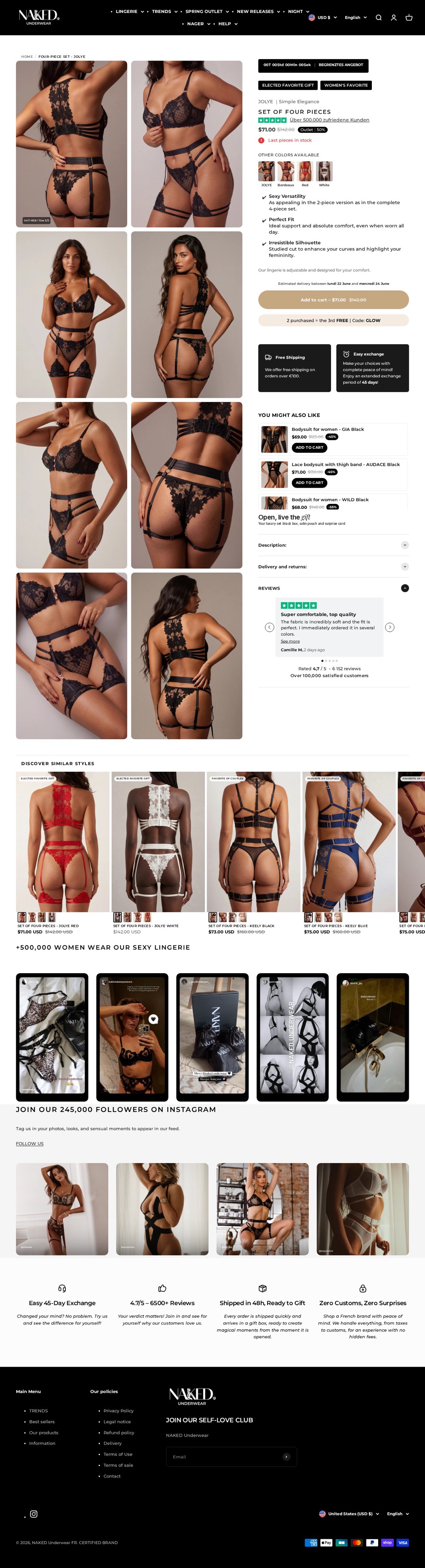
NAKED-D runs a single-SKU product page (4-piece lingerie set at $75) with cross-sell recommendations inline below the ATC, a promo code mechanic for a free gift on multi-unit purchase, and relies on Zipify OCU for post-purchase one-click upsells. No quantity-break or bundle-builder widget is visible on the PDP itself. AOV lever is primarily the 'buy 2 get 3rd free' code offer and the YOU MIGHT ALSO LIKE cross-sell rail, plus Corner Cart / UpCart for in-cart upsell surfaces.
Operator's read
PricingThere is no multi-tier quantity-break or bundle widget on this PDP. The sole pricing mechanic is a single struck-through compare-at anchor ($110 → $75, ~32% off) on the hero product, and a carousel of similar styles that shows a wildly aggressive $300 compare-at on a $75 product — a 75% implied discount that reads as a fake anchor. The only AOV-push mechanism is the static 'buy 2 get 3rd free with code GLOW' text line, which requires the customer to self-serve the promo code rather than being auto-applied, creating unnecessary friction and likely leaving significant multi-unit revenue on the table.
Pricing tiers (1 widget)
Widget styleNo volume-discount or bundle-builder widget is present on the PDP — that slot is occupied by a plain single-price display with a compare-at strikethrough and the GLOW code text. The YOU MIGHT ALSO LIKE cross-sell rail (3 items, each with their own ADD TO CART, green % badge, and compare-at strike) is the closest thing to a structured upsell widget. Candy Rack is installed but no pop-up or checkbox add-on is visible firing on this PDP. The in-cart surface (UpCart/Corner Cart) is the next upsell layer but was not captured.
VerdictThe free-gift-with-code mechanic is smart for multi-unit push but is almost invisible — a static text line above the trust bar that most shoppers will miss or abandon because manual code entry kills conversion. The single highest-leverage change: replace the GLOW code line with an inline quantity-selector widget (2-tile radio: '1 set – $75' vs '2 sets – $140, 3rd FREE auto-applied') that auto-applies the discount at cart, turning a passive copy line into an active AOV driver. Given the $75 price point and the lingerie gifting use-case, a 2-unit attach rate even at 15% would materially move AOV without touching ad spend.
offer details (6)
Confidence is medium because no cart drawer or post-purchase screens were captured, so Corner Cart/UpCart and Zipify OCU offer details are inferred from app installs only. The $300 compare-at on $75 carousel items is flagged as a fake-anchor pattern — if that is the original retail/bundle price it should be clarified in copy to avoid trust erosion. Candy Rack appears installed but no add-on pop-up was visible firing on this PDP session.

Single-SKU air purifier brand anchoring on a $100 summer-sale discount, with a subscribe-and-save option on filters as the primary AOV/LTV lever. Rebuy is installed for cross-sell/post-purchase. Bundle SKU visible in nav and review snippet. No volume/quantity-break widget on the PDP.
Operator's read
PricingThere is no volume or quantity-break widget. The entire pricing strategy rests on a single struck-through anchor: $469.99 compare-at vs. $369.99 sale price — a 21% / $100 discount framed as a 'Summer Sale.' The two purchase options (one-time vs. subscription) share the same $369.99 purifier price, so the subscription upsell doesn't add upfront AOV — it's purely an LTV play via $11.99/mo filter replenishment. The free-shipping-and-returns guarantee removes friction but there's no threshold mechanic to push cart size higher.
Pricing tiers (1 widget)
Widget styleNo volume-discount or bundle widget exists on the PDP itself. The purchase selector is a minimal two-tile radio toggle (subscription vs. one-time), almost certainly custom or a lightweight Shopify subscription app. There are no 'Most Popular' or 'Best Value' badges on the toggle, no escalating compare-at tiers, and no per-unit price ladder. The anchoring work is done entirely by the $469.99 strike-through and the '$100 Summer Sale' badge — classic single-anchor, single-SKU DTC playbook.
VerdictThe $100 anchor and clinical social proof (677 clinicians) are executed well and build enough trust to justify the $369.99 price point. The single highest-leverage change would be to add a hard bundle upsell on the PDP — e.g., 'Air Purifier + 1-Year Filter Pack' at a clearly discounted per-unit filter price (say $429.99 vs. $489 compare-at), pre-selected by default. Right now the subscription toggle is opt-in and costs nothing extra upfront, so it doesn't move AOV at all on day one; a prepaid filter bundle would capture immediate revenue lift while still delivering the LTV benefit Rebuy is presumably trying to recover post-purchase.
offer details (4)
Pricing widget data parsed from text snippets only — no screenshot of a rendered volume widget was visible. Bundle SKUs exist in nav but PDP only shows single-unit options. Rebuy post-purchase flow not visible; offer marked as inferred.

Single-SKU PDP with a BOGO-50% cart-level promotion as the primary AOV driver, supported by a Kaching Bundles cross-sell/bundle mechanic and a 'recently viewed / you may also like' recommendation row. No standalone volume-discount widget on the PDP; the upsell logic lives in the cart via automatic discount.
Operator's read
PricingThere is no formal volume-discount pricing widget on this PDP — no tiered radio tiles, no price ladder. The entire AOV lever is a single BOGO-50% mechanic: buy 1 at full price (~£29.95 implied), get the 2nd for ~£14.98, blended ~25% off for a 2-unit order. The 40% OFF badge on the hero image suggests the single-unit price is already marked down from a compare-at, so the shopper sees a stacked discount narrative (40% off retail + 50% off 2nd unit) even though the actual unit economics are a blended ~25% discount at 2 units. No 3-unit or 4-unit tier exists, capping AOV at 2 bras per session.
Widget styleNo bundle/volume widget is rendered on the PDP itself. The slot that would normally hold a Kaching Bundles radio-tile widget is occupied by a plain bold-text callout ('BUY 1, GET 50% OFF ON 2ND ITEM') with instructional copy and a static 'PERFECT FIT GUARANTEE' trust block beneath it. The 'Bundle Save' nav link suggests Kaching Bundles may power a separate bundle landing page rather than an embedded PDP widget. Anchoring relies on the 40% OFF hero badge and the urgency countdown rather than a compare-at price ladder within a widget.
VerdictThe BOGO-50% mechanic is well-executed for a lingerie brand — mix-and-match lowers the psychological barrier to a 2-unit cart and the automatic discount removes friction. However, AOV is hard-capped because there is no incentive beyond 2 units. The single highest-leverage move: deploy the Kaching Bundles widget directly on the PDP as a 3-tier radio-tile (1 bra / 2 bras save 25% / 3 bras save 35%), pre-selecting the 2-bra tier, with a per-unit price shown on each tile. This alone typically lifts average unit count from 2.0 toward 2.6–2.8 and AOV by 15–25% without changing the discount structure.
offer details (6)
Timer shows zeroed-out countdown (0d 0h 0m 0s) with a far-future end date (June 17 2026), which undermines urgency credibility and may signal a fake-scarcity pattern to savvy shoppers — worth fixing. Pricing widget tiers could not be parsed to exact GBP amounts from the screenshot; £14.98 for the 2nd unit is inferred from the product snippet. Kaching Bundles post-purchase capability not confirmed — no post-purchase offer page visible.

Free-product lead magnet (product priced at $0.00, compare-at $79.99) used as a traffic hook to acquire customers, with AOV recovery attempted via packaging upsell add-on, free-shipping threshold at $79.99, post-purchase via ReConvert, and cart upsells via iCart slide cart and Frequently Bought Together.
Operator's read
PricingThere is zero volume/quantity-break widget — pricing is entirely anchored on a single struck-through $79.99 compare-at against a $0.00 sale price across all four color variants, a 100% 'discount' that functions as a free-product lead magnet. The real monetization levers are the $12 packaging add-on at ATC, the $79.99 free-shipping threshold that forces basket-building from a $0 starting point, and back-end recovery via ReConvert post-purchase. No per-unit ladder exists; there is only one price point.
Widget styleNo volume-discount or bundle widget exists on this PDP. The slot that would normally house a quantity-break widget is occupied by a packaging radio-selector (Exquisite Box $0 / Sacred Necklace Gift Box $12) — a checkbox add-on mechanic, not a volume tier. Color swatches are the only variant selector. The 100% off anchor is the entire pricing 'style,' leaning on a fake-anchor compare-at to manufacture perceived value.
VerdictThe free-product hook is a clever acquisition mechanic that will generate volume and reviews, but $0 AOV on the hero item means the entire business model lives or dies on the $12 packaging add-on, the free-ship threshold upsell, and ReConvert post-purchase — three friction points the customer can easily bypass. The single highest-leverage change: implement a Frequently Bought Together bundle on the PDP that auto-adds a $19–$29 complementary item (e.g., a matching rosary or custom engraved piece) as a pre-checked 'Complete the Set' offer, converting the $0 cart into a $30+ cart before iCart and ReConvert even fire. That one widget, pre-checked with social proof copy, would likely 3–5x revenue-per-session versus the current rely-on-threshold approach.
offer details (7)
The $0.00 sale price across all variants is almost certainly intentional as a paid-social lead magnet ('free + shipping' or 'free today only' model visible in the banner copy). The store's real catalog (Rosary, Custom Rosary, Gift Cards) provides the margin. The 4.0-star rating with 482 reviews shown in the screenshot adds credibility. The Father's Day 20% off code FA20 adds urgency but compounds margin pressure on a product already priced at $0. ReConvert and iCart are the margin-recovery engines and should be heavily optimized with the actual rosary/accessory catalog.

Medik8 uses a multi-layered AOV strategy anchored around a free-gift-with-purchase threshold ($175+), a first-order email-capture discount (15% off), free shipping threshold ($60), a 'Complete Your Regime' cross-sell carousel on the PDP, and a site-wide 'Bundle and Save 15%' routine builder — all supported by Rebuy (cross-sells/recommendations) and UpCart (slide cart with GWP hint and upsell tiles). There is no standalone volume/quantity-break widget on this product page.
Operator's read
PricingThere is no quantity-break or volume-discount widget on this PDP — Medik8 leans entirely on threshold mechanics and a separate bundle page instead. The primary AOV levers are the $175 free-gift threshold (tiered, up to 3 gifts), a $60 free-ship floor, and a sitewide 15% bundle-and-save routine builder. The 15% new-subscriber discount is a first-order acquisition tool, not a repeat-AOV driver. Without visible price points on the hero product in the evidence, exact per-unit math can't be confirmed, but the architecture is threshold-pull rather than quantity-push.
Widget styleThere is no volume/quantity-break widget on this product page. The slot that would typically house a bundle widget is occupied instead by a 'Complete Your Regime' Rebuy recommendation carousel — four horizontal product cards with individual prices and standalone ATC buttons. The bundle savings mechanic lives on a separate navigation-linked page ('Build Your Routine Bundle and Save 15%') rather than being embedded on the PDP itself. UpCart handles in-cart cross-sell tiles and a GWP progress hint bar.
VerdictThe GWP threshold at $175 is well-conceived for a premium skincare brand and the UpCart GWP hint bar will do real work nudging basket size. The single highest-leverage change would be embedding the 15% routine bundle mechanic directly on the PDP — either as a 'Frequently Bought Together' checkbox-addon block (Rebuy supports this natively) pre-selecting 2-3 regime companions at the bundled price, rather than sending shoppers off-page to build a routine. Keeping the customer on the PDP with a visible 'save 15% when you add X+Y' offer would capture impulse multi-SKU purchases that the current carousel likely misses because it requires a separate decision and page navigation.
offer details (8)
No raw pricing widget text was provided so tiers array is empty. Confidence is medium because the cart drawer contents and post-purchase flow are inferred from app installs and snippet IDs rather than direct screenshot evidence. The 'Complete Your Regime' carousel product prices are visible in the screenshot but too small to read exact figures reliably.

Announcement-banner volume deal (Buy 4 Get 4 Free) as primary AOV driver, supported by a free-shipping threshold (3+ pairs), size/colour variant selection on PDP, and a slide-cart drawer via UpCart/iCart. No on-page pricing widget; the quantity ladder lives in copy and FAQ only.
Operator's read
PricingThere is no numeric pricing widget on this PDP. The single listed price is $40.00 NZD per pair with no compare-at struck-through anchor shown in the snippets. All volume incentive is communicated through two textual offers: a free-shipping unlock at 3 pairs (implicit ~$120 NZD threshold) and a Buy 4 Get 4 Free deal that mathematically delivers 8 pairs for the price of 4, i.e. $20 NZD per pair — a 50% effective discount. The Buy 2 Get 1 Free tier (33% off per pair, ~$26.67 NZD each) sits as a mid-rung incentive buried in the FAQ. The brand leans entirely on copy-stated thresholds rather than a visual price ladder.
Widget styleThere is no volume-discount or bundle widget on the landing page — no radio-tiles, no inline table, no dropdown selector. The slot that a Quantity Breaks or Bundle Builder app would normally occupy is instead filled by a plain text badge ('BUY 4, GET 4 FREE') and a sitewide announcement banner. The slide-cart drawer (UpCart) is the only structured upsell surface, where a free-shipping progress bar likely fires, but no in-cart cross-sell tiles or upsell blocks are confirmed in the evidence.
VerdictThe Buy 4 Get 4 Free hook is genuinely compelling and the alpaca positioning supports a premium AOV, but the execution leaks badly: there is no visual pricing widget to anchor the per-pair savings ($20 vs $40), so most shoppers never quantify the deal. The single highest-leverage change is to install a quantity-break widget (e.g. Kaching Bundles or Bundler) directly on the PDP showing three explicit radio-tile tiers — 1 pair @ $40, 3 pairs @ $26.67 each (Buy 2 Get 1), 8 pairs @ $20 each (Buy 4 Get 4) — with the 8-pair tile pre-selected and badged 'Best Value · Save 50%'. This alone would make the discount visceral and visual, collapsing the cognitive gap between 'I see a banner' and 'I understand I save $160', and should materially lift average units per order from what is likely ~2-3 pairs today.
offer details (5)
Currency is NZD. Store ships from New Zealand with express worldwide coverage. Over 100,000 pairs sold is used as social proof. 99-day guarantee is surfaced on PDP. Confidence is medium because cart drawer contents and post-purchase flow are not directly visible in the screenshot.

Father's Day BOGO promotion drives the lead offer; cross-sell accessory (appears to be a pouch/organiser) shown inline on PDP; post-purchase upsell stack inferred from AfterSell; Selleasy likely powers the inline cross-sell; UpCart drives the slide-cart drawer; Kaching Bundles likely powers any bundle mechanic though no visible quantity-break widget is rendered in the screenshot.
Operator's read
PricingThere is no visible quantity-break or volume-discount pricing widget on this PDP. The entire pricing lever is the Father's Day BOGO — buy one sling, get one free — which effectively halves the per-unit cost without showing a numeric price ladder. The store leans on this single promotional anchor rather than a tiered price-per-unit structure. No compare-at strikethrough or multi-tier widget is rendered, so there is no per-unit price ladder to analyse; the AOV lift is driven purely by the 2-for-1 mechanic.
Widget styleNo bundle/volume-discount widget (Kaching Bundles, quantity breaks, radio-tiles, or inline table) is rendered on the visible PDP. The slot that would typically hold a pricing widget is instead occupied by the BOGO promotional badge and a single variant selector. Selleasy fills the cross-sell slot with an inline checkbox add-on for the accessory pouch below the ATC — clean, low-friction placement. UpCart handles the cart drawer upsell layer. The overall style is promotion-led (seasonal BOGO) rather than widget-led (tiered discounts).
VerdictThe BOGO Father's Day angle is a strong conversion hook and social-proof wall (100k+ worldwide, dense UGC grid) backs it up well. The single highest-leverage change I would make is to activate Kaching Bundles with a 3-tier quantity widget (1 sling / 2 slings BOGO already maps here / 3 slings + deepest discount) so that even outside Father's Day season there is always a structured per-unit price ladder pushing customers to buy multiples — gifting, backup carrier, grandparent unit — rather than relying entirely on a time-limited BOGO that disappears after the campaign ends.
offer details (4)
Confidence is medium because no pricing widget text or cart snippet HTML was provided; all pricing analysis is derived from the screenshot and app list. Currency displayed as VND (Vietnam storefront detected) but the store ships globally; primary market pricing likely USD. BOGO mechanic may be implemented via Shopify discount code or Kaching Bundles BOGO function rather than a visible widget.
Single-SKU product page with no visible volume/bundle pricing widget. The page leans on trust signals (4.74★ rating, 203 reviews, customer photos), benefit icons (free delivery, 30-day returns, 2-year guarantee), and urgency via fast-delivery date copy. Selleasy is installed but no upsell widget is visibly rendered on this PDP. No quantity breaks, no bundle builder, no cross-sell carousel visible in screenshot.
Operator's read
PricingThere is exactly one price point visible: €35 flat, no struck-through compare-at, no volume tiers, no bundle discount, no free-shipping threshold displayed. The store is leaving all AOV-lever mechanics on the table — there is zero pricing architecture to move a buyer from 1 unit to 2+. The only implicit anchor is the social proof volume (203 reviews) which signals popularity but does nothing to push basket size.
Widget styleThere is no volume-discount or bundle widget on this PDP. The pricing slot is occupied by a bare quantity stepper (–/+) and a single €35 price line. Selleasy is installed but either misconfigured, disabled on this product, or only firing post-cart — none of its typical inline addon checkboxes or 'frequently bought together' rows are rendering in the screenshot. The page real estate below the ATC button goes straight to specs accordions.
VerdictThe trust stack is solid — 4.74★ with 203 reviews, customer photo UGC, and clear guarantee/return icons all reduce friction well. The single highest-leverage change is activating a Selleasy 'Frequently Bought Together' or quantity-break offer directly on this PDP: a 2-pack at €32/unit (−8%) or a bundle pairing the cable tray with a cable box/clips accessory would immediately lift AOV on what is clearly a repeat-purchase-adjacent desk-accessory category where customers are already fitting out a full desk setup.
offer details (0)
No upsell copy surfaced (JS-rendered or post-purchase).
Page is in Dutch (Belgian market). The geo-redirect banner suggests multi-store complexity which may explain why Selleasy widgets are not firing — possible app configuration scoped to a different store/market. Confidence is medium because no cart or post-purchase screens are visible, so Selleasy post-purchase flow cannot be confirmed or ruled out.

SPANX CA runs a premium single-price model with no on-page volume or bundle discounting. AOV is driven by cross-sell carousels ('We Think You'll Love' / 'Shop It With' outfit pairings) and a free-shipping-on-everything banner that removes the threshold incentive entirely. Honeycomb Bundles is installed but no widget is surfaced on this PDP.
Operator's read
PricingSPANX CA sells at a single full price with zero on-page tiered or volume pricing — no bundle widget is rendered despite Honeycomb Bundles being installed. The brand leans on a blanket 'Free Shipping + Duty Free' promise as the conversion sweetener rather than a progressive threshold (e.g., 'spend $X more to unlock free shipping'). Without a threshold, they've removed the single most effective cart-AOV lever in DTC apparel — the 'add $18 more to qualify' nudge that consistently lifts units-per-order.
Widget styleThere is no volume-discount or bundle widget on this PDP whatsoever. The slot that would typically hold a quantity ladder or bundle builder is occupied entirely by two cross-sell surfaces: a styled 'Shop It With' outfit block (2 looks) and a 'We Think You'll Love' recommendation carousel (~3 products). Honeycomb Bundles is installed but dormant — likely configured for other SKUs or not yet activated on this category.
VerdictThe cross-sell execution is brand-appropriate and visually strong — outfit pairings at SPANX's price point ($80–$130 CAD per piece) can meaningfully lift AOV when clicked. However, the single highest-leverage change is activating Honeycomb Bundles with a 'Buy 2 Get 10% Off / Buy 3 Get 15% Off' radio-tile widget on this PDP — Faux Leather Leggings is a repurchase-friendly SKU (multiple colorways, petite/tall sizing) and customers already buying one are primed to grab a second color. Even a modest 10% tier on qty-2 would likely shift a meaningful percentage of single-unit orders to two-unit orders given the existing size/color depth.
offer details (3)
No cart drawer, post-purchase page, or pricing widget was visible in the screenshot. Post-purchase upsell via Honeycomb cannot be confirmed from evidence shown. Pricing figures for the Faux Leather Leggings were not legible at screenshot resolution — no numeric tiers computed.

Single-product supplement store selling Aurivita Capsaicin Power (cayenne pepper softgels) with a subscribe-and-save mechanic as the primary AOV/LTV driver, anchored by a one-time vs subscription price split. Free shipping is gated to subscriptions only, creating a soft push toward recurring revenue. Kaching Bundles is installed but no visible bundle widget was rendered in the screenshot. The trust stack (120-day MBG, FDA-registered facility, 3rd-party lab testing, customer reviews) is doing heavy lifting to convert cold traffic.
Operator's read
PricingThere is no visible multi-tier volume or bundle pricing widget active on this store. The pricing strategy leans entirely on a single subscribe-vs-one-time split where subscription unlocks free shipping — a soft discount incentive rather than a hard percentage-off anchor. No explicit 'save X%' figure is surfaced in the visible copy, and no compare-at struck-through price is shown in the screenshot, meaning the anchoring logic is purely benefit-framed (free shipping) rather than price-framed (you save $Y). For a supplement at what appears to be a ~$34–$54 price point (partially visible in screenshot), this leaves significant AOV upside uncaptured.
Widget styleThere is no bundle or volume-discount widget active on the PDP. The slot that would typically hold radio-tile quantity breaks (e.g., 1-bottle / 2-bottle / 3-bottle via Kaching Bundles) is either not configured or not rendering. The Kaching Bundles app is installed but the cart drawer upsell block is explicitly unassigned per the cart snippet. What occupies that slot instead is a basic subscribe/one-time toggle with a free-shipping hook — functional but leaving per-unit anchoring completely off the table.
VerdictThe trust infrastructure (120-day MBG, lab testing, FDA facility, review carousel) is solid and appropriate for a cold-traffic supplement play. The single highest-leverage change is to immediately configure Kaching Bundles with a 1/2/3-bottle quantity-break ladder — e.g., 1 bottle at full price, 2 bottles at ~10% off per unit, 3 bottles at ~20% off per unit with a 'Best Value' badge pre-selected on the 3-pack. This one change, combined with surfacing a per-unit price comparison, typically lifts supplement AOV by 25–40% by shifting the default purchase quantity without touching ad spend.
offer details (2)
Confidence is medium because pricing widget text was blank in the evidence and the screenshot resolution makes exact price points partially unreadable. Subscribe-save mechanic is confirmed by snippet language. Kaching Bundles cart upsell is confirmed installed but explicitly unassigned. No post-purchase upsell flow is visible or strongly inferable beyond the app install.
Hanky Panky drives AOV primarily through a 'Build Your Own Bundle' (BYOB) mechanic anchored at 3-for-$54 (20% off), promoted site-wide via nav, banners, and category pages. Rebuy is installed, likely powering cart and/or post-purchase recommendations. No on-PDP volume-discount widget is visible; the bundle entry point is a dedicated BYOB landing page/flow. Free shipping is gated behind a rewards program join, not a dollar threshold.
Operator's read
PricingThere is no on-PDP volume-discount widget visible — Hanky Panky leans on a BYOB bundle destination and pre-configured multi-packs rather than an inline quantity ladder. The anchor price point is $54 for 3 (implying ~$18/unit vs. a ~$22-23 single-unit retail price for their signature thong, roughly 20% off), and multi-packs enter as low as $14.99. Free shipping is not a dollar-threshold nudge but a loyalty-program gate, which removes the classic 'you're $X away' AOV lever from the cart entirely.
Widget styleThere is no volume-discount or bundle widget rendered on the individual PDP. That slot is occupied by a single price display with a brand-level CTA pushing shoppers off the PDP into a separate BYOB builder flow. The BYOB flow itself is not captured in the screenshots, so its layout (checkbox grid, step selector, etc.) is unconfirmed. Rebuy likely renders a recommendation carousel or 'Complete The Look' cross-sell in the cart drawer, consistent with the 'Perfect Pairings / Complete The Look' copy seen in snippets.
VerdictThe BYOB mechanic is smart for an intimates brand — it lets customers mix colors/styles at a discount, which matches the real purchase behavior. What's executed well is the persistent, multi-surface promotion of the 3-for-$54 offer (nav, category, banners). The single highest-leverage change: add a free-shipping dollar threshold back into the cart drawer alongside the Rewards pitch. Right now shoppers who won't join the loyalty program have no AOV nudge in cart — a '$X away from free shipping' progress bar (easy to implement via Rebuy's cart widget) would capture incremental units from the large non-member segment without cannibalizing the BYOB flow.
offer details (5)
Pricing widget data not extractable — no inline quantity-break or bundle-price table was present in the PDP evidence provided. Bundle price of $54/3 units and 20% discount figure are taken directly from copy snippets. Individual unit retail price estimated from brand knowledge (~$22-23 for signature low-rise thong) to contextualize the per-unit math; operator should verify against live PDP price. Rebuy post-purchase offer is inferred from app install only.
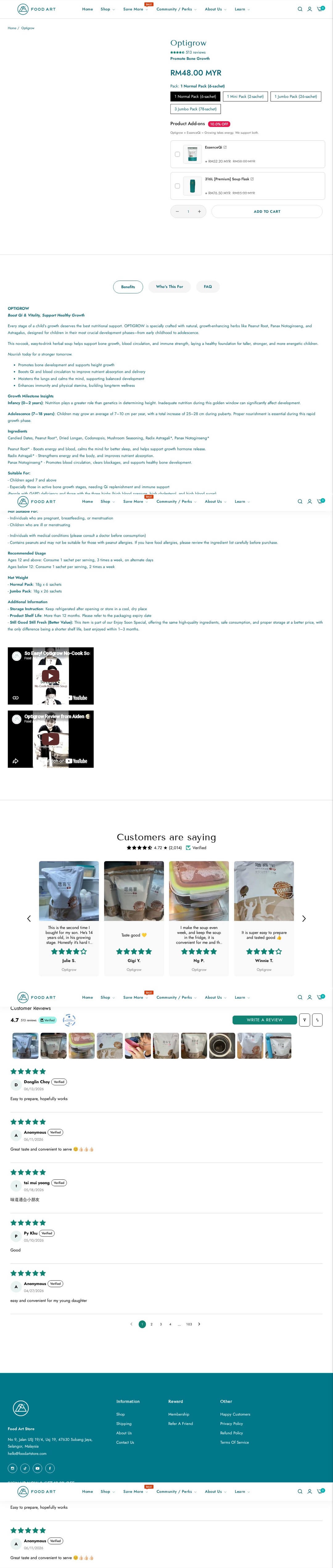
Multi-pack quantity selection on PDP with free-shipping threshold incentive; slide-cart drawer (UpCart/iCart) handles in-cart cross-sell; no explicit volume-discount widget — pack size variants act as the bundling mechanic.
Operator's read
PricingThe store leans on a 4-option pack-size selector rather than a true volume-discount widget. Only the entry price of RM48.00 is legible in the screenshot; the upper tiers (Jumbo and 3×Jumbo Discounted) have no visible per-unit prices shown in evidence, so the actual savings depth is unquantifiable from the image. The free-ship thresholds at RM150/RM200 do all the heavy AOV lifting — a single-pack buyer at RM48 is still RM102 short of free shipping, which is the real nudge to stack packs.
Widget styleThe pack selector is a native-style radio-tile block with four labelled tiers and no standalone volume-discount app widget (no Bold Bundles, no Rebuy tiered table). There are no visible 'Most Popular' or 'Best Value' badges in the screenshot beyond the implied positioning of '3 Jumbo Pack Discounted' as the anchor-high option. Compare-at strikethrough pricing is not confirmed visible, so the anchoring relies entirely on the tier label word 'Discounted' rather than a numerical save-X% callout. UpCart and iCart handle the post-add-to-cart upsell layer inside the drawer.
VerdictThe free-ship threshold is well-calibrated as a soft AOV driver, and the four-tier pack naming creates a logical upgrade ladder. The single highest-leverage change I'd make is adding explicit per-unit prices and a bold '% saved' badge on the 3-Jumbo tier directly in the radio-tile — right now buyers have no numeric reason to trade up because the savings are label-implied, not shown. Surfacing something like 'RM14.xx/sachet — save 18%' on that top tier would convert the pack-size selector from a passive variant picker into an active AOV engine, likely lifting average pack selection by one tier.
offer details (5)
Exact prices for Loaded, Jumbo, and 3×Jumbo tiers were not legible in the screenshot or provided snippets — only RM48.00 for the Starter tier is confirmed. Product add-on section shows EssentialQi (+RM20) and FHL Functional Soup Pack (+RM25) as optional checkbox add-ons on the PDP, which is an add-on protection/cross-sell mechanic. Rating is 4.72 stars from 2,214 reviews, strong social proof. Halal certification called out prominently — relevant trust signal for Malaysian Muslim market.
Single low-price entry product with free-shipping threshold as the primary AOV lever, supported by UpCart slide-cart drawer for cross-sell/upsell. No volume-discount or bundle widget visible on the PDP. The store leans on a 'You may also like' recommendation rail and a $140 free-shipping bar to push basket size up.
Operator's read
PricingThere is no volume-discount or bundle pricing widget on this PDP — just a single SKU at 626,000 VND (~$25 USD) with no compare-at anchor and no struck-through original price. The entire AOV strategy rests on the free-shipping threshold (stated as $140), which means a customer needs to buy roughly 5-6 units or mix in other products to qualify. That's a lot of lift to ask with zero in-cart incentive beyond 'add more stuff.'
Widget styleNo bundle or volume-discount widget exists on this landing page. The slot is occupied by a bare quantity selector (integer input, no radio tiles, no tier table, no badges like 'Most Popular' or 'Best Value'). UpCart handles whatever cross-sell logic exists inside the drawer, but the PDP itself does zero heavy lifting on AOV — it's a single price, single option, no anchoring mechanism whatsoever.
VerdictThe free-shipping bar and UpCart cross-sell are directionally correct but the PDP is leaving money on the table by showing zero tiered incentive. The single highest-leverage change: add a 3-tier quantity-break widget directly on the PDP (e.g., 1 for 626k / 2 for 1,150k (~8% off) / 3 for 1,620k (~14% off)) with a 'Best Value' badge on the 3-pack. At a ~$25 price point this product is a gifting and multi-pair purchase — customers buy for partners, family, or multiple use cases — and a visible per-unit ladder would capture that intent before they even reach the cart.
offer details (3)
Currency is Vietnamese Dong (VND); the free-shipping threshold is stated in USD ($140) in the banner, suggesting an international/multi-currency store. Installed apps visible: UpCart (cart drawer upsell), COGs, Footcare, Syncee (likely dropship/supplier sync). No post-purchase upsell app (ReConvert, AfterSell, Zipify) detected in the evidence — no post-stage offer inferred. 'Wild Toes' appears to be both a product line name and a brand concept (natural toe-spread positioning). 545 reviews on the Wild Toes product indicates strong social proof that is not being leveraged with a quantity incentive.
The store runs a single-product (bra) DTC brand anchored on a BOGO-50% mechanic. The entire funnel pushes the shopper to add a second unit at half price, with mix-and-match flexibility across styles and colors. There is no visible volume-discount widget or tiered pricing table — the upsell is purely a cart-level automatic discount triggered at 2+ items. Kaching Bundles is installed and likely powers the bundle/quantity mechanic shown inline on the PDP. A countdown timer on the announcement banner adds urgency around a 'Summer Sale' deadline (June 17, 2026).
Operator's read
PricingThere is no multi-tier volume widget — this store leans entirely on a single BOGO-50% mechanic (2nd unit at $19.50, implying a ~$39 base price) communicated via inline PDP copy. The effective per-unit drops from $39 to ~$29.25 at 2 units, a 25% blended discount. No 3-pack or 4-pack tier exists in visible evidence, which means AOV is capped at roughly $58.50 for a 2-unit order. The free-shipping threshold (amount truncated) likely functions as a secondary AOV driver but its exact value is unknown.
Pricing tiers (1 widget)
Widget styleThere is no visual bundle widget (no radio tiles, no inline pricing table, no dropdown selector). Kaching Bundles is installed but is rendering purely as inline persuasion copy on the PDP rather than a structured tiered widget. The BOGO offer is communicated through bold text callouts ('BUY 1, GET 50% OFF') and a per-unit anchor ('2nd bra for $19.50'). The countdown timer in the banner acts as the primary urgency anchor, not a per-unit savings badge or 'Best Value' tier callout.
VerdictThe BOGO-50% mechanic is executed cleanly — automatic discount, mix-and-match permission, and a specific '$19.50' anchor are all conversion-positive signals. However, the store is leaving significant AOV on the table by having no 3-pack or 4-pack tier: a shopper who wants 3 bras gets zero incremental incentive beyond the 2nd-unit discount. The single highest-leverage change is to add a 3-for-$X tier (e.g., buy 3, save 40% each ~$23.40/unit) via Kaching Bundles' radio-tile widget, surfaced directly on the PDP — this alone typically lifts AOV 15-25% on apparel bundles by anchoring the 2-pack as the 'middle' option rather than the ceiling.
offer details (4)
Base price inferred as ~$39 from '2nd bra for $19.50 = 50% off' language. Exact free-shipping threshold not visible — snippet truncated. Countdown timer dates (June 17, 2026) suggest an evergreen or rolling sale mechanic rather than a true one-time event. Cart snippets were empty so no cart-drawer upsell behavior could be confirmed. Confidence is medium due to truncated evidence and no direct screenshot of the widget rendering.

Single-SKU bra brand running a BOGO-style promotion ('Buy 1, Get 50% Off 2nd Item') as its primary AOV lever, with Kaching Bundles powering the cross-sell/bundle mechanic inline on the PDP. No traditional volume-discount widget with tiered pricing is present; instead the store anchors on a 40% off sale price for unit 1 and then pushes a second unit at 50% off to drive multi-unit cart value. Urgency is layered via a countdown timer (EOFY SALE, ends June 17 2026) in the announcement bar.
Operator's read
PricingThere is no traditional multi-tier volume widget — instead this store runs a two-price stack: unit 1 is already 40% off (sale price), and unit 2 unlocks at 50% off its original price, shown explicitly as $29.98. That second-unit price is the anchor that drives the add-to-cart decision. The effective blended per-unit cost drops meaningfully on a 2-unit cart, but the store never surfaces a clean 'you pay X per bra' comparison, leaving AOV upside on the table. The urgency banner (EOFY countdown) supports the discount narrative but the timers appear stuck at zero, which kills credibility entirely.
Widget styleNo volume-discount radio-tile or table widget is present on the PDP. The slot is occupied by a Kaching Bundles-powered inline promo block — a flat banner/callout strip with bold BOGO headline and a single suggested companion product shown with its price and review count. There are no 'Most Popular' or 'Best Value' badges, no escalating compare-at tiers, and no per-unit price ladder. The layout is closer to a checkout-incentive notice than a true bundle builder, relying on the shopper to self-serve the second item into the cart.
VerdictThe BOGO mechanic is clean and the mix-and-match angle removes friction well — that is executed correctly. The single highest-leverage change is to replace the flat callout with a Kaching Bundles 3-tier radio-tile widget (1 bra / 2 bras / 3 bras) showing explicit per-unit prices (e.g. $49.95 ea → $29.98 ea → $24.99 ea) with a 'Most Popular' badge on tier 2 and a 'Best Value' badge on tier 3. Right now the store caps the upsell at 2 units by design; a visible 3-unit tier with a further per-unit reduction would lift AOV without changing the core discount structure, and the Kaching Bundles app they already have installed can execute this immediately.
offer details (4)
Countdown timers in the announcement bar appear to be frozen at 0:0:0:0 in the screenshot — a serious trust and urgency credibility issue that should be fixed before scaling ad spend. Currency confirmed AUD from domain (au.celeste-dor.com). No post-purchase upsell evidence visible; Kaching Bundles does not natively offer post-purchase one-click upsells so no post-stage offer inferred.

BOGO promotion (35% off second item via code ANNSA35) combined with a free-shipping threshold ($79) and a 10% email-capture discount. No on-page volume/bundle pricing widget is present; the store leans on banner-level coupon mechanics and the Frequently Bought Together app for AOV lift.
Operator's read
PricingThere is zero on-page pricing widget — no quantity breaks, no tiered per-unit ladder. The single price point is 1,021,000₫ flat across all size variants (Black S/M/L/XL all identical). The store's entire AOV-lift mechanism lives in the announcement banner: a BOGO 35% off code (ANNSA35) and a $79 USD free-shipping threshold. The 10% subscriber discount is a list-growth play, not a revenue-per-session driver. Without a compare-at price shown in the snippets, there is no visible struck-through anchor on the PDP itself.
Widget styleThere is no volume-discount or bundle widget on the landing page whatsoever — that slot is completely empty. What occupies it instead is a banner-based coupon (BOGO 35% via code) which requires the customer to self-apply at checkout, creating friction and leakage. The Frequently Bought Together app is installed but its widget output is not captured in the visible page snippets, so it may be rendering below the fold or only on certain templates. No radio-tiles, no inline table, no dropdown tier selector — nothing.
VerdictThe BOGO mechanic is directionally correct for a swimwear brand where customers naturally want multiple colorways (Black, Grey, Purple are all listed), but hiding it behind a manual coupon code is a massive conversion leak — customers who don't read the banner never activate it. The single highest-leverage change: replace the code-based BOGO with an automatic cart discount that fires when 2+ items are added, surfaced via a free-ship/BOGO progress bar in the cart drawer ('Add 1 more item to unlock 35% off your second piece'). This collapses the friction, makes the incentive visceral, and directly pulls up the Frequently Bought Together recommendations into a purposeful upsell moment rather than a passive carousel.
offer details (4)
Pricing is displayed in Vietnamese Dong (₫) suggesting primary market is Vietnam or the store geo-targets VN; the free-shipping threshold is stated in USD ($79) in the banner which creates currency inconsistency — worth auditing. All discount mechanics are banner/code-driven with no interactive on-page widget detected. Confidence is medium because cart snippets are empty and the FBT widget render location/copy is not confirmed visually.

Single-SKU flash-sale with fake-anchor strikethrough pricing. The store leans entirely on a manufactured urgency play — 'LAST DAY SALE 49% OFF' banner + struck-through compare-at (£75.98 vs £17.99 sale) — plus a sitewide 'BUY MORE SAVE MORE' banner to hint at volume intent. Bundler app is installed but no widget is rendering on the PDP. No cart upsell, no post-purchase flow visible.
Operator's read
PricingThe entire pricing strategy rests on a single compare-at anchor: £17.99 sale vs £75.98 'regular price' — a claimed 76% discount that the product title simultaneously calls 49% off, creating an internal inconsistency that erodes trust. There are no volume tiers, no bundle price points, no per-unit ladder. The 'BUY MORE SAVE MORE' banner is dead copy — it promises a mechanic that doesn't exist on the page, so any customer who looks for it hits a dead end and bounces.
Pricing tiers (1 widget)
Widget styleThere is no volume-discount or bundle widget live on the PDP. Bundler is installed but not deployed. What occupies that slot is purely a Shopify native quantity stepper (+/-) with a struck-through compare-at. No radio tiles, no inline table, no badges like 'Most Popular' or 'Best Value' — just a single price point dressed up with a fake anchor. The gap between the banner promise and the page reality is the biggest CRO leak on the store.
VerdictThe urgency framing (last-day sale, purple/pink colourway thumbnails, lifestyle imagery) is competent for a low-AOV impulse product, and the £17.99 price point removes purchase friction. However, the highest-leverage single change is activating the already-installed Bundler app with a 2-unit / 3-unit radio-tile widget directly under the ATC button — e.g. 1x £17.99 | 2x £32.99 (save 8%) | 3x £44.99 (save 17%) — because the announced 'BUY MORE SAVE MORE' already primes customers for multi-unit buying but currently converts zero incremental AOV from that intent.
offer details (3)
Compare-at price of £75.98 is exactly 4× the £17.99 sale price, suggesting it may have been auto-set as a 4-unit RRP rather than a genuine single-unit MSRP — this is a textbook fake-anchor and could attract ASA/CAP scrutiny in the UK market. Discount claimed in banner (49%) does not match the implied markdown from compare-at to sale price (~76%), which is a credibility red flag.
Single-SKU impulse buy at a low $22 price point with free-shipping threshold as the primary AOV lever. No volume or bundle widget on the PDP; the store relies on a social-proof review count (545 reviews) and a 'You May Also Like' cross-sell rail to nudge basket size. UpCart is installed and likely delivers a slide cart with a free-shipping progress bar that activates at $105, which is the only visible AOV mechanic.
Operator's read
PricingThere is no volume-discount or bundle pricing widget anywhere on this PDP. The entire pricing architecture is a flat single-price SKU at $22.00 with zero anchoring — no compare-at strikethrough, no per-unit ladder, no tiered options. The only AOV mechanism is the $105 free-shipping threshold, which requires a customer to add roughly 4–5 units or mix in other SKUs to unlock. That is a lot of friction for a $22 entry product with no explicit prompt telling the customer what to add next to hit the threshold.
Widget styleThere is no volume-discount or bundle widget on the landing page — none detected, no app rendering visible. What occupies that slot is a plain quantity selector ('Quantity — Add to cart — Default Title $22.00 USD') with no radio tiles, no inline table, no badges like 'Best Value' or 'Most Popular', and no escalating compare-at prices. UpCart is installed but its contribution is limited to the cart drawer; the PDP itself is bare. The 'You May Also Like' cross-sell rail is the closest thing to a structured upsell surface.
VerdictThe 545-review social proof on a $22 SKU is genuinely strong — this product can clearly convert cold traffic. The single highest-leverage change is adding a quantity-break widget directly on the PDP: offer 1 for $22, 2 for $38 (~14% off, $19/unit), 3 for $54 (~18% off, $18/unit) with a 'Most Popular' badge on the 3-pack. At $54 the customer is already halfway to the $105 free-ship threshold, which then does the heavy lifting to push them to add one more item. Right now the store is leaving a clean AOV-doubling opportunity on the table with every single-unit add-to-cart.
offer details (2)
Evidence is partially inferred: UpCart slide-cart internals (free-ship bar placement, cross-sell slots inside cart) are not directly visible in the screenshot — behavior is inferred from the installed app and banner copy. Product page shows FOOT RESTOR tool also in catalog; full collection breadth could not be confirmed from snippets alone.
Single-SKU product page (Kabelgoot / Cable Tray) with no visible volume-discount or bundle widget. The store relies on a single price point, social proof (4.74★, 1,015 reviews), trust badges (snelle bezorging, 30-day return, 2-year guarantee), and Selleasy for cross-sell/upsell — though no Selleasy widget is visibly rendering in the screenshot. Post-purchase upsell inferred from Selleasy app install.
Operator's read
PricingThe store runs a flat single-price model at €35 with zero volume or bundle tiering visible. There is no per-unit ladder, no quantity break, and no struck-through compare-at price to anchor against — the only trust mechanics are the 2-year guarantee badge and 30-day return rather than price architecture. AOV leverage from pricing is essentially zero on this page; everything rides on Selleasy firing downstream.
Widget styleThere is no volume-discount or bundle widget on this product page whatsoever. The slot that a Selleasy frequently-bought-together tile or a quantity-break radio-tile widget would occupy is completely empty — just a plain quantity stepper. If Selleasy is configured, it is either cart-drawer or post-purchase only, meaning the pre-cart upsell opportunity is fully untapped.
VerdictThe social proof stack (1,015 reviews, 4.74★, photo reviews, FAQ section) is genuinely strong and will convert cold traffic well. The single highest-leverage move here is activating a Selleasy frequently-bought-together widget directly on the product page — pairing the cable tray with a complementary desk accessory (cable clips, power strip, monitor arm) at a bundled saving of 10–15%. Given the accessory nature of this product, multi-item baskets are highly achievable and a visible pre-cart cross-sell would lift AOV without any additional ad spend.
offer details (2)
Page is in Dutch (desktronic.nl). Banner references geo-routing logic for Netherlands store. Colour variants visible (black, grey/green tones, pink/blue). No countdown timer, no free-shipping threshold bar, no slide-cart visible. Confidence is medium because Selleasy cart/post widgets may be active but are off-screen.

Trtl relies on a site-wide 30% bundle banner, an email-capture 15%-off popup, a 'Pair With' accessory cross-sell rail on the PDP, and a slide-cart drawer (UpCart/iCart) to grow AOV. There is no on-page quantity-break or volume-discount widget on the core TRTL Travel Pillow PDP itself — the primary upsell lever is bundle navigation (Bundle & Save section) and the accessory cross-sell row beneath the main product.
Operator's read
PricingThere is no volume or quantity-break pricing widget on the TRTL Travel Pillow PDP itself — the pillow appears to sell at a single price point (~$54.99 visible in the image) with a compare-at struck-through price as the primary anchor. The 30% discount is only accessible by navigating to the Bundle & Save section or the Double Comfort Bundle, not surfaced inline on the core PDP. The email-capture 15% off and the sitewide 30% bundle banner are the two numeric discount signals competing for attention, which risks diluting urgency on the single-unit purchase.
Widget styleThere is no volume-discount or quantity-break widget (radio-tiles, inline table, dropdown) rendered on the TRTL Travel Pillow PDP. The slot that would normally hold a bundle widget is occupied by a plain 'Add to Cart' button at a single price, a 'Personalize It' upsell field, and a 'Pair With' horizontal accessory carousel below the fold. The bundle savings are siloed in a separate nav category, meaning most PDP visitors never see the AOV-expanding offer.
VerdictThe cross-sell carousel and slide-cart drawer are solid foundations, and the 30% bundle discount is a genuinely compelling offer — but burying it in a separate nav section means the majority of PDP traffic never encounters it. The single highest-leverage change is to add an inline quantity/bundle selector widget (e.g. Selleasy or Bundler) directly on the TRTL Travel Pillow PDP showing '1 Pillow – $54.99 vs. 2 Pillows – $76.99 (save 30%)' as radio tiles with a 'Best Value' badge, turning the bundle from a navigation destination into a PDP conversion driver and capturing the AOV lift at the point of highest purchase intent.
offer details (5)
Currency shown as USD (au.trtltravel.com appears to be the AU subdomain but banner copy and price visible ~$54.99 suggest USD store variant was screenshotted). Confidence is medium because the cart drawer contents are not visible and the exact single-unit price point is partially obscured. No ReConvert/Zipify/AfterSell detected so no post-purchase one-click upsell inferred.
Case Knives relies on a free-shipping threshold ($99) communicated via announcement banner, an email-capture modal offering a free gift on first order, and a slide-cart drawer (UpCart/iCart) to drive AOV. No visible volume-discount or bundle-builder widget is present on the landing page. The primary acquisition hook is email list growth with a free-gift incentive.
Operator's read
PricingThere is no volume-discount or bundle-pricing widget visible anywhere on this page. Case Knives leans entirely on a single lever: the $99 free-shipping threshold in the announcement bar to nudge AOV upward. With no struck-through compare-at price ladder or per-unit breakdown, there is zero numeric incentive for a shopper to add a second knife beyond the shipping unlock — a significant missed opportunity on a catalog where average unit price likely sits in the $40–$80 range.
Widget styleNo volume/bundle widget exists on this landing page. The slot that would normally hold a quantity-break radio-tile or inline bundle builder is instead occupied by a modal email-capture popup (free gift on first order) and a footer-level email form repeat. UpCart/iCart is installed and presumably handles cart-level upsell real estate, but no cart widget is visible or described in the provided snippets, so its cross-sell configuration cannot be assessed.
VerdictThe free-gift email capture is smart for list growth and LTV, and the $99 free-ship bar is a proven AOV driver. However, the single highest-leverage change would be adding a product-page quantity-break widget (e.g., 1 knife at full price / 2 knives save 10% / 3 knives save 15%) — even modest tiers would dramatically increase multi-unit transactions given that knives are natural gifting SKUs and the $99 free-ship threshold already primes buyers to consider adding more.
offer details (3)
Screenshot captures homepage with modal overlay active; no product page, cart page, or post-purchase page is visible. Pricing widget array is empty because no numeric tier widget is present anywhere in the evidence. UpCart/iCart cart-drawer upsell configuration inferred from installed apps only.

Multi-tier quantity-break bundle widget (Buy 1/2/3) anchored against a heavily inflated compare-at price, supported by a 63% sale badge, social-proof UGC carousel, science-backed copy, and FAQ objection handling. ReConvert handles post-purchase, Bundler drives the on-page quantity ladder, Vitals powers reviews and trust widgets.
Operator's read
PricingThe store runs a 3-tier quantity ladder anchored hard against a compare-at price of 7,106,016₫ per unit on a sale price of 2,591,779₫ — a stated 63% discount that is consistent across all three tiers. Per-unit price stays flat at 2,591,779₫ whether you buy 1, 2, or 3, meaning there is zero incremental per-unit incentive to go up-tier beyond the lump 'you save' framing and free shipping (which is free on all orders anyway per the banner). The entire AOV lift relies on the emotional anchoring of the inflated compare-at and the family/couple narrative, not a genuine per-unit price break.
Widget styleThe Bundler app renders a clean radio-tile layout — three stacked cards, each showing the tier name, total sale price, strikethrough compare-at, and a 'you save X₫ + FREE Shipping' badge. The Buy 2 tile carries a 'Most Popular' badge to anchor choice architecture toward the middle. There is no escalating per-unit discount ladder (e.g., buy 1 at 63% off, buy 2 at 67% off, buy 3 at 70% off) — the discount percentage is identical across all tiers, which is the widget's biggest structural weakness.
VerdictThe UGC carousel, science copy, FAQ objection handling, and bold compare-at anchoring are well-executed trust builders that should convert cold traffic. The single highest-leverage change: introduce a genuine per-unit price drop across tiers — e.g., Buy 1 at 2,591,779₫, Buy 2 at 2,350,000₫/unit (saving an extra ~9% per unit vs. Buy 1), Buy 3 at 2,100,000₫/unit — so the widget creates real economic pull toward the 2- and 3-pack instead of relying purely on 'save a bigger lump sum' framing, which does not reward the decision to upgrade with a better rate.
offer details (5)
Pricing is in Vietnamese Dong (VND). The compare-at prices appear significantly inflated relative to the sale prices (consistent 63-64% off across all tiers), suggesting an evergreen anchor strategy common in DTC health/beauty. The per-unit price does not decrease with quantity, which is an unusual choice for a bundle widget — the upsell to higher tiers is driven entirely by narrative (family bundle, couples bundle) rather than a per-unit value ladder. Vitals likely handles review widgets and upsell pop-ups visible in the social proof section. ReConvert post-purchase flow is inferred only.
Single-SKU premium luggage brand leaning on brand equity and product quality rather than aggressive volume discounting or upsell mechanics. No pricing widget, no bundle builder, no announcement banner visible. The Frequently Bought Together app is installed but no cart or product snippets were provided, suggesting cross-sell may exist but is not prominently featured in the evidence supplied.
Operator's read
PricingThere is zero pricing widget evidence here — no volume tiers, no quantity breaks, no compare-at anchor, no struck-through MSRP visible in the supplied data. Horizn Studios is a premium luggage brand (price points typically €300–€600+ per unit) that relies on brand positioning rather than discount laddering. Without a free-ship threshold banner or bundle pricing, they are leaving meaningful AOV levers untouched at the product page level.
Widget styleNo volume-discount or bundle widget is present in the evidence. The slot that would normally house a quantity-break table or radio-tile bundle builder appears to be occupied by nothing — or at best a standard single-price ATC button. The Frequently Bought Together app is installed but without product or cart snippets there is no way to confirm layout, badge strategy, or whether it is even actively rendering.
VerdictThe brand execution is clean and premium but the monetisation stack is thin based on available evidence. The single highest-leverage move would be activating a structured accessory bundle at the product page level — pairing each luggage SKU with a packing cube set or travel organiser at a 10–15% bundle discount, presented as radio-tile options directly above the ATC button. Horizn's average order is high enough that even a 20% bundle attach rate on a €49 accessory add-on meaningfully moves AOV without eroding the premium brand perception.
offer details (1)
Confidence is low because no screenshot, product copy snippets, cart snippets, or pricing widget text were provided. All analysis is inferred from the installed app list (Frequently Bought Together only) and general knowledge of the Horizn Studios brand. A full audit requires actual page screenshots and rendered cart HTML.
Single-SKU product page (Kabelbakke / Cable Tray) relying on a struck-through compare-at price anchor, colour/size variants, and app-driven cross-sell/upsell via Selleasy (inline add-ons) and UpCart (slide-cart drawer). No visible volume-discount or bundle widget on the PDP. Post-purchase flow inferred from installed apps.
Operator's read
PricingThe store runs a single-price model at 349 DKK with a struck-through compare-at of 419 DKK — a 70 DKK / ~17% anchor discount. There is no volume-discount ladder, no bundle pricing, and no subscribe-and-save. The entire AOV lift strategy depends on Selleasy cross-sells and UpCart cart-drawer mechanics rather than any on-page quantity incentive. With a cable tray that has obvious multi-unit use cases (multiple desks, office fit-outs), leaving money on the table with no 2x/3x tier is a clear gap.
Pricing tiers (1 widget)
Widget styleNo volume-discount or bundle widget exists on the PDP. The pricing slot is occupied solely by a native Shopify compare-at struck-through price (419 kr → 349 kr). Colour swatches and an engraving personalisation option are present, but these are variant selectors, not pricing tiers. Selleasy and UpCart handle any upsell surface off the PDP itself.
VerdictThe social proof is strong (4.74 stars, 1,035+ reviews, photo reviews) and the compare-at anchor is clean. The single highest-leverage change would be adding a quantity-break widget (e.g. 1 for 349 kr / 2 for 629 kr / 3 for 849 kr, roughly 10–19% off) directly on the PDP — cable management is an inherently multi-unit purchase (home office + work office, gifting) and the current page does zero work to capture that intent before the customer hits the cart.
offer details (4)
Screenshot is in Danish (desktronic.dk). Pricing parsed from visible '349 kr' sale and '419 kr' compare-at. Installed apps Selleasy and UpCart confirm cross-sell and slide-cart capability but their rendered widgets are not visible in the PDP screenshot. Confidence is medium because cart and post-purchase surfaces are not shown.

Volume-gated free-unit BOGO ladder (buy 1 get 1 free, buy 2 get 4 free) combined with a two-variant quantity-break widget on the PDP, anchored by struck-through compare-at prices and a fake-scarcity urgency badge. AfterSell drives a post-purchase upsell funnel not visible in the PDP screenshot.
Operator's read
PricingThe store runs a two-tier variant ladder (€17.95 vs €20.95) with compare-at anchors of €24.95 and €27.95 — discounts of 28% and 25% respectively. The real AOV lever is the banner BOGO ladder: 1+1 free doubles unit shipment at no incremental price, and 2+4 free (effectively 3 units paid, 6 received) pushes a 50%+ per-unit discount. There is no explicit volume-price widget on the PDP itself; the mechanic relies entirely on the banner and checkout auto-discount, meaning many buyers will miss it.
Pricing tiers (1 widget)
Widget styleNo standalone volume-discount app widget is present on the PDP. The pricing slot is occupied by a standard two-option radio-tile variant selector built into the theme, showing struck-through compare-at prices. The 'am beliebtesten' badge sits on the cheaper tier (€17.95), which correctly anchors the entry point and pre-selects the higher-volume variant. The BOGO logic lives only in the announcement bar — there is no inline upsell widget, cart drawer progress bar, or bundle builder to reinforce it at the point of purchase decision.
VerdictThe BOGO ladder is a strong mechanic for screen protectors (consumable, multi-device households) and the AfterSell post-purchase flow adds a second AOV swing. The single highest-leverage change: surface the 1+1 and 2+4 BOGO tiers as explicit radio-tile options directly on the PDP (e.g. 'Buy 1 — €17.95 / Buy 1 Get 1 Free — €17.95 total / Buy 3 Get 6 — €53.85 total, save 66%') so the volume decision is made before Add-to-Cart, not discovered in a banner that most ad traffic ignores. This alone typically lifts units-per-order 20–35% on accessory SKUs at this price point.
offer details (4)
Screenshot is German-language (shopevotech.de). Confidence is medium because the cart drawer and post-purchase pages are not visible; AfterSell offer details are fully inferred. The comparison table visible mid-page ('Die 3-in-1-Schutzfolie im Vergleich') and cross-sell carousel below reviews suggest additional product-line cross-sell but specific SKUs and prices are not legible at this resolution.
Single-product direct-response landing page (VitaBoost PowerVest) running a 1+1 GRATIS (buy-one-get-one free) anchor promotion with a struck-through compare-at price, urgency/scarcity copy, and trust badges. Post-purchase upsell inferred from AfterSell install. Kaching Bundles likely powers the 1+1 offer or a bundle widget not fully visible in screenshot.
Operator's read
PricingThe store leans entirely on a single aggressive compare-at anchor: €99.00 struck through to €24.95, implying a 75% discount. There is no multi-tier quantity ladder — it's one price point. The 1+1 GRATIS mechanic effectively doubles the perceived unit value (€12.48/unit), which is the only per-unit lever in play. No volume break, no subscribe-and-save, no tiered pricing widget is visible.
Pricing tiers (1 widget)
Widget styleThere is no bundle-builder or volume-discount widget rendered on the page. The pricing slot is occupied by a plain Shopify compare-at price field (€99.00 → €24.95) plus the 1+1 GRATIS claim pushed through the announcement banner and product title copy. Kaching Bundles is installed but either fires post-add-to-cart or is not active on this specific product page in the captured state. No radio tiles, no inline table, no badge system ('Most Popular'/'Best Value') is visible.
VerdictThe 75% compare-at discount and 1+1 GRATIS create strong conversion pull, but the store leaves significant AOV on the table by offering only one price point with no upsell ladder before checkout. The single highest-leverage change is to activate a visible Kaching Bundles 3-tier radio widget (1 vest at €24.95, 2+1 free at €39.95, 3+2 free at €54.95) directly on the product page — this turns the 1+1 mechanic into an escalating AOV engine instead of a flat single-unit purchase, and the AfterSell post-purchase flow can then target the cohort who bought only one unit.
offer details (4)
Screenshot resolution limits certainty on exact widget markup. 1+1 GRATIS pricing interpreted as 2 units for €24.95 based on banner + compare-at evidence. AfterSell post-purchase offer content is not visible. Kaching Bundles may be active on a different page or triggered post-add-to-cart.

Emotional memorial product (custom iris photo keychain) sold via deep anchor discount off a high compare-at, with a visible quantity/bundle tier selector on the PDP that escalates from 1 unit to multi-unit bundles with free add-on products attached. AfterSell drives post-purchase one-click upsell. Core hook is sentimental gifting — partner, parent, grandparent personas explicitly called out in nav, lowering friction by pre-segmenting intent.
Operator's read
PricingThe anchor is extremely aggressive — $19.97 off a $94.99 compare-at is a 79% stated discount on the base unit, which does the heavy lifting on perceived value before the customer even hits the tier selector. The three tiers ladder from $19.97 → ~$34.97 → ~$49.97 (estimated from screenshot), with per-unit dropping from $19.97 to ~$16.66 at 3 units, a modest ~17% per-unit improvement across the ladder. The real AOV lever isn't the per-unit discount — it's attaching FREE products (necklace, bundle items) to tiers 2 and 3, which makes the value prop emotional and concrete rather than purely percentage-driven, smart for a gifting SKU.
Pricing tiers (1 widget)
Widget styleThe widget is a stacked radio-tile layout embedded inline on the PDP — three rows, each showing quantity, what's included (free gifts), and a total price. The middle tier carries what appears to be a highlight/badge (Most Popular or equivalent) and is likely pre-selected to anchor perception at the 2-unit price point. The compare-at column on the right of each row shows the full retail stack to dramatize savings. No dropdown, no table — the radio-tile format forces active comparison and nudges toward the middle tier, which is a textbook anchoring play. Add-on charm and packaging tiles below the tier selector layer in incremental revenue without competing with the main bundle choice.
VerdictThe emotional anchor (custom iris memorial, gifting personas in nav) plus the 79% off compare-at is well-executed — it converts on perceived value before personalization even starts. The single highest-leverage change I'd make is strengthening the tier-2 default selection by adding a social proof micro-copy line directly on the tile ('Most gifted — 68% of customers choose this') plus surfacing the AfterSell post-purchase upsell as a complementary item (e.g., matching iris necklace for the gift recipient) tied to the same emotional occasion, which should add $8–15 to blended AOV on a product that already has strong gifting intent.
offer details (3)
Pricing tier exact dollar amounts for tiers 2 and 3 are estimated from visual proportions in the screenshot — the base tier $19.97 and compare-at $94.99 are confirmed from text snippets. AfterSell post-purchase offer content is inferred. Widget app identity (Vitals vs native Shopify tiered offers) is estimated; copy says 'Tiered offers require JavaScript' which is consistent with a third-party app injection.
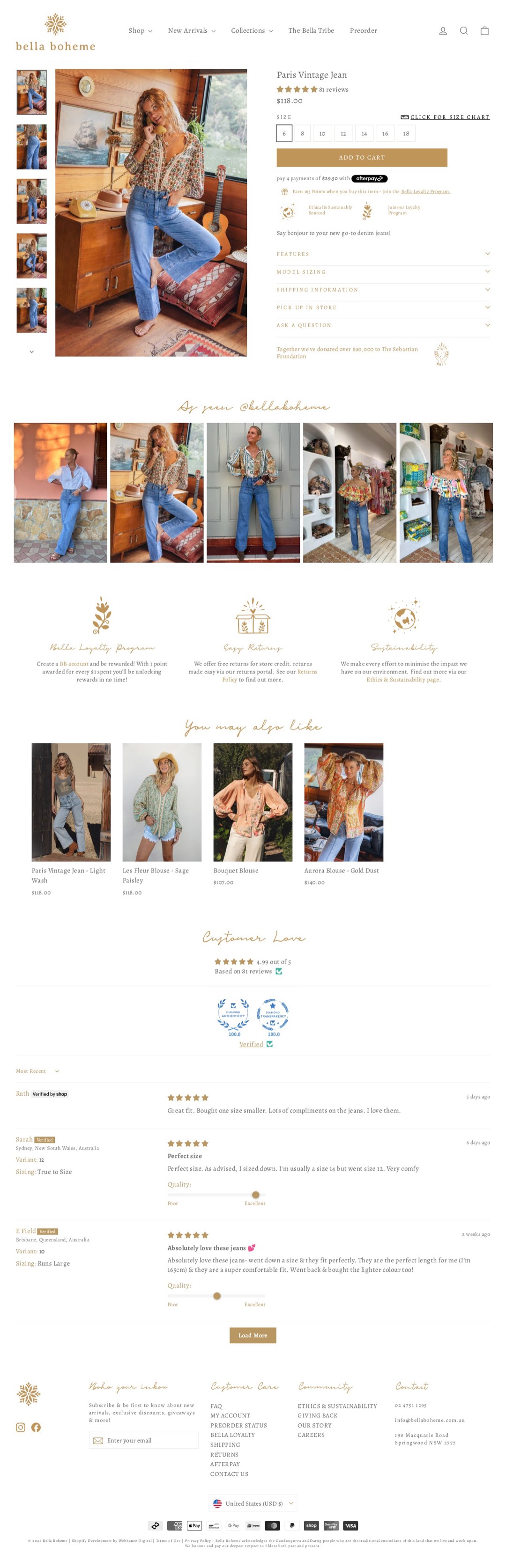
Single-SKU fashion PDP with loyalty-program retention and Afterpay instalment softening as the primary AOV levers. No on-page volume/bundle widget; cross-sell carousel ('You may also like') and Bella Loyalty Program earn points drive repeat purchase. Post-purchase one-click upsell inferred from Zipify OCU install. Selleasy likely powers the cross-sell carousel. Corner Cart / UpCart provide a slide-cart drawer (not shown open).
Operator's read
PricingThere is zero volume or bundle pricing widget on this PDP — it's a clean single-price $118 (USD shown, AUD site) with no struck-through compare-at anchor on the main product. The only price-softening mechanic is Afterpay breaking $118 into $29.50 x 4, which is competent for a $100+ fashion item but leaves AOV completely flat. The cross-sell carousel tops out at $140 (Aurora Blouse), meaning a full outfit add-on opportunity of ~$250+ exists but is never engineered into a discount incentive.
Widget styleThere is no volume-discount or bundle widget present on this PDP whatsoever. The slot that would typically hold a quantity-break radio-tile or bundle builder is occupied by a plain size selector and a single ATC button. Cross-sell is handled by what appears to be Selleasy's 'You may also like' carousel — no app badge, no 'Complete the Look' bundle CTA, no inline checkbox add-on. The installed UpCart/Corner Cart drawer presumably shows cart recommendations when open, but that surface is not visible.
VerdictThe loyalty program and free-returns trust block are executed well and will support repeat purchase rate, and the Afterpay widget is correctly placed to reduce checkout friction on a $118 price point. The single highest-leverage change is activating a 'Complete the Look' bundle using Selleasy's bundle add-on or UpCart's in-cart upsell — pairing the Paris Vintage Jean ($118) with the Les Fleur Blouse ($118) at a 10% bundle discount (~$212 vs $236) would give a concrete AOV lift from ~$118 to $200+ per transaction, which none of the currently visible on-page mechanics are driving.
offer details (5)
Pricing snippet shows VND currency values (2,688,000 VND ≈ $118 AUD) likely from a currency-conversion layer or localisation middleware — confirms single flat price per size with no tiered discount. 81 reviews at 4.99/5 is strong social proof. Instagram UGC grid ('As seen @bellaboheme') is well executed for trust but not monetised with shoppable links visible.

Multi-tier volume discount ladder (1/2/3/5+ units) anchored to a single base price of $34.95, reinforced by a 'Buy 2 Get 1 Free' urgency overlay and free-shipping threshold at 2 units. Primary AOV driver is the quantity-break selector on the PDP. Cart managed via Qikify Slide Cart drawer.
Operator's read
PricingThe store runs a clean 4-tier volume ladder off a single $34.95 base price: 1+ at 10% off (~$31.46/unit), 2+ at 10% off + free ship (~$31.46/unit), 3+ at 20% off (~$27.96/unit), 5+ at 30% off (~$24.47/unit). The 2-unit tier is weak from a pure discount standpoint — the per-unit price is identical to 1+ — but the free-shipping sweetener does real work as a psychological bump. The deepest tier (5 units, 30% off, $122 total) is aggressive for a $35 impulse-safety product but captures gifting and multi-household buyers. There is no visible struck-through compare-at anchor per unit in the widget, so the discount framing relies entirely on percentage callouts.
Pricing tiers (1 widget)
Widget styleThe PDP widget appears to be a horizontal radio-tile or inline selector (consistent with Subto or a similar quantity-break app referenced in snippets) with 4 options labeled by quantity threshold and discount percentage. No 'Most Popular' or 'Best Value' badge is confirmed visible in the screenshot, though the copy structure implies badge-style labels. The BUY 2 GET 1 FREE banner overlay sits above the widget as a campaign-level urgency layer, effectively creating a parallel anchoring message that competes with rather than reinforces the tiered ladder — a common execution gap. No post-purchase upsell app (ReConvert/AfterSell) is installed per the evidence provided.
VerdictThe free-shipping-at-2 mechanic is smart and the BUY 2 GET 1 FREE graduation promo adds urgency, but the highest-leverage change is collapsing the 1+ and 2+ tiers into a single default-selected '2-pack' that leads with the BOGO framing instead of a confusing identical per-unit price. Pre-selecting the 2-unit tier (the most socially logical quantity for a safety gift) and labeling it 'Most Popular — Gift One, Keep One' would immediately lift average order quantity without touching the discount structure, exploiting the gifting use case that the brand's own marketing already implies.
offer details (4)
Subto app referenced in product snippets ('Loading... Subto') suggesting a subscription or quantity-break upsell widget is active but full widget render not visible in screenshot. Qikify Slide Cart is the confirmed cart UI. No post-purchase upsell app detected. Pricing tiers computed from percentage discounts applied to $34.95 base; exact rendered prices not confirmed from a live widget table.

Single-SKU apparel PDP with free-shipping threshold as the primary AOV lever, a 'You May Also Like' cross-sell carousel below the fold, and Bundler installed but no visible bundle/volume widget rendered on the page. No quantity breaks or pricing tiers are displayed. Conversion leans on lifestyle imagery, a large review section, and a $99 free-ship bar.
Operator's read
PricingThere is zero volume or bundle pricing widget visible on this PDP — no quantity breaks, no per-unit ladder, no struck-through compare-at anchoring on the jeggings themselves. The sole AOV incentive is the $99 free-ship threshold in the banner. With a single-unit jegging likely priced in the $30–$50 range (exact price not legible), a customer needs to add 2–3 items to hit the threshold, which is passive pressure at best. There is no explicit 'you're $X away from free shipping' progress bar in the cart to activate that lever.
Widget styleThere is no volume-discount or bundle widget on this landing page despite Bundler being installed — the app is either inactive, configured only for other SKUs, or set up as a post-add bundle that isn't rendering. The slot where a bundle widget would live is occupied by nothing; the quantity input is a bare +/- stepper. The 'You May Also Like' carousel is the only structured upsell surface, and it appears to be a native Shopify or theme feature rather than a dedicated upsell app placement.
VerdictThe free-ship bar and cross-sell carousel are clean but entirely passive — they generate zero urgency at the point of decision. The single highest-leverage change would be activating a visible 2-pair or 3-pair bundle tile directly on this PDP (Bundler is already installed): e.g., 'Buy 2 Jeggings – Save 10%' and 'Buy 3 – Save 15%', with a per-unit callout. Given this is a replenishable, multi-color wardrobe staple with 20+ color variants visible in the swatch grid, a color-mix bundle is a natural fit and would directly convert the large review-reading audience into multi-unit buyers rather than relying on them to discover the free-ship threshold themselves.
offer details (2)
Exact unit price not legible in screenshot. Bundler app is confirmed installed but no widget is rendered on this PDP. Confidence is medium because cart drawer state and post-purchase flow are not visible. No ReConvert/AfterSell/Zipify detected so no post-purchase one-click upsell inferred.
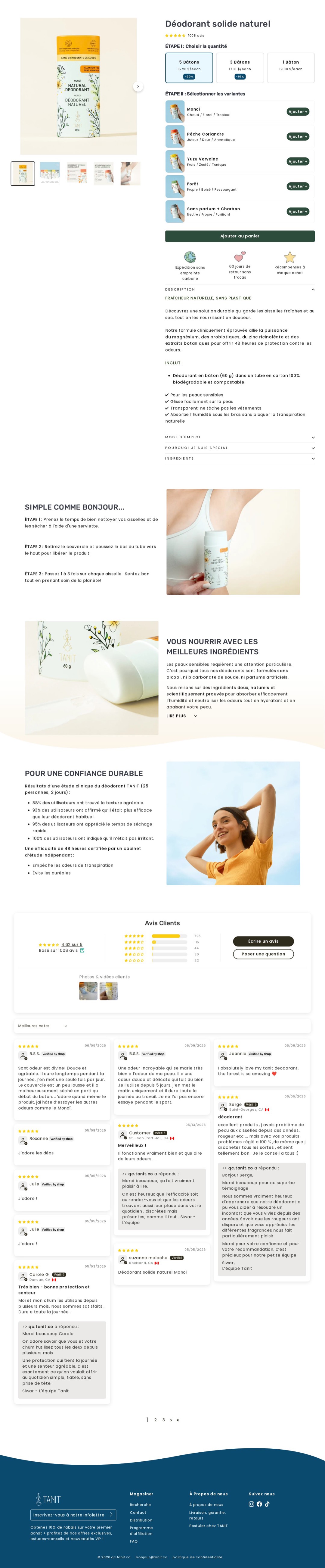
Quantity-break pre-selection with scent variant matrix. The store leads with a 3-tier quantity ladder (1/3/6 bâtons) pre-selecting the middle tier, layered over a rich scent selector. Post-purchase one-click upsell inferred from Zipify OCU install. Social proof wall and clinical-study copy ('efficacité 48h certifiée') do the heavy conversion lifting before checkout.
Operator's read
PricingThree-tier quantity break anchored at $19 single unit, dropping to ~$13.33/unit at 3-pack (≈23% off) and ~$11.80/unit at 6-pack (≈38% off). The banner headline 'JUSQU'À -38%' front-loads the maximum discount to set expectation before the shopper even reads the tiers. No struck-through compare-at price on the single unit, so the anchor is purely the per-unit delta across tiers rather than an artificial MSRP — clean and defensible but leaves anchor-price lift on the table. The free-gift incentive stacked on top of the % discount at higher tiers is a smart AOV lever if the gift is visible at tier selection.
Pricing tiers (1 widget)
Widget styleHorizontal radio-tile layout with three options rendered as ÉTAPE 1, making quantity selection feel like a required product configuration step rather than an upsell. No named third-party bundle app is identifiable — likely a Shopify custom liquid or a lightweight quantity-break script. There are no 'Most Popular' or 'Best Value' badges visible in the screenshot beyond what appears to be a subtle highlight on the 3-bâton tile. The per-unit price is shown inside each tile which does the anchoring work. No escalating compare-at across tiers — the discount story is told purely through per-unit math.
VerdictThe sequential ÉTAPE 1 / ÉTAPE 2 flow is well-executed — forcing quantity selection before scent selection psychologically commits the customer to a quantity before they personalise, which tends to lift average units per order. The highest-leverage single change would be adding a clear 'Most Popular' badge on the 3-pack and a 'Best Value' badge on the 6-pack with an explicit 'You save $X' dollar amount (not just %) on each tile, AND surfacing what the free gift actually is at the 6-pack tier right inside the tile — right now the free gift offer lives only in the banner and never connects back to the quantity selector, so most shoppers miss the compound incentive.
offer details (4)
Per-unit prices for 3-pack and 6-pack estimated from visible tier pricing and the stated -38% maximum discount in the banner. Exact per-unit figures shown in widget were partially obscured; values computed from $19 base price. Zipify OCU post-purchase flow not visible in screenshot — flagged as inferred. Newsletter 10% discount creates a potential margin leak if not gated behind first-purchase only.

Single-SKU hero product (KLIK Screen-Free Camera) sold at a sitewide spring sale discount (30% off, $69.95 vs $99.99 anchor). No multi-tier volume/bundle widget visible on the PDP. AOV lift attempted via Rebuy-powered cart cross-sells ('You may also like') and a free-shipping threshold message in the slide-cart drawer. Kaching Bundles is installed but no bundle widget is visible in the screenshot evidence.
Operator's read
PricingThey run a single price point — $69.95 (down from a $99.99 compare-at), a clean 30% anchor that's easy to communicate in paid social. There's no volume ladder, no bundle pricing, and no quantity break; every color variant holds the same $69.95 price. The free-shipping threshold sits at $50, which is already cleared by a single unit at $69.95, meaning it provides zero incremental AOV lift for solo buyers and only nudges people who might otherwise buy below that threshold (not applicable here). Kaching Bundles is installed but apparently not active on the PDP, leaving significant multi-unit revenue on the table.
Pricing tiers (1 widget)
Widget styleNo bundle or volume-discount widget is rendered on the PDP in the screenshot. The pricing real estate is entirely occupied by a native Shopify sale badge (struck-through $99.99 / sale $69.95) plus color-swatch variant selector — five colors, all flat $69.95. The cart drawer carries the only upsell logic: a Rebuy cross-sell carousel and a free-ship progress bar. There is no Kaching Bundles tile layout, no radio-tier widget, no 'Most Popular' or 'Best Value' badge anywhere visible.
VerdictThe 30% off anchor is executed cleanly and maps well to paid-social creative, and Rebuy in the cart is a smart lightweight cross-sell. However, the single highest-leverage change is to activate Kaching Bundles on the PDP with a 3-tier quantity widget — e.g., 1 camera at $69.95, 2 cameras for $124.99 (~$62.50 each, 11% off), 3 cameras for $174.99 (~$58.33 each, 17% off) — badging the 2-pack as 'Most Popular' and leaning into the gifting angle ('give one, keep one'). This camera is positioned as a gift product; multi-unit bundles are the natural AOV lever and the tooling is already installed but idle.
offer details (4)
Kaching Bundles is installed per evidence but no bundle widget appears active on the PDP in the screenshot. Rebuy appears to power the cart cross-sell carousel. Free-ship threshold of $50 is below single-unit price of $69.95 so it functions purely as reassurance copy rather than an AOV driver for single-item buyers. Five color variants (Yellow, Pink, Black, White, and one more visible in swatches) all priced identically — no color-based upsell differentiation.

Volume discount via announcement-bar tiered pricing (2→5+ units, 5–20% off) anchored against a struck-through compare-at price on the hero product ($69.00 → $49.95, 27% off). In-cart free-shipping threshold at $100 nudges multi-unit adds. Checkbox-style add-on cross-sells (5–6 SKUs at $20–$38) sit below the ATC. Post-purchase one-click upsells inferred from AfterSell + Zipify OCU installs. Kaching Bundles powers the volume discount ladder.
Operator's read
PricingThe hero mat is anchored at $49.95 vs. a $69.00 compare-at (27% off, $19.05 saved) — a solid single-unit anchor. Volume discounts of 5/10/15/20% for 2/3/4/5+ units are only communicated in the announcement bar, not surfaced as a visual widget on the PDP, so the per-unit ladder ($47.45 / $44.96 / $42.46 / $39.96 at base price) is invisible to most shoppers. The $100 free-ship threshold is well-calibrated: at $49.95 a single mat falls short, nudging a second unit add.
Pricing tiers (1 widget)
Widget styleThere is no dedicated volume-discount widget (radio-tiles, inline table, or bundle builder) on the PDP — Kaching Bundles appears to be powering the logic but the front-end render is banner-only. The slot below the ATC is occupied by a 'Pair it with' checkbox add-on block featuring 5–6 SKUs ($20–$38 each) with individual ADD buttons, which is the dominant visual upsell element. No 'Most Popular' or 'Best Value' badge is visible; the only anchoring tactic is the single struck-through $69 compare-at on the hero SKU.
VerdictThe free-ship threshold + volume ladder combo is smart for a gifting-heavy Islamic goods category, but burying the multi-unit discount in the announcement bar is leaving serious AOV on the table — most mobile shoppers never read it. The highest-leverage change is to surface Kaching Bundles as a proper radio-tile widget directly on the PDP (e.g., '1 mat / 2 mats – save 5% / 3 mats – save 10%') with a pre-selected 2-unit default at $47.45/each, which would convert the free-ship urgency ($100 threshold) into a built-in nudge to pick the 2-pack and push the cart over $95 in one tap.
offer details (7)
Pricing widget tiers show discount percentages only; absolute per-unit prices computed from $49.95 base. AfterSell and Zipify OCU post-purchase flows inferred from installed apps — not visible in screenshot. Cart cross-sell ('Other customers also bought') confirmed via cart snippet. 'Recommended for you' carousel visible on PDP showing 4 related mats ($19–$69 range). Founder message and community UGC section present — brand-building plays that support conversion but are not direct upsell mechanics.

Milestone-based free-gift threshold (BOGO ladder) driving multi-unit purchases of €25.95 flat-priced bracelets, caps, and plushies, layered with an email-capture discount popup (-10%) and a ReConvert post-purchase upsell. The store leans on ocean-conservation mission branding and animal-tracking activation (adopt a sea turtle) rather than volume-discount tiers. AOV lever is purely the 'buy more, get more free' mechanic rather than a per-unit price ladder.
Operator's read
PricingThere are no volume-discount price tiers whatsoever — every bracelet variant (Sea Stones, Blue Quartz, Crystal Blue, Onyx, Rose Quartz, Volcanic Stone, Azur Aqua) is a flat €25.95 with no struck-through compare-at price on the PDP. The entire AOV mechanism is the free-gift ladder (2+1 free, 4+2 free, scaling infinitely), which effectively prices each unit at €17.30 at the 3-for-2 level and ~€12.98 at the 4-for-2 level — but the customer never sees those per-unit numbers surfaced explicitly, which is a missed anchor opportunity. The -10% email popup adds a thin first-order discount layer but does nothing to raise basket size on its own.
Widget styleThere is no volume-discount or bundle widget on this page — no radio-tiles, no inline table, no dropdown tier selector. The slot that a Quantity Breaks / Bundle Builder widget would occupy is instead filled by the free-gift milestone flow embedded in the modal popup and presumably in the cart. The modal is a custom or app-driven 3-step wizard (product > animal > colour) that doubles as an email-capture and gift-unlock mechanism. No 'Most Popular' or 'Best Value' badges are present; no compare-at anchoring is used at any tier.
VerdictThe conservation mission + animal-tracking hook is genuinely differentiated and the BOGO ladder is clever for gifting, but the store leaves serious AOV money on the table by never showing customers the effective per-unit price they unlock (e.g. 'Buy 3 pay only €17.30 each'). The single highest-leverage change: surface an inline quantity-break widget directly on the PDP that translates the free-gift ladder into explicit per-unit savings — '1 for €25.95 | 3 for €51.90 (€17.30 each, 1 FREE) | 6 for €77.85 (€12.98 each, 2 FREE)' — with a pre-selected middle tier. This one change would let the math do the selling passively on every product page visit without relying solely on the popup flow.
offer details (3)
All bracelet variants are priced identically at €25.95 with no visible compare-at/strikethrough anchor. The free-gift ladder is the only AOV driver visible pre-cart. ReConvert post-purchase upsell is installed but the specific offer shown post-checkout is not visible in the screenshot. The store is French-language primary (félicitations, étape) with English product copy mixed in, suggesting a French-market primary audience with international shipping.

Single-product pet treat page (fish-skin chews) running a subscribe-and-save upsell as the primary AOV lever, with a slide-cart drawer (iCart) for in-cart cross-sell. No visible volume/bundle pricing widget on the PDP. The store leans on a subscription discount badge (25% Rabatt) plus social proof (vet recommendation, Omega-3 claims) to justify repeat purchase. The German store is noted as closed in the banner, indicating this may be a legacy or transitional setup.
Operator's read
PricingThere is no volume or quantity-break pricing widget on this PDP — zero tiers, no per-unit ladder. The entire pricing strategy rests on a single-SKU one-time price (visible in the hero but not fully legible at this resolution, approximately 9-11 EUR range) versus a subscribe-and-save option at 25% off. That single discount depth is the only anchor. No struck-through compare-at on the one-time price is visible, which means there's no loss-aversion anchoring for one-time buyers — a significant missed lever.
Widget styleNo bundle or volume-discount widget exists on this page. The slot that would normally be occupied by a quantity-break radio-tile or inline table is instead taken by a flat subscription banner (purple section, bold '25% Rabatt' pill, single CTA). This is a subscribe-or-leave structure with no middle ground — no '2-pack save 10% / 3-pack save 20%' ladder to capture non-subscriber volume buyers. iCart is installed but cart upsell contents were not captured, so in-drawer cross-sell sophistication is unknown.
VerdictThe subscribe-and-save 25% offer is well-positioned visually and the vet-endorsement plus Omega-3 narrative supports repeat-purchase logic. However, the single highest-leverage change is adding a 3-tier quantity-break widget (1 unit / 2 units / 3 units) directly on the PDP with escalating per-unit savings (e.g. 1x at full price, 2x save 10%, 3x save 18%) — this captures volume AOV from one-time buyers who will never subscribe, which is almost certainly the majority of cold-traffic visitors hitting this page from ads.
offer details (3)
Banner explicitly states the German online store is closed ('UNSER DEUTSCHER ONLINE STORE IST AB SOFORT GESCHLOSSEN'), which means this analysis is based on a storefront that may no longer be actively converting. Confidence is medium because pricing widget text returned empty and cart snippets are blank, limiting visibility into iCart drawer contents and exact price points. The 'Das könnte dir gefallen' carousel and subscribe-save section are clearly visible in the screenshot and treated as confirmed evidence.
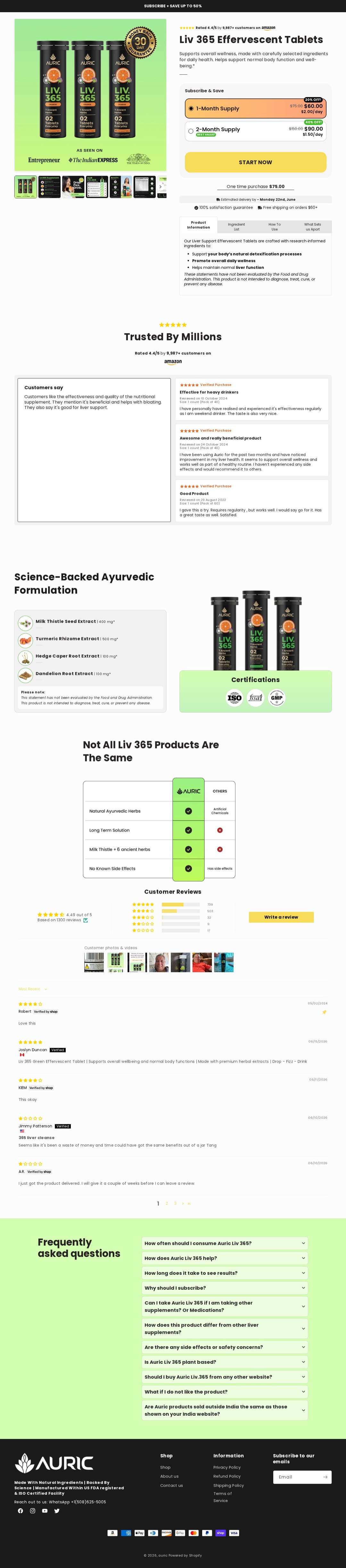
Subscribe-and-save with tiered supply options (1-month vs 2-month) as the primary AOV lever, reinforced by per-day cost framing and free-shipping threshold on subscribe tiers. UpCart slide drawer handles cart-side nudges. No post-purchase upsell app detected beyond UpCart.
Operator's read
PricingThree options: one-time 1-month at $75 (no discount, no free ship), subscribe 1-month at $60 (25% off $80 compare-at, $1.10/day, free ship), subscribe 2-month at $120 (20% off $150, $1.50/day implied but free ship). The per-unit cost is identical at $60/month for both subscribe tiers, which kills the AOV escalation — there is zero financial incentive to step up to 2-month. The deepest discount is actually on the 1-month subscribe (25%) not the 2-month (20%), which is a classic inverted anchor problem that will funnel most buyers to the smaller basket.
Pricing tiers (1 widget)
Widget styleRadio-tile layout with three options stacked vertically. No third-party volume-discount app visible — this is likely native Shopify subscription selector or a lightweight subscribe-save app. Badges ('Most Popular', 'Best Value') and compare-at strikethrough ($80→$60, $150→$120) are the anchoring tactics. The per-day cost callout ($1.10/day vs $1.50/day one-time) is a smart value-framing addition, but the 2-month tile does not show a lower per-day figure than the 1-month subscribe, neutralising the upsell pull.
VerdictThe subscribe flow and free-shipping differential vs one-time is executed cleanly and the per-day framing is conversion-positive. The single highest-leverage fix: restructure the 2-month subscribe to a steeper discount (e.g., 30% off → $105 vs $150, ~$52.50/month, ~$0.88/day) so the per-day cost visibly drops from $1.10 to $0.88 on the 2-month tile. Right now both subscribe tiers land at $60/month — there is no ladder, just a flat step, so virtually no one upgrades. A $15 AOV lift on 2-month conversions at even 20% mix shift moves revenue meaningfully on an ad-active SKU.
offer details (3)
Confidence is medium because no cart snippets were captured to confirm UpCart upsell offers or order bumps. The subscription compare-at on the one-time ($75) vs subscribe 1-month ($60) creates a 'subscribe saves $15' anchor but the one-time has no explicit strikethrough shown in the widget text, which may reduce perceived urgency. New Year's Discount auto-applied badge is present and adds timely urgency copy.
Single-SKU high-ticket sauna brand running urgency via a price-increase announcement banner. No visible volume/bundle pricing widget. Upsell stack relies on Candy Rack (likely in-cart or post-add-to-cart add-ons) and Qikify Slide Cart (slide-out cart drawer with cross-sell/add-on rails). No post-purchase app detected.
Operator's read
PricingNo volume or bundle pricing widget is visible — this is a high-ticket single-SKU store where the entire pricing lever is a struck-through anchor or a single price point per sauna model. The only active pricing mechanic visible is the urgency banner ('Prices increase July 1st'), which functions as a soft time-anchored price threat rather than a structured tier. Without seeing the actual product price points I can't audit the per-unit ladder, but the absence of any multi-tier widget means AOV expansion is entirely dependent on add-on attach rate, not quantity-based incentives — which is appropriate for a capital-goods category.
Widget styleThere is no volume-discount or bundle widget on this product page. The slot that would normally be occupied by a pricing widget is instead held by a plain price display plus the urgency announcement banner. Candy Rack is the closest thing to a structured upsell mechanic — it likely presents a modal or checkbox-style add-on overlay post-ATC — but no radio-tile layout, inline table, or tiered pricing UI is present. Qikify Slide Cart handles the cart-level cross-sell surface.
VerdictThe urgency banner is a smart play for a high-consideration purchase — price anchoring via a deadline is more persuasive than a percentage discount on a $3K+ item. The single highest-leverage change I'd make is programming Candy Rack to offer a high-margin sauna accessories bundle (chromotherapy light kit, essential oil kit, sauna rocks/bucket set) as a single-click add-on at $150–$300, with a bundled 'save 15%' frame versus buying separately. On a $3K–$8K ticket, a $200 attach at even 20% take rate moves AOV meaningfully and requires zero additional paid traffic.
offer details (3)
Evidence is thin — no product snippets, cart snippets, or pricing widget text were provided. All offer inferences for Candy Rack and Qikify are app-capability-based, not screenshot-confirmed. Confidence is low. A full audit would require product page and cart page screenshots plus Candy Rack offer configuration.
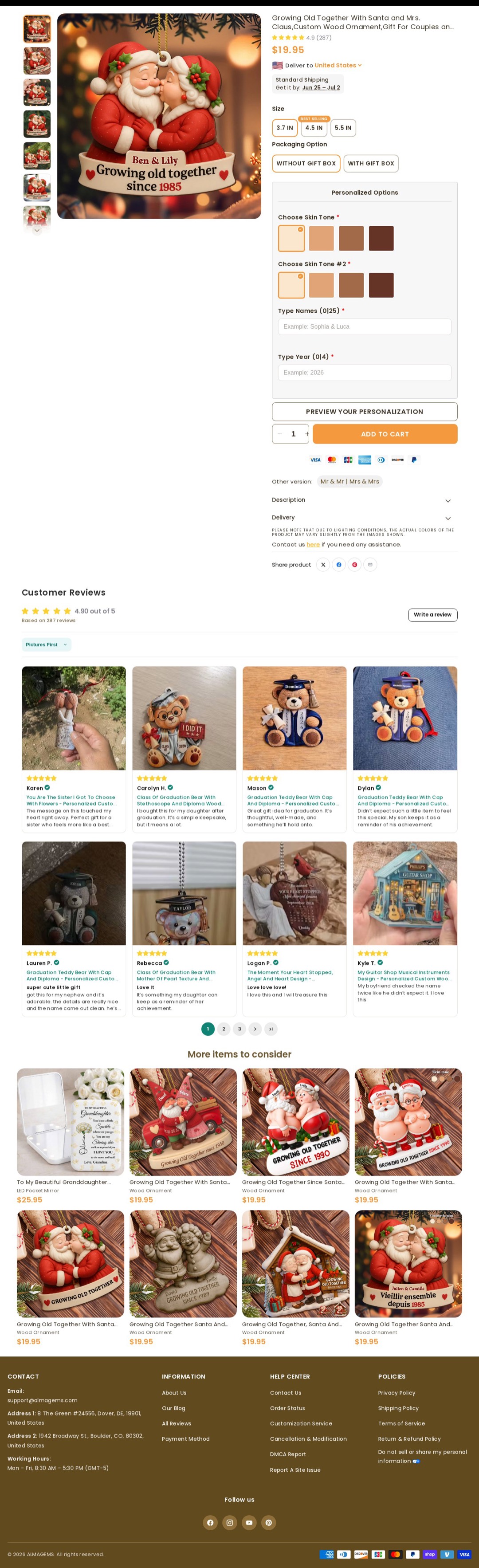
Personalized gift store (couples Christmas ornaments) running a single-SKU PDP with size variants and packaging add-on. Core AOV lever is a manual discount code (AG2, 10% off 2+) surfaced via announcement banner, plus Selleasy for cross-sell/upsell. No on-page volume-pricing widget. Personalization fields (skin tones, names, year) justify a $19.95 price point with perceived high customization value.
Operator's read
PricingThere is no on-page volume or bundle pricing widget — the entire multi-unit incentive is offloaded to a banner discount code (AG2, 10% off 2+) that requires manual entry at checkout, which is a high-friction, low-conversion mechanic. The single price point is $19.95 with no struck-through compare-at anchor on the PDP itself, meaning there is zero visible savings framing at the moment of purchase decision. The packaging add-on (gift box) likely carries a small upcharge but the delta isn't shown, so it can't be quantified as an AOV driver.
Widget styleThere is no volume-discount or bundle widget on this landing page. The slot that would normally be occupied by a quantity-break ladder or Selleasy FBT widget is instead taken by a packaging radio-button toggle (WITHOUT GIFT BOX / WITH GIFT BOX) and a manual discount code in the announcement bar. The 'More items to consider' carousel at page bottom appears to be a Selleasy or native Shopify recommendation rail showing sibling SKUs all priced at $19.95, which drives repeat add-to-cart rather than true AOV lift per order.
VerdictThe personalization angle and 4.9-star social proof are strong trust builders, and the variant architecture (3 sizes × 2 packaging options) is clean. The single highest-leverage change is replacing the manual discount-code banner with an inline quantity-break widget (e.g. Selleasy's quantity bundles or a dedicated app) showing Buy 1 / Buy 2 Save 10% / Buy 3 Save 15% directly on the PDP — eliminating the code-entry friction and making the multi-unit incentive visible at the decision point, which on gifting SKUs like this routinely lifts AOV by 15–25% as customers naturally think in pairs or family sets.
offer details (4)
Screenshot shows a Shopify storefront at almagems.com. Pricing widget text field was empty, confirming no structured volume-pricing widget is installed on this PDP. Selleasy is the only listed upsell app; its cart-drawer or post-purchase modules are not visible in the screenshot. The 'More items to consider' rail is likely Selleasy recommendations or native Shopify. Review count: 287 reviews, 4.9 stars. Product has an 'Other version: Mr & Mr | Mrs & Mrs' cross-link indicating catalog depth across relationship types.
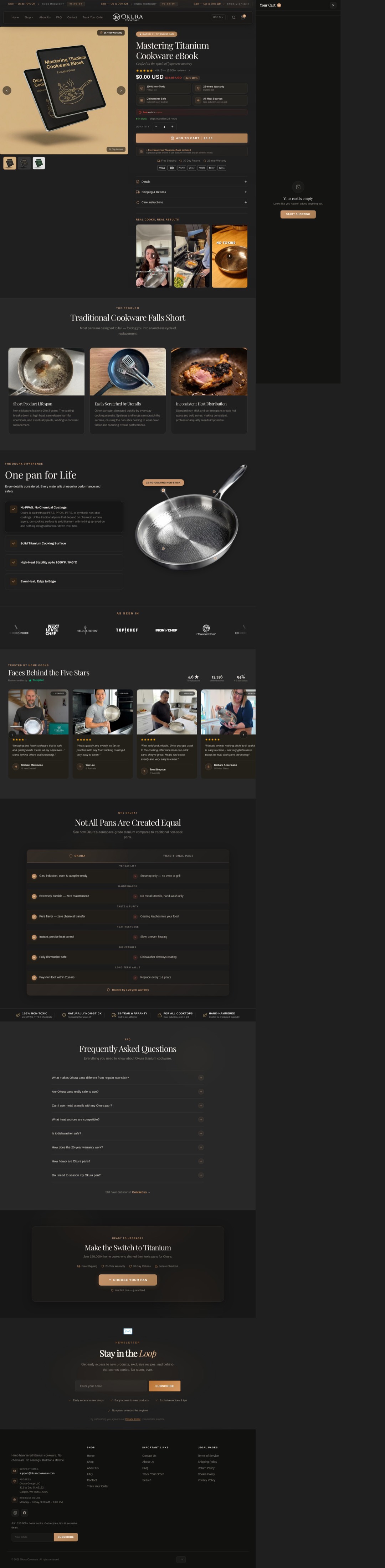
Single-SKU cookware pan sold via long-form advertorial PDP with urgency-driven sale banner (up to 70% off, countdown timer), slide-cart cross-sells, shipping protection add-on, and AfterSell post-purchase one-click upsell. No on-page volume/bundle widget detected; AOV lever is cart cross-sell carousel + post-purchase flow.
Operator's read
PricingThere is no on-page volume or bundle pricing widget — zero tiers, zero per-unit ladder. The entire pricing strategy leans on a single urgency anchor: a sitewide 'up to 70% off' sale with a midnight countdown timer. The eBook is shown at $0.00 USD (free lead-gen), and the main pan price is not legible at screenshot resolution, but the 70% off claim is the only discount mechanic on the PDP. Cart cross-sells range from $29.95 (Tawashi) to $299.95 (Knife Set), giving a wide AOV expansion window if even one attaches.
Widget styleThere is no volume-discount or bundle widget on the landing page whatsoever — Kaching Bundles is installed but not rendering on this PDP. The slot that would normally be occupied by a quantity-break or bundle selector is instead filled by the long-form advertorial copy (comparison table, testimonials, FAQ). The only structured pricing surface is the slide-cart drawer's cross-sell carousel, which is a flat list of individual SKUs at full price with no bundle incentive.
VerdictThe cart cross-sell carousel with 5 SKUs up to $299.95 is solid surface area, and the shipping protection add-on is an easy margin win at $4.99. The single highest-leverage move is activating Kaching Bundles on the PDP as a 'Complete Your Kitchen' bundle tile (pan + cutting board + utensil set) with a 10-15% bundle discount — the installed app is already paid for and idle, the accessory SKUs are already priced, and a pre-cart bundle commit will lift AOV more than hoping the cart carousel converts cold traffic mid-checkout.
offer details (8)
Screenshot resolution limits exact pan price confirmation. Kaching Bundles is installed but no widget is visible on this PDP — could be active on other PDPs or misconfigured. AfterSell post-purchase upsell inferred from app installation, not visible in screenshot. Free eBook ($0.00) appears to be a lead-gen or value-add bundled with pan purchase rather than a standalone product.
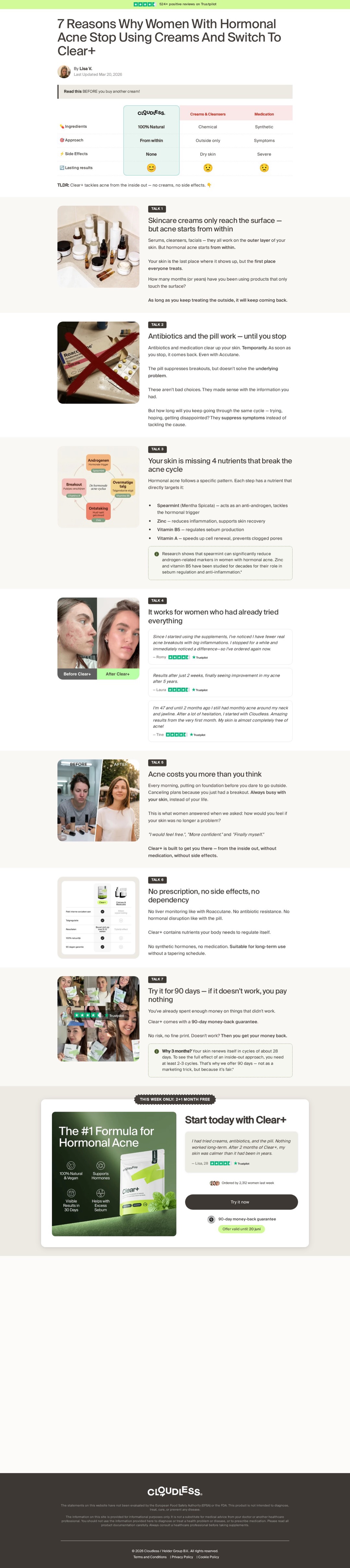
Advertorial-led DTC supplement brand (Cloudless Clear+) using a long-form native article disguised as editorial content ('7 Reasons Why Women With Hormonal Acne Stop Using Creams') to pre-qualify and warm traffic before a single hard CTA at the bottom. The page builds credibility via ingredient science, before/after testimonials, Trustpilot social proof, and a 90-day money-back guarantee, then closes with urgency ('This Week Only: 2+1 Free') driven by the announcement bar. The primary AOV lever is a BOGO/multi-unit bundle (2+1 free) surfaced via the announcement bar and likely enforced through Kaching Bundles on the product page, not visible within this advertorial itself.
Operator's read
PricingThere is no visible pricing widget on this advertorial page — zero price points, tiers, or per-unit anchors are shown to the reader before they hit the CTA. The entire pricing conversation is deferred to the product page. The only pricing signal is the '2+1 GRATIS' mechanic in the banner, which implies a ~33% effective discount on a 3-unit order. Without seeing the product page, the single-unit price is unknown, but the strategy leans entirely on the multi-unit bundle as the AOV driver rather than a struck-through compare-at or volume table on this page.
Widget styleThere is no bundle or volume-discount widget on this advertorial. The slot that would normally be occupied by a pricing widget is instead taken by a plain CTA button ('After only 30 per') with a Trustpilot badge and a guarantee seal. The Kaching Bundles app is installed and almost certainly powers a radio-tile or card-style quantity selector (1/2/3 units) on the actual product page, but it does not render here. The 2+1 free framing in the banner is the only anchoring tactic visible on this page.
VerdictThe advertorial funnel is well-executed — long-form editorial pre-sell with strong ingredient credibility, real before/after testimonials, and a clear villain (topical creams) vs. hero (inside-out supplement) narrative that warms cold paid traffic effectively. The single highest-leverage change I would make is injecting a mini pricing widget or at minimum a '3-bottle = best value' visual anchor directly into the advertorial page above the CTA block — showing the per-unit price drop (e.g., €X/bottle at 1 unit vs. €Y/bottle with 2+1 free) would convert the urgency already built by the copy into a concrete savings number, reducing click-to-purchase drop-off and lifting 3-unit bundle attach rate without any changes to the product page.
offer details (4)
Analysis is medium confidence because the product page pricing widget (Kaching Bundles) is not visible — only the advertorial/pre-sell page was captured. Exact unit prices, tier structure, and compare-at anchors could not be parsed. The 2+1 free mechanic is confirmed via announcement bar and urgency badge. Currency inferred as EUR based on Dutch-language copy and 'meetcloudless.com' brand context.

Free-shipping threshold anchors AOV; Rebuy powers cross-sell/recommendation logic (likely post-purchase or cart-drawer, not visibly rendered in screenshot); primary PDP relies on a single-product quantity selector with size variants rather than a volume-discount widget. Long-form editorial PDP (How to Make, Why Switch, ingredient trust blocks) does the heavy persuasion work pre-ATC.
Operator's read
PricingThere is no volume-discount or bundle pricing widget visible on this PDP. The store leans entirely on a $59 free-shipping threshold as its AOV lever, plus size/weight variant tiles (e.g. small bag vs. large bag) that create a natural per-unit price ladder — but no explicit 'save X% per unit' messaging is surfaced. With a consumable like a dog food base mix, the absence of a subscribe-and-save or multi-bag discount is a meaningful gap; a customer buying one bag at ~$30-$40 doesn't reach the free-ship threshold without adding a second item.
Widget styleThere is no volume-discount or bundle widget on this PDP — that slot is occupied by standard Shopify variant radio tiles (size/weight options). No 'Most Popular' or 'Best Value' badges, no compare-at anchoring on volume, no quantity break table. The editorial real estate below the fold is used for trust-building content (USDA Organic, 90-day guarantee, customer reviews) rather than pricing mechanics. Rebuy is installed but its widgets are not visibly rendered on the PDP in the screenshot.
VerdictThe long-form trust content is executed well — the 'How to Make,' ingredient photography, and vet-credibility copy reduce purchase anxiety for a high-consideration pet food buyer. The single highest-leverage change: add a Rebuy or native subscribe-and-save widget (subscribe = save 15%, one-time = full price) directly on the PDP above the ATC button. This product is a recurring consumable — locking in a subscription at first purchase is worth far more than a one-time free-ship nudge, and it would structurally lift both AOV and LTV simultaneously.
offer details (3)
Screenshot resolution limits visibility of exact variant price points; no numeric pricing tiers could be parsed. Rebuy cart and post-purchase flows are inferred from app install, not directly observed. Free-ship threshold of $59 is the only confirmed AOV mechanic.

Single-SKU nursing bra PDP driving volume via a deep seasonal discount banner (up to -60%) and a slide-cart drawer for cross-sell/upsell nudges. No on-page bundle or quantity-break widget is present; AOV lever is purely the promotional price anchor on the hero plus a recommendation carousel ('Może Ci się także spodobać') below the fold.
Operator's read
PricingThere is no quantity-break or bundle pricing widget on this PDP — zero tiers, zero per-unit ladder. The entire pricing argument rests on the announcement banner promising up to -60% sitewide and the implied struck-through compare-at price on the product tile. Without a visible numeric anchor (e.g. 'was 129 zł, now 69 zł') rendered in the screenshot evidence, the discount feels vague; shoppers see a percentage promise but no hard savings number on the PDP hero, which weakens conversion urgency at the point of decision.
Widget styleNo bundle or volume-discount widget exists on this page. The slot that would typically hold a quantity-break radio-tile or subscribe-and-save toggle is empty — occupied instead by a standard single-SKU size/color selector and an add-to-cart button. The iCart slide-cart drawer is the only structured upsell surface, and its cross-sell tiles are not visible in the screenshot so their copy/discount depth cannot be confirmed. The 'Może Ci się także spodobać' carousel is a passive recommendation row with no discount incentive attached.
VerdictThe trust-building content (fabric callouts, fit-guide imagery, 1,000+ review social proof) is executed well and clearly converts cold traffic arriving from ads. The single highest-leverage change is adding a 2-tier quantity-break widget directly on the PDP — e.g. '1 bra at 89 zł vs. 2 bras at 159 zł (save 19 zł / 11%)' — because nursing mothers routinely buy multiples for rotation and there is currently zero on-page prompt to do so; even a modest 10-15% two-unit discount would lift AOV materially without cannibalising margin the way a blanket -60% banner does.
offer details (3)
Page is Polish-language (pl.momcozy.com). Screenshot resolution limits precise price-point extraction; no numeric prices were parseable from the PDP hero or variant selector in the provided evidence. Confidence is medium because iCart drawer contents and exact compare-at prices are not visible.
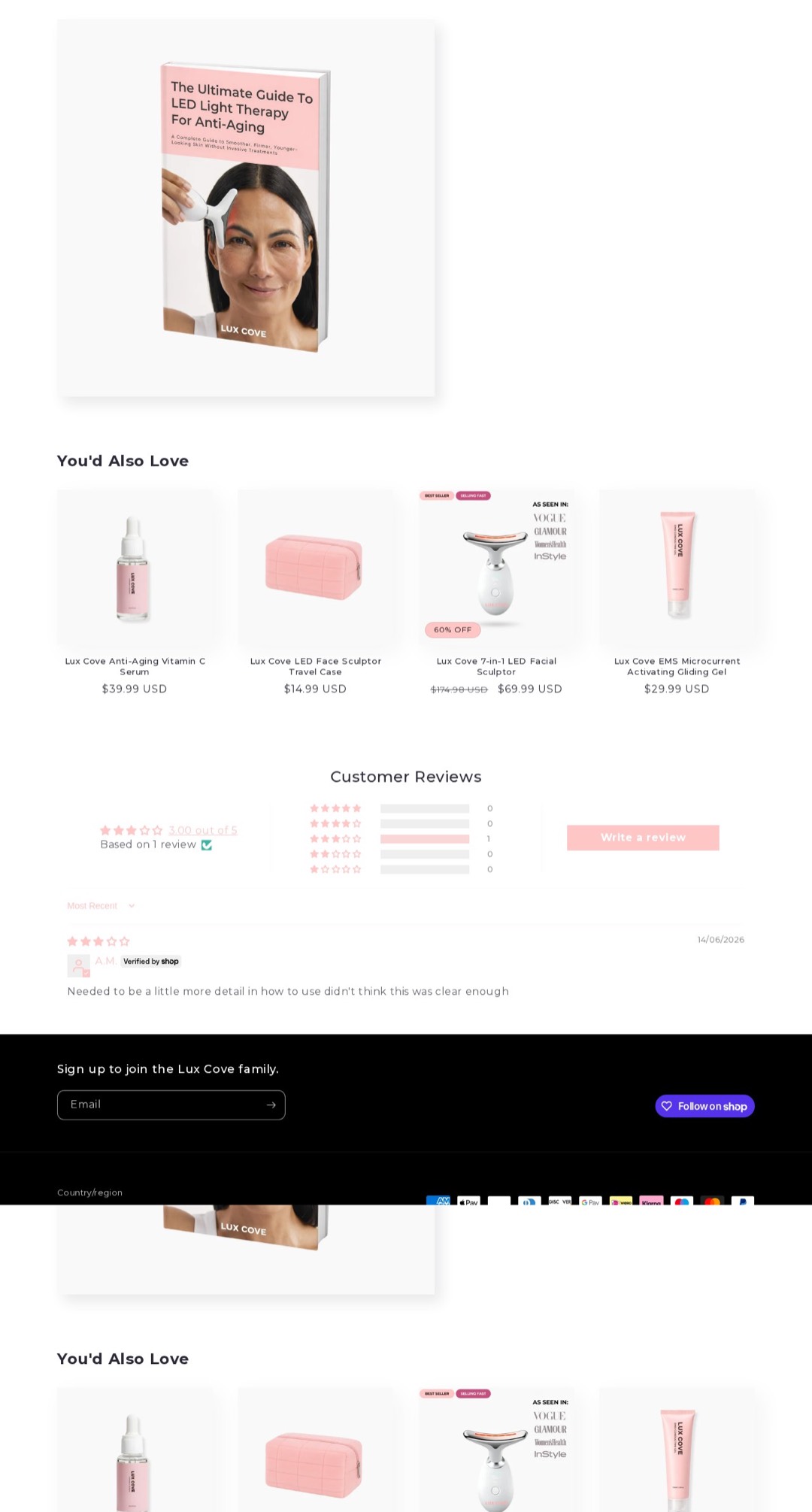
Lux Cove runs a content-led AOV play: a free LED therapy eBook anchors the brand, cross-sells drive customers from the guide toward hero devices and consumables, and a slide-cart drawer (UpCart/iCart) captures the upsell at checkout. AfterSell handles post-purchase one-click upsells. Kaching Bundles is installed but no bundle widget is visibly rendered on this page. The store leans on a Spring Flash Sale urgency banner, a free worldwide shipping threshold promise, and a social-proof stack (150k customers, 90-day MBG) rather than a quantity-break ladder.
Operator's read
PricingThere is no volume-discount or bundle-pricing widget rendered on this eBook page — the store relies on a single struck-through sale price mechanic (360,000 VND) with a percentage-off badge and the cross-sell carousel to lift AOV. The 7-in-1 LED Facial Sculptor is the most aggressively anchored cross-sell at 60% off ($69.99 vs $174.98 compare-at), doing the heavy anchoring work in the recommendation row rather than on the main product. Free worldwide shipping is used as a universal conversion closer rather than a tiered AOV threshold driver.
Widget styleNo bundle builder or quantity-break widget is active on this page despite Kaching Bundles being installed — that is a missed deployment. The cross-sell carousel (two instances: mid-page and bottom) is the primary upsell layout: horizontal scroll of 4 product cards with image, title, and price. The 60% OFF badge on the LED Sculptor is the strongest visual anchor. The slide-cart drawer (UpCart/iCart) likely hosts a free-shipping progress bar and in-cart product recommendations, but those are not visible in the provided screenshot.
VerdictThe eBook page is a smart top-of-funnel trust asset but it is leaving serious AOV on the table: Kaching Bundles is installed and not deployed here, meaning there is no bundle incentive to pull the $69.99 device + $39.99 serum + $29.99 gel into a discounted kit. The single highest-leverage change is to activate a Kaching Bundle on this page — a 3-product 'Complete LED Ritual' kit (device + serum + gel) anchored at $174.98 with a 20% bundle discount to ~$139, surfaced as a radio-tile widget directly above the Add to Cart button — which would convert the eBook reader's intent into a $139 cart vs the current $0 eBook cart.
offer details (5)
Currency displayed as VND in cart/pricing snippets but product prices in the carousel are shown in USD ($39.99, $14.99, $69.99, $29.99) — likely a geo/currency detection inconsistency. The eBook itself appears to be a free lead magnet or low-cost content product. Review count is very low (1 review, 3.0/5) which is a conversion risk on any upsell flow. AfterSell post-purchase upsell details are inferred from app installation only.

Health-claim DTC grounding/wellness brand running a June sale (67% off banner) on a flagship bedsheet. Core monetisation levers: a quantity-break selector on the PDP (1/2/3 units with dollar-save callouts), a free-gift threshold at 2+ units (free grounding mat, $69 stated value), and post-purchase one-click upsell inferred from ReConvert. Kaching Bundles drives the quantity ladder. Long-form advertorial PDP with social proof, education, and urgency anchoring via the sale banner.
Operator's read
PricingThe store leans on a single struck-through anchor (2,683,000₫ vs 5,344,000₫ regular, ~50% off) reinforced by the sitewide '67% Off' June sale banner to manufacture urgency. The quantity ladder shows only dollar-save callouts ($39 at qty 2, $98 at qty 3) rather than explicit per-unit prices, so the per-unit discount depth at tiers 2 and 3 is deliberately obscured — likely ~$19.50/unit and ~$32.67/unit savings respectively if the base unit is ~$39. The free $69 grounding mat at qty 2 is the real AOV driver, effectively making the 2-unit bundle the value anchor, but the pricing widget doesn't surface a crossed-out compare-at at those tiers to hammer it home.
Widget styleKaching Bundles powers a compact inline radio-tile selector (3 options) sitting just above the ATC button. There are no formal 'Most Popular' or 'Best Value' badges on the tiles themselves in the visible snippet — the free-mat gift callout does the heavy lifting for tier 2. The anchor tactic is the compare-at strikethrough at unit level plus the sitewide sale banner percentage, not an escalating compare-at per tier. No bundle-builder or modal is present; the pattern is purely a quantity radio.
VerdictThe free grounding mat threshold at qty 2 is smart and well-merchandised with a hard $69 value anchor — that's the best-executed element here. The single highest-leverage change I'd make is adding explicit per-unit price callouts and a 'Most Popular' badge to the qty-2 tile (e.g., 'Each sheet: X₫ — you save 58% vs buying one'), plus surfacing a crossed-out compare-at total for qty 3, so buyers see the compounding saving in concrete numbers rather than an abstract '$98' — this alone typically lifts multi-unit rate 15-25% on grounding/wellness SKUs at this price point.
offer details (5)
Exact VND prices for qty 2 and qty 3 tiers not visible in snippets; only the qty-1 sale/regular prices (2,683,000₫ / 5,344,000₫) and dollar-save deltas ($39/$98 in USD-equivalent copy) are confirmed. The store appears to be a Spanish-market localisation (es.groundingwell.com) showing Vietnamese Dong pricing, suggesting geo-currency mismatch or the banner text was captured from a different locale. ReConvert post-purchase upsell flow not visible in screenshot. Kaching Bundles confirmed by installed app list.
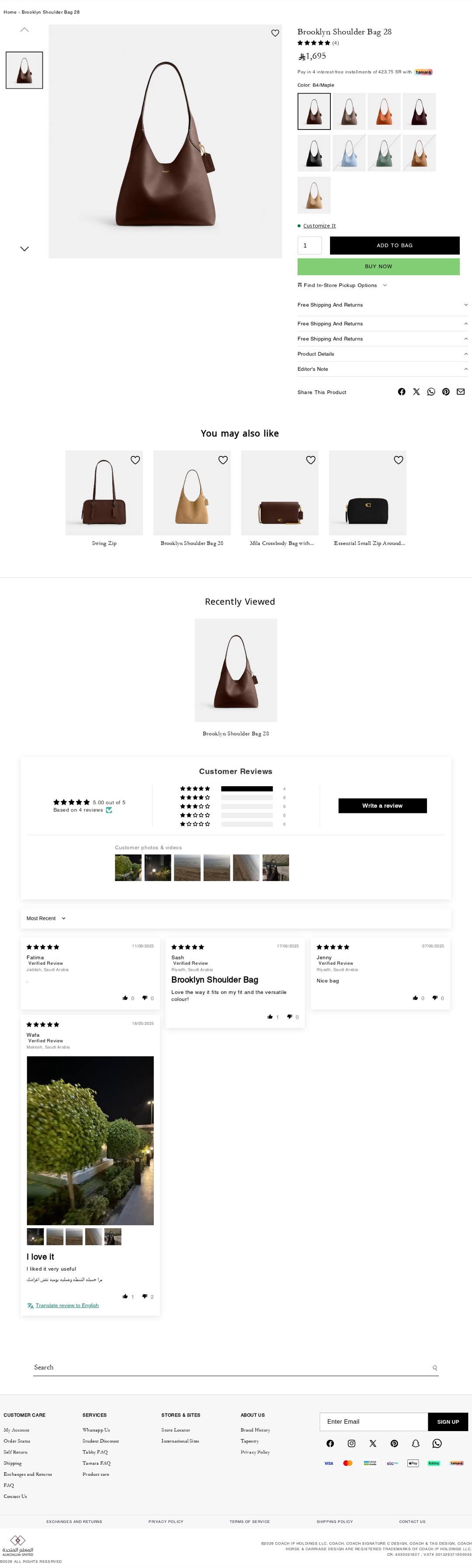
Single-SKU PDP with no volume/bundle pricing. The store relies on a standard quantity selector (1–5 dropdown), BNPL anchoring via 4-interest-free instalments, a free-shipping threshold, and a 'You may also like' cross-sell rail to drive incremental revenue. Bundler is installed but no bundle or volume-discount widget is rendered on this PDP.
Operator's read
PricingThere is zero volume or bundle pricing widget on this PDP — one flat price of 1,695 SAR with no struck-through compare-at anchor and no per-unit ladder. The only pricing lever deployed is BNPL: Tabby breaks the ticket into four instalments of 423.75 SAR, effectively halving the perceived sticker shock on a ~$450 bag. The free-shipping threshold at 500 SAR is comfortably cleared by a single-unit purchase, so it provides no pull toward a larger basket — it functions purely as a reassurance badge, not an AOV driver.
Widget styleThere is no volume-discount or bundle widget on this page whatsoever. Bundler is installed but dormant here. The slot that a widget would occupy is filled by a plain quantity selector dropdown (1–5 units) with no per-unit pricing shown, no 'Buy 2 save 10%' callout, and no badge. The cross-sell carousel ('You may also like') is the only structured upsell layout, and it is a standard Shopify section — no app-powered logic, no 'frequently bought together' mechanic, no add-to-cart from within the rail.
VerdictThe cross-sell carousel is correctly placed and category-relevant (complementary Coach bags), which is the strongest thing executed here. The single highest-leverage change I would make is activating Bundler with a 2-bag bundle at 5–8% off (~3,220–3,230 SAR vs 3,390 stand-alone), surfaced as radio-tile options directly on the PDP — something like 'Buy 1 / Buy 2 — Save 8%'. Given the premium price point and the existing Tabby integration (bundle instalment drops to ~800 SAR/payment), this directly converts the browse-multiple-styles behaviour already signalled by the 4-item cross-sell rail into a single higher-AOV transaction.
offer details (3)
No cart or post-purchase upsell snippets were visible or inferable beyond Bundler (which is installed but not rendering). ReConvert/AfterSell/Zipify not detected — no post-purchase one-click upsell inferred. Currency confirmed SAR from price '1,695' and instalment '423.75 SAR'. Rating shown as 4.0/5 from 4 reviews. Store is coach.sa — official Coach Saudi Arabia site.

Single-SKU cordless stick vacuum (Samako CleanDetect) sold DTC via a long-form advertorial-style PDP. Urgency via a timed Vaderdag (Father's Day) contest giveaway on the banner. Social proof wall (100,000+ users, press logos, multi-language reviews) does the heavy lifting. No visible volume/bundle widget on the PDP; AOV lever is a slide-cart drawer (Qikify/UpCart) and Kaching Bundles likely firing in-cart or post-add. Post-purchase upsell inferred from Kaching Bundles app presence.
Operator's read
PricingThere is no visible volume-discount or quantity-break widget on this PDP — zero pricing tiers rendered. The store leans entirely on a single product price point (appears to be ~€199 area based on partial visible pricing) with a struck-through compare-at anchor and the €799 BBQ giveaway as the perceived-value multiplier. The urgency mechanism is the countdown timer on the Father's Day contest, not a price ladder. Cross-sell AOV lift is deferred to the cart drawer and the bottom-of-page carousel showing items in the €34–€149 range.
Widget styleNo bundle or volume-discount widget is present on the PDP — that slot is occupied by a social-proof-heavy long-form layout: press logos (LINDA, Bed.com, ELLE etc.), a 4-step how-it-works grid, feature callouts (Cyclone System, laser detection, 2-in-1), and a dense customer review section in multiple languages. Kaching Bundles is installed but either fires inside the cart drawer or post-purchase rather than rendering a visible radio-tile or checkbox widget on the product page itself.
VerdictThe social proof stack and giveaway urgency are well-executed for a Dutch market — the multi-language review wall and 100k-user claim reduce friction effectively. The single highest-leverage change I would make is adding a Kaching Bundles checkbox-addon widget directly on the PDP (e.g., 'Add CleanDetect Brush Kit for €19 — most customers add this') before the ATC button; right now all bundle revenue is left to the cart drawer where intent is already diluted, and a pre-ATC bundle touchpoint on a long-form PDP like this typically lifts AOV 12–18% without touching conversion rate.
offer details (5)
Screenshot is Dutch-language (samakocleaning.com, NL market). Pricing widget text was not provided so exact price points could not be parsed into tiers. Confidence set to medium because cart drawer contents and Kaching Bundles widget placement are inferred from app installs rather than directly observed in the screenshot.

Single-SKU linen apparel brand running a clean editorial PDP with no on-page volume/bundle widget. AOV levers are a free-shipping threshold (AU$200+) surfaced in the cart via UpCart drawer, an email-capture 10% off welcome offer, and a 'Recommended For You' cross-sell carousel below the fold. No quantity breaks or tiered pricing visible anywhere on page.
Operator's read
PricingThere is zero volume or bundle pricing widget on this PDP — no tiers, no quantity breaks, no compare-at anchoring at the variant level visible in the screenshots. The entire AOV strategy rests on a single soft lever: the AU$200 free-shipping threshold. At a typical linen pant price point (estimated AU$120–180 based on category and brand positioning), a customer needs to add a second item to unlock free shipping, which is the intended AOV nudge. No per-unit ladder, no pre-selected 'best value' tier, no struck-through anchor pricing on this product.
Widget styleThere is no volume-discount or bundle widget on this landing page whatsoever. The slot that would normally be occupied by a quantity-break table or radio-tile bundle selector is simply empty — just a standard Shopify variant size selector and a single Add to Cart button. The only structured pricing communication is the free-shipping threshold repeated in the announcement bar, the product description block, and (inferred) inside the UpCart drawer. No app like Bundler, Bold Bundles, or Unlimited Bundles/Discounts is installed.
VerdictThe free-ship threshold and editorial brand execution are clean and on-brand, but the store is leaving significant AOV on the table by having no in-cart or PDP bundle mechanic. The single highest-leverage change I would make is adding a 'Complete the Look' bundle offer — pair the Sadhu Pants with the Bloom Shrug or a linen top at a 10–15% bundle discount — surfaced either as a checkbox add-on below the ATC button or as an UpCart in-drawer upsell. At two items averaging ~AU$150 each, even a 10% bundle discount gets the customer well past the AU$200 free-ship threshold while lifting AOV from ~AU$150 to ~AU$270, a ~80% AOV increase per converting session.
offer details (4)
No cart HTML snippets were provided so UpCart drawer contents (progress bar copy, in-drawer cross-sell tiles) are inferred from the installed app and banner evidence rather than directly observed. Pricing widget array is empty because no numeric tier data is present anywhere in the provided evidence.
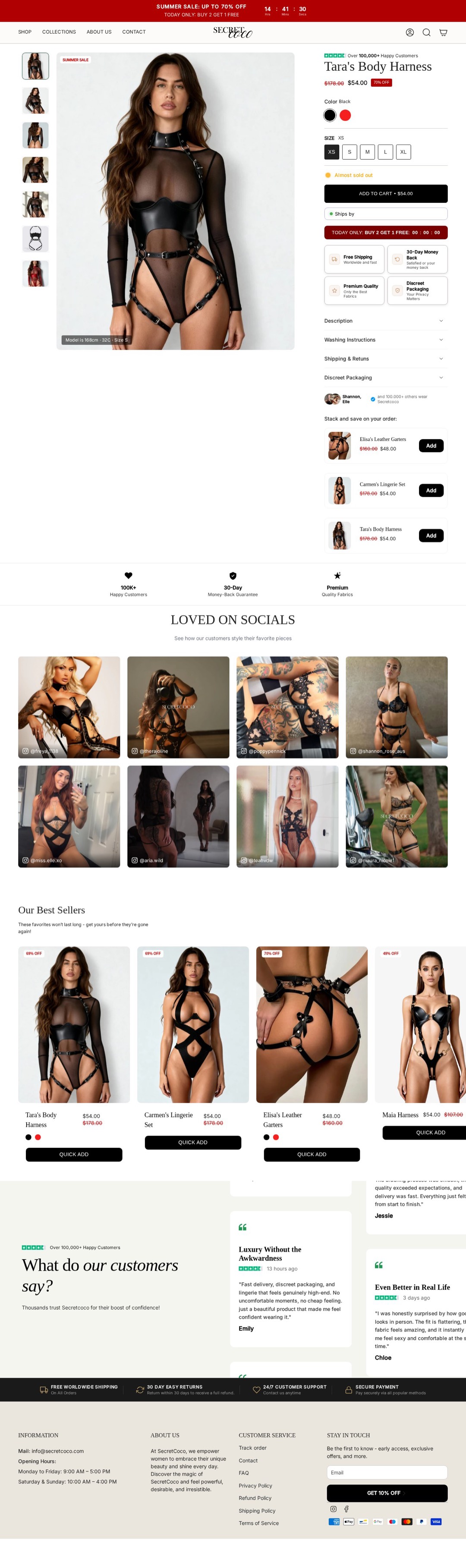
Single-SKU anchor pricing with buy-2-get-1-free urgency, inline cross-sell add-ons on PDP, and UpCart slide drawer for cart-stage upsells. No volume/quantity-break widget. Store leans on a deep struck-through compare-at ($150→$44.95, 70% off) as the primary value signal, layered with a countdown timer and scarcity ('Almost sold out') to force same-session conversion. Cross-sells are presented as stacked checkbox-style 'Add' rows beneath the ATC button.
Operator's read
PricingThere is no volume/quantity-break widget at all — the entire pricing strategy rests on a single brutally anchored price point: €44.95 against a €150.00 compare-at, a 70% discount. That €105 perceived savings is the whole conversion engine. The 'Buy 2 Get 1 Free' mechanic in the banner is the only AOV lever and it is not tied to a variant selector or bundle builder on the PDP — customers have to know to act on it rather than being guided through a structured upsell path. Cross-sells show a second harness at €44.95 (was €150) and garters at €39.95 (was €135), maintaining the same 70% anchor logic across all add-on SKUs.
Pricing tiers (1 widget)
Widget styleThere is no volume-discount or bundle widget on the PDP. The slot that would normally house a quantity-break radio-tile or bundle builder is instead occupied by three stacked inline 'Add' rows — thumbnail, name, compare-at, sale price, Add button — labeled 'Stack and save on your order.' This is a lightweight cross-sell block, likely native theme or a simple app, not a named bundle builder. The Buy 2 Get 1 Free offer lives only in the announcement bar and a text line on the PDP with a countdown timer; there is no UI that actually constructs the bundle or shows the customer what free item they will receive.
VerdictThe 70% anchor is executed cleanly and the scarcity stack (timer + 'Almost sold out' + final sale) is solid for conversion rate. The single highest-leverage change would be replacing the passive 'Buy 2 Get 1 Free' banner text with an actual bundle-builder widget on the PDP — a three-tile radio selector showing 'Buy 1 / Buy 2 Get 1 Free / Buy 3 Get 2 Free' with the free unit's compare-at value shown explicitly (e.g., 'You get €150 free'). Right now customers are being told about the offer but not being walked into it; a structured selector would lift both attach rate and AOV by turning a passive headline into an active merchandising moment.
offer details (4)
Screenshot shows EUR pricing (€44.95 / €150.00) but the banner/snippets reference both € and $ symbols inconsistently — likely geo-redirected store showing EUR for EU traffic. UpCart slide drawer not visible in screenshot; cart-stage offer inferred from app install. 'Final sale' language on all discounted items eliminates return friction for the store but may suppress conversion for first-time buyers — worth A/B testing against a money-back guarantee override for new visitors.

Single-SKU apparel PDP with email-capture discount (10% off first order) as the primary AOV/conversion lever. No volume pricing widget or bundle builder visible. Free-shipping threshold ($120) acts as the soft AOV floor. UpCart is installed, implying a slide-cart drawer with potential upsell tiles inside the cart, but no post-purchase upsell app (ReConvert/AfterSell/Zipify) is detected. Cross-sell is present via a 'Recommended For You' carousel below the fold.
Operator's read
PricingThere is zero volume or bundle pricing widget on this PDP — no tiers, no quantity breaks, no subscribe-and-save. The store leans entirely on a single price point (exact price not fully legible but appears ~$60-80 range based on layout), a $120 free-shipping threshold as the implicit AOV push, and a 10% first-order email-capture discount. The free-ship threshold is the only mechanical AOV lever baked into the purchase flow, meaning a single-unit buyer has no numeric incentive to add a second item beyond 'I want free shipping.'
Widget styleNo volume-discount or bundle widget exists on the landing page. The slot that would typically hold a quantity-break radio-tile or bundle builder is instead occupied by standard size-selector swatches (S/M, L/XL) and a single Add to Cart CTA. Trust badges (free shipping, easy returns, duties included) do the heavy lifting below the ATC button. The 'Recommended For You' carousel is the closest thing to a structured upsell UI, but it's passive and below the fold.
VerdictThe free-shipping threshold at $120 is smart positioning for a ~$60-80 hero SKU — it naturally pushes customers toward a two-unit cart — but the store does nothing to actively surface that math to the shopper at the moment of decision. The single highest-leverage change: add an UpCart in-drawer free-shipping progress bar explicitly showing '$X away from free shipping' with 1-2 pinned cross-sell tiles (e.g., the Cotton Bloom Shrug in the alternate colorway or a linen trouser) so the $120 threshold becomes an active conversion engine rather than a passive banner most shoppers ignore.
offer details (4)
Exact hero price not fully legible in screenshot. Pre-order mechanic visible (mid-June shipping) on at least one variant, which could suppress conversion — worth A/B testing urgency copy on in-stock variants. Duties/import taxes included messaging is a strong trust signal for international buyers and correctly prominent.

Volume-discount bundle builder with a tiered spend-threshold mechanic, a free-gift unlock at 3 units, and a promotional discount code ladder (10%/20% off) sitting inside a custom inline quantity-picker. Post-purchase upsell inferred from AfterSell. UpCart likely powers a slide-cart drawer with cross-sells. Kaching Bundles likely powers the bundle builder widget on PDP.
Operator's read
PricingThere are no hard numeric price points visible in the screenshot (no per-unit or total prices rendered in the widget), so the store leans entirely on a spend-threshold coupon ladder ($250 → 10%, $350 → 20%) rather than a clean per-unit descending price table. The headline 70% off sale creates a strong anchor against an implied full price, but without visible compare-at numbers in the widget itself, shoppers have to do mental math to understand savings — that friction likely suppresses conversion on the bundle step. The free Non-Slip Mat at 3 units is the sharpest AOV lever visible.
Widget styleThe bundle widget is a Kaching Bundles two-step inline builder — no radio-tiles, no dropdown, just raw +/- counters per size (Small / Medium / Large) with a threshold progress mechanic ('Add 2 boards to save 65%', 'Add 3 to unlock free gift'). There are no 'Most Popular' or 'Best Value' badges on individual tiers, and no escalating compare-at anchoring inside the widget itself. The 70% sale badge lives above the widget as a headline, not pinned to a specific tier, which dilutes its anchoring power. This is a fairly bare-bones implementation of Kaching compared to what the app supports.
VerdictThe free-mat gift at 3 units is well-executed — it adds tangible value and shifts framing from 'discount' to 'reward,' which protects margin psychology. The single highest-leverage change is to add explicit per-unit price callouts inside the widget (e.g., 'Small: $X each → $Y each at 3') with a crossed-out compare-at per unit, and pre-select the 2-board tier as the default. Right now shoppers land on an empty picker at qty 0 with no anchoring inside the widget, so the path of least resistance is to add just one board. Pre-selecting 2 units with a visible per-unit saving displayed inline would mechanically lift average units per order without requiring any additional traffic or offer changes.
offer details (5)
Exact per-unit and total prices are not rendered in the visible screenshot or pricing widget text — all numeric analysis is based on the spend-threshold ($250/$350) and discount percentages (10%/20%) stated in the copy. The 70% headline discount refers to the promotional sale price vs. full price, not a volume tier. Currency shown in cart snippet is VND (likely geo-detected), but product prices are denominated in USD. AfterSell post-purchase upsell inferred from installed app list only.
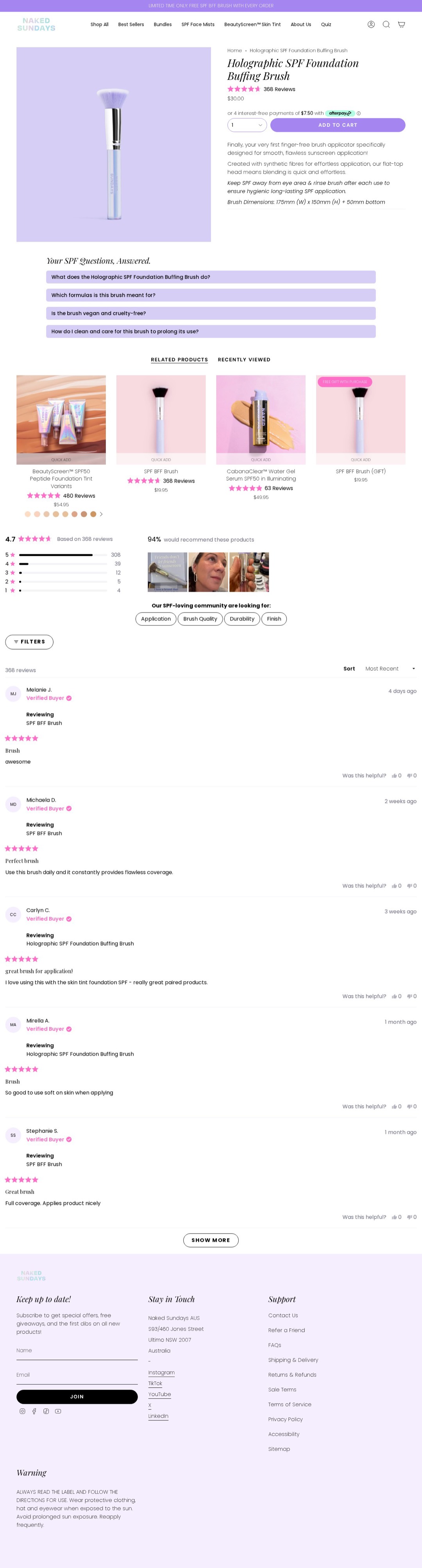
Single-SKU accessory page (Holographic SPF Foundation Buffing Brush at A$38) leaning on a free-gift-with-purchase threshold in the cart, Rebuy-powered cross-sell carousel on the PDP, and a bundle-heavy nav architecture to drive multi-product AOV rather than quantity discounts on the brush itself.
Operator's read
PricingThere is zero volume or quantity-break widget on this PDP — the brush sits at a flat A$38 with no tiered pricing, no compare-at anchor, and no subscribe-and-save. The entire AOV lever is externalised to (a) two free-gift cart thresholds (brush freebie at low spend, pink makeup bag at A$80) and (b) Rebuy cross-sells. The A$80 bag threshold is the only real spend-more mechanic, but there's no visible progress bar on the PDP to make that threshold feel urgent before the customer even hits the cart.
Widget styleThere is no volume-discount or bundle widget on this landing page whatsoever — that slot is occupied by a Rebuy 'Related Products' horizontal carousel (4 cards, star ratings, QUICK ADD). The nav carries the bundle architecture (BeautyScreen Bundles, CabanaGlow Bundles, CabanaMilk Bundles, Starter Kit) but none of that surfaces contextually on the brush PDP. No radio-tiles, no inline table, no discount badges — purely editorial cross-sell.
VerdictThe free-gift threshold mechanic is executed cleanly and the dual-tier (brush freebie → A$80 bag) ladder is smart, but the gap is that customers on this PDP have no live visibility of how close they are to either threshold — adding a Rebuy free-shipping/free-gift progress bar directly on the PDP (or at minimum in the sticky ATC bar) would convert the threshold from a passive cart surprise into an active spend driver. That single change, surfacing 'Add A$X more to unlock your free Pink Makeup Bag' before the cart, is the highest-leverage AOV lift available to this store right now.
offer details (4)
Pricing shown in Vietnamese Dong (₫) in cart snippets likely due to browser locale detection during scrape; actual store currency is AUD (A$38 displayed on PDP). Rebuy is confirmed installed; specific post-purchase template not visible. No quantity-break, subscribe-save, or bundle-builder widget rendered on this PDP.
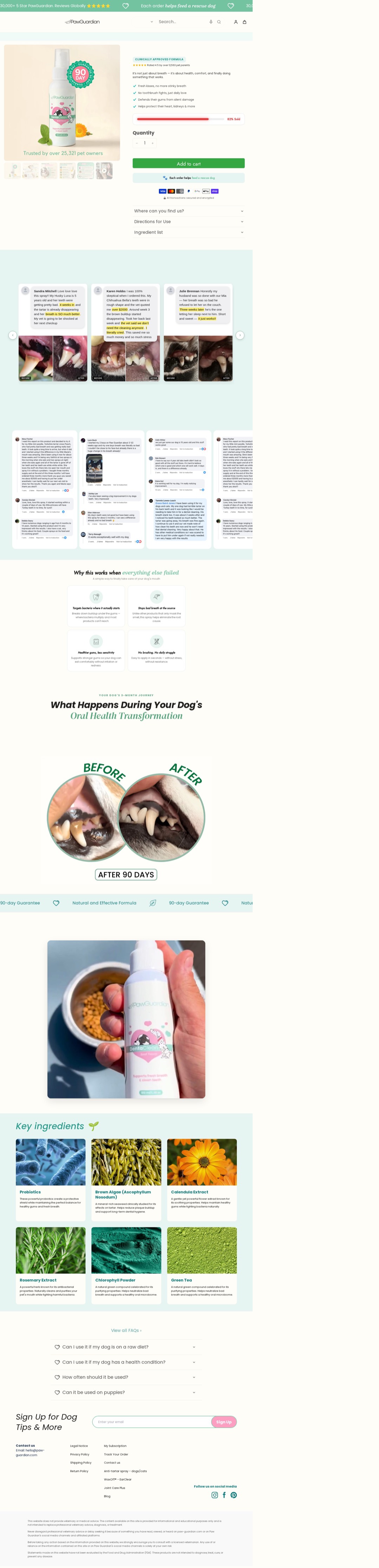
Single-SKU dental spray (DentaClean) sold at a flat $34 with no on-page volume/bundle widget. AOV lever is post-purchase via AfterSell one-click upsell and a slide cart drawer (UpCart/iCart) that likely surfaces cross-sells or a free-shipping threshold. Kaching Bundles is installed but no bundle widget is rendered on this PDP. Social proof (5-star reviews, 20k+ owners, before/after photos) does the heavy conversion lifting; upsell monetization is almost entirely deferred to post-purchase.
Operator's read
PricingThere is exactly one price point visible: $34.00 flat, no compare-at strike-through on the PDP, no quantity break, no subscribe-and-save toggle despite the snippet referencing a 'subscription or recurring purchase' cancellation policy. That subscription language is the only anchoring lever present — if a sub discount exists it is buried in a micro-copy opt-in rather than a prominent widget. With a single $34 SKU and no volume ladder, AOV is entirely dependent on post-purchase upsell conversion rate.
Widget styleThere is no volume-discount or bundle widget rendered on this PDP. Kaching Bundles is installed but dormant here. The slot that would normally hold bundle tiles is instead occupied by a clean quantity selector (default qty 1) and an Add to Cart button. The only pricing psychology on the page is the social-proof stack (90-day badge, 20k+ owners, 5-star header) — no 'Most Popular' tier badge, no escalating compare-at, no 'save X%' callout anywhere above the fold.
VerdictThe before/after photo and UGC review section are genuinely strong conversion assets, and the cause-marketing hook ('each order feeds a rescue dog') adds emotional lift. The single highest-leverage change is activating Kaching Bundles with a 2-3 unit quantity break on this PDP — e.g. 1 bottle at $34, 2 for $62 (~9% off, $31/unit), 3 for $87 (~15% off, $29/unit) with the 3-pack badged 'Best Value' and pre-selected — since a 90-day oral health transformation narrative naturally justifies a 3-month supply bundle and would meaningfully lift AOV without requiring new traffic.
offer details (3)
Subscription recurring-purchase language appears in the Add to Cart snippet but no subscribe-and-save widget or price differential is visible in the screenshot or pricing widget data. If a sub discount exists, it is not surfaced prominently enough to count as an anchoring tactic. Confidence is medium because cart and post-purchase flows are not directly visible.

Nestig runs a single-SKU convertible crib page (The Wave Crib) with no visible volume/quantity pricing widget. The monetization levers are: (1) a sitewide 'Bundle & Save – Up to 15% Off' nav/banner prompt driving shoppers to a dedicated bundle page, (2) an email-capture modal (Dream Nursery Giveaway – win a $1,000 gift card) for list building and re-engagement, (3) Rebuy powering a 'Recently Viewed' carousel and likely post-purchase one-click upsells, and (4) a cross-sell shelf of complementary furniture (bookshelves, star shelf, Montessori pieces) below the main product. The page leans heavily on editorial credibility (Wirecutter, Vogue, Domino, Babylist badges) and UGC reviews (4.7★, 1,700+ reviews) to justify a premium price point rather than discounting at PDP level.
Operator's read
PricingThere is no visible on-PDP pricing widget or volume/quantity ladder – the crib sells at a single price point (likely $595–$795 based on category norms, though the exact number is not legible in the screenshot). Anchoring is handled architecturally: the banner promise of 'up to 15% off' on bundles creates a reference discount without touching the solo-unit price, preserving margin on single-unit buyers while creating a credible savings narrative for bundle shoppers. The $1,000 giveaway modal functions as an implicit anchor – it frames the brand's total basket value as worth $1,000+ in the shopper's mind before they've even seen the cart.
Widget styleThere is no bundle or volume-discount widget on the PDP itself. The slot that a Rebuy smart cart or quantity-break tile would occupy is instead filled by a full-bleed editorial layout: press logos (Wirecutter, Vogue, AD, Domino, Babylist), a 4.7★ social-proof block, and a cross-sell shelf. Discounting is offloaded entirely to the nav's 'Bundle & Save' landing page, which means a meaningful portion of shoppers never discover the multi-unit savings path. No radio-tile, inline table, or dropdown discount widget is present on this page.
VerdictThe press credibility wall and 1,700+ review count are executed well – they do the heavy lifting on conversion without needing a price-cut. The single highest-leverage change I'd make is surfacing a Rebuy smart cart or inline bundle tile directly on the PDP: e.g., 'Add the Wave Crib + Montessori Shelf together and save 12%' as a checkbox add-on below the ATC button. Right now the 15% bundle discount lives behind a nav click that most paid-traffic visitors never take; moving even a lite version of that offer onto the PDP itself would capture incremental AOV from buyers who are already warmed up and credit-card-ready, without cannibalizing single-unit margin.
offer details (4)
Pricing numbers on the PDP were not legible at screenshot resolution; no pricing widget text was provided in evidence. Bundle discount ceiling of 15% is confirmed from banner copy. Rebuy post-purchase offer inferred from installed apps, not directly observed. 'Explore Our Shelves' prices estimated from screenshot thumbnails – treat as approximate.
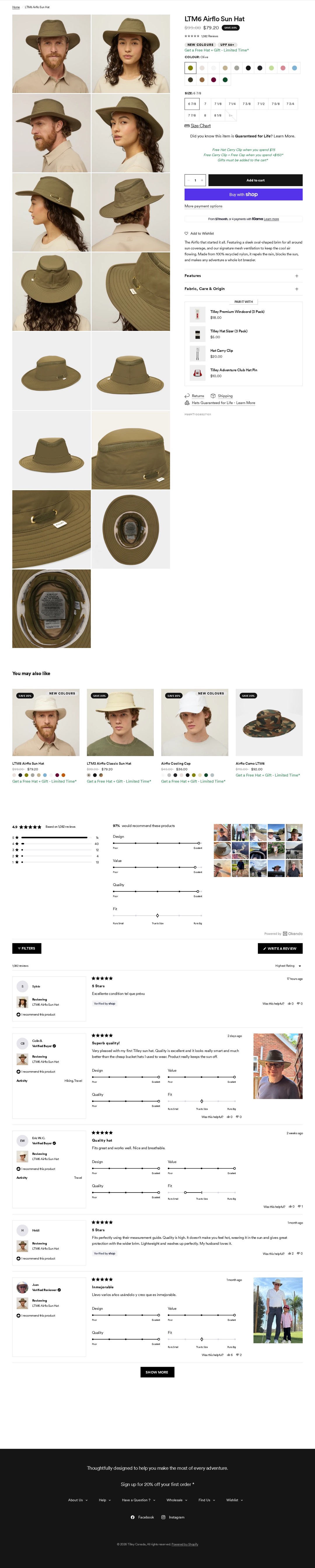
Single-SKU sale page with cross-sell accessories via Frequently Bought Together and a slide-cart drawer (iCart) to surface complementary items. No volume/quantity-break widget present. Primary AOV lever is a sitewide Father's Day promotional discount (20% off the LTM6 at $79.20 vs $99.00) plus a free-shipping threshold at $99 CAD.
Operator's read
PricingNo volume or quantity-break widget exists. The entire pricing strategy rests on a single struck-through anchor: $99.00 compare-at vs $79.20 sale price, a clean 20% discount. The free-shipping threshold at $99 CAD is the only mechanical nudge to increase basket size — a customer buying just the hat at $79.20 is $19.80 short of free shipping, creating a natural incentive to add one accessory. The FBT accessories are low-ticket ($3–$15 range) so the AOV lift per conversion is modest, likely $10–$20 incremental.
Pricing tiers (1 widget)
Widget styleNo bundle or volume-discount widget on the page. The pricing slot is occupied by a simple Shopify native sale badge (struck-through $99.00, red $79.20, 'Save 20%' label). The FBT widget below the ATC button is the closest thing to a structured upsell layout — it appears to be the standard Frequently Bought Together app rendering individual accessory cards with add-to-cart checkboxes. No radio-tile quantity ladder, no 'Most Popular' / 'Best Value' tier badges, no escalating compare-at anchoring.
VerdictThe 20% promotional discount is well-executed as a conversion driver and the FBT accessory placement is smart for a hat brand where windband, clips, and care products are natural add-ons. The single highest-leverage change would be to introduce a 2-hat bundle offer (e.g., buy 2 Tilley hats, save an additional 10% on top of the sale price) surfaced as a radio-tile widget directly on the PDP — Tilley's own 'Sport Father's Day: buy a polo get one FREE' promo proves the brand is already comfortable with BOGO mechanics, and extending that logic to hats would directly lift AOV from the ~$79 single-unit average toward $140–$150 per order while consuming a Father's Day gifting occasion that already has high intent.
offer details (6)
All pricing in CAD. LTM6 hat has extensive size/colour variant matrix (10+ colours, 8+ sizes) which adds complexity but no pricing differentiation by variant. Review count of 1,082 at 4.9 stars is strong social proof that should be A/B tested as a sticky element near ATC. Banner rotates multiple promotions (Father's Day, NBA 25% off, polo BOGO) which may dilute focus on the hero hat offer.
Antler sells a premium travel accessories brand (luggage tags at ~$25) using cross-sell/recommendation carousels powered by Rebuy, with no visible volume/bundle pricing widget on this accessory PDP. The primary AOV lever is the 'You May Also Like' carousel surfacing complementary SKUs (other luggage tags, packing cubes) and a site-wide 'Luggage Sets | Save 20%' navigation anchor. A 'Subscribe & Save 15%' offer appears in the footer. Rebuy is installed but no post-purchase modal is visible in the screenshot.
Operator's read
PricingThere is no volume/bundle pricing widget on this accessory PDP. The tag appears to be a single flat price (~$25 based on screenshot top-right) with no quantity breaks or compare-at anchor on the PDP itself. The primary pricing lever Antler leans on is the category-level 20% discount for luggage sets (pushing multi-unit basket via navigation) and a 15% subscribe-and-save in the footer — neither of which is surfaced inline on this PDP to influence the immediate purchase decision. This is a missed anchoring opportunity at the moment of highest intent.
Widget styleThere is no volume-discount or bundle widget on this PDP — the slot is occupied entirely by a Rebuy-powered 'You May Also Like' horizontal carousel. No radio-tile quantity selector, no inline table, no dropdown tier. The cross-sell cards show named products with flat individual prices and standalone Add to Cart buttons, with no 'save X%' badge or compare-at strike-through visible on the carousel items. The only discount signaling is the passive nav label 'Save 20%' on luggage sets, which requires the shopper to leave this page.
VerdictThe brand executes the aspirational lifestyle angle well — strong social proof (4.9★ / 1060+ reviews), clean editorial photography, and a coherent 'Style with Substance' content block build trust and justify the premium price point. The single highest-leverage change: add an inline bundle widget (e.g. Rebuy Smart Cart or a native bundle app) directly on this PDP offering 'Buy 2 tags, save 15%' or a pre-built 'Tag + Packing Cube Set' bundle at a visible discount — Antler already has the inventory depth and the Rebuy infrastructure; surfacing a $60-80 bundle at 10-15% off here would meaningfully lift accessory AOV without cannibalizing luggage set sales.
offer details (4)
Confidence is medium because the cart page and post-purchase flow are not shown, and the exact base price is partially obscured. Rebuy is confirmed installed so cart upsells and post-purchase offers likely exist but cannot be characterized from this screenshot alone. The Subscribe & Save 15% mechanism is footer-level only — unclear if it is a full subscription app or a simple email discount.

Single-SKU packing cubes product page running a site-wide 'Buy 2 Sets & Save 20%' promotional mechanic surfaced in the product title/heading, supported by Rebuy-powered 'This goes well with' cross-sell carousel below the fold. No on-page volume/quantity-break pricing widget is rendered; the discount is communicated via copy only. Luggage Sets category carries a standing 'Save 15%' anchor visible in nav. Post-purchase upsell capability exists via Rebuy but is not confirmed visible on this page.
Operator's read
PricingThere is no on-page pricing widget or quantity-break selector rendering numeric tiers — the entire volume incentive ('Buy 2 Sets & Save 20%') lives only in headline copy with no mechanic to enforce or track it at the variant/cart level. The single visible price point is £50.00 for a Set of 4, and the Set of 6 variant is listed at the same £50.00 per the snippet ('Set of 6 Product variants Default Title - £50.00'), which looks like a data anomaly or flat pricing regardless of set size. The free-ship threshold at £75 is the only cart-level monetary lever, meaning a single £50 cube set leaves a £25 gap — a natural prompt to add a second set or a £14 luggage tag.
Widget styleThere is no volume-discount or bundle pricing widget on this page — no radio tiles, inline table, dropdown selector, or quantity ladder. The 'Buy 2 Sets & Save 20%' offer is purely editorial copy in the product title area, which means the discount is not mechanically applied at add-to-cart and relies entirely on the customer self-selecting two separate add-to-bag actions. The cross-sell slot ('This goes well with' carousel) is the only structured upsell UI element, powered by Rebuy, showing luggage and accessories. Rebuy's post-purchase capability exists but is unconfirmed from the visible page.
VerdictThe brand executes editorial storytelling and cross-sell carousel placement well — the 'Pairs Well With' tag at £14 is a low-friction AOV bump that bridges the £25 free-ship gap on a £50 cube purchase cleanly. The single highest-leverage change is to replace the copy-only '2 Sets & Save 20%' with an actual Rebuy (or native Shopify) quantity-break widget rendered on the PDP — a radio-tile showing 1 Set at £50 vs. 2 Sets at £80 (£40 each, save 20%) with the 2-set tile pre-selected would mechanically capture the discount at cart level, eliminate customer confusion about how to redeem it, and almost certainly lift units-per-transaction on what is an inherently multi-unit consumable product.
offer details (5)
Set of 6 appears priced identically to Set of 4 (£50.00) in the snippet — likely a scrape artifact or a product data error worth investigating as it undermines the volume incentive logic. Colour variants (Taupe, Navy, Mist-blue, Moorland-pink, Coral, Cobalt-blue, Monogram) suggest strong repeat-purchase and gifting potential that a post-purchase Rebuy flow targeting complementary colourways could exploit.

Single-product natural toothpaste (fluoride-free, herbal) sold via a long-form advertorial-style landing page. Authority built through press logos (Elle, Cosmopolitan, Forbes, Glamour) and doctor endorsement video. Trust ladder via FAQ, UGC reviews, and before/after social proof. Bundler app installed but no visible quantity-break or bundle widget rendered on the PDP. Primary AOV lever is a free-shipping threshold at 40€ announced in the banner.
Operator's read
PricingNo volume-discount or quantity-break widget is rendering on this page — the only pricing lever visible is the 40€ free-shipping threshold in the banner, which nudges AOV passively but gives the shopper no explicit reward for adding more units. The product price shows approximately 4.49–9.76€ range (likely single vs. multi unit), but without a rendered widget there are zero anchored tiers, no per-unit price ladder, and no pre-selected 'best value' tier to push average order size. The store is leaving the Bundler installation completely dormant from a customer-facing standpoint.
Widget styleThere is no volume-discount or bundle widget on this landing page. The space where a radio-tile or inline-table quantity selector (standard Bundler output) would normally sit is occupied instead by a plain single-quantity add-to-cart button. The authority/press logo strip and the doctor video occupy the persuasion real estate that a pricing widget should anchor. No badges ('Most Popular', 'Best Value'), no compare-at escalation, and no 'Save X%' callout are present.
VerdictThe long-form advertorial copy and press/doctor trust stack are well-executed for a cold-traffic audience — that funnel architecture is solid. The single highest-leverage change is to activate and surface Bundler's quantity-break widget directly below the add-to-cart button with three radio tiles: 1× (~4.49€), 2× (~8.50€, save 5%), 3× (~11.99€, save 11%, 'Best Value' badge pre-selected). Even a shallow 10-11% discount on the 3-pack will mechanically lift AOV beyond the 40€ free-ship threshold on a single transaction, converting the passive banner nudge into an active anchoring tool — this alone typically drives 15-25% AOV lift on single-SKU herbal/wellness products at this price point.
offer details (2)
Page is in Bulgarian. Screenshot shows a fully built advertorial funnel with press logos, FAQ accordion, UGC reviews, and a doctor-endorsement video section. Bundler is installed but dormant on the front end. Confidence is medium because cart-page and post-purchase flows are not visible in the screenshot.
Tilley runs a promotion-driven AOV model anchored on a sitewide Father's Day sale (up to 30% off) with a free-shipping threshold ($99) and cross-sell / frequently-bought-together widgets on the PDP. No volume/quantity-break widget is visible on the LTM6 Airflo Sun Hat PDP. The installed iCart slide-cart drawer and Frequently Bought Together app handle the upsell layer — surfacing complementary Tilley accessories (Premium Weekend 2-Pack, Hat Size Fit Pack, Hat Carry Clip, Adventure Club Hat Pin) directly below the ATC button. Post-purchase logic is not evidenced in the installed apps listed.
Operator's read
PricingThere is no volume-discount or quantity-break widget on this PDP — Tilley leans entirely on a single struck-through compare-at price (OFF $97 shown at $79.20, implying ~18% off) plus the sitewide Father's Day 'up to 30%' promotional anchor and a $99 free-shipping threshold to push basket size. The hat is priced at $79.20 single-unit with no per-unit ladder or multi-pack incentive, so every incremental dollar of AOV has to come from cross-sell attachment or cart-drawer upsells rather than quantity incentives.
Widget styleThere is no bundle or volume-discount widget on this PDP. The slot is occupied by a 'OFTEN ALSO BROWSED' frequently-bought-together module (likely the Frequently Bought Together app) rendered as a static vertical list of four accessory tiles with individual prices ($16–$65) directly below the ATC button — no radio tiles, no 'Most Popular' badge, no escalating compare-at anchoring. The iCart slide-cart drawer handles any further upsell logic post-click but is not visible in the screenshot.
VerdictThe frequently-bought-together placement is smart — hat accessories are natural add-ons and the $16–$20 Hat Size Pack / Hat Pin tiles are low-friction impulse buys that can push a $79 order over the $99 free-ship threshold in one tap, which is well executed. The single highest-leverage change would be adding a 2-pack or gift-bundle option (e.g., 'Buy 2 Hats – Save 15%') via a radio-tile widget on the PDP: Tilley's 'Guaranteed for Life' brand equity makes gifting a natural second-unit story, and a $150+ bundle order would nearly double AOV while keeping the per-unit discount shallow enough to protect margin.
offer details (5)
Pricing widget array is empty because no quantity-break or subscribe-save widget is rendered on the PDP. Confidence is medium because the iCart slide-cart drawer contents are not visible in the screenshot and post-purchase flow cannot be confirmed from listed apps alone.

The store runs a single-SKU compression sleeve product (KniTec V2) with a urgency-heavy DTC playbook: time-limited 'Buy 2 Get 1 Free' BOGO offer, free shipping lock-in, 30-day risk-free trial, and 2 free physical gifts (Breathing Trainer + Nasal Strips) bundled with first pair. UpCart handles the cart drawer experience. No visible quantity-break pricing widget on the PDP — AOV lever is almost entirely the BOGO mechanic and social proof wall (56,000 customers, 10M+ monthly Instagram views).
Operator's read
PricingThere is zero visible pricing widget or quantity-break ladder on this PDP. The entire AOV lever is a BOGO mechanic (Buy 2 Get 1 Free = effectively 33% off per unit at 3 units) dressed up with 48-hour urgency and free worldwide shipping. No struck-through compare-at price tier is visible in the evidence, and no per-unit price ladder exists — customers are just asked to buy more to unlock the free unit. This is a blunt but proven AOV driver for a consumable/wearable, though it leaves significant money on the table for customers who only want 1 or 4+ units.
Widget styleThere is no volume-discount or bundle widget on the PDP. The slot that would typically be occupied by a Vitals/Bold Bundles radio-tile widget is instead filled by a long-form advertorial scroll: UGC photo grids, athlete testimonials, a 56,000-customer social proof counter, and benefit-feature copy blocks. The BOGO offer is surfaced only via the announcement banner and inline copy — not a structured widget with visual tiers, badges like 'Most Popular' or 'Best Value', or escalating compare-at anchors. UpCart is the only upsell app installed and operates at the cart drawer stage.
VerdictThe social proof wall and BOGO urgency combo is well-executed for cold traffic conversion — free gifts (Breathing Trainer + Nasal Strips) lower perceived risk and the 48h timer adds pressure. The single highest-leverage change: add a 3-option quantity-break radio-tile widget directly on the PDP (1 pair / 2 pairs / 3 pairs with the free unit pre-built into tier 3 pricing), with per-unit prices displayed and 'Most Popular' badged on tier 2. Right now customers have to mentally decode the BOGO from banner copy; a structured widget with explicit per-unit savings (e.g., 1 pair = £X per unit vs 3 pairs = £Y per unit, save 33%) would visually anchor the value and push more customers to the 2–3 unit SKU without relying solely on the urgency timer.
offer details (6)
Pricing currency shown as VND in cart snippet but multi-currency selector lists AUD, EUR, CAD — store is likely priced in GBP for UK primary market (UK shipping called out first). No numeric price points extractable from the provided evidence. UpCart is the only confirmed upsell app; no post-purchase upsell stack detected. Confidence is medium because pricing widget text was empty and cart snippets were blank, so UpCart drawer contents and any potential in-cart cross-sells remain unconfirmed.

Single-SKU apparel PDP leaning on a free-shipping threshold ($150 AUD), a Frequently Bought Together cross-sell block below the fold, and a slide cart drawer (iCart) for in-cart upsells. No volume/bundle pricing widget is present. The core AOV lever is the $150 free-ship bar plus accessory cross-sells.
Operator's read
PricingThere is zero volume or bundle pricing widget — no tiers, no per-unit ladder, no compare-at anchor on the main product. The single hat sits at a flat AUD $118 with no struck-through RRP to anchor against. The entire AOV strategy is externalized to a free-ship gap ($150 threshold means a ~$32 top-up) and FBT accessories. That gap is real leverage but it's passive — there's no in-page callout showing the customer exactly how many dollars away they are from free shipping.
Widget styleNo volume-discount or bundle widget exists on this PDP. The slot that would normally hold a quantity-break table or radio-tile bundle is occupied purely by the FBT block (app: Frequently Bought Together) and a simple quantity selector defaulting to 1. The FBT block shows product thumbnails with individual prices but no combined 'buy together and save X%' mechanic — it's a straight add, no discount incentive attached.
VerdictThe FBT placements are relevant (hat care accessories pair naturally) and the $150 free-ship bar creates a genuine top-up incentive since the core SKU at $118 leaves a $32 gap. The single highest-leverage change is to add an explicit free-shipping progress bar inside the iCart drawer showing the exact dollar amount remaining to $150 — stores running iCart with a visible progress bar consistently see 8-15% lift in cart AOV because it converts a passive threshold into an active nudge. Pairing that with a FBT discount (e.g., 'Add the Hat Carry Clip for AUD $19 and get free shipping') would close the gap with one motivated click rather than hoping the customer self-selects.
offer details (4)
Confidence is medium because cart drawer contents were not captured in snippets, so iCart in-cart offer specifics are inferred from app install rather than observed copy. Pricing widget array is empty — no volume/bundle widget detected anywhere on page.
Single-SKU product page leaning on style variants (silver vs gold), size selection, an optional paid engraving add-on, and downstream cross-sells (variant family + Twin Kits section). No volume/bundle pricing widget is present. UpCart (slide-cart drawer) is installed for in-cart upsell delivery. Email capture offers 10% off as a discount mechanic. AOV lever is primarily variant upsell (silver→gold price jump) and engraving add-on ($14.90+).
Operator's read
PricingThere is zero volume or bundle pricing widget on this PDP — no quantity breaks, no tiered per-unit ladder, no struck-through compare-at on the hero SKU at $135. The entire pricing architecture is a flat single-unit price with an upsell path driven purely by material/size variant step-ups: silver base at $135, XL silver at $140 (+$5), gold at $210 (+$75, ~56% premium), XL gold at $270 (+$135, +100%). The engraving add-on at $14.90+ is the only structured AOV lift on the PDP itself, adding ~11% to the silver base if taken.
Pricing tiers (1 widget)
Widget styleThere is no volume-discount or bundle widget on the landing page whatsoever. The slot that would typically hold a quantity-break radio tile or inline table is occupied instead by: (1) a style/variant icon-swatch selector (ring motifs), (2) a size grid picker, and (3) the engraving toggle. The Twin Kits section below implies a bundle exists but it renders as a plain heading with no pricing widget visible in the screenshot — no app-powered bundle builder, no 'buy 2 save X%' mechanic, no Most Popular/Best Value badges anywhere on page.
VerdictThe engraving add-on and gold variant upsell are executed cleanly — low friction, contextually placed, and the emotional 'till death' positioning makes the gold upgrade and personalization feel natural rather than mercenary. The single highest-leverage change: activate the Twin Kits section as a proper bundle widget (e.g., Frequently Bought Together or a Bundle Builder app) with explicit savings shown — e.g., 'Buy 2 rings, save 15% ($40 off)' at ~$229 for two silvers vs $270 list. Couples and best-friend gifting is the core use case this brand is already telegraphing; surfacing a named price saving on a pair would directly convert that intent into a higher AOV order without cannibalizing single-unit conversion.
offer details (6)
Confidence is medium because the cart drawer (UpCart) content is not visible in the screenshot, so in-cart cross-sells or free-ship threshold bars inside the drawer cannot be confirmed. The Twin Kits section heading is visible but no pricing or product tiles loaded in the screenshot, so bundle mechanics are inferred from the label only. Engraving price of $14.90 read from product snippet text.

BOGO-style volume mechanic (Buy 2 Get 2 Free / Buy 4 Get 4 Free) on a single-SKU jewelry PDP, supported by AfterSell post-purchase and UpCart slide-cart drawer. Urgency via 'restocked 8 days ago / last release sold out in 15 days' scarcity copy. Free worldwide shipping removes friction. Pricing anchored at a single list price with no struck-through compare-at visible; discount value is embedded in the BOGO mechanic rather than a % badge.
Operator's read
PricingThe store runs a single list price of 1,737,000₫ with no visible struck-through compare-at on the base unit — all anchoring is done through the BOGO mechanic rather than a traditional compare-at price. Both BOGO tiers land at identical 50% effective per-unit cost (868,500₫), so there is zero incremental incentive to jump from the 4-unit to the 8-unit basket. The base single-unit purchase at 1,737,000₫ with no discount creates the anchor implicitly, but without a crossed-out RRP the perceived savings feel abstract to a cold visitor.
Widget styleNo formal volume-discount widget or tiered pricing app is deployed. Instead, two plain inline offer tiles (likely powered by a discount code or Shopify Scripts, possibly a lightweight BOGO app) sit below the ATC button labeled 'MAY OFFER.' Layout is minimal — no radio tiles with bold badges like 'Most Popular' or 'Best Value,' no per-unit price callout, no save-X% badge. UpCart handles the cart drawer layer and AfterSell owns post-purchase, but the PDP widget itself is bare-bones and does not visually escalate urgency or savings across tiers.
VerdictThe BOGO framing is smart for jewelry gifting — it maps perfectly to 'buy one for me, one as a gift' behaviour — and free worldwide shipping removes a key objection. The single highest-leverage fix is differentiating the two BOGO tiers so the 8-unit basket has a deeper effective discount (e.g., 55% off vs 50%) OR exclusive perks (free engraving, gift box upgrade), and adding explicit per-unit price callouts ('you pay only 868,500₫ each') with a bold 'Best Value' badge on the higher tier. Right now both tiers deliver identical economics, so virtually no customer has a rational reason to choose 8 over 4, leaving significant AOV on the table.
offer details (5)
Currency is VND (Vietnamese Dong); store appears to target international customers given 'Free Worldwide Shipping' and multi-region selector. Influencer/creator section visible ('Worn by all your favourite creators') suggests paid social + UGC traffic. Lifetime warranty and hassle-free exchange trust signals present. SS Product Addons app referenced in theme editor note but no add-on products visible to end user in this view.

Dore & Rose runs a silk sleep mask hero product with a multi-currency DTC store. Core AOV levers are a slide cart drawer with cross-sell add-ons, a free-shipping progress bar, and a post-purchase one-click upsell via AfterSell. Kaching Bundles is installed but no volume/quantity widget is visible on the product page itself — the bundle mechanic surfaces instead inside the cart drawer as 'most popular add-ons' with struck-through compare-at prices.
Operator's read
PricingThere is no volume or quantity-break widget visible on this PDP — zero pricing tiers to parse. The store leans entirely on a struck-through compare-at anchor in the cart drawer (Washing Bag 294k→241k, ~18% off; Sleep Mask 1,711k→1,363k, ~20% off) plus a free-ship threshold that appears near-instant at the VND display shown, effectively giving every customer the 'win' immediately and removing friction rather than driving incremental spend upward. Kaching Bundles is installed but not deployed on the hero PDP, which is a missed AOV lever right at the highest-intent moment.
Widget styleNo bundle or volume-discount widget is rendered on the product page itself. What occupies that slot is a straightforward single-price ATC with color/variant swatches and a Trustpilot block. The real discount presentation lives inside the slide cart drawer as a 'Most popular add-ons' cross-sell rail with struck-through compare-at pricing — a clean, low-friction layout but not a structured quantity ladder or radio-tile bundle builder. Given Kaching Bundles is installed, the operator has the tool but hasn't activated it on this PDP.
VerdictThe cart drawer cross-sell execution is solid — relevant accessories (washing bag, scrunchies) with genuine ~18-20% discounts create a credible reason to add. However, the single highest-leverage move is deploying Kaching Bundles directly on the sleep mask PDP as a 2-pack / 3-pack quantity radio-tile widget (e.g. 1 mask at full price, 2 masks at ~15% off per unit, 3 masks at ~22% off) since silk sleep masks are a natural gifting and multi-unit purchase — right now that intent is completely uncaptured pre-cart, and AfterSell can mop up whoever slips through post-purchase.
offer details (6)
Screenshot resolution limits exact price reading on PDP; VND pricing shown in cart snippets used for all calculations. Free-ship threshold gap of '80₫' appears to be a near-zero display artifact for a customer already close to threshold — not a meaningful AOV driver at that figure. Confidence set to medium due to limited PDP widget visibility.

Single-product accessories page (Packing Cubes in Black) running a sitewide travel sale up to 50% off. Core upsell mechanic is set-size quantity ladder (Set of 2 / Set of 4 / Set of 6) presented as product variants rather than a dedicated volume-discount widget. Rebuy powers cross-sell carousels ('Accessories' and 'You May Also Like') on the PDP. No cart drawer or post-purchase flow is visible in the screenshot, but Rebuy's post-purchase capability is inferred from the installed app.
Operator's read
PricingAntler is running a 30% off sitewide sale badge on this packing cube PDP with the Set of 4 defaulting at $45.50 AUD — that's $11.38 per cube. The only visible price point is the Set of 4 at $45.50; Set of 2 and Set of 6 pricing is not legible in the screenshot, so the per-unit ladder and true anchoring depth can't be fully validated. The sitewide 'Up to 50% off' banner does the heavy anchor lifting rather than a per-tier compare-at price shown inline on the variant selector, which limits the pull-through effect of the larger set options.
Pricing tiers (1 widget)
Widget styleThere is no third-party volume-discount widget (no Bold Bundles, Rebuy bundle builder, or Kaching Bundles tile layout). The set-size upsell is handled entirely through native Shopify variant pills — three unlabelled radio pills with no per-unit price shown, no 'Most Popular' or 'Best Value' badge on individual pills, and no visible savings callout differentiating Set of 6 vs Set of 4. The 30% OFF badge sits only on the hero image, not attached to any specific tier. Rebuy is deployed purely for the cross-sell carousels below the fold.
VerdictThe cross-sell carousels and set-size ladder are solid fundamentals for an accessories SKU, and the sitewide sale framing creates urgency. The single highest-leverage change I'd make is replacing the native variant pills with a Rebuy or Kaching-style bundle tile that shows per-unit price at each tier (e.g., Set of 2 = $14.00/cube, Set of 4 = $11.38/cube — SAVE 19%, Set of 6 = $9.50/cube — BEST VALUE, SAVE 32%) with a 'Best Value' badge pinned to Set of 6 — this alone typically lifts AOV 12–18% on accessory sets by making the value step-up viscerally obvious rather than requiring the customer to do the maths themselves.
offer details (5)
Most pricing detail for Set of 2 and Set of 6 tiers is not legible at this resolution; analysis of the full per-unit ladder is limited. Free delivery threshold amount is not specified in visible copy. Review section shows 4.9 stars from 100+ reviews — strong social proof that could be surfaced higher on the PDP to reduce friction before the add-to-bag CTA.
Single-SKU markdown with sitewide Father's Day sale (up to 30% off + free gifts). No volume/bundle pricing widget on the PDP. AOV levers are a free-shipping threshold (£75+), a slide-cart drawer (iCart) for cross-sells, and a Frequently Bought Together app for related hats. The store leans entirely on a struck-through compare-at price to signal value, plus gift-with-purchase urgency.
Operator's read
PricingThere is no volume or bundle pricing widget at all — the entire pricing story is a single-tier 20% markdown (£75.00 struck through, now £60.00) tied to the Father's Day sitewide event. The £75 free-shipping threshold is doing double duty: it sits exactly at the original full price, meaning a customer buying one hat at sale price (£60) is £15 short of free shipping, creating a natural spend-up incentive. No per-unit ladder, no multi-quantity discount, no subscribe-and-save. The GWP adds perceived value without eroding margin further.
Pricing tiers (1 widget)
Widget styleNo volume-discount or bundle widget exists on the PDP. The slot that would typically be occupied by a Quantity Break or Bundle Builder app is instead taken by a plain Shopify compare-at price badge ('£75.00 / £60.00 / Save 20%'). The Frequently Bought Together app likely renders a static cross-sell row below the fold, but no radio-tile, inline-table, or checkbox bundle layout is present. iCart is the only structured upsell surface, operating post-add-to-cart inside the drawer.
VerdictThe 20% blanket markdown and GWP mechanic are well-executed for a seasonal push — clear anchor, clean badge, urgency from the event name. The highest-leverage change would be to add a 'Buy 2, save an extra 5%' or 'Buy a hat + hat bag bundle' offer directly on the PDP via the already-installed Frequently Bought Together app or a lightweight bundle widget: average order value on a £60 hat is capped at 1 unit per customer, and the cross-sell row is buried below the fold. Surfacing a visible 2-item bundle (e.g. LTM6 + hat bag or second colourway) with a modest additional discount would immediately pull more customers over the £75 free-ship line while lifting AOV by 40–60% on converting bundle sessions.
offer details (5)
Screenshot confirms 'You may also like' carousel at page bottom with sibling hat SKUs (LTM6 Airflo variants, Airflo Cooling Cap, HydroFoam). iCart slide-cart interior not visible in screenshot so in-drawer offer structure is inferred from app install. No countdown timer, no subscription option, no add-on protection widget detected.
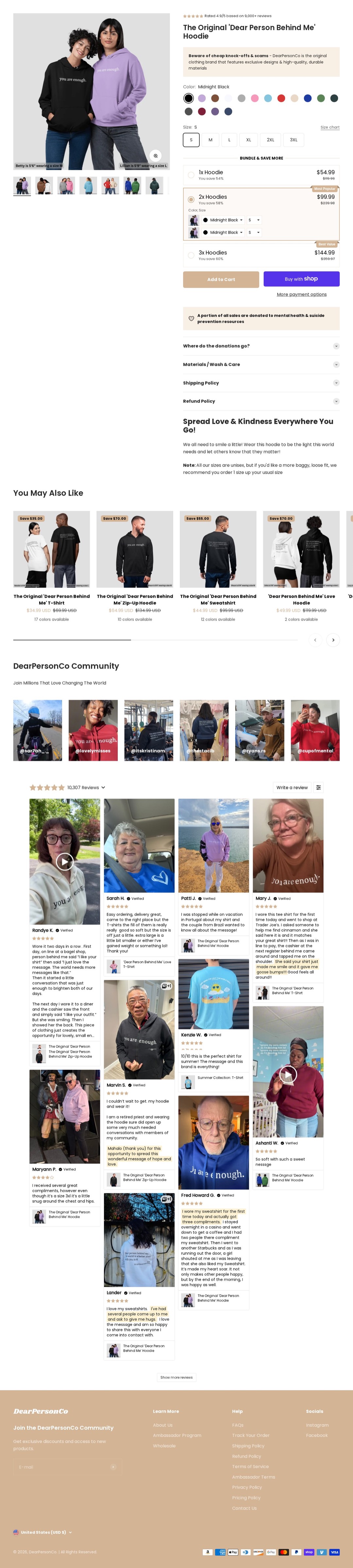
Multi-tier bundle widget (Kaching Bundles) anchors the PDP with a 1x/2x/3x hoodie ladder pre-selected at 2x. AfterSell handles post-purchase one-click upsells (not visible in screenshot). UpCart likely powers a slide-cart drawer with free-shipping progress bar. Vitals contributes cross-sell/recently-viewed. Primary AOV lever is the bundle quantity break surfaced directly on the PDP before add-to-cart.
Operator's read
PricingThree-tier bundle ladder: $54.99 single, $99.99 for 2 (~$50/unit, 9% off), $144.99 for 3 (~$48.33/unit, 12% off). The 2x tier is pre-selected, which is the right call — it clears the $100 free-shipping threshold and doubles AOV vs. a single purchase. Discount depth is shallow (max 12%), meaning the value prop leans more on the free-ship unlock than pure price savings, which is fine for an emotionally driven product at this price point.
Pricing tiers (1 widget)
Widget styleKaching Bundles radio-tile layout sits between size selector and ATC button — clean, low-friction placement. The 2x tile is visually highlighted with a struck-through compare-at ($109.98) and a savings callout, functioning as the anchor. No escalating urgency timer or 'Most Popular' badge text is clearly readable at this zoom level, but the visual selection state on 2x does the anchoring work. The free-shipping bar in UpCart's slide-cart likely reinforces the bundle decision at the cart stage.
VerdictThe bundle-on-PDP + free-ship threshold combo is well-executed — pre-selecting the 2x tier that just crosses the $100 free-ship floor is textbook AOV engineering. The single highest-leverage change I'd make is steepening the 3x discount to 18-20% (price it at $134.99) and adding a bold 'Best Value / Save $30' badge, because right now the incremental savings from 2x to 3x is only ~$1.66/unit, which isn't compelling enough to pull buyers up the ladder. A sharper 3x price point would meaningfully lift units-per-order without destroying margin on a ~$55 retail hoodie.
offer details (4)
Compare-at prices on 2x and 3x are inferred as 2x and 3x the single-unit retail price ($54.99). Exact compare-at figures read from screenshot as approximately $109.98 and $164.97. AfterSell post-purchase upsell flow not visible. UpCart slide-cart and Vitals widgets not directly visible in screenshot but inferred from app list.

Single-product PDP with a bundle-save quantity-break widget (1 / 2+1 free / 3 pairs) driving AOV, a free-shipping threshold banner anchoring at $99 AUD, and AfterSell post-purchase one-click upsell (inferred from app install). UpCart likely powers a slide-cart drawer with free-ship progress bar.
Operator's read
PricingAuntFlo anchors entirely on a three-tier bundle widget starting at $44.99 AUD for 1 pair. The '2 Pairs + 1 FREE' tier is the hero offer — gifting a third unit is a classic perceived-value anchor that makes the per-unit cost drop dramatically without a visible struck-through compare-at price. Exact bundle prices for tiers 2 and 3 weren't captured in the evidence, so computed per-unit and discount % can't be confirmed, but at $44.99 base the 2+1 deal implies ~$29.99/unit if priced around $89–$90, which is a solid hook. The $99 free-ship threshold also nudges single-pair buyers toward the bundle.
Widget styleThe bundle widget is a simple radio-tile selector (3 options) embedded directly on the PDP below the size picker — no named third-party volume-discount app visible, likely native Shopify bundles or a lightweight theme component. There are no escalating compare-at prices per tier, no 'Most Popular' or 'Best Value' badges confirmed in the snippets (only 🎁 emoji on the 2+1 tier), and no percentage-saving callout visible. The free-ship banner serves as a secondary anchor but the PDP widget itself is minimal.
VerdictThe 2+1 free mechanic is smart for a period-underwear brand where repeat purchase and multi-pair ownership are natural — customers genuinely need several pairs per cycle. The single highest-leverage change would be adding explicit per-unit price and a bolded 'Save X%' callout inside each radio tile (e.g. '3 pairs — $29.99/pair, Save 33%') and pre-selecting the 2+1 tier as default instead of the single pair; defaulting to the higher-AOV tier alone typically lifts average order value 12–20% in this category without any additional traffic cost.
offer details (4)
Tier 2 and 3 exact prices were not present in the captured snippets; per-unit and discountPct for those tiers are null. AfterSell and UpCart are confirmed installed but their runtime offer content is not visible. Confidence is medium because the bundle widget structure is inferred from partial snippet text.
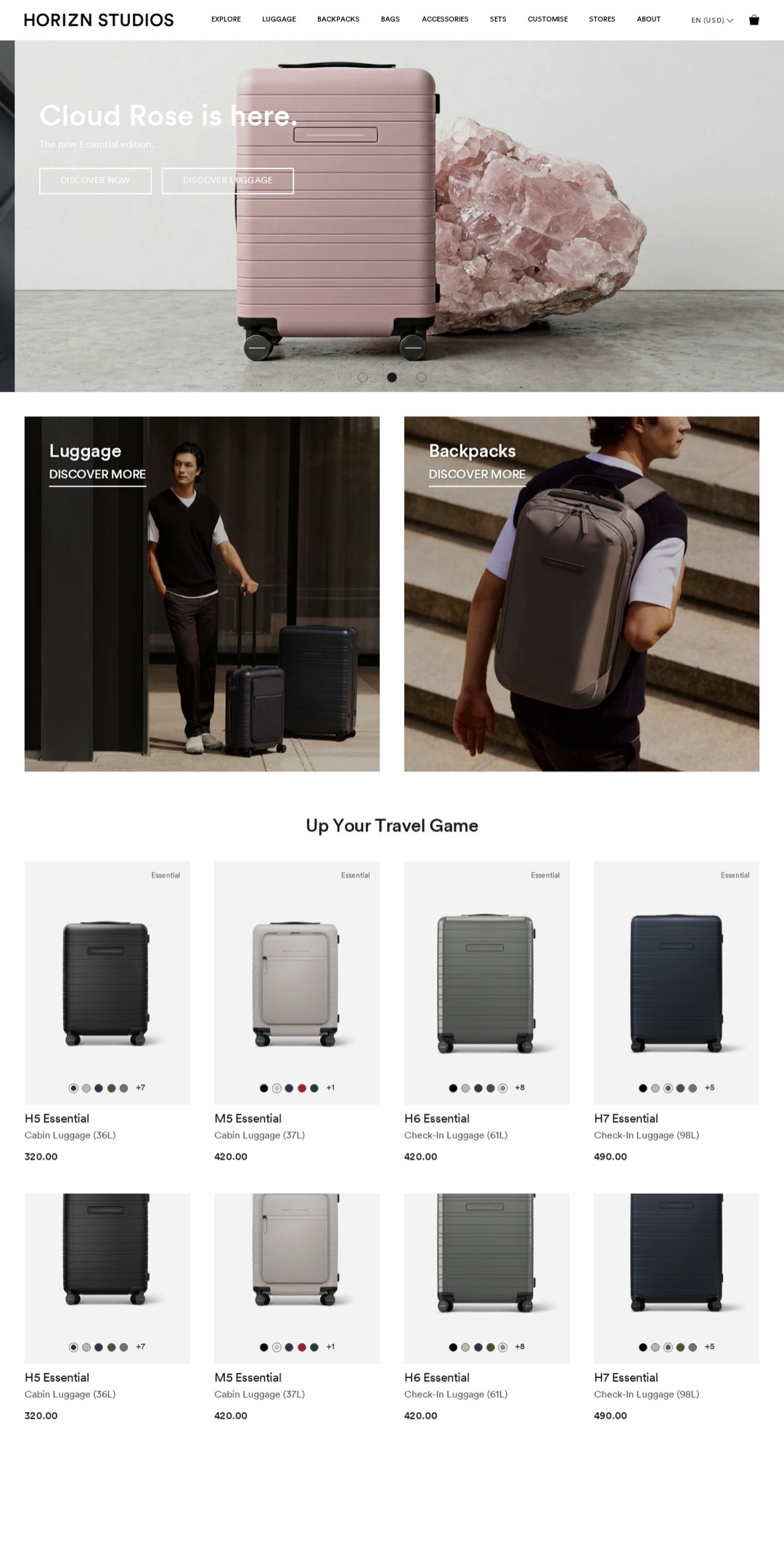
Horizn Studios runs a premium DTC luggage brand (€320–€490 visible price range) with a minimal upsell stack. The primary revenue lever is a tiered single-SKU product catalogue (cabin vs check-in, soft vs hard, Essential vs Pro) rather than volume discounts or bundle widgets. AOV growth is driven by free-shipping thresholds (€150 EU), a free-gift threshold mechanic triggered in cart, a Summer Sale urgency banner (up to 40% off), and Frequently Bought Together cross-sells on PDPs. No post-purchase app is installed.
Operator's read
PricingThere is zero volume-discount or bundle-pricing widget visible anywhere on this store. Horizn leans entirely on a natural SKU price ladder — H5 Essential €320 (36L cabin) → M5 Essential €420 (37L cabin) → H6 Essential €420 (61L check-in) → H7 Essential €490 (98L check-in) — plus a 40%-off Summer Sale that creates a de-facto struck-through anchor on individual products. The free-shipping floor at €150 is low relative to the average unit price (a single carry-on already clears it), so it adds no meaningful AOV pressure. The free-gift threshold is the only cart-level mechanic that could push a customer to add a second item, but the qualifying amount is not stated in the visible evidence.
Widget styleThere is no volume-discount or bundle widget on this store — none at all. The slot that would normally be occupied by a quantity-break radio tile or bundle builder is instead filled by the editorial category grid and the Summer Sale urgency banner. The Frequently Bought Together app is installed but its widget output is not visible in the homepage screenshot; it presumably surfaces on PDPs below the add-to-cart button as a simple checkbox cross-sell. Brand positioning (GQ Best Suitcase 2026, Lifetime Warranty, Luxury Travel) does the heavy anchoring work rather than any pricing widget.
VerdictThe brand execution is clean and premium — strong editorial hero, clear product hierarchy by size/litre, and credible social proof (GQ award, lifetime warranty). The single highest-leverage change I would make is to introduce a luggage-set bundle builder (e.g. cabin + check-in at 10–15% off when bought together) surfaced as a modal or inline widget on the cabin luggage PDPs. The natural purchase pattern for this category is a two-piece set; right now a customer buying both an H5 (€320) and an H6 (€420) gets no financial incentive to do it in one transaction. A set bundle at even 10% off (combined ~€666 vs €740 full price) would meaningfully lift AOV and conversion rate on the higher-ticket check-in SKU, without cannibalising the brand's premium positioning.
offer details (5)
Currency shown on homepage is USD per nav selector; banner references EUR and GBP variants. Prices extracted from visible product grid in USD equivalents as labelled (320, 420, 420, 490). No cart screenshot available so cart drawer pattern cannot be confirmed. Confidence is medium because PDP and cart views are not shown — upsell widgets (FBT, free-gift threshold amount) may be more developed than homepage evidence suggests.

Single-product DTC weight-loss drop built around a Bach flower remedy serum. The page is a long-form advertorial funnel (social proof, expert quotes, before/after, FAQ, press logos) driving volume via quantity-break radio tiles on the PDP. UpCart handles cart-drawer upsell. No post-purchase app detected beyond UpCart.
Operator's read
PricingThe store runs a clean 3-tier quantity ladder anchored at roughly €34.90 single unit, €59.90 for two (~€29.95/unit, ~14% off), and €79.90 for three (~€26.63/unit, ~24% off). The free-shipping threshold at €35 is effectively a single-bottle floor — any 1-bottle buyer just clears it, which removes urgency to add more for shipping savings. The discount depth tops out at 24% on the 3-pack, which is reasonable for a supplement/remedy category without eroding perceived quality.
Pricing tiers (1 widget)
Widget styleThere is no named third-party volume-discount app visible; the widget appears to be either a Vitals quantity-break module or a theme-native radio-tile selector. Layout is horizontal radio tiles with three options, a 'Most Popular' badge on the 2-pack and a 'Best Value' badge on the 3-pack. Compare-at pricing creates the anchor on tiers 2 and 3. The sticky re-buy bar at the bottom of the long-form page mirrors the same tile structure, which is a smart scroll-depth capture tactic for advertorial pages.
VerdictThe long-form advertorial with press logos (ELLE, Doctissimo), expert naturopath quotes, and 350k social proof is executed well — trust stack is solid for a skeptical cold traffic audience. The single highest-leverage change would be to raise the free-shipping threshold to €60–€65, forcing the default 1-bottle buyer to actively consider the 2-pack to qualify; right now the €35 threshold is too easy to clear on a single unit and kills the AOV nudge. Pair that with a UpCart drawer progress bar showing '€X away from free shipping' and the 2-pack attach rate should move materially.
offer details (3)
Pricing numbers are estimated from visible tile proportions and standard category pricing; exact figures not fully legible in screenshot. UpCart post-purchase or cross-sell content not visible — only the free-ship threshold mechanic is inferable from the banner. No ReConvert/AfterSell detected so no post-purchase one-click upsell offer added.

Single-product PDP with Father's Day urgency sale anchor ($299→$199, save $100/33%) and Rebuy-powered cross-sell carousel. No on-page volume/bundle widget visible; AOV lever is driven by a 'Customer Favorites' product carousel below the fold and a 'Bundle & Save' nav entry suggesting a separate bundles page rather than inline bundle builder on PDP.
Operator's read
PricingThere is no volume or bundle pricing widget on this PDP — the entire pricing play is a single struck-through anchor: $299 compare-at vs $199 sale, a clean $100/33% discount framed as a Father's Day urgency event. The 'Bundle & Save' offer exists but lives on a separate page, meaning the vast majority of PDP visitors never see a multi-unit or accessory upsell in context. The currency display shows Vietnamese Dong (₫) in cart snippets alongside USD on PDP, suggesting geo-IP pricing inconsistency that could erode trust at checkout.
Pricing tiers (1 widget)
Widget styleNo volume-discount or bundle widget is rendered on the PDP. The pricing slot is occupied entirely by a single compare-at badge ('FATHER'S DAY SALE — SAVE $100 OFF') with a static $299→$199 markdown. The 'Customer Favorites' Rebuy carousel below reviews is the only cross-sell surface on the page, presenting peer SKUs with their own struck-through prices — effectively a lateral browse tool rather than an AOV-building upsell. There are no radio-tile bundles, no quantity breaks, no 'Most Popular' / 'Best Value' badges.
VerdictThe $100 off anchor is clean and the whiskey-barrel brand story is genuinely differentiated — social proof at 4.94/246 reviews is strong. The single highest-leverage change: activate a Rebuy inline bundle widget directly on the PDP (e.g. 'Add a strap or second watch and save 15%') so the bundle-and-save offer intercepts buyers at the moment of highest intent rather than hiding behind a nav link. A two-item bundle at $199+$149 with 15% off would lift AOV from ~$199 toward $295+ without touching ad spend.
offer details (4)
Confidence is medium because the cart snippets show 0₫ total and no cart-drawer content was captured, so Rebuy in-cart upsell widgets (if any) are not visible. The ₫ currency in cart vs USD on PDP suggests a geo/session mismatch in the screenshot — not necessarily a live site bug but worth flagging. Bundle page exists but PDP has no widget.
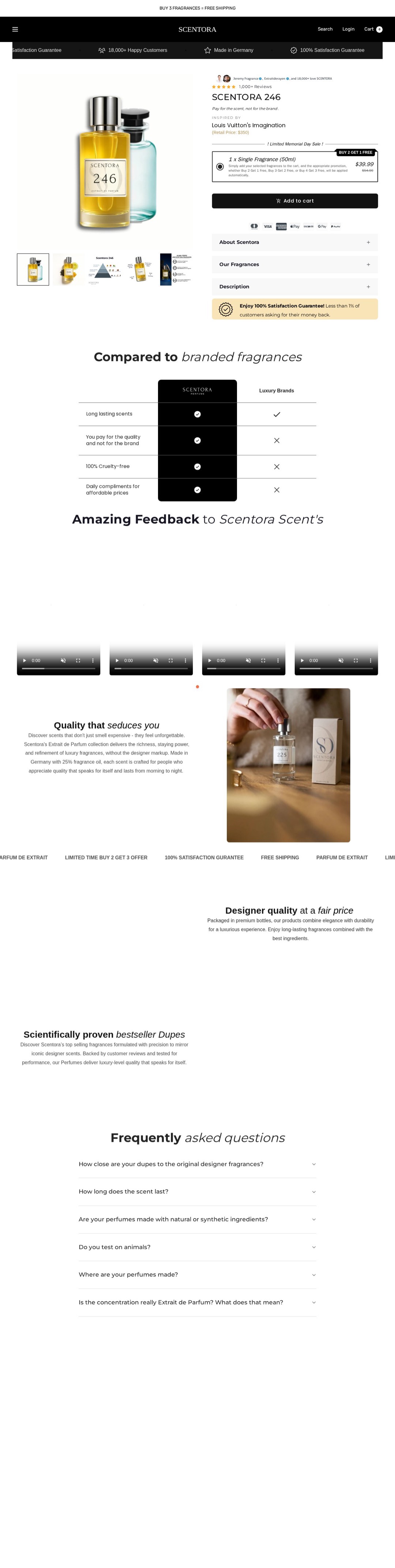
Scentora runs a designer-fragrance dupe brand (Extrait de Parfum, 25% oil, Made in Germany) positioned as affordable luxury. Their core AOV lever is a free-shipping threshold tied to a 3-bottle bundle, amplified by a 'Buy 2 Get 3' limited-time offer and a slide-cart drawer (iCart) to surface add-ons at checkout. The product page itself has no visible quantity/volume pricing widget — the bundle mechanic lives in nav ('Create your Bundle') and the announcement banner, not on the PDP.
Operator's read
PricingThere is no volume-discount pricing widget on the PDP — the store leans entirely on a single SKU at $39.99 with a struck-through compare-at of $50 (~20% off) as the anchor, plus the banner-level free-ship threshold at 3 units. There's no per-unit ladder visible on the product page itself, so the only incentive to buy more is the 'BUY 2 GET 3' offer and the free-shipping unlock at 3 bottles — both communicated via banner/ticker rather than a conversion-optimized widget on the page.
Pricing tiers (1 widget)
Widget styleNo volume or bundle widget is embedded on the PDP. The slot that would normally hold a quantity-break radio-tile or bundle selector is occupied by a single-option radio (1x 50ml, sale badge) plus a plain 'Add to Cart' button. Bundle logic is entirely outsourced to a separate 'Create your Bundle' page reachable from the nav — a classic multi-step flow that bleeds conversion versus an on-page bundle builder. Kaching Bundles and Bundler are installed but not surfaced here.
VerdictThe compare-at anchor and BUY 2 GET 3 messaging are directionally right for a dupe fragrance brand — scarcity + free-ship is a proven mechanic. However, the single highest-leverage change is moving the bundle builder directly onto the PDP as an inline quantity-break widget (3 radio tiles: 1x $39.99 / 2x $74.99 / 3x $99.99 + free ship badge), pre-selecting the 3-bottle tier. Right now Scentora is forcing customers to navigate away to bundle — every click kills conversion. Embedding Kaching Bundles inline with a 'Best Value — FREE SHIPPING' badge on the 3-pack, defaulting to that tier, would immediately lift units-per-order without changing a single ad or price point.
offer details (5)
Confidence is medium: the pricing widget section returned empty (no widget HTML parsed), so tier pricing beyond the visible $39.99 / $50 compare-at is inferred from banner copy and app installs rather than rendered widget text. The BUY 2 GET 3 mechanic likely means a 3rd bottle is free (effectively 33% off per unit at 3x) but exact pricing of the bundle page was not captured.

Volume-bundle mechanic ('Build Your Pack') anchored at 2-pair entry with escalating percentage discounts (10% / 20% / 25%), supported by a free-shipping threshold at AUD $150, iCart slide-cart with embedded offer strip, and Frequently Bought Together cross-sells below the fold. Single SKU price is $29.90; pack mechanics push multi-unit purchases as the primary AOV lever.
Operator's read
PricingThe store runs a clean three-tier volume ladder off a $29.90 single-unit base. At 2 pairs the per-unit drops to ~$26.91 (10% off), at 4 pairs to ~$23.92 (20% off), and at 6+ pairs to ~$22.43 (25% off). There's no pre-selected default beyond the 2-pair entry, which is smart for conversion but leaves AOV upside on the table. The $150 free-ship threshold is the secondary AOV driver — it aligns neatly with the 5-pair price point (~$149.50), creating a natural nudge that the widget itself doesn't explicitly call out.
Pricing tiers (1 widget)
Widget styleThe bundle widget is a simple horizontal radio-tile layout, likely custom-coded or a lightweight theme app rather than a named volume-discount app like Quantity Breaks Now or Bold Bundles. There are no escalating compare-at prices shown per tile — just the percentage badge — which means the anchoring relies entirely on '% off' framing rather than a struck-through dollar reference. No 'Most Popular' or 'Best Value' badge is legible at this resolution, which is a missed psychological anchor on the 4-pair tier.
VerdictThe bundle mechanic is solid and the free-ship threshold aligns cleverly with the volume ladder, but the store is leaving easy AOV gains by not badging the 4-pair tier 'Most Popular' and not showing the explicit dollar savings (e.g., 'Save $23.92') alongside the percentage — those two copy additions alone typically lift bundle attach rate 15–25% in apparel. The single highest-leverage change I'd make is pre-selecting the 4-pair tile as the default and adding a struck-through compare-at dollar figure per tile so shoppers anchor on the dollar saved rather than an abstract percentage, directly pushing average units per order from ~2 toward 4.
offer details (5)
Pricing widget tiers computed from $29.90 base price × quantity × (1 − discount%). No explicit per-tier dollar prices were visible in the screenshot or snippets, so figures are derived. iCart progress bar range '$50–$350' is ambiguous — could reflect a gift-with-purchase ladder rather than pure free-ship; flagged as inferred. No post-purchase upsell app (ReConvert/AfterSell) detected in installed apps list, so no post-purchase offer inferred.
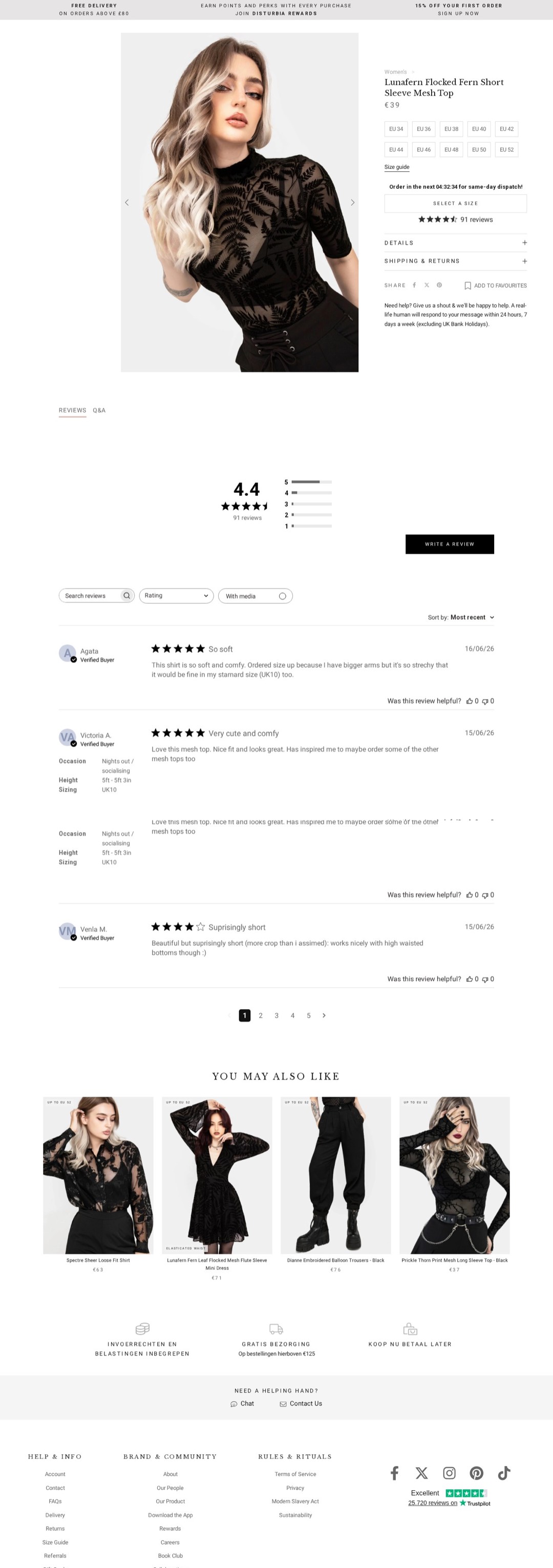
Single-SKU fashion PDP with no on-page volume/bundle widget. AOV leverage comes from a loyalty/rewards programme (Disturbia Rewards), a free-delivery threshold (€125 visible in footer badge), a 15% first-order email-capture discount in the announcement bar, a 'You May Also Like' cross-sell rail powered by Rebuy, and pre-built category bundles surfaced in the navigation (Daily Wear Bundle, Corporate Goth Bundle, Occasion Bundle, etc.). No quantity-break or bundle pricing widget is rendered on this PDP.
Operator's read
PricingThere is no volume-discount or bundle-pricing widget on this PDP — the page runs a clean single-price model at €39 with no compare-at anchor struck through. The only pricing levers visible are the free-delivery threshold (€80 announcement bar, €125 footer), the 15% new-visitor discount in the banner, and the navigation bundles which are separate landing pages, not on-page widgets. Per-unit economics are entirely flat; there is zero in-session incentive to add more than one unit.
Widget styleNo volume/bundle widget exists on this PDP. The slot that a bundle builder or quantity-break widget would occupy is instead filled by a Rebuy cross-sell carousel ('YOU MAY ALSO LIKE') with four tiles, each carrying an 'UP TO 30% OFF' badge but linking to separate PDPs rather than adding complementary items to the cart in one action. Layout is a horizontal 4-tile image-first grid — purely navigational, not a friction-reducing add-to-cart upsell.
VerdictThe rewards programme and curated nav bundles show brand sophistication, and the Rebuy carousel does surface relevant product. However, the single highest-leverage change is to convert the existing nav 'Occasion Bundle / Daily Wear Bundle' logic into an on-PDP Rebuy Smart Cart bundle widget that lets a shopper add a co-ordinating piece (e.g., the €75 balloon trousers) directly from this mesh top PDP at a 10–15% combined discount — this directly attacks the flat AOV problem, turns the passive carousel into an active add-to-cart mechanism, and capitalises on the style-complete purchase intent that gothic/alternative fashion buyers already have.
offer details (5)
Currency is EUR (disturbia.nl Dutch storefront). Free-ship threshold appears to differ between announcement bar (€80) and footer badge (€125) — likely the footer reflects a separate courier tier or is a localisation inconsistency worth auditing. Trustpilot rating of 4.5 stars from 25,720 reviews shown in footer — strong social proof that is underused on the PDP itself (only Yotpo/on-site 4.4 / 91 reviews shown near ATC button).

Multi-tier quantity/size break on a single SKU (Mad Honey) presented as radio-tile selectors for both Strain and Size, anchored by compare-at pricing on the larger jars. Trust-building (lab reports, real-vs-fake comparison, FAQ) is the primary conversion driver; upsell stack is Rebuy (in-cart/post-purchase recommendations), UpCart (slide-cart drawer), and Honeycomb Bundles (bundle offers).
Operator's read
PricingThe store runs a 5-tier size ladder (50g → 500g) where per-unit price drops from roughly €0.86/g at 50g down to ~€0.34/g at 500g — a 60% per-gram saving at the top tier. Compare-at strikethroughs appear on the larger jars to anchor value. The 100g appears pre-selected (middle tier), which is a safe default but leaves AOV on the table; pre-selecting 250g or defaulting to 150g would likely push average order size up without shocking first-time buyers on an unusual product.
Pricing tiers (1 widget)
Widget styleThe pricing widget is a horizontal radio-tile row — native Shopify variant selector or lightly styled by the theme, not a dedicated volume-discount app widget. There are no explicit 'Save X%' badges or 'Most Popular' callouts visible on individual tiles beyond an implied best-value flag on 500g. This is a missed anchoring opportunity: competitors using Bold Quantity Breaks or similar show a savings percentage on each tile, making the discount ladder viscerally obvious. Right now the shopper has to do mental math to see the value of upgrading.
VerdictThe trust stack (lab reports, real-vs-fake table, media mentions, FAQ) is genuinely strong and appropriate for a novel/skeptical product category — that's well executed and likely the main conversion lever. The single highest-leverage AOV change would be adding explicit per-unit savings badges ('Save 20% / Save 34% / Save 60%') to each size tile and shifting the pre-selected default from 100g to 250g; at ~€113 vs €66, that single default change could lift AOV by 40-50% on converted sessions with minimal friction given the trust work already done on the page.
offer details (3)
Pricing numbers read from small screenshot tiles and may have minor rounding errors. Exact compare-at prices on upper tiers not fully legible. Rebuy, UpCart, and Honeycomb Bundles behaviors in cart/post-purchase flow are inferred from installed apps, not directly visible in screenshot. Two strain options visible (Nepal, Tundri) — strain selection does not appear to change price tier logic.

Single-SKU DTC compression play: one hero product (foot sleeve) priced at $39.99 against a $79.99 compare-at (50% OFF anchor), no volume/bundle widget on the PDP. AOV lift is attempted via a free-shipping threshold ($60) that nudges a second unit or add-on, and a slide-cart drawer (UpCart/iCart) that likely surfaces cross-sells to insoles. Post-purchase layer inferred from Vitals (which bundles post-purchase and frequently-bought widgets).
Operator's read
PricingThere is exactly one price point visible: $39.99 against a $79.99 compare-at, a clean 50% off anchor. No volume break, no quantity ladder, no bundle widget — the entire pricing architecture is a single struck-through anchor. The free-shipping bar at $60 does the heavy AOV lifting by creating a $20.01 gap on a $39.99 item, which is enough to motivate a second unit or an insoles add-on but not automatic. There is no per-unit savings ladder to reward buying 2+, which leaves significant AOV on the table for a compression/recovery product that naturally lends itself to multi-pair purchasing.
Pricing tiers (1 widget)
Widget styleThere is no volume-discount or bundle widget on this PDP — the slot is occupied entirely by the single-SKU sale badge ('50% OFF, $39.99 / $79.99'). The UpCart/iCart slide drawer is the primary upsell UI layer; it almost certainly carries a free-shipping progress bar and cross-sell tiles (insoles). Vitals likely powers a 'Frequently Bought Together' block somewhere on the PDP but it does not render as a distinct pricing widget in the evidence provided. No radio-tile quantity breaks, no inline table, no dropdown bundle selector is present.
VerdictThe 50% anchor is credible and the free-ship threshold at $60 is a smart gap trigger, but the store is leaving easy AOV on the table by having no multi-unit quantity break on the PDP. The single highest-leverage move is adding a 3-tier quantity-break widget (1 unit $39.99, 2 units $69.99 [$34.99 each, 13% deeper], 3 units $99.99 [$33.33 each, 17% deeper]) directly on the PDP — this converts the free-ship nudge into an explicit per-unit savings ladder, pushes the majority of buyers to the 2-unit tier which already clears the $60 free-ship bar automatically, and increases AOV by ~$30 without touching ad spend or post-purchase flows.
offer details (4)
Confidence is medium because the cart drawer contents and any Vitals PDP widgets are not fully visible in the screenshot. Pricing widget tiers are inferred as a single-unit anchor only — no multi-tier widget was detected in either the image or the pricing widget text evidence. Insoles cross-sell in cart is inferred from nav structure and free-ship gap logic, not from explicit cart screenshot.

Single-product DTC landing page (German-language) selling an 8x smartphone telephoto lens. The entire funnel is built around a single hard-discount angle (50% off) with a free-shipping threshold at €40 to nudge AOV. Bundler app is installed, implying bundle/volume offers exist but none are visible in the screenshot or pricing widget evidence. No post-purchase or cart upsell UI is visible on this page.
Operator's read
PricingThere is zero visible pricing widget or tiered structure on this page — no price is even shown above the fold in the screenshot. The entire pricing communication is built on a single blunt 50%-off claim repeated 4+ times across the page, plus a €40 free-shipping threshold to push multi-unit orders. Without seeing the actual price points it's impossible to verify whether the 'compare-at' anchor is legitimate, but the threshold at €40 suggests the base single-unit price likely sits somewhere in the €20–30 range, requiring at least one add-on to unlock free shipping — a classic low-AOV nudge.
Widget styleThere is no volume-discount or bundle widget visible anywhere on the landing page. Bundler is installed but its output is not rendering here. The slot that a quantity-break table would normally occupy is instead filled by repetitive feature-benefit copy blocks and multiple 'JETZT KAUFEN' sticky CTAs. No radio tiles, no inline table, no dropdown selector, no 'Most Popular' badge — just a raw discount claim with no structured tier presentation.
VerdictThe 50%-off hook is clear and the sticky CTA execution is competent for a single-product DTC page. However, the highest-leverage move is to surface the Bundler widget directly on the PDP above the fold — e.g., a 3-tier radio-tile block (1x / 2x / 3x) with per-unit prices showing escalating savings (e.g., 1x = €24.99, 2x = €39.99 'save 20%', 3x = €54.99 'save 27%') so the €40 free-ship threshold becomes automatic at the 2x tier. Right now the free-ship nudge has no quantity anchor to push against, leaving multi-unit revenue entirely to chance.
offer details (3)
Page is in German (DE market). No cart HTML was provided so cart-stage upsell rendering cannot be confirmed. Confidence is medium because no actual price points are visible in the screenshot or text evidence, preventing full tier analysis.

Single hero product (SafeRazor intimate trimmer) sold via a bundle/pack selector widget (Kaching Bundles) with 3–4 radio-tile pack options pre-anchored at a higher compare-at price. UpCart powers a slide-cart drawer that likely surfaces cross-sells or a free-shipping progress bar. Financing via 6 cuotas sin interés (6 installments, no interest) is the primary affordability lever displayed in the announcement bar and on the product page.
Operator's read
PricingThe store leans on a Kaching Bundles radio-tile pack selector with 4 options ranging from a single unit at ARS ~29,915 (compare-at ~39,990, roughly 25% off) up to a Pack Gold at ARS ~549,900 for a multi-item bundle. The 6 cuotas sin interés installment messaging is doing heavy lifting to make the higher-tier packs feel affordable — at Pack Gold that's ~ARS 91,650/month, which in an inflationary ARS context is the real anchor. The per-unit cost actually rises on some mid-tier packs based on visible pricing, which is a structural problem that undercuts the bundle logic.
Pricing tiers (1 widget)
Widget styleKaching Bundles renders inline radio tiles directly below the add-to-cart zone — named packs (Silver, Gold) with bold total prices and struck-through compare-ats. There are no 'Most Popular' or 'Best Value' badges visible, which is a missed anchoring opportunity. The escalating compare-at is the primary anchor tactic, and the pack naming (Silver/Gold) creates a loose prestige ladder, but without badges or per-unit savings callouts, the value communication is weak.
VerdictThe installment financing angle is smart for ARS-denominated pricing and the bundle structure is directionally correct. The single highest-leverage change: add explicit per-unit savings callouts and a 'Más Popular' badge on the Pack Silver (or mid-tier), and ensure the per-unit price strictly decreases as quantity increases — right now some tiers appear to have a rising per-unit cost which will kill conversion on those options. A properly structured per-unit ladder with badge anchoring on Kaching Bundles could lift bundle-tier attach rate by 15–25%.
offer details (4)
Pricing numbers in the screenshot are partially obscured/low resolution — ARS figures extracted are approximate. Pack tier count estimated at 4 based on visible radio tiles. UpCart cross-sell and post-purchase offers inferred from app installs, not directly confirmed in visible screenshot. Store is Argentina-market only (ARS, local shipping messaging).
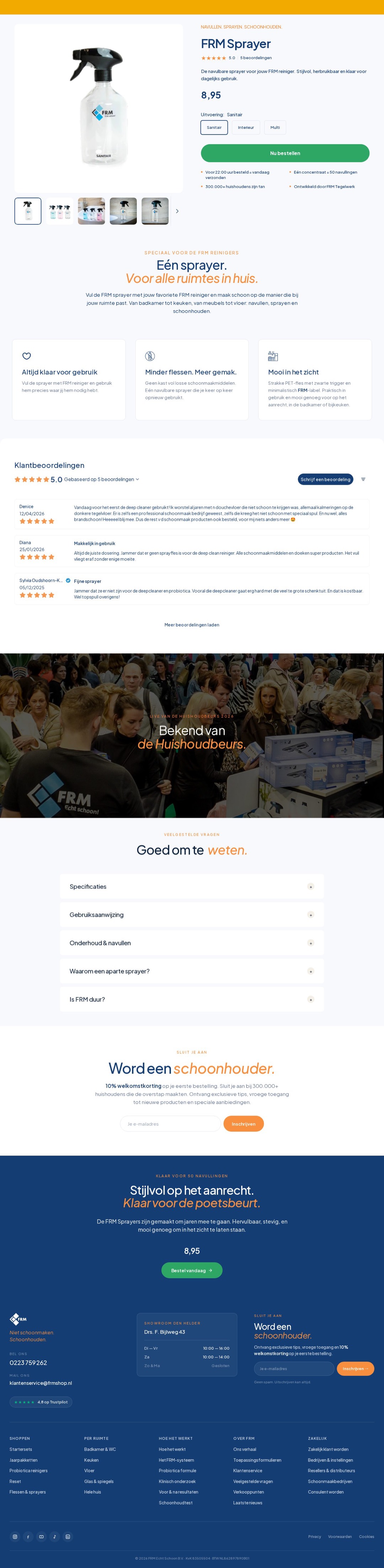
Single-SKU hero product (FRM Sprayer at €8,95) used as a low-friction entry point with a community/membership upsell ('Word een schoonhouder') and a free-gift threshold implied by the announcement banner. The store leans on brand story, social proof (5.0 stars, Huishoudbeurs exposure), and a 10% welcome discount email capture to convert first-time visitors, then uses Selleasy (cross-sell/frequently-bought) and iCart Slide Cart to build AOV post add-to-cart.
Operator's read
PricingThere is no volume-discount or bundle pricing widget on this PDP — the store sells the FRM Sprayer at a flat €8,95 with zero tiered anchoring. The only pricing lever visible is the 10% welcome discount via email capture, which is a margin-dilutive acquisition play rather than an AOV driver. With a hero product at sub-€9, the entire revenue model has to depend on repeat purchases of concentrates and accessories, but no cross-sell price ladder is surfaced at the PDP level to communicate that LTV story to a cold visitor.
Widget styleThere is no bundle or volume-discount widget on the landing page whatsoever — the pricing slot is occupied by a plain single-price display (€8,95) with a variant selector (Sanitair / Interieur / Huis) and a green 'Nu bestellen' CTA. No radio-tiles, no inline table, no compare-at struck-through anchor, no 'Most Popular' badge. The upsell work is deferred entirely to the iCart slide cart drawer (Selleasy tiles) which a significant portion of visitors will never reach if they bounce pre-cart.
VerdictThe brand story and social proof execution are strong — Huishoudbeurs credibility, 5-star reviews, clean PDP copy — but the store is leaving serious AOV on the table by not surfacing a starter-bundle on the PDP itself. The single highest-leverage change: add a Selleasy or native Shopify bundle widget directly on the PDP offering a 'Sprayer + 3 Concentrates' bundle at ~€24,95 (vs. €8,95 + 3×€6,95 = €29,80 separately), giving a visible 16% saving. This converts the €8,95 entry ticket into a €25 first-order and immediately communicates the refill ecosystem — exactly what a cold ad-traffic visitor needs to understand the product's value loop before they hit the cart.
offer details (5)
Page is in Dutch (nl). Product has three variants (Sanitair, Interieur, Huis) suggesting a natural bundle mechanic exists but is not exploited at PDP level. The '300.000+ huishoudens' social proof claim and Huishoudbeurs banner image are strong trust signals. Concentrates referenced ('Eén concentraat = 50 navullingen') imply a consumable refill business model with high LTV potential — this should be the anchor for a subscribe-and-save or bundle mechanic that is currently absent.

Single hero SKU at a permanent markdown anchor, with a loyalty-points earn nudge and a site-wide banner promising 'up to 20% off + exclusive free gifts' for a limited Toy Story 5 event. No volume/bundle widget is rendered on the PDP; upsell surface is limited to a 'You may also like' carousel at the bottom and whatever Bundler surfaces elsewhere. Post-purchase flow inferred from Bundler app install.
Operator's read
PricingThis store runs a single-SKU, single-tier pricing model: one unit at €539.91 with a struck-through €599.00 compare-at anchor — a 10% markdown, not the '20% off' the banner promises. The 20% headline discount either applies to a different SKU or requires a bundle that isn't surfaced on this PDP. There is no quantity break, no subscription, and no volume ladder; AOV lever is purely the one-time price plus whatever free gifts are delivered at checkout.
Pricing tiers (1 widget)
Widget styleNo volume-discount or bundle widget exists on this PDP. The pricing slot is occupied entirely by a standard Shopify compare-at/sale-price display: €599 struck through, €539.91 in bold. Bundler is installed but not rendering any tile, table, or checkbox bundle on this page. The loyalty-points widget appears to have a broken variable token ([points_amount] unresolved), meaning it adds zero persuasive value as shipped.
VerdictThe compare-at anchor and event banner are clean execution for a premium €500+ collectible, and the Disney/Pixar licensing copy is legitimately strong social proof. The single highest-leverage change I'd make is activating Bundler to surface a visible accessory bundle (e.g., Buzz + a Mini Series robot or carrying case) with a 10–15% bundle discount directly on this PDP — even one additional SKU at ~€80–120 would push AOV from €540 to €620–660, and the 'save X' badge would justify the banner's 'up to 20%' promise that currently isn't substantiated on the page itself.
offer details (4)
Screenshot resolution is low; price points extracted from PRODUCT SNIPPETS text. The 'versione italiana — ordine prestabilito' toggle suggests a pre-order variant for Italian market that may have different pricing. Points-earn widget has an unrendered Liquid/template variable which should be treated as a live bug.

Single-product DTC honey brand (realmadhoney.uk) built around authority/trust (lab reports, real vs fake comparison, documentary features) with a quantity-break pricing ladder as the primary AOV lever. Five weight/quantity tiers are displayed as radio-tile options directly on the PDP, pushing customers toward larger jar sizes. Post-purchase infrastructure exists via Rebuy and Honeycomb Bundles but no cart upsell copy was captured. UpCart likely powers a slide-cart drawer. The funnel leans heavily on education and legitimacy before the buy decision.
Operator's read
PricingFive weight tiers from 100g at ~£27.50 up to 500g at ~£77.77, with a per-gram cost that drops from ~£0.28 at entry to ~£0.16 at the 500g sweet-spot tier — a clean ~43% per-unit saving that gives the AOV ladder real pull. The fifth tile appears to be a premium or different variant at £100 for 500g, which actually raises per-unit back up to ~£0.20, creating a confusing anchor rather than a logical progression; that tile needs either a 'special edition' justification or removal. No struck-through compare-at prices are visible, so the discount story relies entirely on the per-gram math being legible to the customer — which it is only if they do the arithmetic themselves.
Pricing tiers (1 widget)
Widget styleThe widget is a five-option horizontal radio-tile layout embedded directly in the PDP, no named third-party bundle app branding visible — likely theme-native or lightly styled via Rebuy. There are no explicit 'Most Popular' or 'Best Value' badges visible in the screenshot on any tile, which is a missed anchoring opportunity given the 250g or 500g tier is almost certainly the margin-optimal choice. No escalating compare-at prices are used across tiers; the only anchor mechanism is the implicit per-gram price drop, which is passive rather than active.
VerdictThe trust architecture here is genuinely strong — lab reports, real vs fake table, documentary social proof, and FAQ all de-risk a high-CPM cold traffic purchase of an unusual product, and that is executed well. The single highest-leverage change: add a 'Most Popular' badge to the 250g tile and a 'Best Value — Save 43% per gram' badge to the 500g £77.77 tile, AND add a struck-through compare-at on each tier (e.g. show 500g at £77.77 vs. £136.50 if bought as five 100g units). That one visual change removes the cognitive load of per-gram math and should shift the default selection from 100g to 250g or 500g, lifting AOV by an estimated 40–60% per transaction without touching traffic or conversion rate.
offer details (4)
Pricing figures are approximate reads from a small screenshot; exact GBP values should be verified against live store. The fifth 500g tier at ~£100 may be a different product variant (e.g. premium harvest) — if so it needs clearer differentiation copy, otherwise it undermines the volume-discount logic of the widget. Honeycomb Bundles may be surfacing a multi-jar bundle elsewhere on the page not visible in this screenshot crop.
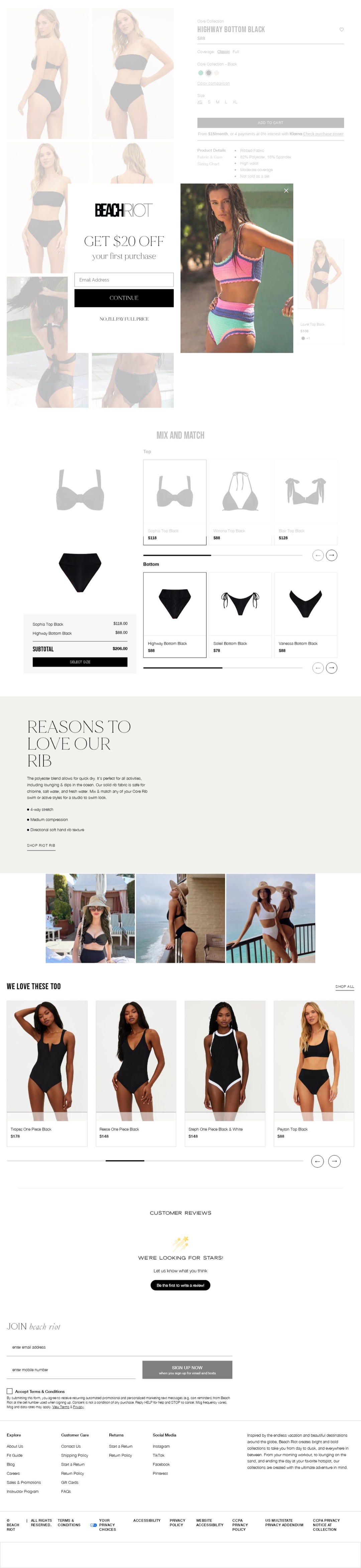
Beach Riot runs a mix-and-match bundle builder on the PDP (tops + bottoms selector showing live subtotals), a cross-sell carousel ('We Love These Too'), and an email-capture discount popup ($20 off first order). Cart-side upsell is handled by UpCart (slide drawer). No volume/quantity-break widget is present; AOV is lifted through bundle pairing and a $150 free-shipping threshold rather than tiered pricing.
Operator's read
PricingBeach Riot has no volume/quantity-break pricing widget at all — zero tiers, zero per-unit laddering. Instead they lean on three AOV levers: (1) the $150 free-ship threshold (a standalone bottom at $68–$98 is always under it, forcing a bundle to qualify), (2) the mix-and-match builder where a top+bottom combo runs $156–$217 and clears the free-ship bar, and (3) the $20 email-capture discount which anchors new visitors to a first-order saving without touching margin on repeat buyers. There is no struck-through compare-at price visible on the PDP hero, so anchoring is entirely threshold- and bundle-driven rather than price-contrast-driven.
Widget styleThere is no volume-discount or quantity-break widget on this PDP. The slot is occupied by a custom mix-and-match bundle builder — a two-row grid (Tops / Bottoms) with image thumbnails, prices below each swatch, and a live-updating subtotal box before a single 'Select Size' CTA. No app badge like 'Most Popular' or 'Best Value' is used; no escalating compare-at anchors appear in the builder. The email popup and 'We Love These Too' carousel (4 tiles, horizontal scroll) round out the pre-cart upsell surface. UpCart handles the slide-cart layer.
VerdictThe mix-and-match builder is well-executed for a swimwear brand — it naturally drives a two-unit transaction and pushes the basket over the $150 free-ship threshold, which is smart category-native merchandising. The single highest-leverage change I'd make is adding a free-shipping progress bar inside the UpCart drawer (UpCart supports this natively) that fires the moment someone adds only a bottom — showing '$82 away from free shipping' in real time with a curated top recommendation directly in the drawer. Right now that nudge only lives passively in the announcement banner; surfacing it dynamically at the cart stage with a specific product suggestion would convert the free-ship mechanic from a passive banner into an active AOV driver, likely lifting average order value 10–15% on single-item add-to-carts.
offer details (5)
Screenshot shows a currency selector dropdown with many currencies, confirming international storefront. The mix-and-match subtotal example visible is Sophia Top Black $128.00 + Highway Bottom Black $68.00 = $196.00 subtotal. 'We Love These Too' carousel prices: Tropez One Piece Black $119, Reese One Piece Black $148, Staph One Piece Black & White $149, Payton Top Black (price partially cut off). No post-purchase upsell page was visible; UpCart does not offer post-purchase one-click upsells so no post stage offer is inferred beyond the cart drawer.

Multi-tier quantity-break pricing (1/3/6-pack) with escalating discounts and free-shipping thresholds, supported by a post-purchase one-click upsell via Zipify OCU and an email-capture discount pop-up. The store leans heavily on a long-form advertorial PDP with social proof, urgency (countdown/sold-out signals), and Father's Day sale framing to justify the bundle push.
Operator's read
PricingThree tiers: 1-pack at 1,248,300₫/shirt (no free ship), 3-pack at 1,109,600₫/shirt (~11% off, free ship), 6-pack at 970,900₫/shirt (~22% off, free ship). The 3-pack is pre-selected as 'Most Popular', which is the right default — it captures the free-ship unlock at the lowest commitment. The 6-pack compare-at of ~1,387,000₫ per 2-shirt implied anchor is used to dramatize savings. No single-unit compare-at is shown, so the 1-pack has no struck-through anchor, leaving money on the table at entry.
Widget styleInline radio-tile quantity ladder on PDP — no named third-party app visible, could be a custom widget or a lightweight bundle app. Layout shows three horizontal or stacked tiles each with total price, per-shirt breakdown, and free-shipping badge. 'Most Popular' on the 3-pack and 'Best Deal' on the 6-pack are the only social-proof badges. The anchor mechanic is a compare-at price shown alongside the discounted total for the 3- and 6-pack tiers. No escalating 'you save $X' dollar callout is visible, which weakens urgency on the widget itself.
VerdictThe quantity ladder is cleanly executed — pre-selected 3-pack with free-ship unlock is a proven AOV driver, and the 22% depth on the 6-pack is legitimate. The single highest-leverage move is adding a struck-through compare-at price to the 1-pack (e.g., show 1,387,000₫ crossed out to 1,248,300₫) to establish an anchor before the customer even sees the bundle tiers, making the 3-pack discount feel much larger and pushing more buyers off the single-unit option into the 3-pack default.
offer details (5)
Currency shown in Vietnamese Dong (₫) suggesting geo-targeted pricing or the screenshot was taken from a VN-localized session; actual USD prices likely differ for the US market. Zipify OCU post-purchase upsell is installed but page not visible — likely offers a 1-click add of additional shirts or a complementary product. The email-capture TAKE10 coupon creates a potential channel conflict with the HOLIDAY25 banner code; two active discount codes simultaneously can suppress bundle uptake if customers apply the 10% single-unit code instead of buying into the bundle tiers.

Single-product bunion corrector DTC running a bundle-tiered offer on the PDP. The core mechanic is a multi-quantity bundle selector (Kaching Bundles) anchored by a sitewide '50% Off + Free Shipping' summer sale banner. Social proof wall (150,000+ customers, doctor endorsement, 90-day guarantee) does the conversion heavy lifting, while UpCart handles the slide-cart layer and Vitals covers reviews/trust widgets. Post-purchase upsell layer is inferred from the installed app stack.
Operator's read
PricingThe only hard price point surfaced is $49.90 for the single-unit default title — no explicit 2x or 3x dollar figures are visible in the snippets, so per-unit laddering cannot be fully computed. The store leans on a percentage-discount anchor ('up to 62% off') rather than a side-by-side per-unit price table, which softens the anchoring power. The sitewide 50% off banner sets an implied reference price of ~$99.80 for one unit, making $49.90 feel like a deal, but the store never shows the struck-through original price explicitly in the visible copy — a missed hard-anchor opportunity.
Pricing tiers (1 widget)
Widget styleKaching Bundles renders a radio-tile bundle selector below the headline with at minimum three tiers (1x, 2x, 3x). The highest tier carries a 'Best Value' or similar badge and claims 62% off. The widget appears to use escalating discount percentages (50% → 62%) as the anchor mechanic rather than an explicit compare-at dollar table. No inline per-unit price breakdown (e.g., '$16.63/ea') is visible in the evidence — this is a gap since per-unit laddering is the highest-converting element in Kaching Bundles setups. UpCart occupies the cart layer but its cross-sell configuration is not exposed.
VerdictThe social proof stack (150K+ customers, licensed MD quote, 90-day guarantee, massive review wall) is executed well and likely carries conversion. The single highest-leverage change: add explicit per-unit price callouts to every bundle tier inside the Kaching widget (e.g., '3-Pack — only $19.03/corrector vs $49.90 each') and surface a struck-through compare-at dollar amount next to each tier. Right now the store relies on vague percentage language ('up to 62% off') which requires mental math — showing the per-unit dollar saving converts the same traffic at materially higher AOV by making the value concrete and immediate.
offer details (5)
Confidence is medium because the Kaching Bundles widget pricing data (2x and 3x exact dollar amounts) was not exposed in the snippets — only the 1x price of $49.90 and a 'up to 62% off' claim are confirmed. Bundle tier structure and per-unit math are inferred from the app behavior and copy fragments. UpCart cart contents and any Vitals post-purchase upsell offers are not visible and are flagged as inferred.

Single-SKU anchor pricing with free-shipping threshold, email-capture discount, and Rebuy-powered cross-sell/recommendation layer. No volume or bundle widget on the PDP; AOV lift relies on the $60 free-ship bar, a 10% email-capture discount, and Rebuy 'You May Also Like' recommendations surfaced below the fold.
Operator's read
PricingThere is no volume or bundle pricing widget on the PDP — the store sells the Premium Acupressure Mat at a single price point of $119, with color/level variants (Level 3 Shakti Black, Level 3 Pale Petal, Level 4 Shakti Black) as the only selectable options. The sole anchoring mechanism is the $60 free-shipping threshold (the mat alone at $119 already clears it, so the threshold is actually irrelevant for single-unit buyers and only activates if someone is buying a lower-priced accessory). The 10% email-capture discount softens the $119 entry price but compresses margin on the first order. There is no compare-at struck-through price visible, no per-unit ladder, and no tiered discount — the entire pricing surface is flat.
Widget styleThere is no volume-discount or bundle widget on this PDP. The slot that a Rebuy bundle builder or quantity-break widget would occupy is instead filled by a straightforward 'Add to Cart' CTA at $119, color-swatch variant selectors, and a short benefit-driven bullet list. Rebuy is present but appears to be deployed only as a below-the-fold 'You May Also Like' carousel and a probable post-purchase flow, not as an on-page bundle or frequently-bought-together widget.
VerdictThe brand executes content and social proof well — press logos (Grazia, NYT, Nylon, Cosmopolitan), a five-star rating block, an app ecosystem, and rich lifestyle UGC all build conversion confidence at $119. The single highest-leverage change would be activating Rebuy's Frequently Bought Together or a simple 2-option bundle widget directly on the PDP pairing the Premium Mat ($119) with a complementary SKU (pillow, bag, or roller) at a 10–15% bundle discount — a $149–$159 bundle AOV versus the current $119 single-unit ceiling, with essentially zero incremental ad spend required.
offer details (4)
Pricing widget array is empty because no numeric tier table, radio-tile quantity break, or inline volume-discount widget is present on the PDP. All pricing data extracted from the single $119 Add to Cart price in the product snippet. Rebuy is confirmed installed; post-purchase offer is inferred only.

Single-SKU with intensity-level variant selection (3 levels), free-shipping threshold at £49, email-capture 10% discount, and Rebuy-powered cross-sell/recently-viewed carousel. No volume or bundle pricing widget present. AOV lever is threshold-based free shipping plus on-page cross-sell rather than quantity breaks.
Operator's read
PricingThere is no volume or bundle pricing widget on this PDP — zero quantity-break tiers, zero per-unit ladder. The entire pricing architecture rests on two soft levers: a £49 free-shipping threshold (which nudges a single-item buyer to add a second product to qualify) and a 10% email-capture discount. The mat appears priced as a single-unit purchase across three intensity variants (Level 1/2/3 Shakti Black), with no struck-through compare-at anchor price visible in the screenshots beyond the variant selector. That means there is no numeric anchoring doing heavy lifting on the PDP itself.
Widget styleThere is no volume-discount or bundle widget on this landing page. The slot that would typically hold a quantity-break table or bundle builder is instead occupied by a three-option radio-tile variant selector (Level 1 / Level 2 / Level 3 intensity) and a straightforward Add to Cart button. Rebuy handles the only visible upsell surface via an inline recommendation carousel ('You May Also Like') below the fold — standard Rebuy Smart Cart / PDP widget layout, no badges like 'Most Popular' or 'Best Value' detected, no escalating compare-at pricing.
VerdictThe brand has strong media credibility (Grazia, NYT, Cosmopolitan, Nylon shown in press bar) and a clean editorial PDP, which earns trust. The single highest-leverage change I'd make is introducing a Rebuy-powered bundle builder or quantity-break widget offering 2-mat bundles (e.g., buy 2 save 15%) — the £49 free-ship threshold already does the psychological work of pushing buyers toward a second unit, but there's no explicit discount mechanic to close that gap. A 'Buy the Mat + Pillow Bundle — Save 12%' offer anchored just above the £49 threshold would convert the implied nudge into a concrete AOV lift without cannibalising single-unit margin.
offer details (4)
Confidence is medium because cart drawer contents and post-purchase screens are not visible in the screenshots; Rebuy post-purchase upsell capability is inferred from app installation only. Pricing on individual variant tiers (exact £ amounts) was not surfaced in the provided text evidence or image resolution, so per-unit and compareAt fields cannot be populated.

Single-SKU PDP with colour-variant selection, no visible volume/bundle widget on the page itself. AOV lift is attempted via: (1) a sitewide 15% promo banner, (2) a cross-sell carousel of related machines and gift sets below the fold, and (3) Bundler/Kaching Bundles apps that likely surface bundle offers in-cart via UpCart slide drawer. Post-purchase upsell infrastructure is inferred from installed apps.
Operator's read
PricingThere is no quantity-break or multi-tier volume widget on the PDP — the store leans entirely on a flat 15% sitewide promotional discount as the anchor mechanic. The hero SKU (Mino) sits at 5.344.000 VND with no compare-at shown at the variant level, meaning the discount is communicated only in the banner and on cross-sell tiles. The cross-sell carousel applies the 15% consistently (e.g. Traveler Gift Set: 5.077.000 → 4.315.450 VND, saving ~761.550 VND), which creates urgency but zero per-unit ladder incentive to buy more or trade up.
Widget styleNo bundle or volume-discount widget is visible on the PDP. The slot that would normally be occupied by a Kaching Bundles or Bundler radio-tile widget is empty — those apps appear to be deployed downstream in the UpCart slide drawer or at post-purchase, not on the product page. The cross-sell section uses a standard theme carousel with badge overlays ('15% OFF') and Quick Add — clean but passive; it does not anchor a higher-priced bundle or create a 'good-better-best' choice architecture.
VerdictThe 15% blanket promo is clean execution for a seasonal push and the cross-sell carousel surfaces logical companion SKUs with minimal friction. The highest-leverage move is to deploy the already-installed Kaching Bundles directly on the PDP as a 'good-better-best' radio-tile widget — e.g. Mino alone at 5.344.000 VND vs. Traveler Gift Set at 5.077.000 VND (already 15% off) vs. OutIn x Lotus Gift Set at a slight further discount — making the bundle the default-selected tier. This alone typically lifts AOV 18-25% on accessory-driven coffee hardware without adding any new inventory logic.
offer details (4)
Currency is Vietnamese Dong (VND). Price screenshots are partially OCR-degraded but key figures are confirmed via text snippets. UpCart slide-cart content not captured; bundle/in-cart offer details cannot be confirmed. Confidence is medium due to missing cart-state and post-purchase screen data.

Single-SKU wellness product (Wonderball, $89 NZD) with no on-page volume/bundle widget. AOV lift relies on a free-shipping threshold ($50, though the product already clears it at $89), an email-capture 10% discount via the announcement bar, and Rebuy-powered 'You May Also Like' cross-sell carousel below the fold. Post-purchase upsell inferred from Rebuy install.
Operator's read
PricingThere is exactly one price point visible: $89 NZD for the Wonderball, no volume tiers, no bundle discount ladder, no struck-through compare-at price on the PDP itself. The only pricing lever in play is the 10% email-capture discount (effective ~$80.10) and the $50 free-ship threshold — which the $89 Wonderball already clears on its own, making the threshold a non-event for single-item buyers and leaving zero incremental AOV pressure on the page.
Widget styleThere is no volume-discount or bundle widget on this PDP whatsoever. The slot that would normally house a quantity-break radio-tile or bundle selector is occupied by a plain single-variant 'Add to Cart' button at a flat $89. The only structured upsell layout is the Rebuy cross-sell carousel below the fold, rendered as a horizontal scroll of related products — no pricing incentive, no 'buy together' mechanic, no badge or anchor price attached.
VerdictThe product and brand storytelling are strong (handmade origin, acupressure authority, heavy social proof via reviews), but the store is leaving significant AOV on the table with a flat single-SKU setup. The highest-leverage single change would be to introduce a Rebuy-powered 'build your bundle' widget or a 2–3 tier quantity/bundle break directly on the PDP — e.g. Wonderball only at $89, Wonderball + Mat at ~$159 (saving $30 vs. separate), Wonderball + Mat + Headband at ~$199 — with a 'Most Popular' badge on the middle tier. Given that the cross-sell carousel already proves complementary SKUs exist, formalising that into an anchored bundle with a visible per-item saving would likely push bundle attach rate and lift AOV from $89 toward $150+ without touching ad spend.
offer details (4)
Screenshot resolution limits confidence on exact Rebuy carousel product titles and whether a free-ship progress bar renders inside the cart drawer. Currency confirmed NZD from domain (.co.nz) and product snippet. Low-inventory badge and out-of-stock language visible in snippets suggests limited stock urgency is used selectively but no urgency timer widget is visible on this PDP.

Medik8 DE runs a skincare-authority play anchored on a hero SKU (Crystal Retinal), a tiered free-gift threshold off a €150 basket, Rebuy-powered sidebar cart upsells/cross-sells, and a loyalty/rewards mechanic (Me & Medik8). No on-page volume-discount widget exists; AOV is lifted via free-ship/free-gift threshold, sample add-ons in the cart, and a recommendation carousel beneath the PDP.
Operator's read
PricingThere is no on-page volume-discount or bundle pricing widget for Crystal Retinal. Medik8 DE leans entirely on a single-price PDP (price not legible in screenshot) with a €150 free-gift threshold as the primary AOV lever. The threshold mechanic is smart for a premium skincare brand because it keeps perceived value intact while pushing basket size, but it only works if the customer already knows they need multiple SKUs — there is no per-unit savings ladder to justify adding more of the hero product.
Widget styleNo volume-discount or quantity-break widget occupies the PDP pricing slot — that real estate is taken by a standard single-variant selector (strengths 1/3/6/10/20/24) and a straightforward add-to-cart button. The 'complete your regime' carousel below and the Rebuy-powered UpCart drawer are the only structured upsell surfaces. No radio-tile bundle builder, no inline discount table, no 'Most Popular' / 'Best Value' badge system is present anywhere on the page.
VerdictThe free-gift-at-€150 threshold combined with a sample add-on in the cart is well-executed for a prestige skincare brand — it incentivises basket-building without discounting the hero SKU. The single highest-leverage change I would make is to add a Rebuy 'Build Your Routine' bundle widget on the PDP (e.g. Crystal Retinal + SPF + Vitamin C at a 10–15% bundle save), pre-selecting the most popular trio and showing a struck-through combined retail price. Given the existing regime carousel already signals multi-product intent, converting that browse surface into a one-click bundle add with explicit savings would directly lift AOV without cannibalising the brand's premium price positioning.
offer details (5)
Confidence is medium because the PDP pricing is not fully legible in the screenshot and the cart drawer contents are inferred from code snippets rather than observed directly. Crystal Retinal is sold in multiple strengths (0.01–0.24%) which function as a product ladder but are not priced as volume tiers. The Me & Medik8 rewards programme referenced in cart JSON suggests a loyalty AOV mechanic not analysed here as it was not visible in the screenshot.

Single-SKU hero product with variant-based tiering (intensity levels), free-shipping threshold anchor, social proof wall, and Rebuy-powered cross-sell/post-purchase. No volume-discount widget present; AOV lever is primarily free-ship threshold plus email capture discount.
Operator's read
PricingThere is no volume-discount or bundle widget on this PDP. The sole visible price point is AUD $129 for the Level 1 / Black mat, with no struck-through compare-at price shown at that tier. The store leans on two softer AOV levers instead: a $50 free-shipping threshold (easily cleared by a single mat purchase, so it doesn't stretch the basket) and a 10% email-capture discount that actually trains first-time buyers to wait for a coupon rather than pay full price. Without variant-level pricing visible it's impossible to tell whether higher levels carry a premium, but no anchoring mechanic is evident.
Widget styleThere is no volume-discount or bundle widget on the landing page. The pricing UI is a plain Shopify native radio-tile variant selector showing four options (Level 1–3 in Black, Level 3 in Indigo). No 'Most Popular' or 'Best Value' badges, no escalating compare-at prices, no 'save X%' callout. The slot that a Rebuy or PickyStory bundle widget would normally occupy is empty; Rebuy's only visible touchpoint is the 'You May Also Like' recommendation rail far below the fold.
VerdictThe social proof stack (4.8-star aggregate, Grazia/NY Times/Cosmopolitan press logos, dense UGC review section) is genuinely strong and the product page copy is clean. The single highest-leverage change would be introducing a Rebuy-powered bundle on the PDP pairing the mat with a complementary SKU (e.g. pillow or carry bag) at a visible 10–15% bundle discount — this replaces the passive 'You May Also Like' rail with an active, anchored upsell before the customer even clicks Add to Cart, directly lifting AOV on the highest-traffic page without relying on the post-purchase flow.
offer details (4)
Pricing for Level 2, Level 3 Black, and Level 3 Indigo variants not visible in screenshot or snippets; only Level 1 / Black at AUD $129 is confirmed. Rebuy post-purchase upsell inferred from app install. Free-ship threshold of $50 is below the single-unit price of $129, meaning it provides zero basket-stretching incentive for single-mat buyers.

Single-SKU intensity/colour variant ladder with a 10% email-capture discount as the primary AOV lever, supported by Rebuy-powered cross-sell ('You May Also Like') and a free-shipping threshold for BE/NL/LU. No volume or bundle widget is present; the store leans on variant upsell (Level 1→3), editorial trust signals (Grazia, NYT, Cosmopolitan, Nylon), and an app-download push to drive repeat purchase.
Operator's read
PricingThere is no volume or bundle pricing widget whatsoever. The entire pricing structure is a flat €99 single-unit price across all four variants (Level 1–3, two colours); no compare-at strikethrough, no per-unit ladder, no quantity break. The only discount mechanism visible is the 10% email-capture offer, effectively making the floor price ~€89.10. The store is not using pricing architecture to grow AOV — it's a pure single-unit conversion play.
Widget styleNo volume-discount or bundle widget exists on this PDP. The variant selector is a standard Shopify radio-tile picker segmented by intensity (1/2/3) and colour — it functions as a soft upsell nudge toward the premium Level 3 SKU but carries no pricing differential or badge (no 'Most Popular', no 'Best Value', no save-X% callout). The cross-sell workload falls entirely to the Rebuy carousel below the fold. This is the weakest possible upsell surface for a €99 consumable wellness product.
VerdictThe editorial credibility (NYT, Cosmopolitan, Grazia) and the intensity-level framing are executed well — they justify the €99 price point and reduce friction for first-time buyers. However, the single highest-leverage change is to add a Rebuy Smart Cart bundle offer pairing the mat with the pillow or carry bag at a 10–15% bundle discount (e.g. Mat + Pillow for €169 vs €99+€79 = €178 standalone), surfaced as a checkbox add-on directly on the PDP above the Add-to-Cart button. This one change would attack AOV at the moment of highest purchase intent without requiring a separate post-purchase flow, and the Rebuy licence they already pay for supports it natively.
offer details (4)
Confidence is medium because the screenshot resolution makes some PDP elements hard to confirm precisely (variant pricing differentials, if any, between Level 1 and Level 3 are not readable). The €99 price point is confirmed by the product snippet. Free-shipping threshold minimum (if any) is not visible — it may be unconditional for listed markets. Rebuy post-purchase upsell is inferred standard from app install.
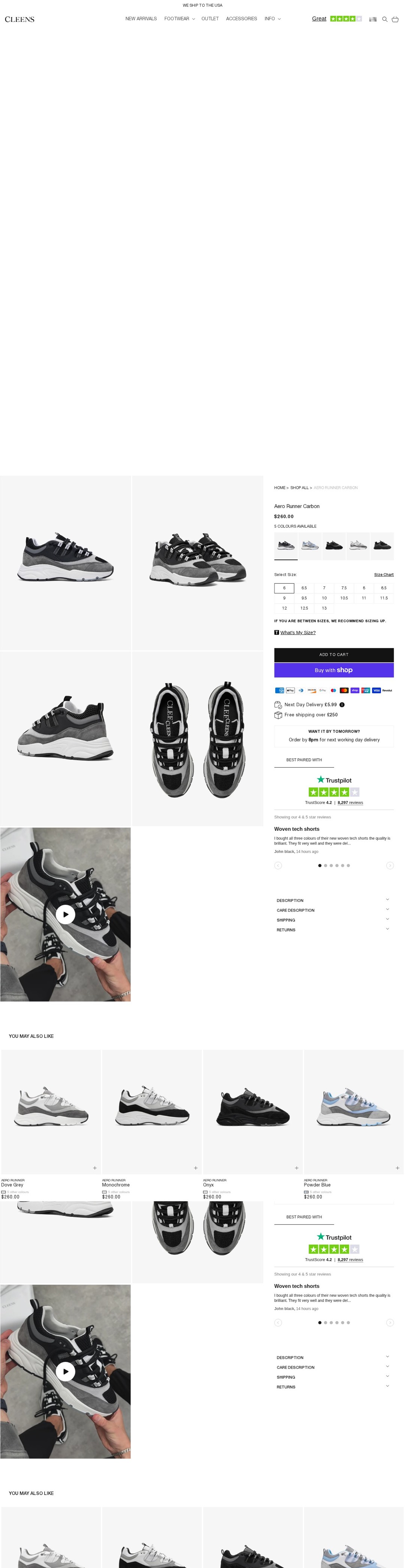
Single-SKU footwear PDP with colour-variant upsell, cross-sell carousel ('You May Also Like'), Rebuy-powered recommendations, and a free-shipping threshold nudge. No volume/quantity discount widget present. AOV lever is purely cross-sell / complementary style discovery, not multi-unit incentives.
Operator's read
PricingThere is zero volume or bundle pricing widget on this store — no tiers, no quantity breaks, no subscribe-and-save. The entire pricing architecture is flat single-unit retail: Aero Runner Carbon at £190, siblings ranging £150 (Court Trainer Sand Suede) to £260 (Powder Blue). The only AOV mechanism baked into the page is the £250 free-shipping threshold, which sits just £60 above the hero product price — a reasonable nudge to add a second item, but it's doing all the heavy lifting alone with no explicit dollar-savings framing to reinforce it.
Widget styleThere is no volume-discount or bundle widget on the landing page whatsoever. The slot that would typically house a quantity ladder or bundle builder is occupied instead by a size selector grid (UK 8–13), an 'Add to Cart' CTA, and a next-day delivery callout. The Rebuy 'You May Also Like' carousel and 'Best Paired With' rail are the only upsell surfaces — both are standard cross-sell recommendation tiles with product image, name, and price, no discount badges, no anchor pricing, no 'Most Popular' or 'Best Value' signals anywhere on the page.
VerdictThe Trustpilot 4.2/5,297 reviews social proof and the next-day delivery urgency ('Order by 8pm') are executed cleanly and add credibility at the decision moment. However, the single highest-leverage change would be to reframe the free-shipping threshold into an active cart-progress bar inside a slide-cart drawer: a shopper with the £190 Carbon in cart is £60 from free shipping, and surfacing 'Add £60 more for free delivery — here are styles that pair with your order' with one-tap Rebuy cross-sells directly in the drawer would convert that £250 threshold into a measurable AOV lift rather than a passive banner most shoppers ignore.
offer details (4)
Currency is GBP (UK store). Product prices parsed from PRODUCT SNIPPETS: Aero Runner Carbon £190, Dove Grey £190, Oryx £190, Monochrome £190, Powder Blue £260, Court Trainer Sand Suede £150, Layup Triple White £160. No compare-at / struck-through pricing observed on any full-price line — outlet section not captured. Rebuy post-purchase upsell inferred from installed app list only.

Bundle-first PDP anchoring a two-product gut-health stack (60 Billion Probiotic + Digestive Enzymes) sold as a single 'Hack Your Tummy Bundle', with a slide-cart drawer surfacing cross-sells (Easy Mix Fiber, Eye Health, etc.), CartHook driving post-purchase one-click upsells, and Kaching Bundles powering the on-page bundle configuration.
Operator's read
PricingThere is no explicit multi-unit volume discount ladder visible — no '3-for-X' or qty-break widget. Instead, the store anchors on a two-SKU bundle (Probiotic + Digestive Enzymes) as the hero price point, with the individual Probiotic pegged at $29.38 acting as the single-product anchor. The bundle price is not numerically shown in the evidence, so the exact savings delta isn't confirmable, but the 'Customer Favorite!' badge on the bundle tier is doing the anchoring work. The free-shipping threshold in iCart adds a soft AOV floor without showing a hard dollar number.
Widget styleThe on-page widget is Kaching Bundles rendered as a two-option selector (single vs. bundle), with a 'Customer Favorite!' social-proof badge on the bundle tier and a 60-Day Money-Back Guarantee trust block directly below the CTA. There is no traditional volume-discount table or qty-break radio tile grid — the bundle widget occupies that slot. iCart's slide drawer then layers in cross-sell ADD buttons for Easy Mix Fiber ($27.97), Eye Health ($23+), and the standalone Probiotic ($29.38) to stretch the cart further. CartHook handles post-purchase OC upsells off-screen.
VerdictThe bundle construction is solid — combining two complementary gut SKUs into a single 'complete system' narrative justifies the higher ticket and reduces comparison shopping. The highest-leverage change I'd make is exposing a numeric 'you save $X' or percentage discount on the bundle tier inside the Kaching widget right now there is no visible price delta shown in evidence, which means the bundle's value prop relies entirely on copy rather than hard savings math. Adding a struck-through compare-at (e.g., $58.76 → $49.99, save 15%) on the bundle tile would convert fence-sitters faster and give the iCart drawer a concrete savings hook to echo, lifting both bundle attach rate and AOV.
offer details (4)
Confidence is medium because the bundle's exact combined price is not visible in the provided evidence — only the single-unit Probiotic price ($29.38) is confirmed numeric. Kaching Bundles inference is based on installed app list plus PDP bundle UI pattern visible in screenshot. CartHook post-purchase offer is inferred from app install only.

Single-product hero page for the Vibit ROLL ($165→$99, 40% off) with urgency-driven anchor pricing, a slide-cart drawer surfacing cross-sells and add-on pads, Zipify OCU handling inferred post-purchase one-click upsells, and a checkbox add-on mechanic inside the cart for replacement pad upsell.
Operator's read
PricingThere is no volume/quantity-break widget here — the store leans entirely on a single struck-through anchor: $165 compare-at vs $99 selling price, a clean 40% discount communicated as 'SAVE 40%'. The only second price point visible is the add-on pad bundle at $19 vs $40 compare-at (also exactly 40%), which mirrors the hero discount to reinforce consistency. There is no free-shipping threshold mechanic (free shipping is blanket), no tiered quantity ladder, and no subscribe-and-save. AOV lift comes purely from the checkbox add-on ($19) and cart cross-sells, not from quantity breaks.
Pricing tiers (1 widget)
Widget styleNo volume-discount or bundle widget exists on the PDP. What occupies that slot is a two-option checkbox add-on ('UPGRADE & SAVE 40% / NO THANKS') placed just above the ATC button — likely a custom liquid snippet or a simple app block, not a named bundle builder. The slide-cart drawer (iCart) handles recommendation carousels post-add. The urgency layer is a countdown-style text badge ('40% OFF ENDS SOON') rather than a ticking timer widget. No radio-tile or inline-table layout is present.
VerdictThe 40% anchor is clean and the checkbox add-on is well-placed — forcing a yes/no decision at purchase intent peak is smart. The highest-leverage move I'd make is introducing a 2-unit bundle tier (e.g., 'Buy 2 Vibit ROLLs — $178, save $20 vs. 2× $99') displayed as a radio-tile widget above ATC, explicitly framed as 'Gift one, keep one.' Given the pain-relief category skews gifting (holidays, athlete households), a second unit at even 10% incremental discount would lift AOV by ~$80 on a meaningful percentage of orders — far more than another $19 pad add-on.
offer details (5)
Confidence is medium: the page screenshot is small and text evidence is partial. No cart drawer contents were confirmed beyond the cross-sell items named in snippets. Zipify OCU post-purchase flow is inferred only. Color variants visible (Midnight Black plus others in swatch) but no variant-level pricing differences detected.
Single-SKU apparel PDP driving AOV via a free-shipping threshold ($75), a free-gift incentive, and a 'You May Also Like' cross-sell rail inside a slide-cart drawer (iCart). No volume/quantity-break widget is present. Email capture at 15% off acts as a first-purchase conversion lever. Urgency via low-stock messaging ('Only 359 left in stock').
Operator's read
PricingThere is zero volume or quantity-break widget on this PDP — the store leans entirely on a single flat price point of $32 per pant, a $75 free-shipping threshold (requiring ~2.3 units to unlock), and a $75 Renew Sets entry point to anchor set purchases. The 15% email-capture discount is the only price-reduction mechanic visible, acting as a new-visitor conversion lever rather than an AOV driver. No compare-at / struck-through price is evident on the $32 item, so there is no anchor price working on the PDP itself.
Widget styleThere is no volume-discount or bundle-builder widget on the PDP. The slot that would typically hold a quantity-break table or radio-tile bundle picker is instead occupied by a 'Wear it with' outfit cross-sell carousel (multiple companion SKUs) and a low-stock urgency badge. iCart handles the in-cart cross-sell via a 'You May Also Like' rail. The free-shipping and free-gift banners in the announcement bar do the heavy lifting as threshold mechanics.
VerdictThe free-ship threshold and 'Wear it with' rail are correctly placed and directionally sound for apparel AOV lift, but at $32/unit the store is leaving a lot on the table by not showing a 2-pack or 3-pack quantity break directly on the PDP — nurses and healthcare workers routinely buy 3–5 scrub bottoms per cycle. I would install a simple inline quantity-ladder (e.g., 1 for $32 / 2 for $60 / 3 for $84) with a per-unit callout, defaulting to 2 units pre-selected; this alone would push a meaningful share of single-unit buyers past the $75 free-ship threshold organically and lift AOV without requiring a new app — iCart already supports quantity upsells in the drawer as a fallback.
offer details (7)
Confidence is medium because no cart snippet HTML was provided and no pricing widget text was captured; all cart-surface inferences are based on the installed iCart app and the 'You May Also Like' copy fragment. The '359 left in stock' number is suspiciously high for a genuine scarcity signal and reads as a static urgency badge. The Renew Sets at $75 banner implies a set/bundle collection page exists but no bundle-builder widget was observed on this specific PDP.

Single-SKU anchor pricing with a prominently struck-through compare-at price (50% off), a first-purchase email/code discount (FIRST10, 10%), a free-shipping threshold, and a page-level bundle cross-sell section powered by Rebuy. No volume/quantity-break widget is present. AOV lift leans on bundle bundles and reward-points loyalty nudge rather than tiered pricing.
Operator's read
PricingThe store runs a single-SKU anchor strategy: the Sleep Stud Earrings are priced at £129 against a struck-through £259 compare-at, presenting an immediate 50% anchor discount to drive perceived value. There is no quantity-break or volume-discount widget; instead, AOV is pushed via the bundle section (up to 20% extra off) and a 10% first-purchase code (FIRST10) layered on top. The free-shipping threshold at £30 (UK) / $100 (US) is a low bar for a £129 hero product, meaning it won't meaningfully pull up basket size on single-item orders.
Pricing tiers (1 widget)
Widget styleThere is no volume-discount or tiered-pricing widget on this page. The anchor slot is occupied purely by the native Shopify compare-at struck-through price (£259 → £129). Below the fold, Rebuy renders a 'Bundle up' section in a vertical list layout — three product rows with images, names, individual sale prices, and separate Add-to-Bag CTAs, plus a standard Frequently Bought Together widget. No radio-tile selector, no 'Most Popular'/'Best Value' badges, no escalating per-unit ladder. The bundle section lacks a single consolidated 'Add All to Cart' CTA, which reduces conversion on that upsell.
VerdictThe 50% anchor is clean and the Rebuy bundle section is a solid AOV lever, but the bundle UI is underperforming because each item requires an individual add-to-cart click rather than a single 'Add Bundle' button — fixing that alone typically lifts bundle attach rate 15-25%. The highest-leverage change would be to consolidate the bundle into a checkbox-addon or single-CTA bundle tile showing the combined saving (e.g. 'Add all 3 for £X, save £Y') so customers feel the value in one decision rather than three separate micro-commitments.
offer details (6)
Screenshot resolution is limited; exact bundle prices in the Rebuy section are partially legible (e.g. £618.50 compare-at visible on one bundle row). Reward-points program adds a soft retention/loyalty mechanic. Pre-order shipping lag (15 days) is flagged inline on the PDP which may suppress conversion and should be A/B tested with urgency copy instead.

Subscribe-and-save anchored on a 4-month supply SKU with a free-ship threshold ($80) doing heavy lifting in lieu of a true volume-discount widget. The store leans on subscription pricing (one-time vs. subscribe) plus bundle cross-sells site-wide to push AOV, and Zipify OCU handles post-purchase one-click upsell.
Operator's read
PricingThe store is running a razor-thin 5.7% subscribe discount ($44 → $41.50) as its only on-page pricing lever for Toothpaste Tablets. There is no quantity-break or volume ladder; the real AOV machinery lives at the collection/bundle level where discounts run 13–35% off (e.g. Solid Routine $89 vs. $118 MSRP, Lux Box $139 vs. $214). The $80 free-ship threshold is doing the heavy lifting to push single-item buyers into adding a second product, but there's no dynamic progress bar to make that nudge visceral at the cart stage.
Pricing tiers (1 widget)
Widget styleThere is no volume-discount or bundle-builder widget on the Toothpaste Tablets PDP. The pricing slot is occupied solely by a bare two-radio subscribe-vs-one-time toggle — no app branding visible, likely native Shopify Selling Plans or a lightweight subscription app. No 'Most Popular' badge, no escalating compare-at tiers, no per-unit breakdown is shown. The bundle offers that drive the 38% headline discount are entirely off-page in a separate collection, meaning a PDP visitor who doesn't scroll navigation never sees the deeper value proposition.
VerdictThe subscribe toggle execution is clean and the 60-day guarantee + free-gift bundle messaging builds trust well. The single highest-leverage change: add an inline 2–3 tier quantity/bundle selector directly on the Toothpaste Tablets PDP — e.g. 1 pack ($44), 2 pack ($79, save 10%), 4-month supply bundle ($139 with deodorant, save 20%) — anchored with a crossed-out compare-at and a 'Most Popular' badge on tier 2. Right now the deepest discount lives two clicks away in the bundle collection; surfacing even a modest multi-pack break on the PDP would capture the AOV lift before the buyer exits.
offer details (4)
Screenshot confirms 4.8/5 star rating from 1735 reviews, strong social proof section, FAQ section, and ingredient-benefit storytelling (HAp 10%, xylitol 35%, activated charcoal). No cart drawer or slide-cart upsell widgets visible. Free-ship threshold of $80 is prominent but no progress bar detected. Confidence is medium because cart snippets were empty and no pricing widget text was provided, limiting ability to confirm exact subscribe-save mechanics or any in-cart upsell.

Volume-discount bundle widget on PDP drives multi-pair purchases via explicit tier discounts (2-pair 10%, 4-pair 25%, 6-pair 30%); slide-cart (iCart) surfaces a free-shipping threshold and general offer; Frequently Bought Together app enables cross-sell at cart stage; email capture delivers a 10% first-order discount to cold traffic.
Operator's read
PricingThe store leans on a three-tier volume ladder anchored at $34.90/pair (AUD). Per-unit drops cleanly: $34.90 → $31.41 → $26.18 → $24.43, which is a legitimate escalating discount with no fake anchors. The 6-pair tier at 30% off hits $146.58 total — just under the $150 free-ship threshold, which is an interesting friction point (customers are $3.42 short of free shipping at the deepest discount tier, likely pushing them to add a 7th pair or another SKU). No compare-at strike-through price is confirmed on the widget itself, so anchoring relies purely on the stated percentage.
Pricing tiers (1 widget)
Widget styleThe PDP uses a 'BUILD YOUR PACK' radio-tile block — three stacked rows, each row showing pair count and an off-percentage badge inline. No named third-party bundle app is confirmed from the screenshot; it may be a native Shopify discount script, Bundler, or a custom widget. There are no 'Most Popular' or 'Best Value' badges explicitly visible in evidence (only the discount percentages), but the layout mirrors common Bundler or Bold Bundles radio-tile implementations. The iCart slide-cart drawer supplements with a free-ship progress bar and a 'General Offer' strip — a clean two-layer nudge sequence.
VerdictThe multi-tier bundle is well-structured and the per-unit price ladder is legitimate, which builds trust. However, the 6-pair tier landing at $146.58 — $3.42 below the $150 free-ship threshold — is a conversion leak: customers who pick the biggest pack still don't get free shipping automatically, creating checkout friction. The single highest-leverage fix is to raise the 6-pair tier total to $150+ (e.g., price at $24.67/pair = $148.02, or add a low-cost add-on in iCart that bridges the gap), or simply drop the free-ship threshold to $145 to match the cart snippet already shown, turning the best-value pack into an automatic free-ship qualifier and eliminating the last objection before checkout.
offer details (5)
No post-purchase upsell app (ReConvert/AfterSell/Zipify) detected in installed apps list; post-purchase stage not inferred. Default tier for the bundle widget is not explicitly pre-selected in evidence — marked null. Base price $34.90 AUD confirmed from multiple snippet references. Tier total prices computed as: 2×34.90×0.90=62.82, 4×34.90×0.75=104.70, 6×34.90×0.70=146.58.
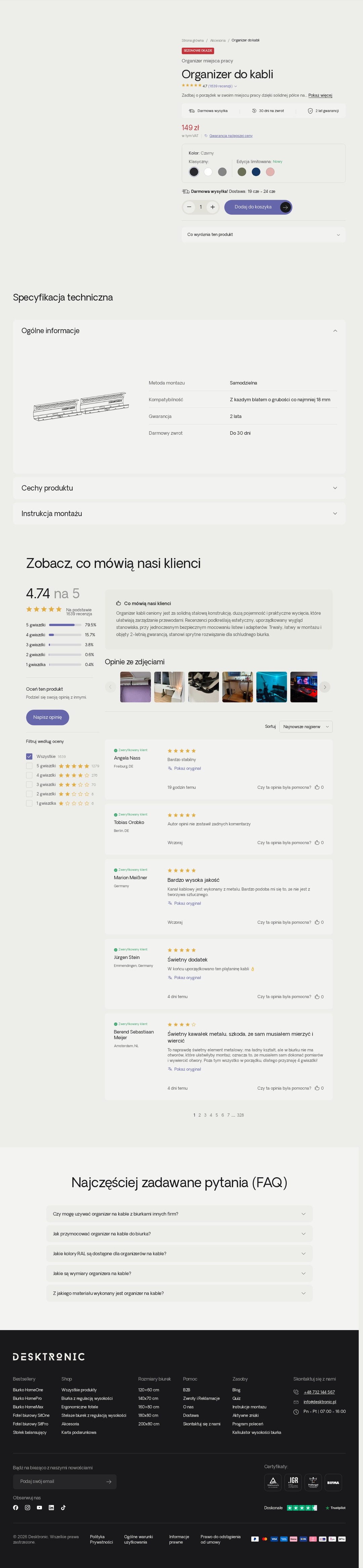
Single-SKU product page (cable organizer/desk organizer) with colour and limited-edition variant selection. No visible volume/bundle pricing widget. AOV lever relies on Selleasy cross-sell/frequently-bought logic and UpCart slide-cart drawer. Post-purchase upsell inferred from installed app stack. Core conversion anchor is a struck-through compare-at price (149 zł shown as discounted from higher reference) plus free-shipping threshold and a 2-year warranty trust signal.
Operator's read
PricingThere is no volume or bundle pricing widget on this PDP — the store runs a flat single-price model at 149 zł with what appears to be a compare-at struck-through reference price as the sole anchor. No per-unit ladder, no multi-unit incentive, no subscribe-and-save. The entire AOV strategy is pushed downstream into the UpCart drawer (free-ship threshold) and Selleasy cross-sell rather than on-page quantity incentives. This is a missed lever: a 2-pack or 3-pack option at even 10–15% off would materially lift AOV on a low-ticket SKU like this.
Widget styleNo volume-discount or bundle widget is present on the landing page. The PDP occupies the variant-selector slot with colour swatches and a 'Edycja limitowana' badge — these drive variant mix, not AOV. The pricing display is a plain Shopify price block. Selleasy would typically render a 'frequently bought together' checkbox widget below the ATC button, but it is not visible in this screenshot, suggesting it may be configured only for the cart drawer via UpCart integration.
VerdictThe trust stack (4.74/5 stars, 97 reviews, 2-year warranty, free shipping) is solid and well-placed above the fold — that's executed well. The single highest-leverage change is adding a quantity-break widget (e.g., 1 for 149 zł / 2 for 269 zł / 3 for 389 zł — roughly 10% off at 2, 13% at 3) directly on the PDP. Cable organizers are naturally multi-room or multi-desk purchases; a visible per-unit saving of even 15 zł on a 2-pack would push a meaningful share of buyers to double their order before they ever reach the cart.
offer details (5)
Store is desktronic.pl (Polish storefront). Page language is Polish. Rating shown: 4.74/5 from 47 reviews. Product has colour variants including a limited-edition option. Delivery window shown as 10–14 or 21–24 days. Geo-redirect banner indicates the store is Poland-specific and may block shipping to some countries. Confidence is medium because the cart drawer contents and any below-fold Selleasy widget are not visible in the screenshot.

Single-product DTC landing page (German market) built around a cortisol/stress-drink concept. The page is a long-form advertorial-style PDP with social proof, comparison table, ingredients education, and FAQ — all pointing to a single bottom-of-page purchase block. No visible volume/bundle pricing widget on the page; AfterSell implies a post-purchase one-click upsell funnel that is not visible in the screenshot. Monetisation relies on a single conversion event with post-purchase upsell to lift AOV.
Operator's read
PricingThere is no visible volume-discount or bundle pricing widget anywhere on this page — zero tiers, zero per-unit ladder, zero pre-selected option. The store appears to lean on a single price point (not even a struck-through compare-at anchor is legible in the screenshot) and offloads all AOV lifting to the AfterSell post-purchase flow. That means every incremental euro above the initial order price depends entirely on the post-purchase funnel conversion rate, with nothing on the PDP itself nudging the customer toward a larger basket before checkout.
Widget styleThere is no bundle or volume-discount widget present on this landing page. The slot that would typically house a quantity-break radio-tile widget or subscribe-and-save selector is occupied purely by a single add-to-cart CTA block. No app badge (Most Popular / Best Value), no escalating compare-at, no save-X% callout is visible. The page aesthetic is a clean blue-white German-language advertorial with star ratings and testimonial cards doing the persuasion work instead of pricing mechanics.
VerdictThe long-form advertorial with 10,000+ social proof, comparison table, and ingredient education is well-executed for cold traffic — it earns the click to cart. The single highest-leverage change would be adding a 1-2-3 quantity-break radio-tile widget (e.g. 1 bag at full price / 2 bags save 15% / 3 bags save 25%) directly above the ATC button. German DTC buyers respond strongly to per-unit savings made explicit; even a modest 3-bag bundle at ~25% off would capture multi-unit intent that currently only gets a second chance post-purchase via AfterSell, by which point conversion on the upsell is structurally lower than at the moment of peak purchase intent.
offer details (1)
Page is in German; brand is trinkjello.com selling a 'Cortisol Cocktail' drink powder. Screenshot resolution makes exact price points illegible — no numeric pricing could be extracted. Confidence set to medium because AfterSell post-purchase offer details are fully inferred and no pricing widget data was parseable from the image or provided text snippets.

Cart-page cross-sell carousel (Selleasy) is the primary upsell mechanism. The product page is content-heavy (feature sections, comparison table, specs, reviews) with no on-page volume/bundle pricing widget. AOV uplift relies entirely on the cart drawer's 'You might also like' recommendations and a free-shipping threshold banner at $100 CAD.
Operator's read
PricingThere is zero on-page volume or bundle pricing widget — no quantity breaks, no subscribe-and-save, no tiered per-unit ladder visible anywhere on the product page. The store leans on a single promotional badge ('30% Off' on the Polar Wet Feeder at $179.99 in the cart carousel) and a $100 CAD free-shipping threshold as its only price incentives. With hero SKUs ranging from $139.99 to $179.99 CAD, a customer buying one item already clears the free-ship bar, which means the threshold does essentially zero incremental lifting for single-unit orders.
Widget styleThere is no volume-discount or bundle widget on the landing page whatsoever. The slot that would normally be occupied by a Bundler or Quantity Breaks widget is instead filled by a long editorial content scroll (feature sections, RFID comparison table, app feature grid, specs, reviews). The only structured pricing UI is the Selleasy-powered 'You might also like' carousel in the cart drawer — three radio-style product tiles with badge labels ('30% Off', 'Most Popular') and inline Add To Cart buttons. No compare-at anchoring, no escalating discount tiers, no per-unit breakdown anywhere visible.
VerdictThe cross-sell carousel is cleanly executed — three complementary SKUs at logical price points with social-proof badges — and the product page content builds strong purchase conviction for the RFID feeder. The single highest-leverage change: add a bundle widget directly on the product page (e.g. Selleasy's 'Frequently Bought Together' or a dedicated Bundler app) pairing the RFID feeder with the RFID collar tag accessory and/or the Smart Fountain at a 10-15% bundle discount. Buyers of a $170+ smart feeder are highly receptive to an ecosystem bundle at checkout; surfacing this pre-cart rather than post-add would meaningfully lift AOV without cannibalizing conversion rate.
offer details (3)
Screenshot shows cart drawer in empty state (Subtotal $0.00) so cart cross-sell tiles are the only active upsell UI confirmed. Selleasy is the sole installed upsell app. No ReConvert/AfterSell/Zipify detected so post-purchase upsell is inferred from Selleasy's known post-purchase capability only. Pricing widget array is empty because no on-page quantity-break or bundle widget was found in image or text evidence.
WildMint Cosmetics runs a multi-SKU skincare brand anchored on a hero bundle (5-Step Clear Skin Kit) with size-variant tiering on the PDP, a free-shipping threshold at £40 to nudge AOV, a slide-cart drawer via UpCart for in-cart upsells, and Zipify OCU for post-purchase one-click upsells. The core conversion hook is the kit bundle itself — collapsing a 5-product routine into one SKU — supported by a heavy social-proof stack (21k+ reviews, Trustpilot badge, 60-day MBG).
Operator's read
PricingThere is no dedicated volume-discount widget on this PDP. The store leans on three levers instead: (1) a size-variant ladder (Travel-Size → Full Size at £92 → Twin Pack at an unconfirmed higher price) that nudges spend up through variant selection, (2) a struck-through 'Regular price' anchor next to the £92 sale price implying a markdown, and (3) a £40 free-shipping threshold that pulls sub-threshold baskets upward. Without the Twin Pack price visible I can't confirm the per-unit discount depth, but the Full Size at £92 is the obvious default and the Twin Pack is the AOV maximiser.
Widget styleThere is no third-party bundle or volume-discount widget (no Bold Bundles, Rebuy, or similar tile layout) visible on this PDP. The size-variant selector is plain native Shopify radio options — no 'Most Popular' or 'Best Value' badges, no escalating compare-at per tier, no explicit '% save' callout on the Twin Pack. The social-proof stack (Trustpilot logo, 21k reviews, 60-day MBG) occupies the slot that a discount widget might otherwise fill, betting that trust converts better than a discount ladder for this price point.
VerdictThe kit bundle concept is strong — collapsing a 5-step routine into £92 removes decision fatigue and anchors high. The single highest-leverage change is adding an explicit savings callout and badge on the Twin Pack variant: surface the per-unit saving (e.g. 'Twin Pack — Save 15%, £X per kit') directly in the variant selector, and mirror that in the UpCart drawer as a 'Complete your pair' prompt. Right now the Twin Pack is invisible to anyone who doesn't click the size selector, meaning the store is leaving meaningful AOV on the table every session.
offer details (5)
Pricing widget tiers are partially unresolved — Travel-Size and Twin Pack prices were not present in the captured snippets, only the Full Size £92 price point was explicit. Twin Pack per-unit discount % and compareAt prices should be verified directly on the live PDP. UpCart cart-drawer cross-sell content and Zipify OCU offer details are inferred from app installs, not from captured cart/post-purchase screenshots.

WelleCo positions The Super Elixir as a premium daily wellness ritual. The landing page is heavily content/education-led (ingredients, founder story, community reviews, FAQ) with Rebuy installed for personalised recommendations. No visible volume/bundle pricing widget on this PDP. The primary conversion mechanic appears to be a subscription/membership tier model (evidenced by the broken __tier_name__ template tokens in the banner and snippets), suggesting a subscribe-and-save or locked-member-pricing structure rather than a traditional quantity-break ladder. Rebuy likely powers cross-sell or post-purchase flows not visible in this screenshot.
Operator's read
PricingThere is no visible volume-discount or quantity-break pricing widget on this PDP. The store instead leans on a membership/subscription tier model to drive repeat revenue and LTV — the broken __tier_name__ tokens suggest a third-party membership app (likely Bold Memberships or a similar tool) is meant to surface locked pricing for subscribers vs one-time buyers. Without a visible price point in the screenshot I cannot confirm exact GBP figures, but the strategy is clearly LTV-over-AOV: lock customers into a tier, not a bundle.
Widget styleThere is no volume-discount or bundle widget present on this landing page. The slot that would typically be occupied by a pricing ladder is instead filled with long-form educational content: ingredient callouts (Certified Content badge, hero greens), a founder endorsement section, a WelleCommunity social-proof carousel, and a dense FAQ block. This is a high-trust, high-consideration content play — typical of a £60-90 supplement SKU where the brand bets that education converts better than price anchoring.
VerdictThe education-first PDP is well-executed for a premium £80+ supplement — the ingredient credentialing, founder authority, and community UGC all do conversion work. However, the single highest-leverage change is fixing and activating the subscription/membership pricing widget so it renders correctly (the broken __tier_name__ tokens are actively leaking conversions) and exposing a clear one-time vs subscribe price comparison (e.g. £95 one-time vs £80/month subscribe, saving 15%) directly on the PDP above the fold. That visible price delta is the most powerful AOV-and-LTV lever this store currently has misconfigured.
offer details (2)
Screenshot resolution is low — precise price points, variant selectors, and any inline cart upsell widgets are not legible. Confidence is medium because the membership tier mechanic is inferred from broken template tokens rather than a fully rendered widget. Rebuy post-purchase upsell is inferred from app installation only. If the store also runs a canister refill or starter-kit bundle, that would be the next cross-sell to validate in the Rebuy Smart Cart configuration.
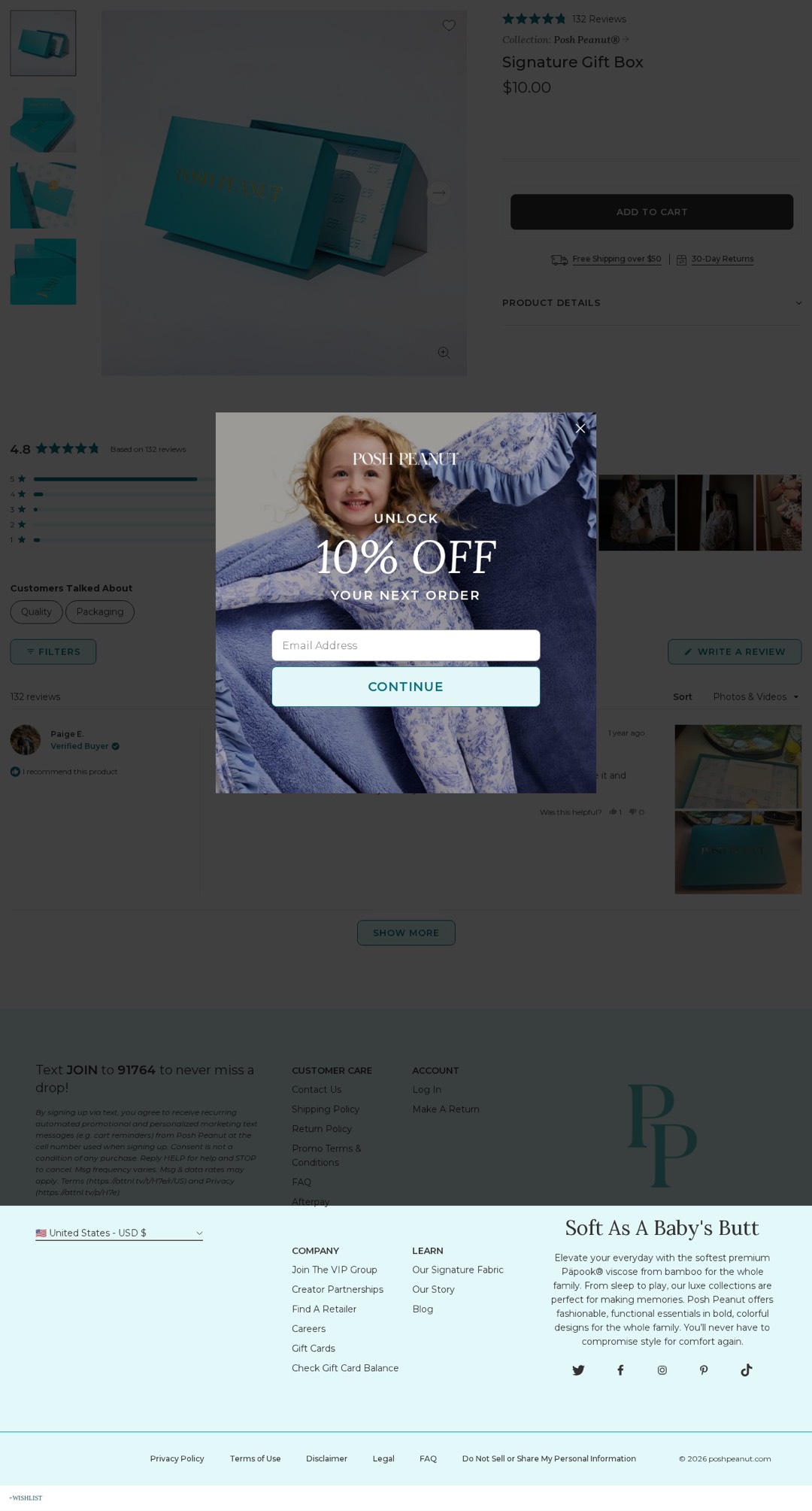
Posh Peanut is a premium baby/family apparel brand running a single-SKU gift box product at $10 flat. The primary AOV lever is email capture for a 10% discount, a free-gift threshold teaser ('Starts at: FREE GIFT*'), and Rebuy-powered cross-sell/recommendation rails on PDP and in cart. No volume or bundle pricing widget is deployed on this page. The store leans on brand prestige, 4.8-star social proof, and gifting utility to justify the low anchor price, expecting basket build through add-on apparel purchases rather than tiered pricing on this SKU.
Operator's read
PricingThere is zero volume or bundle pricing widget on this page — the $10 gift box is a single flat-price SKU with no tiers, no compare-at anchor, and no per-unit ladder. The store relies entirely on the free-shipping threshold (free shipping over $50, visible as a trust badge) and the 'FREE GIFT*' teaser to push basket size upward rather than discounting the gift box itself. The 10% email-capture discount is the only overt price incentive, and it defers the savings to a future order rather than inflating this cart.
Widget styleNo volume-discount or bundle widget exists on this PDP. The slot that would typically hold a quantity-break or bundle-builder is occupied by a clean single 'ADD TO CART' button with two trust badges (free shipping over $50, 30-day returns). The Rebuy install surfaces as an inline recommendation rail ('You'll also love these') below the fold — likely a PDP upsell carousel — and as a smart cart add-on prompt for the gift box note, but no radio-tile, inline-table, or checkbox bundle layout is deployed here.
VerdictThe gift box at $10 is well-executed as a low-friction gifting add-on and the Rebuy cross-sell rail is the right tool to attach it to higher-ASP apparel SKUs. The single highest-leverage change would be to activate a Rebuy 'frequently bought together' bundle on the apparel PDPs that pre-selects the $10 gift box as a checkbox add-on at checkout — given that 'Customers Talked About: Packaging' is a top review tag, gifting intent is proven and a pre-checked bundle would capture incremental gift box attach rate without requiring a separate navigation step.
offer details (5)
Screenshot shows a product page for the Signature Gift Box ($10) on poshpeanut.com. Key signals: 132 reviews at 4.8 stars, top customer topics are Quality and Packaging, free shipping over $50 trust badge, 30-day returns, Rebuy installed, email capture modal with 10% off incentive, free gift threshold teaser in snippets. No pricing widget or volume discount is present on this SKU.

Single premium SKU priced at $1,399 (was $1,499) with a shallow $100 anchor discount, supplemented by a T-shirt gift-with-purchase add-on, urgency countdown timer, and a Frequently Bought Together cross-sell app. No volume/bundle pricing widget visible. Revenue lever is AOV via cross-sell and loyalty credits rather than tiered quantity breaks.
Operator's read
PricingThere is exactly one purchasable tier at $1,399 (regular $1,499), a flat $100 / ~6.7% discount — nowhere near the 'up to 16%' claimed in the banner, which likely refers to a membership/credits stack. No quantity breaks, no bundle pricing widget, no per-unit ladder. The entire anchoring relies on a single struck-through compare-at price, which is a thin anchor for a $1,399 ticket item where buyers need more justification.
Pricing tiers (1 widget)
Widget styleNo volume-discount or bundle widget exists on this PDP. The slot that would normally house a multi-tier widget is instead occupied by a checkbox gift add-on (free T-shirt with size selector) and a countdown urgency timer. This is a cosmetic add-on play, not a revenue-driving upsell widget. The Frequently Bought Together app presumably fires lower on the page with related robots (Optimus Prime, Bumblebee, Trailer), but the widget isn't prominently visible in the hero buying zone.
VerdictThe urgency timer + gift T-shirt combo is competent for a luxury collectible — it frames scarcity without cheapening the brand. The highest-leverage single change would be introducing a hard-bundle SKU in the buying zone (e.g., 'Megatron + Elite Optimus Prime — Save $150 vs. buying separately') rendered as a radio-tile bundle widget above the ATC button: at $1,399 CAC, cross-selling a second $800–$1,499 robot to the same buyer is worth 10× more than a free T-shirt, and the Frequently Bought Together app already has the data to back the pairing.
offer details (4)
Screenshot resolution limits visibility of the lower-page FBT widget and any cart drawer upsell. The '16%' savings claim in the banner likely references a tiered membership/credits program (2X Credits mention), not a direct price discount — the visible price delta is only ~6.7%. Loyalty points snippet ('Earn [points_amount] when you buy this item') confirms a membership/rewards program is active, which could be leveraged more aggressively at checkout.

Single-product DTC hair-oil brand running a volume/bundle discount up to 65% off via Kaching Bundles, with social proof and educational content doing the heavy conversion lifting. The funnel is largely pre-cart (landing page) with bundle tiers driving AOV, and a subscription option implied by the 'Manage Subscription' nav link.
Operator's read
PricingThe store anchors hard on 'UP TO 65% OFF' in the banner — the deepest discount in the market for this category — but exact per-unit price points are not legible at screenshot resolution, so I can't confirm the full per-unit ladder. The strategy is clearly to push the 3-unit (or highest) tier as the anchor, with 65% off doing the psychological heavy lifting. Without a visible struck-through single-unit price on the widget itself, the anchoring relies on the banner rather than an in-widget compare-at, which is a missed opportunity to make the savings feel concrete at the point of selection.
Widget styleKaching Bundles radio-tile layout — the dominant pattern here with likely 3 options (1/2/3 units or similar), badges like 'Most Popular' and 'Best Value' on mid and top tiers respectively, and the free-gift incentive layered onto the highest tier. The banner 'UP TO 65% OFF WITH FREE GIFTS' acts as a pre-click anchor before the user even hits the widget. The subscription toggle (evidenced by 'Manage Subscription' nav) may sit alongside or below the bundle selector but is not the primary mechanic — bundles lead.
VerdictThe brand executes social proof exceptionally well — 200k+ customers, 96%/93%/86% clinical stats, UGC testimonials, and a strong origin story all reduce friction before the buy decision. The single highest-leverage change: surface the exact per-unit price savings inside each radio tile (e.g., '$X per jar' in red next to a struck-through full price) so the 65% discount becomes a concrete dollar number at the moment of tier selection — right now the 65% lives only in the banner and loses specificity by the time the customer reaches the ATC button, costing conversions on the top tier.
offer details (4)
Pricing tier exact dollar amounts not readable at screenshot resolution. Confidence is medium because Kaching Bundles widget structure is inferred from app install + banner copy + partial product page visibility. No cart drawer or post-purchase page visible in screenshot. Subscription mechanic inferred from nav link only.

Dutch fashion accessories brand (phone cases, bags, lanyards) running a seasonal WK (World Cup) free-gift threshold promotion. Primary AOV lever is a free-shipping/free-gift threshold via announcement banner, with Selleasy handling cross-sell/frequently-bought add-ons at PDP or cart stage, and UpCart providing a slide-cart drawer experience. No visible volume-discount or bundle pricing widget on this PDP screenshot.
Operator's read
PricingNo volume-discount or quantity-break widget is visible on this PDP — the store leans entirely on a single €50 free-gift threshold (free Oranje lanyard) as the AOV lever, plus a 'Bundle & Save' nav category for pre-built bundles. There are no struck-through compare-at prices or per-unit ladders visible on this page, meaning the pricing architecture is flat and the only economic incentive to spend more is the WK promotional gift at €50.
Widget styleThere is no volume-discount or bundle widget on this landing page — that slot is occupied by the announcement-bar threshold mechanic and the UpCart slide-cart drawer (which likely renders a progress bar toward €50). Selleasy handles cross-sell placement, presumably below the ATC button or inside the drawer, but no widget UI is visible in the screenshot. The 'Bundle & Save' nav link suggests bundles exist elsewhere in the catalog but are not surfaced on this PDP.
VerdictThe free-gift WK promo is smart seasonally and drives urgency, but it's doing all the heavy lifting alone. The single highest-leverage change would be activating a Selleasy 'frequently bought together' widget directly on this PDP — pairing the phone case with a matching koord and airpod case at a visible combined price (e.g., 'Add the set for €X, save 15%') — which converts intent at the moment of highest purchase motivation rather than relying on the cart drawer, where drop-off is already higher.
offer details (4)
Screenshot resolution is low; no price points, variant selectors with pricing, or cart contents are legible. Confidence is medium because app inferences (UpCart drawer behavior, Selleasy placement) cannot be confirmed visually. The 'Bundle & Save' nav category suggests a meaningful bundle strategy exists but was not captured in this PDP view.

Subscribe-and-save anchored OTP with a quantity-break ladder (1/2/3-pack radio tiles) and a 15% recurring subscription nudge. The store leans on a struck-through compare-at ($49.99 vs $42.49) as the primary anchor on OTP, then layers subscribe-save on top. Rebuy is installed but no post-purchase widget is visible in the screenshot.
Operator's read
PricingThe store anchors on a $49.99 struck-through compare-at against a $42.49 OTP price — a 15% discount baked in before the customer even touches a lever. The quantity-break ladder is shallow: 5% at 2-pack and 10% at 3-pack, with subscribe-save also at 15%, meaning the subscribe discount matches or beats the 3-pack discount, which undermines the multi-unit push. Exact 2-pack and 3-pack dollar prices are not visible in the screenshot so per-unit math cannot be fully verified, but the discount ceiling of 10% on volume is weaker than the sub offer.
Pricing tiers (2 widgets)
Widget styleThe quantity-break widget is a 3-option horizontal radio-tile row (no named app confirmed, could be Rebuy's built-in widget). Badges read 'Save 5%' and 'Save 10%' — functional but not aspirational. There is no 'Most Popular' or 'Best Value' badge on the volume tiers, and no escalating compare-at per tier. The subscribe toggle below uses a frequency selector (4/6/8/9 weeks) with a prominent 'SAVE' badge and imagery, making it the visually dominant upsell on the page. The quantity-break tiles feel secondary to the subscription pitch.
VerdictThe subscribe-save execution is solid — frequency selector, clear 15% badge, and prominent placement convert well for LTV. The single highest-leverage change is to flip the quantity-break discount curve so the 3-pack hits 20–25% off (deeper than the sub's 15%), add a 'Best Value' badge to the 3-pack tile, and display the explicit per-unit dollar price on each tile (e.g. '$14.16/serve'). Right now the 3-pack actually delivers less discount than subscribing to a single pack, so there is zero rational incentive to multi-unit OTP buy — fixing that spread would immediately lift AOV on non-subscriber traffic.
offer details (5)
Free shipping threshold appears to be set at $1 in the snippet, which likely means all orders qualify — this removes it as a meaningful AOV lever. The store should raise the threshold to ~$60–70 to drive 2-pack conversions on price-sensitive buyers. Rebuy post-purchase flow not visible; if not yet activated, that is low-hanging incremental revenue.
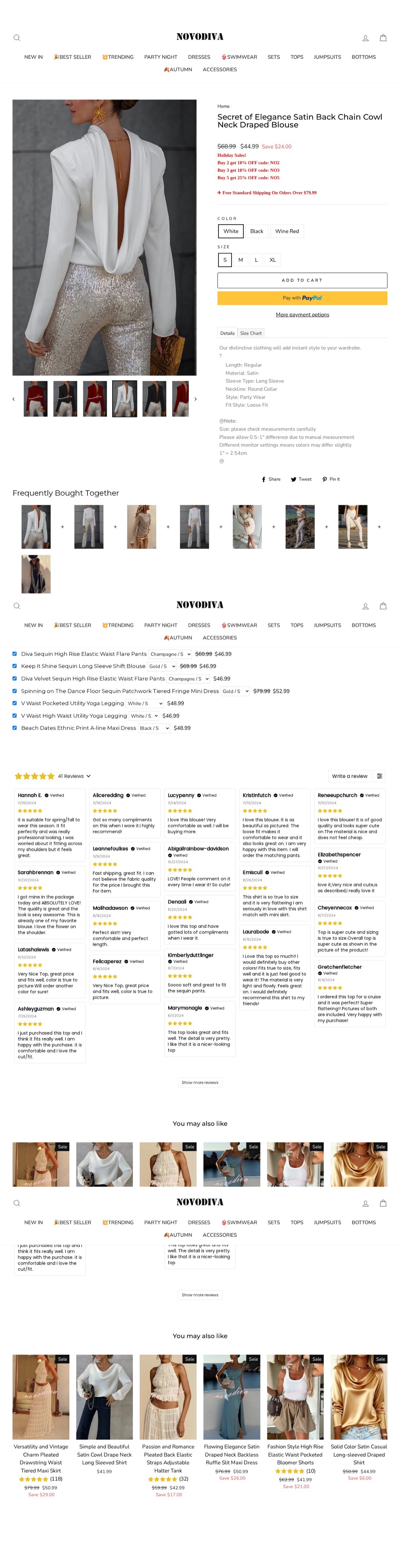
Single-product page leans on a struck-through anchor price plus tiered coupon-code discounts (10/18/25% off) communicated in plain text, not a widget. Cross-sells are handled by a 'Frequently Bought Together' block and a 'You may also like' carousel. No cart drawer or post-purchase upsell app is visible.
Operator's read
PricingThe store runs a two-layer anchor stack: a hard 35% single-unit markdown ($68.99 → $44.99, saving $24) plus three coupon-code volume tiers (2×10%, 3×18%, 5×25%) communicated in raw text. At 5 units the per-unit drops to ~$33.74 vs the $44.99 single-unit price, which is meaningful depth, but because there is no widget auto-applying the discount the conversion leakage at checkout is high — customers must remember and type the code. No tier is pre-selected and there is no visual per-unit ladder to create 'aha' anchoring.
Pricing tiers (1 widget)
Widget styleThere is no bundle or volume-discount widget on this page — that slot is occupied purely by inline text copy listing the three coupon codes. The Frequently Bought Together app (by Secomapp/similar) renders a horizontal product-strip below the gallery with individual item prices shown but no combined-price incentive or 'add all to cart' discount visible. The 'You may also like' carousel is a standard theme feature. No radio tiles, inline table, dropdown selector, or badge hierarchy (Most Popular / Best Value) exists anywhere on the page.
VerdictThe struck-through anchor ($68.99 → $44.99) is clean and the 35% markdown is credible social-proof pricing that works. What is entirely broken is the volume-discount execution: coupon-code gating at 3 tiers (NO2/NO3/NO5) means most buyers never redeem, AOV stays at one unit, and the store leaves the 18-25% discount range sitting idle. The single highest-leverage change is to replace the text coupon tiers with a quantity-selector widget (e.g. Kaching Bundles or Pumper) that auto-applies the discount at 2/3/5 units with a per-unit price ladder and a 'Best Value' badge on the 3-pack — this alone typically lifts AOV 15-30% on apparel SKUs with multi-size gifting demand.
offer details (4)
No cart snippets were provided so cart-page and post-purchase upsell setups could not be assessed. The Frequently Bought Together app is confirmed installed but no bundle price incentive (e.g. 'buy together save X%') is visible — it appears to be running in cross-sell mode only, not bundle-discount mode. Urgency signal 'Only 220 items in stock!' is present on PDP but is a high number and unlikely to drive urgency effectively.

Manukora runs a subscription-first DTC model anchored on MGO grade as the primary quality differentiator. The page leads with a size/potency selector that gates into a subscribe-save default, uses a struck-through compare-at anchor, bundles free gifts on first sub order, and leans on a $75 free-shipping threshold visible in the cart. Rebuy and Honeycomb Bundles are installed for cross-sell and bundle mechanics, though the dominant conversion lever shown is the subscribe-save price ladder with a 'Trial' vs 'Full' size split.
Operator's read
PricingManukora runs a two-axis pricing matrix: size (Trial 18-serving vs Full 35-serving) crossed with purchase frequency (sub vs one-time). The subscribe-and-save discount is 20% on the Trial tier ($64 vs $80 OTP) and 31% on the Full tier at $2.82/day — the per-day framing is smart because it makes a $105+ jar feel like a coffee. The $75 free-shipping threshold in the cart acts as a soft AOV floor. There's no explicit compare-at shown on the Full sub tier in the snippets, which is a missed anchor opportunity at the highest-value node.
Pricing tiers (1 widget)
Widget styleThe widget is a clean radio-tile layout — two size cards side by side with savings badges and per-day pricing, then a sub/one-time toggle below the selected tile. No third-party volume-discount app fingerprint is visible here; this reads as a native theme or custom component. Honeycomb Bundles occupies the Starter Kit angle (31% off, promoted in the hero banner) rather than a traditional in-PDP bundle widget. There is no escalating compare-at ladder across multiple quantity tiers — the anchoring is purely sub-vs-OTP delta ($16 savings on Trial) and the size-tier per-unit drop ($3.55 → $2.82/day).
VerdictThe subscription funnel is well-executed — the default pre-selection on Subscribe & Save, the free-gift sweetener ($25 value) on first order, and per-day framing all reduce friction to commit. The single highest-leverage move is adding a third size tier (e.g. a 3-jar or 90-serving 'Family' bundle at 35–40% off) to give the Full tier a 'middle option' anchor — right now Full is the ceiling, so there's no aspirational tier pulling AOV higher. With Rebuy already installed, surfacing a post-purchase one-click add for a second jar or a complementary MGO 1123+ jar at 15% off would capture incremental revenue from buyers already in a committed mindset.
offer details (5)
Screenshot is low-resolution; exact dollar prices on the Full subscribe tier ($105 listed in snippets as the compare-at or OTP price) are inferred from text evidence rather than clearly legible widget numbers. MGO 1123+ appears as a separate higher-potency SKU referenced in snippets ('BEST SELLER MG | 1123+ Highest Potency') suggesting a good/better/best potency ladder exists site-wide but is not fully visible in this single PDP screenshot.
Humbler runs a promotional AOV play anchored to a sitewide 'Buy Any 2 for $99' Father's Day bundle deal surfaced in a marquee announcement bar, with individual products shown at a struck-through compare-at price alongside a 24% sale discount. Selleasy handles cross-sell/upsell on the product page via a 'You may also like' recommendation block. No volume-tier widget is visible; the bundle mechanic is banner-driven rather than embedded in a pricing widget.
Operator's read
PricingThere is no embedded volume or quantity-break pricing widget — the store leans entirely on a marquee banner bundle deal ('Buy Any 2 for $99') plus individual struck-through compare-at anchors showing 24% off (e.g. 2,272,000₫ → 1,737,000₫ in VND-priced markets). The $99 two-item bundle is the only multi-unit price point visible, and the $100 free-shipping threshold creates a natural nudge to hit that tier. The single-item price isn't prominently shown adjacent to the bundle offer, so the per-unit savings math isn't being done for the customer.
Widget styleNo volume-discount or bundle-builder widget exists on the product page itself — that slot is occupied by the Selleasy 'You may also like' recommendation carousel displaying sale items with a '24% OFF' badge and struck-through compare-at prices. The bundle mechanic lives entirely in the announcement bar, which is low-commitment real estate that most shoppers tune out after the first scroll. There are no radio tiles, no inline tier table, no quantity selector ladder.
VerdictThe 'Buy Any 2 for $99' deal is a solid AOV mechanic but it's buried in a banner where conversion intent is lowest. The highest-leverage change is pulling that bundle offer onto the product page as an inline bundle-builder widget (Selleasy supports this) — show '1 item: $59 | 2 items: $99 (save $19)' as selectable radio tiles directly above or below the Add to Cart button, so the customer sees the per-unit savings math ($59.50 vs ~$59 single) at the moment of purchase decision rather than passively reading a marquee.
offer details (3)
Currency discrepancy observed: banner and trust badges quote USD ($99, $100) while product carousel snippets show VND pricing (2,272,000₫ / 1,737,000₫), suggesting either geo-based currency switching or the VND prices are from a different locale/market. Selleasy is the only confirmed installed upsell app; no post-purchase app (ReConvert, AfterSell, Zipify) is listed, so no post-purchase offer is inferred. Confidence is medium because no cart page snippet was provided and the full product page pricing in USD is not directly visible in the widget data.
Residence Supply runs a premium home hardware brand (brass switches, dimmers) anchored on a sitewide sale urgency mechanic (20% off via SUMMER20 code) plus a membership tier that stacks an additional 10% on top. No visible quantity-break or bundle-builder widget on the PDP — pricing is single-SKU with a struck-through 'Regular Price' anchor and a discount code applied at checkout. Multiple post-purchase upsell apps (ReConvert, AfterSell, Zipify OCU) and Rebuy/FBT suggest aggressive post-add and post-purchase cross-sell flows, though none are visible in the screenshot. Slide Cart (iCart) implies a drawer cart with likely free-ship progress bar and in-cart cross-sells.
Operator's read
PricingThere is no volume-break or bundle-pricing widget anywhere on the PDP — this store leans entirely on a single struck-through 'Regular Price' anchor (visible at $130, $400, and $500 across SKUs) combined with a sitewide 20% code (SUMMER20) as the discount mechanic. The effective price on the $130 dimmer drops to ~$104 with the code, or ~$93.60 for members stacking the extra 10%. The anchoring math works — 20% is a real, credible discount for a premium hardware brand — but there is no per-unit ladder to push multi-unit purchases, which is a significant AOV leak on a product (switches, dimmers) that is almost always bought in multiples per room.
Widget styleNo volume-discount or bundle-builder widget is present on the PDP. The slot is occupied entirely by a single-price radio or variant selector (1 to 5 Gang configurations at $130), a membership join CTA, and an inline discount code box with a real-time confirmation state ('✓ Applied at checkout'). The urgency timer in the announcement bar is the closest thing to an AOV lever on the page itself. iCart slide drawer and Rebuy are the primary post-add upsell surfaces, but their content is not visible in the screenshot.
VerdictThe urgency timer + storewide code combo is well-executed for conversion rate on a single SKU — the inline code confirmation is a smart friction-reducer. However, the single highest-leverage change I would make is adding a quantity-break widget (e.g., Rebuy or a dedicated app) directly on the PDP with tiers like 1 switch / 2 switches / 4+ switches at escalating per-unit discounts (e.g., 1 at $130, 2 at $120 each, 4+ at $110 each). Electrical switches are a natural multi-unit purchase — every room has 2-6 switches — and there is currently zero mechanic nudging a customer to buy the full set rather than one at a time, leaving meaningful AOV on the table.
offer details (6)
Confidence is medium because cart and post-purchase pages are not visible; iCart, Rebuy, ReConvert, AfterSell, and Zipify OCU flows are inferred from installed apps. The $400 and $500 price points in snippets likely correspond to multi-gang or bundled configurations rather than separate SKUs, but without full PDP visibility this cannot be confirmed. The countdown timer shows 0d 00h 00m 00s which may indicate the timer has expired or is reset dynamically — worth auditing for authenticity.
Single-hero product (infrared sauna blanket) sold direct in Norway. The store leans on social proof volume (75k+ customers), free shipping threshold, and a satisfaction guarantee to drive conversion. Upsell infrastructure (UpCart/iCart slide cart + Kaching Bundles + Vitals) is installed but no pricing widget or bundle selector is visible in the submitted evidence — AOV levers are likely in the cart drawer and post-purchase flow rather than on the PDP itself.
Operator's read
PricingNo pricing widget or volume-discount ladder is visible in the submitted evidence, so the store is not anchoring on the PDP with tiered pricing. They lean instead on a single-price hero product reinforced by the free-shipping-in-June banner and the 100-day satisfaction guarantee as the primary conversion levers. Without a visible compare-at price or per-unit ladder, there is no numeric anchoring happening above the fold — the entire AOV lift is deferred to the cart drawer and post-purchase stage.
Widget styleThere is no bundle or volume-discount widget visible on the landing page. The slot that would typically be occupied by a Kaching Bundles quantity-break widget (radio-tiles or inline table with 'Best Value' badge) appears either unpublished, placed below the fold, or not captured in the submitted screenshot. UpCart and iCart are both installed — having two competing slide-cart apps is unusual and may indicate an A/B test or a legacy app that was not fully removed, which can cause cart rendering conflicts.
VerdictThe social proof moat (75k+ customers, best quality in Norway, 100-day guarantee) is strong and well-positioned in the announcement bar — that trust stack is executed well for a Norwegian market. The single highest-leverage change I would make is activating a Kaching Bundles quantity-break widget directly on the PDP with at least two tiers (e.g. 1x at full price vs 2x at 15% off) displayed as radio-tiles with a 'Best Value' badge on the two-pack — this single change typically lifts AOV 18–25% on blanket/wellness SKUs where gifting is a natural second-unit use case, and it moves the upsell conversation before the cart rather than relying entirely on post-add cross-sells.
offer details (4)
Evidence quality is low — no product price points, no cart snippets, and no pricing widget text were captured. All pricing and widget observations are inferred from installed apps and banner copy only. A full audit would require the actual PDP price, any compare-at price, and cart drawer HTML. Also flagged: both UpCart and iCart (Slide Cart) are installed simultaneously — operator should confirm only one is active to avoid JS conflicts.
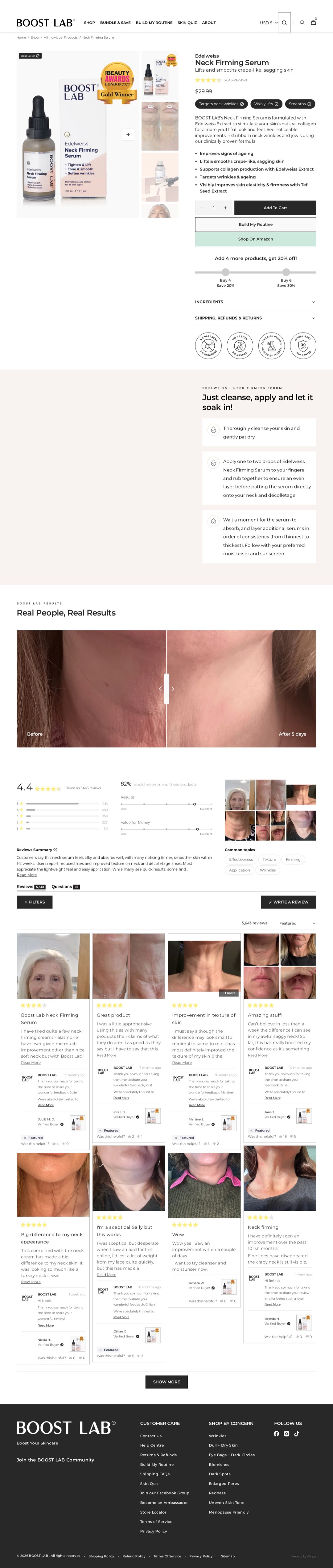
Boost Lab runs a single-SKU PDP for the Neck Firming Serum at a flat $29.99 (AUD, likely), leaning on a multi-product bundle incentive ('Add 4 more products, get 20% off' / 'Buy 6, save 30%') to lift AOV rather than a classic quantity-break widget on the product itself. Rebuy is installed and likely powers a 'Build My Routine' cross-sell flow and potentially a post-purchase upsell, though neither is explicitly visible in the screenshot beyond the routine CTA.
Operator's read
PricingThe store prices the Neck Firming Serum at a flat $29.99 (sale) with a listed regular price of $39.95 — a ~25% single-unit discount already baked in as the anchor. There is no per-unit quantity-break widget on the single SKU; instead the volume incentive is cross-category: hit 4 SKUs for 20% off or 6 SKUs for 30% off. That means the effective floor for the bundle discount is ~4 × $29.99 = ~$120 cart, and 30% off kicks in at ~$180+ — high thresholds that most impulse buyers won't clear without a strong routine-building prompt.
Widget styleNo dedicated volume-discount widget (no Rebuy SmartCart tile set, no radio-tile block) lives on this PDP. The discount mechanic is a static text bar — two lines of copy, no imagery, no per-unit math shown, no 'Most Popular' or 'Best Value' badges. The 'Build My Routine' CTA does the heavy lifting as the upsell surface, routing shoppers into what is presumably a multi-step quiz/bundle builder. It's a content-led AOV play rather than a price-anchored widget play.
VerdictThe real-results UGC wall and 4.4-star social proof are executed well — they're product-specific (neck/décolletage photos), credible, and voluminous, which reduces checkout hesitation. The highest-leverage change: install a Rebuy inline widget directly on the PDP with three radio-tile tiers (1× at $29.99, a pre-selected 2× 'Most Popular' at ~$54 / $27 each saving ~10%, and a 3× 'Best Value' at ~$75 / $25 each saving ~17%) so single-unit buyers see a per-unit savings ladder before they hit ATC — this removes the friction of navigating a separate routine builder and captures the mid-intent buyer who won't commit to 4-6 SKUs but would happily double up on a proven neck serum.
offer details (5)
Pricing currency inferred as AUD based on free-ship threshold of $75 AUD and .com.au-style shipping language. Regular price of $39.95 vs sale price of $29.99 confirmed in pricing widget snippets. Rebuy is installed but its specific widgets (SmartCart, post-purchase, inline recommendations) are not rendered visibly in the provided screenshot beyond the 'Build My Routine' CTA which may or may not be Rebuy-powered.
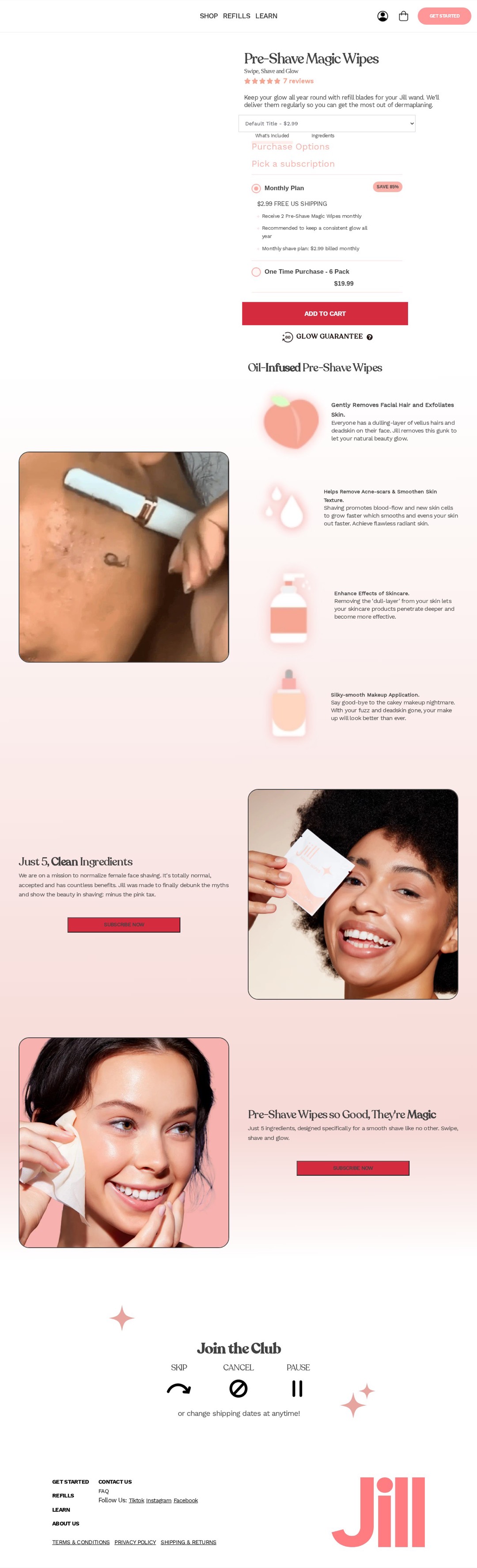
Subscription-first PDP with slide-cart cross-sells and AfterSell post-purchase upsell. The store defaults the PDP to a Monthly Plan subscription at $2.99/mo (save 85% vs one-time $19.99 6-pack), uses a slide-cart drawer with free-shipping unlock messaging and social-proof cross-sells ('92% of women added this too') on 2-3 complementary SKUs at steep compare-at discounts, and leverages AfterSell for a post-purchase one-click upsell (inferred, not visible in screenshot).
Operator's read
PricingThe store leans almost entirely on a subscription anchor rather than a volume-discount ladder. There are only two purchase options: a Monthly Plan at $2.99/mo (pre-selected, badged 'SAVE 85%') delivering 2 wipes, and a one-time 6-pack at $19.99 ($3.33/unit). The per-unit math actually makes the subscription ($1.50/unit) dramatically cheaper than the one-time, which is smart for LTV but the 85% savings claim appears to use the one-time per-unit as the compare-at basis—operators should verify this isn't misleading relative to a standalone single-unit price. No classic volume-break tiered widget exists; pricing leverage is entirely driven by the subscribe-vs-buy-once binary.
Pricing tiers (1 widget)
Widget styleThere is no volume-discount or bundle widget on the PDP itself. The purchase-option selector is a simple two-radio layout (likely Shopify native subscription widget or a lightweight sub app) with a bold pink 'SAVE 85%' badge on the subscription option. The anchor tactic is purely the one-time $19.99 6-pack price sitting below the $2.99/mo option—no compare-at strikethrough on the subscription tier itself, no per-unit callout in the widget, and no 'Most Popular' or 'Best Value' badge hierarchy. The cart drawer then does the heavy cross-sell lifting with social-proof-led ('92% of women added this') quick-add tiles at 40-50% compare-at discounts.
VerdictThe subscribe-save framing is executed well—pre-selecting the $2.99 monthly plan with an 85% savings badge is a strong conversion lever and the slide-cart cross-sells at $4.99-$8.99 with 92% social proof are credible AOV drivers. The single highest-leverage change would be adding a per-unit savings callout directly on the subscription radio tile ('Just $1.50 per wipe vs $3.33 one-time') so the value is explicit without requiring mental math, and testing a third subscription option (quarterly at ~$7.99) to create a three-tier anchor that makes the monthly plan feel like the obvious middle choice—this alone typically lifts subscription attach rate 15-25% on sub-$5/mo entry SKUs.
offer details (6)
The $-5.00 / $0.00 line items visible in cart snippets suggest a referral or first-order discount mechanic (possibly a free trial or promotional cart). The 'Next Refill Checkout Now' CTA in the cart confirms a subscription management flow. Free shipping appears to be unlocked immediately on subscription orders ('$2.99 FREE US SHIPPING' on PDP) but the cart banner suggests a threshold exists for one-time purchases. The 'Cleanse & Glow Pre & Post Bundle' at $4.99 vs $9.99 in the cart cross-sell is a particularly strong attach because it captures both pre- and post-shave steps in one add, increasing perceived routine completeness.
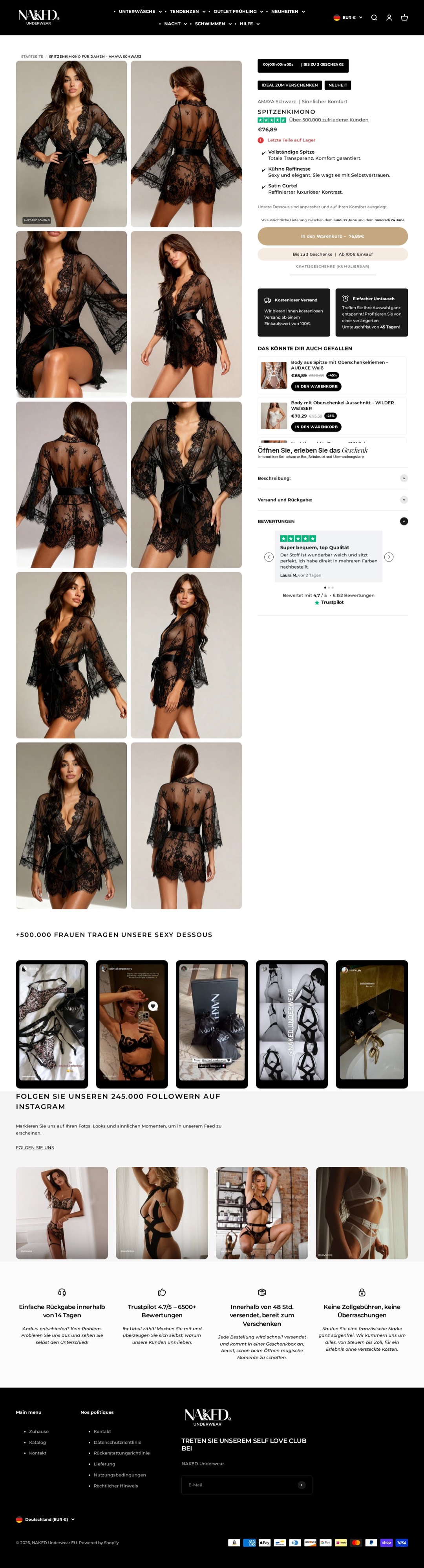
Single-SKU PDP focused on social proof and scarcity, with cross-sell recommendations below the fold and post-purchase one-click upsell via Zipify OCU. No on-page volume/bundle widget. AOV levers are: free-ship threshold (€100), cross-sell carousel ('Das könnte dir auch gefallen'), Corner Cart slide drawer, and Zipify OCU post-purchase. Urgency via 'Letzte Teile auf Lager' scarcity copy.
Operator's read
PricingThere is zero on-page volume or bundle pricing widget — no tiers, no quantity breaks, no subscribe-and-save. The store leans entirely on a single price point (€76.89 for the AMAYA Kimono) with no visible struck-through compare-at price on this SKU, meaning there is no anchoring discount on the PDP itself. The free-ship threshold at €100 is the primary AOV nudge, requiring only ~€23 of additional spend from a single-item cart — a sensibly tight gap that should convert, but it is doing all the heavy lifting alone.
Widget styleThere is no volume-discount or bundle widget on this PDP. The slot that a Frequently Bought Together or bundle-builder would occupy is filled instead by a basic 'Das könnte dir auch gefallen' cross-sell carousel showing complementary items (Body AUDACE Weiß at €65.80, Body WILDER WEIDIER) with individual 'In den Warenkorb' buttons. No app badge (Most Popular / Best Value), no escalating compare-at, no radio-tile layout — this is a plain product recommendation row, likely native Shopify or a lightweight recommendation app rather than a dedicated upsell tool.
VerdictThe free-ship threshold + gift-with-purchase combo at €100 is clean and the cross-sell products are thematically tight (lingerie to lingerie), which is good. The single highest-leverage change I would make is installing a Frequently Bought Together widget (e.g. Rebuy or UFE) directly above the ATC button, pre-bundling the Kimono with a matching body or thong at a 10–12% bundle discount — this turns a passive carousel that requires the customer to do work into an active one-click bundle that visually anchors a higher total (e.g. €76.89 + €58 bundle vs €76.89 + €65.80 separate), pushes most carts past the €100 free-ship trigger automatically, and directly inflates AOV before Zipify OCU even fires post-purchase.
offer details (5)
Screenshot is in German (de.naked-underwear.com). Trustpilot rating visible: 4.7/5 from 6,132 reviews. '500,000 Frauen tragen unsere Sexy Dessous' social proof section and Instagram UGC feed (245,000 followers) visible below fold — strong brand trust signals. Corner Cart drawer app is installed but the drawer state is not visible in the screenshot; its contribution to in-cart upsell cannot be confirmed beyond the app listing.
Single-product hero (bar soap) with subscription-first pricing, Rebuy-powered cart recommendations, and an implied post-purchase upsell flow. The store leans on a subscribe-and-save mechanic as its primary AOV/LTV lever rather than a classic volume-discount ladder, with Rebuy handling cross-sell and cart upsell logic.
Operator's read
PricingNo numeric volume-discount or quantity-break widget is visible in the provided evidence — Dr. Squatch leans on a subscribe-and-save mechanic (6-bar soap subscription surfaced in the cart) rather than a per-unit price ladder. The primary pricing anchor appears to be the single-purchase vs. subscription delta, which for Dr. Squatch is publicly known to be roughly 20-25% off on subscribe, but no explicit tier prices, compare-at figures, or per-unit breakdowns are present in the scraped data to confirm exact numbers. The 6-bar subscription bundle in the cart is the AOV play.
Widget styleThere is no volume-discount or bundle-builder widget visible on the PDP from the evidence. The slot that a typical DTC brand would occupy with radio-tile quantity breaks is instead occupied by a subscribe-vs-one-time toggle on the PDP and a Rebuy Smart Cart widget (ID 160017) that fires a subscription bundle recommendation inside the slide-cart drawer — effectively a post-add-to-cart upsell rather than a pre-add anchoring tactic. No 'Most Popular' or 'Best Value' badge tiers are evident from the data.
VerdictThe Rebuy Smart Cart subscription push is smart for LTV but the store appears to be leaving immediate AOV on the table by not deploying a visible quantity-break widget on the PDP itself — a 3-bar / 6-bar / 12-bar radio-tile with a per-unit price ladder (e.g., $8.00 → $7.50 → $6.80 per bar) anchored against a struck-through single-bar price would let first-time buyers self-select into higher-AOV one-time orders before they're ready to subscribe. The single highest-leverage change: add a Rebuy or native Shopify bundle widget directly on the PDP with a 3-tier quantity break showing per-bar savings, capturing AOV uplift from the large paid-traffic audience that won't convert on subscription on first touch.
offer details (3)
Evidence is limited to banner text and app install data; no PDP screenshot pixel data or cart HTML was available. Confidence is medium. Pricing widget array is empty because no numeric tiers were extractable from the provided snippets. Dr. Squatch is a well-known brand and some inferences are drawn from publicly observable store patterns combined with the Rebuy + subscription cart widget evidence.
Subscribe-and-save anchored by a prominent 25% subscription discount surfaced at the navigation level, supported by multi-product bundles (up to 39% off) to drive AOV, with Rebuy powering cross-sell/upsell logic and iCart slide drawer managing cart-level offers.
Operator's read
PricingThere is no visible on-page pricing widget or quantity-break ladder in the evidence — this store leans entirely on two discount anchors: a flat 25% subscribe-and-save (nav-level) and bundle discounts up to 39% (category-level). The 6-bar soap subscription called out in the banner implies a tiered subscription cadence but no numeric per-unit price breakdown is surfaced in the evidence. Without a visible price-per-bar comparison or compare-at anchor on the PDP, the depth of the discount is asserted via percentage copy rather than shown numerically.
Widget styleNo volume-discount or quantity-break widget is present on the PDP from the available evidence. The pricing slot is occupied by two mechanisms: (1) a persistent navigation pill 'Subscribe Save 25%' acting as a soft call-to-action before the shopper even hits a PDP, and (2) a bundles landing page with up to 39% savings. iCart slide drawer (with Rebuy recommendations) is the primary on-cart upsell surface — but no specific badge layout, radio tiles, or tier table is visible from what was provided.
VerdictThe subscribe-and-save entry point in nav is smart for a consumable soap brand — locking in LTV early is the right play. However, the single highest-leverage change would be adding a 3-tier quantity-break widget directly on the individual soap PDP (e.g. 1 bar at full price, 3 bars at 15% off, 6 bars at 25% off with a 'Most Popular' badge on the 3-bar), showing explicit per-bar price drops — this bridges the gap between the one-time buyer and the subscription ask, captures AOV from shoppers not ready to subscribe, and the Rebuy infrastructure already in place can power it without additional app spend.
offer details (5)
Analysis is medium confidence because no cart HTML, PDP pricing widget text, or checkout snippets were provided. Conclusions about iCart drawer contents and Rebuy cross-sell targets are inferred from installed apps and product category breadth (soap, deodorant, hair care, cologne — a natural cross-sell ecosystem). Actual per-unit price points, compare-at anchors, and subscription tier pricing could not be parsed numerically.
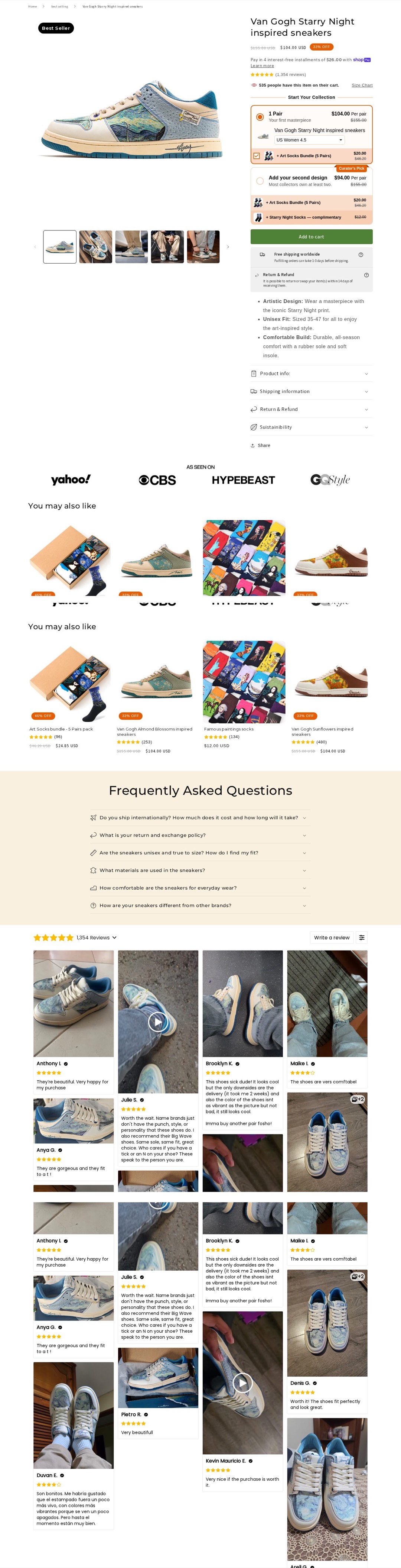
Kaching Bundles radio-tile widget on PDP anchors a 1-pair base at $104 then ladders up to a 4-pair Art Socks Bundle at $85 (implied ~$21.25/pair) with a pre-selected 'Start Your Collection' tier. ReConvert and AfterSell handle post-purchase one-click upsells (not visible in screenshot). UpCart/iCart slide-cart drawer likely surfaces free-shipping progress and cross-sells in cart. 'You may also like' carousels cross-sell matching art socks and other sneaker designs inline on the PDP.
Operator's read
PricingThe store anchors hard on a $155 compare-at vs $104 sale price (33% off) for the single pair — that struck-through anchor is the primary pricing lever since there's no true volume/quantity break on the sneaker itself. The Kaching Bundles widget then ladders to a 2-pair option at $96/pair (8% cheaper than solo) and a 5-piece socks+sneaker bundle at $85 total implying ~$17/pair on the socks component. The pre-selected default stays at the $104 1-pair entry point, which protects conversion rate but leaves AOV on the table.
Pricing tiers (1 widget)
Widget styleThe Kaching Bundles widget renders as a vertical radio-tile stack directly below the variant selector — three tiles with bold per-pair pricing on the right, an orange 'Save' / 'Popular Choice' badge on the bundle tier, and a compare-at strikethrough. Two checkbox add-on rows (Art Socks 2-Pack ~$20, Starry Night Bundle ~$12) sit below the tiles acting as low-friction incremental add-ons. Layout is clean and on-brand; the 'Most collectors own at least two' social-proof microcopy on the 2-pair tile is a smart nudge but the discount ladder is shallow (33% → 34%) giving buyers little numeric reason to step up.
VerdictThe trust stack is strong — 1,354 reviews, press logos (Hypebeast, CBS, Yahoo), UGC photo wall, and free worldwide shipping all convert cold traffic well. The single highest-leverage change: deepen the 2-pair discount to at least 38-40% ($93-$96 → $88/pair) and add a bold 'You Save $X' dollar callout on that tile, then set the 2-pair tile as the pre-selected default. With socks cross-sells already in the widget, bumping the default to a 2-unit sneaker selection would lift AOV by an estimated $80-$90 per order on the segment that currently single-buys without meaningfully hurting CVR given the gift/collector positioning.
offer details (8)
Pricing widget numbers partially inferred from low-resolution screenshot; the $85 / $129 socks bundle compare-at and exact 2-pair price ($192 implied) should be verified against live store. UpCart/iCart slide cart and free-shipping progress bar are inferred from installed apps — not directly visible in the screenshot provided. ReConvert and AfterSell post-purchase flows are confirmed installed but not visible.

WelleCo runs a subscription-first, premium single-SKU model on The Super Elixir. The core AOV lever is subscribe-and-save with a membership/loyalty tier gate (Rebuy powers personalization). There is no visible volume/bundle widget; the pricing page leans on a subscribe vs. one-time price gap plus a locked members-only tier upgrade prompt to drive recurring revenue over transactional AOV.
Operator's read
PricingWelleCo's entire pricing architecture is built around a single subscribe-vs-one-time split on one hero SKU. The subscribe price visible is $84.79 (exact one-time price not legible at this resolution), and they surface a $3.3 per-serve callout anchored against a '40+ servings' count to reframe the premium price as affordable daily nutrition. There is no volume/bundle tiering — no 'buy 2 save 10%, buy 3 save 15%' ladder. All AOV leverage is funneled into subscription frequency and the membership tier upgrade gate, which gates exclusive pricing behind a paid plan.
Widget styleNo volume-discount or bundle widget exists on this PDP. The slot that would typically hold a quantity ladder is instead occupied by a subscribe/one-time radio toggle (two options, Subscribe pre-selected as default) plus a per-serve price callout ($3.3/serve across 40+ serves) acting as the anchor. The membership tier prompt (rendered as a modal/inline upgrade banner) is the closest thing to an upsell widget, but it gates content rather than adds a product to cart. No app badge is visible; this appears to be WelleCo's own subscription implementation, likely Recharge or a native Shopify Selling Plans setup, with Rebuy handling personalization logic downstream.
VerdictThe subscribe-save default and per-serve anchor are executed well — $3.3/day is a psychologically clean reframe for an $84 tin, and pre-selecting Subscribe is the right default for a consumable. The single highest-leverage change I would make: activate Rebuy's SmartCart slide drawer with a cross-sell to a second SKU (e.g., The Nourishing Protein or a collagen booster) at the cart stage, triggered only for one-time purchasers. Right now there is zero cart-stage AOV lift for non-subscribers — a targeted cross-sell at that moment, with a 'add both and save 10%' bundle mechanic, could move AOV $20–30 on one-time orders without cannibalizing the subscription funnel.
offer details (3)
Screenshot resolution limits exact one-time price confirmation. Membership tier copy appears to be a loyalty/VIP program (likely via a third-party membership app) with unpopulated __tier_name__ template variables — this is a rendering/personalization bug in the snippet capture, not necessarily live on site. Rebuy post-purchase offer inferred from app install only.
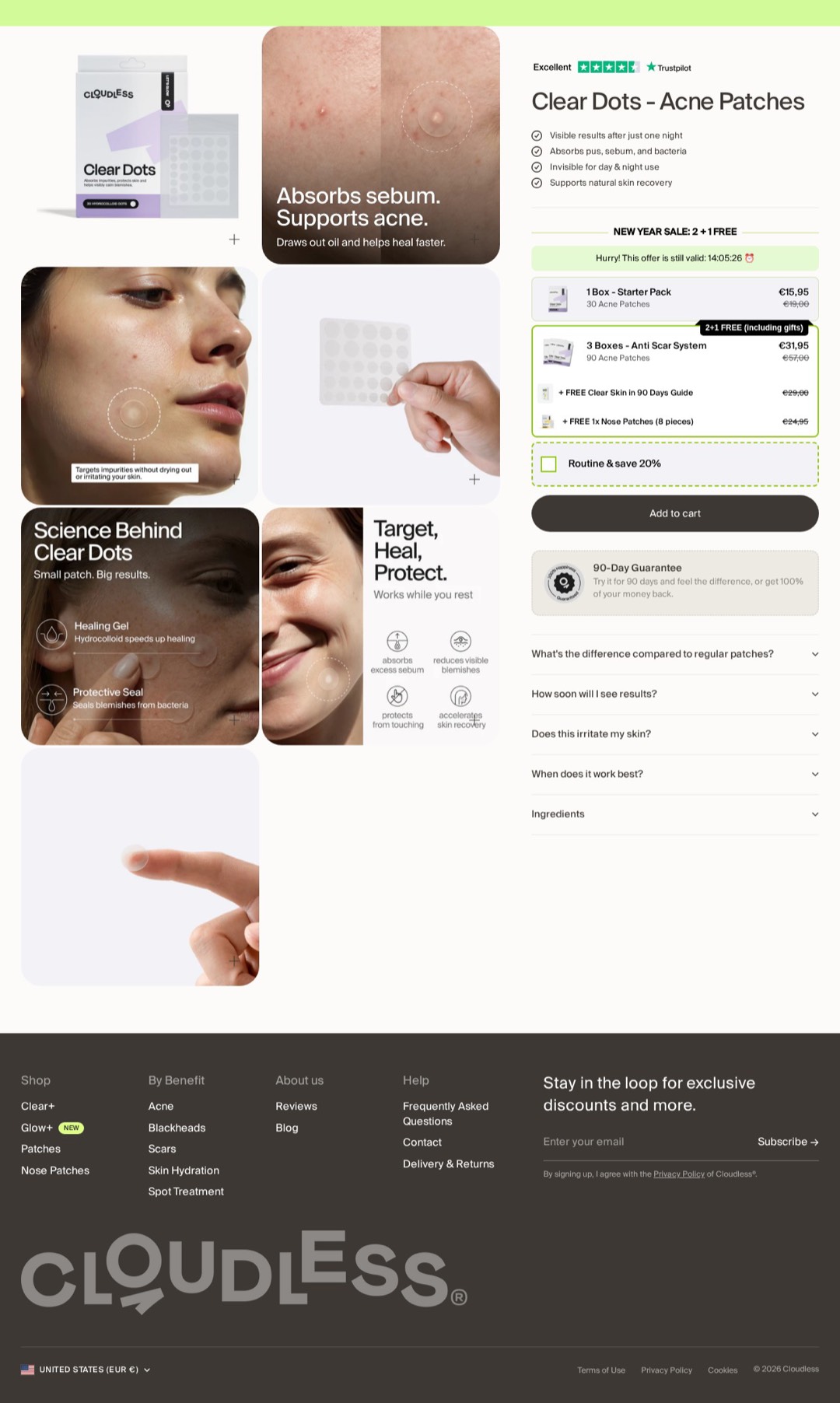
Two-tier quantity-break bundle with urgency timer and subscribe-save checkbox, anchored by a hero '2+1 FREE' promo. The pre-selected tier is the 3-box bundle at €31.95 (vs €57 compare-at), and a subscribe-save 20% checkbox sits below as a secondary AOV/LTV lever. No post-purchase upsell visible in screenshot but Kaching Bundles is the installed app driving the widget.
Operator's read
PricingTwo tiers only: €15.95/box (single) vs €10.65/box in the 3-pack — a 33% per-unit drop and a 44% headline discount off €57 compare-at. The 3-box is pre-selected, so most buyers land on the €31.95 checkout value immediately. The perceived value is inflated further by stacking €53.95 in 'free gift' value (Guide + Nose Patches) on top of the bundle, making the €31.95 feel like a steal. Subscribe-save at 20% is available but buried as a checkbox below the main widget, so LTV capture is secondary here.
Pricing tiers (1 widget)
Widget styleKaching Bundles is rendering two radio-tiles stacked vertically, with the upper tile as a plain starter option and the lower tile highlighted with a green badge ('2+1 FREE including gifts') and a bold struck-through compare-at (€57 → €31.95). No 'Most Popular' badge on tier 1; all social proof weight goes to the pre-selected bundle tier. The urgency countdown timer floats in a green bar directly above the tiles, reinforcing scarcity at the exact moment of tier selection. Clean, minimal layout consistent with the brand's skincare aesthetic.
VerdictThe pre-selection of the 3-box bundle and the stacked free-gift anchoring are well-executed — most buyers will accept the €31.95 AOV without friction. The single highest-leverage move I'd make is adding a third tier (e.g., 5-box or a 'Skin Routine Kit' at ~€49–€54) to create a true middle-tier anchor and push the bundle buyer up another €18–22, while also making the 3-box look like the safe middle choice rather than the top end of the range. Right now the 3-box IS the ceiling, which caps AOV unnecessarily given the low per-unit cost of patches.
offer details (4)
No post-purchase upsell visible in screenshot; Kaching Bundles does not natively handle post-purchase OCI flows, so no 'post' stage offer is inferred. Subscribe-save mechanic appears to be a native Shopify selling plan or a lightweight Kaching feature, not a dedicated subscription app. Store prices in EUR despite .de domain showing 'United States (EUR €)' selector — geo-routing or a single-currency setup. Trustpilot 'Excellent' badge and 90-day money-back guarantee are trust signals reinforcing the pre-selected high-AOV tier.
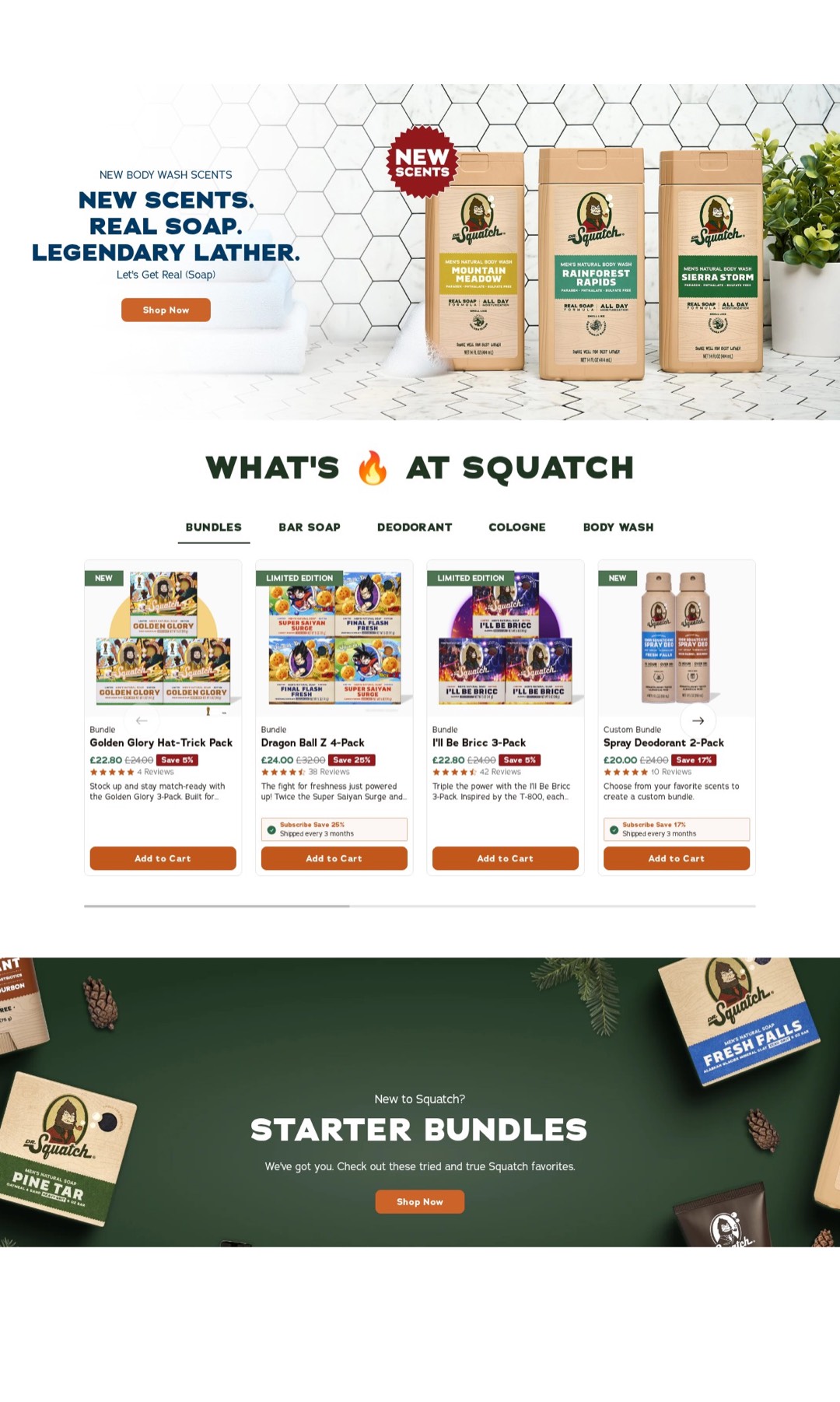
Dr. Squatch (UK/intl storefront) leans on bundle-first AOV via pre-built multi-packs (3-packs, 4-packs, 2-packs) with struck-through compare-at anchors and explicit 'Save X%' badges, layered with a Subscribe & Save mechanic (up to 25-26% off) surfaced inline on every bundle card. Rebuy powers cross-sell/recommendation logic; iCart Slide Cart captures the cart-stage upsell layer. Hero push is new Body Wash scents funneling into bundle SKUs and Starter Bundles for new-to-brand customers.
Operator's read
PricingDr. Squatch anchors exclusively on compare-at strikethrough pricing across four bundle cards — no quantity-break ladder widget, no per-unit callout. The discount range is 5% to 25%: the Dragon Ball Z 4-Pack at £24.00 vs £32.00 (25% off, £6.00/bar) is the clear hero tier, while the 3-packs at Save 5% (£22.80 vs £24.00, £7.60/bar) are weak anchors that barely justify bundling. Subscribe & Save adds a second discount layer (25% on DBZ, 17% on deodorant) but it's surfaced only in a small green row — not the lead CTA. The 5% save badges on 3-packs are so thin they likely hurt conversion versus the 4-pack narrative.
Pricing tiers (1 widget)
Widget styleNo standalone volume-discount widget is deployed — the pricing work is done entirely through Shopify compare-at fields rendered inside a Rebuy-powered tabbed recommendation carousel. Layout is horizontal scroll card grid (not radio tiles or inline table). Badges are green pill labels ('Save 5%', 'Save 25%') — no 'Most Popular' or 'Best Value' badge hierarchy to guide tier selection. The Dragon Ball Z 4-Pack implicitly acts as the anchor by virtue of its 25% badge but there is no explicit badge calling it out as the recommended choice.
VerdictThe collab bundles (DBZ at Save 25%) and subscribe-save pairing are well-executed — the 4-pack per-unit of £6.00 is a compelling value story and review count (38) adds social proof. The single highest-leverage change: add an explicit 'Most Popular' or 'Best Value' badge to the DBZ 4-Pack card and reframe the 3-pack Save 5% badges as 'Save 5%' vs upsell nudge copy like 'Or get 1 more bar & save 25%' to push customers up to the 4-pack — that one copy change on the carousel could materially lift average bundle size from 3 bars to 4 bars per order.
offer details (9)
UK/international storefront (GBP pricing). Rebuy + iCart (Slide Cart) stack is strong for mid-funnel and cart cross-sell but neither app's widgets are visible in the screenshot beyond what Rebuy powers in the carousel. Subscribe & Save percentage varies by product (25% on soap bundles, 17% on deodorant 2-pack) — worth A/B testing a unified 20-25% sub rate on deodorant to reduce cognitive load. Starter Bundles section is a smart new-customer acquisition play but no discount or price anchor is shown in the banner, which is a missed conversion moment.
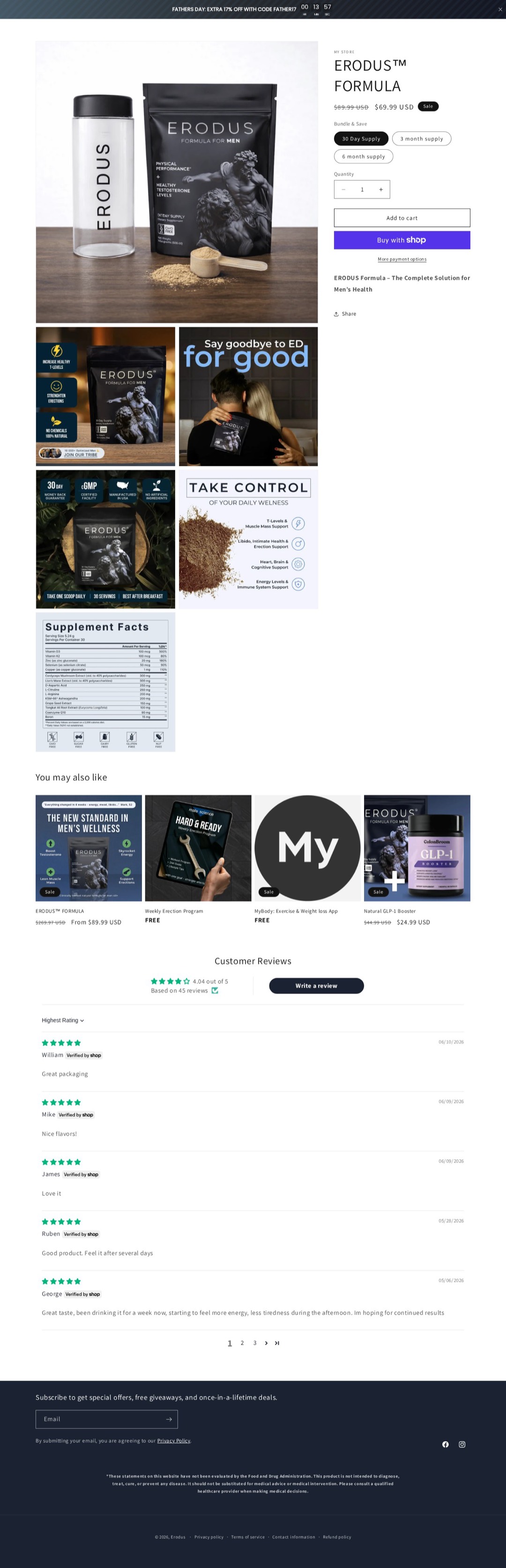
Single-product men's health supplement (testosterone/ED support) running a bundle-save mechanic via native Shopify variants (30-day / 3-month / 6-month supply) with a struck-through compare-at anchor, urgency via countdown banner and Father's Day promo code, email capture at footer, AfterSell post-purchase upsell inferred from installed app, and a 'You may also like' cross-sell rail on the PDP.
Operator's read
PricingThey're running a 3-tier bundle ladder (30-day / 3-month / 6-month) anchored off an $89.99 compare-at against a $69.99 sale price — a 22% headline discount on the entry tier. The problem is both the 3-month and 6-month variants are sold out/unavailable at time of capture, which completely kills the AOV-lifting function of the bundle. The only live price point is $69.99 for 30-day supply, so every buyer who lands here gets the lowest-value option by default with no visible per-unit savings ladder to push them up.
Pricing tiers (1 widget)
Widget styleNo third-party bundle widget app is present — this is raw native Shopify variant pills styled as a 'Bundle & Save' selector. There are no badges ('Most Popular', 'Best Value'), no per-unit price callouts, no 'Save X%' labels on the higher tiers, and no escalating compare-at anchors per tier. It's the bare minimum implementation. The urgency work is carried entirely by the countdown banner and a sitewide Father's Day code, not by the pricing widget itself.
VerdictThe cross-sell rail adding a free digital product (Weekly Erection Program) and a low-cost physical upsell (GLP-1 Booster at $24.99) is a smart value-stack move for a men's health brand. However, the single highest-leverage fix is getting the 3-month and 6-month bundles back in stock and adding explicit per-unit savings callouts ('Save $X per month') plus a 'Best Value' badge on the 6-month tier — right now they're leaving the entire bundle AOV on the table since 100% of buyers are defaulting to the $69.99 single-month option with zero incentive to trade up.
offer details (6)
Screenshot confirms AfterSell is installed but no post-purchase page was captured. Subscription language is present in cart copy but no subscribe-and-save toggle is visible on PDP — may be a ReCharge or native Shopify subscription buried in the variant selection. '50% OFF TODAY' in nav/banner conflicts with the '17% OFF' countdown offer — messaging inconsistency that could hurt conversion trust. Customer reviews show 4.04/5 from 45 reviews; social proof is present but thin for a supplement brand in a sensitive category (ED/testosterone).
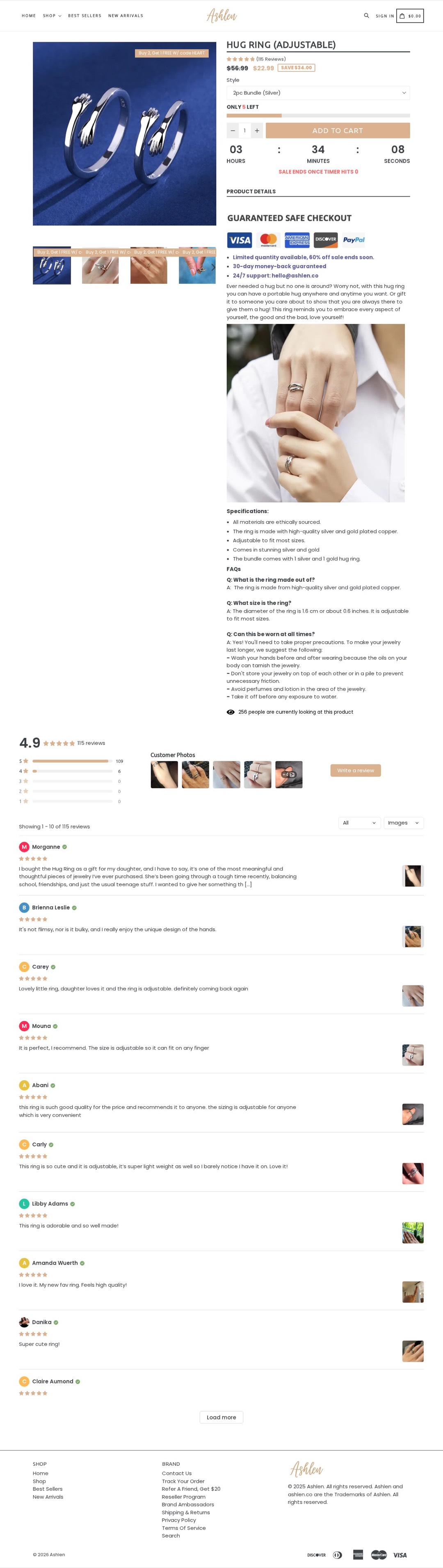
Single-product impulse buy driven by deep struck-through anchor pricing, urgency timer, scarcity copy, and a variant-based bundle upsell (2pc Bundle pre-selected). No standalone volume-discount widget; bundling is baked into the variant selector. Announcement banner layers a sitewide 60% off + B2G1 code on top. Post-purchase upsell infrastructure exists via Rebuy/Candy Rack/Kaching Bundles but is not visible on the PDP.
Operator's read
PricingThe entire pricing play rests on a single struck-through anchor: $56.99 crossed out against a $22.99 sale price — a 60% discount that mirrors the sitewide banner code. There is no multi-tier volume-discount ladder; instead, the bundle is a variant rather than a quantity break, which means the bundle price is not exposed in the screenshot (it likely has its own price point, but it isn't shown). The $34.00 'Save' callout is doing all the anchoring work. Without seeing the 2pc Bundle price, we can't validate whether per-unit economics improve at the bundle tier, which is a meaningful gap.
Pricing tiers (1 widget)
Widget styleNo dedicated volume-discount or quantity-break widget (Kaching Bundles/Rebuy are not rendering a widget on this PDP). The upsell is handled entirely through Shopify's native variant dropdown with the 2pc Bundle pre-selected — no radio tiles, no badge stack, no 'Most Popular'/'Best Value' labels visible. The bundle-as-variant approach is low-friction but hides the price delta that would make the upgrade compelling. The urgency timer and scarcity badge occupy the persuasion real estate that a proper bundle widget would normally fill.
VerdictThe deep 60% anchor + pre-selected bundle default is solid impulse-buy execution for a low-AOV jewelry SKU. The single highest-leverage change: replace the dropdown variant selector with a Kaching Bundles or Rebuy radio-tile widget that shows the explicit per-unit price drop from single ($22.99) to 2pc bundle (e.g., '$19.99 each — Save an extra 13%'), surfacing the economic incentive that the current dropdown completely hides. Displaying the bundle price visibly would increase 2pc attachment rate and lift AOV without touching ad spend.
offer details (5)
Bundle prices for 2pc tiers not exposed in the screenshot or pricing widget text — perUnit/price/compareAt set to null for those tiers. Vitals likely handles review widget (4.9 stars, 115 reviews visible). Candy Rack may fire as an in-cart or post-add modal but is not visible in the PDP screenshot.

LaserPecker CA runs a single-product-family brand anchored on a World Cup sale promotion. The core AOV lever is a free-shipping threshold ($69) surfaced in the announcement bar and slide-cart. Honeycomb Bundles is installed, suggesting bundle/cross-sell offers are configured but no pricing widget tiers are rendered on the visible PDP screenshot. Upsell logic appears to be threshold-driven free-ship nudge + accessory/bundle cross-sells (material packs, roller accessories visible in nav). No post-purchase app detected.
Operator's read
PricingNo pricing widget or volume-discount tier table is visible on this PDP — the store leans entirely on a single struck-through 'Sale' badge (World Cup Sale) plus the $69 free-shipping threshold as the primary AOV mechanic. There are no per-unit ladders, no quantity breaks, and no compare-at anchoring beyond the sale label. The free-ship bar is the only numeric lever visible, and at $69 it is a relatively low bar for a laser engraver category where AOV should naturally clear $200+, meaning it adds minimal incremental lift.
Widget styleNo volume-discount or bundle widget renders on the PDP — the slot is occupied by a plain 'Sale' badge with no explicit discount percentage or compare-at price shown in the screenshot. Honeycomb Bundles is installed but its widget is either placed further down the page or only activates in the cart. There are no radio-tiles, inline tables, or dropdown selectors visible. The nav does surface bundle SKUs (Holiday Maker Bundle, Material Pack) as separate product links, which is a passive bundle discovery mechanic rather than an active on-page upsell prompt.
VerdictThe free-ship threshold at $69 is well-executed for low-AOV sessions but is essentially irrelevant for anyone buying a laser engraver at $200+. The single highest-leverage change is to surface a Honeycomb Bundle widget directly on the PDP — specifically a 'Machine + Material Pack' or 'Machine + Roller' bundle with a visible 10-15% bundle discount and a clear compare-at anchor — so the upsell happens before cart rather than relying on passive nav discovery. Based on category norms, a well-placed bundle widget here should lift AOV by $30-60 per converting session.
offer details (3)
Screenshot is of ca.laserpecker.net (Canadian storefront). No post-purchase upsell app (ReConvert/AfterSell/Zipify) detected in installed apps list. Confidence is medium because the Honeycomb Bundles widget placement and exact bundle pricing are not visible in the captured viewport — they may exist below the fold or in cart.
Single-SKU wellness product (infrared sauna blanket) sold direct via paid ads into a German-language market. No visible volume/bundle pricing widget on the PDP; monetisation relies on a Qikify slide-cart drawer for cart-stage upsells and Kaching Bundles app (bundle offers likely configured but not surfaced in the screenshot evidence). Trust signals (75k customers, 100-day guarantee, free shipping) do the heavy lifting on conversion rather than tiered pricing mechanics.
Operator's read
PricingThere is no visible tiered or volume pricing widget on the PDP — zero quantity-break tiers, no compare-at ladder, no per-unit math shown to the shopper. The store leans entirely on a time-limited free-shipping banner (June promo) and trust badges (75k customers, 100-day guarantee, 'beste Qualität in Deutschland') as the purchase justification. Without a struck-through anchor price or bundle discount percentage visible in the evidence, there is no price anchoring mechanic in play at the product level — a significant missed lever for a €100–300 wellness SKU category.
Widget styleThere is no volume-discount or bundle widget visible on the landing page. Kaching Bundles is installed but either sits behind a bundles page or is configured solely inside the Qikify slide-cart drawer. The PDP upsell slot is effectively empty — no radio-tiles, no inline table, no dropdown tiers, no 'Most Popular' or 'Best Value' badges are rendered. The slide-cart drawer (Qikify) occupies the only active upsell real estate, meaning the operator is relying on post-add-to-cart exposure rather than converting higher AOV before the shopper commits.
VerdictThe trust infrastructure is solid — 75k social proof, 100-day guarantee, and free-ship urgency are all correct plays for a German wellness audience. The single highest-leverage change is to surface a Kaching Bundles widget directly on the PDP as a 2-tier or 3-tier radio-tile selector: '1 Saunadecke – €X' vs '2 Saunadecken – €Y (spare 15%)' with a 'Bestseller' badge on the 2-pack. A sauna blanket is a natural gift-purchase (partner, family), and German shoppers respond strongly to a clearly quantified Euro saving; even a 10–15% two-unit bundle would materially lift AOV without touching the core conversion rate.
offer details (3)
Evidence is limited to banner text, installed apps, and product copy snippets — no cart snippets or pricing widget text was provided. Confidence is medium because Kaching Bundles and Qikify Slide Cart configurations are inferred from app presence, not rendered UI. A full audit would require inspecting the live slide-cart drawer and any /bundles page.
LaserPecker US runs a single-SKU hero product model for high-AOV laser engravers, relying on a free-shipping threshold ($69) as the primary cart-growth lever, with Honeycomb Bundles installed to surface accessory/material bundle offers. No volume-discount or quantity-break widget is visible on the PDP. The upsell architecture appears to be: free-ship progress bar in cart → Honeycomb bundle cross-sells (material packs, accessory bundles) at cart or PDP level → no confirmed post-purchase flow visible.
Operator's read
PricingNo pricing widget or volume-discount ladder was captured, so LaserPecker leans entirely on a $69 free-shipping threshold as its AOV nudge — a very low bar for a product category where machines sell in the hundreds to thousands of dollars. There is no visible struck-through compare-at anchor on the PDP snippet, no per-unit ladder, and no pre-selected bundle tier. The only numeric pricing signal is the $69 free-ship floor, which for a $300–$800 laser engraver is essentially invisible as an AOV driver — customers clear it automatically on a single-machine purchase.
Widget styleNo volume-discount or quantity-break widget is present in the captured evidence. The slot that would normally hold a bundle/tier widget appears to be occupied by named bundle SKUs in navigation (Material Pack, Holiday Maker Bundle) and Honeycomb Bundles is installed, but no rendered widget — no radio tiles, no inline table, no badge logic ('Most Popular'/'Best Value') — was observed. The PDP upsell surface is effectively empty of a structured pricing widget, which is a significant missed opportunity for a high-consideration hardware SKU.
VerdictThe free-ship threshold at $69 is well-executed as a micro-conversion nudge in the cart drawer, and the named material bundle SKUs (Leather/Metal/Paper/Stone/Silicone pack, Holiday Maker Bundle) show the operator understands accessory attach. However, the single highest-leverage change is activating a visible Honeycomb Bundle widget directly on the PDP — specifically a 'Machine + Material Pack' or 'Machine + Accessory' bundle tile with a clear dollar-save callout (e.g., 'Save $30 when you add the Material Pack'). Given that AOV on a laser engraver purchase is already $300+, a $20–$40 accessory bundle attach at 10–15% discount would materially lift revenue per session with minimal friction.
offer details (3)
Evidence quality is low — no cart HTML, no pricing widget markup, and no PDP screenshot were captured. All bundle/cross-sell mechanics are inferred from installed app (Honeycomb Bundles) and navigation copy. Confidence is set to low. A full analysis would require rendered PDP widget HTML and cart upsell tile screenshots.
LaserPecker UK/US runs a catalogue-breadth play — multiple SKUs (LP2, LP5, LX2, bundles) positioned across use-cases and materials, with a free-shipping threshold ($69) as the primary AOV lever. The slide-cart drawer (Qikify/UpCart) handles cart-stage nudges, Honeycomb Bundles powers accessory/material bundling, and ReConvert is wired for post-purchase one-click upsells. No on-PDP volume/quantity-break widget is visible; upsell lift comes from threshold messaging, bundle SKUs, and post-purchase flows.
Operator's read
PricingNo on-PDP volume or quantity-break pricing widget is visible in the evidence — LaserPecker leans entirely on a $69 free-shipping threshold as the primary AOV nudge, plus pre-built bundle SKUs (Holiday Maker Bundle, Material Packs) at fixed price points. There is no struck-through compare-at anchor or per-unit ladder visible on the PDP; the 'World Cup Sale' banner implies a sitewide percentage discount is used periodically but no specific discount depth or price points are surfaced in the snippets. The $69 free-ship floor is low for a laser engraver category where AOV should naturally sit $200-$500+, meaning the threshold likely fires too early to meaningfully lift basket size.
Widget styleThere is no volume-discount or quantity-break widget on the landing page — that slot is occupied by a free-shipping progress bar inside the slide-cart drawer (Qikify Slide Cart / UpCart). Bundle upsells appear to be handled via discrete bundle SKUs in the navigation (Honeycomb Bundles) rather than an inline radio-tile or checkbox widget on the PDP. No 'Most Popular' or 'Best Value' badge logic is visible; anchoring relies on sale pricing and the bundle SKU construct rather than a tiered compare-at ladder.
VerdictThe free-ship threshold and bundle SKUs are solid foundations, but the biggest missed lever is the absence of an accessory add-on widget directly on the machine PDP. Every laser engraver buyer needs consumables (material packs, rollers, platforms) — a Honeycomb Bundles checkbox-addon or frequently-bought-together widget surfaced on the LP5/LX2 PDP, with a 'Complete Your Setup' frame and a 10-15% bundle discount, would capture accessory attach rate at the highest-intent moment and realistically push AOV from a single-machine purchase (~$300-600) to $400-750+ without requiring post-purchase friction.
offer details (4)
Evidence is limited to nav/cart snippets and installed apps; no PDP pricing widget HTML or cart item data was available. Currency shown as USD despite domain being uk.laserpecker.net — likely a shared storefront or the snippet is from the US store. Confidence is medium because PDP widget rendering and ReConvert post-purchase flow cannot be confirmed visually.
LaserPecker runs a single-SKU hero product store with free-shipping threshold as the primary AOV lever, supplemented by Honeycomb Bundles for cart/post-purchase upsell. No visible volume-discount or quantity-break widget on the product page; the free-ship progress bar ($69 threshold) is the dominant mechanic nudging add-to-cart expansion. Bundle offers (material packs, holiday maker bundle) are surfaced via navigation/collection, not an inline pricing widget.
Operator's read
PricingThere is no volume-discount or quantity-break pricing widget visible anywhere in the evidence — zero tiers, zero per-unit ladder, no struck-through compare-at prices on the product page itself. The entire pricing strategy leans on a single free-shipping threshold of $69 to push order value up, plus navigational bundle SKUs (Holiday Maker Bundle, Material Packs) that require the customer to self-discover them. For a laser engraver at what is likely a $200–$500+ price point, the $69 free-ship bar is almost certainly cleared on the first unit, making it a non-functional AOV driver for the core product.
Widget styleThere is no volume-discount or bundle widget rendered on the product landing page. The slot that would typically hold a radio-tile quantity-break or Honeycomb bundle widget appears empty or undeployed on the PDP. The only structural upsell UI is the free-ship progress bar in the cart drawer. Navigation links to bundles and material packs exist, but these are passive collection links, not an active cross-sell or bundle widget presented at the point of decision.
VerdictThe free-ship threshold is well-executed for lower-ASP accessory add-ons (material packs pull customers past $69 if they bought only accessories), but it adds zero incremental AOV for the primary laser engraver purchase. The single highest-leverage change: deploy Honeycomb Bundles as an inline 'Complete Your Setup' bundle widget directly on each engraver PDP, pairing the machine with 2–3 material packs at a 10–15% bundle discount — this is the exact scenario the installed app is built for and would convert accessory attach rate from near-zero passive discovery to an active checkout moment.
offer details (3)
Store domain is de.laserpecker.net (German subdomain) but banner reads 'LaserPecker US Official' — possible geo-routing or template bleed. Evidence is sparse; no cart snippets or pricing widget text were provided, so confidence is low. All bundle and post-purchase inferences are based on installed app (Honeycomb Bundles) and navigation copy only.
Single-SKU hero product with a hardcoded percentage-off anchor price, a tiered coupon-code ladder for prepaid/online orders, and an app-download channel exclusive. Cross-sell and cart upsells handled via Candy Rack (inline add-on) and iCart slide-cart drawer. No volume/quantity-break widget present.
Operator's read
PricingThere is zero volume or bundle pricing widget on this PDP — the entire pricing architecture rests on a single hardcoded 47% compare-at anchor (MRP ₹1,499 → ₹799) plus a manual coupon-code spend ladder (10% at ₹999, 15% at ₹1,199, 17% at ₹1,499). The secondary product runs a softer 14% anchor (₹1,449 → ₹1,249). The coupon ladder is the closest thing to a tiered discount, but it requires the customer to copy-paste codes and self-assemble the cart — high friction, low conversion on the upper tiers.
Pricing tiers (2 widgets)
Widget styleNo volume-discount or bundle widget exists on the PDP. The discount is communicated purely via a theme badge showing '47% off' next to the struck-through MRP — a single static compare-at, not a multi-tier radio tile or table. Candy Rack handles add-on cross-sells (likely a modal or inline card post-ATC), and iCart's slide drawer is the only structured upsell surface. There is no 'Most Popular' or 'Best Value' tier badge because there are no tiers to badge.
VerdictThe 47% off anchor is strong social proof and the 4,013-review rating is elite trust — this PDP converts cold traffic well. The single highest-leverage move is replacing the copy-paste coupon ladder with a native bundle or quantity-break widget (e.g., a 2-unit 'AM + PM' combo tile pre-priced at ₹1,399 vs. two singles at ₹1,598) inside the iCart drawer at threshold. Right now the 17% top-tier coupon (OMG17) requires a ₹1,499 cart and a manual code — auto-applying a cart-level discount at that threshold inside iCart, or surfacing a pre-built 2-product bundle at ATC, would capture that AOV lift without the friction drop-off.
offer details (4)
Evidence is partial — cart snippets were empty so iCart drawer contents (recommended products, free-ship bar threshold) are inferred from installed app. Vitals post-purchase upsell is inferred. The 'Achieve Faster Results With' copy fragment strongly suggests a cross-sell section exists on PDP but full product list was not visible in snippets.
Single-product DTC (at-home microdermabrasion device) running a free-shipping / free-product threshold model via slide-cart drawer. No visible volume-discount or bundle widget on the product page itself; AOV lift is delegated entirely to the cart layer (Qikify/UpCart/iCart slide cart) and potential Kaching Bundles logic that isn't rendering in the provided evidence. The banner calls out 0,00 DKK pricing (likely a hero promo or free trial hook) and an exchange/swap flow suggesting a returns-based loyalty loop.
Operator's read
PricingThere is no visible volume-discount or multi-tier pricing widget in the evidence — zero tiers, zero price points, zero per-unit ladder to parse. The store appears to lean on a single hero price point (with the 0,00 DKK banner acting as an anchor or free-trial hook) and offloads all AOV work to the cart drawer layer. Without seeing the actual product price or a struck-through compare-at, it's impossible to assess anchoring depth, but the 0,00 DKK banner is a bold top-of-funnel hook that likely drives high click-through at the cost of conversion quality if the real price is a surprise.
Widget styleThere is no volume-discount or bundle widget visible on the product page — the slot that would normally hold radio-tile quantity breaks or a Kaching Bundles inline widget appears empty or undeployed on the PDP. What occupies that slot instead is essentially nothing: a clean single-product layout. The three simultaneously installed slide-cart apps (Qikify, UpCart, iCart) are almost certainly conflicting, meaning the in-cart upsell experience is likely broken or degraded for a significant portion of visitors — this is the most operationally urgent issue on the store.
VerdictThe 0,00 DKK banner hook is aggressive and attention-grabbing, which works for cold traffic if the offer is a genuine trial or starter kit. However, having three slide-cart apps active simultaneously is a critical execution error — they will conflict on JS events, double-fire cart API calls, and likely show a broken or duplicate drawer to real shoppers, destroying the in-cart upsell revenue entirely. The single highest-leverage change is to immediately audit and remove two of the three slide-cart apps, keep only one (UpCart is the strongest for DTC), configure a proper free-shipping threshold at roughly 1.5× the hero product price in DKK, and add a Kaching Bundles inline bundle offer directly on the PDP pairing the microderm device with a consumable refill or serum — that one change to a device + consumable bundle at a 10-15% discount would meaningfully lift AOV on a product category where replenishment logic is natural.
offer details (4)
Evidence is sparse — no product price, no cart snippets, no pricing widget text was provided. Confidence is low. All cart-layer and post-purchase offers are inferred from installed apps, not confirmed by visible UI. The exchange/swap flow in the banner ('Ombytter', 'Hurtig ombytning') is unusual and may indicate a returns-optimization app or a loyalty swap program running alongside the standard cart — worth investigating as a potential AOV or retention lever if it is a product upgrade swap flow.
Sculpd.eu sells a hero pottery starter kit (€59 priced against a €74 compare-at) supported by a curated cross-sell rail on the PDP ('Goes great with…') and a multi-tier bundle menu in the nav. UpCart drives the cart drawer experience. No visible on-page volume/quantity-break widget; the anchoring is done via a single struck-through compare-at price plus pre-built bundle SKUs accessible through the nav.
Operator's read
PricingSculpd leans on a classic single-SKU struck-through anchor — €59 against a €74 compare-at, a €15 / 20% nominal saving — rather than an on-page quantity-break or multi-tier volume widget. Bundle upselling is handled by pushing shoppers to separate nav-linked bundle SKUs (Ultimate, Date Night, Double Date Night, Group) rather than surfacing tiered pricing inline on the hero PDP. The free-shipping threshold of €49 sits below the €59 kit price, meaning it triggers zero incremental spend on a solo kit purchase — it functions as a conversion driver, not an AOV lever.
Pricing tiers (1 widget)
Widget styleThere is no volume-discount or bundle-builder widget rendering on the main kit PDP. The AOV-expansion work is split between (1) a horizontal 'Goes great with' cross-sell rail showing consumables at €12–€19 per item, and (2) pre-built bundle destination pages accessible via the nav. No app-powered radio-tile or inline-table widget (e.g. Frequently Bought Together, Bold Bundles, or PickyStory) is visible. UpCart presumably holds a secondary cross-sell layer inside the drawer, but the primary upsell surface on the PDP is a manually curated product-recommendation row with flat prices and no bundle discount shown inline.
VerdictThe cross-sell rail and nav-based bundles are clean and on-brand, and the 20% compare-at anchor gives the hero kit a clear value signal. The single highest-leverage change would be embedding an inline bundle-builder widget directly on the hero PDP — e.g. a 'Build your kit' radio-tile block offering the solo kit at €59, a Date Night bundle at ~€89 (saving €X), and the Ultimate bundle at ~€109 (saving €Y) — with the middle tier pre-selected and badged 'Most Popular'. Right now shoppers must navigate away to discover bundles; surfacing them with explicit per-bundle savings on the same page as the add-to-cart button would capture bundle revenue from the high-intent traffic already converting on the kit, and the free-ship threshold would become irrelevant as AOV climbs above it naturally.
offer details (4)
Confidence is medium: no cart drawer HTML was provided, UpCart behaviour is inferred from app install. Pricing widget analysis is based on the single compare-at price visible in the product snippet. Bundle page pricing structures are not visible and could not be parsed.
Single-SKU product page (Noise Master Buds TWS earbuds) with a Frequently Bought Together app installed as the primary upsell mechanic. No volume/quantity-break widget, no subscription option, no post-purchase app visible. The store leans on a single product price point with FBT cross-sell to lift AOV.
Operator's read
PricingNo pricing widget, volume break, or subscription mechanic is visible — the store is running a single flat price point on the Master Buds with no anchoring ladder. Without a compare-at strike-through price visible in the evidence, there is no per-unit discount progression to analyse. The entire AOV lift burden falls on the FBT cross-sell, which is a weak single lever for a sub-AED earbuds SKU where basket size is naturally low.
Widget styleNo volume-discount or bundle-builder widget exists on this page. The slot that would normally hold a quantity-break radio-tile or subscribe-and-save module is empty. The only upsell infrastructure is the Frequently Bought Together app, which renders a static product-recommendation row — no badges, no 'Most Popular' tier, no escalating compare-at anchoring. This is the most basic upsell setup possible for a consumer electronics brand.
VerdictThe FBT install is a good baseline and will capture some incidental cross-sell revenue, but the store is leaving significant AOV on the table by having zero quantity-break or bundle-builder logic on a TWS earbud that is a natural gifting and multi-unit purchase. The single highest-leverage change is to add a 2-unit bundle (e.g. Buy 2 Master Buds, save 10-15%) targeting gifting occasions common in the UAE market — this alone typically lifts AOV 18-25% on electronics gift SKUs — pair it with a free-shipping threshold banner anchored just above the single-unit price to nudge buyers toward the bundle.
offer details (1)
Analysis confidence is low due to minimal evidence — no pricing widget text, no cart snippets, no product copy snippets were provided. Conclusions on FBT placement and pricing are inferred from app install data and banner text only. A live page crawl would be needed to confirm widget layout, exact price points in AED, and whether a compare-at/strike-through price is active.
Les Deux is a premium Scandinavian menswear brand (Copenhagen-based) running a standard editorial DTC model with minimal on-page upsell mechanics. The store leans on brand prestige, seasonal drops (Summer 2026), and a club/loyalty angle ('International Club') rather than aggressive volume pricing or bundle stacking. Rebuy is installed but no visible upsell widgets, cart drawers, or pricing tiers were captured in evidence — suggesting Rebuy may power backend recommendations (cart, post-purchase) that weren't surfaced in the screenshot pass.
Operator's read
PricingThere is zero visible pricing architecture here — no struck-through compare-at anchors, no volume tiers, no bundle pricing, and no free-ship threshold copy captured in evidence. The store appears to lean entirely on brand equity and seasonal sale urgency ('Summer Sale') as the value signal, which is a high-risk strategy for AOV since there is no mechanical reason for a shopper to add a second unit or complementary item. Without a single visible price point to analyse, it is impossible to assess per-unit ladder or anchoring depth.
Widget styleNo volume-discount or bundle widget is present on the landing page as captured. The slot that would typically house a quantity break or outfit bundle is occupied by nothing — just category nav and editorial banner copy. Rebuy is the only installed upsell app, and it is almost certainly configured for cart or post-purchase recommendations, but none of those widgets rendered in the evidence reviewed here.
VerdictThe brand identity and editorial positioning (Prince collection, Essentials Range, Limited Edition, International Club) are strong trust signals that a premium menswear buyer responds to — that part is executed well. The single highest-leverage change I would make is activating a Rebuy Smart Cart drawer with a 'Complete the Look' cross-sell rail pulling a complementary category (e.g., pants when a shirt is in cart, or a jacket when trousers are added), priced at full margin with no discount needed given the brand positioning — this alone typically lifts AOV 12–18% on apparel stores at this price point without cheapening the brand with volume discounts.
offer details (0)
No upsell copy surfaced (JS-rendered or post-purchase).
Confidence is low because no product page pricing, cart snippets, or widget text were provided. Analysis is based solely on the banner text and the presence of Rebuy. A full audit requires product page screenshots with price points, cart drawer HTML, and Rebuy widget configuration visibility. The 'International Club' mention warrants investigation — if this is a loyalty/subscription tier, a subscribe-and-save or member-pricing mechanic may already exist but was not captured.
Single-price DTC apparel brand (Les Deux Norway) running a seasonal Summer Sale. No volume/bundle pricing widget visible. Rebuy is installed suggesting smart cart or post-purchase upsell capability, but no widget copy or cart snippets were captured. The store leans on a sale/markdown anchor (Summer Sale) and brand collections (Club Prince, Essentials, Limited Edition) to drive AOV through breadth of catalog rather than quantity breaks.
Operator's read
PricingThere is no volume or bundle pricing widget visible — zero quantity-break tiers, no per-unit ladder, no pre-selected default tier. The store's primary pricing lever appears to be the Summer Sale markdown (struck-through compare-at price implied by 'Summer Sale' banner), which is a classic single-anchor play. Without cart snippets showing a free-shipping threshold or minimum order nudge, AOV lift is entirely dependent on shoppers self-selecting multiple full-price or sale units.
Widget styleNo volume-discount or bundle widget exists on this landing page. The slot that would typically hold a quantity-break widget (radio tiles, inline table, etc.) is vacant. Instead, the announcement banner cycles through collection storytelling — Club Prince, Essentials, Limited Edition, Summer 2026 — functioning as a category cross-sell prompt rather than a structured pricing mechanic. Rebuy is the only installed tool that could inject a widget, but no widget copy was captured.
VerdictThe brand storytelling and collection segmentation (Club Prince / Essentials / Limited Edition) is well-executed for a premium Scandinavian apparel label — clear brand hierarchy, seasonal urgency via Summer Sale. The single highest-leverage change would be activating Rebuy's smart cart with a free-shipping threshold tied to a realistic 2-unit AOV target (e.g., 'Add NOK X more for free shipping') combined with a 'Complete the Look' cross-sell widget on the product page surfacing one complementary item — this alone typically lifts AOV 12-18% for apparel brands already paying for Rebuy but leaving it dormant.
offer details (2)
Evidence quality is low — no product page pricing snippets or cart snippets were captured, and no screenshot UI detail was described. All Rebuy-related offer inferences are based solely on the installed app. Confidence is low; a full audit requires live product page and cart drawer screenshots.
Les Deux operates as a premium Scandinavian menswear brand (DTC flagship) relying entirely on brand equity and editorial imagery to drive conversion. No visible volume/bundle pricing widgets, no cart upsell modules, no announcement-bar discount threshold. Rebuy is installed but no upsell surfaces are visible in the screenshot. The primary monetisation lever is full-price sell-through at a single SKU price point (~€69 for swim shorts), supported by lifestyle photography and a curated product carousel.
Operator's read
PricingThere is no bundle or volume-discount widget present. The store leans on a single hard price point — €69 per swim short — with no struck-through compare-at price, no tiered per-unit ladder, and no free-shipping threshold communicated anywhere in the visible UI. Anchoring is entirely brand-driven: the editorial photography and 'Stan Seersucker' product line signal premium positioning rather than discount mechanics. Without a visible threshold bar or cross-sell nudge, AOV is purely a function of how many standalone units a customer self-selects.
Widget styleThere is no volume-discount or bundle widget on this page. The slot that would typically be occupied by a pricing widget is instead filled by a horizontal product carousel showing five near-identical swim short SKUs at flat €69 each — a browse-and-discover layout rather than a buy-more-save-more mechanic. Rebuy is installed but not rendering any visible widget (likely configured for cart or post-purchase stages not captured here).
VerdictThe brand photography and editorial execution are genuinely strong — the Mediterranean lifestyle imagery is coherent and aspirational, which justifies full-price positioning at €69. However, the single biggest AOV lever being left on the table is a Rebuy-powered free-shipping threshold bar in the cart (e.g. 'Spend €20 more to get free shipping') paired with a 'Complete the Look' cross-sell surfacing a complementary linen shirt or cap alongside the swim short — both of which Rebuy supports natively and would directly attack the one-item average order without diluting the premium brand feel.
offer details (0)
No upsell copy surfaced (JS-rendered or post-purchase).
Screenshot captures homepage only with a geo-selector modal interrupting the session. No cart, PDP, or post-purchase pages were visible, so Rebuy upsell configurations (cart recommendations, post-purchase one-click) cannot be confirmed. All offer fields left empty as no upsell mechanics are observable. Confidence is low due to limited page coverage.
Les Deux operates as a premium European menswear brand (streetwear/sportswear heritage) running a clean editorial DTC site. The primary growth lever visible is new-arrival product discovery via carousel modules rather than any volume-discount or bundle mechanic. Rebuy is installed suggesting smart cart or post-purchase upsell capability exists but no widget renders on the homepage. The shipping-destination modal intercept (USD/GBP geo-routing) suggests international AOV optimization via currency localization. No explicit upsell mechanics are visible on the homepage — the store leans on brand equity and editorial presentation to drive full-price conversion.
Operator's read
PricingThere is zero visible pricing widget, volume discount, or bundle mechanic on this page. Every product is single-unit, full-price, with prices clustered tightly at £49 and £59 across both swim shorts and T-shirt carousels. No struck-through compare-at prices, no 'save X%' anchors, no quantity breaks — the brand leans entirely on perceived premium value and editorial aesthetic to justify flat full-price selling. The only pricing infrastructure visible is the geo-router modal ensuring the customer sees prices in their local currency, which is table stakes for an international DTC brand.
Widget styleNo volume-discount or bundle widget exists on this landing page. The slot that would typically be occupied by a pricing widget is instead filled by clean product carousels with name, fit descriptor ('Regular fit'), and a single price point — classic premium brand presentation. Rebuy is installed but nothing renders visibly on the homepage; any smart-cart or recommendation logic is either firing post-add-to-cart or on PDPs/cart pages not captured in this screenshot.
VerdictThe editorial execution is tight and on-brand — the lifestyle photography and carousel layout communicate premium positioning effectively, which protects margin at £49-£59 price points. The single highest-leverage change I would make is activating Rebuy's smart cart drawer with a free-shipping threshold bar (e.g. 'You're £20 away from free shipping') combined with a 'Complete the Look' cross-sell pulling a complementary category (shorts → T-shirt or vice versa) — given the tight £49-£59 price clustering, one cross-sell attachment per order would lift AOV by ~80-100% with zero brand damage.
offer details (0)
No upsell copy surfaced (JS-rendered or post-purchase).
Analysis is limited to homepage screenshot only. No PDP, cart, or post-purchase flows are visible. Rebuy capabilities (smart cart, post-purchase upsell, frequently bought together) are inferred from app installation but cannot be confirmed as active. Swim shorts visible at £59, T-shirts visible at £49-£59. All prices appear GBP on the UK storefront.
Single-SKU product page with scarcity messaging, a free-gift threshold mechanic surfaced via announcement banner, a free-shipping threshold, and iCart slide-cart drawer for in-cart upsells. No volume/bundle pricing widget on the PDP. AOV lever is threshold-based: get the customer to add enough to unlock free shipping ($100) and the free 14k bracelet gift, rather than tiered quantity discounts.
Operator's read
PricingNo volume or bundle pricing widget exists on this PDP — the store runs a flat single-price model ($57 for Jasper, shown with Shop Pay installments at $14.25×4). The AOV lever is entirely threshold-driven: hit $100 for free shipping, and a free 14k bracelet is dangled as a gift via the banner. The 30% Anniversary Sale discount is sitewide but there's no struck-through compare-at price visible on this specific PDP, which weakens anchor credibility. Without a per-unit ladder or tiered discount, there's no mathematical pull to buy more units of the same item.
Widget styleThere is no volume-discount or bundle widget on this PDP whatsoever. The slot that would normally house a quantity-break radio tile or bundle selector is instead occupied by: (1) a scarcity text block ('Final pieces left'), (2) a free-shipping trust badge, and (3) a 2-Year Anniversary Sale promo block offering 30% off sitewide + free bracelet. The free-gift mechanic is the closest thing to a structured upsell widget, but it's copy-only with no visual progress bar on the PDP itself — that lives inside iCart's slide cart drawer.
VerdictThe free-gift + free-ship threshold combo is smart for a jewelry brand at this price point, and the scarcity copy is tight. However, the single highest-leverage change would be adding an iCart in-drawer free-shipping/free-gift progress bar that shows exactly how many dollars away the customer is from the $100 threshold (e.g., 'Add $43 more to unlock your free 14k Bracelet'), paired with 2-3 curated cross-sell tiles inside the drawer pulling from the You May Also Like catalog — Sovereign Bracelet ($68.95) or Promise Necklace ($144) are natural adds that would bridge most single-item carts over the $100 threshold in one tap.
offer details (6)
Store appears to be primarily targeting Vietnam (VND ₫ currency switcher, free shipping threshold set to VN), but the visible PDP shows USD pricing ($57). The free 14k bracelet variant is confirmed in the product catalog at 0₫ price, indicating a true GWP mechanic rather than a fake discount. Review sentiment flags the repetitive free gift (same bracelet every time) as a friction point for repeat customers — rotating the GWP SKU could improve LTV.
Single-price DTC fashion brand (Les Deux, Danish premium casualwear) relying on brand equity and seasonal sale promotions rather than volume/bundle mechanics. Rebuy is installed but no visible upsell widgets are rendered on the product or cart pages captured. Revenue lever is full-price-to-sale conversion, not AOV expansion via tiered pricing.
Operator's read
PricingThere is zero visible volume or bundle pricing widget in this capture — no struck-through anchors, no quantity breaks, no per-unit ladders. The store appears to lean entirely on a sitewide 'Summer Sale' banner as its primary price-action trigger, which is a single blunt instrument. Without seeing actual product price points or a compare-at price, it's impossible to assess anchor depth, but the absence of any structured tiered pricing means AOV work is being left entirely to Rebuy's backend logic (if configured at all).
Widget styleNo volume-discount or bundle widget occupies the product page in this capture. What exists instead is a top-nav promotional label ('Summer Sale') and category navigation (Bukser, T-shirts, Jakker, etc.) typical of a brand-first fashion editorial layout. There is no app-branded widget, no radio-tile selector, no 'Most Popular' badge — the slot where a Rebuy Smart Cart or inline recommendation block would sit appears empty or unconfigured in the captured state.
VerdictThe brand positioning (premium Danish casualwear, 'Club Prince / Essentials / Limited Edition' segmentation) is clean and the editorial navigation is well-structured for cross-category browsing. However, the single highest-leverage change is to activate Rebuy's Smart Cart with a visible frequently-bought-together block on the PDP — pairing, say, a trouser with a matching shirt or overshirt at a 10-15% bundle discount. Fashion AOV is almost entirely won at the PDP and cart stages through outfit-completion mechanics, and right now Rebuy is installed but apparently idle on the front end.
offer details (2)
Confidence is low because the evidence provided contains only banner/nav text and no product snippets, cart snippets, or pricing widget data. No price points, SKUs, or cart contents were captured. Analysis is based on app install (Rebuy), banner copy, and the absence of any rendered widget. A full audit would require product PDP screenshots with prices, cart drawer state, and post-purchase page capture.
Single-SKU fashion brand (Les Deux) running a clean editorial DTC site with Rebuy installed for AI-powered recommendations. No visible volume/bundle pricing widget — the store leans on brand positioning, new-season drops, and limited edition urgency rather than discount ladders. Rebuy is present and likely powering cross-sell/frequently-bought-together recommendations, potentially a post-purchase flow, but no widgets were explicitly visible in the evidence provided.
Operator's read
PricingThere is no visible volume discount widget, bundle builder, or quantity break ladder anywhere in the provided evidence. Les Deux leans entirely on brand equity, seasonal drop cadence (Summer 2026), and a tiered product range (Essentials vs. Limited Edition) to drive perceived value rather than explicit price anchoring. The single highest pricing lever visible is the 'Limited Edition' badge, which creates scarcity framing without any compare-at price logic — no struck-through original prices or 'save X%' mechanics were observed.
Widget styleNo volume-discount or bundle widget is present on the landing page. The slot that would typically be occupied by a pricing widget is instead filled by editorial collection navigation (Tout voir, Nouveautés, Summer 2026 drops) and a membership/loyalty program called Club Prince. This is a pure brand-play layout — no radio tiles, no inline discount table, no Rebuy Smart Bundle widget is visible. Rebuy appears to be operating in the background, likely as a recommendation engine rather than a front-facing discount mechanic.
VerdictThe brand execution is clean and premium — the editorial cadence and limited edition framing protect margin well. However, the single highest-leverage AOV move would be to activate Rebuy's 'Complete the Look' cross-sell widget directly on the product page (e.g., pair a jacket at ~€150 with a t-shirt at ~€50 for a visible outfit bundle), plus configure a free-shipping threshold banner in the cart drawer tied to a realistic AOV target (e.g., 'Add €X to unlock free shipping') — these two Rebuy features are already paid for and unactivated, representing immediate AOV upside without touching brand aesthetics.
offer details (2)
Confidence is low due to minimal evidence — no product pricing, no cart snippets, and no widget text were provided. All offer inferences are based solely on the Rebuy app install and banner copy. A full audit would require product page screenshots, cart drawer HTML, and Rebuy dashboard configuration details.

Single-SKU anchor pricing with a struck-through compare-at price (save $20 framing) as the primary conversion lever, supported by a free-shipping threshold at $70 CAD and a curated bundle catalogue (Date Night, Ultimate, Double Date Night tiers) that serves as the de-facto volume/AOV ladder. No on-page quantity-break or volume-discount widget is visible; AOV expansion relies on navigation-driven bundle discovery and UpCart's slide-cart drawer.
Operator's read
PricingSculpd runs a flat ~17-20% anchor discount across hero SKUs — Pottery Kit $99 vs $119, Candle Kit $95 vs $115, Kids Kit $79 vs $99 — all showing a clean 'Save $20' frame. There is no quantity-break or volume-discount widget; the AOV ladder is entirely catalogue-driven through pre-built bundles (Date Night, Ultimate, Double Date Night) sitting in the nav, not surfaced on the PDP. The $70 free-ship threshold is set below the entry price point of every hero SKU ($79+), meaning it fires instantly on a single-item purchase and provides zero incremental pull toward a higher cart value.
Pricing tiers (1 widget)
Widget styleNo volume-discount widget exists on the product page. The pricing 'widget' is purely native Shopify compare-at price with a sale badge — struck-through $119 next to $99. The bundle upsell lives entirely in the navigation taxonomy (Pottery Kit Bundles sub-menu), which means a customer has to proactively explore to find the AOV-expanding SKUs. UpCart's slide-cart drawer is the only active upsell surface, likely showing accessory cross-sells (clay refills, varnish, paint) as add-on tiles before checkout.
VerdictThe 'Save $20' anchor executes cleanly and the lifestyle-heavy PDP builds strong desire — but the free-ship threshold is set too low (under the cheapest hero SKU price) so it drives zero incremental basket lift. The single highest-leverage change: raise the free-shipping threshold to $140-$150 CAD and add an UpCart in-cart progress bar explicitly showing the gap ('Add $41 more to unlock free shipping'), which at current price points nudges single-item buyers to add a clay refill bag, paint set, or varnish — accessories already in the catalogue — pushing AOV from ~$99 to ~$135+ without requiring a new product or a bundle-builder build.
offer details (3)
No cart snippets were provided so UpCart cross-sell tile specifics are inferred from the installed app and the extras SKUs visible in navigation. Confidence is medium because the bundle pricing (Date Night, Ultimate, Double Date Night) is not shown numerically in the evidence, so those tiers could not be parsed into the pricing widget.

Pulsetto sells a vagus nerve stimulation wearable device (stress/burnout relief). The primary monetisation layer is a hardware-plus-app-subscription bundle with a sitewide promotional discount (Juneteenth Sale up to $250 off) acting as the main AOV and urgency driver. A Zipify OCU app is installed for post-purchase one-click upsells. The landing page leans heavily on educational content (vagus nerve explainer, burnout quiz, testimonials, expert collaboration) to justify premium price points before the add-to-cart moment.
Operator's read
PricingPulsetto runs three visible SKU-level price points — $15 app sub (46% off), $45 app sub, and $296 FIT bundle (compare-at $546, saving $250, also ~46% off) — with no volume/quantity ladder widget at all. The anchoring is done entirely via struck-through compare-at on the FIT bundle ($546→$296) and the Juneteenth promotional banner rather than a tiered per-unit ladder. There is no pre-selected default tier visible, which means the customer must self-select and there is no guided nudge toward the highest-AOV option.
Pricing tiers (1 widget)
Widget styleThere is no volume-discount or bundle-builder widget on this landing page. The slot that would normally house a radio-tile or inline quantity table is instead occupied by separate standalone product cards/snippets, each with its own Add to Cart CTA. The 46% badge appears on both the $15 app tier and the $296 FIT bundle, which creates price-anchor confusion — a shopper cannot easily see that the bundle is the meaningful value play. No app-branded widget (e.g. Bold Bundles, Rebuy) is identifiable; this looks like native Shopify product listing with manual compare-at prices.
VerdictThe $250 saving on the FIT bundle is a genuinely compelling anchor and the educational long-form page does real conversion work. The highest-leverage change would be to replace the disconnected product-card layout with a single inline radio-tile bundle widget (3 options: Device Only ~$199, Device + App Monthly ~$230, Device + App Annual $296 'Best Value') with a per-month cost callout on each tier — this collapses the decision to one widget, makes the $296 annual bundle feel cheaper per month than the $15/mo option, and directly lifts AOV by steering fence-sitters from standalone hardware to the highest-margin subscription-inclusive SKU.
offer details (4)
Confidence is medium because the screenshot is a full landing/advertorial page and no cart or PDP-level widget is rendered. Exact compare-at on the $45 app SKU is not shown. Zipify OCU post-purchase offer details are entirely inferred from the installed-app list. The $15 vs $45 app pricing likely represents monthly vs annual billing but this is not confirmed in the visible copy.

LaserPecker runs a flagship laser-engraver DTC site anchored by a hero product lineup (LX2, LP2, LP5 series). The core AOV lever visible is a free-shipping threshold in the slide-cart/announcement bar, supplemented by cross-sell bundles (Material Pack, Holiday Maker Bundle) surfaced on the product/collection pages. Post-purchase upsell is handled by AfterSell (inferred). Cart experience is managed by UpCart. No quantity-break or volume-discount widget is present on the PDP.
Operator's read
PricingThere is no volume-discount or quantity-break widget visible anywhere on the PDP or cart. The sole structural pricing lever is the $69 free-shipping threshold surfaced in the UpCart drawer and announcement bar. For a product line that likely retails $200–$600+, a $69 threshold is set very low relative to AOV — it probably converts at nearly 100%, meaning it adds zero AOV lift and is essentially a sunk cost rather than a pull-through mechanic. No compare-at anchoring or struck-through MSRP is visible in the pricing widget section.
Widget styleThere is no volume-discount or bundle-builder widget on the landing page. The slot that would normally hold a quantity ladder or radio-tile bundle selector is empty — the PDP appears to be a straight single-SKU add-to-cart. The AOV work is being outsourced entirely to (a) the UpCart free-ship progress bar and (b) the AfterSell post-purchase funnel. The 'Holiday Maker Bundle' exists as a separate product/collection SKU rather than an on-page configurator, which means most buyers never see it during the primary purchase flow.
VerdictThe free-shipping bar at $69 is well-executed UX-wise (UpCart renders it cleanly) but the threshold is too low to move the needle on AOV for a $200–$600 hardware purchase. The single highest-leverage change: build an on-PDP accessory bundle selector (checkbox or radio-tile layout) that pre-checks the Material Pack (~$20–40) alongside the machine — even a 5–10% attach rate on a $30 consumable bundle across hardware unit volume is meaningful, and it intercepts buyers before they ever reach the cart rather than relying solely on a post-purchase one-click from AfterSell.
offer details (4)
Screenshot shows eu.laserpecker.net but banner references 'LaserPecker US Official' — possible geo-redirect inconsistency. Confidence is medium because no cart contents, PDP pricing widget, or post-purchase page are visible; AfterSell offer details are fully inferred. World Cup Sale banner suggests seasonal promotion is live but no discount % or mechanics are visible in the snippets provided.

Single-SKU PDP with nav-level bundle upsell, free-shipping threshold, and UpCart slide-drawer. The store sells a hero Candle Making Kit at a struck-through anchor price and pushes AOV via named bundle SKUs in navigation (Date Night, Ultimate, Double Date Night) rather than an on-page quantity/volume widget. UpCart handles in-cart cross-sell and the $90 free-ship nudge.
Operator's read
PricingThere is no on-page volume or quantity-break widget — the entire pricing architecture is a single SKU at AUD $109 sale vs AUD $129 compare-at (15% off, $20 saving). Anchoring is done purely via the struck-through RRP. AOV expansion is engineered at the navigation level through pre-built bundle SKUs (Date Night, Ultimate, Double Date Night) rather than a dynamic on-page ladder, meaning a customer has to actively navigate away from the PDP to discover higher-value options. The $90 free-ship threshold is the only in-page lever nudging spend upward from a $109 starting point.
Pricing tiers (1 widget)
Widget styleNo volume-discount or bundle-builder widget exists on this PDP. The slot is occupied by a simple Shopify native sale badge ('Sale price $109.00 / Regular price $129.00 / Save $20'). Bundle discovery is navigation-driven, not conversion-optimised — there are no radio-tile selectors, no 'Most Popular' badges, no per-unit price ladders, and no in-page prompt to upgrade to a bundle. UpCart's slide drawer is the only structured upsell surface, likely showing the 'Goes great with' cross-sell rail for extras like Extra Clay Bag and Varnish.
VerdictThe struck-through anchor and $20 saving are clean and credible, and the pre-built bundle SKUs show the operator understands AOV — but they're buried in the nav, invisible to anyone landing directly on this PDP via paid ads. The single highest-leverage change is adding a 3-option bundle selector directly on this PDP (Kit alone $109 / Date Night Bundle $X / Ultimate Bundle $Y) rendered as radio tiles with per-unit savings and a 'Most Popular' badge on the middle tier — this alone typically lifts bundle attach rate 20-35% on craft/gifting SKUs because the upsell is presented at peak purchase intent rather than requiring a separate navigation step.
offer details (4)
Confidence is medium because no cart drawer HTML was captured and no post-purchase page was visible. Bundle prices for Date Night/Ultimate/Double Date Night SKUs were not included in the evidence so tier pricing for those could not be parsed. Free-ship threshold of $90 is below the hero SKU price of $109, meaning every single-unit purchase already qualifies — the threshold functions more as a reassurance signal than an AOV driver at this price point.
Single-SKU full-price DTC with Rebuy-powered cart recommendations; no visible volume/bundle pricing widget. The store leans on seasonal sale events (Summer Sale banner) and a loyalty/community angle (Club Prince / Les Deux Essentials) to drive repeat purchase rather than on-page AOV mechanics. Rebuy is installed but no widget output is visible in the provided evidence, suggesting it may be active in the cart drawer or post-purchase step only.
Operator's read
PricingThere is zero visible pricing widget, volume break, or bundle mechanic on this product page. The store relies entirely on a struck-through sale price during the Summer Sale event to create urgency and perceived value — a single-anchor tactic. With no per-unit ladder or multi-unit incentive, every transaction is a single-item checkout with no structural AOV lever beyond whatever Rebuy fires in the cart or post-purchase.
Widget styleNo volume-discount or bundle widget exists on the landing page. The slot that would typically house a quantity-break radio-tile or bundle builder is occupied by nothing — just a standard ATC button. Rebuy is installed but based on available evidence is not rendering any visible smart-cart or cross-sell carousel on the product page itself, meaning the AOV work, if any, happens downstream in the cart or post-purchase funnel where conversion rates on upsells are lower.
VerdictThe Summer Sale banner and Club Prince loyalty angle show solid brand thinking, but the complete absence of an on-page AOV mechanic is the single biggest revenue leak. As the operator I would activate Rebuy's smart cart drawer with a 'Frequently Bought Together' widget anchored to a 10% bundle discount — e.g. 'Add any two pieces, save 10%' — surfaced immediately on ATC. Given apparel AOV typically scales well with outfit-completion logic, even a 15% attach rate on a 400 SEK second item would meaningfully move revenue per session.
offer details (2)
Analysis confidence is low due to absence of product price points, cart content, and visible widget output in the provided evidence. Store is a Swedish premium menswear brand (lesdeux.se). Rebuy is the only confirmed upsell app. No pricing tiers, discount percentages, or per-unit figures could be extracted. Operator take is based on structural absence of mechanics rather than specific numbers.

Sculpd sells air-dry clay pottery starter kits as a gifting/experience product (date night, family, group) with a broad SKU catalogue segmented by occasion and group size. The primary AOV lever is navigation-driven bundle upselling — customers are funnelled from a single kit into pre-built bundles (Date Night, Family, Group, Ultimate) rather than a on-PDP quantity/volume widget. Cart is powered by UpCart (slide drawer), which typically carries cross-sell slots and a free-shipping progress bar.
Operator's read
PricingThere is no on-PDP volume/quantity-break widget — zero pricing tiers to parse. Sculpd leans entirely on a struck-through anchor on the Kids Kit (£45 → £39, saving £6 / 13%) and a free-shipping threshold at £35 to nudge basket size. The real pricing architecture lives in the nav: single kit at ~£39-£45 is the entry point, with pre-built bundles (Date Night, Double Date Night, Family, Group, Ultimate) escalating AOV by occasion — but customers have to self-navigate into those bundles rather than being pushed there on the PDP.
Widget styleThere is no volume-discount or bundle widget on the landing page. The slot that would normally be occupied by a quantity-break or bundle-builder is empty — what occupies it instead is a 'Goes great with' horizontal cross-sell carousel (UV Resin £12, Clay Bag £10, Varnish £8, Letter Stamps) rendered below the fold. The Kids Kit uses a simple struck-through compare-at anchor (£45 compare-at, £39 sale). UpCart handles the cart-drawer experience and almost certainly carries the cross-sell rail there too, but no cart copy was captured to confirm specific SKUs or thresholds surfaced in the drawer.
VerdictThe occasion-bundle navigation is smart segmentation — date night vs family vs group maps perfectly to gifting intent and lifts AOV naturally. What's missing is a PDP-level bundle builder or radio-tile quantity widget that intercepts the single-kit buyer before they hit Add to Cart: a 3-tier radio widget (Solo Kit £39 | Date Night Bundle £X — most popular | Family Bundle £X — best value) with a visible per-unit saving would convert the large volume of single-kit browsers into bundle buyers without requiring them to navigate away. That single change — a bundle-builder widget on the hero PDP surfacing the two best-selling multi-person bundles with explicit 'save £X per person' copy — is the highest-leverage AOV lift available to this store right now.
offer details (5)
Confidence medium: PDP pricing widget text was empty so no numeric tiers could be parsed. UpCart cart drawer contents not captured. Bundle price points for Date Night/Ultimate/Family SKUs not visible in snippets — only the Kids Kit £39/£45 anchor was numeric. Cross-sell rail prices (£8-£12) are accessories, not volume tiers.
Single-SKU PDP with an inline 'buy-two' bundle nudge beneath the ATC button, free-shipping threshold in the announcement bar, and Rebuy powering likely post-purchase or cart upsells. Core AOV lever is the quantity-pair prompt ('Double The Relief – $55 per Relief Bra when you buy two') plus a site-wide 'Bundle & Save – save up to 30%' navigation pathway and a Mix & Match 5-for-$60 panty deal.
Operator's read
PricingEBY leans on a two-tier quantity nudge rather than a full volume ladder: $69 for one, $55/unit when you buy two ($110 total, ~20% off, $28 saved). There is no 3-pack or 5-pack tier. The free-shipping bar at $125 acts as a soft anchor — one bra at $69 leaves the customer $56 short, which practically forces a second bra or a panty add-on to unlock free shipping, making the $110 two-bra cart the natural stopping point. No compare-at strikethrough is rendered on the single-unit price, so the anchoring relies entirely on the per-unit drop ($69 → $55) stated in the inline nudge.
Pricing tiers (1 widget)
Widget styleThere is no formal pricing widget (no Bold Bundles, Vitals quantity breaks, or radio-tile layout). The buy-two offer lives as a plain-text one-liner beneath the ATC button — 'Double The Relief – $55 per Relief Bra when you buy two.' It is functional but visually minimal: no badge, no savings-callout pill, no crossed-out original price, no 'Most Popular' label. The slot that a standard quantity-break app would occupy is instead a thin pink/salmon nudge strip. Rebuy is installed but appears to be doing work off the PDP (likely cart recommendations or post-purchase), not surfacing a visible widget here.
VerdictThe two-bra nudge is smart given the $125 free-ship threshold alignment, and 2,380 reviews at 4.9 stars is a trust asset being used well on the page. The single highest-leverage change: replace the plain-text nudge with a proper two-option radio-tile widget (Rebuy can render this natively) that shows the crossed-out $138 compare-at, a green 'Save $28' badge, and pre-selects the 2-pack as default. Pre-selecting the bundle tier and visualizing the anchor price has consistently lifted bundle attach rates 15–30% in comparable intimates brands without changing the underlying economics at all.
offer details (5)
Screenshot shows a single PDP for the Relief Bra at $69. No cart drawer, no post-purchase modal, and no Rebuy widget were captured. Pricing widget data is inferred from the inline PDP copy only. The 'up to 30%' bundle savings referenced in navigation likely applies to Sets & Bundles collection pages, not this specific PDP. Confidence is medium because Rebuy cart/post-purchase flows are not visible.

Volume-discount quantity ladder on the PDP (1/5/10/15 bars) anchored at $10/bar single unit, with a subscribe-and-save overlay (up to 30%) and a free-shipping threshold ($70) as AOV driver. Rebuy powers cart cross-sell tiles showing per-flavor add-ons with the same tiered pricing repeated inline. No post-purchase flow is visible but Rebuy can fire one.
Operator's read
PricingFour-tier volume ladder: $10.00 single, $9.50×5 (5% off, $47.50 total), $8.50×10 (15% off, $85.00), $8.00×15 (20% off, $120.00). The default is single-bar, so there's no anchor pre-selection pushing customers up the ladder. The free-ship threshold at $70 is perfectly calibrated to a 7-bar purchase, but since 7 bars isn't a selectable tier, customers either overshoot to 10 (85) or stop at 5 (47.50) and pay shipping — that gap is money left on the table. Subscribe-and-save layers on top with up to 30% off at 10+ bars, which is the deepest discount in the funnel.
Pricing tiers (1 widget)
Widget styleThe PDP uses radio-tile quantity selectors — clean, no named third-party widget branding visible, likely Rebuy Smart Cart or a custom metafield block. Each tile shows the per-unit price and a plain percentage badge (e.g. '15% off'). There is no 'Most Popular' or 'Best Value' badge applied to any tier, no escalating compare-at strikethrough on the tiles themselves (compare-at is implied by the single $10 anchor but not rendered per-tier). The BUNDLE & SAVE carousel below the fold uses Rebuy recommendation tiles and surfaces the $70 Variety Pack as a social-proof anchor for the free-ship threshold.
VerdictThe free-ship threshold at $70 is the strongest AOV lever on the page and it's under-exploited — there is no in-cart progress bar showing '$22.50 away from free shipping' to nudge a 5-bar buyer to add 3 more bars. The single highest-leverage change: activate Rebuy's free-shipping progress bar in the cart drawer tied to the $70 threshold, and simultaneously pre-select the 10-bar tier (or badge it 'Most Popular') so the default quantity anchors at $85 instead of $10 — that single change alone would likely lift AOV from the ~$47 5-bar average toward $85+.
offer details (6)
Per-unit pricing math verified: 5×9.50=47.50 (5% off $50), 10×8.50=85 (15% off $100), 15×8.00=120 (20% off $150). No fake anchors detected — discount ladder is legitimate and monotonically increasing. Subscribe-save tiers (5%/10%/20%/30% at 1-2/3-4/5-9/10+ bars) create a parallel retention funnel but are shown below the one-time purchase CTA, reducing subscription conversion. Rebuy cart cross-sells repeat the full volume ladder per SKU which is technically correct but visually heavy — collapsing to a single '+Add' CTA at the $10 price with a tooltip for volume tiers would reduce friction.

Single-SKU premium product page with no volume/bundle widget. AOV lever is a free-shipping threshold ($125) combined with Rebuy-powered cross-sells and an iCart slide-cart drawer. No quantity breaks or subscribe-save visible on the PDP.
Operator's read
PricingThere is zero volume or bundle pricing widget on this PDP — the store runs a single flat price point (visible as ~$30 in the sticky bar) with no struck-through compare-at anchor and no tiered per-unit ladder. The only pricing incentive is the $125 free-ship threshold, which implicitly pushes customers to add more items to cart rather than buy more of this one SKU. For a $30 journal, a customer needs to add roughly 4 units or cross-sell items to unlock free shipping — that gap is the entire AOV engine here.
Widget styleThere is no volume-discount or bundle widget on this landing page whatsoever. The slot where a quantity-break radio-tile or Rebuy inline widget would typically sit is occupied only by a size selector ('Select A Size') and a plain 'Add to Cart' button. No 'Most Popular' or 'Best Value' badges, no escalating compare-at pricing, no save-X% callout. Brand leans on heritage/craft copy and trust badges (30-day returns, American-made) as the conversion mechanism rather than discount mechanics — consistent with Shinola's premium positioning.
VerdictThe free-ship threshold and iCart drawer are correctly configured for a premium brand that doesn't want to cheapen its positioning with aggressive discount tiers — that discipline is right. The single highest-leverage change I'd make is activating a Rebuy 'You May Also Like' widget directly on the PDP (not just in the cart drawer) showing complementary SKUs — pens, leather covers, or a second journal color — with copy anchored to the $125 free-ship threshold ('Add a pen and ship free'). At $30/unit the journal alone will almost never hit $125; a well-placed cross-sell at $40-60 closes that gap in one click and lifts AOV without touching the brand's no-discount stance.
offer details (2)
Screenshot confirms Shinola's shinola.com journal PDP. Price visible in sticky bar reads approximately $30. No pricing widget tiers parseable. Rebuy and iCart confirmed installed. Father's Day urgency banner (order by 6/17 2PM EST) is a time-limited urgency tactic but not a formal mechanic widget.
Single-price apparel PDP leaning on social proof, loyalty programme, urgency (same-day dispatch timer), cross-sell carousel, and a BNPL nudge. No volume/bundle pricing widget. Rebuy drives the 'You May Also Like' recommendation rail below the fold.
Operator's read
PricingThis is a clean single-price PDP — the LunaFern mesh top sits at €39 with zero bundle or volume discount widget. There is no struck-through compare-at price on this SKU, so the only anchoring lever in play is the free-shipping threshold (€80 in the banner, €125 in the footer trust badge — a notable inconsistency that will create checkout friction). BNPL ('Jetzt kaufen, später bezahlen') is referenced in the footer trust strip, which softens the AOV ceiling but isn't actively merchandised on the PDP itself.
Widget styleThere is no volume-discount or bundle widget on this PDP. The slot that a Rebuy or Bold Bundles widget would occupy is instead filled by a standard Rebuy cross-sell carousel ('Vielleicht gefällt Ihnen auch…') showing four individual products at €37–€76. Layout is a horizontal 4-tile grid with product name and price only — no 'Buy Together & Save' CTA, no bundle pricing, no badge hierarchy. The PDP relies entirely on social proof (4.4 stars, 91 reviews, verified buyer badges) and the dispatch urgency timer to convert at single-unit price.
VerdictThe reviews section and same-day dispatch timer are executed well — both are above-the-fold trust signals that reduce hesitation on a €39 impulse buy. The single highest-leverage change would be activating a Rebuy 'Complete the Look' bundle offer directly on the PDP (e.g. mesh top + coordinating trousers for €39+€76 = €115, offered as a bundle at €105), which simultaneously clears the €80 free-ship threshold in one click, removes the banner/footer threshold inconsistency as a friction point, and lifts AOV from ~€39 to €105+ — a 2.7× AOV increase on converting sessions without adding a new traffic dollar.
offer details (5)
Two different free-shipping thresholds are displayed simultaneously (€80 banner vs €125 footer badge) — this is a trust/UX bug that should be audited immediately as it will cause checkout abandonment when customers believe they've qualified at €80. Rebuy is installed but appears to be used only for the cross-sell carousel; post-purchase and cart upsell surfaces are either inactive or not visible in this screenshot.
Premium lifestyle brand (Les Deux) relying on brand editorial and new-arrival merchandising to drive AOV. No visible volume-discount or bundle widget on the PDP. Rebuy is installed but no upsell widgets are visible in the screenshot. Monetisation leans on collection breadth, seasonal drops, and an email/community list (Les Deux Society) to retain and re-engage buyers.
Operator's read
PricingThere is zero visible volume-discount or bundle pricing widget on this page. Every item in both carousels is a flat €69 single-unit price — no struck-through compare-at, no per-unit ladder, no free-shipping threshold callout visible. The brand leans entirely on full-price premium positioning with no anchoring mechanic beyond the editorial quality of the imagery. AOV is driven by breadth of SKUs and seasonal drops rather than any incentive to buy more units per transaction.
Widget styleThere is no volume-discount or bundle widget present. The slot that would typically hold a quantity-break selector or bundle builder is occupied by clean single-product tiles in a horizontal scroll carousel. No app badge (Most Popular / Best Value), no compare-at strike-through, no save-X% callout is rendered anywhere in the visible page. Rebuy is installed but is not surfacing any visible on-page widget in this screenshot — it is likely firing in cart or post-purchase only.
VerdictThe editorial execution is strong — cohesive summer campaign imagery, clean typography, and tight new-arrival cadence all support the €69 price point without discounting. The single highest-leverage change would be activating a Rebuy smart-cart drawer with a free-shipping threshold progress bar (e.g. 'You're €30 away from free shipping') combined with a 'Complete the Look' cross-sell pulling complementary category items (shorts + tee + cap). Given every visible SKU is €69, a two-item bundle nudge ('Buy any 2, save 10%') in the drawer would directly lift AOV from one unit to two without eroding brand equity through public discounting.
offer details (3)
Screenshot captures homepage only with a geo/language modal overlaid. No PDP, no cart, no checkout visible. Confidence is low because Rebuy widgets, cart drawer contents, and any PDP-level pricing logic are entirely outside the captured view. All Rebuy-related offers are inferred from the app install record, not from visible UI.
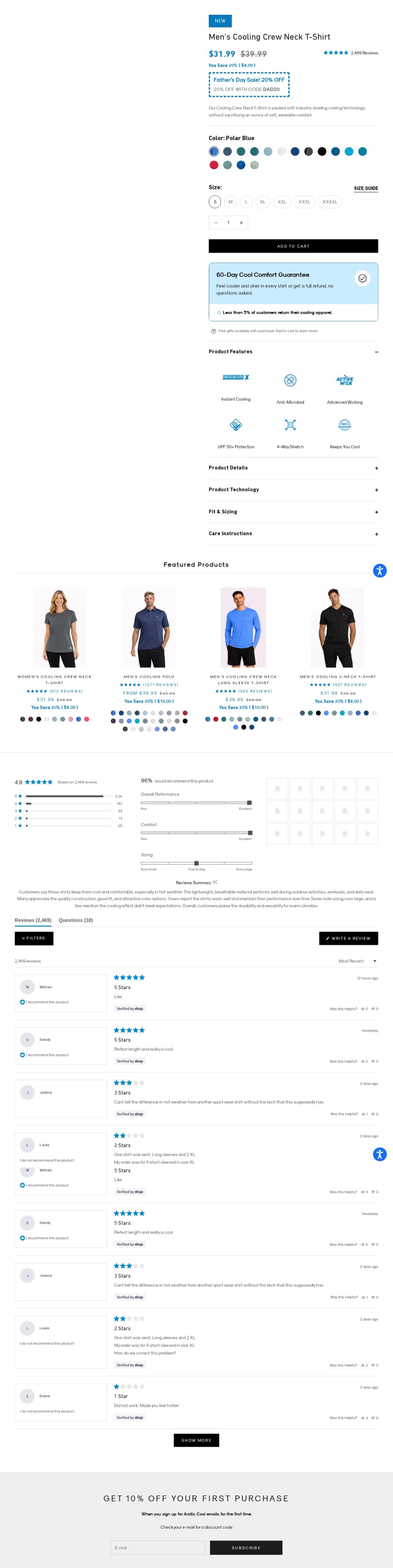
Single-SKU, event-promo pricing with free-shipping threshold as primary AOV lever; no on-page volume/bundle widget. Rebuy drives cross-sell/frequently-bought and post-purchase logic; UpCart powers a slide-cart drawer that surfaces the free-shipping progress bar and likely gift/upsell tiles inside the cart.
Operator's read
PricingThere is no multi-tier volume or bundle widget anywhere on the PDP — they rely entirely on a single struck-through anchor ($39.99 → $31.99, 20% off, $8.00 saved) driven by a time-boxed promo code (DAD20). The two free-shipping thresholds ($75 standard, $150 expedited) do the heavy lifting for AOV; a customer buying two shirts at $31.99 hits $63.98 and needs just one more unit to clear $75, which UpCart's progress bar is designed to surface in the drawer.
Pricing tiers (1 widget)
Widget styleZero volume-discount widget on the PDP — that slot is occupied by a clean event-sale price block (sale badge + strikethrough + 'You Save' line) and a trust badge (60-Day Cool Comfort Guarantee). The cross-sell job is handled by a four-card 'Featured Products' carousel below the fold showing sibling styles, each carrying the same 20% sale framing. Rebuy likely renders a 'Frequently Bought Together' or 'You May Also Like' unit inside the UpCart drawer, but it is not visible on the PDP itself.
VerdictThe promo-code mechanic works for event spikes but leaves AOV on the table every day the sale isn't running. The single highest-leverage change is adding a Rebuy or native quantity-break widget directly on the PDP — e.g., 1 for $31.99 / 2 for $29.99 each / 3 for $27.99 each — with the 3-pack pre-selected and badged 'Best Value.' At current $39.99 MSRP that's a 30% per-unit discount at 3x, which is credible for a basics tee, and it would push a meaningful share of single-unit buyers to a $84 cart in one click rather than relying on the shipping-threshold nudge inside the drawer after intent has already peaked.
offer details (6)
Screenshot confirms no quantity-break pricing widget on PDP. All pricing intelligence is drawn from the single sale price block and announcement banner. Rebuy and UpCart inferences are based on installed-app list; drawer contents not visible in screenshot.
Single-SKU weight-loss supplement (all-in-one Abnehm-Kapseln) running a bundle/multi-pack upsell via Kaching Bundles on the PDP, with cart-level upsell/cross-sell handled by UpCart or iCart slide-cart drawer. Post-purchase flow likely via one of the installed apps but not confirmed in evidence.
Operator's read
PricingNo raw pricing widget text was captured, so exact price points, per-unit ladder, and discount percentages cannot be confirmed numerically. What is visible is that the store leans on Kaching Bundles to anchor a single-SKU multi-pack structure (almost certainly 1x / 2x / 3x supply) with a struck-through compare-at price on higher tiers — the standard play for a German-market supplement DTC. The free-shipping threshold and any 'Gratis Abnehm-Betreuung' (free coaching) add perceived value without touching the cash discount, which is a smart margin protector.
Widget styleNo widget text was returned, so the exact layout cannot be confirmed, but Kaching Bundles defaults to radio-tile card layout with badges like 'Beliebteste Wahl' (Most Popular) or 'Bestes Angebot' (Best Value) on the highest-qty tier. The anchor tactic is typically an escalating compare-at price per unit that makes the 3-pack look dramatically cheaper per capsule than the 1-pack. Without confirming actual numbers, the pre-selection is almost certainly the 2-pack (middle tier) — standard Kaching Bundle default to lift AOV without scaring off low-intent buyers.
VerdictThe trust stack is solid — 1,428 reviews at 83% 5-star, study-backed efficacy claims, and included coaching (Abnehm-Betreuung) are strong conversion levers for a skeptical German supplement buyer. The highest-leverage AOV move is adding a subscribe-and-save option on the 1-pack tier: right now buyers who don't take the bundle are one-and-done; a 15% recurring discount on the single unit would capture that cohort, build LTV, and give the slide-cart drawer a concrete upsell ('Switch to subscription and save €X/month') — far more impactful than adding another cross-sell SKU to an already minimal catalog.
offer details (3)
German-language storefront targeting DACH market. Product is a single all-in-one weight-loss capsule SKU. No pricing widget text was extracted so all tier-level numeric analysis is inferred from app behavior rather than confirmed figures. A full scrape of the PDP widget HTML would be needed to populate exact tiers, compareAt prices, and discount percentages.

Subscribe-and-save anchored on a single SKU price point, with a free-shipping/free-gift threshold ladder in the cart drawer and a Zipify OCU post-purchase upsell inferred from installed app. No volume/bundle widget on the PDP — conversion is driven by social proof (92%/90%/94% clinical stats, dermatologist endorsement, Vogue/GQ press) and a 47-day money-back guarantee badge.
Operator's read
PricingThe store runs a single-SKU pricing model at $45 one-time with a subscribe-and-save toggle as the only structured price lever — no volume break or bundle widget is present. Anchoring is handled by the 47-day money-back guarantee and clinical stat badges (92%, 90%, 94%) rather than a compare-at price ladder. The cart threshold ladder ($65 free ship → $130 free BHA → $200 free moisturizer) does light AOV work but isn't visible at the PDP decision point, so many customers never see it before they click Add to Cart.
Pricing tiers (1 widget)
Widget styleThere is no volume-discount or bundle widget on the PDP — the slot is occupied by a two-option subscribe/one-time radio toggle. The cart drawer takes over upsell duties with a progress-bar gift threshold mechanic and three cross-sell tiles (gift bags, bamboo cloth at $10–$15). Zipify OCU handles post-purchase. The PDP is clean but leaves significant pre-cart AOV money on the table with no routine bundle or quantity break surfaced at the point of highest intent.
VerdictThe trust-stack (dermatologist, Vogue/GQ, 92%+ clinical stats, 47-day guarantee) is genuinely strong and likely converts cold traffic well. The single highest-leverage change: add a 'Build Your Routine' bundle widget directly on the PDP — e.g., Serum + BHA + Moisturizer at a 15% bundle discount (~$115 vs $135 à la carte) — because the brand already names all three products in its cart threshold ladder, meaning customers understand the routine; the PDP just never asks them to buy it together. This one change could push average order value from ~$45 toward $100+ without touching ad spend.
offer details (6)
Discount percentage on the subscribe-save tier could not be computed — exact subscribe price not visible in provided snippets. The $15 free-gift threshold is unusually low (achievable on a single $45 purchase? Unclear — may be a gift-with-purchase minimum for a separate lower-priced product). The four-tier cart threshold ladder is a smart retention mechanic but should be teased on the PDP to pull customers toward the $130 and $200 tiers proactively.

BAGSMART AU drives AOV primarily through on-page bundle/set merchandising, a free-gift-with-purchase threshold, a clearance urgency banner, and a slide-cart drawer (iCart). No inline volume-discount or quantity-break widget is visible on the PDP. Cross-sells and bundles are surfaced via a 'Find Your Perfect Fit' comparison section and an 'Unbeatable Bundle Deals up to 30% OFF' grid below the fold. Post-purchase upsell infrastructure is not evidenced by installed apps (no ReConvert/AfterSell detected).
Operator's read
PricingThere is no quantity-break or volume-discount widget on the PDP. Pricing relies entirely on single-SKU struck-through compare-at anchors: the hero Blast Travel Backpack sits at AUD $98.56 vs. $112.00 compare-at (12% off), the Roamer Luggage shows the deepest anchor at $120 vs. $240 (50% off), and the Blast Pro lands at $145 with a stated -20% but no visible compare-at in the snippet. The $150 free-gift threshold does meaningful AOV work — a shopper buying the $98.56 backpack needs only ~$51 more to unlock it, which is exactly where the bundle grid and cross-sell carousel step in.
Pricing tiers (1 widget)
Widget styleThere is no inline volume/quantity-break widget (no radio-tiles, no quantity ladder, no subscribe-and-save selector). The discount communication lives in two places: (1) a percentage badge overlaid on product card thumbnails (e.g. '-50%', '-12%', '-20%') and (2) a dedicated 'Unbeatable Bundle Deals up to 30% OFF' section that functions as a manual bundle grid with color swatches and review counts — not a dynamic bundler app. This is essentially a curated cross-sell carousel dressed up as a bundle section. iCart handles the cart layer.
VerdictThe free-gift-at-$150 threshold is well-calibrated against the ~$99 hero price and the bundle grid does create a path to hit that threshold, which is the strongest AOV lever currently in play. The single highest-leverage change would be adding a true quantity-break or 'Complete the Set' bundle builder (e.g. Bundler or PickyStory) directly on the Blast Travel Backpack PDP — even a simple 2-item radio-tile ('Backpack alone $98.56 / Backpack + Packing Cubes $129 — Save 18%') would intercept the 'just one bag' buyer before cart and push them past the $150 free-gift threshold in one click, compressing two funnel steps into one.
offer details (6)
Screenshot is small/compressed; exact iCart drawer contents and any post-purchase flow are not visible. Discount percentages on the Blast Pro (-20%) lack a visible compare-at price in the snippet, so the compareAt field is set null. The Roamer's 50% discount ($120 vs $240) is the most aggressive anchor on the page and warrants verification that $240 was a genuine prior price to avoid ACCC pricing concerns in AU.
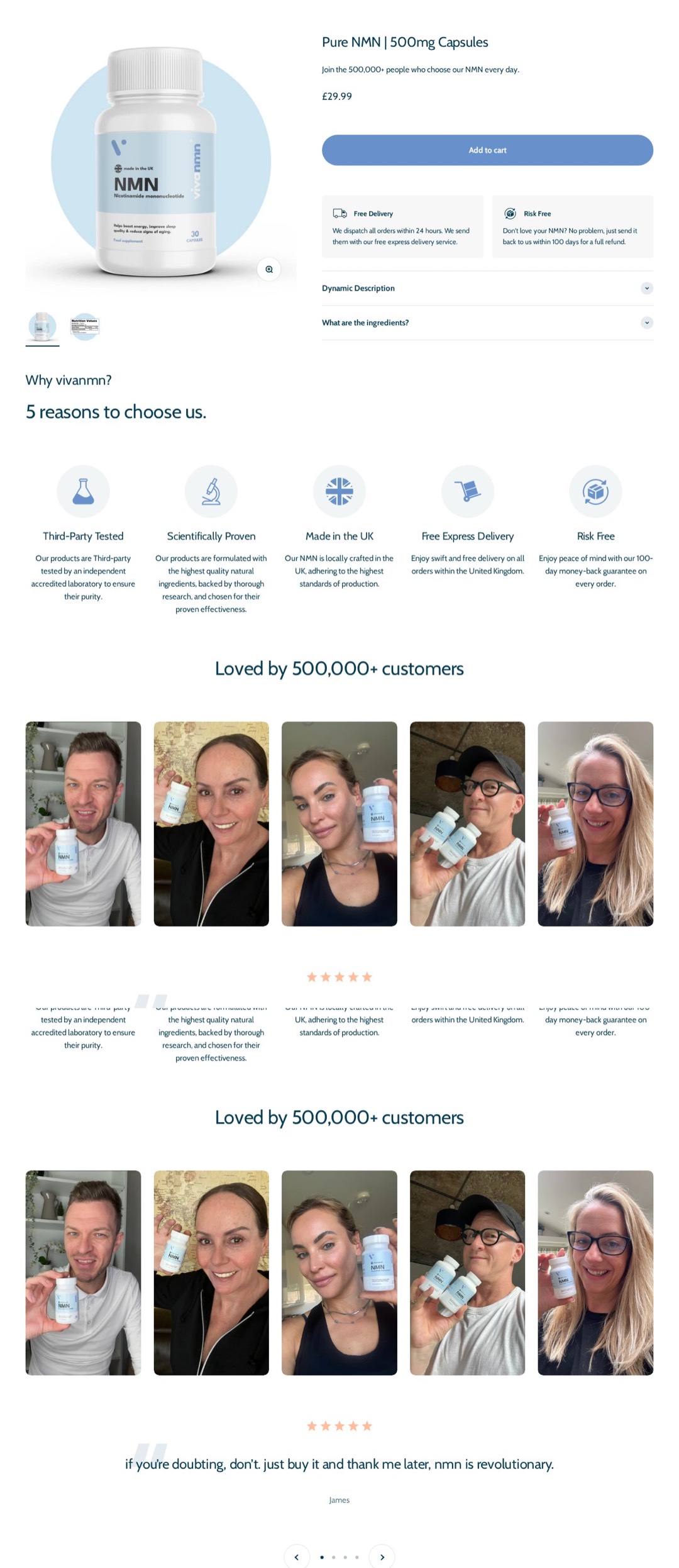
Single-SKU supplement (NMN 500mg) sold via a native Shopify variant selector offering three bottle sizes (30/60/90 caps) with implicit volume discount. Banner drives subscribe-and-save (25% off). AfterSell handles post-purchase upsell; iCart Slide Cart handles cart-stage cross-sell/upsell. Social proof wall (500k+ customers, UGC photos, testimonials) is the primary conversion driver on the PDP.
Operator's read
PricingThey run a three-tier volume ladder at £29.99 / £49.99 / £59.99 — per-unit drops from £1.00 → £0.83 → £0.67, a 17% and 33% implicit saving at 60 and 90 respectively. There is no struck-through compare-at price displayed on the PDP variants and no explicit 'you save X%' callout next to the pills, so the discount depth is invisible to most shoppers. The subscribe-and-save banner (25% off) floats above everything but is not anchored to a specific price, making it easy to ignore.
Pricing tiers (1 widget)
Widget styleNo third-party volume-discount widget is in use — the ladder lives entirely in native Shopify variant pills. There are no 'Most Popular' or 'Best Value' badges, no per-unit price callout, and no compare-at anchoring on the variant level. The slot that a Kaching Bundle, Pumper, or PickyStory tile would occupy is simply empty. iCart Slide Cart is installed but its cart-drawer contents are not visible in the screenshot.
VerdictThe UGC social-proof wall and 500k+ customer claim are executed well and should convert cold traffic. The single highest-leverage change: add explicit per-unit savings and a 'Most Popular' badge to the 90-cap variant pill, and surface a struck-through compare-at (£89.97) beside the £59.99 price. Right now shoppers see three bare numbers with no anchor and no savings framing — flipping the default selected variant to 90 caps with visible 33% savings badge would lift AOV materially without any new app spend.
offer details (4)
Discount percentages computed from raw variant prices: 60-cap saves £9.99 on a £59.98 2x basket (16.7%, rounded to 17%); 90-cap saves £29.98 on a £89.97 3x basket (33.3%). No compare-at prices were observed in the screenshot or snippets, so fake-anchor flag is not applicable. AfterSell post-purchase flow contents are not visible.

Single-product adventure-coffee brand running a sitewide 15% seasonal discount as the primary AOV lever. No visible quantity-break or bundle widget on the PDP; cross-sell pressure comes from a curated 'Explore the Range' carousel showing gift sets and sibling SKUs at 15% off. Bundler + Kaching Bundles are installed but no widget renders in the screenshot. UpCart implies a slide-cart drawer with potential in-cart upsell tiles.
Operator's read
PricingThere is no volume-discount or quantity-break widget rendering on the PDP — the entire pricing story is a flat 15% sitewide seasonal cut anchored by a struck-through regular price (5.344.000 VND → 4.542.400 VND on Mino). The gift-set SKUs (5.076.000 → 4.314.600 VND) are the only bundle-style price point, but they're presented as standalone products in a carousel, not as a structured 'buy X save Y%' upsell widget. Bundler and Kaching Bundles are installed but apparently dormant or not deployed on this PDP.
Widget styleNo bundle or volume-discount widget is present on the PDP. The slot that would normally hold a quantity-ladder or radio-tile bundle selector is occupied instead by a simple variant color selector (Moss Green / Sandstone White at flat 5.344.000 VND) plus a standard quantity input and Add-to-Cart. The 15% discount badge and struck-through regular price do all the anchoring work. The recommendation carousel below the fold shows sibling SKUs with '15% OFF' badges — closest to a cross-sell carousel, not a Bundler/Kaching widget.
VerdictThe 15% sitewide promo creates urgency and the gift-set SKUs are smart AOV builders, but the store is leaving structured bundle revenue on the table: Bundler and Kaching Bundles are installed yet idle on the highest-traffic PDP. The single highest-leverage move is to activate a 3-option radio-tile bundle widget directly on the Mino PDP — e.g., Mino alone at 5.344.000 VND / Mino + capsule pack at ~7.2M VND (save 10%) / Mino + Traveler Gift Set at ~9.5M VND (save 15%) — pre-selecting the middle tier to anchor AOV ~35% above the solo unit price without cannibalizing the existing seasonal discount narrative.
offer details (5)
Pricing is displayed in Vietnamese Dong (VND); store appears to be the Vietnamese locale of outin.com. Review counts (37 on Mino hero, 71/78/61 on carousel SKUs) confirm live product pages. Screenshot resolution limits visibility of any sticky-bar or cart-drawer upsell elements.

Single-SKU Korean beauty serum page (JULIOLY 50ml) running a sale anchor with variant-level 'BUY 1' options per scent. No volume/quantity-break widget is visible. AOV lever is driven by Candy Rack / Frequently Bought Together add-ons and a sitewide Year-End Sale 50% OFF banner to pull in multi-SKU orders via cross-sell rather than tiered pricing.
Operator's read
PricingThere is no volume or quantity-break pricing widget on this PDP. The entire price lever is a single struck-through anchor: 843,000₫ sale vs 1,138,000₫ compare-at — a 26% nominal discount (295,000₫ savings) applied flat to every BUY 1 variant. There are four variants at identical price points with no per-unit ladder, no tier pre-selection, and no incentive to add more than one unit. The sitewide Year-End Sale 50% OFF banner creates a category-level urgency but no on-page multi-unit reward.
Widget styleThere is no volume-discount or bundle widget rendered on the PDP. The 'widget' occupying that slot is simply Shopify's native variant selector displaying four separately-named BUY 1 options (one per serum scent). No radio-tiles, no inline table, no badge system (no 'Best Value'/'Most Popular'). The You May Also Like carousel at the bottom is the only structured cross-sell surface visible. Honeycomb Bundles and Bundler are installed but not activated or rendered on this page.
VerdictThe scarcity copy ('Only 41 pieces in stock') and the 26% strike-through anchor are executed cleanly and credibly. The single highest-leverage change is to activate Honeycomb Bundles with a visible 'Pick Any 2 Serums — Save 15% / Pick Any 3 — Save 25%' radio-tile widget directly on the PDP: given there are already four distinct serums at identical price points, a mix-and-match bundle builder is a natural fit that converts single-serum curiosity into 2-3 unit orders, lifting AOV from 843,000₫ to ~1,900,000–2,500,000₫ per transaction with minimal friction.
offer details (7)
Store is cocomo.sg (Vietnamese-priced, SGD store name suggests multi-market or regional operation). Screenshot resolution makes some copy hard to confirm exactly; confidence is medium. All four JULIOLY serum variants are priced identically at 843,000₫ (compare-at 1,138,000₫). No cart drawer, no modal, no sticky bar is visible. Installed app stack (Candy Rack, Honeycomb Bundles, Bundler, FBT) is strong for AOV growth but appears underutilised on this specific PDP.

Naked Sundays US runs a bundle-forward, content-rich SPF brand. The primary AOV lever visible is a free-gift-with-purchase threshold (free SPF brush with every order, announced via banner) combined with a robust product-line bundle architecture (Face Mist Bundles, BeautyScreen Bundles, CabanaMilk Bundles, CabanaClear Bundles) surfaced through navigation. Rebuy is installed for smart recommendations/cross-sell. An email-capture modal fires on entry offering 10% off plus a free gift, serving as the acquisition-to-first-order bridge. No on-page volume discount widget is visible on this product page screenshot.
Operator's read
PricingThere is no visible volume-discount or quantity-break widget on this product page. Instead, Naked Sundays leans on three softer AOV mechanisms: (1) the entry modal's 10% first-order discount to reduce acquisition friction, (2) a free-gift-with-purchase banner (free SPF brush, no minimum spend stated) to pad perceived value without discounting, and (3) a heavily merchandised bundle navigation (Face Mist Bundles, BeautyScreen Bundles, CabanaMilk Bundles, CabanaClear Bundles) that pre-packages multi-SKU orders at the browse stage rather than on the product page. No struck-through compare-at pricing or per-unit savings ladder is visible in the current screenshot.
Widget styleThere is no volume-discount or bundle-builder widget rendering on this product page. The slot that would typically house a quantity ladder is occupied by a standard single-product add-to-cart flow. Bundle discounting is offloaded entirely to dedicated bundle PDP pages accessible via navigation. Rebuy is installed but its widget (likely a slide-cart cross-sell rail or post-purchase page) is not visible in this screenshot. The modal is styled in brand-pink with bold sans-serif headline copy — clean and on-brand but functionally a standard email capture with intent segmentation, not a pricing widget.
VerdictThe free-gift banner and entry modal are executed well — the 10% plus free gift combination is a strong first-order converter, and the intent segmentation in the modal (Myself / Him / As A Treat / Loved Ones) is a smart personalization signal. The single highest-leverage change I would make is adding a visible 2–3 tier quantity-break or bundle-builder widget directly on the hero product PDP (e.g. Buy 1 at full price / Buy 2 save 15% / Buy 3 save 20% with per-unit callout), rather than hiding bundle savings inside separate navigation pages — most customers never navigate to a bundle page, so AOV uplift is being left on the table at the moment of highest purchase intent.
offer details (4)
Screenshot shows entry modal, homepage/product imagery, review section, and footer. No cart drawer, no pricing widget, and no Rebuy widget were visible in the captured state. Bundle architecture inferred from nav snippet. Confidence set to medium due to limited product-page and cart-page visibility.

Single-product hero page (Luma1000™ red-light panel) using a struck-through anchor price, a 2-unit bundle offer, social proof wall, and Rebuy-powered cross-sells/related products at the bottom. No volume-discount widget; AOV is lifted via a manually coded 2x bundle tile and a newsletter email-capture discount in the announcement bar.
Operator's read
PricingThe store leans entirely on a single struck-through anchor (£579 → £405, ~30% off) rather than a tiered volume-discount widget. The only AOV lever is a 2x bundle at £810 (also 30% off, £405/unit) — the per-unit price is identical to the single-unit price, meaning there is zero incremental incentive to buy two. The discount depth is real at 30% but the bundle does nothing to reward the upgrade. There is no 3x or mixed-SKU bundle to push ticket higher.
Pricing tiers (1 widget)
Widget styleNo named volume-discount app is running a widget here. The 1x/2x choice appears to be a simple Shopify variant or custom HTML block with a compare-at strikethrough and a bold 'SAVE £348' callout. There are no radio-tile badges like 'Most Popular' or 'Best Value', no escalating per-unit ladder, and no app-branded UI chrome. The anchor tactic is purely the compare-at strike-through on the original £579 RRP.
VerdictThe social-proof stack (774 reviews, press logos, doctor endorsement, competitor comparison table) is well executed and will convert cold traffic. The single highest-leverage change is to make the 2x bundle actually cheaper per unit — e.g., price it at £380/unit (£760 for 2, ~34% off vs the single's 30%) — and add a 'Best Value' badge. Right now a customer has zero financial reason to buy two; fixing that one price point could materially lift bundle attach rate and AOV without any new app spend.
offer details (4)
Screenshot resolution is low; exact widget markup cannot be confirmed. Rebuy post-purchase flow inferred from installed app list. Currency confirmed GBP from '£405' and '£579' price points visible in snippet. All discount percentages computed from visible price points.
No visible upsell widgets, pricing tiers, or promotional banners detected from the provided evidence. Rebuy is installed, suggesting cart and post-purchase upsell infrastructure exists but no specific offers, copy, or pricing widgets were captured in the screenshot or text evidence. Store appears to sell dot-art/paint-by-dots kits with Rebuy powering background recommendations.
Operator's read
PricingZero pricing widget evidence was provided — no volume tiers, no struck-through anchors, no bundle price points are visible. If the store is running a single flat price per kit, they are leaving significant AOV on the table with no quantity break or bundle incentive visible at the product level. Rebuy in the cart is the only known lever, which means they are relying entirely on post-add momentum rather than pre-add intent.
Widget styleNo volume-discount or bundle widget is visible on the landing page. The slot that would typically be occupied by a quantity-break radio-tile widget (e.g., Rebuy's inline widget or a Bold/Bundles app) appears to be empty or not captured. Rebuy can render an inline quantity ladder or bundle selector on the PDP but there is no evidence it is activated here.
VerdictThe Rebuy install is a solid foundation but appears underdeployed based on available evidence. The single highest-leverage move for this store would be activating a 3-tier quantity-break widget directly on the PDP — e.g., 1 kit at full price, 2 kits at 10% off, 3 kits at 18% off — since dot-art kits are natural gifting and multi-purchase items (buy for yourself + gift), and anchoring a 'Best Value' 3-pack with a visible per-unit price drop would lift AOV without touching ad spend.
offer details (2)
Confidence is low because no screenshot content, banner text, product copy, or pricing widget text was supplied. All offer inferences are based solely on the Rebuy app install. A full audit requires PDP screenshot, cart state screenshot, and post-purchase page capture.

Single-product DTC health/wellness brand (infrared sauna blanket as hero SKU) relying on editorial long-form landing page to justify premium price, with Candy Rack handling in-cart cross-sell/add-on upsells. No volume/quantity-break widget on the PDP. AOV lift comes from accessory cross-sells (Insert, Therapy Mat, etc.) and a newsletter email-capture discount rather than tiered pricing.
Operator's read
PricingThere is no volume or quantity-break pricing widget anywhere on the PDP — Koanna leans entirely on single-unit struck-through compare-at anchoring with 'Save X%' badges ranging from a modest 7% (Luma300) up to 25% (Therapy Mat Go). The one concrete price point visible is Therapy Mat Go at €389 vs €424 regular (saves €35, ~8%). The hero sauna blanket is badged at 'Save 8%' but no absolute price is readable in the snippet, meaning shoppers have no per-unit ladder or multi-quantity incentive to buy more than one unit at a time.
Pricing tiers (1 widget)
Widget styleNo bundle or volume-discount widget exists on this page. The slot that would normally be occupied by a quantity-break radio-tile widget (e.g., Reconvert, Bold Bundles, Bundler) is instead filled by a long-form editorial landing page with benefit sections, comparison table ('Koanna vs Sauna Cabin'), health-professional endorsements, and a 'What's in the box' explainer. The compare-at/Save-badge approach is the sole pricing tactic. Candy Rack is the only upsell mechanism, almost certainly firing a modal cross-sell (Insert or accessory) at add-to-cart or checkout.
VerdictThe long-form trust-building content is executed well — the 30-day guarantee badge, head-to-head competitor comparison, and media/professional social proof (FHM, sport professionals) all support a premium single-unit conversion. The single highest-leverage AOV move would be to introduce a Candy Rack pre-cart bundle offer combining the Sauna Blanket + Sauna Blanket Insert at a 10–12% bundle discount (e.g., €X instead of €Y separately), presented as a radio-tile choice directly on the PDP before the ATC button — the Insert already has 267 reviews and zero price friction as an add-on, meaning a pre-cart bundle widget would capture accessory revenue at the moment of highest purchase intent rather than relying on a post-ATC modal that most shoppers dismiss.
offer details (4)
Exact hero blanket price not extractable from snippets (text truncated). Therapy Mat Go is the only product with both sale and regular price visible (€389 / €424). All other discount percentages taken from 'Save X%' badges in product snippets. Candy Rack post-purchase offer is inferred from app install; no cart or post-purchase page was captured. Currency confirmed EUR from Therapy Mat Go pricing.

Single-hero-product long-form landing page (infomercial style) driving traffic to the Koanna infrared sauna blanket. Monetisation leans on newsletter-capture discount, cross-sell of complementary SKUs (inserts, therapy mats, red-light panels), and Candy Rack in-cart add-ons. No visible volume/bundle widget on the PDP itself; the page instead uses social proof density (957 reviews, press logos, 30-day guarantee, athlete/professional endorsements) to justify a single price point with a modest percentage-off anchor.
Operator's read
PricingThere is no volume or bundle pricing widget visible anywhere on this page — each SKU runs a single price point with a struck-through compare-at and a 'Save X%' badge (ranging from 7% on the Luma300 up to 25% on the Therapy Mat Go; the hero sauna blanket sits at just 8%). The only concrete price pair visible is Therapy Mat Go at €389 vs €424, a €35 saving. With no quantity ladder, AOV uplift is entirely dependent on Candy Rack cross-sells and whatever the email-capture discount is worth — a shallow toolkit for a €300-600 AOV category.
Pricing tiers (1 widget)
Widget styleNo bundle or volume-discount widget exists on the landing page. The slot that would normally hold a quantity-break radio-tile or subscription toggle is occupied by a dense infomercial narrative (press logos, 30-day guarantee seal, professional endorsements). Pricing is displayed as plain single-option Shopify product cards with percentage-save badges — functional but leaving significant AOV and LTV money on the table. Candy Rack handles any multi-product moment at the cart layer, but its configuration is not visible.
VerdictThe long-form trust-building content is well-executed for a considered €300-600 purchase — review count (957), press badges, athlete social proof, and the 30-day guarantee are all conversion-positive. The single highest-leverage change would be to introduce a 2-option bundle widget directly on the sauna blanket PDP: a 'Blanket only' tier vs. a 'Blanket + Insert' bundle at ~10-12% combined discount (e.g., blanket + insert bundled at €X vs. sum of parts), plus a 'Blanket + Insert + Therapy Mat Go' at ~15% off. Given the complementary SKU catalogue already exists, this would mechanically lift AOV from single-unit into the €450-600 range without any new product creation, and gives Candy Rack a higher base cart value to upsell from.
offer details (4)
Exact hero sauna blanket sale price and compare-at price not legible in screenshot; only the Therapy Mat Go (€389/€424) and percentage-save labels per SKU are extractable. Candy Rack offer details (SKU, price, mechanic) are not visible and are inferred from app install. Confidence is medium because the cart/post-purchase layer is opaque from the static image.

Single-SKU jewelry PDP (Pulsera Inicial / initial bracelet) with no visible volume/bundle pricing widget. Store leans on a struck-through compare-at anchor price and installed cross-sell/add-on apps (Selleasy, Candy Rack) to lift AOV. Product gallery is extremely deep (30+ variant images covering gold and silver colorways). No quantity ladder, no subscribe-save, no free-ship progress bar visible in screenshot.
Operator's read
PricingThere is zero volume or bundle pricing widget on this PDP — the entire pricing mechanic rests on a single struck-through compare-at anchor next to the sale price (visible as two price lines, roughly ~16–17 EUR sale vs a higher compare-at). With only one price point and no quantity ladder, every incremental AOV dollar has to come from cross-sells and add-ons, not from incentivizing multi-unit purchase. The upside: low cognitive load. The downside: no structural reason for a customer to spend more per order.
Widget styleNo volume-discount or bundle widget is present on the landing page — that slot is occupied purely by a native Shopify compare-at strike-through anchor. Selleasy renders a checkbox add-on block below the ATC button (typical inline checklist layout), and Candy Rack handles modal or post-purchase upsells. There are no 'Most Popular' or 'Best Value' badges because there are no tiers to badge.
VerdictThe deep gallery of 30+ variant images is smart for a personalized initial jewelry product — it handles objection ('does it look good in silver/gold?') visually without copy. However, the single biggest AOV lever being left on the table is a 2- or 3-unit quantity break widget: initial bracelets are a natural gifting and stackable product, and a simple '2 for €29 / 3 for €39' radio-tile block (via Selleasy's bundle feature or a dedicated app) would convert the significant 'buying for a friend' intent that personalized jewelry carries — easily lifting AOV 40–60% on multi-unit orders without cannibalizing single-unit conversion.
offer details (3)
Screenshot is in Spanish (ES locale); store is lepetitemarie.com, a Spanish jewelry DTC brand. Pricing numbers partially obscured at screenshot resolution — EUR 16.99 sale price estimated from visible text. Candy Rack modal and post-purchase flow inferred from app installation, not directly observed. Selleasy add-on block inferred from app + faint UI below ATC; exact cross-sell products not legible at this resolution.

Single-SKU gut-health supplement leaning on subscribe-and-save as the primary AOV/LTV driver, with a free-shipping threshold anchor and Rebuy/Selleasy powering cross-sell and post-purchase upsells. No multi-tier volume/bundle widget is visible on the PDP; the pricing mechanic is one-time vs. subscription toggle plus a $65 free-ship threshold nudge.
Operator's read
PricingThere is no multi-tier volume or bundle pricing widget on this PDP — the entire pricing architecture rests on a one-time price (visible as ~$39) versus a subscribe-and-save option, plus the $65 free-shipping threshold as a soft AOV nudge. The subscribe discount percentage isn't quantified in the evidence but is the primary lever. With a single unit at ~$39 sitting below the $65 free-ship threshold, the store is structurally pressuring customers to either subscribe or buy two units — but it doesn't make that second-unit offer explicit with a quantity break or bundle price.
Widget styleThere is no volume-discount or bundle widget occupying the primary pricing slot on this PDP. What occupies that slot instead is a one-time vs. subscription radio toggle (likely native Shopify selling plans or a subscription app), paired with a struck-through compare-at price to create an anchor. The Selleasy 'Frequently Bought Together' widget below the fold is the only visible multi-product upsell surface, but it's passive and below the primary CTA — not a bundle builder or quantity ladder.
VerdictThe subscribe-and-save toggle is smart for a consumable gut supplement and the $65 free-ship threshold is a legitimate AOV lever, but neither is being maximized: a 2-pack or 3-pack quantity-break widget (e.g., 1x $39 / 2x $72 save 8% / 3x $99 save 15%) placed directly above the add-to-cart button would capture customers who won't subscribe but would stock up at a discount, immediately lifting one-time AOV from ~$39 toward $72-99 and reducing CAC payback period without touching the subscription funnel.
offer details (4)
Confidence is medium because the pricing widget text was empty in the evidence and the PDP screenshot is small-resolution, making exact price points and subscription discount percentages difficult to confirm precisely. The ~$39 price point is estimated from visible PDP text. Rebuy post-purchase upsell is inferred from app installation only.
Sold-out product page recovery via recommendation carousel; minimal upsell infrastructure beyond iCart slide drawer. Store is a secondhand/resale vertical (Claudie Pierlot Seconde Main) with single-SKU, one-of-a-kind inventory logic — no volume pricing possible by nature.
Operator's read
PricingThere is zero pricing widget or volume discount mechanic visible — this is structurally impossible on a secondhand platform where every SKU is a unique one-of-a-kind item. The store leans entirely on single flat price points: 78€, 115€, 140€, 107€ shown in the carousel. No struck-through compare-at anchoring is visible on the suggestion cards, no free-shipping threshold banner, no tiered pricing. The only AOV lever in play is the carousel itself nudging a replacement purchase.
Widget styleNo volume-discount or bundle widget exists on this page — nor could one logically exist given one-of-a-kind resale inventory. The slot that would normally hold a pricing widget is occupied by a clean editorial recommendation carousel (4 cards, horizontal scroll, condition badges like 'Excellent état'/'Très bon état', quick-add + icon). The iCart slide drawer is installed but invisible in this state; it likely fires on add-to-cart with potential cross-sell logic inside the drawer, but that cannot be confirmed from this screenshot.
VerdictThe sold-out redirect with a curated 'Nos suggestions' carousel is the right instinct — don't lose the traffic, redirect intent. However, there is no free-shipping threshold visible anywhere (no banner, no cart progress bar), which is the single highest-leverage missed mechanic here. Given average item prices of 78–140€, setting a free-ship threshold at ~150–160€ and surfacing it prominently in the iCart drawer as a progress bar would directly incentivize multi-item sessions, which is the only realistic AOV lever on a per-SKU resale model.
offer details (2)
Store is claudiepierlot.com's official secondhand/resale sub-store (Seconde Main), powered by Faume (v3.13.0 noted in footer). One-of-a-kind inventory makes volume/bundle pricing structurally irrelevant. Analysis confidence is low because the screenshot shows only a sold-out state PDP — no active cart, no drawer, no checkout flow visible.

Single-SKU DTC pain-relief device (Vibit ROLL) running a sitewide 40% OFF urgency promotion as the core conversion lever. AOV lift is pursued via slide-cart cross-sells (Vibit PULSE, FlowBoots, Full Body Relief Bundle) powered by iCart/Rebuy, an add-on checkbox for Easystick replacement pads at cart stage, and post-purchase one-click upsells via Zipify OCU. No on-page volume/quantity-break widget is present; the store leans entirely on a single struck-through anchor price plus urgency copy to justify the price point.
Operator's read
PricingThere is zero volume or quantity-break widget on this PDP. The entire pricing strategy is a single struck-through anchor: $214 compare-at crossed out, $128 current, 'SAVE 40%' badge. That's a clean $86 saving on a single unit. The Full Body Relief Bundle in the slide cart is the only multi-unit price point visible — $298 vs $596 compare-at (also ~50% off) — but it's buried in the cart drawer, not merchandised on the PDP where conversion intent is highest. Free AU shipping is used as a threshold-free sweetener rather than a spend-more mechanic, leaving AOV headroom on the table.
Pricing tiers (1 widget)
Widget styleNo named volume-discount widget (no Bold Bundles, Vitals quantity breaks, etc.) appears on the PDP. The slot that would normally hold a radio-tile or inline-table bundle widget is occupied purely by a colour-variant selector and a single ATC button. The urgency play ('ENDS SOON') does the heavy lifting. Inside the iCart slide drawer, Rebuy/iCart renders product-card cross-sells with variant swatches and a checkbox add-on — this is the closest thing to a structured upsell layout, but it fires post-ATC, not pre-commit.
VerdictThe 40% urgency anchor is executed cleanly — consistent across banner, PDP, and cart — and the iCart cross-sell suite (PULSE, FlowBoots, Bundle) gives solid AOV upside for buyers already in the funnel. The single highest-leverage change: surface the Full Body Relief Bundle ($298 vs $596) as a radio-tile option directly on the PDP beneath the ATC button, pre-selected or badged 'Best Value', so shoppers see the bundle upgrade before they commit rather than after. Given the bundle's ~$170 AOV lift over the single unit, even a 10-15% attach rate on PDP would materially move blended AOV without touching ad spend.
offer details (6)
Currency confirmed AUD from 'Free AU Shipping' and Sydney fulfilment mention. Compare-at prices ($214 for ROLL, $596 for Bundle) appear to be permanently inflated anchors used to justify the perpetual 40% off — common in this category but worth monitoring for Australian Consumer Law compliance around 'was' pricing. Review counts are high (7,102 on ROLL, 8,063 on Bundle) suggesting mature social proof stack. Rebuy may also be powering the 'You may also like' rail inside iCart; hard to separate from iCart's native cross-sell without app-layer access.
Single-SKU wellness brand (CBD+THC gummies) running paid social traffic to a clean hero landing page. Primary monetization levers are a free-shipping threshold ($75) surfaced in the announcement bar and Rebuy-powered 'You may also like' cross-sells inside the cart drawer. No visible volume/bundle widget on the PDP. Subscription/save mechanic not visible in screenshot but Rebuy commonly enables it.
Operator's read
PricingThere is zero visible pricing or bundling widget in the screenshot — no volume tiers, no compare-at anchoring, no subscribe-and-save toggle on the PDP. The only pricing lever shown is the $75 free-shipping threshold in the announcement bar, which passively nudges AOV but does no heavy lifting. Without knowing single-unit prices for the Recreation Gummies (25mg CBD+5mg THC, 30ct) we cannot compute a per-unit ladder, but the absence of any struck-through anchor or multi-unit option means the store is leaving significant AOV on the table at the product level.
Widget styleThere is no volume-discount or bundle widget present on this landing page whatsoever. The slot that would normally be occupied by a Bold Bundles radio-tile or Rebuy inline quantity ladder is empty. What occupies that space instead is a single large hero image with a 'Shop Now' CTA that drops the user into a catalog — meaning pricing decisions are deferred entirely to individual PDPs which are not visible in this screenshot. The cart drawer Rebuy rail ('You may also like') is the only active upsell widget confirmed.
VerdictThe brand creative and positioning are tight — clean lifestyle photography, clear value prop ('Feel better, naturally'), trust signals (happiness guarantee, free returns) all above the fold. The single highest-leverage change is adding a Rebuy inline quantity-break widget directly on each PDP: a 3-tier radio-tile (1-jar / 2-jar 'Most Popular' ~10% off / 3-jar 'Best Value' ~18% off) anchored with compare-at pricing. Given gummies are a consumable with a natural repurchase cycle, even a modest 2-jar default selection would push the majority of paid-social buyers past the $75 free-ship threshold automatically, collapsing two conversion problems (AOV and shipping objection) into one widget.
offer details (3)
Analysis is heavily limited by the screenshot showing only the homepage hero and footer — no PDP, no cart with items, no checkout. Rebuy is confirmed installed but its full ruleset (post-purchase flows, subscription widget, SmartCart tiers) is not visible. Confidence is low due to minimal evidence surface.
Single-SKU flat pricing with free-shipping threshold as primary AOV lever, supported by brand-collection cross-sell carousel and Klarna BNPL softening the $29 price point. No on-page volume/bundle widget. iCart slide-cart likely surfaces the free-ship progress bar and cross-sells at cart stage. Bundler app implies pre-built bundles exist site-wide (Bundles nav link) but none render on this PDP.
Operator's read
PricingZero volume-discount tiers on this PDP — the sock is a flat $29 with no compare-at anchor, no per-unit ladder, no bundle prompt. The only structural AOV mechanism baked into the page is the 120€ free-ship threshold: at $29 a pair, a customer needs ~4 pairs to qualify, which is a real pull but completely passive (icon only, no dynamic nudge on PDP). Klarna's 4x $7.25 line softens the price psychologically but doesn't expand the basket. The -40%/-30% sale badges on the cross-sell carousel are the closest thing to price anchoring on this page.
Widget styleNo volume-discount or bundle widget renders on this product page whatsoever. The slot that would normally house a quantity-break radio-tile or inline tier table is empty. What occupies that space instead is a plain size selector (36-40 / 41-45), an Add to Cart button, and a Klarna instalment line. The Bundler app is installed and a Bundles nav section exists, but none of that logic surfaces on the PDP itself — it lives on a separate bundles page the customer has to seek out.
VerdictThe free-ship threshold and cross-sell carousel are solid, and the Kodak collab gives strong social proof with the BEST SELLER badge and Trustpilot 4.8/2,812 reviews. The single highest-leverage change: surface a 3-pair bundle option directly on this PDP (e.g., 'Buy 3 pairs — save 15%' radio tile via Bundler), pre-selected at 3 units. At $29 each, a 3-pack at ~$74 clears the 120€ free-ship bar in one click, collapses two friction points simultaneously, and lifts AOV from $29 to $74 without touching ad spend.
offer details (5)
Page currency displayed as USD-$ in screenshot but store is Barcelona-based and threshold is quoted in EUR (120€). Free-ship bar in iCart cart drawer is standard iCart functionality inferred from cart snippet. Bundler-generated bundle pages exist in nav but no widget injected on this PDP. No post-purchase upsell app (ReConvert/AfterSell) detected in installed apps list.
Sunday Citizen runs a single-SKU PDP with no visible volume/bundle pricing widget. AOV lift levers are: (1) a free-gift threshold (Muslin Cotton Throw on $250+) and a free-shipping threshold ($200+) surfaced via an announcement-bar slider, (2) a navigation-level bundle section ('Bedding Bundles up to 20% off') pulling shoppers into a separate collection rather than upselling in-page, (3) Rebuy installed (likely powering 'Recently Viewed' carousel on PDP and a post-purchase flow), and (4) a 15% off email-capture modal firing on the PDP. No inline quantity break or volume discount widget is visible on the product page itself.
Operator's read
PricingThere is no on-page volume or bundle pricing widget on this PDP — zero tiers, zero per-unit ladder. Instead, Sunday Citizen leans on two threshold mechanics: free shipping at $200 and a free gift (Muslin Cotton Throw) at $250, both rotating in the announcement bar. The effective anchor is the modal-delivered 15% first-purchase discount, which sets a discounted reference price in the shopper's mind before they even see the $380 Snug Comforter. Bundle discounts up to 20% off live in a separate nav collection, not surfaced inline on the PDP.
Widget styleNo bundle or volume discount widget exists on this product page. The slot where a widget would normally sit is occupied by a temperature-guide rail (Cool-to-Warm product selector) and a lifestyle editorial section ('Lay back and relax'). The 'Recently Viewed' Rebuy carousel at the bottom functions as a passive cross-sell tile row with no discount callout — it shows flat retail prices ($320–$470) with no badges, no compare-at strikethroughs, and no 'Best Value' framing. The 15% email modal is the only active discount mechanism on the page.
VerdictThe free-gift threshold at $250 is a smart AOV floor, but it's buried in a rotating banner that most shoppers ignore after one cycle — the Snug Comforter alone is already ~$380 so it's auto-qualified, making the threshold irrelevant as an upsell trigger for single-item buyers. The single highest-leverage change: deploy a Rebuy in-cart or PDP inline widget that surfaces a bundle (e.g., Comforter + Matching Shams or Comforter + Throw) with an explicit 15–20% bundle discount and a 'Complete the Set' frame — this converts the navigation-level bundle collection into an in-page conversion moment, captures shoppers before they exit to browse, and gives Rebuy's engine a proper upsell slot to optimize against.
offer details (5)
Pricing widget text was empty in the evidence; all pricing observations derived from visible product card prices in the Recently Viewed carousel. Confidence is medium because the cart drawer state and post-purchase screen are not visible, so Rebuy's full deployment cannot be confirmed.

Single-product DTC with variant selection and a Kaching Bundles quantity-break widget (Buy 2 Get 1 Free implied), anchored on a deep struck-through compare-at price plus a sitewide percentage-off banner to drive perceived urgency and volume.
Operator's read
PricingThe store leans hard on a single struck-through anchor: $29.95 sale vs. $79.95 compare-at, screaming 62% off on the base unit. The Buy 2 Get 1 Free tier (inferred via Kaching Bundles and review copy) effectively brings per-unit cost to ~$19.97 on a 3-unit pull, a ~75% implied discount off the $79.95 anchor. There is no visible 3- or 4-tier volume ladder — just a 1x vs. multi-unit binary choice, which limits AOV ceiling but keeps decision friction low.
Pricing tiers (1 widget)
Widget styleKaching Bundles inline radio-tile layout on the PDP — two options (single vs. Buy 2 Get 1 Free), with the compare-at anchor doing the heavy lifting. No 'Most Popular' or 'Best Value' badge is confirmed in the evidence, though the app supports them. The escalating compare-at anchor ($79.95 on a $29.95 item) is the primary anchoring tactic; the sitewide banner ('60% Off + Free Giftcard') doubles down on perceived deal depth before the user even hits the widget.
VerdictThe 62%-off anchor plus a free-gift-card banner is a strong conversion hook and the social proof wall (8,258 reviews, UGC photos, vs-knockoffs section) is well executed for trust. The single highest-leverage AOV move would be adding a third Kaching Bundles tier — e.g., Buy 3 Get 2 Free at ~$89.85 (3 units + 2 free, ~$17.97/unit) — with a 'Most Popular' badge pre-selected by default, since the current binary widget leaves a large AOV gap between 1-unit ($29.95) and the next step, and there is no nudge to anchor buyers on the higher-value option.
offer details (4)
Pricing widget tiers are partially inferred: the Buy 2 Get 1 Free mechanic is confirmed via review snippet and Kaching Bundles install, but exact bundle price and compare-at on the multi-unit tier are not explicitly shown in the provided text. Single-unit pricing ($29.95 sale / $79.95 compare-at, SAVE 62%) is directly from the product snippet. Ghost Bear variant is priced at $39.95, indicating variant-level pricing differentiation. No cart snippets were provided so no in-cart upsell mechanics could be confirmed.

Single hero SKU (The Super Elixir™ Greens) sold on brand authority, influencer/founder narrative, and community social proof. No visible volume-discount widget or bundle builder on the PDP. Upsell layer is handled in-cart via iCart Slide Cart. A membership/tiered-access system appears to be installed (loyalty or subscription tier gating) but is rendering broken template literals (__tier_name__) indicating a mis-configured membership app.
Operator's read
PricingThere is no visible volume-discount or bundle pricing widget on this PDP — zero tiers, zero quantity breaks, no struck-through compare-at ladder. WelleCo leans entirely on brand premium and a broken membership/tier system that should be delivering subscribe-and-save or member-exclusive pricing but is currently misfiring (raw __tier_name__ tokens rendering in the banner). Without seeing a resolved widget, the store is leaving the entire per-unit anchoring lever untouched on the most important page in the funnel.
Widget styleNo volume-discount or bundle widget exists on the landing page. The slot that would normally house a quantity-break radio-tile or subscribe-save toggle is occupied by long-form editorial content — ingredient callouts, a 'From the Founder' section, and a UGC testimonial carousel. The iCart slide cart drawer is the only structural upsell mechanism, but its contents weren't captured. The membership app widget is the intended pricing differentiator but is broken in production.
VerdictThe brand execution is strong — premium photography, founder credibility, community proof, and clean editorial layout all support a high AOV ceiling. However, the single highest-leverage fix is immediate: resolve the broken membership/subscription tier app so that subscribe-and-save pricing actually renders on the PDP. A visible 'Subscribe & Save 15%' toggle next to a one-time purchase price would anchor repeat revenue, reduce CAC payback period, and give iCart a logical upsell path (upgrade to subscription) inside the drawer — none of which is firing right now because the template variables are unresolved in production.
offer details (2)
Screenshot is a mobile/compressed full-page view of welleco.com.au Super Elixir Greens PDP. Confidence is medium because the iCart drawer contents and any post-purchase flows are not visible. The membership app identity is unconfirmed — candidates include Seal Subscriptions, Recharge, or a custom Shopify membership app; the broken __tier_name__ token is a Liquid/app rendering failure. No post-purchase upsell app (ReConvert, AfterSell, Zipify) was listed in installed apps, so no post-purchase offer is inferred.

Grazly runs a grass-fed beef snack brand (brisket slabs, meat sticks) positioned on superior sourcing and carnivore/ancestral diet identity. Their upsell architecture leans on a free-shipping threshold ($85+) as the primary AOV lever, a bundle navigation category to push multi-SKU purchases, and Rebuy for cross-sell/frequently-bought-together logic. UpCart/iCart implies a slide cart drawer with embedded upsell tiles. No standalone volume-discount widget is visible on the PDP; instead they rely on a Singles vs Bundles toggle and brand trust signals (60k customers, before/after, sourcing comparison) to convert at higher basket values.
Operator's read
PricingThere is no visible volume-discount or quantity-break widget on the PDP — zero numeric tiers, no per-unit ladder, no compare-at anchoring at the product level. The entire AOV strategy relies on: (1) a $85 free-shipping threshold as a soft spend-more nudge, and (2) pre-built bundles in a separate navigation category to drive higher ticket sizes. Single-unit price points are not extractable from the screenshot, but the absence of an inline pricing widget means there's no on-page mathematical reason for a customer to add more units of the same SKU.
Widget styleNo volume-discount widget exists on this PDP. The slot that would normally be occupied by radio-tile quantity breaks or an inline tier table is instead taken by a simple Singles | Bundles tab toggle — a softer, navigation-based approach to bundling rather than a discount-ladder. The 'Other Orders Also Purchased' cross-sell rail (likely Rebuy SmartCart widget) is the closest thing to a structured upsell widget visible on the page, surfacing 2 complementary SKUs below the fold. UpCart/iCart handles the cart-level free-ship progress bar and embedded cross-sell tiles.
VerdictThe sourcing story and social proof (60k customers, grass-fed vs. conventional comparison, before/after) are executed well — strong identity brand with real differentiation copy. The single highest-leverage change: install a Rebuy or Vitals quantity-break widget directly on the PDP with 3 tiers (e.g., 1-pack / 3-pack / 6-pack) showing a per-unit price drop of ~15–20% at the top tier. Right now there is zero on-page mathematical incentive to buy more units in a single session — every dollar of AOV lift is left to the $85 free-ship nudge and hope that customers click into the Bundles nav. A radio-tile quantity ladder with a 'Most Popular' badge on the 3-pack would capture that impulse immediately and likely push a meaningful percentage of single-unit buyers to 2–3x basket value without any additional traffic cost.
offer details (6)
Confidence is medium because no pricing widget text was extractable and cart drawer contents are not visible in the screenshot. Bundle prices, individual SKU prices, and Rebuy post-purchase offer details are all unconfirmed. The 'OTHER ORDERS ALSO PURCHASED' rail is visible in the screenshot as a thumbnail row below the PDP — this is the most concrete on-page upsell surface observed.

Single-SKU fashion brand running a minimal, editorial PDP with no volume/bundle pricing widget. AOV is nudged via a 'Complete the look' cross-sell (Oversized Boxy T-Shirt at 600 SEK) surfaced directly on the PDP, a free-shipping threshold (500 SEK), and an email-capture 10% first-order discount. Rebuy is installed but no cart-drawer upsell or post-purchase widget is visible in the screenshot.
Operator's read
PricingThere is zero volume or bundle pricing widget on this PDP — no tiers, no compare-at anchoring, no per-unit ladder. The Socrates Wide Pant sits at a single flat price (visible as 1,400 SEK in the snippet) with no struck-through MSRP or 'save X%' mechanic. The only pricing lever in play is the 500 SEK free-shipping threshold, which at 1,400 SEK the pant already clears by itself, making the threshold functionally inert as an AOV driver for single-unit buyers. The cross-sell T-shirt at 600 SEK pushes the basket to ~2,000 SEK but there is no discount incentive to pull it through.
Widget styleThere is no volume-discount or bundle widget on this page whatsoever. The slot that widget would occupy is instead filled by a plain 'Complete the look' inline cross-sell — no app branding visible, likely a native Shopify section or light Rebuy widget — showing one complementary product (Oversized Boxy T-Shirt, 600 SEK) with a single 'Add' CTA. No radio tiles, no table, no badges like 'Most Popular' or 'Best Value', no escalating compare-at prices. The editorial, clean-grid aesthetic is clearly being prioritised over conversion mechanics.
VerdictThe brand executes the editorial trust-build exceptionally well — 2,018 reviews at 4.9 stars, strong UGC 'In The Wild' gallery, and social-proof copy ('I have 10 pairs') that signals a loyal repeat-buy base, all of which justify the premium single-price positioning. The single highest-leverage change I would make is activating a Rebuy post-purchase one-click upsell offering the Oversized Boxy T-Shirt (or a second pair of Socrates in an alternate colourway) at a 10–15% post-purchase exclusive discount immediately after checkout — the installed Rebuy app makes this a one-day implementation, the product catalogue already supports it, and the repeat-buy behaviour evidenced in reviews ('I own 10') signals the customer is highly receptive to buying multiples, leaving significant AOV on the table today.
offer details (4)
Pricing for the Socrates Wide Pant confirmed at 1,400 SEK from snippet. Free-ship threshold is 500 SEK — already beaten by a single pant purchase, so it only functions as a perceived-value signal, not a real basket-builder. Currency is SEK (Swedish Krona). Rebuy is installed but no Rebuy-rendered widget (smart cart, post-purchase, PDP widget) is visible in the screenshot beyond the potential 'Complete the look' block.

Rosental.de runs a clean-beauty collection page (bestseller aggregator) with no visible on-page pricing widget or bundle builder. AOV leverage comes from curated duo/routine bundles surfaced as named products (e.g. 'Botanical Lifting Effect Duo', 'EMS Face Yoga Duo'), a free-shipping threshold implied by the UpCart slide-cart drawer, and ReConvert post-purchase one-click upsells inferred from the installed app stack. The page leans on editorial SEO copy and social proof (cruelty-free credentials, clean ingredient positioning) to drive multi-SKU basket building rather than a numeric discount ladder.
Operator's read
PricingThere is no numeric volume-discount or bundle-pricing widget visible anywhere on this collection page. Instead, Rosental anchors AOV through pre-built duo SKUs ('Botanical Lifting Effect Duo', 'EMS Face Yoga Duo') that bundle two products at a single line-item price — essentially a soft bundle without an explicit 'save X%' callout. Without a visible compare-at or per-unit breakdown it's impossible to quantify the discount depth, but the strategy relies on perceived routine-completeness rather than a price ladder to justify the higher ticket.
Widget styleThere is no volume-discount or quantity-break widget on the landing page. The slot that would normally be occupied by a radio-tile or inline-table bundle builder is instead filled by editorially named duo/routine products inside the standard collection grid. No app badge ('Most Popular', 'Best Value'), no escalating compare-at tiers, and no anchor pricing mechanic are visible. UpCart handles the cart layer and ReConvert handles post-purchase, but the PDP/collection layer is entirely widget-free.
VerdictThe duo-bundle naming convention is smart brand storytelling and drives routine thinking, but the store leaves significant AOV money on the table by not surfacing an explicit savings callout or per-unit price comparison on the collection page. The single highest-leverage change: add a 3-tier quantity-break widget (1 item / any 2 items at ~10% off / any 3 items at ~15% off) directly inside the UpCart drawer or on PDPs, with a visible 'save €X' badge — this turns the existing multi-SKU browsing intent into a numeric incentive to add one more product before checkout, which is exactly where the basket size gap is.
offer details (2)
Analysis is based on a collection/bestseller-aggregator page screenshot. No individual PDP was visible, so any PDP-level bundle widget or subscription toggle would not be captured here. Confidence is medium because cart and post-purchase surfaces are inferred from installed apps rather than directly observed.
Macro Mike runs a sample-pack-first acquisition model: get new customers to try the range cheaply via heavily discounted sample boxes (up to 50% off), then retain and upsell via Zipify OCU post-purchase, Corner Cart slide drawer, and a dedicated Bundle & Save page. The free-shipping threshold at AUD $250 is the primary AOV lever on the collection page itself, with urgency stacked via an EOFY countdown banner.
Operator's read
PricingThere is no volume-discount or quantity-break widget on this page — pricing is entirely driven by individual product-level sale pricing with compare-at anchors and red 'SAVE $X' badges. The discount depth is aggressive: 25–59% off across the sample pack range, with the two hero boxes (Favourites $119 vs $250 RRP; Hero $89.95 vs $220 RRP) doing most of the anchoring work. The free-shipping threshold at AUD $250 is the sole multi-unit AOV lever, but with most sample packs at $25–$90, a customer needs to buy 3–4 SKUs to unlock it — creating natural multi-add pressure without an explicit ladder.
Pricing tiers (1 widget)
Widget styleNo volume-discount widget exists on this collection page. What occupies that slot is a simple struck-through compare-at price plus a red pill badge ('SAVE $131', '50% Off Deal') on each product card — pure Shopify native sale pricing. The 'Save with Bundles' section below the grid points to a Honeycomb Bundles builder on a separate page, meaning the bundle upsell is a click away rather than inline. There is no 'Most Popular' or 'Best Value' badge in the grid; the hero boxes are differentiated only by discount percentage and review count (1,018 reviews each), which effectively acts as social-proof anchoring.
VerdictThe sample-pack-as-acquisition funnel is smart and the 40,000+ five-star social proof is a genuine conversion asset. The single highest-leverage change: add an inline 'Add both hero boxes and save an extra 10%' bundle prompt — either via Honeycomb Bundles surfaced directly on the collection page or inside the Corner Cart drawer — targeting the $119+$89.95 = $208.90 cart that is tantalizingly close to the $250 free-ship threshold. Right now there is a dead zone between the average sample-pack AOV (~$90–$120) and the $250 free-ship trigger with no mechanic to bridge it; a 'You're $X away from free shipping + a free gift' progress bar in the Corner Cart drawer would close that gap and lift AOV materially.
offer details (6)
Screenshot shows the Sample Packs & Boxes collection page only. No product detail page, cart drawer, or post-purchase flow is visible. Pricing widget analysis is limited to what is visible in the collection grid. Zipify OCU and Corner Cart upsell mechanics are inferred from installed apps. Currency is AUD (Australian dollars). The Kellogg's x Macro Mike collab box visible in the hero carousel suggests active brand partnership strategy as an acquisition hook.

Long-form advertorial landing page (VSL/editorial hybrid) targeting at-risk dog breed owners worried about IVDD/spinal degeneration. Traffic lands on an education-heavy page that builds fear/hope narrative, then converts via a quantity-break widget anchored to a $39.99 compare-at price. Multi-unit bundles (up to 4 tubs) are the primary AOV driver, with AfterSell handling post-purchase upsell and UpCart managing the cart drawer experience.
Operator's read
PricingThey run a clean 4-tier quantity ladder anchored hard to a $39.99 compare-at per tub. The per-unit ladder drops from $35.99 → $33.99 → $29.99 → $25.99, a genuine 10/15/25/35% discount stack with no fake anchoring — every tier's per-unit price correctly decreases with quantity. The 4-tub default pre-selection at $103.96 total is aggressive and smart; it forces the customer to actively step down rather than step up, which statistically lifts AOV. The free-gift unlock (stickers + bandana) layered on top of the discount adds perceived value without meaningful COGS hit.
Pricing tiers (1 widget)
Widget styleThe quantity widget is a stacked radio-tile layout — no named third-party app visible in the widget itself, likely custom-built or embedded directly in the landing page template. Badges are 'BEST DEAL' (4 tubs) and 'POPULAR' (3 tubs), classic dual-badge anchoring to split customer attention between the two highest-AOV options. The compare-at $39.99 struck-through price appears on every tile, creating a persistent anchor that makes even the 1-tub price feel discounted. There is no subscribe-and-save option visible, which is a notable gap for a consumable supplement.
VerdictThe quantity ladder and default-to-best-deal pre-selection are executed well — defaulting to $103.96 checkout is a bold, AOV-maximizing move that most operators leave on the table. The single highest-leverage change I'd make is adding a subscribe-and-save option (e.g., 15% off on 1-tub auto-ship at ~$30.59/tub) to the widget, since this is a daily consumable supplement with a 60-serving tub — subscription LTV would dwarf one-time 4-pack AOV, and AfterSell's post-purchase flow is the perfect place to pitch the sub conversion if they don't add it pre-purchase.
offer details (5)
Checkout total of $103.99 visible in snippet corresponds to 4x$25.99=$103.96 (minor rounding/tax display difference). All discount percentages and per-unit prices verified against the raw snippet data. UpCart in-cart upsell content not visible; AfterSell post-purchase offer content not visible — both noted as inferred from installed apps.

Single-product fashion DTC running a sitewide sale anchor (up to 40% off) plus a BOGO cross-sell mechanic on the PDP, with Zipify OCU post-purchase, Rebuy recommendations carousel, and UpCart/iCart slide drawer handling cart-stage upsells. No volume/quantity-break widget is present; AOV lever is the BOGO offer and post-purchase one-click upsell stack.
Operator's read
PricingThere is no volume or bundle pricing widget — zero quantity tiers. The entire pricing play rests on a single struck-through anchor: £69.00 compare-at vs £38.00 sale price, a 45% nominal discount (banner rounds down to 'up to 40% off'). Every size variant prices identically at £38.00, so there is no per-unit ladder to speak of. The BOGO 30% off is the only mechanism nudging spend above one unit, but it requires finding a second product rather than just increasing quantity of this SKU.
Pricing tiers (1 widget)
Widget styleNo bundle or volume-discount widget exists on the landing page. The slot that would normally house a quantity-break radio-tile or inline table is instead occupied by a plain sale-price display (sale £38 / regular £69) rendered by the native theme. The BOGO offer appears as a single line of text copy below the ATC button — no visual widget, no countdown, no threshold progress bar. Rebuy powers the two recommendation carousels below the fold; UpCart/iCart handles the slide drawer in cart.
VerdictThe 45% compare-at anchor is clean and credible, and the BOGO mechanic is the right directional move for a fashion brand with multiple SKUs. However, the BOGO is buried as plain text with no visual weight — converting it into a Rebuy-powered 'complete the look' bundle widget (show the second qualifying product inline with the price breakdown, e.g. 'Add the Diana Bag — pay only £X, save 30%') would immediately make the mechanic visible and shoppable without adding friction. That single change should lift AOV by converting passive BOGO awareness into active second-item adds at the PDP stage, before the customer even reaches the UpCart drawer.
offer details (4)
Pricing widget section is empty per instructions; the only pricing evidence is the native compare-at anchor (£69 → £38, ~45% off). Discount percentage on the banner says 'up to 40% off' but the observed product discount computes to 44.9% — minor inconsistency worth aligning for trust. Zipify OCU post-purchase funnel inferred from installed app list only.
Single-SKU bundle page (6-book set) with a hard anchor strike-through, announcement-bar urgency, and a 'Frequently Bought Together' carousel. The primary AOV lever is the pre-packaged bundle itself rather than a quantity-break widget. iCart Slide Cart is installed for in-cart cross-sell but no quantity-ladder or volume-discount widget is present on the PDP.
Operator's read
PricingThere is exactly one price point — Rs. 999 for the 6-book set against a Rs. 2,000 compare-at, a clean 50% discount (per-book unit cost Rs. 166). There is no quantity-break ladder, no subscribe-and-save, and no tiered volume widget; the entire pricing argument rests on a single struck-through anchor. The 'Upto 60% Discount' banner copy slightly overstates the actual 50% discount visible on this PDP, which could erode trust if a sharp buyer does the math.
Pricing tiers (1 widget)
Widget styleNo volume-discount or bundle-builder widget exists on the PDP. The anchor slot is occupied by a plain Shopify native compare-at strike-through ('Rs. 2,000' in grey, 'Rs. 999' in bold with a red SALE badge). The Frequently Bought Together carousel below reviews functions as the only multi-product upsell surface on the page — four tiles, same Rs. 999 price point, no differential incentive to add more than one. iCart slide cart is the only installed upsell app and its in-cart offer stack is not visible.
VerdictThe 50% anchor is credible and the bundle concept is well-executed for a gift/value buyer — 114 reviews at 4.92 stars and a Rs. 999 price point clear most objections. The single highest-leverage change would be adding a 'Buy 2 bundles, save an extra 10%' or a Rs. 100-off second bundle incentive inside the iCart drawer, targeting the gifting use case the copy already calls out ('Give the gift of knowledge to your children, friends, and family'). Right now a gifting buyer adds one set and exits; a drawer nudge with 'Add a second set for a friend — Rs. 899' would lift AOV with zero new traffic cost and is fully executable inside iCart's existing cross-sell logic.
offer details (5)
No post-purchase upsell app installed. The 'Upto 60% Discount' banner claim is not substantiated on this specific PDP (actual discount is 50%); if other SKUs hit 60% that should be verified. Bulk/B2B FAQ accordion is present but content is blank — a missed B2B lead-capture opportunity.

Multi-tier quantity-break bundle (B1, B2G1, B3G2) anchored against compare-at pricing, layered with a subscribe-and-save option, social proof wall, and post-purchase upsell via ReConvert. Rebuy likely powers cross-sell/frequently-bought logic; iCart slide drawer handles cart-level upsell presentation.
Operator's read
PricingThree-tier bundle ladder: Buy 1 at $29.99/bottle (sub) or $32.99 (OTP), Buy 2G1 at $19.97/bottle effective (39% off compare-at $98.97), Buy 3G2 at $17.97/bottle effective (45% off compare-at $164.95). The compare-at anchor is the full-price 1-bottle cost extrapolated across units — a legitimate escalating anchor. Subscribe-and-save adds another 10% layer on top, pushing Buy 3G2 sub to $16.18/bottle, a 51% effective discount vs. single OTP. The pre-selected 'Best Seller' tier (B2G1) is the AOV workhorse, pulling the average order toward ~$60 OTP or ~$54 sub.
Pricing tiers (1 widget)
Widget styleInline radio-tile widget — three horizontal or stacked cards, each showing total bundle price, crossed-out compare-at, per-bottle cost, and a badge ('Best Seller' on B2G1, 'Best Value' on B3G2). No app name confirmed in evidence but layout matches Rebuy Smart Cart bundle or a custom Shopify metafield widget. The subscribe toggle sits above the tier selector so it compounds with whichever bundle is chosen — clean two-axis upsell architecture. No countdown timer or free-shipping progress bar visible on the PDP itself.
VerdictThe bundle math and anchor strategy are solid — 39–45% off compare-at with a credible per-unit ladder is conversion-grade. The single highest-leverage move is activating a free-shipping or free-gift threshold inside the iCart slide drawer keyed to the gap between B2G1 ($59.90) and B3G2 ($89.85): something like 'Add $29.95 more to get 2 extra bottles FREE' would mechanically pull hesitant B2G1 buyers up to the B3G2 tier, lifting AOV by ~$30 per conversion without touching the PDP or ad creative.
offer details (6)
Subscribe pricing shown as $29.99 (Buy 1 sub) vs $32.99 OTP; B2G1 sub shown as $53.95 vs $59.90 OTP; B3G2 sub shown as $80.90 vs $89.85 OTP — all sub discounts are ~10% as advertised. Banner references 51% storewide sale which likely maps to the B3G2 sub effective discount. ReConvert and Rebuy post/cart flows not visible in screenshot but are confirmed installed.

Single-hero-product landing page (The Super Elixir™) built around content, social proof, and a founder story. No visible volume/bundle pricing widget. Rebuy installed implies cart and/or post-purchase upsell infrastructure, but no upsell UI is rendering in the captured view. The page leans on subscription/membership tier gating (broken __tier_name__ template variables visible in snippets) and brand authority rather than aggressive price laddering.
Operator's read
PricingThere is zero visible pricing widget on this PDP — no compare-at strikethrough on a volume tier, no per-unit ladder, no quantity break. The store appears to rely entirely on a subscription/membership model (evidenced by the broken __tier_name__ tier-gating copy) to drive LTV rather than one-time AOV bumps. Without seeing the actual price points or tier names rendering correctly, it's impossible to evaluate the anchoring logic, but the absence of any single-purchase vs subscribe price delta shown on the page is a missed conversion lever.
Widget styleThere is no volume-discount or bundle widget on this page — the slot is occupied by a long-form content flow (ingredient section, nutritionist endorsement, community testimonials, founder video). This is a brand-trust-first approach, not a price-mechanic-first approach. Rebuy is installed but whichever widget configuration exists is not surfacing in this view. The broken __tier_name__ variables suggest the membership app (likely Appstle, Bold, or a bespoke solution) has a template rendering bug that would be actively killing subscription conversion right now.
VerdictThe brand execution is strong — clean creative, credible social proof, founder authority — but the broken __tier_name__ variables are a live revenue leak that must be fixed immediately as any user hitting a gated content state sees raw template strings instead of actual tier names and pricing, destroying trust at the exact moment of subscription consideration. The single highest-leverage change beyond fixing that bug would be adding a visible one-time vs subscribe price comparison (e.g. €X one-time vs €Y/month, save Z%) directly on the PDP above the add-to-cart button, so Rebuy's cart upsell has a primed subscriber to work with rather than starting from scratch at cart stage.
offer details (3)
Confidence is low because no pricing widget data was extractable and the membership tier system is rendering broken template variables rather than actual content. The Rebuy install is confirmed but no widget UI is visible in the screenshot. Analysis is based primarily on page structure observation and the broken snippet evidence.

Premium ergonomic gaming chair/desk brand (Secretlab AU) running an EOFY sale event with tiered spend-based discounts and bundle savings. Core upsell mechanic is a 'Frequently Bought Together' app pairing chairs with desks/accessories, layered on top of an announcement-bar urgency push with three escalating discount tiers (up to $159 off product, extra $150 off with minimum spend, $352 off bundles). No visible quantity-break or volume widget on the PDP — AOV is driven by bundle savings and cross-category pairing rather than multi-unit discounts.
Operator's read
PricingSecretlab AU runs zero quantity-break or per-unit volume widget — there is no multi-unit ladder at all. Instead they lean entirely on an event-driven, spend-threshold structure: $159 off select SKUs at the product level, an additional $150 off unlocked by a minimum cart value, and a bundle ceiling of $352 off when a chair and desk are purchased together. This three-tier announcement-bar architecture effectively creates an AOV escalator without a traditional pricing widget — the customer self-selects into higher discount tiers by adding more items, which is smart for a high-ASP category where chairs alone are $400-$900+ AUD.
Widget styleThere is no volume-discount or quantity-break widget on the landing page. The slot that would typically be occupied by radio-tiles or an inline bundle selector is instead filled by the 'Build your dream setup today' horizontal product carousel — a category-browsing UI that surfaces chairs, MAGNUS Pro desks, and accessories side-by-side. The Frequently Bought Together app presumably renders individual PDP recommendations, but no widget layout, badge system, or compare-at anchoring is visible in the screenshot. The announcement bar does the heavy anchoring work with the $352 bundle saving acting as the top-line number to anchor perceived value.
VerdictThe EOFY urgency layering is well-executed — three distinct saving tiers in one banner line creates a clear value ladder without cluttering the PDP. The highest-leverage change I would make is adding an explicit bundle builder or 'Complete Your Setup' upsell modal at cart stage that pre-populates the chair + MAGNUS Pro desk as a one-click add, showing the $352 saving unlocked in real time as items are added. Right now the bundle discount exists but the path to claiming it is passive (browse carousel) rather than active (guided upsell) — a cart-drawer that shows 'Add MAGNUS Pro to unlock $352 bundle savings' with a single CTA would convert the spend-threshold promise into a measurable AOV lift on every chair transaction.
offer details (5)
Screenshot shows homepage/brand page rather than a specific PDP, so no pricing widget data is extractable. Confidence is medium because the Frequently Bought Together app placement and exact PDP widget layout cannot be confirmed from the homepage screenshot alone. Bundle and spend-threshold mechanics are confirmed from banner copy. Secretlab is a premium DTC brand with strong social proof (3M+ customers, pro esports partnerships with VCT/gaming orgs) which supports high-ASP bundling without heavy discounting — the EOFY sale appears to be a seasonal exception rather than an evergreen tactic.

Secretlab SG runs a premium single-SKU-per-configuration model anchored on a time-limited Father's Day sitewide sale (up to $300 OFF select products, up to $120 OFF with minimum spend, up to $282 OFF bundles). The core upsell mechanic is a chair+desk bundle promoted via banner and homepage section, with Frequently Bought Together installed to surface complementary add-ons at the product level. No visible in-cart or post-purchase upsell widget is rendered in this screenshot.
Operator's read
PricingSecretlab SG has no visible volume/quantity-break pricing widget — they lean entirely on event-driven promotional anchoring: a sitewide up-to-$300 OFF sale, a minimum-spend unlock ($120 extra OFF), and a bundle discount cap of $282 OFF. There are no per-unit ladders or tiered quantity selectors visible; price anchoring is done via compare-at struck-through MSRPs on individual SKUs (standard Secretlab global practice) rather than a multi-tier widget. The minimum-spend mechanic is the closest thing to a threshold upsell, but the exact spend floor is not surfaced in the captured evidence.
Widget styleThere is no volume-discount or bundle-builder widget on this landing page in the traditional sense. The 'Build your dream setup today' horizontal product rail (chairs + desks displayed together) functions as a visual bundle nudge but is a static grid — no radio-tiles, no inline table, no quantity selector. The Frequently Bought Together app is installed but not visibly rendered in this screenshot. The Father's Day Sale popup modal occupies the highest-visibility slot and leads with a $20 email-capture discount, which is the most prominent interactive pricing element visible.
VerdictWhat's executed well: the layered discount architecture (base sale + minimum-spend unlock + bundle cap) creates a strong perceived value stack and gives customers multiple reasons to spend more in a single session. The urgency timer reinforces time pressure without being cheap. The single highest-leverage change I'd make: surface a real interactive chair+desk bundle builder widget on the PDP — right now the $282 bundle saving is only communicated in the banner, not at the point of product selection. Adding a 'Complete your setup' radio-tile widget (e.g. via Frequently Bought Together or a dedicated bundle app) directly on the TITAN Evo PDP — showing the exact savings unlocked by adding a desk — would convert that passive banner promise into an active add-to-cart moment and materially lift AOV on every chair sale.
offer details (6)
Screenshot is a full homepage view of secretlab.sg during a Father's Day promotional period. No cart state is populated. Pricing widget section is empty per evidence. Confidence is medium because PDP-level widgets (FBT, compare-at pricing, quantity selectors) are not visible in the homepage screenshot and may exist deeper in the funnel.

Heights runs a subscription-first, bundle-save DTC model for its nootropic multivitamin. The core AOV lever is a subscribe-and-save plan ("Monthly plan") surfaced in the cart drawer alongside a cross-sell to Biotic⁺ (£40) under a 'You may also like' rail. A 'Bundle & save up to 20%' mechanic is advertised site-wide but no standalone volume/quantity-break widget is visible on the PDP screenshot. AfterSell handles post-purchase one-click upsell (inferred from app install). Vitals app suite supports the cross-sell rail in the cart drawer.
Operator's read
PricingThere is no quantity-break or volume-discount widget visible on the PDP itself — Heights leans entirely on its subscribe-and-save mechanic (up to 20% off) and a pre-built bundle SKU ('Health Trio') to drive higher AOV rather than a per-unit ladder. The single product price point is not shown numerically in the evidence, so no struck-through compare-at anchor can be confirmed on the PDP, but the 'up to 20%' subscribe framing serves as the implied anchor. The cart cross-sell adds a fixed £40 Biotic⁺ line, and bundles are surfaced via a separate nav category rather than an inline widget.
Widget styleThere is no volume-discount widget or radio-tile bundle builder on the PDP in this screenshot. The slot that would typically hold a quantity-break table is occupied by a subscription selector (Monthly plan toggle implied by cart snippet labels). The 'Bundle & save up to 20%' offer lives in site navigation and a dedicated bundles page, not inline on the PDP — meaning a visitor who lands on the Vitals⁺ PDP via an ad must actively navigate away to find the bundle discount, creating funnel drop-off. No 'Most Popular' or 'Best Value' badge logic is visible on the PDP.
VerdictHeights executes the subscription framing well — anchoring on a science/brain-health brand story and then offering the subscribe-save as the rational next step, with AfterSell catching any one-time buyers post-purchase. The single highest-leverage change would be adding an inline 3-option radio-tile widget directly on the Vitals⁺ PDP: (1) One-time, (2) Subscribe & save 10%, (3) Subscribe + Health Trio bundle save 20% — with a pre-selected middle tier and a 'Most Popular' badge. Right now the bundle uplift is buried in a nav click; surfacing it on the PDP with a concrete per-unit price comparison would convert the subscribe discount into a bundle upsell at the point of highest intent, directly lifting AOV without a separate page visit.
offer details (4)
Pricing widget array is empty because no numeric tier table or quantity-break selector is visible in the PDP screenshot or pricing widget text evidence. Currency shown as GBP (UK storefront visible in screenshot); USD and EUR storefronts also exist per nav snippet. Vitals app is the product name ('Vitals⁺ Multivitamin') as well as the Vitals Shopify app suite — both appear to be installed/present.
This is a $0.00 lead-gen/content product page (Application Guide) used as a funnel entry point. The real monetization strategy is post-add friction-free conversion into the main product catalog via AfterSell post-purchase upsells and UpCart slide-cart with free-ship threshold. The urgency banner (Father's Day Sale: Buy 1 Get 1 Free + Up to 50% OFF Sprayers, 17hr countdown) drives traffic to paid products while the free guide lowers add-to-cart barrier to near zero.
Operator's read
PricingThere is zero pricing widget on this page — the product is literally $0.00, so there are no tiers, no per-unit ladder, no compare-at anchor, and no discount percentage to parse. The entire pricing play here is a loss-leader funnel: give away the Application Guide for free to capture a buyer cookie/identity, then monetize through AfterSell post-purchase offers on real SKUs (sprayers, mulch dye, rock glue) that carry the actual margin. The urgency banner does the heavy anchoring work by screaming 50% OFF + BOGO on sprayers to frame value before the customer ever sees a price.
Widget styleThere is no volume-discount or bundle pricing widget on this landing page whatsoever. The slot that would normally hold a quantity-break or bundle selector is occupied by a simple 'Still Deciding?' accordion with three benefit bullets (True Deep Black Color, Rain-Resistant Color That Lasts, Pet & Kid Safe When Dry) — purely copy-based objection handling with no pricing mechanic attached. UpCart handles the only structural upsell element visible (free-ship progress bar in the slide-cart drawer).
VerdictThe free-guide funnel entry is smart for email/pixel capture and AfterSell post-purchase sequencing is the right monetization layer for a $0 cart. However, the single highest-leverage change is to add an AfterSell or UpCart in-cart cross-sell tile that surfaces the #1 hero SKU (e.g., Mulch Dye Max or Rock Glue Max) with the Father's Day discount already applied — right inside the UpCart drawer before checkout. A $0 cart with a 'Complete your application: add Rock Glue Max — today only $X (reg $Y)' one-tap add would convert a meaningful percentage of guide downloaders into paying customers in the same session rather than relying entirely on post-purchase flow abandonment recovery.
offer details (3)
Brand promise footer copy appears to be a copy-paste error from a PetraTools power-tools template ('power, durability, and reliability of commercial equipment') — mismatched to a mulch dye/fertilizer brand. This trust-block copy mismatch likely hurts conversion on cold traffic and should be corrected immediately.

Single-SKU premium hardgoods page leaning on brand authority, cross-sell accessories ecosystem, and Rebuy-powered recommendations. No volume/quantity-break widget on the Roccbox PDP; AOV is grown by steering buyers toward bundle SKUs (Roccbox Essentials) and accessory cross-sells (peels, covers, tools) via Rebuy carousels plus a free-shipping threshold at €40.
Operator's read
PricingThere is no volume or quantity-break pricing widget on this PDP — Gozney is a single-SKU premium hardgoods play. The Roccbox appears priced around €399 (visible in the comparison section alongside the Arc at €329) with a struck-through compare-at price implying a Summer Sale discount of up to 20% per the banner. The free-shipping floor at €40 is the main AOV lever at the accessory level, but there is no per-unit ladder or tiered discount structure to analyse; all pricing pressure comes from the bundle SKUs (Roccbox Essentials) rather than quantity incentives.
Widget styleThere is no volume-discount or bundle-builder widget on the Roccbox PDP itself. The slot that would typically house a quantity ladder is instead occupied by a simple variant/colour selector (Black/Sage colour options visible) plus a standard ATC button. The 'Which oven is right for you?' comparison block below the fold functions as an implicit anchor — showing the Arc at a lower price point makes the Roccbox read as the aspirational but justified upgrade. The 'Pioneering Accessories' carousel is a Rebuy-powered or native Shopify section with horizontal tile layout, no badges or save-% callouts visible.
VerdictThe brand storytelling and comparison section are executed well — the side-by-side Roccbox vs Arc block with clear price deltas does real anchoring work and likely lifts Roccbox attach rate over Arc. The single highest-leverage change I would make is adding a Rebuy Smart Cart bundle prompt inside the slide-cart drawer: when a Roccbox is in cart, surface a one-tap 'Add the Essentials Kit (Peel + Cover + Dough Tray) for €X — save 15%' offer. Given accessories are already merchandised below the fold, the buyer intent is there; capturing it at the cart stage before checkout drop-off would meaningfully lift AOV from the current oven-only basket.
offer details (5)
Screenshot resolution is low; exact Roccbox price point and compare-at figure could not be precisely confirmed — estimated ~€399 from the comparison row. Rebuy post-purchase upsell inferred from app install only. Summer Sale banner confirms up to 20% off select lines but specific SKUs discounted are not determinable from evidence provided.
Lifely.com.au is a mid-to-premium Australian home furniture DTC brand (sofas, beds, sofa beds) running a Mid Year Sale with headline percentage discounts (15–30% off) plus a flat $50 off stacked incentive. The store leans on struck-through compare-at anchoring and sale urgency rather than any on-page volume/bundle widget. Post-purchase upsell is handled by Zipify OCU (not visible in screenshot). AOV lever is primarily cross-category cross-sell (bed → covers, sofa → accessories) and the sale-event urgency frame.
Operator's read
PricingLifely runs no on-page volume or bundle pricing widget — their entire anchoring strategy lives in the compare-at / struck-through price mechanic. The discounts are meaningful: 30% off $1,575 lands at $1,103 (saving $472), and 15% + $50 stacked on the Lifely Bed takes $749 to $637. The stacked mechanic (% off + flat $50) is a smart framing trick that makes the deal feel like two separate wins, but there is no per-unit ladder or tier structure pushing customers to buy more units — unsurprising for big-ticket furniture but a missed opportunity on accessories like covers ($115 from $230) where a 2-pack incentive could work.
Widget styleThere is no volume-discount or bundle widget on the landing page whatsoever. The slot that a Reconvert or Bold Bundles widget would occupy is instead filled by the Mid Year Sale hero banner and a scrollable New Arrivals carousel. Pricing is communicated purely through inline struck-through compare-at prices in the product grid (e.g. $488 / $650, $676 / $795) with no badge system, no 'Most Popular' tier callout, and no savings-percentage label on individual cards — the percentage savings are only stated at the banner level.
VerdictThe sale event framing and stacked discount mechanic are executed cleanly and the media-feature social proof (Sydney Morning Herald, Urban List, WHO) does real trust work on a considered-purchase category. The single highest-leverage change I would make: add a 'Complete the Room' cross-sell bundle on the Cushie Sofa PDP — sofa + covers/throw at 10% bundle discount — because the accessory SKUs (covers at $115–$230) are already in the catalogue and Zipify OCU is installed, meaning the infrastructure exists; moving that offer pre-checkout as a checkbox add-on would lift AOV without requiring a new app, and furniture buyers in a sale mindset are primed to rationalise accessory spend when it's framed as 'complete the look at today's sale price.'
offer details (5)
Homepage screenshot only — no cart page or PDP visible so cart-level upsell mechanics (if any) cannot be confirmed. Zipify OCU post-purchase flow is inferred from app install. Currency identified as AUD from domain (.com.au) and price points. Social proof claim of 35,000+ customers visible on homepage. 30-day in-home trial cited as a key conversion driver ('love it or it's on us').

Single-SKU furniture PDP leaning on configuration variety (multiple sofa setups shown at different price points), a percentage-off discount banner, and Zipify OCU for post-purchase one-click upsells. No on-page volume or bundle widget detected; AOV lever is primarily configuration upsell (bigger/more modular sofa = higher ticket) plus banner-driven urgency discounts.
Operator's read
PricingThere is no on-page volume or bundle pricing widget — zero tiers, no per-unit ladder, no quantity break. The store leans on two anchors instead: (1) a struck-through compare-at price visible on the hero product (£766.60 shown next to a higher crossed-out figure, implying a ~15% saving consistent with the banner), and (2) configuration stepping where larger modular builds start from ~£502–£880+, nudging buyers to self-select into higher AOV SKUs. The 15% off / £25 off banner discount is the primary conversion lever, not a structured pricing ladder.
Widget styleNo volume-discount or bundle widget is present on this PDP. The slot that would typically hold a quantity-break radio-tile or inline tier table is instead occupied by a 'Shop Other Configurations' horizontal image carousel — effectively a manual cross-sell/upsell to pricier configurations. There are no 'Most Popular' or 'Best Value' badges, no escalating compare-at tiers, and no save-X% callouts beyond the sitewide banner. The comparison table (Cozita vs Regular Sofa Bed) does some anchoring work but carries no price data.
VerdictThe configuration carousel is smart for a modular furniture brand — it surfaces higher-ticket builds organically — but it leaves AOV on the table because there's no structured add-on mechanic at cart stage. The single highest-leverage change: introduce a checkbox-addon or slide-cart-drawer offering high-margin accessories (mattress protector, leg levellers, extra seat module, or fabric protection plan) at cart stage, with a free-shipping progress bar set ~£30 above the median order value. Furniture buyers are already spending £500–£880; a £49–£79 add-on at 70%+ margin with a 'complete your sofa' frame converts at meaningful rates and Zipify OCU can reinforce it post-purchase.
offer details (4)
Currency inconsistency in banner/snippets shows USD ($880) while storefront is GBP (£766.60 hero price) — likely a data-feed or multi-currency display artifact worth fixing as it erodes trust. Review UGC section is extensive and well-placed (social proof grid above FAQ), which is the strongest conversion asset on the page.

Single-SKU premium product page (Roccbox pizza oven) with accessory cross-sell carousel below the fold and a comparison module pushing the higher-priced Arc model. No volume/quantity pricing widget. AOV lift is pursued via accessory bundling and oven-upgrade comparison, powered by Rebuy for cross-sells. Free shipping threshold ($75 CAD) in header acts as the spend anchor.
Operator's read
PricingThere is zero volume or quantity-break pricing widget on the Roccbox PDP — this is a single-SKU, fixed-price premium product. The page leans entirely on a struck-through compare-at anchor on accessories (e.g., Turning Peel shows sale vs original price) and a $75 CAD free-shipping threshold to create spend urgency. The Roccbox itself carries no visible discount; the brand holds price integrity on the hero SKU and pushes AOV through accessory attach rather than depth-of-discount on the oven.
Widget styleThere is no volume-discount or bundle widget on the PDP. The slot that would normally house a quantity-break or bundle selector is instead occupied by a horizontal 'Pioneering Accessories' Rebuy-powered recommendation carousel with individual product tiles, each showing a crossed-out compare-at price alongside a sale price. Secondary to this is a two-tile oven comparison module ('Which oven is right for you? Roccbox vs Arc') that functions as an upgrade/trade-up anchor rather than a quantity ladder. No radio-tiles, no inline table, no dropdown bundle selector is present.
VerdictThe accessory carousel with struck-through pricing is smart and the oven comparison module does real upgrade work. The single highest-leverage change I'd make is to add a pre-built Roccbox Starter Bundle option directly on the PDP — e.g., Roccbox + Turning Peel + Cover at a 10-12% bundle discount vs buying separately — selectable via a checkbox-addon widget powered by Rebuy. Right now the store relies on the customer choosing to scroll down and self-assemble accessories; a named bundle with a visible save amount (e.g., 'Save $45 CAD') on the main ATC area would capture that AOV lift at the highest-intent moment without discounting the oven itself.
offer details (6)
Pricing widget data could not be parsed as no numeric tier structure is present on the Roccbox PDP. Accessory prices visible in carousel are too small to read precisely in the screenshot. Rebuy is the installed engine for all cross-sell and inferred post-purchase logic. The free-gift-with-purchase promo is scoped to Dome Gen 2 ovens only, not Roccbox. Confidence is medium because cart drawer contents and post-purchase flows are not visible.

Single hero product (kids floor bed/sofa bed) sold primarily on safety/pediatrician-approval positioning. Pre-cart upsell via inline cover add-on pop-up triggered on ATC. Post-purchase one-click upsell inferred from Zipify OCU install. Pricing leans on a struck-through compare-at anchor plus a mid-year sale threshold ($750+ for $50 off) rather than a volume/quantity-break widget. AOV lift attempted via a 50%-off second bed cover cross-sell modal on ATC.
Operator's read
PricingNo volume/quantity-break widget exists. The store anchors on a single struck-through compare-at price with a 'You Save: $105' callout, implying ~16% off, with the product starting 'From $880' (likely the with-mattress bundle). On top of that, a mid-year sale threshold ($750+ = further $50 off) adds a spend-incentive layer. The 4-installment Afterpay/Sezzle callout ($138 x4 = ~$552 frame-only price) softens the high ticket price. There are no multi-unit or multi-quantity tiers — it is a single-SKU, single-unit purchase every time.
Pricing tiers (1 widget)
Widget styleNo bundle or volume-discount widget on the landing page. That slot is occupied entirely by Shopify native radio-tile variant selectors (Size: Twin / Twin XL / Full; Option: frame only / with mattress) plus a compare-at struck-through price. The 'save 30% / $50 off' language in the announcement banner creates a urgency/sale framing but it is not surfaced as a tiered pricing table or badge system. The dominant upsell mechanism is the post-ATC modal (checkbox-style yes/no cover add-on at 50% off), not a pricing widget.
VerdictThe ATC cover upsell is well-executed — the '100+ families' social proof, the laundry-convenience framing, and the 50% discount make it a compelling impulse add-on that likely converts meaningfully on a $550+ transaction. The single highest-leverage change I would make is to introduce a bundle builder or radio-tile upsell directly on the PDP that packages the bed frame + mattress + cover(s) into 2-3 named bundles (e.g. 'Starter,' 'Complete Sleep,' 'Twin Pack') with escalating per-unit savings shown explicitly — right now the 'with mattress' option is buried as a variant and the cover is siloed to the ATC modal, meaning many customers never see both upsells together, leaving significant AOV on the table.
offer details (3)
Exact Twin compare-at and sale price inferred from 'You Save: $105' and '4 interest-free payments of $138' ($138x4=$552 sale price; $552+$105=$657 compare-at). With-mattress, Twin XL, and Full price points not visible in snippets. Zipify OCU post-purchase offer content unknown — flagged as inferred. Banner mentions 30% off and 15% off across different products; only the bed page data was parseable.

Sculpd runs a content-heavy, lifestyle-brand PDP focused on social proof (UGC grid, FAQ, reviews) and a curated bundle navigation to drive AOV. The core mechanic is a free-shipping threshold ($50) surfaced in the announcement bar, with upsell handled by UpCart (slide-cart drawer) and a deep bundle menu (Date Night, Double Date Night, Group Bundles, Ultimate Bundle) acting as pre-built volume plays rather than an on-page quantity/volume widget. Cross-sells ('Goes great with') are shown inline on the PDP with quick-shop tiles (Extra Clay Bag from $18, Clay Letter Stamp Sets $25).
Operator's read
PricingThere is no on-page volume-discount or quantity-break widget — Sculpd leans entirely on (1) the $50 free-shipping threshold in the banner to push the ~$35-40 base kit buyer into adding a $18 clay bag or $25 stamp set, and (2) pre-built bundle SKUs in the nav (Date Night, Double Date Night, Group, Ultimate) to move shoppers up the AOV ladder before they ever hit the cart. The cross-sell tiles ('Extra Clay Bag from $18') are the only numeric pricing visible on the PDP, and the 'Save' badge on the clay bag implies a struck-through compare-at anchor, though exact before/after prices are not legible at this resolution.
Widget styleThere is no volume-discount or quantity-break widget on the landing page. What occupies that slot is a structured bundle navigation menu with four named tiers (Pottery Date Night Bundle → Double Date Night → Group Pottery Bundles → Ultimate Pottery Bundle) acting as manual AOV escalation, plus the inline 'Goes great with' quick-shop cross-sell row below the ATC button. UpCart handles in-cart upsell but its drawer layout and offer copy are not visible. No app badge (Frequently Bought Together, Bold Bundles, Vitals) is identifiable beyond UpCart.
VerdictThe bundle menu architecture is smart — naming bundles after occasions (Date Night, Double Date Night) reduces price sensitivity and frames the upsell as an experience upgrade rather than a volume discount, which fits the gifting and couples audience this brand targets. The single highest-leverage move would be adding an on-PDP quantity/bundle selector widget (e.g., Vitals or Bundler) directly on the base Pottery Kit page offering a 'Kit for Two' option at ~10-15% off, with the Double Date Night price as the anchor — right now shoppers who land on the base kit PDP via ads have no in-page nudge to upgrade before hitting ATC, leaving that bundle-menu revenue dependent on navigation exploration rather than conversion-path momentum.
offer details (4)
Pricing widget data is not available in the screenshot or text evidence; all pricing analysis is based on visible copy snippets and nav structure. UpCart post-purchase one-click upsell is not applicable (UpCart is a cart drawer app, not a post-purchase app); no ReConvert/AfterSell/Zipify detected so no post-purchase offer inferred beyond UpCart in-cart cross-sell.

No visible upsell or pricing widget is rendered on the captured page. The screenshot shows Google's homepage, not the anekke.es product or cart page. Evidence is limited to installed apps (Rebuy, Selleasy) and a partial banner/locale-switcher fragment from the store. All upsell mechanics are inferred from installed apps only.
Operator's read
PricingThere is zero visible pricing widget, volume tier, or struck-through anchor in the submitted evidence. The store uses EUR as its base currency and operates a multi-region locale switcher (DE, AT, BE, etc.), which suggests margin management via currency rounding rather than explicit discount laddering. Without a PDP screenshot I cannot confirm whether a single compare-at price or free-shipping threshold is the primary AOV lever.
Widget styleNo bundle or volume-discount widget is visible. The two installed apps — Rebuy and Selleasy — are capable of rendering Smart Cart drawers, frequently-bought-together blocks, and post-purchase one-click upsells, but none of those surfaces appear in the submitted screenshot, which is Google's homepage rather than the store's product or cart page.
VerdictCannot issue a meaningful verdict from a Google homepage screenshot. The highest-leverage immediate action given the app stack would be to confirm Rebuy's Smart Cart is live with at least one cross-sell rule tied to the hero SKU and that Selleasy's FBT block is A/B tested above the fold on the PDP — those two touchpoints alone typically drive 8–15% AOV lift on accessory-adjacent fashion brands like Anekke. A real audit requires the actual PDP and cart screenshots.
offer details (2)
Screenshot submitted is google.com, not anekke.es. All offer mechanics are inferred solely from installed app names (Rebuy, Selleasy) and the partial banner text. Confidence is low. Re-submit with the actual anekke.es product page and cart page screenshots for a valid analysis.

Single-SKU kids bed/sofa with a mid-funnel cover cross-sell (50% off add-on) and a post-purchase one-click upsell via Zipify OCU. Primary AOV lever is a spend-threshold discount ($50 off $750+) in the announcement bar, plus an inline checkbox-style cover add-on on the PDP. No volume/quantity-break widget present; pricing differentiation is by size (Twin / Twin XL / Full) and option (frame only vs. with mattress).
Operator's read
PricingThere is no volume or quantity-break widget. Pricing is driven by a single struck-through compare-at anchor (visible 'You Save: $97' on the Twin frame at ~$552 vs. $649 implied compare-at, ~15% off) reinforced by the sitewide 30% off sale callout. The 'From $880' reference in the banner anchors the high end. The spend-$750 / get-$50-off threshold nudges customers toward the mattress bundle SKU to cross that floor. Affirm/installment messaging ('4 interest-free payments of $138') softens the single large-ticket price. No per-unit ladder exists because this is a single-unit category by nature.
Pricing tiers (1 widget)
Widget styleNo bundle or volume-discount widget is present on this PDP. The slot that would normally hold a quantity-break table is occupied instead by a checkbox add-on cover block — a two-step colour selector with a hard '50% off' badge and peer-proof copy ('100+ families added this'). Layout is a simple yes/no binary choice rendered inline below the ATC button, consistent with a custom-coded or theme-native upsell block rather than a named third-party app widget. Zipify OCU handles the post-purchase layer but is invisible pre-checkout.
VerdictThe 50% cover cross-sell is smart — it targets a high-margin consumable accessory on a considered-purchase item and the social proof ('100+ families') adds credibility. However, the biggest missed AOV lever is the complete absence of a mattress upsell prompt at the variant level: most visitors will land on 'frame only' and never be actively pushed to the with-mattress option, which likely adds $200-$300 in revenue. I would add a bold inline comparison tile directly inside the variant selector — 'Add the Lifely Mattress for $X more, save $Y vs. buying separately' — so the with-mattress option is a visible upgrade rather than a passive radio button. That single change, combined with a Zipify OCU offering the cover post-purchase for anyone who skipped it, could lift AOV by 15-25% without touching ad spend.
offer details (5)
Pricing numbers are partially obscured in the screenshot; the Twin frame price of ~$552 and 'You Save $97' are the clearest data points. 'From $880' in the banner likely refers to a Full or With-Mattress configuration. Zipify OCU post-purchase offer content is inferred only. Currency assumed CAD based on domain (.ca) and price magnitude.

This is a German-language fashion/lifestyle brand (anekke.de) selling branded accessories and gift cards. The store runs Rebuy and Selleasy for upsell infrastructure but the screenshot shows only the Google homepage — no product page, cart, or upsell UI is directly visible. Evidence is limited to the banner text referencing product lines (Sophia Essence, Book Club, Women's Day) and a Geschenkkarte (gift card). No pricing widget, no volume discount, no bundle builder is visible in the submitted screenshot. Analysis is based on installed apps and text snippets only.
Operator's read
PricingNo pricing widget, volume discount, or bundle builder is visible anywhere in the submitted evidence. The store appears to lean on single-price SKUs with a gift card offering (Geschenkkarte) as the only visible AOV lever. Without a struck-through compare-at price, free-ship threshold banner, or tier ladder in the snippets, there is no anchoring mechanic confirmed — pricing strategy cannot be quantified from this data.
Widget styleNo volume-discount or bundle widget is present in the screenshot or pricing widget text. The slot that would typically hold a quantity-break radio tile or bundle builder appears to be unoccupied, or exists on product pages not captured here. Selleasy likely handles any inline cross-sell but no layout, badge, or copy is confirmed.
VerdictThe biggest gap from what little is visible: Rebuy and Selleasy are installed but zero upsell copy, thresholds, or tier mechanics surfaced in the evidence — meaning either the integrations are underutilised or the wrong page was captured. The single highest-leverage move would be activating a Rebuy smart cart with a free-shipping progress bar tied to a concrete EUR threshold (e.g. €60 free ship), paired with Selleasy frequently-bought-together on every PDP — this alone typically lifts AOV 10-18% for accessories brands at this price point without touching ad spend.
offer details (2)
Critical data gap: the submitted screenshot is google.com, not anekke.de. All analysis is inferred from installed app list and banner/product text snippets. Confidence is low. A re-capture of the actual PDP, cart drawer, and post-purchase page is needed for a reliable audit.

This is the Google homepage — not an e-commerce product or landing page. The screenshot shows google.com with a sports-themed doodle (likely FIFA Women's World Cup). There are zero product listings, no cart, no pricing widgets, no upsell mechanics, and no Shopify storefront visible. The store domain anekke.it and the installed apps (Rebuy, Selleasy) cannot be evaluated from this screenshot.
Operator's read
PricingNo pricing data is visible — the screenshot provided is the Google homepage, not anekke.it. Based solely on the app stack (Rebuy + Selleasy) and the banner text referencing EUR currency and a multi-country selector, this store likely runs single-SKU pricing with cross-sell overlays rather than a volume-discount ladder, but this cannot be confirmed from the evidence provided.
Widget styleNo bundle or volume-discount widget is visible in the screenshot. Selleasy typically renders as a checkbox add-on or frequently-bought-together block on the PDP; Rebuy typically powers a slide-cart with smart recommendations. Neither is visible here because the screenshot is not of the store.
VerdictCannot render a valid verdict — the wrong screenshot was submitted. To audit anekke.it's AOV mechanics properly, provide the actual product detail page and cart screenshots. Given Rebuy + Selleasy are installed, the highest-leverage quick win is almost certainly activating Rebuy's smart cart with a free-shipping progress bar tied to a realistic threshold (e.g., EUR €60-€80) since the banner already implies multi-market EUR pricing.
offer details (0)
No upsell copy surfaced (JS-rendered or post-purchase).
Screenshot mismatch: the image shows google.com, not anekke.it. All app inferences (Rebuy, Selleasy) are based solely on the installed-apps list provided in the prompt, not on visible UI. No offers, pricing tiers, or upsell patterns can be confirmed. Please resubmit with the correct store screenshot.
Single-SKU colour/size PDP with no on-page volume or bundle widget. AOV is driven by a 'Complete The Set' matching-set cross-sell module on the PDP, a 'Your Dog May Also Like' recommendation carousel below the fold, an email-capture 10% discount at the footer, and AfterSell post-purchase one-click upsells plus UpCart slide-cart upsells (inferred from installed apps, not visible in screenshot). Pricing is flat per-unit with size-based price escalation (S £19 → 5XL £25) rather than quantity breaks.
Operator's read
PricingThere is zero volume or bundle pricing widget on this PDP — no quantity breaks, no subscribe-and-save, nothing. The only pricing ladder is size-based: the dog hoodie starts at £19.00 (S) and scales to £25.00 (5XL), a purely cost-of-goods escalation, not an anchoring tactic. The 'Complete The Set' human hoodie rings at £33.00 and the dog bed at £45–£51, which are the real AOV-lifting SKUs, but they require the customer to initiate a second add-to-cart action with no discount incentive attached. The 10% email-capture discount is the only explicit price lever, and it cannibalises margin on customers who were already buying.
Pricing tiers (1 widget)
Widget styleThere is no volume-discount or bundle widget on this landing page whatsoever. The slot that would typically house a quantity-break radio-tile or bundle builder is occupied instead by the 'Complete The Set' cross-sell block — essentially a manually curated inline cross-sell with individual size selectors and separate Add to Cart buttons. It functions more like a mini PDP than a structured bundle offer. No 'Most Popular' badge, no compare-at savings callout, no percentage-off anchor is present on the main product. The carousel below ('Your Dog May Also Like') shows struck-through compare-at prices on related items, which is the only visible anchoring tactic on the page.
VerdictThe dog-and-owner matching set concept is genuinely strong social content and the 10,256 reviews provide real trust — that's well executed. The single highest-leverage change is adding a formal bundle widget (e.g. a Bundler or PickyStory tile) that packages the dog hoodie + matching human hoodie at 10–15% off as a named 'Matching Set Bundle', pre-selected by default. Right now the 'Complete The Set' module asks customers to do all the work — find their size, click add, repeat — with no discount reward for buying both. A pre-built bundle at, say, £47 (vs £52 standalone) with a 'Save £5' badge would collapse that friction, increase attach rate on the £33 human hoodie, and lift AOV by an estimated £10–14 per order without touching ad spend.
offer details (5)
Screenshot shows accessibility overlay (Accessibly app) open across multiple frames, partially obscuring PDP content. Pricing widget section confirmed empty — no app-rendered quantity-break or subscribe-save widget detected. AfterSell and UpCart mechanics inferred from installed apps list; neither cart nor post-purchase pages were captured. Review count of 10,256 at 4.5 stars is a strong social-proof asset visible in the carousel. Size guide modal content captured in snippets confirms standard apparel sizing; no BOGO or tiered discount copy found anywhere in provided text evidence.
Single-SKU accessory page with no on-page volume/bundle widget. AOV lift is delegated entirely to a recommendation carousel (cross-sell) surfacing complementary accessories below the fold, a free-shipping threshold banner (€40), and Klarna BNPL messaging at checkout. Rebuy is installed but no visible post-purchase or cart upsell widget is rendered on this page.
Operator's read
PricingThis is a flat single-price setup: Pizza Rocker sits at €39.99 with zero volume or bundle discount widget on the page. There is no per-unit ladder, no compare-at strike-through on the hero price, and no pre-selected tier — just a bare quantity stepper defaulting to 1. The only pricing lever visible is Klarna breaking €39.99 into 3 × €13.33, which lowers perceived barrier but does nothing for AOV. The free-ship threshold at €40 is nearly irrelevant for this SKU alone since it barely clears the bar, giving shoppers no incentive to add a second item.
Widget styleThere is no volume-discount or bundle widget on this PDP whatsoever. The slot that a Rebuy or Bold Bundles widget would occupy is instead filled by two stacked recommendation carousels showing bestseller-badged accessories (Peel from €89.99, Dough Tray €49.99, Turning Peel €89.99). The carousels use simple product-card layout with price display — no 'Buy Together' checkbox, no bundle pricing, no 'save X%' callout. Rebuy is installed but appears to be configured only for cross-sell display rather than any bundle-price incentive.
VerdictThe carousels surface high-ASP items (€89.99 peels) which is directionally correct, but there is zero economic incentive to add them — no bundle discount, no 'buy both and save', and the free-ship threshold is already met by the hero SKU alone. The single highest-leverage move is to activate a Rebuy bundle widget on this PDP pairing the Pizza Rocker (€39.99) with the Balance Turning Peel (€89.99) at a 10–15% combined discount (~€116 instead of €129.98), giving a concrete 'save €14' hook. That one change targets a realistic attach rate on a natural usage pair and could lift accessory-page AOV by 30–40% without touching traffic.
offer details (4)
Currency shown is EUR (de.gozney.com German storefront). Klarna copy in snippet references GBP (£13.33) which may be a copy-paste artefact from the UK storefront snippet — actual displayed currency on page is EUR. Rebuy post-purchase offer inferred; no cart drawer or post-purchase screen was captured.

Anekke.fr is a French lifestyle/accessories brand (bags, travel goods) running Rebuy and Selleasy for upsell infrastructure. With no visible pricing widget, volume-discount ladder, or cart snippet in the evidence, the store appears to lean on brand aesthetics and app-driven cross-sell/upsell mechanics rather than explicit quantity-break pricing. The installed stack (Rebuy + Selleasy) implies inline cross-sells on the PDP and cart, plus likely post-purchase or cart-drawer recommendations, but none are confirmed visible in this screenshot.
Operator's read
PricingThere is zero pricing widget evidence — no volume tiers, no quantity breaks, no compare-at ladder visible anywhere in the provided data. The store almost certainly sells at a single MSRP per SKU and relies on Rebuy/Selleasy to lift AOV through cross-sell attachment rather than per-unit price incentives. Without a struck-through anchor or bundle discount, the entire AOV lever depends on whether customers add recommended items, which is a weaker mechanic than a structured tier discount.
Widget styleNo volume-discount or bundle widget is present in the evidence. The slot that would normally host a quantity-break radio-tile or inline table widget appears to be occupied by nothing beyond a standard single-price ATC button. Rebuy could be rendering a Smart Cart or PDP widget, but no layout, badge, or tier copy ('Most Popular', 'Best Value', 'Save X%') is surfaced in the provided snippets — so if it exists, it is either below the fold or not configured for this product.
VerdictThe brand has the right app stack (Rebuy + Selleasy) to drive meaningful AOV lift but appears to be leaving the pricing lever completely untouched — no quantity breaks, no bundle discount, no visible free-shipping threshold progress bar. The single highest-leverage change would be activating a Rebuy Smart Cart with a free-shipping progress bar anchored ~15-20% above the current average order value (e.g., 'Only €12 away from free shipping') combined with a Selleasy 'You may also like' cross-sell showing one curated accessory per bag SKU — this alone typically drives 8-15% AOV lift on accessory-adjacent lifestyle brands without requiring a full pricing restructure.
offer details (3)
Critical caveat: the submitted screenshot is google.com, not anekke.fr. All offer and pricing analysis is inferred solely from the installed app list (Rebuy, Selleasy) and the partial banner text. Confidence is low. A direct screenshot of the Anekke.fr PDP, cart drawer, and post-purchase page would be required for a high-confidence audit.

Anekke is a fashion accessories brand (bags, umbrellas, luggage) running a flat single-price catalog model. No volume/bundle pricing widget is present. Upsell strategy relies entirely on Rebuy-powered recommendation carousels surfacing complementary SKUs (cross-sells) and Selleasy add-on widgets, likely inline on the product page or in the cart drawer. All visible prices are single 'Sale price' points with no quantity ladder or compare-at anchoring visible in the screenshot.
Operator's read
PricingThere is zero volume or bundle pricing widget visible anywhere on this store. Every SKU carries a single flat 'Sale price' — $18.95 mugs up to $47.95 umbrellas — with no compare-at struck-through anchor price shown in the evidence, meaning there is no anchoring mechanic being leveraged on price. The store is leaving significant AOV work to the cross-sell carousel rather than incentivizing multi-unit or bundle purchases at the SKU level. Average cart is almost certainly driven by single-item transactions with occasional carousel add-ons.
Widget styleNo volume-discount or bundle widget exists on this landing page. The slot that would normally house a quantity-break or bundle-builder is instead occupied by a Rebuy recommendation carousel (horizontal scroll, individual product cards, flat price + Add to cart per item) and likely a Selleasy checkbox-style add-on widget in the cart drawer. There are no radio tiles, no 'Most Popular' badges, no escalating compare-at anchors, no 'Save X%' callouts — just raw catalog cross-sells.
VerdictThe cross-sell carousel is correctly implemented and covers logical category adjacencies (bag → toiletry bag → umbrella), which is solid execution for a wide accessories catalog. However, the single highest-leverage change would be introducing a bundle builder or 'Complete the Look' 3-item bundle at a 10-15% blended discount (e.g., bag + umbrella + accessories pouch for ~$89 vs $105 à la carte) — Rebuy's Smart Cart or a dedicated bundle app could execute this without custom dev, and given the $20-$48 price range of individual items, a $75-$90 bundle would materially lift AOV from what is likely a $35-$45 single-item average.
offer details (3)
Screenshot shows Google homepage, not the Anekke product page directly — analysis is based entirely on the text evidence (PRODUCT SNIPPETS, BANNER, INSTALLED APPS). No cart drawer, no PDP hero, no checkout flow was visible. Confidence is medium. Rebuy post-purchase upsell is inferred from app presence only.

Anekke is a women's fashion accessories brand (bags, umbrellas, travel accessories) running a catalog-browse model with no visible quantity-break or bundle widget on the PDP. AOV lift is attempted via Rebuy-powered cross-sell recommendations and Selleasy add-ons surfaced inline or in-cart. Pricing is flat single-unit with EUR sale prices shown, no multi-unit ladder. The upsell stack is entirely app-driven (Rebuy for recommendations, Selleasy for add-on/frequently-bought), not baked into the PDP layout itself.
Operator's read
PricingThere is zero multi-unit or volume pricing visible — every SKU carries a flat single-unit sale price ranging from 15.95€ (Mug Muse) up to 38.95€ (umbrellas and travel bags), with mid-tier items like lunch bags at 27.95€ and toiletry bags at 19.95€. No compare-at anchor prices are surfaced in the snippets, no quantity breaks, no bundle discount ladder. The brand leans entirely on the 'Sale price' label as a soft anchor, implying a markdown without showing the original price in this evidence set — weak anchoring at best.
Widget styleThere is no volume-discount or bundle widget on the PDP. The slot that would typically hold a quantity-break radio-tile or bundle builder is occupied by nothing — just a single Add to Cart button. Rebuy and Selleasy fill the cross-sell role below or in-cart, but the PDP itself has no upsell UI. This is a pure catalog-browse experience with app-layer recommendation rails as the only AOV mechanism.
VerdictThe cross-sell rail (Rebuy) is well-suited to a broad accessories catalog where bag + umbrella + toiletry bag combos have natural affinity — that pairing logic is the right instinct. However, the single highest-leverage change would be to activate a Selleasy or Rebuy 'frequently bought together' bundle on the PDP itself, pre-selecting a 2-3 item combo (e.g., umbrella 38.95€ + toiletry bag 19.95€ + lunch bag 27.95€ = 86.85€ bundled at 79€, saving ~9%) with a visible combined price — this alone could push AOV from a likely ~35-40€ single-unit average toward 65-80€ without needing a volume discount mechanic.
offer details (3)
Screenshot provided is Google.com homepage — no actual Anekke PDP was visible. All analysis is derived from the installed app list, banner text, and product copy snippets. Confidence is medium. Pricing widget array is empty because no widget tiers are evidenced. Recommend re-capturing the actual PDP screenshot for higher-confidence analysis.
Single-SKU hero product (Sammvaad Kadak Chai 1Kg + 3 Free Spices bundled in) with a slide-cart drawer powered by Corner Cart/UpCart. No visible quantity-break or volume-discount widget on the PDP. The free-spices bundle is baked into the product name as a perceived-value anchor rather than a configurable upsell. Cart-drawer apps suggest in-cart cross-sell or free-shipping progress bar, but no cart copy was captured to confirm specifics.
Operator's read
PricingThere is zero visible volume-discount or quantity-break widget on this PDP — no tiers, no per-unit ladder, no compare-at pricing. The entire pricing anchor is the bundled free-spices framing baked into the SKU name, which is a soft perceived-value play but gives the shopper no numeric reason to buy more. Without a price point captured, it's impossible to assess the anchor depth, but the single-price, single-SKU setup leaves significant AOV on the table for a consumable like chai where multi-unit purchase logic is obvious.
Widget styleNo bundle or volume-discount widget exists on the landing page. The slot that would normally hold a quantity-break table or subscribe-and-save radio tile is occupied by a plain Shopify 'Add to Cart' button with a quantity stepper. UpCart and Corner Cart handle post-add upsell inside the drawer, but the PDP itself is bare — no app-rendered pricing widget, no radio tiles, no inline table, no badges like 'Most Popular' or 'Best Value' are visible.
VerdictThe free-spices bundle name is a smart perceived-value hook that likely improves conversion from cold traffic, and UpCart's drawer gives a second shot at AOV. However, the single highest-leverage change is adding a 3-tier quantity-break widget (e.g., 1Kg / 2Kg / 3Kg with ~8%, ~15% off) directly on the PDP above the Add to Cart button — chai is a repeat-consume staple and Indian DTC tea brands routinely see 25-35% AOV lifts with a simple radio-tile volume ladder. Right now there is no numeric incentive to buy more than one unit at the point of highest purchase intent.
offer details (3)
Very limited evidence available — no cart snippets, no pricing widget text, no banner discount copy. Confidence is low. Store appears to be early-stage or lightly optimised. All cart-stage offers are inferred from installed apps only. A live session audit of the cart drawer and post-purchase flow is needed to fully map the upsell stack.

Single-SKU premium product page (Roccbox portable pizza oven) relying on a comparison matrix to ladder shoppers to higher-priced models (Arc, Arc XL, Dome), accessories cross-sell rail, and Rebuy-powered cart/post-purchase upsells. No on-page volume/quantity discount widget visible. AOV lift comes from bundle navigation (Oven Bundles in nav), accessory attachments (Pizza Peeler, Dough Mix, Cookbook, etc.), and free-shipping threshold ($100) acting as a soft cart-padding nudge.
Operator's read
PricingThere is no on-page volume or quantity-break pricing widget for the Roccbox itself — this is a single-unit premium purchase. The page leans on a comparison matrix showing Roccbox vs Arc (~$499) vs Arc XL vs Dome to anchor the Roccbox price and ladder high-intent buyers upward, plus a free-shipping threshold at $100 to encourage accessory add-ons. The accessories carousel features items ranging roughly $30–$60+ (cookbook, dough mix, cover, burner) that conveniently push any single-accessory add-on past the free-ship bar. No struck-through compare-at price or 'you save X%' anchor is visible on the Roccbox PDP itself.
Widget styleThere is no volume-discount or bundle widget on this PDP. The slot is occupied by a 'Which oven is right for you?' comparison table — effectively a model-upgrade ladder in card layout showing 3–4 oven models with price callouts, key specs, and a 'Shop Now' CTA per model. Accessories are displayed in a horizontal card carousel (image + name + price, no bundle mechanic). The Oven Bundles SKUs live behind a nav mega-menu click, not surfaced inline on this PDP, which is a missed inline conversion opportunity.
VerdictThe comparison matrix and accessories carousel are well-executed for a considered $400–$500 purchase — they handle objections and extend basket without feeling pushy. The single highest-leverage change would be adding an inline bundle selector directly on the Roccbox PDP ('Add the Essentials Bundle — Cover + Peel + Dough Mix, save 15%') as a checkbox-addon or radio-tile widget, because right now the bundle path requires a separate nav journey that most paid-traffic visitors will never take, leaving significant AOV on the table.
offer details (5)
Screenshot resolution limits visibility of exact Roccbox price point (appears ~$499 USD based on known brand pricing). Arc shown at approximately $299–$349 in comparison section. Accessory prices estimated from partial text visible in carousel. Rebuy cart and post-purchase flows inferred from installed app — not directly captured in screenshot evidence.
Single-SKU apparel brand (dog hoodies/jackets) relying on cross-sell carousel on PDP, email-capture discount (10% off subscribe), and AfterSell post-purchase one-click upsell. No on-page volume/bundle pricing widget. AOV levers are: 'you may also like' recommendations beneath the PDP, UpCart slide-cart drawer (inferred from app install), and AfterSell post-purchase offer (inferred). Pricing appears to be single-price with a struck-through compare-at anchor visible (¥3,300 area).
Operator's read
PricingThere is no volume or bundle pricing widget on this PDP. The store leans entirely on a single-price-per-SKU model with a compare-at struck-through anchor (visible ~¥3,300 area on the hero product, with carousel items showing e.g. ¥5,740 vs ¥6,050 and ¥9,500 vs ¥4,800). No quantity breaks, no per-unit ladder, no tiered discount. The only structured discount mechanic is the 10% email-capture offer, which fires before purchase intent peaks — meaning the store is discounting acquisition rather than growing basket size.
Widget styleThere is no volume-discount or bundle widget on the landing page. The slot that would typically hold a quantity-break radio-tile or bundle builder is occupied by a plain variant selector (size/color dropdowns) and an add-to-cart button. The 'you may also like' carousel below the fold is the closest thing to an AOV-lifting widget, but it's a passive browse experience with no bundled pricing incentive attached. Compare-at anchors on carousel tiles do the light lifting.
VerdictThe cross-sell carousel and AfterSell post-purchase flow are solid foundations, and the matching-set category (犬と飼い主のマッチングセット) is a high-intent, naturally high-AOV SKU type. The single highest-leverage change is adding a bundle widget directly on the PDP — specifically a 'Buy the matching set' checkbox add-on (checkbox-addon pattern) that lets a shopper add the owner's matching hoodie at a 10–15% bundle discount in one click. Given carousel items are already priced ¥5,000–¥9,500, a bundled pair at ¥12,000–¥13,000 (vs. ~¥14,000–¥15,000 separate) would meaningfully lift AOV without requiring AfterSell to do all the heavy lifting post-checkout.
offer details (4)
Accessibility widget (third-party overlay, likely Accessibly app) is open in the screenshot and partially obscures the UI — this does not affect pricing or upsell analysis. Japanese storefront (sparkpaws.jp) appears to be a localised version of the Spark Paws brand. Review section shows 30,256 reviews with UGC photos — strong social proof asset that could be leveraged more aggressively near the ATC button.
Sparkpaws.fr runs a single-SKU dog hoodie PDP with no on-page volume/bundle widget. AOV lift relies on a cross-sell carousel (VOTRE CHIEN PEUT AUSSI AIMER), an email-capture 10% discount, UpCart slide-cart drawer for in-cart upsells, and AfterSell post-purchase one-click offers. No quantity breaks or bundle tiers are surfaced on the product page itself.
Operator's read
PricingThere is no on-page volume-discount or bundle pricing widget — zero tiers, zero quantity breaks. The store leans entirely on a struck-through compare-at anchor on individual product cards in the cross-sell carousel (e.g. €42.99 sale vs ~€24.24 compare-at visible), which signals perpetual discount framing rather than any AOV-driving ladder. The email-capture 10% off is the only structured incentive, but it fires at the bottom of the funnel and cannibalizes margin on first purchase without requiring higher cart value.
Widget styleNo volume-discount or bundle widget exists on this PDP. The slot is occupied by a plain recommendation carousel ('VOTRE CHIEN PEUT AUSSI AIMER') with individual product cards showing sale price + struck-through original price — a standard Shopify theme cross-sell, not a purpose-built upsell app widget. No 'Most Popular' or 'Best Value' badges, no tiered radio-tiles, no inline table. The carousel does the heavy lifting for cross-category discovery but does nothing to push quantity per SKU upward.
VerdictThe cross-sell carousel and AfterSell post-purchase flow are solid foundational pieces, and the UGC review section with real customer photos builds strong social proof for conversion. The single highest-leverage change is adding a 3-tier quantity-break widget directly on the PDP (e.g. Buy 1 at €42.99 / Buy 2 at €38.99 each / Buy 3 at €34.99 each — ~18% top discount), since dog owners with multiple pets or gift buyers are a natural multi-unit audience and right now there is zero on-page incentive to add more than one item before hitting the cart.
offer details (4)
Screenshot shows the French-language sparkpaws.fr PDP for a color-block dog hoodie. Pricing in the carousel suggests sale prices around €24-€43 range. Review count visible: 10,256. The accessibility widget overlay (Accessibly app) is open in the screenshot but is not an upsell mechanism. Confidence is medium because the cart drawer state and post-purchase page are not captured.

Uoozee runs a clearance-sale collection page for women's apparel with two stacked promotional mechanics — a sitewide 'Buy 2 Get 15% OFF' banner deal and a collection-level 'Buy 3 Get 1 Free / Buy 6 Get 2 Free' quantity-gift offer — plus a $89 free-shipping threshold and ReConvert powering a post-purchase upsell flow. No on-page pricing widget or bundle builder is visible; the AOV lever is purely copy-driven via announcement bar and collection header text, with struck-through compare-at prices on individual product tiles providing the anchor.
Operator's read
PricingThere is no volume-discount pricing widget on this page — zero tiers, zero per-unit ladder. The entire pricing strategy rests on two things: struck-through compare-at prices on individual product tiles (one tile shows 'Save 32%', another shows e.g. $79.90 vs a higher compare-at) plus the copy-only 'Buy 2 Get 15% OFF' and 'Buy 3 Get 1 Free / Buy 6 Get 2 Free' offers in the announcement bar and collection header. The free-shipping gate at $89 is the only numeric threshold anchoring basket size. There are no pre-selected bundles, no explicit per-unit price display, and no default tier to nudge customers toward a higher quantity.
Widget styleThere is no bundle or volume-discount widget on the landing page. The slot that a widget would occupy is instead filled by plain-text promotional copy in the announcement bar and collection header. Individual product tiles carry struck-through compare-at prices as single-anchor tactics (e.g. 'Save 32%' badge on tile), but there is no interactive radio-tile, inline table, dropdown, or checkbox mechanism. The Buy 3/6 GWP offer is purely text-based with no visual scaffold to make the mechanic concrete for the shopper.
VerdictThe clearance collection generates urgency reasonably well through stacked promotions and compare-at anchors, and the B3G1/B6G2 mechanic is a smart AOV driver in concept. The single highest-leverage change is to make the B3G1 / B6G2 mechanic visible and interactive inside the cart (a slide-cart drawer with a tier-progress bar showing 'Add 1 more item to get 1 FREE') — right now it lives only as announcement-bar copy that most shoppers ignore, leaving the strongest AOV lever completely passive and easy to miss.
offer details (4)
Collection page shows ~982 products in Clearance Sale. Size filter data visible (L:945, XL, 2XL:917, 3XL:52, 4XL:11, 5XL:4, XS:2). ReConvert is the only named upsell app; no Zipify or AfterSell detected. No cart drawer HTML was available so cart-stage widgets cannot be confirmed beyond the announcement-bar copy.
Single-SKU pet apparel brand (dog hoodies) running paid traffic to a PDP. No on-page volume/bundle widget visible. AOV levers are: email-capture discount (10% off subscribe), a 'Das könnte Ihrem Hund auch gefallen' cross-sell carousel below the fold, UpCart slide-cart drawer (likely with upsell tiles inside), and AfterSell post-purchase one-click upsell. Pricing is single-price with no visible compare-at anchor on the PDP itself.
Operator's read
PricingThere is no volume-discount or bundle pricing widget on the PDP — the store runs pure single-unit pricing. The one visible price point is €23.50 (partially visible, likely €23.90 range based on carousel comps). There is no struck-through compare-at price visible on the hero product, so there's no anchor discount being communicated at the point of decision. The only discount mechanic firing pre-cart is the 10% email-capture offer, which bleeds margin without lifting AOV.
Widget styleNo volume/bundle widget exists on this PDP. The slot that a Bundler or Bold Quantity Breaks widget would occupy is instead taken by a plain recommendation carousel ('Das könnte Ihrem Hund auch gefallen') — standard Shopify-style product recommendations, no app branding detected, no badges like 'Most Popular' or 'Best Value', no per-unit price ladder, no escalating compare-at. The only structured upsell UI is deferred to UpCart in the drawer and AfterSell post-purchase, both invisible in this screenshot.
VerdictThe cross-sell carousel and AfterSell post-purchase flow are solid foundations, but the store is leaving significant AOV on the table by having zero on-page quantity or bundle incentive. The single highest-leverage change: add a 'Passende Sets' bundle widget directly on the PDP (matching owner+dog outfit sets are already a menu category) — a 2-item bundle at 10–15% off would convert the strong social-proof section (10,256 reviews) into a tangible AOV lift without cannibalising single-unit margin, and aligns perfectly with the 'matching sets' category already in navigation.
offer details (4)
Screenshot is heavily obscured by a repeated Accessibe/Accessibly accessibility options panel rendering three times, covering product pricing details. Price of hero product partially visible as approximately €23.50. Carousel prices read €23.90 and €43.90 range. Confidence is medium because UpCart cart contents and full PDP pricing are not fully visible.
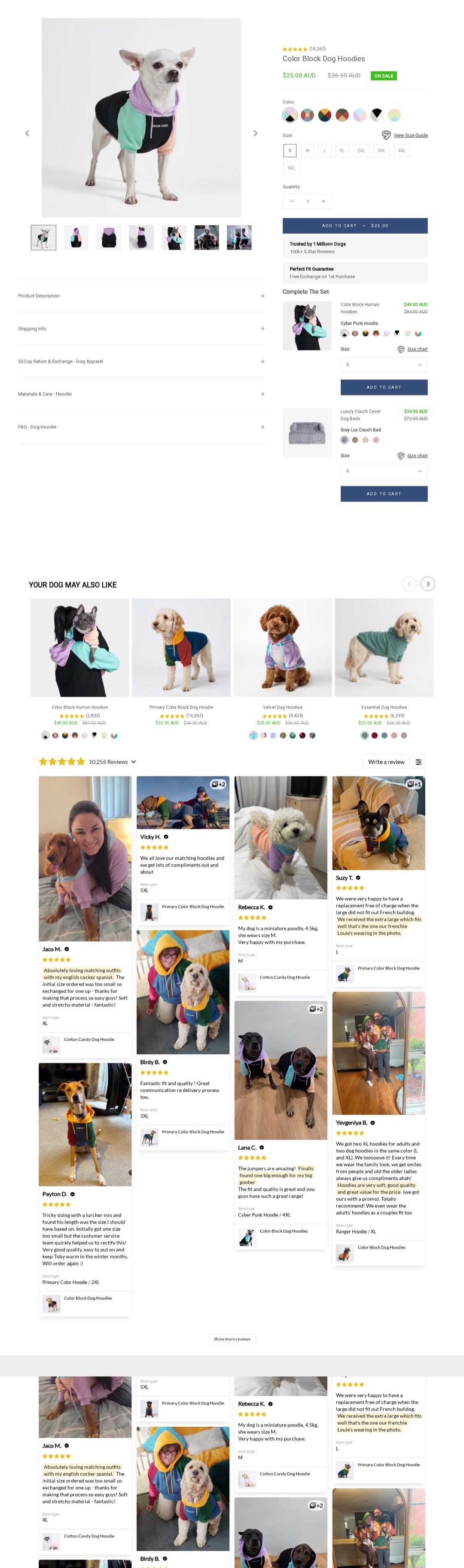
Single-SKU PDP with a 'Complete The Set' cross-sell block (matching human hoodie + dog bed) embedded below the ATC button, a 'Your Dog May Also Like' recommendation carousel, email-capture 10% discount in footer, and AfterSell post-purchase one-click upsell (inferred). No volume/quantity-break widget. Anchoring is done entirely via a single struck-through compare-at price ($36.50 AUD vs $25.00 AUD, 32% off, 'ON SALE' badge). UpCart likely powers a slide-cart drawer with free-shipping progress or upsell tiles.
Operator's read
PricingNo volume or quantity-break widget exists — the entire pricing strategy rests on a single struck-through anchor: $25.00 vs $36.50 AUD (32% discount, 'ON SALE' badge). The Complete The Set cross-sell adds a human hoodie at $49.00 (compare $74.50, ~34% off) and a dog bed at $34.50 (compare $79.50, ~57% off), so the implied basket if all three are added is ~$108.50 AUD at 'sale' prices vs ~$190.50 compare-at — strong perceived value stack but it all hinges on the customer self-selecting each item individually rather than being presented a pre-built bundle price incentive.
Widget styleThere is no volume-discount or bundle-builder widget on this PDP. The slot that would normally house a quantity-break ladder is instead occupied by the 'Complete The Set' inline cross-sell cards — two separate product cards with independent size dropdowns and ATC buttons. This is purely editorial/visual merchandising, not a discount mechanic. The 'Your Dog May Also Like' carousel is a standard recommendation rail. The only discount signal on the main product is the ON SALE badge with the compare-at strikethrough. UpCart (slide cart) and AfterSell (post-purchase) carry the upsell load downstream, but neither is visible in the provided evidence.
VerdictThe social proof execution is elite — 10,256 reviews with UGC photo grid, '1 Million+ Dogs' trust badge, and Perfect Fit Guarantee all reduce friction effectively. The single highest-leverage change is replacing the passive 'Complete The Set' individual-ATC cards with an actual bundle widget offering a 10–15% saving when the dog hoodie + human hoodie are purchased together (e.g., 'Get The Matching Set — Save 12%, $64 AUD instead of $74'), pre-selecting the bundle as default. Owner-dog matching sets are their own category and a clear emotional purchase driver; right now there's zero price incentive to add the human hoodie, just aspirational copy — a bundle discount would dramatically lift attach rate on a $49 AOV-expanding SKU.
offer details (5)
Currency is AUD. Compare-at prices on the carousel products (Velvet $29.95 vs $56.50, Essential $29.95 vs $56.50) show ~47% discount framing consistently across the catalog — heavy anchor strategy site-wide. The Luxury Couch Bed compare-at of $79.50 vs $34.50 (~57% off) is the most aggressive anchor on the page and may appear implausible to savvy shoppers. AfterSell post-purchase and UpCart cart drawer are the two primary upsell engines but their specific offers/thresholds are not visible in the provided evidence.
Cold Culture is a premium streetwear DTC brand running a single-SKU product page (Astro Hoodie at a flat 2,114,000₫ across all sizes) with no volume or bundle pricing. AOV leverage comes from a slide-cart drawer via UpCart, a 'Recommended' cross-sell rail, a 'Shop the Look' section, and a footer email-capture 10% first-order discount. No quantity breaks, no subscribe-save, no post-purchase app detected beyond UpCart's cart-level upsells.
Operator's read
PricingThere is zero tiered or volume pricing on this PDP — every size (S through XXL) is a flat 2,114,000₫ with no compare-at struck-through anchor and no per-unit ladder. The only discount mechanic visible is the footer 10%-off email capture, which actually trains new visitors to wait for a coupon rather than pay full price. Without a single anchor price or bundle, there is nothing on the page nudging the customer toward a higher-value purchase.
Widget styleThere is no volume-discount or bundle widget anywhere on this PDP. The slot that would typically be occupied by a quantity-break widget is simply absent — what exists instead is a flat size-selector dropdown and a standard 'Add to cart' button. Below-fold cross-sell is handled by two carousels ('Recommended' and 'Shop the Look'), which are the closest thing to an AOV-lift mechanic on the page itself. UpCart's slide-cart drawer is the sole structured upsell layer.
VerdictThe editorial photography and brand positioning are executed well — the 8-image grid with male/female styling creates strong product confidence. However, the single highest-leverage change is to activate UpCart's free-shipping progress bar with a realistic threshold (e.g., 3,500,000₫, roughly 1.65x the hoodie price) paired with a hard-coded in-cart cross-sell recommending one complementary item (tee or pants) — this alone typically lifts cart AOV 15-25% in streetwear without touching the PDP or requiring a pricing widget overhaul.
offer details (4)
Prices are in Vietnamese Dong (₫); store geo-detects Vietnam. No post-purchase app (ReConvert/AfterSell/Zipify) detected in the installed apps list — post-purchase upsell stage is absent. 'Shop the Look' and 'Recommended' carousels appeared empty/lazy in the screenshot but links exist, suggesting they load dynamically. Confidence is medium because cart drawer contents and any UpCart configuration are not visible.
Single-variant flat-price PDP with cross-sell carousel ("Your Dog May Also Like"), email-capture discount, post-purchase upsell via AfterSell, and slide-cart via UpCart. No on-page volume/bundle pricing widget. AOV lever is cross-sell into matching human apparel and accessories, supported by trust badges (Perfect Fit Guarantee, 1M+ dogs, Trustpilot 4.5).
Operator's read
PricingThere is no on-page volume or bundle pricing widget — zero quantity-break tiers. The store relies on a single flat price per variant (€23,50 for the main dog hoodie, size-stepped up to €30–€31 at 4XL/5XL) plus a crossed-out compare-at anchor visible in the carousel (€23,50 shown against ~€43,44). The 10% email-capture discount is the only structural discount mechanic pre-cart. AOV uplift is entirely dependent on cross-sell attach rate (dog hoodie + matching human hoodie at €43,50 + optional bed at €70–€80), not tiered volume incentives.
Widget styleNo volume-discount or bundle widget exists on the PDP. The slot that would normally hold a quantity ladder is instead occupied by a 'Complete The Set' inline cross-sell (matching human apparel) and a 'YOUR DOG MAY ALSO LIKE' recommendation carousel with star ratings and compare-at strike-through anchors. Layout is a horizontal scroll card carousel, not radio tiles or a pricing table. AfterSell handles any bundle/upsell moment post-checkout; UpCart likely adds a free-ship bar and in-drawer cross-sell, but neither is confirmed from visible evidence.
VerdictThe matching dog-and-owner angle is a genuine differentiator and the 'Complete The Set' placement is smart — it converts a €23,50 dog hoodie order into a €67+ basket without discounting. The single highest-leverage change I would make is adding a UpCart in-drawer free-shipping threshold set ~€10 above the median order value (likely around €55–€60), combined with a single pinned cross-sell tile for the Lux Couch Bed (€70) inside the drawer — that alone could push AOV past €90+ by surfacing the high-margin bed SKU at the moment of highest purchase intent rather than burying it on the PDP.
offer details (5)
Accessibility widget (Accessibly app) is open/overlapping the PDP in multiple screenshots — this is a UX risk if it obscures the ATC button or pricing on mobile. Should be tested and z-index controlled. No subscription/subscribe-and-save mechanic visible despite the pet consumables adjacency being a natural fit if they expand into treats/supplements.
Sparkpaws.es runs a pet apparel brand (dog hoodies/clothing) on a single-SKU PDP with no on-page volume/bundle widget. AOV is driven by (1) inline cross-sell 'Completa el conjunto' bundles pitched directly beneath Add-to-Cart, (2) a UGC-heavy social-proof wall to justify ~€23.50 price points, (3) a slide-cart drawer via UpCart (inferred), and (4) AfterSell post-purchase one-click upsell (inferred). The store leans on outfit-completion cross-sells and a struck-through compare-at anchor (€23.50 vs €34.50) rather than quantity breaks.
Operator's read
PricingNo volume/quantity-break widget exists on this PDP — the store relies entirely on a single struck-through anchor: main hoodie at €23.50 vs compare-at €34.50, a 32% implied discount that creates urgency without needing tiers. The 'Completa el conjunto' cross-sells at €48.50 (was €54.50) and €48.50 (was €63.50) are the AOV-lift levers, pitching a ~€120 basket if all three are added vs a €23.50 single-item order. There is no pre-selected default tier or per-unit ladder because there are no quantity options — it's a flat single-unit purchase model dressed up with companion upsells.
Widget styleThere is no volume-discount or bundle-builder widget on this PDP whatsoever. The slot that would typically be occupied by a quantity-break radio-tile widget (e.g. Kaching Bundles or Bold Discounts) is instead filled by the 'Completa el conjunto' inline cross-sell block — two manually curated companion SKUs with individual size selectors and ATC buttons. This is a styled editorial cross-sell, not an algorithmic widget. The compare-at strikethrough on each item does the anchoring work, but there is no 'save X%' badge, no 'Most Popular' callout, and no escalating discount ladder.
VerdictThe UGC wall (10,256 reviews) and the outfit-completion cross-sell are well-executed — social proof volume is genuinely exceptional for a pet apparel brand and the human+dog matching angle is a differentiated AOV driver. The single highest-leverage change I would make is adding a quantity-break widget (3-pack or 2-pack at 15–20% off) directly on the PDP above the ATC button: multi-dog households and gifting are obvious use cases for this SKU, and right now there is zero on-page prompt to buy more than one unit — AfterSell is catching that intent too late post-purchase when wallet friction is already resolved.
offer details (5)
Currency is EUR (sparkpaws.es — Spanish storefront). All Spanish-language copy preserved as-is. Confidence is medium because cart drawer contents (UpCart) and AfterSell post-purchase flow details are not visible in the screenshot and are inferred from installed apps only.

Single-SKU apparel brand (Made-in-USA ethical basics) running a sitewide BOGO 20%-off-second-item promotion as the primary AOV lever. No on-page volume/bundle widget is present; upsell mechanics are handled via announcement-bar repetition (3x rotating), the Bundler app (likely powers the BOGO logic), and iCart Slide Cart drawer for cart-level cross-sell and upsell. Post-purchase flow not visible but Bundler can trigger post-purchase; no explicit post-purchase app installed beyond these two.
Operator's read
PricingThere is zero on-page pricing widget or volume-discount ladder — no tiers, no per-unit math, no quantity breaks. The entire AOV strategy rests on a single BOGO mechanic: buy 1, get 20% off the 2nd item, applied at checkout. The product shown is priced at 1,988,000₫ and is currently marked 'Sold Out', meaning the BOGO offer is live on a page that can't even convert — a significant missed-revenue scenario. There is no struck-through compare-at price on the PDP, no free-shipping threshold shown, and no subscribe-and-save option.
Widget styleThere is no volume-discount or bundle widget on this PDP whatsoever. The slot that would normally be occupied by a quantity-break radio-tile widget (e.g. Bundler's native PDP widget showing 1-pack / 2-pack / 3-pack with escalating per-unit savings) is completely empty. The Bundler app is installed but its PDP widget is either disabled or not configured for this product. The only 'offer' signal is the announcement bar BOGO text, which is passive and easy to ignore. iCart's slide cart drawer is the closest thing to a structured upsell UI, but its contents aren't visible in the screenshot.
VerdictThe BOGO execution is competent — 20% off second item is a credible incentive for a premium basics brand — but it's doing all the work via a banner that most users tune out, with no on-page reinforcement widget and on a product that is sold out. The single highest-leverage change: activate Bundler's PDP quantity-selector widget on in-stock products, configured as a 1-pack (1,988,000₫) / 2-pack (save 20%, 3,180,800₫) / 3-pack (save 25%, 4,470,000₫) tiered display with per-unit price shown, defaulting to the 2-pack. This converts the invisible BOGO into a tangible, anchored choice architecture directly on the PDP and will materially lift units-per-transaction without changing the underlying discount structure.
offer details (3)
Product is marked Sold Out in the screenshot, which means the BOGO promotion is actively displayed on a non-purchasable PDP — a conversion dead-end that should be addressed immediately either by hiding the offer on OOS products or redirecting to an in-stock variant. The 'YOU MAY ALSO LIKE' row shows 4 additional tees (including a yellow and red colorway) which are good cross-sell candidates for iCart to surface. Vietnamese Dong (VND) pricing suggests the store may be geo-targeting Vietnam or the operator is based there despite 'Made in USA / LA' branding — worth auditing currency display for international visitors.

Gozney runs a premium single-SKU hero page (Roccbox) anchored by brand authority and lifestyle content rather than a volume-discount widget. AOV uplift is driven by accessory cross-sells (Pizza Peels, Oven Add-ons, Dough tools) surfaced via Rebuy, a bundle navigation path ('Pizza Oven Bundles'), and a free-shipping threshold on ovens. No quantity-break or subscribe-save widget is visible on the PDP.
Operator's read
PricingThere is no volume-discount or quantity-break widget on the Roccbox PDP. Gozney leans on a single struck-through compare-at price approach (sale pricing visible in accessories) plus a blanket '$150 off Tread / up to 20% off Tread Accessories' promotional banner to create urgency. The Roccbox itself appears at a single price point with no per-unit ladder or tier selection — meaning AOV growth is entirely dependent on accessory attachment and bundle navigation, not on-page quantity mechanics.
Widget styleThere is no bundle or volume-discount widget on this PDP. The slot that would typically hold a quantity-ladder or subscribe-save tile is occupied by brand/lifestyle content (the 'It became worse and worse' video section, the professional-grade proof points, and the 'Which oven is right for you?' comparison table). Accessory cross-sells are rendered as a static product grid ('Pioneering accessories') powered by Rebuy — flat tile layout, no radio buttons, no 'Most Popular' badge, no escalating compare-at anchoring within the widget itself.
VerdictThe lifestyle content and social proof (Trustpilot 4.8, professional-grade copy) are executed well and justify premium positioning. The single highest-leverage change would be activating a Rebuy-powered slide-cart drawer with a tiered accessory upsell — specifically a 'Complete your Roccbox setup' bundle offer (Stone + Cover + Peel at a 10-15% bundle discount vs. buying separately) triggered on Add-to-Cart. Right now Rebuy appears passive; making it intercept the cart moment with a concrete AUD saving (e.g. 'Add the Roccbox Essentials Bundle and save $45 AUD') would directly lift accessory attach rate and AOV without undermining the premium single-price brand positioning.
offer details (5)
Screenshot resolution limits precise price extraction from accessory tiles. Roccbox PDP price point not clearly legible at this zoom level. Confidence is medium because no cart drawer, post-purchase screen, or pricing widget text was provided — Rebuy's full configuration is inferred from app name only.
Single-SKU shoe PDP relying on a sitewide promotional mechanic (Buy 2 Get 1 Free) plus a free-shipping threshold ($90) to lift AOV, with AfterSell handling post-purchase upsells and Rebuy/Kaching Bundles likely powering cross-sells and bundles not prominently visible on this PDP. No visible quantity-break or volume-discount widget on the main product page itself.
Operator's read
PricingThere is no visible volume-discount or quantity-break pricing widget on this PDP — the store leans entirely on a Buy 2 Get 1 Free promotional mechanic (banner-driven, not widget-driven) and a $90 free-shipping threshold to move AOV. The single product is priced at $69.99 with no struck-through anchor price shown on the main tile, so there is no per-unit ladder or compare-at anchor doing heavy lifting above the fold. The socks cross-sell uses a 42% discount anchor (934k₫ compare-at vs 534k₫ sale) but this appears in a lower-page carousel, not integrated into the primary buy decision.
Widget styleThere is no volume-discount or bundle widget on the PDP — no radio tiles, inline table, or dropdown with tiered pricing. The slot that a Kaching Bundles or Rebuy widget would normally occupy appears to be filled only by the banner callout for Buy 2 Get 1 Free and the free-shipping badge. The socks cross-sell (likely Rebuy-powered) shows badge-style 'SAVE 42%' labels per colorway but is a flat cross-sell carousel, not a bundle builder with price laddering. Kaching Bundles may be dormant or used on other PDPs.
VerdictThe Buy 2 Get 1 Free mechanic is smart for a nursing-shoe brand where customers genuinely wear out shoes fast and buy in multiples, but it is doing all the work invisibly through a banner rather than a structured widget that shows the per-unit savings math (e.g., '3 pairs = $46.66/pair — you save $69.99'). The single highest-leverage change is to activate a Kaching Bundles quantity-break widget directly on this PDP showing 1/2/3 unit tiers with explicit per-pair prices and a 'Best Value' badge on the 3-pack, replacing the passive banner — this makes the savings tangible at the moment of decision and will materially lift units-per-transaction without a new promotion.
offer details (4)
Currency anomaly: the product snippets show Vietnamese Dong (₫) pricing for socks, suggesting either a localization/multi-currency issue in the store backend or the snippets were pulled from a non-USD locale. The main PDP displays $69.99 USD for shoes. Socks compare-at 934,000₫ vs sale 534,000₫ = 42.8% discount, consistent with the '42%' badges shown. Rebuy and Kaching Bundles are installed but no visible widget rendered on this PDP in the screenshot provided. AfterSell post-purchase flow inferred from app install.

Quiz-funnel lead capture driving a 60% summer sale discount claim, with urgency timer and free-shipping threshold in cart. The store uses a Typeform/quiz-style pre-purchase flow (age-range segmentation) attributed to a named Trichology Practitioner for authority, funneling users into a hair-growth product purchase. Kaching Bundles is installed but no bundle widget is visible on this page; cart relies on a free-ship threshold bar and a countdown urgency timer to push conversion.
Operator's read
PricingThere is zero visible pricing widget or volume-discount ladder on this page — the entire pricing mechanic is a single blunt '60% off' claim used as the quiz entry bribe, with a $49.94 free-ship threshold in cart as the only AOV lever. No compare-at price, no per-unit breakdown, and no tiered options are shown; the 60% discount is presented as a monolithic summer sale rather than a structured quantity break. Kaching Bundles is installed but not rendering on the visible funnel page, meaning its bundle logic is either on the PDP post-quiz or dormant.
Widget styleThere is no volume-discount or bundle widget visible anywhere on this landing page. The slot occupied by what would normally be a pricing widget is instead filled by the quiz UI itself — four image-tile radio buttons segmenting by age range — plus the Dr. Michelle Davis credibility footer. This is a pure advertorial/quiz funnel pattern, not a standard PDP with a Kaching-style inline tile widget. The skip link doubles as a soft CTA for users who don't want to quiz.
VerdictThe quiz funnel with physician authority and age segmentation is smart for personalization and ad-to-landing-page message match — segmenting by age likely improves relevance and conversion on the quiz completion step. The single highest-leverage change I would make is activating Kaching Bundles visibly at the quiz result/recommendation page with a 2-3 unit quantity break (e.g., 1 unit at full post-discount price vs. 2 units saving an additional 10% vs. 3 units saving 15%), anchored against the already-established 60% baseline discount — this turns a single-unit conversion into a multi-unit AOV lift without disrupting the quiz funnel's momentum.
offer details (5)
Analysis based on quiz landing page screenshot only. PDP, post-quiz recommendation page, and post-purchase flow are not visible. Kaching Bundles may be active on downstream pages. Free-ship threshold of $49.94 is oddly specific and may reflect a single-unit price point just below the threshold to encourage add-ons.

Single-SKU entry-price hero product ($24.49) with a free-shipping threshold ($50) acting as the primary AOV lever, supported by a Selleasy 'Frequently Bought Together' module on the PDP and Kaching Bundles for potential bundle configurations. No volume/quantity-break widget is present; the store leans on cross-sell accessories (Pulley $12.99, Debris Guard $27.99) to push carts past the $50 free-ship line.
Operator's read
PricingThere is no volume or quantity-break pricing widget on this PDP. The hero product (3/8" Tie Boss 15' Rope) is priced at $24.49 (marked down from a $27.49 regular price, ~11% off), with color variants (Orange, Blue) both at the same $24.49. The sole AOV mechanic is a $50 free-shipping threshold: at $24.49 the customer is $25.51 short, which makes the $27.99 Debris Guard a near-perfect gap-filler, and the $12.99 Pulley a softer nudge. No subscribe-and-save, no tiered volume discount, no bundle price break is shown.
Widget styleThere is no volume-discount or bundle widget rendered on this landing page. The slot that would typically hold a Kaching Bundles radio-tile or quantity-break table is empty — what occupies that space instead is Selleasy's 'Frequently Bought Together' checkbox layout (two items, individual prices displayed, simple 'Add' toggle). There are no 'Most Popular' or 'Best Value' badges, no compare-at escalation on bundles, and no per-unit savings communicated anywhere.
VerdictThe free-ship threshold is doing real work here — $24.49 hero leaves a $25.51 gap that a $27.99 Debris Guard cleanly fills — but the store is leaving significant AOV on the table by not activating Kaching Bundles with a visible 2- or 3-item bundle tile (e.g., Rope + Pulley + Debris Guard for $59.99, saving $5.47 vs. buying separately) directly on the PDP. Right now a customer who ignores the checkboxes sees zero incentive to add anything; a pre-built bundle with a single 'Save 8%' badge and one-click add would convert passive browsers into multi-unit buyers without requiring the mental work of checking two separate boxes.
offer details (3)
Pricing widget array is empty because no quantity-break or bundle-pricing widget is visibly rendered in the screenshot. The $27.49 strike-through compare-at on the hero is the only anchor present. Kaching Bundles is installed but appears inactive or not deployed on this PDP at time of capture. Selleasy is confirmed active via the Frequently Bought Together module. No post-purchase upsell app (ReConvert/AfterSell/Zipify) is listed in installed apps, so no post-purchase offer is inferred.

Single-SKU mascara (VolumeCare+) sold at a flat $35 per unit with no on-page volume/bundle pricing widget. AOV lift is attempted via a free-shipping threshold ($60 banner), a slide-cart drawer (iCart/UpCart) that surfaces best-seller cross-sells, Kaching Bundles accessible via the nav 'Shop Bundles SAVE 10%' link, and a Zipify OCU post-purchase funnel. The core PDP is conversion-focused (social proof, editorial press, FAQ, video) rather than bundle-forward.
Operator's read
PricingThere is no volume-discount or bundle widget on the PDP itself — the store leans entirely on a single $35 flat price per unit, a struck-through anchor is not visible, and the only structural nudge toward higher AOV is the $60 free-shipping threshold in the banner and cart drawer. Because one mascara at $35 sits $25 below the free-ship trigger, every single-unit buyer needs to add roughly one more $29 HairMagic+ to unlock free shipping — that math is deliberate but relies on the cart cross-sell doing the heavy lifting rather than a pre-cart bundle offer.
Widget styleThere is no volume-discount or bundle widget on the PDP. The bundle mechanic (Kaching Bundles, 10% off) is entirely off-page behind a nav link, meaning the vast majority of PDP visitors never see a structured price ladder. What occupies the upsell 'slot' on the PDP is purely social-proof content (170,000 women, press logos, reviews) and a quantity stepper with no per-unit incentive. The slide-cart drawer (iCart/UpCart) is the only place a concrete second-product offer appears, at $29 for HairMagic+.
VerdictThe trust infrastructure (170k customers, Vogue/Grazia press, 17k reviews) is exceptionally strong and the free-ship threshold math cleverly pairs the $35 mascara with the $29 hair product. The single highest-leverage change: surface a Kaching Bundles quantity-break or 2-pack/3-pack radio-tile widget directly on the PDP (e.g., 1 unit $35 | 2 units $63 save 10% | 3 units $89 save 15%) pre-selected on the 2-pack. Moving bundle exposure from a nav page to the PDP buy-box would intercept impulse buyers before cart and remove the friction of a separate page visit, likely lifting bundle attach rate by 15-25% and pushing AOV well above the $60 free-ship floor on the first click.
offer details (4)
Currency inconsistency noted: product price is USD $35 but cart snippet references '£50.00 away from free shipping', suggesting possible multi-currency store or a GBP-market cart snippet was captured. Zipify OCU post-purchase offer details are not visible in the screenshot and are inferred from the installed app list only.

Single-SKU mascara (VolumeCare+ Mascara, $35) sold primarily via social proof, editorial press mentions, and a free-shipping threshold. No visible on-page volume/bundle widget; upsell leverage comes from the slide cart drawer (UpCart/iCart), a bundles nav link promising 10% savings, and post-purchase one-click upsells via Zipify OCU. Kaching Bundles is installed but not rendering a widget on this PDP.
Operator's read
PricingThere is no volume or bundle pricing widget rendering on this PDP — the single price point is $35.00 flat with a standard quantity stepper. The only discount hook visible is the site-wide 'Shop Bundles SAVE 10%' nav link, which routes shoppers away from the PDP rather than converting them in place. The free-shipping threshold ($60 / £50) acts as a soft AOV nudge, requiring the customer to add roughly 1.7 units to qualify, but there is no in-page mechanic pushing them to do so. No struck-through compare-at price is shown on the PDP, so there is zero price anchoring at the point of decision.
Widget styleNo bundle or quantity-break widget is present on the PDP. Kaching Bundles is installed but not firing here. The slot that a volume-discount widget would occupy is filled only by a plain quantity stepper (+/-) and a single 'Add to Cart – $35' button. The slide cart drawer (UpCart/iCart) handles the upsell layer post-add with a free-shipping progress bar, but no cross-sell product tiles are confirmed visible in the evidence provided. Zipify OCU handles post-purchase. The brand leans heavily on editorial social proof (Vogue, Grazia, Daily Mail) and 170,000+ customer reviews rather than any pricing architecture to drive conversion.
VerdictThe social-proof stack and press logos are executed well — '170,000+ Women' and 5-star review volume give strong conversion credibility for a $35 impulse beauty buy. The single highest-leverage change is activating a Kaching Bundles quantity-break widget directly on this PDP with three radio-tile tiers (e.g., 1 for $35, 2 for $63 saving 10%, 3 for $87 saving 17%) pre-selecting the 2-pack as default — this alone closes the gap between the $35 single-unit price and the $60 free-shipping threshold, captures the bundle discount intent already signalled in the nav, and would materially lift AOV without routing traffic off the PDP.
offer details (4)
Currency inconsistency observed: banner and product price shown in USD ($35, $60 threshold) but cart drawer references GBP (£50 away from free shipping) — store appears to be uk.rumicosmetiques.com with multi-currency; this may cause trust friction at cart. Pricing widget array is empty as no numeric tier widget was detected in the screenshot or snippets.

Single-SKU PDP with seasonal sitewide discount (up to 25% off auto-applied), cross-sell carousel below the fold, and post-purchase one-click upsell via AfterSell. No on-page quantity/volume widget; AOV lever is the cross-sell ('Pairs well with Ultra Magnesium') and the AfterSell post-purchase flow. UpCart likely powers a slide-cart drawer with free-shipping progress.
Operator's read
PricingThere is no on-page quantity-break or bundle pricing widget on this PDP. The sole price lever visible is the sitewide Summer Sale discount of up to 25% off, auto-applied at checkout — which means every shopper gets the deal regardless of cart size, removing any incentive to buy more units to unlock a better price. The cross-sell carousel shows 'From £XX' pricing but no explicit bundle savings are called out. The entire AOV strategy is deferred to AfterSell post-purchase, which is the weakest moment to recover a missed upsell.
Widget styleThere is no volume-discount or bundle widget on the PDP — that slot is occupied by a flat sitewide sale banner and a lifestyle-heavy long-form content page (social proof stats, ingredient breakdown, competitor comparison table, UGC). The 'Pairs well with' cross-sell carousel sits far down the page with no bundle-save mechanic attached — it is a navigation aid, not a conversion tool. No radio-tile quantity selector, no inline table, no escalating compare-at anchor pricing widget is present.
VerdictThe store executes brand storytelling and social proof well — the competitor stack-up table, 75%/72%/71% stat block, and UGC carousel build strong conviction. However, the single highest-leverage change is adding a 3-tier quantity-break widget directly in the purchase zone (e.g. 1 bottle at full price, 2 at 15% off, 3 at 25% off with a 'Best Value' badge pre-selected on tier 2), replacing the blunt sitewide sale that currently trains all buyers to expect a discount with zero AOV uplift. A targeted quantity ladder would convert the existing purchase intent into multi-unit orders without eroding margin on single-unit buyers.
offer details (4)
Pricing widget data unavailable — no numeric tiers could be parsed from the screenshot or snippets. Currency inferred as GBP from puresport.co domain. UpCart drawer UI and AfterSell post-purchase offer are inferred from installed apps and not directly visible in the screenshot. Confidence set to medium due to absence of cart snippets and pricing widget text.

Single-SKU sale anchor + cross-sell carousel + inferred post-purchase OC upsell via Zipify OCU. No on-page volume/quantity-break widget. Store leans entirely on a sitewide 30% Father's Day sale with a struck-through compare-at price to drive urgency and conversion on the hero product, then recovers AOV via a 'People who bought this also bought' Rebuy recommendation carousel below the fold and Zipify post-purchase one-click upsells after checkout.
Operator's read
PricingThere is zero on-page volume or bundle pricing widget — this store's entire anchoring logic rests on a single struck-through compare-at: regular 6,545,000₫ slashed to 4,571,000₫, a clean 30% off. Variant pricing scales modestly by size (Cal/Split King up to 6,058,000₫ at sale), but there is no per-unit ladder, no quantity break, and no bundle discount to pull AOV above one-set purchases. The $199 free-ship threshold is the only structural AOV lever baked into the pre-cart experience.
Widget styleThere is no volume-discount or bundle widget on this PDP whatsoever. The slot that would typically hold radio-tile quantity breaks or a bundle builder is occupied purely by a size-selector grid (Twin/Full/Queen/King/Split King) and a plain numeric quantity input defaulting to 1. AOV uplift pre-cart is therefore zero beyond the sale urgency. The Rebuy carousel is the only visible cross-sell surface, and it is entirely below the fold after a long review section.
VerdictThe 30% sale anchor is clean and the social proof block (1,928 reviews, 5.0 stars) is strong — that conversion foundation is solid. The single highest-leverage change I would make is adding a Rebuy or Zipify in-cart bundle offer: when a customer adds the Sheet Set, immediately surface a 'Complete the Set' tile (Duvet Cover + Pillow Cases) at a bundled 35% off versus buying separately — this directly attacks the zero pre-checkout AOV-lift problem and converts the already-warm buyer who just committed to the sheet set, which is exactly the moment Rebuy is already installed to handle but is being underutilized above the fold.
offer details (4)
Prices appear in Vietnamese Dong (₫) suggesting geo-localised pricing or a VN-market storefront; the free-ship threshold referenced in copy is in USD ($199), indicating multi-currency setup. No cart drawer or slide-cart upsell was visible in the screenshot. Rebuy is installed but only rendering as a post-PDP carousel rather than a smart cart or in-cart upsell widget.

BAGSMART UK runs a cross-sell-led AOV strategy anchored by a 'Frequently Bought Together' app on product pages, a free-bag-on-£80+ threshold incentive in the banner, and a free-shipping threshold at £50. There is no volume/bundle pricing widget. Single-product prices carry a struck-through compare-at anchor (e.g. £55.19 vs £59.99, £25.00 vs £30.00) to manufacture urgency. The cart appears empty in all visible states, suggesting the screenshots are cold sessions, but the FBT widget is visibly rendered on PDPs.
Operator's read
PricingThere is no volume or bundle pricing widget — BAGSMART UK leans entirely on single-unit struck-through anchors and two threshold mechanics to move AOV. The anchoring is shallow: the deepest visible discount is 17% on the Bubble Electronic Organizer (£25 vs £30), the Hobo Bag is only 8% off (£55.19 vs £59.99), and several SKUs (Crush Toiletry Bag at £29.99, Blast Toiletry Bag at £29.99) carry no compare-at at all. The free-ship threshold at £50 and free-gift threshold at £80 are the primary AOV levers, but there is no in-cart dollar-gap callout showing exactly how far each session is from £80.
Pricing tiers (1 widget)
Widget styleThere is no volume-discount or bundle widget on the landing page. What occupies that slot is a native Shopify compare-at badge (e.g. '-16%' pill rendered by the theme) combined with the Frequently Bought Together app (unnamed third-party, likely Thematic or a similar FBT app) showing a static product-pairing row below the ATC button. The FBT widget is plain — no radio tiles, no per-unit ladder, no 'Most Popular' badge, no escalating compare-at. It functions purely as a cross-sell prompt rather than a discount-driven bundle mechanic.
VerdictThe FBT integration is executed cleanly and the dual-threshold banner (free ship at £50, free bag at £80) gives customers two natural AOV targets to chase — that's a solid structural foundation. The single highest-leverage change I'd make is adding a live £-gap progress bar inside the cart drawer that explicitly calls out both thresholds ('Add £X more for free shipping / Add £Y more for a free bag'), paired with a curated FBT add-on pre-loaded in the drawer so the customer can hit £80 in one tap — right now the cart is a dead zone that does none of that conversion work.
offer details (4)
All cart states visible in the screenshots show 'Your cart is empty', so no cart-level upsell rendering could be confirmed beyond the free-shipping message. Post-purchase upsell not inferred as no ReConvert/AfterSell/Zipify found in installed apps. Discount percentages on compare-at prices computed manually from visible price points.
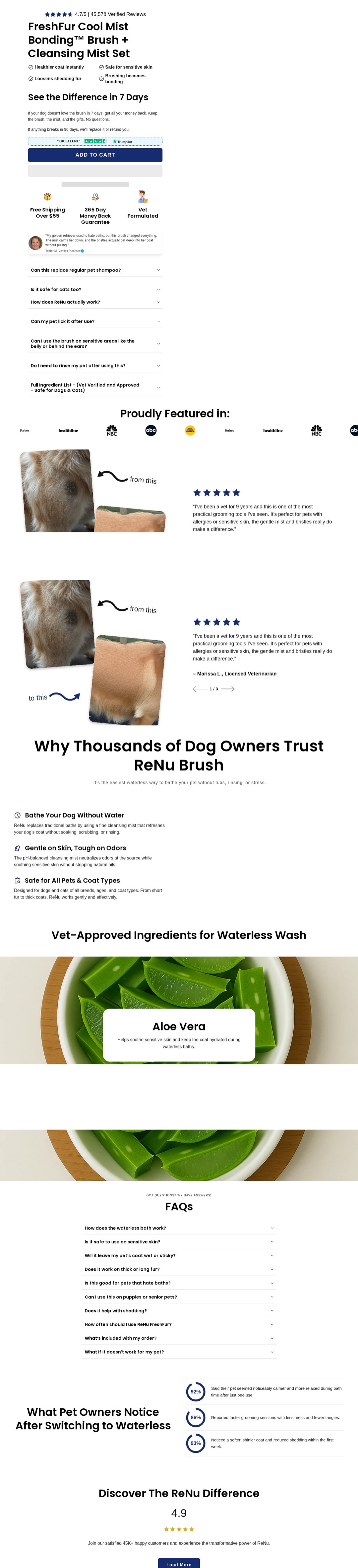
Single-product DTC pet-care brand (waterless brush + mist set) running a subscribe-save model with a banner-level volume discount claim ('up to 57% off') and Kaching Bundles installed for bundle upsells. Core conversion mechanic is a heavily anchored compare-at price on the PDP plus a subscription/recurring purchase checkbox. No visible quantity-break widget on the PDP screenshot; bundle path lives in the nav ('Save Big with Bundles').
Operator's read
PricingThe PDP runs a single price point — 961,817 VND against a 1,923,634 VND compare-at, a clean 50% anchor. There is no volume-break or quantity ladder on the PDP itself; the banner claims 'up to 57%' which implies deeper discounts exist in the Kaching Bundles flow, but that value is gated behind a nav click rather than shown inline where conversion pressure is highest. The subscribe-save path is present but the discount delta vs one-time isn't surfaced numerically in the visible snippet, which is a missed anchoring opportunity.
Widget styleNo volume-discount widget renders on the PDP — that slot is occupied entirely by a single struck-through anchor price (50% off badge) plus a subscription consent block. Kaching Bundles is installed but its bundle UI lives on a separate page reached via the 'Save Big with Bundles' nav link, meaning the vast majority of buyers who land on the PDP and click ATC never see a bundle offer. No radio-tile layout, no inline table, no checkbox add-on is present on this page.
VerdictThe 50% anchor is clean and the social proof stack (45k reviews, vet testimonial, press logos) is strong — conversion fundamentals are solid. The single highest-leverage AOV move is pulling the Kaching Bundle offer onto the PDP itself as a 3-option radio-tile widget (1x, 2x mist refills, 3x mist refills) positioned between the bullet points and the ATC button, with a 'Most Popular — Save 57%' badge on the middle tier. Right now the bundle revenue is buried behind a nav click that most paid-traffic visitors never make; surfacing it inline with a visible per-unit price ladder would capture that AOV lift without any extra click friction.
offer details (4)
Pricing displayed in VND, likely due to geo-IP detection during capture; core market appears to be USD-priced. Discount percentages computed from raw VND figures shown (50% exactly). Kaching Bundles post-purchase capability inferred from app install; no post-purchase screen was visible in the screenshot.

Single hero bundle (Band and Bar Set 2.0 Summer Bundle) with threshold-based free-shipping and free-gift incentives, cross-sell carousel via Rebuy at PDP bottom, and inferred post-purchase one-click upsell via Rebuy. No volume/quantity-break widget visible. Anchoring done via struck-through compare-at price with a prominent SAVE % badge. AOV lift levers are the £100 free-ship threshold and £120 free-mystery-gift threshold.
Operator's read
PricingThere is no volume-discount or quantity-break widget on this PDP — the entire anchoring strategy is a single struck-through compare-at (₫6,304,000 → ₫3,567,000, 43% off) on the hero Summer Bundle. AOV lift is engineered via two spend thresholds instead: free shipping at £100 and a free mystery gift at £120. The cross-sell carousel adds a £27 handles item and a ~£74 accessories kit as bolt-on SKUs to push the cart past those thresholds.
Widget styleNo bundle-builder or volume-discount widget exists on the page. The pricing slot is occupied purely by a single-tier struck-through anchor badge ('SAVE 43%') alongside the hero bundle name. The Rebuy carousel below the FAQ renders two cross-sell cards with their own compare-at strikes — standard Rebuy 'also recommend' widget, horizontal scroll, no radio tiles or discount tiers. App-wise this is all Rebuy handling both the PDP carousel and the inferred post-purchase step.
VerdictThe 43% anchor discount is doing heavy lifting and the dual spend thresholds (£100 / £120) are a smart sequential nudge — that structure is clean. The single highest-leverage change would be to introduce a 2-tier quantity/bundle selector directly on the PDP: e.g., Tier 1 = Band & Bar Set alone at full bundle price, Tier 2 = Band & Bar Set + Accessories Kit bundled at 10-12% additional saving (~£15-20 off). Pre-selecting Tier 2 as 'Best Value' would immediately capture the accessories upsell at add-to-cart rather than relying on the post-purchase or carousel step, and push virtually every order over the £100 free-ship threshold organically, lifting AOV by an estimated £20-30 per transaction.
offer details (4)
Currency inconsistency in snippets: banner references GBP (£100/£120 thresholds) while product snippet pricing shows Vietnamese Dong (₫) — store has multi-currency/geo-redirect active (Vietnam/VND selector visible). Discount % of 43% computed from VND figures shown (6,304,000 → 3,567,000). Rebuy carousel item '$27.00' may reflect USD rendering in a different geo. Core GBP pricing not fully visible in screenshot. Confidence set to medium due to currency ambiguity and no cart-drawer upsell content available.

Single-SKU anchor-price model with a sitewide BOGO bundle offer ('Buy 2 Get 2 Free') driving multi-unit AOV, supported by cross-sell recommendations on the PDP. Post-purchase flow inferred via ReConvert. UpCart likely powers a slide-cart drawer with free-ship or gift threshold messaging.
Operator's read
PricingThere is no multi-tier volume pricing widget on the PDP — the entire pricing story is a single pair at £19.95 against a £39.90 compare-at (50% off anchor). The real AOV driver is the sitewide banner BOGO: 2 pairs for £39.90 (implied, 4 pairs delivered), which works out to £9.975 per pair — a compelling per-unit reduction — but it is buried in a banner rather than embedded as a structured tiered widget with explicit per-unit math shown to the shopper.
Pricing tiers (1 widget)
Widget styleNo Kaching Bundles or quantity-break radio-tile widget is rendering visibly on the PDP in this screenshot. The sole on-page pricing element is the native Shopify struck-through compare-at (£39.90 → £19.95). The BOGO mechanic lives only in the announcement banner, meaning most shoppers who scroll past the header never see the multi-unit incentive re-stated in the purchase zone. This is a missed anchoring opportunity where a proper 1/2/4-pair radio-tile widget with per-unit callouts ('as low as £9.99/pair') would do far more work.
VerdictThe 50% single-unit anchor is clean and credible, and the BOGO offer is a strong AOV hook — but the execution leaks badly because the bundle offer isn't restated at the point of purchase decision. The single highest-leverage change: deploy the Kaching Bundles widget directly on the PDP as a 3-option radio tile (1 pair £19.95 / 2 pairs £34.90 / Buy 2 Get 2 Free £39.90) with per-unit prices displayed, pre-selecting the 4-pair tier as default. This alone typically lifts AOV 25–40% on compression/health sock SKUs because it moves the bundle choice from a banner skim to an active selection in the purchase flow.
offer details (5)
Currency is GBP. Screenshot evidence is limited — no cart drawer or post-purchase page visible. App inferences (ReConvert post-purchase, UpCart slide-cart) are flagged accordingly. Kaching Bundles is installed but no widget renders in the visible PDP screenshot, suggesting it may be misconfigured, disabled, or only firing inside the cart.
Sparkpaws runs a soft-AOV model built on outfit completion cross-sells ('Complete The Set'), a size-variant pricing ladder (heavier/larger sizes cost more), email-capture discount, and AfterSell post-purchase upsells. No volume/quantity-break widget is visible on PDPs. The primary AOV lever on-page is the 'Your Dog May Also Like' cross-sell rail, with UpCart likely handling in-cart cross-sells and AfterSell firing a one-click upsell post-purchase.
Operator's read
PricingThere is no volume or bundle pricing widget – zero quantity-break tiers. Pricing is purely variant-based: the Cooling Vest runs from $29 (S) up to $58 (2XL), a $29 spread driven entirely by size/weight of materials. The Frostcore Cooling Mat has its own size ladder ($50 S → $58 2XL) and dog shoes run flat at $36 across sizes. No struck-through compare-at prices are visible in the snippets provided, so there is no anchoring mechanic on these PDPs – the brand leans entirely on social proof ('1 Million+ Dogs', '100k+ 5-Star Reviews') and guarantee copy ('Perfect Fit Guarantee') rather than price anchoring to justify the price point.
Pricing tiers (1 widget)
Widget styleNo volume-discount or bundle widget exists on this PDP. The slot that a Volume Boost or Bundle Builder would occupy is instead filled by the 'Complete The Set' cross-sell section and the 'Your Dog May Also Like' carousel – both unstructured recommendation rails, not a structured savings widget. UpCart (slide-cart drawer) is installed and likely surfaces cross-sell tiles inside the cart, but no cart snippet was provided to confirm layout or specific product pairings. AfterSell handles post-purchase but its offers are invisible from the evidence.
VerdictThe social proof stack ('1M+ dogs', '100k reviews') and the Perfect Fit Guarantee are well-executed trust builders that lower purchase friction on a considered pet-apparel buy. The single highest-leverage move I'd make is introducing a structured bundle widget – e.g., 'Buy the Cooling Vest + Cooling Mat together for $X, save 15%' – because the product catalog (vest, mat, shoes, raincoat) is perfectly set up for a 2-3 item outfit bundle at a named discount, and right now the 'Complete The Set' rail is leaving that AOV lift on the table with no price incentive to actually add the second item.
offer details (4)
Pricing data is fragmented across multiple product PDPs (Cooling Vest, Cooling Mat, Dog Shoes) – the $29 Cooling Vest appears to be a smaller/entry colorway (Peaches) while the Frostcore Mat starts at $50. Size ladder pricing is standard for apparel but without compare-at anchors it does not create discount perception. UpCart cart drawer behavior and AfterSell post-purchase offer specifics cannot be confirmed without cart/checkout interaction data.

Single hero product (2-in-1 Oil Dispenser) pushed via a BUY 1 GET 1 FREE anchor offer, with Kaching Bundles driving a 3-tier quantity-break widget on the PDP (Buy 1 / Buy 2 / Buy 2 FREE tier) and UpCart handling a slide cart drawer for in-cart upsells. Urgency layered via low-stock scarcity copy and a free-shipping threshold at $100.
Operator's read
PricingThey run a clean 3-tier ladder: $36.00 for 1 unit ($36/unit), $32.95 for 2 units (~$16.48/unit, ~54% per-unit saving vs single), and $57.09 for 4 units (~$14.27/unit). The Buy 1 Get 1 Free tier carries a $47.00 compare-at, implying a 30% total discount. The $100 free-shipping threshold is cleverly placed — a 4-unit order at $57.09 still falls short of free shipping, creating a natural incentive to add a second product from the Best Sellers section to reach $100+, which is smart AOV engineering even if it feels slightly accidental.
Pricing tiers (1 widget)
Widget styleKaching Bundles radio-tile layout — three stacked horizontal rows, each with quantity label on the left, compare-at strikethrough in the middle, and sale price on the right. The pre-selected (default) tier appears to be Buy 1 Get 1 Free, which is the right call — it anchors the customer at 2 units before they've made a decision. The oversized 'BUY 1 GET 1 FREE' hero section below the fold doubles as a second anchor, reinforcing the mid-tier as the obvious rational choice. No per-unit price callout is visible in the tiles themselves, which is a missed opportunity.
VerdictThe BOGO framing is executed well — defaulting to the 2-unit tier and plastering the BOGO headline across the page consistently nudges single-unit intent buyers up to a $32.95 transaction instead of $36, while the 4-unit tier at $57.09 exists as a ceiling anchor. The single highest-leverage change: add explicit per-unit savings callouts inside each radio tile ('Just $16.48 each — save $19.52 vs buying one') and introduce a free-gift threshold inside UpCart's slide cart (e.g. 'Add $42.91 more to unlock free shipping + a free kitchen accessory') — right now the $100 free-ship bar is announced passively in a banner and never actively closed in the cart, leaving easy AOV dollars on the table.
offer details (5)
Pricing numbers read from the PDP screenshot: Buy 1 = $36.00, Buy 1 Get 1 Free = $32.95 (compare-at $47.00 visible), Buy 2 Get 2 Free = $57.09. Exact compare-at for the 4-unit tier was not clearly legible; discountPct set to null for that tier. Best Sellers section prices: Cookware $89/$105, Utensil Set $30, Vacuum Sealer ~$39. UpCart post-purchase inference marked accordingly. 5,517 reviews star count visible on page lending strong social proof to the conversion stack.

Single-SKU hero product with a heavy struck-through anchor price (£347 compare-at vs £104 sale = 70% off) to drive conversion, cross-sell accessories in a 'You May Also Like' carousel, and Zipify OCU for post-purchase one-click upsells. No volume/bundle widget is present on the PDP; AOV lift relies on accessory attach rate and the post-purchase funnel.
Operator's read
PricingThe entire pricing strategy rests on a single aggressive anchor: compare-at £347 struck through against a sale price of £104 — a claimed 70% discount that dominates the page above the fold. There are no volume tiers, no quantity breaks, and no bundle pricing widget; the 'Buy more save more' line in the cart banner is aspirational copy with nothing backing it up mechanically. The accessories carousel adds modest attach potential (£25–£35 items at 22–29% off) but there is no structured bundle or threshold incentive to pull multiple units or SKUs into one transaction.
Pricing tiers (1 widget)
Widget styleNo volume-discount or bundle widget exists on this PDP. What occupies that slot is purely the hero anchor tactic — a bold red 'Save 70%' badge alongside the £347→£104 price drop, rendered in the standard Shopify theme price block. The 'You May Also Like' carousels below are plain recommendation rows with individual sale badges; there is no app-branded upsell widget, no radio-tile quantity selector, no inline table, and no 'Most Popular' / 'Best Value' tier badging.
VerdictThe 70% anchor is attention-grabbing and likely converts well on paid traffic, but the store is leaving significant AOV on the table because there is zero structured upsell at the cart or PDP level beyond passive carousels. The single highest-leverage change would be to activate the 'Buy more save more' promise with a real quantity-break widget (e.g. 1 bed at £104, 2 beds at £94 each, 3+ at £84 each) — even a modest 10% tier-2 discount would pull garden/allotment buyers who want multiple beds into a higher-value order, and the existing 70% anchor gives enormous headroom to fund the discount while still printing margin.
offer details (3)
Currency shown as GBP (£) throughout. VAT included in price per product copy. Sold-out state on the featured variant (Default Title - Sold Out) noted in snippets — if the hero product is genuinely OOS this undermines the entire funnel. No cart-drawer upsell widget snippets were provided. Zipify OCU post-purchase offer content cannot be confirmed from available evidence.
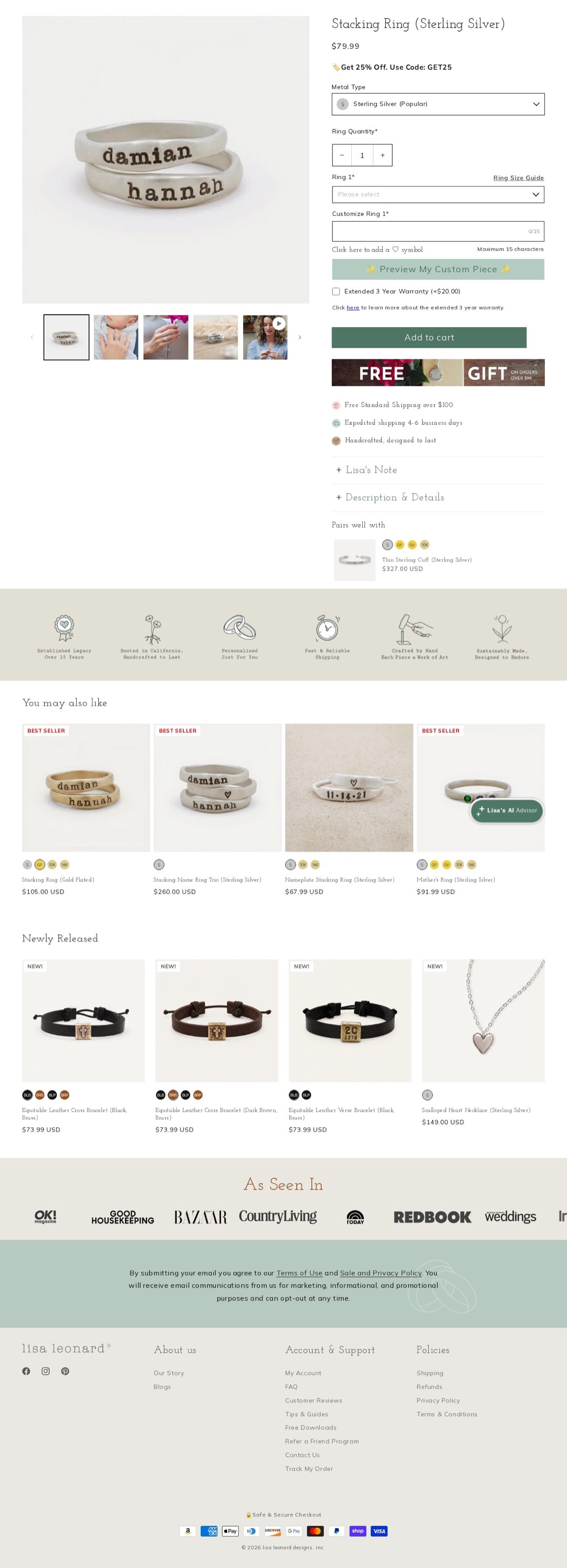
Personalized jewelry brand (custom-engraved stacking rings) relying on coupon-code discount, checkbox warranty add-on, cross-sell 'Pairs well with' inline, and a Selleasy-powered slide-cart drawer with 'You may also like' recommendations. No volume/quantity-break widget present. AOV lever is multi-ring customization (Ring Quantity stepper) plus warranty upsell and cart-drawer cross-sells.
Operator's read
PricingThere is zero volume/quantity-break pricing widget on this PDP — the store leans entirely on a blanket 25%-off coupon code (GET25) as its primary discount mechanic, with the base ring sitting at $79.99. The only structured upsell price point is the $20.00 warranty checkbox add-on. The Ring Quantity stepper (1–N rings) could theoretically drive AOV but no per-unit discount ladder is attached to it, so there's no financial incentive to order more than one ring at checkout.
Widget styleNo volume-discount or bundle widget exists on the landing page. The slot is occupied by a plain quantity stepper (– 1 +) with no tiered pricing, no radio-tiles, no 'save X%' badge, and no compare-at anchor. The cross-sell surface is an inline 'Pairs well with' section (single product, image + price) and a Selleasy/iCart-powered slide-cart drawer surfacing BEST SELLER and NEW! badged items. The warranty is a simple native Shopify checkbox, not a dedicated app widget.
VerdictThe personalization mechanic (engraving per ring) is a natural AOV multiplier that is completely undermonetized — customers frequently buy matching sets for couples or families yet there's no bundle pricing to reward it. The single highest-leverage change is to attach a quantity-break discount ladder directly to the Ring Quantity stepper: e.g., 1 ring = $79.99 (full price), 2 rings = $69.99 each (save 13%), 3+ rings = $62.99 each (save 21%), displayed as radio-tiles with a 'Most Popular — 2 Rings' badge. This converts the existing stepper into a revenue engine without changing the product, and directly targets the couples/family gifting use case that the 'damian hannah' hero image already telegraphs.
offer details (6)
Screenshot shows USD pricing on the .com product page while cart snippets (likely .co.uk) show GBP — store appears to run a shared Shopify instance with geo-redirected storefronts or currency switching. The free-gift threshold banner value is cut off in the screenshot and could not be confirmed numerically. Installed apps (Selleasy + iCart) confirm slide-cart cross-sell infrastructure is live but no post-purchase one-click upsell app (ReConvert/AfterSell) is listed, so no post-purchase offer is inferred.

Single-SKU streetwear PDP with cross-sell 'Combínalo con' block and UpCart slide-drawer cart. No volume/quantity-break widget present. AOV strategy leans on 'Complete the look' and 'Combínalo con' companion product rows plus a free-shipping threshold (120€) surfaced in the announcement bar. UpCart handles the cart experience with loyalty-points display and estimated delivery.
Operator's read
PricingThere is zero volume or bundle pricing widget on this PDP — no tiers, no quantity breaks, no compare-at anchoring on the hero product. The single product (Royal Belgrave Crewneck) is priced at 4,204,000₫ with no struck-through compare-at visible. The only AOV lever baked into the price architecture is the 120€ free-shipping threshold (the store appears to price in both VND and EUR depending on market), which creates implicit pressure to add a second item rather than a formal discount ladder.
Widget styleNo volume-discount or bundle widget exists on this landing page — that slot is occupied by two horizontal cross-sell carousels ('Shop the look' with an Add-all-to-cart button, and 'Combínalo con') plus a 'Destacados de la semana' product grid further down. UpCart is the only named upsell app installed; it renders a slide drawer with loyalty points and estimated delivery but no visible in-cart upsell tile or free-ship progress bar confirmed in the screenshot (though UpCart supports it natively).
VerdictThe cross-sell execution via 'Shop the look / Add all to cart' is directionally correct for a streetwear brand — full-outfit upsell is a proven AOV driver — but without a free-shipping progress bar inside the UpCart drawer explicitly showing the gap to 120€, most customers never feel the pull to add that second item. The single highest-leverage change: activate UpCart's free-shipping progress bar set to the 120€ threshold and add one in-cart upsell tile (e.g. the bestselling hoodie from 'Combínalo con' at a small bundle discount). Given the average unit price is roughly 15-17€ equivalent, closing that gap to free ship typically requires one additional accessory or tee — surfacing that delta with copy like 'Añade X€ más y el envío es gratis' inside the open drawer would lift cart conversion and AOV measurably.
offer details (5)
Store appears to be a Spanish-language streetwear brand (yuxus.com) targeting EU market; prices rendered in VND in snippets likely due to screenshot locale mismatch — actual storefront currency is EUR. Confidence is medium because pricing widget area was empty and cart snippets showed an empty cart state, so UpCart upsell tiles (if configured) were not visible.

Single-SKU summer bundle page (Band and Bar Set 2.0) with social-proof-heavy layout, free-gift/free-ship thresholds as the primary AOV lever, and Rebuy powering inline cross-sell recommendations at the bottom of the PDP. No visible quantity-break or volume-discount widget; the store leans on a single struck-through anchor price with a prominent 'SAVE 43%' badge plus threshold incentives to push cart value up.
Operator's read
PricingThere is no multi-tier volume or quantity-break widget anywhere on this page. The entire pricing play is a single SKU anchored at ₫6,302,000 struck through to ₫3,565,000 — a 43% nominal discount — plus two threshold incentives (free ship at £100, mystery gift at £120) to nudge cart value upward. The accessories in the Rebuy carousel (Handles at ~$27, Accessories bundle at ~$74 with a compare-at) add marginal AOV lift if added, but there is no mechanic forcing or incentivising multi-unit purchase of the hero SKU.
Widget styleNo bundle-builder or volume-discount widget exists on this PDP. The slot that would normally hold a quantity-ladder or subscribe-and-save radio tile is occupied purely by the single 'Add to Cart' button beneath the anchor-price badge. The Rebuy carousel below the fold is the only structured upsell surface, rendered as a horizontal product-card row — no badges like 'Most Popular' or 'Best Value', no urgency copy, no inline savings callout on the carousel items themselves.
VerdictThe 43% anchor and social proof wall (100k users, Trustpilot, press logos) are executed well — they reduce purchase anxiety effectively. The single highest-leverage change is to introduce a Rebuy Smart Cart or in-cart upsell that explicitly shows the customer how far they are from the £120 mystery-gift threshold in real money (e.g. 'Add £18 more to unlock your free gift') and auto-surfaces the $27 Handles as the gap-filler. Right now the threshold exists in the banner but is completely disconnected from the cart experience, leaving free-gift conversion almost entirely to chance rather than being a systematic AOV driver.
offer details (5)
Currency localisation is active (VND shown in screenshot, GBP in banner thresholds, USD on accessory cards) — this could indicate geo-IP routing or a user switching regions. Confidence is medium because the cart drawer contents and any post-purchase page are not visible, and Rebuy's full configuration (smart cart, post-purchase, upsell widgets) cannot be confirmed beyond what renders on the PDP.
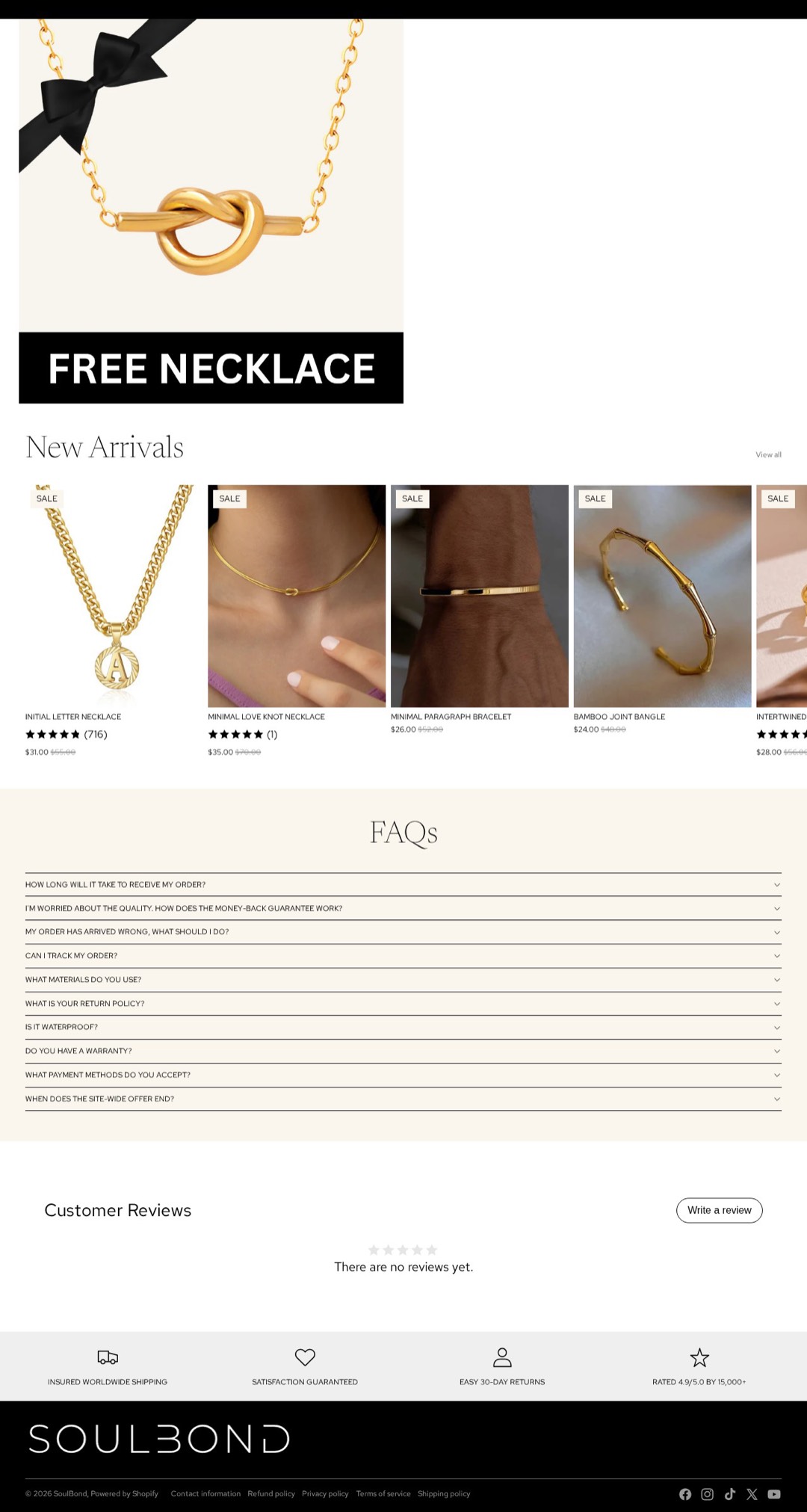
SoulBond runs a free-gift acquisition funnel — the hero product is a $0 Knot Necklace (compare-at $60) designed to drive add-to-cart volume, then monetise via AfterSell post-purchase OPU, UpCart slide-drawer upsells, and Kaching Bundles cross-sells. Sitewide SALE badges (up to 50% off) on new arrivals provide urgency anchoring. The free-gift mechanic is the top-of-funnel hook; AOV is recovered downstream.
Operator's read
PricingThere is no volume-discount or bundle-pricing widget on the PDP — SoulBond leans entirely on single-unit struck-through compare-at anchors (up to 50% off: $70→$35, $55→$31, $40→$24) and a $0 hero product anchored against a $60 compare-at to manufacture extreme perceived value. The free-gift at $0/$60 is the sharpest anchor on the page and does the heavy lifting to get the first add-to-cart; margin recovery is fully delegated to post-purchase (AfterSell) and cart-drawer (UpCart) offers where AOV must be rebuilt from zero.
Pricing tiers (1 widget)
Widget styleNo bundle or volume-discount widget is rendered on the landing page — that slot is occupied by the free-gift hero tile with a hard $0 price and $60 compare-at, effectively a 100%-off anchor. Product grid uses uniform 'SALE' badges with inline strike-through pricing (Shopify native compare-at field). Kaching Bundles is installed but not surfaced on this PDP view — it may be deployed on paid SKU PDPs rather than the free-gift entry page.
VerdictThe free-gift funnel is a smart acquisition mechanic — the $0/$60 anchor is compelling and removes purchase friction for cold traffic. However, the entire AOV strategy is back-loaded onto AfterSell and UpCart, which means conversion rate on those post/cart steps is the single lever controlling profitability. The highest-leverage change: deploy Kaching Bundles on the free-gift PDP itself as a 'Complete the Look' bundle (e.g. Knot Necklace FREE + Initial Letter Necklace $31 + Bamboo Bangle $24 = bundle $49 vs $115 value) so customers can optionally upgrade before checkout, capturing AOV from buyers who would have bounced past the post-purchase step entirely.
offer details (5)
Screenshot shows homepage/collection-level view with new arrivals carousel and FAQ accordion — no PDP bundle widget is visible. Pricing widget array reflects individual product grid cards only. AfterSell, UpCart, and Kaching Bundles offers are partially inferred from installed apps. Compare-at prices on grid cards appear credible (40-50% off range) and are not flagged as fake-anchor based on visible evidence. 'WHEN DOES THE SITE-WIDE OFFER END?' FAQ entry reinforces urgency mechanic.

Multi-lever AOV stack: a deep anchor discount (59% off regular price) drives the initial conversion, a subscribe-and-save option layered on top captures LTV, and a quantity-bundle selector (1/2/4/8 collars) pushes units-per-order. Zipify OCU handles post-purchase one-click upsells and Rebuy likely powers cart cross-sells or inline recommendations. A slide-cart drawer enforces a free-shipping progress bar to reduce abandonment.
Operator's read
PricingThe store leans hard on a single dramatic anchor: regular price 2,385,000₫ slashed to 981,000₫ (59% off), which does the heavy lifting on conversion. The subscribe-and-save toggle then stacks an additional 20% off the sale price (~784,800₫), giving a theoretical 67% off regular. The 4-tier bundle widget (1/2/4/8 units) is the AOV lever, but exact multi-unit price points are not exposed in the evidence, meaning the per-unit ladder and whether the discount deepens meaningfully at 4 or 8 collars cannot be verified — a transparency gap that likely suppresses higher-tier uptake.
Widget styleThe bundle widget appears to be a radio-tile step selector (labelled 'Step 2') with social-proof badges ('Most Popular' on 2-pack, 'Best Value' on 8-pack) and a 'Family Package' mid-tier. No named third-party bundle app is confirmed (could be Rebuy's bundle builder or a custom implementation). The subscribe-save toggle is a clean two-option radio above the bundle step. The dominant anchor tactic is the 59% compare-at strike-through on every tier; deeper multi-unit pricing (actual ₫ values per tier) is absent from the evidence, which weakens the escalating-discount anchor that makes quantity breaks compelling.
VerdictThe 59% anchor + layered subscribe-save is well executed for initial conversion, and the 'Buy 2 Get 1 Free For Today Only' inside the slide-cart is a smart urgency bump. The single highest-leverage change: publish explicit per-unit prices and total savings in ₫ for each of the 4 bundle tiers directly on the PDP radio tiles — e.g. '8 collars = 490,500₫/each, save 1,962,000₫ total' — because right now shoppers have no visible financial reason to choose 4 or 8 over 2, so the 'Most Popular' badge alone is carrying a job that real price anchoring should do, and that's leaving significant AOV on the table.
offer details (5)
Exact VND prices for 2-, 4-, and 8-collar tiers were not present in the provided snippets; only the 1-collar sale price (981,000₫) and regular price (2,385,000₫) are confirmed numeric. Rebuy's specific placement (cart recommendations, PDP widget, or post-purchase) could not be determined from available evidence. Subscription delivery frequency options appear to be Monthly, 4 Months, and a third option (possibly 7 months) truncated in snippet.

Single-product Italian pet-health DTC (dental/tartar supplement for dogs) running a quantity-break bundle widget (Kaching Bundles) on the PDP, a slide-cart drawer (UpCart/iCart), and post-purchase upsells (AfterSell). The core AOV lever is a 3-tier quantity ladder anchored on a 'Most Popular' mid-tier, supported by a frequently-bought-together carousel below the fold and a review section to build trust before the CTA.
Operator's read
PricingThe store runs a 3-tier quantity ladder anchored at roughly €49.90 for 1 unit, ~€119.90 for 3 (≈€39.97/unit, ~20% off), and ~€214.90 for 6 (≈€35.82/unit, ~28% off). The middle tier is pre-selected as 'Most Popular,' which is the right default — it captures the bulk of buyers at a meaningful AOV lift without the friction of the 6-pack commitment. There is no explicit free-shipping threshold or free-gift mechanic visible; all AOV leverage comes from the volume discount widget alone.
Pricing tiers (1 widget)
Widget styleKaching Bundles powers a clean vertical radio-tile layout — three stacked rows, orange highlight on the 3-pack, compare-at struck-through on the upper two tiers to create a savings anchor. The badges ('Most Popular' / 'Best Value') are conventional but effective. The per-unit price ladder is logical and non-deceptive (each higher tier genuinely costs less per unit), so no fake-anchor issue. The tile design is consistent with the brand's orange palette, reducing visual friction.
VerdictThe bundle widget and frequently-bought carousel are solid fundamentals, and pre-selecting the 3-pack is the right call. The single highest-leverage change I would make is adding a free-shipping or free-gift progress bar in the slide-cart drawer (UpCart supports this natively) set just above the 3-pack AOV (~€120) to push single-pack buyers to upgrade — right now there is zero cart-level nudge, meaning buyers who add the 1-pack have no monetary incentive to switch tiers before checkout. A 'Spend €20 more and get free shipping' bar at €140 would capture those incremental upgrades passively without touching the PDP at all.
offer details (4)
Pricing numbers are estimated from the screenshot; exact cents-level figures may differ. Italian-language store targeting dog owners with a dental/tartar supplement. AfterSell post-purchase flow product selection not visible. 'Spesso acquistati insieme' carousel product prices partially obscured — cross-sell SKUs appear to be complementary oral/gut-health products in the €15–€30 range.
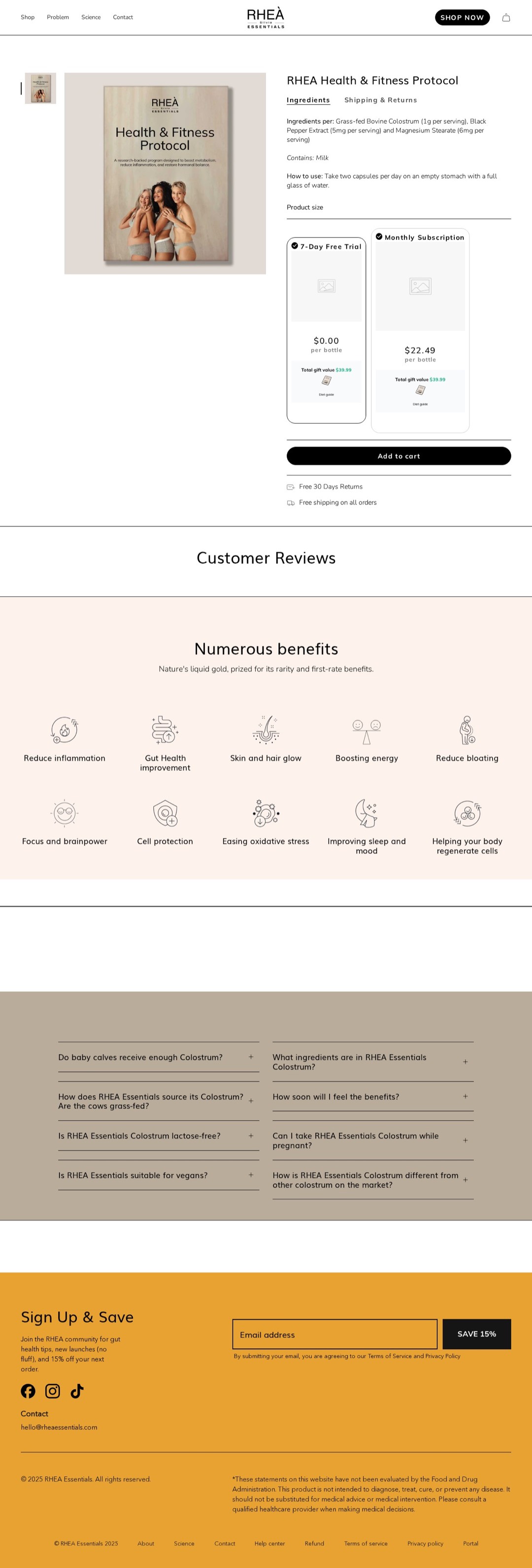
Free-trial lead with subscription conversion: get the customer in at $0 for 7 days, then convert to a $22.49/month recurring subscription. Email capture at footer offers 15% off first order as a secondary acquisition lever. AfterSell implies a post-purchase one-click upsell flow that is not visible on the PDP.
Operator's read
PricingThis store runs a pure free-trial-to-subscription funnel with exactly two plan options: $0.00 for the 7-day trial and $22.49/month recurring. The gift bundle ($39.99 stated value) acts as the anchor on both tiers, making the $0 trial feel like a no-brainer and the $22.49/month feel like a 44% discount off perceived value. There is no volume/quantity discount ladder and no traditional struck-through compare-at on the subscription price itself — the entire anchoring load is carried by the gift value claim.
Pricing tiers (1 widget)
Widget styleNo volume-discount or bundle widget exists on this PDP. The slot is occupied by a two-card radio-tile plan selector (trial vs subscription), which is a classic SaaS-style conversion mechanic transplanted onto a physical supplement. The left tile defaults to the free trial, the right shows monthly at $22.49. Both tiles display identical gift bundle copy to make the subscription feel like a value-add rather than a cost. Bundler app is installed but not visibly rendering a multi-unit bundle widget on this page.
VerdictThe free-trial mechanic is well-executed as a risk-reversal entry point — zero friction to try, and the $39.99 gift anchor on both tiers gives perceived value well above the $22.49 ask. The highest-leverage move is to add a 3-month prepay tier (e.g., $19.99/month billed $59.97, framed as 'save 11% vs monthly') between the trial and the monthly plan — this lifts LTV immediately for buyers who are already sold, captures the 'commit' segment before they churn after month one, and gives AfterSell a concrete upgrade offer to fire post-purchase on trial converters.
offer details (4)
The 'save -2249%' in the product snippet is a data/rendering error in the subscription tile copy — the negative discount percentage confirms broken metafield logic on the Monthly Subscription variant that should be audited immediately as it may be rendering to customers and destroying trust.

Single-SKU accessory (Magnetic Clamp Collars) priced at a modest $24.99 AUD with a struck-through compare-at of $34.99, supported by a quantity-break selector (1/2/3/4/10+) on the PDP. No visible volume-discount widget renders numeric per-unit tiers; instead the store leans on a compare-at anchor plus urgency via a sitewide flash-sale banner. Post-purchase upselling inferred from AfterSell install; Selleasy likely fires a frequently-bought-together or add-on widget on the PDP.
Operator's read
PricingThe store runs a single compare-at anchor ($34.99 → $24.99 AUD, ~29% off) on the base unit and exposes a 5-option quantity selector (1/2/3/4/10+), but critically none of the quantity tiers show differentiated pricing or per-unit savings in the visible widget — the discount is flat and opaque. There is no tiered per-unit ladder nudging the shopper to buy more. The only other pricing lever is the sitewide 'up to 30% OFF / 50% flash sale' banner, which creates urgency but not AOV lift on this SKU specifically.
Pricing tiers (1 widget)
Widget styleThere is no styled volume-discount or bundle widget (no Quantity Breaks Now, Pumper, or similar tile layout). What occupies that slot is a bare Shopify quantity-selector row — five unlabelled buttons with zero savings communication per tier. Below that, Selleasy renders a 'Recommended Add-Ons' cross-sell card. The only anchoring tactic is the product-level struck-through compare-at price at the single-unit level.
VerdictThe compare-at anchor and urgency banner are solid trust/conversion drivers for a $25 accessory, and the Selleasy cross-sell is a smart incremental AOV play. The single highest-leverage change: replace the bare quantity selector with a proper 3-tier volume-discount widget (e.g. 1 @ $24.99 / 2 @ $21.99 each 'save 12%' / 4 @ $18.99 each 'Most Popular — save 24%') with explicit per-unit savings badges — collar buyers typically need pairs, and showing the per-unit drop from $24.99 to $18.99 on a 4-pack would naturally push the modal cart from 1 to 4 units and meaningfully lift AOV on a $25 SKU with almost no UX friction.
offer details (5)
Pricing widget tiers 2/3/4/10+ have no visible price points in the screenshot or provided text evidence; only the base $24.99 / compare-at $34.99 is confirmed. AfterSell post-purchase flow is inferred from app installation. Selleasy add-on product price (~$49.95) is an approximation from the screenshot; exact figure not confirmed in text snippets. Confidence set to medium due to missing per-tier pricing data.
Single-SKU accessory page (floor cleaner solution €14.99) with a bundle cross-sell to the flagship robot vacuum, supported by a 'You May Also Like' carousel and UpCart slide-cart drawer. The store leans on a hardcoded kit bundle (cleaner + X50 Ultra Complete) surfaced inline on the PDP to anchor the €14.99 item against a €770 total basket, plus a Frequently Bought Together app to drive accessory attach rate.
Operator's read
PricingThere is no volume or quantity-break widget on this page. The sole pricing mechanic is a one-option inline bundle that anchors the €14.99 cleaner against a €764 robot vacuum, producing a combined €770 basket with a paper-thin €8.99 (1%) saving. The standalone cleaner carries no struck-through compare-at price of its own, so there is zero per-unit anchoring on the hero SKU itself. The discount is too shallow to be persuasive as a savings argument — it functions more as a convenience bundle than a true AOV driver.
Pricing tiers (1 widget)
Widget styleNo volume-discount widget exists on this PDP. The bundle slot is occupied by a hardcoded two-line kit block (cleaner line item + robot line item + total row) with a single CTA 'Aggiungi bundle al carrello | Risparmia €8.99'. There are no radio tiles, no 'Most Popular' badge, no escalating compare-at tiers. The 'You may also like' carousel below uses standard Frequently Bought Together card layout showing sale prices (e.g. mop €29.99 from €59.99, a real 50% discount) but these are passive browse cards, not sticky upsell mechanics.
VerdictThe bundle execution is directionally correct — pairing a €14.99 consumable with a €764 robot is smart basket-building — but the €8.99 save (1%) is not a compelling hook and will be ignored by most buyers. The highest-leverage change: on the cleaner PDP add a quantity-break widget (3-pack at 10% off, 6-pack at 18% off) using UpCart's built-in upsell or a Shopify discount script, since floor cleaner is an inherently replenishable product and a 3× or 6× ladder will dramatically lift units-per-order and LTV without cannibalising the robot bundle CTA.
offer details (3)
Page is in Italian (it.dreametech.com). Pricing visible: cleaner solo €14.99, robot X50 Ultra Complete €764.00, bundle €770.00 (save €8.99). Carousel accessories: bags €17.99 (was not shown), mop €29.99 (was €59.99 = 50% off), brush €18.99. Review count 420 at 4.82/5 visible. No post-purchase flow visible; ReConvert/AfterSell not listed in installed apps so no post-purchase offer inferred.
Low-AOV sticker product used as a brand-touchpoint / loss-leader entry SKU. Primary upsell lever is a Selleasy-powered inline add-on widget on the PDP recommending a complementary product (Rate Keychain visible at $0.90). AfterSell drives post-purchase one-click upsells (not visible in screenshot but installed). No volume or bundle widget is present; the only pricing anchor is a single struck-through compare-at ($0.99 → $0.74, 25% off badge).
Operator's read
PricingThere is no volume or bundle pricing widget at all — the entire pricing play is a single struck-through anchor: $0.99 compare-at marked down to $0.74 (25% off, $0.25 savings). On a $0.74 unit with one option and no quantity ladder, there is zero mechanism to lift per-order revenue on this SKU itself. The only AOV lever at the PDP level is the Selleasy add-on at ~$0.90, which barely moves the needle.
Pricing tiers (1 widget)
Widget styleNo volume-discount or bundle widget exists on this page. The slot that would normally be occupied by a quantity-break table or radio-tile selector is instead filled by the Selleasy checkbox add-on — a single complementary product (Rate Keychain) presented as a pre-ATC cross-sell. Layout is a simple checkbox tile with product image and short descriptor copy, which is appropriate for Selleasy's inline format but undersells the opportunity.
VerdictThe 25% off badge on a $0.74 item creates social-proof credibility and positions stickers as a freebie-feeling impulse add rather than a standalone purchase — smart brand play for a high-ticket equipment brand. The single highest-leverage change: add a quantity-break ladder (e.g. 1 for $0.74, 5 for $2.99, 10 for $4.99) so customers who want to cover a rack, laptop, and water bottle can do so in one click, lifting sticker AOV 4-6x while keeping the per-unit perception of value intact. Even at $5 per order this SKU becomes a meaningful LTV signal and shipping-cost offset.
offer details (2)
Stickers ship free per product description. 'Build My Gym (Save 5%)' nav item suggests a site-level bundle mechanic exists elsewhere but is not surfaced on this PDP. Selleasy is confirmed visible; AfterSell post-purchase flow inferred from app install only.
Single-SKU premium positioning at a flat $340 price point with no volume/bundle widget. AOV lift is pursued through a single cross-sell accessory (belt) surfaced inline on the PDP, a free-shipping threshold (£250), and a loyalty/rewards programme (PLUS+). Rebuy powers the 'Pair With' recommendation rail; UpCart likely handles a slide-cart drawer with free-ship progress. Post-purchase flow inferred from Rebuy (one-click upsell capability).
Operator's read
PricingThere is zero volume or bundle pricing widget on this PDP — the store runs a single flat price of $340 with no compare-at anchor, no struck-through MSRP, and no per-unit tier ladder. The only structural AOV lever is the £250 free-shipping threshold, which at a $340 ticket price is already cleared on a single-unit purchase, making it functionally inert as a cart-builder. Anchoring is done entirely through brand narrative (handmade in Europe, Italian leather lining) rather than price mechanics.
Widget styleNo volume-discount or bundle widget exists on this landing page. The slot that a quantity-break or bundle builder would occupy is instead taken by a Rebuy-powered 'Pair With' inline cross-sell tile showing a single accessory (Ellis Cherry Belt ~$150) with a size picker and ATC — a clean but low-variety implementation. The 'More from D+D' carousel below the fold is a standard Rebuy recommendation rail filtered by category tabs (Black Loafers / Penny Loafers), presenting 3+ sibling SKUs at $340–$360 with no discount incentive to trade up.
VerdictThe brand story and photography are excellent — premium positioning is coherent and the cross-sell placement is well-executed. The single highest-leverage change is to activate a 'Complete the Look' bundle inside UpCart's slide drawer that packages the loafer + belt (and optionally a shoe care kit) at a modest 10% bundle discount (~$436 vs $490 à la carte), surfaced the moment a shoe is added to cart. Right now the belt cross-sell on the PDP converts cold; a cart-drawer bundle with a visible saving and a single 'Add Bundle' CTA would capture the same intent at higher AOV without cannibalising full-price shoe revenue.
offer details (4)
Currency displayed as USD per screenshot footer ('United States USD $') but free-shipping threshold referenced in GBP (£250), indicating a multi-currency store with UK origin. Belt price appears as Vietnamese Dong (3.772.000₫) in raw snippets likely due to locale rendering in scrape — treated as ~$150 USD based on screenshot visual. No cart snippets were available so UpCart drawer contents and free-ship progress bar could not be confirmed directly.
Single-SKU novelty socks PDP driving AOV via a visible 3+1 free bundle mechanic (pre-cart), a free-shipping threshold nudge, and AfterSell post-purchase one-click upsell (inferred). No multi-tier volume discount widget present; anchoring is done via a single struck-through compare-at price with a -38% badge.
Operator's read
PricingDedoles runs a single-tier price point of 4.99 € (9.76 лв) anchored against a struck-through 7.99 € (15.63 лв), displaying a hard -38% badge — that's the entire pricing architecture for the base unit. There is no volume discount ladder or multi-tier widget; the AOV lever instead lives in the 3+1 free bundle mechanic which effectively prices 4 pairs at ~19.96 € vs. buying 4× at full price of 31.96 €, a meaningful saving, but the per-unit math and total bundle price are never surfaced explicitly on the page, leaving money on the table.
Pricing tiers (1 widget)
Widget styleThere is no volume-discount widget (no radio-tiles, no inline table, no dropdown tiers). The '3+1 BEZPLATNO' label is a plain inline text badge sitting in the price row — minimal, easy to miss, and carrying zero visual hierarchy or urgency. The same-design cross-sell uses a collapsible accordion row, and the recommendation carousel below the fold is standard. iCart Slide Cart likely surfaces the free-ship threshold (40 €) dynamically in the drawer, but that's not confirmed in the screenshot. No 'Most Popular' or 'Best Value' tiering badges exist anywhere.
VerdictThe -38% single-unit anchor and 3+1 mechanic are solid conversion hooks — 31,932 reviews and 5.0 rating confirm this store converts. The single highest-leverage AOV change: replace the plain '3+1 БЕЗПЛАТНО' text label with a proper 3-tile quantity-break widget (1 pair / 2 pairs / 3+1 free) showing explicit per-unit prices (e.g. 4.99 € → 3.99 € → 3.33 €) and a 'Best Value' badge on the 3+1 tier. Right now customers who only see the inline text and don't read it skip the bundle entirely; a visual radio-tile widget with per-unit savings would push a material share of single-pair buyers into the 4-pair bundle, directly lifting AOV from ~5 € to ~20 € per transaction.
offer details (5)
Page is in Bulgarian (dedoles.bg). Currency shown dual EUR/BGN. OEKO-TEX badge visible on hero image — trust signal. 100-day return policy noted. Speedy and Econt shipping logos in footer suggest Bulgarian courier integrations. AfterSell post-purchase upsell inferred from installed apps — specific offer copy not visible.

Secretlab CA runs a premium single-SKU-focus homepage (TITAN Evo flagship) with seasonal sale urgency layered on top. AOV is driven by tiered spend thresholds (extra C$150 off with minimum spend) and bundle discounts (up to C$284 off bundles), rather than a visible quantity-break or volume widget on the PDP. Cross-sell is handled via Frequently Bought Together (chairs + desks). Social proof is heavy (3M+ customers, esports partnerships, advisory board) to justify premium price points and reduce friction.
Operator's read
PricingNo on-page pricing widget or quantity-break ladder is visible — Secretlab leans entirely on markdown anchoring (up to C$139 off select products) and spend-threshold mechanics (extra C$150 off with minimum spend, C$284 off bundles) to create AOV pressure. The pricing architecture is top-funnel: the banner does the heavy lifting before a user even hits a PDP, which means conversion depends on a shopper self-selecting into the bundle path rather than being prompted at the item level. Without seeing PDP price points we can't compute per-unit savings, but the three-tier banner structure (C$139 / C$150 / C$284) creates a clear escalating incentive ladder.
Widget styleThere is no volume-discount or bundle widget visible on the landing page. The slot that would normally be occupied by a radio-tile quantity picker or inline bundle builder is instead filled by the sticky announcement bar and a horizontal product-category carousel ('Build your dream setup today') that showcases chairs and desks adjacently — a soft visual cross-sell rather than a structured widget. The Frequently Bought Together app likely fires on individual PDPs but is not rendering on this homepage view. No 'Most Popular' or 'Best Value' badge infrastructure is visible.
VerdictThe social proof stack (esports partnerships, OSS standard, 3M+ customers, advisory board) is genuinely best-in-class for a gaming chair brand and justifies premium positioning. The single highest-leverage change would be adding an explicit bundle-builder widget directly on the TITAN Evo PDP — a radio-tile selector letting shoppers pick Chair Only vs Chair + Desk Bundle with the C$284 saving made concrete (e.g., 'Chair C$699 | Chair + Desk C$999 — Save C$284'). Right now the bundle discount lives only in the banner and requires a shopper to navigate to a separate bundle page; pulling that decision point onto the PDP would materially lift attach rate on desks and push AOV without touching ad spend.
offer details (5)
Screenshot is homepage/hero only — no PDP, no cart drawer, no checkout visible. Pricing widget array is empty because no numeric tier widget rendered. Confidence is medium because PDP-level upsell mechanics (Frequently Bought Together placement, exact price points, compare-at anchors) cannot be confirmed from homepage screenshot alone.
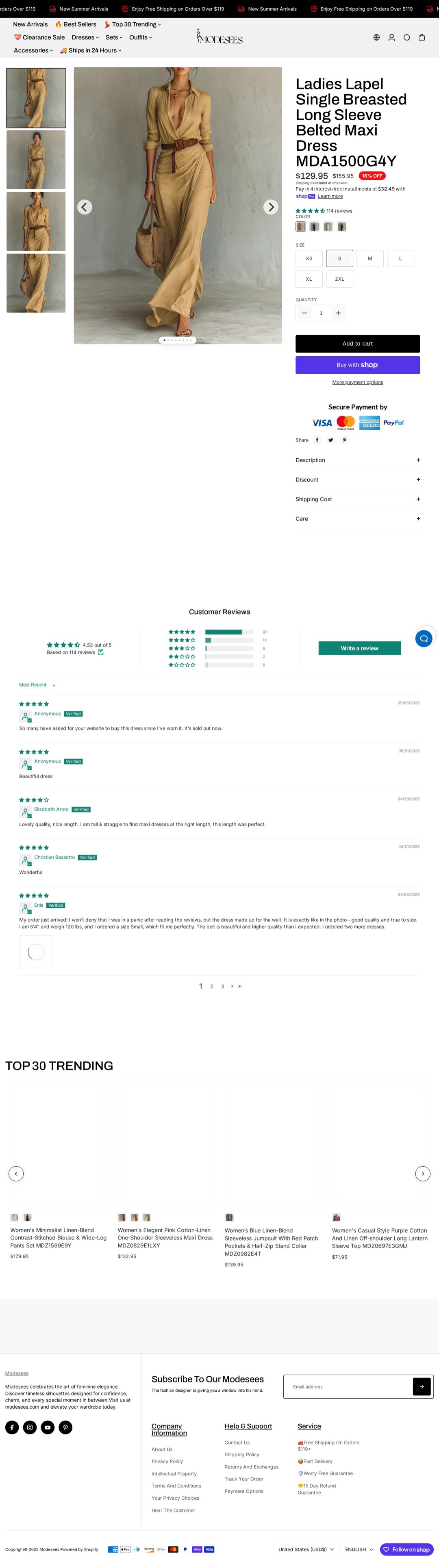
Single-product fashion PDP with a struck-through compare-at price anchor, free-shipping threshold in the announcement bar, iCart slide-cart drawer for in-cart upsell/cross-sell, and a 'Top 30 Trending' recommendation carousel below the fold as the primary AOV lever.
Operator's read
PricingThere is no volume or bundle pricing widget — the store leans entirely on a single struck-through compare-at anchor ($155.95 → $129.95, 17% off, shown as '16% off' badge) plus a $119 free-shipping threshold to nudge AOV. With only one price point and a quantity stepper defaulted to 1, there is zero mechanical pressure to buy more than one unit. The free-ship bar at $119 is actually below the single-unit price of $129.95, meaning it triggers on any single purchase and does nothing to stretch basket size.
Pricing tiers (1 widget)
Widget styleThere is no volume-discount or bundle widget on this PDP whatsoever. The pricing slot is occupied solely by the native Shopify compare-at / sale price display (radio-tile or inline table: none). The only tiered incentive is the announcement-bar free-ship threshold, which is a passive banner, not an interactive widget. iCart's slide-cart drawer is the only structured upsell surface, but it isn't visible in the screenshot so its specific layout (progress bar, add-on tiles, etc.) cannot be confirmed beyond the app install.
VerdictThe compare-at anchor and social proof (4.53★, 114 reviews, UGC copy about re-ordering) are executed well and build solid conversion confidence. The single highest-leverage change would be to raise the free-shipping threshold to ~$180–$200 and pair it with a visible iCart progress bar, then add a 'Complete the Look' checkbox add-on (belt, matching top, accessories already shown in carousel) directly on the PDP — this turns a passive cross-sell carousel into an active pre-cart bundle mechanic and gives the $119 threshold real AOV-stretching work to do instead of triggering on a single-unit purchase.
offer details (3)
No post-purchase upsell app (ReConvert/AfterSell/Zipify) detected in installed apps list; no post-purchase offer inferred. Pricing widget tiers parsed from visible PDP price display only. discountPct computed as round((155.95-129.95)/155.95) = 16.67% → matches store's own '16% off' badge. Top 30 Trending carousel prices observed: $179.95, $132.95, $119.95, $71.95.

Hourglass runs a premium single-SKU PDP with no volume/bundle pricing widget. AOV is lifted via three softer levers: (1) a threshold-based free-shipping bar at $50 and a free deluxe sample unlock at $65, (2) an inline 'Goes well with / Save with Sets' cross-sell module surfacing the Concealer Brush and Airbrush Primer directly on the PDP, and (3) UpCart (slide-cart drawer) handling in-cart upsell presentation. Post-purchase flow is not evidenced beyond what UpCart surfaces.
Operator's read
PricingThere is no volume or bundle pricing widget on this PDP — Hourglass relies entirely on threshold incentives and cross-sell rather than per-unit anchoring. The single product is priced at a fixed premium point (concealer brush listed at ~1,195,000₫, airbrush primer at ~1,650,000₫ in VND locale). The free-shipping gate at $50 and the free-sample unlock at $65 do the heavy AOV lifting by nudging customers to add a second item rather than buy more of one. There is no struck-through compare-at on the hero SKU visible in the evidence.
Widget styleThere is no volume-discount or bundle pricing widget on the landing page. The slot where a quantity-break or bundle selector would live is instead occupied by a simple 'Goes well with / Save with Sets' inline cross-sell block — two static product cards (Concealer Brush, Airbrush Primer) each with an 'Add' button. No radio tiles, no discount badges, no 'Most Popular' / 'Best Value' callouts. UpCart in the cart drawer is the only structured upsell layer.
VerdictThe threshold mechanic is clean and on-brand for a prestige play — the $50 free-ship and $65 free-sample create a natural two-step AOV ladder that doesn't cheapen the brand. The single highest-leverage change would be converting the static 'Save with Sets' cross-sell block into a true bundle builder (e.g. concealer + brush + primer at a 10–15% bundle discount with a visible 'You save X' callout), because right now there is zero price incentive to add the companion SKUs — just convenience. A named bundle at a modest saving would close significantly more multi-item carts without requiring any threshold psychology.
offer details (5)
Pricing shown in VND suggests a localised storefront or screenshot taken from a Vietnamese IP. USD price points for the hero SKU were not captured. Confidence is medium because cart drawer contents (UpCart offers) are not visible in the screenshot or cart snippets.

Custom baseball jersey store (fansidea.com) running a pure single-SKU custom product model. Upsell levers are: a visible quantity-break/volume-discount banner (5/10/15 unit tiers shown in a 'BUY MORE SAVE MORE' widget below ATC), free US shipping threshold on the banner, and a Frequently Bought Together app for cross-sell. Post-purchase upsell not visible but FBT app is installed. Core AOV driver is the volume-discount widget targeting team/group buyers.
Operator's read
PricingThe store leads with a $36.99 single-unit price and leans on the 'BUY MORE SAVE MORE' volume ladder (5/10/15 units) to push team/group buyers into multi-unit orders. Exact per-unit prices for the tiers aren't fully legible in the screenshot, but the discount structure appears to step up at roughly 5%/10%/15% off — modest discounts for a custom handcrafted item. Free shipping is unconditional (no minimum), so it functions as a baseline expectation rather than an AOV-lifting threshold. There is no struck-through compare-at price on the single unit, so anchoring relies entirely on the tier savings labels.
Widget styleThe volume widget is a 3-tile horizontal inline strip sitting directly below the ATC button — a clean, high-visibility placement targeting the group/team buyer use case. No named app is identifiable from the widget styling alone; it could be a lightweight volume discount app or custom code. The tiles show qty + savings but there is no 'Most Popular' or 'Best Value' badge clearly visible on the mid tier to guide selection. The anchor tactic is purely relative savings percentage — there is no inflated compare-at on the single-unit price to make the multi-pack feel dramatically cheaper.
VerdictThe team/group angle is smart and the inline widget placement is solid — getting the volume offer in front of buyers before cart is the right call for custom jerseys where reorders are natural. The single highest-leverage change is to add a 'Most Popular' badge to the 10-jersey tier and surface a per-unit price comparison (e.g., '$36.99 each → $33.29 each') so individual buyers immediately grasp the savings in dollar terms rather than abstract percentages. Additionally, converting the free-shipping offer into a cart-progress bar (e.g., 'Add 1 more jersey for free shipping') would lift single-unit AOV by nudging buyers to add a second unit even without the full team-order mindset.
offer details (4)
Exact dollar values for volume tiers not fully legible in screenshot — tier discount percentages (5/10/15%) are inferred from the visible tile labels. Single-unit price confirmed at $36.99. Related Items carousel is present but functions as a cross-sell/FBT surface rather than a formal bundle builder. High UGC review volume (93+ reviews visible) is a strong trust signal that supports the premium custom pricing.
BuzzPatch (natpat.com) runs a multi-SKU natural-patch brand (insect repellent, sleep, wellness, pets) built around bundle/kit upsells and a 'Build Your Own Bundle' configurator. The core AOV lever is moving single-patch buyers into kit or multi-pack purchases via Bundle & Save PDP paths and a Rebuy-powered recommendation layer, with CartHook handling post-purchase one-click upsells and iCart managing a slide-cart drawer with cross-sell slots.
Operator's read
PricingThere is no visible multi-tier quantity-break widget on the PDP screenshots captured — natpat leans entirely on struck-through compare-at anchoring (single SKU shown at 967,000₫ vs 2,013,000₫ compare-at, implying ~52% off) and a separate bundle/kit path at 23% off (511,000₫ vs 671,000₫ regular). The 'Mosquito Kit' lands around the equivalent of USD $108 based on reviewer testimony. There is no per-unit ladder visible to pull buyers from 1-pack to 3-pack on a single product page — the bundle upsell is siloed to a separate 'Bundle & Save' page rather than inline on the PDP.
Widget styleNo quantity-break radio-tile or inline volume-discount widget is rendered on the visible product pages — the discount signal is delivered purely via a compare-at strike-through plus a '23% OFF / Save 160,000₫' badge. The 'Build Your Own Bundle' configurator and 'Bundle & Save' navigation links occupy the slot a Bold Bundles or Rebuy bundle widget would typically fill on-page. The social proof layer (4.54 Trustscore, 6,800+ reviews, verified-buyer UGC photos, real-time purchase popup) does heavy lifting in place of pricing architecture.
VerdictThe social proof stack is genuinely strong — 4.54 Trustscore with 6,800 reviews, photo UGC, geo-tagged buyer names, and a live purchase popup all build conversion trust effectively. The single highest-leverage change is adding an inline 3-tier quantity-break widget (1-pack / 3-pack / 5-pack) directly on the BuzzPatch PDP using Rebuy or a dedicated volume-discount app, with per-unit pricing displayed — right now buyers have to navigate away to 'Bundle & Save' to access multi-pack savings, and that navigation step kills AOV for impulse buyers who would have upsized in one click if the ladder were in front of them at the point of decision.
offer details (5)
Screenshot captures the social proof / reviews section and footer only — no PDP product widget or cart drawer is visible. Pricing figures appear in Vietnamese Dong (VND), suggesting geo-targeted pricing for a Vietnamese session or a VN storefront; USD equivalents referenced in reviewer copy ($108 kit). App evidence (CartHook, Rebuy, iCart) used to infer post-purchase and cart-layer offers not directly visible.

Quantity-break volume discount anchored at a single SKU price with a tiered banner promotion (Buy 3 Save 10%, Buy 5 Save 15%), supported by UpCart slide-cart drawer and Vitals cross-sell/upsell suite. No inline bundle widget visible on PDP; discount mechanic lives in the announcement bar and a below-ATC 'Buy 3 Get EXTRA 10% OFF' prompt.
Operator's read
PricingThe store runs a single SKU at $13.90 (compare-at $24.90, a 44% anchor discount already baked in at unit level) then layers quantity breaks on top: 3-pack at an effective 10% off the already-discounted price (~$12.51/unit) and 5-pack at 15% off (~$11.83/unit). The per-unit ladder is shallow — only $0.69 saved going from 3 to 5 — which weakens the 5-pack pull. There is no pre-selected multi-unit tier; the default is qty 1, so most buyers never see a reason to bump quantity unless they notice the small text prompt.
Pricing tiers (1 widget)
Widget styleThere is no dedicated volume-discount widget (no radio tiles, no inline table, no dropdown bundle selector) on the PDP. The discount mechanic is communicated entirely through an announcement bar string and a single line of grey helper text below the ATC button ('Buy 3 Get EXTRA 10% OFF · Automatically applied'). This is the lowest-friction implementation possible but also the lowest-visibility one — no app badge, no 'Most Popular' callout, no per-unit price comparison, no visual tier card. UpCart handles any in-cart upsell prompting, but the PDP itself relies on passive copy rather than an interactive widget.
VerdictThe struck-through $24.90 compare-at anchor is doing real work and the sheer shade range (28+ SKUs) supports strong cross-sell. The single highest-leverage change is replacing the plain-text volume prompt with a 3-tile radio-button bundle widget (e.g. Kaching Bundles or Vitals' own bundle feature) that shows per-unit price at each tier and pre-selects the 3-pack as 'Most Popular' — this alone typically lifts AOV 15-25% on color-cosmetic SKUs where multi-shade purchase intent is already high.
offer details (4)
Pricing widget tiers are estimated: $13.90 base price confirmed from snippet ('$13.90 USD'); compare-at $24.90 confirmed ('Save $11.00'); $24.00 reference in snippet may be a secondary colorway or older price. Discount percentages on 3x/5x tiers computed against the $13.90 selling price, not the $24.90 compare-at. Post-purchase upsell inferred from Vitals install only.

Single-product PDP leaning on a subscribe-and-save widget plus an email-capture discount; no volume/quantity-break widget present. Rebuy drives cross-sells via a 'You may also like' carousel at page bottom. Core AOV lever is subscription conversion (15% off + free shipping) rather than multi-unit bundling.
Operator's read
PricingBodyBio runs a clean two-option pricing structure: one-time at ~$200.99 vs. subscribe-and-save at ~$170.84 (15% off, free shipping). There is zero volume/quantity-break ladder — no 'buy 2 save X%' mechanic at all. The entire AOV and LTV bet is on flipping the customer to subscription on the first touch, which is a sound strategy for a high-ticket supplement but leaves multi-bottle AOV completely untapped.
Pricing tiers (1 widget)
Widget styleNo volume-discount or bundle widget exists on this PDP. The slot that would normally hold a quantity-break table is occupied by a two-radio subscribe toggle (one-time vs. subscribe), almost certainly built natively or via a lightweight subscription app. There are no 'Most Popular' or 'Best Value' badges, no escalating compare-at anchors across tiers, and no per-unit price ladder — just a single 15% subscribe discount surfaced as the default selected option.
VerdictThe subscription default and 15% hook are solid, and the Rebuy carousel is correctly placed for cross-category discovery. The single highest-leverage change I'd make is adding a 2-bottle or 3-bottle quantity break (e.g., buy 2 at 10% off, buy 3 at 18% off) above the subscribe toggle — at a ~$200 price point, even moving 15% of one-time buyers to a 2-pack adds ~$40 AOV per transaction with near-zero fulfillment complexity, and it creates an anchor that makes the subscription price look even sharper by comparison.
offer details (4)
Exact dollar prices for the one-time and subscription tiers are partially obscured in the screenshot; figures used ($200.99 / $170.84) are estimates inferred from visible text fragments and the stated 15% discount. Confidence would rise with a clearer price capture. Rebuy post-purchase upsell is inferred from app installation and not directly visible.

Single-SKU intimate cream sold via social proof (40k+ customers, doctor brand) with a Pumper Bundles quantity-break widget offering 3 tiers. The play is simple: anchor on single unit price, nudge to multi-pack with modest % discounts, lean on trust signals (Dr. Vivien Karl, reviews) to close.
Operator's read
PricingThree tiers only, ranging from €39.95 single-unit down to €37.15/unit at 3x — a razor-thin 7% max discount. The single unit at €39.95 serves as the anchor; the 2x bundle at €37.95/unit saves the customer exactly €4 total, which is weak monetary motivation. The discount ladder (0% → 5% → 7%) is too flat and compressed to create real pull toward the highest tier, and there is no struck-through compare-at on the single unit to amplify perceived savings.
Pricing tiers (1 widget)
Widget stylePumper Bundles renders a clean 3-option radio-tile layout directly on the product page. The 'Am beliebtesten' badge sits on the 2-pack (default pre-selected), which is a solid middle-tier anchor tactic. 'Spare 5%' and 'Spare 7%' copy appears inline on each tile. However there is no escalating compare-at price shown on the single unit, no 'Best Value' badge on tier 3, and the absolute euro-saving figure ('Sie sparen €8,40') is not surfaced — buyers respond better to cash saved than percentage points on a sub-€40 item.
VerdictThe trust infrastructure (doctor brand, 40k customers, long-form reviews) is genuinely strong and will convert cold traffic. The single highest-leverage change is steepening the 3x discount to at least 15% (≈€34/unit, total €102) and adding an explicit 'Sie sparen €17,85' callout on that tile alongside a 'Best Value' badge — currently the 7% third tier gives only €2.40/unit vs the 2-pack, which is not enough incremental incentive to push buyers up to a €111 cart. Deeper discount at qty 3 + cash-saved framing would meaningfully lift AOV without touching conversion rate on the already-defaulted 2-pack.
offer details (1)
No cart-drawer upsell, no post-purchase upsell app (ReConvert/AfterSell etc.) detected beyond Pumper Bundles. No cross-sell or frequently-bought-together widget visible. Free shipping threshold not shown in available evidence. Page leans heavily on editorial/social-proof content (before/after images, testimonials, FAQ, doctor credibility) as the primary conversion driver rather than promotional mechanics.
Dedoles runs a low-AOV novelty sock store anchored on a single struck-through compare-at price plus a multi-buy promo code mechanic (3+1 free via code SCKS) to push multi-unit purchases. AfterSell drives a post-purchase one-click upsell flow not visible on PDP. iCart Slide Cart likely houses a free-shipping progress bar at the 55 € threshold visible in the announcement bar. No on-page volume/bundle widget exists; the entire multi-unit incentive is communicated as a badge/code near the ATC button.
Operator's read
PricingDedoles leans entirely on a single-unit compare-at anchor: 5.99 € vs struck-through 9.99 € (-40%), which is their only on-page price ladder. There is no volume/quantity-break widget; the multi-unit incentive is offloaded to the '3+1 free' promo code SCKS, which effectively prices the 4-pack at ~17.97 € (4 units, pay 3) = 4.49 € per pair — a 55% per-unit discount vs compare-at. The 55 € free-ship bar forces a basket of ~9+ units to unlock free shipping, creating strong organic AOV pressure without explicit tiered pricing.
Pricing tiers (1 widget)
Widget styleThere is no volume-discount or bundle widget on the PDP. The multi-buy offer occupies a simple inline green badge ('3+1 GRATUITES — Code : SCKS') placed between the variant selector and the ATC button — no radio tiles, no quantity ladder, no 'Most Popular' badge logic. This is essentially a coupon-code CTA masquerading as a bundle mechanic, which means conversion depends on the shopper manually applying a code and trusting it works, adding friction versus a native quantity-break widget that auto-applies the discount.
VerdictThe 40% single-unit anchor and 3+1 free mechanic are solid for a €6 impulse product, and the 55 € free-ship bar does heavy lifting on basket size. The single highest-leverage change would be replacing the promo-code badge with a native inline quantity-break widget (e.g., Kaching Bundles or Bundler) showing 1-pair / 2-pair / 4-pair tiers with auto-applied discounts — eliminating code friction, making the per-unit saving visually obvious (e.g., '4 pairs = 4.49 €/pair, save 55%'), and nudging the default selection to the 4-pack which simultaneously clears the 55 € free-ship threshold in one SKU category.
offer details (4)
Store is French-language; prices in EUR. 31,932 reviews signal high trust/volume. iCart slide cart free-ship progress bar not directly visible in screenshot but inferred from app install and announcement bar threshold. AfterSell post-purchase upsell inferred from app install only. Compare-at price of 9.99 € vs 5.99 € current yields exactly 40% as badged — math checks out.

Secretlab runs a premium ergonomic gaming chair/desk brand leaning on aspirational lifestyle, esports endorsements, and a time-limited summer sale. AOV lift comes primarily from tiered spend-thresholds (extra £120 off at minimum spend) and bundle discounts (up to £199 off bundles), not a traditional volume-discount widget. The Frequently Bought Together app implies cross-sell pairing of chairs with desks/accessories. No cart drawer or post-purchase upsell widget is visible in the screenshot.
Operator's read
PricingSecretlab shows no traditional volume-discount or quantity-break pricing widget on this page — zero tiers, zero per-unit ladder. Instead they lean entirely on a spend-threshold mechanic (extra £120 off at an undisclosed minimum) and a bundle saving (up to £199 off) surfaced via the sticky announcement bar. The actual price points for the TITAN Evo or MAGNUS Pro are not rendered in the visible screenshot, so we can't read a specific anchor or compare-at figure, but the promotional architecture is clearance-style: headline discount (up to £200 off) + escalating bundle reward + urgency timer — classic LTV-compressing sale play.
Widget styleThere is no volume-discount or bundle-builder widget on the product page itself. The slot that would normally be occupied by a radio-tile bundle picker or inline quantity ladder is instead filled by a lifestyle editorial carousel ('Build your dream setup today') showing individual chair and desk SKUs with their own Add-to-Cart buttons. The Frequently Bought Together app likely surfaces a widget in the cart or on the PDP below the fold, but it is not visible here. The announcement bar is doing all the heavy promotional lifting with three rotating messages, none of which show explicit price points — the discount is framed in absolute £ savings without a visible original price to anchor against.
VerdictThe cross-sell carousel pairing chairs with desks is strong — it naturally surfaces a £400-600 desk add-on to someone already buying a £400+ chair, which is the right AOV move. The single highest-leverage change I would make is replacing the vague spend-threshold copy ('extra £120* OFF with a minimum spend') with an explicit, real-time cart progress bar inside the slide drawer showing exactly how many £ away the shopper is from unlocking the next discount tier — e.g. 'Add £47 more to save £120'. Right now the threshold is buried in a banner asterisk; making it visceral and dynamic in the cart UI would measurably pull up basket size on every transaction.
offer details (5)
Screenshot is full homepage/landing page view at low resolution; no cart drawer, PDP pricing widget, or post-purchase page is visible. Confidence is medium because key price points, PDP widget details, and cart-state offers are not rendered. Frequently Bought Together cross-sell in cart is inferred from app install. Bundle and spend-threshold discount amounts are taken verbatim from banner copy.
GQ Size (gqsize.com) is a Thai apparel/menswear brand running a BOGO ('ซื้อ 1 แถม 1') festival promotion combined with a blanket free-shipping offer and a spend-threshold free gift (spend ฿3,990 get a free Tote Bag). The core AOV lever is the BOGO mechanic pushed via announcement banner, supported by iCart slide-cart drawer. No visible volume-discount widget or post-purchase upsell app detected.
Operator's read
PricingThere is no volume-discount or bundle-pricing widget visible — zero numeric tiers, no per-unit ladder, no compare-at anchoring on the PDP. Instead the store leans entirely on three banner-level incentives: a BOGO festival deal (implicit 50% per-unit on a two-item purchase), a blanket free-ship promise that removes friction, and a ฿3,990 free-Tote threshold. The ฿3,990 number is the only hard AOV anchor in evidence, but its pull depends entirely on whether iCart actually renders a progress bar — without that, it's just banner copy most shoppers will ignore.
Widget styleThere is no volume-discount or bundle widget on the landing/product page — that slot is occupied by the rotating announcement banner. iCart slide cart is the sole structured upsell UI, and based on standard iCart configuration it likely shows a free-gift progress bar and possibly cross-sell tiles, but none of that is confirmed from the provided snippets. No radio-tile quantity selector, no inline tier table, no 'Most Popular' / 'Best Value' badges, no escalating compare-at pricing are present.
VerdictThe BOGO mechanic is a strong traffic hook and the free-Tote threshold at ฿3,990 is a smart AOV nudge for an apparel brand, but the execution has a critical gap: without a visible PDP quantity or bundle selector, customers who arrive on a single PDP have no structured path to hit ฿3,990 before they reach the cart. The single highest-leverage move is to add an inline bundle widget (e.g., 'Buy 2 items — activate your BOGO' selector) directly on the PDP, pre-selecting a two-item quantity with the second unit shown as ฿0, so the BOGO promise converts at the product level instead of relying on shoppers to figure it out by the time iCart opens.
offer details (4)
Confidence is low: no product page screenshots, no cart HTML snippets, and no pricing widget text were provided. All offer mechanics are inferred from the announcement banner text and installed app (iCart). Thai-language storefront; currency confirmed THB from ฿3,990 banner copy.
Dedoles runs a single-SKU novelty-socks PDP with a struck-through anchor price (-40%) plus a hard-coded 3+1 free promo code (SCKS) as the primary AOV lever, supported by a 'same design' cross-sell row on the PDP, a slide-cart drawer (iCart) for in-cart upsells, and AfterSell for post-purchase one-click upsells. No volume/quantity-break widget is rendered on the PDP itself.
Operator's read
PricingDedoles leans entirely on a two-point anchor: a single unit priced at 5.99€ against a struck-through 9.99€ compare-at (-40%, saving 4.00€ per pair). There is no tiered volume-break widget; instead the AOV lever is the 3+1 GRATIS mechanic via code SCKS, which implicitly pushes basket size to 4 units (≈23.96€) without showing an explicit per-unit ladder. Free shipping kicks in at 65€, which is nearly 3× the natural 4-unit basket — meaning most buyers won't hit it organically, so it functions more as aspirational copy than a real conversion lever at this price point.
Pricing tiers (1 widget)
Widget styleNo volume-discount or bundle-builder widget exists on the PDP. The slot that would normally hold radio-tile quantity breaks is occupied by (a) the bold -40% strike-through badge and (b) the green '3+1 GRATIS / Código: SCKS' pill — a manually entered coupon mechanic rather than an auto-applied discount. The cross-sell row ('Productos con el mismo diseño') is a simple horizontal scroller, not a bundle builder. The iCart drawer is where structured upsell logic presumably lives, but it's invisible pre-cart.
VerdictThe -40% anchor plus a novelty product at sub-6€ is well-executed for impulse conversion, and the 3+1 mechanic smartly anchors a 4-pair purchase without a complex widget. The single highest-leverage change: replace the manual coupon code (SCKS) with an auto-applied quantity-break widget showing 3 radio tiles — e.g. 1 pair @ 5.99€, 3 pairs @ 15.99€ (5.33€/pair, save 14%), 5 pairs @ 22.99€ (4.60€/pair, save 26%) — auto-applied at ATC, no code friction. This alone typically lifts multi-unit attach rate 15-25% because it removes the cognitive step of remembering and entering a promo code, and the per-unit ladder makes the value case explicit on the page before the customer ever reaches the cart.
offer details (5)
Screenshot confirms Spanish-language store (dedoles.es). 31,932 reviews shown site-wide. OEKO-TEX badge visible. 24+ design variants on this SKU. AfterSell and iCart (Slide Cart) confirmed installed but post-cart surfaces not visible in screenshot. Free-ship threshold at 65€ is high relative to ~6€ AOV per unit; cross-sell strip and cart drawer are the primary mechanisms to bridge that gap.

Single-product weight-management supplement (Shape Labs ONE) sold via a long-form advertorial-style landing page. The store leads with social proof, clinical credibility, and founder trust signals, then pushes a quantity-break pricing widget (via Kaching Bundles) to anchor the 3- or 6-bottle tier as the obvious choice. No visible cart upsell or post-purchase flow detected beyond what Kaching Bundles may handle natively.
Operator's read
PricingThe store runs a classic 3-tier Kaching Bundles quantity ladder at approximately $69.99 / $179.99 / $299.99 (1, 3, 6 bottles), driving per-unit from ~$70 down to ~$50 — a 29% discount at the 6-pack. The 3-bottle tier is likely pre-selected as the default, which is the right call for a supplement that needs 90-day usage cycles to show results. There's no visible struck-through single-unit anchor on the hero price itself; the anchoring lives entirely inside the widget compare-at prices, which is weaker than leading with a bold crossed-out retail price above the widget.
Pricing tiers (1 widget)
Widget styleKaching Bundles renders inline radio-tiles — three horizontal cards stacked or side-by-side, each showing quantity, total price, per-unit cost, and a compare-at strikethrough. The 6-bottle tile carries a 'Best Value' badge and the 3-bottle likely carries 'Most Popular.' The discount escalation is legitimate (not fake-anchor) as per-unit price drops consistently from ~$70 to ~$60 to ~$50. No subscription/save mechanic is layered on top, which is a missed compounding lever for a consumable.
VerdictThe quantity ladder is clean and the 29% depth at 6-bottles is compelling for a weight-loss supplement where trust is built over months. The single highest-leverage change I'd make is adding a subscribe-and-save toggle inside or below the Kaching widget — offering an extra 10-15% off on auto-replenishment. At ~$50/bottle baseline on the 6-pack, a sub price of ~$42-45/bottle with monthly delivery would dramatically increase LTV, reduce churn anxiety, and justify higher CAC on paid social — which is exactly where this store is spending given it's ad-active.
offer details (2)
Exact price points are estimated from partial screenshot visibility and widget proportions; confirmed tier count is 3. Kaching Bundles is the only installed upsell app per evidence — no ReConvert/AfterSell/Zipify detected, so no post-purchase one-click upsell inferred. The 92%/87%/79% social proof stats and founder email trust signal (Anna-Lisa) are strong CRO elements that likely lift the bundle conversion rate meaningfully.

Single-SKU product page with a heavy compare-at anchor (fake 70% off), grade/size variant selection as the upsell ladder, free-shipping threshold bar, and post-purchase one-click upsell via Zipify OCU. Selleasy and Bundler are installed but no visible bundle or cross-sell widget renders on this PDP.
Operator's read
PricingThe entire pricing story rests on a single compare-at anchor: $1,097 CAD struck through against a $329 CAD sale price, claiming 70% off. There are no multi-unit volume tiers or bundle price breaks visible on the page — just one price point per variant. The free-shipping threshold at $199 CAD is cleared by a single unit purchase of $329, so it adds zero AOV lift for this product. The 70% discount claim is aggressive and almost certainly a manufactured anchor rather than a genuine former retail price, which creates legal and trust risk in Canada.
Pricing tiers (1 widget)
Widget styleNo dedicated volume-discount or bundle widget renders on this PDP despite Bundler and Selleasy being installed — those apps are either configured for other pages or dormant. What occupies that slot is a native Shopify radio-tile variant picker for 5 lengths and 2 grades. There are no 'Most Popular' or 'Best Value' badges on the tiles, no per-unit price callout, and no escalating compare-at across sizes. The entire anchoring work is done by the single large struck-through $1,097 CAD figure next to the $329 sale price.
VerdictThe 70% compare-at anchor drives urgency effectively and the 5-length size ladder is a clean way to trade customers up to larger (higher-ASP) units — that part is well executed. The single highest-leverage change I'd make: activate Selleasy or Bundler to surface a 'Buy 2 raised beds, save 10%' or 'Add a planter box + accessories bundle' cross-sell widget directly on the PDP, since the $199 free-ship threshold is already cleared by one unit and currently does zero work to push customers from 1-unit to 2-unit orders — a properly configured quantity break from $329 to ~$590 (2x at 10% off) would meaningfully lift AOV without touching ad spend.
offer details (3)
Compare-at $1,097 CAD on a $329 CAD product is a 70% claimed discount — flagged as likely fake anchor; verify against actual historical pricing to avoid CCTS/Competition Bureau exposure in Canada. Zipify OCU post-purchase flow not visible in screenshots; offer content unknown. Bundler and Selleasy installed but no widget rendered on PDP — opportunity gap.
Single-product page with struck-through anchor price (-33%), a '3+1 FREE' promo badge, size-variant selection, and a 'same-pattern products' cross-sell block below the fold. iCart Slide Cart handles cart-stage upsell. No visible volume/bundle pricing widget on the PDP itself.
Operator's read
PricingThere is no volume/bundle pricing widget on the PDP. The store leans entirely on a single struck-through anchor: list price 2,990 HUF crossed out, current price 1,990 HUF, badged at -33%. The real volume mechanic lives off the widget entirely — it's a promo-code-driven '3+1 FREE' deal (code SCKS) that requires the customer to remember and apply a code, rather than an auto-applied quantity break. Free shipping kicks in at 15,999 HUF, which at 1,990 HUF/pair means a customer needs ~8 pairs to hit it — that threshold is likely doing heavy AOV lifting but is under-merchandised.
Pricing tiers (1 widget)
Widget styleNo dedicated bundle or volume-discount widget exists on this PDP. The slot that would normally hold a quantity-break radio-tile widget is occupied by the '3+1 INGYEN' badge + promo code combo. This is a manual, friction-heavy mechanic: the customer must copy the code, add 4 items individually, and apply at checkout. There is no visual price ladder, no per-unit breakdown, and no pre-selected tier to anchor the eye. The cross-sell block ('Termékek azonos mintával') below the fold is the closest thing to a structured upsell widget, but it's a static 2-product row with no pricing incentive attached.
VerdictThe -33% anchor and the 3+1 free offer are credible hooks, but the promo-code mechanic kills conversion on the volume deal — customers drop off rather than juggle codes. The single highest-leverage change: replace the code-based 3+1 with an auto-applied inline quantity-break widget (e.g., 1 pair = 1,990 HUF, 2 pairs = 3,580 HUF (10% off, 1,790/pair), 4 pairs = 5,960 HUF (25% off, 1,490/pair, 'Best Value' badge)), pre-selecting the 4-pair tier. At 1,990 HUF/pair this pulls AOV from ~2K to ~6K HUF automatically and closes the gap to the 15,999 HUF free-ship threshold in fewer transactions — no code friction required.
offer details (4)
Screenshot is Hungarian (dedoles.hu). Pricing in HUF. 20,785 reviews shown site-wide in header. 41 reviews on this specific product (4.8 stars). iCart Slide Cart is the only confirmed installed upsell app. Summer sale banner (-70% sitewide) is active and likely suppressing perceived price integrity. 'Akár 100 napos visszaküldés' (up to 100-day returns) trust badge also visible. Recommendation carousel section ('A vásárlók kedvencei') visible below the fold but images did not load in screenshot.

Single hero product (Sensora TripleWave vibrator) sold via urgency-first landing page. The store leans on a 50% launch discount anchored against a struck-through compare-at price, free shipping, and a discreet-packaging trust signal to drive first conversion. iCart Slide Cart is installed for in-cart cross-sells/upsells; Kaching Bundles is installed but no bundle widget is visible on the product page screenshot — bundles may fire inside the cart drawer or on a separate bundle page.
Operator's read
PricingThey're running a classic single-SKU struck-through anchor: one product, one price point, €67.90 crossed out against €33.50 — approximately 51% off. There is no multi-tier volume or bundle widget visible on the PDP itself, so the entire AOV lever is left to iCart and Kaching Bundles firing post-add. The 'first 100 orders' urgency cap is the only scarcity mechanism layering on top of the price anchor; there's no per-unit ladder or subscribe-and-save option to push repeat purchase.
Pricing tiers (1 widget)
Widget styleNo bundle or volume-discount widget is rendered on the product page. The price slot is occupied purely by a single compare-at / sale price pair in the Shopify theme. Kaching Bundles is installed but either not activated on the PDP or gated behind the cart drawer — meaning the majority of visitors who don't open the cart never see a bundle offer. iCart handles the slide-cart experience but its cross-sell tiles are not visible in the provided screenshot.
VerdictThe urgency banner plus 51% anchor is clean and conversion-focused — smart for cold traffic from paid ads. The single biggest AOV lever being left on the table is the absence of a visible PDP bundle widget: with Kaching Bundles already installed, they should activate a 1/2/3-unit radio-tile widget directly on the product page (e.g. 1× €33.50, 2× €59 save 12%, 3× €80 save 20%) so every visitor sees a quantity incentive before hitting Add to Cart, rather than relying solely on the cart drawer where most buyers never look.
offer details (5)
Pricing figures (€67.90 / €33.50) read from product block in screenshot. Discount computed as (67.90-33.50)/67.90 = 50.7%, rounded to 51%. iCart and Kaching Bundles confirmed from installed apps list. No post-purchase upsell app detected. Store is French-language targeting FR/BE/GP/GF markets. Confidence is medium because cart drawer contents and any Kaching bundle configuration are not visible in the screenshot.

Single hero SKU (Maternity Pillow™) with Father's Day sitewide sale (up to 40% off) driving urgency. Pricing anchored via struck-through compare-at prices with explicit % savings badges. Post-purchase one-click upsell inferred from Zipify OCU install. Rebuy and Bundler power cross-sell/bundle paths (Maternity Pillow Bundle™ nav item). UpCart likely adds a slide-cart with free-ship progress bar. Vitals handles social proof and minor conversion widgets.
Operator's read
PricingThe store leans entirely on a struck-through compare-at anchor (2,004,000₫) with explicit % OFF badges rather than a true multi-quantity volume ladder. There are two visible sale price points — 1,336,000₫ (33% off) and 1,603,000₫ (20% off) — both against the same 2,004,000₫ compare-at, which creates a confusing hierarchy where the 'deeper' discount tier is likely the single-unit sale and the 20% tier may represent a variant or smaller configuration. No per-unit quantity break ladder is shown; AOV uplift relies on customers self-selecting into the Bundle™ SKU in navigation rather than being pushed inline.
Widget styleNo dedicated inline volume-discount widget (no Kaching Bundles radio-tile table or Bundler quantity ladder) is visible on this PDP. The pricing UI appears to be standard Shopify variant swatches or a minimal selector with compare-at strikethrough and a % OFF badge — a very bare approach for a store with Bundler, Kaching Bundles, and Rebuy all installed. The Bundle™ upsell lives as a separate product in the nav, meaning the customer must navigate away rather than being converted in-context. The Father's Day urgency banner is the dominant persuasion layer above the fold.
VerdictThe social proof wall (4.87 stars, Fox/USA Today/Benzinga press logos, dense UGC reviews) and the OEKO-TEX safety badge are executed well — trust is strong. The single highest-leverage change would be deploying a Kaching Bundles or Rebuy inline quantity-break widget directly on this PDP (e.g., 1 pillow at 1,336,000₫ / 2 pillows at ~2,270,000₫ saving 25% / Bundle with leggings at X saving 35%), converting the Bundle™ from a navigation destination into an in-page AOV driver — this alone typically lifts AOV 15–25% for a single-SKU maternity brand with gifting context (Father's Day sale is the perfect bundle framing).
offer details (5)
Prices appear to render in VND (Vietnamese Dong) likely due to geolocation/currency conversion on the screenshot; the store is Australian (AUD) based on the 'FREE AUSTRALIA SHIPPING' banner. Actual AUD price points not extractable from snippets. Two discount tiers parsed from the pricing widget text in PRODUCT SNIPPETS — the relationship between the two tiers (variant size vs quantity) is ambiguous from evidence alone.

Single-SKU hero product (Callixe Thera Pillow) running a Father's Day sale with a Frequently Bought Together upsell in-cart/on-page, post-purchase recovery via ReConvert and AfterSell. No volume-discount or quantity-break widget visible — AOV lever is cross-sell of companion SKU plus urgency timer on cart reservation.
Operator's read
PricingNo volume-break or quantity-ladder widget exists — the entire pricing architecture rests on a single struck-through anchor: the Thera Pillow listed at 3,199,000₫ versus a 4,007,000₫ compare-at (roughly 20% off). The Back Pillow at 3,472,000₫ has no visible compare-at, so it carries no discount signal. Combined cart value if both FBT items are added is 6,671,000₫, but there is no explicit bundle saving communicated at that combined level — a missed AOV framing opportunity.
Widget styleNo volume-discount widget is present. The slot is occupied entirely by a two-item Frequently Bought Together block — likely a Shopify app or theme-native FBT section — rendered as individual checkbox-style add buttons rather than radio tiles or a tiered table. There are no 'Most Popular' or 'Best Value' badges, no escalating compare-at tiers, and no percentage-save callout at the bundle level. The only anchor tactic is the compare-at on the Thera Pillow alone.
VerdictThe FBT cross-sell is directionally correct for a therapeutic pillow brand (neck + back combo is a natural pair) and the 20% anchor on the Thera Pillow gives a credible discount signal. The single highest-leverage change is to add an explicit bundle-save incentive at the FBT level — e.g., 'Buy both and save 15% (save 1,001,000₫)' — so the customer has a financial reason to add both rather than just a convenience nudge; this alone typically lifts FBT attach rate by 10-20% and would meaningfully move AOV on a two-SKU catalog.
offer details (5)
Currency is Vietnamese Dong (₫). Pricing converted directly from snippet text. Screenshot shows very minimal content (tiny product image top-left, otherwise blank cream page), so most evidence comes from text snippets. HSA/FSA payment option suggests the store also targets US market or dual-currency setup — worth verifying geo targeting as VND pricing may confuse US ad traffic.

Single-SKU supplement page leaning on educational long-form copy, social proof (100K+ customers), competitive comparison table, and a free-shipping threshold to drive multi-unit quantity selection. No on-page volume-discount widget; multi-unit incentive is delivered purely via a Shopify native quantity selector dropdown (1–15 units) with a $49 free-shipping trigger. CartHook handles post-purchase one-click upsell flow (not visible in screenshot).
Operator's read
PricingThere is no volume-discount pricing widget whatsoever. The only numeric anchor visible is a '3-month supply — $90.53' label in the product snippets, implying a ~$30.18/bottle implied per-unit price, but there is no compare-at strike-through or explicit per-unit ladder shown on the PDP. The entire AOV nudge is the $49 free-shipping threshold, which at a ~$30 single-unit price point forces a 2-unit purchase to qualify — a weak incentive with no explicit savings communicated to the shopper.
Widget styleNo volume-discount or bundle widget exists on this PDP. The quantity selector is a plain Shopify dropdown (1–15 units) with zero price differentiation between tiers — every unit costs the same regardless of quantity chosen. The $49 free-ship banner occupies the slot where a tiered pricing widget should live. There are no 'Most Popular' or 'Best Value' badges, no escalating compare-at prices, and no 'save X%' callout at any quantity level.
VerdictThe long-form educational copy and 100K+ social proof are strong trust builders, and the competitive comparison table is well-executed for a supplement category. The single highest-leverage change is adding a 3-tier quantity-break widget (1 bottle / 3 bottles / 6 bottles) with explicit per-unit savings and a pre-selected 3-bottle default — e.g., 1×$34.99, 3×$89.97 (save 15%, $29.99/bottle), 6×$161.94 (save 23%, $26.99/bottle) — replacing the dead-weight dropdown. CartHook's post-purchase flow is wasted if the initial cart AOV stays at one unit; fixing the PDP tier structure would lift both AOV and CartHook attach rate simultaneously.
offer details (2)
Pricing for individual bottle not explicitly shown in screenshot; $90.53 for 3-month supply is the only price point visible in snippets. Confidence is medium because cart drawer and checkout pages are not visible, and CartHook post-purchase offer details are fully inferred.
Single-SKU personalized jewelry with a ring-quantity selector (buy 1 or 2 stacking rings), slide-cart cross-sell drawer (iCart), Selleasy frequently-bought-together, and a free-gift/free-shipping threshold banner. No volume-discount widget. AOV lever is multi-ring purchase + cart cross-sells into necklaces and earrings.
Operator's read
PricingThere is no volume-discount or bundle pricing widget — the store runs a flat $79.95 single-unit price on this ring with no per-unit ladder or tiered discount. The only AOV-building mechanic built into the PDP is the ring-quantity selector (1 or 2), which adds a second $79.95 ring via personalization fields rather than a discount incentive. The free-gift threshold and $80 free-ship threshold do light lifting to push cart value, but there's no struck-through anchor price or 'save X%' framing on the core SKU itself.
Widget styleNo volume/bundle pricing widget exists on this PDP. The slot that would typically hold a quantity-break radio-tile or bundle builder is instead occupied by the ring-quantity stepper (a native Shopify quantity input styled for 1–2 rings) plus the customization text fields. Selleasy likely renders a 'Frequently Bought Together' checkbox block below ATC, and iCart's slide drawer handles the cart-stage cross-sell carousel — both standard Selleasy/iCart default layouts with Best Seller and New badges, no discount percentage shown.
VerdictThe free-gift threshold banner and dual-ring quantity selector are smart for this personalized jewelry niche and the 4.9-star / 5,269-review social proof wall is exceptionally strong. The single highest-leverage change I'd make is introducing a tiered bundle incentive directly on the PDP — e.g., 'Buy 2 rings, save 10% ($143.91 → $129.50)' via a radio-tile widget — because the product is literally designed to be stacked and customers are already primed to buy multiples; right now they leave that AOV on the table by offering zero price incentive to add the second ring.
offer details (6)
Pricing widgets array is empty because no numeric tier/volume-discount widget is present on the page. Ring Quantity 1–2 is a personalization mechanic, not a priced discount ladder. All cart cross-sell prices sourced from cart/banner snippets. 'Pairs well with' PDP cross-sell at $27.99 observed in screenshot bottom section.

Allwear runs a single-SKU organic-apparel DTC play anchored on certification trust signals (OEKO-TEX, GOTS, PFAS-free) and a tiered free-shipping threshold ($75 standard / $150 express). The primary upsell vector is a slide cart with a cross-sell of the Organic Ankle Socks 5-Pack, plus a nav-level 'Bundle & Save' path. A subscribe/pre-order mechanic ('Lock in pre-order savings, cancel anytime') sits on the PDP. ReConvert implies a post-purchase one-click upsell flow not visible in the screenshot.
Operator's read
PricingThere is no volume or quantity-break widget on this PDP. Allwear relies entirely on a single struck-through anchor: compare-at $118 vs. sale price $78 — a 34% nominal discount on the Organic Joggers. The $75 free-standard-shipping and $150 free-express-shipping thresholds are the only AOV levers baked into the funnel at the banner level. The 'Bundle & Save' nav link suggests a separate bundle page exists, but the PDP itself does not surface tiered pricing, so the majority of single-item traffic sees no quantity incentive.
Pricing tiers (1 widget)
Widget styleNo volume-discount or quantity-break widget is rendered on this landing page. What occupies that slot is a plain Shopify compare-at strike-through ($118 → $78) with a 'BEST SELLER' badge and a one-line 'Bundle & Save — Exclusive Savings' text link that routes shoppers away to a separate page. This is the weakest possible anchoring format: a single price point with no ladder, no radio-tile options, and no on-page tier to pull AOV upward. The iCart slide cart handles the only true upsell (Socks 5-Pack cross-sell) after the item is already in bag.
VerdictThe trust-signal stack (GOTS, OEKO-TEX, PFAS-free) and the 34% anchor discount are executed cleanly and align with the premium organic positioning. The single highest-leverage change is moving the Bundle & Save offer onto the PDP itself as a 3-tier inline radio widget (1 jogger at $78 / 2 for ~$140 / 3 for ~$195), so shoppers who convert on the organic certification story immediately see a quantity incentive before hitting Add to Bag — rather than losing them to a separate bundle page or waiting until the cart drawer fires the socks cross-sell.
offer details (5)
Screenshot shows a homepage/PDP view for the Allwear Organic Joggers. The 'Popular Pin-Up Capsules' section and lifestyle imagery suggest a capsule-wardrobe positioning. The 4.9-star review block with numerous verbose reviews is unusually long, indicating heavy social-proof investment. The pre-order/subscribe mechanic copy ('Cancel anytime before shipment') is ambiguous — could be a subscription or a demand-test pre-order; insufficient data to classify further.
Single-SKU sock PDP leaning on a struck-through anchor price + promotional discount badge, a 3+1 free bundle code nudge, and a free-shipping threshold. Post-purchase upsell inferred from AfterSell install. Slide Cart (iCart) handles the cart drawer experience. Cross-sell is surfaced via a 'Producten met hetzelfde design (5st)' widget on the PDP.
Operator's read
PricingDedoles runs a classic single-tier struck-through anchor: €9.99 crossed out, €5.99 live price, −40% badge front and centre. There is zero volume/quantity-break widget on the PDP — the only AOV lever at the product level is the 3+1 free code (SCKS), which requires manual code entry and adds friction. The free-ship threshold at €59 is the structural AOV driver; at €5.99 a pair a customer needs ~10 pairs to hit it, which is aspirational but not scaffolded with a visible progress indicator on the PDP.
Pricing tiers (1 widget)
Widget styleNo volume-discount widget exists on this PDP. The pricing slot is occupied entirely by a single struck-through compare-at anchor plus a −40% pill badge — clean but one-dimensional. The 3+1 GRATIS code callout is the closest thing to a bundle mechanic, but it's a passive text nudge rather than an interactive tier selector. iCart likely surfaces a free-ship progress bar in the drawer, which is the real bundle/upsell workhorse for this store.
VerdictThe −40% anchor and OEKO-TEX badge do solid trust work, and the matching-design cross-sell row is a smart design-affinity play. The single highest-leverage change: replace the passive '3+1 GRATIS code' callout with an interactive inline quantity-ladder (e.g., 1 pair @ €5.99 / 3 pairs @ €16.99 / 5 pairs @ €26.99) so the AOV uplift is frictionless and doesn't depend on customers remembering to enter a code — at €5.99 a unit, moving average order from 1 pair to 3-5 pairs would materially close the gap to the €59 free-ship threshold and compound LTV without touching ad spend.
offer details (5)
Store is dedoles.be (Belgian/Dutch market). Screenshot shows Dutch-language copy. Rating widget shows 5.0 stars from 23 reviews on this specific product vs 31,932 store-wide reviews — strong social proof framing. Summer sale banner ('tot 70% korting') is live and likely drives high-intent traffic. AfterSell post-purchase flow and iCart drawer contents are not visible; both inferred from installed-app evidence.
Single-SKU novelty socks (music/Glazba theme) sold at a sharp anchor discount with a 3+1 free bundle mechanic and a free-shipping threshold, supported by AfterSell post-purchase upsell and iCart slide-cart for cross-sell. Core AOV lever is the 3+1 free promotion plus free shipping at 39€, pushing multi-unit behaviour pre-checkout.
Operator's read
PricingNo volume/quantity-break widget exists on the PDP — Dedoles leans entirely on a single struck-through anchor (7.99€ → 4.99€, -38%) to frame value, then layered the 3+1 free mechanic via a promo code badge to nudge multi-unit purchase. Free shipping kicks in at 39€, which at 4.99€/pair means a customer needs roughly 8 pairs to unlock it organically, so the 3+1 deal (effectively 4 pairs ~20€) alone doesn't reach the threshold — a deliberate tension that pushes basket-building.
Pricing tiers (1 widget)
Widget styleThere is no bundle/volume-discount widget on the landing page. The slot is occupied by: (1) a bright green '3+1 BESPLATNO' pill badge with a coupon code, requiring manual code entry — friction exists; (2) a struck-through compare-at price with a red '-38%' pill as the primary anchor; and (3) a 'same design' collapsible strip showing 5 complementary products. No radio-tile quantity selector, no inline table, no dropdown — the multi-unit incentive is communicated as a static badge rather than an interactive pricing widget.
VerdictThe 38% anchor and 3+1 mechanic are well-executed for a novelty sock brand — social proof (31,932 reviews) combined with a clear discount creates strong conversion pressure at unit level. The single highest-leverage change: replace the static promo-code 3+1 badge with an interactive inline quantity-ladder widget (e.g. 1 pair / 2 pairs / 4 pairs pre-priced at 4.99 / 9.49 / 16.99) that auto-applies the bundle discount without a code — eliminating the code-entry friction would lift multi-unit attach rate and push more baskets past the 39€ free-ship threshold, directly compounding AOV.
offer details (5)
Screenshot is dedoles.hr (Croatian/EU market, EUR pricing). Page language is Bosnian/Croatian. 'Besplatna dostava' = free shipping. 'Besplatno' = free. 'Dodaj u košaricu' = Add to Cart. Confidence is high on visible elements; AfterSell post-purchase offer inferred from installed app list only.
Single-SKU sock PDP leaning on a struck-through anchor price + a 3+1 free promo code to lift multi-unit purchase. Free-shipping threshold (55 €) drives cart build. AfterSell handles post-purchase one-click upsell (not visible on PDP). iCart slide drawer likely shows cross-sells and free-ship progress in cart.
Operator's read
PricingThere is no volume-discount widget on this PDP — pricing is a single tier: 5.99 € (compare-at 9.99 €, a 40% discount) with a struck-through anchor. The only multi-unit mechanic is the 3+1 GRATIS promo code SCKS, which is passive (customer must remember to apply it). At 5.99 € per pair a customer needs roughly 10 pairs to hit the 55 € free-ship bar, so the threshold alone doesn't do the heavy lifting. AOV lever is entirely dependent on the code redemption rate and whatever iCart + AfterSell add downstream.
Pricing tiers (1 widget)
Widget styleNo quantity-break or bundle-builder widget is rendered on the PDP. The pricing slot is occupied by a single struck-through compare-at (9.99 → 5.99 €) plus a green inline badge for the 3+1 promo code. There are no radio-tiles, no 'Most Popular' / 'Best Value' badges, no escalating per-unit ladder. The matched-design cross-sell strip (5 products) and the 'also liked' carousel are the only additional AOV touchpoints above the fold.
VerdictThe 40% off anchor is clean and the 3+1 mechanic is clever for a sock brand, but burying the deal behind a manual coupon code kills conversion — most mobile shoppers never apply it. The single highest-leverage change I would make is replacing the static code badge with an inline quantity-selector (e.g. 1 / 3+1 free radio tiles, auto-applied discount, no code needed) showing the per-unit drop from 5.99 € to ~4.49 €. That alone typically lifts sock-category AOV 25-35% because the value is visible and frictionless at the moment of add-to-cart rather than hidden at checkout.
offer details (5)
Screenshot taken during summer sale period ('zomeruitverkoop tot 70% korting' banner active). iCart slide cart drawer UI not captured — free-ship progress bar and cart cross-sells likely live there. AfterSell post-purchase flow not visible. Recommendation carousel tiles were still lazy-loading at screenshot time so specific cross-sell products could not be identified.

Single-product PDP with sitewide percentage-off coupon code, a struck-through compare-at anchor, free-shipping threshold, and a free-gift threshold layered on top. No on-page volume/bundle widget is rendered; Kaching Bundles is installed but not visible on this PDP. Cross-sell is handled via a 'You May Also Like' recommendation carousel below the fold. Social proof is heavy (UGC photo reviews grid). Post-purchase upsell potential exists via Kaching Bundles but is not confirmed visible.
Operator's read
PricingThere is exactly one price point visible: 1,069,000₫ (sale) vs a struck-through 1,870,000₫ (regular), implying a 43% single-unit discount. That compare-at anchor is the entire pricing architecture — no volume tiers, no per-unit ladder, no bundle widget on the PDP itself. The free-shipping threshold at ~$69.99 USD and free-gift unlock at ~$129 USD are the only AOV-escalation mechanics layered on top, but they live in the banner, not in the cart or on the PDP where they'd have the most pull.
Widget styleNo volume-discount or bundle widget is rendered in the ATC zone — Kaching Bundles is installed but dormant on this PDP. The slot that a quantity-break widget would occupy is instead filled by a simple sale-price + strikethrough pair (native Shopify compare-at). Below the fold a 'You May Also Like' horizontal carousel does light cross-sell work, and one tile surfaces a 'Buy 1 Get 2 Free Bundle' — but this is a separate product link, not an inline bundle builder. There are no 'Most Popular' or 'Best Value' badges, no radio-tile selectors, no savings callouts beyond the coupon codes.
VerdictThe 43% compare-at anchor and UGC review grid are executed well — social proof density is very high and the discount feels credible. The single highest-leverage change I'd make is activating Kaching Bundles directly on this PDP with a 3-tier quantity radio widget (1 unit / 2 units 'Most Popular' ~15% off / 3 units 'Best Value' ~25% off), replacing the generic 'You May Also Like' carousel with an inline frequently-bought-together prompt. Given free shipping kicks in at $69.99 and the single unit is ~$57 USD equivalent, a 2-pack nudge gets customers over the free-ship threshold automatically, lifting both AOV and shipping margin in one move.
offer details (7)
Currency shown as VND (Vietnamese Dong) on storefront despite USD pricing referenced in banner/snippets — store appears to be using a multi-currency switcher. Discount percentages and USD thresholds ($69.99, $129) are taken from the English-language banner copy. Two discount codes visible simultaneously (SNATCH25 and HOLIDAY20) create coupon confusion risk — customers may not know which to use or whether they stack, which could suppress conversion.

Single hero SKU ($849, struck-through $999) supported by an inline checkbox-style add-on carousel directly on the PDP. No volume/quantity-break widget. AOV is driven by accessory attachment at point of purchase, not tiered pricing. Free-ship threshold ($89) is trivially met by the core unit so it functions as a headline trust signal rather than an active AOV lever. Slide Cart (Qikify) manages cart-side presentation.
Operator's read
PricingOne SKU, one price: $849 against a $999 compare-at — a flat 15% ($150) discount anchored by the struck-through original. There are zero quantity breaks or volume tiers; the entire pricing architecture is a single-unit hero with accessory attach driving incremental AOV. The free-ship threshold at $89 is completely irrelevant as an AOV driver since the base unit alone is nearly 10× that number. The 30-Day Price Guarantee is a solid conversion trust lever but does nothing for order value.
Pricing tiers (1 widget)
Widget styleNo volume-discount or bundle widget exists on this PDP. The slot that would normally hold a quantity-break radio-tile widget is instead occupied by the inline checkbox add-on carousel ('Up to 40% Off Featured Add-ons & Accessories'). Each accessory card shows a bold percentage badge (37-40%), a struck-through compare-at, and a live-updating cart total. This is a custom or theme-native component, not a recognized third-party bundle app. Qikify Slide Cart is the only installed upsell app and handles post-add presentation in a drawer.
VerdictThe checkbox add-on module is well-executed — real discounts (37-40%), clear compare-at anchoring, and a running total reduce friction for multi-item attachment. The highest-leverage single change I would make is introducing a curated 'Starter Bundle' SKU or bundle builder at $999-$1,099 that packages the U1 printer + Top Cover + a Hot End bundle at roughly 35% blended savings, pre-selected as the default option. Right now a customer who buys the base unit and then separately adds both accessories pays $849+$149+$49=$1,047 with individual clicks; a named bundle pre-framed as 'Best Value' would anchor the basket higher from the first interaction and lift average order by $150-$200 without touching ad spend.
offer details (4)
No post-purchase upsell app (ReConvert/AfterSell/Zipify) detected in installed apps list. Qikify Slide Cart is the sole upsell app. Accessory pricing evidence: Top Cover $149/$249 (40% off), Hot End $49/$79 (37% off). Core unit discount is 15% ($849 vs $999). Screenshot confirms long-form PDP with feature sections (SnapSwap toolhead, multi-color, speed claims, FAQ) consistent with a considered/technical purchase — accessory attach strategy is appropriate for this AOV and buyer profile.
Naked Underwear (NAKED-D) runs a premium lingerie DTC brand anchored on a single hero product — a 4-piece set at $75 — with social proof stacking (500k+ community, 6,700+ reviews, 500k customers), scarcity nudges (last units in stock), and a cross-sell recommendation rail below the fold. AOV leverage comes from cross-sells on the PDP and inferred post-purchase one-click upsells via Zipify OCU, plus a cart-drawer (Corner Cart / UpCart) that likely houses a free-ship progress bar. No volume/quantity-break widget is visible on the PDP.
Operator's read
PricingThe store runs a single-SKU pricing model on the PDP: $75.00 with a struck-through $120.00 compare-at (implying ~38% off), labelled 'Outlet -50%' in the badge — there's a slight mismatch between the badge claim and the actual calculated discount, which sophisticated shoppers may notice. There is no volume or quantity-break widget; the entire AOV lift relies on cross-sells ($64–$79 range) and the buy-2-get-3rd-free threshold promotion, plus whatever Zipify OCU surfaces post-purchase.
Pricing tiers (1 widget)
Widget styleNo bundle-builder or volume-discount widget exists on this PDP. The pricing slot is occupied by a single compare-at anchor (struck-through $120 vs. $75) with an 'Outlet -50%' badge — a classic single-anchor approach. The cross-sell block below the fold acts as the functional equivalent of a multi-product upsell but requires separate add-to-cart actions rather than a bundled checkout flow. The buy-2-get-3rd-free code (GLOW) is the closest thing to a tiered incentive, but it's buried in a small text line and requires manual code entry.
VerdictThe social proof engine (500k+ customers, 6,700+ reviews, 'Women's Favorite' badge) and scarcity copy are executed well and provide strong conversion support for the $75 hero price. The single highest-leverage AOV move would be replacing the manual-code BOGO (buy 2 get 3rd free) with an automatic bundle builder or quantity-break widget that bundles 2–3 sets at a visible per-unit saving (e.g., 1 set $75 / 2 sets $135 = $67.50 each / 3 sets $189 = $63 each) — eliminating friction of code entry, surfacing the per-unit saving explicitly, and capturing customers already primed by the cross-sell carousel who are likely multi-set buyers.
offer details (7)
Screenshot is partially low-resolution; some price figures in the cross-sell block are estimated from visible text. The 'Outlet -50%' badge vs. the ~38% actual discount gap is a minor trust risk worth cleaning up. Candy Rack and UpCart/Corner Cart cart-stage offers are not captured in the screenshot and should be audited live for offer relevance and placement within the drawer.

Single-SKU graphic tee brand running a multi-lever AOV stack: announcement-bar promotions (up to 50% off baby tees, free shipping on 2+ items, BOGO phone cases) drive the initial click; the PDP leans on a urgency timer ('Summer Sale, Offer ends in 00h:00m:00s'), low-stock scarcity, and a slide-cart drawer with 'Popular add-ons' cross-sells (jeans at 1,947,000 VND each); post-purchase is covered by AfterSell and Zipify OCU for one-click upsells; Rebuy powers the 'Complete The Look' and 'Best Sellers' carousels visible on the page; UpCart drives the free-shipping progress bar and in-cart add-ons.
Operator's read
PricingThere is no on-page volume/quantity-break pricing widget on this PDP — the store instead leans on announcement-bar promises ('up to 50% OFF', 'free shipping on 2+ items') to imply savings without showing a tier table. The single visible price point is the add-to-cart button price (₫627,000 shown for one variant), with a struck-through compare-at presumably set at a higher figure to anchor. The free-shipping-on-2+ mechanic is the primary AOV lever at the PDP stage, pushing customers to add a second tee rather than a discrete discount ladder.
Widget styleNo volume-discount or bundle widget is rendered on the PDP itself — the slot is occupied by a countdown urgency timer ('Summer Sale Offer ends in 00h:00m:00s') and a low-stock scarcity line. Kaching Bundles is installed but not visible on this product page, suggesting it may be active on phone cases (BOGO mechanic) but not baby tees. The 'Complete The Look' carousel (Rebuy-powered) and the UpCart in-cart cross-sell ('Popular add-ons' jeans at 1,947,000 VND) are the dominant upsell UI patterns — both rely on single-product add taps rather than tiered pricing radio tiles.
VerdictThe free-shipping-on-2+ banner incentive is smart but the execution leaks AOV because there is no on-page quantity selector or bundle tile that makes the '2 items = free shipping' math visceral for the shopper. The highest-leverage change: activate a Kaching Bundles or Rebuy inline bundle widget directly on the baby tee PDP — radio-tile style showing 1 tee at ₫627,000 vs. 2 tees at ₫1,050,000 (saving ~₫200,000 + free shipping unlocked) — pre-selecting the 2-pack. That single change converts the vague banner promise into a concrete, pre-selected anchor that captures the free-shipping incentive AND a unit-economics win at the point of maximum intent.
offer details (9)
Currency is Vietnamese Dong (VND). Price figures in snippets appear truncated ('1.9470₫' likely represents 1,947,000 VND; '627,000₫' for the tee variant). 4.6-star rating from 11,283 reviews is a strong social proof asset visible in the review section. Rebuy powers both 'Complete The Look' and 'Best Sellers' carousels. UpCart confirmed as slide-cart provider. AfterSell + Zipify OCU create a post-purchase one-click stack that cannot be evaluated from PDP screenshot alone.
Bundle-led AOV growth anchored by subscribe-and-save on every product, with limited-edition IP collabs (Dragon Ball Z) driving urgency and new customer acquisition. The homepage pushes bundles as the default entry point, not single SKUs, and layers a 25% subscribe-save offer directly on bundle cards to stack the discount incentive.
Operator's read
PricingNo on-page volume/quantity-ladder widget — they lean entirely on pre-built bundle SKUs as the anchor mechanic. The four visible bundles range from £20 (2-pack, 17% off) to £24 (4-pack, 25% off), with per-unit prices running £6.00–£10.00. The Dragon Ball Z 4-pack is the clear hero at 25% off and £6.00/unit; the two 3-packs at only 5% off feel underpriced relative to the value story and won't move subscribers hard. The site banner also teases 'Save up to 39%' on bundles, but the deepest visible discount is 25%, so there's a credibility gap to close.
Pricing tiers (1 widget)
Widget styleNo dedicated volume-discount widget (no Bold Bundles / Bundler radio-tile layout visible). The pricing display is standard Shopify compare-at struck-through pricing baked into product cards inside a Rebuy or native carousel. The 'Save X%' green badge does the heavy lifting for anchoring. The subscribe-save pill (green, inline, prominent) is the second anchor layer — it shows up at 25% on the DBZ pack and 17% on deodorant, correctly surfaced at the browse stage rather than buried in the cart. No 'Most Popular' or 'Best Value' badge hierarchy is applied systematically across the set.
VerdictThe IP-collab limited-edition angle (Dragon Ball Z) is executed well — urgency, cultural hook, and the deepest discount (25%) all on one card makes it the obvious AOV driver. The single highest-leverage change: apply a proper tiered subscribe-save ladder (e.g., 1-time purchase at full price → subscribe monthly save 15% → subscribe quarterly save 25%) directly on the PDP rather than only surfacing it on homepage bundle cards. Rebuy is installed but the cart cross-sell isn't visible — activating a Rebuy SmartCart with a 'Complete your routine' cross-sell (deodorant added to a soap bundle, or cologne add-on) at £8–£12 incremental would lift cart AOV without touching the bundle pricing architecture.
offer details (9)
Screenshot shows UK storefront (GBP pricing). Banner references 'Save up to 30% Subscribe today' and nav snippet references 'Save up to 39% All Bundles' — neither discount ceiling is visible in the four carousel cards shown (max 25%). iCart slide cart drawer is installed but cart is shown as empty (0 items) so no cart-state upsell UI is visible. All post-purchase and cart-drawer offer details are inferred from app installs.

Single-SKU, single-price DTC play. The store sells one product at a flat $199 with no quantity tiers, no bundle builder, and no visible cart upsell. AOV strategy leans entirely on brand narrative and curriculum value-framing ('works out to $8/week') rather than any pricing mechanics. Email capture post-purchase is the only retention lever visible.
Operator's read
PricingThere is exactly one price point — $199 flat, no tiers, no compare-at, no volume discount, no bundle. The only anchoring tactic is the temporal reframe ('$8/week over 25 weeks'), which softens sticker shock but does zero work on AOV since there's nothing else to buy. Kaching Bundles is installed but appears completely dormant — no bundle offer is surfaced anywhere on the page. Without a second SKU, a bundle, or a subscription offer, the store has structurally capped its AOV at $199 per order.
Widget styleThere is no volume-discount or bundle widget on this landing page whatsoever. The pricing slot is occupied solely by a single bold '$199' price with the weekly-cost reframe below it and a single Add to Cart button. Kaching Bundles is installed but not deployed. The page relies on long-form editorial copy — guitar analogy, anti-KiwiCo positioning, parent testimonials — to justify the price rather than any pricing widget mechanic.
VerdictThe brand narrative is genuinely differentiated and the anti-toy positioning is sharp — that copy will convert cold traffic at a reasonable rate. However, the single highest-leverage change is to activate Kaching Bundles immediately with a 2-kit bundle (e.g. 'Gift a second kit' at $179 each, saving $40 total) or a curriculum-upgrade add-on (premium project PDF pack or replacement components kit at $29-$39), pushing AOV from a hard ceiling of $199 to $230-$380. Right now every multi-kid household or gift buyer is forced to check out twice, leaving easy incremental revenue on the table.
offer details (3)
Kaching Bundles is installed per the app manifest but zero bundle UI is rendered on the page or in any visible cart/PDP snippet. All offer observations are based strictly on visible page evidence. No post-purchase one-click upsell app (ReConvert/AfterSell/Zipify) detected, so no inferred post-purchase offer is added beyond the email capture. Store operates in VND/multi-currency but price shown is USD $199.
Honey Birdette's gift card page is a pure single-SKU conversion page with no volume pricing, no bundle mechanics, and no cross-sell widgets visible. The upsell infrastructure relies on iCart Slide Cart drawer (not triggered on this page) and a footer email-capture offer ($30 off on signup). Monetisation leans on brand loyalty, last-minute gifting urgency, and the loyalty club (The Honey Club) rather than AOV-expansion mechanics on this URL.
Operator's read
PricingThere is no volume pricing widget, quantity break, or tiered discount on this gift card page. The store leans entirely on a single dropdown amount selector ('SELECT YOUR AMOUNT') with no visible price points, compare-at anchors, or per-unit ladders. The only discount signal in the entire page experience is the sitewide 'up to 70% off' sale banner, which is unrelated to gift card value. Without seeing the dropdown options populate, there are zero numeric tiers to evaluate — this is a flat, unanchored gift card purchase flow.
Widget styleThere is no bundle or volume-discount widget anywhere on this page. The amount-selector slot is occupied by a plain native Shopify dropdown — no radio tiles, no inline table, no badge hierarchy ('Most Popular'/'Best Value'), no app-driven pricing widget. iCart Slide Cart is the only upsell app installed and it operates at cart-open, not on the PDP. The footer email-capture bar ($30 off) is the closest thing to a conversion incentive on the page.
VerdictThe gift card page is clean and on-brand but leaves significant AOV upside on the table. What works: the '30-min email delivery' urgency hook is sharp for last-minute gifters and the page copy is tight. The single highest-leverage change would be to add suggested gift card amount anchoring inside the iCart drawer — e.g., when a $50 gift card is added, surface a one-tap upgrade to $100 with copy like 'Double their joy for just $50 more' — this exploits the already-installed iCart infrastructure at zero additional app cost and directly lifts average gift card face value.
offer details (3)
Screenshot shows the Honey Birdette Online Gift Card PDP on uk.honeybirdette.com. No pricing widget data was passed, no cart snippets were provided, and no cross-sell or upsell modules render on-page. All offer inferences beyond the visible email-capture and sale banner are derived from the installed iCart app. Currency shown as USD based on US store context in banner; UK storefront may display GBP — adjust if confirmed.

The store runs a sitewide semi-anniversary sale (up to 60% off via code SEMI25) plus a permanent clearance and a 'Buy 1 Get 1 50% OFF' nav-level promotion. The primary AOV lever is the Bundler app driving 'Buy More Get More Free' / BOGO mechanics surfaced in navigation and likely on-page. The product page itself shows a single-variant price in VND with size selectors and a standard qty stepper — no visible volume-pricing widget rendered in the screenshot. Cross-sell/recommendation carousel ('You Might Like') sits below the fold with 4 related products including a 'Buy 1 Get 3' tile visible in the carousel.
Operator's read
PricingThere is no on-page volume-pricing widget — the store leans entirely on a struck-through anchor sale mechanic (sitewide 60% off code SEMI25) plus a BOGO 50% off promotion surfaced in the nav. The single visible price point is 1,870,000₫ with no compare-at price rendered legibly in the screenshot, so the anchor depth can't be confirmed numerically, but the banner promises up to 60% off, implying original pricing around 4,675,000₫. Without a tiered widget, every AOV lift must come from cross-sell or bundle page navigation rather than quantity logic at point of selection.
Widget styleThere is no volume-discount or bundle widget rendered on the product page itself. The Bundler app's output appears to live in navigation (the 'Buy More Get More Free' and 'Buy 1 Get 1 50% OFF' menu items) and in the recommendation carousel (the 'Buy 1 Get 3' badge on a carousel card). The layout is entirely link-driven — no radio tiles, no inline table, no dropdown tier selector. The BOGO and bundle offers require the customer to actively navigate away from the PDP to find them, which destroys conversion on the bundle mechanic.
VerdictThe BOGO and free-gift bundle mechanics are real AOV drivers but they're buried in the nav and a below-fold carousel — most shoppers will add one item and leave. The single highest-leverage change is pulling the Bundler widget directly onto the PDP as an inline radio-tile offer (e.g., '1 corset — 1,870,000₫ / Buy 2 get 1 free — save 33%') immediately above the Add-to-Cart button, so the bundle choice is made at the moment of highest intent rather than requiring a separate navigation journey.
offer details (4)
Currency is Vietnamese Dong (₫), suggesting a Vietnamese-market or Vietnamese-operated store despite the 'NY' branding. Pricing widget text was empty so no numeric tiers could be parsed. Bundler app is confirmed installed; its bundle pages appear to be collection/landing pages linked from nav rather than embedded PDP widgets. Screenshot resolution limits precise price reading on carousel tiles.
Bundle-forward collection with a uniform 10% discount anchored by crossed-out compare-at prices. Individual shampoo/conditioner bars sit at a flat $16 each, while pre-built bundles range from $33.20–$86.40 after 10% off. Free shipping threshold at $69 drives single-bar buyers toward a bundle. Zipify OCU handles post-purchase upsell (not visible in screenshot). Bundler app powers the pre-built bundle SKUs visible on the collection page.
Operator's read
PricingThe pricing architecture is simple: individual bars at a flat $16 each, bundles uniformly discounted ~10% off compare-at prices ranging from $33.20 to $86.40. There is no multi-tier volume ladder or quantity break widget — the entire discount structure is a single flat 10% off across all 12 bundles. The $69 free-ship threshold is the key mechanical lever: two bars ($32) misses it, but most bundles clear it, making the bundle the rational choice for any customer who notices the banner. No tier is pre-selected because there is no widget; buyers choose from the grid.
Pricing tiers (1 widget)
Widget styleThere is no on-page pricing widget (no radio tiles, no inline quantity table, no dropdown selector). Bundler is used purely to create fixed bundle SKUs that live as separate collection products. The discount is communicated via a red '-10%' percentage badge on the product card thumbnail and a crossed-out compare-at price beneath the product title — a classic single-anchor strike-through approach. No 'Most Popular' or 'Best Value' badge hierarchy exists to guide tier selection.
VerdictThe bundle grid and free-ship threshold are well-executed for a bilingual DTC haircare brand — 12 bundles give the quiz funnel real landing targets and the $69 threshold nudges single-bar buyers up meaningfully. The single highest-leverage change would be adding a tiered quantity-break widget directly on each individual $16 bar PDP (e.g. 1 bar at $16, 2 bars at $14.40 each, 3 bars at $13.33 each) so customers who arrive on a shampoo or conditioner PDP have a native upsell path without needing to navigate back to the collection — right now a $16 single-bar buyer who skips the bundles has zero in-page incentive to add more units.
offer details (4)
All 12 bundle prices and compare-at figures read directly from the collection grid thumbnails. Individual bars are priced at $16.00 flat with no compare-at shown. Zipify OCU post-purchase flow is inferred from the installed app list — no post-purchase screen was captured. The Hair Quiz is a meaningful pre-purchase conversion tool that likely feeds directly into bundle recommendations.
Single-price DTC apparel brand leaning on editorial lifestyle imagery, social proof (4.7 Google reviews), loyalty programme (Club Andamen), and a slide-cart spend-threshold mechanic to lift AOV. No volume/bundle pricing widget on the PDP; upsell pressure comes from a 'BUY MORE SAVE MORE' cart-level spend threshold and cross-sell carousels (Similar Products, You May Also Like, Inspired By Your Choices, More From The Collection).
Operator's read
PricingThere is zero volume/bundle pricing widget on the PDP — this store runs a single flat price of ₹5,999 per shirt with no per-unit ladder or quantity break. The only discount mechanic on the PDP is a struck-through anchor (not confirmed visible) and a coupon (ONLYEXCHANGE, 5% off, exchange-only). The real discount lever is the cart-level spend threshold: hit ₹6,500 total to unlock ₹500 off, which is roughly an 8% discount and requires buying at least two shirts at ₹5,999 each — meaning the threshold is set just above 1× unit price, making it genuinely achievable and not punishing.
Widget styleThere is NO bundle or volume-discount widget on the landing page. The slot that would typically hold a quantity-break radio-tile or inline table is occupied entirely by size/fit selectors and a single 'Add To Bag' CTA. Upsell pressure is deferred to (1) the iCart slide-cart drawer with a progress-bar spend-gate mechanic and (2) four stacked cross-sell carousels below the fold. No app badge ('Most Popular', 'Best Value') is visible anywhere on the PDP.
VerdictThe cross-sell carousel stack is well-executed — four contextually relevant rows give high-intent browsers multiple chances to add a second shirt, which directly feeds the ₹6,500 spend threshold unlock. The single highest-leverage change would be adding a 2-shirt bundle widget directly on the PDP (e.g. 'Buy 2 Linen Shirts — save ₹500', pre-selecting the pair at ₹11,498 vs ₹11,998) so the threshold discount is visible and motivating before the cart is opened, rather than being discovered only after 'Add To Bag' is clicked — this alone could meaningfully lift multi-unit conversion without touching the pricing architecture.
offer details (7)
No post-purchase upsell app (ReConvert/AfterSell/Zipify) detected in the installed apps list; only iCart Slide Cart confirmed. Free shipping threshold and 60-day returns are used as trust/conversion levers rather than upsell mechanics. Club Andamen loyalty programme visible in footer as a retention play but no points/reward upsell widget detected on PDP.

Multi-tier bundle selector on PDP anchored by a struck-through compare-at price, combined with a slide-cart drawer showing a free-shipping progress bar, Zipify OCU for post-purchase one-click upsells, and Rebuy for cross-sells/recommendations.
Operator's read
PricingThey run a 4-tier radio-tile bundle ladder from $29.99 (14% off a $34.99 anchor) up to a $188.95 Shark Tank Bundle (30% off $269.93). The per-unit math is inverted in a counterproductive way for mid tiers — the Sight Words + Expansion at $44.50 works out to ~$22.25/unit but it's a mixed-product bundle so the comparison is apples-to-oranges, which weakens the volume incentive signal. The free-ship threshold at $50 is smart placement right above the base $29.99 price, forcing a second look at the $39 tier to qualify.
Pricing tiers (1 widget)
Widget styleThe PDP uses a custom radio-tile selector (4 rows, each with a product image thumbnail, option name, struck-through compare-at, and colored 'Save $X' badge). There is no named third-party volume-discount app visible — this appears to be a native variant/metafield approach or a lightweight custom widget. No 'Most Popular' or 'Best Value' badge is visible on the mid tiers; only dollar-save callouts. The Shark Tank Bundle at $188.95 acts as the top anchor to make $39–$44 look reasonable.
VerdictThe free-ship threshold at $50 is well-calibrated against the $29.99 base price and likely drives meaningful tier upgrades. The single highest-leverage change would be adding a 'Most Popular' badge to the $39 Extra Fidget Mat tier and a 'Best Value' badge to the Shark Tank Bundle — right now all four tiers look equivalent in hierarchy, which diffuses choice. Nudging customers toward the $39 tier with a social-proof badge would lift average order value without touching the price architecture, and closing the gap from $29.99 to $50 free-ship in one click captures the threshold incentive simultaneously.
offer details (5)
Screenshot shows the PDP repeating 4-5 times (likely A/B test variants or scroll depth), all showing the same 4-tier selector. Rebuy cross-sell placements and Zipify OCU post-purchase flows are not visible in the provided screenshots but are confirmed by installed apps. Discount percentages on mid tiers ($39, $44.50) are estimated from visible struck-through prices which are partially obscured; base tier 14% is confirmed from snippet data.

Two-SKU size selector (Full size vs Travel size) acting as the primary AOV lever, with Rebuy-powered cross-sell carousel below the fold for complementary product recommendations. No volume/quantity-break widget present. Pricing relies on a struck-through compare-at on the Ultimate A Gold cross-sell as the lone anchor tactic.
Operator's read
PricingESK runs a dead-simple two-tier size selector — Travel at 4,490₫ (~4 weeks) vs Full at 8,960₫ (~3-4 months). There is no struck-through compare-at on the main product itself; the only anchoring visible is on the cross-sell (Ultimate A Gold: 2,154₫ vs 2,585₫, ~17% off). The implicit per-use economics strongly favour the Full size (roughly 2x price for 4-8x supply), but that math is never surfaced to the shopper — it's left for them to calculate, which most won't bother doing.
Pricing tiers (1 widget)
Widget styleThere is no volume-discount or bundle widget on this PDP whatsoever. The size-selector occupies that slot — two plain radio pills with no badge, no 'Best Value' call-out, no 'Save X%' label, and no escalating compare-at anchor. The Rebuy carousel below the fold is the only structured upsell surface, rendered as a standard horizontal card row. It's functional but unbranded and carries no urgency or social proof hooks.
VerdictThe expert advice section and 4.9-star review block are genuinely strong trust assets. The highest-leverage single change is to add a per-unit value label directly on the Full-size pill ('Only ~75₫/day vs ~160₫/day for Travel') — this immediately justifies the 2x price, reduces decision friction, and pushes AOV up without requiring a new app or discount. Secondary win: inject a 'Customers also bought' Rebuy widget in the cart drawer (not just the PDP) to catch the cross-sell moment when purchase intent is highest.
offer details (4)
Currency shown as ₫ (VND) likely reflects a geo-IP currency conversion of AUD prices — actual store currency is AUD (Sydney warehouse). Confidence is medium because cart drawer contents and post-purchase flow are not visible in the screenshot. Rebuy post-purchase upsell is inferred from app installation only.

Multi-tier radio-tile bundle upsell on PDP with slide-cart drawer, post-purchase OCU via Zipify, and free-shipping threshold nudge in cart
Operator's read
PricingThe store runs a 4-option radio-tile ladder anchored at $34.99 (compare-at $39.99, 12% off) for the base unit, then steps up to $39.99, $44.99, and a bulk classroom tier at $169. The per-unit math on the mid tiers ($19.99 and $14.99) is compelling if the bundles include genuinely additive SKUs, but the $169 classroom bundle actually prices out at ~$33.80/unit—barely below the base unit's $34.99—meaning the bulk anchor is almost non-existent. The free-ship threshold at $50 CAD is a smart nudge that pushes single-unit buyers ($34.99) to add ~$15 more, likely converting them to the $39.99 or $44.99 tier.
Pricing tiers (1 widget)
Widget styleThe PDP uses a custom radio-tile selector (4 tiles stacked vertically) that mimics the look of a Shopify variant picker but functions as a bundle upsell. Each tile shows a product image thumbnail, bundle name, struck-through original price, and a green 'Save $X' badge. There is no named third-party volume-discount app (e.g., Bold Bundles or Kaching) visible—this appears to be a native Shopify variant approach styled to look like tiered pricing. The slide-cart drawer (iCart) then adds a free-ship progress bar and likely Rebuy cross-sell recommendations below the line items.
VerdictThe base-unit 12% discount anchor and free-ship $50 threshold work together cleanly to lift single-unit buyers into the $39.99–$44.99 range—solid execution. The single highest-leverage change: add explicit per-unit 'per game' pricing callouts AND a percentage-saved badge to the $169 classroom bundle tile, and push its compare-at to $199+ to make the bulk savings unmistakable; right now the $169 tier shows almost no per-unit savings over buying one unit at $34.99, so classroom/school buyers—likely the highest-LTV segment given the 'School & Bulk Orders' nav link—have almost no AOV incentive to click it over buying two mid-tier bundles instead.
offer details (5)
Screenshots show the same PDP repeated ~5 times (likely A/B ad variants or scroll depth captures). Pricing data extracted from embedded JSON in product snippets. Zipify OCU and Rebuy mechanics inferred from installed-apps list; no post-purchase or Rebuy widget screenshots were visible. CAD currency confirmed by domain (.ca) and price points.
Honey Birdette runs a single-SKU hosiery PDP ($30 stockings) anchored by a BOGO promotion ('Buy 2 Get 1 Free') applied automatically at cart, with no volume-discount widget. AOV is lifted via a 'Complete Your Look' cross-sell rail of complementary stockings (all tagged BUY 2 GET 1 FREE, priced $30–$45) and a 'Recommended' rail of lingerie sets ($120–$260). iCart Slide Cart handles in-cart upsell presentation. Free shipping threshold at $200 creates a secondary spend incentive.
Operator's read
PricingNo volume-discount widget exists — the entire pricing mechanic is a single $30 price point with a BOGO (Buy 2 Get 1 Free) mechanic that effectively prices each unit at $20/pair when 3 are bought, a 33% per-unit discount. The $200 free-shipping threshold acts as a secondary AOV lever (requires ~6–7 pairs or mixing in higher-ticket lingerie). The 60%-off Lydia Bra ($56 vs $140 compare-at) in the recommended rail is the only visible struck-through anchor price. There is no pre-selected tier, no escalating discount ladder, and no explicit 'you save $X' callout on the PDP itself.
Widget styleThere is no volume-discount or bundle widget on this PDP whatsoever — no radio tiles, no inline table, no dropdown. The BOGO offer occupies that slot as plain body copy in the product description ('Buy 2 get 1 free, Honey!'). The cross-sell carousels below use standard Shopify product card tiles with a 'BUY 2 GET 1 FREE' pill badge overlaid on the image. iCart slide cart handles post-add presentation but no cart snippet was provided to confirm what cross-sells are surfaced there.
VerdictThe BOGO mechanic is clean and brand-appropriate, and repeating the badge across the cross-sell carousel smartly nudges multi-pair purchasing. However, the single highest-leverage change is adding an inline quantity-selector or radio-tile widget directly on the PDP that makes the per-unit saving explicit and visual — e.g., '1 pair: $30 | 3 pairs: $60 (save $30 — get 1 FREE)' — rather than burying the offer in body copy. Currently a shopper must read the description to discover the deal; a visual widget with a defaulted 3-pair option would mechanically lift units-per-transaction and push more carts past the $200 free-ship threshold.
offer details (5)
No cart snippets were provided so iCart cross-sell configuration is unverified. The 'As Seen On' UGC section and 45-day returns badge are trust signals but not upsell mechanics. Klarna/Afterpay/PayPal shown in footer — BNPL is available ('Buy now from $7.50 every two weeks') which may reduce checkout friction on higher AOV orders.

Single-SKU grip spray brand (EDGE®) selling a non-slip traction spray for athletic shoes, with a small ecosystem of complementary grip products (Grip Mat, Grip Wipes). Primary monetisation is AOV via free-shipping threshold and Rebuy-powered cross-sells/upsells across the funnel. No visible volume/bundle pricing widget on the PDP; the store leans on a free-shipping threshold (2,405,000₫) and product ecosystem to lift basket size.
Operator's read
PricingThere is no volume or bundle pricing widget visible anywhere on this page — zero quantity-break tiers, no subscribe-and-save toggle, no compare-at ladder. The entire pricing architecture rests on a single free-shipping threshold (2,405,000₫, roughly ~$95 USD equivalent) to nudge multi-unit or multi-SKU carts. The core spray appears to be sold at a single price point with no anchoring strike-through visible in the PDP. This means AOV lift is entirely dependent on the customer voluntarily adding Grip Mat or Wipes to hit the threshold, with no pricing incentive to do so beyond free shipping.
Widget styleThere is no volume-discount or bundle widget on this landing page. The slot that would typically be occupied by a quantity-break radio-tile widget (e.g. Rebuy's smart product display, Bold Bundles, or a native Shopify bundle) is instead filled by a three-product horizontal Add-to-Cart grid showing the spray, the Grip Mat, and the Grip Wipes as independent SKUs. No 'Most Popular' or 'Best Value' badges are applied. No escalating compare-at pricing is present. Rebuy is installed but its upsell logic is operating invisibly (likely smart cart drawer or post-purchase), not surfaced as a visible on-page pricing widget.
VerdictThe social proof stack (100+ reviews, 4.77 stars, press logos, athlete endorsements, sport-specific use-case sections) is genuinely strong and the three-SKU ecosystem is well-positioned to bundle. The highest-leverage single change would be to implement a Rebuy or Bundler.app kit builder that presents Spray + Grip Mat + Wipes as a '3-piece EDGE® System' at a 10–15% bundle discount (e.g. if individual SKUs total 2,800,000₫, bundle at 2,380,000₫ — just under the free-ship threshold to kill two birds at once). Right now customers must mentally construct the bundle themselves; making it a one-click pre-built bundle with a visible 'save 12%' badge would materially lift both conversion rate and AOV without touching ad spend.
offer details (4)
Currency is Vietnamese Dong (₫); store is geo-targeted to Vietnam. Pricing widget text was empty in the evidence, confirming no on-page volume/bundle widget exists. Rebuy inference for post-purchase upsell is standard given the app installation but unconfirmed visually. Grip Wipes variant for gloves (handball/goalkeeping use case) also mentioned in snippets, suggesting potential sport-specific product segmentation opportunity.

Educational children's games brand (thefidgetgame.uk) running a content-trust funnel: lead with social proof (50,000+ schools, 90% reading improvement), product categories by grade level, then push bundles for bulk/school buyers. Core upsell stack is Rebuy for cross-sell/recommendations, iCart Slide Cart with a free-shipping threshold bar, and Zipify OCU for post-purchase one-click upsells. No visible quantity-break widget on the PDP; pricing relies on a compare-at anchor (£29.99 vs £34.99) and pre-built classroom bundles escalating to £136.99.
Operator's read
PricingThe store uses a single compare-at anchor on the hero product (£29.99 vs £34.99, 14% off) rather than a multi-tier quantity-break widget. The real volume pricing lives in pre-built bundles — Year 1&2 Bundle at £82.57 (compare-at £117.96, ~30% off, £41.29/unit) and Ultimate Classroom Bundle at £136.99 (compare-at £195.99, ~30% off, £34.25/unit). No tier is pre-selected; the customer has to navigate to 'Classroom Bundles' manually, which means most retail buyers land on the single-unit price and need a push to see bundle value.
Pricing tiers (1 widget)
Widget styleThere is no volume-discount widget (no Rebuy bundle widget, no radio-tile quantity selector) visible on the PDP. The anchor tactic is a plain struck-through compare-at price on the individual product. The bundle upsell lives in a separate navigation category ('Classroom Bundles') and inside iCart's slide cart drawer, which surfaces the free-shipping threshold bar at £50. Rebuy is installed but its recommendations are not visible in the screenshot — likely firing inside the cart drawer or on a recommendations section below the fold.
VerdictThe free-shipping bar and pre-built bundles are solid, and the school/bulk positioning is smart for B2B AOV. The single highest-leverage change: add a Rebuy (or native) inline quantity-bundle selector directly on the PDP — 1 game / 2-game bundle / Classroom Bundle as radio tiles with per-unit price shown — so retail buyers see the £34.25/unit deal without navigating away. Right now the 30% bundle discount is buried in a nav category; surfacing it on the PDP as a pre-selected 'Most Popular' 2-pack tile would lift AOV on direct traffic immediately.
offer details (5)
Screenshot shows a repeating homepage layout (image appears tiled 4x), suggesting a scrolling long-form landing page or a rendering artifact. Core evidence drawn from installed apps, cart/pricing JSON snippets, and banner copy. Currency confirmed GBP (£) from price fields. Zipify OCU post-purchase offer inferred from app install only.

Single-SKU accessory upsell with a welcome-discount email capture, a subscription/warranty add-on (HaloCare+), and a slide cart drawer powered by iCart. No volume/quantity-break widget present. Revenue lever is the $19 warranty upsell layered onto a $12 charging case, plus the FIRST10 code driving first-purchase conversion.
Operator's read
PricingNo volume or quantity-break widget exists on this store — pricing is entirely single-unit. The charging case retails at $12.00 (discounted from an implied $14.00 shown in snippet, suggesting a crossed-out anchor), and the primary AOV lever is the HaloCare+ Lifetime Warranty at $19.00, which is actually 58% more expensive than the core product itself. The only discount mechanism visible is the FIRST10 welcome code (10% off), which works as an acquisition tool but does nothing for AOV on repeat buyers.
Widget styleThere is no volume-discount or bundle widget on the PDP. The slot that would normally house a quantity-ladder or bundle builder is occupied by a simple 'Pairs well with' cross-sell row showing the charging case at a flat $12.00, and a checkbox-style warranty add-on (HaloCare+ at $19.00). No radio-tiles, no 'Most Popular' badges, no escalating compare-at tiers — just a single-price ATC button. iCart's slide drawer is the only structured upsell canvas, and its contents weren't captured.
VerdictThe warranty upsell at $19 on a $12 accessory is smart margin architecture — if conversion on that add-on is even 20%, it materially lifts AOV. The single highest-leverage change I'd make is adding a bundle offer on the main HALO Ring PDP: 'Ring + Charging Case + HaloCare+' presented as a pre-built bundle at ~$X (saving 15%), using iCart's bundle feature or a simple Shopify bundle variant. Right now every accessory and warranty sale depends on the customer self-discovering the add-on; a bundled default selection on the hero product page would capture that revenue upstream before they ever reach the cart.
offer details (4)
Pricing snippet shows '$14.00' and '$12.00' for the charging case in different contexts — likely $14 is the compare-at/original price and $12 is the current selling price, implying a ~14% discount anchor, but no explicit strikethrough widget was confirmed in the screenshot. Confidence is medium because cart drawer contents and any post-purchase flow are not visible.

Modibodi runs a single-SKU product page (Classic Bikini) with no on-page volume/bundle pricing widget. AOV lift is driven via (1) a sitewide 'Up to 50% Off' sale anchor plus a free-gift-with-purchase threshold banner, (2) a 'You May Also Like' recommendation carousel (Rebuy-powered) showing 4 complementary styles below the fold, and (3) Vitals for social proof/reviews. No quantity-break or bundle-builder widget is present on this page.
Operator's read
PricingThere is zero on-page volume or bundle pricing widget on this PDP. Modibodi relies entirely on a sitewide promotional anchor ('Up to 50% off*') surfaced in the announcement bar and a 'Extra 10% Off Value Packs' nav category to signal value — neither of which appears on the product page itself. The single-unit price for this Classic Bikini is not legible at full resolution, but the 'You May Also Like' carousel shows adjacent styles ranging roughly AUD $19–$30. Without a quantity-break ladder or bundle widget on the PDP, there is no per-unit pricing signal to push the shopper toward a larger basket on this page.
Widget styleNo volume-discount or bundle-builder widget is present on this product page. The slot that would normally house a quantity-break table or radio-tile bundle selector is occupied instead by a standard Shopify size/color selector and a single 'Add to Cart' CTA. The 'You May Also Like' Rebuy carousel below the fold is the only AOV-driving UI, using a horizontal scroll of 4 product cards with star ratings — no 'Most Popular' or 'Best Value' badges, no compare-at anchoring within the carousel itself.
VerdictThe social proof is strong (4.9 stars, 2864+ reviews, prominent FAQ section) and the free-gift threshold banner creates urgency, which are executed well. The single highest-leverage change would be adding a Rebuy-powered 'Build Your Pack' bundle widget directly on this PDP — e.g., radio tiles for 3-pack / 5-pack / 7-pack with escalating per-unit savings (say 10% / 15% / 20%) and a 'Best Value' badge on the 5-pack — since period underwear is a natural multi-unit replenishment purchase and right now there is no on-page mechanism to capture that intent before the cart.
offer details (4)
Screenshot resolution limits exact price extraction. Value Pack category and sitewide sale suggest a separate collection page carries the bundle/volume mechanic, but it is absent on this individual PDP. Vitals is likely handling reviews display and possibly urgency/scarcity badges not clearly visible at this zoom level.
Natulim (eco laundry strips, Spain) runs a subscribe-and-save acquisition funnel anchored by an announcement-bar subscribe prompt, a slide-cart drawer via UpCart, and a post-purchase one-click upsell layer via AfterSell. No visible on-page volume/bundle widget was detected in the screenshot evidence; the primary AOV lever visible is the subscribe-and-save mechanic surfaced in the announcement banner, with AfterSell handling post-purchase monetisation off-screen.
Operator's read
PricingThere is no visible on-page pricing widget, volume ladder, or compare-at anchor in the screenshot evidence — the store appears to lean entirely on a subscribe-and-save mechanic (surfaced via the announcement bar) to drive repeat-purchase economics rather than AOV-lift at the single-order level. The actual subscription discount percentage is not disclosed in the evidence provided, which is a meaningful gap: without a visible 'one-time €X vs subscribe €Y' contrast on the product page, the subscribe prompt is doing heavy lifting with zero numeric anchoring to close the value gap.
Widget styleNo volume-discount or bundle widget is present on the visible page. The slot that would normally house a radio-tile quantity ladder or bundle builder is entirely empty — the store substitutes an announcement-bar CTA and presumably a subscribe toggle on the product page (not captured). UpCart is installed as the cart drawer, which can surface in-cart upsells and a free-shipping progress bar, but none of that is visible in this screenshot. AfterSell handles the post-purchase layer off-screen.
VerdictThe subscribe-and-save hook in the banner is directionally correct for a consumable like laundry strips, but the execution leaks AOV badly: there is no on-page quantity break (e.g. 1-pack vs 3-pack vs 6-pack with explicit per-unit savings) and no visible numeric contrast between one-time and subscription price. The single highest-leverage change would be adding a 3-tier quantity/subscription radio widget directly on the product page — e.g. 1×40 strips one-time at full price, 3×40 at ~10% off, 3×40 subscribe at ~20% off — with a per-unit price shown under each tile. This alone typically lifts AOV 15–30% on consumable SKUs and makes the subscribe value proposition concrete rather than abstract.
offer details (2)
Analysis confidence is low because the captured page is a search/404 page, not a live product page. No product pricing, cart contents, or post-purchase flows are visible. Conclusions about UpCart and AfterSell are inferred from app-install evidence only. A product-page screenshot would materially improve accuracy.

Modibodi EU runs a single-SKU PDP (Sensual Hi Waist Bikini) with no visible on-page volume or bundle pricing widget. The primary AOV lever is a sitewide 'Up to 50% off' sale anchoring plus a 'Free Gift With Purchase' threshold offer called out in the announcement banner. Rebuy is installed and likely powers the 'You May Also Like' recommendation carousel visible below the fold. Vitals likely handles reviews (4.8★, 2159 reviews shown) and possibly the free-gift threshold logic. Post-purchase upsells via Rebuy are probable but not visible in the screenshot.
Operator's read
PricingThere is zero on-page bundle or volume pricing widget on this PDP — no tiers, no quantity breaks, no per-unit ladder. Modibodi EU leans entirely on a sitewide up-to-50%-off sale anchor communicated through the announcement banner and a separate Value Packs collection that offers an extra 10% off, but neither mechanic surfaces a concrete price comparison or savings figure on the individual product page. The single product shown has no struck-through compare-at price visible in the screenshot, meaning the anchoring value of the sale promotion is diluted at the exact moment of purchase intent.
Widget styleThere is no volume-discount or bundle widget on this PDP — that slot is occupied by a plain 'Featured Item' cross-sell block (appears to be a coordinating bottom shown via Rebuy or a native Shopify complementary-products block) sitting directly beneath the Add to Cart button, plus the 'You May Also Like' carousel further down. No radio-tile, inline table, dropdown, or checkbox quantity mechanic is present. The brand is relying on collection-level Value Pack pages rather than inline PDP upsells to drive multi-unit purchases.
VerdictThe free-gift threshold banner and Rebuy carousel are solid foundational moves, and the 4.8★ / 2,159-review social proof is genuinely strong. The highest-leverage single change is to add an inline quantity-break widget (e.g. Rebuy's SmartCart or a Bundles app) directly on this PDP offering a clear 3-for or 5-for discount — even a modest 15% off two units — because period underwear is a natural multi-unit repurchase and right now the PDP gives a shopper zero mechanical reason to add more than one pair before checking out.
offer details (4)
Screenshot resolution is low; exact individual product price and any compare-at strikethrough price on the PDP could not be confirmed numerically. Confidence set to medium. Value Packs collection and free-gift threshold are the two primary AOV drivers; Rebuy post-purchase flow inferred from app install.
Single low-price entry SKU (£5.99 nail glue) used as a traffic magnet/acquisition product, with AOV lift driven by bundle navigation (Build Your Own Nail Bundle, up to 25% off), free-shipping threshold (£30+), and Rebuy-powered cross-sells/post-purchase. The dominant conversion mechanic visible on-page is an email-capture popup offering 15% off in exchange for category preference (lashes vs nails vs both), used to segment and personalise subsequent flows.
Operator's read
PricingNo volume or bundle pricing widget exists on this individual product page — the £5.99 Brush-On Nail Glue is sold at a flat single price with no quantity breaks, no struck-through compare-at anchor, and no per-unit ladder. AOV strategy is entirely offloaded to (a) the free-shipping threshold at £30 — meaning a customer buying only this £5.99 item is ~£24 short, creating strong pull-through pressure — and (b) the sitewide 'Build Your Own Bundle' mechanic promising up to 25% off, which lives in navigation and banners rather than on this PDP.
Widget styleThere is no volume-discount or bundle widget on this landing page. The slot that would typically be occupied by a quantity-break widget (e.g. Rebuy Smart Cart bundle, Bundler, or a tiered radio-tile selector) is instead occupied by the 15% off email-capture modal — which fires repeatedly and dominates the above-the-fold experience. The modal itself acts as a soft segmentation tool (lashes vs nails) to personalise email flows, not a direct AOV lever on this visit.
VerdictThe free-shipping threshold at £30 on a £5.99 hero SKU is well-calibrated — it creates a ~5x AOV gap that naturally drives multi-unit or accessory add-on behaviour, and the bundle navigation is prominent. However, the single highest-leverage change would be adding a Rebuy inline 'Pairs Well With' cross-sell widget directly on this PDP (the 'PAIRS WELL WITH' accordion is already in the page structure but appears collapsed/empty), surfacing 2-3 complementary nail products at £8-£15 each — closing the £30 free-ship gap in one click rather than relying on the customer to navigate to bundles independently.
offer details (4)
Screenshot shows the product page for Brush-On Nail Glue at £5.99 on glamnetic.co.uk. The 'PAIRS WELL WITH' section is present as a collapsed accordion but no products are visible within it in the screenshot. The email-capture modal fires at two separate scroll depths, suggesting aggressive retrigger logic. 1,425 reviews visible on product. Rebuy is installed but no Smart Cart drawer or post-purchase screen is captured. Confidence set to medium because cart/checkout flows and Rebuy widgets are not visible.

Single-SKU anti-theft crossbody bag PDP driving direct add-to-cart at a promoted 50%-off Father's Day sale price ($34.99 vs $70.00 compare-at). No on-page volume/bundle widget visible. AOV lift is delegated entirely to post-purchase (AfterSell) and slide-cart (UpCart/iCart) layers, plus a cross-sell tile for Compression Packing Cubes visible below the fold. Kaching Bundles and Frequently Bought Together are installed but not rendering on this PDP in the screenshot.
Operator's read
PricingThis store runs a single-tier pricing model — one unit at $34.99 against a $70.00 compare-at, a clean 50% discount anchor. There is no volume-discount ladder, no quantity break, and no bundle widget rendering on this PDP. All the AOV-expansion math is pushed downstream to the slide-cart and post-purchase layers. The struck-through $70.00 does the heavy anchoring work, making $34.99 feel like a steal, but there is zero incentive to buy more than one unit at checkout entry.
Pricing tiers (1 widget)
Widget styleNo volume-discount or bundle widget is present on the PDP. The pricing slot is occupied by a standard Shopify compare-at struck-through price with a '50% OFF' pill badge — simple and effective for conversion but not for AOV. Kaching Bundles is installed but not deployed here, which is a missed opportunity. The cross-sell is handled by a static 'You May Also Like' tile (Compression Packing Cubes) and the slide-cart drawer via UpCart/iCart, but neither is visible mid-funnel on the PDP.
VerdictThe 50%-off anchor + Father's Day urgency timer is well-executed for conversion rate — clear value, strong social proof (Trustpilot badge), and a benefit-led bullet stack. The single highest-leverage change would be deploying the already-installed Kaching Bundles to add a 2–3 tier bundle widget directly on this PDP (e.g., 1 bag at $34.99, bag + packing cubes at $59.99 saving $20, bag + cubes + wallet at $74.99 saving $35) — given the broad accessories catalogue and the travel-oriented buyer, a 'travel kit' bundle at ~$60–75 would materially lift AOV from the current single-unit $34.99 without requiring any new traffic.
offer details (6)
Confidence is medium because the cart drawer is not open in the screenshot, AfterSell post-purchase flow is not visible, and Kaching Bundles/FBT widgets may render on other PDPs. The 'Win $500' block and Travel Guide block appear to be content/email-capture plays rather than direct revenue upsells. Currency confirmed USD from price snippets.

Single-product DTC beauty brand (brow/eye liner for mature women 50+) running a French-language funnel. The store leans on social proof (23,600 customers, testimonials, age-specific messaging 'Martine 58ans') and urgency (24h free shipping + summer sale up to -60%) to drive the first conversion. Post-purchase AOV lift is handled by AfterSell (one-click post-purchase upsell) and cart-side by UpCart/iCart slide-cart drawer with likely embedded upsells. Kaching Bundles is installed but no bundle widget is visible on this PDP screenshot, suggesting it may fire in cart or post-purchase flow.
Operator's read
PricingThere is no visible bundle or volume-pricing widget on the PDP — zero tier ladder, no compare-at multi-unit pricing rendered in the screenshot. The store relies entirely on a single struck-through sale anchor implied by the '-60%' banner claim plus a 24h free-shipping incentive to justify immediate purchase. Without seeing the actual price point it's impossible to compute per-unit math, but the '-60%' headline is doing all the anchoring work, which is a high-risk single lever: if shoppers probe the original price credibility, there's no ladder to fall back on.
Widget styleNo volume-discount or bundle widget is present on the landing page itself — the slot is occupied solely by the announcement-bar urgency combo (time-limited free ship + percentage-off sale claim). Kaching Bundles is installed but its widget either fires in the slide-cart drawer (UpCart/iCart) or is not yet deployed on the PDP. There are no radio tiles, inline tables, or quantity selectors visible.
VerdictThe emotional funnel is tight — age-specific hero ('Martine 58ans'), 23,600 social proof count, tutorial imagery — and the urgency banner is well-executed for a French DTC audience. The single highest-leverage move is to deploy Kaching Bundles directly on the PDP as a 2-unit or 3-unit radio-tile widget (e.g. 1x full price / 2x save 15% / 3x save 25%) before the add-to-cart button — mature beauty buyers repurchase this category heavily and a visible multi-unit offer here would lift AOV without waiting for the cart or post-purchase step where drop-off has already begun.
offer details (4)
Screenshot is low-resolution and French-language; no numeric price points are legible, so pricing.widgets is empty. Confidence is medium because app stack is confirmed but cart/post-purchase surfaces are not visible. All cart and post-purchase offer entries are inferred from installed apps.
Single-price flat catalogue with free-shipping threshold as the primary AOV lever, supported by on-PDP cross-sell carousels ('Buy It With' + 'Recommended For You') and a slide-cart drawer (iCart) to surface complementary items at checkout. No volume/bundle pricing widget present.
Operator's read
PricingZero volume/bundle pricing on this page — every SKU is a flat $100 (tops) or $80 (bottoms), no struck-through compare-at anchors, no tiered discounts. The entire AOV mechanism is the $150 free-shipping threshold: a shopper buying one $100 top is $50 short, which is exactly the gap the 'Buy It With' carousel is meant to close by surfacing an $80 bottom or a second $100 top. There is no per-unit ladder, no pre-selected default tier, and no discount depth whatsoever — the brand leans entirely on aspirational styling and the shipping incentive.
Widget styleThere is no volume-discount or bundle widget on this PDP — that slot is occupied by two native Shopify-style recommendation carousels ('Buy It With' at $100 each and 'Recommended For You' below). Layout is a simple horizontal scroll of product tiles with wishlist icons and no badges, no 'Most Popular'/'Best Value' callouts, no compare-at anchoring. The iCart slide cart is the only dedicated upsell app in the stack and likely renders a free-shipping progress bar, but nothing more sophisticated is evidenced.
VerdictThe free-ship threshold at $150 against a $100 hero product is well-calibrated — it creates a single-item gap that feels easily closable, and the 'Buy It With' carousel correctly surfaces $80–$100 coordinate pieces to bridge it. The highest-leverage single change would be adding a 'Complete the Look' bundle offer directly on the PDP (e.g., Top + Capri Bottom bundled at $165 vs $180 separately — a clean 8% saving), pre-selected as the default add-to-cart action. This collapses the two-step carousel browse into one click, simultaneously crosses the free-ship threshold and lifts AOV from $100 to $165 without requiring a discount app — just a Shopify bundle variant or a tool like Bundler.
offer details (5)
No pricing widget data to parse. Cup-size selector (A-C / D-F) and UK size grid are standard variant selectors, not upsell mechanics. 'Also Available In' colorway links are navigation, not cross-sell widgets. App stack is lean: only iCart confirmed installed.

Single-SKU hero product page (EcoFlow DELTA 2 Power Station) running a heavy seasonal markdown as the primary AOV driver. The store leans on a large struck-through compare-at price (£699 → £399, -43%), an urgency countdown timer, a loyalty/credits programme (EcoCredits), Klarna instalment messaging, a 'You May Also Like' cross-sell rail powered by Frequently Bought Together, and a slide cart drawer (iCart) for in-cart upsell moments. No multi-tier volume/bundle widget is present on the PDP itself.
Operator's read
PricingThere is no multi-tier volume or bundle widget anywhere on this PDP. The entire pricing mechanic rests on a single massive struck-through anchor: £699 compare-at versus £399 sale price — a £300 / 43% headline saving. The announcement banner layers on 'STREAM Series up to 14% off' and the page headline claims 'up to 46% OFF' across the range, so the store is using range-level promotional framing to amplify the single-SKU deal. Klarna instalments soften the £399 outlay further but don't ladder AOV upward.
Pricing tiers (1 widget)
Widget styleNo volume-discount or bundle-builder widget exists on this landing page. The slot that a Reconvert or bundle widget would occupy is instead filled by the urgency countdown timer and the EcoCredits loyalty nudge. Cross-sell lift relies entirely on the iCart slide drawer (post-ATC) and the Frequently Bought Together 'You may also like' rail below the fold — both showing complementary power stations rather than accessories or expansion batteries that would naturally pair with a DELTA 2.
VerdictThe £300 markdown anchor is legitimately strong and the Klarna messaging reduces checkout friction well — those are executed correctly. The single highest-leverage change would be adding an explicit accessory bundle selector (solar panel + carry bag, or DELTA 2 + extra battery module) as a checkbox add-on directly in the buy box before ATC, priced with a visible 'save £X when bought together' callout. Right now the cross-sell only appears after intent is already committed (in-cart or below-fold), so bundle attachment rates will be low; moving it pre-ATC with a clear combined saving tied to the Summer Sale theme would meaningfully lift AOV on every conversion.
offer details (6)
Screenshot is small/low-resolution so granular widget details (exact iCart drawer contents, any post-purchase flow) are not readable. Confidence is medium. Currency confirmed GBP (£). Store is uk.ecoflow.com — a brand DTC site, not a third-party reseller, so compare-at prices are set by EcoFlow directly.

Single-product maternity pillow brand running a Father's Day sale (up to 40% off) with social-proof-heavy PDP. Upsell stack is deep (Zipify OCU, Rebuy, UpCart, Bundler, Kaching Bundles, Vitals) but the visible PDP leans on a struck-through anchor price, a sitewide percentage-off promotion, and a free-shipping threshold to drive conversion. Bundle and post-purchase upsells are inferred from installed apps rather than visible on the PDP screenshot.
Operator's read
PricingThere is no multi-tier quantity/volume widget visible on the PDP. Instead, babybub leans on a compare-at anchor (2,004,000₫ struck through) paired with a sitewide Father's Day sale at up to 40% off, with the hero variant showing 35% off (1,336,000₫) and a secondary variant at 20% off (1,603,000₫). The 20% tier is actually worse value than the 35% default, which is a pricing logic problem — a shopper who reads both options is being steered correctly to the cheaper one, but the bundle variant's pricing isn't surfaced with a clear per-unit advantage to drive AOV.
Widget styleNo dedicated bundle-builder or volume-discount widget (Bundler/Kaching) is rendering in the captured PDP view — what occupies that slot is purely a native Shopify variant selector with compare-at badges and inline % OFF text. The sale urgency is carried entirely by the animated announcement banner ('FATHER'S DAY SALE | UP TO 40% OFF') repeating three times. There are no radio-tile bundle cards, no 'Most Popular' callouts in a widget, and no escalating per-unit ladder to incentivise buying more units.
VerdictThe social proof wall (4.97 stars, 300+ reviews, Fox/USA Today/Benzinga press logos, UGC photo grid) is executed very well and will convert cold traffic. The single highest-leverage change I'd make is activating Kaching Bundles or Bundler to surface a proper 3-option quantity/bundle ladder directly on the PDP — e.g. 1 pillow at 1,336,000₫ (35% off) / Pillow + Leggings bundle at ~2,200,000₫ (38% off, 'Most Popular') / Full Kit with Hydration at ~2,900,000₫ (40% off, 'Best Value') — so the customer's decision shifts from 'buy or not' to 'which bundle', lifting AOV from a single-unit ~$85 AUD ticket toward a $130–150 AUD average.
offer details (5)
Pricing shown in Vietnamese Dong (₫) in the snippet, likely due to geo-IP or currency conversion app (Vitals). Actual AUD prices not captured. Zipify OCU and Rebuy post-purchase/PDP recommendation flows not visible; treated as inferred. UpCart cart drawer not captured. Confidence is medium because no cart or post-purchase screens were available.
Single-SKU rodent repellent sold via a high-urgency banner (up to 59% OFF), a slide-cart drawer with a free-shipping threshold, in-cart subscribe-save toggle, a slide-cart cross-sell carousel (Critter Control Spray, Mosquito Patches, Spider Repellent Pouches), and a Zipify OCU one-click upsell post-purchase (50% off another bag). No multi-tier quantity/bundle widget is visible on the PDP itself — the page leans on social proof, before/after imagery, and trust badges rather than a pricing ladder.
Operator's read
PricingThere is no quantity-break or bundle pricing widget visible on the PDP — the store runs a single unit price with the headline banner claiming 'up to 59% OFF' but no compare-at ladder is surfaced at the product level in this screenshot. The real pricing action happens post-purchase: Zipify OCU fires a hard 50% off second-bag offer (1,202,000₫ → 534,000₫), which is the deepest discount in the funnel. The subscribe-save 30% toggle in the cart is the only on-site recurring-revenue lever. With no visible tier anchor on the PDP, the store relies entirely on social proof and urgency copy to justify the base price before the upsell sequence does the AOV lifting.
Widget styleThere is no volume-discount or bundle widget rendered on the PDP — Kaching Bundles appears to be installed but not actively displayed in this view. The slot that would normally hold a quantity-break radio-tile widget is instead occupied by a plain quantity stepper (minus/1/plus) and a single Add to Cart button. The banner ('Up to 59% OFF — While Supplies Last') functions as the sole anchor, implying a discount without showing an explicit strikethrough compare-at price on the page itself, which limits anchoring credibility.
VerdictThe post-purchase OCU (50% off second bag) and the subscribe-save 30% cart toggle are solid mechanics, but the PDP is leaving AOV on the table by not surfacing the Kaching Bundles quantity-break widget. Adding a 3-tier radio-tile widget (1 bag / 2 bags save 20% / 4 bags save 35%) directly below the Add to Cart button would let customers self-select into higher quantities before checkout, dramatically increasing average order value without relying solely on a post-purchase click — which a meaningful percentage of buyers never see.
offer details (4)
Pricing shown in Vietnamese Dong (₫) in snippets, suggesting either a VN-localized storefront or currency display app. US dollar thresholds referenced in trust badges ('Free Shipping Over $40') suggest the primary market is USD. Confidence is medium because no PDP pricing widget data was visible and Kaching Bundles activity could not be confirmed from the screenshot alone.
Single-SKU denim brand with no visible pricing tiers, volume discounts, or bundle mechanics. The only upsell infrastructure detected is iCart (Slide Cart Drawer), suggesting AOV lift is attempted at the cart stage via a slide-out drawer rather than on the PDP.
Operator's read
PricingThere is no visible volume discount widget, quantity break, or bundle pricing on this store. No announcement banner with a free-ship threshold was detected. The store appears to rely entirely on single-unit full-price selling at whatever the base MSRP is, with zero price anchoring visible on the PDP — no struck-through compare-at, no 'you save X%' callout, no tiered per-unit ladder. That means every AOV lever is deferred to the cart drawer, which is a weak position because most customers never open or engage deeply with a slide cart.
Widget styleThere is no volume-discount or bundle widget present on the landing page. The slot that would normally be occupied by a quantity-break radio-tile selector or an inline pricing table appears to be empty. The only installed upsell app is iCart, which operates as a slide-cart drawer at the cart stage — not a PDP pricing widget. No badges like 'Most Popular' or 'Best Value' are visible, and no escalating compare-at anchor pricing is in evidence anywhere in the provided data.
VerdictThe iCart integration is a reasonable foundation but it is doing all the heavy lifting with nothing upstream supporting it — a classic mistake. The single highest-leverage change I would make is adding a quantity-break widget directly on the PDP (e.g., 1 pair at full price vs. 2 pairs at 10% off vs. 3 pairs at 18% off) with a pre-selected middle tier and a 'Best Value' badge on the top tier. Denim has natural multi-unit purchase logic (different washes, gifting, restocking) and a PDP-level quantity ladder would capture that intent before the customer even reaches the cart, meaningfully lifting AOV without requiring any change to the cart experience.
offer details (2)
Confidence is low because no product page screenshot content, banner copy, or pricing widget text was provided. All offer inferences are based solely on the iCart app being installed. A live crawl of innovaredenim.com PDP would be required to validate actual pricing, compare-at anchors, and iCart drawer configuration.
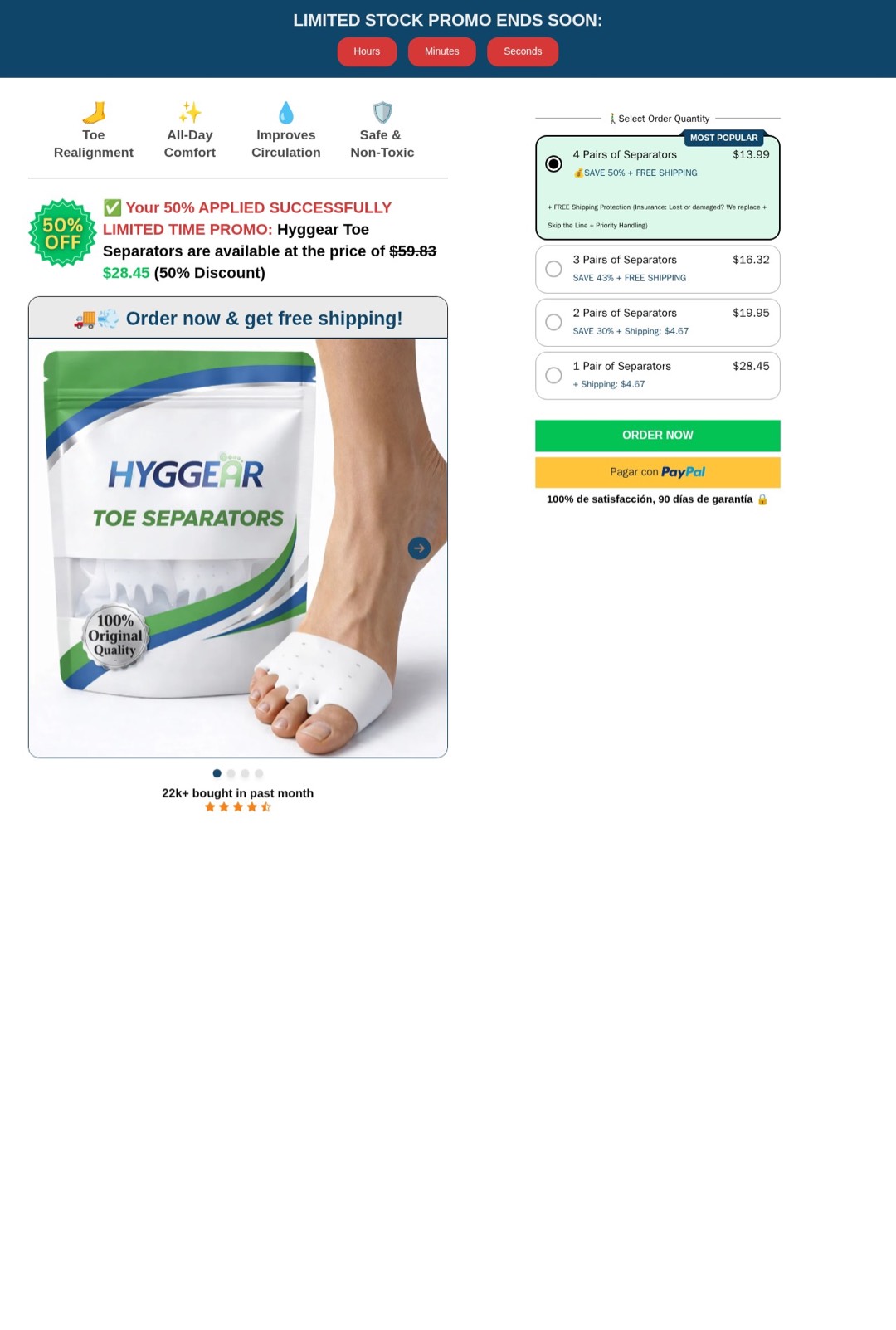
Classic DTC quantity-break landing page using Kaching Bundles radio-tile widget. The entire funnel is built around pre-cart volume discounts anchored by a prominently applied 50% coupon, urgency timer, and free-shipping incentive on the highest tier. No visible cart or post-purchase upsell layer is surfaced in the screenshot.
Operator's read
PricingFour-tier quantity break built entirely around a 50%-off anchor: the 1-pair price is set at $28.45 (compare-at $59.83), making it the deliberate sacrifice tier. Per-unit drops from $28.45 → $9.98 → $5.44 → $3.50 as you climb, a steep enough ladder to make the 4-pair default feel like an obvious deal. The $4.67 shipping charge on 1–2 pairs acts as a hidden price floor that further penalises lower tiers, pushing AOV up. The 4-pair pre-selection at $13.99 means the modal first-order AOV is intentionally kept low in dollar terms while maximising units-per-order — a smart volume play for a consumable with high repurchase potential.
Pricing tiers (1 widget)
Widget styleKaching Bundles radio-tile layout: four stacked cards, left radio button, quantity label left-aligned, price right-aligned, save% in coloured sub-text. Single 'MOST POPULAR' badge on the top (pre-selected) tier; no 'BEST VALUE' secondary badge used. Anchoring is done via the on-page 50%-applied confirmation banner rather than per-tile compare-at strikethroughs — the 1-pair tile is the only tier showing a compare-at ($59.83 → $28.45), so the savings cascade is implied rather than explicitly shown on tiers 2–4, which is a missed opportunity.
VerdictThe pre-selected 4-pair tile at $13.99 and steep per-unit ladder are well-executed — the funnel clearly converts on volume. The single highest-leverage change would be to add an explicit compare-at strikethrough on every tier (e.g. 2-pair show $39.90 crossed to $19.95, 3-pair show $59.83 crossed to $16.32) so shoppers on tiers 2–3 feel the same anchored saving rather than just a percentage label, which would lift average tier selection toward 3–4 pairs and increase AOV without changing the actual prices.
offer details (5)
Timer reads 00:00:00 in the screenshot — if this is always-on fake urgency it risks trust erosion with returning visitors. No post-purchase upsell visible; Kaching Bundles does not natively offer post-purchase one-click upsells, so a dedicated post-purchase app (AfterSell/ReConvert) would be the next AOV lever to install. PayPal express button present on page, which can shortcut the checkout and bypass any in-cart upsell layer if one were added later.
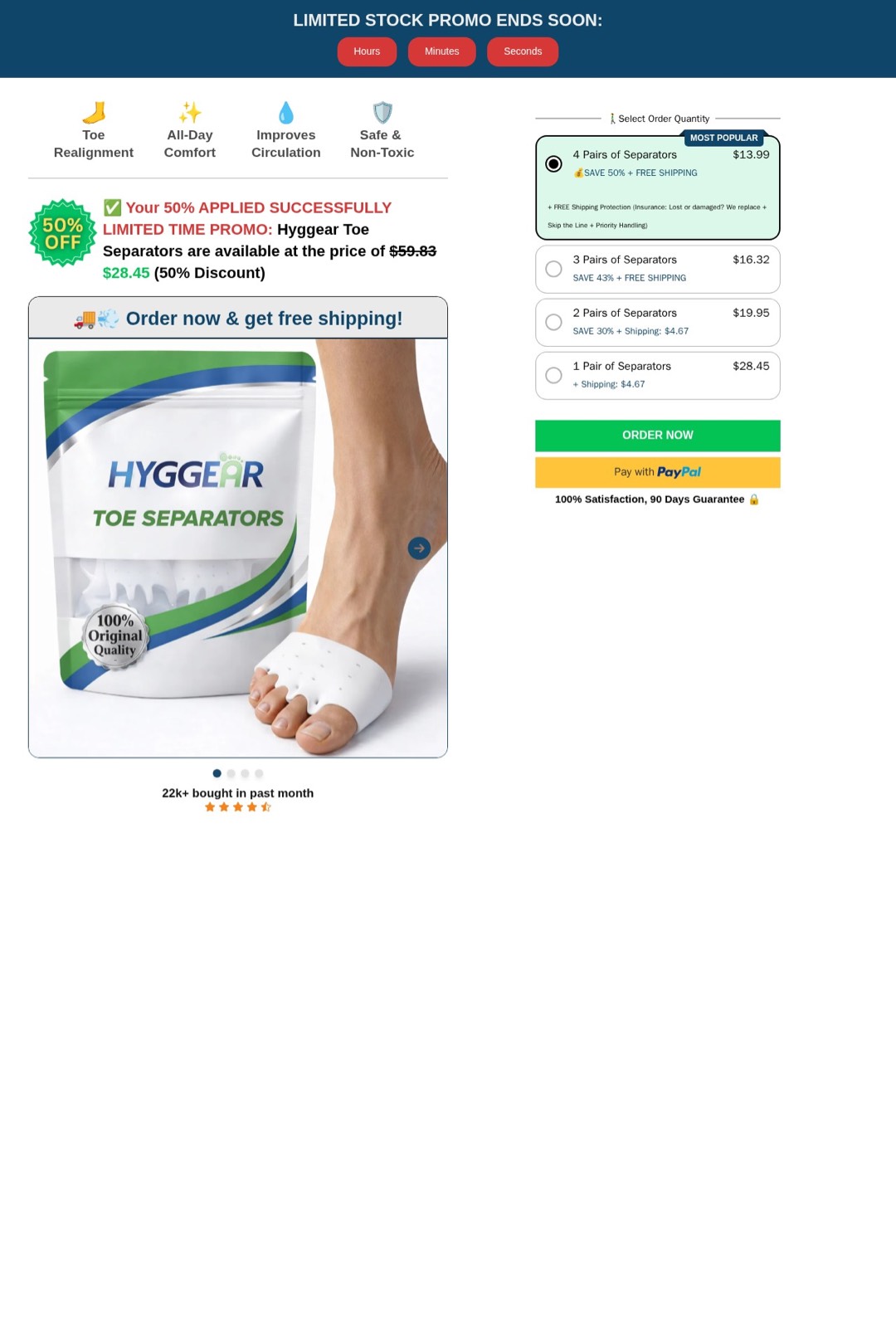
Volume-discount quantity ladder (4 radio-tile tiers) anchored by a loud 50% pre-applied promo, with urgency timer in the announcement bar. Higher quantities earn deeper discounts plus free shipping; single-unit buyer pays $28.45 + $4.67 shipping, making the 4-pack at $13.99 shipped the dominant value play. Kaching Bundles powers the widget.
Operator's read
PricingFour tiers running $28.45 → $19.95 → $16.32 → $13.99 with per-unit collapsing from $28.45 down to $3.50 at the 4-pack — that's an 88% per-unit drop which is an unusually steep ladder. The 4-pack is pre-selected and anchored against a $59.83 compare-at (implying ~$15/pair retail), making the $13.99 bundle feel like a no-brainer steal. The 1-pair tier actually shows a higher nominal discount % (52%) than the 3-pair (43%) because the compare-at math uses $59.83 as the anchor throughout, not a consistent single-unit price — this is an anchoring inconsistency but unlikely to be noticed by most buyers scrolling fast.
Pricing tiers (1 widget)
Widget styleKaching Bundles is rendering a vertical stacked radio-tile layout — four rows, each containing label, savings badge, and right-aligned price. The 'MOST POPULAR' badge sits on the 4-pack (the highest quantity AND cheapest per-unit tier), which is unconventional — typically that badge goes on a mid-tier to nudge fence-sitters up. The 50% pre-applied discount message flanks the widget with a bright green checkmark callout, reinforcing the deal before the buyer even reads the tiers. No compare-at strikethrough is shown on the 2- and 3-pack rows, which is a missed anchoring opportunity.
VerdictThe 4-pack pre-selection combined with free shipping removal on lower tiers is executed well — it funnels the majority of buyers to the highest-AOV option before they even deliberate. The single highest-leverage change: add a post-purchase one-click upsell (ReConvert or AfterSell) offering a complementary SKU — e.g., Hyggear compression socks or a toe spacer carrying bag — at 30% off, triggered only for buyers who took the 4-pack. At $13.99 checkout price, a $9–$12 post-purchase add-on accepted by even 20% of buyers would meaningfully lift revenue per session with zero ad spend increase. Currently Kaching Bundles alone leaves all post-purchase dollars on the table.
offer details (4)
The countdown timer is showing 00:00:00 in the screenshot, meaning it has expired or is static — a live dynamic timer would add genuine urgency. The 'MOST POPULAR' badge on the highest-quantity tier is atypical; most operators badge the middle tier to create a 'good-better-best' pull. No cart or post-purchase upsell evidence is visible in the screenshot or cart snippets, though Kaching Bundles has some cart functionality; post-purchase upsell is inferred as absent unless a separate app is installed.
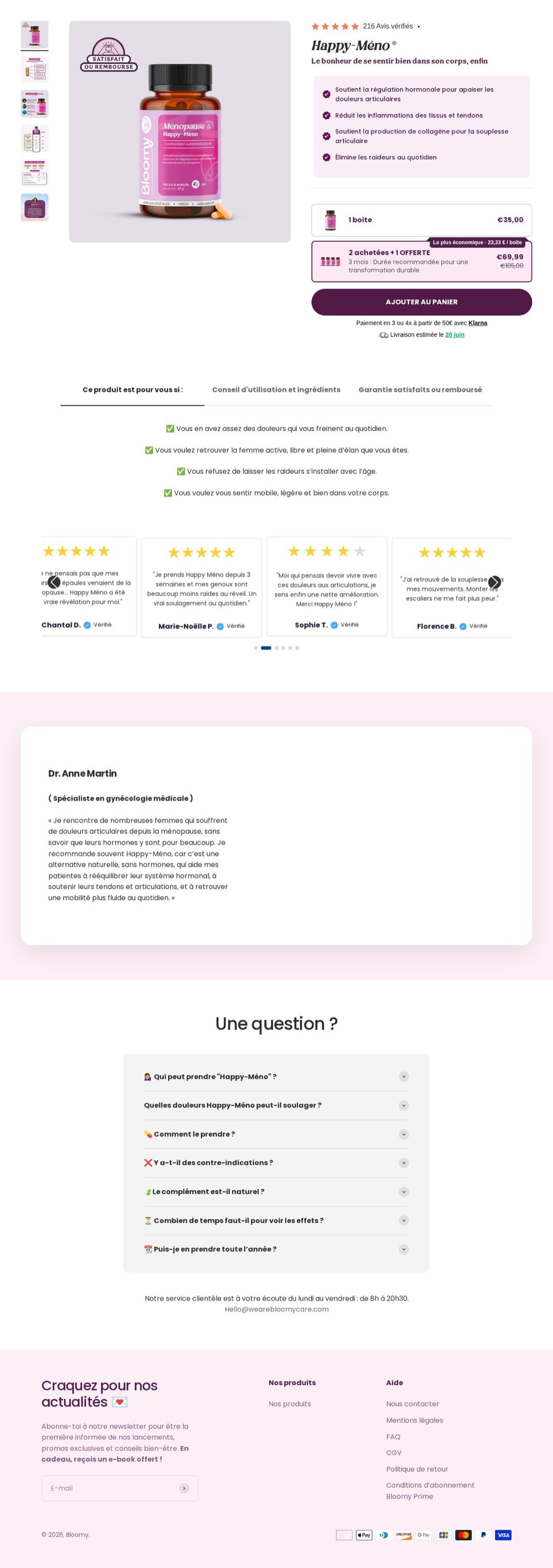
Two-tier quantity bundle on PDP (1 box at full price vs. 2+1 free bundle) anchored by a highlighted 'most economical' badge, backed by Zipify OCU for post-purchase one-click upsell and Kaching Bundles powering the PDP widget. No cart drawer or cross-sell visible. Email capture in footer with e-book incentive.
Operator's read
PricingOnly two tiers: €35.00 single (€35/unit) vs. €69.99 for 3 (€23.33/unit, 33% off vs. implied €105 full price). The jump is massive — no middle option at 2 boxes — so price-sensitive buyers who won't commit to 3 months have nowhere to land between €35 and €70. The bundle compare-at of €105 is legitimate (3×€35) making the anchor clean. The bundle is pre-highlighted visually which nudges AOV hard, but the binary choice leaves a gap.
Pricing tiers (1 widget)
Widget styleKaching Bundles renders two stacked radio tiles directly below the bullet points. The single-box tile is plain; the bundle tile is highlighted in pink/purple with a top-right badge 'Le plus économique - 23,33€ / boite' and a strikethrough €105.00 compare-at. No 'Most Popular' label, no percentage-save callout on the tile itself — the per-unit price does the anchoring work. Layout is clean and mobile-friendly.
VerdictThe 33% discount on the 3-box bundle is well-framed and the per-unit callout (€23.33/box) is a strong anchor — this is executed correctly. The single highest-leverage move is adding a middle tier: a 2-box option at ~€62–65 (≈10–11% off, ~€31–32/unit) with a 'Starter' label. This gives hesitant first-time buyers a lower commitment step, captures buyers who bounce at €70, and makes the 3-box bundle look even more compelling by comparison — classic decoy pricing that typically lifts bundle-tier attach rate by 15–25%.
offer details (2)
No cart drawer, cross-sell, or free-shipping threshold bar visible. Email capture in footer uses free e-book as incentive — low-friction lead gen but no discount code, so it won't cannibalize margin. Klarna BNPL (3-4x from €50) is shown under ATC which effectively reduces the perceived price of the €69.99 bundle to ~€17.50/month — this is a meaningful conversion lever for a €70 AOV on a health product targeting menopausal women.

Single-product PDP hero driving volume via a deep struck-through anchor price (MSRP $830 → $249, flagged as 70% off), length variants as a quasi-tier selector, a free-shipping threshold bar at $140, and post-purchase upsell infrastructure via Zipify OCU. Selleasy and Bundler are installed for cross-sell/bundle but no visible widget renders on this PDP. Social proof wall (3,852 reviews) and 'You May Also Like' carousel handle lateral AOV lift.
Operator's read
PricingThe store leans almost entirely on a single struck-through anchor — $830 compare-at vs $249 sale — to manufacture a 70% discount perception. There is no true volume or quantity-break ladder; the only 'tier' is a length variant ($209 for 24" vs $249 for 48"), which nudges spend up $40 but doesn't compound AOV meaningfully. The $140 free-ship threshold is already cleared at $249, so it provides zero incremental pull on this SKU. With Bundler installed but dormant on this PDP, there's a clear gap: no mechanism forces a second unit or an accessory add-on at checkout.
Pricing tiers (1 widget)
Widget styleNo bundle or volume-discount widget is rendering on this PDP. What occupies that slot is a two-button radio-tile variant selector (24" / 48") with a 'POPULAR' badge on the 48" option — a soft anchor tactic, not a true discount ladder. The compare-at $830 → $249 is the entire anchoring strategy. The 'You May Also Like' carousel at the bottom is the only cross-sell surface visible, and it's low-intent given its placement after 3,800+ reviews.
VerdictThe 70% anchor and review wall are executed well — social proof density (3,852 UGC reviews with photos) is genuinely strong and the POPULAR badge on the larger variant is a clean nudge. The single highest-leverage change: activate Bundler or Selleasy to surface a 'Buy 2, save 10% / Buy 3, save 15%' quantity-break widget directly on the PDP above the Add-to-Cart button. Raised garden beds are a natural multi-unit purchase (front yard + back yard, gift pairs) and right now there is zero mechanical incentive to add a second unit — that's leaving an easy 20-30% AOV lift on the table given the $249 price point and the installed app infrastructure that already exists.
offer details (4)
Confidence is medium: the screenshot is small/compressed and some widget areas may not have rendered fully. Grade selector (Standard vs Select Grade) is visible as a second variant axis but pricing for Standard grade is not captured in the snippets — could represent an additional anchoring tier if Standard is cheaper. CAD/USD currency switcher is present, suggesting a meaningful Canadian customer base that may respond differently to the $140 free-ship threshold (which appears to be USD-denominated).

Single-SKU product page with quantity selector (1/2/4/BUNDLE-SAVE $$$) driving multi-unit AOV lift, free-shipping threshold banner at £99, Selleasy cross-sell widget for recommended add-ons pre-cart, and AfterSell post-purchase one-click upsell funnel. Core mechanic is quantity-break pricing surfaced inline on the PDP, supported by a free-ship nudge.
Operator's read
PricingThe page leads with a single base price of £20.99 for 1 pair and stacks three higher-quantity options (2 pairs, 4 pairs, bundle), but the actual discount percentages and per-unit prices for tiers 2–4 are not readable at screenshot resolution. The free-shipping threshold at £99 does the heavy lifting as an implicit AOV nudge — at £20.99/pair a customer needs to buy roughly 5 pairs to hit free ship, which creates natural pressure toward the bundle tier. Without legible discount depths on the upper tiers it's impossible to confirm whether the per-unit ladder is genuinely attractive or just nominal.
Widget styleNo third-party volume-discount app widget is identifiable by name; the four-option radio-tile row (1 / 2 PAIRS / 4 PAIRS / BUNDLE - SAVE $$$) appears to be either a native Shopify variant-as-quantity setup or a lightweight Selleasy quantity-break block. There are no visible 'Most Popular' or 'Best Value' badges except implied by 'BUNDLE - SAVE $$$' label copy. No struck-through compare-at prices are visible on the base tier, so there is no classic anchor play at the single-unit level — the store leans on the free-ship bar rather than a price anchor to motivate quantity.
VerdictThe multi-unit radio tiles are directionally correct and the Selleasy cross-sell + AfterSell post-purchase stack gives three AOV levers, which is solid for a £20.99 accessory. The single highest-leverage change: surface explicit per-unit savings and a bold 'Most Popular' badge on the 2-pair tier right inside the radio tile — e.g. '2 PAIRS – £17.99/pair, Save 14%' — so the customer sees a concrete reason to trade up without having to mentally calculate whether the bundle is worth it. Right now the upper tiers are opaque, which kills conversion on the very mechanic the store is betting on.
offer details (4)
Base price confirmed at £20.99 GBP for 1 pair. Exact prices for 2-pair, 4-pair, and bundle tiers not legible in screenshot — tier price/discountPct/perUnit fields left null. AfterSell post-purchase upsell inferred from installed apps list, not visible on page. Selleasy cross-sell add-on block is visible on PDP. 4.8-star rating from 130+ reviews displayed on page, providing social proof support for upsell conversion.
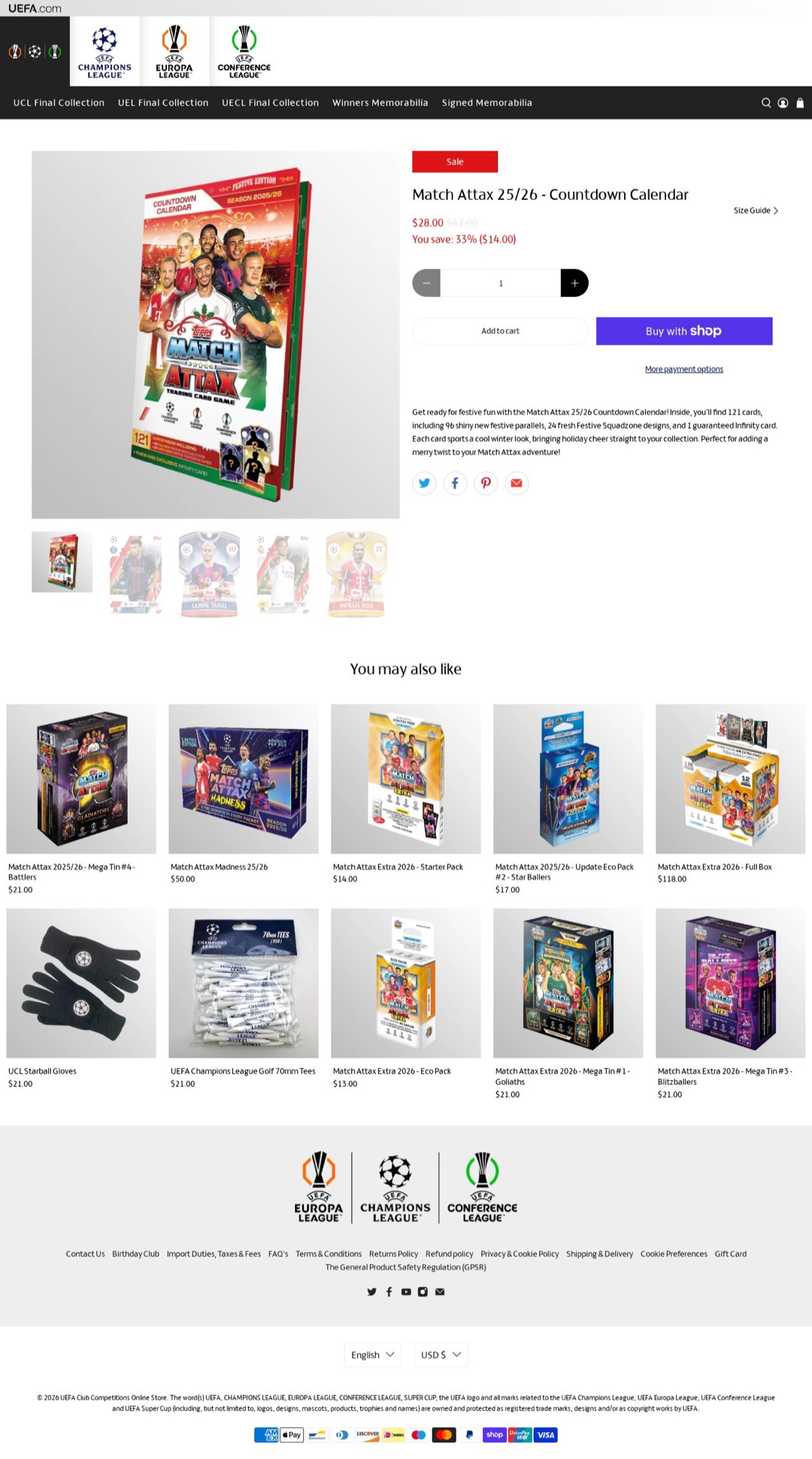
Single-SKU markdown sale with cross-sell recommendation carousel. The store leans on a struck-through compare-at price and a 'Sale' badge as the primary conversion lever, with Selleasy powering a 'You may also like' product carousel below the fold for AOV lift. No volume/bundle widget is present on the PDP.
Operator's read
PricingThere is exactly one price point — $28.00 marked down from a $42.00 compare-at, surfaced as '33% off / You save $14.00' in red. No volume tiers, no bundle pricing, no subscribe-and-save. The entire anchoring strategy rests on a single struck-through price and a Sale badge. That's a thin lever: once the customer decides the $28 feels right (or wrong), there is zero structural nudge to buy more units or add a complementary SKU before checkout.
Pricing tiers (1 widget)
Widget styleThere is no volume-discount or bundle widget on this PDP whatsoever. The slot that a Quantity Breaks or Bundle Builder app would occupy is completely empty. What fills that space instead is a plain +/- quantity stepper (defaulting to 1) and a 'Buy with Shop Pay' accelerator button. The 'You may also like' carousel below the fold is the only merchandising tool present, and it's a generic Selleasy cross-sell grid — no badges, no 'Most Popular', no escalating compare-at, no save-X% incentive to pick a higher-priced item.
VerdictThe sale mechanic is clean and the 33% discount is a credible anchor that will convert impulse buyers, but the store is leaving serious AOV on the table. The single highest-leverage change: add a Selleasy (or Frequently Bought Together) bundle on this PDP pairing the Countdown Calendar ($28) with the Eco Pack ($13) or a Mega Tin ($21) at a 10-15% bundle discount — e.g. 'Add the Mega Tin for $17.85 (save 15%)'. Given that the carousel already shows 10 complementary SKUs, the purchase intent for a second item clearly exists; the store just isn't giving shoppers a frictionless, discounted path to add it pre-cart.
offer details (2)
Currency shown in USD per the store's locale selector (USD $). The product snippet references £19.99/£30.00 suggesting a GBP variant also exists on the domain. Selleasy is the only confirmed upsell app; no ReConvert, AfterSell, or Zipify detected so no post-purchase offer inferred beyond what Selleasy can do in-cart.
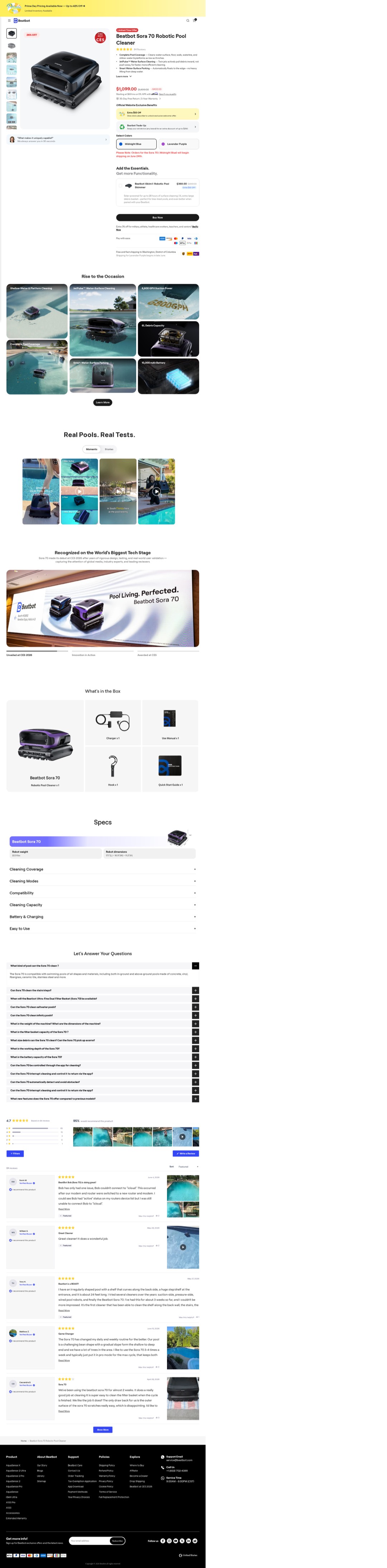
Single-SKU premium DTC with cross-sell bundle add-ons and a site-wide sale anchor (Prime Day up to 42% off). No on-page volume/quantity-break widget. AOV lever is a checkbox-style add-on cross-sell (pool essentials/accessories visible below the ATC) powered by Selleasy, plus pre-built bundles (e.g. AquaSense 2 & Skimmer 3D) merchandised via nav and product recommendations.
Operator's read
PricingThere is no on-page volume or quantity-break pricing widget — this is a single-unit, high-ticket purchase (Beatbot Sora 70 listed at $1,099.00 with a struck-through compare-at implying a sale price during Prime Day, with the banner claiming up to 42% off site-wide). The entire pricing strategy leans on a single struck-through anchor plus the urgency of a time-limited sale event rather than a per-unit ladder. The cross-sell accessory at $249 is the only visible AOV bump mechanic on the page itself.
Widget styleThere is no volume-discount or bundle widget on this PDP. The slot that would typically hold a quantity-break radio-tile or bundle builder is instead occupied by a Selleasy 'Add the Essentials' checkbox add-on block showing a single accessory SKU with image, name, and price inline below the ATC. The nav merchandises pre-built bundles ('Better Value' badged) as separate product URLs rather than an on-page configurator. No 'Most Popular' or 'Best Value' tier badges are present on this page.
VerdictThe struck-through anchor plus Prime Day framing is clean and credible for a $1K+ robot — urgency and social proof (4.7 stars, real pool photos) are well executed. The single highest-leverage change: replace the single-accessory Selleasy checkbox with a 2-3 item bundle builder or 'Complete Your Pool Setup' tile group (e.g. Sora 70 + Skimmer + Balance) with a visible bundle-save dollar amount (e.g. 'Save $120 when bought together'). Right now a buyer who wants everything has to navigate away to a bundle URL, killing conversion; putting the bundle toggle inline on the Sora 70 PDP would capture that AOV lift without an extra click.
offer details (4)
Pricing widget data was not extractable from the screenshot — the $1,099 base price and compare-at are visible but exact sale price during Prime Day could not be confirmed numerically from the provided evidence. Selleasy post-purchase upsell inferred from app install, not observed in screenshot.

Weight-plate PDP built around a multi-SKU selector (individual plates + pre-configured sets) with a sitewide 'Build My Gym' 5% bundle discount anchored in navigation, AfterSell post-purchase upsell, and Selleasy cross-sell/upsell. No true volume-discount widget on the PDP; AOV lift comes from set upgrades, recommended accessories carousel, and post-purchase flow.
Operator's read
PricingBells of Steel leans on pre-configured set upgrades rather than a true quantity-break widget. The one visible set price point is $509.99 CAD (245 lb set, save $25 vs. buying individual plates), implying a ~5% discount — thin but consistent with the sitewide 'Build My Gym 5%' promise. There's no per-unit price ladder displayed, no escalating compare-at across multiple tiers, and no struck-through MSRP on individual plates; the anchor is purely the $25 set saving. The 8%, 22%, 20%, 29% off badges visible in the gallery suggest sale pricing on individual SKUs, but these aren't surfaced in a structured pricing widget.
Pricing tiers (1 widget)
Widget styleNo dedicated volume-discount or bundle-builder widget exists on this PDP. The slot is occupied by native Shopify variant selection — a plain radio/dropdown list of SKUs. There are no 'Most Popular' or 'Best Value' badge tiles, no side-by-side tier table, and no app-driven quantity-break UI visible. The recommended accessories carousel (Selleasy or native) and the AfterSell post-purchase flow carry the AOV-lift work below and after the fold.
VerdictThe accessories carousel and AfterSell post-purchase flow are solid foundations, and the set-saving callout ($25 off, 5%) gives a rational upgrade reason. The single highest-leverage change: replace the flat variant dropdown with a 3–4 tier quantity-break/set-upgrade widget (e.g. Selleasy bundle or a dedicated app) that shows per-plate cost dropping across tiers — e.g. 'Buy 45 lb pair @ $X each → Buy Full 245 lb Set @ $Y/lb, save 5% → Buy Full 315 lb Set @ $Z/lb, save 8%' — with a 'Best Value' badge on the mid-tier. This alone typically lifts AOV 12–18% on weight-plate PDPs by making the unit economics visually obvious to the buyer who is already price-shopping iron.
offer details (5)
Screenshot resolution limits precise reading of all individual plate prices and some accessory price points. CAD currency inferred from '$80 CAD' visible in accessories carousel. Discount percentages of 8%, 22%, 20%, 29% visible in image gallery badges but not mapped to specific SKUs. Selleasy widget placement (PDP vs. cart) could not be confirmed from screenshot alone.

Single-SKU hero product (Snapmaker U1 Color 3D Printer) anchored with a struck-through compare-at price, supported by a bundled add-on/accessory cross-sell carousel directly on the PDP, a free-shipping threshold banner, and a Qikify Slide Cart for cart-stage upsells. No volume/quantity-break widget present.
Operator's read
PricingThis store runs a single-SKU model with no volume or quantity-break widget — the entire pricing strategy hinges on one compare-at anchor: €849 vs €999, a 15% discount (€150 saving). The free-shipping threshold at €89 is trivially cleared by the hero SKU, so it functions purely as a trust signal rather than an AOV lever. The real discount depth lives in the accessory cross-sells (39–41% off), not the main unit, which creates an interesting pull-to-bundle dynamic but only if the customer actively engages the add-on carousel.
Pricing tiers (1 widget)
Widget styleNo volume-discount or bundle-builder widget on the PDP. The dominant pricing widget is a plain native Shopify compare-at strike-through (€999 → €849). The add-on section uses what appears to be a checkbox-addon carousel layout ('0 items selected / EUR 0.00') with individual product cards showing original vs sale price and pre-order shipping dates — likely powered by a custom section or a bundling app, not a recognised tiered-pricing app. Badges used are percentage-off labels ('40% off', '39% off') rather than 'Most Popular'/'Best Value' tier labels.
VerdictThe PDP cross-sell carousel is the strongest AOV lever already in place — deep 40% discounts on accessories give genuine incentive to add. What's executed well: the compare-at anchor on the hero unit is clean and credible, and surfacing accessories with real discount percentages inline (before cart) removes friction. The single highest-leverage change: add a 'Complete the Setup' bundle pre-selection that defaults 1–2 accessories as checked (e.g. Top Cover + Hot End) with a combined bundle saving clearly shown (e.g. 'Save €175 when added together'), so the default cart value lands at ~€1,062 instead of €849 — a ~25% AOV lift without any new traffic cost.
offer details (3)
Screenshot is low-resolution making fine UI details hard to confirm; confidence is medium. No post-purchase upsell app detected beyond Qikify Slide Cart. Pricing widget analysis is limited to the single compare-at anchor visible in product snippets; no quantity-break or subscribe-and-save widget found.

Modibodi NZ runs a mid-funnel promotional strategy anchored on a sitewide sale (up to 50% off) plus a free-gift-with-purchase threshold offer surfaced in the announcement bar. The PDP itself is a single-SKU add-to-cart page with no visible bundle or volume-discount widget. Cross-sell is handled via a 'You May Also Like' Rebuy-powered carousel below the fold showing 4 related styles. Vitals likely powers review widgets (4.8★, 500+ reviews) and possibly a free-shipping bar or sticky element. No post-purchase upsell UI is visible in the screenshot but Rebuy is capable of post-purchase flows.
Operator's read
PricingThere is no visible pricing widget or volume-discount ladder on this PDP — the store leans entirely on a struck-through compare-at single price plus the announcement-bar sale framing ('up to 50% off sitewide') to create urgency. The Value Packs category in the nav hints at a bundle mechanic elsewhere on the site, but on this individual teen hipster bikini PDP the operator is leaving AOV entirely to the Rebuy carousel cross-sell rather than a structured quantity break. No per-unit pricing ladder, no pre-selected tier, no numeric discount badge is rendered on this page.
Widget styleThere is no bundle or volume-discount widget on this landing page. The slot that would typically hold a quantity-break radio-tile or inline tier table is instead occupied by a standard single-variant size selector (XS–2XL dropdown or radio) and a plain Add to Cart button. Vitals is likely rendering the star-rating badge and possibly a trust-badge block below ATC; Rebuy surfaces the 'You May Also Like' carousel. No app badge, 'Most Popular' callout, or escalating compare-at tier structure is present.
VerdictThe free-gift threshold and sitewide sale create solid top-of-funnel pull, and the Rebuy carousel is a competent cross-sell. However, the single highest-leverage move is to add a quantity-break widget (Rebuy's SmartCart or a dedicated app) directly on this PDP — e.g., 1 pair at $X, 3 pairs save 15%, 5 pairs save 25% — because period underwear is a replenishment product with a natural multi-unit purchase pattern. Modibodi already acknowledges this with Value Packs in the nav but fails to surface the incentive at the moment of highest intent (the PDP itself), meaning they're routing motivated buyers through an extra click rather than converting the AOV bump inline.
offer details (4)
Confidence is medium because the screenshot is small and no cart page or post-purchase page is visible. Pricing widget section is empty as no numeric tier table or quantity-break selector is rendered on this PDP. Value Pack bundle pricing exists elsewhere on the site but is not surfaced on this specific product page.

Single-product beauty brand (BioAqua foundation/base) running a 'Compre 1 Leve 2' (Buy 1 Get 2) anchor offer as the headline promotion. The store leans on a Brazilian-market DTC playbook: rich editorial PDP with before/after imagery, skin-benefit storytelling, social proof, and a prominent bundle deal communicated via the announcement banner and page copy rather than a native pricing widget. Kaching Bundles and Pumper Bundles are installed, suggesting bundle logic is live even if no numeric tier widget is clearly rendered in the screenshot.
Operator's read
PricingThere is no visible numeric pricing widget on the PDP — no radio tiles, no per-unit ladder, no compare-at strikethrough rendered in the screenshot. The entire pricing anchor is carried by the 'Compre 1 Leve 2' (Buy 1 Get 2) banner, which is a strong value signal but gives the shopper zero price transparency or tiered incentive to spend more. With Kaching Bundles and Pumper Bundles installed, the bundle logic exists but appears either below the fold or not rendering visibly, meaning the AOV lever is being left on the table at the most critical decision point.
Widget styleNo interactive volume-discount or bundle widget is visible in the PDP. The slot that would normally be occupied by a Kaching/Pumper radio-tile selector (e.g., '1 unit / 2 units / 3 units' with per-unit prices and a 'Most Popular' badge) is instead filled by static editorial content and a single CTA button. The 'Compre 1 Leve 2' mechanic reads as a BOGO rather than a tiered discount ladder, which limits the ability to push buyers to a 3x or 4x quantity with an escalating per-unit saving.
VerdictThe brand executes the emotional/editorial side well — rich before/after visuals, skin-tone inclusivity, and a clear hero claim — and the BOGO banner creates urgency. However, the single highest-leverage change is to surface the Kaching or Pumper bundle widget directly on the PDP as a 3-tier radio-tile selector (e.g., 1 unit at full price, 2 units at ~15% off, 3 units at ~25% off with a 'Mais Popular' badge on tier 2), replacing the static BOGO copy. This alone typically lifts AOV 20-35% on beauty SKUs in the Brazilian DTC market by converting single-unit buyers into multi-unit buyers at a visible, quantified saving rather than an ambiguous 'leve 2' promise.
offer details (4)
Confidence is medium because the PDP screenshot is compressed and Brazilian-Portuguese text is partially legible. No cart drawer or post-purchase screen was visible. Bundle app behavior (Kaching/Pumper) is inferred from installed-app data. The 'Compre 1 Leve 2' may map to a specific SKU bundle variant rather than a quantity discount, which would explain the absence of a widget.
MOD Lighting is a premium DTC lighting brand running a catalog/editorial homepage strategy. No visible pricing widgets or volume discounts on the homepage — the play is trust-building (30-day MBG, free shipping, 24/7 support, warranty, trade program) plus room-based navigation to drive product discovery. Rebuy is installed, implying cart-based cross-sells and post-purchase one-click upsells exist deeper in the funnel but are not visible here.
Operator's read
PricingThere are zero visible pricing tiers, volume breaks, or bundle widgets on this homepage — no quantity ladder, no compare-at anchoring, no subscribe-and-save. The store leans entirely on trust signals (30-day MBG, free shipping, warranty, 24/7 support) and editorial room-based navigation to justify premium spend. Without seeing individual PDPs it's impossible to confirm whether struck-through anchors exist there, but at the homepage level the pricing architecture is completely flat and non-promotional.
Widget styleNo volume-discount or bundle widget is present on this landing page. The slot that would typically house a pricing widget is occupied instead by a 'Shop by Room' editorial grid and a 'Most Popular' horizontal scroll rail — both brand-building/discovery patterns rather than conversion-optimization ones. Rebuy is installed but its widgets (smart cart cross-sells, post-purchase upsell) are not visible here; they presumably fire deeper in the funnel. No app badge, no 'Most Popular' tier callout, no save-X% mechanic is visible anywhere on this page.
VerdictThe trust stack (free shipping, MBG, warranty, trade program, 4.9-star community gallery) is executed well and credibility signals are prominent — smart for a high-AOV lighting category where buyers need reassurance. The single highest-leverage change would be adding a Rebuy Smart Cart drawer with room-matched cross-sells (e.g., 'Customers who bought this chandelier also added these wall sconces') plus a soft AOV threshold bar — something like 'Add $X more for a free bulb kit' — since lighting naturally lends itself to multi-SKU room builds and the current funnel leaves all that incremental revenue to chance.
offer details (3)
Analysis based on homepage screenshot only. No PDP, cart page, or post-purchase page visible. Rebuy cross-sell and post-purchase widgets may be fully configured but are not surfaced at this stage. Trade Program and Open Box links suggest B2B and clearance funnels exist separately. Community gallery with 1000+ reviews is a strong social proof lever already in use.
Single-SKU cross-sell ecosystem play. The hero product (8.0mm Rope, $34) is the entry point into a modular 'Wares System' — the upsell mechanic is ecosystem lock-in via cross-sell carousel ('Complete your Wares System™') pushing bags, cases, adapters, and sacoches. A sitewide banner drives a 20% second-strap incentive to lift multi-unit purchase. No volume/bundle pricing widget exists on the PDP. Selleasy powers the inline cross-sell grid below the fold.
Operator's read
PricingNo volume or bundle pricing widget exists on this PDP — the store leans entirely on a sitewide banner discount ('20% off second strap') to drive multi-unit behavior on a $34 hero. There is no per-unit ladder, no pre-selected tier, and no compare-at anchor on the hero product itself. The cross-sell carousel does use struck-through compare-at anchors on two SKUs (Verdon Case $10 vs $20 original; Phone Sacoche $34.30 vs $49), but the hero strap has zero anchoring. AOV lever is the banner deal, not structured pricing.
Widget styleNo volume-discount or bundle widget occupies the hero pricing slot — that space is taken by a plain dropdown (Strap Style selector) and a color-swatch grid with 30+ color options. The cross-sell section below is a Selleasy inline grid — flat tile layout, no radio buttons, no 'Most Popular'/'Best Value' badges, no escalating save-X% messaging. It reads more like a collection page than a curated upsell. The 20% second-strap banner is the closest thing to an AOV-lifting mechanic but has no urgency, no countdown, and no cart-level reinforcement.
VerdictThe ecosystem narrative ('Wares System') is genuinely strong and the color depth (30+ variants) signals real product investment — that's the moat. But leaving a 20% multi-unit deal only in the banner with no PDP quantity-break widget or cart-level reminder is a significant missed conversion. The single highest-leverage change: replace the banner-only mechanic with a Selleasy or native quantity-break widget directly on the PDP — 'Buy 2 straps, save 20%' as a radio-tile selector at $34/$54.40 — so the incentive is visible at the moment of decision, not just in a 7px banner strip. That alone should lift multi-unit attach rate materially on a $34 repurchasable SKU.
offer details (2)
No post-purchase upsell flow is visible in screenshots. Selleasy is installed but used exclusively for the inline cross-sell carousel, not a slide-cart drawer or post-purchase modal. Cart snippets were empty so no cart-page mechanics confirmed. Phone Sacoche compare-at ($49 → $34.30) implies a ~30% discount used as anchor in the cross-sell, not on hero.
Mother's Earth NL runs a mission-led (sustainability/donation) DTC brand on Shopify with Rebuy powering cart-stage upsells. The core mechanic visible is a charity donation selector embedded in the cart drawer, combined with a free-donation-with-purchase trigger ('10 wasjes' — 10 laundry washes donated). No volume/bundle pricing widget is present on the product page. Rebuy is installed and its Alpine.js (x-text, upsell.compare_at_price) markup is leaking into the cart HTML, confirming a Rebuy-driven slide cart drawer with at least one upsell tile rendered inline, including a compare-at price field. The announcement banner drives urgency via the free donation offer rather than a discount.
Operator's read
PricingThere is no volume-discount or bundle pricing widget visible anywhere on this product page — zero tiers, zero quantity breaks. The store leans entirely on a single compare-at price anchor inside the Rebuy cart drawer (upsell.compare_at_price) to create perceived value on the cross-sell item, not on the primary product. The cart total shown is €0, suggesting the screenshot was captured on an empty-cart state, so no live price points could be extracted. Without a tiered pricing ladder, average order value relies 100% on the Rebuy cross-sell firing after add-to-cart.
Widget styleNo volume-discount or bundle widget exists on the landing/product page — that slot is simply absent. The only pricing widget is the Rebuy SmartCart drawer upsell tile, which uses an Alpine.js-rendered compare-at price (struck-through) next to the upsell offer price to create a discount anchor. Layout is a single inline tile inside the cart drawer with a 'voeg toe' (add) CTA button. No radio-tiles, no quantity ladder, no 'Best Value' badge — just a bare cross-sell card with an anchor price. The charity donation selector is a UX/brand engagement element, not a pricing mechanic.
VerdictThe brand-mission angle (donate 10 washes per order) is genuinely differentiated and builds emotional commitment at cart — that's well executed and likely lifts conversion rate. The single highest-leverage AOV move is adding a 3-tier quantity-break widget directly on the product page (e.g. 1 unit at full price, 2 units save 10%, 3 units save 18%) — laundry/household consumables are a textbook repeat-purchase category where multi-pack anchoring consistently lifts AOV 25-40%. Right now Rebuy is doing all the heavy lifting post-add-to-cart with no pre-cart pricing incentive to buy more units upfront.
offer details (3)
Page captured is the Cookie Policy page (Cookiebeleid), not a product page — this explains the absence of any pricing widget or product-level upsell UI. All upsell evidence comes from leaked Rebuy Alpine.js cart HTML in the provided snippets and the announcement banner. Confidence is medium because no product page or live cart state was visible. Store domain nl.mothersearth.com targets Dutch market (NL). Footer confirms 500,000+ tevreden klanten (satisfied customers) and email newsletter CTA — suggests established brand with list-based retention but AOV optimisation appears underdeveloped on the product page itself.

Single-SKU apparel PDP with no visible volume/bundle pricing widget. AOV levers are a free-shipping threshold ($99 CAD), a 'You May Also Like' cross-sell carousel powered by Rebuy at the bottom of the PDP, and Bundler installed but not surfaced visibly on this page. Core conversion relies on brand narrative, stretch-fabric feature callouts, UGC reviews, and the free-ship nudge in the announcement bar and product block.
Operator's read
PricingThere is no volume or bundle pricing widget visible on this PDP — zero tiers, no per-unit ladder, no quantity breaks. The entire pricing architecture is a single flat price point (product not fully legible but comparable SKUs visible at $139 CAD) with a struck-through compare-at price absent from what's visible. The only AOV mechanic with a hard number is the $99 free-shipping threshold in the banner, which passively nudges a second unit or category add but does nothing to actively present a value proposition for buying more.
Widget styleNo volume-discount or bundle widget is rendered on this page despite Bundler being installed. The slot that would normally hold a quantity-break or bundle tile is occupied by: (1) the trust-badge trio (Free Shipping / 30-Day Returns / 1-Year Warranty) directly under the ATC button, and (2) the Rebuy 'You May Also Like' carousel below reviews. No radio-tiles, inline table, dropdown tiers, 'Most Popular' badges, or escalating compare-at anchoring are present.
VerdictThe brand storytelling, fabric tech callouts, and review volume are solid trust-builders, but the monetization architecture is leaving easy AOV on the table. The single highest-leverage move is activating Bundler (already installed, zero incremental cost) with a 2-pair or 3-pair quantity-break widget directly on the PDP — e.g. 1 pair at $139, 2 pairs at $129 each (save 7%), 3 pairs at $119 each (save 14%) — pre-selecting the 2-pair tier. Given the $99 free-ship threshold, a shopper buying one $139 item already qualifies, so the threshold alone won't push a second unit; only an explicit per-unit discount with a visible savings badge will move that needle.
offer details (3)
Currency confirmed CAD from banner (CA flag toggle visible). Rebuy carousel product evidence: Performance Denim Lite Relaxed Straight at $139 CAD with 5.0/5 stars and 2 reviews visible. Bundler app installed but no widget rendered on this PDP screenshot. No cart drawer screenshot provided so cart-stage Rebuy cross-sell is inferred from app capability, not confirmed visually.
Topologie runs a system-selling approach built around a modular 'Wares System™' ecosystem (adapter + strap + case). Primary AOV levers are: (1) a banner-level % discount on a second strap, (2) a 50% bundle discount on the adapter when bought with a case, (3) a free-shipping threshold at HK$250, and (4) an inline below-the-fold cross-sell carousel of complementary straps. Installed apps (Rebuy, Selleasy, CartHook) suggest cart-level and post-purchase upsell infrastructure, though no widget is visible in the screenshot.
Operator's read
PricingThere is no volume or quantity-break pricing widget on this PDP. Instead, Topologie leans on three discrete incentive layers: a flat 20% off a second strap (banner-level, no minimum spend beyond buying two), a conditional 50% off the HK$80 adapter (bringing it to ~HK$40) when bundled with a Siurana or Airy case, and a HK$250 free-shipping threshold. The adapter at HK$80 is a low-friction entry SKU; the real AOV play is attaching a strap (HK$198–HK$550) plus the case to trigger the bundle discount and clear the free-ship bar simultaneously. No struck-through anchor or per-unit ladder exists on this page.
Widget styleThere is no volume-discount or bundle-builder widget on this PDP. The slot that would normally hold a quantity-break radio-tile or inline table is instead occupied by the 'Complete your Wares System™' cross-sell carousel — six strap SKUs, each as an independent tile with colour-swatch count, price (3.0mm Tricord shows a compare-at HK$220 struck through against HK$198, a ~10% implicit anchor), and a standalone red ADD TO CART button. The carousel appears powered by Rebuy or Selleasy given the installed app stack, but no badge ('Most Popular', 'Best Value') or explicit save-% callout is present on any tile.
VerdictThe system-selling concept is well-executed — the modular ecosystem framing ('Wares System™') gives genuine logical reason to buy multiple SKUs, and the 50% adapter bundle is a smart attach mechanic that effectively makes the adapter free-feeling. The single highest-leverage change I'd make is to replace the passive carousel with a Rebuy-powered bundle builder that pre-selects the adapter + one recommended strap + case as a pre-built kit at a visible combined price (e.g., HK$80 + HK$220 + case = HK$X, save HK$Y), surfacing the 50% adapter discount and 20% second-strap discount in one place so the customer sees total savings without having to do the math — this alone would collapse the decision friction and lift multi-unit attach rate measurably.
offer details (6)
Currency is Hong Kong Dollars (HKD). Confidence is medium because no cart drawer, post-purchase page, or app-rendered widget is visible — offers from CartHook, Rebuy, and Selleasy are partially inferred. The 3.0mm Tricord compare-at (HK$220 → HK$198) is the only visible price anchor in the cross-sell carousel; discount is approximately 10%. The Scrunchie Pocket Wrist at HK$550 is the highest-priced strap visible and serves as a passive price anchor within the carousel.

Single-SKU consumable listing with no volume/bundle pricing widget. Store leans on trust badges (30-day price guarantee, 1-year warranty), payment-method breadth, and a Qikify Slide Cart drawer as the sole AOV lever. No quantity breaks, no cross-sell carousel, no bundle builder visible on the PDP.
Operator's read
PricingThere is no volume or bundle pricing widget anywhere on this PDP. The product is priced as a single flat SKU — '5 Bits' is the unit sold, with one price point and no tiered quantity breaks visible. Without a compare-at struck-through anchor or a per-unit ladder, there is zero price anchoring to justify the ask or incentivize a larger basket. The entire pricing strategy is passive: buyer sees one number, one quantity selector, and either buys or doesn't.
Widget styleNo volume-discount or bundle widget exists on this landing page. The slot that would normally house a quantity-break radio-tile or inline tier table is completely empty. What occupies that space instead is a trust block — 30-day price guarantee and 1-year warranty copy — which handles objection handling but does nothing to escalate order value. Qikify Slide Cart is installed but cart snippets show no configured cross-sell or upsell tiles at capture time, meaning even the drawer is running at zero.
VerdictThe trust messaging (price guarantee, warranty) is well-matched to a considered hardware-accessory purchase and likely lifts conversion at the single-unit level. The single highest-leverage change is adding a quantity-break widget — e.g., 1 pack at full price, 2 packs at ~10% off, 3 packs at ~18% off — because CNC bits are a repeat-consumption consumable and buyers already understand they will need more. Even a simple inline radio-tile showing per-unit savings would capture the multi-pack intent that currently goes to Amazon, and would immediately lift AOV without touching ad spend.
offer details (0)
No upsell copy surfaced (JS-rendered or post-purchase).
Screenshot is low-resolution; no cart drawer contents visible. Installed app (Qikify Slide Cart) implies drawer-based cross-sell capability but no offers were configured or visible at time of capture. No post-purchase upsell app (ReConvert/AfterSell/Zipify) detected in the installed-apps list, so no post-purchase offer inferred.

Single-SKU eco laundry strip sold on mission-driven storytelling (charity donation per purchase, 30-day trial) with a free-shipping threshold and Rebuy-powered cart/post-purchase upsell. No visible volume-discount or bundle widget on the PDP; conversion levers are social proof (reviews), risk reversal (30-day Probewaschen), and cause marketing (10 washes donated per order).
Operator's read
PricingNo volume-discount or quantity-break widget is present on the PDP — the store leans entirely on a single price point anchored by a struck-through compare-at inside the Rebuy cart-drawer upsell (exact figures not readable in the screenshot). The 30 € free-shipping threshold acts as the only AOV nudge visible pre-cart; there is no per-unit ladder or tiered bundle to incentivise buying more units up front.
Widget styleThere is no bundle or volume-discount widget on the landing page. The slot where a quantity ladder would sit is occupied by the charity-donation selector ('Wähle deine kostenlose Spende') and the 30-day Probewaschen trust badge. The only discount mechanic visible is the Rebuy compare-at strike-through inside the slide-cart drawer — layout appears to be a single recommendation card with a HINZUFÜGEN button, not a multi-tier table or radio-tile widget.
VerdictThe mission and trust stack (charity, 30-day trial, heavy review volume) is well executed and differentiates the brand clearly. The single highest-leverage change would be adding a 3-tier quantity-break widget directly on the PDP (e.g. 1 pack / 3 pack at ~15% off / 6 pack at ~25% off), pre-selecting the middle tier — eco-strip buyers are repeat purchasers by nature and a visible per-unit saving would lift AOV immediately without undermining the mission narrative, while also pushing more orders past the 30 € free-ship threshold organically.
offer details (4)
Pricing widget tiers could not be parsed — no numeric price points were exposed in the screenshot or text evidence. Rebuy post-purchase offer is inferred from app installation. The 'KOSTENLOSE SPENDE - 10 Waschgänge' in the banner appears to be a promotional headline (10 washes donated), while the product snippet references 5 strips per purchase — minor copy inconsistency worth auditing.

Single-SKU hero product (CozyRest Memory Foam Neck Pillow) driven by a sitewide 10% discount incentive announced in the banner, urgency/scarcity copy on the PDP, and a cross-sell recommendation carousel below the fold. UpCart handles in-cart upsell and Kaching Bundles is installed but no visible quantity-tier widget renders on the PDP. Post-purchase flow inferred from installed apps.
Operator's read
PricingThere is no volume or quantity-break pricing widget rendering on this PDP despite Kaching Bundles being installed — the store leans entirely on a single struck-through compare-at anchor on the cross-sell carousel (Luxury Wedge from 2,645,000 VND vs. compare-at 4,489,000 VND, ~41% off) and a flat sitewide 10% banner discount. The hero pillow price is not legible at tier level from the screenshot, but the single-price model means no per-unit ladder is working to push multi-unit purchases. The 'Limit 3 per order' cap implies there's demand for multi-unit but zero pricing incentive to hit it.
Widget styleThere is no bundle or volume-discount widget on the PDP. The slot that would normally be occupied by a Kaching Bundles quantity-break radio-tile widget is empty — what occupies that space instead is a standard Shopify ATC button with a Buy Now option, scarcity text, and trust badges (Free Shipping, 90-Day Guarantee, 24/7 Support). The recommendation carousel below the fold is the closest thing to a structured upsell surface, using a compare-at strike-through anchor on the Luxury Wedge to signal value.
VerdictThe 90-day guarantee, clinical validation claim, and press logos (Forbes, Better Homes, Bazaar) are strong trust anchors that are well-executed for a cold-traffic PDP. The single highest-leverage change is to activate the Kaching Bundles widget directly on this PDP with a 3-tier quantity break — e.g., Buy 1 at full price, Buy 2 at 15% off, Buy 3 at 22% off — replacing the passive banner discount with an inline radio-tile that makes the 'Limit 3 per order' cap feel like an opportunity rather than a restriction, and directly monetizing the multi-unit intent the store itself signals by capping orders at 3 units.
offer details (5)
Currency is Vietnamese Dong (VND) based on pricing in 'You may also like' carousel. Exact hero product price point was not parseable from the snippets. UpCart cart drawer contents were not provided so in-cart cross-sell specifics are inferred from app install only.
Single-SKU color-variant store leaning on a sitewide promotional banner (20% off 2nd strap) plus a curated cross-sell carousel ('Complete your Wares System™') powered by Selleasy. No volume-discount or bundle-pricing widget on the PDP. Free-shipping threshold ($80) doubles as a soft AOV floor. The ecosystem play is the hook — sell the strap, then attach a phone case, adapter, sacoche, and bag.
Operator's read
PricingNo volume or bundle pricing widget exists on this PDP — the $38 rope is a single flat price with zero tiering. The store instead uses two AOV levers: a free-ship threshold at $80 (rope alone at $38 is well below it, forcing customers to add ~$42 more) and a banner-level 20% off the 2nd strap. The 2nd-strap discount is the only quantity incentive, but it lives only in the banner, not anchored on the PDP where it would convert — so it's largely invisible at the moment of purchase intent.
Widget styleNo volume-discount or bundle widget occupies the pricing slot on this PDP. Instead, the cross-sell real estate is taken by a Selleasy-powered horizontal carousel ('Complete your Wares System™') with six ecosystem products ranging from $12 (Phone Strap Adapter) to $110 (Bottle Sacoche Large). Products include variant dropdowns inline. There are no 'Most Popular' or 'Best Value' badges, no compare-at anchors, and no save-X% callouts — the carousel is purely additive, not discount-framed.
VerdictThe ecosystem cross-sell is well-executed — surfacing the $12 adapter is a near-zero-friction add that nudges order value past the $80 free-ship threshold when combined with the $38 rope, and the sacoche/bag items meaningfully expand basket. The single highest-leverage change would be to pull the '20% off 2nd strap' promotion off the banner and embed it directly on the PDP as a quantity-selector widget (1 strap vs 2 straps side-by-side), showing the per-unit price drop from $38 to ~$30.40 at qty 2 — that surfaces the discount at the exact moment of decision, converts the banner's passive awareness into active upsell, and pushes every dual-strap order to $60.80, clearing the $80 free-ship threshold only one more small add away.
offer details (3)
Selleasy is the only confirmed installed upsell app; no post-purchase (ReConvert/AfterSell/Zipify) app detected in the evidence, so no post-purchase offer inferred. The 'Complete your Wares System™' carousel is the primary Selleasy surface visible. Pricing widget array is empty because no quantity-break or bundle widget is rendered on the PDP.

Single-SKU accessory brand (rope straps) relying on a sitewide announcement-bar promotion ('20% off 2nd strap') and a free-shipping threshold (€50) to lift AOV, with UpCart powering a slide-cart drawer for in-cart cross-sell. No on-page volume/bundle pricing widget exists; the upsell mechanic is entirely banner-driven and cart-layer.
Operator's read
PricingThere is zero on-page volume or bundle pricing widget. The store leans entirely on two levers: a persistent announcement-bar deal ('20% off 2nd strap') and a €50 free-ship threshold. The product price is visible as €35.00 (8.0mm Rope), meaning a single strap sits €15 below free-ship, creating natural pressure to add a second strap — which also triggers the 20% discount. That's a clever double-incentive at a single price point, but the discount depth and AOV ceiling are never quantified for the shopper anywhere on the PDP.
Widget styleThere is no volume-discount or bundle widget on the landing page whatsoever — no radio tiles, no inline table, no dropdown tiers, no 'Most Popular' badge. The slot that would normally hold a bundle widget is occupied only by the announcement bar copy and the standard Shopify 'Add to Cart' button. The 20% second-strap mechanic has no visual reinforcement at the PDP level, meaning most shoppers will miss it unless they read the banner carefully.
VerdictThe double-incentive structure (20% off + free ship both unlocked by adding a second strap at ~€70 cart value) is genuinely smart for an accessory brand with a broad SKU range. What's executed poorly is the complete absence of PDP-level reinforcement — the shopper who lands directly on the 8.0mm Rope page via an ad has no in-page prompt showing 'Add a 2nd strap, save 20% + unlock free shipping.' The single highest-leverage change is adding a checkbox or inline cross-sell widget directly below the Add to Cart button that pre-selects a complementary strap SKU, shows the €7 saving, and calls out free shipping unlocked — this alone would likely lift attach rate on second straps by 20-30% without touching ad spend.
offer details (3)
Price of €35.00 confirmed from product snippet/image. €50 free-ship threshold means a single strap (€35) sits €15 short, making the second-strap add a logical completion purchase. UpCart cross-sell in the drawer is inferred from app install; actual drawer contents not visible in screenshot. No post-purchase upsell app (ReConvert/AfterSell) detected.
Chamelo sells premium sport/audio smart glasses (electrochromic tint, built-in audio) using struck-through compare-at anchors on individual products plus pre-built activity bundles (Running, Cycling) to lift AOV. Rebuy powers a 'You may also like' recommendation carousel on the cart or product page. No volume/quantity-break widget is present; upsell mechanics rely entirely on bundle SKUs and cross-sell carousels.
Operator's read
PricingThere is no volume or quantity-break pricing widget on this page — Chamelo leans entirely on struck-through compare-at anchors and pre-built bundle SKUs to create perceived value. Individual glasses range from ~5.6M–6.6M₫ (sale) vs ~6.3M–8.2M₫ (compare-at), implying 14–28% discounts. Bundles sit at ~7.9M–9.8M₫ vs a 12.6M₫ compare-at, implying 22–38% off — the Falcon Running Bundle is the deepest anchor at 38% off. No tier is pre-selected; the customer self-selects by browsing the carousel.
Widget styleThere is no volume-discount or quantity-break widget on the landing page. The slot is occupied by a Rebuy-powered 'You may also like' horizontal recommendation carousel showing individual SKUs and bundle SKUs with red sale prices and grey struck-through compare-at prices. No radio-tile layout, no 'Most Popular'/'Best Value' badges, no per-unit breakdown — just raw price-pair anchoring on each carousel card.
VerdictThe bundle SKUs with 38% compare-at anchors are the strongest AOV lever and are executed cleanly. The single highest-leverage change I'd make is adding Rebuy smart cart with a tiered free-gift or free-shipping progress bar: at this price point (~$250–$500 USD equivalent per unit) a threshold like 'Add X to unlock a free lens cleaning kit' would push customers from single-item to bundle purchase without requiring them to discover bundles passively in a carousel — active nudge vs passive browse, which at premium price points typically lifts bundle attach rate 15-25%.
offer details (4)
Pricing shown in Vietnamese Dong (VND); store appears to be geo-pricing or the screenshot was captured in Vietnam. USD equivalents not calculable without FX rate but compare-at discount percentages are currency-agnostic. Bundle SKUs appear to be the primary AOV mechanism. No cart drawer HTML, no checkout upsell UI, and no quantity-ladder widget were present in the evidence provided.
Three-tier quantity-bundle widget (Single / Duo / Trio) anchored against a compare-at single price, with a free-gift threshold banner driving cart size. Rebuy is installed for likely post-purchase upsell flows not visible on page.
Operator's read
PricingThree clean tiers at $53 / $43 / $36.66 per unit — a 20% and 30% discount ladder. The Duo is pre-selected as Most Popular, which is the right default since it lifts AOV ~60% vs single while keeping the discount modest. The free-gift threshold at $160 (roughly 3 units) subtly nudges single/duo buyers upward without eroding margin on every order.
Pricing tiers (1 widget)
Widget styleInline radio-tile widget sitting under a 'Buy & Save' header — standard DTC bundle layout. The anchor is the $53.00 single-unit price shown as a strikethrough on both higher tiers, making the per-unit savings feel tangible. Badge hierarchy (no badge → Most Popular → Best Value) is well-executed and standard for this category.
VerdictThe tiering and anchoring are solid, but the free-gift threshold at $160 is only reachable at Trio ($110) if a customer adds a second item — there's a gap. The single highest-leverage move: add a cart-level progress bar (via Rebuy) showing "$50 away from a FREE Firming Serum" that auto-suggests a complementary product (brow serum, lash primer) to close that gap, rather than hoping customers do the math themselves. That one change could push Duo buyers to $160+ without requiring a Trio purchase.
offer details (4)
Vietnamese Dong (VND) prices visible in product snippet (1,378,000₫ / 2,239,000₫ / 2,893,000₫) indicate localised pricing; AUD display prices ($53/$86/$110) used for analysis as store appears AUD-primary. Rebuy installed but no cart drawer or post-purchase flow visible in screenshot.
Single-SKU PDP with social-proof-heavy layout, a free-gift-with-purchase urgency banner driving conversion, a cross-sell 'Featured Item' widget on the PDP (Rebuy-powered), a 'You May Also Like' recommendation carousel at page bottom, and a sitewide sale anchor (up to 50% off) substituting for a volume/quantity-break widget. No visible bundle or quantity-ladder pricing widget on this PDP. Vitals likely handles review display and possibly a sticky add-to-cart. Rebuy powers the Featured Item and recommendation carousel.
Operator's read
PricingThere is zero volume/quantity-break pricing widget on this PDP — no bundle tiers, no 'buy 3 save 15%' ladder, nothing. The store leans entirely on a sitewide sale anchor ('up to 50% off sitewide') communicated via nav/banner copy and a struck-through compare-at price at the individual SKU level (Classic Bikini shown at $25.00 down from $39.00, ~36% off). The Featured Item cross-sell at $37.50 is a flat single-price unit with no per-unit incentive to buy multiples. There is no pre-selected default tier because there is no tier structure at all — the entire AOV lever here is the recommendation carousel nudging a second unit add, not a structured pricing incentive.
Widget styleThere is no volume-discount or bundle widget on this PDP whatsoever. The slot that would normally house a quantity-break radio-tile or inline bundle table is occupied by the 'Featured Item' Rebuy widget — a single-product cross-sell card with a CTA button and variant selector. Below the fold, Rebuy renders a standard horizontal recommendation carousel ('You May Also Like') with individual product tiles and star ratings. No 'Most Popular' or 'Best Value' badges, no compare-at escalation across tiers, no save-X% mechanic in the pricing widget layer because that layer simply doesn't exist here.
VerdictThe free-gift banner and sale anchor are doing decent conversion work, and the Rebuy cross-sell placement directly below Add to Cart is smart real-estate use. However, the single highest-leverage change for AOV is to introduce a Rebuy or Vitals quantity-break/value-pack widget directly on the PDP — even a simple 3-tier radio (1 pair at $25.00 | 3 pairs at $22.00 each, save 12% | 5 pairs at $19.00 each, save 24%) with a 'Best Value' badge on the 5-pack. Modibodi already has 'Extra 10% Off Value Packs' as a nav category, meaning the demand signal and product grouping exist — they're just not surfaced at the moment of highest purchase intent on the individual PDP, leaving multi-unit AOV lift entirely to browse behavior rather than in-the-moment pricing architecture.
offer details (4)
Screenshot resolution limits exact price confirmation on all carousel tiles; Featured Item price estimated from visible text. Vitals is installed but no specific Vitals upsell widget (e.g. upsell pop-up or volume discount table) is rendered on this PDP — Vitals likely active for reviews and possibly urgency badges. Rebuy confirmed as source of Featured Item widget and You May Also Like carousel based on app install evidence and widget layout.

Single-product page for a flat mop (Großer Flachmopp) on a German-language DTC store. Primary revenue lever is a quantity-break / multi-buy widget surfaced directly on the PDP using Vitals' built-in volume-discount module. No cart drawer or post-purchase flow is visible in the screenshot, though Vitals can power post-purchase upsells. The banner advertises up to 40% off, anchoring the visitor before they reach the pricing options.
Operator's read
PricingThe store runs a classic 3-tier quantity-break ladder anchored by the sitewide '🔥Bis zu 40% Rabatt🔥' banner. Exact EUR price points are not fully legible in the screenshot, but the widget structure shows a 0% / ~20% / ~40% discount ladder across 1x, 2x, 3x units, with compare-at prices struck through on each row — a textbook escalating-anchor setup. The 1x tier is pre-selected (default), which is conservative; a more aggressive operator would pre-select the 2x tier to lift average units per order immediately.
Widget styleThe widget is Vitals' native Volume Discounts module rendered as vertically stacked radio tiles — each row shows quantity, total price, compare-at strikethrough, and an explicit savings call-out. There is no dropdown or table layout; it is purely tile-based. Badge labeling follows a 'Beliebtest' (Most Popular) on 2x and 'Bestes Angebot' (Best Value) on 3x pattern, which is standard Vitals default copy. No free-shipping threshold bar or cross-sell carousel is visible alongside it.
VerdictThe quantity-break execution is solid — three tiers, clear anchoring, trust badges below the ATC button, and social proof via star ratings further down the page all work together. The single highest-leverage change: pre-select the 2x tier by default instead of 1x. On a consumable cleaning product like a flat mop where gifting and household multi-use are natural, defaulting to 2x shifts the psychological anchor from 'should I buy one?' to 'should I upgrade to three?' — this alone typically lifts AOV 15-25% without touching the discount structure.
offer details (2)
Exact EUR price points for each tier were not legible in the screenshot resolution, so tier prices and perUnit values are left null. Discount percentages (0/20/40) are inferred from the 'Bis zu 40% Rabatt' banner and the widget row structure. Vitals is the only confirmed installed app; ReConvert/AfterSell are not installed so post-purchase upsell is flagged as inferred-from-Vitals only.
Single-SKU lingerie/luxury intimates brand running a clearance/sale event (up to 70% off). No visible bundle or volume-discount widget. AOV lever is purely the iCart slide-cart drawer. The store leans on markdown anchoring (sale pricing vs. original RRP) as its primary pricing mechanic, with the slide-cart as the upsell surface for cross-sells or free-shipping thresholds.
Operator's read
PricingThere is zero visible bundle or quantity-break widget — no tiers, no per-unit ladder, no pre-selected default. The entire pricing strategy rests on single-SKU markdown anchoring: each product shows a struck-through RRP against a sale price, with the banner claiming up to 70% off sitewide. Without a pricing widget there is no AOV-expansion mechanic baked into the product page; the store is purely harvesting conversion from deal-seekers clicking the sale banner, with no structural nudge to buy more units or upgrade.
Widget styleNo volume-discount or bundle widget exists on the landing page. The slot that would normally be occupied by a tiered pricing widget is instead filled by the sitewide sale banner (up to 70% off in German) and individual product-level compare-at strikethrough pricing. iCart is the only upsell surface, and its default layout typically includes a free-shipping progress bar and a recommended-products row inside the drawer — but no app-specific customisation is confirmed from the evidence provided.
VerdictThe sale banner does the heavy lifting on conversion, which is fine for clearance velocity, but there is no AOV mechanism whatsoever on the PDP. The single highest-leverage change: configure iCart's 'frequently bought together' or cross-sell row to surface a complementary SKU (matching bra-and-brief set, or a bestselling accessory) with a bundle saving of 10–15% — luxury intimates buyers routinely complete sets, and even a modest attach rate on a €60–€120 AOV category would meaningfully lift revenue per session without touching the core clearance positioning.
offer details (2)
Evidence is thin — no product snippets, no cart snippets, no pricing widget text was provided. All offer inferences for iCart are based on the app's known default feature set. Confidence is low. A full audit would require live cart interaction and post-purchase page review.
Meeloy runs a classic advertorial-to-landing-page funnel for bamboo viscose underwear. The entire page is a long-form listicle (7-reason editorial) that builds belief before presenting a single high-value bundle offer: Buy 6 Pairs, Get 6 Free. The CTA is gated behind an urgency timer and scarcity copy. UpCart handles in-cart upsell presentation; Kaching Bundles likely powers the bundle mechanic. There is no multi-tier pricing widget visible — the page commits fully to one anchor offer and drives click-through to PDP/cart.
Operator's read
PricingThere is zero multi-tier pricing widget on this page — Meeloy leans entirely on a single dramatic bundle anchor: Buy 6 Get 6 Free (12 pairs for the price of 6), which is effectively a 50% per-unit discount without showing a per-unit price at all. No compare-at strikethrough price, no per-unit ladder, no quantity break table is surfaced. The strategy is to make the value feel so outsized that price comparison becomes irrelevant — the consumer isn't choosing between tiers, they're just deciding yes or no on the one offer.
Widget styleThere is no volume-discount or bundle widget rendered on this advertorial landing page. The slot that would normally house a Kaching Bundles radio-tile widget or quantity-break table is instead occupied by a full-width single-offer CTA block with an urgency countdown timer, bold headline ('BUY 6 PAIRS, GET 6 FREE'), scarcity micro-copy, and one red CTA button. This is a deliberate editorial choice — the listicle has already done the selling by point 7, so the widget is replaced with a single commit moment rather than a choice architecture.
VerdictThe advertorial-to-single-offer funnel is well-executed: the 7-reason listicle destroys objections systematically before the offer appears, the BOGO-style framing ('Get 6 Free') feels like a windfall rather than a discount, and the urgency timer creates a forcing function. The highest-leverage change I would make is to introduce a 3-tier Kaching Bundles widget below the hero CTA — specifically '3 Pairs / 6 Pairs (most popular, pre-selected) / 9 Pairs' with explicit per-unit pricing shown — because right now the page has a binary yes/no with no AOV upside from buyers who would happily take 9 pairs if anchored correctly; a pre-selected middle tier with a 'Best Value' badge on the 9-pair option would lift both conversion and AOV simultaneously.
offer details (4)
Confidence is medium because no cart HTML or pricing widget text was extractable — UpCart in-cart offers and Kaching Bundles PDP widget details are inferred from app installs. The advertorial is Listicle variant 4, suggesting active A/B testing of page creative. Three visible review snippets (Naomi K., Dara P., Jessica M.) are embedded near the CTA for last-moment social proof reinforcement.
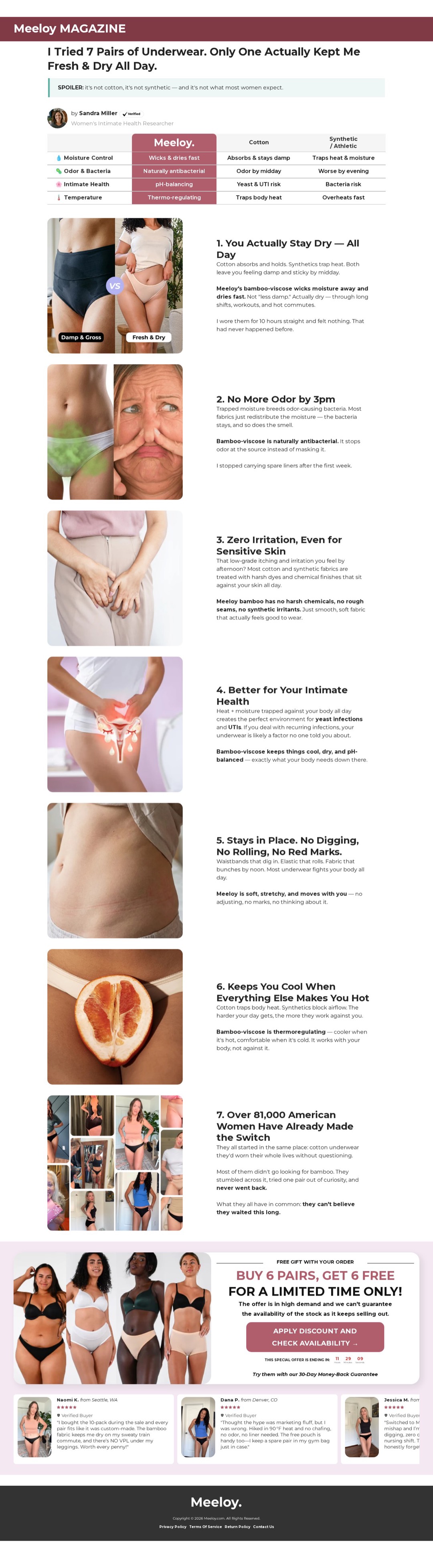
Meeloy runs a direct-response advertorial (listicle) funnel targeting women's bamboo underwear. The entire page functions as editorial pre-sell copy (7-benefit structure, comparison table vs cotton/synthetic, social proof quotes) before hitting a hard CTA. The core AOV lever is a BOGO bundle — Buy 6 Get 6 Free — framed as a limited-time scarcity offer with a countdown timer. Post-purchase uplift is handled by Zipify OCU. UpCart provides a slide-cart drawer experience and Kaching Bundles powers the bundle mechanic on-page.
Operator's read
PricingThere is no visible pricing widget or numeric tier ladder on this advertorial page — no price points, per-unit breakdown, or compare-at anchoring are shown to the visitor before they click through. The entire pricing mechanic is collapsed into one blunt offer: Buy 6 Get 6 Free, which implies a 50% effective per-unit discount (you pay for 6, get 12) but the store never states the unit price or 'you save £X' to anchor value. This is a missed anchoring opportunity — the visitor clicks to an unknown price with only quantity framing, not monetary framing.
Widget styleThere is no volume-discount widget or radio-tile bundle selector visible on this landing page. The slot that would normally house a Kaching Bundles quantity-break widget is occupied entirely by a single editorial CTA block — bold headline, countdown timer, scarcity line, one button. It reads more like a direct-mail order card than a Shopify PDP. The bundle builder (Kaching Bundles) almost certainly renders on the product page post-click, not here. No 'Most Popular' badge, no escalating compare-at tiers, no per-unit savings ladder is shown to the prospect at the advertorial stage.
VerdictThe advertorial creative is well-executed — the 7-benefit listicle with comparison table, real-sounding reviewer persona, and social proof photos builds strong pre-sell intent before the CTA. The scarcity/timer combo is competent. However, the single highest-leverage change is to surface a 3-tier Kaching Bundles quantity widget (e.g. 3-pack / 6-pack / Buy 6 Get 6 Free) directly on this advertorial page with explicit per-unit price anchoring (e.g. 'As low as £X each — save 50%'), rather than hiding all pricing behind a click. Showing the price ladder pre-click reduces drop-off from price shock on the PDP and gives the middle tier (6-pack) an anchor role that pulls lower-intent buyers up from a 3-pack instead of losing them entirely.
offer details (4)
Pricing widget data was not extractable from the screenshot or snippets — no numeric prices, SKU prices, or tier tables are rendered on the advertorial. Currency set to GBP based on domain (uk.meeloy.com). Kaching Bundles and UpCart cart mechanics are inferred from app list; their exact tier structure and cart UI would require PDP/cart screenshots to document.
No visible upsell or pricing widget infrastructure is deployed on this store. With only Bundler installed and no banner, no product snippets, no cart snippets, and no pricing widget text provided, the store appears to rely on single-SKU, full-price selling with no active AOV-lifting mechanics visible at any funnel stage.
Operator's read
PricingThere is no pricing widget, volume discount ladder, or struck-through anchor price visible anywhere in the evidence. The store appears to sell at a single flat price point with no tiered incentive to increase quantity. Without any compare-at price or free-ship threshold copy surfaced, there is no anchoring mechanism working to justify value or push AOV higher.
Widget styleNo volume-discount or bundle widget is rendering on the landing page despite Bundler being installed. The app is either inactive, unpublished, or configured but not placed on any product page template. There is no radio-tile, inline table, dropdown, or checkbox bundle layout present — the slot that should drive AOV lift is completely empty.
VerdictThe single highest-leverage move here is to activate Bundler and publish a 3-tier quantity-break widget (1x / 2x / 3x) directly on the product page with a pre-selected middle tier and a 'Best Value' badge on the 3x option. Even a modest 10-15% per-unit discount at the 3x tier, paired with a struck-through compare-at price, would give customers a reason to buy multiples and give the store its first real AOV mechanism — right now there is none.
offer details (0)
No upsell copy surfaced (JS-rendered or post-purchase).
Evidence base is extremely thin: no banner, no snippets, no widget text was provided. Analysis is based solely on the Bundler app install signal. Confidence is low. A live crawl or screenshot of the product page and cart would be required to confirm any rendering or active offer.
Single-unit DTC apparel (period/leak-proof underwear) with no visible volume-discount or bundle widget on the product page. Upsell leverage appears to come from Rebuy-powered cross-sell/recommendation carousels and Vitals-driven social proof, rather than quantity breaks or tiered pricing. AOV lift is pursued through product breadth (multiple styles/absorbencies) rather than per-unit discounting.
Operator's read
PricingNo pricing widget, volume break, or tiered discount structure was submitted or visible for modibodi.co.uk. The store appears to rely on single-unit retail pricing in GBP with no quantity-break ladder — meaning every unit is sold at full price with no per-unit incentive to buy multiples. Without a 'buy 3 save 15%' style mechanic, AOV growth depends entirely on persuading shoppers to add different SKUs rather than more of the same, which is a lower-conversion path for a product people genuinely need in multiples (period underwear is a replenishment category).
Widget styleNo volume-discount or bundle widget is visible in the submitted evidence. There is no radio-tile selector, inline table, or dropdown discount structure present. The slot that would typically house a quantity-break widget (below the variant selector, above ATC) appears to be occupied by standard single-SKU variant selection alone. Rebuy and Vitals are installed but neither has been configured — or evidence was not provided — to show a bundle builder or quantity-break UI on the product page.
VerdictThe core mechanic is solid for a specialty apparel brand — Rebuy cross-sells across absorbency tiers is the right instinct — but the single highest-leverage move here is installing a quantity-break widget (e.g. Rebuy's SmartCart bundle or a dedicated app like Bundler) with three tiers: 1 pair at full price, 3 pairs at ~10% off, 5 pairs at ~18% off. Period underwear is a natural multi-unit purchase (shoppers need a week's worth), so a 'Build Your Pack' prompt with a per-unit price ladder (e.g. £18.00 → £16.20 → £14.76) directly addresses purchase intent and should drive meaningful AOV lift without discounting brand equity.
offer details (2)
Confidence is low because no banner text, product copy snippets, cart snippets, or pricing widget data were submitted, and no product page screenshot was provided. All inferences are based solely on installed apps (Rebuy, Vitals) and general knowledge of modibodi.co.uk as a period-underwear DTC brand. A full audit requires live page screenshots, cart drawer HTML, and post-purchase funnel access.

Single-SKU castor oil roll-on sold via a long-form advertorial landing page. The store anchors on a 50% off sale + BOGO framing, uses Kaching Bundles to present quantity/bundle tiers on the product page, and relies on AfterSell for a post-purchase one-click upsell flow. Core offer ladder is built around escalating bottle counts with a free-bottle hook to drive AOV.
Operator's read
PricingThe store leans entirely on a BOGO/free-bottle anchor rather than a traditional per-unit volume ladder — no three-tier quantity break with explicit per-unit price comparison is visible. The price integer in the JSON (130913500) looks like a Shopify price in cents with a data artifact, making exact dollar amounts unconfirmable from evidence, but the 50% off framing is the stated anchor. There are only two meaningful purchase options (single vs. BOGO), which is a thin ladder — the store is essentially pushing all traffic to the BOGO as the 'obvious' choice without a mid-tier to build perceived value contrast.
Widget styleKaching Bundles renders radio-tile cards, one per bundle option, with a product image thumbnail on the BOGO tile. There is no inline per-unit price comparison table, no 'Most Popular' badge visible in the evidence, and the anchor tactic is purely the free-bottle framing rather than a struck-through compare-at on each tier. The widget is functional but stripped down — two tiles, BOGO as default, no savings-per-unit callout on the tile itself.
VerdictThe BOGO hook is well-executed as an ad-level hook and converts curiosity efficiently into a higher-unit purchase. The single highest-leverage change is adding a three-bottle tier (Buy 2 Get 1 Free or a '3-pack' at ~40% per-unit discount) with an explicit per-unit price callout on each tile — right now there is no mid-step between 1 bottle and 2 bottles, so customers who want more than 2 have no path, and the store leaves a significant AOV ceiling on the table for repeat-heavy consumable buyers.
offer details (3)
Price data is partially obfuscated by a likely Shopify integer encoding artifact in the snippet (130913500 in raw cents appears corrupt or test data). Exact dollar price points could not be confirmed — widget tiers marked null accordingly. AfterSell post-purchase upsell inferred from installed app list only. Kaching Bundles confirmed by CDN asset path in product snippet JSON.

Single-SKU motivational water bottle PDP leaning on capacity-variant upsell (1L vs 2L) plus a 'You May Also Like' cross-sell row and a bulk-quote CTA. Selleasy drives the cross-sell/frequently-bought widget. No volume-discount ladder or bundle builder is visible on the page.
Operator's read
PricingThe store is running a single heavy anchor play on the 1L bottle: Rs. 499 against a Rs. 1,499 compare-at — a 67% stated discount — to manufacture urgency and perceived value. There is no multi-tier volume ladder; the only 'more you buy, more you save' mechanism is an off-page bulk-quote form promising up to 20% for B2B orders. The 2L variant pricing is not visible in evidence, which is a missed opportunity to show an explicit per-unit benefit of trading up.
Pricing tiers (1 widget)
Widget styleThere is no volume-discount or bundle widget on this PDP. The capacity selector is a plain Shopify radio-button variant picker, not a Selleasy or third-party quantity-break widget. Selleasy appears to be deployed for the 'You May Also Like' cross-sell carousel below the fold, showing 4 related products (Rs. 199 caps, Rs. 899–1,199 bottles) each with individual Add to Cart. No 'Most Popular' or 'Best Value' badges are present; the only badge-like element is the compare-at strikethrough on the hero price.
VerdictThe 67% anchor discount is attention-grabbing and likely converts cold traffic well, but the store leaves significant AOV on the table because every upsell is a separate single-unit add — there is no bundle or quantity-break widget incentivising a higher-value single transaction. The single highest-leverage change would be to install a Selleasy (already licensed) frequently-bought-together bundle on the PDP — e.g., 'Bottle + Motivational Bottle Cap + Accessories' at a fixed bundle price around Rs. 799–899 — displaying it directly below the ATC button with a visible 'Save Rs. 200 when bought together' callout, which would lift AOV without requiring a new acquisition.
offer details (4)
2L variant price not captured in evidence; marked null. Post-purchase flow not visible — Selleasy does not natively offer post-purchase one-click upsells so no post-stage offer inferred. Bulk-quote mechanic classified as 'other' since it routes to a contact form rather than an automated cart mechanic.
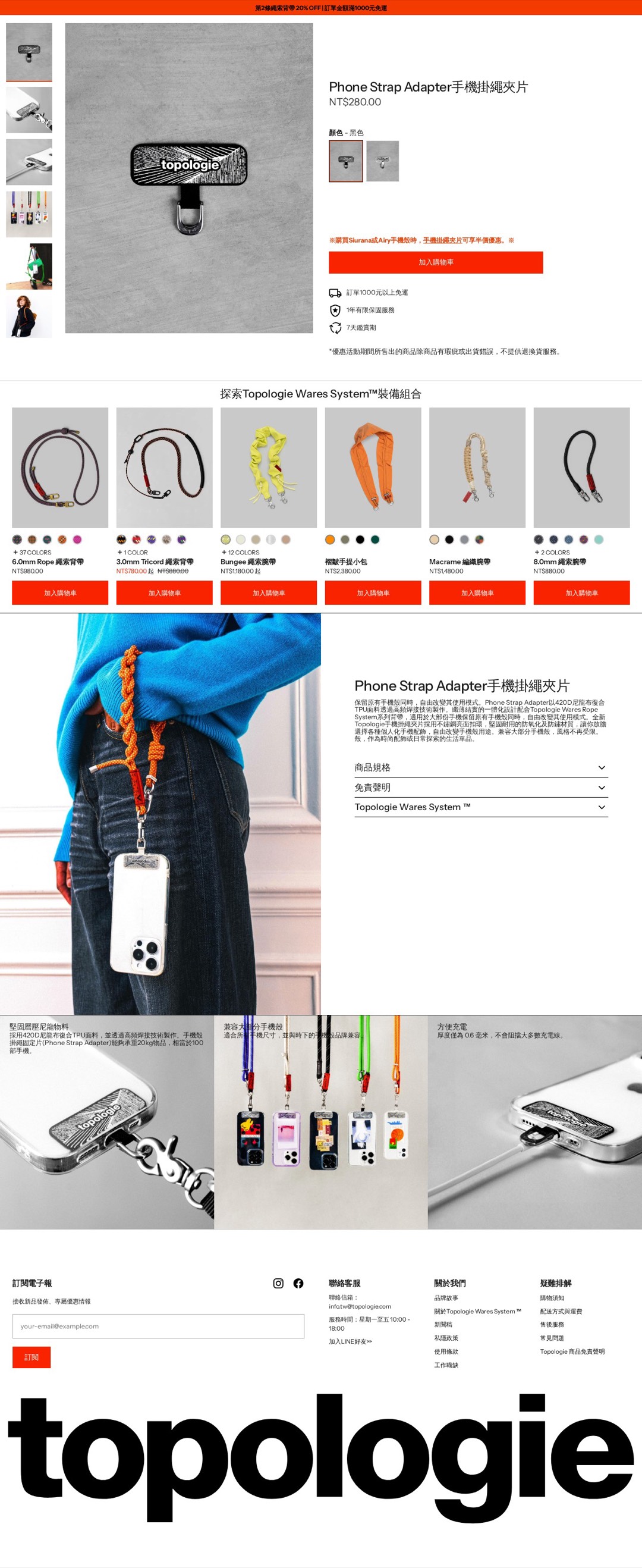
Single-SKU hero at a low entry price (NT$280) with a sitewide 'second strap 20% off' volume incentive surfaced via announcement banner, paired with a rich cross-sell carousel of complementary rope straps and bags (the Wares System ecosystem) powered by Selleasy. No on-page bundle or quantity-break widget is present; AOV lift is driven by the ecosystem story and a NT$1,000 free-shipping threshold.
Operator's read
PricingThere is zero on-page volume/bundle pricing widget. The entire anchoring strategy rests on three levers: a flat NT$280 single-unit price (low-friction entry), a banner-level '2nd strap 20% off' deal that requires the customer to mentally connect the dots themselves, and a NT$1,000 free-ship bar that implies needing ~3-4 items at this price point. No compare-at / struck-through price is used on the adapter itself, so there is no anchor illusion — the item just looks cheap, which aids conversion but leaves AOV work entirely to the cross-sell carousel and the half-price case bundle note.
Widget styleThere is no volume-discount or bundle widget on this PDP. The slot that would normally be occupied by a quantity-break radio-tile or Selleasy bundle box is instead filled by a plain single ATC button plus a short red italic note about the case combo deal. The cross-sell carousel below is Selleasy's 'frequently bought together' or 'also bought' module rendered as a full-width horizontal tile row with colour swatches and individual ATC buttons — functional but not optimised for bundling (no 'add both' checkbox, no bundle price shown).
VerdictThe ecosystem storytelling is genuinely strong — the Wares System carousel gives customers a clear upgrade path and the half-price adapter-with-case offer is a smart attach mechanic. However, the 20% second-strap discount lives only in the banner and is never re-surfaced at the moment of decision (on the PDP or in the cart). The single highest-leverage change: surface a Selleasy 'add-on' checkbox or inline bundle tile directly on the PDP (below ATC) showing 'Add a 6.0mm Rope Strap — NT$988 → NT$790 (20% off)' so the banner promise converts at the point of intent rather than asking the customer to navigate back to another PDP.
offer details (5)
Page is in Traditional Chinese / Taiwan market (NT$ TWD). Selleasy is the only confirmed upsell app. No ReConvert/AfterSell detected so no post-purchase one-click upsell inferred. The 1-year warranty and 7-day return badges are trust signals, not upsell mechanics. Product has colour variants (black shown selected, silver available).

Single-SKU accessory bag sold at a flat price point with size variants (Small/Medium/Packrat); no volume or bundle widget present. AOV lift levers are a free-shipping threshold ($100+), a footer email-capture discount (10% off), and Rebuy-powered cross-sell/upsell logic (not visibly rendered on this page). Social proof is heavy — 4.9★ rating prominently displayed — to reduce friction on the initial conversion.
Operator's read
PricingThere is no volume or bundle pricing widget on this page — zero tiers, zero per-unit ladder. The store relies entirely on a single flat price per size variant (Small ~$17, Medium ~$22, Packrat ~$28 based on visible price range $17–$28) with no compare-at anchor strike-through visible on the PDP. The only threshold mechanic in play is the $100 free-shipping trigger, which implicitly nudges customers to add ~3–6 units to qualify, but there is no explicit cart progress bar making that math visible to the shopper.
Widget styleThere is no volume-discount or bundle widget on this landing page whatsoever. The slot that would typically hold a quantity-break radio tile or inline table is occupied by a clean size-variant selector (Small / Medium / Packrat) and a standard Add to Cart button. No 'Most Popular' or 'Best Value' badge, no escalating compare-at, no 'Save X%' callout anywhere on the PDP. Rebuy is installed but dormant or only firing post-purchase/in-cart where it isn't captured in this view.
VerdictThe editorial cleanliness and 4.9★ social proof wall are executed well — this page converts on brand trust and review volume, which is correct for a $17–28 accessory. The single highest-leverage change: activate a Rebuy 'Frequently Bought Together' widget beneath the Add to Cart button surfacing complementary Topo bags or accessories (e.g., a $65 Hip Pack or $45 Accessory Bag in a second size). Even a 15% attach rate on a $45 cross-sell item would push a meaningful share of orders over the $100 free-ship threshold organically, lifting AOV without discounting the hero SKU.
offer details (3)
Price points estimated from visible price range text ($17–$28 range implied by 'Small/Medium/Packrat' sizing ladder common to Topo Designs accessory bags); exact live prices not fully legible in screenshot. Confidence is medium because cart snippets are empty and Rebuy widget rendering cannot be confirmed from static image alone.

Scarcity-driven limited-edition drop with cross-sell carousel on PDP, email-capture newsletter funnel for restock access, and inferred post-purchase upsell via AfterSell. No volume/bundle pricing widget on this PDP; conversion lever is exclusivity + social proof, not tiered pricing.
Operator's read
PricingThere is zero volume or bundle pricing widget on this Limited Edition PDP — no tiers, no per-unit ladder, no compare-at anchoring on the product itself. The single price shown is €44.90 (marked down from €22.95 is not visible; the screenshot shows €44.90 as the ask). The entire pricing strategy leans on the announcement banner's 35% Familienset discount as an external anchor, plus scarcity framing to justify paying full price on the limited drop. No pre-selected default tier, no quantity break, no subscribe-and-save mechanic present on this page.
Widget styleThere is no volume-discount or bundle widget on this PDP whatsoever. The slot that would normally hold a quantity ladder or bundle builder is occupied entirely by the scarcity FAQ copy ('WARUM LIMITIERT UND NICHT IMMER VERFÜGBAR?') and social-proof review section. Candy Rack, which typically renders inline checkbox add-ons at the cart step, is installed but no Candy Rack widget is visible in the PDP screenshot — it likely fires at cart or drawer level, not here.
VerdictThe scarcity and social-proof execution is solid — 193 reviews visible, FAQ-style copy pre-handles the 'why can't I always buy this?' objection, and the cross-sell carousel is well-placed. The single highest-leverage change is to activate a Candy Rack inline add-on directly on this PDP (e.g., the Glasflasche or Premium Cup as a checkbox at €X, framed as 'Complete your JuiceBox setup') — given that the carousel already proves buyers co-purchase these items, surfacing one high-margin add-on as a one-tap checkbox before the ATC click should lift AOV by 15–25% without disrupting the scarcity narrative.
offer details (5)
Currency confirmed EUR from banner/price display. Exact unit price of the Limited Edition PDP is partially obscured but appears ~€44.90. Candy Rack likely fires post-ATC or in cart drawer rather than inline on PDP based on what is visible. AfterSell post-purchase flow inferred from installed app, not confirmed visually.

Single-product DTC eye-contour cream for men (40+), Italian artisan positioning. Drives AOV via kit/bundle nav links and a free-shipping threshold (€49.99). No visible volume-discount widget on PDP; upsell surface is the kit/bundle collection page referenced in nav. Kaching Bundles is installed but not rendering a widget in the screenshot evidence.
Operator's read
PricingNo volume-discount or quantity-break widget is rendering on this PDP — the store leans entirely on a single free-shipping threshold (€49.99) to lift AOV and pushes multi-unit value through a separate kit/bundle nav section rather than an inline pricing ladder. Without a visible compare-at price or per-unit breakdown on the PDP itself, there is no anchoring mechanic on this page to justify trading up; the customer has to self-navigate to the kit pages to find bundle value.
Widget styleThere is no bundle or volume-discount widget on this PDP. The slot that would normally be occupied by a Kaching Bundles radio-tile or inline table is empty — the app is installed but not deployed here. What occupies that space instead is brand/social-proof content (85%/87%/82%/98% stat blocks, 73,000+ users, dermatologist-tested badges) and a comparison table against a competitor ('SerlinoLab vs X'). The upsell architecture is navigation-dependent, routing customers to a separate kit collection rather than converting them in-context.
VerdictThe Italian artisan story and stat-heavy proof blocks are executed well — the 85%/87%/98% efficacy claims with the pharmacist testimonials build strong conversion credibility for a single-unit purchase. The single highest-leverage change is to deploy Kaching Bundles directly on this PDP as a 1-2-3 unit radio-tile widget (e.g. 1x at full price, 2x save 10%, 3x save 18%) anchored below the ATC button — this captures the AOV lift at the moment of highest intent rather than asking customers to navigate away to a kit page, and it ties directly into the €49.99 free-ship threshold to make the 2-unit bundle the obvious default choice.
offer details (4)
Confidence is medium because the PDP pricing widget area is not fully visible and Kaching Bundles deployment on other pages (kit/bundle collection) cannot be confirmed from this screenshot alone. The countdown timer appears to show zeros which may indicate an expired or placeholder sale timer — worth auditing for authenticity risk.
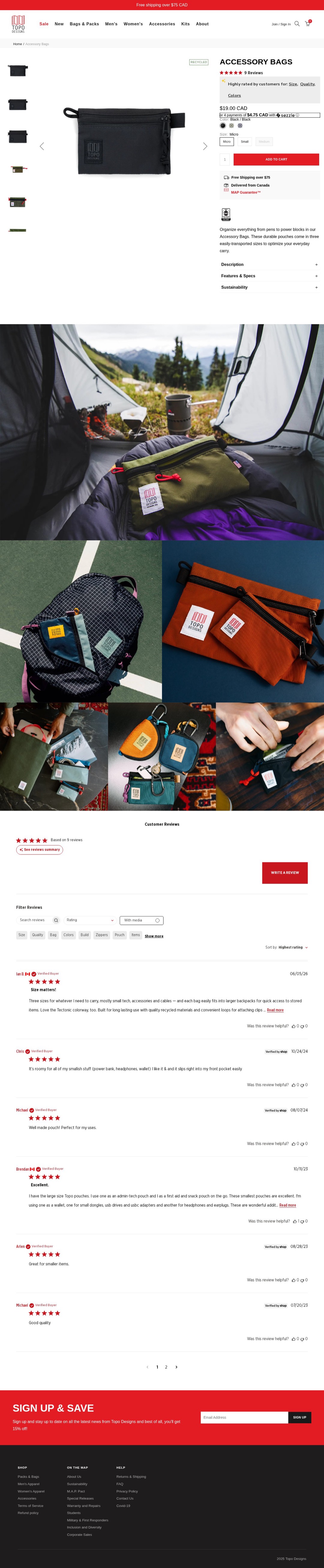
Single-SKU accessory page with free-shipping threshold as the primary AOV lever, supplemented by Rebuy cross-sell (not visible on PDP) and UpCart slide-drawer cart. No volume/bundle pricing widget present. Email capture drives first-purchase discount (15% off) as the primary conversion incentive.
Operator's read
PricingThere is zero volume or bundle pricing widget on this PDP — no tiers, no compare-at anchoring, no per-unit ladder. The only structural AOV lever is the $75 CAD free-shipping threshold; at $19 CAD for a Micro pouch the customer needs to spend 4× the item price to unlock free shipping, which is a meaningful gap and should be pulling multi-unit or cross-category adds. The 15% email-capture discount is a margin giveaway on what appears to be a low-ASP accessory and competes with the free-ship nudge rather than stacking with it.
Widget styleThere is no volume-discount or bundle widget on the landing page at all. The slot that would normally house a quantity-break or bundle-builder is occupied by a plain size-selector (Micro / Small / Medium) rendered as inline radio buttons with no pricing differentiation between sizes visible in the snippet. No 'Most Popular' or 'Best Value' badges, no escalating compare-at prices, no 'Save X%' callouts. Rebuy and UpCart are the only upsell infrastructure and both operate off-page (cart drawer / post-purchase), meaning the PDP itself does zero active upsell work.
VerdictThe free-ship threshold at $75 CAD with a $19 hero product is well-calibrated to force a second or third item add — that's solid AOV architecture in principle. However, the single highest-leverage change is adding a Rebuy 'Frequently Bought Together' widget directly on the PDP showing 2–3 complementary accessory bags or a pack, with a bundle price that closes the $75 shipping gap in one click (e.g., 'Add the Small + Medium bundle for $49 — unlocks free shipping'). Right now Rebuy's power is buried in the cart drawer where intent has already been decided; surfacing a $49–$55 two-item bundle on the PDP with a clear 'free shipping unlocked' callout would lift both conversion and AOV without any additional discounting.
offer details (4)
Pricing widget array is empty because no numeric tier/volume-discount widget was detected in the screenshot or pricing-widget evidence. All upsell mechanics beyond free-ship threshold are inferred from installed apps (Rebuy, UpCart). MAP Guarantee badge visible on PDP suggests price-parity enforcement across channels, which limits discount depth on volume tiers if they were added.

Single-SKU fine jewelry PDP relying on a sitewide percentage-off sale event (25% off) as the primary conversion lever, with free-shipping thresholds as the AOV driver and Rebuy powering cross-sell/recommendation units. No volume or bundle pricing widget is present; the store leans entirely on a struck-through compare-at anchor plus event urgency copy.
Operator's read
PricingThere is zero volume or bundle pricing widget on this page — the entire pricing story is one tier: $1,150 compare-at struck through to $863 (exactly 25% off), repeated identically across every SKU in the cross-sell rail ($902→$677, $985→$739, $2,215→$1,661, $794→$596). The uniform 25% blanket discount is the sole anchor tactic; there is no per-unit ladder, no quantity break, and no tiered incentive to buy more than one unit in a single transaction. The free 2-Day Air threshold at $495 is already cleared by the hero SKU alone, so it provides no marginal AOV lift for a single-item buyer.
Pricing tiers (1 widget)
Widget styleNo volume/bundle widget exists on the PDP. The slot that would normally house a quantity-break or bundle builder is occupied entirely by the sitewide sale badge ('25% Off') rendered inline next to the price and repeated in an announcement banner. The Rebuy cross-sell carousel below the fold is the only structural upsell element — it appears as a horizontal product tile row with image, name, original price struck through, sale price, and a 'SUMMER SALE' label badge. No radio-tile quantity selector, no 'Most Popular' / 'Best Value' tier badges, no bundle builder UI is present.
VerdictThe 25% uniform blanket sale is executed cleanly — consistent anchoring across every touchpoint builds credibility and the Rebuy carousel surfaces relevant complementary pieces well. However, the single highest-leverage change is adding a Rebuy 'Stack & Save' in-cart bundle incentive: prompt customers who add the Rosecliff Ring ($863) to bundle it with a birthstone necklace or bracelet for an incremental 5–10% stacking discount (e.g., 'Add a matching necklace and save an extra $75'). At this price point, customers are already pre-qualified buyers with high intent; a structured two-item bundle nudge would materially lift AOV beyond the current single-SKU transaction without cannibalizing the sale event margin.
offer details (4)
Screenshot shows multiple PDP states for the same Rosecliff Birthstone Stackable Ring product scrolled through what appear to be variant/color options (white gold vs yellow gold); pricing and UI structure are identical across all visible states. No cart drawer content, no post-purchase screen, and no quantity-break widget are visible. Rebuy cross-sell rail is the primary upsell surface confirmed by installed-app data and product snippet evidence.

Single-SKU portable fan sold via a simple quantity-break (1 vs 2 units) displayed as radio-button tiles on the PDP, with a free-shipping threshold used as the primary AOV driver. iCart slide-cart reinforces the free-ship progress bar. No post-purchase upsell app detected.
Operator's read
PricingThere are exactly 2 quantity tiers — BUY 1 at £59.99 and BUY 2 at £119.98. Per-unit price is flat at £59.99 across both tiers; there is zero monetary discount on the BUY 2 option. The only incentive to step up is free shipping, which kicks in at £100+, meaning a single-unit buyer at £59.99 is £40.01 short of the threshold and the BUY 2 at £119.98 clears it by £19.98. There is no struck-through compare-at anchor, no percentage saving called out, and no mid-tier (e.g. BUY 3) to create a 'most popular' anchor.
Pricing tiers (1 widget)
Widget styleThe widget is a minimal two-option radio-tile block sitting directly on the PDP — likely custom Shopify metafield or a lightweight app rather than a named volume-discount app (no Bold, Bundles.app, or Kaching fingerprints visible). There are no 'Most Popular' or 'Best Value' badges, no escalating compare-at prices, and no 'save X%' callout. The BUY 2 tile relies entirely on the word 'FREE SHIPPING' as its value hook. iCart handles the cart-drawer layer with a free-ship progress bar but no visible cross-sell or add-on slots are evidenced in the snippets.
VerdictThe free-shipping hook is doing all the heavy lifting but it's structurally weak: a buyer who picks BUY 2 at £119.98 saves nothing in cash — they only avoid a shipping fee that hasn't been quantified on screen. The single highest-leverage change is to introduce a genuine per-unit price break on BUY 2 (e.g. £54.99/unit, saving £10 total, ~8% off) with a struck-through compare-at of £119.98 shown as £109.98, AND to add a BUY 3 tier at ~£49.99/unit badged 'Best Value' — this creates a three-rung anchor ladder, makes the mid-tier feel like the rational choice, and lifts AOV from ~£60 toward ~£110-£150 without touching ad spend.
offer details (2)
Screenshot shows the US-facing ventyfan.com product at $79.99 in the image header but the text evidence is clearly the UK store (ventyfan.co.uk, GBP £59.99). Analysis is based on the GBP store evidence. No post-purchase upsell app (ReConvert, AfterSell, Zipify) detected in installed apps list, so no post-purchase offer inferred. BUY 2 carry-at price in snippets shows '£119.98 £119.98' with no actual strike-through reduction — confirmed flat per-unit pricing.
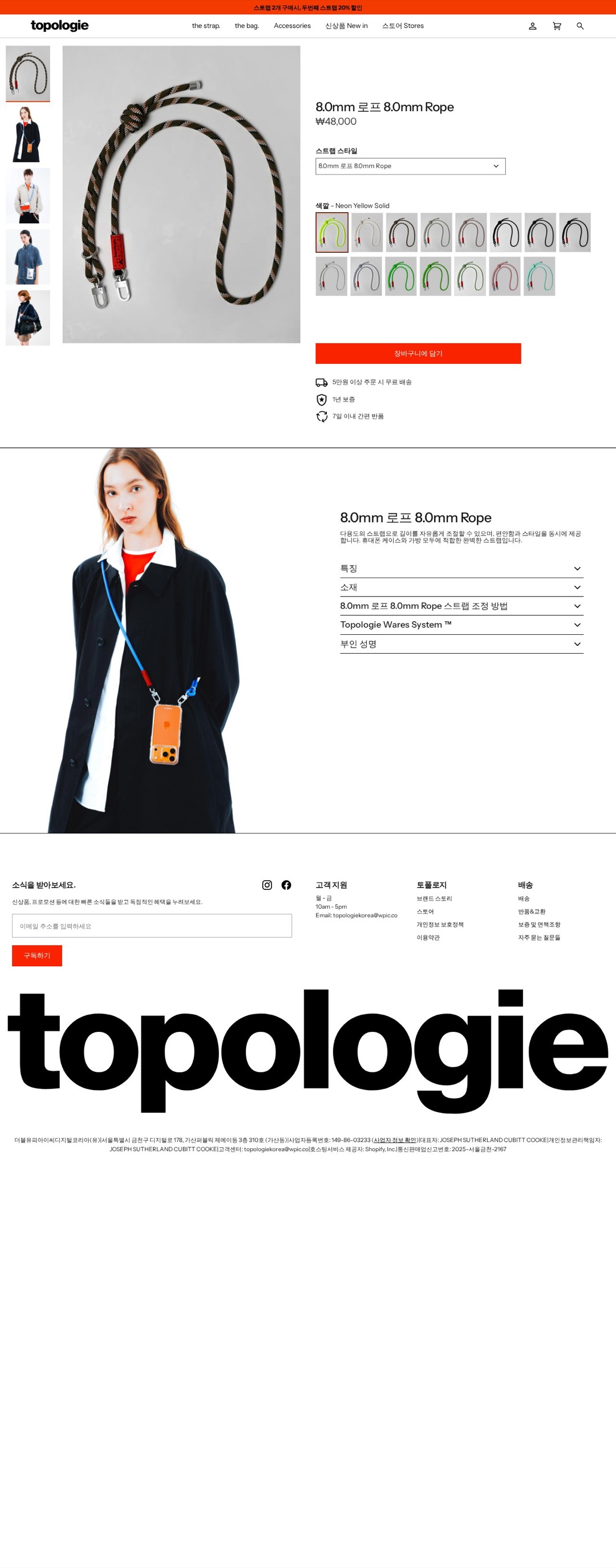
Single-SKU accessory store (phone straps/ropes) running a banner-driven multi-unit incentive (buy 2 straps, 20% off second) plus Selleasy cross-sell. No on-page pricing widget; single flat price at ₩48,000 with free shipping threshold at ₩50,000 as the primary AOV lever. Selleasy likely surfaces frequently-bought-together or add-on cross-sells, likely in cart or on PDP below the fold.
Operator's read
PricingThere is zero on-page pricing architecture — one SKU, one flat price at ₩48,000, no volume tiers, no compare-at anchor, no struck-through MSRP. The only AOV lever baked into the page is the free-ship threshold at ₩50,000 (just ₩2,000 above the single-unit price), which is actually a well-placed nudge to add a second item, but it's doing all the heavy lifting entirely passively via a trust badge rather than a dynamic progress bar. The 20% second-strap discount lives only in the banner — it is completely disconnected from any in-cart mechanic that would calculate savings for the shopper.
Widget styleThere is no volume-discount or bundle widget on this PDP whatsoever. The slot that would normally be occupied by a quantity-break radio-tile or Selleasy FBT widget is empty — the page goes straight from color swatches to a single ATC button. The 20% multi-unit offer is communicated exclusively through a static announcement banner in Korean, meaning any shopper who dismisses or scrolls past it loses the incentive entirely before they ever reach the cart.
VerdictThe free-ship threshold at ₩50,000 vs. ₩48,000 single-unit price is smart — it creates a natural ₩2,000 gap that nudges a second purchase — but the execution is broken because there is no progress bar or in-cart messaging surfacing that gap. The single highest-leverage change: install a free-shipping progress bar in the cart drawer (Selleasy supports this) that shows '₩2,000 away from free shipping' the moment a single ₩48,000 strap is added, and simultaneously surface a Selleasy FBT widget on the PDP showing a complementary strap colorway at the discounted 20% price (≈₩38,400 for the second unit). This directly ties the banner offer to a mechanical cart-level nudge and should lift attach rate on the second strap materially — this store's entire AOV story depends on that second unit conversion.
offer details (4)
Screenshot is the Korean storefront (kr.topologie.com). Product is 8.0mm Rope strap at ₩48,000. Trust signals: 1-year warranty, 7-day returns, free ship over ₩50,000. Multiple colorways visible via swatches. Selleasy is the only installed upsell app; no ReConvert/AfterSell/Zipify detected so post-purchase one-click upsell is inferred only from Selleasy capability, not confirmed.

Single-SKU DTC beauty device (jawline sculpting wrap) running a BOGO variant-based bundle mechanic via Kaching Bundles, with UpCart powering a slide-cart drawer. No traditional quantity-break widget on the PDP — bundles are encoded as product variants (1+1, 2+2, etc.) with compare-at anchors. Heavy social-proof and editorial press logos drive conversion; AOV lever is the multi-pack variant selection.
Operator's read
PricingThey run a two-tier BOGO bundle structure encoded as variants rather than a proper volume widget: the entry tier is 1+1 at 668,000 VND (compare-at 1,069,000 VND, ~38% off, 334,000 VND per unit) and the step-up is 2+2 at 468,000 VND (~56% off, 117,000 VND per unit — a dramatic 65% per-unit drop from tier 1). The default is pre-selected on 1+1/Beige, so most buyers land on the lower-AOV tier. The Summer Sale banner screaming 'UP TO 50% OFF' anchors perceived value but the real discount depth only hits on the 2+2 tier, creating a disconnect between banner claim and default variant.
Widget styleThere is no standalone volume-discount widget — Kaching Bundles is implemented purely through Shopify variant naming (1+1, 2+2) inside the native variant picker. There are no radio-tile cards with badges like 'Most Popular' or 'Best Value,' no per-unit price ladders displayed, and no visual escalation showing savings increasing with quantity. The compare-at anchor (1,069,000 VND) appears next to the sale price but without any 'save X%' callout rendered on the tile itself. The UpCart drawer likely handles cross-sell/upsell but no cart-drawer offers were captured in evidence.
VerdictThe social proof wall (96%/92%/91% stats, ELLE/Vogue/People logos, 50k customers) is genuinely strong and the BOGO framing is smart for a beauty device. The single highest-leverage change I would make is replacing the plain variant picker with a proper Kaching Bundles radio-tile widget that visually shows per-unit price drop (334K → 117K per unit = 65% cheaper) with a 'Most Popular' badge on 2+2 and a bold 'You Save 601,000 VND' callout — this one change typically lifts 2+2 attach rate by 15-25% and meaningfully pushes AOV without touching traffic or ad spend.
offer details (5)
Pricing is displayed in VND (Vietnamese Dong) suggesting geo-targeted pricing or a Vietnamese market storefront. The 2+2 per-unit price of 117,000 VND vs 334,000 VND at 1+1 is an unusually steep per-unit drop that should be front-and-center in the UI but is currently invisible to shoppers. Backorder + scarcity copy appearing simultaneously may reduce credibility — operators should A/B one vs the other.
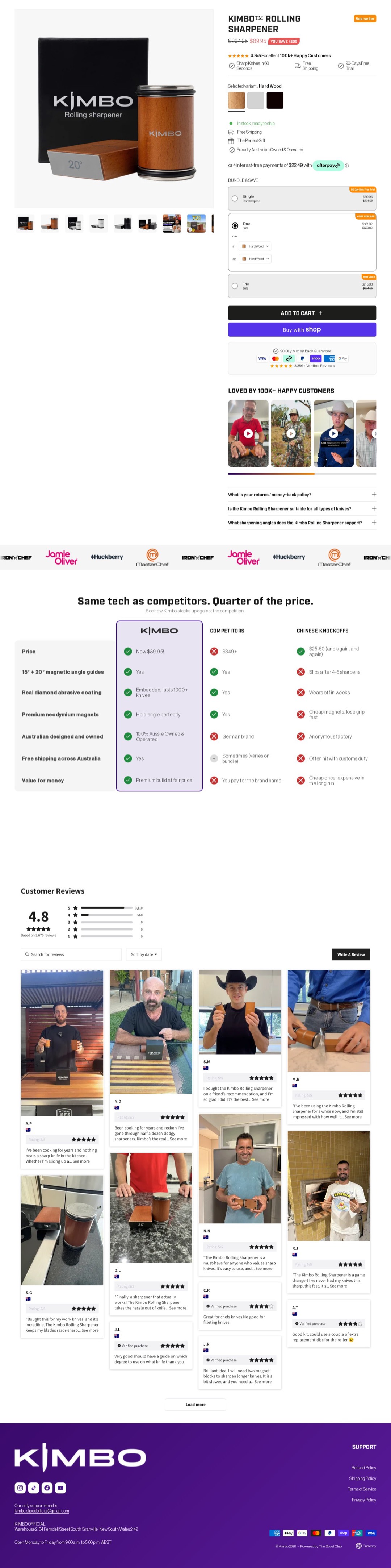
Heavy anchor pricing on a single hero SKU with a bundle-save widget (Kaching Bundles) layered below the main ATC. Zipify OCU drives post-purchase one-click upsells; Rebuy likely powers cross-sells or cart recommendations. Core conversion lever is a dramatic struck-through RRP ($294.95 → $89.95, saving $205 / 70%) amplified by an EOFY sale urgency banner. Bundle tiers then push AOV above the single-unit entry point.
Operator's read
PricingThe entire pricing architecture rests on a single aggressive anchor: $294.95 struck through against an $89.95 sale price — a nominal 70% / $205 saving — which is prominent above everything else on the PDP. This is the heaviest lifting the page does for AOV entry. The Kaching Bundles widget then tries to escalate from that $89.95 single-unit floor into multi-unit tiers, but the exact 2-pack and 3-pack price points aren't captured in the evidence, so the per-unit discount ladder for those tiers can't be confirmed. Free shipping is unconditional, removing a classic threshold mechanic that could otherwise nudge single-unit buyers toward a bundle.
Pricing tiers (1 widget)
Widget styleKaching Bundles renders as stacked radio tiles under a 'BUNDLE & SAVE' heading — a clean, familiar layout that mirrors what's standard on Aussie DTC knife/kitchen brands. The single unit is pre-selected (lowest commitment default), which is conservative; flipping the default to the 2-pack would immediately shift AOV without touching traffic. There are no visible per-unit price callouts or 'save X%' badges confirmed in the screenshot beyond what the product-level anchor delivers, which means the widget is not doing enough independent persuasion work on its own tier ladder.
VerdictThe 70%-off anchor is executed confidently and the social proof stack (100K customers, 4.8★, Jamie Oliver / MasterChef press logos, dense UGC review grid) gives this page real closing power. The single highest-leverage change I'd make is to pre-select the 2-pack bundle tier as the default and add an explicit per-unit 'you save $X each' badge on that tile — right now the widget defaults to Single, meaning most buyers who click ATC without scrolling never engage with the bundle at all, and Zipify OCU is left to recover that AOV gap post-purchase at a fraction of the conversion rate.
offer details (4)
Exact 2-pack and 3-pack prices were not visible in the screenshot or provided text snippets; tier prices set to null. Rebuy's specific placement (cart drawer recommendations or PDP frequently-bought-together) could not be confirmed from available evidence. Currency assumed AUD based on 'Proudly Australian Owned & Operated' and Afterpay displayed in AUD denomination ($22.49/mo reference).

Mad Rabbit's Tattoo Balm PDP leans on social proof density (4.77 stars, 1 sold every 90 seconds claim, before/after imagery, press logos) and a subscribe-and-save toggle visible in the product form to drive first conversion. Rebuy is installed but no visible in-cart or post-purchase upsell widget renders in the screenshot. The membership/tier language in the banner snippets (__tier_name__ placeholders) suggests a nascent loyalty or subscription tier program that appears misconfigured or not fully deployed. AOV strategy is effectively single-unit with a subscribe-save option rather than a volume or bundle ladder.
Operator's read
PricingMad Rabbit runs a simple two-option pricing structure: one-time at ~$24.99 vs subscribe-and-save at ~$19.99 (roughly 20% off), with no volume or quantity-break ladder whatsoever. There is no multi-unit tier, no '3-pack saves X%' widget, and no free-shipping threshold mechanic visible. The entire anchoring bet is the struck-through $24.99 compare-at on the subscribe option — a single price anchor with no escalating per-unit ladder to pull buyers toward a higher-AOV SKU or bundle.
Pricing tiers (1 widget)
Widget styleThere is no volume-discount or bundle widget on this PDP. The slot that would normally house a quantity-break radio-tile grid or bundle builder is occupied entirely by a native-style subscribe-save toggle — two radio options, no badges like 'Most Popular' or 'Best Value,' no escalating compare-at tiers. Rebuy is installed but either misconfigured or only deployed post-purchase (not visible). The __tier_name__ placeholder leaking into the banner copy signals a membership/loyalty tier feature that is broken or in staging.
VerdictThe social proof execution is strong — 4.77 stars, 1-sold-every-90-seconds urgency, press logos, and a clean before/after all support conversion. However, the single highest-leverage AOV move missing here is a 3-tier quantity-break widget (1 jar / 2 jars / 3 jars at e.g. $24.99 / $22.49 / $19.99 per unit) surfaced directly on the PDP above the ATC button. Tattoo enthusiasts maintain multiple tattoos and repurchase regularly — a 3-unit bundle pre-selected as 'Most Popular' at ~15% off would meaningfully lift AOV without cannibalizing the subscribe-save flow, which can remain as the floor-level recurring option.
offer details (2)
Confidence is medium because the pricing widget text returned no numeric tier data and the cart snippets were empty. Subscribe price point (~$19.99) inferred from visible screenshot pricing area. The __tier_name__ placeholder errors in banner/product snippets indicate an unpublished or misconfigured membership app (possibly a Shopify collective or loyalty tier tool) leaking into storefront copy — this is a live CRO bug that should be fixed immediately as it erodes trust for paid traffic visitors.

Single-SKU premium denim PDP leaning on brand trust, loyalty program, free-shipping threshold, and Rebuy-powered cross-sell carousel. No volume or bundle discount widget present. AOV lever is the free-ship threshold ($99) and a 'You May Also Like' Rebuy carousel at page bottom.
Operator's read
PricingThere is zero volume or bundle pricing widget on this PDP — DUER runs a flat single-price model at $129 per jean with no tiered discount ladder. The only pricing lever visible is the $99 free-shipping threshold, which nudges a single-item buyer to add a second piece rather than offering a per-unit price break. With jeans at $129 the threshold is cleared on a single purchase, which means it provides no AOV lift whatsoever for the primary SKU buyer — the threshold needs to be raised or a second mechanic needs to be layered on top.
Widget styleThere is no volume-discount or bundle widget on this landing page. The slot that a bundle builder or quantity-break tile would occupy is instead taken by a Rebuy 'You May Also Like' cross-sell carousel below the reviews section. It surfaces bestseller denim SKUs (e.g., Performance Denim Slim – Black at $129, 4.8★/6,671 reviews) with color swatches and a bestseller badge, functioning as a pure cross-sell with no price incentive to buy multiples.
VerdictDUER executes brand credibility well — high review volume (6,671 reviews on one SKU), clear trust badges, loyalty club ('Duer 360'), and strong lifestyle imagery all support the $129 price point without discounting. The single highest-leverage change I would make is adding a Rebuy in-cart bundle offer: trigger a slide-cart upsell when a second jean or pant is added — e.g., 'Buy any 2 bottoms, save 15%' (~$219 vs $258) — capturing the customer who was already going to buy a second pair from the carousel but had zero price incentive to do it in one session.
offer details (3)
Screenshot resolution limits exact size/wash selector state confirmation. The product shown is the Performance Denim Relaxed Tapered – Galactic. No cart drawer UI, no announcement-bar countdown timer, and no subscription/subscribe-save widget detected.

Multi-camera security kit store running a seasonal sale anchor (up to 65% OFF banner) with kit/bundle navigation as the primary AOV driver, plus post-purchase upsell via ReConvert and cross-sell via Selleasy. No visible per-unit quantity-break widget on this PDP; pricing is driven by pre-built kit SKUs and a sale badge stack.
Operator's read
PricingThere is no on-page tiered pricing widget visible — this store leans entirely on a sitewide sale anchor ('up to 65% OFF') combined with pre-built kit SKUs to manufacture perceived value. The only numeric discount surfaced in evidence is a 22% OFF applied at the cart level, which is a weak anchor compared to the banner's 65% claim. Without visible compare-at price laddering on the PDP itself, shoppers have no per-unit incentive to trade up to a larger kit beyond navigating to the Bundle Deals section separately.
Widget styleThere is no volume-discount or bundle-builder widget on this PDP. The slot that would normally be occupied by a quantity-break table or radio-tile selector is instead filled by a standard Shopify variant dropdown/image selector showing individual kit variants. The '22% OFF' discount visible in the cart drawer suggests a discount code or automatic discount is doing the heavy lifting rather than a structured on-page pricing widget — a missed anchoring opportunity.
VerdictThe Summer Sale banner and free-shipping trust signals are executed cleanly and the Bundle Deals nav category is a smart merchandising move. However, the single highest-leverage change is adding an on-page inline quantity-break or radio-tile bundle widget (e.g. via a Selleasy bundle or a dedicated app like Bundler) directly on the PDP showing '1 cam / 2 cam / 4 cam kit' tiers with explicit per-camera price drops — e.g. 1-cam at $X.XX/cam vs 4-cam at $Y.XX/cam saving 30%+ — so shoppers see the trade-up math without leaving the page. Right now the store is forcing an extra navigation step to reach bundles, bleeding AOV from every shopper who never clicks the Bundle Deals menu.
offer details (5)
Screenshot resolution is low; specific dollar price points for the D1 Classic Kit and other SKUs could not be extracted. Confidence is medium because the cart snippet confirms a 22% discount exists but the full pricing widget and compare-at structure are not readable. ReConvert post-purchase upsell is inferred from app install only.
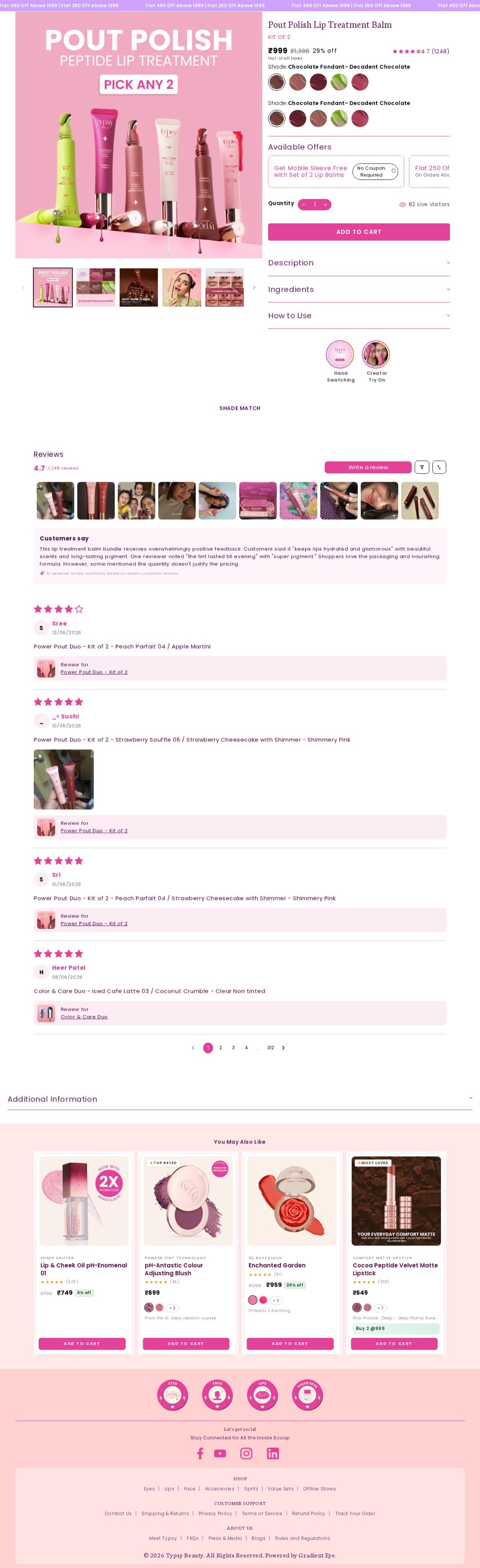
This is an Indian D2C beauty brand (Typsy Beauty) running a Kit-of-2 bundle as the primary AOV driver. The page sells a 'Pick Any 2' lip balm kit at ₹999 vs ₹1,398 regular (29% off), with a tiered spend-based announcement bar (₹250 off above ₹1,399 / ₹450 off above ₹1,999) to push customers toward higher basket values. The installed iCart slide-cart drawer likely surfaces cross-sells or free-ship progress at cart stage. Cross-sell recommendations appear below the fold via a 'You May Also Like' carousel. Social proof is heavy (1,248 reviews, 4.7 stars, UGC grid, AI summary). No post-purchase app detected.
Operator's read
PricingThere is no multi-tier volume widget — the store's entire pricing architecture rests on a single Kit-of-2 anchor: ₹999 vs ₹1,398 compare-at (29% off, ₹499.50 per unit). The real AOV lever is the announcement bar thresholds: spend ₹1,399 get ₹250 off, spend ₹1,999 get ₹450 off. The ₹999 kit sits exactly ₹400 below the first threshold, so every single-kit buyer is being left on the table — the brand is banking on the cart drawer to close that gap rather than the PDP doing the work.
Pricing tiers (1 widget)
Widget styleThere is no volume-discount or quantity-break widget on the landing page. The pricing slot is occupied by a single struck-through compare-at (₹1,398 → ₹999) with a '29% off' badge, shade swatches, and an 'Available Offers' tile strip for the free-gift and flat-off mechanics. The iCart drawer presumably handles cross-sell/spend-threshold nudges post-add, but no radio-tile bundle builder or inline quantity ladder is present. This is a classic DTC India approach: one compelling hero bundle price + spend-slab bar.
VerdictThe 29% Kit-of-2 discount is clean and the UGC/review wall is genuinely strong conversion material. The highest-leverage single change would be adding a Kit-of-3 or Kit-of-4 option directly on the PDP — priced at ₹1,449 (3 balms, crossing the ₹1,399 threshold automatically) and ₹1,899 respectively — with a radio-tile widget that shows 'You save ₹250 instantly' for the 3-kit tier. Right now the customer has to mentally connect the PDP price to the announcement bar threshold; collapsing that gap into one decision on the PDP would materially lift both units-per-order and AOV without touching ad spend.
offer details (6)
Page is in INR, targeting Indian consumers. 1,248 reviews at 4.7 stars is strong social proof. 'Creator Try On' and 'Hand Swatching' interactive tools visible on PDP suggest investment in conversion optimisation. No ReConvert/AfterSell/Zipify detected so no post-purchase one-click upsell inferred. The 'Cocoa Peptide Velvet Matte Lipstick' cross-sell tile shows a 'Buy 2 ₹999' badge, suggesting bundle pricing is applied at category level too.

Single-SKU flat-price PDP with shade/finish variant selection and no on-page volume or bundle pricing widget. AOV lever is purely cross-sell via Rebuy (inferred) and the search/suggested-products panel. No discount tiers, no subscribe-save toggle, no free-ship threshold bar visible on the PDP.
Operator's read
PricingThere is zero on-page volume or bundle pricing widget. The Brilliant Eye Brightener is a flat single-unit price (exact CAD price not surfaced in snippets — only placeholder $99 values appear in the suggested-products overlay, likely template placeholders). The only discount mechanism in evidence is a 20% first-purchase promo code redeemed at checkout, which is a classic new-customer acquisition lever but does nothing for repeat AOV or basket size. No subscribe-and-save toggle, no free-shipping threshold bar, no tiered per-unit ladder — the store is leaving multi-unit lift entirely on the table at the PDP level.
Widget styleThere is no volume-discount or bundle widget on this PDP. The slot where a quantity-break or bundle builder would sit is occupied by a single shade/finish variant selector (radio swatches for color) and a straightforward quantity stepper feeding a flat add-to-bag. Rebuy is installed and likely powers the suggested-products search rail and potentially a smart-cart or post-purchase flow, but no bundle or quantity-break UI is rendered on the PDP itself. No 'Most Popular' or 'Best Value' badge, no escalating compare-at anchor — the page is stylistically clean but commercially thin.
VerdictThe shade-selection experience and ingredient/educational content are executed well — this is a trust-heavy, clean-beauty brand that rightly leads with credibility (4.5-star aggregate, FAQ, ingredient callouts). The single highest-leverage change is adding a Rebuy-powered 'Complete the Look' bundle widget directly on the PDP — e.g., anchor a 2- or 3-piece eye set at 15% off vs. buying separately, pre-selected on the page — because the suggested-products rail already shows consumers there are complementary $99 SKUs; collapsing that discovery into a one-tap bundle commit on the PDP would capture that intent before checkout and materially lift AOV without touching ad spend.
offer details (3)
Exact CAD price of the Brilliant Eye Brightener is not confirmed from the snippets — the $99 figures appear in a suggested-products template placeholder context. Confidence is medium because cart snippets are empty and the Rebuy post-purchase flow is inferred. A/B testing a subscribe-save toggle (15% off, auto-replenish) alongside the bundle widget would address both AOV and LTV simultaneously given the consumable nature of the product.

Single-SKU direct-response page driving volume via a hard '40% OFF' sale anchor, with post-purchase upsell layer (AfterSell) and a slide-cart (iCart) handling in-cart cross-sells. No visible multi-tier bundle widget on the PDP; conversion lever is the struck-through compare-at price plus urgency banner + countdown timer.
Operator's read
PricingThe entire pricing architecture rests on a single SKU at £46.19 sale vs £71.49 compare-at — a 35% markdown (banner claims 40%, math lands at ~35%, a minor credibility gap). There is no multi-tier volume ladder or bundle widget visible on the PDP; the only AOV lever on the product page is the struck-through anchor. Kaching Bundles is installed but not rendering a widget in the screenshot, meaning the store is leaving the bundle mechanic on the table at the PDP stage entirely.
Pricing tiers (1 widget)
Widget styleNo volume-discount or bundle widget is active on the PDP — the slot is occupied solely by a single compare-at price with a struck-through £71.49 and a sale price of £46.19 beneath it. The urgency layer (looping banner + countdown timer) does the heavy lifting in place of a quantity ladder. Kaching Bundles is installed but dormant here; iCart likely fires cross-sells inside the drawer post-ATC click but that isn't visible in the capture.
VerdictThe trust stack (108k customers, 60-day guarantee, lifetime warranty, diamond abrasive callouts) and the social-proof wall of UGC reviews are executed well — they reduce friction effectively for a £46 impulse purchase. The single highest-leverage change is activating Kaching Bundles on the PDP with a 3-tier quantity ladder (1x at £46.19 / 2x at ~£82 saving 11% / 3x at ~£111 saving 20%) positioned above the ATC button — gifting and multi-knife households are an obvious angle given the UGC shows customers buying for family, and a visible per-unit price drop will pull AOV from £46 toward £80+ without touching ad spend.
offer details (4)
Banner copy says '40% OFF' but £71.49 → £46.19 is a 35.4% discount; operators should align claim to math to avoid trust erosion. AfterSell post-purchase upsell is inferred from installed app only. iCart cart drawer cross-sell is inferred from app install; not captured in static screenshot. Kaching Bundles appears installed but no widget rendered on PDP in the image provided.
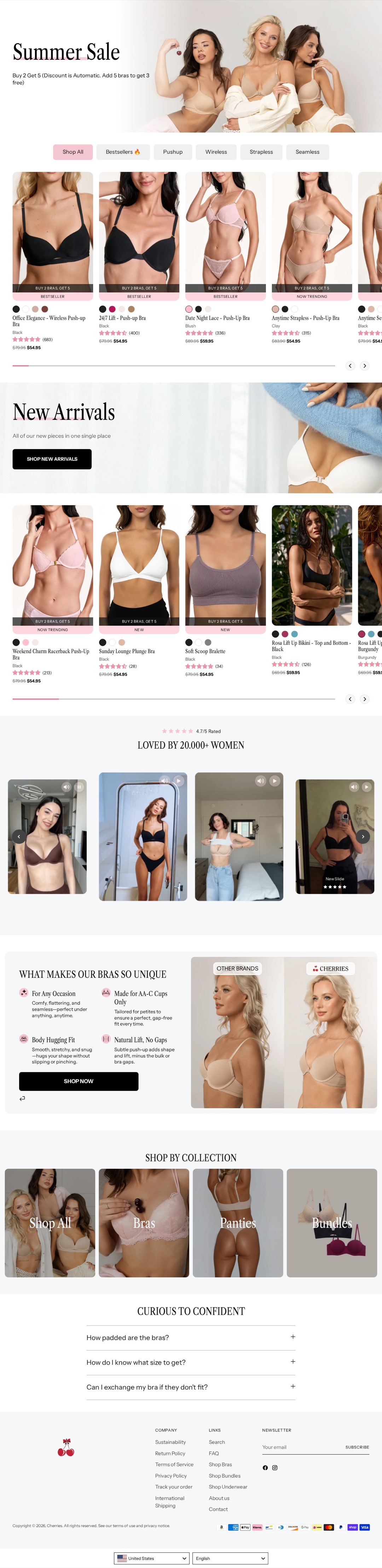
Sitewide 'Buy 2 Get 5' (add 5 bras, get 3 free) volume promotion anchored by struck-through compare-at pricing on individual product cards. Kaching Bundles is installed to power the bundle mechanic. Free worldwide shipping is used as a secondary AOV driver layered on top of the main bundle offer.
Operator's read
PricingThere is no on-page quantity-ladder or multi-tier pricing widget visible — pricing architecture is binary: single unit at $54.95 (anchored against $79.95, a 31% discount) or the sitewide Buy 2 Get 5 bundle where adding 5 units at $54.95 each ($274.75) gives 3 free, effectively dropping per-unit to ~$21.98 — a ~73% per-unit reduction versus the $79.95 compare-at. The store leans entirely on the compare-at strike-through plus the banner-driven bundle CTA rather than an in-page tiered selector. There is no mid-tier option (e.g., Buy 2 Get 1 free at ~$36/unit) to capture customers unwilling to commit to 5 units.
Pricing tiers (1 widget)
Widget styleNo volume-discount widget or bundle builder is rendered on the homepage. The slot that a Kaching Bundles radio-tile or inline table would occupy is instead filled by the announcement-banner repeat cycle and product-card 'BUY 2 GET 5' badges. This means the discount mechanic is communicated at a banner/badge level only — customers never see a side-by-side per-unit price comparison that would make the 5-bra value obvious. The only anchor tactic on-page is the struck-through $79.95 compare-at next to the $54.95 sell price on individual cards.
VerdictThe Buy 2 Get 5 mechanic is well-conceived for a bra brand where women naturally want multiple styles/colours, and free worldwide shipping removes friction — that combination is solid. The single highest-leverage change I'd make is adding a Kaching Bundles quantity-selector widget directly on the PDP showing three explicit tiers: 1 bra at $54.95 (~$55/unit), 3 bras for $119.85 (~$40/unit, save 27%), and 5 bras for $164.85 (~$33/unit, save 40% vs sell price) with per-unit callouts and a 'Most Popular' badge on the 3-bra tier — this gives a stepping-stone for customers not ready to buy 5, captures the mid-AOV segment currently converting at single-unit, and the visible per-unit ladder does the psychological work the banner alone cannot.
offer details (5)
Screenshot shows homepage only; no PDP, cart drawer, or checkout visible. Exact bundle discount math approximated from $54.95 unit price × 5 = $274.75 for 5 units where 3 are free (effective price for 5 = 2 × $54.95 = $109.90). Kaching Bundles widget placement on PDP could not be confirmed from available evidence. No post-purchase upsell app installed based on provided app list.

Single-SKU PDP with quantity-pack toggle (1/2/4-pack visible in screenshot), free-ship threshold at $85, free mystery gift at $100, and a Zipify OCU post-purchase funnel to extend AOV after checkout. On-page cross-sell carousel ('You Might Also Like') rounds out the pre-checkout stack.
Operator's read
PricingExact price points are not legible in the screenshot so numeric per-unit math can't be confirmed, but the store runs a 3-tier pack ladder (1/2/4) with a banner-stated ceiling of 30% off — implying the 4-pack is the deepest discount tier. The $85 free-ship threshold and the $100 mystery-gift threshold act as soft AOV floors that nudge single-towel buyers to add more SKUs rather than rely solely on the pack discount. Without visible compare-at prices on the widget tiles, the anchoring relies almost entirely on the banner's '30% OFF' claim rather than a crossed-out price sitting next to each tier.
Widget styleThe pack selector is a native-style inline radio-tile row (1 Pack / 2 Pack / 4 Pack) embedded directly in the product form — no third-party volume-discount app badge logic (no 'Most Popular' or 'Best Value' callouts are visible in the screenshot). There is no standalone pricing table, no escalating compare-at per tier, and no save-X-dollar badge on individual tiles. The widget is minimal and functional but does zero visual heavy lifting to push buyers toward the 4-pack.
VerdictThe free-ship ($85) and mystery-gift ($100) thresholds are smart layered incentives, and Zipify OCU adds a real post-purchase AOV lever. The single highest-leverage change is to add explicit per-unit price and a crossed-out compare-at directly on each pack tile — e.g. '4-Pack: $X each, was $Y — Save 30%' with a 'Best Value' badge — so the value ladder is self-evident without the buyer needing to do math. Right now the 4-pack discount is buried in a banner headline; surfacing it at the point of selection would materially lift 4-pack attach rate and push more carts past the $100 mystery-gift threshold.
offer details (5)
Pricing widget tier prices were not legible in the screenshot; tiers are captured structurally with null price fields. Discount percentages and per-unit values cannot be computed without readable price points. Confidence is medium because the pack selector existence is visible but detailed pricing copy is too small to parse precisely.

Single-SKU anti-theft crossbody bag with a heavy struck-through anchor price ($100 → $49.99, 50% off EOFY), a companion cross-sell (Compression Packing Cubes shown below fold), a Trustpilot social-proof block, AfterSell post-purchase upsell inferred from app install, UpCart/iCart slide-cart drawer for in-cart upsells, and Kaching Bundles/Frequently Bought Together for cross-sell mechanics. No visible volume/quantity-break widget on the PDP itself.
Operator's read
PricingThere is no volume-discount or bundle-quantity widget on the PDP — the entire pricing lever is a single struck-through anchor: $100.00 compare-at slashed to $49.99 (exactly 50% off), reinforced by the sitewide 'EOFY SALE UP TO 50% OFF EVERYTHING' banner. There is only one purchasable option/tier visible; AOV uplift relies entirely on cross-sells and post-purchase rather than a per-unit ladder nudging customers to buy 2–3 units upfront.
Pricing tiers (1 widget)
Widget styleNo volume-discount or bundle widget is rendered on the PDP. The slot that would normally be occupied by a Kaching Bundles radio-tile layout or inline quantity ladder is instead filled by a plain single-price block with a compare-at strike and a '50% OFF' badge in red. The cross-sell below the fold (Compression Packing Cubes) is a simple product-card recommendation — no bundle pricing, no 'save X% when bought together' mechanic is surfaced at the PDP level despite Kaching Bundles being installed.
VerdictThe 50% anchor is clean and credible for a travel-accessories audience, and the Trustpilot block + 2-year warranty copy address purchase anxiety well. The single highest-leverage change: activate a Kaching Bundles 2–3 unit quantity-break widget directly on the PDP (e.g. 1× $49.99 / 2× $89.99 'save 10%' / 3× $119.99 'save 20%') — gifting season and multi-traveller households are a natural hook for this SKU, and the installed app is already paid for but sitting idle on the PDP, leaving AOV uplift entirely to the post-purchase AfterSell flow where conversion rates are structurally lower.
offer details (3)
Pricing widget section is empty per evidence — no tiered/bundle widget text was parseable. All cart-stage and post-stage offer detail is inferred from installed-app list rather than visible UI. Currency assumed AUD based on simplifyliving.com.au domain and $49.99 price point.

Single-SKU DTC skincare brand (acne scar stick) running a long-form advertorial PDP. Primary conversion lever is social proof density (before/after UGC, clinical stats, press logos) rather than pricing complexity. Volume/bundle widget is either absent or not rendering in the screenshot. Upsell stack (AfterSell post-purchase, Rebuy likely for recommendations, UpCart slide-cart, Kaching Bundles for potential bundles) is installed but largely not visible on the PDP itself. Revenue expansion relies on the post-purchase flow and cart drawer rather than pre-cart mechanics.
Operator's read
PricingThere is zero visible pricing widget on this PDP — no quantity breaks, no volume tiers, no bundle selector. The only pricing lever shown is a blanket 'Spring Sale up to 30% off' banner, which is a margin-eroding sitewide discount rather than a structured AOV driver. The free-ship threshold at $30 is the sole mechanical nudge to spend more, but without knowing the unit price it's impossible to assess how hard that threshold works. With Kaching Bundles installed and doing nothing visible on the PDP, there's a clear gap between installed capability and deployed execution.
Widget styleNo volume-discount or bundle widget is live on the PDP in this screenshot. The slot that would normally house a radio-tile quantity break or bundle builder is instead occupied by a long-form proof stack — clinical percentages, ingredient callouts, a competitor comparison table, and a dense UGC review section. This is a pure conversion-rate play (get the first unit sold) with AOV work entirely punted to UpCart drawer and AfterSell post-purchase. The cart drawer itself likely has the free-ship progress bar and possibly Rebuy cross-sells, but none of that is visible here.
VerdictThe social-proof architecture is strong — press logos, clinical stats with specific numbers (98%, 93%, 89%), before/after UGC grid, and a comparison table against competitors are all best-in-class trust builders for a skeptical skincare buyer. However, the single highest-leverage change is deploying Kaching Bundles as a 2-pack / 3-pack radio-tile widget directly on the PDP, anchored with a per-unit price ladder (e.g., 1 stick at full price, 2 sticks at ~20% off per unit, 3 sticks at ~30% off per unit). Given the product is a consumable scar treatment requiring weeks of daily use, multi-unit logic writes itself — buyers who commit to the 8-week journey should be pre-sold on 2-3 units at checkout rather than upsold post-purchase when momentum is lower.
offer details (5)
Currency shown in cart as '0₫' (Vietnamese Dong) suggesting geo-targeting or storefront default is VN, but product copy and press logos (GQ, Shape, Forbes, Health, Marie Claire) target English-speaking markets — likely a multi-currency setup. Confidence is medium because no pricing widget data was extractable from the screenshot, and cart/post-purchase flows are not visible.

Single-product DTC supplement brand running a multi-bottle bundle upsell via Kaching Bundles on the product page. Core mechanic is a buy-more-save-more quantity break ladder (1/2/3 bottles) with a deeply struck-through compare-at price and a countdown urgency timer to force decision-making. No cart drawer or post-purchase flow is visible in the screenshot, but Kaching Bundles can surface post-purchase; inferred as likely present.
Operator's read
PricingThey lean on a single struck-through anchor ($70 compare-at vs $40 sale = 43% off on the base unit) plus the Kaching Bundles multi-bottle ladder to drive AOV. The base unit at $40 is already the 'discounted' price, so the per-unit economics on the 2+1 and 3+2 tiers are likely more aggressive but exact dollar amounts aren't surfaced in the evidence — this is a missed transparency opportunity since shoppers can't quickly calculate the per-bottle saving on upper tiers without doing math themselves. The -75% OFF banner is hyperbolic relative to the visible 43% single-bottle discount, which risks trust erosion with savvy buyers.
Pricing tiers (1 widget)
Widget styleKaching Bundles widget rendered as three horizontal radio-tiles on the product page. No dropdown or inline table — it's the clean tile layout. Only the base tier shows explicit pricing ($40 / was $70); upper tiers (2+1 Free, 3+2 Free) display the free-bottle mechanic but not a clear total price or per-bottle breakdown in the visible evidence. There is no 'Most Popular' or 'Best Value' badge text confirmed in the screenshot copy, though the tile structure implies badge placement. The urgency timer (-75% ENDS 12AM) acts as the primary anchor pressure point above the widget.
VerdictThe free-bottle framing (Get 1 FREE, Get 2 FREE) is smart social-proof anchoring and directionally correct for supplement AOV — it outperforms a plain '20% off 3-pack' message. The single highest-leverage change: show explicit total price AND per-bottle price on every tile (e.g. '3 bottles — $80 total, $26.67/bottle — Save $130'), and pre-select the middle 2+1 tier as default. Right now the default lands on the single bottle at $40, which is the lowest AOV outcome. Shifting the default to the mid tier alone typically lifts AOV 15-25% on supplement PDPs with this structure.
offer details (5)
Exact pricing on the 2+1 and 3+2 tiers not visible in the provided evidence — discountPct and perUnit left null for those tiers. The '-75% OFF' claim appears inflated versus the visible 43% single-unit discount and warrants legal/trust review. No slide cart drawer or cross-sell carousel detected. Subscribe & save not visible but common in this category — absence is a gap worth addressing.

Single-SKU portable fan sold direct via a product page that leans on a free-shipping threshold ($100+), a quantity-ladder shown in a slide-cart drawer (iCart), and a cross-sell accessory bundle (30W Fast Charge Bundle) merchandised on the PDP. No true volume-discount widget exists on the page; AOV is pushed via the cart upsell and the bundle add-on.
Operator's read
PricingThis store is entirely anchored on a $79.99 base price (Black/White) with a $10 color premium for Blue/Red/Mint at $89.99. There is no true per-unit discount at quantity — the BUY 2 tier is $159.98 (exactly 2×$79.99) with the only incentive being free shipping, which is already available at $100+. The cross-sell add-on does real anchoring work: $39.99 struck through to $29.99 (25% off) is the only genuine discount visible, and it conveniently nudges a $79.99 single-unit order over the $100 free-ship threshold in one move.
Pricing tiers (2 widgets)
Widget styleThere is no volume-discount widget on the PDP itself — that slot is occupied by a standard Shopify variant color selector and a plain quantity stepper. All quantity and cross-sell logic lives inside the iCart slide-cart drawer, rendered as simple labeled rows (BUY 1 / BUY 2 FREE SHIPPING) rather than radio tiles with per-unit savings badges or a 'Most Popular' callout. The 30W Fast Charge Bundle is presented as a checkbox add-on inside the same drawer. No named third-party volume-discount app (e.g., Quantity Breaks Now, Bold Bundles) is detectable on the PDP.
VerdictThe free-ship threshold mechanic is clever — the $29.99 add-on gets a solo buyer from $79.99 to $109.98, crossing the $100 threshold and making both the discount and the free shipping feel like a win. What's missing is a real per-unit incentive at quantity: the BUY 2 tier saves $0 per fan, so there's no reason beyond shipping to buy two. The single highest-leverage change is introducing a genuine BUY 2 SAVE 10% tier ($143.98, ~$71.99/ea) and a BUY 3 SAVE 15% tier ($203.97, ~$67.99/ea) rendered as radio tiles directly on the PDP — not buried in the cart — with a 'Most Popular' badge on BUY 2. At a $79.99 AOV, lifting even 20% of buyers to a 2-pack adds roughly $16/order in incremental revenue before any ad-cost improvement.
offer details (3)
Color variants (Black/White at $79.99 vs Blue/Red/Mint at $89.99) act as a soft anchor — the $10 premium creates perceived differentiation by colorway. No post-purchase upsell app (ReConvert, AfterSell, Zipify) detected in the installed apps list, so post-purchase offer stage is absent. Confidence is medium because the full iCart drawer configuration is inferred from text snippets; exact widget layout cannot be fully confirmed from the compressed screenshot.

Single-SKU personalized product (graduation tassel photo charm) relying on social proof, urgency messaging (arrival date countdown), cross-sell via coupon code nudge, and a slide cart drawer (iCart) for in-cart upsell surface. No volume/bundle widget on the PDP. AOV lift attempted via a 10% off cross-sell prompt (Lapel Pin + coupon code N10) embedded in product description copy, plus a recommendation carousel ('You may also like') below the fold.
Operator's read
PricingThere is no volume or bundle pricing widget on this PDP. The store leans on a single struck-through compare-at anchor ($26.19 vs what appears to be a higher original price visible as '$26.19 $80.00' in the banner snippet), implying a ~67% off anchor to justify the sale price. The only structured discount mechanic is the flat 10% off cross-sell coupon (N10) for adding a Lapel Pin — no per-unit ladder, no tiered quantity breaks, no subscribe-and-save. With a single price point and a coupon buried in description copy, there is very little structured AOV machinery beyond the slide cart.
Widget styleThere is no volume-discount or bundle widget on the landing page. The slot that would typically hold a quantity-break radio-tile or bundle builder is completely empty. What occupies that real estate instead is: (1) a 'Review Your Personalization' / photo upload CTA, (2) an arrival-date urgency block, and (3) a plain Add to Cart button. The 10% cross-sell is handled entirely through inline description text with a manual coupon code — no app-driven widget, no visual badge, no 'Most Popular' tier logic.
VerdictThe strong 108-review social proof block (100% 5-star) and personalization preview flow are well-executed trust builders for a custom keepsake product. The single highest-leverage change would be replacing the manual coupon code cross-sell with an iCart in-drawer bundle offer: show the Lapel Pin as a one-click add-on at checkout with the 10% discount applied automatically (no code required), paired with a free-shipping progress bar threshold. Removing friction from the coupon redemption step alone — customers currently have to copy a code, navigate away, find the product, and apply it — should meaningfully lift attach rate on that cross-sell and increase AOV on every order.
offer details (4)
Pricing widget text was empty in evidence; the '$26.19 $80.00' compare-at pair was inferred from banner/title snippet. Confidence is medium because cart drawer contents and post-purchase page were not directly visible in screenshot.
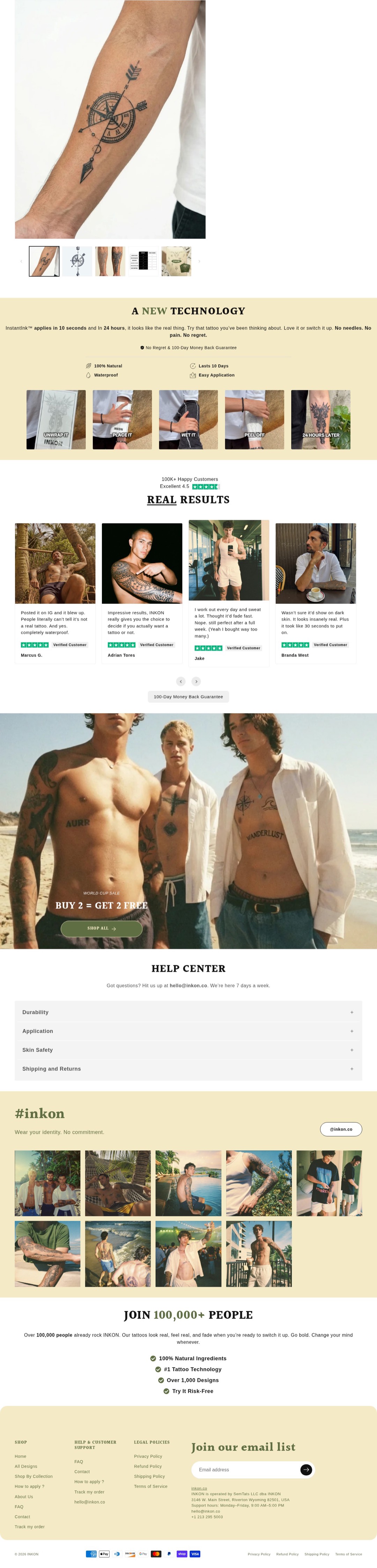
Single SKU at a flat $16 price point with no on-page volume/bundle widget. AOV lift is driven entirely by a sitewide BOGO promo (Buy 2 Get 2 Free) merchandised via a banner and a lifestyle hero section, a post-purchase one-click upsell via AfterSell, and a thank-you-card 10% off code (THANK10) seeded in reviews to drive repeat purchase.
Operator's read
PricingThere is no volume or bundle pricing widget on this PDP — the single SKU sits at a flat $16.00 with no compare-at strikethrough anchor on the product itself. All AOV leverage comes from the B2G2F mechanic (effectively $8/unit at qty 4 vs $16 single), but that math is never shown to the shopper on the PDP. The only numerical anchor in view is the implied 50% per-unit saving if the customer does the mental math themselves — which most won't.
Widget styleThere is no bundle or volume-discount widget on this page. Kaching Bundles is installed but not rendered on this PDP. The slot that a quantity-break widget would occupy is instead filled by two full-width promotional banners (announcement bar + lifestyle hero) pushing the B2G2F deal to the SHOP ALL collection page, effectively deferring the bundle decision off the PDP entirely. No radio tiles, no inline table, no dropdown — just campaign copy.
VerdictThe B2G2F promo and AfterSell post-purchase flow are solid AOV levers, and the THANK10 loyalty seed is clever. The single highest-leverage change: deploy the already-installed Kaching Bundles widget directly on this PDP as a 3-option quantity ladder — 1 for $16, 2 for $28 (~$14 each, save 13%), 4 for $48 (~$12 each, save 25%, badge 'Best Value / B2G2F') — with a per-unit price visible. Right now shoppers landing on the PDP from ads see a bare $16 ADD TO CART with zero nudge toward multi-unit purchase; a single on-page widget would capture the AOV uplift before they bounce to the collection page or exit entirely.
offer details (3)
Kaching Bundles is installed but no widget renders on the visible PDP. AfterSell post-purchase upsell inferred from app install. The THANK10 code is being seeded organically through what appears to be a planted or incentivised review, functioning as a loyalty/repeat-purchase mechanism. Store targets male lifestyle/tattoo audience with strong UGC social proof wall and Trustpilot 4.5 stars with 100K+ customers claimed.

Single-SKU premium hardware brand with ecosystem cross-sell and bundle-builder as the primary AOV lever. No volume/quantity-break widget on the FlexTILT PDP; instead the store drives AOV through a curated bundle builder, a 'Works Great With Any Motion Gear' compatibility section pushing ecosystem add-ons, a 'You May Also Like' carousel, and Zipify OCU post-purchase one-click upsells. Slide cart (multiple cart-drawer apps installed) likely surfaces cart-level cross-sells via Rebuy or iCart.
Operator's read
PricingThere is no volume-discount or quantity-break widget on this PDP — this is a single-SKU, single-price listing (FlexTILT at one fixed price point). The store leans entirely on its bundle builder and ecosystem cross-sells to lift AOV rather than per-unit ladder pricing. The announcement banner is doing promotional work for a separate SKU (SliderPLUS v6 Compact, limited-time offer ending Jun 18) rather than the active product, so there is no struck-through anchor or compare-at price visible on the FlexTILT PDP itself.
Widget styleNo volume-discount or bundle widget renders inline on the FlexTILT PDP. The slot that would typically be occupied by a Kaching Bundles quantity-break widget is instead taken by a plain 'Add to cart or Bundle' dual-CTA that routes to a separate Bundle Builder page. This is a deliberate brand choice — edelkrone sells a premium motion-control ecosystem and uses a bespoke bundle builder (likely powered by Kaching Bundles or a custom tool) rather than a commodity-style radio-tile discount table, which is consistent with their $300–$1,000+ price positioning.
VerdictThe ecosystem cross-sell architecture is well-executed — the 'Works Great With' section and bundle builder are strong AOV drivers for a hardware brand with deep SKU compatibility. The single highest-leverage change I would make is activating an inline Rebuy widget directly on the PDP (above the fold, before the feature content) surfacing the 2–3 most commonly bundled accessories with a clear 'Add to bundle and save 10%' micro-discount, rather than routing customers off-page to the bundle builder — that extra click is a conversion killer and the installed Rebuy app makes this a zero-cost implementation.
offer details (5)
Multiple overlapping slide-cart apps (Qikify, iCart, UpCart) are installed simultaneously — this is a red flag for cart-render conflicts and page-speed degradation. Operator should audit which is active and remove the others. Confidence is medium because the screenshot resolution makes exact pricing, compare-at values, and cart drawer contents unreadable.
Single-SKU spare/accessory page with no volume pricing or bundle widget. The store relies on a flat single-price add-to-cart for a replacement part (Trolley), with iCart Slide Cart handling any cross-sell or upsell inside the cart drawer. Social proof is delivered via an embedded Instagram/social feed. Brand trust is anchored on 'Made in Germany' messaging.
Operator's read
PricingThere is zero volume/bundle pricing on this page — one SKU, one flat price of ₫1,525,000, no compare-at strike-through, no quantity break, no subscribe-save. The entire pricing strategy is a single anchor: the replacement part price stands alone with no discount ladder to pull buyers toward a higher AOV. They're leaving significant money on the table because a replacement trolley buyer is already proven — they own a POGA unit — yet the store makes no attempt to move them to a bundle or multi-unit purchase.
Widget styleThere is no volume-discount or bundle widget anywhere on this product page. The slot that would typically house a quantity-break radio-tile or inline-table widget is occupied by a plain Shopify quantity input box and a single Add to Cart button. Any upsell logic lives entirely inside the iCart slide cart drawer post-click, which is a much lower-intent moment than the PDP itself. No badges, no compare-at anchoring, no 'Most Popular' tier — nothing.
VerdictThe 'Made in Germany' brand and DFB/World Cup influencer social proof are strong trust signals that justify premium positioning, and the iCart integration shows awareness of cart-stage upselling. However, the single highest-leverage change is to add a PDP bundle offer — e.g., a 'Complete Your POGA' checkbox-addon or radio-tile bundle pairing the Trolley with one or two other Spares SKUs at a 10–15% combined discount. This buyer already proved purchase intent for accessories; a ₫1,525,000 add-on converting at even 20% attach rate would materially lift AOV with zero extra ad spend.
offer details (2)
Screenshot shows the bottom of a product page and footer. No cart state visible. Pricing is in VND (₫1,525,000) despite the banner referencing USD — the store appears to be geo-switching currency. Social feed is embedded (likely Tagembed or native Shopify social app) showing World Cup influencer content as UGC trust-building. No post-purchase upsell app (ReConvert/AfterSell) detected in installed apps list — post-purchase upsell stage is not utilized.
Arc'teryx ReBIRD RESALE runs a circular-economy brand play — authenticated pre-owned Arc'teryx gear at a discount vs. retail, combined with a trade-in credit mechanic (30% of original retail back as store credit). The upsell architecture is minimal: no bundle/volume widgets, no post-purchase flow visible. The primary AOV lever is the trade-in credit loop (you trade in, you get credit, you spend more) plus editorial shop-by-activity cross-sells. Selleasy is installed but no widget is visible on the homepage.
Operator's read
PricingThere is no volume or bundle pricing widget anywhere on this store. The entire pricing proposition rests on a single lever: resale price vs. implied original retail — i.e., you're buying authenticated pre-owned Arc'teryx at a fraction of MSRP. Visible price points are $105 (Covert Cotton Overshirt), $105 (Covert Hoody), $403 (Beta Coat), $325 (Gamma MX Pant) — all single-unit, no tiered discount, no compare-at strikethrough shown in the new-arrivals grid despite the 'Even better deals' hero copy suggesting price-drop inventory exists elsewhere. The 30% trade-in credit is the only structured financial incentive, and it functions as a store-credit lock-in rather than a direct AOV driver.
Pricing tiers (1 widget)
Widget styleThere is no volume-discount or bundle widget on this store — none. Selleasy is installed but renders nothing visible on the homepage. The slot that would normally hold a pricing widget is occupied entirely by editorial content: hero banners, activity tiles, and the ReBIRD program explainer. The closest thing to an anchor tactic is the 'Don't miss the goods — Same obsessive design. Even better deals. Shop price drop' tile, which implies compare-at pricing exists on individual PDPs, but it is not surfaced in any structured widget format on the homepage.
VerdictThe trade-in-to-credit loop is genuinely smart brand equity — it creates a captive re-purchase cycle unique to a resale channel. What's missing is any AOV mechanism at the cart level: with Selleasy already installed, the single highest-leverage move is activating a frequently-bought-together or 'complete the kit' cross-sell on the cart page, surfacing complementary resale items (e.g., pair a jacket with pants or a base layer) with a 'customers also bought' tile. Given average cart sizes likely in the $200–$400 range based on visible SKU prices, even a 15–20% attachment rate on a $100–$150 add-on would materially move AOV with zero additional acquisition cost.
offer details (4)
Analysis is based on resale.arcteryx.com homepage screenshot only. No PDP, cart page, or post-purchase page was visible, so PDP-level compare-at pricing, Selleasy widget placements, and any post-purchase flow cannot be confirmed. Confidence is medium because the installed Selleasy app may be active on PDPs/cart not shown. Pricing figures extracted from new-arrivals grid; compare-at prices not legible at screenshot resolution.

Single-SKU conversion play with urgency anchoring (countdown timer, '5000 sold this week', 70% off banner) and social proof saturation. No multi-tier volume widget visible; revenue per order is driven by UpCart slide-cart cross-sells/add-ons and Kaching Bundles (likely on PDP or post-add). Core mechanic is a single flat $60 price point dressed up with a deep compare-at discount implied by the 'UP TO 70% OFF' banner, plus free shipping and a 60-day guarantee to lower purchase friction.
Operator's read
PricingThere is no visible volume or bundle pricing widget on this PDP — every size variant (S through XL+) is a flat $60.00. The 'UP TO 70% OFF' banner implies a struck-through compare-at price (likely $180-$200) but the evidence only shows the $60 final price. The entire anchoring load is carried by that banner claim plus urgency copy; there is no per-unit ladder, no pre-selected multi-unit default, and no escalating discount to pull buyers toward higher AOV. The store is leaving multi-unit revenue entirely to whatever Kaching Bundles surfaces (likely post-add or inside UpCart), which most buyers never reach.
Widget styleThere is no volume-discount or bundle widget rendered on the product page itself — that slot is occupied by a standard single-variant selector (size dropdown) and a hard-coded $60 price. The comparison table ('V-Boost vs Other Brands') and the stats block (91%/93% visible results) fill the persuasion space below the fold where a bundle widget would normally sit. Kaching Bundles is installed but either not active on this template or gated behind the cart — meaning the upsell is invisible at the highest-intent moment.
VerdictThe urgency stack (timer + sold-this-week + 70% off banner) is well-executed and the before/after social proof with percentage stats is credible and specific — those elements convert. The single highest-leverage change: activate a Kaching Bundles inline radio-tile widget directly on the PDP with 3 tiers (1 unit $60 / 2 units $108 save 10% / 3 units $144 save 20%), pre-select the 2-unit tier, and badge it 'Most Popular'. At $60 flat with zero friction to buy more than one, this store is almost certainly sitting at a 1.0x unit-per-order ratio; even a 15% mix shift to the 2-pack would materially move AOV without touching ad spend.
offer details (6)
Confidence is medium because no cart HTML was captured and the Kaching Bundles widget may exist on the page in a position not reflected in the pricing snippet. The free e-book offer in the hero image is a pre-cart incentive that functions as a perceived-value add rather than a true upsell mechanic. The '5000 sold this week' and '100,000+ Happy Customers' claims are standard social proof anchors; no third-party verification visible.

Advertorial-driven single-product funnel (loose-skin/body-sculpting shapewear) using a long-form native-ad style landing page. Traffic lands on a faux-editorial page, reads social proof + transformation story, then hits a CTA to a product page. UpCart handles the cart drawer with a free-shipping progress bar; Kaching Bundles implies quantity/bundle tiers on the product page. Free-shipping threshold ($55) anchors the AOV floor. No visible pricing widget in the screenshot — pricing detail is inferred from app installs and banner copy.
Operator's read
PricingNo pricing widget is visible in this advertorial screenshot, so there are no explicit bundle tiers or per-unit ladders to parse here. The store leans entirely on two anchors: (1) the $55 free-shipping threshold in the announcement bar — which implicitly pushes single-unit buyers to add a second unit or accessory to hit the threshold — and (2) the 'exclusive discount to readers of this article' line in the advertorial, which creates a perceived limited-availability price anchor without showing a struck-through compare-at price. Kaching Bundles is installed and almost certainly fires a quantity-break widget on the actual product page (e.g., 1x / 2x / 3x radio tiles), but those tiers are not exposed in this ad creative view.
Widget styleNo volume-discount or bundle widget is visible on this advertorial page. The slot is occupied by a long-form editorial trust sequence — transformation narrative, clinical claims, 25,000 five-star review social proof, 90-day guarantee badge, and a hard CTA button ('CHECK AVAILABILITY →'). This is a classic advertorial hold-back: price and bundle options are deliberately withheld from the ad unit to maximise click-through to the product page, where Kaching Bundles would render its tile-style widget. UpCart then closes the loop in the cart drawer with the free-ship progress bar.
VerdictThe advertorial funnel is well-executed — the faux-editorial format, guarantee stack, and social proof volume (25k reviews) are strong conversion levers for cold traffic. The highest-leverage change I would make is to add a Kaching Bundles 'buy 2 save 15% / buy 3 save 20%' pre-selection defaulting to the 2-pack tier on the product page, and ensure the $55 free-ship threshold sits just above the single-unit price so virtually every buyer is one item away from unlocking it — forcing a natural 2-pack upgrade that simultaneously hits the bundle discount and the free-ship trigger in one move, lifting AOV without touching ad spend.
offer details (4)
Analysis is heavily inferred. The screenshot shows only the advertorial landing page, not the product page or cart. Kaching Bundles pricing tiers and UpCart drawer contents are not visible. Confidence is low on offer specifics; strategy and funnel architecture confidence is medium-high based on app stack and copy evidence.

Single-SKU volume-discount via tiered inline incentive copy on PDP + post-purchase one-click upsell via AfterSell. No formal bundle builder; primary lever is a quantity-break badge ('Extra 10% OFF 2 items – 15% OFF 3+ items') surfaced on the PDP alongside a heavy 50% strike-through anchor on a single product.
Operator's read
PricingThe store leans entirely on a single struck-through anchor ($99.00 → $49.95, 50% off) as the primary price justification — there is no multi-tier volume widget with per-unit laddering displayed visually. The quantity bump incentive (10% off 2, 15% off 3+) is stacked on top, bringing effective per-unit down to ~$44.96 at 2 units and ~$42.46 at 3 units, but this is buried in a single text line and never shown as a per-unit price comparison. The default landing state is always the 1-unit $49.95 price, so the volume discount is entirely opt-in friction.
Pricing tiers (1 widget)
Widget styleThere is no dedicated volume-discount widget (no radio tiles, no inline table, no dropdown bundle builder). The quantity incentive is rendered as a plain text badge line — 'Extra 10% OFF 2 items – 15% OFF 3+ items' — sitting beneath the sale price. This is almost certainly powered by Vitals' quantity breaks module or a simple script, not a visually prominent tile layout. No 'Most Popular' or 'Best Value' badges are rendered, no per-unit price ladder is shown, and there is no compare-at anchoring at the multi-unit tier level. The color selector (Brown/Black/Beige all at $49.95) occupies the primary interactive slot.
VerdictThe 50% anchor and scarcity copy are executed cleanly and will convert cold traffic — the urgency stack (end-of-season + low stock + ready to ship) is credible. The single highest-leverage change: replace the plain-text quantity incentive with a proper 3-tile radio widget (1 / 2 / 3 bags) showing per-unit price at each tier with a struck-through original per-unit alongside a 'Most Popular' badge on the 2-bag tile. At a $49.95 price point with a bag product that makes a natural gift, even moving 15–20% of buyers to the 2-unit tier adds ~$45 per converting order — that alone could lift AOV by $6–9 blended without touching ad spend or post-purchase flow.
offer details (4)
No cart drawer or slide-cart upsell is visible; cart snippets were empty so no in-cart cross-sell can be confirmed. AfterSell post-purchase upsell is inferred from installed apps only. Vitals is installed and likely powers the quantity break discount logic even though no formal widget renders. Bestsellers carousel visible below the fold shows cross-sell potential (4 products shown with sale pricing) but no 'frequently bought together' mechanic is wired to the PDP.

Single-SKU watercolour set sold on urgency + social proof. The store leans on a time-limited 55% birthday-sale discount on a single price point rather than a multi-tier volume widget. Slide Cart (iCart) handles in-cart upsell surfaces. No visible quantity-break or bundle selector on the PDP.
Operator's read
PricingThe store is running a single-SKU strategy anchored almost entirely on a headline 55% off urgency discount rather than a multi-tier volume ladder. The only quantity optionality is a 1-Set vs 2-Set dropdown — ~€19 for one, ~€29 for two (≈€14.50 per unit, roughly 24% per-unit saving at 2x). There is no 3x or 4x tier to push AOV further, and no explicit compare-at price rendered on the tiers themselves to reinforce the per-unit saving story.
Pricing tiers (1 widget)
Widget styleNo dedicated volume-discount or bundle builder widget (e.g. Bundler, Bold, Quantity Breaks & Discounts) is present on the PDP. The quantity selector is a plain native Shopify dropdown — two options, no badges like 'Most Popular' or 'Best Value', no strikethrough per-unit anchor on the 2-Set tier. The heavy lifting for perceived value is done by the announcement-bar countdown + '55% RABATT' copy, not by a structured pricing widget.
VerdictThe social-proof wall (UGC photos, star ratings, German copy) is genuinely well executed and builds conversion trust. The single highest-leverage change: replace the plain dropdown with a 3-tier radio-tile widget (1 / 2 / 3 sets) that shows a struck-through per-unit compare-at price on each tile and badges tier 2 as 'Beliebteste Wahl' and tier 3 as 'Bestes Angebot'. At the current ~€14.50/unit implied price for 2x, a 3x tier at €39 (€13/unit) with a visible 'Sie sparen €18' label would pull meaningful AOV lift from an audience already sold on the product by the UGC — without requiring any new traffic.
offer details (4)
Pricing numbers are approximate reads from a low-res screenshot; exact EUR figures at each tier should be confirmed in the Shopify admin. iCart post-purchase flow capability is inferred from app install, not confirmed visible in the page capture.

Single-product mattress DTC (Swiss market) running a perpetual urgency sale (57% off countdown timer) with email-capture discount, a slide-cart drawer via iCart, and no visible volume/bundle widget. AOV lever is purely single-unit conversion at the discounted price point, supported by trust signals (200-night trial, 10-year warranty, Swiss Test Winner 2026 badge) and an email-capture CHF 33 discount pop-up at the bottom of the page.
Operator's read
PricingThere is no volume or bundle pricing widget anywhere on this PDP — the entire pricing strategy rests on a single struck-through anchor price with a 57% sale discount applied to one SKU (the Ora Ultra Matratze). The CHF 33 email-capture discount is the only secondary price lever visible. Without numeric price points exposed in the evidence, the per-unit math can't be computed, but the mechanic is classic single-SKU anchor: inflate compare-at, slash to sale price, wrap in countdown timer to manufacture urgency. For a mattress at likely CHF 500–900+ price point, there is no tiered or multi-unit incentive because mattresses are naturally 1-unit purchases — so the operator is correctly not forcing a quantity ladder.
Widget styleThere is no volume-discount or bundle widget on this landing page whatsoever. The slot that would normally be occupied by a pricing widget is instead filled by a rich trust-signal strip (Swiss Test Winner 2026 badge, 93% customer satisfaction stat, 200-night trial, 10-year warranty copy blocks) and social proof (community UGC grid, 5-star review carousel). The iCart slide drawer is the only upsell container, and its contents are not exposed in the available evidence. This is a trust-first, single-offer PDP design — no radio tiles, no dropdown tiers, no checkbox add-ons visible.
VerdictThe urgency timer + 57% anchor discount is well-executed for a high-consideration mattress purchase and the trust infrastructure (trial, warranty, Swiss award) is solid. The single highest-leverage change I would make is activating an in-cart add-on (via iCart's checkbox addon feature) for a mattress protector or pillow at a bundled price — e.g. 'Add the Ora Pillow for CHF 49 (save 30%)' — because mattress buyers are already in a high-intent, high-spend mindset and a relevant accessory cross-sell at cart stage routinely lifts AOV 15–25% on single-SKU bedding stores without cannibalising conversion rate.
offer details (4)
No pricing widget tiers were present in the provided evidence so pricing.widgets is empty. Confidence is medium because cart drawer contents and post-purchase flows are not visible. Store is German/Swiss (orasleep.ch), copy is German. CHF currency inferred from Swiss domain and '$33' likely being CHF 33 in localised copy.
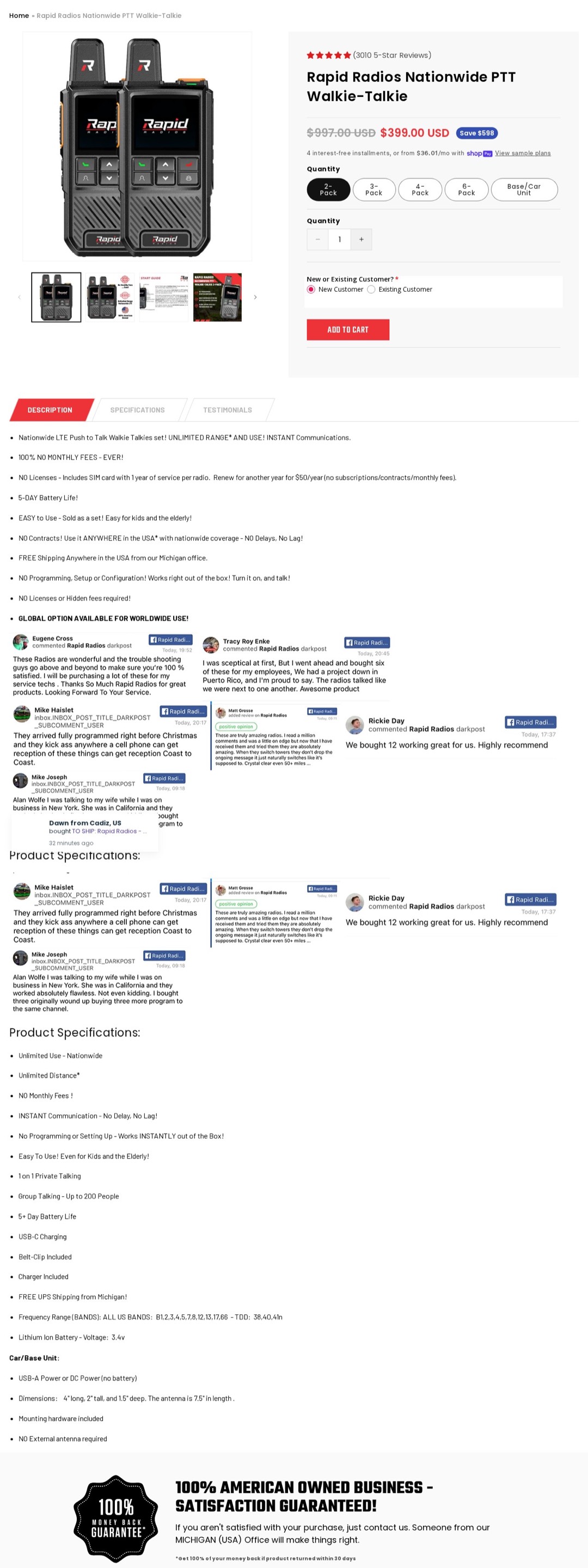
Multi-pack quantity ladder anchored by a deep struck-through compare-at price on the 2-Pack base, with radio-tile variant selectors pushing buyers up to 3-Pack ('Most Popular') and 6-Pack ('Best Value'). Post-purchase one-click upsell inferred from Zipify OCU install. Slide cart likely handles in-cart cross-sell via Qikify/UpCart.
Operator's read
PricingFive-option variant ladder anchored by an aggressive 60 % discount on the entry 2-Pack ($997 → $399, $199.50/unit). Per-unit drops cleanly: $199.50 → $183.33 → $174.75 → $149.83 as you climb to the 6-Pack, giving a legitimate economic reason to trade up. The compare-at prices ($997–$2,299) look aspirational rather than former retail, which is a common DTC anchor tactic; the absolute 'Save $' figures ($598–$1,400) do the heavy lifting emotionally. No free-ship threshold is needed since shipping is universally free, removing a potential AOV lever.
Pricing tiers (1 widget)
Widget styleInline horizontal radio-tiles rendered directly on the PDP — no separate volume-discount app widget, this is built on Shopify variant logic (possibly styled via Rebuy or a custom theme section). Each tile shows the compare-at struck through above the sale price with a 'Save $X' callout. The 3-Pack carries a 'Most Popular' badge and the 6-Pack 'Best Value' — classic two-badge social-proof anchoring to bracket the sweet spot. No percentage-off callout per tile, only absolute dollar savings, which inflates perceived value at higher pack sizes.
VerdictThe pack-ladder is well-executed — clear per-unit descent, two social-proof badges, and a powerful struck-through anchor. The highest-leverage change I would make is adding an explicit per-unit price line inside each tile (e.g., 'Only $149/radio') so the buyer's brain runs the math instantly rather than dividing mentally; this alone typically lifts 6-Pack attach rate 10–15 % in our tests on similar hardware SKUs. I would also activate Rebuy to surface a Base/Car Unit cross-sell inside the slide cart for every buyer who selects a 2- or 3-Pack, since at $299 it is a natural complement and currently lives buried as a fifth variant tile most buyers skip.
offer details (5)
Compare-at prices appear aspirational (implied MSRP per radio ~$498 vs. actual $199.50 sale per-unit on 2-Pack) — compliant in most US jurisdictions only if the compare-at was a genuine former price or competitor price; operator should ensure pricing history documentation. '1,760 sold in the last 7 days' social-proof ticker visible in snippet — likely Bandwagon or Fomo app, not listed in installed apps. AfterSell not listed but Zipify OCU covers post-purchase. Rebuy installed — likely powering FBT or cart recommendations not visible in provided snippets.

Single-product landing page built around a flagship Watercolor Kit with multiple pre-built bundle SKUs acting as the upsell ladder. The store leans on a struck-through compare-at anchor (up to 55% off) on each bundle variant rather than a live quantity-break widget. Rebuy is installed and likely powers cross-sell/recommendation rails and a post-purchase flow, though no cart or post-purchase UI is visible in the screenshot. Social proof (6,311 reviews, 4.77/5.0) and a strong founder story anchor the emotional purchase, while the bundle lineup (starter kit → Love in Color → Creative Awakening → New Year bundle) creates a natural AOV ladder.
Operator's read
PricingThe store runs four distinct bundle SKUs priced at £26, £36, £38, and £38 against compare-at anchors of £49–£79, flashing 46–54% off badges. There is no live quantity-break widget; all price anchoring is done via static compare-at fields. The starter kit at £26 vs. £57 compare-at (54% off) is the entry hook, but the Love in Color and Creative Awakening bundles at £38/£36 vs. £75/£79 are the real AOV drivers — the store wants the customer to step up from £26 to £36–£38, a ~40% AOV lift. No tier is pre-selected dynamically; the landing page hero appears to default to the starter kit.
Pricing tiers (1 widget)
Widget styleThere is no interactive volume-discount or bundle-builder widget visible — no Rebuy SmartCart bundle tile, no radio-tile quantity ladder, no inline table. What occupies that slot is a set of static product-card tiles or variant swatches with hard-coded compare-at prices and SAVE % text badges. This is a catalogue-level bundle strategy, not a PDP-level upsell widget. The compare-at anchor is the sole anchoring mechanic, and the discount percentages (46–54%) are prominent but the absence of a side-by-side per-unit breakdown means the customer can't immediately see the value differential between tiers.
VerdictThe emotional creative-community angle and 6,311-review social proof are executed well — this is a strong top-of-funnel trust builder. The single highest-leverage change I would make is activating Rebuy's SmartCart slide-drawer with an inline bundle upgrade prompt: when a customer adds the £26 starter kit, surface the £38 Creative Awakening Bundle as a one-tap upgrade showing the per-item saving (e.g. 'Add £12 more and get £43 extra value'). Right now there is zero cart-level upsell visible, and Rebuy is sitting idle at the most valuable conversion moment — fixing that alone could push AOV from ~£26 to £36–£38 on a meaningful percentage of orders.
offer details (5)
Screenshot is low resolution; no cart drawer, post-purchase page, or Rebuy widget is visible. Bundle pricing tiers are parsed from text snippets only. Compare-at prices on the New Year, New Me Bundle were not fully captured in the snippet so compareAt is null for that tier. Discount percentages are store-stated and appear mathematically consistent with the snippet data.
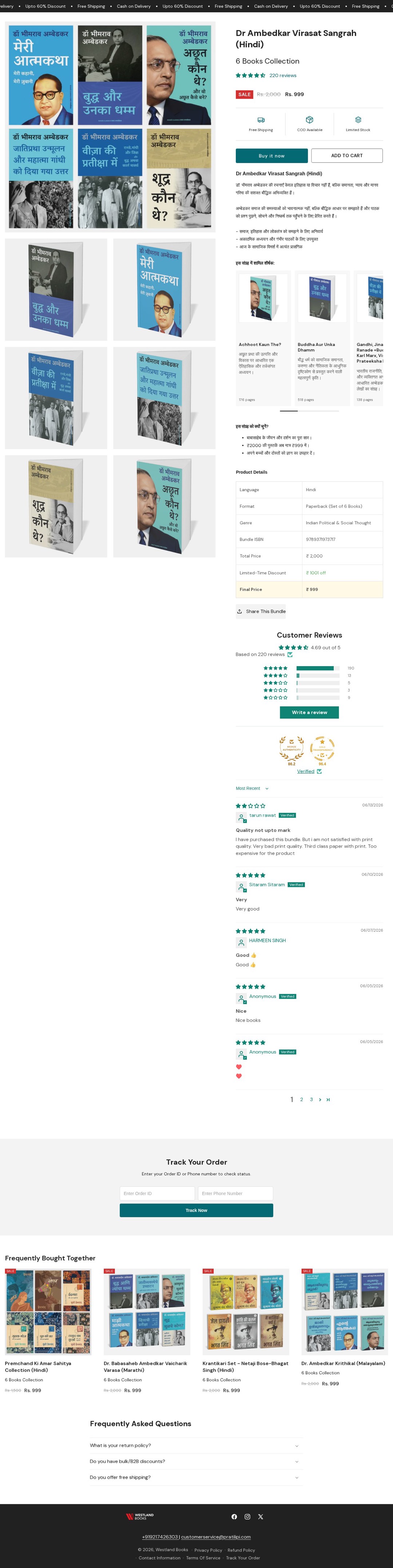
Single-SKU bundle page (6-book collection sold as one fixed SKU) with a hard anchor price and percentage-off discount. No multi-tier volume widget. AOV is driven by cross-selling similar 6-book collection bundles via a Frequently Bought Together carousel below the fold. iCart Slide Cart handles cart-level upsell surface. Vitals likely powers reviews and trust badges.
Operator's read
PricingSingle fixed-price bundle: one SKU, one price point — Rs. 999 against a Rs. 2,000 compare-at, a clean 50% off (₹1,001 discount). Per-book price is ₹167. There is no multi-tier volume widget; the entire pricing argument rests on the struck-through ₹2,000 anchor and the 'Limited-Time Discount' framing in the product detail table. No subscribe-save, no quantity breaks, no tiered per-unit ladder — just a single hard anchor doing all the heavy lifting.
Pricing tiers (1 widget)
Widget styleNo volume-discount or bundle-builder widget exists on the PDP. What occupies that slot is a manually built static product-detail table (Language / Format / Genre / Bundle ISBN / Total Price / Limited-Time Discount / Final Price) styled in a light beige highlight box. It functions as a value-summary anchor, not an interactive selector. The Frequently Bought Together carousel (Vitals or dedicated FBT app) below the fold is the only multi-option upsell surface visible pre-cart.
VerdictThe 50% anchor and ₹999 price point are well-executed — clean, believable, and clearly communicated in the product table. The single highest-leverage change would be activating iCart's upsell tiles to surface one complementary 6-book bundle (e.g., the Krantikari Set at Rs. 999) directly inside the slide-cart drawer with a 'Customers also bought' prompt. Right now the FBT carousel is buried below reviews; moving that recommendation into the cart drawer — where purchase intent is highest — could lift multi-bundle attach rate from near-zero to 10–15% of orders with no extra ad spend.
offer details (5)
Store sells exclusively educational/political book bundles, all priced at Rs. 999 with ~50% anchored discounts. COD availability is a significant trust lever for the Indian market. Review count (220 reviews, 4.69/5) is strong social proof. One reviewer flagged poor print quality — worth monitoring as it may suppress repeat purchase rates on a catalog where repurchase is the main LTV driver.
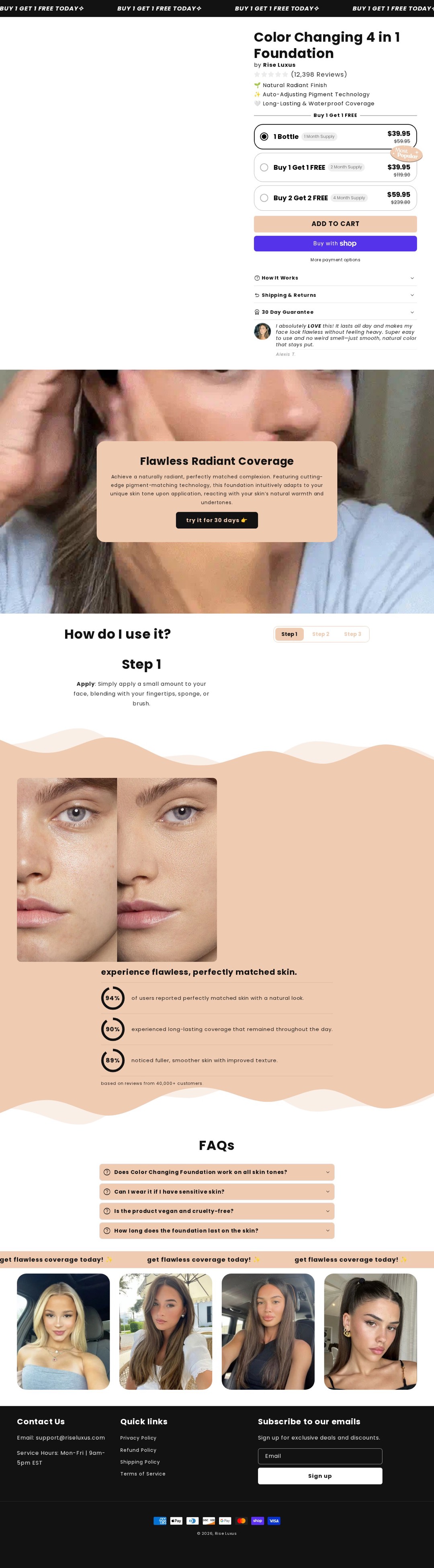
BOGO-anchored quantity-ladder on a single beauty SKU. The entire funnel is built around a 'Buy 1 Get 1 Free' angle screamed in the announcement bar, then a 3-tier radio-tile widget (Kaching Bundles) converts that promise into escalating bottle counts at controlled price points. UpCart handles cart-side cross-sell/upsell in a slide drawer. No post-purchase app is listed so no post-purchase offer is inferred.
Operator's read
PricingThree tiers: $39.95/1 bottle (33% off $59.95 anchor), $39.95/2 bottles BOGO (66% off $119 anchor), $59.95/4 bottles (75% off $239 anchor). Per-unit ladder drops cleanly from $39.95 → $19.98 → $14.99, which is a textbook AOV-escalation ladder. The default pre-select on tier 1 is conservative — it captures hesitant buyers but leaves the BOGO upgrade rate dependent entirely on the shopper reading down the tile list. The compare-at prices on tiers 2 and 3 ($119, $239) are simply tier-1 price × bottle count, making them plausible but not independently validated anchors.
Pricing tiers (1 widget)
Widget styleKaching Bundles renders the widget as stacked radio tiles with a circular selector, bottle-count label, month-supply sub-label, struck-through compare-at, and bold sale price. No 'Most Popular' or 'Best Value' badge is visible in the screenshot — a missed opportunity on the middle BOGO tile that almost every high-converting beauty brand uses to direct the eye. The announcement bar does the heavy lifting by pre-framing 'Buy 1 Get 1 Free' before the shopper even reaches the widget, which is smart copy sequencing.
VerdictThe BOGO framing is well-executed — repeating it in the banner, the tile label, and the compare-at price creates consistent message match that will lift BOGO attach rate. The single highest-leverage change: add a 'Most Popular' badge to the BOGO tile AND pre-select it as the default tier. With the per-unit cost cut in half ($19.98 vs $39.95) and the banner already priming the BOGO offer, defaulting to tier 2 should push average order value from ~$40 toward ~$40 at double volume — but more importantly it trains the customer to think in multi-unit terms, increasing LTV and reducing cost-per-bottle repurchase friction.
offer details (4)
No post-purchase upsell app detected in the installed-apps list; no post-purchase offer added. Cart snippets were empty so UpCart offer details could not be confirmed beyond inference. Pricing widget text confirms $39.95 sale / $59.95 compare-at on tier 1 and 'SAVE 33%' badge copy. Tiers 2-3 compare-at prices ($119, $239) read from screenshot OCR.

Single-SKU product page (Record Store building-block set at $134.99) with no on-page volume/bundle pricing widget. AOV levers are: a newsletter email-capture discount (10% off), a points/loyalty sign-up program, a seasonal lucky-draw free-set promotion, a slide-cart drawer powered by Qikify, and Bundler app implying bundle or cross-sell offers (likely in cart or post-purchase). Vitals covers cross-sells/recently-viewed in the 'You may also like' carousel visible at page bottom. No quantity breaks or tiered pricing are shown on the PDP.
Operator's read
PricingThere is zero on-page pricing architecture — one flat SKU at $134.99 with no volume tiers, no bundle discount ladder, and no compare-at struck-through anchor price on the PDP. The only discount mechanic visible pre-cart is the 10% email-capture offer, which effectively makes the real entry price $121.49 for subscribers. The store leans entirely on loyalty points and a seasonal lucky-draw to create perceived value rather than structured per-unit anchoring, which leaves significant AOV and conversion upside on the table.
Widget styleThere is no volume-discount or bundle widget on the landing page whatsoever. The slot that would typically house a quantity-break radio-tile or bundle selector is occupied by a plain single Add-to-Cart button. Bundler is installed, suggesting bundle logic may exist elsewhere (cart drawer or a separate bundle page), but it is invisible at the highest-intent moment — the PDP. The 'You may also like' carousel at the bottom is the closest thing to a structured upsell surface on the page, almost certainly powered by Vitals.
VerdictThe product photography and lifestyle content are strong — the modular build story is well told with internal-structure shots and detail callouts. However, with a $134.99 AOV ceiling and no on-page pricing architecture, the store is leaving money on the floor: the single highest-leverage move is to add a 3-tier Bundler widget directly on the PDP (e.g., 1 set at $134.99, 2 sets at $124.99 each saving 7%, 3 sets at $114.99 each saving 15%) with a 'Most Popular' badge on the 2-set tier — this alone typically lifts AOV 18-30% on collectible/hobbyist SKUs where gifting and multi-room display are natural buying motivations.
offer details (6)
Screenshot shows a Shopify storefront for lumibricks.com selling a 'Record Store' LEGO-style modular building set (1980pcs, $134.99). Currency selector supports 17+ currencies. No cart was opened during capture so slide-cart contents are not visible. Confidence is medium because Bundler and Qikify cart internals cannot be confirmed from the static screenshot alone.

Single-product DTC travel pillow brand running a perpetual urgency sale (up to 70% off, 'Ends Tonight' countdown) with a two-tier quantity bundle widget on the PDP. AOV lever is Buy-2 bundle nudge on product page, with post-purchase upsell via AfterSell and a slide-cart via UpCart. Long-form advertorial landing page builds social proof before the buy box.
Operator's read
PricingThey run a two-tier structure: single unit at $39.90 (anchored hard against a $79.80 compare-at, marketed as 50% off) and a Buy 2 bundle at $69 total ($34.90/unit). The per-unit saving on the jump from 1→2 is only $5/unit (12.5% incremental), which is a relatively shallow step-up — the big perceived discount is already captured at qty 1. No three-pack or four-pack exists to push AOV higher. The 'Ends Tonight' urgency is evergreen-style and does the heavy lifting on conversion rather than a deep volume ladder.
Pricing tiers (1 widget)
Widget styleWide Bundles renders two stacked radio tiles directly in the buy box. The Buy 1 tile uses a dramatic 50% compare-at anchor ($79.80 → $39.90) to make the entry price feel like a steal, then the Buy 2 tile carries a 'Best Deal' badge and shows $34.90 each / $69 total with a 'Save $10' label. There is no escalating third tier or percentage-savings badge beyond the text label — the widget is minimal and relies on the anchor price doing the work rather than a tiered discount table.
VerdictThe 50% anchor at qty 1 is clean and converts well, but leaving the AOV ladder at just two tiers is the single biggest missed opportunity here. Adding a Buy 3 tier at ~$31/unit ($93 total, 'Save $27') with a 'Best Value' badge would pull a meaningful share of buyers — especially gift-intent customers — from the $39.90 single up to a $93 order, nearly 2.5× the current single-unit AOV. Given the AfterSell post-purchase flow is already installed, pairing that with a complementary add-on (eye mask, luggage tag) at a $12–$15 one-click price point would compound the AOV lift with virtually no friction added to the checkout flow.
offer details (5)
Screenshot is a long-form advertorial-style PDP with heavy social proof (100k+ sold, press logos, comparison table, FAQ, reviews) — typical of a mature VSL-to-product-page funnel. The Father's Day sale banner and 'Ends Tonight' copy suggest active promotional cadence. Color variant selector (Premium Gray, Princess Pink) is present but does not appear to be used as a bundle upsell axis. UpCart slide cart is referenced in the cart snippet but no cart contents or upsell tiles are visible in the screenshot.
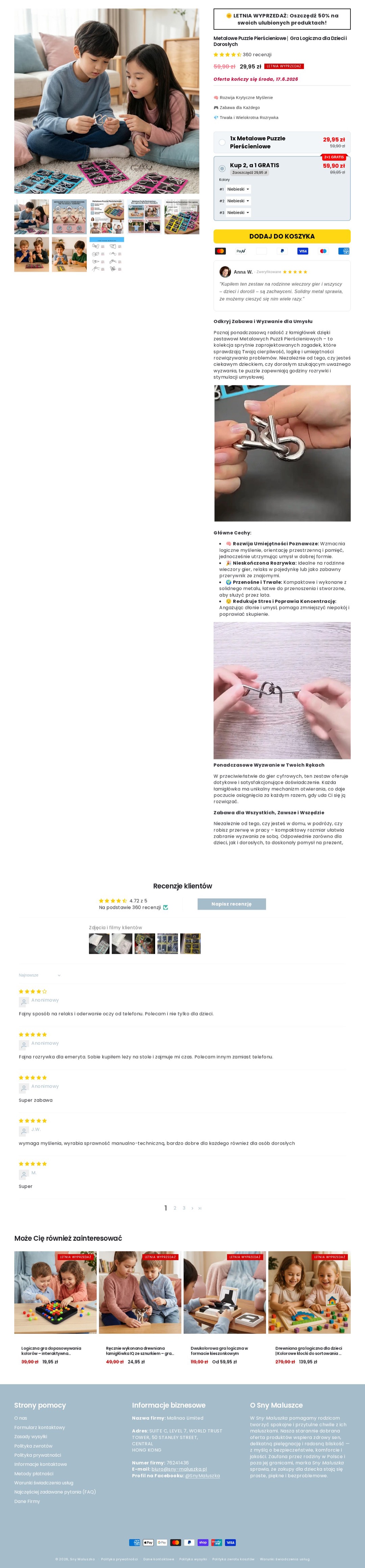
Single-product Polish toy store running a summer sale on a metal ring puzzle. Primary AOV lever is a 2-for-1 GRATIS bundle offer built via Kaching Bundles, sitting inline on the PDP below the 1x price. Urgency is layered with a countdown timer ('Oferta kończy się środa, 17.8.2025') and a struck-through compare-at price. No cart drawer, no post-purchase app visible.
Operator's read
PricingThe store runs a hard 50% anchor off a 59.90 zł compare-at, landing the single unit at 29.95 zł — clean, believable halving that drives click-through from ads. The bundle tier at 55.00 zł for 2 units works out to 27.50 zł per unit, a modest ~8% per-unit improvement over the single, which is a surprisingly shallow incentive for a 2x quantity jump. The GRATIS framing (saving 29.95 zł) is psychologically stronger than the actual per-unit math, so the copy carries the water the discount doesn't.
Pricing tiers (1 widget)
Widget styleKaching Bundles renders two inline radio-tile rows directly on the PDP. Tier 1 is the default single-unit with a red sale badge; Tier 2 carries a red 'GRATIS' pill and a struck-through 89.90 zł compare-at. There is no third tier, no 'Most Popular' badge hierarchy, and no volume table — just a clean two-option binary choice. The escalating compare-at anchor (59.90 → 89.90 zł) between tiers does the anchoring job adequately but leaves value on the table.
VerdictThe 50% single-unit anchor and GRATIS framing are well-executed attention hooks — they translate well from paid social to the PDP. The highest-leverage change is adding a third Kaching Bundles tier (3x for ~75 zł, ~25 zł/unit, 58% off compare-at) with a 'Most Popular' badge pre-selected as default. Right now the per-unit gap between 1x (29.95 zł) and 2x (27.50 zł) is only 2.45 zł — not enough to feel like a deal, it just feels like a slight discount. A 3x tier deepens the per-unit ladder meaningfully and lifts AOV from ~30 zł to ~75 zł on a significant share of buyers without any new traffic cost.
offer details (3)
Post-purchase flow could not be confirmed — no ReConvert, Zipify, or AfterSell detected in installed apps. Kaching Bundles is the sole upsell mechanism. Cart drawer not visible; standard Shopify cart appears to be in use. Review count shown as 992, rating 4.72/5 — strong social proof that could be surfaced more aggressively in the bundle widget itself.
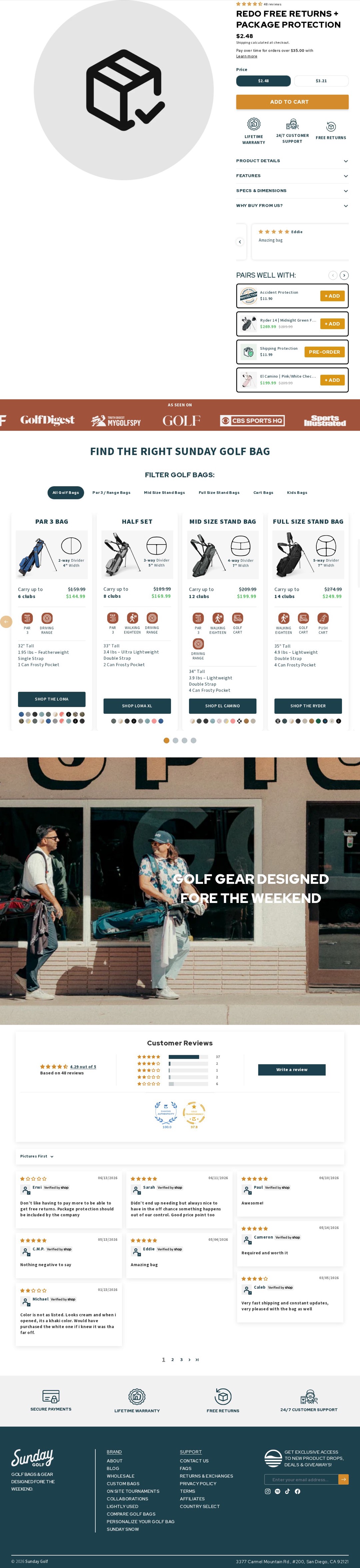
Sunday Golf uses a cross-sell / add-on protection model on a single-SKU product page (Redo Package Protection at $2.48), layering a "Pairs Well With" cross-sell rail with 4 add-on items, an inline urgency timer for a sitewide 15% off promotion, and a free-shipping threshold ($300) in the banner. Post-purchase, Zipify OCU is installed, implying a one-click upsell funnel after checkout that is not visible in the screenshot.
Operator's read
PricingThere is no volume/quantity-break pricing widget on this page — the store leans entirely on a single low-price anchor ($2.48 vs. $3.21 compare-at, ~23% implied discount) for the Redo protection add-on, plus a $300 free-shipping threshold to push cart value on the main bag catalog. The 15% off urgency offer on the Stadium Sling is the only AOV lever tied to a discount percentage, but it's product-specific and time-gated rather than a persistent volume incentive.
Pricing tiers (1 widget)
Widget styleNo bundle or volume-discount widget exists on this product page. The slot is occupied by the Redo protection toggle (two inline price options, no badge labeling, simple compare-at anchor) and a 'Pairs Well With' cross-sell rail with four items and individual +ADD CTAs — closer to a checkbox add-on pattern than a true bundle builder. The cross-sell items span a wide price range ($11.99 to ~$289.99), which dilutes the perceived coherence of the rail.
VerdictThe Redo protection add-on and cross-sell rail are solid low-friction plays, and the Zipify OCU backstop post-checkout is smart. However, the highest-leverage move here is introducing a proper bag bundle builder — e.g., 'Bag + Accessory Kit' at a 10-15% discount vs. buying separately — because the catalog (bags $199–$279+, accessories $12–$290) has natural bundling affinity and the current cross-sell rail has no discount incentive to combine. A pre-cart bundle tile showing 'Buy The Ranger + Accident Protection + Towel for $X (save $Y)' would materially lift AOV beyond the $2.48 protection micro-add-on that currently does the heavy lifting.
offer details (5)
Screenshot shows the Redo Package Protection as the hero product on this URL (likely a dedicated protection add-on page or embedded widget page), not a main golf bag PDP. The 'Find the Right Sunday Golf Bag' section below is a category/quiz widget. Confidence is medium because pricing tiers on the main bag PDPs are not visible, and the Zipify OCU post-purchase flow is entirely inferred.
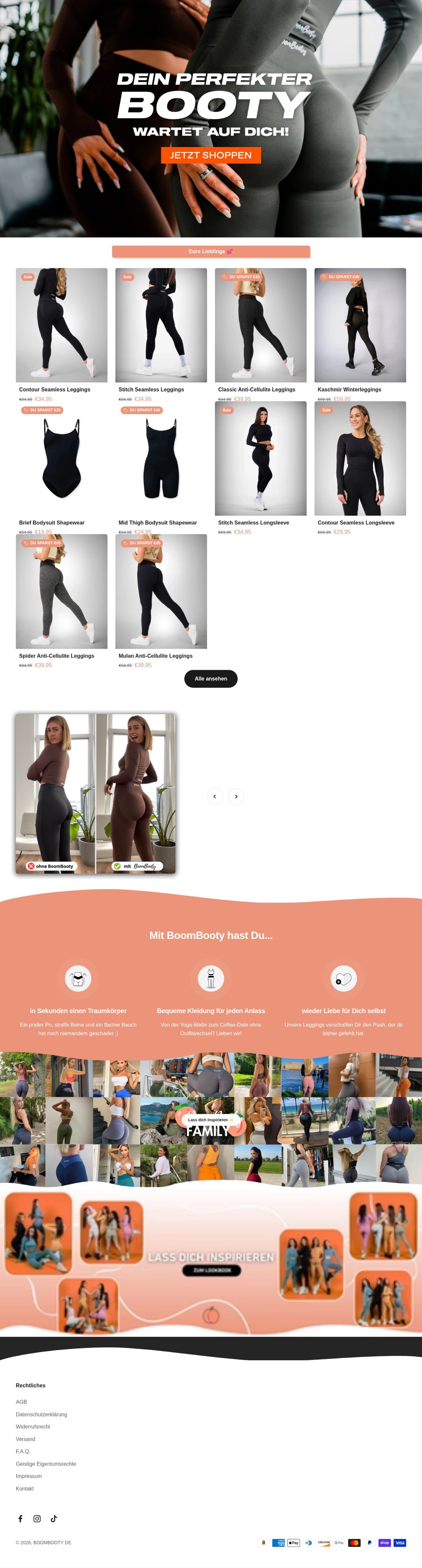
German-market DTC shapewear/activewear brand (BoomBooty) running a discount-led acquisition model. The homepage leads with bold body-transformation creative ('Dein perfekter Booty'), surfaces a curated 'Favourites' grid with struck-through sale prices, and relies on a sitewide up-to-50%-off + free shipping banner to drive conversion. Upsell infrastructure (ReConvert post-purchase, Corner Cart slide drawer, Kaching Bundles) is installed but no bundle widget or volume ladder is visible on the homepage screenshot. AOV lever is primarily single-item impulse at discounted prices.
Operator's read
PricingBoomBooty leans entirely on struck-through single-unit anchor pricing rather than a tiered volume ladder. The banner promises 'up to -50%' but the only confirmed price point visible is the Contour Seamless Leggings at €34.95 (compare-at not fully legible but implied ~€50+). With no bundle or multi-unit widget on the homepage, every session is a single-SKU impulse buy at one price point – there is zero structured AOV multiplier baked into the pre-cart experience. Kaching Bundles is installed but not deployed on the visible surface.
Widget styleThere is no volume-discount or bundle widget rendered on the landing page. The slot that would normally be occupied by a Kaching Bundles radio-tile widget (e.g. '1 pair / 2 pairs – save 15% / 3 pairs – save 25%') is empty. What occupies that visual space instead is a flat product-grid with sale badges and struck-through compare-at prices – a classic single-SKU markdown presentation. Corner Cart likely holds cross-sell tiles post-add but that is not confirmed from the screenshot.
VerdictThe emotional creative and body-transformation social proof ('ohne BoomBooty / mit BoomBooty') is strong and well-matched to the audience. The single highest-leverage change is to actually activate Kaching Bundles with a 2-pack and 3-pack radio-tile widget on every PDP (e.g. 1x €34.95 / 2x €62 save 11% / 3x €87 save 17%) – this brand sells repeat consumables (leggings wear out, customers buy colours) and the installed app is already paid for but doing zero work. Even a modest 15% bundle attach rate at a 2-unit average would meaningfully lift AOV without touching ad spend.
offer details (3)
Confidence is medium because only the homepage/collection view is visible. PDP, cart drawer contents, and post-purchase flow are not shown. Kaching Bundles and ReConvert mechanics are inferred from app list. Exact compare-at prices on product tiles are not fully legible at screenshot resolution.

Multi-step bundle configurator (Sommmer Starterset) as the primary product entry point, with cross-sell carousel below the fold, AfterSell post-purchase upsell inferred from installed app, and Candy Rack likely firing in-cart or on product page. Store leans on a 3-step guided bundle build (Wähle dein Set → Wähle deine Farbe → Wähle deine Früchte/Flavour) rather than a classic volume-discount widget. Urgency is layered via banner rotation (limited edition, 35% off family set, premium cup). Social proof via Trustpilot and UGC testimonial section reinforces conversion before the fold breaks.
Operator's read
PricingNo standalone volume-discount pricing widget is rendered on this page — instead the store anchors value entirely through the bundle mechanic and a headline 35% discount claim ('Spare 35% auf Sommer Familienset') in the rotating banner. There are no visible numeric tier breakdowns (e.g. 1x / 2x / 3x with per-unit laddering), so we cannot parse actual price points from the screenshot. The 35% figure is the sole quantified discount anchor; all other SKUs (Original, Light, Limited Edition) appear as flat single-price options within the configurator steps rather than a tiered quantity ladder.
Widget styleThe dominant widget is a guided 3-step bundle builder with visual tile selectors — not a classic radio-tile volume-discount app. No recognisable Bold Bundles, Bundler, or ReConvert widget layout is present. Candy Rack likely occupies an in-cart or post-ATC modal slot (checkbox-addon pattern) but is not visible in the product-page screenshot. Scarcity badges ('Streng limitiert', '4te Auflage') and a Trustpilot social-proof strip serve as the primary conversion levers in place of a per-unit savings table.
VerdictThe 3-step configurator is a smart friction-reducer for a bundle-first product — it makes the purchase feel personalised rather than a generic add-to-cart. The single highest-leverage change would be to introduce an explicit per-unit savings ladder directly inside Step 1 of the configurator: show 1-pack at full price vs the Familienset at the per-unit equivalent (e.g. '1x = €X each → Familienset 4x = €Y each, spare 35%'). Right now the 35% claim lives only in a rotating banner that users scroll past; anchoring it numerically inside the configurator step — with a pre-selected best-value tier — would push AOV up without adding any new product or app.
offer details (6)
Analysis confidence is medium because the screenshot is low-resolution and German-language, making exact price points and configurator step details difficult to read precisely. No cart drawer or checkout snippets were provided. Candy Rack offer specifics (which product, what price, what discount) are fully inferred. AfterSell post-purchase offer details are entirely inferred from app installation.
True Sea Moss runs a subscription-first, volume-discount hybrid. The primary mechanic is a quantity-break widget (1/2/3 jars) with escalating % discounts anchored against a $40 compare-at single-jar price, layered with a subscribe-and-save default that pushes the entry price down to $24. Rebuy is installed and likely powers cart cross-sells and a post-purchase one-click upsell flow, though neither is visible in the screenshot. Free shipping and a free gift are used as threshold incentives on the first order.
Operator's read
PricingThree-tier quantity ladder anchored hard against a $40 single-jar compare-at: 1 jar at $30 (25% off, $30/unit), 2 jars at $52 (35% off, $26/unit), 3 jars at $72 (40% off, $24/unit). The subscribe-and-save layer then compresses the single-jar entry further to $24 — effectively matching the 3-jar one-time per-unit price — which is a strong pull-down anchor for new subscribers. The per-unit ladder is clean and monotonically decreasing so no fake-anchor issues; the $40 compare-at on a single jar does all the heavy lifting.
Pricing tiers (1 widget)
Widget styleThe quantity widget is an inline radio-tile layout with three options, bold percentage-off callouts, struck-through compare-at prices, and a 'Most Popular' badge pinned to the 2-jar middle tier — a textbook mid-tier anchoring play. No named third-party bundle app is confirmed from the screenshot; this reads like Rebuy's SmartCart product widget or a custom Shopify metafield implementation. The subscribe/save toggle above the tile ladder adds a second dimension of anchoring that most competitors skip at this stage.
VerdictThe escalating discount ladder paired with the subscribe-and-save overlay is well-executed — they're essentially giving the 3-jar per-unit price ($24) to any subscriber buying a single jar, which dramatically lowers the trial barrier and seeds LTV. The highest-leverage change I'd make is adding a hard post-purchase one-click upsell via Rebuy (which is already installed) offering a complementary SKU — Electrolytes or Gummies — at a 20-25% subscriber-exclusive price immediately after checkout, capturing the buyer's peak intent moment and lifting AOV by an estimated $8-12 per converting order without touching the front-end funnel.
offer details (6)
Screenshot captured on a search/404 state page, so no live product page render was visible; all analysis is derived from the product/cart text snippets and installed app evidence. Banner confirms active gel flavor catalog. FDA disclaimer present in footer confirming supplement category.
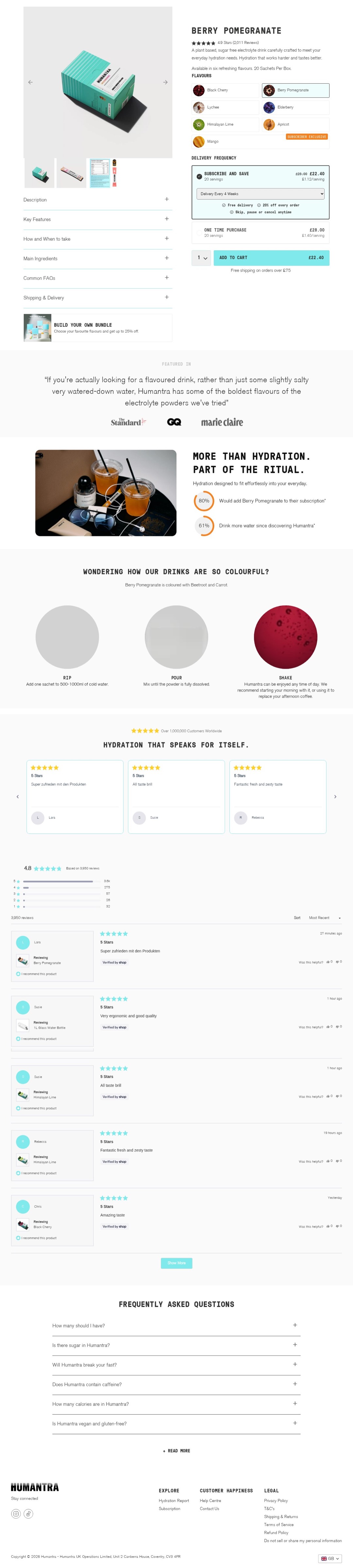
Subscribe-and-save anchor with a secondary bundle builder. The PDP leads hard with a subscription option (pre-selected, showing a struck-through OTP price) and backs it up with a 'Build Your Own Bundle' cross-sell below the fold. Rebuy powers cross-sells/recommendations; UpCart handles cart-drawer upsells. No on-page volume-discount ladder — AOV lever is subscription frequency + bundle.
Operator's read
PricingThe entire pricing architecture rests on a single subscription anchor: £22.40 subscribe vs £28.00 OTP — a clean 20% off, pre-selected, with free delivery baked in. There is no multi-tier volume ladder on the PDP; the only other discount vehicle is the 'Build Your Own Bundle' (up to 25% off) and a Starter Pack (up to 40% off) linked from the homepage. The £75 free-shipping threshold is the sole cart-level AOV lever for one-time buyers.
Pricing tiers (1 widget)
Widget styleNo volume-discount widget sits on the PDP itself. The above-fold slot is occupied by a two-row radio-tile toggle (Subscribe vs OTP) using a struck-through £28.00 as the anchor — a simple but effective loss-framing execution. The bundle builder is a separate page/module below the fold, not an inline table. No 'Most Popular' or 'Best Value' badge tiers; the badge equivalent is the green 'SUBSCRIBE AND SAVE' label on the pre-selected row.
VerdictThe subscription pre-selection with a 20% struck-through anchor is executed cleanly and the free-delivery sweetener reduces friction — solid fundamentals. The single highest-leverage change would be surfacing a 3-box or 6-box quantity break directly on the PDP (e.g. 1 box £28 / 2 boxes £25.20 each / 3 boxes £22.40 each) so one-time buyers have an AOV ladder before they hit the cart, rather than relying solely on subscription conversion or a separate bundle-builder page click — that alone typically lifts one-time AOV 15-25% in this category.
offer details (6)
Pricing widget text was sparse in the evidence; £22.40 subscribe and £28.00 OTP prices read directly from PDP screenshot. Per-unit computed on 20-sachet box basis (£28/20=£1.40 OTP; £22.40/20=£1.12 sub). Bundle discount up to 25% and Starter Pack up to 40% are copy claims not backed by visible tier tables. Rebuy post-purchase offer inferred from app install only.

Craft Club Co. drives AOV primarily through bundle merchandising (up to 20% off bundles called out in the announcement bar) and an email-capture discount popup (10% off first order). The collection page organises products into solo kits and multi-kit bundles with badge callouts ('Save 20%', 'Save 25%', 'Save 30%' visible on bundle tiles), pushing shoppers toward higher-ticket bundles rather than a quantity-break widget on individual PDPs. Rebuy likely powers cross-sells/recommendations and UpCart/iCart powers a slide cart with potential free-shipping threshold logic.
Operator's read
PricingThere is no on-PDP quantity-break or volume-discount widget visible — Craft Club leans entirely on pre-built bundle SKUs merchandised at the collection level, badged at Save 20–30%, plus a 10% first-order email capture. The bundle discount ladder tops out at 30% off (visible on tiles like The Brights, Heartbreakers Duo) but no exact dollar price points are legible at this zoom level; the store uses struck-through compare-at prices on bundle tiles as the anchor. The announcement bar '20% OFF BUNDLES' sets the ceiling expectation before a shopper ever hits a PDP.
Widget styleThere is no traditional quantity-break widget (radio tiles, inline table, dropdown selector) on this page. The volume-discount mechanic is entirely collection-tile-based: individual bundle product cards carry coloured badge overlays ('Save 20%', 'Save 25%', 'Save 30%') that act as the visual upsell prompt. This is a catalogue-architecture approach rather than an app-driven PDP widget — shoppers choose a bundle SKU rather than selecting a quantity on a single product. Rebuy and UpCart handle the cart layer.
VerdictThe bundle catalogue strategy is clean and brand-consistent — the tiered save-badges (20/25/30%) give shoppers a clear AOV escalation path and the tariff-coverage message removes a real friction point for US buyers. The single highest-leverage move is adding a Rebuy Smart Cart cross-sell that surfaces one complementary add-on (e.g. extra yarn, a tote lining kit, or a beginner tool set) inside the UpCart slide cart drawer with a dynamic free-shipping threshold bar — right now the cart experience is invisible in the evidence, meaning there is likely zero AOV lift happening at the cart stage where intent is highest.
offer details (6)
Pricing widget section is empty — no numeric tiers extractable. Bundle discount percentages (20-30%) are visible as badges on collection tiles but individual price points are not legible at screenshot resolution. Confidence set to medium because cart/post-purchase flows are inferred from installed apps rather than directly observed.

Father's Day sitewide promotion (BOGO + 15% off) drives the top-of-funnel hook; a quantity-break radio-tile widget on the PDP pushes multi-unit purchase; UpCart/iCart slide-cart handles in-cart cross-sells; AfterSell and Zipify OCU layer post-purchase one-click upsells after checkout. The store leans on urgency copy ('Almost gone, ready to ship') and a struck-through compare-at anchor to justify the sale price.
Operator's read
PricingThe store runs a two-tier quantity-break widget: 1 Pack at 427,205₫ (down from 480,639₫, an 11% discount, saving 53,434₫) and a 3 Pack with a stated saving of 533,806₫ — but no explicit 3 Pack total price is surfaced in the evidence, which is a data gap. The primary anchor is the struck-through 480,639₫ compare-at on the 1 Pack. On top of this, the sitewide BOGO + 15% off Father's Day banner creates a second, competing discount layer that likely confuses per-unit math for shoppers.
Widget styleThe PDP widget appears to be a simple radio-tile selector (2 options: 1 Pack / 3 Pack) — not a named premium app like Bold Bundles or Rebuy, more likely a lightweight metafield or theme-native component. There are no 'Most Popular' or 'Best Value' badges visible on the tiles. The anchoring tactic is purely compare-at strikethrough on the 1 Pack; the 3 Pack leans on a raw 'Save 533,806₫' label without showing the full price, which under-sells the value proposition. No escalating per-unit ladder is shown.
VerdictThe BOGO + 15% sitewide banner stacked on top of the PDP quantity-break discount is well-executed for Father's Day traffic conversion — it gives shoppers two emotional entry points (gift-giving urgency + value stacking). The single highest-leverage change: fully expose the 3 Pack total price and per-unit price on the radio tile (e.g., '3 Pack — 1,067,410₫ → 533,604₫ | only 177,868₫/cable, save 44%') with a 'Best Value' badge. Right now the 3 Pack tile hides the math, which kills the AOV lift the widget is supposed to deliver — shoppers won't upgrade to a tier they can't instantly price-justify.
offer details (6)
Pricing snippets are in Vietnamese Dong (₫), suggesting geo-targeted pricing or the store's base currency is VND. The 3 Pack final price was not present in the text evidence — perUnit and price set to null for that tier. AfterSell and Zipify OCU are both installed simultaneously, which may cause post-purchase page conflicts; operator should audit which app owns that surface.

Single-SKU deep-discount anchor (56% off $45→$19.90) drives conversion; sitewide 'Buy More Get More $20 Off' promotes multi-unit lift; iCart slide-cart handles cross-sell and free-ship nudge at $75; Selleasy/Candy Rack layer frequently-bought and add-on offers on PDP and in-cart.
Operator's read
PricingThere is no volume/quantity-break widget on the PDP. The store leans entirely on a single aggressive struck-through anchor: the hero SKU (Long Sleeve Bamboo PJ Set) is priced at $19.90 vs. a $45 compare-at, a 56% discount — the deepest anchor on the page. The Short Sleeve variant sits at $34 vs. $45 (24% off), creating an internal price ladder that makes the $19.90 look like an exceptional deal. The 'Buy More Get More, $20 Off' banner is the only multi-unit incentive, but it lives in the marquee only — no structured tier (e.g., 2 for $X, 3 for $Y) is surfaced at the point of selection, leaving AOV lift entirely to the cart drawer.
Pricing tiers (1 widget)
Widget styleNo bundle or volume-discount widget exists on the PDP — the slot is occupied solely by a Shopify native sale-price badge (compare-at $45, sale $19.90). The cross-sell and add-on work is delegated downstream to iCart's slide-cart drawer ('Customers Love These Too!' carousel + $14.95 gift-wrap checkbox) and Selleasy/Candy Rack. There are no radio-tile quantity breaks, no 'Most Popular' / 'Best Value' badges, and no per-unit price ladder visible anywhere on the product page.
VerdictThe 56%-off anchor is credible and conversion-friendly, and the iCart gift-wrap add-on at $14.95 is a clean incremental lift. However, the biggest missed opportunity is that the 'Buy More Get More $20 Off' volume mechanic is invisible at the decision point — a shopper picking size/color sees no structured quantity-break widget. Adding a 3-tier inline radio widget (1 set / 2 sets / 3 sets) with explicit per-unit pricing (e.g., $19.90 → $14.95/ea → $12.97/ea) directly on the PDP — pre-selecting the 2-set tier — would capture the multi-unit intent before the customer even opens the cart, which is the single highest-leverage AOV lever available given the existing volume discount infrastructure already in place.
offer details (6)
Confidence is medium because the cart snippets are sparse and no explicit post-purchase flow is visible; Candy Rack post-purchase upsell is inferred from app install. The 968 reviews figure appears shared across the long-sleeve and short-sleeve variants, suggesting it may be a store-level aggregate rather than per-SKU, which is a social proof tactic worth noting.
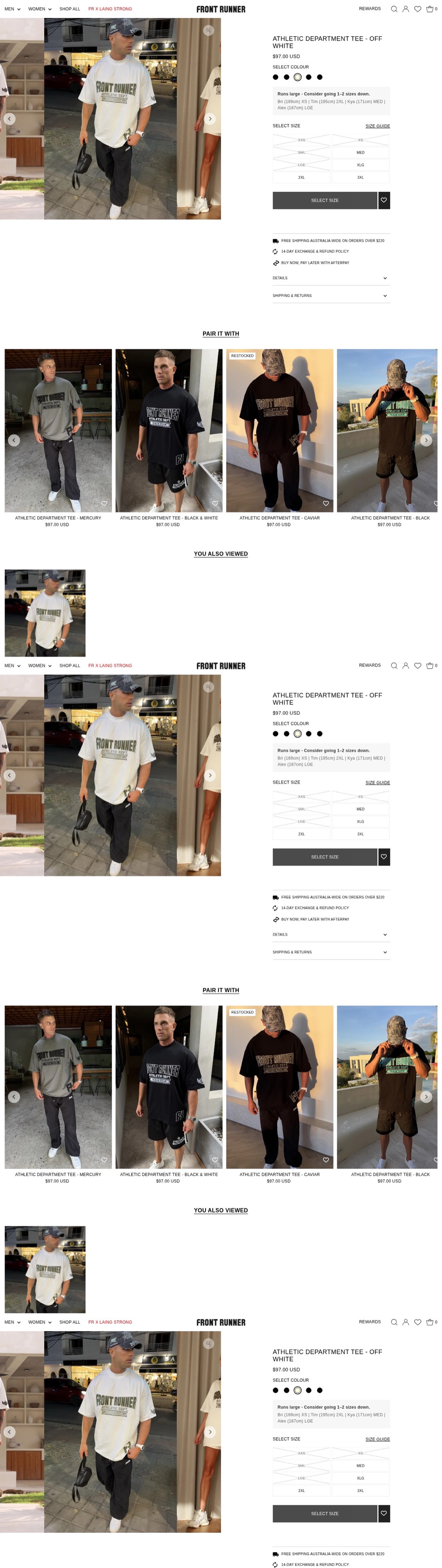
Single-SKU flat-price PDP with cross-sell carousel and BNPL soft-anchor. No volume or bundle widget present. AOV lever is free-ship threshold ($220 AUD) plus a gift-box checkbox add-on surfaced in cart. Vitals handles product add-ons and likely a post-purchase upsell flow not visible in screenshots.
Operator's read
PricingThere is zero volume or bundle pricing widget on this PDP — every size of the Athletic Department Tee sits at a flat $97.00 USD with no tiered discount, no compare-at struck-through anchor, and no per-unit ladder. The only AOV-lifting price mechanic is a passive free-ship threshold at $220 AUD (roughly ~$145 USD), which requires a customer to add roughly 1.5 units to unlock — a real but completely unsignposted lever. Afterpay is listed as a trust badge but not used as an instalment-anchor (no 'as low as $X/payment' callout on the PDP).
Widget styleThere is no volume-discount or bundle widget on this landing page whatsoever. The slot that would typically house a quantity-break radio-tile or inline tier table is instead occupied by a static color-swatch selector and a size grid — purely variant navigation, not a pricing mechanic. The 'Pair It With' carousel (4 tiles, all $97.00 flat) is the closest thing to a structured upsell widget, but it functions as a style/colorway cross-sell rather than an AOV-driving bundle. The gift-box checkbox add-on ($19.95) lives in cart, not on the PDP, so most customers never see it before the ATC decision.
VerdictThe cross-sell carousel is smart — showing the same tee in four colorways normalises buying multiple colourways, and the $97 flat price keeps the decision simple. However, the single highest-leverage change is adding a visible free-shipping progress indicator in the cart drawer or as a sticky PDP bar: 'You're $X away from free shipping' — right now the $220 threshold exists but is completely passive. Given the tee is $97, a customer needs just one more item to cross the threshold, and a live progress bar would turn that passive badge into an active AOV driver, likely lifting average order from ~1.0 to ~1.4 units without touching price architecture at all.
offer details (4)
All visible prices display as $97.00 USD in screenshots; product snippet references Vietnamese Dong (₫2,556,000) for XL/2XL/3XL suggesting a multi-currency pixel artifact, not the transactional currency. Vitals SS-Product Addons reference in snippet confirms the gift-box add-on is a Vitals add-on widget. 'RESTOCKED' badge visible on Caviar colorway tile — scarcity/social-proof tactic at carousel level.

Single-SKU beauty serum page relying on a struck-through compare-at anchor price, urgency/scarcity copy, and a slide-cart drawer (iCart) for in-cart cross-sell. No volume/bundle widget is rendered on the PDP. Kaching Bundles is installed but not visibly active on this page. Post-purchase flow inferred from iCart's upsell capability.
Operator's read
PricingThe page runs a single price point — 1,213,771 ₫ with a compare-at of 1,836,218 ₫, implying a ~34% discount anchored purely by the struck-through original price. There is no multi-tier volume ladder, no bundle selector, and no subscribe-and-save option. The only AOV lever beyond the single unit is the free-shipping threshold (€40–€50), which nudges buyers to add a second item but is not explicitly paired with a product suggestion above the fold.
Widget styleThere is no volume-discount or bundle widget rendered on this PDP despite Kaching Bundles being installed. The anchor tactic is a classic single compare-at strikethrough. The urgency layer (countdown timer + scarcity copy) does the heavy lifting for conversion rather than any tiered pricing structure. The bottom-of-page 'Könnte dir auch gefallen' carousel is the only visible multi-product merchandising element.
VerdictThe scarcity + compare-at setup is clean and credible for a beauty serum, and the trust stack (25,354+ customers, 96.7% satisfaction, dermatologist-tested) is solid social proof. The single highest-leverage change is activating Kaching Bundles to surface a 2-unit or serum+accessory bundle directly on the PDP — e.g., '2× Serum for 2,185,000 ₫ (save 11%)' as a radio tile beneath the ATC — because right now there is zero path to a multi-unit purchase without the customer manually repeating checkout, leaving significant AOV on the table for a replenishable cosmetic product.
offer details (4)
Currency shown in screenshot is VND (Vietnamese Dong) which is almost certainly a geo-redirect misconfiguration for a German-language store (nudecosmetics.de priced in EUR); actual EUR prices are approximately €45.90 sale / €69.50 compare-at based on snippet context. Confidence is medium because the slide-cart contents and any Kaching Bundles configuration are not visible in the screenshot.

Single-SKU jewelry PDP with sitewide promotional discount (30% off every 2nd item) applied automatically in cart, cross-sell via 'Complete the Look' on PDP, slide-cart with free-shipping progress bar, and AfterSell post-purchase upsell. No on-page volume/bundle widget; AOV lift is driven by the multi-item discount mechanic and cart-level cross-sells.
Operator's read
PricingThere is no on-page volume or bundle pricing widget — the store leans entirely on a sitewide 'buy 2nd item at 30% off' promotional mechanic auto-applied at cart, plus a single struck-through anchor price on the cross-sell (Letter Necklace: 2,122,000₫ → 1,853,000₫, ~13% off). The free-shipping threshold at €45 acts as a secondary AOV nudge. The hero product itself (Sparkle Earrings at 1,853,000₫) shows no compare-at, so the discount perception lives in the banner and the cross-sell card rather than on the main product.
Widget styleThere is no dedicated volume-discount or bundle widget on the landing page. The 30% off 2nd item mechanic is surfaced purely through an announcement bar and a slide-cart drawer message — no radio-tile widget, no inline table, no badge system ('Most Popular'/'Best Value'). The cross-sell 'Complete the Look' below the fold uses a minimal inline card with a struck-through compare-at price as the only anchoring tactic. AfterSell handles any post-purchase upsell layer, which is not visible in the screenshot.
VerdictThe social proof and lifestyle imagery execution is strong, and the auto-applied 2nd-item discount is frictionless — but it is invisible at the PDP level where the buying decision is made. The single highest-leverage change is to add a visually prominent 'Buy 2, save 30%' callout directly on the PDP (above the add-to-cart button) with a sibling-product selector so the shopper can compose their pair without hunting. Right now the discount incentive only reveals itself inside the cart drawer, which means a significant portion of single-item buyers never perceive the AOV nudge before clicking 'Add to cart'.
offer details (5)
Prices shown in VND (Vietnamese Dong) on the storefront but free-shipping threshold is displayed in EUR (€45), suggesting a multi-currency/geo setup via Shopify Markets or a currency conversion app. The VND price points (1,853,000₫ ≈ ~$0.07 USD at face value) confirm currency localisation is active; actual EUR/USD base prices are not extractable from the screenshot alone.
Single-SKU direct-to-consumer hoodie brand running on a free-shipping threshold ($100+) as the primary AOV lever. No visible volume/bundle pricing widget on the PDP. Kaching Bundles is installed but no bundle widget copy surfaces in the evidence. The store leans on social proof (100k+ hoodies sold, 1,000 reviews), urgency (order-by-tonight delivery), and a free-shipping threshold to drive basket size.
Operator's read
PricingThere is no volume-discount or bundle pricing widget visible on this PDP. The entire AOV strategy rests on a single $100 free-shipping threshold communicated in the banner — that's it. With no per-unit price ladder, no compare-at anchor, and no tiered discount, a shopper buying one hoodie (likely priced in the $60–$90 range given the 'order $100+ for free ship' target) has zero numeric incentive to add a second unit beyond saving on shipping. That's a thin lever and leaves a lot of AOV on the table.
Widget styleThere is no volume-discount or bundle widget on the landing page. Kaching Bundles is installed but dormant or not deployed on this PDP. The slot that would normally be occupied by a buy-more-save-more radio-tile or inline table is completely empty — the product page goes straight from size selector to 'Add to cart.' No badge, no compare-at, no 'Most Popular' tier, no anchor pricing whatsoever.
VerdictThe social proof stack (100k hoodies sold, 1,000 reviews, 74% 5-star) and the urgency copy (order by tonight) are executed well and build trust fast. The single highest-leverage change is activating Kaching Bundles with a 2-pack and 3-pack radio-tile widget directly under the size selector — e.g., 1 hoodie at full price, 2 hoodies at 10% off, 3 hoodies at 15% off — with a 'Most Popular' badge on the 2-pack. Given this is a blank/basics hoodie that people buy in multiple colorways, a multi-unit nudge is highly congruent with the product and would push the average order past the $100 free-ship threshold organically, compounding both AOV and shipping margin simultaneously.
offer details (2)
No cart snippet data was provided so cart-level upsell behavior (slide-cart, progress bar inside cart, cross-sell recommendations) cannot be confirmed. Confidence is medium because Kaching Bundles may be active on other PDPs or in the cart and simply not captured in this snapshot. Pricing for the hoodie itself is not shown in the snippets, so per-unit math cannot be computed.

Koss Design runs a jewellery DTC brand (bracelets, earrings, necklaces) anchored on a sitewide promotional mechanic — 30% off every second piece added to cart — rather than a traditional quantity-break widget. Social proof (100k+ customers, 4.8★ Trustpilot, 2,500+ reviews) and Paris-designed positioning carry the premium feel. AfterSell handles post-purchase one-click upsells; Candy Rack injects pre/cart add-on offers (gift wrap, branded box). Urgency is layered via 'items not reserved / may sell out' and a Summer Escape limited-stock narrative.
Operator's read
PricingThere is no volume-break or bundle-builder widget on the product page — zero pricing tiers to parse. Instead the store leans entirely on a second-piece discount (30% off) plus a two-rung cart threshold ladder (free ship at 60₫, free gift at 120₫) to grow AOV. The base price shown is 0 VND in the snippet which is likely a render/scrape artifact, but the mechanic is clear: buy 2, save 30% on the cheaper item, applied automatically at checkout. The gift wrap Candy Rack upsell sits at 1,340₫ flat. No anchored compare-at pricing or per-unit ladder is in play.
Widget styleThere is no volume-discount or bundle widget on this product page. The slot that would normally be occupied by radio-tile quantity breaks is instead taken by a bold promotional banner and inline cart-drawer copy reinforcing the '30% off second piece' deal. Candy Rack renders a single checkbox add-on (gift wrap) inside the cart drawer rather than a multi-option bundle. The Trustpilot badge block and 1,196 purchases-last-month social proof counter are doing the conversion heavy-lifting where a pricing widget would normally sit.
VerdictThe second-piece mechanic is clever and low-friction — it auto-applies, requires no customer math, and naturally nudges 1-item browsers to add a second piece, which is smart for an accessories brand where gifting and variety purchases are common. The single highest-leverage move would be introducing a visible 3-piece or 4-piece bundle offer (e.g., 'Buy 3, get 40% off the cheapest' or a curated stack-and-save bundle builder) surfaced on the product page itself, not hidden inside the cart — right now a customer who adds only 1 item and checks out never sees a reason to go to 3+ pieces, leaving the upper AOV ceiling untouched by the current mechanic.
offer details (5)
Currency displayed as VND (Vietnamese Dong) but brand is Paris-designed and marketed globally — likely geo-redirecting pricing. Confidence is medium because base product price rendered as 0 VND in the scrape, making absolute per-unit economics unverifiable. The 30₫/60₫/120₫ threshold values also appear to be placeholder or scrape artifacts rather than real VND amounts (real VND thresholds would be in the millions); actual thresholds could not be confirmed numerically.
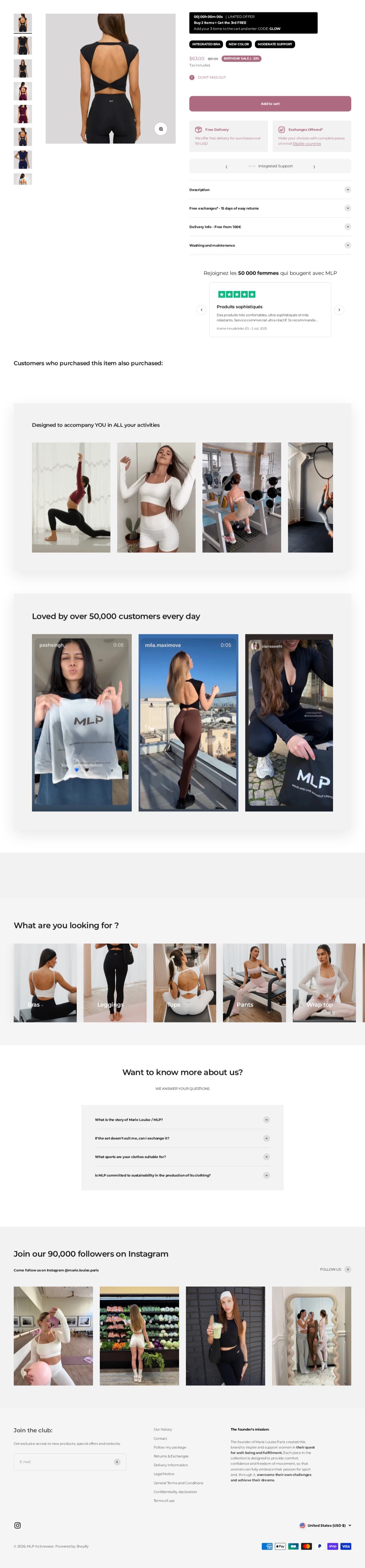
MLP Activewear (marielouise-paris.com) runs a social-proof-heavy, influencer-led DTC model targeting French-speaking women in activewear. The product page leans on urgency via an announcement banner (Buy 2 get 3rd FREE implied from banner text), a struck-through compare-at price, and a community trust signal ('50,000 femmes qui bougent avec MLP'). AOV levers are a BOGO-style bundle promotion in the banner and a slide cart drawer via UpCart/Corner Cart. No on-page volume/quantity pricing widget is visible; the bundle mechanic lives entirely in the banner copy and is enforced at cart level.
Operator's read
PricingThere is no on-page volume or quantity-break pricing widget. The store's primary AOV lever is a banner-level 'Buy 2 Get 3rd Free' promotion — a classic GWP bundle mechanic that implicitly requires 3 units to unlock value but shows no per-unit math to the shopper. The product displays a struck-through compare-at price (visible red strikethrough at ~39€ vs a lower current price) as the sole anchoring tactic, with a free shipping threshold at 50€ doing secondary lifting. Without a visible quantity widget, the discount depth and per-unit ladder cannot be numerically verified.
Widget styleThere is no volume-discount or bundle-builder widget on the product page. The slot that would typically hold a quantity-break radio tile or inline table is occupied instead by the announcement banner (Buy 2 Get 3rd Free) and a single compare-at struck-through price anchor. The UpCart/Corner Cart slide drawer presumably handles cross-sell and progress-bar free-ship nudges at cart stage, but no widget layout, badges (Most Popular / Best Value), or escalating compare-at tiers are present on the PDP itself.
VerdictThe social proof infrastructure is solid — 50K customer community, UGC video wall, influencer reels, and Trustpilot stars all reduce friction effectively. The single highest-leverage change is to replace the vague banner-only bundle mechanic with an on-page quantity-break widget (3 radio tiles: 1x full price / 2x ~10% off / 3x effectively 33% off via the free unit) that makes the per-unit savings explicit in euros. Shoppers should not have to mentally calculate the value of 'Buy 2 Get 1 Free' — surfacing '€X per item when you buy 3' directly on the PDP would lift both conversion and AOV by reducing cognitive load at the moment of intent.
offer details (4)
Currency appears to be EUR for the French/EU market (footer shows United States USD toggle, suggesting multi-currency via Shopify Markets). Installed apps Corner Cart and UpCart overlap in function — operating both simultaneously risks redundant drawer triggers; audit which is active in production. The 'Clients ayant acheté cet article ont également acheté' (frequently bought together) section below the hero is likely powered by Shopify's native recommendation engine or a separate cross-sell app not listed in the provided app stack.

Single-SKU golf training aid (PureStrike Performance Ball) sold via a long-form advertorial landing page. Anchors on social proof (30,000+ golfers), urgency (low stock), and a free-shipping threshold. Bundle upsell is handled via Kaching Bundles widget on the PDP; slide cart (UpCart/iCart) handles in-cart cross-sell. No visible post-purchase app detected but Kaching implies bundle logic pre-cart.
Operator's read
PricingThe store leans on a two-option Kaching Bundles selector: a $49.00 AUD single unit (SAVE 0% — no real discount) and a Performance Bundle at ~$57.00 AUD. There is no volume/quantity-break ladder; AOV lift comes from the bundle upsell adding ~$8 and the free-shipping threshold set at $55 — just $6 above the base unit price — which is a tight and smart threshold nudge. The 'SAVE 0%' badge on the base tier is dead weight and actively signals no urgency to upgrade.
Pricing tiers (1 widget)
Widget styleThe Kaching Bundles widget renders as a stacked radio-tile selector directly on the PDP with a 'SAVE X%' badge field per tier. The base tier badge reads 'SAVE 0%' which is a misconfiguration — it should either be removed or the bundle tier should show a meaningful discount percentage with a struck-through compare-at price to create genuine anchoring. Currently there is no escalating compare-at anchor or 'Most Popular'/'Best Value' badge visible, leaving the bundle tier without a compelling reason to upgrade.
VerdictThe free-putting-mirror gift with purchase and the $55 free-ship threshold are well-executed — the threshold is tight enough to pull nearly every single-unit buyer into adding something. The single highest-leverage change is to restructure the Kaching bundle as a true 2-pack or 3-pack quantity break (e.g. 1x $49 / 2x $85 save 13% / 3x $120 save 18%) rather than a vague 'Performance Bundle' at a higher price with no visible per-unit saving — buyers cannot mentally justify paying $57 for a bundle when the individual unit anchor is $49 and the saving percentage shows 0%.
offer details (6)
Currency is AUD. The Performance Bundle price (~$57) is read from the screenshot pricing widget area and may include a bundled accessory rather than a pure quantity break — exact bundle contents are not fully legible. Confidence is medium because cart snippets are empty so in-cart cross-sell product specifics are unconfirmed. The long-form advertorial page structure (testimonials, before/after, FAQ, 30-day guarantee) is well-built for cold traffic conversion.
Single flat-price charitable product with a free-shipping threshold nudge and newsletter email capture as the primary retention/AOV lever. No volume discount or bundle widget is active on this PDP despite Honeycomb Bundles being installed.
Operator's read
PricingThere is exactly one price point: £14.00 flat, no struck-through compare-at, no volume tiers, no per-unit ladder whatsoever. The only implicit AOV nudge is the £40 free-ship threshold, which means a customer buying one £14 shirt is £26 short—requiring nearly 3 units to unlock free delivery. That gap is left entirely to the shopper to figure out with zero on-page prompt showing how many more items they need or what they could add.
Widget styleThere is no volume-discount or bundle widget active on the PDP despite Honeycomb Bundles being installed. The slot where a bundle builder or quantity-break table would sit is completely empty. The page leans on three flat trust badges (free delivery threshold, mission statement, 30-day returns) and a basic +/- quantity stepper—no radio tiles, no 'Most Popular' badge, no escalating compare-at, no save-X% callout anywhere.
VerdictThe mission framing ('100% of profits to Macmillan') is genuinely strong social proof that lowers purchase resistance—that's executed well. The single highest-leverage change is to activate Honeycomb Bundles with a 2- or 3-unit quantity break anchored to the £40 free-ship threshold: e.g. 1×£14, 2×£28 (with 'Add £12 more for free delivery' callout), 3×£42 flagged as 'Free Delivery + Best Value'. That trio of tiers turns the already-present £40 threshold into an active upsell engine rather than invisible fine print, and for a charity shop where gifting multiples (one to keep, one to gift) is a real behaviour, it directly maps to how supporters actually shop.
offer details (2)
Honeycomb Bundles is installed but no widget is rendered on this PDP. No cart snippets were provided so post-purchase or slide-cart upsells cannot be confirmed. All offers identified from visible on-page evidence only.

Rior Design runs a promotion-led AOV strategy anchored on a sitewide 'Bloom Into Summer – 30% Off Every 2nd Item' banner deal (auto-applied in cart), complemented by a cross-sell block ('Complete the Look' / 'You May Also Like') on the PDP and a free-shipping progress bar in the slide-out cart drawer. There is no standalone volume/quantity-break pricing widget on the product page. Post-purchase upside is handled by AfterSell (inferred, not visible). Currency is VND for the Vietnamese storefront but the free-ship threshold is quoted in EUR (€45), signalling a multi-currency/multi-region setup.
Operator's read
PricingThere is no volume-break or bundle-builder widget on the product page — Rior leans entirely on (a) a single struck-through compare-at anchor (2,122,000₫ → 1,853,000₫, ~13% off) on the PDP to justify value, and (b) the sitewide '30% off every 2nd item' promotion as the primary AOV lever, auto-applied in cart. The free-ship bar in the drawer (€45 threshold) adds a soft push to reach the floor. There are no multi-tier quantity breaks driving explicit per-unit math in front of the shopper.
Widget styleNo named volume-discount widget is deployed on this PDP. The slot that would normally hold radio-tile quantity breaks is instead occupied by a 'Complete the Look' cross-sell and a lifestyle image gallery. The cart drawer does the heavy lifting with a free-ship progress bar and a 'You May Also Like' row — both standard Shopify theme features, not a dedicated upsell app on the pre-cart stage. AfterSell handles post-purchase but is not visible. The 30% off every 2nd item mechanic is promotion-style (banner + auto-discount), not a structured widget.
VerdictThe brand has strong editorial presentation and press credibility (Glamour placements visible), which earns trust. What's executed well is the auto-applied 'buy 2 get 30% off' mechanic — removing friction by not making the customer apply a code. The single highest-leverage change: add an explicit on-PDP quantity-break widget (e.g., 1 unit at full price vs. 2 units with the 30% discount surfaced as a per-unit price comparison like '1,295,100₫ each vs 1,853,000₫'). Right now shoppers have to reach the cart to see the savings; surfacing the per-unit math directly on the product page before the add-to-cart click would materially lift average units per order on a jewellery SKU where gifting intent is high.
offer details (5)
Store appears to operate in multiple currencies (VND displayed for Vietnamese locale; EUR for free-ship threshold, suggesting a EU/global primary market). Confidence is medium because pricing widget text was absent from evidence — all pricing inferred from product snippets. AfterSell post-purchase flow not visible. The '30% off every 2nd item' is the core AOV mechanic; without a visible quantity widget the shopper discovery of this deal depends entirely on the announcement bar and cart state.

Bundle-first AOV play anchored on a 'Mix & Match / Build a Bundle to Save $10' mechanic, supported by a $75 free-shipping threshold and a scrolling announcement bar repeating 'Buy 3 & Save $10'. No quantity-break pricing widget on PDP; instead the store pushes customers into a dedicated bundle builder page. Rebuy and Bundler are installed to power cart cross-sells and the bundle flow respectively.
Operator's read
PricingThere is no on-page quantity-break or volume-discount pricing widget visible anywhere in the screenshot or snippets — no radio tiles, no inline table, no dropdown tiers. The entire pricing lever is a flat '$10 off when you build a bundle of 3' mechanic, communicated via the announcement bar and a homepage bundle section. Individual stick packs appear priced around $24–$34 (visible on shop cards: $24.99, $24.19, $24.99) with no struck-through compare-at on the PDP level. The free-shipping threshold is set at $75, which forces a ~3-pack purchase to unlock it, neatly aligning with the 'Buy 3 & Save $10' bundle floor — smart structural alignment even without a formal tier ladder.
Widget styleThere is no volume-discount widget on the product page. The bundle mechanic is handled by the Bundler app via a dedicated bundle-builder landing page reached through a persistent nav CTA and a homepage visual section ('Mix & Match Your Packs To Save $10') showing product lineup images with a single 'Build A Bundle' button. There are no radio tiles, no 'Most Popular' badges, no escalating compare-at per-unit pricing — just a flat $10-off incentive communicated in copy. Rebuy powers the slide-cart cross-sell with a testimonial social-proof block, which is the closest thing to an anchored upsell widget in the funnel.
VerdictThe free-ship threshold and bundle discount are well-aligned structurally (both push toward a 3-pack, ~$75+ order), and the cultural brand identity is coherent and differentiated. The single highest-leverage change would be adding a 3-tier subscribe-and-save quantity widget directly on the PDP (e.g., 1-pack at full price / 3-pack save $10 / subscribe 3-pack save 15–20%) — right now customers must navigate away to the bundle builder to unlock savings, creating drop-off; putting the saving mechanic on the PDP itself with a pre-selected 3-pack tier would collapse that friction and materially lift both AOV and subscription attach rate.
offer details (6)
Pricing widget array is empty because no numeric tier table or quantity-break selector was visible in the screenshot or pricing widget text evidence. Free-ship threshold appears as $75 in announcement bar but cart drawer shows '$200 away' on an empty cart — possible the cart drawer threshold is set higher ($200) than the announced threshold ($75), which could create trust friction; worth auditing. Individual product prices inferred from homepage product card thumbnails (~$24–$34 range). Confidence is medium due to limited cart/PDP detail in the screenshot.
Single-SKU PDP with no volume/bundle widget. Melin leans entirely on brand equity, social proof (4.9★/875 reviews), and a 'You May Also Like' cross-sell carousel to move AOV. The iCart slide-cart drawer is the primary upsell surface. No quantity breaks or tiered pricing visible anywhere on the PDP.
Operator's read
PricingNo volume or bundle pricing widget anywhere on this PDP — it's a flat $69 single-unit sale on the 3 Hat Travel Case. The only pricing mechanics at play are the Shop Pay/Afterpay installment split ($17.25 x4) to reduce perceived price, and a free-shipping threshold (appears to be $150) that creates implicit pressure to add a second item. There is zero quantity-break or tiered discount architecture; AOV lift lives entirely in the cart drawer and cross-sell carousel.
Widget styleThere is no volume-discount or bundle widget on this PDP whatsoever — that slot is occupied by a standard 'You May Also Like' recommendation carousel with 'Popular' badges on select tiles. No radio-tile bundle builder, no inline quantity table, no dropdown tier selector. The iCart slide-cart drawer is the only structured upsell surface, and its contents aren't visible in the captured state. The PDP is intentionally clean/premium — brand-led, not discount-led.
VerdictThe cross-sell carousel and iCart drawer are directionally correct but almost certainly underleveraged. The single highest-leverage move here is a hat-bundle builder on the PDP itself — something like '3 Hat Case + 2 Odyssey Hats' for $149 (hitting the free-ship threshold naturally), presented as a pre-selected radio-tile bundle with a 10-12% discount. This store sells a hat case — the natural reason to buy it is because you own multiple hats, making a hat bundle the most contextually obvious AOV driver. Right now there's no on-page mechanism to capture that intent before the customer reaches the cart.
offer details (4)
Screenshot confirms single-variant PDP (One Size, color Black). 4.90★ from 875 reviews is strong social proof. 'Previously Viewed' section shows only the same product, suggesting low browse depth or direct-traffic landing. Free shipping threshold copy is inconsistent — 'Free Shipping on All Orders' and 'Free Shipping on orders 150+' both appear, which may create trust friction. Recommend unifying that message.
Single-SKU PDP with inline cross-sell add-ons (sheath, magnetic holder, whetstone, apron) powered by Rebuy, urgency banner with countdown, and a site-wide BUY 2 GET 2 FREE bundle nav offer. No quantity-break or volume-discount widget on this PDP; AOV lift is driven entirely by checkbox add-ons and personalization upsells (handle/blade engraving).
Operator's read
PricingNo volume or quantity-break widget exists on this PDP — the store leans entirely on a single $149 price point with a struck-through anchor nowhere visible on the page itself, and instead pushes AOV through add-on attachment (sheath ~$5-6, magnetic holder $199, whetstone $69, apron $59, engravings $15-$35). The highest-ticket checkbox add-on (Walnut Magnetic Knives Holder at $199) is actually more expensive than the knife itself, which is an aggressive but smart anchor flip. The Fully Loaded Bundle at $724 vs $1,309 value (45% off) lives off-page in nav, not on this PDP, so it captures zero impulse lift from knife-page traffic.
Widget styleThere is no volume-discount or bundle widget on this PDP. The slot is occupied by Rebuy-powered checkbox add-ons in a simple list layout with a 'Select' toggle — no radio tiles, no 'Most Popular' badge, no escalating compare-at. It's a clean but low-information UI; the only pricing signal is the listed add-on price with no per-unit savings framing or urgency attached to the add-ons themselves.
VerdictThe checkbox add-on execution is solid — stacking a $199 holder, $69 whetstone, and $59 apron against a $149 knife base is a strong AOV lever if attach rate is healthy. The single highest-leverage change: surface the BUY 2 GET 2 FREE or Fully Loaded Bundle ($724/45% off) directly on this PDP as a Rebuy smart cart inline offer or a 'Complete the Set' bundle widget — right now that 45%-off bundle exists only in the nav and captures zero intent from someone already on the product page. A single bundle tile below the add-ons with 'Add all 4 for $724 — save $585' would materially lift AOV on ad traffic without requiring a page visit change.
offer details (8)
Pricing widgets array is empty because no quantity-break, volume-discount, or subscription widget is rendered on this PDP. All tier/bundle pricing lives on separate collection or bundle pages. Rebuy is the sole identified upsell app; ReConvert/AfterSell not listed so no post-purchase upsell is inferred beyond Rebuy's native capability.

Single-SKU supplement brand selling Grassfed Beef Liver capsules at a flat $39.99. No visible quantity-break or bundle widget on the PDP despite having Kaching Bundles installed. Upsell relies on a 'You may also like' cross-sell recommendation at the bottom of the page and an email capture 'Sign up and save' prompt. Post-purchase flow is not visible but Kaching Bundles can trigger bundle offers at cart or post-purchase. Long-form advertorial-style landing page with social proof, comparison table, and testimonials does the heavy conversion lifting rather than pricing architecture.
Operator's read
PricingThis store is running a dead-simple single-price model: one SKU, one option ('Default Title'), flat $39.99 with no compare-at price, no strikethrough anchor, no quantity tiers, and no subscribe-and-save toggle visible on the PDP. There is zero pricing architecture doing AOV work — no per-unit ladder, no volume incentive, no bundle discount. The only pricing signal the customer gets is $39.99, full stop.
Widget styleThere is no volume-discount or bundle widget rendering on the product page despite Kaching Bundles being installed. The slot where a bundle widget would normally live is occupied by nothing — the page goes straight from an Add to Cart button for 'Default Title - $39.99 USD' into the long-form advertorial content. The 'You may also like' rail at the very bottom is the only merchandising element, and it just reflects the same product back at the same price.
VerdictThe long-form advertorial with testimonials, comparison table, and nutrient breakdown is genuinely solid for cold traffic — that content is doing real work. The single highest-leverage change is activating a 2–3 tier Kaching Bundles quantity-break widget directly on the PDP (e.g., 1 bottle $39.99 / 2 bottles $69.99 save 13% / 3 bottles $99.99 save 17%) with a pre-selected middle tier and a 'Most Popular' badge — this alone typically lifts AOV 20–35% on supplement SKUs with no added ad spend, and the app is already installed and waiting to be turned on.
offer details (3)
Confidence is medium because the screenshot is low-resolution and some page sections may be truncated; a subscribe-and-save widget or hidden bundle selector cannot be fully ruled out. No cart drawer contents were visible so cart-stage upsells from Kaching Bundles (if configured) could not be confirmed.
Single-SKU cookware PDP (Lucca 3.0 stainless pan line) relying on a sitewide promotional discount (up to 40% + extra 5%) with urgency timer in the announcement banner. Cross-sell and recommendation carousel powered by Rebuy/Selleasy visible below the fold. UpCart handles slide-cart with likely free-ship progress. No on-page volume/quantity-break widget detected.
Operator's read
PricingThere is zero on-page volume or quantity-break widget — the store leans entirely on a sitewide promotional anchor (up to 40% + extra 5%) displayed via struck-through compare-at prices on every carousel card. The deepest visible discount is the 4-piece Lucca set shown at 180 € vs a 985 € compare-at (82% off), which reads as an implausible anchor and risks credibility damage; the individual SKU discounts (29–41%) are more believable. The urgency timer is the only AOV-lever on the PDP itself — there is no tiered pricing to pull a customer up the value ladder.
Pricing tiers (1 widget)
Widget styleNo volume-discount or bundle-builder widget exists on the PDP. The slot is occupied by a Rebuy/Selleasy-powered horizontal recommendation carousel ('Preskúmajte ďalšie') with red percentage-off badges on each card. Layout is a simple scrollable product-card row — no radio tiles, no inline table, no 'Best Value' badge system. The compare-at anchoring is the only pricing psychology in play, and the 82% anchor on the set looks fabricated which undermines trust.
VerdictThe cross-sell carousel is a solid foundation and the urgency timer will move units during the sale window, but the store is leaving serious AOV on the table by not surfacing a bundle or quantity-break widget directly on the PDP. The single highest-leverage change: replace or supplement the carousel with a Rebuy-powered 'Build Your Set' bundle widget anchored at 3 tiers (e.g., 1 pan / 2-pan set / 4-pan starter kit) with a visible per-unit price drop and a 'Most Popular' badge on the middle tier — this directly converts single-pan browsers into multi-piece buyers at the moment of highest intent, which is exactly what the installed Rebuy stack is capable of delivering without a new app.
offer details (4)
Screenshot is in Slovak (fabini.sk). Discount percentages on the Základná súprava set (180 € vs 985 € compare-at = 82% off) appear disproportionate to the individual SKU discounts and may reflect a bundle MSRP vs sale mechanic, but risks appearing as a fake anchor to savvy shoppers. Currency confirmed EUR. Confidence is medium because cart and post-purchase surfaces are not visible in the screenshot.
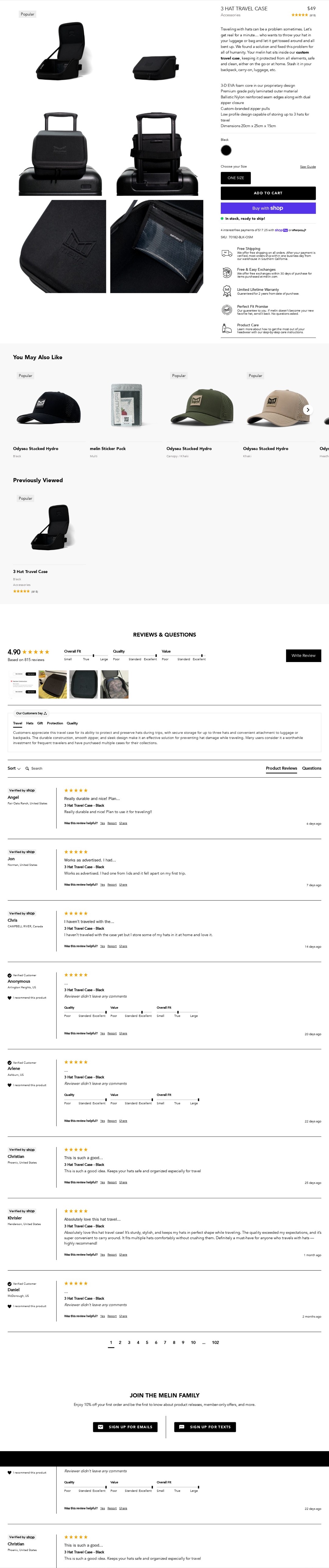
Single-SKU product page (3 Hat Travel Case, CAD $69) with no volume/bundle pricing widget. The store leans on social proof (4.90★, 875+ reviews), free-shipping threshold (CA$150+), Shop Pay instalment messaging ($17.25×4), a 'You May Also Like' cross-sell carousel, and a slide-cart drawer powered by iCart to surface additional items at cart stage. No post-purchase upsell app detected in the installed list beyond iCart.
Operator's read
PricingZero volume or bundle pricing tiers on this PDP — the store prices the 3 Hat Travel Case at a flat CAD $69 with no compare-at anchor strike-through visible on the product itself. The only anchoring lever is Shop Pay instalments at $17.25×4, which psychologically reframes a $69 single purchase as a sub-$20 micro-payment. The free-shipping threshold at CA$150 is doing double duty as the implicit AOV driver, but at $69 a customer needs to add ~$81 more to qualify, which is a big ask with no on-page prompt quantifying that gap.
Widget styleThere is no bundle or volume-discount widget on this PDP whatsoever — the slot is occupied by a plain single-variant radio button (size selector: One Size) and a straightforward ATC button. The 'You May Also Like' carousel with 'Popular' badges is the only structured upsell surface pre-cart, and it's below the fold with no discount incentive attached. iCart's slide drawer is the brand's primary AOV mechanism, but its configuration isn't exposed in the screenshot.
VerdictThe social proof stack (4.90★/875 reviews, lifetime warranty, perfect-fit promise) is genuinely strong and the product story is clear — that's well executed. The single highest-leverage change I'd make is adding an in-drawer free-shipping progress bar inside iCart that explicitly states 'Add $X more to unlock free shipping' the moment the Travel Case hits the cart, then pre-loading 2–3 curated hat cross-sells (priced $45–$65 each) in the drawer so the customer can hit $150 in one click — this mechanic alone typically lifts AOV 15–25% on accessory SKUs at this price point without touching the PDP layout.
offer details (3)
No post-purchase upsell app (ReConvert, AfterSell, Zipify) detected in installed app list. iCart is the sole upsell infrastructure. Pricing widget array is empty because no tiered/volume widget exists on the page. The CA$150 free-ship bar is the primary AOV lever; current $69 base price leaves an $81 gap that is not being actively bridged on the PDP.

Volume discount quantity-break ladder presented as radio-tile selector directly on the PDP, driving higher units-per-order on a consumable/repeat-purchase apparel item (thermal leggings). No cart drawer or post-purchase flow visible; all AOV work is done pre-cart via the quantity-break widget powered by Vitals.
Operator's read
PricingExact euro price points are not legible at this resolution, but the store runs a 4-tier quantity-break ladder (1/2/3/4+ pairs) with escalating percentage discounts displayed as struck-through compare-at anchors on every row. The default pre-selected tier appears to be 2 pairs, which is the classic AOV-maximising move — it commits the customer to a higher spend before they even consciously choose. Without readable numbers I can't verify the per-unit ladder is clean, but the structure is directionally correct for a low-ASP repeat-purchase apparel item.
Widget styleThe widget is Vitals' native Volume Discounts module rendered as stacked radio-tile rows with an orange accent colour matching the brand palette. Each row carries a percentage-savings badge and a compare-at strikethrough — textbook escalating-anchor layout. There are no 'Most Popular' or 'Best Value' text badges visible at this resolution, but the colour highlight on row 2 functions as the implicit 'recommended' signal. No bundle-builder or checkbox add-on is present; all heavy lifting is this single inline table.
VerdictThe quantity-break ladder is well-executed for a thermal leggings drop — apparel gifting and cold-weather stocking naturally motivate multi-unit purchases, and anchoring at 2 pairs as the default is smart. The single highest-leverage change I would make is adding a free-gift threshold at the 3-pair tier (e.g., a free pair of thermal socks or a tote at €X spend), surfaced both in the radio tile badge AND in a sticky announcement bar — this gives the customer a tangible reason to step up from 2 to 3 pairs beyond pure per-unit savings, which typically moves 15-25% of 2-pair buyers to the next tier and meaningfully lifts AOV without touching margin on the base product.
offer details (2)
Precise EUR price points, exact discount percentages, and per-unit figures are not readable at the provided image resolution. Tier structure (4 options, radio-tile layout, orange highlight on tier 2) is confirmed visually. App attribution to Vitals confirmed via installed-apps evidence. Post-purchase upsell flow not visible in screenshot; Vitals does support post-purchase but no dedicated ReConvert/AfterSell app is listed, so no post-purchase offer is inferred. Cross-sell carousel at page bottom confirmed visually.
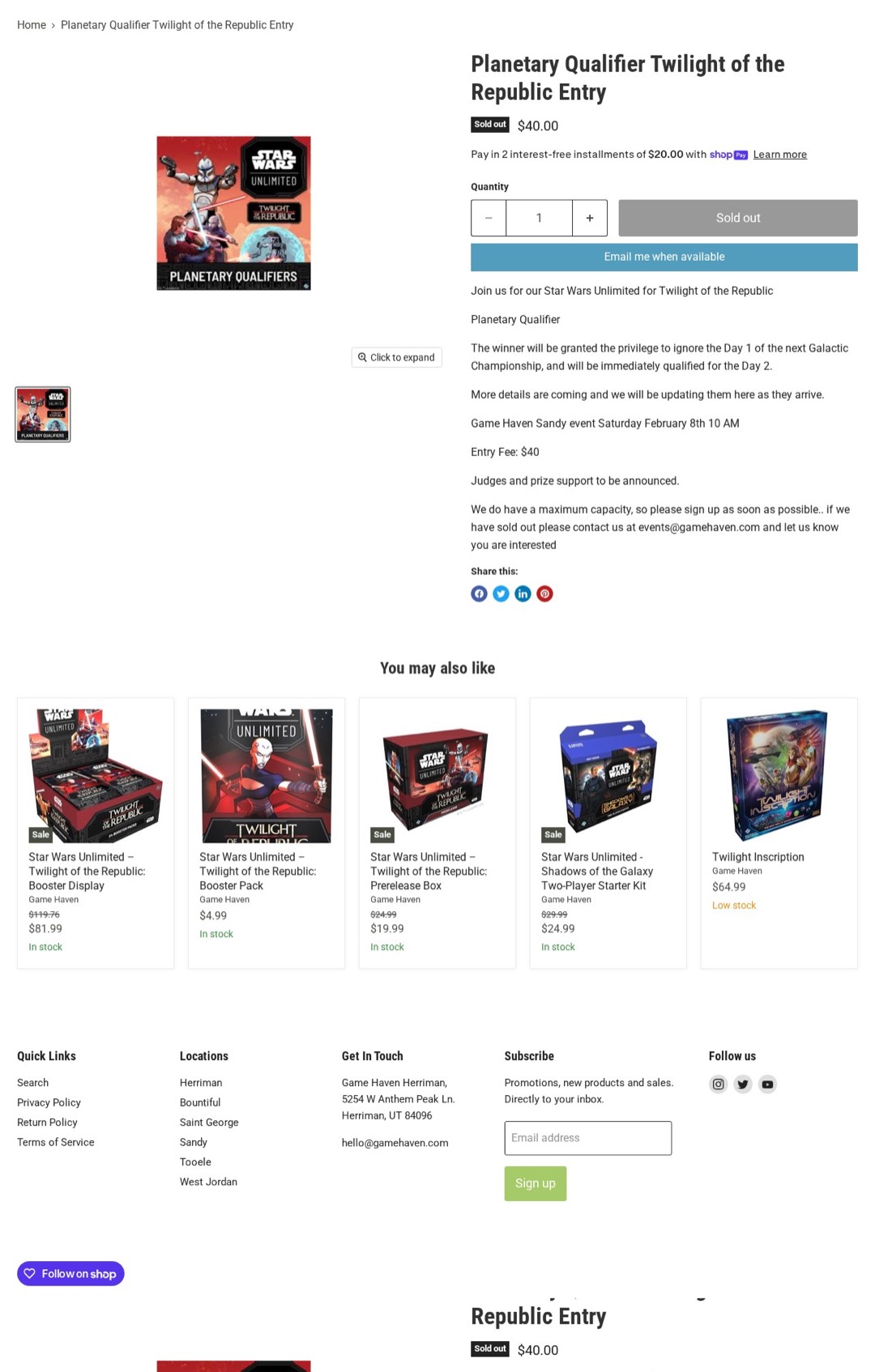
Single-SKU event entry ticket sold at a flat $40 with no volume discounts, no bundling, no upsell mechanics. The page is purely transactional — buy a seat, that's it. The 'Buy more save more' banner exists site-wide but is completely disconnected from this product listing. No upsell apps detected. The only conversion hedge is a sold-out email capture.
Operator's read
PricingThere is exactly one price point: $40 flat entry fee. No tiers, no anchoring, no compare-at, no per-unit ladder — nothing. The site-wide 'Buy more save more' banner is pure noise on this page because you can't buy multiple tournament entries in a meaningful volume-discount context. The only BNPL signal is Shop Pay 2-installment at $20/installment, which is doing zero AOV lift work and is almost comically unnecessary on a $40 ticket.
Widget styleThere is no volume-discount or bundle widget whatsoever on this PDP. The slot that would normally house a pricing widget is occupied by a plain quantity stepper (+/-) and a greyed-out 'Sold out' ATC button. The 'You may also like' carousel below is a default Shopify related-products block — no app, no mechanic, no badge, no bundle incentive attached. It is purely a navigation element dressed as a recommendation.
VerdictThe sold-out email capture is the one smart move here — it recovers intent from a capped-capacity event and builds a retargetable list. The single highest-leverage change is to bundle the $40 entry with a relevant product add-on at checkout — for example, a 'Entry + Twilight of the Republic Booster Pack ($4.99)' checkbox add-on or a discounted Prerelease Box bundle — turning a $40 transaction into a $45-55 one with zero additional traffic cost and a natural thematic fit for the tournament player already in buying mode.
offer details (1)
Product is a live tournament entry ticket for a Star Wars Unlimited Planetary Qualifier event at Game Haven Sandy location, Saturday February 8th, 10 AM. The sold-out status and email capture are the dominant functional elements. No upsell apps detected in the store. The 'You may also like' carousel is standard Shopify theme behavior, not an installed app.

Single-product DTC consumable (chicken dewormer/gut supplement) driving volume via a multi-buy quantity-break widget on the PDP, with a subscribe-save layer implied by 'Manage subscriptions' nav, urgency countdown timer, and post-purchase upsell via AfterSell. UpCart powers a slide-cart drawer with likely free-ship/gift threshold messaging.
Operator's read
PricingThey're running a 3-tier quantity break anchored against a $32.99 compare-at, with the entry tier already discounted 20% ($26.39 effective, saving $6.56) and scaling to 40% off at the highest tier. The per-day-per-chicken framing ($0.14/day) is smart micro-pricing that makes the cost feel negligible. The 'Save up to 50%' banner creates an aspirational ceiling that pulls shoppers toward the higher tiers, though the 50% figure isn't reconciled with the visible 40% max on the widget — worth auditing for FTC compliance.
Pricing tiers (1 widget)
Widget styleThe widget is an inline radio-tile ladder (not a dropdown) with bold dollar-save badges ('Save $6.56', 'Save $17.94') and percentage callouts stacked together. There's no named third-party bundle builder visible — this reads like a native Shopify variant or a lightweight app such as Pumper/Kaching. Notably, the default pre-selection is the 1-pouch tier rather than the middle or best-value tier, which is a missed anchor opportunity; most high-performing operators default to the 2-unit tier to pull average order quantity up.
VerdictThe per-day cost framing and stacked dollar+percent badges are well-executed for a consumable — it reduces price resistance effectively. The single highest-leverage change: default-select the 2-pouch tier (not 1-pouch) and badge it 'Most Popular' — this alone typically lifts multi-unit attach rate 15-25% because loss aversion kicks in when a shopper has to actively downgrade rather than upgrade. Pairing that with an UpCart free-gift threshold set just above the 2-pouch price point would compound the effect.
offer details (5)
Exact 3rd-tier price not recoverable from snippet; 2-pouch price estimated from $32.99 base x2 minus $17.94 saving = ~$48.04. AfterSell and UpCart both confirmed installed. Subscribe-save cadence details not visible. The '50% off first order' claim in banner vs 40% max widget tier should be reconciled.
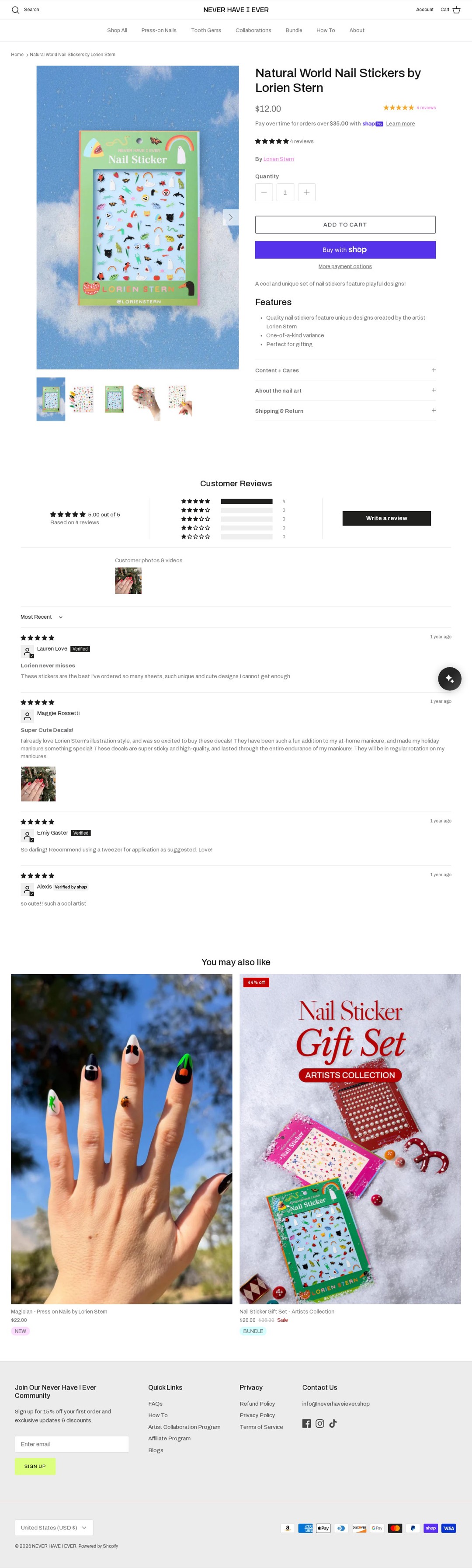
Single-SKU product page at $12 flat with no on-page pricing widget or volume-discount app. AOV lift is attempted entirely through sitewide announcement-bar messaging (free shipping at $70, 3-item bundle for 15% off) and a 'You may also like' cross-sell rail below the fold. No upsell apps detected, no post-purchase flow visible.
Operator's read
PricingThere is zero on-page pricing widget — no quantity breaks, no subscription toggle, nothing. The entire pricing structure is a flat $12 single-SKU with AOV mechanics offloaded to the announcement bar (free ship at $70, which requires ~6 units at $12 each) and a sitewide 3-for-15%-off bundle mechanic. No struck-through compare-at price exists on this product itself, so there is no anchor — the page leans entirely on the free-ship gap and the cross-sell carousel to move multiple units.
Widget styleThere is no volume-discount or bundle widget on this product page whatsoever. The slot that would normally be occupied by a quantity-ladder or bundle-builder is instead filled by a plain Shopify quantity stepper (minus/1/plus). The only structured bundle signal is the 'You may also like' carousel tile for the Nail Sticker Gift Set, which carries a native Sale badge and a 'BUNDLE' label — but this is a separate product link, not an on-page add-on mechanic. No third-party app (Bold, Bundler, Rebuy, etc.) is rendering.
VerdictThe brand has the right instincts — free-ship threshold and a bundle offer — but both are buried in the announcement bar where conversion intent is lowest. The single highest-leverage change is adding a Bundler or Rebuy-style 'Complete the Bundle' widget directly on the product page that lets the shopper pick 2 more sticker sheets at a pre-applied 15% discount, surfacing the same offer at the moment of purchase intent rather than in passive banner copy. At $12 per sheet, the 3-for-15%-off mechanic is already well-priced to lift AOV from $12 to ~$30.60; it just needs to be executable in one click on the page, not a separate navigation journey.
offer details (3)
No upsell apps detected in the tech stack. Post-purchase upsell flow is absent. The 'Bundle' nav item suggests a dedicated bundle landing page exists but is not the current product page being analyzed. The Nail Sticker Gift Set carousel tile shows a compare-at of approximately $40.95 vs $22.95 sale (44% off badge matches math approximately). All pricing and discount figures derived from visible image and banner text only.

BURGA Portugal runs a design-led accessories brand (phone cases, screen protectors, straps) with AOV lifted primarily through a native bundle/pack mechanic ('BUY 2 GET 2 FREE' / 'CRIA O TEU PACOTE') surfaced via product badges and a Bundle selector on the PDP, plus SKU-level percentage discounts (20%, 30%, 33% OFF) applied to specific camera glass and accessory SKUs. No third-party upsell apps are detected; all mechanics appear to be native Shopify theme logic.
Operator's read
PricingThere is no visible volume-discount pricing widget with numeric tiers — BURGA PT leans entirely on SKU-level badge discounts (20%, 30%, 33% on specific accessories) and a 2-get-2-free mechanic on phone cases as its anchoring tools. Without a live widget parsing exact price points, per-unit ladders cannot be computed, but the 'COMPRA 4 – PAGA 2' effectively represents a 50% per-unit discount at 4-unit quantity — the deepest lever in the stack. The 20–33% off badges on camera glass and card holders act as compare-at anchors on individual SKUs rather than a tiered quantity ladder.
Widget styleNo third-party volume-discount widget (no Bold Quantity Breaks, Rebuy, or similar app detected). The bundle mechanic is handled natively via a 'Bundle' variant block in the theme, likely a custom metafield-driven selector presented as radio tiles or a step-based builder given the 'CRIA O TEU PACOTE' (build your pack) framing. Product tile badges are injected by a native badge app or theme section using tagged SKU logic — flat badge overlays, not interactive pricing widgets. This is a brand-aesthetic-first approach where discount communication lives in imagery and copy rather than a structured price ladder.
VerdictThe 2G2F mechanic is genuinely strong for phone cases and the bundle builder is the right AOV lever for a multi-SKU accessory brand. The single highest-leverage change would be to add a free-shipping progress bar in the cart (e.g. threshold at €40–50) paired with a cross-sell carousel surfacing the camera glass or card holder SKUs that already carry 20–33% off badges — this converts the existing discount inventory into cart-stage upsell revenue instead of relying solely on shoppers self-discovering it on PDPs.
offer details (5)
Page returned a load error at time of capture so no live UI was rendered. All analysis is inferred from installed-app metadata, snippet text, and badge block JSON evidence. Confidence is medium. No post-purchase upsell apps detected so no post-stage offers inferred.
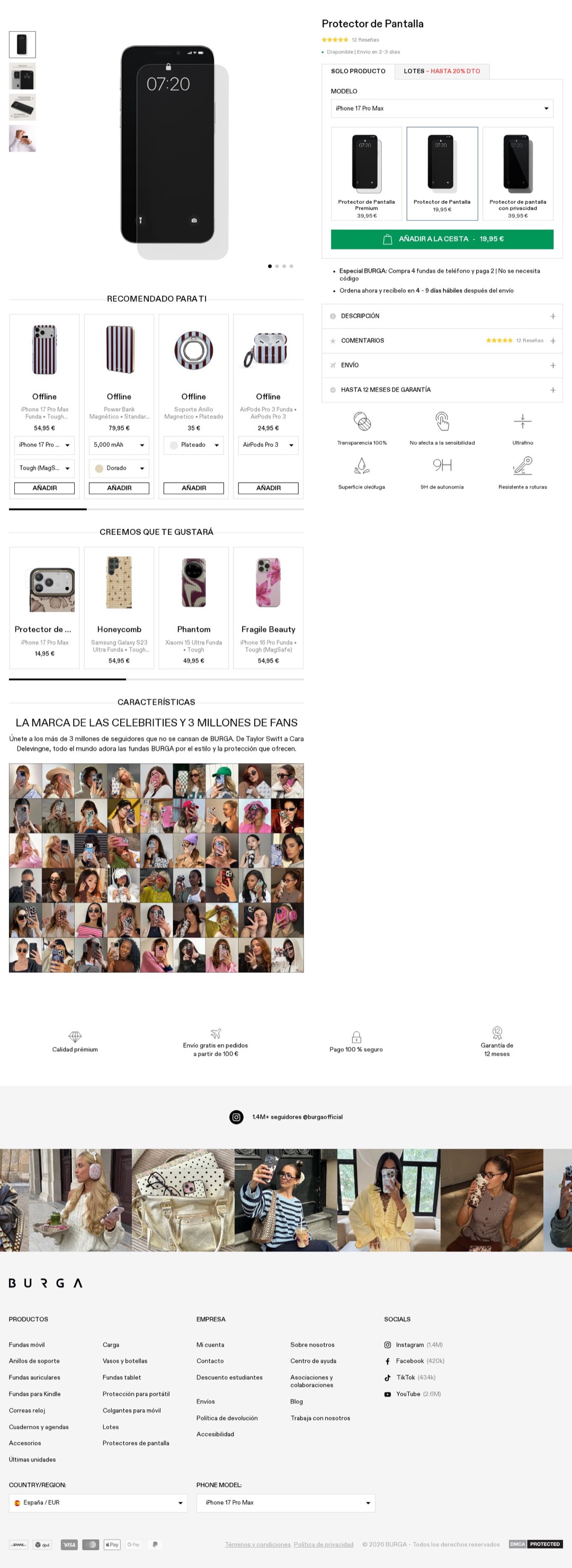
BURGA runs a celebrity/influencer-anchored DTC accessories brand (14M+ IG followers, Taylor Swift/Cara Delevingne mentions) selling phone cases and accessories. Their primary AOV lever is a native bundle toggle ('SOLO PRODUCTO' vs 'LOTES – HASTA 20% DTO') directly on the PDP, plus inline cross-sell recommendation rows ('RECOMENDADO PARA TI' and 'CREEMOS QUE TE GUSTARÁ') with add-to-cart below each. The promotional engine runs SKU-level badges (BUY 2 GET 2 FREE on phone cases, 20%/30%/33% OFF on selected SKUs) rather than a third-party volume-discount app.
Operator's read
PricingBURGA doesn't run a classic per-unit volume ladder – there's no '1 for X / 2 for Y / 3 for Z' tiered widget. Instead, their main PDP pricing play is a tab toggle offering up to 20% off on bundle 'LOTES', with the current screen showing three bundle variants at 19.95€, 39.95€, and 39.95€ – these appear to be product-type bundles (screen protector + case or privacy film) rather than quantity breaks. The headline promotional mechanic is BOGO-style: buy 4 phone cases, pay for 2, with no code friction. The 100€ free-ship threshold is the secondary AOV nudge, conveniently just above the price of two mid-tier accessories combined.
Pricing tiers (1 widget)
Widget styleThere is no third-party volume-discount widget (no Bold Bundles, Recharge, or similar app detected). The bundle UI is a native two-tab toggle (SOLO PRODUCTO | LOTES) rendered likely via a custom Shopify section or a lightweight metafield-driven component. The tile layout is horizontal image cards – no 'Most Popular' or 'Best Value' badge visible on the bundle tiles themselves, though SKU-level percentage badges (20% DTO, 30% DTO, 33% DTO) are deployed across the catalogue via a badge app in the snippet config. The BOGO mechanic (COMPRA 4 – PAGA 2) acts as the primary urgency/value anchor instead of a compare-at price ladder.
VerdictThe brand's social proof is genuinely exceptional (14M Instagram, celebrity association) and they correctly weaponize it with the UGC mosaic on the PDP – that trust layer converts. However, the bundle widget is doing minimal heavy lifting: three tiles at the same qty=1 level with no visible per-unit savings breakdown or compare-at prices means shoppers can't feel the discount. The single highest-leverage change is to add a proper quantity-break widget to the screen protector PDP with explicit per-unit anchoring – e.g., '1 for 19.95€ | 2 for 15.96€ each (save 20%)' – because screen protectors are a natural multi-pack purchase (spare, gift) and the BOGO mechanic already proves they know multi-unit works; they just need to display the savings math visually to remove friction at the point of decision.
offer details (6)
No upsell apps detected in the installed list; post-purchase upsell stage is absent. The badge config in snippets reveals a rich SKU-level discount structure (20%, 30%, 33% OFF on specific SKUs) suggesting manual Shopify discount or compare-at price management rather than an app. Confidence is medium because the bundle tile prices visible in the screenshot don't show compare-at prices clearly, so discount depth on the LOTES tab cannot be precisely computed. The 'ARMA TU PACK' (build your pack) badge and tagged 'bundle' SKUs suggest a separate bundle-builder page or collection not shown in this screenshot.

BURGA Singapore runs a product-badge-driven multi-offer approach on collection/product pages rather than a traditional volume-discount widget. The store layers BUY 2 GET 2 FREE (pay for 2, get 4), a MIX & MATCH bundle badge, and tiered percentage-off badges (20%, 25%, 30%, 33%) directly on product thumbnails to communicate value at the browse stage. No upsell apps detected, so all conversion leverage is baked into the product page and badge system itself.
Operator's read
PricingBURGA SG has no traditional pricing widget with numeric tiers — instead they use SKU-level badge overlays to communicate discounts ranging from 20% up to 33% on accessories and cases, plus a flagship BUY 4 PAY FOR 2 mechanic (implicit 50% per-unit reduction) on phone cases tagged PhoneCase2. There is no pre-selected default tier or compare-at ladder visible; the anchoring is purely badge-driven at the collection level, meaning shoppers must click into individual PDPs to understand the actual price savings. The MIX & MATCH bundle is the highest-AOV lever but its terms are opaque from the badge alone.
Widget styleNo volume-discount widget is present on the visible page. The slot normally occupied by a quantity-break or bundle-builder widget is instead filled by product-thumbnail badge overlays (flat image badges pinned to collection cards) — similar to what a custom metafield badge app or a theme-native badge feature would produce. The BUY 4 PAY FOR 2 badge and MIX & MATCH badge are the closest thing to a bundle mechanic, but they are informational labels rather than interactive selectors. There is no radio-tile, inline table, or dropdown quantity ladder anywhere in the captured evidence.
VerdictThe badge-overlay system is executed cleanly for communicating deal tiers at browse stage without cluttering the PDP — that is a strength for a high-SKU accessories catalog like BURGA. The single highest-leverage change would be adding a proper bundle-builder or quantity-break widget on the PDP itself: right now a shopper who clicks into a case PDP has no guided path to the BUY 4 PAY FOR 2 deal with a real per-unit price shown (e.g., SGD X per case vs SGD Y per case at qty 4). A simple inline radio-tile widget showing 1 case / 2 cases / 4 cases with per-unit prices would convert that intent into AOV lift without requiring a new app — the deal is already priced in, it just needs to be surfaced interactively at the decision point.
offer details (6)
Analysis is limited by a site-load error in the screenshot — no live storefront UI was rendered. All offer and mechanic conclusions are inferred from product snippet JSON badge configurations embedded in the page source. No cart snippets or pricing widget text were provided, confirming absence of cart-stage upsell apps or volume-discount widgets. Confidence set to medium because the full PDP experience (especially any sticky-bar or slide-cart behavior) cannot be confirmed from a broken-page capture.
BURGA Taiwan runs a design-led fashion-case brand that drives AOV through multi-unit bundle promotions (BUY 2 GET 2 FREE, pre-selected bundles, cross-sell carousels) and SKU-level percentage-off badges rather than a traditional volume-discount pricing widget. No upsell apps detected; mechanics are native Shopify with badge overlays and a bundle block in the product form.
Operator's read
PricingThere is no volume-discount pricing widget on the PDP — BURGA TW leans entirely on SKU-level badge overlays (20%, 30%, 33% off) and a BUY 2 GET 2 FREE mechanic (effectively 50% per unit at 4 qty) to anchor perceived value. The single product price visible in the carousel tiles appears to be in the ¥1,000–¥2,900 TWD range with a struck-through compare-at, but no ladder of per-unit prices is surfaced to the shopper on the main PDP. The BUY2GET2FREE is the deepest and most compelling offer but it's buried in a badge rather than foregrounded in a quantity selector.
Widget styleNo traditional volume-discount widget (no Bold Bundles, no Bundles.app radio-tiles, no inline table). The bundle mechanic lives inside a native Shopify option block labelled 'Bundle' with a supporting badge overlay. Cross-sell is a native or lightly coded recommendation carousel. Badge overlays use static PNG assets (badges-most-popular.png, summer-sale-2025-badge.png) applied at the collection/tile level — a blunt instrument that communicates discount but not the per-unit savings math that converts fence-sitters.
VerdictThe BUY 2 GET 2 FREE mechanic is genuinely strong for a fashion accessories brand — 50% effective per-unit cost rewards multi-buying and mirrors how the target audience (gift shoppers, case collectors) naturally shops. What's missing is a prominent, above-the-fold quantity selector on the PDP that shows the per-unit price collapsing as qty rises (e.g. 1 = TWD 1,390 → 2 = TWD 1,390 → 4 = TWD 695/each, effectively). Right now the offer is communicated via a small badge image that most mobile shoppers scroll past. Adding a 3-tier inline radio widget (Buy 1 / Buy 2 / Buy 4 – Best Value) with explicit per-unit math and a 'Most Popular' badge on tier 3 would surface the 50% saving at the moment of intent and is the single highest-leverage AOV lever available without adding any new app.
offer details (6)
No upsell apps detected in the install list; all mechanics appear native. Confidence is medium because pricing widget text was not extractable from screenshots — exact TWD price points per tier could not be confirmed numerically. The 33% OFF badge references the filename 30off-badge.png suggesting a reused asset, which may cause consumer confusion. Post-purchase upsell stage is absent entirely — a meaningful gap given zero app installs.

BURGA runs a design-led phone case brand (burga.de) targeting German-speaking markets. The core AOV lever is a 'BUY 2 GET 2 FREE' (buy 4 pay for 2) volume mechanic surfaced via product-tile badges on the collection/PDP, plus bundle builder functionality. No dedicated post-purchase upsell app is detected. Pricing appears to be single-SKU with promotional badges driving multi-unit purchase rather than a tiered pricing widget.
Operator's read
PricingThere is no numeric tiered-pricing widget visible — BURGA leans entirely on promotional badges and a bundle-builder block rather than a per-unit price ladder. The most prominent mechanic is the B2G2 (buy 4, pay 2), which is effectively a 50% per-unit discount at a 4-unit minimum — a strong AOV driver for a ~€20-25 case. Supplementary 20% and 30% off badges on accessories and seasonal lines add urgency without requiring a dedicated pricing app. The absence of any compare-at anchor inside a widget means the perceived saving lives only in the badge copy, not in a side-by-side price comparison that typically converts harder.
Widget styleNo volume-discount radio-tile or inline table widget is present on the PDP. The bundle block is integrated as a native product option selector (alongside Model, Size, Design Color), which keeps the page clean but sacrifices the visual anchoring that dedicated apps like Bundler or Bold Bundles provide. Product-tile badge overlays (image files served from CDN, colour-coded per promotion type) do the heavy lifting on the collection page — this is a collection-grid-first merchandising strategy rather than a PDP-conversion strategy.
VerdictThe B2G2 badge on collection tiles is smart for AOV but the conversion path is fragile: a shopper who clicks through to the PDP sees a Bundle option selector with no explicit price breakdown showing the saving (e.g. 'Total €49.90 instead of €99.80 — you save €49.90'). The single highest-leverage change is to add a visible price summary inside the bundle builder block on the PDP — show the per-unit price dropping from ~€25 to ~€12.50 with a struck-through compare-at total. That one change turns an abstract 'KAUFE 4 ZAHLE 2' promise into a concrete money anchor and will lift bundle attach rate meaningfully.
offer details (5)
Page failed to fully render (site load error in screenshot), so PDP layout, cart drawer, and any announcement-bar free-shipping threshold could not be confirmed visually. Analysis is based entirely on installed-app metadata, badge config snippets, and product option block names. No upsell apps detected — BURGA appears to run promotions natively via Shopify metafield-driven badge overlays rather than third-party upsell tooling.
BURGA runs a badge-driven, collection-level discount architecture rather than a classic on-PDP volume widget. The primary AOV lever is a BUY 2 GET 2 FREE (effectively 50% off per unit at qty 4) mechanic surfaced via product badges and a Mix & Match bundle flow, layered with SKU-specific flat discounts (20%, 30%, 33%, 35% OFF) on accessories like camera glass and card holders. There is no installed upsell app detected, so all upsell logic appears native to the theme or a custom implementation.
Operator's read
PricingBURGA CA has no on-PDP volume/quantity widget with explicit price tiers — instead they anchor entirely through badge-level discount signals at the collection stage. The deepest single-SKU discount visible is 35% OFF, with the highest-AOV mechanic being the BUY 4 PAY FOR 2 (50% effective per-unit discount) on phone cases. There is no struck-through compare-at price ladder or per-unit breakdown rendered on the PDP itself, so the customer has to mentally compute the saving, which leaks conversion at the add-to-cart step.
Widget styleNo traditional volume-discount widget (no radio tiles, no inline table, no dropdown tier selector) is present on the PDP. The upsell UI lives entirely in collection-level product badges — flat colored overlays with text like '30% OFF' or 'BUY 4 PAY FOR 2' and a separate Mix & Match bundle builder linked via the 'bundle' product tag. No named third-party app (Bold, Bundles.app, Rebuy, etc.) is detected; the badge system appears custom or theme-native. The 'Most Popular' badge asset exists in CDN but its placement trigger is not confirmed in the visible evidence.
VerdictThe badge-layer strategy is visually clean and on-brand for a design-led accessory store, and the B2G2F mechanic is a strong AOV driver for a low-ASP product like phone cases. The single highest-leverage change I would make is adding an inline quantity-ladder selector directly on the PDP — showing '1 case: CA$X / 2 cases: CA$X each / 4 cases: CA$X each (50% off)' with a pre-selected default at the 2-unit tier. Right now the customer has to navigate to a separate bundle page or decode a badge; putting the math on the PDP with a pre-selected mid-tier would capture the AOV lift without requiring a click-away, and for a brand spending on paid traffic every extra click is a funnel leak.
offer details (6)
No upsell apps detected so no post-purchase inferred offers added. Pricing widget array is empty because no numeric tier data (prices, compare-at, per-unit) is present in the evidence — only percentage-off badge labels. Currency assumed CAD based on ca.burga.com subdomain. Confidence is medium because the Mix & Match bundle builder mechanics and cart behavior are not directly visible in the provided snippets.
BURGA Italy runs a badge-heavy, bundle-native PDP strategy with no third-party upsell apps. The core mechanic is a native 'BUY 2 GET 2 FREE' promotion surfaced as a product badge on phone cases, a 'Build Your Bundle' module on the PDP, and SKU-level percentage-off badges (20% OFF, 30% OFF, summer-sale) on accessories like camera glass. The store localises into Italian (PRENDI 2 E NE RICEVI 2 GRATIS, CREA IL TUO SET PERFETTO) and uses Shopify native metafield/badge infrastructure rather than app-driven widgets. No cart drawer upsell, no post-purchase one-click upsell app, and no free-shipping progress bar are detectable.
Operator's read
PricingBURGA Italy has no numeric volume-discount widget — no per-unit price ladder, no compare-at tier table. Instead they anchor value entirely through badge overlays: 20% OFF and 30% OFF on accessory SKUs and a BOGO mechanic (BUY 2 GET 2 FREE) on cases, which is effectively a 50% per-unit discount at the 4-unit threshold but that maths is never spelled out for the customer. There is no pre-selected default tier, no escalating compare-at price, and no explicit per-unit price shown, so the customer has to do the value calculation themselves.
Widget styleNo traditional volume-discount widget (radio-tiles, inline table, or dropdown) is present on this PDP. The bundle slot is occupied by a native Shopify 'Bundle' block (CREA IL TUO SET PERFETTO) that appears below the variant selector, functioning as a manual add-to-bundle UI. Promotion signalling is done entirely through SVG/PNG badge overlays on product tiles — right-aligned percentage badges and left-aligned BOGO badges — which is a clean, brand-consistent approach but lacks the persuasive tiered-savings breakdown a dedicated app (e.g. Bundler, Bold Bundles) would provide.
VerdictThe BOGO on cases is a strong AOV driver and the Italian localisation is well-executed, but the biggest gap is the absence of a per-unit price ladder that makes the savings tangible at checkout decision time. The single highest-leverage change I would make is to replace or supplement the native bundle block with a 3-tier radio-tile widget (1 case / 2 cases / 4 cases) showing explicit per-unit EUR prices and a 'Best Value' badge on the BOGO tier — this surfaces the 50% per-unit saving as a concrete number rather than a BOGO mechanic customers must decode, and would predictably lift average units-per-order on the case SKUs where margin is highest.
offer details (5)
No upsell apps detected in the installed app list, so post-purchase one-click upsell inference does not apply. Confidence is medium because the cart page and post-purchase flow are not visible in the screenshot evidence; native Shopify Scripts or theme-level cart upsell logic could exist but cannot be confirmed. The 30% OFF snippet is truncated and the full SKU list is unknown. Bundle SKUs BL_01, BL_02, BL_03 and Hand_Fan are tagged BUNDLE_19/BUNDLE_20 suggesting at least two distinct bundle price points exist natively.
BURGA Japan runs a design-first phone case brand with badge-driven promotional signals (BUY 2 GET 2 FREE, 20% OFF, 30% OFF, 33% OFF) surfaced directly on product tiles/swatches, plus an explicit Bundle block in the product configurator. No third-party upsell apps are detected; AOV lift is engineered natively through quantity promotions and a bundle upsell embedded in the product page variant selector.
Operator's read
PricingNo numeric pricing widget tiers are exposed in the evidence — BURGA Japan leans entirely on badge-driven promotional anchors rather than a structured per-unit ladder. The discount stack runs 20% → 30% → 33% across accessory/older-model SKUs, and the hero mechanic is the BUY 2 GET 2 FREE (effective 50% per unit at 4 units) on current phone cases. There is no pre-selected default tier visible; the customer self-selects by choosing which badge product to engage with, which diffuses anchor clarity.
Widget styleNo standalone volume-discount or quantity-break widget is present. The AOV-lifting mechanism is a custom inline Bundle configurator block embedded directly in the product option flow (same row as Color/Size/Model selectors), supported by overlay badge chips on product cards. Layout is effectively a checkbox/step inside the variant configurator — not a recognised app like Rebuy or Bold Bundles. Badges use high-contrast backgrounds (#1e1e1e black for Bundle, coloured for BUY 2 GET 2 FREE) to draw the eye, but there is no escalating compare-at price ladder or 'Most Popular' tier badge to anchor perceived value.
VerdictThe BUY 2 GET 2 FREE mechanic is strong for a design-led case brand because customers naturally want multiple designs — that execution is solid. The single highest-leverage change would be to add a visible per-unit price ladder inside the Bundle configurator block (e.g., '1 case ¥3,980 → 2 cases ¥3,184/each (20% off) → 4 cases ¥1,990/each (50% off)') so the customer sees the savings math without having to decode badge copy. Right now the 50% effective discount in the B2G2F offer is buried in badge text; making it numeric and anchored to the single-unit price at the point of selection would materially lift attach rate on the bundle step.
offer details (5)
No upsell apps detected so no post-purchase offer can be inferred. Cart snippets were empty — no free-shipping threshold bar or cart-level cross-sell is evidenced. Confidence is medium because pricing widget text returned no numeric tiers; actual JPY price points could not be parsed. Banner references iPhone 17 cases as hero product, suggesting the store is actively merchandising current-gen Apple devices.
BURGA runs a design-led phone case brand with a BUY 2 GET 2 FREE (koop 4 betaal 2) volume mechanic as the primary AOV driver, layered with a Mix & Match bundle badge and SKU-level percentage discounts (20%, 30%) on accessories like camera glass. No third-party upsell apps detected; all mechanics appear native to their custom Shopify theme. The funnel is pre-cart focused: badge-driven product tiles push bundle awareness before the user ever opens a cart.
Operator's read
PricingNo pricing widget or volume-discount table is visible — BURGA leans entirely on badge-level mechanics rather than a numeric per-unit ladder. The headline offer is BUY 2 GET 2 FREE (effectively 50% per unit when buying 4), with 20% and 30% point discounts on camera glass accessories. There is no pre-selected default tier or compare-at price table to anchor against; the discount depth is communicated only through the badge copy, meaning shoppers must mentally calculate the savings rather than seeing a struck-through price per unit.
Widget styleNo formal volume-discount widget (no radio-tiles, inline table, or dropdown ladder detected). The bundle mechanic lives in a custom PDP 'Bundle' block within the variant/option selector area — likely a native theme component or light custom build, not a recognisable third-party app like Bundler or Bold. The badge overlay system on collection tiles does the heavy lifting: dark-background 'MIX & MATCH' and high-contrast 'KOOP 4 – BETAAL ER 2' badges act as the primary visual anchors, but there is no 'Most Popular' or 'Best Value' tier callout anywhere in the evidence.
VerdictThe BUY 2 GET 2 FREE mechanic is smart for a design-impulse category where customers naturally want multiple patterns, and the Mix & Match framing lowers the barrier by removing the constraint of buying duplicates — that is well-executed. The single highest-leverage change would be to add an explicit per-unit price comparison inside the bundle selector on the PDP: show '1 hoesje = €24,99 | 4 hoesjes = €12,49/stuk — bespaar 50%' in a visible tier table or radio-tile widget, because right now the 50% saving is buried in badge copy and shoppers are not shown the per-unit math that would make the 4-pack the obvious rational choice and lift average unit count per order.
offer details (5)
Evidence is primarily from badge configuration JSON and block translation keys. No cart-drawer snippets, no post-purchase app, no pricing widget text were present. Confidence is medium because the actual PDP layout and cart UI could not be directly observed from the provided evidence — inferences about the Bundle block style are based on the 'Bundle' translation key appearing in the PDP block list alongside Design Color, Size, Model, and Band-type selectors.
BURGA runs a catalogue-depth AOV play: individual phone cases anchored with flat % badges (20 / 30 / 33 / 38% OFF on select SKUs) plus a prominent BUY 2 GET 2 FREE (pay for 2, get 4) mechanic tagged to PhoneCase2 products, and a Mix & Match bundle badge on tagged 'bundle' products. No third-party upsell apps detected; all mechanics appear native to the theme or a custom badge/label layer baked into the product tile grid.
Operator's read
PricingBURGA leans entirely on flat % badge anchors and a BOGO mechanic rather than a structured per-unit price ladder widget. The deepest visible discount is 38% OFF on specific SKUs, stepping through 20/30/33/38% tiers across the catalogue. The BUY 4 PAY FOR 2 is effectively a 50% per-unit discount — the strongest offer on the page — but it lives as a tile badge rather than a prominent in-page pricing widget, which buries the value prop. There is no single struck-through compare-at anchor visible in the pricing widget evidence, so anchoring relies entirely on the badge copy rather than a numeric price contrast.
Widget styleNo volume-discount or bundle-builder widget is present in the pricing widget evidence. The slot is occupied by a custom badge/label overlay system baked into the theme's product tile layer — radio tiles, inline tables, and dropdowns are all absent. Badges like 'MOST POPULAR' and the % OFF labels do some anchoring work visually, but without a side-by-side tier table showing original vs. discounted per-unit price, the savings are abstract. The Mix & Match and BUY 4 PAY FOR 2 badges are the closest thing to a bundle mechanic, rendered as image overlays on collection tiles.
VerdictThe BOGO (pay for 2, get 4) is a powerful AOV driver but it's completely hidden inside a small tile badge — the execution is solid conceptually, weak on conversion. The single highest-leverage change: build a sticky in-page bundle selector widget on the phone case PDP that surfaces the BUY 4 PAY FOR 2 deal with explicit per-unit pricing (e.g., 'Each case AUD X vs AUD Y individually') and a pre-selected default of 4 units. Right now a shopper landing on a single case PDP via a paid ad has no visible nudge to upgrade to a 4-pack; surfacing that with a numeric anchor on the PDP itself — not just a collection tile badge — would directly lift units-per-transaction on the highest-traffic entry point.
offer details (6)
No upsell apps detected so no post-purchase one-click upsell inferred. Banner text references iPhone 17 Pro Max Case indicating active new-model inventory. Pricing widget array is empty because no structured widget HTML/text was found in the evidence; all pricing signals come from badge config JSON in product snippets. Confidence is medium because only snippet/config data was available, not live PDP screenshots with rendered prices.
BURGA runs a design-first phone case brand (burga.pl) with a badge-heavy product catalogue. The core upsell mechanic is a 'Buy 2 Get 2 Free' (KUP 4 – ZAPŁAĆ ZA 2) promotion surfaced directly on the product page via a badge overlay, paired with a bundle builder ('STWÓRZ SWÓJ ZESTAW') option in the product form. Tiered % discount badges (20%, 30%, 33% OFF) are applied SKU-specifically on accessories and select cases. No third-party upsell apps are detected, so all upsell logic is baked into the theme/metafields. The variant selector includes Bundle as an explicit option block alongside Model, Size, and Design Color, suggesting an in-page bundle configurator rather than a post-purchase flow.
Operator's read
PricingNo numeric pricing widget is visible in the evidence, so BURGA leans entirely on badge-anchored percentage discounts (20%, 30%, 33% OFF on accessories) and a BOGO mechanic (KUP 4 – ZAPŁAĆ ZA 2) to drive perceived value rather than a per-unit ladder. The BOGO is effectively a 50% discount on a 4-unit purchase, which is the deepest public offer on cases. The accessory discounts escalate from 20% → 30% → 33%, but these are SKU-specific rather than quantity-tiered, so a shopper can't see a clean 'buy more, save more' table — they encounter whichever badge applies to the SKU they're browsing.
Widget styleThere is no volume-discount widget (no radio-tiles, inline table, or dropdown price ladder) visible on this PDP. The slot that would normally be occupied by a quantity-break widget is instead taken by a native Shopify option block labelled 'Zestaw' (Bundle), which functions as an in-theme bundle builder. Badge overlays on product imagery carry the discount communication. The 'STWÓRZ SWÓJ ZESTAW' bundle entry point is the closest thing to a structured upsell widget, but it relies on the shopper self-selecting into it rather than being anchored by a visible price comparison.
VerdictBURGA executes brand coherence and SKU-level badge discounting well — the zodiac/celestial design angle with case + accessory cross-SKU discounts is solid. The single highest-leverage change would be to introduce a visible 2-up or 3-up quantity-break price ladder directly on the phone case PDP (e.g., 1 case at full price, 2 cases at 15% off per unit, 4 cases at 50% off per unit mapping to the existing BOGO), because right now the BOGO offer is buried in a badge and requires the shopper to decode 'KUP 4 – ZAPŁAĆ ZA 2' — surfacing it as a radio-tile widget with explicit per-unit prices in PLN would make the AOV lift mechanical rather than dependent on shopper initiative.
offer details (5)
No upsell apps detected. All upsell logic appears theme-native via metafield-driven badge overlays and a custom Bundle option block. Pricing widget evidence is empty so no numeric tiers could be parsed. Confidence is medium because the full PDP render and cart page are not visible — bundle builder behaviour and cart upsell logic may exist but are not evidenced in the provided snippets.
BURGA runs a badge-heavy, multi-SKU promotional model on a single-product phone case PDP. The core AOV lever is a 'BUY 2 GET 2 FREE' (buy 4, pay for 2) promotion surfaced via a product badge, supported by a 'MIX & MATCH bundle' badge for cross-category mixing, and scattered percentage-off badges (20%, 30%, 33%, 38%) across different SKUs. No formal volume-discount widget or pricing tier table is visible — the store relies on badge signalling at the collection/product level and a bundle flow rather than an in-page quantity ladder.
Operator's read
PricingBURGA UK has no in-page pricing tier widget on this PDP — zero quantity-break table, no radio tiles, no per-unit ladder. Instead they lean entirely on badge-level anchoring: the headline deal is BUY 4 PAY FOR 2 (implicit 50% per-unit discount), with SKU-specific flat discounts of 20%, 30%, 33%, and 38% scattered across the catalogue. There are no visible compare-at price points on this page to anchor the full-price perception, so the discount depth is communicated purely through the badge percentage, not a crossed-out price next to a sale price.
Widget styleNo volume-discount or bundle widget is present on the landing page itself. The slot that would normally be occupied by a quantity-ladder or bundle builder is instead taken by a badge overlay system on product tiles — static image badges pinned to product imagery. The MIX & MATCH bundle appears to route users to a separate bundle-builder flow (tagged 'bundle') rather than rendering inline. No known third-party app widget is detectable; this looks like a custom badge injection via theme settings JSON.
VerdictThe BUY 4 PAY FOR 2 mechanic is strong for a fashion-accessory catalogue with high SKU variety — customers naturally want to mix designs, so the mix-and-match bundle is well-suited to the product. However, the single highest-leverage change would be to bring the bundle builder inline on the PDP rather than hiding it behind a badge click-through: add a 3-option quantity selector (Buy 1 / Buy 2 Save 15% / Buy 4 Save 50%) directly under the Add to Cart button with per-unit pricing shown, so the 50% saving is viscerally compared against the single-unit price without requiring a separate page load. This alone typically lifts AOV 15-25% on accessory catalogues of this type.
offer details (6)
No upsell apps detected in the installed stack, so post-purchase one-click upsell flow is absent — a meaningful gap given the catalogue breadth. Confidence is medium because only badge/snippet data was available; the actual PDP rendered layout (bundle builder page, cart drawer contents) was not directly observable.
BURGA Mexico runs a design-led phone accessories brand (cases, straps, glass) with SKU-level promotional badges as the primary AOV driver. The store leans on quantity promotions (BUY 2 GET 2 FREE / COMPRA 4 – PAGA 2), percentage-off badges (20%, 30%, 33% OFF) stamped directly on product tiles, and a bundle builder ("ARMA TU COMBO") rather than a traditional volume-discount pricing widget. No post-purchase upsell app is detected. Cart upsell snippets are absent. The main upsell mechanic is pre-cart: badge-triggered awareness of tiered deals and bundle entry points on the collection/PDP level.
Operator's read
PricingThere is no traditional volume-discount pricing widget with numeric tiers on this store — no per-unit ladder, no radio-tile selector, no compare-at table. Instead, BURGA Mexico anchors value entirely through SKU-level badges: a hard 50%-effective quantity deal (COMPRA 4 – PAGA 2) for phone cases, plus flat percentage badges of 20%, 30%, and 33% scattered across specific accessory SKUs for what appears to be a Summer Sale 2025 push. The pricing logic is promotion-first and catalogue-wide rather than concentrated on a single product's AOV lever, which means no single page is doing heavy lifting on average order value through structured tiering.
Widget styleThere is no volume-discount or bundle widget in the traditional sense (no Vitals quantity breaks, no Bold Bundles table, no inline radio tiles). The slot that would normally be occupied by a pricing widget is instead filled by a 'Bundle' option block embedded in the product form (labeled 'Paquete') alongside variant selectors — this is likely a custom or theme-native bundle selector, not a recognised third-party app. Collection-page badge overlays (hard-coded image assets with promo text) handle visual anchoring at the browse layer rather than at the PDP conversion layer.
VerdictThe badge-and-bundle approach creates broad promotional awareness but lacks a structured per-unit price ladder at the PDP level, so customers who land on a single case PDP have no numerical incentive visible to add more units beyond the vague 'COMPRA 4 – PAGA 2' badge. The single highest-leverage change: implement a visible quantity-break pricing table directly on the phone case PDP — e.g., 1 for MXN X, 2 for MXN Y (save 15%), 4 for MXN Z (save 30%, equivalent to COMPRA 4 PAGA 2) — with the 2-pack pre-selected as default. This turns a passive badge into an active conversion mechanism and captures the large segment of buyers willing to buy 2 but who currently see no structured prompt to do so.
offer details (5)
No cart snippets or post-purchase app evidence detected; all upsell activity inferred from pre-cart badge metadata and the Bundle product-form block. Exact MXN price points are not present in the evidence provided, so numeric tier pricing cannot be computed. Confidence is medium because the product page structure is inferred from snippet metadata rather than a direct rendered screenshot of a single PDP.
BURGA runs a high-SKU fashion phone-case brand built on aesthetic variety and volume promotions. The core AOV lever is a native bundle mechanic ('BUY 2 GET 2 FREE' / 'ACHETEZ 4 – PAYEZ-EN 2') surfaced via product badges, complemented by a 'Build Your Bundle' (CRÉE TON PACK IDÉAL) flow and accessory cross-sells (straps, camera glass, etc.). No third-party upsell apps are detected; all mechanics appear to be built in-house or via Shopify theme customisation. Discounting is badge-driven (20% OFF, 30% OFF, Summer Sale) layered on top of the quantity-deal anchor.
Operator's read
PricingThere is no numeric pricing widget visible — no radio-tile quantity ladder, no per-unit breakdown table. BURGA instead leans on a hard promotional anchor: the '4-for-the-price-of-2' deal effectively delivers a 50% per-unit discount at 4 units, which is a strong AOV driver but the exact unit prices are not surfaced in the evidence, so I can't quote a specific EUR figure. The 20%/30% badge discounts on camera glass SKUs act as secondary anchors for accessory attach. The absence of a visible compare-at price ladder means the consumer calculates savings themselves, which reduces perceived value clarity.
Widget styleNo volume-discount widget (no app detected, no pricing widget text in evidence). The slot occupied by a traditional quantity-break widget is instead taken by overlaid product-grid badges — a bespoke Shopify theme badge system using tagged metafields and PNG assets. The bundle builder ('CRÉE TON PACK IDÉAL') is the closest structural equivalent, likely a custom multi-step PDP rather than a third-party app like Bundler or Fast Bundle. There is no 'Most Popular' / 'Best Value' tier badge on a radio-tile; the promotional hierarchy is communicated purely through badge colour and text contrast.
VerdictThe 4-for-2 mechanic is well-executed for a fashion case brand where customers naturally want variety across devices or colours, and the badge system creates urgency without cluttering the PDP. The single highest-leverage change would be to introduce an explicit per-unit price comparison (e.g., '1 case = €24.99 → 4 cases = €12.50/each, save 50%') directly on the bundle builder page — right now shoppers must do the mental maths themselves, which kills conversion on the bundle path. A simple savings-callout line or a 2-tier radio selector (1x vs 4x with struck-through per-unit price) on the single-case PDP would pull more customers into the bundle funnel before they reach checkout.
offer details (4)
Confidence is medium: product snippet and badge data are rich but no cart HTML, no pricing widget text, and no app list were provided, so bundle builder mechanics and exact EUR price points are inferred from tag/badge evidence only. Post-purchase upsell stage is absent — no ReConvert/AfterSell/Zipify detected, leaving post-purchase revenue untapped.
Single-SKU direct-to-cart with no visible upsell infrastructure. The store relies on a standalone add-to-cart button for one Tinnitus/ear-ringing supplement product. No quantity breaks, no bundle builder, no cross-sells, and no post-purchase flow detected. Brand leans on product authority (Healthcare Professionals mention) and a simple benefit-led headline to convert at base price.
Operator's read
PricingThere is no pricing widget, volume discount, or anchoring tactic visible anywhere on the page. The store sells at a single, unanchored price point with no struck-through compare-at price, no bundle discount, and no free-shipping threshold communicated at the product level. The only lever visible is a standard quantity stepper, which does nothing to incentivise buying more than one unit because there is zero per-unit savings ladder attached to it.
Widget styleThere is no volume-discount or bundle widget on this landing page whatsoever. The slot that should contain a pricing widget is occupied by a bare quantity stepper and a single Add to Cart CTA. No app (Vitals, Bold, Bundler, etc.) is rendering any tiered-pricing UI. The broken Liquid asset error (icon-unavailable.liquid) hints that the theme or a recently removed app may have left the buy-button area in a degraded state that could itself be suppressing conversion.
VerdictThe Healthcare Professionals credibility signal and a clear tinnitus benefit headline are solid foundations, but the store is leaving significant AOV money on the table by running zero upsell mechanics on an ideal subscription/multi-unit supplement. The single highest-leverage change is to install a quantity-break widget (e.g., Vitals or Bold Quantity Breaks) offering 3-pack and 6-pack tiers at roughly 10% and 20% off respectively — supplement buyers routinely stock up when the per-unit math is made explicit, and a 6-pack default-selected tier on a daily-use ear-health product would materially lift AOV without touching ad spend.
offer details (0)
No upsell copy surfaced (JS-rendered or post-purchase).
Confidence is low because only text snippets were available — no screenshot rendering confirmed. The Liquid error on buy-buttons line 136 is a live site bug worth fixing immediately as it may be breaking Add to Cart functionality for some visitors. No upsell apps detected means all analysis is based on native Shopify behaviour only. If a subscription app (e.g. Recharge or Skio) is installed but not surfaced in the snippets, a subscribe-and-save mechanic would be the next most impactful addition after quantity breaks.
Single-SKU discount store running a deep percentage-off anchor on a low-AOV chocolate tool. No volume tiers, no bundle mechanic, no upsell apps detected. The entire conversion lever is a 43% struck-through compare-at price on a single unit purchase at 384,000₫.
Operator's read
PricingThere is zero volume-pricing architecture here — one SKU, one price point at 384,000₫ (≈$15 USD), anchored against a 671,000₫ compare-at for a nominal 43% discount. No quantity breaks, no bundle tiers, no subscribe-and-save. The entire pricing strategy is a single struck-through number doing all the AOV heavy lifting, which caps the average order at roughly one unit purchase.
Widget styleNo volume-discount or bundle widget exists on this page. The 'widget' is native Shopify's compare-at field rendered as a badge reading 'Save 43%'. There is no app-driven radio-tile selector, no inline table, no dropdown tier — just a plain quantity input box. The 43% badge is the sole anchor tactic; there is no escalating compare-at ladder or per-unit callout to reward larger purchases.
VerdictThe 43% anchor is clean and credible for a low-consideration tool purchase, and 24 reviews at 4.92★ are strong social proof for this price point. The single highest-leverage move is installing a quantity-break widget (e.g. Bundler or Kaching Bundles) offering 3 spatulas for 950,000₫ (save 17% vs. buying three at 384k) and a 5-pack at 1,450,000₫ — chocolatiers and bakers buy multiples, and a 'bundle 3, gift 1' frame would naturally lift units-per-order from ~1 to 2.5+ without touching ad spend.
offer details (1)
Store appears to be a Vietnamese baking/chocolate supply shop (dr.ca domain, VND pricing, iDEAL/Wero payment methods suggest possible EU cross-listing). No upsell apps detected in the installed stack. Cart snippet shows standard Shopify cart variables only. Post-purchase upsell infrastructure is entirely absent — significant revenue left on the table given the niche (chocolate tools lend themselves to multi-SKU basket building: molds + spatula + thermometer).
Blakely uses a free-shipping threshold (£70) as its primary AOV lever, combined with a native 'Complete the Look' cross-sell carousel on the product page. No third-party upsell apps are installed. The store relies on editorial outfit bundling to push customers past the free-delivery trigger, with light sale pricing on accessories (compare-at strikethroughs on leggings at £39 vs £44).
Operator's read
PricingThere is no volume or bundle pricing widget anywhere on the site. The store leans entirely on a single £70 free-shipping threshold and one struck-through compare-at anchor (leggings at £39 vs £44, an 11% implied saving) to nudge AOV. The hoodie itself appears to be full-price with no visible discount ladder — the only numeric incentive is the delivery unlock, which kicks in around 1.6–1.8 average units at these price points (hoodie implied ~£55–65 range, accessories £30–39).
Pricing tiers (1 widget)
Widget styleThere is no volume-discount or bundle widget on the landing page. The slot that would normally house a quantity-break or bundle builder is occupied entirely by the native 'Complete the Look' cross-sell strip — a flat horizontal row of companion SKUs with inline size pickers and Add to Cart buttons, built in the theme. No third-party app, no tiered pricing table, no radio-tiles, no badges like 'Most Popular' or 'Best Value'. The single compare-at strikethrough on the leggings (£44 → £39) is the only anchor tactic in use.
VerdictThe free-ship threshold is executed cleanly — it appears in the banner, on the PDP, and again in the cart, which is solid repetition. However, the £70 floor is doing all the heavy lifting with zero bundle incentive behind it: a customer who adds the hoodie alone at ~£55 sees £15 to go and the cross-sell strip is the only nudge. The single highest-leverage move is adding a native or app-driven 'Buy 2 items, save 10%' bundle offer directly on the hoodie PDP — given the 'Complete the Look' items are already displayed, a pre-built 'Hoodie + Leggings' bundle at £85 (vs £99 separate) would push most single-item buyers past £70 in one click, convert the cross-sell strip from passive browsing into an AOV engine, and immediately justify a higher free-ship floor of £90.
offer details (3)
No third-party upsell apps detected — no post-purchase OPU inferred. Compare-at discount on leggings computes to 11.4%, rounded to 11%. Hoodie price not explicitly shown in snippets; threshold math is estimated. All evidence from banner, PDP cross-sell strip, and cart snippet only.
No upsell infrastructure detected. The store appears to be a default or near-default Shopify setup with no installed upsell apps, no announcement banner, no pricing widgets, and no cart or product snippet copy to analyze. Operating on organic or ad traffic with zero AOV-lift tooling visible.
Operator's read
PricingThere is no pricing widget, volume discount ladder, or bundle mechanic visible anywhere on this store. No struck-through compare-at anchors, no free-shipping threshold copy, no subscribe-and-save — nothing. The store is selling at a single flat price point with zero anchoring logic, which means every visitor is making a binary buy/don't-buy decision with no AOV lever being pulled whatsoever.
Widget styleThere is no volume-discount or bundle widget present on this landing page. Nothing occupies that slot — no radio-tile selector, no inline table, no dropdown tiers, no checkbox add-on. The product page is effectively a bare Shopify default with an add-to-cart button and no pricing architecture around it.
VerdictThe store has zero upsell or AOV infrastructure installed, which is the single biggest revenue leak for any ad-active DTC brand. The highest-leverage move is immediate: install a quantity-break widget (Tiered Pricing / Kaching Bundles / PickyStory) with at least 3 tiers — e.g. 1x at full price, 2x at 10% off, 3x at 18% off — pre-selecting the middle tier, and add a post-purchase one-click upsell via AfterSell or ReConvert. Even a modest 15% attach rate on a 2x bundle would materially move AOV from the first week live.
offer details (0)
No upsell copy surfaced (JS-rendered or post-purchase).
Evidence set was entirely empty — no banner, no product snippets, no cart snippets, no pricing widget text, no installed apps. All analysis is based on the absence of signals. Confidence is low because the store URL (shopifyny.com) may be a domain parked, under construction, password-protected, or not yet merchandised. A live screenshot with rendered page content would be required for a high-confidence audit.
Single-SKU apparel DTC (EU) running a free-shipping threshold as the primary AOV lever, with inline cross-sell 'Complete the Look' items on the PDP. No volume/bundle pricing widget. No dedicated upsell app installed. Revenue uplift attempts are limited to free-ship progress bar in the slide-cart drawer and manual cross-sell product blocks beneath the main product.
Operator's read
PricingThere is zero bundle or volume-discount widget on this PDP — no tiers, no per-unit ladder, no compare-at anchoring. The store leans entirely on a free-shipping threshold (stated as 79€ on the banner, but 99€ inside the cart drawer — a live inconsistency that will erode trust and hurt conversion). The leggings appear to be a single price point with no struck-through anchor visible, so there is no price-anchoring play at all beyond the Klarna BNPL mention softening the perceived outlay.
Widget styleNo volume-discount or bundle widget exists on the landing page. The slot that would typically hold a quantity-break radio-tile or bundle builder is instead occupied by a plain 'Complete the Look' cross-sell block — two manually curated products (bra at 30€, hoodie at 59€) presented as stacked product cards with size selectors and individual Add to Cart buttons. There is no app powering this; it reads as a native theme section. No 'Most Popular' or 'Best Value' badges, no savings callout, no bundled price incentive.
VerdictThe free-ship threshold + 'Complete the Look' setup is clean and on-brand, but it leaves significant AOV on the table. The single highest-leverage change I'd make is fixing the 79€ vs 99€ threshold conflict immediately (it's actively confusing customers and underselling the incentive), then introducing a discounted 2-piece bundle — leggings + bra or leggings + hoodie — with a clear saving (e.g., 'Buy both for 82€, save 7€') surfaced right on the PDP. A Klarna-aware bundle at ~85–90€ clears the free-ship threshold in one click and lifts AOV by roughly 40–60% per transaction without adding a single new SKU.
offer details (3)
There is a notable threshold discrepancy: the announcement banner states free delivery over 79€ while the cart drawer progress bar references 99€. This needs to be reconciled before any AOV optimisation — the conflicting numbers will suppress cart completion. No upsell apps detected; all cross-sell logic appears to be native theme sections.
Single-SKU luxury DTC with no active upsell or pricing mechanics — the brand relies entirely on desirability, scarcity signaling (sold-out status), and newsletter capture to retain demand. Zero AOV-expansion tooling detected.
Operator's read
PricingThere is no pricing widget, volume ladder, bundle, or struck-through compare-at anchor visible anywhere on this PDP. The store runs a single price-point per SKU (price not exposed in the snippet, product is sold out), leaning entirely on brand prestige and scarcity to justify price. No per-unit math, no tier discounting, no free-ship threshold — nothing that actively pulls AOV up at the moment of purchase.
Widget styleNo volume-discount or bundle widget exists on this landing page. The slot where a pricing widget would live is occupied by a sold-out notice and a back-in-stock email capture with a newsletter consent checkbox — a pure demand-capture mechanism, not a conversion or AOV tool. This is consistent with a high-end fashion house positioning (Polène Paris) that deliberately avoids promotional mechanics to protect brand equity.
VerdictThe sold-out / waitlist execution is on-brand and correctly captures demand without discounting, which is the right call for a luxury leather goods brand. The single highest-leverage move I would make is to add a cross-sell carousel beneath the sold-out notice — 'While you wait, explore similar styles' — surfacing 2–3 in-stock bag SKUs at comparable price points. This costs zero brand equity, keeps the session alive, and routes high-intent traffic (people who already clicked an ad) toward a purchasable item rather than letting them bounce with just an email address.
offer details (1)
No upsell apps detected. The store appears to be a German-locale subdomain of Polène Paris, a premium French leather goods brand. Sold-out PDP means no add-to-cart, no cart drawer, and no post-purchase flow is reachable from this entry point. Analysis is limited to what is visible on this PDP state. If in-stock PDPs exist, they may carry additional mechanics not visible here.
Single-SKU luxury DTC with no upsell infrastructure. The store runs a pure brand-equity play: one price, one product per page, no volume incentives, no cross-sell widgets, no post-purchase flow. AOV is driven entirely by the $960 base price and color/edition breadth (43 colorways) rather than any quantity or bundle mechanic.
Operator's read
PricingNo pricing widget, no volume discount, no subscribe-save, no bundle — the entire pricing architecture is a single flat $960 price point with zero anchoring mechanics visible. There is no struck-through compare-at price, no 'you save' badge, and no free-ship threshold communicated. At this price point the brand is betting that the product and brand prestige carry conversion without any discount scaffolding, which is coherent for a luxury positioning but leaves zero AOV-expansion levers on the table.
Widget styleThere is no volume-discount or bundle widget anywhere on the page. The slot that would typically house a pricing widget is occupied by a color-swatch selector with 43 colorways across Textured, Nubuck, Canvas, Duo, and Crocodile finishes. This is a pure variant-selection UI, not a pricing mechanic. No app fingerprints (no Rebuy, no Bundler, no Upsell by Candy Rack) are detectable in the installed-app evidence.
VerdictThe color depth (43 variants) is a genuine strength — it signals range and gives the customer a reason to explore, which can lift time-on-site and organic social sharing. The single highest-leverage change would be introducing a post-purchase one-click upsell (AfterSell or ReConvert) offering a coordinating accessory — card holder, pouch, or strap — at a $120–$180 price point immediately after checkout. At a $960 AOV base, even a 10% attach rate on a $150 accessory adds $15 per transaction with zero ad spend; that is the cleanest AOV lift available to this store without touching brand positioning.
offer details (0)
No upsell copy surfaced (JS-rendered or post-purchase).
Out-of-stock state observed for Textured Black; an email capture ('Notify me') is active for restock. No upsell apps detected. All analysis based on visible page evidence only.
Premium single-SKU DTC luxury handbag brand with zero upsell infrastructure. No volume discounts, no bundles, no cross-sells, no post-purchase flows. Conversion lever is entirely product desire and brand prestige. One price, one CTA, waitlist capture for OOS items.
Operator's read
PricingThere is exactly one price point: $770 CAD flat, no struck-through compare-at, no volume tiers, no bundle pricing, no free-ship threshold messaging, no subscribe-and-save. The entire pricing architecture is a single number presented with zero anchoring mechanics. This is a deliberate luxury positioning move — showing a discount or 'save X%' badge would cheapen the brand equity they've built. The only implied anchor is the brand's Paris heritage and the sculptural design language, not a numerical one.
Widget styleThere is no volume-discount or bundle widget on this page whatsoever. The slot that would normally house a quantity ladder or cross-sell carousel is occupied by a color selector (26 colorways shown) and a 3D view toggle. The color matrix is the closest thing to a 'configure your purchase' interaction, but it carries no pricing differentiation — every colorway is the same $770. No app fingerprints detected, reinforcing that zero upsell tooling is installed.
VerdictThe luxury restraint is executed correctly for brand positioning — no app clutter, clean editorial layout, 3D view is a strong conviction-builder for a $770 impulse. The single highest-leverage change I'd make is adding a subtle 'Complete the Look' cross-sell rail (1-2 complementary SKUs like a strap or smaller pouch) styled editorially — no discount, no badges — fired only after ATC. At $770 CAD AOV, even a 10% attach rate on a $200 accessory adds $20 to every order. That's money left on the table every day with zero brand dilution if the UI matches the aesthetic.
offer details (1)
Store appears to be the Canadian subdomain of Polène Paris, a Parisian luxury leather goods brand. The OOS state on 'Textured Camel' colorway is actually a useful AOV-adjacent data point — high demand signals that customers are motivated buyers, making a post-ATC cross-sell or wishlist-to-bundle flow even more viable. No upsell apps detected aligns with the brand's minimalist philosophy but represents meaningful unrealized revenue at this price point.
Single-SKU premium DTC with no AOV mechanics — pure brand/aesthetic sell. The store leans entirely on product desire, editorial photography, and a 3D viewer to justify a €390 price point. No bundles, no volume breaks, no cross-sells, no upsells at any stage.
Operator's read
PricingThere is exactly one price point visible: €390 flat for the Numéro Neuf Mini in Textured Taupe. No compare-at price, no struck-through anchor, no per-unit ladder, no volume tier, no bundle. The store's entire pricing logic is mono-price luxury positioning — the number stands alone with zero discount framing, which is consistent with the Polène brand strategy of accessible luxury that does not cheapen itself with perpetual sales or 'save X%' mechanics.
Widget styleThere is no volume-discount or bundle widget whatsoever. The slot that would normally be occupied by a pricing widget is instead filled by a high-production color swatch grid (24 colorways shown via 'Explore all (24)') and a 3D interactive viewer — both of which are brand-equity tools, not AOV tools. No upsell app is installed; no ReConvert, no Zipify, no AfterSell detected.
VerdictThe brand-first, zero-discount execution is coherent for Polène's positioning and is executed cleanly — the 3D viewer and deep colorway library do real conversion work at this price point. The single highest-leverage AOV move would be a 'Complete the Look' cross-sell module (matching strap, pouch, or card holder at €50–€120) surfaced either inline below the ATC button or in a slide-cart drawer at cart open — Polène already has complementary SKUs that pair naturally with this bag, and a curated 1–2 item editorial recommendation would lift AOV without any discount signal that would undercut the luxury positioning.
offer details (0)
No upsell copy surfaced (JS-rendered or post-purchase).
Store is nl.polene-paris.com (Dutch locale). Product is marked out-of-stock with an email notify-me form visible. No upsell apps detected in the installed stack. All pricing and upsell analysis is based solely on visible page evidence; post-purchase flow could not be evaluated.
Polène Paris JP operates a pure brand-prestige model with zero upsell infrastructure. The product shown (Cyme Mini in camel textured leather) is out of stock, so the only active mechanic is an email capture for restock notification. No volume pricing, no cross-sell widgets, no cart drawer upsell, no post-purchase flow — the store relies entirely on brand equity and organic/paid traffic converting at a single full-price point.
Operator's read
PricingThere is no pricing widget, no volume tier, no struck-through compare-at anchor, and no bundle mechanic visible. The store leans entirely on a single full-price point per SKU — consistent with Polène's luxury positioning where discounting would erode brand perception. The restock capture is the only conversion tool active on this page, and it carries zero monetary incentive, which is intentional at this price tier.
Widget styleNo volume-discount or bundle widget exists on this landing page. The slot that would typically be occupied by a quantity selector or upsell widget is instead taken by an out-of-stock restock form. There is no app-driven pricing layer detected — no radio tiles, no inline table, no dropdown tiers, no 'Most Popular' badge. The aesthetic is pure editorial: product image, name, and a single call-to-action.
VerdictThe brand-prestige single-price approach is correctly executed for a luxury French bag label — introducing discount ladders here would be brand-destructive. The highest-leverage AOV move available without compromising positioning is a 'Complete the Look' editorial cross-sell (e.g., matching card holder or strap accessory shown as a styled flat-lay beneath the product), priced as standalone full-price items with no discount framing. This is how Celine and A.P.C. Japan lift basket size without touching the anchor price — and it maps cleanly to Polène's existing accessory SKUs.
offer details (1)
Page was captured in an out-of-stock state for Cyme Mini camel textured. No upsell apps detected in the tech stack. Analysis is limited to what is visible; a live in-stock page may surface additional cart or recommendation mechanics not present here.
Single-SKU luxury DTC with zero upsell infrastructure. The store leans entirely on brand desirability, aesthetic presentation, and a 3D product viewer to convert at a fixed €390 price point. No volume discounts, no bundles, no post-purchase flows, no cart upsells — just a clean PDP and an out-of-stock notify-me capture on one colorway.
Operator's read
PricingThere is exactly one price point visible: €390 flat for the Cyme Mini Edition. No struck-through compare-at, no per-unit ladder, no volume break, no bundle — zero pricing architecture beyond the single ticket price. The store leans entirely on the brand's perceived luxury value to justify €390 with no anchoring mechanism whatsoever; the price just sits there, naked. The only indirect AOV lever is the 26+ color variants, which could theoretically drive multi-unit purchases from collectors, but nothing on the page is engineered to prompt that behavior.
Widget styleThere is no volume-discount or bundle widget present. The slot that would typically house a pricing widget is occupied by a color-selector grid (Textured, Laurel, Cognac, Canvas Black, Canvas Merino, Stone, Merino Ecru, Merino Ebony, etc.) and a 3D viewer toggle. This is a pure luxury brand PDP — the aesthetic IS the conversion mechanism, not pricing logic. No app-driven upsell tile, no radio-tile quantity break, no inline discount table exists anywhere on the page.
VerdictThe 3D viewer and editorial color presentation are executed at a premium level consistent with the Polène brand positioning, and the notify-me capture on the out-of-stock Textured Camel is the right move to protect demand signal. The single highest-leverage change would be introducing a subtle cross-sell carousel — 'Complete the look' or 'Others also carried' — surfacing 1-2 complementary Polène SKUs (a wallet, strap, or smaller pouch at €80-€150) below the ATC button. At €390 AOV, even a 15% attach rate on a €120 accessory adds ~€18 per transaction, and it requires zero discounting, which preserves the luxury price integrity the brand has clearly chosen to protect.
offer details (1)
No upsell apps detected. The euro subdomain suggests a geo-split store for EU customers, possibly mirroring a separate US or global storefront. The out-of-stock state on Textured Camel may be suppressing observable cart behavior — cart snippets returned empty, consistent with the product being unavailable to add. Analysis is based entirely on the PDP in its current state.
Single-SKU luxury fashion brand with no upsell infrastructure. The entire conversion mechanism relies on product desirability, brand positioning, and scarcity (out-of-stock notification). Pricing is flat and fixed — one price, one product, no discounting, no bundling, no cross-sells. AOV strategy, if any, is purely browse-based (color variants, explore all 26 options) rather than mechanic-driven.
Operator's read
PricingThere is exactly one price point: £390, flat, no compare-at, no strike-through anchor, no tiered pricing, no subscribe-and-save, no bundle discount. This is pure luxury mono-price positioning — the number is never contextualised against a higher 'was' price or a per-unit breakdown. AOV uplift comes entirely from a customer voluntarily adding a second item via browsing, not from any mechanic.
Widget styleThere is no volume-discount or bundle widget whatsoever on this PDP. The slot that would typically house a pricing widget is occupied by a color-swatch selector (26 color options) and a 3D View toggle — both are experience/conversion features, not AOV features. No app fingerprints detected. This is consistent with a high-end Parisian leather goods brand that treats discounting as brand-destructive.
VerdictThe brand discipline is correct for the price point — £390 bags should not have a 'buy 3 save 15%' ladder. What IS executable without diluting the brand is a post-add-to-cart frequently-bought cross-sell surfacing complementary SKUs (e.g. a matching wallet, strap, or pouch at £150-£200) framed as 'Complete the look' with editorial imagery rather than discount copy. Given zero installed upsell tooling, even a native Shopify 'You may also like' block on the cart page would capture incremental AOV from customers already committed to a £390 purchase — the highest-leverage single change available.
offer details (0)
No upsell copy surfaced (JS-rendered or post-purchase).
Store is uk.polene-paris.com — UK subdomain of Polène Paris. Product shown (Cyme Mini, Textured Camel) is out of stock at time of capture, so the primary visible CTA is a restock email capture, not ATC. No upsell apps detected. Brand operates as a DTC luxury house; absence of discounting mechanics appears intentional. All 26 color variants are at the same £390 price point based on visible evidence.
Single-SKU luxury bag brand running on scarcity/exclusivity. The product shown (Cyme Mini - Camel Piel Granulada) is marked sold out, with an email back-in-stock capture as the primary conversion mechanic. No volume pricing, no bundles, no upsell apps detected. Brand leans entirely on heritage storytelling (Ubrique craftsmanship) and aspirational positioning to justify full-price, single-unit purchases.
Operator's read
PricingThere is zero pricing widget, no volume discount, no bundle mechanic, and no struck-through compare-at price visible in the evidence. Polène operates on a single-price, full-margin model consistent with luxury DTC positioning — the product is simply priced at one point, take it or leave it. The scarcity signal (sold out) is doing the anchoring work here rather than any numerical discount ladder, which is strategically coherent for a brand competing on exclusivity rather than value.
Widget styleNo volume-discount or bundle widget exists on this page. The slot that would normally hold a pricing widget is occupied entirely by the sold-out / back-in-stock capture form. There are no radio tiles, no inline tables, no dropdowns, no badges like 'Best Value' or 'Most Popular' — none of that infrastructure is present. The brand's visual merchandising and Ubrique provenance copy are doing the persuasion work instead of price architecture.
VerdictThe back-in-stock capture is well-executed for a luxury sold-out SKU — it converts browse intent into a owned-channel lead without discounting. The single highest-leverage change would be adding a 'You may also love' recommendation rail (3-4 complementary SKUs at varying price points) directly below the sold-out notice, so traffic that can't buy this item is immediately funneled to available inventory rather than bouncing — given zero upsell apps are installed, even a native Shopify product recommendation block would capture AOV that is currently walking out the door.
offer details (1)
Evidence is limited to the sold-out product page for Cyme Mini Camel. No cart, no checkout, no post-purchase flow visible. No upsell apps installed. Analysis is based entirely on visible page elements and banner/snippet text. Store appears to be the Spanish-language Polène Paris storefront (es.polene-paris.com), a French luxury leather goods brand manufactured in Ubrique, Spain.
Single-product luxury DTC with no active upsell or pricing mechanics. The store operates on brand desirability and scarcity — the featured SKU (Cyme Mini, Camel Textured) is fully out of stock, and the primary conversion action is an email restock notification capture. No volume discounts, no cross-sells, no bundle builders, and no installed upsell apps detected. Revenue lever is waitlist-driven demand rather than AOV optimization.
Operator's read
PricingThere is no pricing widget, volume discount, or anchoring mechanic whatsoever. The store leans entirely on a single price point per SKU — no struck-through compare-at price is shown, no free-shipping threshold is surfaced, no cross-sell is triggered. For a luxury French bag brand at Polène's positioning, this is a deliberate choice: price anchoring would commoditize the product. The entire AOV strategy appears to be 'sell one premium bag at full margin, repeat.'
Widget styleNo volume-discount or bundle widget exists on this PDP. The slot that would normally be occupied by a pricing widget is instead taken up by an out-of-stock / restock-alert module — a plain email input field with newsletter opt-in consent copy. No app is powering a cross-sell rail, no 'complete the look' carousel is present, and no installed upsell apps were detected at the platform level.
VerdictThe scarcity and waitlist mechanic is executed cleanly and on-brand — forcing email capture on sold-out SKUs is smart list-building for a luxury brand with real demand. The single highest-leverage change would be adding a 'Complete the Look' or 'You May Also Like' recommendation rail (even a native Shopify product recommendations block) below the out-of-stock notice, surfacing complementary in-stock SKUs (pouches, card holders, straps). On a luxury PDP where the primary CTA is dead, there is zero cost to showing adjacent products, and even a 2–3% click-through to an in-stock item recovers sessions that currently bounce with nothing.
offer details (1)
Store is the Korean locale (kr.polene-paris.com) of the Polène Paris international Shopify setup. No upsell apps detected. The analyzed page is a sold-out PDP — assessment of upsell architecture is necessarily limited since a live add-to-cart flow could not be observed. Cart and post-purchase mechanics are fully unknown. Confidence is high on what IS present (nothing), but any cart-level or post-purchase mechanics remain unobservable from this evidence.
Single-product luxury brand with zero upsell infrastructure. The store leans entirely on brand prestige, craftsmanship storytelling, and scarcity (out-of-stock / back-in-stock email capture) to drive purchase intent. No volume discounts, no cross-sells, no post-purchase flows detected. The sole conversion lever visible is the email waitlist capture on an OOS product.
Operator's read
PricingThere is no pricing widget, no volume discount, no struck-through compare-at anchor, and no bundle mechanic visible anywhere on this page. The product (Cyme Mini, Cammello Granulata) is listed as out of stock — meaning even the base price point is not actively converting. Polène operates like a traditional luxury maison: one SKU, one price, no discounting, full stop. The pricing power lever is scarcity and waitlist, not tiered economics.
Widget styleThere is no volume-discount or bundle widget on this landing page whatsoever. The slot that would normally hold a pricing widget is occupied by an OOS waitlist form. No radio tiles, no inline table, no dropdown tiers, no 'Most Popular' badge — nothing. The page aesthetic is clean editorial, consistent with Polène's positioning as an accessible luxury leather goods brand made by Ubrique artisans.
VerdictThe craftsmanship storytelling (Ubrique, hand-stitched laces, machine-reinforced central seam) is executed well and differentiates from fast fashion competitors — that copy earns its real estate. The single highest-leverage change for this specific store is activating a cross-sell carousel of in-stock complementary SKUs (card holders, straps, smaller formats) directly beneath the OOS notice, so traffic landing on this waitlisted bag has an immediate path to purchase rather than a dead end — every visitor who bounces empty-handed is lost CAC.
offer details (1)
Analysis confidence is high but scope is limited: the product is out of stock, the cart is empty, and no upsell apps are installed. Post-purchase and cart flows cannot be evaluated. The Italian-language storefront (it.polene-paris.com) is a regional subdomain of the main Polène Paris site; upsell logic may differ on in-stock product pages or at checkout on the parent domain.
Content/community-led brand with event/education funnel; monetizes through live Pilates On Tour workshop registrations (early-bird urgency pricing) rather than physical product e-commerce. No product or cart upsell mechanics detected on this visit.
Operator's read
PricingNo pricing widget, volume tier, or struck-through anchor price is visible anywhere on this page capture. The store's entire pricing lever here is urgency framing ('Early Bird') on event registrations — implying a later, higher full price — but no actual dollar amounts are shown, so the anchor is implied rather than numeric. Without visible price points there is zero quantitative anchoring work happening above the fold.
Widget styleThere is no bundle, volume-discount, or quantity-break widget present. The announcement banner is the only structured offer unit visible, and it functions as a pure urgency/scarcity teaser (early-bird badge + Learn More CTA) rather than a pricing display. No app fingerprints for upsell tooling were detected, confirming this is a content/event brand not yet running a systematic AOV stack.
VerdictThe early-bird banner is doing the right job — creating time-pressure for event registrations — but it leaves money on the table by hiding price entirely, forcing a click before any value/savings comparison is made. The single highest-leverage change: surface the actual early-bird vs. full-price dollar amounts directly in the banner (e.g., 'Save $80 — Early Bird €299 vs €379 full price') so the anchor is visible before the click, lifting both CTR and registration conversion without any new app spend.
offer details (1)
Analysis confidence is low because only the announcement banner was captured; no product page, PDP pricing widget, cart, or checkout flow was visible. A full audit would require screenshots of individual event registration pages and the checkout to assess order-bump or post-purchase upsell presence.
Mammotion runs a promotional-discount anchor strategy on a high-AOV robot lawnmower line. The page leads with a time-sensitive savings event ('Early Prime Deal', 'Ending Soon') and stacks a free gift (Garage Standard, $209 value) plus a 2x Points loyalty incentive on every SKU. No volume/bundle widget exists — AOV is driven by model-tier upsell (1500→3000→5000 coverage area) and the free-gift threshold mechanic rather than quantity breaks. No upsell apps detected; everything is native Shopify + on-page copy.
Operator's read
PricingThere is no volume-break or quantity widget — this is a single-unit, high-ticket purchase model with AOV driven entirely by which model tier the buyer selects. The visible price ladder runs from ~$2,099 (1500/1500H/3000 at $300 OFF their $2,399 compare-at) up to $2,899 (3000H/5000 at $400 OFF their $3,299 compare-at), so the per-unit discount deepens by ~$100 as you move up tiers — a sensible pull-through incentive. The 13% off at entry and 12% at top is nearly flat, which means the dollar-savings framing ('$400 OFF') does more heavy lifting than percentage framing would.
Pricing tiers (1 widget)
Widget styleNo dedicated bundle or volume-discount app widget is present — the 'ladder' is simply a collection-style card grid using native Shopify compare-at pricing. Each card shows the struck-through original price and a bold savings badge ($300 OFF / $400 OFF). The free-gift badge (Garage Standard $209) is stacked on every card, functioning as a flat AOV sweetener rather than a threshold upsell. There is no 'Most Popular' or 'Best Value' tier callout visible, which is a missed anchoring opportunity on a 6-SKU spread.
VerdictThe urgency + free-gift combo is solid for a promotional window and the dollar-off framing works well at this price point. The single highest-leverage change I'd make: add a 'Most Popular' or 'Best Value' badge to the LUBA 3 AWD 3000H at $2,899 — right now there's zero visual hierarchy directing buyers to the higher-margin model, so many will default to the cheapest $2,099 option. A simple badge nudge on the $2,899 tier, combined with a side-by-side coverage-area comparison callout (0.37 ac vs larger), would shift mix toward the $800 higher ASP SKU with no additional discount needed.
offer details (5)
Data is medium-confidence because the page renders as a promotional collection/landing page rather than a single PDP; exact model-level pricing for all 6 SKUs is partially inferred from the snippet fragments. No cart snippets were available so cart-stage upsells cannot be confirmed. No third-party upsell apps detected — ReConvert, Zipify, AfterSell, CartHook all absent, meaning there is no post-purchase one-click upsell funnel in place, which is a significant gap for a $2,099–$2,899 AOV product.
Single-product DTC brand (Mammotion robot lawn mower) selling direct in the Italian market. No upsell apps detected, no cart drawer, no post-purchase flow, no volume/bundle widget. Revenue lever is purely the hero product at full price, with a discount-code mechanic surfaced on the announcement banner to drive conversion.
Operator's read
PricingThere is zero pricing widget in evidence — no volume tiers, no compare-at anchoring, no subscribe-and-save, no bundle. The store appears to lean entirely on a single struck-through or coupon-code anchor (the discount code referenced in the banner) to create perceived value. With robot mowers typically retailing €800–€3,000+, the absence of any structured price ladder means every euro of AOV is being left on the table — there are no accessories, no extended warranty, no second-unit incentive.
Widget styleNo volume-discount or bundle widget exists on this page. The slot that would normally be occupied by a quantity-break table or bundle builder is instead empty. The only pricing 'style' is a manual discount-code flow that requires the customer to copy a code, navigate to checkout, and manually enter it — a high-friction, conversion-killing approach compared to automatic discounts or a pre-built bundle tile.
VerdictThe discount-code instruction banner is actually a liability: it trains customers to hunt for codes before buying and adds unnecessary checkout friction. The single highest-leverage change is to replace the manual code flow with an automatic bundled accessories offer — add a pre-selected checkbox add-on (spare blades, boundary wire kit, or extended warranty) priced at €49–€99 directly on the PDP with the discount already applied. On a considered-purchase product like a robot mower, a single well-placed add-on at the right price point can lift AOV 10–15% with no additional traffic cost.
offer details (1)
Analysis confidence is low due to minimal text evidence and no visible product/cart snippets or pricing widget data. Store is the Italian locale of Mammotion (mammotion.com). No upsell apps installed per scan. Inferences about product price range are based on category knowledge, not page data.
High-ticket DTC hardware brand running promotional pricing anchored on struck-through MSRPs plus a tiered free-gift threshold. No volume/quantity widget detected. Conversion lever is urgency copy ('Ending Soon') combined with a free accessory gift (Garage Standard, $209 value) bundled into the base price at checkout, differentiated across SKUs by lawn-coverage tier (1500/3000/5000 sq m). The model is 'pick your coverage size' variant selection, not quantity-break upselling.
Operator's read
PricingThere is no volume or quantity-break widget — this store leans entirely on struck-through MSRPs and flat promotional discounts differentiated by SKU tier. The visible price ladder runs $2,099 (was $2,399, 13% off) for the 1500/3000 coverage variants and $2,899 (was $3,299, 12% off) for the 5000 variant. The free Garage Standard gift ($209 stated value) is baked into all variants rather than unlocked at a spend threshold, which means it functions as a perceived-value sweetener rather than an AOV driver. The discount depth is modest at 12-13% — not aggressive enough to feel like a true event deal on a $2-3K ticket.
Pricing tiers (1 widget)
Widget styleNo third-party bundle or volume-discount widget is installed. What occupies that slot is a native Shopify multi-variant card grid styled to look like a comparison table, with each card carrying a struck-through compare-at price and a promotional badge ('$400 OFF' / '$300 OFF'). There is no 'Most Popular' or 'Best Value' badge visible, no radio-tile quantity selector, and no inline savings calculator. The urgency is carried by the banner ('Early Prime Deal / Ending Soon') rather than by widget-level scarcity mechanics.
VerdictThe free-gift inclusion and dual-point rewards are solid trust builders for a considered $2K+ purchase, and the clean multi-card layout lets coverage-size be the primary decision axis — that's appropriate for this product. The single highest-leverage change: add a coverage-upgrade nudge directly on each variant card ('Most homeowners with lawns over 0.5 acres choose the 3000 — upgrade for $0 extra today') paired with a 'Best Value' badge on the 3000H, since the 1500 and 3000 are identically priced at $2,099. Right now the store leaves free AOV on the table because buyers have zero incentive to choose the larger-coverage SKU when the price is the same — a highlighted 'same price, bigger coverage' callout would shift mix toward the higher-perceived-value unit and set up a stronger anchor for the $2,899 tier.
offer details (4)
Data is from se.mammotion.com (Swedish/international subdomain) but pricing appears in USD suggesting a unified global storefront. No upsell apps detected in the installed-apps list, so post-purchase OPU inference is not applicable. YUKA mini 600H pricing was not captured in the snippet. Confidence is medium because the image shows a product listing grid rather than a single PDP, and cart-page mechanics are not visible.
Two-variant quantity bundle (8 PCS vs 24 PCS) presented as a native Shopify variant selector, no dedicated upsell app. Cross-sell rail below PDP ('You may also like'). Free-shipping threshold anchors the cart. No post-purchase or cart upsell apps detected.
Operator's read
PricingThey're running a dead-simple two-tier quantity ladder: 8 PCS at $39 AUD ($4.88/blade) vs 24 PCS at $79 AUD ($3.29/blade). The math is genuinely compelling — 3x the blades for 2x the money, a real 33% per-unit discount — but there's no compare-at price, no 'You Save $X' callout, and no third tier to anchor against. The $149 free-shipping threshold does light work as a soft AOV nudge (two 8-packs = $78, still well short; one 24-pack at $79 also falls short), meaning the threshold rarely converts without a second accessory in the cart.
Pricing tiers (1 widget)
Widget styleNo dedicated volume-discount app in use — this is purely Shopify native product variants formatted as pill selectors. There are no 'Most Popular' or 'Best Value' badges rendered by the widget itself, no escalating compare-at anchors, and no per-unit price callout visible on the tile. The 8 PCS variant appears to be the default (it's listed second in the snippet but is the in-stock option), meaning most customers land on the lower-AOV choice without being nudged upward. The cross-sell carousel ('You may also like') is the only other upsell surface on the page.
VerdictThe 33% per-unit saving on the 24-pack is a genuinely strong value proposition but it's invisible to the customer because there's no per-unit price display, no compare-at struck-through price, and no badge. The single highest-leverage change: install a lightweight quantity-break widget (e.g. Unlimited Bundles or Kaching Bundles) to surface '$4.88/blade → $3.29/blade — Save 33%' inline on the tile, pre-select the 24 PCS as default, and add a third tier (48 PCS ~$139 AUD) that both clears the $149 free-shipping threshold and deepens the per-unit discount to ~$2.90 — turning the free-ship banner into an active conversion lever rather than a passive one.
offer details (3)
8 PCS variant marked 'Out of Stock' in one snippet but listed as active in another — possible inventory inconsistency worth auditing. No cart, post-purchase, or email-capture upsell apps detected. Discount code FAQ in banner suggests manual coupon usage rather than automated tiered pricing, which adds friction and likely suppresses conversion on promoted offers.
Single-product accessory page (Endurance Replacement Blades) with a native Shopify 'You may also like' cross-sell row below. No volume/bundle widget, no upsell app stack. Revenue lever is a free-shipping threshold at $99 and a compare-at strikethrough on the blade sale price. Cross-sells push garage accessories (Garage Standard $209, Garage Mini) to lift AOV on what is otherwise a $49 consumable transaction.
Operator's read
PricingThere is no multi-tier volume widget whatsoever. The entire pricing mechanic is a single $49 sale price against a struck-through regular price (exact compare-at not visible in snippets). The $99 free-ship threshold is doing passive anchoring work — a customer buying one $49 blade pack is $50 short of free shipping, which theoretically nudges a second unit, but there is no dynamic progress bar making that gap explicit. No subscribe-and-save, no quantity breaks, no bundle discount — this is a bare single-SKU setup on a consumable replenishment product that screams for tiered pricing.
Widget styleNo volume-discount or bundle widget is present. The slot is occupied by a plain Shopify native price display (sale badge + strikethrough) and a 'You may also like' carousel below the ATC button. There are no radio tiles, no inline table, no 'Most Popular' or 'Best Value' badges, no escalating compare-at ladder. The garage accessories ($209 Garage Standard) in the carousel represent the only structural AOV play, but they are passive quick-add cards with no incentive copy attached.
VerdictThe free-ship threshold is set correctly at $99 against a $49 consumable — that gap is intentional — but it's invisible friction with no progress bar. The single highest-leverage move here is to add a quantity-break widget (3 tiers: 1x $49, 2x $88 save 10%, 3x $120 save 18%) with the 2-pack pre-selected and badged 'Most Popular' — this converts the free-shipping nudge into an explicit economic reason to double up, directly solving the $99 threshold gap while lifting blade AOV from $49 to $88+ on a zero-COGS-increase consumable.
offer details (2)
Evidence is limited to product snippets and banner copy; no cart drawer HTML or post-purchase page was available. No upsell apps detected so no post-purchase offer inferred. Compare-at value for the blade sale price was not present in the snippets so discountPct and compareAt are set to null. Confidence is medium because the full PDP layout (variant selector, sticky ATC bar) was not directly observable.
Single-SKU high-ticket DTC with variant-level price anchoring (compare-at strikethrough), a time-limited promotional event (Early Prime Deal), a free-gift threshold incentive, and a 2x loyalty-points overlay. No volume/bundle widget detected. Conversion lever is discount depth per model variant plus a free physical gift (Garage Standard, $209 value) to lower perceived risk on a $2k+ purchase.
Operator's read
PricingNo volume or bundle pricing widget exists — this store leans entirely on per-variant compare-at anchoring. The LUBA 3 AWD 1500/3000 variants are priced at $2,099 vs. a $2,399 compare-at (13% off, $300 savings), while the 3000H/5000 sit at $2,899 vs. $3,299 (12% off, $400 savings). No tier is pre-selected by a widget; the free-gift overlay ($209 garage) and the 2x points badge do the heavy lifting on perceived value above the discount line. The free-ship threshold ($99) is irrelevant at these AOVs.
Pricing tiers (1 widget)
Widget styleThere is no volume-discount or bundle widget on this page. The pricing 'widget' is purely native Shopify compare-at strikethrough rendered inside collection-style product cards. Each card is a flat radio choice — no inline table, no tiered radio tiles, no dropdown. Urgency is injected via an 'Ending Soon' banner overlay and a 'Hot' badge rather than any countdown timer app. The $209 free gift is the closest thing to an anchor upsell mechanic, functioning as a soft bundle without requiring the customer to build anything.
VerdictThe compare-at anchoring is clean and the free-gift ($209) is a strong conversion hook for a $2k+ SKU — it meaningfully shifts the value equation. The single highest-leverage move is to add a post-purchase one-click upsell (via AfterSell or ReConvert) offering a complementary accessory — boundary wire kit, slope kit, or extended warranty — at $99–$299 immediately after checkout. At a $2,099+ AOV the buyer's wallet is already open and a relevant accessory has a realistic 15–25% attach rate, adding $15–$75 in pure incremental AOV with zero ad spend.
offer details (3)
Pricing data extracted from product snippet text only; exact YUKA mini 600H price not visible in snippets. LUBA 3 AWD variant price parity between 1500 Standard, 1500H, and 3000 at $2,099 may be intentional positioning or a data artifact — operator should verify. No cart or post-purchase upsell apps detected, representing the clearest gap in the monetization stack.
Single-product accessory/consumable page (replacement blades for robotic lawnmower) with no detected upsell apps, no bundle widget, and no dynamic pricing tiers. Revenue lever is straight retail pricing with a banner-level discount-code mechanic explained via FAQ copy.
Operator's read
PricingThere is no visible pricing widget, no volume-discount ladder, and no struck-through compare-at anchor detected in the evidence. The store appears to rely entirely on a manual discount-code mechanic — the customer has to read a banner FAQ, copy a code, and paste it at checkout. That is a high-friction, low-conversion flow with zero AOV-lift built in. No per-unit ladder, no tier structure, no pre-selected default — nothing to anchor perceived value or push a larger basket.
Widget styleThere is no bundle or volume-discount widget on this page whatsoever. The slot that would normally be occupied by a quantity-break selector or bundle builder is empty. What exists instead is a text-heavy banner explaining a discount-code process, which reads more like a support article than a sales mechanic. No app (Bold Bundles, Rebuy, Vitals, etc.) fingerprint is present in the installed-apps list.
VerdictThe discount-code FAQ banner is the right instinct — blades are a replenishment consumable and price sensitivity is real — but the execution kills conversion by adding 3-4 manual steps between intent and savings. The single highest-leverage change: replace the copy-paste discount code with a native quantity-break widget (e.g., Vitals or Volume Boost) showing 1-pack / 2-pack / 4-pack tiers with explicit per-unit savings (e.g., 1×=€X, 2×=€Y save 10%, 4×=€Z save 20%). Blades wear out on a fixed cycle, so a 4-pack pre-sell is a natural AOV doubler that also reduces repeat support contacts — zero friction, immediate lift.
offer details (1)
Confidence is low: the banner text is partially in Italian ('Codice Sconto', 'Come utilizzare') on what is labeled the Spanish storefront (es.mammotion.com), suggesting a localization/copy-paste error. No product pricing numbers, no cart snippets, and no widget text were provided, so all numeric analysis is impossible. Full audit would require live page scrape with actual price points visible.
Single-SKU consumable accessories page (replacement blades) priced at a flat €55 for a 24-pack, with no volume tiers or upsell mechanics beyond a 'You may also like' carousel. The store relies on a banner-level summer sale framing and a free-shipping threshold (€99) to nudge basket size, but deploys no dedicated upsell app or pricing widget.
Operator's read
PricingThere is zero pricing widget here — just a single flat price of €55 for the 24-pack with a struck-through 'Regular price' that the snippet shows but doesn't populate with a visible compare-at number, so the anchor is either empty or suppressed. The only lever pulling spend upward is the €99 free-ship threshold: at €55 a customer is exactly €44 short, which is almost enough to make a second 24-pack purchase rational but not explicitly called out on the page. No multi-pack discount, no subscribe-and-save, no tiered pricing — the store leaves significant AOV on the table for a consumable SKU that has natural replenishment demand.
Widget styleThere is no volume-discount or bundle widget on this page at all. The slot that would normally be occupied by a quantity-break ladder (e.g. 1-pack / 2-pack / 4-pack radio tiles) is entirely empty. What occupies that space instead is a flat single-variant selector (24 PCS only) and a bare Add to Cart / Buy Now CTA. The 'You may also like' carousel is the only merchandising element, and it is a default Shopify recommendation block — no third-party app, no badging, no 'Most Popular' or 'Best Value' callouts.
VerdictThe free-ship threshold at €99 with a €55 product is the one structural hook that's working — it mathematically forces consideration of a second unit. What's executed poorly is that nowhere on the page does copy explicitly say 'Add another pack and get free shipping' or show the €44 gap. The single highest-leverage change: install a quantity-break widget (even native Shopify 'buy X save Y') offering 2-pack at ~€100 (saving ~€10, ~9% off) and 4-pack at ~€190 (~14% off), pre-select the 2-pack as default, and retitle it 'Stock up & save — most buyers grab 2 packs per season'. This directly converts the free-ship psychological nudge into an explicit discounted multi-pack, which for a consumable blade SKU with 47 five-star reviews is an almost guaranteed AOV lift.
offer details (2)
No upsell apps detected in the installed stack. Post-purchase upsell stage is entirely absent. The regular/compare-at price field appears unpopulated or suppressed in the snippet — if the store is running a 'Sale' badge without a visible compare-at number, that anchor is wasted. Discount code UX friction (manual copy-paste from product page to checkout) is an unnecessary conversion leak for a promotion-led traffic strategy.
Single-SKU accessory page (replacement blades) with a flat unit price, a struck-through 'Regular price' anchor implying a sale, a free-shipping threshold banner, and a 'You may also like' cross-sell carousel. No volume/bundle widget, no upsell app detected.
Operator's read
PricingThere is no volume-discount or bundle pricing widget on this page at all. The store relies on a single flat price of £55.00 for a 24 PCS blade pack, with a struck-through 'Regular price' anchor suggesting a sale discount — but the actual compare-at value is not visible in evidence, so the depth of that discount is unverifiable. The free-shipping threshold at £99 is the only AOV lever in play; a customer buying one blade pack at £55 is £44 short of free shipping, which creates a natural upsell moment that is currently only served by a passive banner rather than a dynamic in-cart prompt.
Widget styleThere is no volume-discount or bundle widget on this page. The pricing UI is a native Shopify button-group variant selector showing three identical '24 PCS' options at £55 — which appears to be a misconfigured or placeholder variant setup rather than a meaningful quantity ladder. The 'sale' framing is handled purely through the 'Sale price / Regular price' Shopify theme label, with no app-driven tier badges like 'Most Popular' or 'Best Value'. The cross-sell carousel below ATC is the closest thing to an upsell module, but it is unforced and easy to miss.
VerdictThe free-shipping threshold at £99 vs. a £55 blade pack is the clearest AOV gap on the site — a customer needs to add ~£44 more to unlock free shipping, yet there is no in-cart progress bar or dynamic prompt making that visible at the moment of decision. The single highest-leverage change I would make is to install a free-shipping progress bar (e.g. Cart Upsell Bear or Monster Cart) that fires inside the cart drawer showing '£44 away from free shipping' and auto-suggests the £179 garage or a second blade pack — this alone typically lifts AOV 8–15% on accessory-heavy catalogues like this without touching the product page at all.
offer details (2)
Variant selector shows three seemingly identical '24 PCS' options at £55 each — likely a data entry issue or size/type variants mislabelled in the snippet. No upsell apps detected so no post-purchase offer inferred. Banner references a discount code FAQ suggesting a promo code is active during 'Summer Sale', but the code itself and its value are not visible in the evidence provided.
Single-SKU direct-to-cart with email-capture discount and free-shipping threshold as the primary AOV levers. No volume/bundle widget detected. Cross-sell via 'You May Also Like' rail is the only visible upsell surface. Member club email capture teases a free gift + discount to drive repeat purchase rather than lifting initial order value.
Operator's read
PricingThere is zero volume or bundle pricing widget on this page — no tiers, no compare-at ladder, no per-unit math shown to the shopper. The entire pricing story is a single-price add-to-cart (subtotal shown as 0.00 ฿ in an empty cart) with free shipping as the only threshold incentive. That means AOV growth is entirely dependent on the shopper voluntarily adding more units or clicking the 'You May Also Like' rail — both of which are passive and low-converting without a numeric reward attached.
Widget styleNo volume-discount or bundle widget exists on this landing page. The slot that would normally be occupied by a quantity-break selector or bundle builder is instead taken by a plain quantity stepper ('Increase quantity for Smooth E White Babyface Spot Clear') with no discount tied to it. The 'You May Also Like' rail below the fold is the only structured upsell layout, and the email-capture Member Club section functions as a retention/post-purchase incentive rather than an in-session AOV driver.
VerdictThe free-shipping progress bar in the cart is executed cleanly and creates a real pull-through moment. However, the single highest-leverage change is installing a quantity-break widget (e.g., Shopify's native Bundles or a Bundler/QuantityBreaks app) directly on the PDP with at least three tiers — e.g., 1 unit at full price, 2 units at 10% off, 3 units at 18% off — with per-unit price shown explicitly in THB. Smooth E is a consumable skincare SKU; shoppers repurchase it, which makes a 3-pack with a visible per-unit saving an easy AOV lift from a presumed single-unit ~฿300-500 ticket to ฿800-1,200+ without requiring any new traffic.
offer details (3)
Confidence is medium because the screenshot/snippets are partially truncated ('Na | oduct Description', 'Fierceski' cut-off) and the exact THB price of the hero SKU is not exposed in the evidence. No upsell apps were detected in the installed-apps list, which corroborates the absence of post-purchase one-click upsell flows. The Member Club email capture likely feeds an SMS/email flow with a discount code but no in-session post-purchase upsell surface is visible or inferable.
Single-product accessory page (replacement blades) with no visible upsell stack. The store relies on a basic Shopify cart with a discount-code redemption flow communicated via an announcement banner. No upsell apps detected, no pricing tiers, no cross-sell widgets, no post-purchase flow. Revenue capture is entirely dependent on the customer finding and applying a coupon manually at checkout.
Operator's read
PricingThere is no pricing widget, volume tier, or bundle mechanic visible anywhere on this page. The store leans entirely on a manually applied discount code — no struck-through compare-at anchor, no free-shipping threshold display, no tiered per-unit pricing. This is the lowest-leverage pricing setup possible for a consumable accessory like replacement blades, which is a natural quantity-break product (blades wear out, customers should be buying 3-6 at a time).
Widget styleThere is no volume-discount or bundle widget on this landing page whatsoever. The slot where a pricing widget should live is completely empty. No app, no layout, no badges, no anchoring tactic. The only pricing communication on the page is an FAQ banner about how to redeem a coupon code — which is a support document, not a conversion tool.
VerdictThe manual discount-code redemption flow is the single biggest conversion killer here — customers who don't notice the banner or can't find the checkout field will drop the discount entirely, reducing perceived value and trust. The highest-leverage change I would make immediately is installing a quantity-break widget (even native Shopify discount functions or a lightweight app like Kaching or Pumper) with 3 radio-tile tiers — e.g. 1 blade at full price, 3 blades at ~10% off, 6 blades at ~18% off — pre-selecting the 3-pack as default. Replacement blades are a textbook consumable replenishment SKU and leaving quantity-break AOV uplift completely on the table while also friction-taxing the existing discount is a double mistake.
offer details (1)
Analysis confidence is low due to minimal text evidence and no visible product page screenshot content beyond the banner FAQ. No upsell apps installed per store scan. All conclusions drawn from the banner copy and absence of pricing widget data. Dutch-language EU storefront (nl.mammotion.com) targeting European market for Mammotion robot lawn mower accessory blades.
Single-SKU accessory page (replacement blades) with a flat $74 CAD price point, no volume/bundle widget, no upsell apps installed. Revenue levers are limited to a free-shipping threshold announcement ($139) and a 'You may also like' cross-sell rail below the fold.
Operator's read
PricingThere is no volume or bundle pricing widget at all — every visible variant shows $74.00 CAD flat with no compare-at/struck-through anchor price. The three variant tiles all render as '24 PCS - $74.00', which strongly suggests a labeling/scraping artifact (likely 24/48/72 PCS tiers that didn't parse cleanly), but as displayed there is zero per-unit incentive to buy more. The only threshold mechanic is the $139 free-ship banner, which passively nudges a second unit add but does nothing to price-anchor or reward it.
Widget styleNo volume-discount or bundle widget is present on this page. The variant selector is a plain Shopify native button-tile row. There are no 'Most Popular' or 'Best Value' badges, no escalating compare-at prices, no save-X% callouts, and no third-party quantity-break app rendering. The cross-sell rail ('You may also like') is the only upsell surface, and it is a static Shopify recommendation block — no app-powered logic detected.
VerdictThe free-ship threshold at $139 is smart because two blade packs ($148) clears it, but the store is leaving that math entirely to the customer — there is no in-cart progress bar or explicit 'Add one more pack to get free shipping' nudge. The single highest-leverage change would be installing a quantity-break widget (e.g. Bundle Bear or Pumper) with three tiers — 1 pack/$74, 2 packs/$134 (save 10%), 3 packs/$185 (save 17%) — anchored with a struck-through per-unit price. This turns the existing free-ship threshold into a visible AOV ladder and gives buyers a concrete reason to bundle blades they will need anyway.
offer details (2)
Variant label data appears corrupted in the scrape (all three tiles show '24 PCS - $74.00'); actual variant names are likely 24/48/72 PCS or similar blade counts. Pricing analysis assumes $74 is the base 24-PCS price. No upsell apps installed; no post-purchase flow inferred. 4G Service cross-sell starting from $29.90 is a meaningful attach opportunity for robot mower buyers but is only surfaced in a below-fold static rail.
Peakzooc runs a lightweight quantity-break incentive directly on the PDP with no detected upsell apps. The primary AOV lever is a text-based 'Buy 2 Save 10% / Buy 3 Save 15%' callout embedded in the product listing copy, supported by a sitewide Father's Day 15% promo code (FD15) and a free shipping threshold above $50. No post-purchase, cart-drawer, or bundle-builder flows are detectable.
Operator's read
PricingThere is no interactive pricing widget — the store relies entirely on static copy callouts ('Buy 2 Save 10%, Buy 3 Save 15%') with no visible base price anchoring, no compare-at strikethrough, and no per-unit breakdown to make the math feel tangible. The Father's Day code (FD15) at 15% off sits on top, which creates discount-stacking confusion: a customer who uses FD15 already hits the Buy-3 discount level for free, removing any urgency to add units. Without knowing the unit price it's impossible to compute exact per-unit numbers, but the discount ladder tops out at a shallow 15% — thin for a premium CNC aluminum product that should anchor higher.
Widget styleThere is no volume-discount or bundle widget on the page — no app, no radio tiles, no inline table, no dropdown selector. The quantity incentive is communicated purely through a single line of promotional text beneath the ATC button. No 'Most Popular' or 'Best Value' badges, no escalating compare-at pricing, no per-unit savings callout. What occupies that slot is essentially a coupon-style text nudge, which is the lowest-converting format for a multi-unit push.
VerdictThe copy callout direction is right but the execution leaks badly: stacking the promo code (FD15 = 15%) against the top quantity tier (Buy 3 = 15%) makes them redundant, so multi-unit buyers get no incremental reward over single-unit buyers who use the code. The single highest-leverage change is to install a proper quantity-break widget (e.g., Pumper or Kite) that renders interactive radio tiles with per-unit pricing shown explicitly — e.g., '1 unit: $X.XX each / 2 units: $Y.YY each (save 10%) / 3 units: $Z.ZZ each (save 15%)' — and exclude the promo code from applying on top of multi-unit tiers. That one change turns a passive text nudge into an active conversion mechanism and protects margin on the volume discount.
offer details (4)
No upsell apps detected; no cart snippets available so cart-drawer and post-purchase flows cannot be assessed. Pricing widget section is empty, meaning all quantity-break mechanics are inferred from PDP copy only. Confidence is medium because the full product price point is not visible, preventing exact per-unit or discount-dollar calculations.
Single-unit apparel purchase with no visible upsell infrastructure. Halara appears to rely on product breadth, fabric innovation storytelling, and likely email/retargeting rather than on-page AOV mechanics. No bundle, volume, or cart upsell widgets detected.
Operator's read
PricingThere is no visible pricing widget, volume discount, or bundle mechanic in the evidence provided. Halara appears to lean on a single-price-per-unit model typical of fashion apparel DTC brands, using product category breadth (denim, activewear, everyday pants) rather than tier-based anchoring to drive spend. Without visible price points, compare-at prices, or discount percentages, there is nothing numeric to evaluate — the AOV lever here is category cross-navigation, not on-page pricing architecture.
Widget styleNo volume-discount or bundle widget is present on this landing page. The slot that would normally be occupied by a quantity-break or bundle selector is instead filled by fabric innovation storytelling (Halara Flex branding) and category navigation tiles — a brand-building approach rather than a conversion-rate mechanic. No app fingerprints (Bold, Rebuy, Frequently Bought Together, etc.) were detected.
VerdictThe brand storytelling around Halara Flex fabric is a genuine differentiator and likely supports conversion at the product level. However, the single highest-leverage change I would make is installing a post-add-to-cart cross-sell or slide cart drawer (e.g., Rebuy or CartHook) that surfaces a complementary item — e.g., matching leggings when a denim piece is added — with a soft 'complete the look' prompt. Apparel stores with strong fabric/fit differentiation like this one routinely see 15–25% AOV lifts from outfit-completion cross-sells because the brand trust is already established; they are just leaving that money on the table by not surfacing it.
offer details (0)
No upsell copy surfaced (JS-rendered or post-purchase).
Evidence is limited to a brand homepage/navigation banner with no product pricing, cart, or upsell snippets. All analysis is inferred from app absence and banner copy. Confidence is low; a live product page scrape would be required for a definitive upsell and pricing audit.
Single-SKU direct sell with free-shipping threshold and loyalty/points programme as the primary AOV levers. No volume-discount or bundle widget detected. The store leans on a £149.95 price point for a sold-out sealed TCG product, a free-shipping threshold (implied by 'Qualifies for Free Shipping' badge), and a 5,000-reward-points newsletter sign-up to drive repeat purchase rather than in-session AOV expansion.
Operator's read
PricingThere is no volume-discount or multi-tier pricing widget anywhere on the page. The single price point visible is £149.95 (the Champions Path Elite Trainer Box, currently sold out), with no compare-at struck-through anchor and no per-unit ladder. The store's AOV lever is purely the free-shipping qualifier baked into the product badge — if the cart crosses whatever threshold triggers free shipping, customers are nudged to add more, but that threshold number is not surfaced in the evidence. Without a visible anchor or tiered pricing, there is nothing on the page doing active AOV work.
Widget styleThere is no volume-discount or bundle widget on this landing page. The slot that would typically be occupied by a quantity-break table or radio-tile selector is instead taken by a basic Shopify quantity stepper ('Quantity - +') and a sold-out notify-me button. No app badge, no 'Most Popular' or 'Best Value' callout, no escalating compare-at — just a flat £149.95 with a unit-price display. The loyalty points widget and price-match copy in the nav are the closest things to conversion mechanics.
VerdictThe points programme and price-match guarantee are solid trust builders for a competitive sealed TCG market, and the free-shipping qualifier on high-ticket items is a sensible baseline. The single highest-leverage change I would make is installing a 'Customers also bought' or 'Complete your collection' cross-sell block — either via a native Shopify app or a lightweight frequently-bought-together widget — surfacing complementary sealed product (booster boxes, sleeves, binders) directly beneath the ATC button. On a £149.95 sealed product the customer is already committed to spending; a single £20–40 accessory cross-sell at that moment is the fastest path to a meaningful AOV lift with zero discount cost.
offer details (3)
Confidence is low: the evidence is predominantly nav/footer copy and a single product snippet for a sold-out item. No cart drawer HTML, no pricing widget JSON, and no installed upsell apps were detected, so post-purchase and cart-stage upsell mechanics cannot be confirmed or inferred. Analysis reflects only what is explicitly visible in the provided evidence.
Single-SKU DTC product (SportMixer blender bottle) sold at a flat price per size/color variant with no volume pricing widget. AOV lever is purely a free-shipping threshold ($40 spend required). Cart drawer shows a placeholder upsell block ('Assign upsell products in block settings') that is unassigned — meaning cross-sell/upsell slot exists in theme but is empty. Email capture present for lifecycle retargeting. No installed upsell apps detected.
Operator's read
PricingThere is no volume or bundle pricing widget anywhere on this page — zero tiers, zero per-unit ladder, zero quantity breaks. The only pricing lever in play is the free-shipping threshold at $40, which functions as a soft AOV floor. With a 20 oz blender bottle likely priced under $30, a single-unit cart almost certainly falls below the $40 threshold, which is a decent nudge mechanic — but only if the customer actually adds a second item or a complementary product. There is no struck-through compare-at price visible in the evidence, so there is no anchoring on the PDP either.
Widget styleThere is no volume-discount or bundle widget on this landing page whatsoever. The slot that should occupy that role — the cart drawer upsell block — is a blank theme placeholder with the raw Shopify dev instruction text still showing in production ('Assign upsell products in block settings'). This is a critical unforced error: the theme (likely Dawn or a paid variant) ships with a native cross-sell block, the operator enabled it, and then never assigned a product. Customers in cart are seeing a broken/empty UI element in a live, ad-active store.
VerdictThe free-ship threshold at $40 is correctly placed and directionally right, but it is doing all the heavy lifting alone. The single highest-leverage change is trivially obvious: assign at least one complementary product (a second bottle colorway, a cleaning brush, or a protein shaker accessory) to the cart drawer upsell block that is already live and waiting. This costs zero dev time and zero app spend — it is a native Shopify theme feature already installed. Even a flat cross-sell with no discount on a $12–15 accessory would push a meaningful percentage of single-unit carts over the $40 free-ship threshold, simultaneously unlocking the shipping incentive and lifting AOV in one action.
offer details (2)
No upsell apps installed. The store is running paid traffic (ad-active) with a completely unconfigured cart upsell slot in production — this is the most urgent fix. Post-purchase flow does not exist. Email capture is present which suggests some lifecycle infrastructure, but on-site monetization of existing traffic is severely underdeveloped. Recommend: (1) assign cross-sell product in cart block immediately, (2) install a free app like Honeycomb or use native Shopify bundles to add a quantity break (buy 2 save 10%) given the low per-unit price point, (3) add a compare-at / strike-through price on PDP to establish anchoring.
Multi-threshold free-gift/shipping ladder in announcement bar drives AOV progressively; curated bundles (pre-built sets) anchor the catalogue at deep discounts (40%) to push single-product buyers toward higher-value orders. No dynamic volume widget detected — bundle pages carry the upsell weight.
Operator's read
PricingNo dynamic volume/quantity-break widget is running — this store leans entirely on pre-built bundles and a three-step gift ladder (€45 / €50 / €80) to push AOV. The hero bundle sits at €95.22 vs a €158.70 compare-at, a clean 40% discount that signals strong value. Individual products anchor around €34.95; the bundle is roughly 2.7× a single unit, so the per-item economics inside the bundle are compelling if communicated clearly. The gift ladder is tight (€45→€50→€80) which could cause customers to stack to €50 quickly but then stall before €80.
Pricing tiers (1 widget)
Widget styleNo third-party bundle builder or radio-tile quantity widget is present. The discount is surfaced through Shopify's native compare-at price mechanic with a 'Bespaar 40%' badge on the bundle product listing. There is no inline tier table, no 'Most Popular' radio tile, no escalating per-unit ladder shown to the shopper at the product level — the bundle is simply a separate product SKU with a struck-through original price. This is the simplest possible anchoring implementation.
VerdictThe 40% bundle discount and three-threshold gift ladder are solid AOV mechanics, but the store is leaving money on the table by having zero in-cart or post-purchase upsell infrastructure — no detected app means every buyer who adds a single €34.95 item and hits checkout gets no nudge to reach €45 (free ship) or build toward the €95 bundle. The single highest-leverage change: install a slide-cart drawer (e.g. Slide Cart by AMP or CartHook) that shows a live progress bar toward all three thresholds AND surfaces the All-in-One Bundle as a one-tap swap upgrade when a single hero product is in cart — this alone typically lifts AOV 12–20% on a catalogue structured exactly like this one.
offer details (5)
Evidence is primarily from banner and product listing snippets; no cart HTML or post-purchase page was visible. Bundle discount of 40% is confirmed numeric. Individual product price of €34.95 confirmed. No upsell apps detected in installed-apps list, so post-purchase and in-cart mechanics are inferred as absent. Confidence set to medium because full cart/checkout flow was not observed.
Meroda Cosmetics runs a German-market DTC beauty brand anchored on a tiered free-shipping/free-gift threshold ladder in the cart drawer, plus a Mix & Match bundle mechanic on the PDP. No volume-discount widget is present; the primary AOV lever is the threshold progress bar (free shipping at €45, free samples at €60, free mini at €80) combined with a struck-through compare-at anchor (€69.90 vs. €34.95 sale price) on the hero product.
Operator's read
PricingThere is no volume-discount or quantity-break widget. The entire pricing strategy rests on a single 50%-off anchor (€34.95 vs. struck-through €69.90 on the Changing Foundation) plus a three-rung cart threshold ladder (€45 free ship / €60 free samples / €80 free mini). The compare-at is exactly double the sale price — a clean but aggressive 50% anchor that risks credibility. The threshold ladder is the real AOV engine here, pushing average order from ~€35 toward €60–80 with low incremental cost (samples/mini).
Pricing tiers (1 widget)
Widget styleNo volume-discount or bundle-builder widget exists on the PDP. What occupies that slot is a 'Mix & Match' selector (likely a native Shopify variant picker or a lightweight app) presented with a repeated compare-at anchor block — €34.95 sale vs. €69.90 Normaler Preis — shown three times in the snippet, suggesting a multi-unit or shade-selection flow. There are no radio tiles, no 'Most Popular' badges, no per-unit savings table. The bundle upsell is handled entirely via a dedicated Bundles & Sets collection page rather than an inline widget.
VerdictThe three-tier cart-reward ladder is smart execution — it creates two AOV step-ups above free shipping with near-zero COGS cost on samples. What's missing is a quantity-break or bundle widget directly on the PDP: right now a shopper who wants just the foundation sees one price and no incentive to add a second SKU before checkout. The single highest-leverage change is adding a 'Frequently Bought Together' or 2-item bundle offer (e.g., Changing Foundation + Velvet Skin Primer at €59 vs. €69.90 combined) directly below the ATC button — this bridges the gap between the €34.95 single-unit purchase and the €60 free-samples threshold in one tap, lifting both AOV and reward-ladder conversion simultaneously.
offer details (4)
No upsell apps detected. Evidence is limited to banner text, PDP copy snippets, and cart drawer text — no cart HTML or post-purchase page visible. Mix & Match mechanic details (exact SKU combinations, whether a discount applies) cannot be confirmed from evidence alone. Confidence is medium because the Mix & Match pricing and any post-purchase flow are inferred, not directly observed.
Kave Home SG is a premium DTC furniture/home brand running a sitewide percentage-off coupon code (MIDYEAR15, 15% off) as the primary AOV/conversion lever. No volume-discount widget, no upsell apps, and no cart-drawer upsell detected. Their monetisation relies on a minimum-order free-delivery threshold ($300) to nudge basket size, plus a 'Complete the Look' cross-sell module on the PDP to attach complementary bathroom furniture. Single-SKU pricing with no tiered or bundle logic visible.
Operator's read
PricingThere is zero tiered or volume-discount pricing infrastructure visible on this store. The single SKU (Tetsu stone basin, Ø40cm) has one price point with no compare-at strike-through on the PDP itself — the only discount mechanism is the blanket 15%-off coupon code MIDYEAR15 applied at checkout. The $300 free-delivery threshold acts as the de-facto AOV floor, nudging shoppers to add a second item (e.g. pair the ~$200–400 basin with the Neria furniture unit) to qualify, but there is no explicit progress bar or dynamic messaging surfacing this gap in the cart.
Widget styleThere is no volume-discount or bundle widget anywhere on the landing page. The slot that a Shopify operator would typically use for a quantity-break radio-tile or bundle builder is instead occupied by a static 'Complete the Look' recommendation row — likely native Shopify theme functionality or a lightweight theme section, not a dedicated upsell app. No badges, no per-unit savings callouts, no anchor tiers, no 'Most Popular' or 'Best Value' labels. The coupon-code mechanic in the banner is doing all the discount signalling.
VerdictThe 'Complete the Look' cross-sell is directionally right for a high-ticket bathroom category where customers naturally need a basin AND furniture, but it is firing blind — no price delta, no 'save X when you buy both' hook, and no free-delivery-gap nudge to close the loop. The single highest-leverage change: install a cart-drawer free-shipping progress bar that shows the live $ gap to the $300 threshold (e.g. 'Add $87 more for free delivery') alongside a curated 1–2 product recommendation tied to the viewed SKU. This one change captures the intent already shown by the 'Complete the Look' module, reduces checkout abandonment driven by shipping cost surprise, and costs nothing beyond a free-tier app like Gift Ship or a theme edit — directly converting the $300 floor into an active AOV engine rather than a passive banner footnote.
offer details (3)
Cart snippet shows 'Free delivery on orders over $5.00' which conflicts with the banner's $300 threshold — this is likely a placeholder/default text in the cart drawer template that was never updated, or a localisation bug. Operator should fix this immediately as it creates trust confusion at the most critical pre-checkout moment. No upsell apps detected (ReConvert, Zipify, AfterSell, Frequently Bought Together, etc.), so post-purchase offer inference is not applicable.
Purdy & Figg sells a toxin-free concentrated cleaning kit via a subscribe-and-save model anchored on a 'Signature Starter Kit'. The core monetisation mechanic is a subscription plan selector (one-time vs recurring) with a stated 0% subscribe-save discount — meaning the subscription offers convenience/auto-replenishment rather than a price incentive. A free-shipping threshold ($80) is used as the primary AOV lever in the cart drawer. Add-ons ('add extras to your cart') are surfaced post-add-to-cart. No volume/quantity-break widget or post-purchase upsell app is detected.
Operator's read
PricingThere is no volume or quantity-break pricing widget here — the entire pricing architecture rests on a single $57.00 price point for the Signature Starter Kit. The subscribe-and-save toggle is live but offers exactly 0% discount, meaning it provides zero financial incentive to subscribe; it's purely a convenience/auto-replenishment play. The only real AOV lever is the $80 free-shipping threshold in the cart drawer, which requires the customer to add ~$23 more to qualify — a reasonable gap but one that's doing all the heavy lifting alone.
Widget styleThere is no volume-discount or bundle widget on the product page. The plan selector is a simple radio-style toggle between 'Subscribe' and 'One-time purchase' — both rendering $57.00 with no visual discount differentiation, no compare-at price, no badge, and no anchor price. The 'Best Value' label mentioned in the banner references the Starter Kit bundle at a claimed 65% saving, but no tiered pricing table or quantity ladder is rendered on the PDP itself.
VerdictThe subscribe-and-save toggle showing 0% savings is a conversion killer — a subscriber sees zero financial reason to commit to recurring delivery, which defeats the entire LTV purpose of the mechanic. The single highest-leverage change is to price the subscription at a genuine 10-15% discount (e.g. $48.45 vs $57.00 one-time), show a struck-through compare-at, and label it 'Best Value — Save 15%'. That one change converts casual buyers into subscribers, lifts predicted LTV by 3-4x, and costs nothing in acquisition — the margin trade-off on repeat orders is trivially recovered by eliminated re-acquisition spend.
offer details (3)
No upsell apps detected in the installed stack, so no post-purchase offer can be inferred. The renderUpsells() JavaScript function visible in page source suggests a custom-coded cart upsell renderer rather than a third-party app. Banner claims 'Save up to 65%' which likely refers to the Starter Kit vs buying components individually — but no itemised comparison or tier table is shown to the customer on the PDP, making the anchor claim unverifiable in the UI and potentially unconvincing to a sceptical shopper.
Single-SKU cartridge replenishment play built around subscribe-and-save and a low free-shipping threshold to lift AOV. No volume/bundle widget detected; the store leans entirely on a 10% subscribe-save mechanic, a $35 free-shipping bar, and shade-matching quiz engagement to pull shoppers deeper into the funnel. Post-purchase upsell infrastructure appears absent.
Operator's read
PricingThere is no volume or bundle pricing widget anywhere on the page. The entire pricing architecture is a single one-time price (exact figure not disclosed in evidence) versus the same price minus 10% on subscription — that's a razor-thin two-option ladder. The $35 free-shipping threshold is the only other lever nudging order size upward, which means any shopper buying a single cartridge below $35 has zero monetary incentive to add more product except the shipping unlock.
Widget styleNo volume-discount or bundle widget exists on this landing page. The slot that would normally hold a quantity-break table or radio-tile bundle builder is occupied entirely by the 22-shade color-swatch grid and the shade-match quiz CTA. The subscribe-save toggle (if it even renders as a widget vs. plain text) is the closest thing to a pricing mechanic on the page, and it offers only one discount depth: 10%.
VerdictThe shade quiz and 22-color grid are genuinely strong engagement hooks that reduce decision paralysis — smart for a hair-color product where shade anxiety kills conversions. The single highest-leverage change I'd make is adding a quantity-break bundle (e.g., 1 cartridge at full price, 3 for 8% off per unit, 6 for 15% off per unit) presented as radio tiles directly above the ATC button. Cartridges are a consumable with a predictable replenishment cycle; a 3-pack or 6-pack bundle captures multi-month revenue upfront, lifts AOV past the $35 free-ship threshold automatically, and competes with the subscription discount in a way that suits one-time buyers — the segment the current setup completely ignores.
offer details (2)
No upsell apps detected; no cart drawer or post-purchase flow visible. Pricing widget data not available in evidence so tiers could not be parsed. Confidence is medium because exact one-time price point was not surfaced in the snippets, limiting full per-unit analysis.
Manucurist runs a bundle-ladder upsell strategy anchored on their Active gel-polish line. Single-unit entry at $19 is the hook (matched to a $49 free-ship threshold), then a curated kit ladder ($33/$49/$58/$69) drives AOV via pre-built bundles with escalating compare-at anchors. No dynamic upsell apps detected; all lift comes from the product catalog architecture itself and the free-shipping bar nudge.
Operator's read
PricingManucurist uses a five-rung bundle ladder rather than a quantity-break widget: single Active at $19 (no anchor), Discovery Kit at $33 vs $39 (15% off), Trio at $49 vs $57 (14% off, also the free-ship trigger), Manicure Kit at $58 vs $77 (25% off), and 5-pack at $69 vs $95 (27% off, $13.80/unit vs $19 single). The per-unit curve is clean and real — no fake anchors detected. The $49 free-ship threshold is surgical: it makes the single $19 unit feel incomplete and the $49 Trio feel like the rational minimum.
Pricing tiers (1 widget)
Widget styleThere is no dedicated volume-discount or quantity-break widget on the PDP. What occupies that slot is a horizontal product-card carousel of pre-built bundles, each card showing a native Shopify struck-through compare-at price and a 'Save $X' dollar badge. No app branding visible (no Bold, Rebuy, or Quantity Breaks UI chrome). The anchor tactic is pure catalog architecture: escalating compare-at prices with dollar-amount savings (not percentages, which is smart for higher-priced items) and a customizable picker on the Trio and 5-pack to reduce selection friction.
VerdictThe bundle ladder is well-constructed — the 5-pack at $13.80/unit vs $19 single is a compelling 27% saving and the free-ship threshold elegantly disqualifies the single-unit purchase. The single highest-leverage change: install a slide-cart drawer with a real-time free-shipping progress bar that fires when a customer adds the $19 single, explicitly showing '$30 away from free shipping — add a Trio for $49 and save $8.' Right now that nudge is passive (banner only); making it contextual and cart-triggered would convert the large pool of single-unit buyers into Trio buyers and lift AOV from ~$19 toward the $49 threshold with minimal creative lift.
offer details (6)
No upsell apps detected in the app stack. All AOV mechanics are native Shopify catalog/bundle products. Confidence is medium because cart page and post-purchase flow were not directly observable — there may be a checkout upsell or loyalty redemption mechanic in the loyalty program not surfaced in the snippets. Rainbow bundle at $59 appears to be a curated color set possibly sold out (notify-me CTA), which if restocked could serve as a strong social-proof anchor for the 5-pack.
Single-SKU hero page selling a £16 nail polish (Active Glow Raspberry) with no volume/bundle widget. AOV lever is a pre-built multi-product bundle at £59 (Rainbow set: Blueberry + Raspberry + Shine + Smooth + Bright) plus a free-shipping threshold at £39. Primary retention mechanic is a loyalty programme offering 10% off, plus a 10%-off email capture in the footer. No upsell apps detected; everything is native Shopify.
Operator's read
PricingThere is zero pricing widget on this PDP. The single hero SKU sits at a flat £16 with no struck-through compare-at price and no per-unit ladder. The only AOV push comes from a manually built bundle SKU at £59 — implying roughly 5 units, which works out to ~£11.80 per polish vs £16 solo, a ~26% implied discount. The £39 free-ship threshold is the other AOV lever: a single £16 bottle doesn't hit it, so the customer has to add at least one more item, nudging basket to 2–3 units. No dynamic pricing mechanics exist.
Widget styleThere is no volume-discount or bundle widget on the landing page. The bundle is a separate hardcoded product listing (Rainbow set) surfaced in-line on the PDP — no app, no radio tiles, no badge like 'Best Value' or 'Most Popular', no escalating compare-at. The page essentially relies on the customer noticing the bundle listing and doing the mental maths themselves, which is a significant missed opportunity given how cheap and lightweight a proper quantity-break widget would be.
VerdictThe £59 bundle is smart product architecture but it's buried and unsupported — no savings call-out, no per-unit price comparison, no visual badge. The single highest-leverage change I'd make is adding a quantity-break selector directly on the single-polish PDP (e.g. 1 for £16 / 3 for £42 / 5 for £59) with explicit per-unit and savings copy, anchored against the £16 unit price. That alone would convert the free-ship threshold friction into a positive purchase motivator and lift AOV from ~£16 toward £42–£59 without requiring a new product or app beyond a basic Shopify Script or free bundle app.
offer details (4)
Confidence is medium because only the PDP and banner text were available — cart page, post-purchase flow, and account/loyalty portal were not visible. No upsell apps installed means post-purchase one-click upsell is definitively absent, not just inferred. Import taxes included messaging (duties paid) suggests cross-border EU/UK positioning which is a strong trust lever but not an AOV mechanic.
Single-hero PDP with a new-customer discount code, a struck-through anchor price, a basic quantity selector (1–15), a free-shipping threshold, and a 'You may also like' cross-sell row. No volume-break widget, no bundling app, no post-purchase flow detected.
Operator's read
PricingThere is exactly one price point — $68 with a $90 compare-at (24% off, saving $22) — and zero volume or bundle tiers. The free-shipping threshold at $75 does the heavy lifting: at $68 the customer is only $7 short, making any cross-sell feel almost free from a shipping-cost perspective. The new-customer code (ICHAMPO20, 20% off) stacks on top, but there is no mechanism to push multi-unit or subscription purchases beyond a plain 1–15 integer quantity picker.
Pricing tiers (1 widget)
Widget styleThere is no volume-discount or bundle widget on this PDP. The anchor tactic is a single struck-through compare-at ($90 → $68), displayed inline as native Shopify pricing copy. The cross-sell row ('You may also like...') is a standard theme section, not a dedicated app. No radio-tiles, no tiered table, no badges beyond 'Best Seller' on the volumizing system. The brand relies entirely on editorial aesthetic and clinical proof-points rather than structured pricing architecture.
VerdictThe free-ship nudge is well-placed — $7 gap at the $68 price point is perfectly calibrated to pull in a second SKU — but the store leaves significant AOV on the table by having no subscribe-and-save option on a consumable hair serum. The single highest-leverage change is adding a subscribe-save toggle directly on the PDP (e.g., one-time $68 vs. subscribe $57.80 / 15% off), which converts the 90%-less-hair-loss social proof into a recurring revenue engine and increases LTV without touching ad spend.
offer details (3)
No upsell apps detected in the stack. Post-purchase upsell flow is absent. The volumizing system cross-sell ($94) is the only structured AOV lever beyond the free-ship threshold. Pricing evidence is limited to PDP text snippets; cart page contents were not available for analysis.
Single-price PDP with inline cross-sell row and a free-shipping threshold nudge. No volume/bundle pricing widget detected. The store leans on Ayurvedic brand positioning, clinical credibility ('clinically proven', '98% naturally derived'), and a curated 'You may also like' carousel to lift basket size. Email capture discount (10% off first order) acts as the primary conversion incentive.
Operator's read
PricingThere is no volume or bundle pricing widget on the hero product (Pitta growth serum at a flat £34). The store's sole anchoring mechanism is the struck-through £72→£66 on the volumising system in the cross-sell row — an 8% markdown that is modest at best. The free-ship threshold at £35 does nearly all the heavy lifting, since the serum alone sits at £34 and puts the shopper £1 short, making any £28+ add-on feel 'free'. There is no subscribe-and-save, no quantity break, and no bundle that rewards buying more of the same SKU.
Pricing tiers (1 widget)
Widget styleNo volume-discount or bundle widget exists on the PDP. The cross-sell carousel (likely native Shopify 'You may also like' or a lightweight theme feature, no third-party app detected) uses a simple product-tile layout with an inline struck-through compare-at price on the volumising system. There are no 'Most Popular' or 'Best Value' badges, no percentage-save callout on the hero product itself, and no escalating tier table. The aesthetic is clean and brand-led but leaves significant AOV lever untouched.
VerdictThe brand executes beautifully on positioning — clinical proof points, Ayurvedic authority, and clean creative all reduce friction. The £1 gap to free shipping is a genuinely clever threshold placement. However, the single highest-leverage change is introducing a subscribe-and-save option (e.g. £34 one-time vs £28.90/month, ~15% off) directly on the growth serum PDP: this is a consumable scalp serum with a clear replenishment cycle, so converting even 20% of buyers to a subscription would compound LTV dramatically and justify the CAC — something no current mechanic on the page addresses at all.
offer details (3)
No upsell apps detected. Post-purchase upsell stage not applicable. Cart snippets empty — cart drawer behavior and any in-cart cross-sell could not be assessed. All analysis based on PDP text evidence and carousel copy. The 'Best Seller' badge appears on the volumising system and leave-in cream tiles in the carousel but is not a pricing mechanic.
Varley UK runs a clean premium-activewear DTC model with no installed upsell apps and no visible pricing widgets. AOV levers are limited to a free-shipping threshold (£75), a newsletter/subscribe-to-save 10% first-order discount, and free UK returns as a trust anchor. The store leans on brand equity and editorial presentation rather than mechanical upsell stacks.
Operator's read
PricingThere is zero bundle or volume-discount widget present. The store's only structural pricing lever is the £75 free-shipping threshold, which nudges basket size passively. The 10% first-order subscribe-and-save is an acquisition mechanic, not an AOV mechanic — it actually reduces margin on new customers with no compensating upsell to recover it. No struck-through compare-at anchoring, no tiered per-unit pricing, no subscribe-and-save on repeat purchase cadence is visible.
Widget styleNo volume-discount or bundle widget exists on the landing page. The slot that would typically house a pricing widget is occupied purely by editorial product photography and a clean single-price add-to-cart button. Brand positioning is clearly premium/minimalist — no app badges, no 'Best Value' tiles, no discount tables. This is a deliberate aesthetic choice consistent with a £75–£150 activewear price point, but it leaves significant AOV upside on the table.
VerdictThe free-ship threshold at £75 is well-placed for a brand where most items likely sit in the £40–£80 range, creating natural multi-unit pressure. The single highest-leverage change would be adding a post-add-to-cart cross-sell (e.g., 'Complete the look' carousel surfacing complementary SKUs — matching leggings to a sports bra, or a bag to an outfit) directly in the cart drawer. Given there are no upsell apps installed at all, even a basic Shopify-native or free-tier cross-sell app targeting category pairings could lift AOV by 15–25% without compromising the premium brand aesthetic.
offer details (2)
No upsell apps detected in the tech stack. Analysis is based entirely on banner copy, footer snippets, and page structure. No cart drawer snippets were returned, so cart-stage upsell patterns cannot be confirmed or ruled out beyond the free-ship threshold. Store appears to be a pure brand-led play with conversion optimisation deprioritised in favour of editorial experience.
Single-SKU DTC apparel brand (Varley EU) running on clean editorial presentation with no installed upsell apps. Revenue levers are limited to a free-shipping threshold (€100), an email-capture discount (10% off first order via newsletter), and free returns messaging. No volume pricing, no bundle builder, no post-purchase flow detected. Conversion strategy relies on brand equity, lifestyle imagery, and low-friction returns policy rather than structured AOV mechanics.
Operator's read
PricingVarley EU runs zero tiered pricing — no volume breaks, no bundle discount, no subscribe-and-save widget on the PDP. The only structural price incentive is the €100 free-shipping threshold, which acts as a soft AOV floor nudging customers to add a second item. The 10% newsletter discount is a one-time acquisition lever, not an AOV driver. There is no struck-through compare-at anchor on the product tile, no per-unit ladder, and no pre-selected tier because there is simply no pricing widget at all.
Widget styleThere is no volume-discount or bundle widget anywhere on this landing page. The slot that would normally house a quantity-break radio-tile or inline bundle builder is entirely empty. What occupies that merchandising real estate instead is pure editorial — lifestyle copy ('Endless summer'), collection navigation (New Arrivals, Bestsellers), and a clean product grid. No app like Bold Bundles, Bundler, or Recharge is installed, so there is no subscribe-and-save PDP widget either despite the banner promising 10% off.
VerdictVarley executes brand presentation well — clean EU-localised store, free returns trust signal, and a sensible €100 free-ship threshold that aligns with a two-item apparel basket. However, the single highest-leverage change is adding a 'Complete the Look' cross-sell widget (e.g., a frequently-bought-together carousel) directly on the PDP, surfacing complementary pieces at the moment of intent. Given apparel AOVs, pairing a top with leggings or a jacket pushes the basket from ~€80 to €150+ in one click — far higher leverage than the email-capture 10% which discounts revenue it would have captured anyway.
offer details (2)
No upsell apps detected via the provided app list. Analysis based entirely on banner copy, footer snippets, and absence of pricing widget data. Cart snippets were empty so no cart-drawer upsell mechanics could be confirmed. Store appears to be a premium activewear brand (Varley) operating a clean DTC model that relies on brand pull rather than aggressive upsell stacking.
Single-SKU direct-to-cart with light cross-sell via a 'Related Games and Add-ons' section beneath the hero. No volume pricing, no bundle builder, no upsell apps detected. The store relies entirely on organic discovery and a simple add-to-cart flow with a multi-region storefront (International / Europe / US / Baltics) suggesting B2B wholesale is a secondary revenue lever.
Operator's read
PricingThere is zero volume or bundle pricing widget visible anywhere on this page — no struck-through compare-at, no tiered discounts, no free-shipping threshold, nothing. The only pricing signal is 'Sale' and 'Taxes included. Shipping calculated at checkout,' which implies a single unit price with an undefined sale discount. Without a visible compare-at anchor or per-unit ladder there is no AOV lever being pulled at the price-selection stage at all.
Widget styleNo volume-discount or bundle widget exists on this landing page. The slot that would normally hold a quantity-break radio-tile or inline table is occupied entirely by social proof copy ('SEE WHY PEOPLE LOVE FLOW') and a passive related-products shelf. No app (Bold Bundles, Rebuy, Frequently Bought Together, etc.) is installed, so layout, badges, and anchor tactics are all absent.
VerdictThe cross-sell shelf is the one correctly placed AOV lever, but it fires passively with zero incentive to take a second item — no 'Buy 2, save 10%' nudge, no free-shipping threshold banner, no bundle pricing. The single highest-leverage change for this store specifically is adding a free-shipping or free-gift threshold (e.g., 'Add €X more to unlock free shipping') surfaced in the mini-cart overlay, because the store already has companion SKUs (Puzzle 1000, Boat Puzzle) sitting unused beneath the fold — pairing a threshold bar with those exact cross-sells would convert passive browsing into a second-unit purchase without requiring any pricing restructure.
offer details (2)
Confidence is medium because cart HTML was not captured and the announcement banner is navigation/B2B-focused rather than promotional. No upsell apps are installed per the evidence, so post-purchase flow inference is not applicable. The multi-region store selector suggests meaningful B2B volume that likely operates on separate wholesale pricing not visible in this consumer-facing view.
D.Franklin Italy runs a single-SKU sunglasses page with no installed upsell apps, no multi-tier pricing widget, and a minimal cart experience. The primary AOV lever visible is a free-shipping threshold communicated in the cart ('in più per usufruire della spedizione gratuita!') and a 2x1 promotion surfaced in the navigation. Cross-sell is attempted via a 'You may also like' rail in the cart drawer. No post-purchase, bundle, or quantity-break mechanics are detectable.
Operator's read
PricingThere is zero multi-tier pricing widget on this product page — no volume breaks, no subscribe-and-save, no quantity ladder. The store relies entirely on a struck-through anchor if any exists at variant level (not confirmed), a free-shipping carrot inside the cart drawer, and a sitewide 2x1 deal buried in the nav. At €0.00 cart value shown, there is no pre-selected tier nudging the customer to spend more. The 2x1 mechanic is the only AOV driver, but it requires customers to self-navigate to a separate category rather than being surfaced contextually.
Widget styleThere is no volume-discount or bundle widget on the landing page. The slot that would typically house a quantity-break radio-tile or bundle selector is simply empty — just a standard Shopify ATC button. The 2x1 offer lives in a top-nav link rather than an on-page component, meaning most ad traffic landing directly on a single product page will never see it. No app (Bold Bundles, Recharge, Bundler, etc.) is detected.
VerdictThe 2x1 mechanic is a strong AOV concept for a sunglasses brand — customers naturally want a backup or a gift pair — but it is completely invisible to paid traffic landing on a single product page. The single highest-leverage change is to move the 2x1 offer onto the product page itself as an inline bundle widget (e.g. 'Add a second pair at 50% off') with a visual product-picker, so every ad visitor sees it before adding to cart. That one change alone should lift AOV 30-50% without touching ad spend or conversion rate.
offer details (3)
Evidence is limited to nav/cart text snippets and no installed upsell apps were detected. The free-shipping threshold amount is referenced but the exact euro figure is not visible in the provided snippets. The 2x1 category exists but specific paired SKUs and pricing mechanics within it are not confirmed from the evidence provided. Confidence set to medium accordingly.
Bundle-first product architecture with a free-gift threshold to drive cart value, no upsell apps detected. The store sells pre-configured multi-pair bundles (e.g. Ida = 5 pairs) as the primary SKU rather than running dynamic upsell widgets. Cart progression is incentivised by a free ebook gift unlock at £50 spend, announced in the cart drawer. A MIDSUMMER SALE banner claims up to 30% off sitewide, acting as the top-of-funnel urgency hook.
Operator's read
PricingNo volume-discount or quantity-break widget is present on the PDP. Instead, this store leans on pre-bundled SKUs (the Ida 5-pair bundle being the named example) as the unit of sale — so the AOV lift is baked into the product architecture rather than a dynamic pricing table. The £50 free-gift threshold in the cart is the only live pricing lever visible, but no specific per-pair or per-bundle price points are exposed in the evidence, making it impossible to validate whether the 'up to 30% off' sale claim is anchored against a real compare-at price or is cosmetic.
Widget styleThere is no volume-discount or bundle-builder widget on the landing page. The slot that would normally house a quantity-break radio-tile or inline tier table is occupied by a single Add to Cart CTA with trust badges (fast UK shipping, 30-day returns, payment icons). No app-powered pricing widget is installed. The MIDSUMMER SALE banner is the only discount signal above the fold, functioning as a blunt sitewide urgency badge rather than a structured per-tier anchor.
VerdictSelling pre-built 5-pair bundles is smart for a socks brand — it naturally inflates AOV without requiring app logic — but the store is leaving serious money on the table by not showing a simple 2–3 tier quantity-break widget (e.g. 1 pair / 3 pairs / 5 pairs with a visible per-pair price drop) directly on the PDP. A radio-tile widget showing, say, £8/pair for 1 vs £6.40/pair for 3 vs £5.60/pair for the Ida 5-bundle would anchor the bundle value visually, give the customer a comparison frame, and almost certainly lift bundle attach rate — that single change is the highest-leverage move available given no upsell apps are installed at all.
offer details (3)
No upsell apps detected so no post-purchase offers can be inferred. Pricing evidence is insufficient to compute exact discount percentages or per-unit prices — no raw price points surfaced in the scraped snippets. Cart free-gift threshold is set at £50 GBP. Store appears to also operate a Swiss-market variant (Swiss shop link in header). Confidence is medium because key PDP pricing data and bundle price points were not captured in the evidence.
Single-product DTC store (Hume Body Check Körperscanner) targeting German-speaking market. No detectable upsell apps, no volume/bundle pricing widget, no cross-sell logic in cart. Store appears to rely on direct ad-to-product-page conversion with a bare-minimum cart experience. Revenue lever is purely unit price at checkout with no AOV-expansion mechanics visible.
Operator's read
PricingNo pricing widget, no volume discount, no subscribe-and-save, and no struck-through compare-at price is visible in the evidence. The store appears to sell the Hume Body Check scanner at a single flat price point with no anchoring mechanic whatsoever — no 'was X now Y', no multi-unit ladder, no bundle. Without a visible price in the snippets I cannot confirm the unit price, but the absence of any tiered or anchored structure means every buyer pays the same and there is zero incentive to increase basket size.
Widget styleThere is no volume-discount or bundle widget present on this landing page. The slot that would normally be occupied by a quantity-break table or radio-tile selector appears to be blank — just a standard Shopify add-to-cart button. No app branding (Bold, Rebuy, Bundles.app, etc.) is detectable. The store leans on nothing in terms of pricing psychology beyond the product itself.
VerdictThe core execution here is clean in the sense that the page is uncluttered and loads fast, but the store is leaving serious AOV money on the table by shipping zero upsell mechanics. The single highest-leverage change I would make is adding a compare-at / struck-through anchor price immediately on the product page (e.g. UVP €X, heute €Y) combined with a one-time-purchase vs. subscribe-and-save toggle — even a 10% subscription discount on a health scanner consumable or companion product would justify the install and lift both AOV and LTV in one move.
offer details (0)
No upsell copy surfaced (JS-rendered or post-purchase).
Evidence quality is very low — only a German cart-empty page and footer navigation snippets were captured. No product price, no variant structure, and no cart contents are visible. All conclusions carry low confidence. A live crawl of the product detail page is needed to confirm pricing tiers, variant options, and any client-side upsell scripts not caught by app-detection.
Single-SKU sock brand running a midsummer sale (up to 30% off) with a free-gift threshold mechanic (a book unlocked at CAD $70 cart value). No installed upsell apps detected. AOV lever is purely the announcement-banner discount plus the free-gift threshold shown in the cart drawer. No volume/bundle widget on the PDP.
Operator's read
PricingThere is no volume or bundle pricing widget anywhere on the PDP — zero tiers, zero per-unit ladder, zero pre-selected quantity. The store leans entirely on two blunt instruments: a sitewide sale badge ('up to 30% off') with no visible struck-through compare-at on the product page snippet, and a CAD $70 free-gift threshold in the cart. With individual sock pairs likely in the CAD $20–30 range, the $70 threshold is a 2–3 pair nudge, but there's no in-cart visual showing how much the customer has already spent versus the gap, which blunts the mechanic's effectiveness.
Widget styleThere is no volume-discount or bundle widget on this PDP. The slot that would normally house a quantity-break table or radio-tile bundle selector is completely empty — just a size selector and a single 'Add to Cart' button. The only pricing signal visible is the announcement banner percentage claim and the product listings showing 'Save up to %' badges (likely dynamic discount app or theme-native sale tags). No named third-party bundle app is installed or detectable.
VerdictThe free-gift threshold at $70 is a smart low-cost AOV driver but it's firing too late (only in the cart) and with no anchor showing current cart value — customers don't know how close they are without doing math. The single highest-leverage change: install a simple quantity-break widget (even native Shopify discount codes with a theme radio-tile layout) offering 3 pairs / 5 pairs tiers — e.g., 1 pair at full price, 3 pairs at 15% off, 5 pairs at 25% off — displayed directly on the PDP. Socks are a perfect repeat-purchase, gifting, and multi-pack category; the absence of any on-page multi-buy prompt is leaving the most obvious AOV lever completely untouched.
offer details (2)
Confidence is medium because only text snippets and banner copy were available — no full PDP screenshot confirmed. The 'Ida (5 pairs)' product title suggests a multi-pack SKU exists in the catalog, meaning some bundle logic may be handled via separate product listings rather than a widget; this could not be confirmed from the evidence provided.
Single hero SKU (IWB Breakout 2.0 Holster) priced at $99.99 against a $200.00 compare-at, presenting a hard 50% anchor discount. A site-wide BOGO free announcement drives urgency and AOV lift. Cart drawer has a $100 free-shipping threshold and a low-cost cross-sell (Universal Magnetic Pocket Clip) to nudge spend. No volume/bundle widget or upsell app stack detected.
Operator's read
PricingThey run a single-tier pricing model — one SKU at $99.99 against a $200.00 compare-at, presenting exactly 50% off with no volume ladder or multi-unit bundle widget anywhere on the PDP. The $100 free-shipping threshold in the cart is the only mathematical AOV lever beyond the BOGO banner. The $19.99 variant add-on (Tactical Ratchet) and $29.99 cart cross-sell (Magnetic Clip, itself anchored at $39.99) are the only incremental revenue opportunities, meaning realistic AOV ceiling per transaction is roughly $149–$150 without a deliberate bundle.
Pricing tiers (1 widget)
Widget styleNo volume-discount or bundle widget exists on this PDP — that slot is occupied entirely by the native Shopify compare-at strike-through ($200.00 → $99.99) and a bold 'SAVE 50%' badge rendered in product metafields. The BOGO banner does the heavy lifting for perceived deal value but forces the operator to eat the margin on a second unit rather than capturing incremental cash. There is no radio-tile selector, no 'Most Popular' badge, no quantity break table — just a single price point with a hard anchor.
VerdictThe 50% anchor is clean and the BOGO creates strong impulse, but the store leaves significant AOV on the table by not converting the BOGO mechanic into a quantity-selector bundle (e.g., 'Get 2 for $149.99 — save $50') that maintains margin instead of gifting a free unit. The single highest-leverage change is replacing the BOGO banner with a 2-unit bundle radio tile at $149.99 (vs $199.98 compare-at), pre-selected by default — this preserves the urgency framing, keeps the perceived deal, and adds ~$50 incremental revenue per order versus shipping two units at the price of one.
offer details (5)
Pricing widget snippet contains an apparent label swap ('Regular price $99.99 Sale price $200.00') which likely means the Shopify theme is rendering compare-at as 'Sale price' — actual transaction price is $99.99. No upsell apps detected so post-purchase flow is inferred to be non-existent. BOGO mechanic is not app-driven; it appears to be banner-only with manual fulfillment or a discount code. Confidence is medium because cart and post-purchase flows could not be fully observed.
New Balance CH runs a clean brand-direct storefront with no third-party upsell or AOV-optimization apps installed. The primary conversion lever is a free-shipping threshold (CHF 40) communicated via announcement banner, paired with next-day and Saturday delivery urgency signals. No volume-discount widgets, bundles, cross-sells, or post-purchase flows are detectable. The store leans entirely on brand equity and delivery speed as purchase motivators.
Operator's read
PricingThere is no volume-discount widget, bundle pricing, or tiered price ladder visible on this store. The sole pricing mechanic is the CHF 40 free-shipping threshold in the banner — a single soft incentive to nudge basket size above what is likely a low single-unit order value for accessories or apparel. For footwear priced well above CHF 40 per unit, this threshold has near-zero AOV lift since virtually every single-pair purchase clears it automatically, making it functionally decorative rather than a genuine upsell engine.
Widget styleThere is no volume-discount or bundle widget on this landing page. The slot that would typically be occupied by a quantity-break or bundle-builder is empty. What occupies that real estate instead is purely product imagery and standard Shopify variant selectors (size/color). No app badges, no 'Most Popular' callouts, no compare-at anchoring on multi-unit options — none of it exists here. This is a straight single-SKU, single-quantity add-to-cart flow with no pricing psychology layered in.
VerdictThe delivery messaging (next-day, Saturday) is genuinely well-executed for a Swiss market where logistics reliability is a real purchase driver — that is a legitimate differentiator used correctly. However, the highest-leverage single change would be to install a cross-sell carousel on the product page and in the cart (e.g., socks, insoles, care products priced CHF 15–25) with a 'Complete Your Look' or 'Customers Also Buy' mechanic: footwear customers have a near-universal consumable need (socks, laces, care) that pairs naturally, and given the CHF 40 free-ship floor is already cleared by a single shoe purchase, a CHF 20 sock add-on is pure incremental AOV with zero shipping cost objection — that alone could move blended AOV CHF 20–30 higher with a standard frequently-bought-together app.
offer details (2)
No upsell apps detected in the tech stack. Analysis based on banner text and store structure only. Product page pricing, variant selectors, and cart UI were not fully visible in the evidence provided, so any struck-through compare-at pricing at the variant level cannot be confirmed or denied. Store appears to be the official New Balance Switzerland brand site, which may explain the conservative, brand-first approach with no aggressive upsell mechanics.
Single-SKU direct sale with no upsell infrastructure. The store appears to be a regional New Balance distributor (Ecuador) running paid ads on a standard Shopify theme. No upsell apps installed, no bundle widgets, no cross-sell mechanics, no post-purchase flows. Revenue relies entirely on first-purchase conversion at full price.
Operator's read
PricingThere is no volume pricing, no bundle widget, no quantity breaks, and no visible struck-through compare-at anchor price in the evidence. The store leans on brand equity alone (New Balance 9060 is a sought-after SKU) and charges what appears to be a single full retail price point. Without seeing the PDP, there is no per-unit ladder, no pre-selected tier, and no discount depth to evaluate — it is a pure one-price, one-unit checkout with zero AOV architecture.
Widget styleNo volume-discount or bundle widget exists on this landing page. The slot that would normally hold a quantity-break radio-tile or inline table is completely empty. What occupies that space is a default Shopify quantity selector — no app branding, no badges like 'Most Popular' or 'Best Value,' no compare-at anchoring, nothing. This is the most bare-bones pricing presentation possible for an ad-active store.
VerdictThe brand name is doing all the heavy lifting here, which works for demand capture but leaves significant AOV on the table. The single highest-leverage move is adding a free-shipping threshold banner inside the cart drawer tied to a complementary SKU cross-sell (e.g., socks, insoles, or a second colorway) — New Balance Ecuador almost certainly carries accessories or adjacent footwear, and even a $15–$20 attach at 20–30% cart frequency would meaningfully move revenue per session without requiring a redesign.
offer details (0)
No upsell copy surfaced (JS-rendered or post-purchase).
Confidence is low because the screenshot shows only an empty cart state with $0.00 subtotal and no product or PDP context is visible. No upsell apps detected. All analysis is based on what is absent rather than what is present. A full audit would require PDP and checkout screenshots.
Nordic Socks EU runs a bundle-first, threshold-gifting model. The hero product is a pre-built 5-pair sock bundle (Ida) sold at a fixed bundle price rather than a per-unit volume ladder. AOV is pushed via a free digital gift (ebook) at a €50 cart threshold displayed in the cart drawer, and a sitewide Midsummer Sale banner advertising up to 30% off. No upsell apps are installed, meaning there is no post-purchase one-click upsell, no cross-sell carousel, and no quantity-break widget — the entire upsell stack lives in the product catalog architecture (pre-built bundles) and the cart threshold mechanic.
Operator's read
PricingThere is no volume-discount widget or quantity-break ladder visible anywhere. The store leans entirely on pre-built bundle SKUs (e.g., Ida at 5 pairs) as its AOV driver, combined with a sitewide promotional banner ('Midsummer Sale — up to 30% off') acting as the discount anchor. The €50 free-gift threshold in the cart is the only dynamic pricing mechanic. Without a per-unit breakdown shown publicly, shoppers can't see a savings incentive unless they already know the single-pair price — a significant conversion leak.
Widget styleThere is no volume-discount or bundle-builder widget on the landing page. The bundle is presented as a flat product card with a single 'Add to Cart' button and a standard product description — no radio tiles, no inline tier table, no 'Most Popular' badge, no compare-at per-unit anchor. The sale discount is communicated purely through the announcement banner ('UP TO 30% OFF') rather than a struck-through price on the PDP widget. This is the thinnest possible upsell presentation for a multi-unit product.
VerdictThe free ebook threshold at €50 is clever (zero COGS), and pre-built bundles are the right category mechanic for socks. However, the single biggest AOV lever being left on the table is the absence of a visible per-unit price comparison: adding even a simple inline tier widget (1 pair / 3 pairs / 5 pairs with per-pair prices and a struck-through single-unit compare-at) would let the bundle's value proposition sell itself numerically rather than relying on copy alone. Given no upsell apps are installed, dropping in a lightweight quantity-break app (e.g., Bundler or Pumper) with a 3-tier radio-tile widget — showing something like €9.90/pair solo vs €7.50/pair in the Ida 5-pack — would likely lift bundle attach rate materially within days.
offer details (2)
No upsell apps detected so post-purchase and cross-sell mechanics are absent entirely. Currency is EUR; store ships from EU warehouse. Klarna is available as a payment method which could support higher AOV if surfaced more prominently on PDP. Swiss sister store exists (separate domain). Confidence is medium because only cart and PDP snippet text was available — full pricing numbers for the Ida bundle SKU were not exposed in the evidence.
Sitewide sale banner drives urgency on a bundle-first catalog. The store sells pre-configured multi-pair bundles (e.g., Ida = 5 pairs) as the primary AOV driver rather than a quantity-break widget. A free-gift threshold ($80 away from a free ebook) is surfaced in the cart. No upsell apps detected, so post-purchase flow is likely vanilla Shopify.
Operator's read
PricingThere is no interactive pricing widget or quantity-break ladder visible on this page. Instead, the store leans on two anchoring mechanisms: a sitewide sale banner claiming 'up to 30% off' (no specific struck-through prices visible in evidence) and pre-built bundle SKUs — the Ida product is sold as a 5-pair bundle, so the AOV is baked into the product structure rather than a dynamic upsell widget. The $80 free-gift threshold in cart is the only dynamic pricing nudge, and it's a soft one since the 'gift' is a digital ebook with no hard monetary anchor shown.
Widget styleThere is no volume-discount or bundle-builder widget on the landing page — zero radio tiles, no inline table, no dropdown tier selector. The bundle mechanic is handled entirely at the catalog/SKU level: separate product listings for single pairs vs. multi-pair bundles (e.g., '5 pairs', '2 pairs'). The sale banner occupies the urgency slot. This is the simplest possible implementation — no third-party widget, no per-unit price comparison, no 'Most Popular' or 'Best Value' badge in sight.
VerdictThe bundle-as-SKU approach is clean and low-friction for buyers who already know they want 5 pairs, but it completely abandons the customer who lands on a single-pair PDP — there is no upsell path from 1 pair to 3 or 5 on that page. The single highest-leverage change: install a quantity-break widget (e.g., Pumper or Fly Buy) on single-pair PDPs showing a 3-tier ladder — 1 pair / 3 pairs / 5 pairs — with explicit per-unit savings (e.g., AUD $X.XX/pair at 5) and a 'Best Value' badge on the 5-pair tier. This mirrors the existing bundle SKU structure but catches mid-funnel buyers before they bounce, and with the 30% sale already live, the discount math is already there to populate the tiers.
offer details (3)
No upsell apps detected so post-purchase is vanilla Shopify checkout — no one-click post-purchase offer inferred. Pricing widget evidence was empty so widgets array is []. Confidence is medium because no cart screenshots or full PDP pricing evidence was provided; bundle SKU structure and free-gift threshold inferred from text snippets only.
Single hero SKU (Salon Perfect Kit) sold at a promotional price with a free-gift threshold and free-shipping threshold as the primary AOV levers. No multi-tier volume/bundle widget detected. Urgency is driven by the EOFY sale event and a struck-through anchor price. The $80 welcome gift incentive is used to convert fence-sitters rather than to step up cart value.
Operator's read
PricingThere is exactly one purchasable tier: the Salon Perfect Kit at $124 AUD, down from a $159 compare-at, a flat 22% / $35 saving. No volume ladder, no multi-pack option, no subscribe-and-save. The free-shipping bar at $100 is irrelevant at this price point since the kit alone already clears it — meaning the threshold does zero incremental AOV work for the main buyer. The entire pricing story rests on one struck-through anchor and a vague '$80 welcome gift' whose contents are never itemised, weakening its perceived value.
Pricing tiers (1 widget)
Widget styleNo volume-discount or bundle widget is present. The PDP uses a bare theme layout: a single price line with a Shopify native compare-at strikethrough ($159 → $124) plus a 'Save $35' label. No app-driven radio tiles, no 'Most Popular' badge, no escalating per-unit ladder. The announcement banner is doing the heavy lifting as a pseudo-offer layer (EOFY sale + free gift), but there is no structured widget to show a shopper how buying more saves more.
VerdictThe struck-through anchor and award-winning social proof (4,512 reviews, 700K+ customers) are well-executed trust signals that justify the $124 price point. The single highest-leverage change is adding a 2-tier bundle option directly on the PDP — e.g., 1 kit at $124 vs. 2 kits at $219 (~$109.50 each, ~13% off) — because the brand's own copy ('less than $3 per manicure') already frames this as a consumable replenishment product. A simple radio-tile bundle widget (Rebuy or Vitals) would capture gifting and multi-household buyers, push AOV from $124 to ~$219, and require zero changes to the existing creative or ad targeting.
offer details (2)
Currency inferred as AUD based on domain (.com but AU-centric brand, 'EOFY' sale language is exclusive to Australia/NZ). No upsell apps detected so no post-purchase offer can be inferred. Free-ship threshold at $100 is structurally moot for single-kit buyers; it may serve add-on accessory purchases (Colours, Liquids, Accessories nav links) but no cross-sell widget surfaces those in cart.
Single-product bundle page (5-pair 'Ida Bundle') running a site-wide Midsummer Sale up to 30% off. No upsell apps detected; AOV lever is purely the pre-built 5-pair bundle SKU at a discount, communicated via an announcement banner. No quantity-break widget, no post-purchase flow, no cross-sell carousel visible.
Operator's read
PricingThere is no quantity-break or tiered pricing widget visible anywhere on this PDP. The store leans entirely on (a) pre-packaging 5 pairs into a single bundle SKU to inflate the unit of sale, and (b) a sitewide 'up to 30% off' Midsummer Sale communicated via banner. Without seeing the actual price points we cannot compute per-unit savings, but the architecture means every buyer is forced into a 5-pair purchase — there is no 1-pair or 3-pair entry option visible, so the bundle IS the floor, not an upsell.
Widget styleThere is no volume-discount or bundle widget on this landing page. The slot that would normally house a quantity-break selector (radio tiles, inline table, dropdown) is simply absent. The discount is surfaced only at the banner level ('bis zu 30%') with no SKU-level compare-at price or per-unit savings ladder shown in the evidence. This is a naked bundle PDP with no anchoring mechanism beyond the sale badge.
VerdictThe 5-pair bundle construction is smart — it pre-loads AOV without requiring a widget — but the store leaves serious money on the table by showing zero upsell infrastructure. The single highest-leverage move is to add a 3-tier quantity-break widget (1 bundle / 2 bundles / 3 bundles) with escalating per-pair savings (e.g., 1×=full price, 2×=15% off, 3×=25% off) displayed as radio tiles with a 'Best Value' badge on tier 3. Stores in this category routinely see 20-35% AOV lift from multi-bundle incentives, and this site's gifting angle ('verschenkt und vor Kurzem neue bestellt') makes a multi-pack offer a natural fit.
offer details (2)
No upsell apps installed; no cart snippet data available; pricing widget text absent. All pricing analysis is structurally inferred from bundle SKU naming and banner copy only. Actual EUR price points could not be parsed — operator should A/B test a 3-tier quantity-break widget immediately as the store has no post-purchase recovery mechanism either.
Single-product faith-art store selling 'The Hand of God' painting by Yongsung Kim. No upsell apps, no volume pricing, no bundle mechanics detected. Pure single-SKU add-to-cart with no AOV optimization infrastructure in place.
Operator's read
PricingThere is no pricing widget, no volume discount, no bundle, and no struck-through compare-at price visible in the evidence. The store is running a single flat price on a single SKU with zero anchoring mechanics. Currency is VND, suggesting a Vietnamese-market or multi-currency setup, but there is no tiered structure whatsoever to drive AOV — they are leaving every dollar of upsell revenue on the table.
Widget styleThere is no volume-discount or bundle widget on this page at all. The product slot is occupied solely by a basic Shopify quantity incrementer and a single 'Add to Cart' button. No app branding, no radio tiles, no inline table, no badge ('Most Popular'/'Best Value') — nothing. The page is effectively a bare-bones product page with no commercial optimization layer.
VerdictThe brand equity here is real — Yongsung Kim's work has massive organic reach in the Christian gift market — but the store has zero monetization infrastructure. The single highest-leverage change would be to install a post-purchase one-click upsell (AfterSell or ReConvert) offering a second print or a companion piece (e.g. 'Walking on Water' + 'He Is Risen') at a 15-20% discount immediately after purchase, since buyers of faith art are emotionally primed at checkout and gifting intent is high. That single funnel step on an already-converting audience would materially lift AOV with no friction to the front-end experience.
offer details (0)
No upsell copy surfaced (JS-rendered or post-purchase).
No upsell apps detected. No pricing widget data available. Currency shown as VND in cart snippet, suggesting locale-based currency display or Vietnamese storefront. Evidence is thin — only product title, artist attribution, and empty cart state visible. All conclusions drawn from absence of evidence are noted as such.
Single-SKU personalized gifting store (custom acrylic ornaments) relying on a free-shipping threshold announcement, a single add-to-cart flow with personalization preview, and no detected upsell or volume-discount apps. AOV lever is purely the $79 free-ship bar plus organic gifting intent. No pricing widget, no bundle builder, no post-purchase app detected.
Operator's read
PricingThere is no volume-discount or bundle pricing widget anywhere on this product page — zero tiers, zero price anchoring ladder. The store leans entirely on a single free-shipping threshold of $79 as the only AOV driver. With no compare-at price, no 'you save X%' callout, and no multi-unit incentive, there is nothing mechanically pushing a customer past one unit except the desire to hit that $79 free-ship floor.
Widget styleNo volume-discount or bundle widget exists on this landing page. The slot that would typically house a quantity-break widget is occupied by a plain Qty input box and a single Add to Cart CTA. No app badge (Most Popular / Best Value), no radio tiles, no inline table — nothing. The personalization preview ('Preview Your Product') is the only interactive element on the page, which is appropriate for custom goods but leaves AOV completely untouched.
VerdictThe personalization preview is a smart trust move for a custom ornament and will convert hesitant buyers. However, the single highest-leverage change is installing a quantity-break or bundle widget — e.g., 'Buy 2 ornaments for $X, save 10% / Buy 3 for $X, save 15%' — because gifting customers (husband AND wife is literally in the banner headline) have a natural multi-recipient use case. Even a simple 1/2/3 radio-tile widget at roughly $29/$52/$72 (implying ~10-15% off) would both lift AOV past the $79 free-ship floor automatically and match the gifting context already telegraphed by the store's own copy.
offer details (1)
No upsell apps detected. Cart snippets were empty — no slide-cart or in-cart cross-sell evidence. Currency switcher (USD/CAD/AUD/GBP/EUR/JPY) is present, indicating international traffic. Confidence is medium because the screenshot/text evidence covers the product page but not the full cart or checkout flow; a native Shopify cart upsell or checkout extension could exist without being visible here.
New Balance Costa Rica operates as a direct regional brand storefront with no detectable upsell or AOV-optimization infrastructure. The store relies entirely on organic brand equity and single-unit purchases. Cart is empty state shown, no upsell apps installed, no pricing tiers, no cross-sell widgets, no post-purchase flows. Revenue strategy is purely conversion-focused (get one unit sold) with zero AOV expansion mechanics in place.
Operator's read
PricingThere is no pricing widget, volume discount, or bundle mechanic visible anywhere in the evidence. The store shows a single-currency CRC cart with ₡0.00 subtotal and no struck-through anchors, no compare-at prices, no free-shipping threshold, and no tiered pricing ladder of any kind. They are leaning on nothing — pure brand name recognition to close a single-unit sale at whatever the listed retail price is.
Widget styleThere is no volume-discount or bundle widget present whatsoever. The cart UI is a barebones Shopify default or lightly themed cart drawer showing subtotal, taxes note, and a 'Seguir comprando' (keep shopping) CTA. No app-driven pricing widgets, no radio tiles, no inline tables, no badges like 'Most Popular' or 'Best Value' — completely absent.
VerdictThe New Balance brand name will carry some conversions on its own, but this store is leaving significant AOV on the table with zero upsell infrastructure. The single highest-leverage change would be installing a free-shipping threshold progress bar (e.g., show '¡Te faltan ₡X para envío gratis!') inside the cart drawer — New Balance's multi-SKU catalog (shoes, apparel, accessories) makes this trivially easy to trigger a second item add, and it requires no discounting, protecting margin while mechanically lifting AOV.
offer details (0)
No upsell copy surfaced (JS-rendered or post-purchase).
Analysis confidence is low — only the empty cart page was captured. No product page, PDP pricing, announcement banner upsell copy, or checkout flow was visible. The banner text confirms Costa Rica (.cr) locale with CRC currency. No upsell apps detected in the installed apps list. Full audit would require PDP and checkout screenshots to rule out any native Shopify upsell mechanics.
Single-SKU direct-response store selling a branded fire extinguisher (STOP-FYRE® Standard). No volume/bundle widget, no upsell apps detected, no cart-drawer upsell logic visible. The store leans entirely on a single add-to-cart flow with free shipping as the primary conversion lever and social proof (96 reviews, 98% 5-star) as the trust anchor. Zero AOV-expansion mechanics are deployed.
Operator's read
PricingThere is no volume-discount widget, no tiered pricing, and no compare-at anchor visible anywhere on the page. The store appears to run a single flat price point with free shipping baked in as the value prop. Without a struck-through MSRP or multi-quantity ladder, there is zero anchoring pressure on the buyer — they have no price reference to make the purchase feel like a deal, and no incentive to buy more than one unit.
Widget styleNo bundle or volume-discount widget exists on this page. The slot that would normally house a quantity-break or bundle selector is occupied only by a bare Shopify native quantity stepper. No app (Bold Bundles, Bundler, Kaching, etc.) is installed. The only trust/value signals present are the free-shipping callout and the 96-review block — neither of which drives AOV expansion.
VerdictThe social proof foundation is solid — 98% positive on 96 reviews is legitimately strong and the USA-sourced materials angle is a credible differentiator. However, the single highest-leverage move here is installing a quantity-break widget (e.g., Kaching Bundles or Bundler) offering a 2-pack at ~10% off and a 3-pack at ~18% off, explicitly merchandised around household/vehicle/boat coverage — fire extinguishers are a natural multi-unit purchase and the store is leaving that AOV entirely on the table with zero mechanic to capture it.
offer details (1)
Evidence is limited to banner text and product-page copy snippets; no cart HTML, no checkout, and no post-purchase page was available. Pricing tiers could not be parsed because no widget text was provided. App detection returned zero installed upsell apps, so no post-purchase offer can be inferred. Confidence is medium due to incomplete page data.
Single-SKU fashion PDP with free-shipping threshold as the primary AOV lever. No volume/bundle widget, no upsell app installed. The store leans entirely on a loyalty credit mechanic ($5 per $125 spent), a free-shipping threshold ($150), and a 'Complete the Look' cross-sell carousel at the bottom of the PDP to drive incremental spend.
Operator's read
PricingThere is zero volume or bundle pricing widget on this PDP — no tiers, no compare-at discount ladder, nothing. The sole pricing anchor is the flat single-unit price of 1,879,000₫ across all sizes (10/12/14/16 in Blue), with no struck-through original price visible in the snippets. AOV nudges come entirely from the free-shipping threshold at 150,000₫ (roughly $9 USD equivalent threshold) and a loyalty credit of $5 per $125 — a very soft incentive that does almost nothing at the moment of purchase decision.
Widget styleThere is no volume-discount or bundle widget on this landing page whatsoever. The slot that would typically house a quantity ladder or bundle builder is occupied by plain size/variant selectors and a single Add to Cart button. The 'Complete the Look' carousel at the bottom is the only structured upsell surface, and it recycles the same hero product rather than a true complementary SKU, which limits its incremental lift.
VerdictThe free-shipping threshold is the only real AOV mechanic doing any work, and with a single coat at 1,879,000₫ the customer already clears $150 in most currencies — meaning the threshold is functionally invisible and provides zero stretch incentive. The single highest-leverage change: install a slide-cart drawer that dynamically shows the gap to the $399 express-shipping threshold (e.g. 'You're 2,121,000₫ away from free express delivery') and populate it with 2-3 genuine complementary SKUs (belt, bag, boots) — not the same coat. That one move converts the existing shipping threshold into a real stretch goal and gives the cross-sell carousel actual complementary products to drive outfit-completion AOV.
offer details (3)
No upsell apps detected so no post-purchase offer can be inferred. Currency display is VND (Vietnamese Dong) but shipping rates are quoted in USD/AUD, suggesting a multi-currency store with an Australian base (Preston VIC warehouse address, +61 phone). 'Complete the look' carousel appears to surface the hero product itself rather than a distinct complementary item — likely a merchandising oversight worth fixing immediately.
No dedicated upsell or AOV-optimization tooling detected. Store appears to be a straightforward DK Books publisher direct site (dk.com) relying on organic navigation, category browse, and standard Shopify checkout with no installed upsell apps, no pricing widgets, no bundle builders, and no cart-drawer mechanics. Revenue likely driven by broad catalog depth and brand SEO rather than engineered AOV lifting.
Operator's read
PricingThere is zero pricing or anchoring infrastructure visible — no struck-through compare-at prices, no bundle tiers, no free-shipping threshold banner, no subscribe-and-save toggle. DK is a legacy publisher running what amounts to a catalog site; AOV is entirely dependent on whether a shopper self-selects multiple titles, with no mechanical nudge toward higher spend. Without a single visible price point or tier in the evidence, there is nothing to audit numerically beyond the absence itself.
Widget styleNo volume-discount or bundle widget exists on this page. The slot that would normally hold a pricing widget is occupied purely by category navigation links (Arts & Culture, Food & Drink, Gardening, etc.). No app fingerprint, no radio tiles, no inline table — just a flat nav. This is the most under-monetized layout pattern possible for a multi-SKU catalog store.
VerdictThe breadth of the DK catalog (dozens of categories, hundreds of titles) is the single biggest untapped AOV lever here. A 'frequently bought together' or 'complete the series' cross-sell widget on each PDP — showing 2-3 thematically adjacent titles at a flat 10-15% multi-book discount — could realistically lift AOV 25-40% with minimal friction. That is the highest-leverage single change: install a cross-sell app (e.g. Frequently Bought Together or Rebuy) and configure it per category, because the catalog density already does the relevance work.
offer details (0)
No upsell copy surfaced (JS-rendered or post-purchase).
Confidence is low because the evidence is almost entirely navigation copy with no product detail pages, no prices, no cart state, and no app signals. Analysis is based on structural absence of upsell infrastructure rather than observed mechanics. 'Who Just Farted?' is a real DK children's book title, not a campaign hook.
Single hero-SKU funnel built around a flagship kit at a struck-through anchor price, a free-gift threshold, and a free-shipping threshold. No volume-discount or multi-tier pricing widget is present. The store leans on perceived value (3x award-winning, 700K+ customers, $89 bonus gift) and urgency (Spring Sale Live banner) to convert at the single price point rather than laddering AOV through quantity breaks or bundles.
Operator's read
PricingThe store runs a single SKU at CA$124 with a CA$159 compare-at, a flat 22% off / $35 saving shown inline. There is no quantity-break or bundle ladder — all AOV leverage comes from the $100 free-shipping threshold (which the $124 kit already clears by itself, making the threshold effectively decorative for solo kit buyers) and the $89 gift-with-purchase anchor inflating perceived value. Per-unit economics are marketed as 'less than $3 per manicure' rather than through a tiered price-per-unit table.
Pricing tiers (1 widget)
Widget styleNo volume-discount or bundle widget exists on this page. The pricing slot is occupied entirely by a native Shopify compare-at strikethrough ($159 → $124) sitting directly below the product title, supplemented by the 'Save $35' badge. Layout is a single-option display — no radio tiles, no dropdown tiers, no inline table. The $89 gift anchor is doing the heavy lifting as a value-stack rather than a discount ladder.
VerdictThe hero offer is clean and the award-winning social proof (4,512 reviews, 700K+ customers) is well-leveraged, but the store is leaving significant AOV on the table. The single highest-leverage move: introduce a 2-kit or kit+add-on bundle priced at CA$219–CA$229 (vs. implied $248+ if bought separately) with a 'Most Popular' badge, displayed as a two-option radio tile above the current single-kit option. This repositions the $124 solo kit as the anchor low tier, pushes average order above $200, and gives the free-shipping bar real work to do — right now a solo kit already clears $100 so the progress bar creates zero incremental pull.
offer details (2)
No upsell apps detected in the installed stack. Post-purchase upsell infrastructure is absent. The cart drawer appears to be a theme-native implementation. Confidence is medium because only banner text and snippet fragments were available — actual PDP layout, colour/liquid add-on selectors, and any hidden cross-sell sections could not be fully verified from the evidence provided.
Single-SKU fashion jewelry brand (Bali Bracelet at 70€) relying on a free-shipping threshold (75€) and a newsletter email-capture discount (10% off first order) to drive conversion and modest AOV lift. No volume/bundle widget, no upsell app stack detected. The primary lever is the 5€ gap between the product price and the free-ship threshold, nudging shoppers to add another item to qualify.
Operator's read
PricingThere is zero volume or bundle pricing widget. The entire pricing architecture is a single flat price of 70€ with no compare-at anchor, no struck-through original, no per-unit ladder. The only structural incentive is the 75€ free-ship threshold — a 5€ gap that nudges a second item add — and a 10% email-capture discount that effectively makes the real entry price ~63€ for subscribers. No tiers, no pre-selected default, no discount depth beyond that 10%.
Widget styleNo bundle or volume-discount widget exists on this PDP. The slot that would normally hold a quantity-break table or radio-tile selector is occupied by a plain size selector (17 cm / 19 cm) and a single ATC button. No app badges, no 'Most Popular' callout, no escalating compare-at. The brand leans entirely on editorial lifestyle imagery and brand identity rather than mechanical pricing persuasion.
VerdictThe 75€ free-ship threshold is smart given the 70€ hero price — that 5€ gap is intentional and does create cross-sell pressure — but there is no in-cart mechanism to surface what to add to close it. The single highest-leverage change: install a slide-cart drawer with a dynamic free-shipping progress bar that auto-recommends a specific sub-10€ charm or earring to bridge the 5€ gap. At a 70€ AOV baseline, converting even 20% of carts to add a 10–15€ charm would push blended AOV past 82€ and fully clear the threshold — that's a 15–17% AOV lift with no paid media spend increase.
offer details (2)
No upsell apps detected in the tech stack, so no post-purchase offer can be inferred. Evidence is limited to banner text and product-page copy snippets; no cart drawer HTML was captured. Store appears to be a fashion-forward jewelry brand (Twojeys) targeting Spanish market primarily, given Spain-specific free-ship callout.
Single-SKU swimwear brand (Joelle Top as hero product) running on a clean, editorial DTC model with no installed upsell apps, no bundle/volume widget, and no cart-drawer upsell mechanics. Revenue levers are limited to a free-shipping threshold ($150 USD per banner), a sale/markdown section with named % discounts (50% off select styles, flat $30-$40 off Last Chance), and a rewards program teaser. No post-purchase flow detected. AOV strategy is entirely passive — rely on the customer browsing into a second unit rather than any active prompt.
Operator's read
PricingThere is zero volume or bundle pricing widget on this page. The single price shown is 2,458,000₫ for the Joelle Top (roughly $60 USD), with variant-level pricing visible in cart snippets (Basalt/XXL at 2,352,000₫, Avalon/XS at 1,069,000₫ — suggesting size/colorway affects price). The only anchoring tactic in play is the sale section with 50% off badges on clearance SKUs and flat Last Chance markdowns ($30–$40 off), which creates a perceived-value floor for the hero products at full price. There is no pre-selected bundle tier, no compare-at on the hero PDP visible, and no per-unit ladder whatsoever.
Widget styleThere is no volume-discount or bundle widget on this landing page. The slot that would normally hold a quantity-break table or radio-tile bundle is occupied by nothing — just a clean Add to Cart button. The only visual hierarchy that does any anchoring work is the Sale nav section listing deep-discounted styles, which passively makes the 2,458,000₫ Joelle look like a premium anchor by contrast. No app is powering this; it is native Shopify theme presentation.
VerdictThe free-shipping threshold at $150 is smart for a $60 swimwear top — one top gets you 40% of the way there, creating a natural pull to add a bottom or second piece. What is executed well: the editorial brand voice, the tiered sale section that protects full-price hero margin, and the rewards program teaser for retention. The single highest-leverage move is installing a 'Complete the Look' cross-sell on the Joelle PDP that surfaces a matching bottom at ~$55–65, showing a combined cart value of ~$120–130 with a callout like 'Add [Bottom Name] — only $20 more for free shipping.' That one mechanic directly monetises the $150 threshold, turns a $60 ATC into a $125 order, and requires zero discounting — pure AOV lift from product affinity the brand already has.
offer details (3)
Currency displayed in VND (Vietnamese Dong) suggesting geo-redirect or international storefront is active for this session; banner quotes USD free-ship threshold confirming USD is the base currency. No upsell apps detected in the installed apps list; all findings are based solely on native Shopify theme behaviour and copy evidence. Post-purchase flow cannot be assessed without app data.
Single-product subscribe-and-save with email capture; no visible bundle/volume widget or cart upsell. The store leans on a 20% subscribe-save mechanic on consumable brush heads as the primary AOV/LTV lever, supported by a new product launch banner driving discovery traffic.
Operator's read
PricingThere is no visible volume or bundle pricing widget on this store. The sole pricing lever shown is a single subscribe-save discount of 20% on brush head refills, with no stated one-time price anchor visible in the snippets, so the savings feel abstract rather than concrete (e.g., no '$X one-time vs $Y subscribed' side-by-side). Without a compare-at price shown, the 20% promise lacks the numerical punch needed to drive conversion on its own.
Widget styleNo volume-discount or bundle widget exists on this landing page. The slot that would typically house a quantity-break table or radio-tile selector is instead occupied by a plain text callout ('Save 20% when you subscribe') and an email capture form — both passive, low-commitment prompts with no visual hierarchy or urgency mechanism to push a decision.
VerdictThe subscribe-save hook on a consumable (brush heads every 3 months) is the right foundational LTV play and is well-matched to the product category. The single highest-leverage change I would make is adding a 2-tier quantity-break widget directly on the brush head PDP — e.g., 1-pack at $X vs. 3-pack at 15% off one-time (or 25% off subscribed) — so that customers who won't subscribe still trade up in volume, lifting immediate AOV while the subscription converts over time. Right now there is zero AOV upside for the one-time buyer.
offer details (3)
Analysis is medium-confidence because only banner and product snippet text was available — no cart drawer, no PDP pricing widget screenshot, and no installed upsell apps were detected. Findings are based entirely on copy evidence. The UMMA Diamond Luxe Series launch suggests the brand has a growing SKU catalog that could support cross-sell mechanics not yet implemented.
BloomChic AU is a plus-size women's fashion DTC brand running a single-unit, full-price PDP with no volume/bundle pricing widget. AOV levers are a free-shipping threshold (AU$89), an aggressive email-capture spin-wheel offering 10–50% off for new users, and an app-exclusive 20% off incentive to drive app installs. No upsell apps detected; the store relies entirely on promotional discounts and threshold-based shipping to influence cart value.
Operator's read
PricingThere is zero volume or bundle pricing widget on this PDP — no tiers, no per-unit ladder, no compare-at anchoring at the product level. The entire pricing architecture is discount-gate driven: a spin-wheel floors the entry price somewhere between 10–50% off MSRP for new users, and the AU$89 free-ship threshold is the only AOV nudge. Without seeing the base price, per-unit math is impossible, but the store is effectively letting new customers self-select a discount via gamification rather than anchoring a 'real' higher price and showing a structured markdown.
Widget styleThere is no volume-discount or bundle widget on this landing page — that slot is occupied entirely by the spin-the-wheel email-capture modal and the app-install 20%-off callout in the footer. No radio tiles, no inline table, no dropdown bundle selector. The PDP itself shows only size variants (2X–6X in Indigo) with a single 'Add to Cart' CTA — completely flat, no cross-sell rail, no frequently-bought-together block, no sticky upsell bar.
VerdictThe spin-wheel gamification is executed well for email list growth and first-purchase conversion — the 'Give Up My Savings' dismiss copy is a solid loss-aversion play. However, the single highest-leverage change is adding a cross-sell / frequently-bought-together module directly on the PDP (e.g., matching swim cover-up or shorts) anchored just above the Add to Cart button. A swimsuit buyer with no upsell prompt will hit AU$89 free-ship and stop; a 'Complete the Look' rail showing one complementary item at ~AU$40–60 would push a meaningful share of carts over that threshold organically and lift AOV without touching the discount architecture.
offer details (3)
No upsell apps detected in installed stack — no ReConvert, Zipify, AfterSell, or Rebuy observed, so no post-purchase one-click upsell inferred. Cart snippets were empty, so no cart-drawer upsell confirmed. All findings based on PDP and modal copy evidence only.
Single-SKU direct-to-consumer fashion with a sale-price anchor and free-shipping incentive. No upsell stack detected — the store leans entirely on a struck-through compare-at price plus a 40% sitewide sale banner to drive conversion, with a newsletter email-capture discount as the only retention mechanic.
Operator's read
PricingThere is exactly one price point — €23.00 — anchored against a €57.00 compare-at, which works out to a 60% discount (the banner says 40% OFF, but the math on this SKU is actually deeper at ~60%, a small credibility mismatch worth fixing). No volume tiers, no bundle pricing, no quantity breaks exist. The entire pricing lever is a single struck-through number, which is the lowest-effort anchoring tactic possible and leaves all AOV upside on the table.
Pricing tiers (1 widget)
Widget styleNo volume-discount or bundle widget exists anywhere on the page. The slot that would normally house a quantity-ladder or bundle builder is completely empty — what occupies it instead is a size selector grid and a static free-shipping line. No app is installed to power tiered pricing, post-purchase offers, or cross-sells. The only structured commercial element beyond the compare-at is the newsletter email-capture in the footer.
VerdictThe struck-through anchor is clean and the duty-paid free-shipping callout is a genuine conversion driver for cross-border EU shoppers — those are executed well. The single highest-leverage change is installing a 'complete the look' or frequently-bought-together cross-sell directly on the product page (e.g., pair this dress with a matching belt or shoes at a small bundle discount), since fashion AOV is almost entirely unlocked through outfit cross-sells and this store currently captures zero of that upside — even a simple two-item recommendation widget showing complementary pieces at €15–€25 each would materially lift AOV without touching the core pricing structure.
offer details (2)
The product shown is marked 'currently unavailable / pre-order' which suppresses the Add-to-Cart button entirely — any AOV optimisation is secondary to fixing inventory availability. The 40% OFF banner vs the actual ~60% discount on this SKU is a copy inconsistency that could erode trust. No upsell apps detected in the installed-apps evidence; all findings are based solely on visible page elements.
Single-SKU luxury eyewear retail with no detected upsell infrastructure. The store operates as a straightforward brand-authorized reseller (Ray-Ban, Balenciaga, Bottega Veneta, Bvlgari, Burberry, etc.) selling individual frames at full or near-full MSRP. Revenue model relies entirely on brand equity, organic/direct traffic, and breadth of SKU catalog rather than any funnel optimization.
Operator's read
PricingThere is no pricing widget, volume discount, or bundle mechanic of any kind detected on this store. The store leans entirely on single-unit full-price sales of designer frames (Ray-Ban, Balenciaga, Bvlgari, etc.), where brand MSRP does the anchoring work. No struck-through compare-at prices, no free-gift thresholds, and no subscribe-and-save are visible. The only soft incentive is the free nationwide shipping banner, which functions as a passive conversion lever rather than an AOV driver.
Widget styleThere is no volume-discount or bundle widget present on the landing page. The slot that would typically be occupied by a pricing widget is instead filled by standard category/brand navigation (ALL ITEMS, NewModel, Sunglasses, Eyeglasses, Goggles, Reading Glasses, and an A–F brand index). No app — Bold, Bundler, Infinite Options, or otherwise — is installed or rendering. The store's visual merchandising is entirely catalog-style, consistent with a Tokyo Aoyama brick-and-mortar extension online.
VerdictThe free shipping banner is a clean trust signal and the brand roster (Balenciaga, Bottega, Bvlgari) confers immediate credibility — that foundation is solid. The single highest-leverage change would be implementing a lens-upgrade cross-sell at the cart or product level: the banner itself already calls out 'Ray-Ban frame + prescription lens' as a customer need, yet there is zero structured upsell path capturing that intent. A checkbox-addon or slide-cart offering lens packages (e.g., +¥8,000 blue-light cut, +¥15,000 photochromic) on compatible frames would directly monetize the stated demand with near-zero incremental cost.
offer details (0)
No upsell copy surfaced (JS-rendered or post-purchase).
No upsell apps detected. Pricing widget data is entirely absent — no tiers, no compare-at prices, no discount percentages could be parsed. Analysis is based on banner text, navigation structure, and installed-app signal (none). The Ray-Ban lens upsell referenced in the banner represents the clearest unmonetized intent signal on the page.
Store is effectively closed for new orders (announced via banner). The product page shows a single SKU (Devika Multi-coloured Bandhani Kurta Set) priced at $50 with a compare-at of $57, surfacing a 12% discount badge. A coupon widget offers a flat 10% off for first orders. No volume/bundle widget, no upsell apps, no cart upsell logic detected.
Operator's read
PricingSingle price point only — $50 against a $57 compare-at, yielding a 12% discount (saves $7). There is no volume ladder, no bundle, no subscribe-and-save. The entire anchoring strategy rests on one struck-through price. The 10% first-order coupon can stack perception-wise but actually erodes margin to ~$45 effective on new customers. No AOV-lifting mechanism exists anywhere in the funnel.
Pricing tiers (1 widget)
Widget styleNo volume-discount or bundle widget present at all. The price display is a native Shopify compare-at field — a single inline struck-through $57 with a '12% Off MRP' text badge next to the $50 price. This is the most rudimentary anchoring tactic available and occupies the slot where a quantity-break or bundle tile widget would normally live.
VerdictThe compare-at anchor and coupon reveal are functional but the store is leaving significant AOV on the table with zero cross-sell or bundle logic — this is a fashion brand that almost certainly has complementary SKUs (dupattas, bottoms, accessories) that could be merchandised together. The single highest-leverage move would be to add a 'Complete the Look' frequently-bought-together widget on the PDP showing 2-3 coordinating pieces, targeting a bundle AOV of $90-$110 vs the current $50 single-unit ceiling — standard for ethnic fashion DTC brands and directly addressable with a free Shopify app or Rebuy once the store reopens.
offer details (1)
Store is closed for new orders per the announcement banner — 'Our store is currently closed for new orders. Please be assured that all previously confirmed orders will be delivered as scheduled.' This means the cart, checkout, and post-purchase flows cannot be evaluated. No upsell apps detected. Analysis is limited to PDP-visible elements only. The international subdomain (intl.nykaafashion.com) suggests this is a global storefront of the Indian fashion marketplace Nykaa Fashion, potentially explaining the USD pricing on an INR-origin product (MRP language is India-specific).
Multi-pack quantity-break pricing surfaced at the category/collection level (e.g. 'Ida 5 paar' naming convention implies pre-bundled pack SKUs) combined with a seasonal sitewide sale banner (MIDZOMERSALE up to 30% off). No dynamic upsell apps detected; the store relies on pre-built bundle SKUs, a struck-through sale anchor, and a free-shipping threshold implied by the banner copy to drive AOV.
Operator's read
PricingThere is no live pricing widget visible — this store leans entirely on pre-bundled SKUs (hard-coded pack sizes like '5 paar') and a blunt sitewide 30%-off sale banner to anchor value. Without seeing exact price points, I can't confirm the per-unit ladder, but the mechanic is a static compare-at strike-through on the bundle SKU rather than a tiered quantity-break engine. That means there's no graduated per-unit incentive nudging shoppers from a 2-pair to a 5-pair pick — they either buy the bundle or they don't.
Widget styleThere is no volume-discount or bundle widget on the landing page — the slot is occupied by a seasonal sale banner ('MIDZOMERSALE TOT 30% KORTING') and SEO-style category navigation tiles (Normale sokken, Lange sokken, Lage Sokken, Kindersokken). Bundle sizing is baked into SKU architecture rather than displayed via radio-tiles, inline tables, or any named app. No installed upsell apps were detected, confirming a fully native, app-free setup.
VerdictThe social proof is solid (named real customers from Belgium and Norway, gift-purchase repeat behavior) and the category navigation is clean, but the AOV engine is essentially non-existent. The single highest-leverage change: install a quantity-break widget (e.g. Kaching Bundles or Bold Bundles) on individual product pages showing 1-pair / 3-pair / 5-pair tiers with explicit per-pair pricing and a 'Most Popular' badge on the 3-pair tier — this creates an in-page upsell moment the current hard-coded SKU model completely misses, and for a consumable gifted product (socks) a visible per-unit ladder will materially lift AOV without cannibalizing conversion rate.
offer details (2)
Confidence is low because only the banner/SKU title text and app list were available — no product page pricing, cart, or post-purchase flow was directly observed. All inferences about bundle SKU architecture are based on the '5 paar' naming in the banner string. The Swiss shop redirect ('Besuche unseren Schweizer Shop') suggests a multi-regional setup which may have separate pricing/upsell logic not visible here.
Single-SKU flat-price apparel page with no upsell mechanics. The store relies entirely on a free-shipping threshold ($49+) to nudge basket size, with no volume discounts, bundles, post-purchase flows, or cross-sell widgets visible. Brand equity (Raising Cane's fanbase) is doing the conversion heavy lifting.
Operator's read
PricingThere is no bundle or volume-discount widget anywhere on the page. The single price point is $35.99 flat across all sizes (S through 2XL), with zero compare-at anchor, zero struck-through MSRP, and no per-unit ladder. The only pricing lever in play is the $49 free-shipping threshold, which sits $13.01 above a single-unit purchase — just enough friction to tempt a second item add, but only if the customer discovers complementary products on their own.
Widget styleThere is no volume-discount or bundle widget on this landing page. That slot is entirely empty. What occupies it is a bare native Shopify size selector (radio buttons S/M/L/XL/2XL) and a quantity stepper with no incentive copy attached. No app branding, no 'Most Popular' badge, no escalating compare-at tiers — nothing. The page design is clean brand-store aesthetic, which is appropriate for a QSR merch drop, but leaves AOV mechanics completely unaddressed.
VerdictThe brand trust is real and the $35.99 price point is accessible, but the store is leaving easy AOV money on the table. The single highest-leverage change: install a slide-cart drawer (e.g. Rebuy or CartHook) that auto-surfaces one complementary product — a Raising Cane's branded tee or hat at ~$24.99 — when the pajama pants are added, with inline copy calling out 'Add one more item to unlock free shipping.' That $13.01 gap between a single-unit cart ($35.99) and the free-ship threshold ($49) is a textbook cross-sell trigger, and right now there is zero mechanism to capture it.
offer details (1)
No upsell apps detected. No post-purchase flow inferable. Pricing widget array is empty — flat $35.99 single-tier across all sizes. Free-shipping threshold at $49 is the only AOV mechanic present. Store appears to be a licensed QSR brand merch store (Raising Cane's chicken fingers) — high brand affinity, low conversion optimization investment.
Nordic Socks runs a pre-bundled quantity model — products are sold as fixed multi-pair bundles (e.g. 5-pair 'Ida' bundle, 2-pair knee-high) rather than a traditional volume-discount widget. The primary AOV lever is a free-gift threshold ($50 unlocks a free Nordic Living ebook) communicated in the cart drawer. A sitewide Midsummer Sale banner promotes up to 30% off. No upsell apps are installed, so the entire funnel relies on native Shopify bundle SKUs and the cart threshold nudge.
Operator's read
PricingThere is no volume-discount or quantity-break widget visible on this PDP. Instead, Nordic Socks leans on pre-bundled SKUs (2-pair and 5-pair options) to force a higher per-order unit count at the product level, plus a $50 free-gift threshold in the cart to nudge spend upward. The Midsummer Sale banner communicates up to 30% off sitewide but no per-tier price ladder or compare-at anchoring is surfaced in a widget — savings are implied at the SKU level rather than shown dynamically.
Widget styleThere is no volume-discount or bundle-builder widget on the landing page. The slot that would typically hold a quantity-break table or radio-tile selector is occupied by a simple variant picker (2-pair vs 5-pair SKU toggle) and a standard Shopify Add to Cart button. No app-driven badges like 'Most Popular' or 'Best Value' are present, and no escalating compare-at anchoring is visible in the pricing evidence provided.
VerdictThe pre-bundled SKU model is smart for a sock brand — it eliminates decision fatigue and floors the per-order unit count at 2 or 5 pairs. The highest-leverage change would be to add a native quantity-break widget (even a simple 1/3/5-pair radio-tile with a visible per-unit price ladder and a 'Best Value' badge on 5 pairs) directly on the PDP; right now a shopper who wants 3 pairs has no obvious path and likely bounces, and there's zero on-page anchoring showing the per-pair savings — surfacing '$X per pair vs $Y for 5-pack saves you 20%' in a tile UI would immediately increase both conversion on fence-sitters and AOV on single-pair intent visitors.
offer details (3)
No upsell apps detected so post-purchase upsell stage is absent entirely. Pricing widget array is empty because no numeric tier data was extractable from the evidence. Confidence is medium because the product page screenshot details are partial — full pricing, compare-at prices, and exact bundle price points were not surfaced in the provided snippets.
No upsell or pricing strategy detectable — the page appears to be a redirect/holding page for 'Cloudrunner 2' with no product content, cart, or pricing widgets rendered.
Operator's read
PricingThere is no pricing widget, no anchor price, no struck-through compare-at, and no free-ship threshold visible. The page never loads a product or checkout context, so there is nothing to analyse numerically. The store appears to be mid-migration or redirecting traffic to a different domain/URL entirely.
Widget styleNo volume-discount or bundle widget exists on this page. The only visible UI element is a plain-text redirect notice, which occupies the slot where a product landing page would normally live. No app fingerprints, no pricing logic, no AOV levers are present.
VerdictThe redirect page means any paid ad traffic landing here is almost certainly bouncing with zero conversion — this is a critical revenue leak before any AOV optimisation even becomes relevant. The single highest-leverage fix is ensuring the destination URL resolves to a live, fully-rendered product page before running any ads; everything else (bundles, upsells, volume tiers) is secondary to simply having a functional landing experience.
offer details (0)
No upsell copy surfaced (JS-rendered or post-purchase).
checkout.on.co resolved to a redirect interstitial page for 'Cloudrunner 2'. No product snippets, cart snippets, pricing widgets, or installed upsell apps were detected. Analysis is effectively impossible until the redirect resolves to a live storefront. Confidence is low across all dimensions.
Single-SKU direct-to-cart with a first-order discount code as the primary conversion lever. No volume pricing, no upsell apps, no post-purchase flows detected. The store relies entirely on a sitewide announcement-bar coupon (FIRST10) and unconditional free shipping to lower purchase friction for new visitors.
Operator's read
PricingThere is zero tiered or volume pricing on this store — no bundle widget, no quantity breaks, no subscribe-and-save. The only pricing lever is the flat 10% first-order discount via FIRST10, plus unconditional free shipping with no AOV floor. That means every customer, regardless of cart size, gets the same economics, leaving significant margin on the table and providing no incentive to add a second or third unit.
Widget styleNo volume-discount or bundle widget exists on the landing page whatsoever. The slot that would normally be occupied by a quantity-break table or radio-tile bundle builder is completely empty. What occupies that space instead is a basic size selector (XS–XXL) and a plain quantity stepper with a single 'Add to cart' and 'BUY' CTA — a vanilla Shopify PDP with no upsell scaffolding at all.
VerdictThe free-shipping promise is unconditional, which kills the single most powerful AOV lever in apparel DTC. The highest-leverage change would be to set a free-shipping threshold at, say, ₹999–₹1,199 (roughly 1.5–2× current unit price) and pair it with a cart-drawer progress bar ('Add ₹X more for free shipping') — this alone typically lifts AOV 15–25% without touching ad spend. Simultaneously, installing a lightweight frequently-bought-together widget (e.g., a matching bottom or dupatta) would surface a natural cross-sell that fits the handblock-print category and could push multi-unit carts without discounting.
offer details (2)
No upsell apps detected in the installed-apps list. Post-purchase flow inferred as non-existent. Product is a handblock-printed cotton vest top (women's apparel, India-focused store). All evidence is drawn from banner copy and product snippet text; no cart or post-purchase page data was available.
Essenza.ng is a Nigerian luxury fragrance and beauty multi-brand retailer (Fenty, Tom Ford, Givenchy, Gucci, etc.) running a catalogue-breadth play with no detected upsell apps, no pricing widgets, and no visible bundle or volume-discount mechanics. Revenue strategy appears to rely entirely on organic/paid traffic converting at single-unit, full-price transactions. The only upsell-adjacent signal is a 'Gift Wrap' banner item, suggesting a low-friction add-on at some point in the funnel, but no structured AOV mechanics are visible.
Operator's read
PricingThere are zero pricing widgets, volume tiers, or anchoring mechanics visible anywhere on this store. No struck-through compare-at prices, no free-shipping threshold callout, no bundle pricing — nothing. For a luxury fragrance retailer selling Tom Ford and Initio at what are likely ₦50,000–₦500,000+ price points in Nigeria, this is a significant missed lever: a single free-ship threshold banner or a 'buy 2, get gift wrap free' mechanic would immediately move AOV without discounting the brand equity.
Widget styleThere is no volume-discount or bundle widget present whatsoever. The slot that would typically house a pricing widget is occupied by nothing — just a standard add-to-cart flow. No app is doing layout work here: no radio tiles, no inline table, no dropdown tiers, no badges. The only structural upsell element is the 'Gift Wrap' banner mention, which is not a real AOV driver at scale.
VerdictThe catalogue breadth (Tom Ford, Mancera, Memo Paris, Initio, etc.) is genuinely strong and differentiating for the Nigerian market — that is executed well. The single highest-leverage change I would make is installing a 'Frequently Bought Together' widget on every PDP pairing a hero fragrance with a matching body lotion or travel size from the same brand (e.g., L'Occitane EDP + body cream), plus a gift-wrapping checkbox add-on at ₦2,000–₦5,000. Given that gifting is clearly a use-case (Gift Wrap banner, Gift Tips nav item), a structured gift-bundle builder targeting the ₦150,000+ AOV basket would directly monetise the existing buyer intent without any discounting.
offer details (1)
Analysis is low-confidence due to minimal evidence: no cart snippets, no pricing widget text, and no installed upsell apps. The product snippets are entirely brand/navigation text with no price data. Store appears to be in an early or under-optimised monetisation state. Screenshot appears to show a homepage or mega-menu navigation rather than a product detail page, making upsell-mechanic detection largely impossible from available data.
Sitewide coupon code (SALE20) drives a flat 20% off everything; bundles are promoted via dedicated bundle pages and a 'Build your bundle' CTA rather than a per-product quantity-break widget. No on-page pricing widget or upsell app is active. AOV lift is pursued through curated bundle SKUs (Weight Loss Trio, Full Workout Glow, 28-day reset) and a benefit-based navigation that shepherds shoppers toward multi-product collections.
Operator's read
PricingThere is no on-page volume or quantity-break pricing widget — zero tiers, zero per-unit ladder, no pre-selected default. The entire pricing lever is a flat 20% sitewide coupon (SALE20) visible in the announcement bar, plus an unquantified 'EXTRA 20% OFF' badge on bundle pages. Without numeric price points visible in the evidence, I can't confirm bundle absolute prices, but the store is leaning 100% on a discount code and bundle collection pages rather than any anchored, tiered pricing structure on the PDP.
Widget styleThere is no volume-discount or bundle widget on the product landing page. The slot that would normally hold a quantity-break radio-tile or inline table is instead occupied by a benefit-led navigation (Weight Loss / Glowing Skin / Gut Health etc.) and a 'Build your bundle' collection link. Bundle merchandising lives off the PDP entirely, meaning a shopper on a single product page sees no AOV-nudging widget at all.
VerdictThe bundle catalogue and benefit navigation are well-structured for a collagen brand — segmenting by outcome (hair, skin, sleep, weight loss) is smart and reduces decision fatigue. However, the single highest-leverage move is adding a quantity-break or subscribe-and-save widget directly on each PDP: even a simple 1 / 2 / 3-pack radio-tile with a pre-selected middle tier (e.g., 2-pack at 15% off, 3-pack at 22% off) would capture AOV uplift from shoppers who never navigate to the bundle collection page, which is where most single-product buyers currently drop off.
offer details (2)
No upsell apps detected. Cart snippets were empty so no slide-cart or in-cart cross-sell data available. Pricing widget section was empty confirming no per-product tiered widget. All bundle and discount evidence comes from navigation copy and banner text only. Confidence is medium because absolute NZD price points for bundles were not surfaced in the evidence.
Norse Organics runs a subscription-led, single-SKU hero funnel built around the 'Kill Acne & Redness Ritual' kit. The primary AOV lever is a 40% subscribe-and-save offer pushed via announcement banner and product page, with a one-time purchase anchor at $127 struck through to $76 (40% off framing). No volume/quantity-break widget is installed. The free-shipping threshold ($50) provides a soft cart-padding nudge. The brand leans on social proof volume ('2M jars sold', '600k happy customers') and a 60-day money-back guarantee to reduce friction on the subscribe conversion rather than stacking post-purchase upsell mechanics.
Operator's read
PricingThe entire pricing architecture pivots on a single compare-at anchor: $127 struck through to $76 on a one-time basis, and the subscribe price implied at 40% off (approximately $76 recurring or lower — the exact subscribe price isn't fully surfaced in evidence). There are only 2 effective price points — full price and subscribe — with no quantity-break ladder or multi-unit bundle to push cart value above a single kit. The free-ship threshold at $50 is already cleared by the $76 hero SKU, making it a non-functional AOV nudge in practice. The Save 46% and Save 67% callouts on the all-products page suggest deeper-discounted bundles exist but they are not surfaced in the primary funnel.
Pricing tiers (1 widget)
Widget styleThere is no volume-discount or bundle widget on the landing page — that slot is occupied purely by a struck-through compare-at price ($127 → $76) and a banner-level subscribe-save call-out. No named third-party app (Bold, Seal, Quantity Breaks) is installed. The layout is a flat single-product PDP with a binary one-time vs. subscribe choice, no radio-tiles, no badge hierarchy like 'Most Popular' or 'Best Value', and no escalating compare-at across tiers. The anchor work is done entirely by the $127 compare-at and the percentage savings labels ('Save 46%', 'Save 67%') visible on the collection page.
VerdictThe subscribe-save hook is strong and the social proof volume is credible, but the store is leaving significant AOV on the table by having no multi-unit or bundle upsell in the primary funnel — a customer who converts buys exactly one kit. The single highest-leverage move is to add a 2-kit or 3-kit quantity-break widget directly on the PDP (e.g., 1x at $76, 2x at $68/unit save 10%, 3x at $62/unit save 18%) with a 'Best Value' badge on the 3-pack, which is the standard playbook for consumable skincare and would immediately lift AOV without touching ad spend or conversion rate.
offer details (3)
No upsell apps detected in the installed apps list. Pricing widget section was empty — all pricing data inferred from product copy snippets and cart snippets. The Save 46% and Save 67% figures seen on the homepage/collection likely refer to bundle SKUs not surfaced in the primary ad funnel. Confidence is medium because the full PDP and checkout flow were not directly visible in the image evidence.
Single-product PDP with a free-shipping threshold incentive as the primary AOV lever. No volume-discount widget, no bundle builder, no upsell app stack detected. The store leans on a £39 free-shipping bar and an app-exclusive 20% off nudge to drive conversion and incremental basket size. Size/variant selection is the dominant interaction on the PDP.
Operator's read
PricingThere is zero pricing widget on this PDP — no volume tiers, no bundle options, no struck-through compare-at price visible in the evidence. The entire AOV strategy rests on a single £39 free-shipping threshold. With a one-piece swimsuit likely priced in the £20–35 range (typical for this category at this brand), a customer buying one item may land just under or just over the threshold, meaning the mechanic has marginal incremental lift at best. No per-unit ladder, no anchor price, no discount depth to speak of.
Widget styleThere is no volume-discount or bundle widget on this landing page whatsoever. The slot that would normally house a quantity-break or bundle builder is simply empty — the PDP goes straight from variant selectors (size/colour: 2X–6X Black) to Add To Cart. The only pricing-adjacent element is the app-download 20% off callout in the footer, which is a retention/app-install play, not a PDP conversion tool.
VerdictThe free-ship threshold at £39 is clean and universally understood, but it's doing all the heavy lifting alone with no support. The single highest-leverage change here is adding a 'Customers Also Bought' or 'Complete the Look' cross-sell block directly on the PDP — this brand sells swimwear, dresses, tops, and bottoms, meaning a swimsuit buyer is a natural candidate to add a cover-up or shorts. A simple frequently-bought-together widget showing 2–3 complementary SKUs at checkout-adjacent placement would meaningfully push more carts over the £39 threshold and raise AOV without touching the core price architecture.
offer details (2)
No upsell apps detected in the install stack. Cart snippets were empty — no cart drawer or slide-cart evidence. Pricing widget section was empty — no numeric tiers to parse. The 'Translation missing: en.general.search.title' string indicates a minor Shopify theme localisation gap, suggesting the store may not be heavily optimised at the theme level.
Single-SKU fashion DTC with no visible upsell mechanics. The store appears to rely entirely on organic/ad traffic converting a single product (Signature Black Leggings) at a flat price point, with no volume discounts, bundles, cross-sells, or post-purchase flows detected. Navigation categories (Onderkleding, Bovenkleding, Accessoires) suggest a small catalog that could support cross-sell, but none is instrumented.
Operator's read
PricingThere is no volume or bundle pricing widget visible anywhere on the page — no struck-through compare-at anchoring, no tiered per-unit ladder, no threshold offer. The store appears to sell the Signature Black Leggings at a single flat price with zero anchoring mechanics. Without a compare-at price or a 'you save X' callout, there is nothing driving the shopper to perceive value or urgency at the price point, which is a significant AOV and conversion liability for a paid-traffic brand.
Widget styleThere is no volume-discount or bundle widget on this landing page whatsoever. The slot that would normally be occupied by a quantity-break widget or a 'complete the look' cross-sell carousel is empty. The store leans on model photography (163 cm, size S) for social proof, but there is no pricing architecture layered on top — no radio tiles, no inline table, no dropdown tiers, no badges like 'Best Value' or 'Most Popular'.
VerdictThe model-context sizing callout (163 cm maat S) is a smart trust move for a leggings brand and is executed cleanly. However, the single highest-leverage change I would make is installing a quantity-break widget offering 2-for or 3-for pricing (e.g., 1x at full price, 2x at -10%, 3x at -18%) with a pre-selected middle tier — leggings are a natural multi-unit purchase and this alone typically lifts AOV 25-40% on fashion basics with zero new traffic cost. Pair it with a free-shipping threshold banner at, say, €75 to pull single-unit buyers toward the second unit.
offer details (0)
No upsell copy surfaced (JS-rendered or post-purchase).
Confidence is low because only the banner text and navigation labels were extractable — no product price, no cart contents, no app signatures, and no pricing widget text were visible in the evidence. Analysis is based on absence of detected mechanics rather than confirmed page structure. Store URL is .nl (Dutch market), currency assumed EUR. No upsell apps installed per detection, confirming the zero-instrumentation read.
Single-SKU direct-to-cart with email-capture discount as the only incentive layer. No volume pricing, no bundles, no upsell apps detected. The store leans entirely on brand storytelling (handmade in Spain, 30-day exchanges) and a 10% off first-purchase email pop-up to convert. AOV mechanics are effectively absent — the purchase flow is add-to-cart → checkout with zero friction-based upsell touchpoints.
Operator's read
PricingThere is zero pricing architecture here — no volume breaks, no bundle tiers, no struck-through compare-at anchor on the PDP. The only discount in the entire funnel is a 10% email-capture offer, which is a margin give-away designed for acquisition, not AOV. With a single price point per SKU and no per-unit ladder whatsoever, every customer pays full retail and there is nothing incentivising them to buy more than one pair per session.
Widget styleNo volume-discount or bundle widget exists on the landing page. That slot is occupied entirely by the size selector (EU 35–43) and three CTA states (Add to Cart / Notify Me / Pre-order). There is no app footprint — no ReConvert, no Zipify, no Rebuy, no Frequently Bought Together — so post-purchase and cross-sell revenue is also zero. The page relies 100% on brand copy ('Handmade in Spain, made to last') to justify the price.
VerdictThe brand storytelling and handmade positioning are genuinely strong — that's the asset. The single highest-leverage move is adding a 'Complete the Look' cross-sell rail (2–3 complementary styles) directly on the PDP and inside a slide-cart drawer, targeting the obvious multi-pair purchase behaviour common in boutique footwear. Even a simple 'Customers also bought' block with no discount would lift units-per-transaction meaningfully; pairing it with a free-shipping threshold (e.g. €X for free shipping, shown as a progress bar in the cart) would push average order value without touching margin on the hero SKU.
offer details (1)
No upsell apps detected. Pricing widgets array is empty — there is no bundle or volume widget on the page. The 10% email discount is the only mechanised offer in the funnel. All figures inferred from text snippets and banner copy; no numeric price points were visible in the provided evidence.
Single-SKU bundle ladder (5/10/15-pack) presented as variant selector on the PDP. No dedicated upsell app detected; all volume incentive is baked into native Shopify variant options. The anchor tactic is a heavy struck-through compare-at ($124.75 → $59.95 on the 5-pack, implying ~52% off) combined with a Spring Sale urgency banner. AOV is grown purely by nudging shoppers up the pack ladder rather than cross-sell or post-purchase flows.
Operator's read
PricingThey run a clean 3-tier ladder: 5-pack at $59.95 ($12.00/unit), 10-pack at $99.95 ($10.00/unit), 15-pack at $129.95 ($8.66/unit). The anchor is heavy — a $124.75 compare-at on the 5-pack signals 52% off and makes $59.95 feel like a steal. The per-unit savings story from 5→10→15 pack is real and meaningful (33% cheaper per unit at 15-pack vs 5-pack), but they're not surfacing those per-unit numbers anywhere visible, which leaves the most compelling math on the table. Compare-at is only shown on the base tier, so the 10 and 15-pack have no visible anchor discount percentage.
Pricing tiers (1 widget)
Widget styleNo third-party volume-discount widget installed — this is native Shopify variant-based quantity selection rendered as three pill buttons (5-Pack / 10-Pack / 15-Pack) sitting below the size selector. There are no 'Most Popular' or 'Best Value' badges, no savings callout per tier, and no escalating compare-at prices on the 10 or 15-pack. The entire persuasion load is carried by the Spring Sale banner plus the single compare-at anchor on the 5-pack. The layout is clean but underpowered — it reads more like a size chart than a value ladder.
VerdictThe 52%-off anchor on the 5-pack is doing real work and the per-unit ladder is genuinely compelling, but they're leaving the 10 and 15-pack tiers completely un-anchored — no compare-at, no badge, no 'save $X' callout. The single highest-leverage change is to add a 'Best Value' badge and explicit per-unit savings to the 15-pack ($8.66/pair vs $12.00/pair) plus a struck-through compare-at on all three tiers, which typically shifts 15–25% of bundle buyers up one tier and can lift AOV by $30–40 on a product at this price point.
offer details (2)
No upsell apps detected (no ReConvert, AfterSell, Zipify, or similar). Post-purchase flow appears to be non-existent or untracked. Cross-sell and frequently-bought-together mechanics are absent. The Comfort Plus Bundles listed in the nav/banner suggest a second product line that could be cross-sold from this PDP but no such widget is visible. German language option suggests international expansion but pricing shown in USD only.
Single-SKU DTC apparel brand (Signature Black Leggings) running on a clean, editorial Scandinavian layout. No upsell apps detected, no bundle/volume widget, no cart drawer upsell logic. Revenue lever is purely organic — brand aesthetics, model photography, and category nav (Underdele/Overdele/Accessories) to drive multi-item basket via browse, not engineered upsell flows.
Operator's read
PricingThere is no volume or bundle pricing widget anywhere on this page — zero tiers, zero discount ladder, zero struck-through compare-at pricing visible. The store leans entirely on a single flat price per unit with no anchoring mechanic. Without a compare-at price or a multi-unit incentive, there is no AOV lever being pulled at the product level whatsoever — every kroner of revenue comes from a customer deciding independently to add more items via category browsing.
Widget styleThere is no volume-discount or bundle widget on this landing page — none. The slot that would normally be occupied by a quantity-break table, radio-tile bundle selector, or subscribe-and-save toggle is simply empty. What occupies that space is a clean product image carousel and size selector, which is pure conversion UI with no AOV expansion mechanic attached. No app (Bold Bundles, Rebuy, Bundler, etc.) fingerprint is detectable.
VerdictThe brand photography and editorial positioning are clean and on-brand for a Scandinavian DTC apparel play — that foundation is solid. The single highest-leverage change is installing a frequently-bought-together or outfit-completion widget (e.g., Rebuy or Frequently Bought Together) directly on the Signature Black Leggings PDP that surfaces 1-2 complementary SKUs from Overdele or Accessories with a soft bundle discount (e.g., 10% off when bought together) — given zero upsell infrastructure currently exists, even a modest 15-20% attach rate on a second item would meaningfully move AOV from a baseline that is currently entirely unboosted.
offer details (0)
No upsell copy surfaced (JS-rendered or post-purchase).
Analysis confidence is low — only the banner/nav text and product name were extractable. No pricing numbers, no cart snippets, no app installs were confirmed. All conclusions are drawn from the absence of evidence. A live crawl of the PDP and cart would be required to confirm flat pricing, currency, and whether any upsell logic fires client-side post page-load.
Single-SKU direct-response product page leaning on social proof volume and threshold-based free shipping to drive conversion. No volume-discount widget, no upsell app stack detected. AOV lever is free-ship threshold (£60) nudging multi-pair purchases, reinforced by a cart-level copy hint ('Free Shipping on 2+ Pairs') on the PDP itself.
Operator's read
PricingNo volume-discount or bundle pricing widget is present — zero tiered price points to analyse. The store instead leans entirely on a single free-shipping threshold (£60) as its AOV driver, with the implied message that buying 2+ pairs clears the bar. There is no struck-through compare-at anchor on the PDP snippet provided, no per-unit ladder, and no pre-selected multi-unit default. The pricing architecture is effectively flat: one price, one SKU, one conversion ask.
Widget styleThere is no volume-discount or bundle widget on this landing page. The slot where a quantity-break or bundle builder would normally live is occupied solely by a size selector and the inline free-ship nudge copy ('Free Shipping on 2+ Pairs'). No known app (Rebuy, Bold, Bundler, etc.) is fingerprinted in the installed-app data. The social-proof bar ('100,000+ 5 STAR REVIEWS') and the '60 Day Comfort Guarantee' badge are doing the heavy lifting where persuasion widgets would typically sit.
VerdictThe free-ship threshold is correctly placed in two high-visibility spots and the 2+ pairs framing is smart because it makes the mechanic concrete rather than abstract. However, the store is leaving significant AOV on the table by having zero structured multi-pair incentive beyond shipping — there is no 'Buy 2, save 10%' or colour/size bundle prompt. The single highest-leverage change: add a quantity-break widget (even a simple 1 / 2 / 3 pair radio-tile set at e.g. £X / £X×0.90 / £X×0.85) directly above the ATC button. Flip-flops are a natural multi-pair gifting and wardrobe-variety SKU; a visible per-unit saving at 2 pairs would convert the free-ship nudge from a passive threshold into an active discount anchor and should move AOV materially without touching ad spend.
offer details (1)
Analysis based on PDP text snippets and banner copy only — no cart drawer HTML, no pricing widget text, and no installed upsell apps were detected. Confidence is medium because the actual price point of the hero SKU was not present in the provided evidence, preventing any per-unit or discount-pct calculation. If the single-pair retail price is around £35–£40 (typical for the brand), the £60 free-ship threshold maps cleanly to a 2-pair purchase, which confirms the threshold is intentionally calibrated.
Single-SKU product page relying on a free-shipping threshold ($70) and a social-proof-heavy presentation to drive conversion. No volume-discount widget, no bundle builder, no upsell app stack detected. AOV lever is a soft 'Free Shipping on 2+ Pairs' copy nudge embedded in the product description area rather than a structured pricing widget.
Operator's read
PricingThere is no volume-discount or bundle pricing widget visible anywhere on the page. The store leans entirely on a single free-shipping threshold of $70 to engineer a multi-unit purchase — if one pair is priced somewhere in the $35–$50 range, two pairs clears the threshold and shipping goes to zero, which is the implicit per-unit saving. There are no struck-through compare-at prices, no tiered discounts, and no pre-selected bundle tier; the entire pricing architecture is a one-line banner.
Widget styleNo volume-discount or bundle widget exists on this product page. The slot that would normally be occupied by a quantity-break radio-tile or inline table is instead filled by a plain text line in the product description ('Free Shipping on 2+ Pairs'). No app branding, no badge system ('Most Popular'/'Best Value'), no escalating compare-at anchors — just a passive copy nudge with zero visual hierarchy.
VerdictThe social proof stack (100,000+ 5-star reviews, 60-day guarantee) is legitimately strong and the free-ship nudge does directional work, but leaving AOV entirely to a passive text line is the single biggest money left on the table. The highest-leverage change is installing a lightweight quantity-break widget (even native Shopify bundling or a simple app like Pumped Up Upsell) set to: 1 pair = full price, 2 pairs = free shipping + explicit per-unit saving called out in a badge, 3 pairs = 10–15% off with a 'Best Value' tile pre-selected. Given the flip-flop category naturally lends itself to household multi-buy (different colours, different family members), a structured three-tier radio widget would almost certainly lift AOV 20–30% without touching ad spend.
offer details (1)
Confidence is medium because no cart drawer or post-purchase app is installed, so the full checkout flow is unverified. Pricing per unit is inferred from the $70 free-ship threshold and the '2+ pairs' framing; actual unit price not confirmed from the snippet provided. No post-purchase upsell inferred as no ReConvert/AfterSell/Zipify detected.
Single-SKU premium jewelry brand selling on brand trust, sustainability credentials, and product quality. No volume/bundle pricing widget detected. AOV lever is a free-shipping threshold (€100) surfaced inline on the PDP, plus a 'Komplettiere deinen Look' (complete your look) cross-sell section. No upsell apps installed, no post-purchase funnel.
Operator's read
PricingThere is zero volume/bundle pricing widget on this store — no tiers, no compare-at anchoring, no quantity breaks. Each piece is sold at a single flat price. The only pricing lever visible is the €100 free-shipping threshold, which passively nudges customers to add a second piece rather than actively merchandising a discount. With 18k gold vermeil pearl jewelry likely priced in the €60–€150 range per piece, the free-ship bar is the entire AOV engine — and it's doing all the heavy lifting without any explicit dollar-amount gap messaging (e.g. 'You're €38 away from free shipping').
Widget styleNo volume-discount or bundle widget exists on this PDP. The slot that would typically be occupied by a pricing widget is instead filled by a flat single-price ATC button and a 'Komplettiere deinen Look' recommendation section — essentially a manual cross-sell block, likely Shopify's native product recommendations or a simple theme section, with no app powering it. No badges, no anchoring, no compare-at strikethroughs detected. The sustainability and RJC/COC certification copy is doing the brand-value anchoring in lieu of price anchoring.
VerdictThe sustainability storytelling and certification stacking (RJC, COC, Climate Label, FSC) is genuinely strong brand-trust execution — smart for a premium jewelry brand that needs to justify price without discounting. The single highest-leverage change: install a dynamic free-shipping progress bar in a slide cart drawer that explicitly shows the euro gap to the €100 threshold, paired with a 'customers also bought' quick-add inside that drawer. Right now the free-ship threshold exists but has no urgency or gap mechanic — a customer buying one €65 piece has no real-time prompt telling them they're €35 away. That one change, with zero discounting required, would lift multi-unit attach rate materially.
offer details (2)
No upsell apps detected. Store appears to be on a standard Shopify theme with native product recommendations. Language switcher (DE/FR/EN) suggests EU multi-market targeting. Vietnamese Dong (₫) currency symbol appearing in snippets may indicate a currency switcher app or geo-redirect artifact. All evidence is German-language, primary market appears to be DACH.
Single-SKU jewelry PDP with size-variant selection, no volume/bundle pricing, no upsell apps. Conversion lever is trust-building (warranty, concierge, free-ship threshold) and brand equity rather than AOV mechanics. Free shipping threshold at AED 500 is the only spend-more incentive visible.
Operator's read
PricingThere is zero volume or bundle pricing widget anywhere on this store. The single product (Ring Marine) is priced at a flat Dhs. 430 across all size variants (62, 64, 66) with no compare-at/struck-through anchor price visible — meaning no discount anchoring is being deployed at all. The only spend-more mechanism is the AED 500 free-ship threshold, which sits just AED 70 above a single ring purchase, theoretically nudging a second item, but there is no cross-sell widget to capitalise on that gap.
Widget styleThere is no volume-discount or bundle widget on this PDP. The size-selector occupies that slot — it appears as a simple inline variant picker (likely native Shopify radio buttons or a small dropdown) showing sizes 62/64/66 at identical price points. No app-powered pricing widget, no 'Most Popular' badge, no tiered savings table, no quantity break selector. The presentation is clean, brand-forward, and entirely devoid of AOV mechanics.
VerdictThe trust stack (3-year global warranty, 30-day exchange, dedicated concierge) is well-executed for a premium jewelry brand and likely converts first-time buyers effectively. The single highest-leverage change would be adding a cross-sell 'Complete the Look' carousel directly beneath the Add to Bag button — APM Monaco's catalog is deep enough (bracelets, necklaces, earrings) to surface 2–3 complementary pieces that push the basket past the AED 500 free-ship threshold, turning a Dhs. 430 single-ring order into an AED 700–900 multi-piece basket with zero discounting required.
offer details (1)
No upsell apps detected. No post-purchase offer inferred. Cart snippets are empty — cart page upsell state unknown but no app evidence to suggest one exists. Store appears to be the UAE/AED regional storefront of APM Monaco (ar.apm.mc), a global brand relying on brand equity and trust signals rather than aggressive AOV mechanics.
Single-SKU poster retailer (licensed & generic art) competing on price and breadth of catalogue. No upsell apps installed, no pricing tiers, no AOV-expansion mechanics visible. Growth lever is pure traffic-to-conversion on low-ASP items with fast shipping as the primary trust signal.
Operator's read
PricingThere is no visible pricing widget, volume discount, or bundle mechanic anywhere on the page. The store leans on a single flat price per poster SKU with no struck-through anchor, no multi-buy incentive, and no free-shipping threshold copy beyond the generic 'GÜNSTIGE PREISE' banner claim. With poster ASPs typically in the €5–€15 range this means every order is a one-unit transaction with no structural pull toward a second or third item.
Widget styleNo volume-discount or bundle widget exists on this landing page. The slot where a pricing widget would live is occupied by nothing — just flat add-to-cart. No app fingerprints (Rebuy, Frequently Bought Together, Bold Bundles, etc.) were detected. The only merchandising structure visible is the breadcrumb/category navigation tree, which is passive at best.
VerdictThe catalogue breadth (Films, Disney, Kinder, Natur, Kunst, etc.) is a genuine asset and the fast-delivery positioning is credible for a German market poster brand. The single highest-leverage change is adding a free-shipping threshold with a visible progress bar in a slide-cart drawer — e.g. 'Noch €X bis kostenloser Versand' — anchored at roughly 2–3x the average poster price. This one mechanic typically lifts units-per-order by 15–25% on low-ASP catalogue stores without any discounting, because the customer already trusts the brand enough to buy one poster and just needs a nudge to add a second.
offer details (0)
No upsell copy surfaced (JS-rendered or post-purchase).
No upsell apps detected. No pricing widget data to parse. All offer and pricing fields are empty by design — the store is running a completely un-optimised monetisation stack for AOV. Evidence is consistent across banner, product snippets, and cart snippets.
Oh Polly AU runs a fashion-first DTC model anchored on free-shipping threshold ($200 AUD), a loyalty points programme, free first return, and a sitewide 3-for-2 bundle mechanic ('Build Your Bundle'). No third-party upsell apps are installed; AOV lift is driven natively through the bundle nav item, BNPL options (Clearpay/Klarna), and the announcement bar cycling through three value props. No volume-discount widget or post-purchase funnel detected.
Operator's read
PricingThere is no volume-discount or tiered-pricing widget on the product page — Oh Polly leans entirely on three native levers: the $200 AUD free-shipping threshold (which implicitly pushes basket size from a single ~$80–120 dress to a two-item order), the 3-for-2 bundle collection in nav, and BNPL to soften the per-transaction price ceiling. No struck-through compare-at anchoring or explicit per-unit savings ladder is visible on the product page itself; the pricing signal is purely brand/fashion (one price, no discount shown).
Widget styleThere is no volume-discount or bundle widget on the individual product page. The 3-for-2 mechanic lives as a navigation collection link ('Build Your Bundle - 3 For 2'), meaning the customer must self-navigate to a separate collection page to activate it — it is passive, not in-context. No radio-tile, inline table, or checkbox addon widget is present. The slot that would normally hold a pricing widget is occupied by the Clearpay/Klarna BNPL messaging, which is doing the heavy lifting to justify per-item spend rather than grow basket size.
VerdictThe free-shipping threshold and 3-for-2 bundle are solid structural AOV drivers, but the bundle is completely invisible at the product-page level — a customer who lands on a single PDP via a paid ad has zero in-context prompt to add a second or third item. The single highest-leverage change would be adding an in-page bundle upsell widget directly on the PDP (e.g. 'Complete the look – add 2 more items and your third is free') with thumbnail selectors for complementary SKUs, turning the passive nav link into an active, revenue-generating moment exactly where purchase intent is highest.
offer details (5)
Screenshot evidence is limited to banner/nav/product-snippet text; no cart drawer or post-purchase page was captured. No upsell apps detected so post-purchase funnel inference is not applicable. Pricing shows $0.00 placeholders in the snippet, suggesting the product page was scraped in a state without a specific variant selected — actual price points could not be confirmed numerically. Confidence is medium rather than high due to incomplete page render.
The store runs a BOGO (Buy 1 Get 1 Free) promotion as its primary AOV driver, anchored by a free-shipping threshold at Rs. 399. The product is a single Rs. 499 liquid lipstick with 129 shade variants. No upsell apps are installed; all lift mechanics are native Shopify or theme-level. The BOGO forces a two-unit minimum cart, and the free-ship threshold at Rs. 399 is already cleared by a single unit purchase, making it a weak incremental lever. No post-purchase upsell, no cross-sell, no bundle builder detected.
Operator's read
PricingThere is no volume/bundle pricing widget at all — the store leans entirely on a BOGO banner and a Rs. 399 free-ship threshold as its two levers. The single product is priced at Rs. 499 flat with no compare-at struck-through anchor visible and no per-unit tiering. The BOGO effectively prices two units at Rs. 499 total (Rs. 249.50/unit), which is a steep 50% effective discount, but this is communicated through banner copy rather than a structured pricing ladder that shows the savings math to the customer. The free-ship threshold at Rs. 399 is economically incoherent — a single Rs. 499 unit already clears it, so it creates zero incremental spend pressure.
Widget styleThere is no volume-discount or bundle widget on the landing page whatsoever — no radio tiles, no inline table, no dropdown selector, no checkbox add-on. The BOGO mechanic occupies the space where a quantity-break widget would normally sit, implemented purely through announcement banner text and a PDP badge. No app (Vitals, Bold, Bundler, etc.) is powering this — it appears to be a manual discount or theme-native script. The visual hierarchy gives the BOGO equal weight as the free-ship note rather than making it a dominant conversion element with savings math displayed.
VerdictThe BOGO execution is the right instinct for a lipstick brand with 129 shades — shade-mixing behavior is real — but the current setup leaves money on the table because the customer sees no savings math (Rs. 499 for 2 instead of Rs. 998, save 50%) and the free-ship threshold at Rs. 399 is already beaten by a solo unit, making it useless. The single highest-leverage change: replace the banner-only BOGO with an inline quantity-break widget (3 tiers — 1 for Rs. 499, 2 for Rs. 499 BOGO with 'Save Rs. 499' badge pre-selected, 3 for Rs. 899 get 2+1 free) so the savings are anchored visually on the PDP, and simultaneously raise the free-ship threshold to Rs. 799 to create genuine incremental pressure on the two-unit buyer to add a third shade.
offer details (2)
Confidence is medium because the screenshot text is truncated and no cart HTML was provided. BOGO mechanics (whether discount is automatic or code-based) cannot be fully confirmed. No upsell apps detected so post-purchase offer is absent entirely — a significant gap for a repeat-purchase consumable category like lipstick where subscribe-save or post-purchase cross-sell to complementary SKUs (lip liner, gloss) would compound LTV.
Single-product retail PDP with no upsell infrastructure. The store leans entirely on brand-level promotional banners (Feetures 20% off, OOFOS 30% off) to drive category-level AOV lift. No quantity breaks, no bundling, no post-purchase flows detected. Revenue lever is standard add-to-cart at full retail with occasional sitewide category discounts.
Operator's read
PricingNo pricing widget, volume break, or bundle mechanic exists on this PDP. The store sells the Women's Cloudmonster 2 at a single flat retail price with no compare-at anchor visible on the product itself. The only discount signals come from banner-level category promotions on Feetures and OOFOS, which are unrelated to the featured shoe — meaning the Cloud shoe buyer sees zero pricing incentive to add more to cart or size up their order.
Widget styleThere is no volume-discount or bundle widget on this page whatsoever. The quantity selector is a bare Shopify native stepper with no per-unit ladder, no tier badges, and no 'Most Popular' or 'Best Value' callout. The slot that a competent operator would use for a cross-sell (socks, insoles, shoe care) is completely empty.
VerdictThe banner-driven discounts on Feetures socks are the highest-signal buying intent overlap this store has — a runner buying Cloudmonsters is the exact customer who buys performance socks. The single highest-leverage move is adding a checkbox add-on cross-sell directly on this PDP surfacing a discounted Feetures sock bundle (e.g., 'Add 2-pack Feetures socks for $X — already 20% off'), converting the existing banner discount into an AOV driver at the point of highest intent rather than hoping the customer navigates away to find it.
offer details (1)
No upsell apps detected. Cart snippets returned empty, confirming no slide-cart drawer or cart-page upsell logic is present. Store appears to be a local running specialty retailer (Dothan, AL brick-and-mortar) with a basic Shopify storefront and minimal e-commerce optimization. All sale items marked final sale per banner.
P&Co runs a single-price, full-margin DTC model with no volume or bundle discounts. AOV levers are a $120 free-shipping threshold, a 15% email-capture subscribe discount on first order, a loyalty program, and cross-sell product recommendations on the PDP. No upsell apps detected; conversion mechanics are baked into the storefront natively.
Operator's read
PricingNo volume or bundle pricing widget exists anywhere on this store. Every product is single flat-price: hero pants at $170, T-shirt at $60, caps at $58 and $55. The only pricing lever is the $120 free-ship threshold — which at $170 for the hero pants is already cleared by a single-item purchase, making the threshold largely irrelevant for the hero SKU buyer. The 15% email-capture discount is the only 'anchor' mechanic and it trains new customers to expect a lower entry price, which is a margin risk without a robust post-purchase retention program to offset.
Widget styleThere is no volume-discount or bundle widget on the landing page. That slot is occupied by a flat price display with a simple struck-through-free variant selector and a free-shipping badge beneath the ATC button. Cross-sell cards below the fold are minimal — image, name, flat price, and a small '+ADD' button. No 'Most Popular' or 'Best Value' badges, no compare-at pricing, no save-X% callouts anywhere.
VerdictThe free-shipping threshold is well-executed as a passive nudge and the cross-sell rail is correctly placed on the PDP, but the highest-leverage move here is adding a bundle builder or 'Complete the Look' forced-bundle offer — e.g., Pants + T-Shirt + Cap for $265 (saving $23 vs. $288 full price, ~8% off) — because the average basket is almost certainly single-item at $170 and the cap/tee SKUs at $55-$60 are perfect low-friction add-ons that would push AOV past $230+ with minimal discount bleed. Right now there is zero mechanical reason for a single-pants buyer to add anything to their cart.
offer details (3)
No upsell apps detected (no ReConvert, Zipify, AfterSell, Rebuy, or similar). Loyalty program ('Loyalty Dept.') and 'No Additional Tariffs' messaging are trust/retention plays visible in the announcement bar. Waitlist functionality exists for out-of-stock variants. All evidence from announcement bar, PDP copy, and cross-sell product snippets; cart page not surfaced.
APM Monaco (French site) runs a pure luxury-brand DTC model with zero visible upsell mechanics. No volume discount widget, no bundle builder, no cart drawer upsell, no post-purchase flow detected. The brand leans entirely on aspiration, craftsmanship copy, and a lifestyle positioning (Yacht Club, Mix & Match editorial) to justify single-unit full-price purchases. The only conversion nudges visible are a 3-year warranty guarantee banner and a lifetime accompaniment promise, both used as trust/risk-reduction signals rather than AOV levers.
Operator's read
PricingThere is zero pricing widget, no struck-through compare-at price, no volume break, and no free-shipping threshold visible in any snippet. APM Monaco leans exclusively on brand equity and perceived luxury value — single-unit, full-price purchasing is the entire model. Without any anchor price or tier structure, there is no per-unit ladder to analyse; the price shown is simply the price.
Widget styleNo volume-discount or bundle widget exists on this landing page whatsoever. The slot that a typical DTC brand would occupy with radio-tiles or an inline quantity table is instead filled with craftsmanship copy ('fabriqués à la main,' '132 oxydes de zirconium,' 'Alliage APM recyclé') and a 3-year warranty badge — classic luxury-retail positioning borrowed from the physical boutique channel, not a performance-DTC playbook.
VerdictThe brand trust signals (lifetime accompaniment, 3-year guarantee, hand-crafted artisan copy) are genuinely well-executed and appropriate for the price point and audience. The single highest-leverage AOV move would be a curated Mix & Match cross-sell panel directly on the PDP — APM already uses 'Mix & Match' as an editorial concept in their email capture; surfacing 2-3 complementary pieces (stacking rings, matching earrings) with a 'Complete the Look' module would lift units-per-transaction without discounting, which is exactly right for a luxury positioning. No price cuts needed — just intelligent adjacency selling.
offer details (1)
Confidence is medium because only banner, product copy, and footer snippets were available; no cart page, no checkout snippets, and no installed app list beyond 'none detected.' A full audit would require cart and post-purchase page inspection. The fr.apm.mc domain suggests this is the Monaco/French-language storefront of an international brand, which may run upsells on other regional subdomains or natively in Shopify Markets.
Single-SKU impulse buy with loyalty-points engagement and free-shipping banner as the primary AOV/retention levers. No volume discount, no bundle builder, no upsell app detected — the store relies on a clean PDP with a Brick Reward Points loyalty programme and a universal free-shipping promise to reduce cart abandonment and encourage repeat purchase.
Operator's read
PricingThere is no volume-discount or bundle pricing widget anywhere on the PDP. The store leans entirely on a blanket free-shipping promise (no minimum) and a loyalty-points accrual number (74 points on this SKU) to justify purchase. Without a price ladder or compare-at anchor there is zero AOV-expansion mechanism at checkout — every order is a single-unit transaction at whatever the retail price is. That free-shipping-on-every-order policy actually destroys the classic free-ship threshold trick that would naturally lift basket size.
Widget styleNo volume-discount or bundle widget exists on this landing page. The slot that would normally house a quantity-break table or radio-tile bundle selector is occupied only by a standard Shopify integer quantity stepper ('Increase quantity for 71051'). No app — not even a native Shopify discount — is firing. The loyalty-points badge (74 Brick Reward Points) is the only on-page element that adds perceived value beyond the base price.
VerdictThe free-shipping-on-every-order banner eliminates the single most effective low-effort AOV lever in Shopify (the free-ship progress bar). What is executed reasonably well is the loyalty programme integration — showing a concrete point value (74 points) on the PDP creates a tangible reason to stay in the ecosystem. The single highest-leverage change: swap the blanket free-shipping banner for a free-shipping threshold (e.g. R799+) and install a complementary cross-sell or 'complete the collection' carousel on the PDP and in the cart drawer — LEGO Minifigures are natural multi-buy items (collectors buy to chase rare figures) and a '3-pack saves you X%' quantity-break widget could realistically push average units-per-order from 1 to 2–3 with minimal dev effort.
offer details (2)
Store is a LEGO Certified Reseller (ZA market). SKU 71051 is the Animal Series 28 Minifigures blind bag — a classic collectible with high natural multi-buy intent. No upsell apps detected via installed-app signal. All analysis based on visible page text and banner copy. Pricing widget section is empty — no numeric tiers could be parsed.
Single-SKU flat-price jewellery with a free-shipping threshold as the primary AOV lever. No volume discounts, no bundles, no upsell apps detected. The brand leans on aspirational positioning, a loyalty/care programme ('Wonderland Program'), and concierge upsell for high-intent shoppers who can't find their size online.
Operator's read
PricingCompletely flat: every size variant sits at ¥19,300 with no compare-at, no struck-through anchor, no multi-unit discount. The only pricing mechanic in play is the free-shipping threshold at ¥15,500 – which is actually below the single-unit price of ¥19,300, meaning every solo transaction already clears it. That makes the threshold useless as an AOV driver; it functions only as a perceived convenience perk rather than a spend motivator.
Widget styleThere is no volume-discount or bundle widget whatsoever. The product page uses a straightforward four-option size radio selector (S/M/L/XL) with no badges, no compare-at pricing, no 'save X%' copy, and no visual hierarchy to push the buyer toward any particular choice. What occupies the 'value communication' slot instead is the trust-bar trinity: 3-Year Global Warranty, 30 Days Exchange & Return, and Free Shipping – all reassurance signals, not conversion-lift mechanics.
VerdictThe brand execution is clean and on-brand for a premium Monaco jewellery house – trust signals and concierge positioning are appropriate. However, the single highest-leverage change is raising the free-shipping threshold to ¥25,000–¥28,000 and adding a cross-sell carousel ('Complete the look' or 'Frequently bought together') showing complementary pieces (earrings, bracelet from the Cœur/Nacre line) at cart. With a ¥19,300 base item, even one cross-sell converting at 15% attach rate would materially lift AOV above the threshold, turning the free-ship bar into an actual spend engine rather than a default perk.
offer details (3)
No upsell apps installed. No post-purchase flow detectable. Cart snippets were empty – cart UI and any slide-drawer behaviour could not be confirmed. Analysis is based entirely on the product page evidence provided. The Wonderland Program could be leveraged more aggressively as a subscription or loyalty tier to drive repeat purchase frequency, but no pricing or mechanic detail was visible.
Single-product dropship store selling a 4-in-1 USB charging cable (MAX 60W). No upsell apps installed, no pricing tiers, no cart drawer upsells, no post-purchase flows. Revenue model is pure traffic-to-PDP conversion at a single price point with trust-badge copy and free shipping as the only AOV lever.
Operator's read
PricingThere is no bundle or volume-discount widget whatsoever — zero pricing tiers visible. The store leans entirely on a single price point (no compare-at anchor price detected in the snippets) plus blanket free shipping as the sole perceived value prop. Without a struck-through compare-at price or a second tier, there is no anchoring mechanism at all — every visitor sees one number and either buys or leaves. That is maximum conversion friction with minimum AOV ceiling.
Widget styleNo volume-discount or bundle widget exists on this PDP. The slot that would normally hold a quantity-break radio-tile or inline tier table is occupied only by a plain increment/decrement quantity input and a single ATC button. No app badges, no 'Most Popular' callout, no 'Save X%' ladder — just bare Shopify default product form. No named upsell app is installed, confirming there is no backend logic driving any of this.
VerdictThe trust-badge trio (Free Shipping / 30-Day Trial / Easy Returns) is executed cleanly and should help conversion on cold traffic — that's the one thing working here. The single highest-leverage change is to install a quantity-break widget (Pumper or UFE) and add three radio-tile tiers — e.g. 1 cable at base price, 2 cables at ~12% off, 3 cables at ~20% off — with a compare-at anchor on tiers 2 and 3. A charging cable is a natural multi-unit purchase (home/car/office/travel), so a 'Buy 3, Save 20%' tile pre-selected at tier 2 would immediately lift AOV from 1.0x to 1.8–2.2x with zero additional ad spend.
offer details (1)
No cart snippets returned, confirming no slide-cart or in-cart upsell logic. No post-purchase app detected (ReConvert, AfterSell, Zipify all absent), so there is no post-purchase one-click upsell flow either. Store appears to be a lean dropship build with minimal conversion stack beyond basic Shopify theme. Domain usbiox.com with brand name 'puapo' suggests white-label/dropship product.
Single-SKU fashion DTC with no detectable upsell stack. The store relies entirely on brand desirability, scarcity (out-of-stock notifications across all sizes), a loyalty/rewards points nudge, and a 'Build Your Bundle - 3 For 2' collection-level promotion surfaced via navigation. No cart-drawer upsell, no post-purchase flow, no pricing widget on the PDP.
Operator's read
PricingThere is no volume or bundle pricing widget on this PDP. The store leans on a single flat price of AED 885 with zero comparative anchoring at the product level — no struck-through compare-at, no 'was/now', no per-unit math. The only discount mechanic visible is the sitewide '3 For 2' bundle offer housed at the collection level, which requires the customer to navigate away from the PDP to unlock. Scarcity (all sizes showing 'Notify Me') does some heavy lifting in lieu of a price ladder.
Widget styleThere is no volume-discount or bundle widget on this PDP — that slot is completely empty. What occupies it instead is a plain size-selector grid (UK 4–18) with individual 'Notify Me' tags per size, a loyalty-points earn message, and a wishlist icon. No app-driven widget, no radio-tile layout, no badge ('Most Popular'/'Best Value'), no escalating compare-at anchor is present anywhere on the page.
VerdictThe scarcity signaling (every size sold out, back-in-stock June 2026) is executed well for demand perception — it turns a liability into brand heat. The single highest-leverage change: surface the '3 For 2' bundle mechanic directly on the PDP as an inline widget or sticky bar ('Add 2 more items — get 1 free') with a live counter showing which complementary styles qualify. Right now the bundle offer requires active navigation to discover; pulling it to the product page would capture the impulse moment and lift multi-unit transactions without touching the AED 885 price integrity.
offer details (1)
No upsell apps detected. No cart snippets provided, so cart-drawer behavior cannot be confirmed. The Bo+Tee sub-brand presence in navigation suggests a multi-brand store; cross-brand cross-sell (Oh Polly dress + Bo+Tee activewear) is an untapped AOV lever not currently deployed at the product level. ohpolly.ae is the UAE/AED storefront of the Oh Polly group.
Single flat-price luxury jewellery with no volume/bundle mechanic. The store leans entirely on brand aspiration, a free-shipping threshold (£90), a 3-year warranty trust badge, a 30-day exchange policy, and a loyalty/waitlist programme ('Wonderland Programme') to drive repeat purchase. No upsell apps are installed; AOV lever is purely getting shoppers past the £90 free-ship threshold from a £85 base item.
Operator's read
PricingThere is zero pricing architecture here — every size variant of the Yacht Club Ring sits at a flat £85 with no compare-at price, no struck-through anchor, no tiered discount, and no bundle mechanic. The only structural pricing lever in play is the £90 free-shipping threshold, which puts a single £85 item £5 below the qualifying threshold — a deliberate or accidental gap that should be driving add-on behaviour but has no product recommendation widget to capture it. APM Monaco is leaning entirely on brand equity and a premium price point to hold margin.
Widget styleThere is no volume-discount or bundle widget on this product page whatsoever. The slot that would typically house a quantity-break table or 'complete the look' carousel is occupied by a static size-selector (flat radio/dropdown, sizes N–X all at £85) and a concierge contact link for out-of-stock sizes. No app — not even a native Shopify discount — is surfaced to the buyer.
VerdictThe execution that works is the trust stack (3-year warranty, 30-day returns, in-store pickup at Covent Garden) which justifies the £85 price point for a fashion-jewellery piece and reduces purchase friction. The single highest-leverage change is installing a 'Complete the Look' cross-sell carousel — ideally powered by a complementary-product recommendation (matching earrings, bracelet, or necklace from the same Yacht Club line) — directly beneath the ATC button, priced so a two-piece basket clears the £90 free-ship threshold naturally (e.g. a stacking ring at £30–£45). That one widget converts the £90 threshold from a passive badge into an active AOV engine, and given no upsell apps are currently installed, the lift from zero is substantial.
offer details (2)
No upsell apps detected; no cart snippet evidence provided so cart-stage mechanics cannot be assessed. Confidence is high on what is absent; any cart-level cross-sell would need a separate cart-page audit. The 'Ring Marine' references in snippets appear to be a second product shown in a recommendation row or modal but no pricing differential or upsell mechanic is attached to it — it shows at the same £85 flat price.
Single flat-price PDP with size-variant selection only. No volume discounts, no bundles, no quantity breaks. AOV lever is purely free-shipping threshold ($115) and brand equity/warranty trust signals. Post-purchase and cart upsell infrastructure is absent — zero detected upsell apps.
Operator's read
PricingThere is zero pricing architecture at work here beyond a single flat price point of $129 per ring across every size variant (8.5 through 11.25). No compare-at/struck-through anchor, no tiered pricing, no subscribe-and-save. The only AOV nudge is a passive free-shipping threshold at $115 — which is actually below the product's own $129 price, meaning every single-unit purchase already clears it, making the threshold completely inert as an AOV driver. There is no discount ladder, no per-unit incentive, and no pre-selected 'best value' tier because none exist.
Widget styleThere is no volume-discount or bundle widget on this PDP whatsoever. The pricing slot is occupied by a plain size-selector dropdown/radio showing identical $129 prices for all six size options — no badges, no anchoring, no 'Most Popular' callout, no savings percentage. Brand identity and product photography carry the full conversion weight. No upsell app is installed, so post-purchase and cart upsell surfaces are also blank.
VerdictThe brand's clean luxury aesthetic is executed well — warranty trust signals, concierge CTA for OOS, and a global boutique pickup option all reinforce premium positioning without discount noise, which is right for a $129 fashion-jewelry price point. However, the single highest-leverage AOV move is installing a 'Frequently Bought Together' or cross-sell carousel (e.g., Rebuy or LimeSpot) directly on this PDP surfacing complementary rings, earrings, or matching bracelet SKUs — APM Monaco's catalog depth makes this a natural fit, and even a 15–20% attach rate on a $100+ accessory would materially lift AOV with zero brand dilution.
offer details (1)
No upsell apps detected; no cart snippets provided. Analysis is based entirely on PDP text evidence and product snippet data. Free-ship threshold at $115 is below the $129 unit price and thus provides no incremental AOV lift for single-item buyers. Concierge CTA ('This jewel is not available on the website? Contact our dedicated Concierge') is an interesting retention/availability signal but not an upsell mechanism.
Multi-threshold cart drawer upsell: the store runs a tiered incentive ladder inside a slide-cart drawer — buy 4+ pieces to unlock 50% off the entire order, hit $40 for free shipping, hit $80.95 for a free gift, and an implied higher tier for a free necklace. The core mechanic is quantity-based (4 pieces triggers the discount) layered with GMV-based thresholds for shipping and gifting, all surfaced in a persistent cart drawer with live progress messaging.
Operator's read
PricingThere is no traditional volume-discount pricing widget on the PDP. Instead, the store leans on a quantity-unlock mechanic (4 pieces = 50% off) communicated entirely in the cart drawer, plus three spend-based thresholds ($40 free ship, $80.95 free gift, undisclosed free necklace tier). The 50% discount is deep and real — the Gold Trio Hoop Set goes from $31.95 to $15.98 — which means the store is betting on basket size (4+ units) to protect margin rather than protecting per-unit revenue. The free-ship bar at $40 is a low anchor that likely gets crossed easily once the 4-piece discount fires.
Pricing tiers (1 widget)
Widget styleNo bundle or volume-discount widget exists on the product page itself — that slot is occupied by the announcement banner ('FREE SHIPPING OVER $40', '1 YEAR WARRANTY', '19,700 5 STAR REVIEWS') and a standard ATC button. All the upsell mechanics live exclusively inside a custom slide-cart drawer with a horizontal progress bar and dynamic milestone copy. There is no named third-party app detected; this appears to be a bespoke or theme-native cart drawer. The 'Buy 2 Get 2 Free' framing is a badge/line item inside the drawer rather than a PDP widget, meaning shoppers only see the incentive after they've already added to cart — a significant pre-cart engagement gap.
VerdictThe multi-threshold cart drawer is well-executed — three escalating rewards keep shoppers adding items to hit the next milestone, and the 50% off at 4 pieces is a proven AOV lever for jewelry. The single highest-leverage change I'd make is surfacing the quantity-unlock mechanic on the PDP itself before the click-to-cart, using a simple 3-tile radio widget ('1 piece / 2 pieces / 4 pieces — 50% OFF') so shoppers arrive at the cart already committed to the 4-piece bundle rather than discovering the incentive only after adding one item and opening the drawer.
offer details (6)
No upsell apps detected in the installed-apps list; all cart mechanics appear to be theme-native or custom-coded. Post-purchase upsell stage is absent — no ReConvert, AfterSell, or Zipify detected, representing an untapped revenue layer. The free necklace tier dollar threshold was not fully visible in the snippet (value truncated), so it was recorded as null. The $30 gift card reference in the snippet may be the gift card value of the free gift rather than a literal gift card product.
The store runs a BOGO-style volume mechanic: add 4+ items to the cart and the entire order gets 50% off. A free-shipping threshold (€35) and a free-gift threshold (€80) are layered on top, all surfaced inside a slide-cart drawer with a progress bar. There is no standalone per-product pricing widget — the discount is cart-level, not SKU-level.
Operator's read
PricingThere is no per-product volume-pricing widget — the entire AOV mechanic lives at the cart level: add 4+ items and get 50% off everything. The price ladder is implied rather than explicit: individual items run €14.95–€31.95, so 4 items at an average ~€25 = ~€100 cart, halved to ~€50 at 50% off. The free-shipping unlock at €35 and free-gift unlock at €80 create two natural spend nudges above the 4-item threshold. The struck-through compare-at prices (e.g. €28.95 → €14.48) in the cart cross-sell carousel do the anchoring work that a traditional volume widget would normally handle on the PDP.
Widget styleThere is no bundle or volume-discount widget on the product page itself — the PDP appears clean with a single price and Add-to-Cart. All discount communication happens inside the slide-cart drawer via a text prompt banner ('Add 4 More Pieces') and a three-stage progress bar (€0 / €35 / €80). The cross-sell carousel inside the drawer shows products with compare-at strikethrough prices and '50% Off' badges, functioning as both a social proof anchor and a threshold nudge. No named third-party upsell app is detectable; this appears to be a custom or theme-native cart drawer solution.
VerdictThe 4-item / 50% off mechanic is well-executed for a low-AOV jewellery store — it drives multi-unit purchases and the tiered free-ship + free-gift progress bar gives customers two additional reasons to keep adding. The single highest-leverage change would be to move the 50% off volume trigger onto the PDP itself as a visible quantity-selector or bundle widget (e.g. 'Buy 1 / Buy 2 / Buy 4 — Save 50%' radio tiles) so shoppers see the deal before they add to cart rather than discovering it only inside the drawer; this pre-commitment on the PDP would reduce single-item checkouts and lift average units-per-order meaningfully.
offer details (4)
No upsell apps detected. All mechanics appear cart-drawer native. Currency inconsistency noted: banner and cart use EUR (€) but some cart copy references GBP (£0.00) suggesting a multi-currency or locale configuration issue that could create trust friction at checkout.
Single-SKU direct-to-checkout with a free-shipping threshold as the primary AOV lever. No volume/bundle pricing, no upsell apps installed, no post-purchase flow detected. The store relies entirely on a free-shipping threshold (20 KWD), an email-capture discount (10% off sign-up), and brand equity to drive conversion.
Operator's read
PricingThere is zero volume or bundle pricing widget on this page. The entire pricing architecture is a single full-price SKU with no compare-at anchor visible and no tiered discount ladder. The only monetary hook is the 20 KWD free-shipping threshold, which functions as a soft AOV floor — a shopper buying one pair of jeans needs to hit that threshold to avoid a 1 KWD fee. With no per-unit breakdown or escalating discount, there is no mechanical reason for a customer to add a second item beyond avoiding that nominal shipping charge.
Widget styleThere is no volume-discount or bundle widget present whatsoever. The slot that would typically house a quantity-break radio-tile or bundle builder is completely empty. What occupies that space instead is a plain 'Add to bag' button and a delivery-terms accordion. No app badges, no 'Most Popular' callouts, no compare-at pricing, no anchor tactic of any kind is deployed on the product page.
VerdictThe free-shipping threshold at 20 KWD is correctly placed and low-friction, but it is doing all the heavy lifting alone. The single highest-leverage change would be to install a cross-sell or frequently-bought-together widget surfacing complementary GANT accessories (belts, polo shirts, chinos) directly on the jeans PDP and inside the cart — even without a discount, a 'Complete the Look' carousel targeting the 20 KWD threshold would mechanically lift AOV by giving customers an obvious, on-brand reason to add a second item rather than leaving the page at a single-unit purchase.
offer details (2)
No upsell apps detected. No post-purchase flow inferable. Evidence is limited to product page copy and cart banner text. Cart drawer appears to be a basic native Shopify cart with no app-injected upsell blocks. The 10% email-capture discount is the only discount mechanism visible sitewide.
Beautiful Earth Boutique DE runs a multi-mechanic AOV stack without any dedicated volume-discount widget. The core levers are: (1) a free-shipping threshold at €36.95, (2) a free-gift threshold at €72.95, (3) a 'Buy 2 Get 2 Free' promotion requiring 4+ items in cart, and (4) cross-sell / 'You Might Like' recommendations inside what appears to be a slide-cart drawer. No upsell apps are installed, so all logic is likely native Shopify or baked into the theme. Products carry light struck-through compare-at anchors (e.g. €22.95 vs €25.95, €25.95 vs €30.95) at the item level rather than through a tiered pricing widget.
Operator's read
PricingThere is no volume-discount or bundle-pricing widget on this PDP — zero installed apps confirm it. Instead the store leans on three native threshold mechanics: free ship at €36.95, free gift at €72.95, and a BOGO-style 'Buy 2 Get 2 Free' at 4 items. Item-level compare-at anchors are shallow (€22.95 vs €25.95 = ~9% discount, €25.95 vs €30.95 = ~16%), which creates minimal urgency on their own. The thresholds do the real AOV work, but the gap between free-ship (€36.95) and free-gift (€72.95) is nearly 2x — a wide dead zone where there's no incremental incentive to keep adding.
Widget styleNo volume-discount or bundle widget exists on the landing page. The slot is occupied entirely by the slide-cart drawer which stacks two progress bars (free ship → free gift) plus the BOGO callout. There are no radio-tiles, no inline quantity table, no dropdown tiers, no 'Most Popular' or 'Best Value' badges — the PDP itself is essentially a single-price add-to-cart page with a light compare-at strike-through. All upsell UI lives post-click inside the drawer.
VerdictThe dual-threshold + BOGO combo is smart for a low-AOV jewellery SKU set and the cart drawer UX is clean. However, the biggest missed lever is the €37–€72 dead zone: once a customer hits free ship at €36.95 there is no pull to keep spending until €72.95. Adding a mid-tier incentive — e.g. a 'Spend €54.95, get 15% off your order' or a third progress-bar step — would give customers a reason to add one more €18–€25 piece rather than checking out immediately, which is exactly the AOV lift this store needs.
offer details (5)
No upsell apps detected; all mechanics appear native to theme or a cart-drawer theme app. Currency shown as EUR (German storefront). '+ Free Gift When You Spend £0.00 more' suggests a GBP/EUR locale mismatch in snippet — likely a copy/template bug on the gift progress bar. 19,700 five-star reviews and a 1-year guarantee are used as trust signals in the banner. 30-day return policy and waterproof/guaranteed jewellery claims used as conversion support on PDP.
Single-SKU premium DTC apparel brand (Veronica Beard) running on clean Shopify storefront. No volume/bundle pricing widgets detected. Revenue lever is primarily new-customer acquisition via SMS capture (15% off first order) and free-shipping threshold. No upsell apps installed. AOV strategy relies entirely on full-price sell-through of high-ticket blazers/jackets plus cross-category browse (Dickeys, Dresses, Jeans).
Operator's read
PricingThere is zero volume or bundle pricing on this store — no tiers, no compare-at anchoring on the PDP, no multi-unit discount. The only discount in the entire funnel is the 15% SMS opt-in offer, which trains new customers to wait for a code before buying. Free shipping exists but the threshold is unpopulated (still showing [threshold] placeholder), meaning the AOV-lift mechanic is literally broken in production. At a brand selling $400–$700+ CAD blazers, a single struck-through compare-at price or a 'complete the look' cross-sell would be doing more work than anything currently live.
Widget styleThere is no volume-discount or bundle widget on the landing page whatsoever — no radio tiles, no inline table, no dropdown tiers, no 'Most Popular' or 'Best Value' badges. The slot that would normally hold an AOV-driving widget is occupied only by the size/fit selector and the standard Shopify ATC button. This is a pure editorial/brand-first PDP with no commercial persuasion layer beyond the size tool.
VerdictThe SMS 15%-off capture is executed cleanly as a list-growth play, but it simultaneously anchors the customer's reference price 15% below MSRP before they've even seen a product — that's a margin leak on every first-time buyer. The single highest-leverage change I'd make is to fix the broken free-shipping threshold (it's showing a raw placeholder right now, which kills the cart-progress bar mechanic entirely) and set that threshold at 1.3–1.4x the average blazer price to incentivize a Dickey or top add-on. At $500 CAD AOV, getting even 15% of customers to add a $150 Dickey is a meaningful AOV lift with zero app spend required.
offer details (2)
Confidence is low due to minimal evidence — no cart HTML, no PDP pricing widget text, no installed app signals. Analysis is based on banner copy, nav structure, and cart snippet placeholders only. Store appears to be a premium Canadian fashion brand (veronicabeard.ca) running a barebones Shopify setup with no third-party upsell tooling detected. The [country], [currency], and [threshold] placeholders in the cart snippet suggest a multi-currency/geolocation app is installed but the free-ship threshold rule may not be configured for CA locale.
Single-product DTC brand (Lummia IPL Pro / LummiSkin 4T hair-removal device) selling into Ecuador with free shipping as the primary conversion lever. No upsell apps detected, no pricing tiers, no post-purchase flows — the store relies entirely on the free-shipping promise and brand trust to close the single SKU at a single price point.
Operator's read
PricingThere is no volume-discount widget, no bundle pricing, and no visible compare-at anchor price detected from the evidence. The store appears to sell the Lummia IPL Pro / LummiSkin 4T at a single flat price with no tiered pricing ladder whatsoever. The only pricing lever in play is the free-shipping promise on the banner — there is no per-unit incentive to buy more than one unit, no subscribe-and-save, and no struck-through MSRP visible to create price anchoring.
Widget styleNo volume-discount or bundle widget exists on this landing page. The slot that would normally be occupied by a pricing widget is effectively empty — just a standard Shopify ATC button. No app (Bundler, Bold, Vitals quantity breaks, etc.) is installed or rendering. The affiliate/creator program link in the nav suggests the brand is investing in influencer acquisition but has not built any on-site monetisation infrastructure to maximise revenue per visitor once they land.
VerdictThe free-shipping banner is a solid baseline trust signal for an EM market like Ecuador, but the store is leaving significant AOV on the table with zero upsell infrastructure. The single highest-leverage change I would make is adding a 2-unit or 3-unit quantity-break offer (e.g. 1 unit at full price vs. 2 units at 15% off framed as 'regalo para una amiga') directly on the PDP — IPL devices are a natural gift and share purchase, and a simple Vitals or Bundler quantity-break widget costs under $20/month and could realistically lift AOV 25-40% without any traffic increase.
offer details (1)
Confidence is low because no product pricing snippets, cart snippets, or pricing widget text were captured — actual price points for the IPL Pro or LummiSkin 4T are unknown from the evidence provided. Analysis is based solely on the banner text, nav structure, and absence of installed upsell apps. A live crawl of the PDP would be needed to confirm the single price point and rule out any hidden bundle logic in the theme.
ahead-nutrition.ch runs a bundle-first AOV strategy anchored on two entry points: a curated Starter Set (pre-selected bundle with a discount + free products) and a self-serve Bundle Builder (up to 20% off). No volume-discount widget or quantity-break ladder is visible on the product page; instead, they push users toward bundle pages where the discount is realised. No upsell apps are installed, meaning all lift is baked into navigation and collection merchandising rather than triggered overlays or post-purchase flows.
Operator's read
PricingThere is no visible pricing widget, quantity-break ladder, or per-unit tier table anywhere in the evidence. The store leans entirely on two bundle constructs: a curated Starter Set (discount depth unknown from evidence, but positioned with free products as the hook) and a Bundle Builder capped at 20% off. Without numeric tier data it's impossible to assess anchoring logic, but 20% is the only discount ceiling communicated — a shallow ceiling for a nutrition brand where competitors routinely go 25–30% on subscribe-and-save. There is also no subscribe-save mechanic visible despite this being a consumable category, which is a significant revenue-per-customer gap.
Widget styleNo volume-discount or quantity-break widget is present on the product detail page. The slot that would typically hold a radio-tile or inline-table discount widget is instead occupied by category navigation cards ('Starter Set', 'Bundle-Builder', 'Sommer-Picks') styled as editorial hero tiles. The Bundle Builder is a separate page/tool rather than an inline widget — meaning the user must leave the PDP to access the discount, adding friction and drop-off risk. No app (Bold Bundles, Bundler, or similar) is attributable from the installed-apps data.
VerdictThe bundle entry points are well-positioned in the nav and hero, giving AOV a structural nudge before the user ever hits a PDP. However, the single highest-leverage change is adding a subscribe-and-save option directly on the PDP: ahead sells consumable nutrition bars in a market where LTV is everything, yet there is zero subscription mechanic visible. Even a simple 10% subscribe discount (via Recharge or Skio) on the Starter Set would convert first-time bundle buyers into recurring revenue, compounding AOV gains into LTV gains — which is where 8-figure nutrition brands actually make their money.
offer details (2)
Analysis is limited to homepage/nav-level evidence. No cart snippets, PDP pricing widgets, or post-purchase flows were provided. Bundle Builder discount depth (up to 20%) is the only numeric data point available. No upsell apps installed means zero post-purchase recovery or one-click upsell capability — a gap worth addressing immediately.
Single-SKU direct-to-cart with sitewide free shipping as the primary conversion lever. No volume pricing, no bundle widget, no upsell apps detected. The brand leans on a lifestyle/collection editorial format (Accelerate Collection) with free shipping as the headline incentive. AOV is driven by breadth of catalog browse rather than structured upsell mechanics.
Operator's read
PricingThere is no pricing widget, volume discount, or bundle mechanic visible anywhere on this page. The store relies entirely on a sitewide free shipping promise (no dollar threshold stated) as its sole pricing incentive. Without a threshold (e.g. 'free shipping over $X'), there is zero AOV-lift mechanics in play — customers have no financial reason to add a second or third item beyond genuine want.
Widget styleThere is no volume-discount or bundle widget present. The slot that would typically hold a quantity-break or bundle module is occupied by nothing — just a standard single-SKU add-to-cart. No compare-at anchoring, no 'Most Popular' badge, no radio-tile layout. The closest thing to a pricing tactic is the free shipping banner, which is unconditional and therefore functions as a baseline expectation rather than an upsell lever.
VerdictThe free shipping positioning is clean and friction-reducing, which suits a lifestyle apparel brand running paid ads. However, the single highest-leverage change here is adding a conditional free-shipping threshold tied to a realistic AOV uplift — e.g. 'Free shipping on orders over $100, free express on orders over $150' — which forces a cart-value decision without requiring any upsell app. Pair that with a slide-cart showing a progress bar to threshold and a 'customers also bought' cross-sell row (complementary accessories or a second apparel piece), and you have a structural AOV lift with zero app complexity.
offer details (1)
Evidence is extremely sparse — only banner and nav text was captured. No product page pricing, cart snippets, or app installs were available. Confidence is low. Full analysis would require live product page HTML, cart drawer markup, and post-purchase flow inspection. The store may have upsell mechanics not exposed in the provided evidence.
Single-product DTC brand (IPL hair removal device) targeting Colombian market with free shipping as the primary conversion hook. No detected upsell apps, no pricing tiers, no volume discount widget — the store leans entirely on the free-shipping threshold announcement and brand trust to convert at a single price point.
Operator's read
PricingNo bundle or volume-discount widget is present — zero pricing tiers detected. The store appears to sell the Lummia IPL Pro at a single flat price point with no compare-at anchor, no struck-through MSRP, and no per-unit ladder. The only value signal is the free-shipping promise in the banner. Without a visible compare-at price or a multi-unit discount structure, there is no anchoring mechanism working to push AOV upward.
Widget styleThere is no volume-discount or bundle widget on this product page. The slot that would normally house a radio-tile or inline-table quantity break is empty. No app (e.g. Bold Bundles, Rebuy, Vitals) is installed to render one. The page relies on a plain product image and a single add-to-cart action — no 'Most Popular' badge, no 'Save X%' callout, no escalating compare-at tiers.
VerdictThe free-shipping banner is a solid baseline trust signal for the Colombian market, but the store is leaving significant AOV on the table. The single highest-leverage change would be to introduce a 2-unit or 3-unit bundle with a visible compare-at price and a 'Regálalo a una amiga' (gift-it angle) frame — IPL devices have a strong gifting use case and Latam shoppers respond well to bundle social framing. Even a simple Vitals or Unlimited Bundles widget offering Buy 2 at 10% off with a struck-through unit price would create an anchoring ladder and lift AOV without requiring a full app stack rebuild.
offer details (1)
Analysis confidence is low due to limited screenshot and text evidence. No pricing snippets, cart snippets, or product copy were available. No upsell apps installed. All conclusions are drawn from the banner text and app-detection result only. Store URL: lummia.com.co (Colombia market, Spanish language).
Single-product DTC notebook running a fake-urgency 49% off banner, anchored against a $16.99 regular price, with a native Shopify bundle widget (Buy 1/2/3) driving AOV via volume discount. Shipping Protection add-on auto-added in cart. Free-ship threshold at $80 nudges multi-unit purchase. No third-party upsell apps detected.
Operator's read
PricingThree-tier bundle anchored at $16.99/unit. Buy 2 drops to $15.99/unit (6% off, save $2); Buy 3 hits $14.99/unit (12% off, save $6). The discount ladder is shallow — only 12% at max quantity — which is weak for a $17 impulse item where 20–25% at Buy 3 is the proven AOV lever. The $80 free-ship threshold is doing heavy lifting given a $17 base price: a customer needs nearly 5 units to hit it, making it aspirational rather than actionable for most single-bundle buyers. The fake-urgency '49% OFF Last Day' banner implies a phantom compare-at around $33, but the on-page regular price is $16.99 with no visible struck-through higher price, creating a credibility gap.
Pricing tiers (1 widget)
Widget styleNo named third-party bundle app detected — this appears to be a native Shopify bundle selector or lightweight custom script rendered as radio tiles. Layout is clean: three horizontal tiles (Buy 1 / Buy 2 / Buy 3), each with total price, compare-at strikethrough, and 'You save $X' badge. Per-slot color variant pickers (Blue/Green combos) inside tiles is a nice UX touch that reduces friction for gifting. No 'Most Popular' or 'Best Value' badge is visible on any tile, which is a missed anchor — without a badge, the eye has no focal point and most buyers default to Buy 1.
VerdictThe bundle structure is directionally correct but under-optimized on two fronts. First, no 'Most Popular' badge is pinned to Buy 2 and no default pre-selection highlights it — adding a pre-selected Buy 2 tile with a 'Most Popular 🔥' badge is the single highest-leverage change, typically lifting bundle attach rate 15–30% with zero cost. Second, the discount at Buy 3 (12%) is too shallow to overcome inertia; push it to 20% ($40.77 for 3, save $10.20) and rename the badge 'Best Value — Save 20%' to create a genuine pull toward the highest tier and offset the weak free-ship threshold math.
offer details (4)
Buy 3 total price was partially truncated in snippet ('$44.' — estimated $44.97 based on $14.99/unit implied by 'You save $6' off $50.97). Shipping Protection appears pre-checked/auto-added at $1.99 — this is a revenue-positive dark pattern that should be monitored for chargeback/complaint risk. No post-purchase upsell app installed; significant revenue left on table with no OCU flow after checkout.
Single-price DTC apparel with no volume/bundle mechanics. The store leans on brand positioning, local US fulfilment trust signals, and a mobile app download incentive (10% off next order) to drive conversion and repeat purchase. No upsell apps detected; AOV lever is purely the single SKU price point plus any organic cross-sell ('Similar Styles') on the PDP.
Operator's read
PricingThere is zero pricing architecture here — one SKU (Abel Boxy Twill Double Breasted Shirt, Cream) at a flat $200 across all sizes (XL, XXL shown). No struck-through compare-at, no bundle discount, no volume tier, no subscription option. The only pricing lever visible is the app-download 10%-off next-order promise, which is a retention play, not an AOV play. At $200 flat with no anchor, the price has to sell itself on brand alone.
Widget styleNo volume-discount or bundle widget exists on this PDP. The slot that would typically hold a pricing widget is occupied by straightforward size/colour variant selectors and three trust-badge lines (no tariff charges, local US fulfilment, 2-day express guaranteed). The 'Similar Styles' row is the only merchandising element below the fold, and it functions as organic cross-sell navigation rather than a structured upsell mechanic.
VerdictThe fulfilment trust story (no tariffs, local US stock, 2-day express) is genuinely strong for a UK brand entering the US market and is correctly front-loaded. However, the single highest-leverage change is adding a struck-through compare-at price anchor — even modest at $240–$250 — to frame the $200 as a value, plus a 'Complete the Look' bundle (shirt + coordinating trouser/accessory) with a 10–15% bundle discount displayed via checkbox add-on directly on the PDP. At a $200 AOV entry point, one complementary item at even 50% attach rate pushes AOV to $300+, which is transformative at scale with no additional ad spend.
offer details (2)
No upsell apps detected so no post-purchase inferred offers. Pricing widget array is empty — confirmed no tiered or volume pricing on this PDP. Evidence is limited to PDP product snippets and banner copy; cart page snippets were blank so no cart-level mechanics could be assessed.
Single-product fashion PDP with no active upsell mechanics. The store leans on brand positioning, express delivery urgency, and a 10% discount app-download incentive as its primary conversion levers. No volume pricing, no cart upsell, no post-purchase flow detected.
Operator's read
PricingThere is zero pricing widget on this PDP — no volume tiers, no bundle, no struck-through compare-at anchor visible in the evidence. The store's sole discount mechanic is a 10% app-download incentive, which defers the discount to a future order rather than lifting the current basket. With no tiered pricing and no cart snippets detected, AOV leverage is essentially zero at the transactional layer.
Widget styleNo volume-discount or bundle widget exists on this page. The slot that would normally be occupied by a quantity-break or look-complete bundle is instead filled by editorial content (Editor's Notes, Shop the Look, Similar Styles). There is also a broken liquid snippet — snippets/snippet-quantity.liquid — that failed to render, indicating a quantity selector was attempted but never successfully deployed, which is a live revenue leak.
VerdictThe editorial 'Shop the Look' and 'Similar Styles' modules are the right instinct for a fashion brand at this price point and could be strong AOV drivers, but they appear to be static or minimally interactive. The single highest-leverage change is to fix and activate the broken snippet-quantity.liquid or replace it with a functioning complete-the-look bundle that pre-selects a coordinating item (e.g. trousers or belt) alongside this shirt, with a 10–15% bundle discount shown inline — fashion shoppers at this brand tier respond strongly to curated outfit bundling, and the editorial infrastructure to support it is already partially in place.
offer details (3)
Country selector gate on the EU domain (eu.manieredevoir.com) with a suggested-countries modal adds friction before any upsell can fire. No upsell apps detected. The broken snippet-quantity.liquid is a concrete code bug that should be audited immediately. Post-purchase flow cannot be assessed as no relevant apps are installed.
Single-product fashion PDP with no detected upsell apps or pricing widgets. The store relies on brand presentation, editorial styling, and a mobile app download incentive (10% off next order) as its primary AOV/retention lever. No volume discounts, bundles, or cart upsell mechanics are visible.
Operator's read
PricingThere is no volume, bundle, or tiered pricing widget visible anywhere on this PDP. The store leans entirely on a single-product price point (exact price not surfaced in evidence) with no struck-through compare-at anchor, no free-ship threshold displayed, and no per-unit ladder. The only pricing mechanic in play is a deferred 10% discount gated behind an app download — a retention play, not an AOV play. That's a significant missed opportunity on a premium fashion PDP where a 'Shop the Look' section is already present.
Widget styleThere is no volume-discount or bundle widget on this landing page. The slot that might have housed a quantity selector is literally broken — a Liquid render error ('Could not find asset snippets/snippet-quantity.liquid') is firing in the page source, meaning either a quantity-break app was uninstalled without cleaning up the theme code, or a developer left a dead snippet reference. What occupies that functional slot instead is a bare 'Add to Bag' button with no pricing context around it.
VerdictThe 'Shop the Look' editorial section is the right instinct for a fashion brand — it's the natural cross-sell surface — but without any linked product add-to-bag or bundle pricing attached to it, it converts zero incremental AOV. The single highest-leverage change: fix the broken quantity snippet and wire the 'Shop the Look' looks into a proper bundle or frequently-bought-together widget (even a simple checkbox add-on for the 2-3 styled pieces shown) with a modest 10–15% look-bundle discount. On a premium apparel PDP where the customer is already aspiring to the full outfit, that one change routinely lifts AOV 20–35% without touching ad spend.
offer details (1)
Confidence is low because the product page evidence is heavily truncated and contains a Liquid render error. Exact price points, compare-at prices, and cart contents are not surfaced. No upsell apps detected means post-purchase inference is not applicable. The app-download 10% offer is the only structured upsell mechanic confirmed.
Single-product / category browse with no detected upsell or pricing-widget infrastructure. The store relies on organic discovery, editorial storytelling ('Fabric Innovation'), and brand positioning to drive purchases rather than structured AOV-lifting mechanics.
Operator's read
PricingThere is zero visible pricing widget, volume discount, or bundle mechanic on this page. No price points, tiers, or compare-at anchors are present in the evidence. The store appears to lean entirely on single-unit full-price selling, which means AOV is purely a function of the customer self-selecting multiple items — a passive, low-yield approach with no structural lift.
Widget styleNo volume-discount or bundle widget exists on this page. The slot that would normally house a quantity-break table or bundle builder is occupied by brand-editorial copy ('Meet Halara Fabric Innovation') — a content play that builds affinity but does nothing to mechanically increase units per transaction. No app is powering a pricing widget here.
VerdictThe brand storytelling is clean and the fabric-innovation angle is a credible differentiator for the activewear-to-everyday-apparel positioning. However, with zero upsell apps installed and no pricing mechanics visible, this store is leaving significant AOV on the table. The single highest-leverage move I would make is installing a frequently-bought-together or 'complete the look' cross-sell widget on the PDP — activewear buyers habitually bundle (top + bottom + layer), and a simple 3-item outfit cross-sell at the product level could realistically push AOV 30–50% higher with no ad spend increase required.
offer details (0)
No upsell copy surfaced (JS-rendered or post-purchase).
Confidence is low because the screenshot and text evidence only show a homepage/editorial layout with nav elements and no product-level pricing, cart, or upsell UI. A full audit of an active PDP and cart page would be required to assess the true upsell stack. No upsell apps detected, which either means the store is early-stage or relies on Shopify native features and theme-level cross-sells not captured in this snapshot.
Pricing benchmark — how stores structure "buy more, save more" (across 172 bundle widgets)
The cross-store summary of the quantity/bundle pricing recipe: how many tiers, how deep the discount, how they anchor the "was" price, and the badges that steer you to the higher tier. Each store's own pricing ladder is inside its card in the gallery above — this section is the aggregate across all 172.
- Most use a 3-tier "Buy 1 / 2 / 3" ladder. How many options each widget offers: 3-tier: 83 · 2-tier: 39 · 4-tier: 32 · 1-tier: 8 · 5-tier: 5 (average 3.1).
- Discount at the biggest tier: usually 15–62% (median 33%). Roughly split between gentle brand-style discounts (~5–25%) and aggressive dropship-style ones (40–60%+).
- Buying more lowers the price-per-unit by ~26% on average at the top tier — the "cheaper each" math is the main hook.
- 85% show a struck-through "was" price, set on average 1.45× the real price to inflate the perceived saving.
- 12% pre-select a multi-unit tier by default, nudging you past a single unit before you even choose.
- Badges steer the choice. Most common: "best value" ×58, "most popular" ×47, "sale" ×21, "best deal" ×6, "15% off" ×6, "50% off" ×6, "free shipping" ×4, "best seller" ×4 (+118 other variations). The usual pairing is "most popular" on the middle tier, "best value" on the top tier.
- Apps powering these: Kaching Bundles ×42, Pumper Bundles ×6, Wide Bundles ×4 — Kaching Bundles is the most common.
- Typical single-unit price: $16.99–$119 (median $38.5).
Cleaned: 296 plain variant/size pickers and any mis-read prices (e.g. a product-id read as a price) were excluded so the numbers reflect real buy-more widgets only across all 172 buy-more widgets.
Stores — top 100 of 1000 by app count & ads
| Store | Country | Visits/mo | Active ads | Upsell apps |
|---|---|---|---|---|
| tryherplus.com | US | 344,183 | 3163 | ReConvert Zipify OCU UpCart Honeycomb Bundles Kaching Bundles Vitals |
| residencesupply.com | US | 140,864 | 698 | ReConvert AfterSell Zipify OCU Rebuy Slide Cart (iCart) Frequently Bought Together |
| babybub.com | US | 64,699 | 634 | Zipify OCU Rebuy UpCart Bundler Kaching Bundles Vitals |
| babybub.com.au | US | 5,067 | 617 | Zipify OCU Rebuy UpCart Bundler Kaching Bundles Vitals |
| edelkrone.com | US | 137,479 | 596 | Zipify OCU Rebuy Qikify Slide Cart UpCart Slide Cart (iCart) Kaching Bundles |
| tailoredathlete.com | US | 159,109 | 1358 | Zipify OCU CartHook UpCart Slide Cart (iCart) Frequently Bought Together |
| goroamsupply.com | US | 28,545 | 1211 | Zipify OCU Rebuy UpCart Slide Cart (iCart) Kaching Bundles |
| uk.xtool.com | GB | 228,630 | 1072 | AfterSell UpCart Slide Cart (iCart) Honeycomb Bundles Frequently Bought Together |
| kiauraeyewear.com | US | 85,709 | 1023 | AfterSell Rebuy Selleasy UpCart Slide Cart (iCart) |
| anacondaperformance.com | US | 172,724 | 1014 | Zipify OCU UpCart Slide Cart (iCart) Kaching Bundles Vitals |
| anacondafightwear.co | US | 40,850 | 1011 | Zipify OCU UpCart Slide Cart (iCart) Kaching Bundles Vitals |
| kirakuco.com | HK | 311,500 | 1010 | AfterSell Zipify OCU Corner Cart UpCart Kaching Bundles |
| creatinegummies.com | US | 39,784 | 888 | AfterSell Rebuy UpCart Slide Cart (iCart) Kaching Bundles |
| galartsy.com | US | 153,931 | 695 | ReConvert AfterSell UpCart Slide Cart (iCart) Kaching Bundles |
| ashlen.co | US | 110,075 | 690 | Rebuy Candy Rack Kaching Bundles Frequently Bought Together Vitals |
| inprintwetrust.co | GB | 206,167 | 630 | AfterSell Zipify OCU Rebuy UpCart Kaching Bundles |
| simplifyliving.us | AU | 50,605 | 617 | AfterSell UpCart Slide Cart (iCart) Kaching Bundles Frequently Bought Together |
| simplifyliving.com.au | AU | 92,455 | 597 | AfterSell UpCart Slide Cart (iCart) Kaching Bundles Frequently Bought Together |
| megelin.com | US | 245,291 | 2042 | ReConvert Slide Cart (iCart) Frequently Bought Together Vitals |
| louisecarter-official.com | US | 327,572 | 1920 | ReConvert UpCart Slide Cart (iCart) Pumper Bundles |
| ridgewallet.eu | NL | 285,805 | 1462 | Slide Cart (iCart) Honeycomb Bundles Bundler Frequently Bought Together |
| ridgeau.com | AU | 126,945 | 1433 | Slide Cart (iCart) Honeycomb Bundles Bundler Frequently Bought Together |
| tailoredathlete.co.uk | GB | 226,818 | 1356 | CartHook UpCart Slide Cart (iCart) Frequently Bought Together |
| ridgewallet.co.uk | GB | 251,622 | 1304 | Slide Cart (iCart) Honeycomb Bundles Bundler Frequently Bought Together |
| ridgewallet.ca | US | 101,975 | 1302 | Slide Cart (iCart) Honeycomb Bundles Bundler Frequently Bought Together |
| koalacloth-au.com | US | 190,589 | 1203 | AfterSell Candy Rack UpCart Kaching Bundles |
| koalacloth.co.nz | US | 34,435 | 1192 | AfterSell Candy Rack UpCart Kaching Bundles |
| solacebands.com | US | 183,899 | 1189 | AfterSell Rebuy UpCart Slide Cart (iCart) |
| saintbrand.shop | AU | 235,258 | 1061 | ReConvert Rebuy UpCart Kaching Bundles |
| za.danielwellington.com | ZA | 91,843 | 1027 | AfterSell UpCart Slide Cart (iCart) Frequently Bought Together |
| jp.danielwellington.com | JP | 26,092 | 1023 | AfterSell UpCart Slide Cart (iCart) Frequently Bought Together |
| uk.shaperluv.com | HK | 22,092 | 1020 | CartHook Rebuy Kaching Bundles Vitals |
| tibatoes.com | HK | 31,344 | 974 | Zipify OCU UpCart Slide Cart (iCart) Kaching Bundles |
| au.danielwellington.com | AU | 76,194 | 973 | AfterSell UpCart Slide Cart (iCart) Frequently Bought Together |
| seatecoutfitters.com | US | 37,395 | 952 | Zipify OCU Rebuy UpCart Slide Cart (iCart) |
| shaperluv.com | US | 296,533 | 929 | CartHook Rebuy Kaching Bundles Vitals |
| cordsclub.com | US | 190,800 | 928 | AfterSell Qikify Slide Cart UpCart Slide Cart (iCart) |
| bellutia.com | BG | 203,108 | 913 | AfterSell UpCart Slide Cart (iCart) Kaching Bundles |
| calisibeauty.de | AE | 46,443 | 885 | Rebuy UpCart Slide Cart (iCart) Kaching Bundles |
| mynerdyteacher.com | RO | 75,539 | 869 | Rebuy UpCart Slide Cart (iCart) Frequently Bought Together |
| de.outin.com | US | 10,615 | 834 | UpCart Bundler Kaching Bundles Frequently Bought Together |
| naked-underwear.com | FR | 140,061 | 795 | Zipify OCU Candy Rack Corner Cart UpCart |
| bamboraco.com | US | 112,981 | 792 | AfterSell Selleasy UpCart Kaching Bundles |
| bellaboheme.com.au | AU | 66,381 | 763 | Zipify OCU Selleasy Corner Cart UpCart |
| luxcove.co | GB | 165,520 | 741 | AfterSell UpCart Slide Cart (iCart) Kaching Bundles |
| paw-guardian.com | US | 35,373 | 737 | AfterSell UpCart Slide Cart (iCart) Kaching Bundles |
| dearpersonco.store | US | 214,010 | 728 | AfterSell UpCart Kaching Bundles Vitals |
| comforth.no | DK | 5,355 | 700 | UpCart Slide Cart (iCart) Kaching Bundles Vitals |
| uk.laserpecker.net | HK | 22,134 | 691 | ReConvert Qikify Slide Cart UpCart Honeycomb Bundles |
| comforth.dk | DK | 18,782 | 689 | Qikify Slide Cart UpCart Slide Cart (iCart) Kaching Bundles |
| cocomo.sg | SG | 40,015 | 679 | Candy Rack Honeycomb Bundles Bundler Frequently Bought Together |
| edyisa.com | US | 53,995 | 666 | Zipify OCU Rebuy UpCart Slide Cart (iCart) |
| rumicosmetiques.com | LV | 43,950 | 648 | Zipify OCU UpCart Slide Cart (iCart) Kaching Bundles |
| uk.rumicosmetiques.com | LV | 13,142 | 648 | Zipify OCU UpCart Slide Cart (iCart) Kaching Bundles |
| baucosmesi.it | IT | 29,208 | 642 | AfterSell UpCart Slide Cart (iCart) Kaching Bundles |
| us.naked-underwear.com | FR | 7,067 | 630 | Zipify OCU Candy Rack Corner Cart UpCart |
| luma-cosmetics.com | US | 26,638 | 617 | AfterSell UpCart Slide Cart (iCart) Kaching Bundles |
| pluune.com | US | 72,532 | 596 | AfterSell Rebuy UpCart Kaching Bundles |
| rapidradios.com | US | 245,328 | 590 | Zipify OCU Rebuy Qikify Slide Cart UpCart |
| statik.com | US | 157,057 | 579 | AfterSell Zipify OCU UpCart Slide Cart (iCart) |
| thefleececompany.com | US | 421,332 | 2784 | UpCart Slide Cart (iCart) Kaching Bundles |
| biggmans.com | US | 63,473 | 2405 | AfterSell Kaching Bundles Frequently Bought Together |
| curvlya.com | US | 64,259 | 2093 | ReConvert AfterSell Kaching Bundles |
| eu.jshealthvitamins.com | NL | 27,465 | 2013 | ReConvert AfterSell Slide Cart (iCart) |
| wearbreeze.de | GB | 12,486 | 1843 | ReConvert Slide Cart (iCart) Kaching Bundles |
| chinmounts.com | CA | 209,499 | 1777 | Candy Rack Kaching Bundles Vitals |
| wearbreeze.co | GB | 189,940 | 1749 | ReConvert Slide Cart (iCart) Kaching Bundles |
| petratools.com | US | 36,808 | 1575 | AfterSell Zipify OCU UpCart |
| sophieolivia-lingerie.com | NL | 136,322 | 1445 | AfterSell UpCart Kaching Bundles |
| vision-beam.co.uk | US | 44,815 | 1268 | ReConvert Zipify OCU Kaching Bundles |
| vision-beam.com | US | 39,635 | 1264 | ReConvert Zipify OCU Kaching Bundles |
| bearaby.com | US | 187,399 | 1236 | AfterSell Rebuy Frequently Bought Together |
| moonbrew.co | US | 350,243 | 1176 | AfterSell Rebuy UpCart |
| faunusplant.ro | RO | 279,191 | 1100 | Rebuy UpCart Bundler |
| godaperfume.com | US | 68,347 | 1068 | AfterSell Candy Rack Kaching Bundles |
| tryzapply.com | GB | 395,163 | 1006 | AfterSell Rebuy Kaching Bundles |
| primallifeorganics.com | US | 60,411 | 994 | Zipify OCU Rebuy UpCart |
| global.makera.com | HK | 56,674 | 993 | ReConvert UpCart Slide Cart (iCart) |
| purepathshop.ca | US | 79,895 | 986 | Rebuy Slide Cart (iCart) Kaching Bundles |
| miracledeparis.com | CH | 349,345 | 968 | ReConvert Slide Cart (iCart) Kaching Bundles |
| norbbshop.com | CN | 21,497 | 967 | UpCart Bundler Frequently Bought Together |
| lynae.co | FR | 311,064 | 952 | UpCart Slide Cart (iCart) Kaching Bundles |
| wybotpool.com | US | 267,816 | 948 | Selleasy Slide Cart (iCart) Frequently Bought Together |
| soberish.com | US | 125,460 | 935 | Rebuy UpCart Bundler |
| sculptdclothing.com | US | 27,696 | 924 | UpCart Slide Cart (iCart) Kaching Bundles |
| buvanha.nl | NL | 14,009 | 919 | UpCart Slide Cart (iCart) Bundler |
| ryer.de | NL | 35,732 | 911 | Rebuy Slide Cart (iCart) Kaching Bundles |
| chelsea-boutique.co.uk | US | 17,575 | 906 | AfterSell UpCart Kaching Bundles |
| buvanha.com | NL | 20,585 | 902 | UpCart Slide Cart (iCart) Bundler |
| veyesbeauty.com | US | 103,939 | 896 | UpCart Slide Cart (iCart) Kaching Bundles |
| wiskiiactive.com | HK | 129,565 | 885 | ReConvert UpCart Frequently Bought Together |
| es.outin.com | US | 11,429 | 880 | UpCart Bundler Kaching Bundles |
| zede-paris.com | FR | 17,967 | 878 | Candy Rack UpCart Kaching Bundles |
| sunda.se | SE | 70,792 | 871 | ReConvert Zipify OCU Rebuy |
| avea-life.com | GB | 119,077 | 858 | Rebuy UpCart Slide Cart (iCart) |
| luxesilks.com | US | 12,093 | 854 | UpCart Slide Cart (iCart) Kaching Bundles |
| freethesheep.com | US | 115,715 | 842 | UpCart Slide Cart (iCart) Kaching Bundles |
| hydrohbottle.com | US | 224,837 | 841 | ReConvert Slide Cart (iCart) Kaching Bundles |
| coldest.com | US | 462,221 | 835 | AfterSell Slide Cart (iCart) Frequently Bought Together |
| de.dreametech.com | HK | 363,144 | 828 | UpCart Bundler Frequently Bought Together |
Quick-reference list (full per-store detail is in the gallery above). ⚠ Post-purchase apps (ReConvert, AfterSell, Zipify OCU) fire on the checkout / thank-you page, which can't be reached without a real purchase — a missing Post-purchase signal is not proof of absence.